Friday Already?

Progress?  It’s my middle name.  But…still much to do.

Swing:

The swing needed a good cleaning so I scrubbed it twice to remove the winter muck.  It looks and smells better, but now it’s wet and drying in the sun.

Swing Cover:

In between scrubbing, I took measurements and cut the fabric for the swing cover.  Instead of re-upholstering the entire swing, I’m making a slip cover that will fit snugly but remove easily for cleaning and off-season storage.  Imagine my delight when I found wide elastic in the two colors I need, green for the front and tan for the back.  The plan is to secure the cover by crossing straps over the back and around the middle, like a belt.  I’m going to experiment with a few scraps of elastic to give it a more upholstered look by stitching it to the back side of the seat cover to emulate tucks.
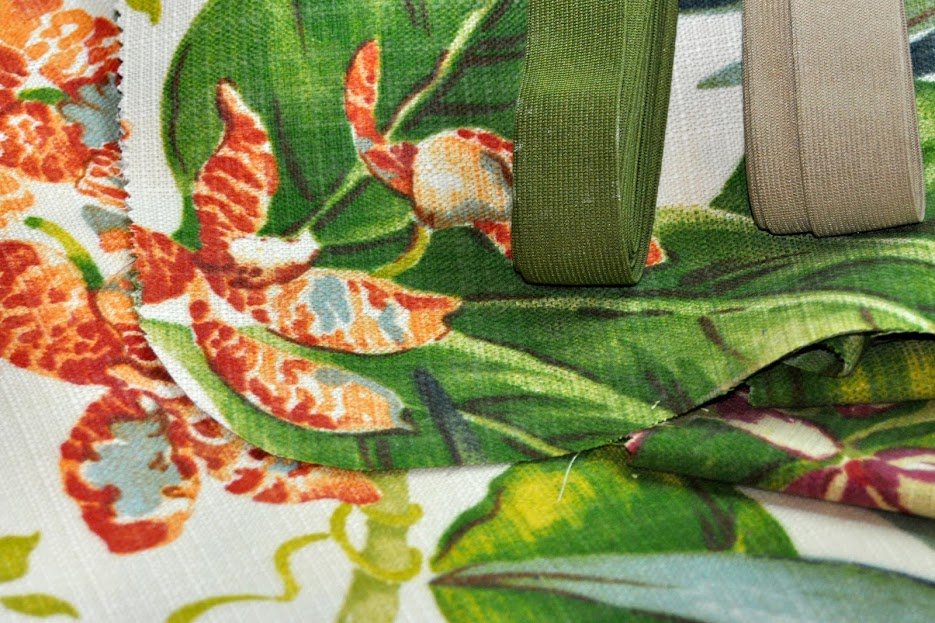
Fabric and Trim

Garden Bench/Buffet:

My former garden bench now serves as a buffet or side bar, sitting next to our outdoor table. I’ve considered sanding and repainting it, but I’ve grown fond of the bench’s slightly battered charm. The earthquake kit resides inside the bench, but the top is the perfect surface to set up drinks. I found three inexpensive place-mats at Target, that when placed side by side, make a perfect surface cover. They can be wiped clean and stored off-season as well.
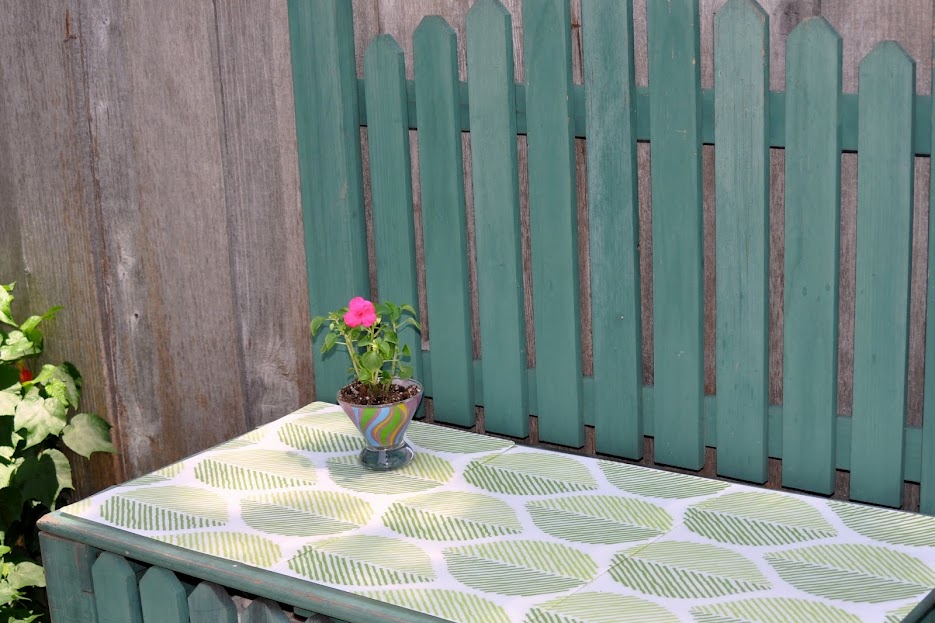
Side Board with New Place Mats

Close Up: I like the matching chevron

Fairy Garden Redux:

Back in April when we planted the back garden, my son wanted to add a small fountain nestled in the rocks near the fairy garden. He was gracious about it, suggesting we relocate the fairy garden to the other side of the yard. The big rocks were the ideal location for a fountain, he reasoned, and I agreed. Since the wee garden was more about creative expression than any thing else, I let him go ahead and experiment with his own creativity.   He used the small water pump from one of his building kits, an old Tupperware bowl and a trash bag, creating a trickling waterfall and a fountain.  Just as quickly, he lost interest.

Earlier this week I removed the sheet of black plastic used for the fountain, unearthing an ant colony. Hundreds of ants scattered everywhere. I waited for the nest activity to settle down  Then I pulled a small clay pot and a plant saucer from the side yard, added a few Impatiens and created a portable fairy garden in its place. I reused the hydroponic clay and the “stepping-stones” from the earlier fairy garden to create a mini patio.The table stand is a peat pod draped with a fern table-cloth, accessorized with a pair of magnets. The chairs are part of a stacking game.
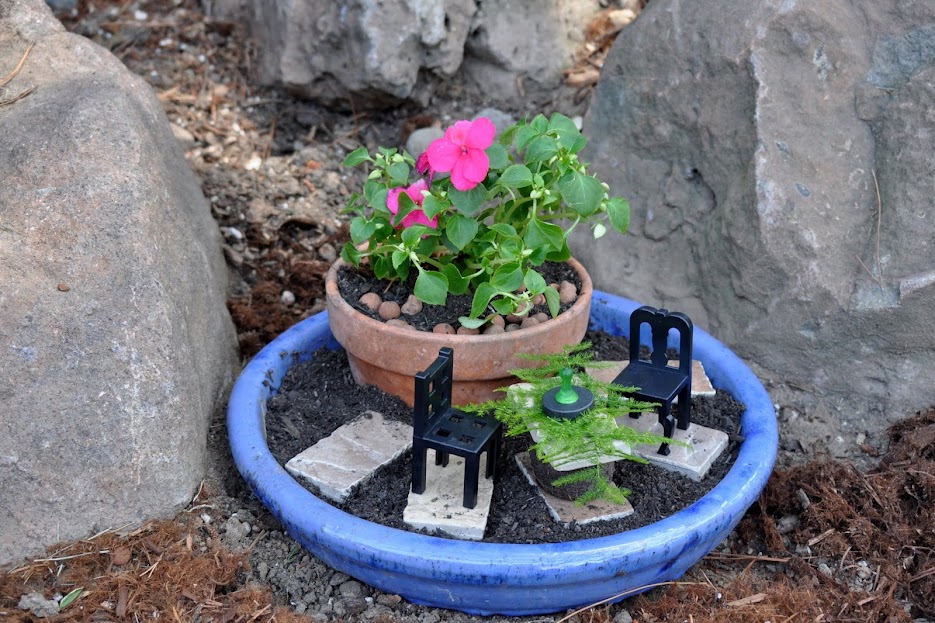
Portable Fairy Garden

Fairy Garden Close-up

Flower-Power:

Mike brought home a bouquet of mixed flowers yesterday, and to my delight and surprise, there are exactly two, long-stemmed yellow blooms! They’ll look great in the cobalt blue beer bottles I set aside, along with the pink flowers tucked into one of my soy candle jars.

My sewing machine awaits!

Blooming Thursday: Blue and Gold

Entry way pots: Snapdragons and ‘Lucia Dark Blue’ lobelia

The garden is awash in cool blues and warm yellows today.  I bought a few annuals to spruce up the entry way, then realized how much blue and gold we already have.

I found some cobalt blue beer bottles in the garage, left over from my husband’s home-brewing days.  If the stars align, the yellow lilies will still bloom.  The bottles will make beautiful bud vases and the yellows will look gorgeous in contrast to the rich blue.  To hedge my bets, I planted Impatiens in one of my recycled soy candle jars.  It’s pretty…but pink.

No worries. Blue and gold remain center stage.  Here’s what’s blooming:

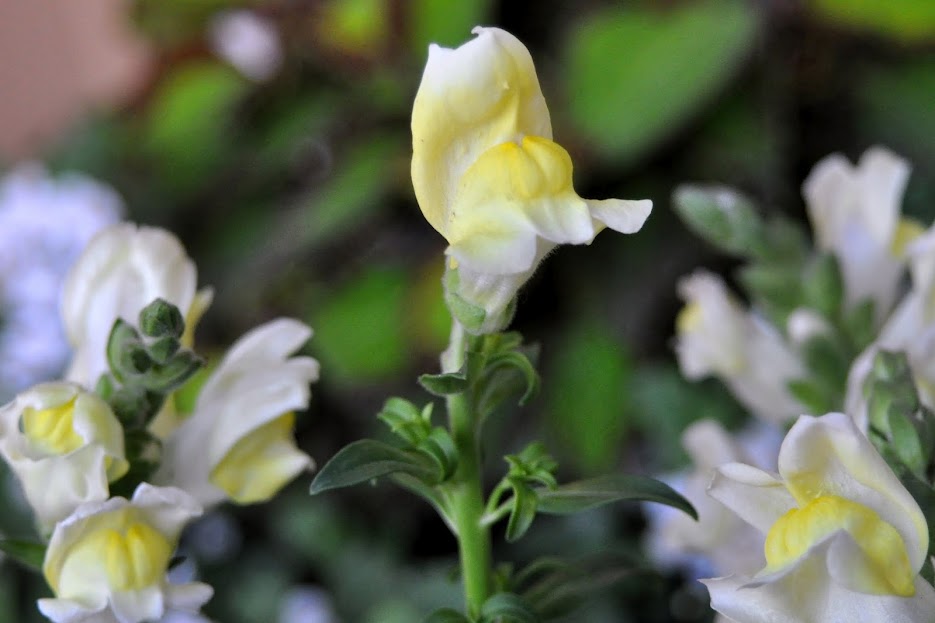
Snapdragons

Blue and Gold

‘Moonchimes’ Chinese Lantern

Wildflowers, Re-seeded from Last Summer

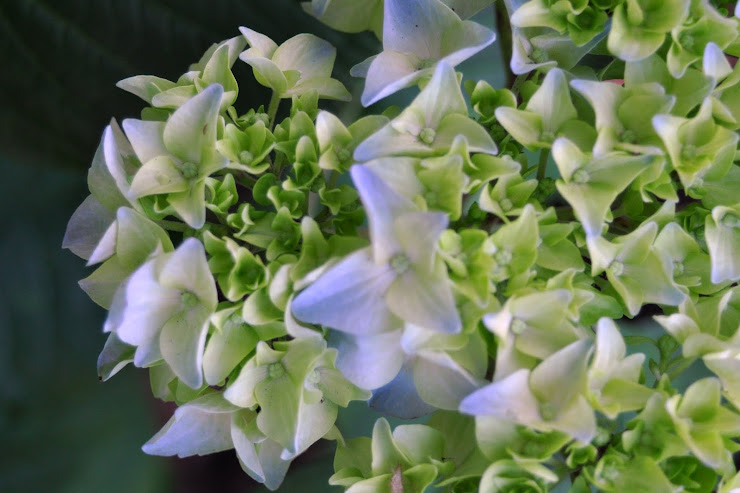
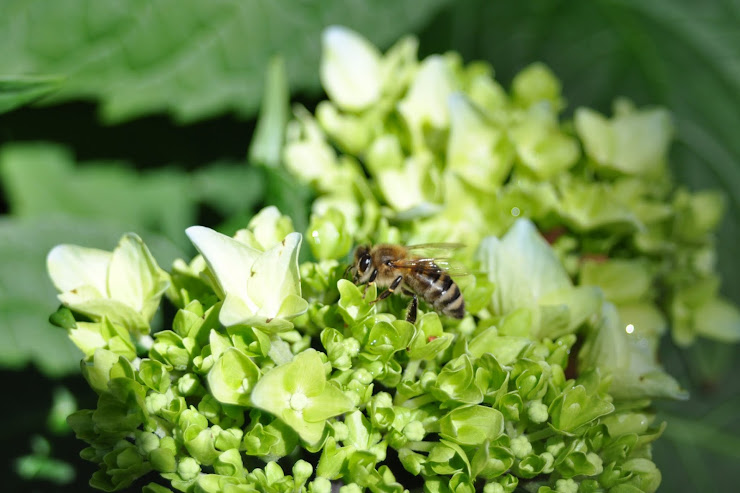
Hydrangea: It’s Blue *and* Gold!

Happy Mother’s Day!

Motherhood has a very humanizing effect.  Everything gets reduced to essentials.  ~Meryl Streep

My Mom loved Cyclamens and Poppies

Dedicated to my friend Betsy, who recently lost her mom and misses her terribly.

Seed Keeper Deluxe: Organized Seeds, Happy Gardener

Seed Keeper: Seed Sorting and Storage

My Seed Keeper Deluxe arrived by post yesterday. Is there anything sweeter than receiving a much-anticipated package on your doorstep?

I took a peek at my new kit when it arrived, but had to set everything aside until early this afternoon when I had a break in my schedule. In no time I had my box filled with seeds, alphabetized of course.Reading the face of each divider has been fun, with clever quips and tips including Rain Barrel Rush! There’s Gold In That There Water! and Vegetables – To Seed or Not to Seed on each tabbed divider

I also learned:

“Eleanor Roosevelt, inspired by War Gardens made popular during WWI started The Victory Garden. Remarkably, 20 million people planted gardens which produced up to 40% of all the vegetable produce consumed nationally.”

Wouldn’t it be nice to return to that tradition?

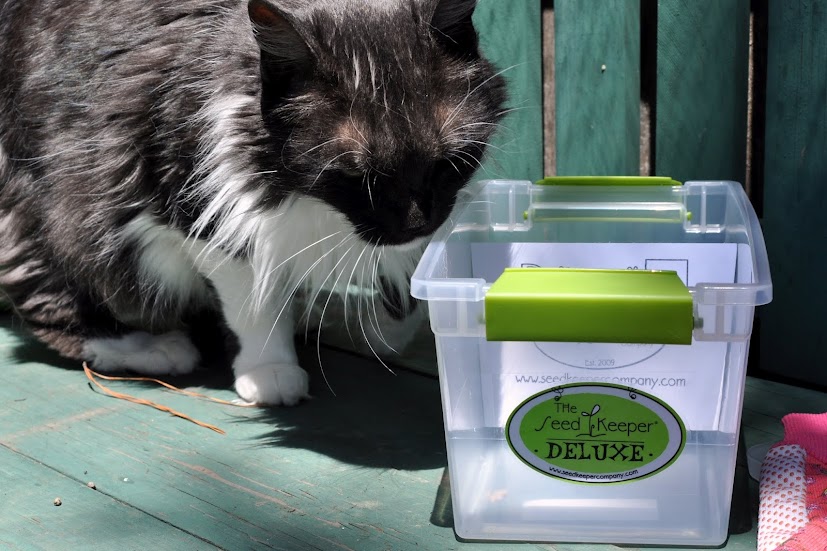
Lindy’s in charge of quality control

Various Features

The foam core insert keeps the dividers standing upright

Seed Keeper:  The basics

Seed Keeper Deluxe:  Pictured above

Burlap Girdle: Short on space?  Try these collapsible pots

Blooming Thursday: Hydrangeas Pink and Blue

First Hydrangea Bloom of the Season

I love the coordinating schedules of our hydrangeas.  Sweet synchronicity from both sides of the garden.  Our potted hydrangea has a soft, pink bloom, while the three sisters are showing a light dusting of blue.

The blue hydrangeas hang out under a pine tree, so will likely keep their hue.  I’ve read that you can change a pink hydrangea to blue and vice versa, but the white ones will always be white.

Here is what the Gardener’s Supply Company* has to say about changing the color of the bloom.

“Hydrangeas with bloom colors that range from pink through blue and purple usually belong to the hydrangea cultivars known as mopheads and lacecaps. These types of hydrangeas have the interesting ability to change the color of their blooms based on the chemistry of the soil. When grown in alkaline soil, the bloom colors are pinker. When grown in acidic soil, the bloom colors are bluer.

Because it’s the soil chemistry that determines the bloom color, the variety names given to these types of hydrangeas means very little when it comes to bloom color. For instance, Nikko Blue, Pretty in Pink, Forever Pink and Blue Deckle, all have an almost equal chance of blooming pink or blue, depending on the soil they are planted in.

To manipulate the color of a hydrangea’s blooms, you need to manipulate your soil’s pH level and mineral content. This is not something you do just once. In order to maintain growing conditions that result in a specific bloom color, you may need to apply special soil amendments several times during the growing season.”

Too much work for this gardener!  I’m just happy they’re blooming.

Blushing Blue

I’ve got my eye on you!

*One of my favorite catalogs!

Garden Log: May 9, 2012

Here’s what’s growing in my garden this week:

Flowering Annuals:

Most years I plant Alyssum and Impatiens from cell packs.  It’s nice to have the head start.  Instead I went with seeds, surprised by how tiny they were!  It was late in the day when I planted them broadcast style, so I wasn’t sure what kind of coverage I would have.  They broke ground on Tuesday.

Sunflowers:

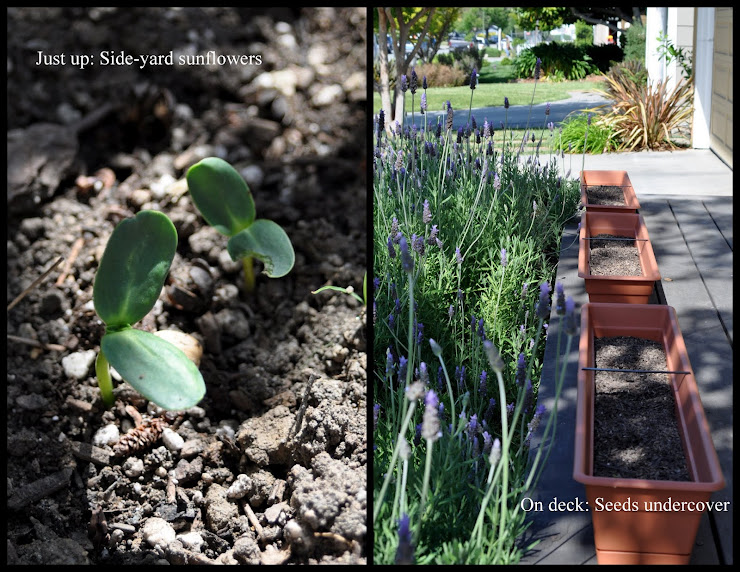
I have two varieties growing in three locations this season.  It will be interesting to compare variables.  I planted a single row near our dwarf lemon in the front side yard.  We had great luck last year, which is to say, that four out of ten survived the squirrel rampage.  That works for me.  A few sunflower seedlings sprouted in the kitchen, and will move outdoors when they set true leaves.  The third batch has yet to come up.  I planted them in pots in a row along the front deck. (I’m dreaming of a wall of sunflowers this summer, something I once saw in a catalog.)

Sunflower Start-ups

Pumpkins:

I have one impressive volunteer from last season with leaves the size of dinner plates. I can’t wait to see what the fruit looks like. It could be our prize pumpkin. The transplants are limping along. I dressed the beds with Hydro Organics Bat Guano, which has high levels of phosphorous and nitrogen.

Pumpkin Leaf

Berries:

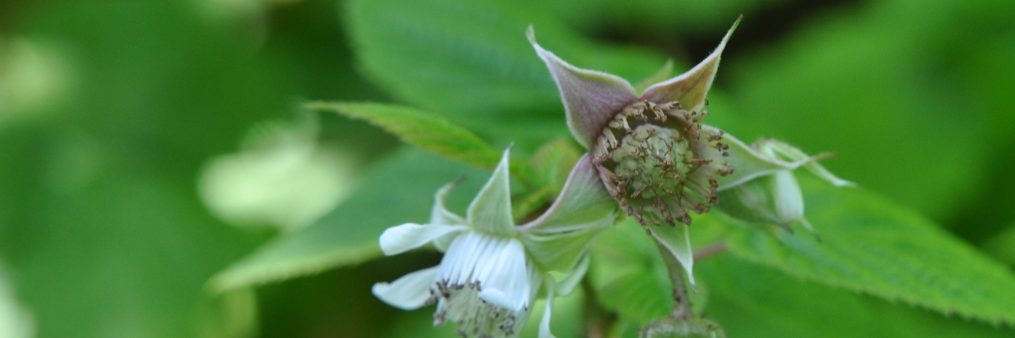
The raspberry vines look healthy this year. They’ve doubled in size and are stretching towards the trellis. Blooms are giving way to the early formation of fruit. We’re pretty excited about that. The blueberry plant also looks healthy. Fellow blogger, What’s Green With Betsy! says “the first year it sleeps, the second year it creeps, the third year it leaps.” It’s a leap year! Finally, the strawberries are establishing well. The holdover plant from last year is already producing fruit.

Planting Box (4×4)
Raspberries, Blueberries, Strawberries
Basil and Sage

On Deck:

I tucked in a few annuals to fill out the pots on deck.  We have two miniature roses, replanted from the back yard and a beautiful coleus.  I moved the geranium to the front of the garden, making room for the tall grasses that shot up this week.  I’m going to try to get a better picture when the light is just so.  It’s especially beautiful at the end of the day.

Deck Top Annuals

What’s growing in your garden this week?

Drying Lavender: My Garage Never Smelled So Good

Lavender-Scented Garage

Lavender grows along the front of our deck, creating a dense wall of flowers.  Now that the plants are established they grow up and over on the deck.  The flowers are graceful in the wind and fragrant beyond belief and  they attract bees to our garden.  Flower perfection.

Last week I decided to experiment with sunflowers in pots along the top edge of the deck, so I unceremoniously pruned back a handful of lavender, and set it in the garage for drying.   I needed the narrow space on the edge of the deck to maximize full sun exposure while maintaining a clear path.

I’ve been dreaming of a wall of sunflowers this summer, so if all goes well, we’ll have a row of yellow and orange sunflowers with lavender blooms draped around the stalks.  I’m giddy just writing about it.

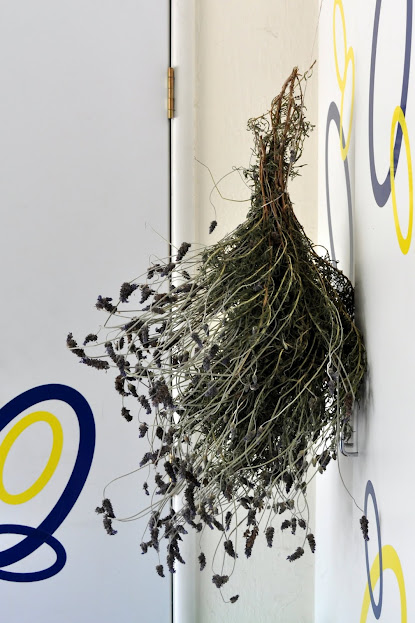
Eventually I gathered the lavender in a loose bunch with some string and hung it in the garage to dry.  Our garage smells like a Crabtree and Evelyn shop!  Seriously, why didn’t I think of this sooner?  I’m ready to dry lavender in every room in the house, though my men-folk may feel otherwise.

Can’t you just smell it?

Ladies fair, I bring to you
lavender with spikes of blue;
sweeter plant was never found
growing on our English ground.

by Caryl Battersby

Seed Keepers: An Organized Gardener’s Dream

The Seed KeeperI stumbled upon the Seed Keeper last week and mentally filed it under “why didn’t I think of that?”  Today I bought one!

The Seed Keeper is a filing system for your seeds, complete with tabs for sorting alphabetically or by month.   After years of storing my seed collection in a little orange gift bag, I’ll finally have a dedicated storage system, organized  in an easy to access system.   I used to buy a few seed packets a year but as my passion for gardening  grew, so too did my collection of seeds.  Each year I buy seed packets as Christmas gifts, collect pumpkin seeds from my garden and occasionally receive some as gifts or freebies.  A good storage system is essential.

Kerrie Rosenthal and Carol Niec came up with the idea when:

“… we tried to find a better way to store our seeds. Together, we developed a seed filing system for seed packets and captured seeds complete with tips and seed planting accessories. The accessories were chosen because they are important to the seed starting process. The plastic clip-lock container is rugged enough to go to the garden and solid enough to protect delicate seeds until the next planting season.”

I ordered mine online, though they are available at a variety of locations throughout the United States and Canada.  Checkout the Seed Keeper and the Seed Keeper Deluxe.

I splurged on the Seed Keeper Deluxe (I liked the green handles). In addition to the basic storage system (box and dividers) the kit includes:

A-Z dividers have new, essential garden information about composting, rain barrels, mulch, a Frost Zone Map, recipes, plant facts and other fun and interesting nuggets.  Sturdy Monthly Dividers are helpful for planning seed-starting and garden plantings. Also included are 10 wooden plant markers, permanent marker, 10 glassine seed envelopes, 10 What Did I Plant?Labels (no more mystery plants), garden gloves, a seed sorting dish, garden ruler, anti-static seed tweezers, hand-held seed magnifier, utility clip, seed picker-uppers (toothpicks in a tube) and a hand & nail scrubber.

Wow!  I can’t wait to organize my seeds.

Catnip Corner: The Purrfect Spot

How to Grow the Perfect Catnip

I’ve been scouting for the perfect spot to plant our catnip which needs full sun and easy feline access.  I had pretty much resigned myself to planting in a low pot, when I noticed this bare patch of earth near the lawn next to the other mint. Kismet! er…catnip!

We have a pair of seed-embedded cards from a Petco fundraiser we’ve been saving to plant this spring. I’ll plant one now, keeping the second as a back up just in case this first batch fails to deliver. It seems a bit of a shame to cover these clever cards with dirt, but I’ll save a fortune on catnip.

Here’s a bit about catnip also know as cat mint from catworld.com. This powerful herb has many human uses and attributes, beyond a feline-high:

Catnip tends to have a sedative effect on humans. It is most often drunk as a tea.

It is also useful for settling an upset stomach. It has also been used to treat headaches, scarlet fever, coughing, insomnia & smallpox.

Catnip can also be used for cuts, studies show it has a natural healing quality. Crush fresh catnip leaves, damp them & apply to your cut. **

Pregnant women should avoid catnip.

It can also be used as an aromatic herb in cooking & salads.

The Perfect Spot

=^..^=

Eggshell Seed Starters: Cracked Eggs, Happy Pumpkins

Pancake Breakfast leads to eggshell planters

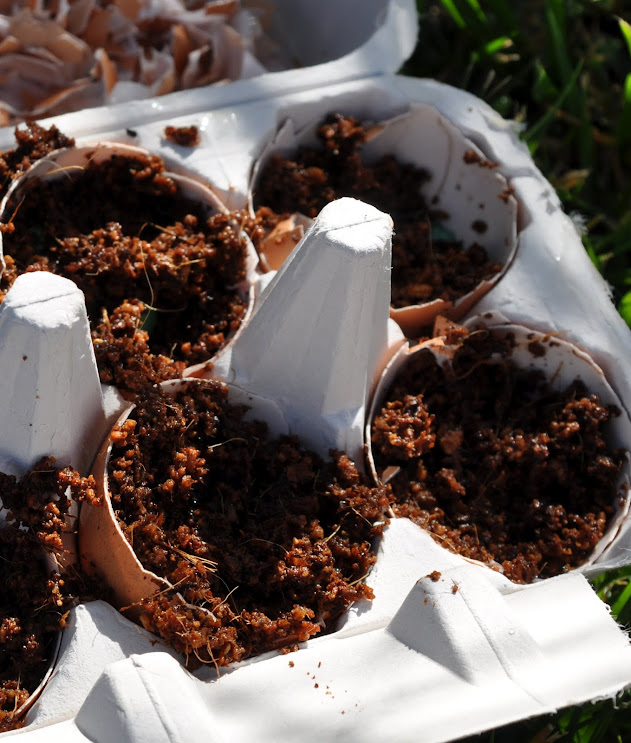
While mixing up a batch of pancakes this morning, I remembered a recent post on Facebook suggesting starting seeds in eggshells. I had leftover planting mix on the counter from planting cat grass the night before and a pile of eggshells collecting near the stove.

After rinsing the shells, I placed the rounded end back into the carton and added the mix. I planted several of the remaining pumpkin seeds, making it an even dozen. Next week, I’ll pop the seeds in their eggshell containers directly into the raised beds outdoors. The eggs decompose, adding nutrients to the soil. I crushed the remaining shells into smaller pieces as an offering for the birds. Apparently backyard birds will eat the shell as a source of calcium.

I love the narrative I found inside the egg carton. It says:

“Thank you for choosing our eggs.  These eggs were produced on small Amish/Mennonite, family farms where the traditions of being a good steward of the land are passed on from generation to generation.  In many cases the eggs are gathered by hand and much of the family is involved in the care of the birds and the collection of the eggs.  You can be assured that the eggs you are buying come from chickens that are allowed to roam freely about the hen house are given access to the outdoors and eat only certified organic feed.” – Farmers™ Hen House Organic

Cheaper by the Dozen

Here is a quick tutorial from Apartment Therapy.