Fairy Garden: The Rolling Stone Gathers Moss

Moss Carpet and Inlaid Tile

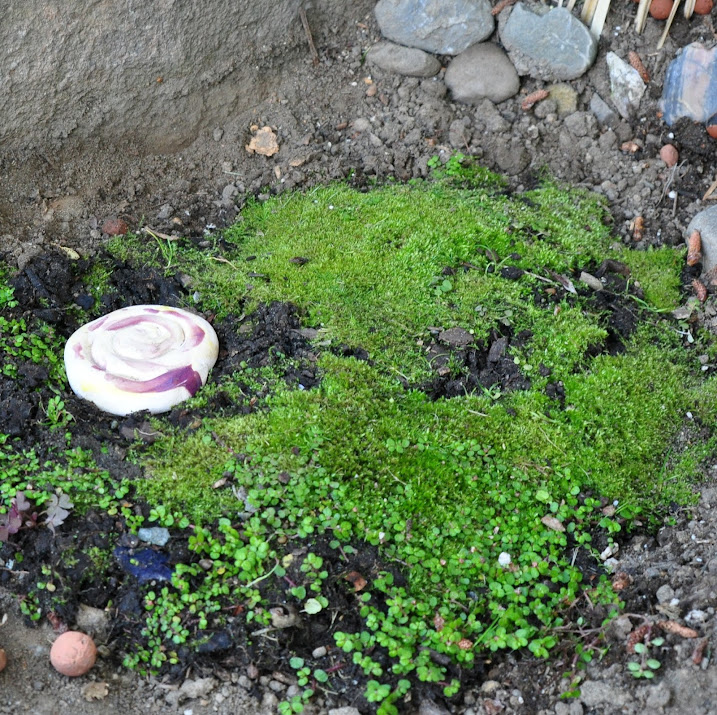
Success!  With a little help from my spade, I transplanted a patch of moss and some baby tears to the fairy garden floor.  The lush green carpet is soft and inviting.  The main floor features inlaid tile, formerly ceramic treasures from my son’s art class. I added a maroon bedspread, a must on these chilly spring days, and a door mat made from matted grass clippings.

Lamp in the Window

Fairy Blanket for those Chilly Nights

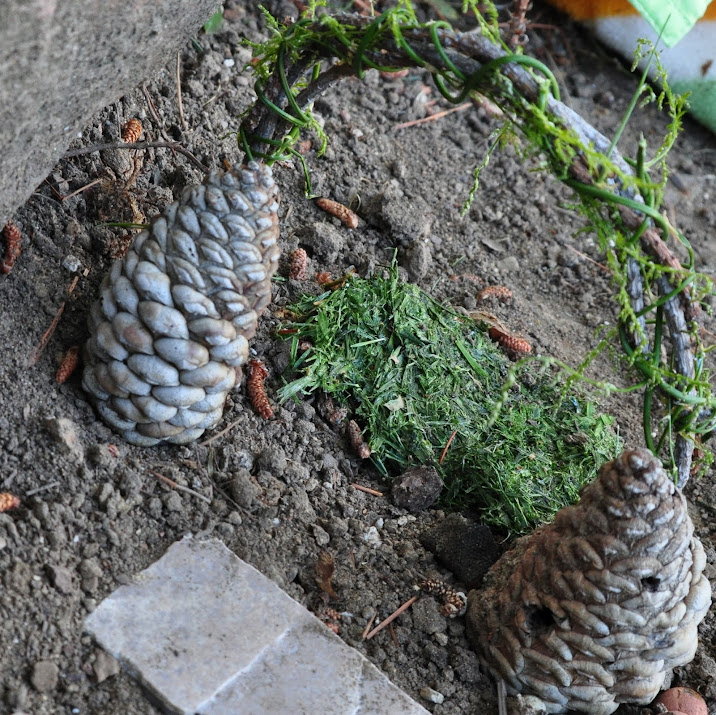
Grassy Door Mat

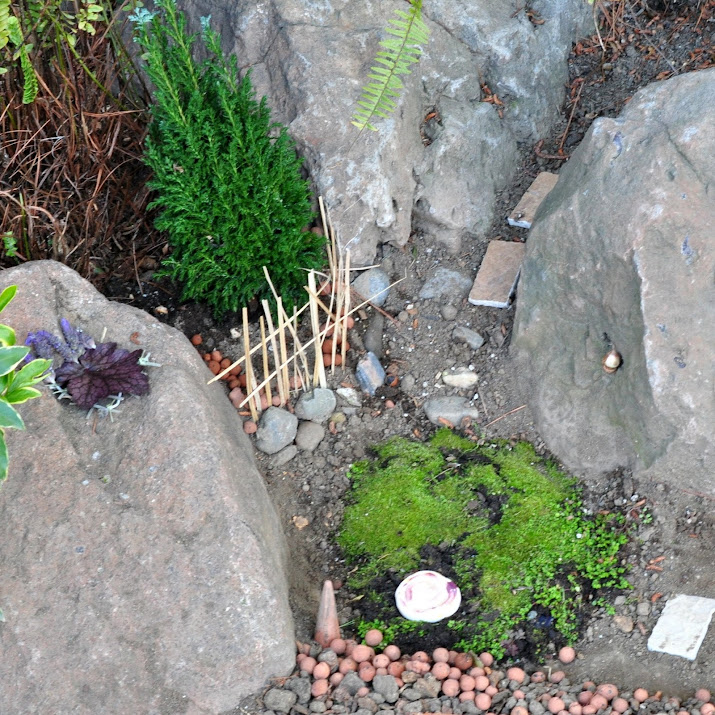
Aeriel View

House on the Hill sets the Standard
(Hand-made bird house, a gift from friends)

I built a fence between the two large rocks, with nearby steps up the hill. The walkway, paved with broken pieces of tile meanders with an edge of smaller rocks and clay balls. Do you think the fairies will stop by tonight to see the improvements?

Additional Links:

♥Here’s what professional fairy gardens might look like.

♥Every fairy garden needs a fairy flower, right?

♥A wee bit of inspiration from Enchanted Gardens.

Fairy Garden Improvements

According to the ancient art of Feng Shui, a home’s entryway is critical to our well-being. Kathleen McCandless, author of Feng Shui That Makes Sense says:

 “The entry is not only the first impression of your living space, it is also a key component in whether or not you will experience comfort, safety and happiness while you live there. The most important consideration in Feng Shui is whether or not a space allows us to feel ”safe”.  If we do not feel 100% safe in our environment, we will not relax…”

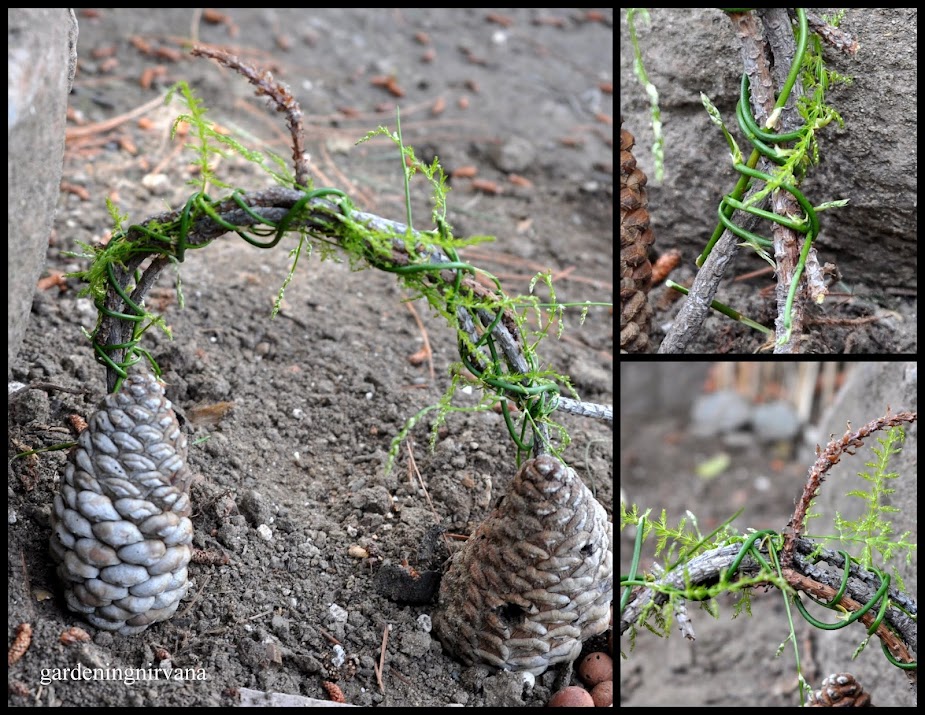
To ensure the well-being of the garden fairies,  I created what I hope will be an inviting entryway.  I braided three soft branches from the overhead pine, then wrapped them in tender shoots of Asparagus fern creating a gentle arch.  A pair of pine cones flank the arch for stability.  The airiness of the ferns should appeal to the light-hearted nature of garden fairies, so that crossing the threshold is a delight.

Braided Archway

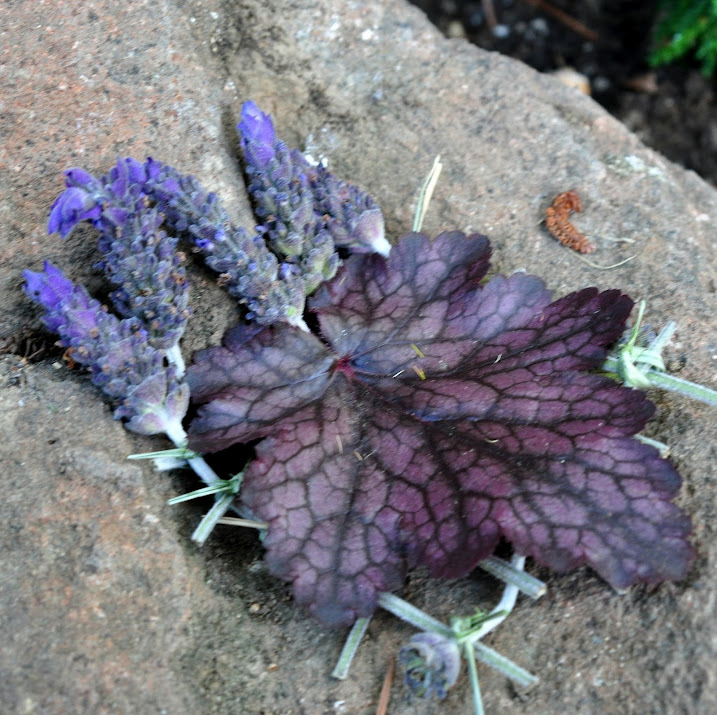
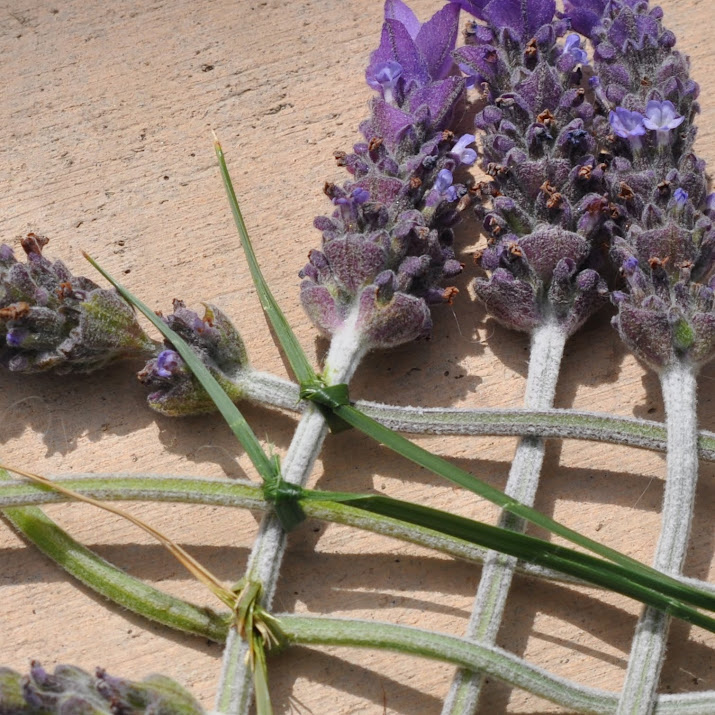
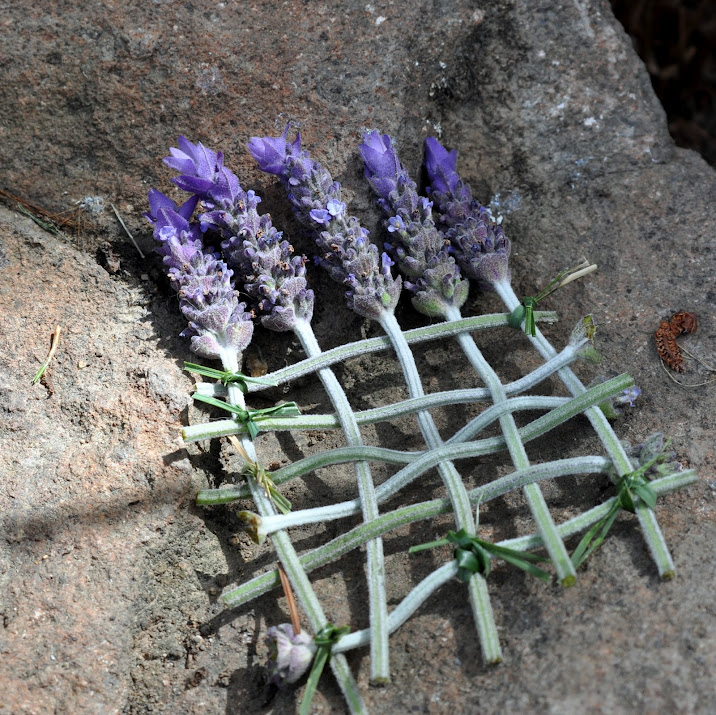
While my fingers remained nibble, I braided a lavender bed. Lavender contributes to a calm sleep, also essential to general well-being. I lashed the corners with tall grass using simple knots to keep the corners united. The bed is tucked into a sleeping loft in the crook of one of the rocks .

Knotted Corners

Lavender For a Restful Sleep

I found a beautiful mound of moss under the garden swing. If I’m successful transplanting it, the cool moss will make a lovely addition to the fairy home interior. More news tomorrow.

Breaking Ground in Fairyland

Breaking Ground

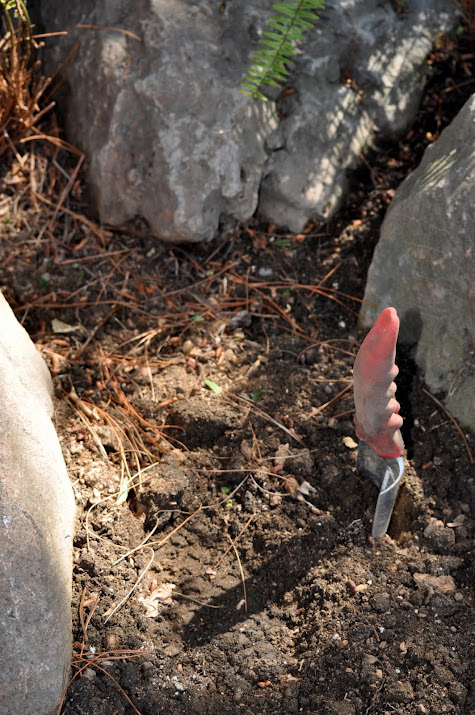
I’ve been gathering materials for my fairy garden and today broke ground on the site.  It was amazingly simple: I didn’t need a permit, a contractor, a surveyor or an inspector.  No bank loans, points, appraisals or hassles.  Life is good.

I unearthed a few tiny bulbs and was happy to see a worm or two as I dug right in.  After removing the remaining bulbs and rocks I sifted the soil, saving the rocks for a small border.

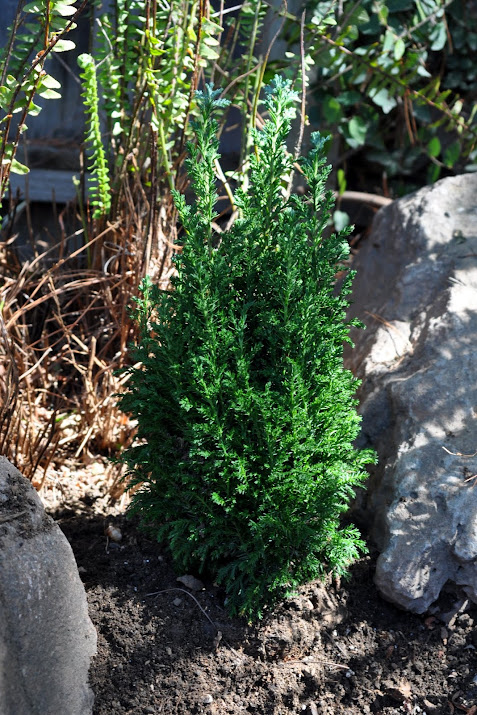
Last Christmas we received a flowering bulb planted in a wide-mouthed drinking glass with clay-like pebbles.  Now that the bulb is dormant, I removed it from the glass and  lined the walkway with the miniature clay balls.  We also received a  plant that resembles a miniature pine tree, perfectly proportioned for the tiny garden.

Lindy Approves

"Towering" Pine

When I shared my plans for a fairy garden, my friend Susan said the following:

“This reminds me of ‘spirit houses‘ built for the spirits disrupted when the break ground to build a new (human) house. You’re supposedly supposed to built a small house (a miniature the size of a bird house, maybe) and place it on a pole or post at the front corner of the yard. If you don’t build this spirit house for the little beings you’ve dislodged from their homes in the soil (or in the foliage?) in acknowledgment of them, they can get angry and bring bad luck to your home.”

I love the idea of making amends with the earth, much as Native Americans did whenever they took from the land.

I can’t wait to get back outdoors again tomorrow.  Meanwhile I’m pondering a variety of ideas, including a woven lavender rug and an archway built with pine cones.  More tomorrow.

Porous Clay "Pebbles"

Fanciful Fairy Gardens: Available for the Child Within

Future Site of Homes for Fairies and Gnomes

I’m mesmerized by the idea of a fairy garden, a place among the flowers and trees designed to attract “fairies and garden gnomes.”

I was surprised to find entire websites dedicated to this pursuit.  You can buy  hand-carved furniture and tiny fences for your upscale fairy, or you can gather rocks, twigs and leaves and design a starter miniature garden.  I like the creative challenge of using items found in nature.  I could outfit a beautiful pot or corner with purchased items, but I’ll have more fun creating something from scratch.

Two large boulders and a little patch of dirt are within my sights out back, a lovely place for fairies to take up residence.  If you build it, they will come.

Building Materials

Further Fairy Garden Inspiration:

Ask the Party Fairy

The Feathered Nest

The Magic Onions

The Mini Garden Guru

Brontosauraus Topiary for the Young at Heart

Brontosaurus Topiary

When my boys were small and interested in things like trains and dinosaurs, I spotted a Brontosaurus topiary frame in a garden catalog.  I’d never created a topiary before, but I thought it would be fun to try.  Having children gives you permission to play with Lego’s and to connect train tracks across the living room floor.  It’s also great justification for buying a pricey topiary frame “for the kids.”  I could hardly wait for it to arrive!

I bought and assembled the frame, centering it in the corner garden and bought four small-leafed ivy plants to place in each of the feet.  Somehow I missed a step and all the ivy died.  The small plants simply dried out too quickly.  I bought more ivy, and this time planted straight into the ground.  I stuffed the frame with Sphagnum moss and waited for the plants to fill in.  After a month or so, I had enough ivy to start threading it through the frame.  Eventually it was thick enough to prune.  It took longer than I thought, but the frame filled out and we had an adorable green Brontosaurus in our yard.

The boys are more interested in Minecraft than dinosaurs these days, but the charming little fellow lives on.  I trim it once or twice a year but for the most part it requires very little attention.  After a good prune, I find a small flower for the dinosaur’s eye.  It reminds me of my carefree summer days in our London yard and for just a moment I’m five years old again.

Time for a Trim

Farmtek: I’ve Arrived

Greenhouse Available from Farmtek®

As a professional organizer, I’ve worked diligently to remove my name from mailing lists.  Using Catalog Choice, I’ve stopped most direct-mail ads and over 100 catalogs from filling my mailbox.

So imagine how silly I looked when a catalog called Farmtek® arrived with today’s mail and my heart skipped a beat.  Did this mean someone thought I was a farmer?  Little did they know I plant on a tiny plot of land in the suburbs of what was once beautiful orchards.  Our entire lot, including the house, is only 6,000 square feet. Once home to apricots and prunes, our agricultural heritage gave way to Apple, Cisco, Intel and HP.

It’s unlikely I’ll be ordering grow lights for my (non-existent) greenhouse or an air inflation system, though the idea of both is appealing.  Thumbing through the catalog I found a few items for small-scale gardeners, but nothing I can’t buy in town.  I’m afraid Farmtek’s® catalog is headed the way of most.  It was fun though, getting a small glimpse into the shopping options of a farmer.

Blooming Thursday: Where Have all the Flowers Gone?

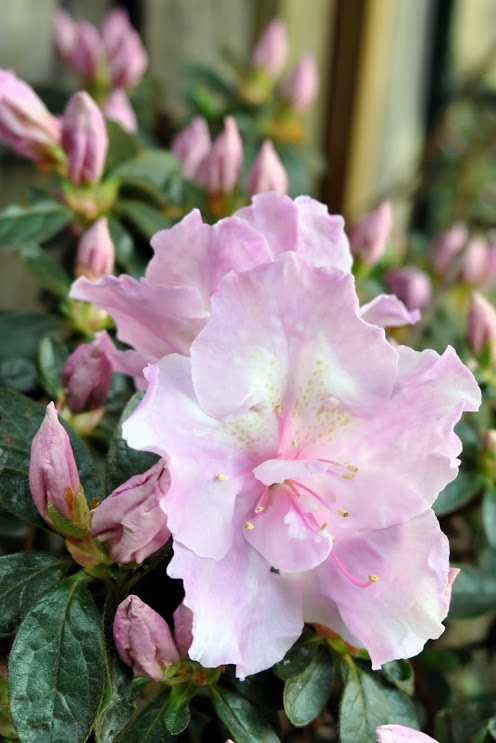
Blushing Azaleas

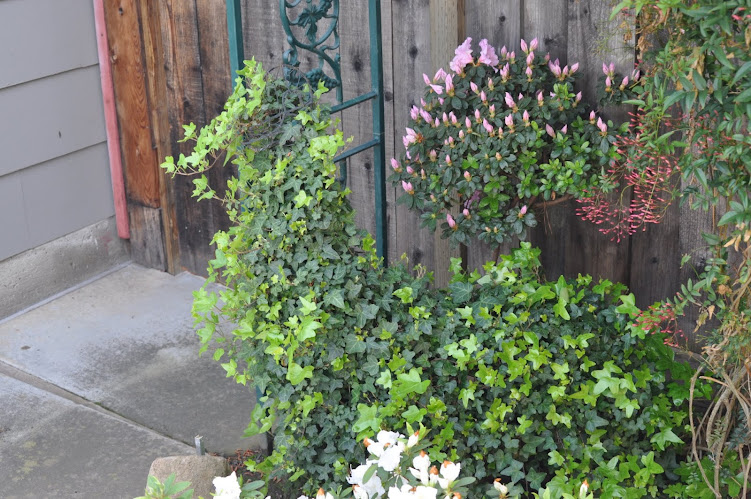
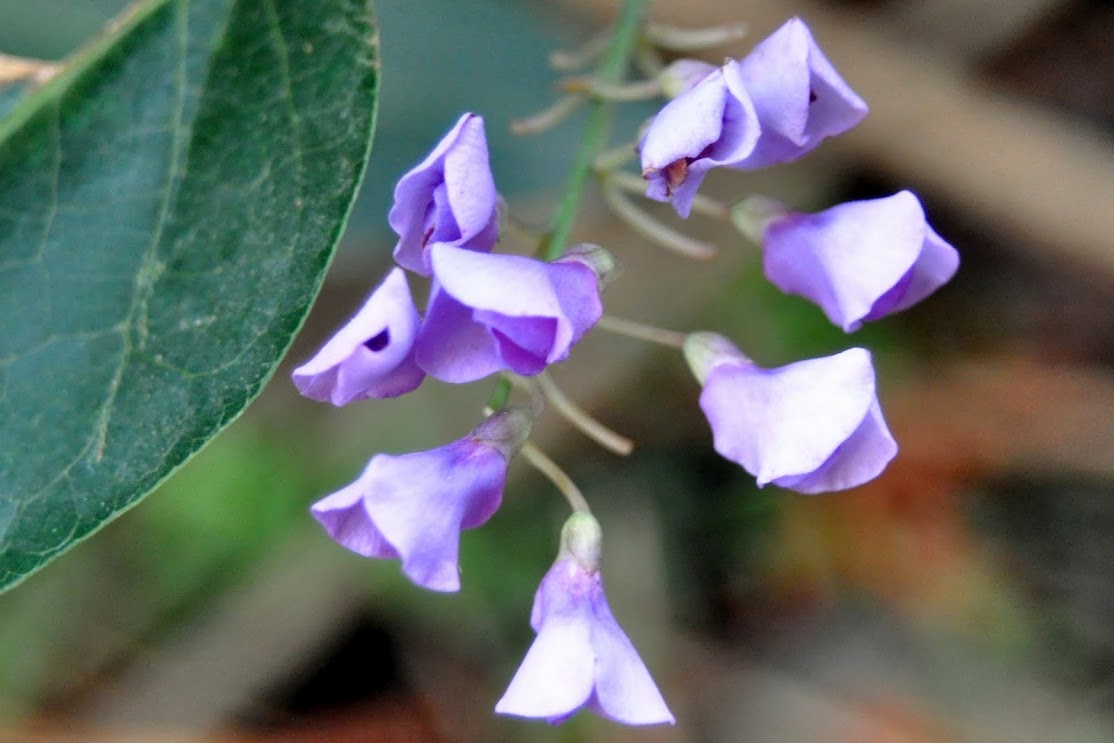
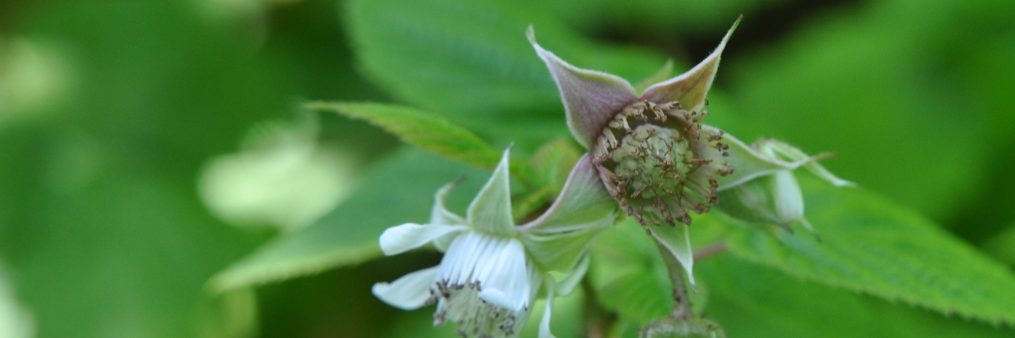
Didn’t spring just arrive? According to my calendar, yes. My garden, however moves along at a different pace. Buds are forming on the berry vines, but everything else seems to be heading for the leafy stage of growth. Green is my favorite color so I’m not completely disappointed, but the contrast of pinks, purples, reds and golds is visually stunning. Only two small blooms remain on the Hardenbergia.  This time next week that spectacle of color will be a distant memory.  The Azaleas are popping in pinks and whites.  Soon they’ll flaunt a brilliant show of color.

Taking photographs each day is a rewarding experience.  I’ve bared witness to things in the garden I might have otherwise missed.  This time next year I’ll have a record for comparison.  Today I’m working on living in the moment.  Perhaps my garden is right on schedule and only now am I taking proper notice.

In order to hedge my bets, I think it’s time to visit Almaden Valley Nursery for some summer annuals.  I want to continue my Blooming Thursdays.

Hardenbergia about to close up shop

Magnolia Continues to Flower

Wildflower Holdover from Last Summer

Eric Milner: Tea from the Past

E. Milner,center, 1915 - 1969

My father traversed an interesting path, one of travel, adventure and creativity. Born in England, he studied botany and horticultural science at Wimbledon Technical College. He worked as a student gardener at the John Innes Horticultural Institution in London.

In a letter dated October 1st, 1937, it says:

“Mr. E. Milner came to us on Sept. 16th 1935 as a Student Gardener. Since that time he has spent 4 months in the Fruit Department, 2 months in the Rock Garden, 8 months on general outdoor work and 10 months under glass. His experience with us has included the propagation and maintenance of stove, glasshouse and herbaceous plants, all of which we grow in considerable variety.”

After completing his courses, he moved to India to work on a tea plantation around 1937.  He remained in India during the second world war serving as a translator.

In a letter dated 7th May, 1946 from the India Office, Whitehall, it says:

Sir,

“Now that the time has come for your release from active military duty, I am to convey to you the thanks of the Secretary of State for India and of the Government of India for the valuable services which you have rendered to your country at a time of grave national emergency.

At the end of the emergency you will relinquish your commission, and at that time a notification will appear in the London Gazette (Supplement), granting you also the honorary rank of Captain.  Meanwhile, you have permission to use that rank with effect from the date of your release.”

He returned to England in 1946 and shortly thereafter immigrated to Canada where he met and married my mother.  Together they owned a pair of flower shops for a few years.  My father later managed a nursery in my hometown of London, Ontario.

Lucky for me his hobbies included photography and the careful assembly of albums, like the one pictured below.  I remain fascinated all these years later of his time in India and his work planting and propagating tea in the Darjeeling region.

Photos from my Father's Album

Planting Young Tea
photo by E. Milner

Tea Grows in India, 1939
photo by my father E. Milner
Tea Time

Lisa’s Tea Treasures is a charming tea room and gift parlor in nearby Campbell, California. Designed to resemble an early nineteenth century English parlor, they serve “high tea” in cozy rooms where you ring the bell for service. Fresh tea brews at your table in fine china pots wrapped in “cozies.”  Lisa’s is one of my go-to places to celebrate with my tea-loving friends.

Table Top at Lisa's Tea Treasures

I acquired my love of tea from my British father who not only drank it, but grew it on a tea plantation in Darjeeling. I have an album filled with black and white photos from his time in India, carefully captioned in his neat print. It’s a beautiful legacy from the man who died when I was nine.  I wish he were alive to fill in the details of what had to be an amazing experience.

According to Wissotzky Tea,

“Tea is an evergreen plant of the Camellia genus. Its scientific name is “Camellia Sinensis) and it originated in China, Tibet and Northern India. The tea plant has thick leaves, dark green in color, and a strong thick stem. The tea flowers bloom in white or pink and have a delicate fragrance.

There are about 200 different species of the tea plant around the world.”

Assorted Teas Available in Lisa's Tea Salon

We believe tea originated in China, still a primary source of the world’s tea, along with India, Sri Lanka, Taiwan, Nepal and Japan.  Herbal “teas” aren’t really teas at all but a collection of flowers, stems, leaves and buds.

Visiting a tea plantation is on my proverbial bucket list.  To see this plant, brewed and enjoyed the world round, would be a treat.

A few of my favorite teas:

Numi® Organic Tea: Super premium, organic and fair trade teas.

Celestial Seasonings: Sleepytime anyone?

Yogi Tea: Wonderful green tea.

Traditional Medicinals: I’m a huge fan of their Cold Care and Throat Coat teas.

Do you have a favorite?

The Traveling Gardener: Flowers of Southern California

I took a road trip this weekend with a small group of close friends covering several hundred miles of California. We started in the Bay Area, moved south to Santa Cruz, and then traveled “The 5” to Marina del Ray. The trip was extraordinary in many ways. I had joyous, but all too brief reunions with friends from my theater days; wonderful re-acquaintances after thirty years.  Through the connectivity of Facebook, I’ve opened doors to people I would never have met, while drawing back the curtain from parts of my life I was sorry to see fade away.  I’m still reveling in this friendship high.

We passed miles of coastline and rolling hills, and the not so elegant oil-well pumps and truck stops.  Garden enthusiasts like me reaped the benefits of travel in early spring: flowers everywhere.

Here are a few of my favorites.

Madonna Inn: Poppies in the Rain

Tiny Little Flowers Cascading Over Rocks

Part of the Santa Barbara Welcoming Committee

Bird of Paradise after dark in Marina del Rey

Palm Fronds Rustle in the Breeze in Marina del Rey