(Almost) Blooming Thursday: Tulips!

Tulips Break Ground

Tulips Break Ground

Did you hear me squeal with delight?

Tulips are popping up all over the garden. They won’t flower for a little while, but the fact that they’ve survived this long (shh…don’t tip off the squirrels) is amazing.

Last fall I planted three varieties, purchased at a local garden center. They are all sourced from Van Zyverden.

I planted:

  • 15 Tulip ‘Angélique
  • 15 Tulip ‘Attila‘; and
  • 5 Tulip ‘Passionale

In other words, the potential for 35 stunning acts of nature. Guess what? I counted over twenty, ground-breaking bulbs! The last time I planted tulips, nothing came up. Zip. Zero. Nada. I’m really liking these odds.

tulip bulbs break ground

Tulips all Around!

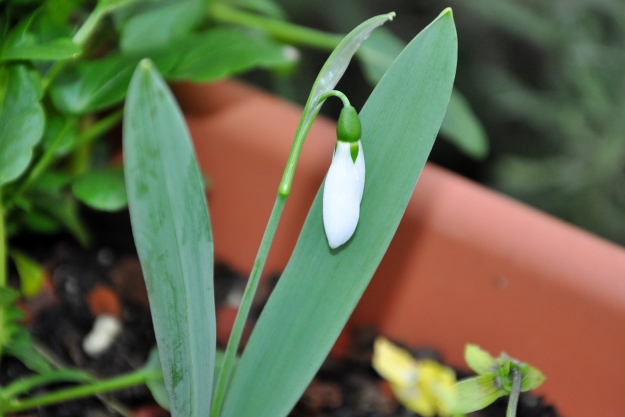
While I had my nose to the earth, I noticed several more bulbs breaking through: Crocus, Narcissus and a few others, to-be-determined when they bloom.

Oh happy day!  What’s ‘cooking’ in your garden this Thursday?

spring bulbs collage

Assorted Spring Bulbs Break Ground

Tulip Bulbs

Tulip Bulbs


Planting the Strip: The Results are In!

Earlier this month I wrote about the pros and cons of planting the sidewalk strip.  I included a poll and asked readers to vote as well as comment on the idea.

As of today, the vote is split down the middle:

  • 42.31% said yes
  • 42.31 said no
  • 15.38 were on the fence.

The comments were incredibly helpful. Thank you for taking the time to read, comment or vote. There were many things I hadn’t thought of. Here are a few:

Boomdeeada wrote: I voted to plant the easement but everyone here has great comments. I’d be tempted to put in a perennial of some kind more than vegetables…a bed that begins with tulips, then lilies then iris’s….I also liked the beds of Rudbeckia, alyssum and purple petunia at the Alberta Governor Generals house this summer…that would smell really nice.

I like the idea of planting flowers instead of veg.  Another reader also suggested growing a hedge first, then planting within its boundaries.

Sensiblegardening wrote: I had to vote “no” but not because I think it’s a bad idea. I think it’s a great idea. However, after living for 20 years on a rural road, at the dead-end turn around, I’ve seen too much of how disrespectful a lot of the public is of our natural spaces, let alone our own private property that butts up against it. Sorry, but that’s just the ugly truth of it at this point in time. Hopefully more people will become a little more enlightened as time goes on.

Several others also cited this.  My husband voted no, too.  :-(

Suzanne Elliot suggested a nearby alternative: Thoughts on planting the strip – Dogs and passers-by – Dogs will leave deposits – and not the bank kind – passers by will pick your flowers. In looking at your photo of your lovely front garden I notice that you have a lot of LAWN – how about converting your lawn to something else? You could plant veggies mixed with flowers closer in to your house in your current lawn area (full sun) – and thereby thwart all but the most brazen flower pickers and fruit/veggie thieves…
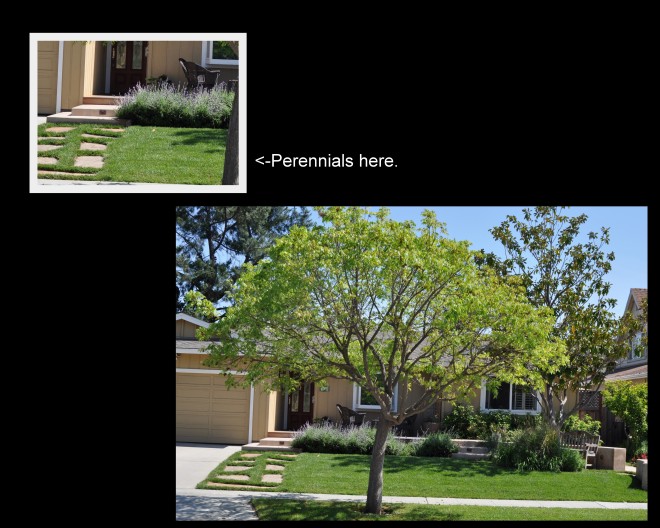
Planting the Strip

The Plan at Hand:

Front garden:

Leave the sidewalk strip/easement alone for now. (Subject to change without notice, void where prohibited).

Combine Suzanne and Boomdee’s idea and plant a perennial garden next to the stone walkway on the property in a curving triangle to balance the curving wall on the other side.  If that goes well, I’ll plant more perennials on the other side of the driveway. Honestly, you can never have too many flowers, don’t you think?  The bees are counting on them.

Back garden:

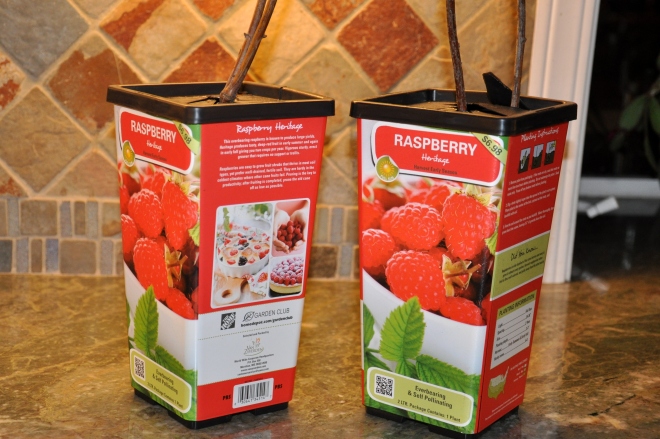
Transplant the blueberry bush (still very small) and the raspberry vines to another location in the yard.  This will free up 25% of the planting boxes.

Finish clearing overgrown and tired looking shrubs around fruit tree. Plant additional flowers from seed.
Meanwhile, please join me in another rain dance.

The San Jose area has received only 0.9 inches of rain so far this month, a third of the normal 2.72 inches.

In a normal year, San Jose would have received about 7.73 inches of rain by now. Instead, only 2.45 inches have fallen since July, not even a third of normal. (San Jose Mercury News)
Twiddling My Green Thumbs

DSC_0024It’s still January.  Boy oh boy this month is creeping by.  I keep checking my Mercury News calendar to be sure I haven’t missed any garden chores.  It’s a short list.
Protect frost-tender plants. Check.  Winter weeding. Check. Watch out for snails and slugs.  Haven’t seen ’em.  And finally, if it’s to cold and wet, order spring seeds. I did that ages ago.

I pruned the fruit cocktail tree, gave the compost a few spins and checked on the worms. I put out a large bag of laundry lint for the squirrels, and made a delicate wreath of the same for the birds.

Today, in need of a few hardware store items, I quickly perused the garden section.  Ho-hum to that as well.

Can you hear me tap, tap, tapping my green thumb? I’m suffering from a serious case of garden withdrawal.

How are you managing the mid-winter doldrums?

Cauliflower Fail: Yes or No?

Browning Cauliflower

Browning Cauliflower
January 26, 2013

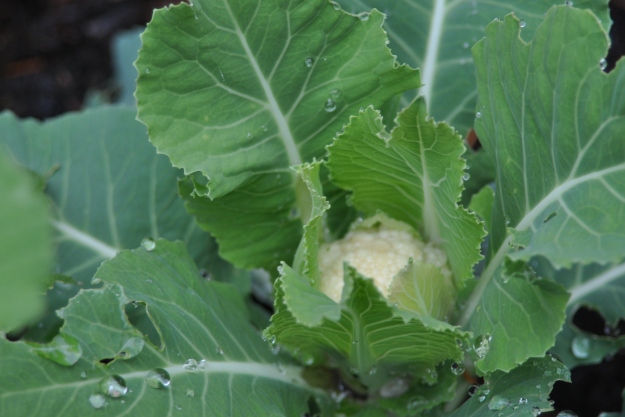
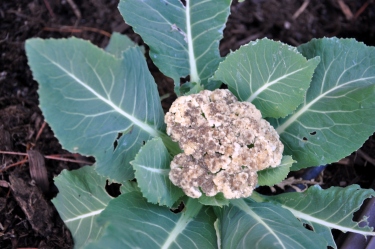
I’ve been trying to deny the inevitable for a week now.  My cauliflower is done-for.  Gone. Kaput. Or at least it looks that way

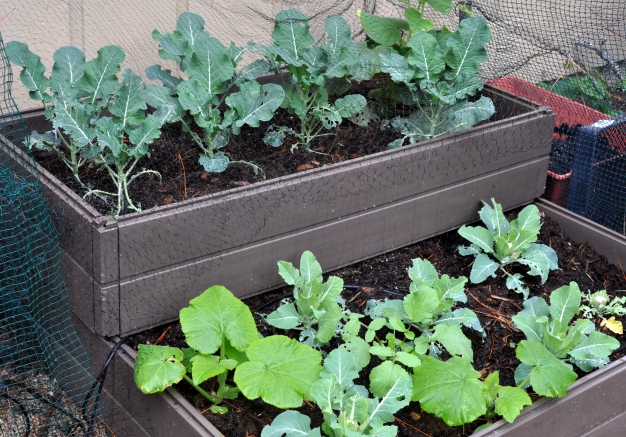
It didn’t occur to me to protect the plants from frost damage. Cauliflower is a winter crop in warm climates.  Shouldn’t it withstand the elements? The plants look okay, but all of the cauliflower heads turned brown.

Upon further reading, I’m wondering if I missed a step, something known as blanching. It sounds counter-intuitive: instead of allowing the flower heads, called curds, exposure to the sun, you cover them. The articles I’ve read suggest folding the leaves over the curds and holding them in place with twine.  Leaves should be tied loosely to allow air to circulate.

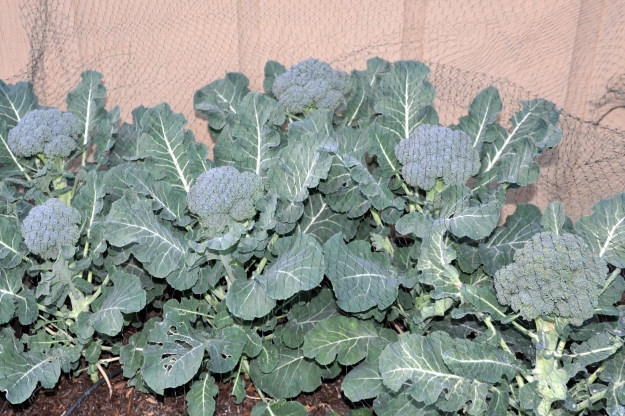
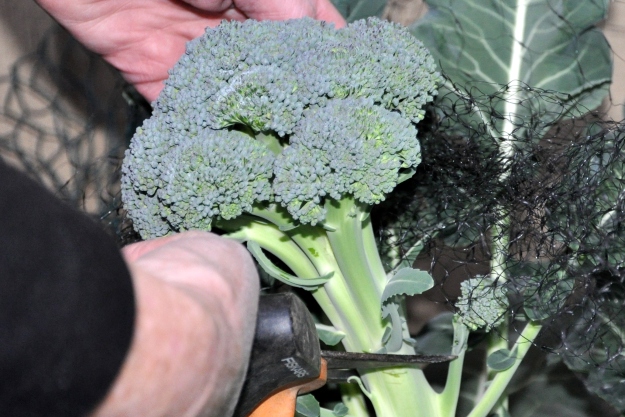
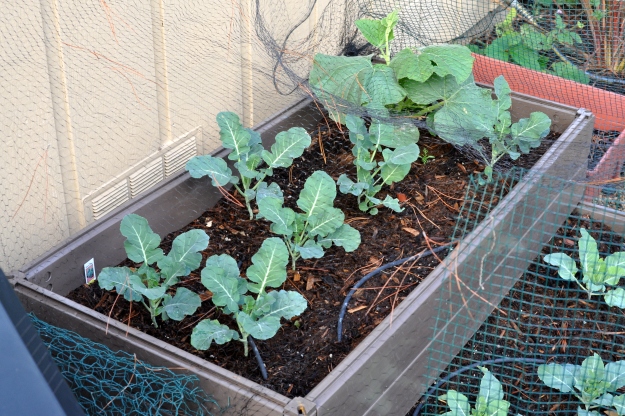
Apparently I’ve spent one too many years eating vegetables from the supermarket. Or not.  At this point, I suppose time will tell. The browning will continue or abate. The curds will grow or wilt.  Meanwhile I just evicted some gray scaly pests from the broccoli plants.  In a word: ick!

Stay tuned.

Resources:

Broccoli and Cauliflower

Broccoli and Cauliflower
November 9th

Broccoli and cauliflower

Broccoli and cauliflower
December 17, 2012

Cauliflower

Cauliflower
December 18, 2012

Gravel Mulch Muchas Gracias

pansies

Pansies

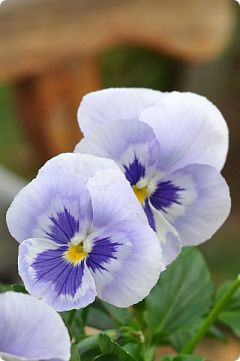
Last fall I planted purple pansies along the deck, then interspersed bulbs in between. What beautiful planters we would have come spring.

Then the squirrels dug them up. One by one, over a couple of days, they unearthed the hidden gems. Normally I add a layer of organic mulch, but in my never-ending quest to discourage snacking squirrels, I covered at least half of the pots with rough pea-gravel. I used what I had on hand, left over from a summer project.

It was a good, though unintended experiment.Those rascally squirrels dug up all the bulbs in the soft mulch pots, but left the ones under gravel untouched.

I bought more bulbs, a lot more gravel, and replanted with help from the eager day-care kiddos next door.  It worked!

Emerging bulbs

Emerging bulbs

At least half a dozen bulbs broke ground this week.  I see tiny shoots pushing up between the pansies. Muchas gracias, gravel mulch

Gardening Nirvana and gravel mulch, 1.  Squirrels, 7,364.  It’s amazing what you can get away with when you’re so darn cute.

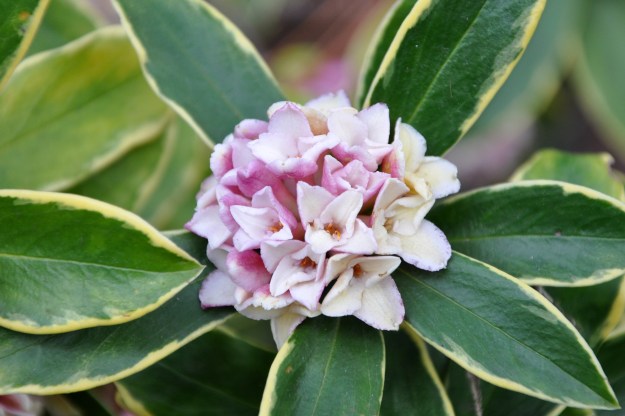
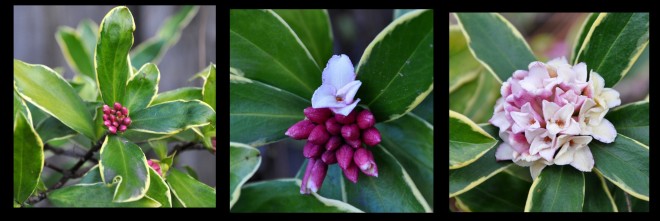
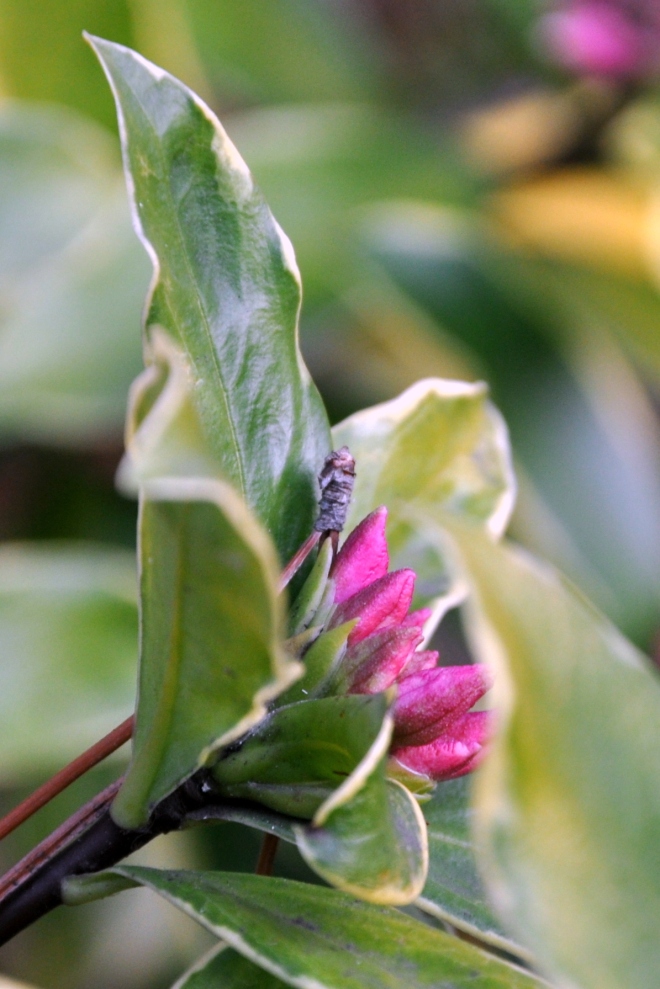
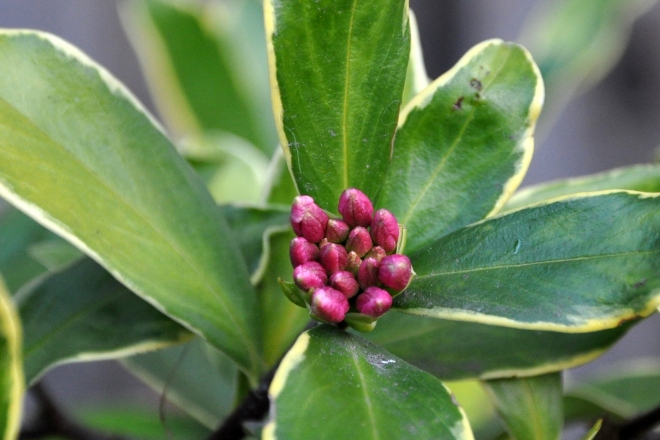
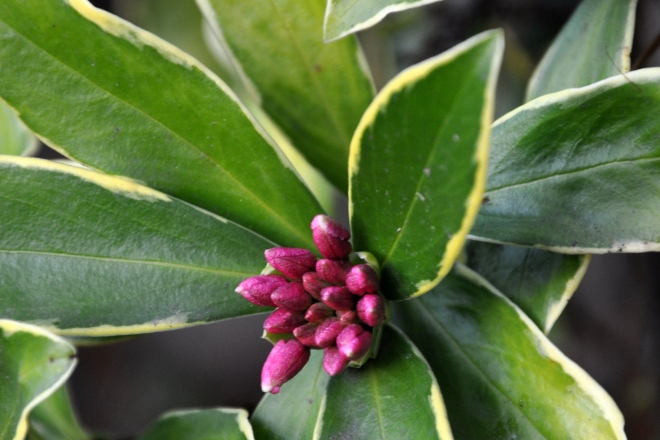
Blooming Thursday: Daphne Odora

Daphne Daphne DaphneNo one told me Daphnes were finicky.  Just as well since I planted two over a decade ago. On at least three occasions landscapers and nurseryman applauded my success. What gardener doesn’t beam with pride at that? I sure do.

Then one died.  Just like that. Did I mention they’re finicky?

I’m keeping my eye on the other one. The surviving Daphne is in bloom this week, the darling of the winter garden. Daphne Odora shines brightly with glossy leaves and deep pink to white flowers. The plant will remain in bloom through spring, when lots of other color joins in. Yippee!!!

Happy Birthday Benjamin Franklin

Ben Franklin introduced soy beans and Kale to the US in his time.  He wasn’t so much a gardener as a man interested in seed trade. His legacy includes inventing bifocals and the Franklin Stove, not to mention his role as one of the Founding Fathers of America.  Happy birthday, Mr. Franklin .  One of my favorite quotes:

 “Do not anticipate trouble, or worry about what may never happen. Keep in the sunlight.”

This is an area where I have lots of room to grow.  It’s also an interesting metaphor for the garden.  Ask any plant, and they’ll tell you the same thing: Keep in the sunlight.


Gardening with Connections

Tomato Paul Robeson Heirloom Seeds

Tomato Paul Robeson Heirloom Seeds

It pays to have connections. Especially when we’re talking tomatoes. Seeds that is. Heirloom Seeds.

Imagine my delight yesterday to find my mailbox stuffed with a slightly padded manila envelope just screaming to be opened. (I never tire of ‘real’ mail and do my part to keep the post office in business. How about you?)

One of my good friends and occasional garden advisers works at Almaden Valley Nursery.  A representative from the Seed Bank in Petaluma came by the nursery and left two complete sets of Heirloom Seeds.  My lovely friends sent one of the sets my way. (Thank you!!!)

I am so excited! The fact that they arrived on a bitter-cold winter day makes it all the more sweet. Here’s what I’ll be looking forward to:

Tomato Black Mauri (Black Moor): Described as a sweet, deep chocolate-brown, grape tomato that is sweet, flavorful with a crisp and crunchy texture

Tomato Cherokee Purple: The best for salsa. An old Cherokee heirloom, pre-1890 variety.

Dr. Wyche’s Yellow:  One-pound fruit.  Oh me oh my!

Black Giant: Big, purple-black fruit grown on “highly productive” vines.

Tomato Paul Robeson: Fascinating!  Here’s what the packet says:

“This famous tomato has almost a cult following among seed collectors and tomato connoisseurs. They simply cannot get enough of this variety’s amazing flavor that is so distinctive, sweet and smokey. Named in honor of the famous opera singer star of ‘King Solomon’s Mines’, 1937. Paul Robeson was an Equal Rights Advocate for Blacks in Russia as well as around the world. This Russian heirloom was lovingly named in his honor. We are proud to offer such a wonderful variety.”

Heirloom Tomato SeedsResources:

  • Seed Bank West coast home of Baker Creek Heirloom Seeds, housed in a 1920’s historic building in downtown, Petaluma, California.
  • Almaden Valley Nursery Locally owned garden nursery in San Jose, California.
  • Baker Creek Heirloom Seeds  Offers 1400 heirloom seeds (non GMO).
  • Paul Robeson:  All-American athlete, singer, actor and civil rights advocate for people around the world.

Harvesting the Gourds: I Grew a Pair

It’s pouring today. (I love it). Good thing I cleaned the garden box when I did. After a midweek frost, the birdhouse gourd vines shriveled up. I cut down the last of them and brought the pair of gourds indoors for drying.

Tidied Garden

Tidied Garden

I have a good giggle whenever I pass them. They look exactly like a pair of bowling pins.

two birdhouse gourds

Lindy keeps an eye on the “bowling pins.”

Earlier in the year, one of the vines grew up and over the telephone line. Eventually one of the two large gourds took hold, putting weight on the lines. I came up with a quick fix using garden twine and a mesh bag, pictured below.

Birdhouse Gourd:  In the Bag

birdhouse gourd in the bag

It worked really well, allowing the gourd to grow unhampered and at the same time it kept my internet up and running. I have my priorities.

What I didn’t expect was the honeycomb pattern the bag left on the gourd. It’s not imprinted but rather faded from the lack of sun. Isn’t that interesting?

Honeycomb Patterned Gourd

Honeycomb Patterned Gourd

Now we wait.  While the gourds are drying, I’ll be dreaming of a way to decorate each one. Here are a few ideas:

Debbie Almond: Birdsmiths

Linseed Oil finish from Fun In The Making

Jack Frost Nipping at the Plants

DSC_0008Jack Frost has a mean bite.  In just one night, the late season pumpkins are through.  I rounded the corner this morning, stunned to see how quickly the damage took hold. The pumpkin plant looks a bit sad next to the otherwise vigorous winter vegetables, but I knew it was just a matter of time.

I covered the two coleus with frost cloth in mid November, but a partially exposed section of one of the plants froze as well. I’m going to add another layer tonight (wished I had done so earlier).  We’re expecting a low of 38 F for one more night.  Showers are in the forecast  the rest of this week with lows warming up to 45 F.

Baby, it’s cold outside!

Frost damaged pumpkin plant

Frost damaged pumpkin plant

Damage-free coleus

Damage-free coleus

Frost Bitten Coleus

Frost Bitten Coleus

DSC_0011


The Big Chill: Out of the Crisper and into the Soil

Three's a Charm

Three’s a Charm

When you live in a warm climate like California, it helps to employ a bit of trickery with the tulips.  So when I bought three bags of tulip bulbs back in October, the first step was a cool dark rest in the crisper drawer of our fridge.  Keeping bulbs in the frigid dark, prompts their DNA into thinking they’ve been through an early chill.

Today I planted about a dozen bulbs along the rock wall near the garden fence, convinced that the racing squirrels overhead were just waiting to dig them up for lunch. I tamped the soil firmly and with determination, hoping they’ll stay planted through early spring.  I buried the rest of the bulbs in a variety of pots, and in a few random locations around the garden.

Ready to Plant Tulip Bulbs

Ready to Plant Tulip Bulbs

Squirrel in the Pittosporum

Squirrel in the Pittosporum

Squirrel in the Pine

Squirrel in the Pine

Figuring I could hedge my bets (or chance of survival) by interspersing the bulbs in heavily planted pots, I tucked them deep into the corners and under the canopy of existing plants. I hope they survive the onslaught of the squirrels. They’ll be a magnificent if they do.

Tulip Bulbs

Tulip Bulbs