Spiders and Lizards and Rats, Oh My!

My version of Halloween is pretend-scary. I trot out the plastic spiders and the rubber rats, then I fill in liberally with pumpkins.

Yesterday, life was having none of that.

Bungee Spiders

It finally cooled down by ten degrees spurring us into decorating action. My son set up his inflatables while I rearranged the deck furniture. I took my baskets of succulents from the hooks, gave them a quick tap, then set them in the kitchen sink for a cool drink. I put them out back this time of year to make room for decorating.
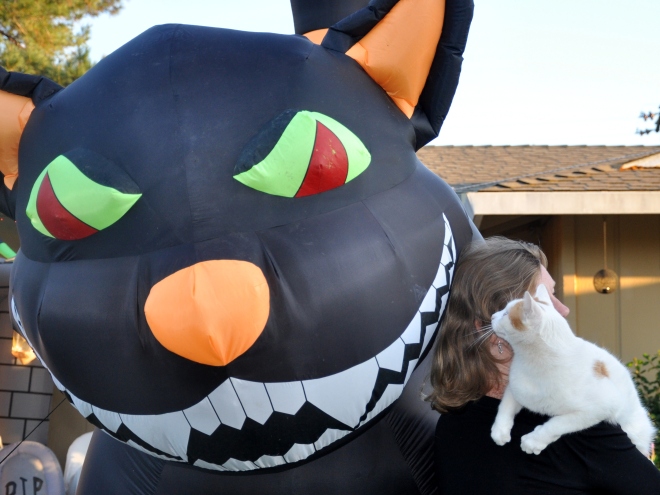
Giant cat inflatable and the great white hunter

Giant cat inflatable and the great white hunter

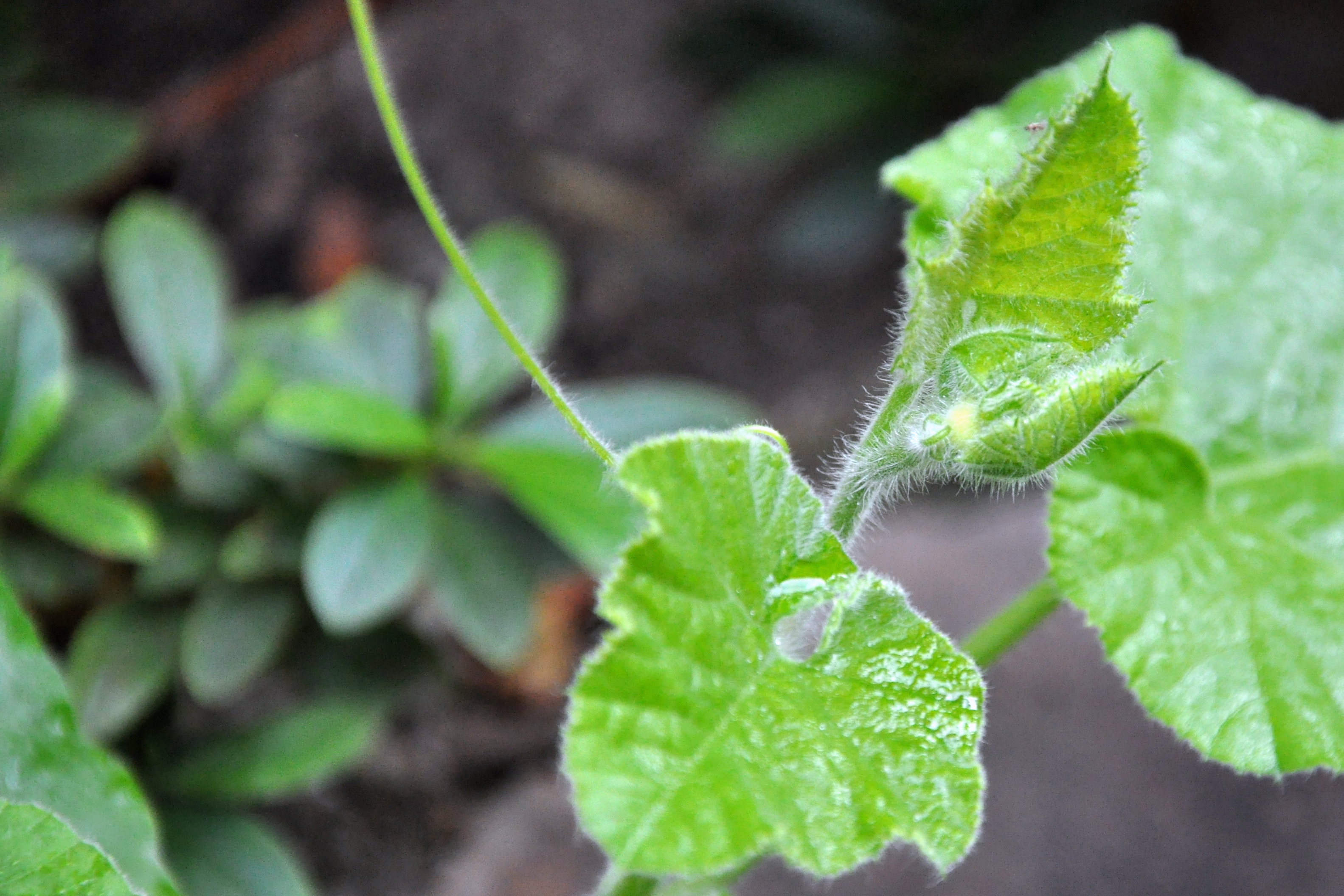
I saw a quick movement emerging from the stems and a spider *jumped* out of the plant. Spiders climb and swing in my experience, but this one jumped. It went from the plant into the sink, then half way out of the sink it jumped again. Yikes. I quickly gathered my wits and grabbed my spider catcher, keeping an eye on the jumper at all times. With the spider safely ensconced, I walked quickly to the back of the garden and released it on the rock wall. The bungee spider jumped one more time, turned in my direction and looked right at me with… blue eyes!!!  That really creeped me out.

Addendum: I’ve since learned that my bungee spider is none other than Phidippus audax. Based on the orange legs, my little visitor is a juvenile.  His eyes aren’t blue, but his chelicerae are. Feel free to use that word in a sentence over the next few days. According to Wiki:

Phidippus audax is a common jumping spider of North America. It is commonly referred to as the daring jumping spider, or bold jumping spider. The average size of adults ranges from roughly 13–20 millimetres (0.51–0.79 in) in length. They are typically black with a pattern of spots and striped on their abdomen and legs. Often these spots are orange-tinted in juveniles, turning white as the spider matures. The spider belongs to the genus Phidippus, a group of jumping spiders easily identified both by their relatively large size and their iridescent chelicerae. In the case of P. audax, these chelicerae are a bright, metallic green or blue.

Lizards are us

Mighty Mouse, our friendly neighborhood cat, brings us lizards. It’s happened so often in the past few months, that my boys simply call out ‘lizard!’ and I’m spurred into action. Protocol is as follows:

  • Confine the cat in a bedroom while someone else keeps an eye on the lizard.
  • Assess the size of the lizard, and find an appropriate plastic container, preferably with a view.
  • Grab a piece of cardboard and tiptoe behind the frightened and temporarily paralyzed little critter.
  • Pounce! I can’t stress this step enough. Otherwise the lizard goes skittering all over the place and my only option is to gradually coax a terrified and sometimes hissing lizard towards an open door.
  • Relocate the lizard in the back of the garden and hope he finds his way to safety.
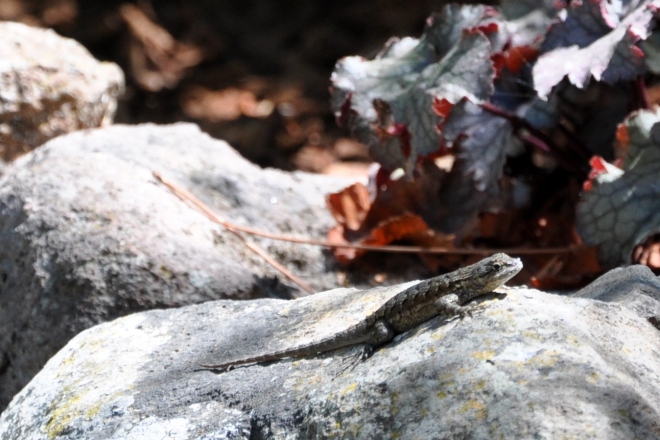
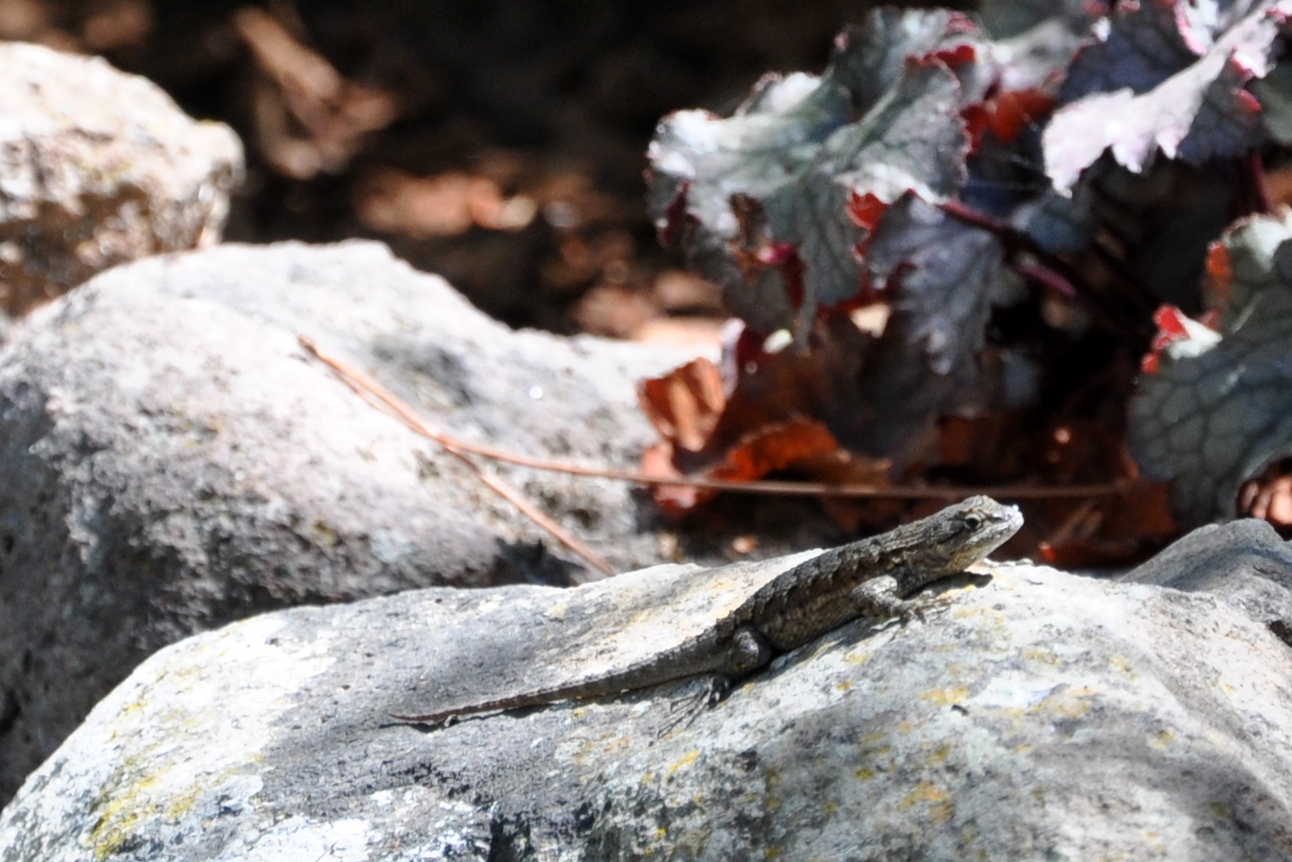
Tiny lizard catching sun on the rock wall

Tiny lizard catching sun on the rock wall

Rat a Shoe-y

7:30 each morning is a flurry. Boys grabbing backpacks and lunches, putting on shoes and heading out the door for the carpool. It was the same this morning, but for one exception. My son put on his first shoe without a problem. When he stepped into his second shoe he could feel something at the end. He picked it up, looked inside and found himself gazing at a live rat. Startled of course, he screamed and tossed the shoe into the air and off scurried the rat.

Unfortunately only part of the lizard protocol works when you’re trying to capture a rat: cats confined to the bedroom. The rest is by the seat of your pants.

Unable to stay for further investigation, I left the rat patrol to my husband and quickly fled with the boys.

There are two up-sides to this story. My son is fine. No bites or scratches to his tender toes. Further, I had a proud-mama moment when, once recovered, he worried that he hurt the rat. Mike rearranged the furniture in the most interesting fashion, and in the end, the tiny rat fled through the back door.

The last text from Mike:

The cats did a once over of the living room and declared it boring, which I take as rat-free. I left it in disarray. Sorry. Just push everything back.
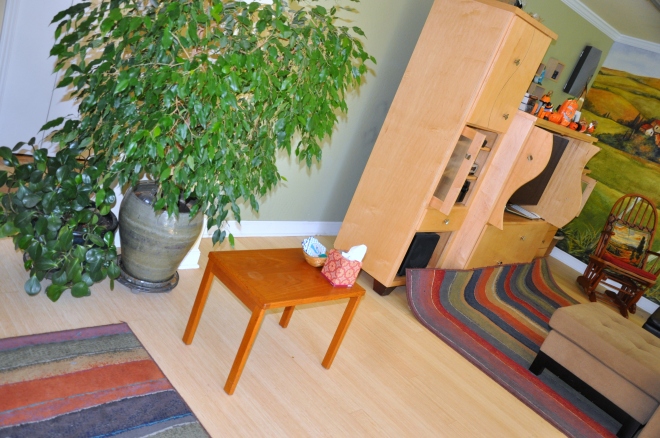
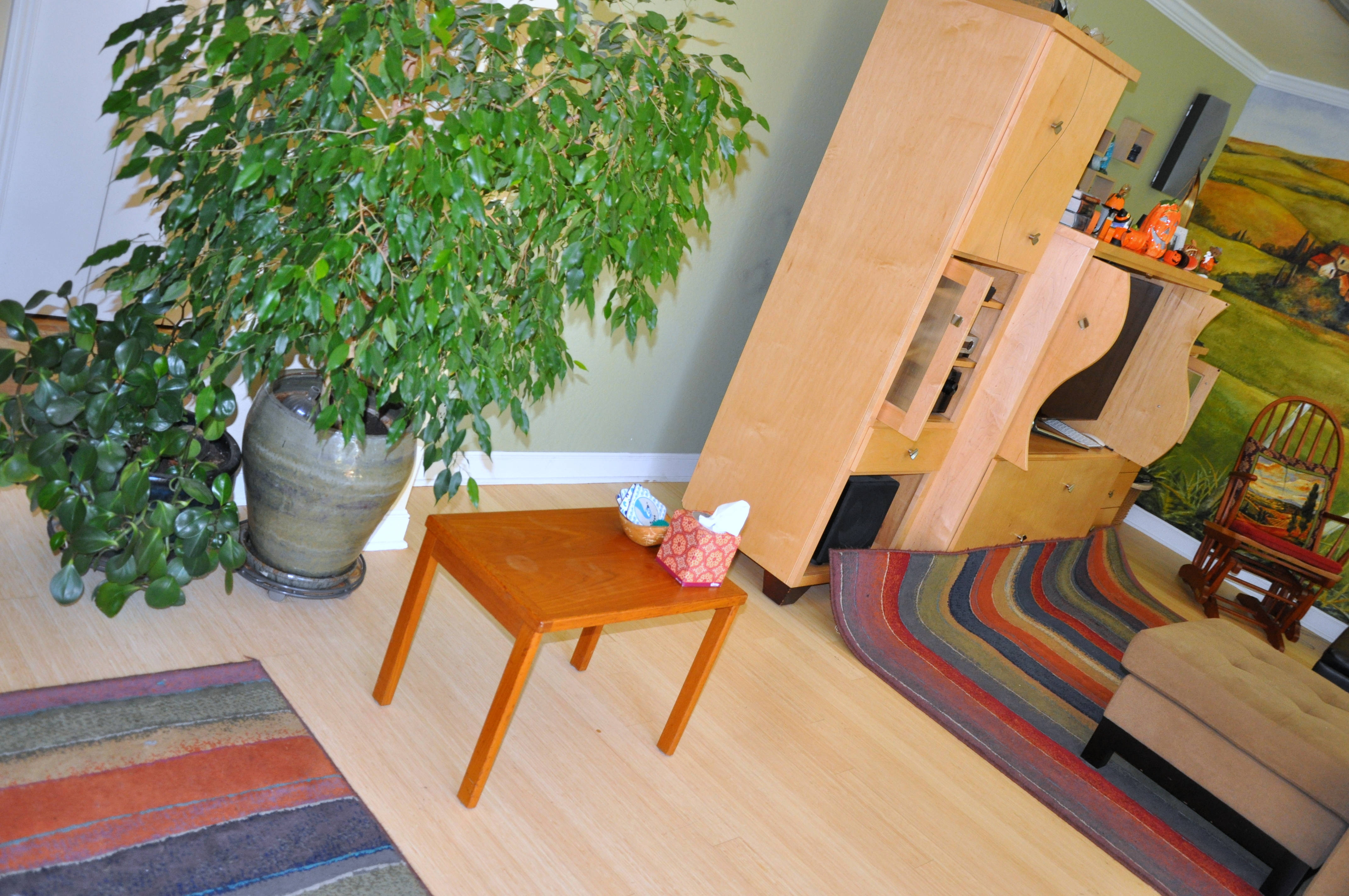
rearranged furniture

Rat-free living room

Phew!

No-Candy Countdown:

Throughout October, I’m keeping track of the candy I **don’t** eat.  They say it takes thirty days to make or break a habit, but I must say that eight days in I’m feeling great.  Yesterday I discovered Fat-Bottom-Fifties Get Fierce, via Pauline. M and E are doing their own 30 day challenge and are encouraging others to join in. You can follow along at Getting Fierce Goal-fest! There’s nothing like putting your commitment up on the internet, is there?

Under-the-sea Costume Update:

Since I don’t have the luxury of a crafting room, our living room doubles as my sewing space. This morning I set up my sewing machine, the ironing board, my ‘selfie’ and all my supplies so I’m ready to drape and sew.

Pumpkins on Parade:

Special thanks to Pauline for The Contented Crafter for the fourth suggestion this month. Pauline says:

I very much like your Baker Pumpkin – good on Boomdee for making that pick! – and I would like to suggest a gardening pumpkin in honour of the hard work and the hours you put in to your actual garden and your blog garden :-)
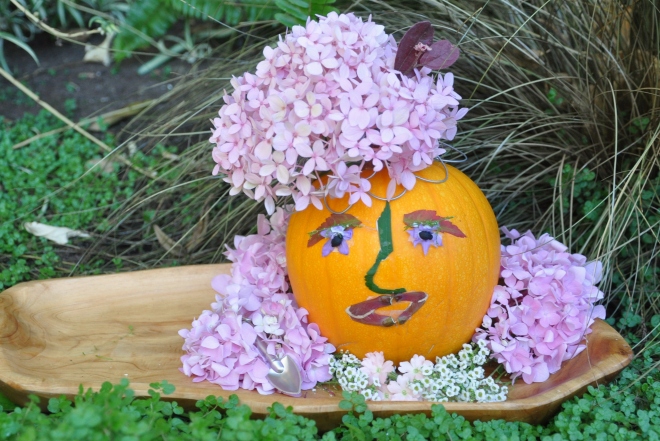
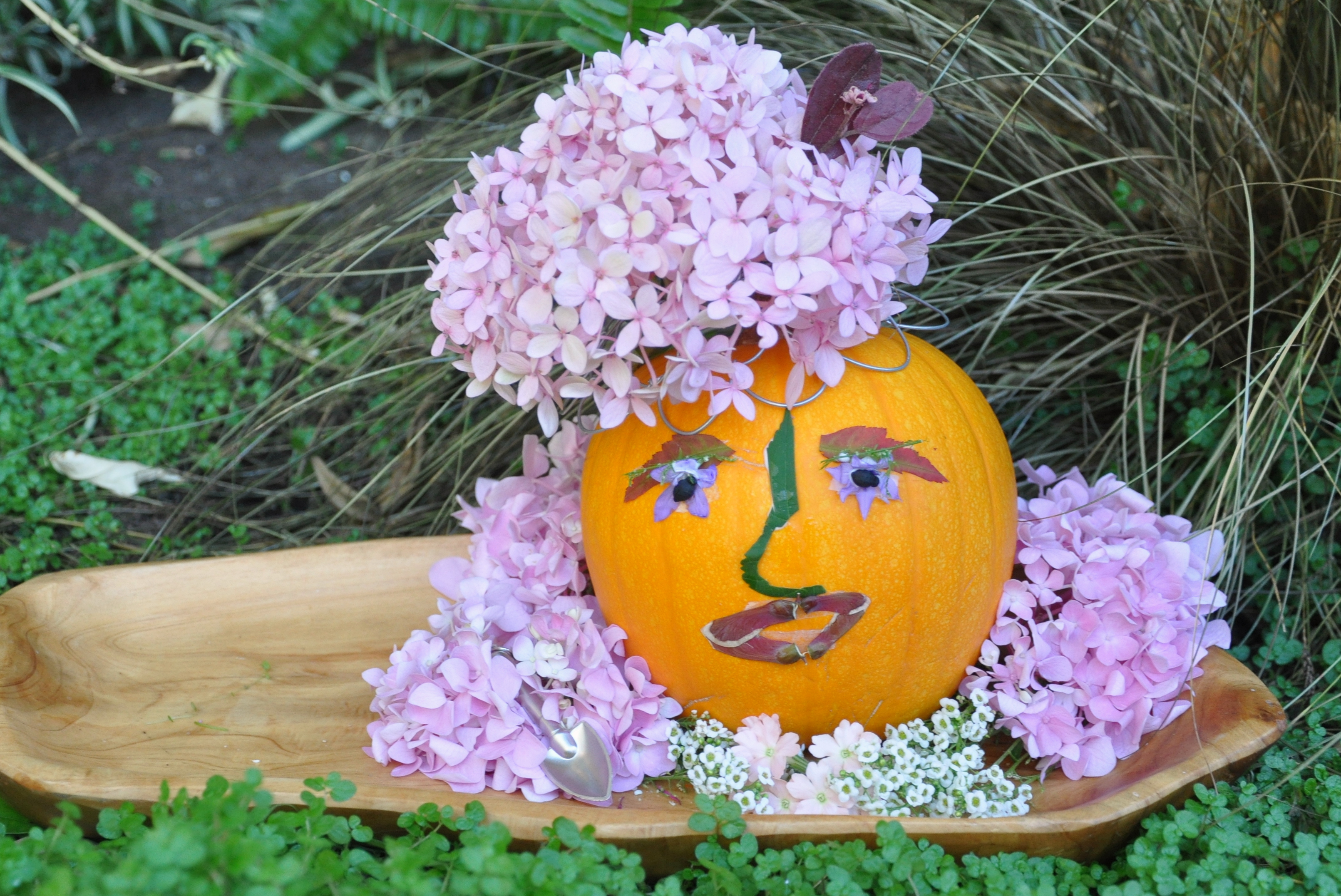
gardener pumpkin

Garden Pumpkin

Garden Pumpkin Key: Hydrangea hair nestled in my new Flower Arranger. An elaborate collar, also made from hydrangeas, with an Alyssum necklace. Eyebrows crafted from Acer leaves and the lips pouting away between Acer seed pods. The nose leaf comes from one of the Abutilon. Bluebell eyes, punctuated with black flower seeds. Fluttering lashes come from a fern.  That cute little spade: a treasure from my recent trip to Victoria. It’s actually a key chain.  I’m incorporating it into my costume as well. The gardener looks pensive, but she really does have fun playing in the dirt.
You can read more about pumpkin-dress up month at, NEWS FLASH! Halloween Takes Over Gardening Blog.

If you have any suggestions for ‘pumpkin costume of the day’ please let me know. I’ll see what I can do.
It Rained!

Yes, folks, right here in San Jose, California, in the midst of a protracted drought, it rained. In September.

Real rain too, not that “did I just feel a drop?” kind of rain, but puddle-forming, windshield-wiping, garden-refreshing rain.  I lingered in bed this morning with the doors flung open and took in the mesmerizing sounds and smells. Then I got dressed and went outside.

gardener in the rain

Rain, glorious rain!

Good thing, too, since the sun was out by 10 but I enjoyed the refreshing drops while they lasted.

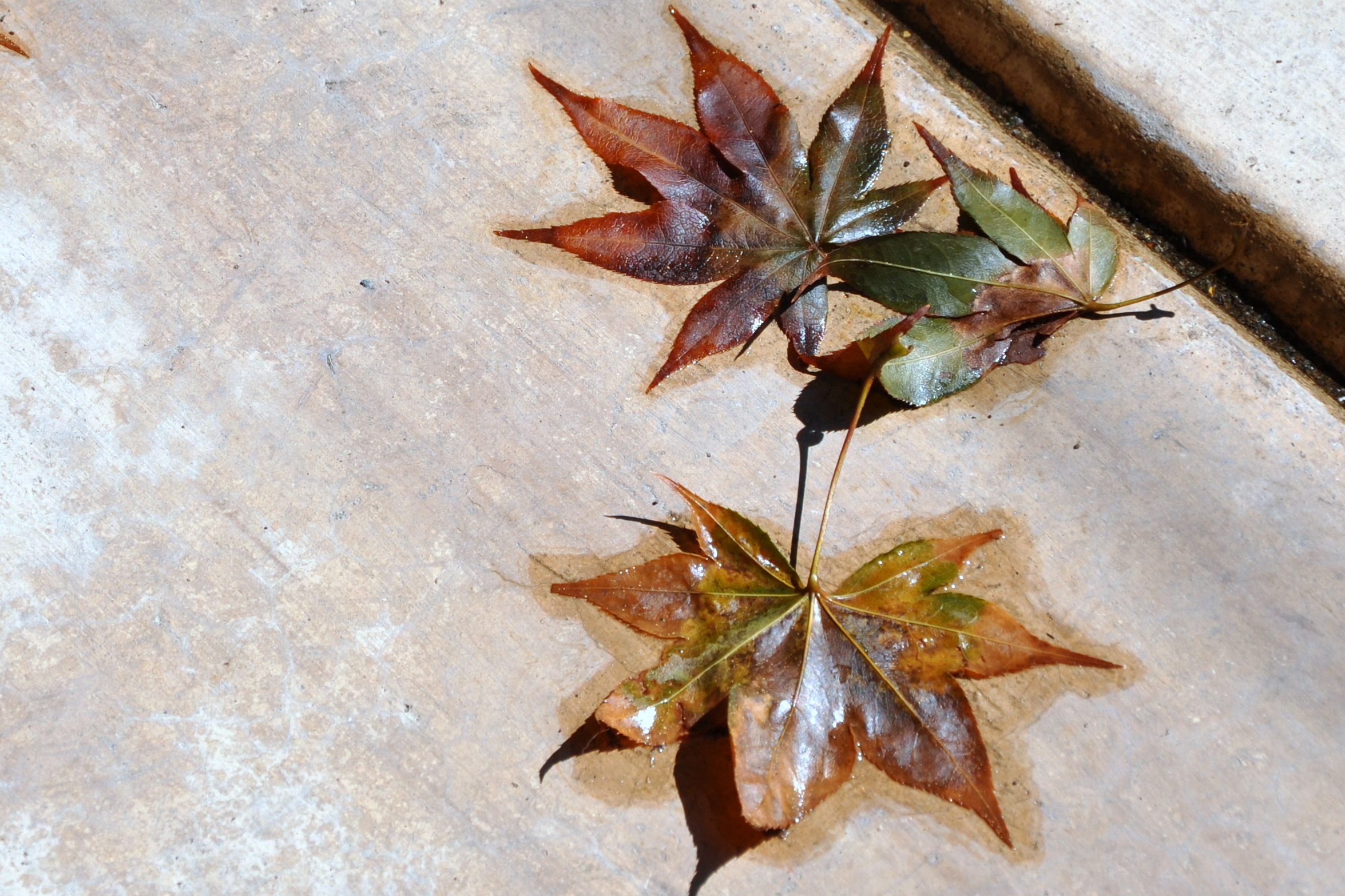
acer leaves

Acer leaves

deck in the rain

Cloudy skies and Salvia reflected on the deck

This is a tremendous gift to the firefighters battling the King Fire in Northern California. We are not in harm’s way, but others are. Many of  the state’s late-summer fires are the result of lightning. Sadly this one was arson. Fortunately they’ve made an arrest, but the fire has raged out of control for two weeks.

The good news today is that the fire is 43% contained, but the damage is unbelievable. 95,000 acres burned and a dozen homes lost.  Their are over 8,000 fire personnel from across the country battling the flames.

Today I celebrate rain in my little corner of the world, as well as the potential relief for crews on the fire lines and displaced residents in our parched state.

Let it rain, let it rain!


Here’s the latest from the Weather Channel:

Western Drought Monitor

Western drought status as of Sept. 16, 2014. Darker shading indicates progressively worse drought status. (NOAA/USDA/NDMC)

Yes, runoff triggered by soaking rain from this September storm in far northwest California will raise a tad.

However, the key to drought relief in California is not rain, but snow.

Critical to water supply in this part of the country is the buildup of winter snow pack in the mountains, whose melt water in the spring replenishes reservoirs.

Snow melt provides up to 75 percent of the West’s freshwater supply. The Sierra and, to a lesser degree, Colorado River snow melt, is crucial for California.

In short, California and the West needs a persistently wet winter, with a combination of significant rain and mountain snow to replenish groundwater and reservoir levels.

Tomato Swan Song

tomato harvest

This weeks tomato harvest

The heirloom tomato plants pumped out fruit all summer long. We ate them raw and in salads, sliced between sandwiches and Mike made the surplus into salsa. Oh yum.

Alas, tomatoes are a summer annual and they’ve come to an end. Here in the Northern Hemisphere,  fall is just a couple of weeks away. It’s time for the tomato swan song.

The plant is still pumping out fruit, but the lower leaves are browning and the fruit isn’t nearly as sweet.

tomato ripening vignette

Ripening vignette

tomato plant in decline

Tomato plant in decline

I collected a huge bowl earlier this week, washed them and popped them in the freezer. We’ll be able to enjoy them in another salsa or sauce. I harvested some green tomatoes as well, and put them in a paper bag. If green tomatoes have released a gas called ethylene then they’ll continue to turn red. Otherwise they’ll remain green. The bag simply traps the gas and allows nature to follow its course.

Here’s an excerpt from Garden Know How:

The main determiner in how fast a tomato turns red is the variety. It will determine how long it takes for a tomato to reach the mature green stage. Tomatoes cannot turn red, even forced by modern technology, unless it has reached the mature green stage.

Another factor  is the outside temperature. Tomatoes will only produce lycopene and carotene, two substances that help a tomato turn red, between the temperatures of 50 and 85 F. (10-29 C.) If it is any cooler that 50 F./10 C., those tomatoes will stay a stubborn green. Any warmer than 85 F./29 C., and the process that produces lycopene and carotene comes to a screeching halt.

Tomatoes are triggered to turn red by a chemical called ethylene. Ethylene is odorless, tasteless and invisible to the naked eye. When the tomato reaches the proper green mature stage, it starts to produce ethylene. The ethylene then interacts with the tomato fruit to start the ripening process. Consistent winds can carry the ethylene gas away from the fruit and slow the ripening process.

If you find that your tomatoes fall off the vine, either knocked off or due to frost, before they turn red, you can place the unripe tomatoes in a paper bag. Provided that the green tomatoes have reached the mature green stage, the paper bag will trap the ethylene and will help to ripen the tomatoes.

This year’s crop planted themselves. I call them ‘volunteers’, seeds unintentionally planted thanks to the wind or a bird dropping seed. They’re often the healthiest plants in the garden.  So while I’ve saved some seeds, I’m also lobbing the occasional tomato back into the veggie box, hoping they’ll plant themselves again next year.  Sometimes, a gardener just needs to get out-of-the-way.

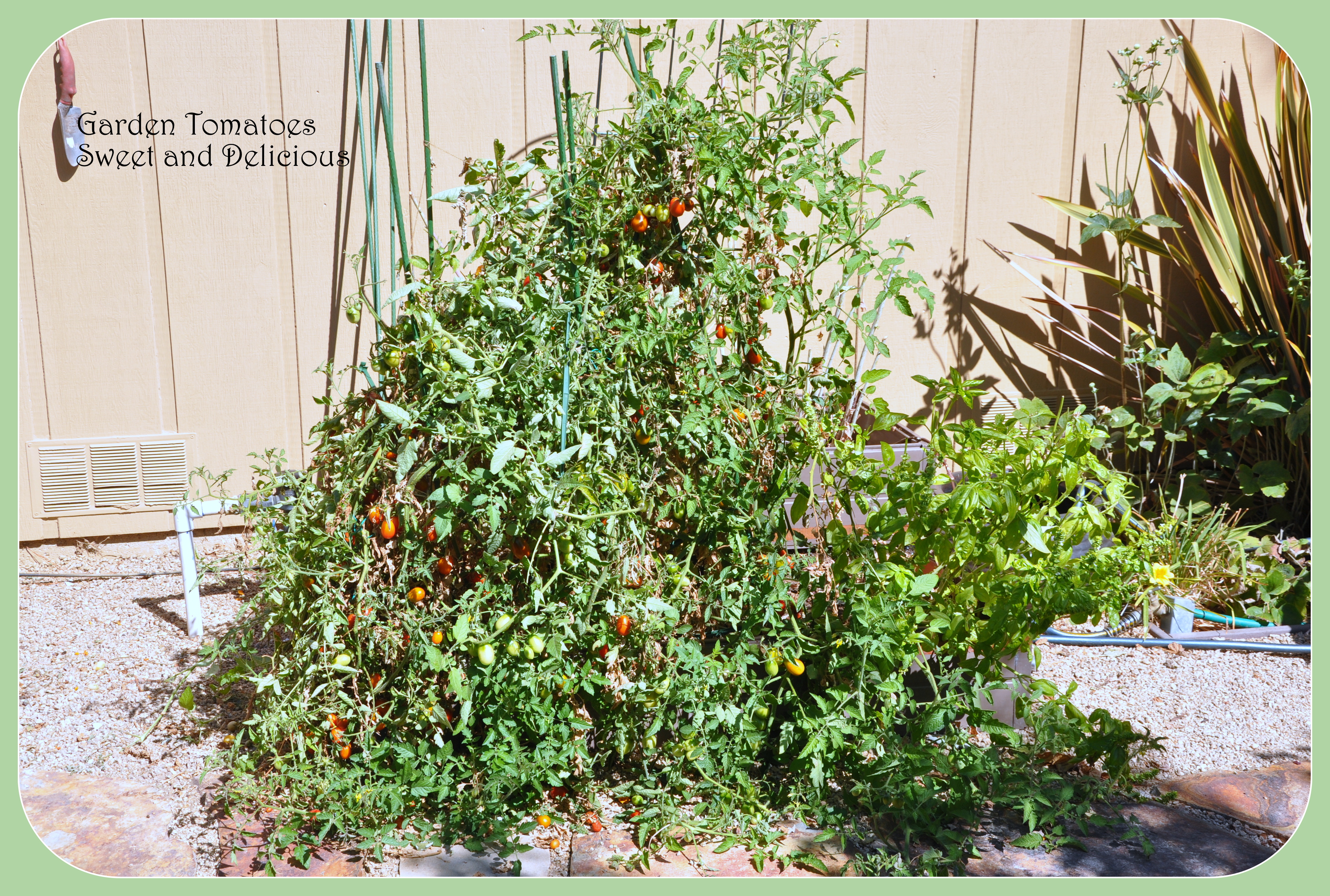
tomato long view

Tomato Plants: the long view Dear Reader, I wish you were here! This is a recent shot of my tomato plants. I’ve been harvesting tomatoes all summer long and putting them to good use. If you were here we could make a salad together while we caught up on our news. Until recently, that ugly pipe was hidden with cherry tomatoes. Just behind the tomato plants are the recently pruned raspberry vines. Let’s catch up soon. Cheers, Alys


Musings of a Gardener Returning to her Nest

The strangest thing happens when I first return home from a trip. It’s subtle. It doesn’t happen when I’m gone for just a day but if I’m gone a weekend or longer I notice.

If I lived with Sheldon from The Big Bang Theory he could probably sum it up in a sentence or two. In my unscientific mind it feels like my environment shifted. Does this happen to you?

It started at the airport. Mike pulled up to the curb, and the boys spilled out of the car. They didn’t look like the boys at the airport curb just a week before. They’d changed. I studied them closely when we were back in the car. How much could change in eight days? Yet it was there. Palpable.  One week older, that much closer to manhood, tousled hair a fraction longer. Strange.

Back home the environment shifted too. The furniture hadn’t been moved, all the kitties were present and accounted for but time moved ahead by a week. I could feel and it smell it in the air.

In the garden, the changes were even more profound. Squash bugs took over the last pumpkin hanging. Pantyhose be damned!  I’m glad I harvested the other three early.  Tomatoes remain on the vine, but they’ve lost their rosy plumpness. Left unattended the basil flowered along with a few sweet peas, arriving late to the show.

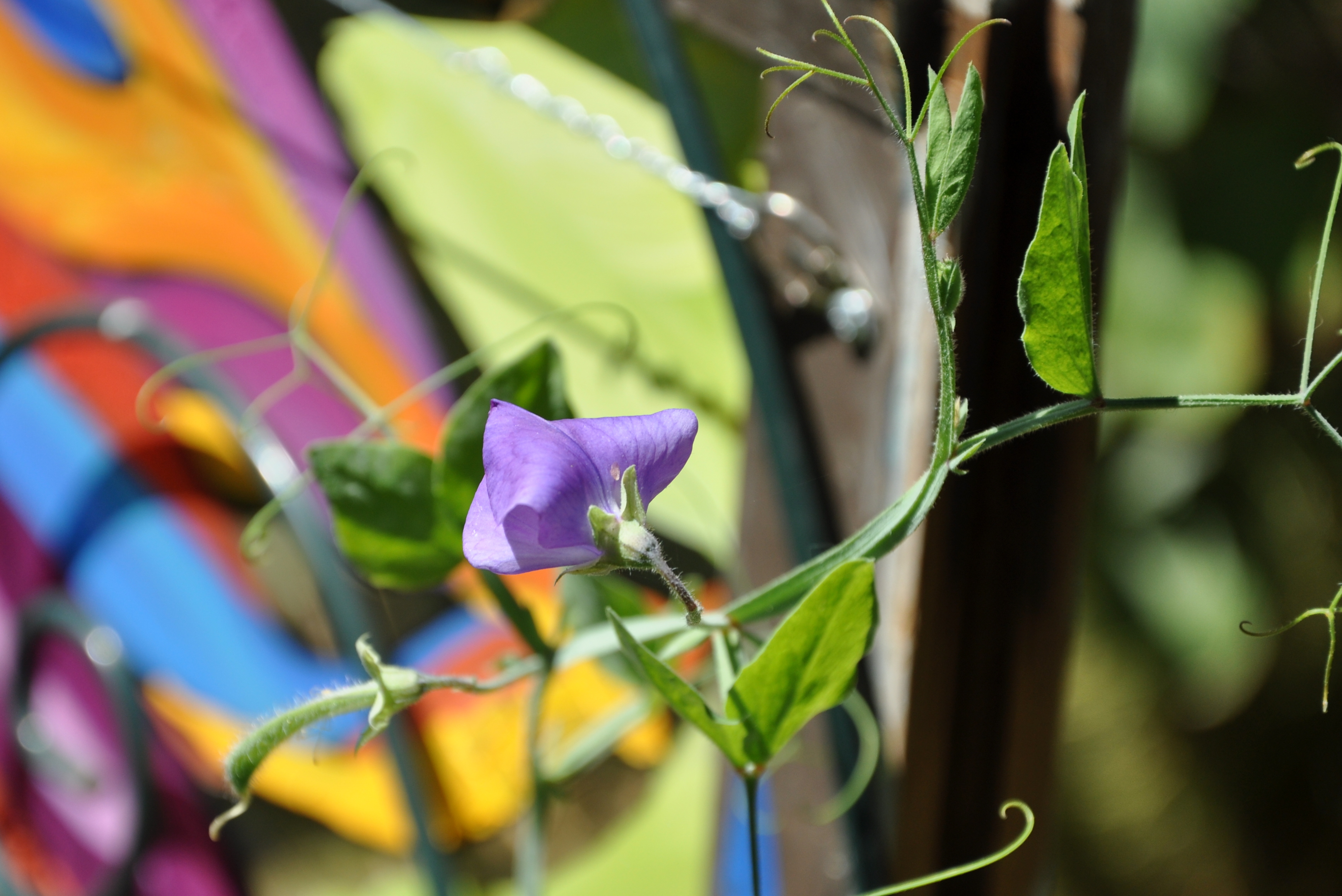
purple sweet pea

A purple sweet pea…at last. Thanks for the seeds, Boomdee!

pumkin with squash bugs and pantyhose

Pantyhose fail: Squash bugs, 1, Gardener, 0

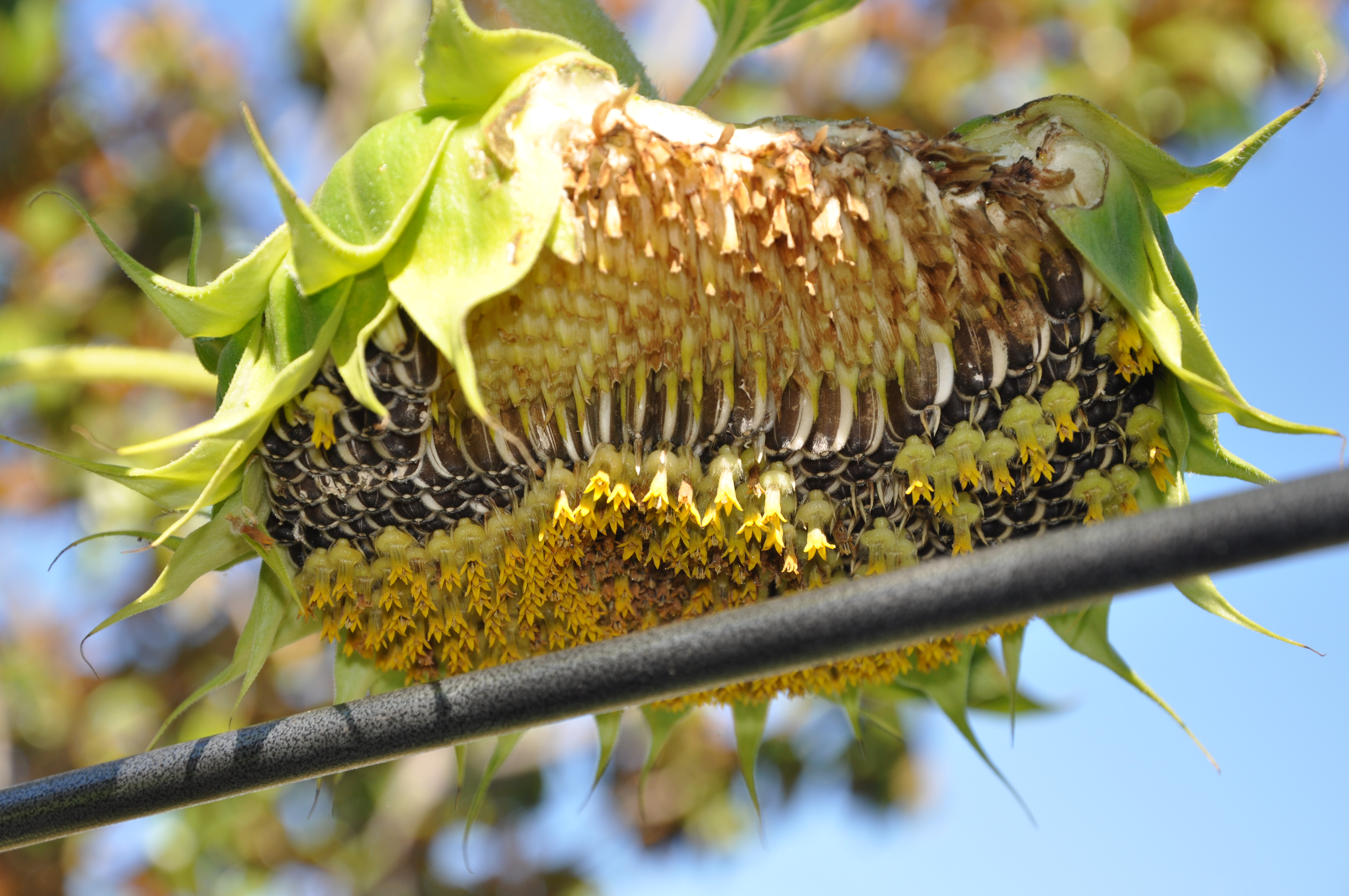
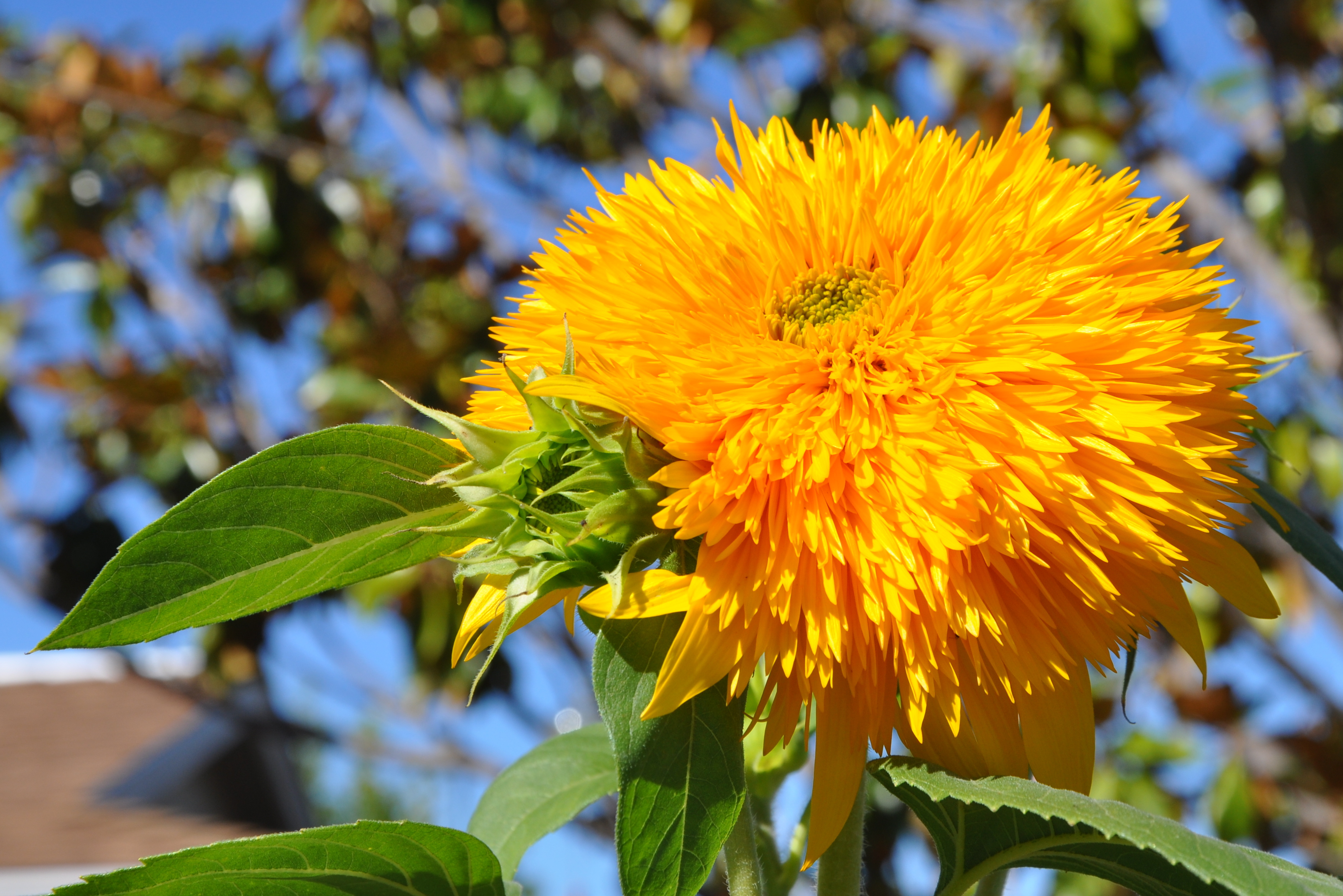
Most of the sunflowers are bowing with weighty seeds. One newcomer bloomed in my absence. What a happy surprise. I planted a variety pack, but thought I’d seem them all. This one looks like a bright yellow pom-pom and stands over six feet tall.

sunflower seed head

Someone’s enjoying the sunflower seeds

pom pom sunflower

My newest sunflower

Another subtle shift happened while I was away: a shift of mind. Rather then trying to break bad habits, I’m focusing on establishing better ones. I’m heading to bed earlier and reading more. I’m rethinking my blog, exploring new ideas and realizing that a vacation is not only time away but a break from doing the same thing.
The trip itself was a treat beyond measure. I got to spend time with my dearest friend, Boomdee, her delightful cousin, another blogger and a woman I’ve never met. We walked, talked, laughed, shopped and carried on like teenagers. It was good for my heart and my soul.

Victoria, BC, 2014

Victoria, BC, 2014

I love traveling and I love coming home. Time away helps me appreciate the value of both.

How about you? Do you arrive home refreshed and ready for a change, or grateful for the return of your routines?

Curb Garden Anniversary

After a few fits and starts last year our curb garden finally took root. It makes me happy.

curb garden collage august

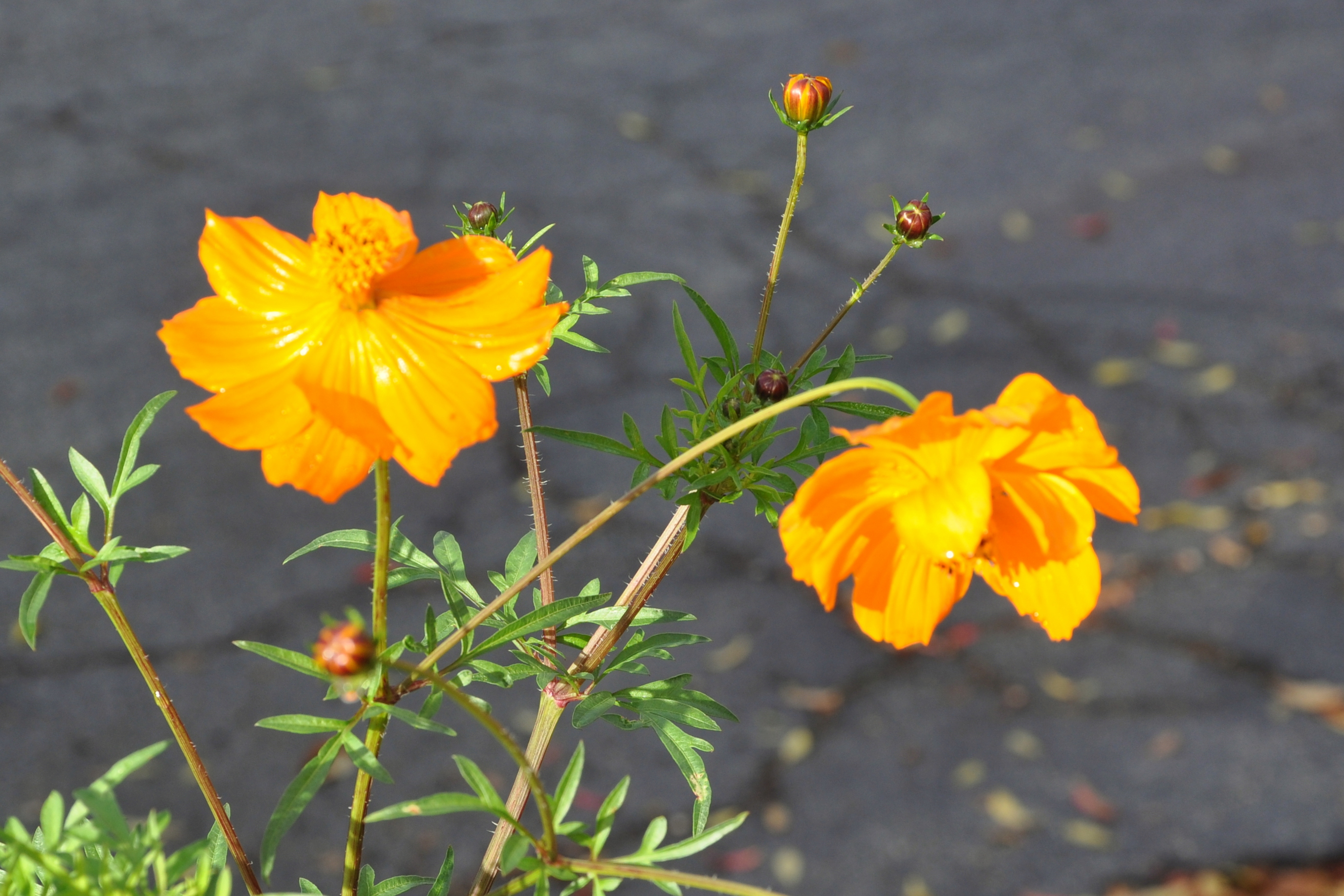
Clockwise: Snapdragons, Scabiosa going to seed, surprise gladiola, Cosmos, Penstemon, and yarrow

When we bought this house 18 years ago, the sidewalk strip was nothing but lawn. We planted a tree, but otherwise left it as is.  We had plenty of projects to keep us busy. Within a few years, we had two boys under the age of five.

About a year ago I considered removing the lawn and planting a vegetable garden in the mostly sunny strip. A handful of friends and readers cautioned against it.  A few had bad experiences with people stealing flowers or fruit. Others warned of cats using it as a litter box. Others suggested I plant on the house side of the strip, but my husband wasn’t ready to remove all of the lawn. Removing the grassy strip was a two-fold experiment: could he tolerate less grass, and would my garden thrive and survive. The answer to both is yes.

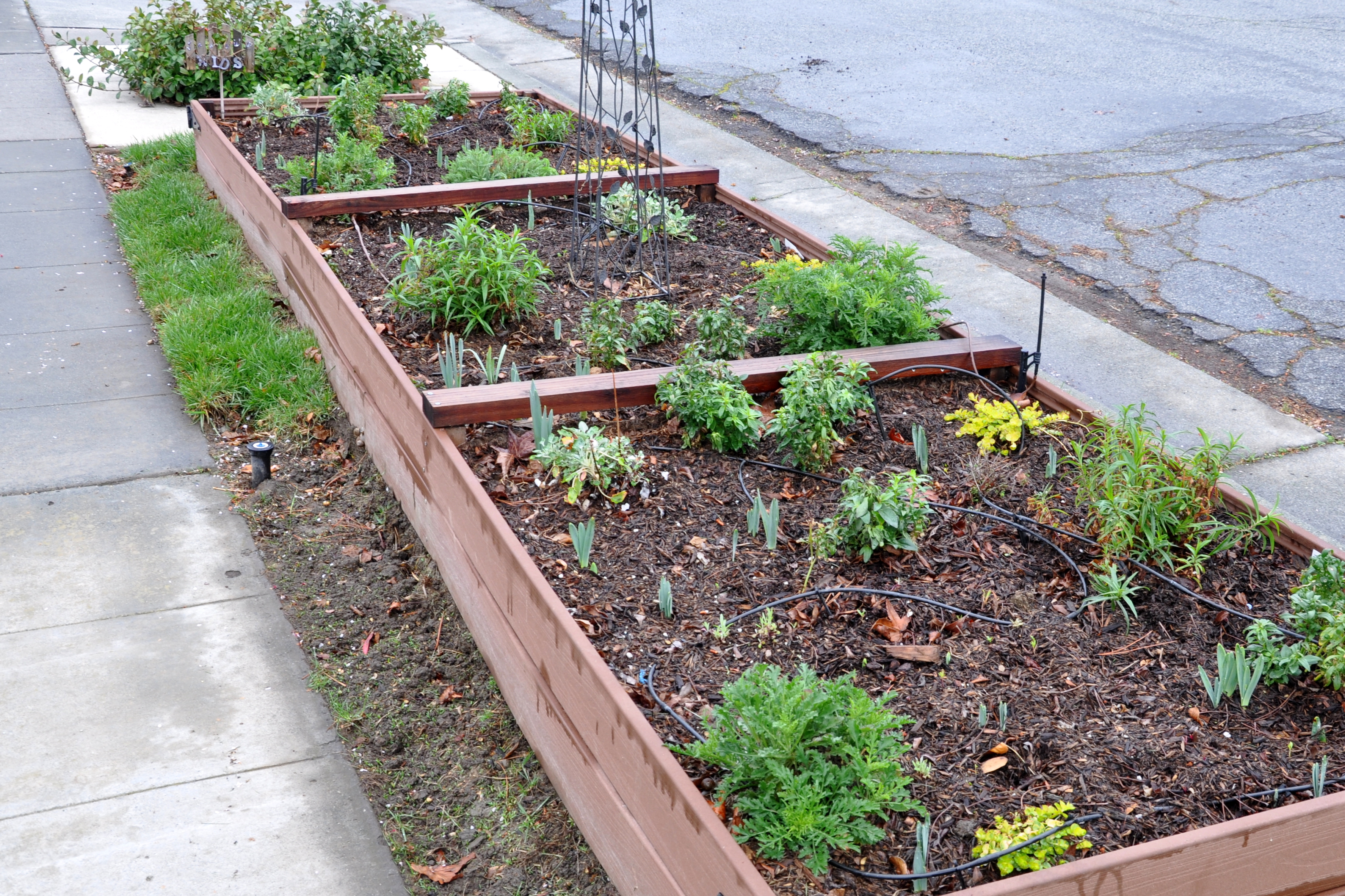
Sidewalk strip before and after

Sidewalk strip before and after

I posed the question to my readers via a blog poll and the results were split down the middle: plant the strip and you’ll regret it or go for it!  My friend Liz suggested a raised bed and that made the most sense.

I’m happy to say that nothing but positives emerged from my curb garden. Here are just a few:

  • I ordered potting mix from a supplier but they delivered topsoil by mistake.  I didn’t realize the significance but the garden failed to thrive. They apologized and offered a refund, but said they couldn’t take it back. Once sorted out, I had to figure out a way to get rid of 1 cubic feet of topsoil and begin again. I joined a Freecycle network in our community, and made a new friend in the process.  Serendipity!
  • My friend and neighbor’s daycare children planted carrots in the curb garden last fall. She made labels for each of the carrots and we all had fun watching the wee gardeners grow and harvest carrots.
  • I grew a beautiful crop of garden peas. Though cut short by an early and particularly harsh frost, they were beautiful and sweet in their day.
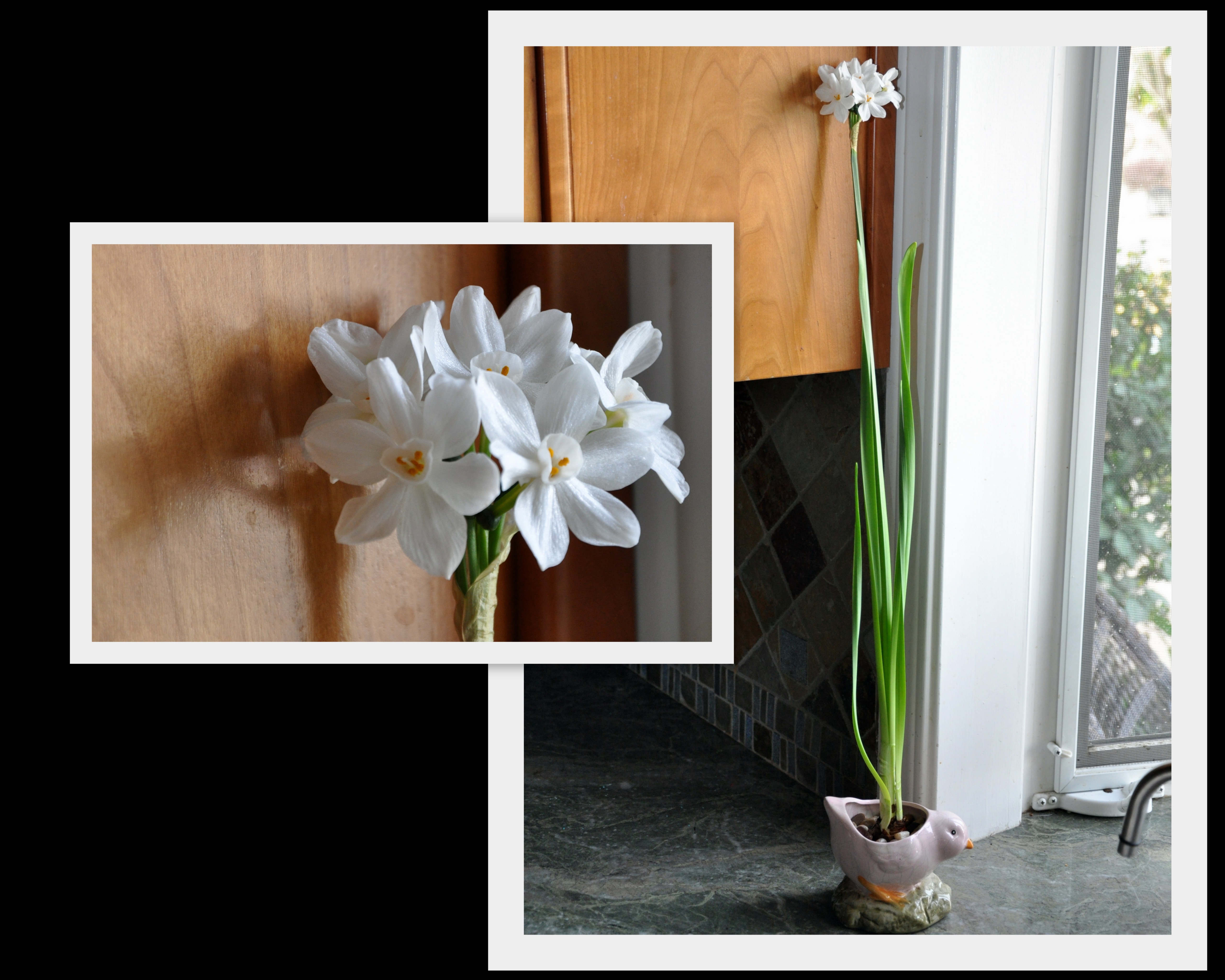
  • Late in the year I planted fifty daffodils ‘Narcissus’ broadcast style. They opened up in February and flowered for a month. What a glorious sight.
  • Most of the perennials did well, and doubled or tripled in size. I scattered a packet of wildflowers seeds to fill in bare spots, and a few of those have come up as well.  Two weeks ago I found a single, pink gladiola growing in the corner. I must have found an unidentified bulb in my garden stash and added it to the mix, but I have no memory of doing so.  What a fun surprise.

As I’ve educated myself on the pros and cons of different plantings, I’ve learned how little a manicured lawn does for the environment.  Lawns require a lot of water, as well as aeration and fertilizer.  They have nothing to offer the birds or the bees, so critical to the health of our ecosystem. My husband doesn’t want to let go of the lawn so it’s an ongoing debate. So far the compromise includes replacing the sidewalk strip and cutting back on watering the lawn.

Brown is the New Green’ is the motto of a $500K campaign launched by the Santa Clara Valley District. Water use is typically up to 60% higher during the summer months. Lawns are the worst offenders. Even a small lawn can use more than 18,000 gallons of water per year. We simply can’t waste water. – CBS Local News

Happy anniversary, little curb garden. Here’s to many more.

curb garden grass removal

Removing the lawn

daffodils curb garden

Spring daffodils

curb garden

Nick takes over, soft gravel and stepping-stones surround the garden


Operation Dill and a Harvesting Quandry

Squash bugs, you’re on notice: Operation Dill is under way.

My lovely little pumpkins are ripening but it’s a race against the clock.

Precious Pumpkin No 1

Precious Pumpkin No 1

Precious Pumpkin No 2

Precious Pumpkin No 2

Precious Pumpkin No 3

Precious Pumpkin No 3

With less and less vine for the squash bugs to eat, my trio of pumpkins remain vulnerable. Last year this happened…

This pumpkin never had a chance

2013: A sad day

I’ve been hand picking squash bug eggs and removing adults from the vines for weeks, but predictably I missed a few. They hatched into destructive nymphs. I just can’t keep up.

Pauline at The Contented Crafter suggested planting dill. Apparently when grown together, pumpkins and dill make excellent companion plants. I raced to the garden center between appointments, but between the heat and my busy schedule, I didn’t plant them right away.  I deposited all six pots on top of the EarthBox, leaving them to wilt.  Boo!

I eventually gave them a good soak and they recovered. I pulled the three pumpkins together in a group, careful not to break the vines. I surrounded the fruit with dill.

ripening pumpkins

Ripening pumpkins

Curious how they would react, I placed a dill plant near a bug congregation. They scattered! Ha!!!

Then I had a good laugh at myself. Of course they scattered when a bunch of leaves disturbed their reverie.

Would it last?

I checked last night and found an adult intruder sitting on the pumpkin stem.  No, no, no!

Next Monday I leave for a much-anticipated, week-long vacation to Victoria, Canada with my bestie Boomdee. Yay, me!

The men of the house will do a cursory check on the plants, but none of them are on board with hand-picking bugs while I’m gone.

So…should I harvest them Sunday morning before leaving town, hoping they’ll continue to color? Or should I leave it up to Operation Dill and take my chances?

What would you do?

Six Ways to Control Squash Bugs in your Garden by Sarah Toney


Things With Wings

Lift, gravity and thrust. It’s not the latest dance craze, but a short list of what things-with-wings need to fly.

Wouldn’t it be thrilling to have wings?  I remember an episode of Gilligan’s Island years ago that always made me chuckle. In one attempt to get off the shipwrecked island, Gilligan donned wings and jumped off a cliff.  He momentarily flew until the Skipper shouted “You can’t fly!”  Gilligan replied, “Oh’, and only then did he drop to the ground.

I love watching things-with-wings flying in and out of my garden. They move with speed, efficiency and agility like a well-trained gymnast flying over the bars. What a thrill.

Birds

bird collage july 2014

Visiting birds

I worry about the birds as our drought drags on. They’re traveling in circles, searching for food, water and seed. Reservoirs are low and plants are under a lot of stress.

I keep our bird bath topped off so that our visitors can quench their thirst. The garden takes care of the rest. It’s satisfying watching birds sip nectar from a flower or pilfer seeds from the compost bin. They sing, trill, hum and yes shriek but it’s all a reminder of our garden diversity.

According to Discovery.com

{birds} can play any number of roles in a given ecosystem, most of which fall into four main categories: provisioning, regulating, cultural enhancement and supporting services. Supporting services, for example, include tasks such as predation, pollination and seed dispersal.

All that and they’re cute, too.

Bees

bee collage july 2014

Bees pollinating sunflowers, pumpkins and Salvia

Through the camera lens, I’ve witnessed the extraordinary movement of bees gathering pollen. Shiny black bodies lift in and out of the pumpkin flowers, coating themselves a golden-yellow. The buzzing sound stops when they land, and within seconds they lift off again They are all business. If another bee is in the center of the flower, the second bee backs up and continues on. What they accomplish is extraordinary and relevant to our survival.

Butterflies

butterfly and statice

Butterfly and Statice

This beauty landed in the flower bed sending me racing indoors to grab my camera. Who doesn’t love a butterfly? When my boys were young, we visited the ‘caterpillar tree’ at our local park. One particular tree would be laden with cocoons. It was a yearly treat.  After a few years we stopped seeing them.

I’ve since learned that in the United States, Monarch butterflies have declined for the last twenty years. In the UK, certain species of butterflies are down by 50%. From an environmental perspective, butterflies are a bit like the canary in the coal mine. They’re extraordinarily sensitive to environmental changes around them and are apparently the most closely watched insect in the world.

I’m glad this special guest found something to eat in my garden.

Further Reading:

Declining Monarch Populations in the US

Habitat restoration efforts in the UK to combat butterfly decline

Nymph: Science vs Mythology

pumpkin turning orange

Pumpkin beginning to turn orange

A mythological nymph is:

a minor female nature deity typically associated with a particular location or land form. Different from goddesses, nymphs are generally regarded as divine spirits who animate nature, and are usually depicted as beautiful, young maidens who love to dance and sing; their amorous freedom sets them apart from the restricted and chaste wives and daughters of the Greek polis. They are believed to dwell in mountains and groves, by springs and rivers, and in trees and in valleys and cool grottoes.

Cool!

Unfortunately, I haven’t seen any of those in the garden. On the other hand, a biological nymph is:

the immature form of some invertebrates, particularly insects, which undergoes gradual metamorphosis (hemimetabolism) before reaching its adult stage.[ Unlike a typical larva, a nymph’s overall form already resembles that of the adult. In addition, while a nymph moults it never enters a pupal stage. Instead, the final moult results in an adult insect.

Oh-oh.

With all my due diligence, I missed a few of the squash bug eggs. The following video tells the rest of the story:

I removed the offending nymphs and even more eggs this morning, but it was impossible to get all of them. I’m going to figure out a way to create a barrier between the pumpkin and the bugs without harming the bees or the plant.  Stay tuned.

Freshly hatched squash nymphs

Freshly hatched squash nymphs

Squash bugs overrun a pumpkin leaf

Squash bugs overrun a pumpkin leaf

removing squash bugs

Squash bugs: off the vine and into the bucket

Heirloom Tomatoes: My Garden Darlings

If you’ve been following along, you know that I didn’t plant a single tomato plant this year.  Hard to believe, eh?

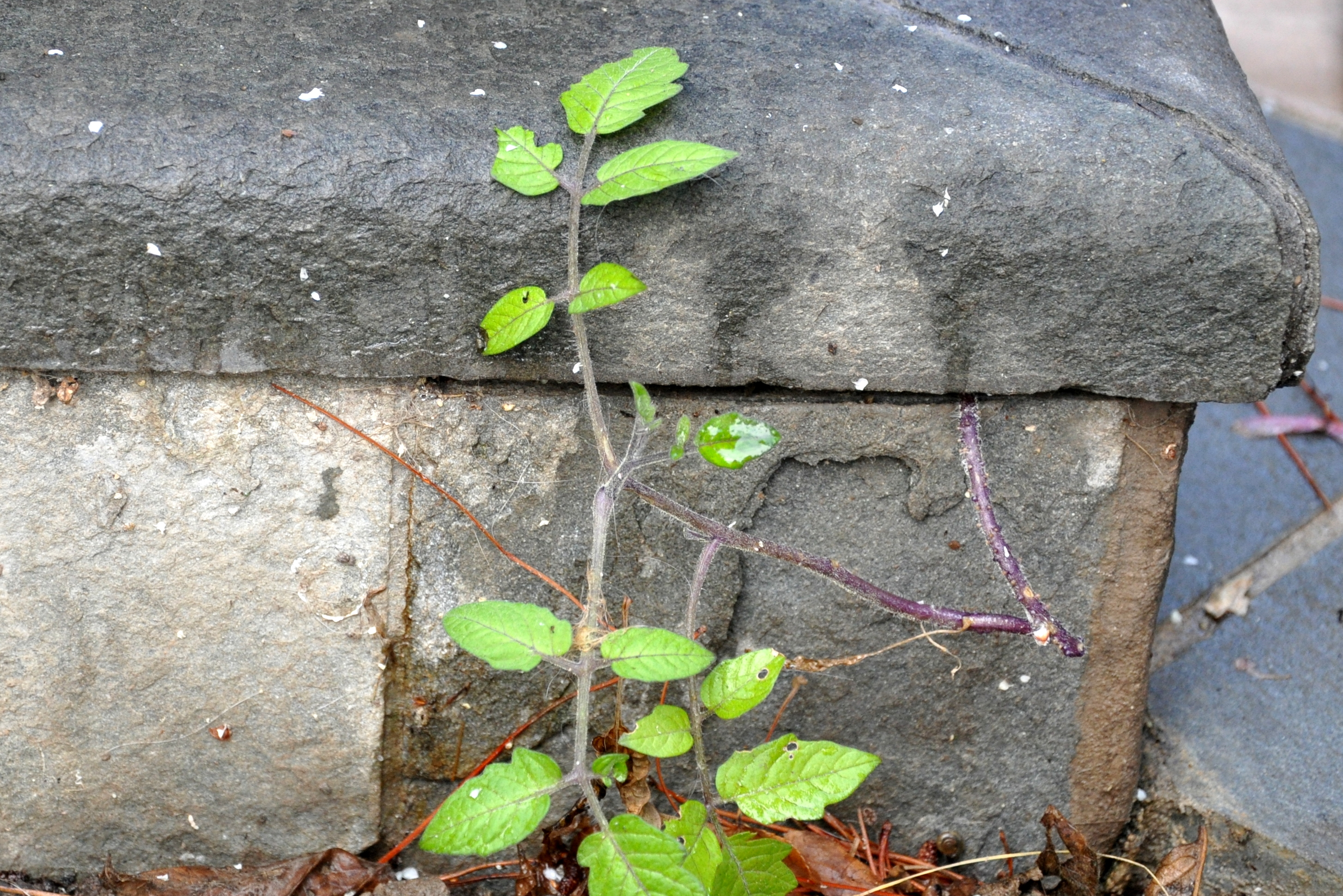
Self-seeded or Volunteer Tomatoes

Self-seeded or Volunteer Tomatoes

Last year my friend Doug gave me several varieties of Baker Creek Heirloom tomato seeds. I planted them in my City Picker but they were slow to grow. I hedged my bets with an organic nursery plant and finished off the summer with tomatoes to spare.

This year the heirloom tomatoes self-seeded one box over. Further, a variety of tiny cherry tomatoes flourished out of the bottom of the rotating compost bin.  Two additional plants showed up in the gravel walkway, a larger cherry tomato and another heirloom. What a bounty!

April 9, 2014

April 9, 2014

Tiny Cherry Tomatoes

mini cherry tomatoes

Mini cherry tomatoes

Since a speck of a tomato seed managed to sprout through a crack in the rotating composter, I felt compelled to let it grow. I staked the plant when it showed signs of surviving the season, and eventually it produced small, bright red fruit, just like you see in the grocery store. Of course the problem with most tomatoes from the store isn’t the appearance but the taste. These tiny tomatoes are flavorless. What a disappointment.

Cherry Tomatoes: The Sequel

cherry tomatoes

More cherry tomatoes

At the back of the garden, leaning up against the house, is another volunteer. This one produced larger cherry tomatoes, also a brilliant red. They’re a bit sweeter than the tiny cherry, but again bred for appearance and not flavor.

Baker Heirloom Tomatoes

heirloom tomatoes

Heirloom Tomatoes

Tomato gold! These are the sweetest, juiciest and most prolific tomatoes in the garden.  Honestly, there is no turning back once you’ve tasted them. What luck to have an entire crop of these delicious fruits.  I sliced open several today for seed saving, but plan to do all my vegetable seed purchasing from them in the future. In case you’re interested, check out Rare Seeds Baker Creek Heirloom Seeds.   

From there About page:

The family works extensively to supply free seeds to many of the world’s poorest countries, as well as here at home in school gardens and other educational projects. It is their goal to educate everyone about a better, safer food supply and fight gene-altered, Frankenfood and the companies that support it.

You can also follow them on Facebook.

What to do with all those tomatoes:

vegan kabobs

Vegan kabobs for the 4th of July

Made with tomatoes, onions, red peppers and vegan Field Roast ‘sausages‘.

heirloom tomatoes and fresh basil

Fresh basil and tomatoes.

Eat them straight from the bowl.

frozen tomatoes

Freeze them, then turn them into salsa

Sarah the Gardener taught me that not only can you freeze tomatoes, but that the skin falls off of them when they’re thawed. Mike made several batches of tasty salsa. Here’s a similar recipe.

And of course share with anyone who’s interested.

How do you like your tomatoes?

tomato mozzarella basil salad

Tomato, basil mozzarella salad

Smiling Sunflowers

bee and sunflower

Incoming bee

Okay, technically sunflowers don’t smile. The effect is pretty much the same, though.  When I look out my window they’re waving in the breeze, nodding their sunny flower heads and vibrating with bees.  Maybe I’m the one smiling, but either way it’s contagious.

sunflower and yellow bee

Bees move between the sunflowers and the pumpkin vines

The tallest of the sunflowers is my height: 5’10” or 177 cm. It was the first on the scene.  I planted a variety of sunflowers this year, so each one is a bit different. One of the flowers just reaches my knee.

pair of sunflowers

Brothers and sisters

knee high sunflower

Knee high sunflower

Yesterday I gently untangled a few overzealous pumpkin vines, redirecting them back towards the deck. As soon as the sunflowers go to seed, they’ll be overrun by squirrels. I don’t want my furry visitors trampling the pumpkins in their quest. Sunflower stems are sturdy enough to support the heavy seeds. They are not, however meant to withstand the added weight of a squirrel running up and down at snack time.

A little history:

Sunflower (Helianthus annus) is an annual plant native to the Americas. It possesses a large inflorescence (flowering head). The sunflower is named after its huge, fiery blooms, whose shape and image is often used to depict the sun. It has a rough, hairy stem, broad, coarsely toothed, rough leaves and circular heads of flowers. The heads consist of many individual flowers which mature into seeds, often in the hundreds, on a receptacle base. From the Americas, sunflower seeds were brought to Europe in the 16th century, where, along with sunflower oil, they became a widespread cooking ingredient. Leaves of the sunflower can be used as cattle feed, while the stems contain a fibre which may be used in paper production. – Wikipedia

sunflower leaves and bud

Sunflower bud, about a week before it bloomed

opening sunflower

Ready to meet the world

sunflower

Bronze-centered flower

Here’s a story that will leave you smiling like a sunflower:

The Fukushima Sunflower project is now following the lead of Chernobyl, and fields of sunflowers are bursting into bloom across this contaminated area of Japan. Volunteers, farmers, and officials planted the flowers so that they can absorb the radiation that leaked into the soil from the region’s damaged nuclear power plant. There are concerns that the contamination is mainly in the topsoil and that the roots of the flowers are too deep to absorb it. Time will tell whether this project will be a success.

Officials are hoping that the local economy will benefit as much from the project as the environment. They are hoping tourists will come back to the region to admire the sunflower fields. Due to this magnificent flower’s ability to assist in getting rid of nuclear waste, it has become the international symbol of nuclear disarmament.

I’m smiling. How about you?
sunflowers near walkway

Sunflowers along the deck

DSC_0117