Operation Dill and a Harvesting Quandry

Squash bugs, you’re on notice: Operation Dill is under way.

My lovely little pumpkins are ripening but it’s a race against the clock.
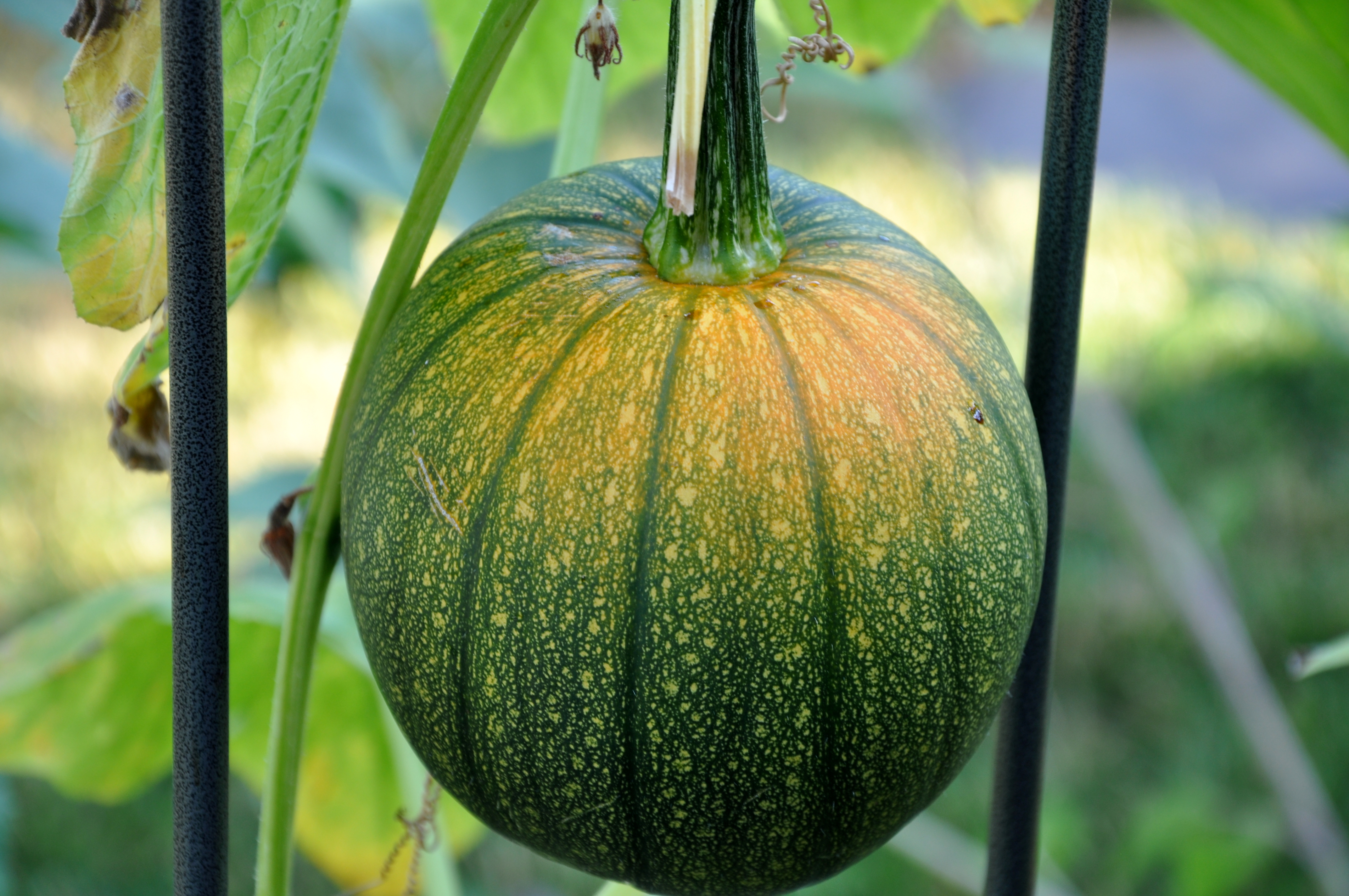
Precious Pumpkin No 1

Precious Pumpkin No 1

Precious Pumpkin No 2
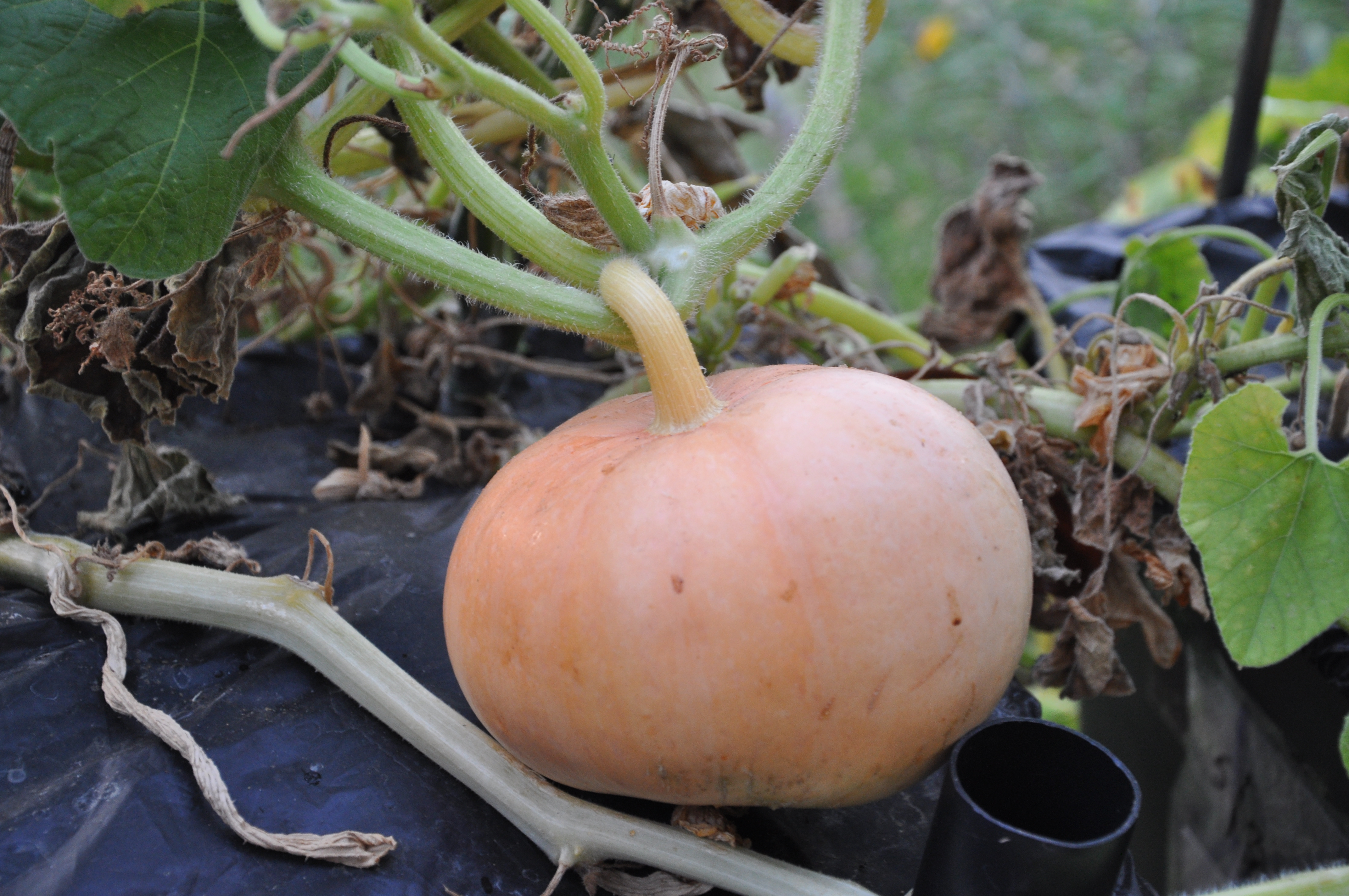
Precious Pumpkin No 2

Precious Pumpkin No 3

Precious Pumpkin No 3

With less and less vine for the squash bugs to eat, my trio of pumpkins remain vulnerable. Last year this happened…

This pumpkin never had a chance

2013: A sad day

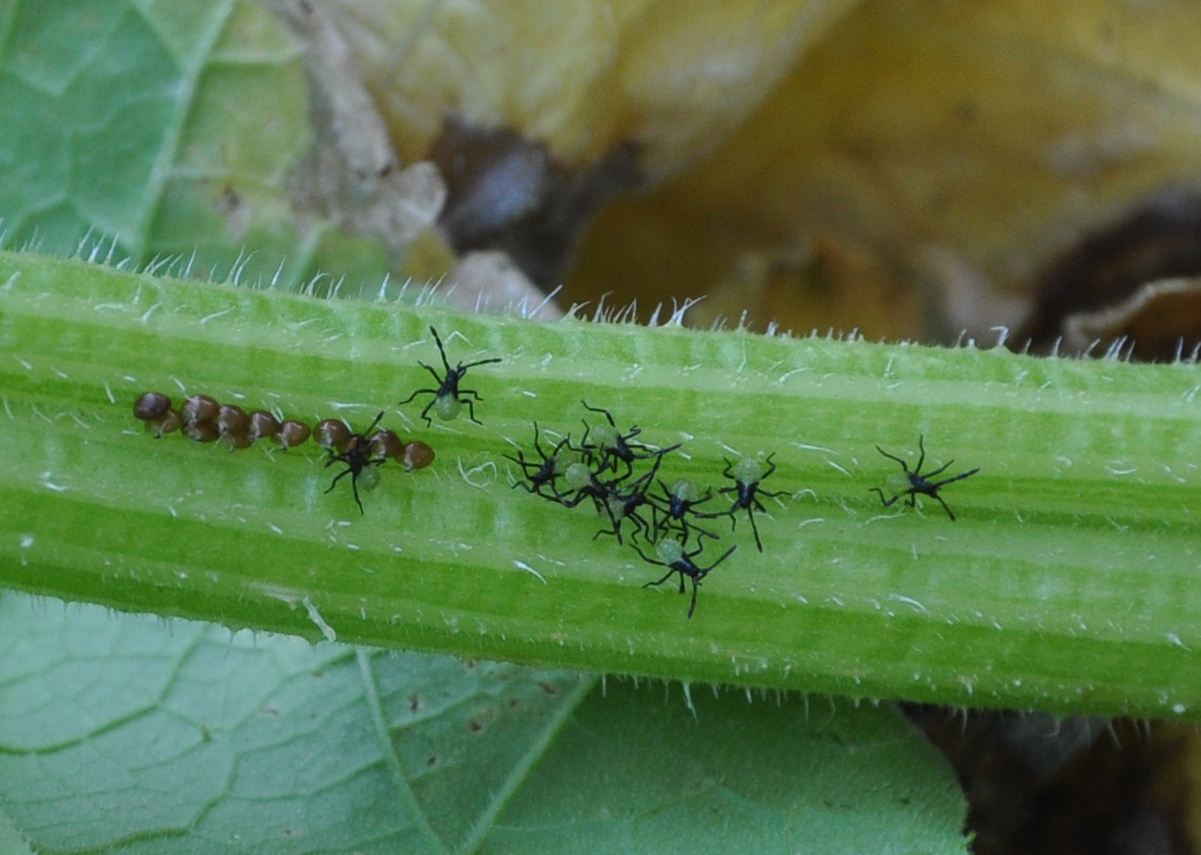
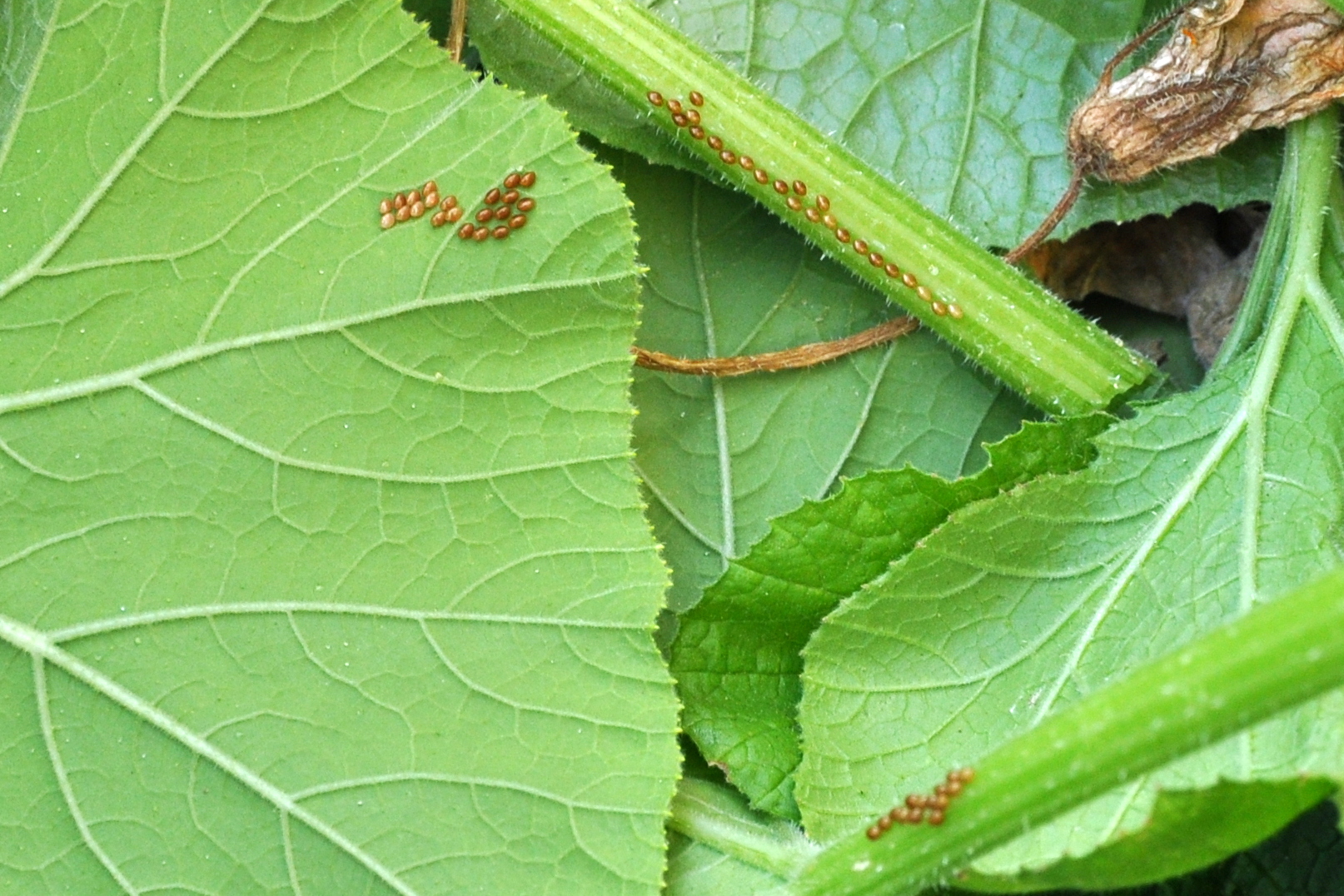
I’ve been hand picking squash bug eggs and removing adults from the vines for weeks, but predictably I missed a few. They hatched into destructive nymphs. I just can’t keep up.

Pauline at The Contented Crafter suggested planting dill. Apparently when grown together, pumpkins and dill make excellent companion plants. I raced to the garden center between appointments, but between the heat and my busy schedule, I didn’t plant them right away.  I deposited all six pots on top of the EarthBox, leaving them to wilt.  Boo!

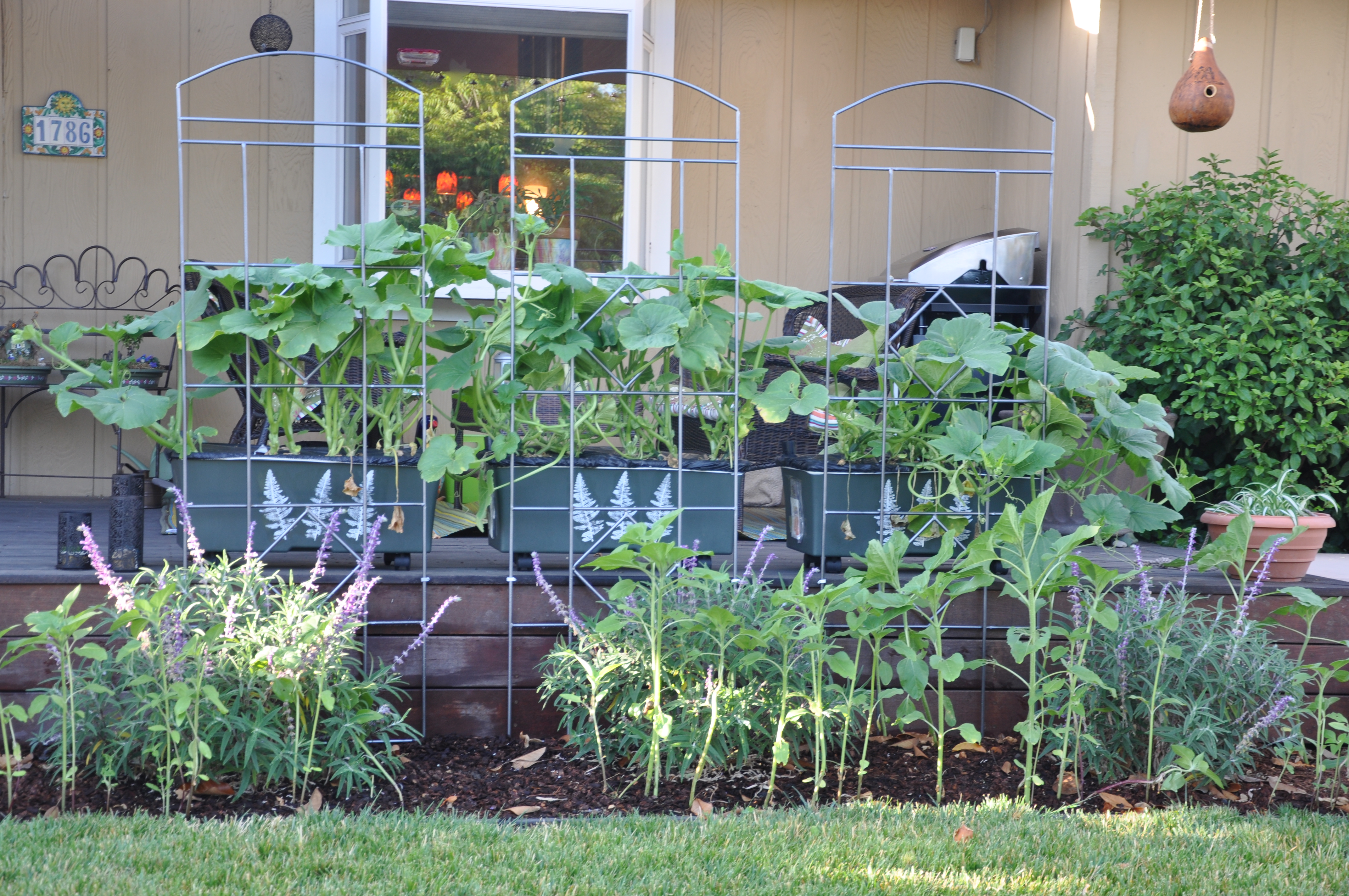
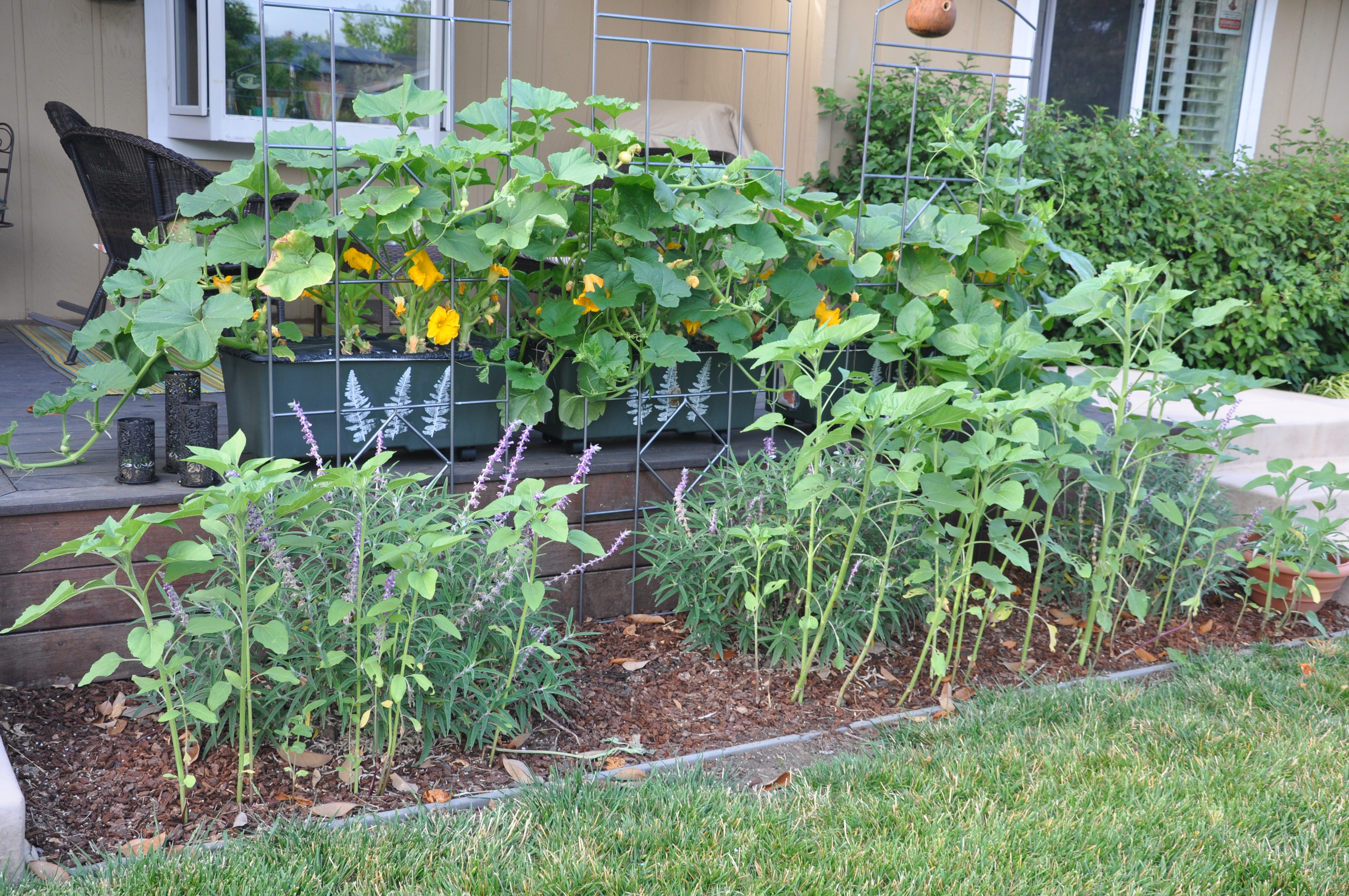
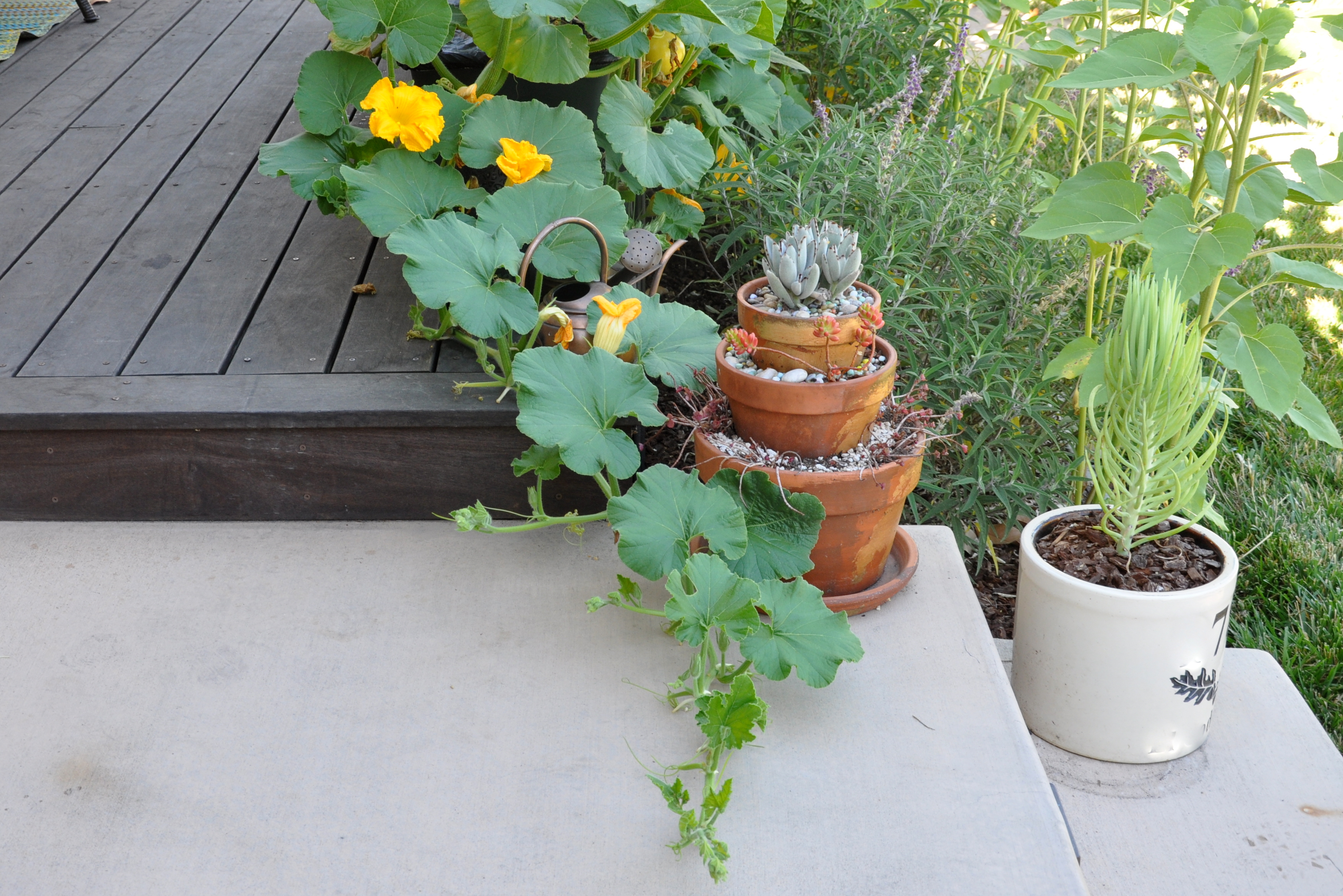
I eventually gave them a good soak and they recovered. I pulled the three pumpkins together in a group, careful not to break the vines. I surrounded the fruit with dill.

ripening pumpkins

Ripening pumpkins

Curious how they would react, I placed a dill plant near a bug congregation. They scattered! Ha!!!

Then I had a good laugh at myself. Of course they scattered when a bunch of leaves disturbed their reverie.

Would it last?

I checked last night and found an adult intruder sitting on the pumpkin stem.  No, no, no!

Next Monday I leave for a much-anticipated, week-long vacation to Victoria, Canada with my bestie Boomdee. Yay, me!

The men of the house will do a cursory check on the plants, but none of them are on board with hand-picking bugs while I’m gone.

So…should I harvest them Sunday morning before leaving town, hoping they’ll continue to color? Or should I leave it up to Operation Dill and take my chances?

What would you do?

Six Ways to Control Squash Bugs in your Garden by Sarah Toney


Things With Wings

Lift, gravity and thrust. It’s not the latest dance craze, but a short list of what things-with-wings need to fly.

Wouldn’t it be thrilling to have wings?  I remember an episode of Gilligan’s Island years ago that always made me chuckle. In one attempt to get off the shipwrecked island, Gilligan donned wings and jumped off a cliff.  He momentarily flew until the Skipper shouted “You can’t fly!”  Gilligan replied, “Oh’, and only then did he drop to the ground.

I love watching things-with-wings flying in and out of my garden. They move with speed, efficiency and agility like a well-trained gymnast flying over the bars. What a thrill.

Birds

bird collage july 2014

Visiting birds

I worry about the birds as our drought drags on. They’re traveling in circles, searching for food, water and seed. Reservoirs are low and plants are under a lot of stress.

I keep our bird bath topped off so that our visitors can quench their thirst. The garden takes care of the rest. It’s satisfying watching birds sip nectar from a flower or pilfer seeds from the compost bin. They sing, trill, hum and yes shriek but it’s all a reminder of our garden diversity.

According to Discovery.com

{birds} can play any number of roles in a given ecosystem, most of which fall into four main categories: provisioning, regulating, cultural enhancement and supporting services. Supporting services, for example, include tasks such as predation, pollination and seed dispersal.

All that and they’re cute, too.

Bees

bee collage july 2014

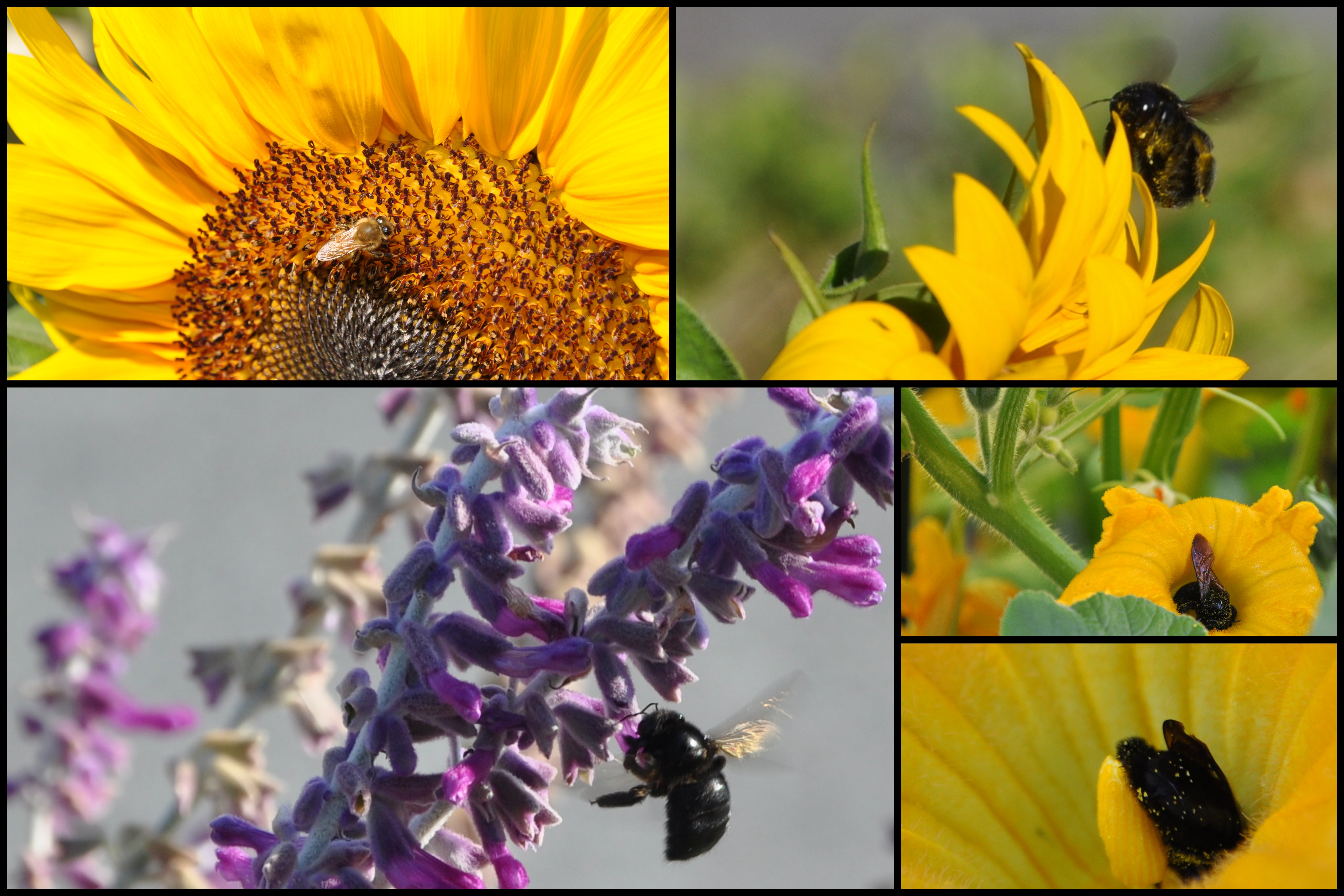
Bees pollinating sunflowers, pumpkins and Salvia

Through the camera lens, I’ve witnessed the extraordinary movement of bees gathering pollen. Shiny black bodies lift in and out of the pumpkin flowers, coating themselves a golden-yellow. The buzzing sound stops when they land, and within seconds they lift off again They are all business. If another bee is in the center of the flower, the second bee backs up and continues on. What they accomplish is extraordinary and relevant to our survival.

Butterflies

butterfly and statice

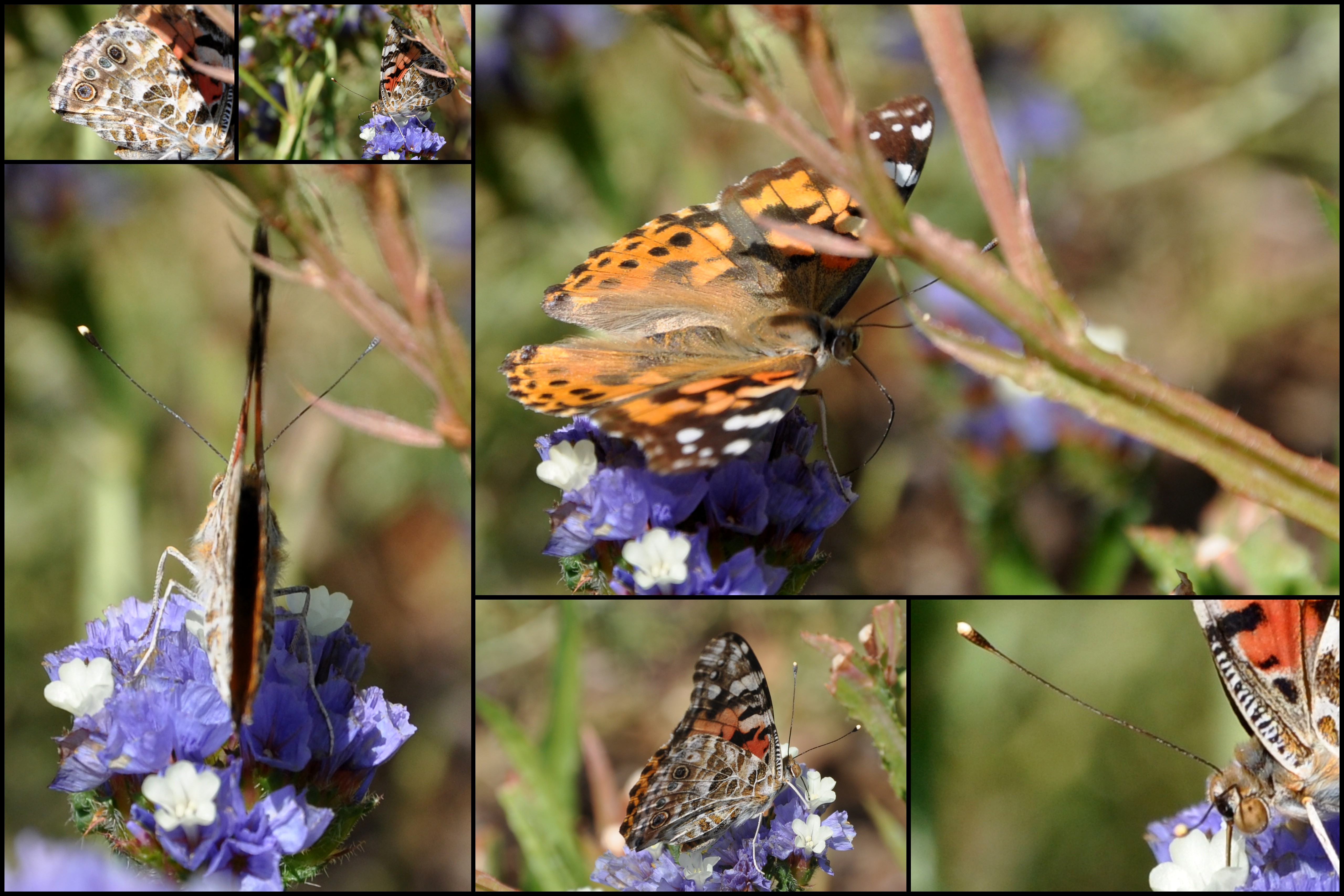
Butterfly and Statice

This beauty landed in the flower bed sending me racing indoors to grab my camera. Who doesn’t love a butterfly? When my boys were young, we visited the ‘caterpillar tree’ at our local park. One particular tree would be laden with cocoons. It was a yearly treat.  After a few years we stopped seeing them.

I’ve since learned that in the United States, Monarch butterflies have declined for the last twenty years. In the UK, certain species of butterflies are down by 50%. From an environmental perspective, butterflies are a bit like the canary in the coal mine. They’re extraordinarily sensitive to environmental changes around them and are apparently the most closely watched insect in the world.

I’m glad this special guest found something to eat in my garden.

Further Reading:

Declining Monarch Populations in the US

Habitat restoration efforts in the UK to combat butterfly decline

Nymph: Science vs Mythology

pumpkin turning orange

Pumpkin beginning to turn orange

A mythological nymph is:

a minor female nature deity typically associated with a particular location or land form. Different from goddesses, nymphs are generally regarded as divine spirits who animate nature, and are usually depicted as beautiful, young maidens who love to dance and sing; their amorous freedom sets them apart from the restricted and chaste wives and daughters of the Greek polis. They are believed to dwell in mountains and groves, by springs and rivers, and in trees and in valleys and cool grottoes.

Cool!

Unfortunately, I haven’t seen any of those in the garden. On the other hand, a biological nymph is:

the immature form of some invertebrates, particularly insects, which undergoes gradual metamorphosis (hemimetabolism) before reaching its adult stage.[ Unlike a typical larva, a nymph’s overall form already resembles that of the adult. In addition, while a nymph moults it never enters a pupal stage. Instead, the final moult results in an adult insect.

Oh-oh.

With all my due diligence, I missed a few of the squash bug eggs. The following video tells the rest of the story:

I removed the offending nymphs and even more eggs this morning, but it was impossible to get all of them. I’m going to figure out a way to create a barrier between the pumpkin and the bugs without harming the bees or the plant.  Stay tuned.

Freshly hatched squash nymphs

Freshly hatched squash nymphs

Squash bugs overrun a pumpkin leaf

Squash bugs overrun a pumpkin leaf

removing squash bugs

Squash bugs: off the vine and into the bucket

Heirloom Tomatoes: My Garden Darlings

If you’ve been following along, you know that I didn’t plant a single tomato plant this year.  Hard to believe, eh?

Self-seeded or Volunteer Tomatoes

Self-seeded or Volunteer Tomatoes

Last year my friend Doug gave me several varieties of Baker Creek Heirloom tomato seeds. I planted them in my City Picker but they were slow to grow. I hedged my bets with an organic nursery plant and finished off the summer with tomatoes to spare.

This year the heirloom tomatoes self-seeded one box over. Further, a variety of tiny cherry tomatoes flourished out of the bottom of the rotating compost bin.  Two additional plants showed up in the gravel walkway, a larger cherry tomato and another heirloom. What a bounty!

April 9, 2014

April 9, 2014

Tiny Cherry Tomatoes

mini cherry tomatoes

Mini cherry tomatoes

Since a speck of a tomato seed managed to sprout through a crack in the rotating composter, I felt compelled to let it grow. I staked the plant when it showed signs of surviving the season, and eventually it produced small, bright red fruit, just like you see in the grocery store. Of course the problem with most tomatoes from the store isn’t the appearance but the taste. These tiny tomatoes are flavorless. What a disappointment.

Cherry Tomatoes: The Sequel

cherry tomatoes

More cherry tomatoes

At the back of the garden, leaning up against the house, is another volunteer. This one produced larger cherry tomatoes, also a brilliant red. They’re a bit sweeter than the tiny cherry, but again bred for appearance and not flavor.

Baker Heirloom Tomatoes

heirloom tomatoes

Heirloom Tomatoes

Tomato gold! These are the sweetest, juiciest and most prolific tomatoes in the garden.  Honestly, there is no turning back once you’ve tasted them. What luck to have an entire crop of these delicious fruits.  I sliced open several today for seed saving, but plan to do all my vegetable seed purchasing from them in the future. In case you’re interested, check out Rare Seeds Baker Creek Heirloom Seeds.   

From there About page:

The family works extensively to supply free seeds to many of the world’s poorest countries, as well as here at home in school gardens and other educational projects. It is their goal to educate everyone about a better, safer food supply and fight gene-altered, Frankenfood and the companies that support it.

You can also follow them on Facebook.

What to do with all those tomatoes:

vegan kabobs

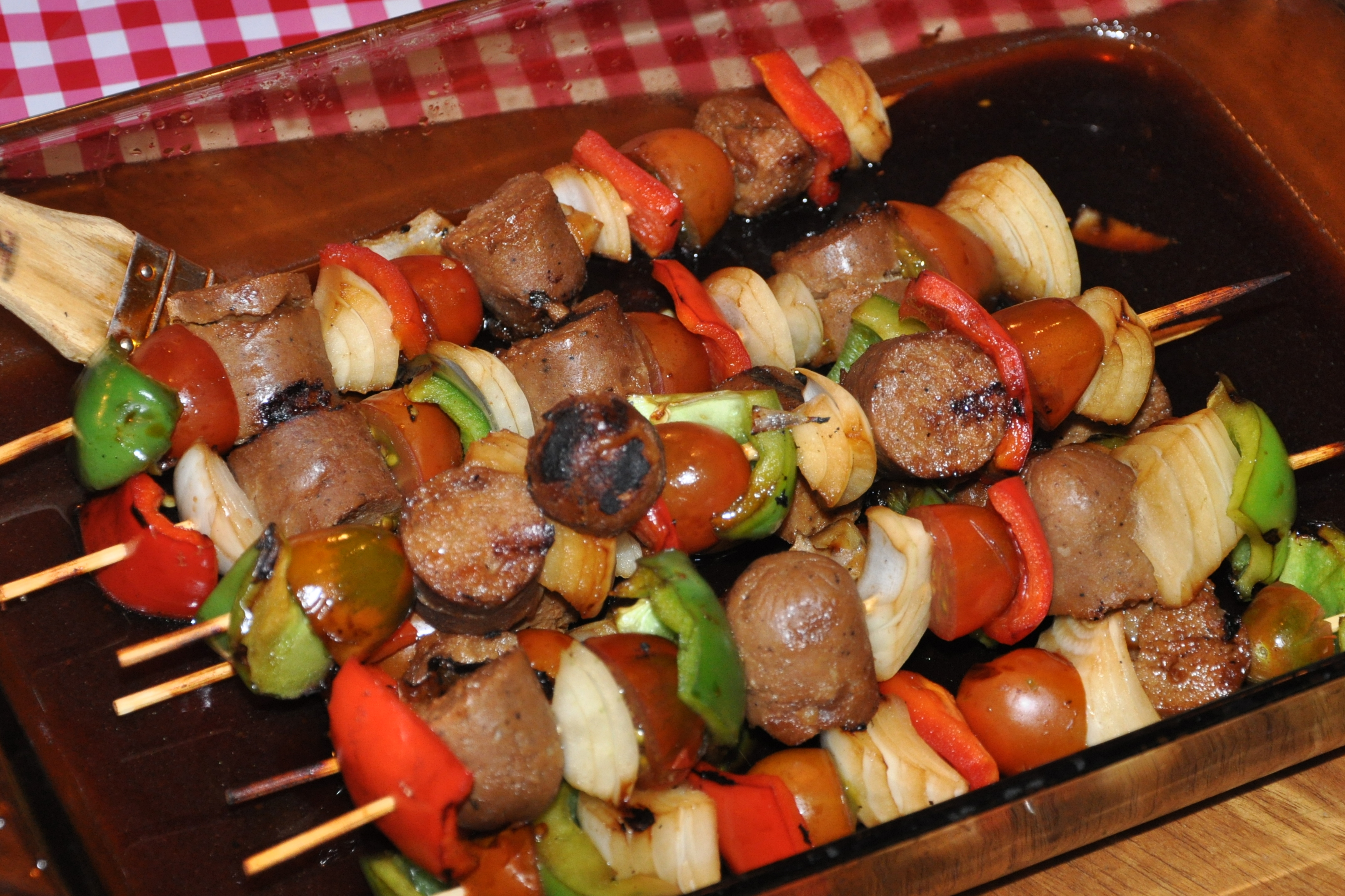
Vegan kabobs for the 4th of July

Made with tomatoes, onions, red peppers and vegan Field Roast ‘sausages‘.

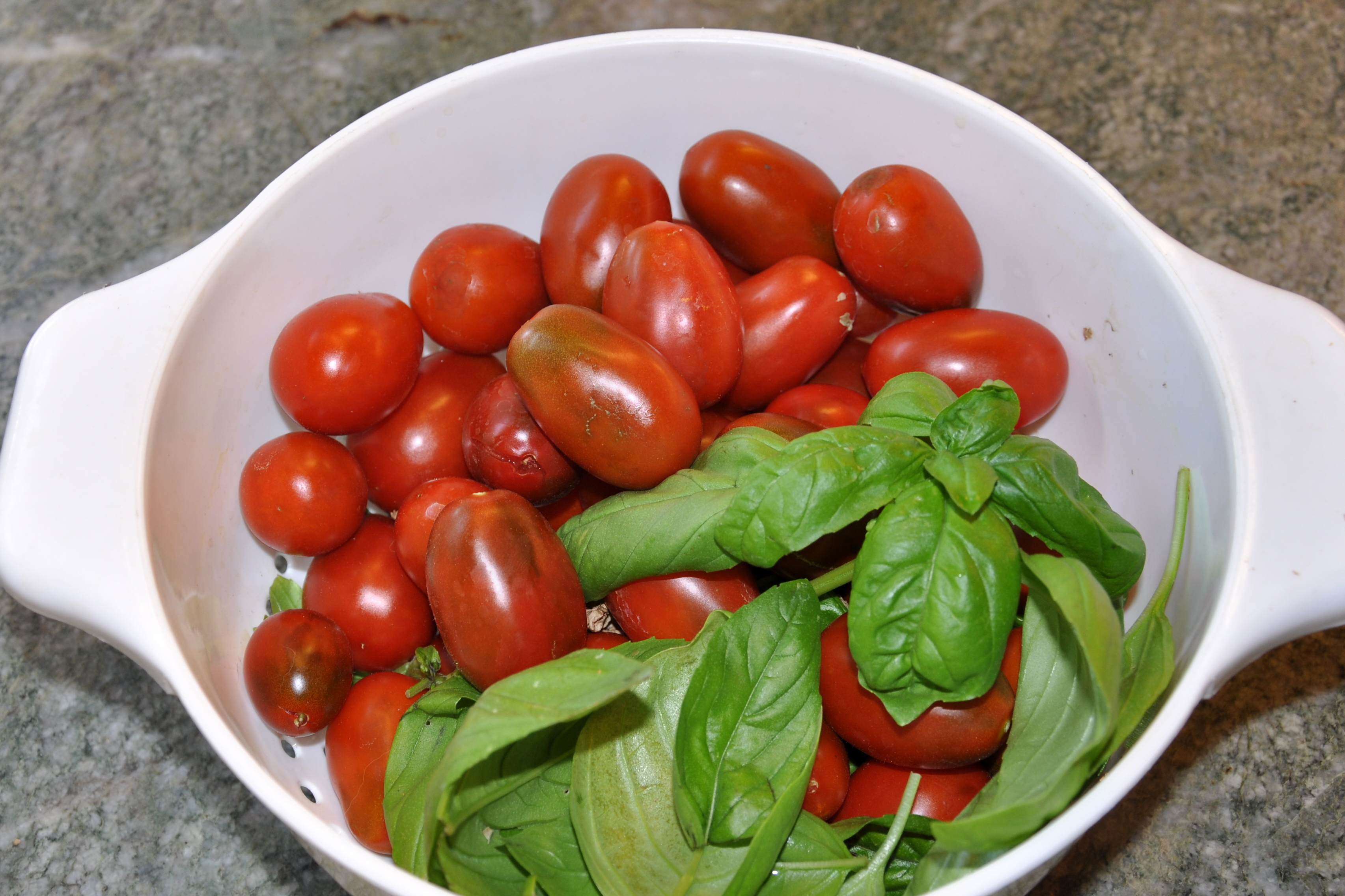
heirloom tomatoes and fresh basil

Fresh basil and tomatoes.

Eat them straight from the bowl.

frozen tomatoes

Freeze them, then turn them into salsa

Sarah the Gardener taught me that not only can you freeze tomatoes, but that the skin falls off of them when they’re thawed. Mike made several batches of tasty salsa. Here’s a similar recipe.

And of course share with anyone who’s interested.

How do you like your tomatoes?

tomato mozzarella basil salad

Tomato, basil mozzarella salad

Smiling Sunflowers

bee and sunflower

Incoming bee

Okay, technically sunflowers don’t smile. The effect is pretty much the same, though.  When I look out my window they’re waving in the breeze, nodding their sunny flower heads and vibrating with bees.  Maybe I’m the one smiling, but either way it’s contagious.

sunflower and yellow bee

Bees move between the sunflowers and the pumpkin vines

The tallest of the sunflowers is my height: 5’10” or 177 cm. It was the first on the scene.  I planted a variety of sunflowers this year, so each one is a bit different. One of the flowers just reaches my knee.

pair of sunflowers

Brothers and sisters

knee high sunflower

Knee high sunflower

Yesterday I gently untangled a few overzealous pumpkin vines, redirecting them back towards the deck. As soon as the sunflowers go to seed, they’ll be overrun by squirrels. I don’t want my furry visitors trampling the pumpkins in their quest. Sunflower stems are sturdy enough to support the heavy seeds. They are not, however meant to withstand the added weight of a squirrel running up and down at snack time.

A little history:

Sunflower (Helianthus annus) is an annual plant native to the Americas. It possesses a large inflorescence (flowering head). The sunflower is named after its huge, fiery blooms, whose shape and image is often used to depict the sun. It has a rough, hairy stem, broad, coarsely toothed, rough leaves and circular heads of flowers. The heads consist of many individual flowers which mature into seeds, often in the hundreds, on a receptacle base. From the Americas, sunflower seeds were brought to Europe in the 16th century, where, along with sunflower oil, they became a widespread cooking ingredient. Leaves of the sunflower can be used as cattle feed, while the stems contain a fibre which may be used in paper production. – Wikipedia

sunflower leaves and bud

Sunflower bud, about a week before it bloomed

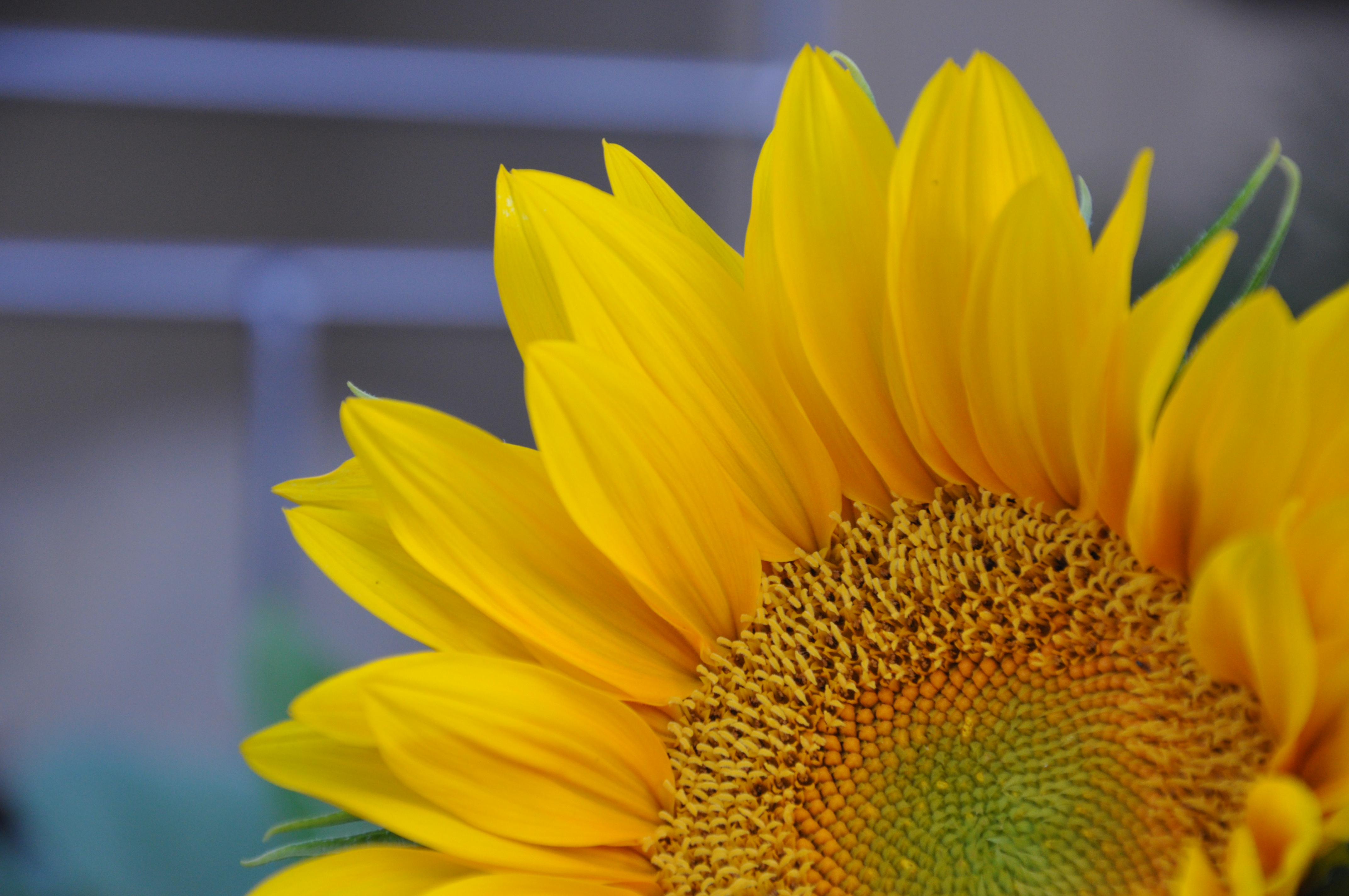
opening sunflower

Ready to meet the world

sunflower

Bronze-centered flower

Here’s a story that will leave you smiling like a sunflower:

The Fukushima Sunflower project is now following the lead of Chernobyl, and fields of sunflowers are bursting into bloom across this contaminated area of Japan. Volunteers, farmers, and officials planted the flowers so that they can absorb the radiation that leaked into the soil from the region’s damaged nuclear power plant. There are concerns that the contamination is mainly in the topsoil and that the roots of the flowers are too deep to absorb it. Time will tell whether this project will be a success.

Officials are hoping that the local economy will benefit as much from the project as the environment. They are hoping tourists will come back to the region to admire the sunflower fields. Due to this magnificent flower’s ability to assist in getting rid of nuclear waste, it has become the international symbol of nuclear disarmament.

I’m smiling. How about you?

sunflowers near walkway

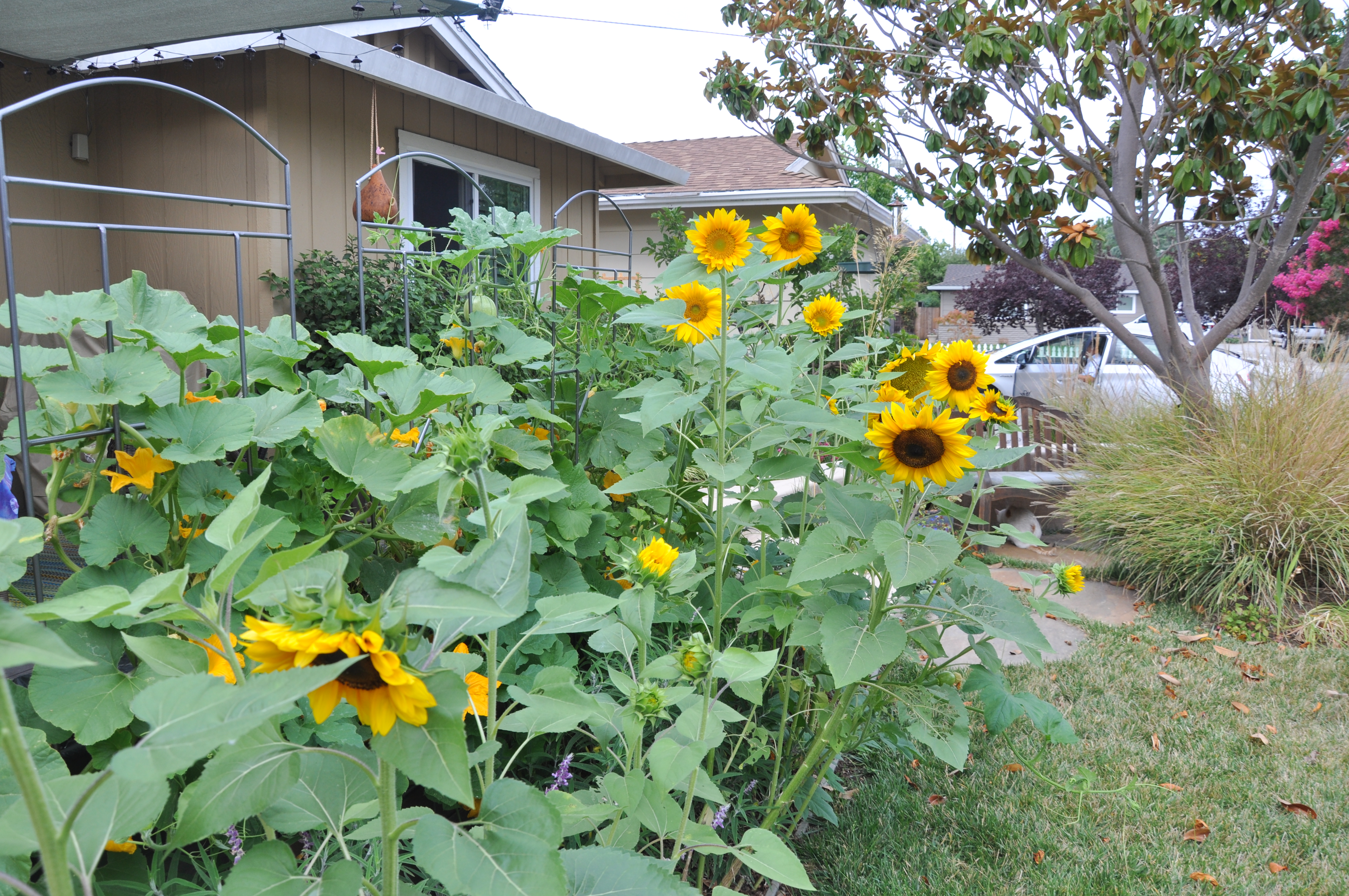
Sunflowers along the deck

DSC_0117

Asparagus Fern: Keeping it Green Since 1988

plumosa asparagus fern and hydrangea

Hydrangea with a side of plumosa

Earlier this week I filled a vase with flowers in lovely shades of pink. I added sprigs of Asparagus Fern ‘plumosa’ for a light, feathery touch

In my apartment-dwelling days, I did most of my decorating with live plants, including these ferns. My Asparagus Plumosa started out as two, seventy-nine cent house plants. They lived on a lace-covered trunk next to my bed in Campbell, until they started to outgrow their pots. The plants came with me from Campbell to San Jose and eventually Fremont, then back to San Jose.

When we bought this house in 1996 my tiny ferns were in a pot too big to lift alone. By then the thorns were mighty fierce. It would be a challenge to transplant. I let it be for a few more years, but the sides of the large, plastic pot started to crack. Worried that the plant would die with so little leg room, Mike maneuvered the pot, split the sides and planted the fern where in now resides. The roots were happy to be free from that pot, and the fern lives on.

History of Ferns

History of Ferns

I wish I had pictures of my traveling fern in those early days. Do you ever wonder how we managed life before digital? Back when film was at a premium, and you had to pay to develop photographs, you chose your subject wisely. Digital photography is liberating.

plumosa asparagus fern

Plumosa growing strong since 1988

plumosa asparagus fern closeup

Lovely new growth

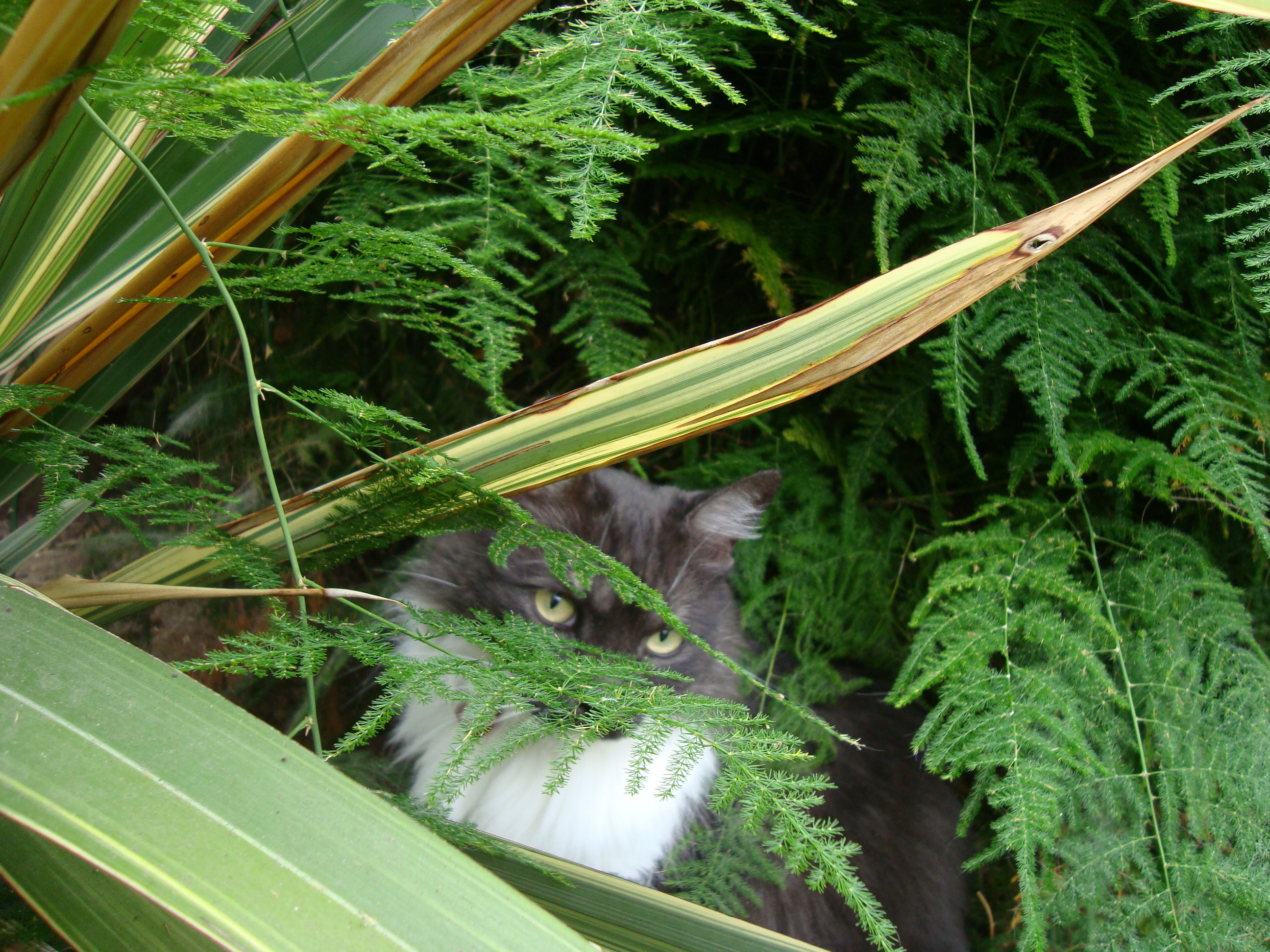
plumosa asparagus fern and lindy

Lindy-Lu under the fern.

Thank you, Boomdee for your July 15th comment. It inspired this post.

Pumpkin’s Progress: Growing Like a Weed

Pumpkins grow like weeds. That’s a good thing. Within days of planting, flat, white seeds crack under the warm soil and  sprout. Cotyledons give way to true leaves and off they go. Leaves and stems shoot up so quickly that if you stood still awhile, I’m sure you could see them grow.  I’m a fan of every stage.

The size of the leaf is a good indicator of the size of the fruit to come.True leaves are prickly and so are the stems, which are hollow. They remind me of large, green drinking straws. Stems and leaves lead you to think you have a small shrub on your hands, but then strong, curling tendrils appear and the plant takes off down the garden path, up the trellis and around the bend.

A decade ago, before we knew a thing about growing pumpkins, a self-seeded vine grew across the path, into a  garden bench, and out the other side. It eventually set fruit, a lovely, heart-shaped pumpkin that hung from the garden bench door. We left the door open the rest of the season, delighted at the rambling pattern and the speed at which it grew. My boys were 3 and 6 that year, so you can imagine the daily joy of discovery. We headed out back in those early fall days to see what those pumpkins were up to.

It’s been such a pleasure growing this year’s crop in EarthBoxes™. They’re right outside my kitchen window, so I see them several times a day. We sit on the deck in the evenings and on weekends, and now feel like we have a ‘fourth wall’ on deck. The pumpkins and sunflowers together formed a beautiful screen.

Here’s a look at their progress since early May.

May 3, 2014

May 3, 2014

My stenciled EarthBoxes™ planted with three types of seeds: an assortment of saved seeds from last year (the mystery box) along with  Botanical Interests ‘Jack-o’-lanterns’ and ‘Luminas’.

May 11, 2014

May 11, 2014

Hearty seedlings in just one week.

May 30, 2014

May 30, 2014

About thirty days in, and look at them grow. You can see the start of the sunflowers near the lawn, also started from seed. I’ll write more about them later this week.

June 13, 2014

June 13, 2014

I added trellises to allow the vines to grow up as well as out. The birds land there, before diving in to the sunflower leaves. Why won’t they eat the squash bugs instead?

June 30, 2014

June 30, 2014

Golden flowers attract bees and wasps. I love spending time out there in the morning before the heat descends. It’s a challenge photographing the bees. They move in and out of the flowers with speed and efficiency. I still try though. I have about 75 blurred photos, but I refuse to give up.

July 4, 2014

July 4, 2014

The vines got a bit of window dressing for Independence Day. They’re beautiful on their own, but a little red, white and blue called attention to their magnificence. They’re wilting in the heat in this picture, but a long drink after dusk set things right.

At the risk of stating the obvious, I love growing pumpkins. Thank you for following along with my gardening obsession.

For the Love of Pumpkins

I love my pumpkins. After a good night’s rest I’ve decided that I won’t take it lying down.

Their demise that is.

In case you missed yesterday’s post, my nemesis the squash bug recently moved in. You can catch up here.

pumpkin female flower with bee

Female flower at the ready as a bee swoops in

Actually I did take one thing lying down: pictures. How else would I get a shot of the underside of the leaf and the attached eggs?

squash bug eggs

Squash bug eggs on the underside of a pumpkin leaf

squash bugs on stem

Leaves, tendrils, flowers and…more eggs

In a word, yuck!

I laid flat on my back and took photos looking up. Fortunately, no one walked by at the time or they surely would have called the paramedics. Amazingly, I managed to get back up, then spent the better part of an hour looking at the underside of every leaf on the pumpkin vines.

That scrutiny lead to another discovery: eggs on some of the pumpkin plant stems. In the end I’d scooped several adult bugs into my dry bucket, along with infested leaves and stems. I removed dead or browning leaves as well as spent flowers, making it easier to detect the adult bugs  They were happy to crawl on my glove and from there they went into a bucket. I dumped the infested leaves and bugs into the curb side green waste site, and within an hour the ‘green monster’ came by and scooped the entire pile into the back of the truck. This was another tip from one of the sites: rip them out and compost them.

pumpkin infested stems and leaves

Infested stems and leaves

The lovely Pauline at The Contented Crafter looked up companion plantings for me, something I hadn’t thought of nor come across in my reading. Ah, the web is vast indeed.  There is enough room in the boxes for additional plantings so I’ll give it a try.  Nasturtiums unfortunately need opposing growing conditions, but dill might work. I’m going to look for some at the garden center.

It’s unlikely that I removed all the eggs this morning. I’m pretty sure others still lurk on the vine. With daily checks, however, I hope to slow them down and possibly keep them at bay.

Stay tuned.

pumpkin vine trails deck

Trailing the deck

Just a Day in the Garden

Things are humming along in the garden these days.  Our tomatoes and raspberries are jockeying for position, and the basil is finally growing up. If you look carefully, you can see it in the lower, right corner of the box near the hose  I was too lazy to put away. [ahem]

tomato, basil and raspberries

Tomatoes, Raspberries and Basil

The potatoes I didn’t plant, jumped the edge of the box, happy in the heat.  The strawberries look nice, but for the first time in my gardening history, they’ve been over run by ants.  Ack!  I reached in for a juicy red berry and came out with a handful of swarming ants along with the fruit.  When I did find an unencumbered strawberry, it looked great but tasted bland.  I think this is the last season for them.

strawberries and potatoes

Compost potatoes spill from the box

My EarthBox pumpkins are growing well, but for some reason the water wicking system isn’t working.  I’ve had to hand water three days in a row as they’re drooping by mid day.  I may remove the compost covers tomorrow when it’s still cool and give them a long soak.  I’ll let you know it that does the trick.

Ever-mischievous Mouse the cat cornered an iridescent lizard on the garden path.  I put Mouse in a ‘time out’ for a spell, then encouraged the tiny lizard to make haste. He was happy to oblige.

Western Fence Lizard

Western Fence Lizard

Mouse asleep

Mouse looks innocent when he’s asleep

One of the squirrels dropped by and offered to sample the apricots and plums.  Just a couple of bites out of each one should do it.  Yep, yep…carry on, carry on.  Nothing to worry about here.

half eaten fruit

Sampled Fruit

grey squirrel

Taste testing the fruit: we passed!

I have a new theory about their bushy tails. I think that’s where they store their ego.

In better news, the  fruit covered in netting remains untouched.  Hurray for that.

Thanks for following along on my garden adventures. Your companionable comments are among the highlights of my day.

Mystery Solved: Love-in-a-mist

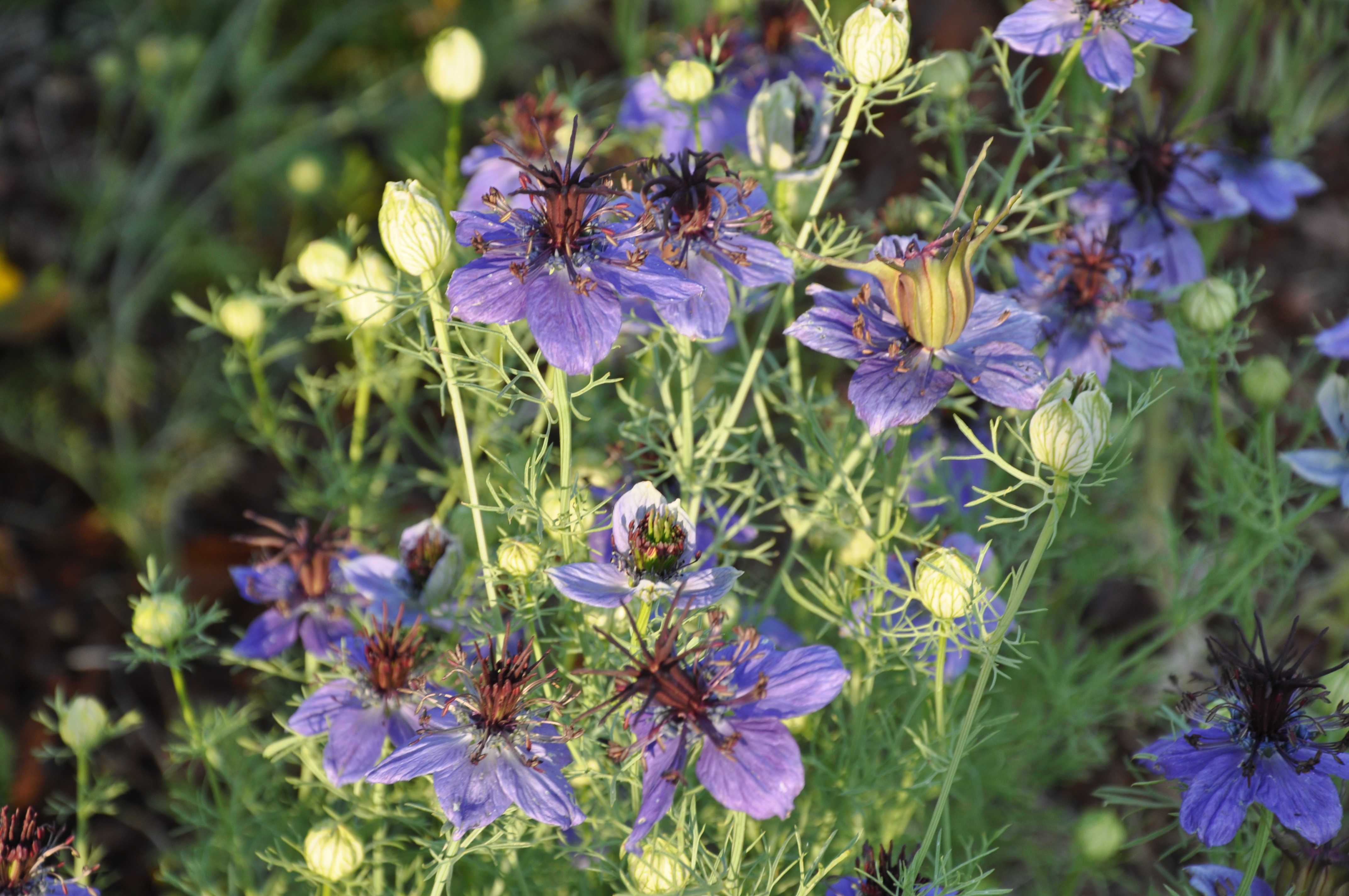
Pauline noted that ‘every garden needs a bit of mystery’ but for now I’m happy to have this one solved.  I posted this photo last week, and asked for help identifying it. Extensive Google searches were no help.

mystery flower

Mystery flower

Three cheers for my blogging community! Cathy of Words and Herbs thought it might be ‘Nigella.’ Anne of Anne Lawson suggested ‘love-in-a-mist.’  They’re both right.

These wonderful, self seeded flowers are Nigella damascena – Love-in-a-Mist.   Thank you both.

purple love-in-a-mist

Nigella damascena in bloom and going to seed

buds and bloom

Buds and Blooms

California Avocado Cupcakes

Over the weekend I sampled a delicious avocado cupcake at Sunset Celebration Weekend.  I meant to share it with you yesterday. The cupcake and the frosting both contain avocados as a healthy fat alternative.  You can download the recipe at the California Avocado Commission. Please let me know if you give them a try.