The Perennials of August

Those heady, early days of spring feel like a first date. Everything is new and full of promise. The perennials of August, however, are more like a comfortable relationship. They’re predictable, sure, but they’re easy, reliable, and strong.

When we removed the last of our lawn in 2015, we made way for a number of new perennials, most of them native to semi-arid California. From my back garden swing each day, I see bees, hummingbirds and butterflies moving between plants. They find nectar for sustenance, and pollinate as they go. They’re welcome visitors and a daily reminder of the benefits of “going native” in one’s community.

Won’t you come have a look?

garden from of house

Front garden: Yellow kangaroo paw stand tall, with swaying grasses and Salvia to the front of them.

This is the front garden, facing the house. It’s taken a few years, but the plants have matured and filled in the space nicely.

Here’s another perspective:

Magnolia tree and perennials

Pink, orange and yellow hues surround the Magnolia tree

And here are a few closeups of the plants surrounding the Magnolia:

Mouse the cat and little free library

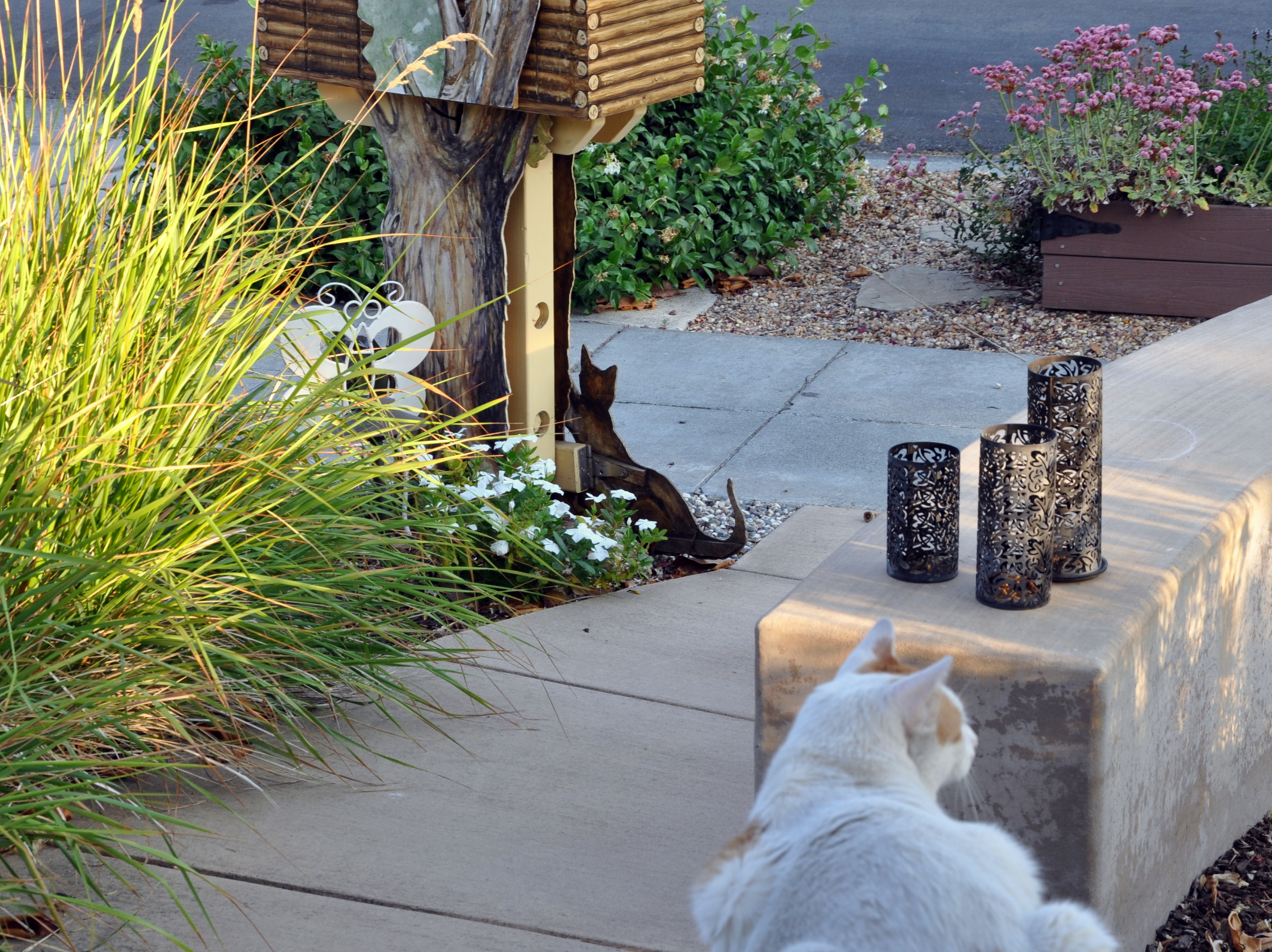
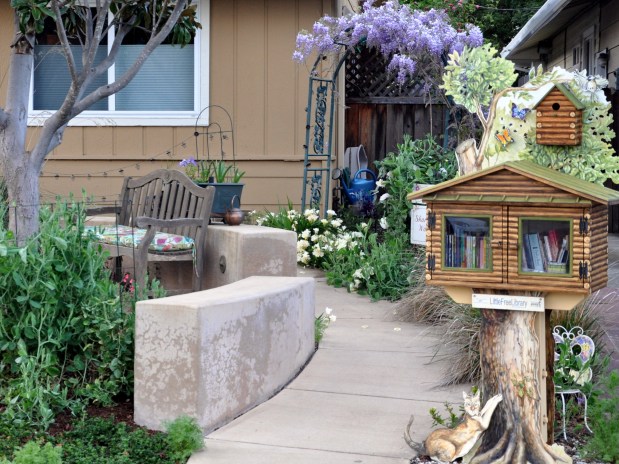
I love this shot of Mouse the cat with the Little Free Library cat silhouette in the foreground. Tall native grasses, left, and pink Scabiosa in the curb garden.

Scabiosa, sometimes referred to as a pincushion plant, has lovely tufts of soft pink. I was in the process of dead-heading some of the plants this week, when I encountered a praying mantis. They’re otherworldly, always fascinating and good for the garden. They will, however, sometimes pray on hummingbirds, so I’m always of two minds when I see one.

Here is a view of the back garden at dusk. I’ve taken several pictures of this plant grouping but always struggle to capture the beauty. I wish you could see it in person. The sun warms the plants, releasing that wonderful sage-like scent. Most of the flowers are quite small, but beautiful closeup.

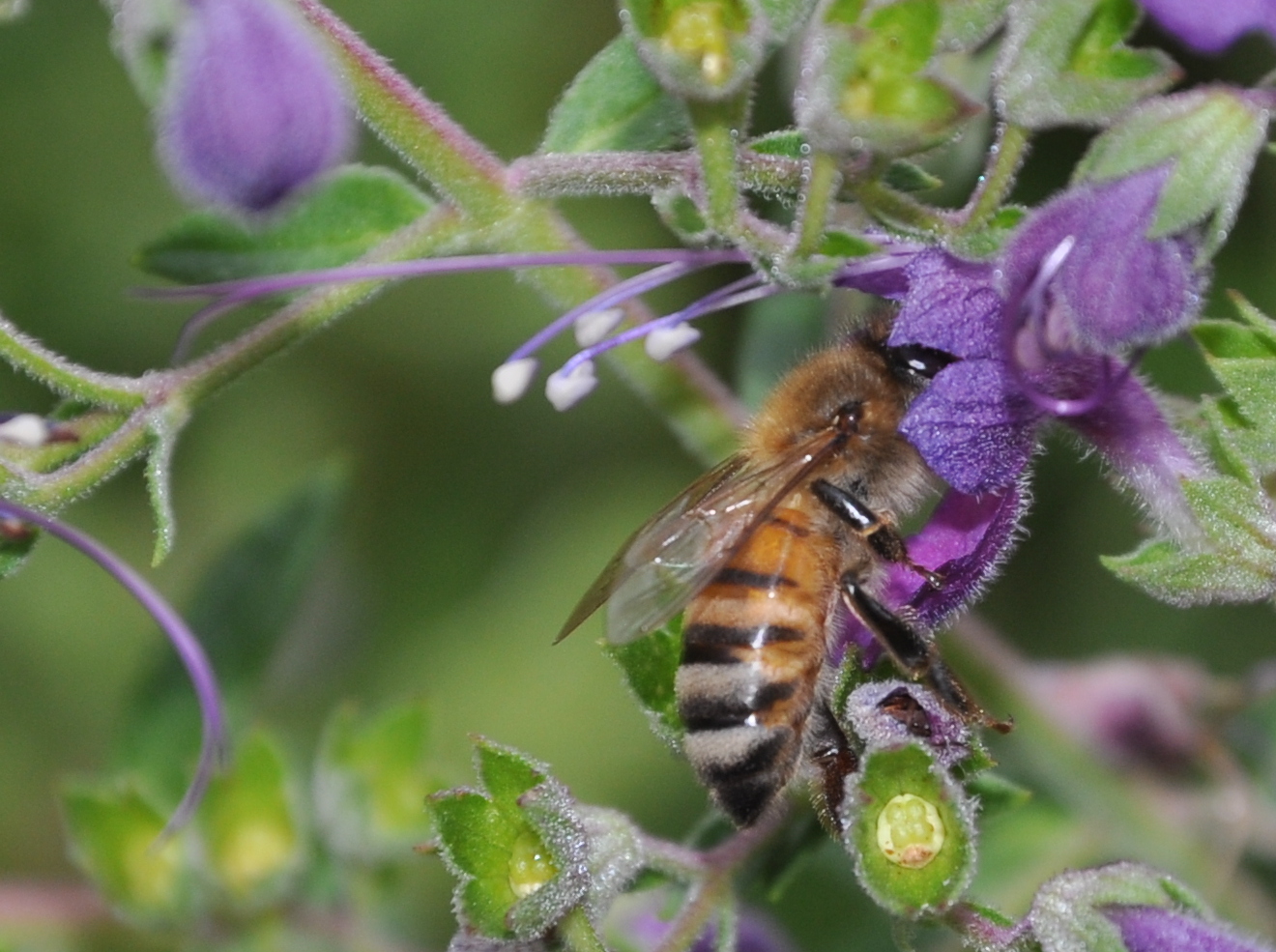
I never tire of watching the bees go about their day.

bee pollinating trichostema

Trichostema, commonly known as blue curls, visited by a bee

Trichostema trichostema

Small lizards like to sun themselves in the garden, but Tessa treats them like toys. I’ve placed over-turned saucers under several plants to offer shelter from her reaching paws.

garden swing

A nice place to read the paper on a Saturday morning

perennial plants back garden

Back garden near the swing planted with native perennial plants

I’ll always love Spring’s first blush of show-stopping bulbs and flirty annuals. They quicken the heart and remind us that we’re alive. Yet as we endure these hot, dry dog-days of summer, the August perennials are a lovely reminder of strength, endurance and love.

Moving Summer Along

Hello, hello!

It’s been awhile, eh?

I seem to have lost my blogging mojo this summer.

I’m jumping back in with a summer roundup, even though the first day of autumn in California is still weeks away. Part of me is willing it to be October, with cooler temps and that special crackle in the air. I’m emotionally done with summer, 2018.

On a national level, it feels like we’re on a reverse journey to the 1950s, and not in a good way. I wake up feeling a little off-center, wondering what fresh hell the US president has unleashed. It wears on me.

hazy skies in San Jose

Hazy skies in San Jose

To add to the summer gloom, California’s wildfire season started early, with dozens of wildfires up and down the state. The Mendocino Complex Fire in Northern California is now the largest in California history.

Setting aside any of the absurdities you may have heard from a certain someone’s ill-advised Tweet, California has one of the most sophisticated fire-fighting agencies in the world. That said, here is what CAL FIRE has been up against. According to the Los Angeles Times,

Across California, the nighttime brought little relief, recording the highest minimum temperature statewide of any month since 1895, rising to 64.9.

California has been getting hotter for some time, but July was in a league of its own. The intense heat fueled fires across the state, from San Diego County to Redding, that have burned more than 1,000 homes and killed eight. It brought heat waves that overwhelmed electrical systems, leaving swaths of Los Angeles without power.

I check the nearby hills for fire activity every morning. Everyone is on edge, knowing that rainfall in this state won’t arrive till late October.

Graduating high school

On the home front, I’m mentally and emotionally preparing myself for my youngest son’s first year away at university. We’ll be dropping him off at college in Southern California in ten short days. Part of me is ready to get the initial separation over with. It’s time to pull off the mommy Band-Aid and let the tears fall where they may. The fine print of parenthood is that one day they really do leave home. Sure, sure, you know that on an intellectual level. It is still a bit of a stunner when they actually do. The part of raising them is over, but the emotional attachment lasts a life time.

Having said all that, I know that my 18-year-old son is bright, capable, kind and engaged. He is also socially astute. He’s ready to leave the nest and I know he’ll soar. I’m taking extra tissue with me anyway.

Lifted Spirits Boutique

Lifted Spirits Boutique

The bright spot this summer has been spending time volunteering at Lifted Spirits, a drop-in program for homeless women in San Jose. My organizing business slowed down at the start of the summer, freeing up time to spend with this wonderful organization. In addition to volunteering in the women’s clothing “boutique” for a couple of shifts a week,  I’ve been reorganizing the front office, the kitchen, the staff room and the boutique. My own spirits lift when I spend time there serving others. I’ve learned a lot about myself as well. I feel a tremendous camaraderie with my fellow volunteers and all who serve the homeless men and women in our community.

growing pumpkins

Pumpkin Crop, 2018

My beautiful garden hums along. The tomatoes are ripening slowly, but they’re delicious as we pluck them from the vine. The self-seeded pumpkin vines have produced five pumpkins so far. Two are small, about the size of a cantaloupe with two more suitable for carving. I had one pumpkin fully ripen, then almost immediately soften. More seeds for next year’s garden I guess.  Most of my pots are now planted with succulents. Unlike me, they tolerate hot, dry conditions. I learned a trick to better watering, too. I place ice cubes on the soil’s surface and let them melt, slowly watering the plants. This way I don’t have any runoff, since the plants dry out between watering. It’s working well.

There you have it.

What’s happening in your world this summer/winter of 2018?

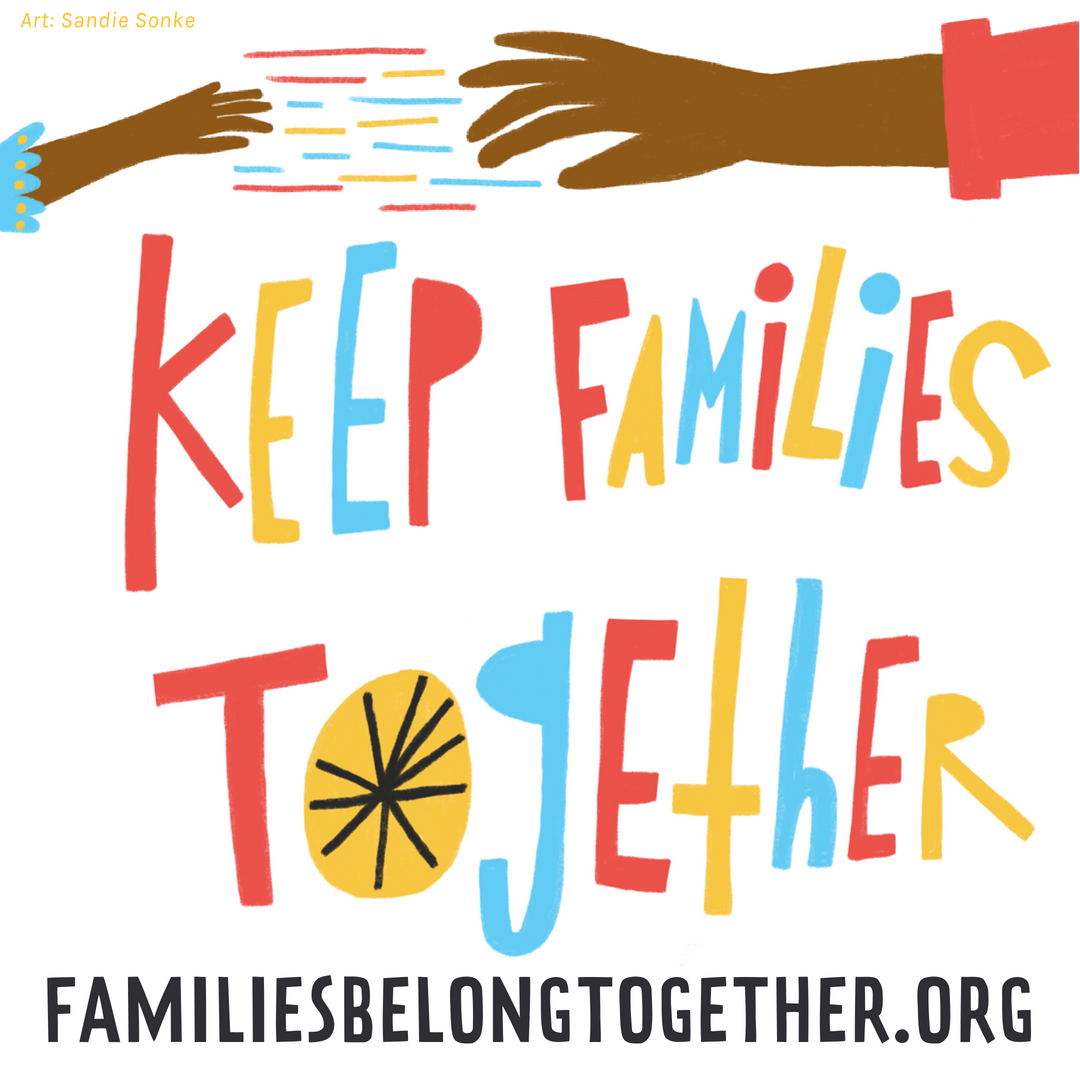
Families Belong Together

KeepFamiliesTogether

Art: Sandie Sonke

#FamiliesBelongTogether

It’s such a clever hashtag, one that if you weren’t in the know might evoke thoughts of summer picnics, trips to the beach or as a way to tag your 4th of July, Independence Day photos.

Instead, Families Belong Together is a response to the current administration’s desire to stop immigrants from crossing our southern border. Instead of compelling Congress to act on a comprehensive immigration bill, the administration has implemented what’s known as a “zero-tolerance policy” of arresting anyone crossing the border without papers. Many of these border crossings are families seeking refuge from violence and political unrest. Some have traveled for up to a month with young children, looking for a better life.

This Administration’s response: Arrest the parents, then immediately separate *families* from their children.

Let that settle in.

Las Familias Merecen Estar Unidas

Spanish version of Families Belong Together

Authorities place parents in detention centers, immediately separating them from their infants and small children. Traumatized children are placed in a separate detention center, sometimes in another *state* with no understanding of why. Images of children sleeping on the floor covered in mylar blankets have evoked outrage. Footage of crying children, desperate for their mother have all but the hardest-hearts weeping along with them. Comparisons to Japanese interment camps and Nazi Germany abound.

I attended a Families Belong Together rally this past weekend and have found solace in numbers. There were over a thousand people at the San Jose rally on Saturday, a hot, windless, mid-day gathering. Throughout the country thousands of people rallied in over 700 locations. Rallies bring people together, spread the word, and offer resources for ways to help.

I’ve also been finding temporary respite from a steady hum of depression by volunteering at Lifted Spirits, a program for homeless women in San Jose. When I’m busy and engaged helping others, it helps me feel less overwhelmed. Spending time at Lifted Spirits allows me to positively impact someone else’s life without being swallowed whole by a situation I feel powerless to change. I’ll share more about their mission in a future post.

#FamiliesBelongTogether

FamiliesBelongTogether.org

If you’re also feeling overwhelmed, here are a few resources…

Colorlines published: How You Can Support Detainees with a number of helpful resources.

…and a few inspiring words from MoveOn.org:

“More than 180 partner organizations came together to pull this off, including MoveOn, the National Domestic Workers Alliance, the Leadership Conference for Civil and Human Rights, the ACLU, faith groups such as Sojourners and the Presbyterian Church, Avaaz, the Southern Poverty Law Center, and a range of labor unions, the YWCA, scores more tremendous allies and partners, and countless local groups in cities large and small, united across lines of ethnicity, race, national origin, and language.

When you feel alone, when it’s all too much, remember that what is possible when we come together. That there is power in our numbers.

In the decades to come, people will ask themselves and each other what they did to fight the darkness at this moment in history.

On Saturday, many of us summoned a piece of an answer. We were in the streets. And we won’t stop until we turn the darkness back.”

Here are a few pics from our San Jose Families Belong Together rally.

Sewing For My Sister

I’ve been doing a bit of sewing for my sister. She used to sew for herself (we both did), but as her MS (Multiple Sclerosis) has advanced, she’s no longer able to work her machine. Instead we have fun planning small projects together.

Sharon loves animal prints, specifically leopard and zebra, so we find ways to incorporate those when we can. She also loves purple and black.

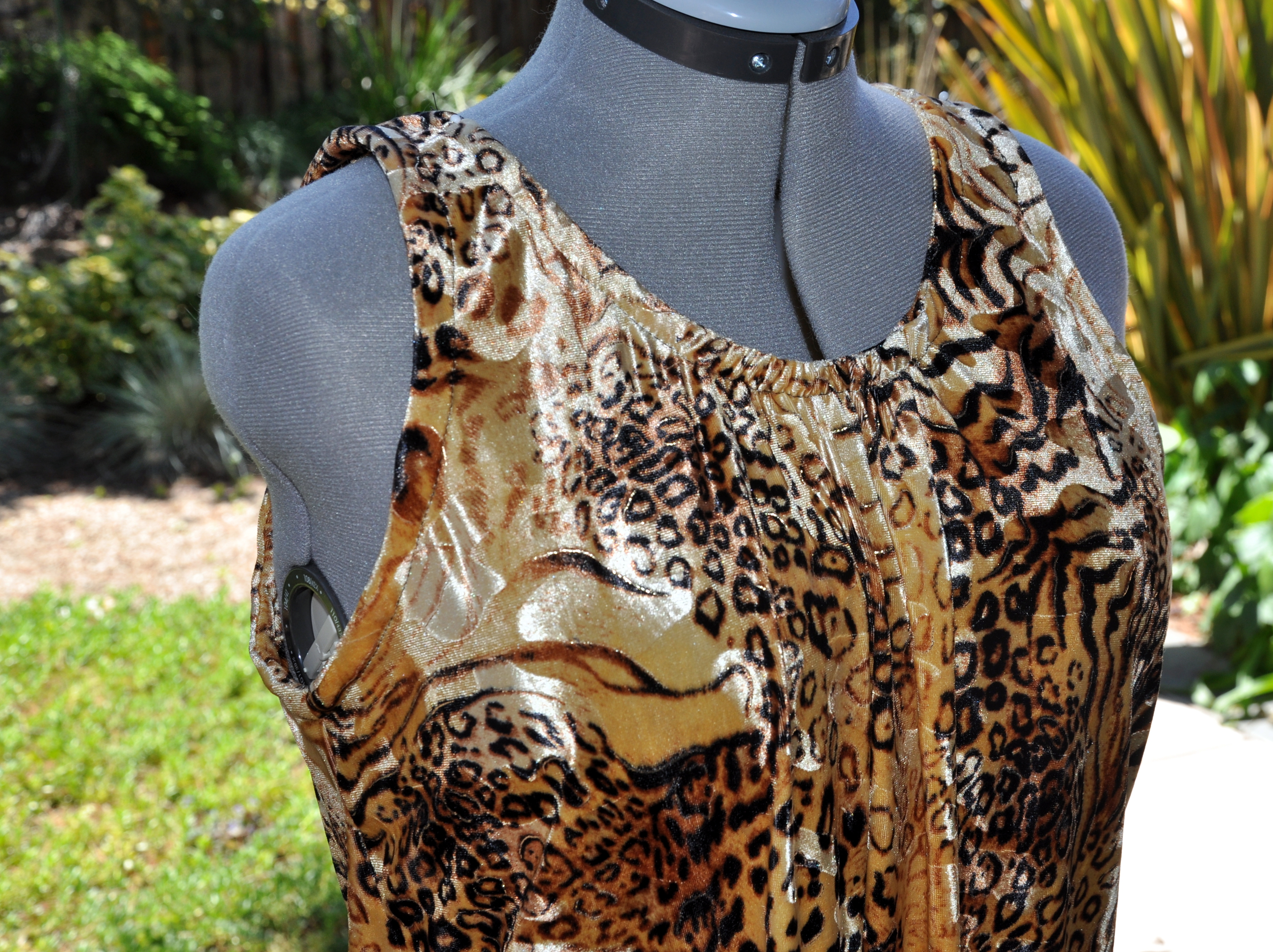
I spotted this print (wink, wink) at a local fabric store and I knew Sharon would love it. The fabric is weighty with a nice drape, and blends leopard and cheetah-like spots with a hint of zebra thrown in. The fabric has a thin gold thread running through it to add a bit of sparkle.

leopard chetah zebra print dress

The Dress

My sister is small, but she wears several layers to keep warm, so we opted for a large-sized pattern to cover the bulky layers.  This left too much fabric along the yoke, though it was easily fixed with a row of gathering along the bodice.

She wears the dress over a pair of black sweaters with her knee-high boots. She hates posing for pictures, unless she’s dressed for Halloween, so you’ll have to use your imagination. (She’s adorable)

leopard dress full length

Full length view

The next sewing project involved modifying a vest. Sharon uses a heating pad at work for warmth and back pain, but she had no way of keeping it in place. I came up with the idea of making a pocket (using a scrap of leopard print of course) that would hold the heating pad against her back without shifting. The pad proved too heavy to stay in place, so I modified the idea by adding a strip of velcro along the inside. She can remove and warm the heating pad, then tuck it back into the pocket. The vest keeps it close and cozy.

Next up, modifying a terry robe for the pool. Sharon swims at the YMCA seven days a week. When she gets out of the pool, she moves directly to her motorized scooter. Since she uses the scooter throughout the day, she needs the seat to stay dry. Their was also an issue with pool water possibly draining into the scooter’s battery compartment directly below the seat.

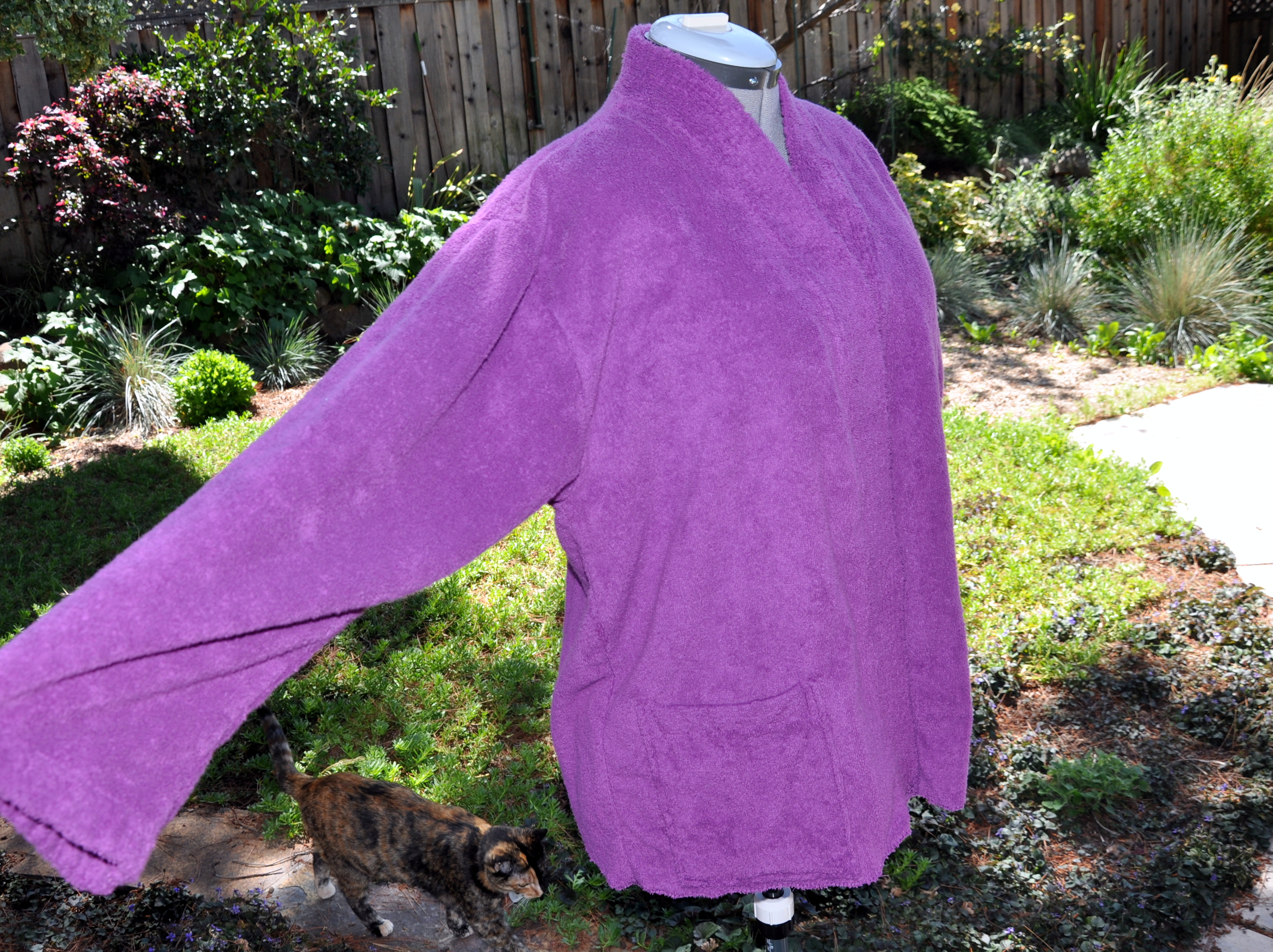
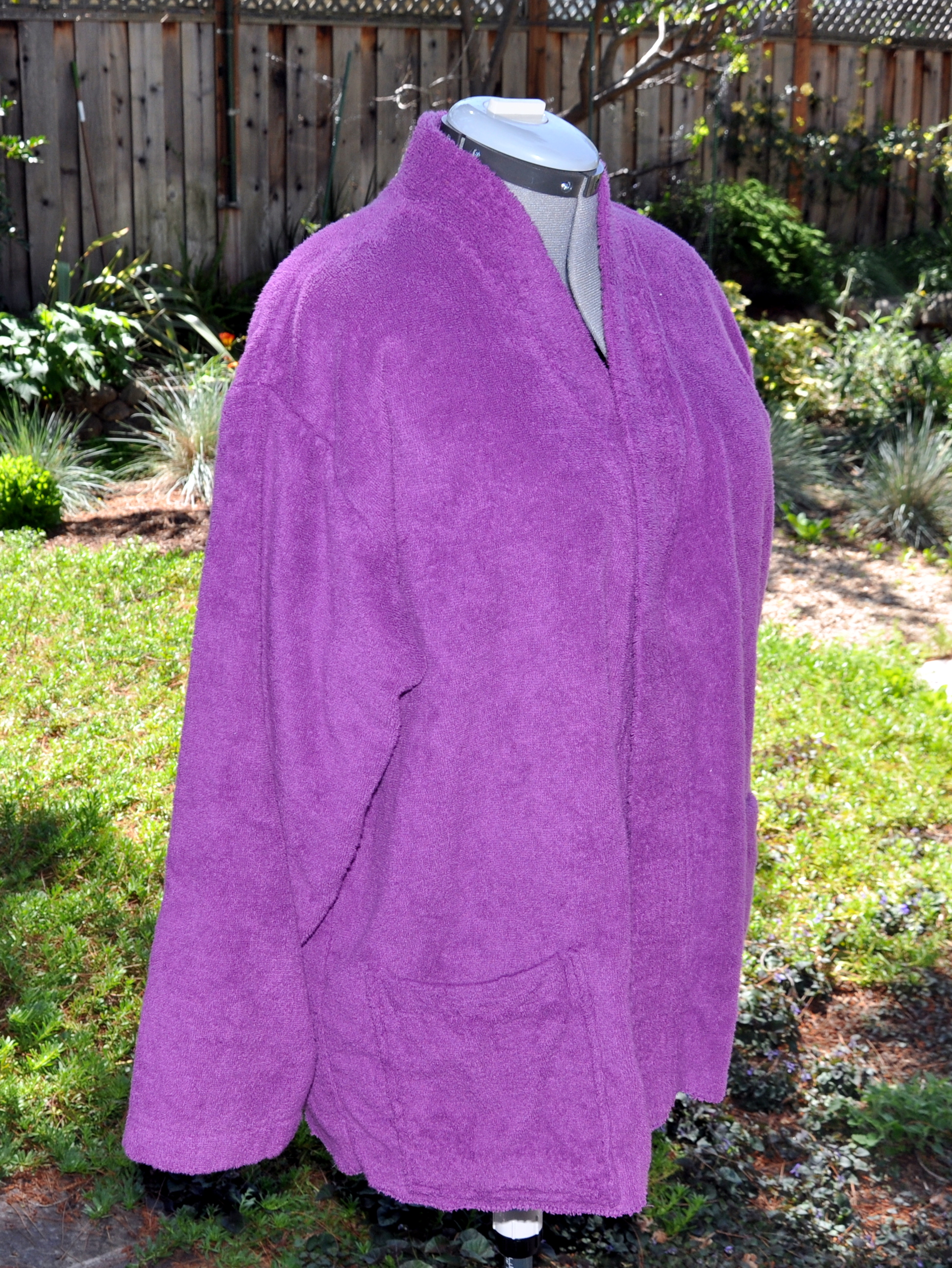
After looking at dozens of robes on-line, I learned that “short” is a standard size but far too long for this purpose. I couldn’t find any pretty terry cloth in town, surmising that it has somehow fallen out of favor. Everything we see is velour. Velour is soft and pretty but it’s not absorbent. I eventually found this gorgeous purple terry robe online, and altered it by cutting off the extra length and over-locking a hem to reduce bulk.

That extra length of terry will make it into a future cat bed.

altered purple terry robe

That’s Tessa in the lower, left corner

purple terry robe

Hemmed and ready to wear

We have one more project in the works. It’s also soft, warm and purple and flew home with me from my visit to Portland earlier this year. My friend, Marlene, took me to an enormous fabric store called Fabric Depot where I bought two yards of this lovely Minky chenille. Marlene even had a generous coupon. I’d never seen this pretty pattern before.

I was thinking “blanket” but Sharon requested a loose-fitting bolero. We found the perfect used pattern on-line, so as time allows I’ll be threading my Bernina with purple thread once again.

It’s been fun sewing for my sister.

SaveSave

In a Vase on Monday: Scented Sweet Peas

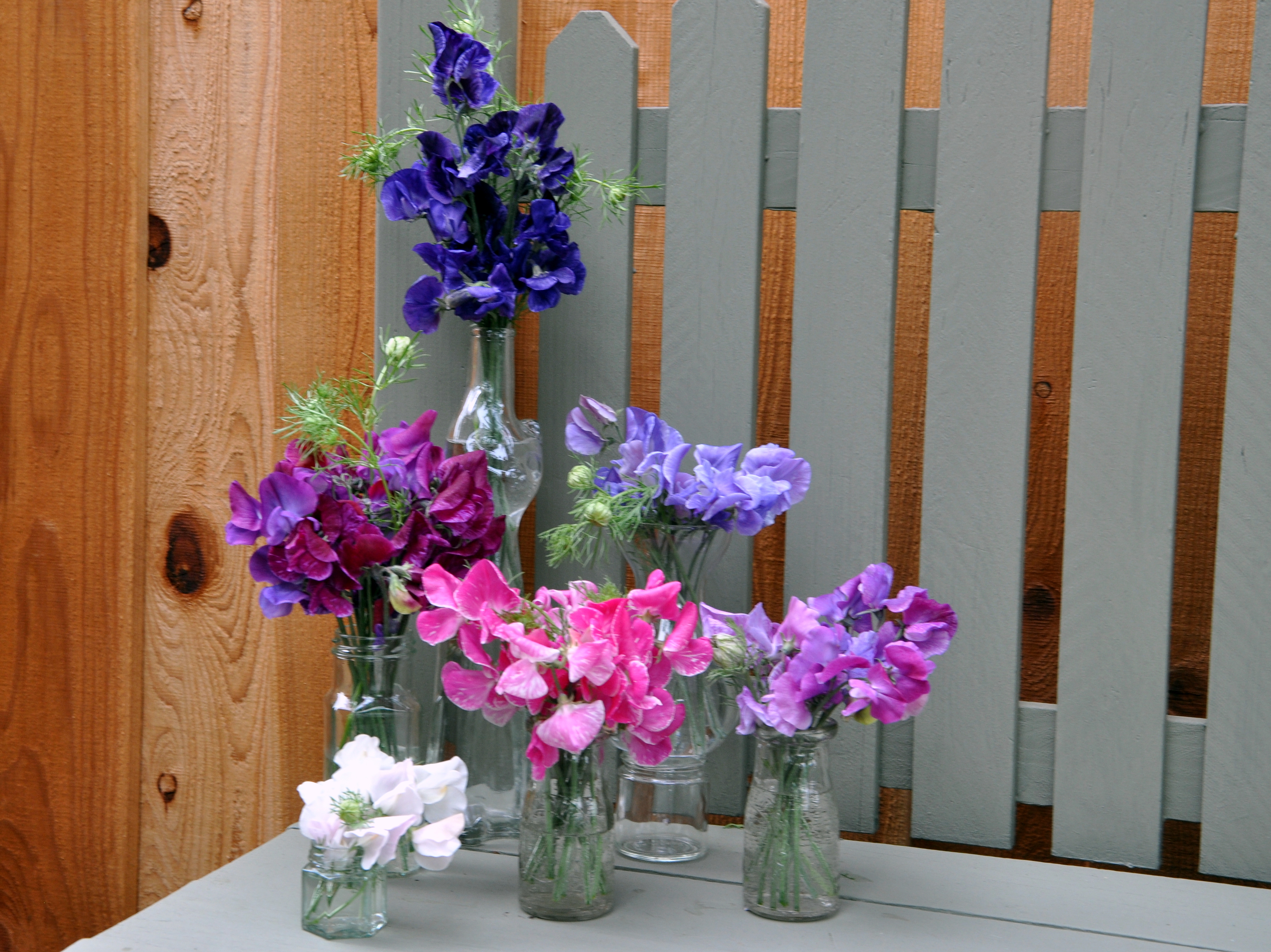
assorted sweet peas

Sweet Peas in Assorted Glass Jars

I’m joiningThe Cathys” once again for their weekly feature, In a Vase on Monday.

My swoon-worthy sweet pea jungle has returned. It’s colorful and wonderfully scented. Sweet peas seem to remind every one of their grandmother’s garden. They evoke a wonderful nostalgia.

This year I’m seeing more variegated colors including lavender with white and pink with white. That’s new and fun.

sweet peas front garden

Sweet Pea Jungle

I save glass jars throughout the year, and sometimes supplement with a few jars from a local craft store. I found some this year on clearance for fifty cents.  I cut flowers for my Pilates classmates, a group who loves to chat about gardening, and for my neighbors and friends. Last week I cut some flowers for a woman walking her dog and she said I made her day. I got to pet the puppy and she went home with some sweet peas. It doesn’t get better than that this time of year.

assorted sweet peas in glass jars

Sweet Peas Arranged by Color on my Potting Bench

sweet peas and nigella

Sweet Peas with Some Nigella Sprigs

We’ve had a mild May so the flowers have lasted longer than usual as well. Sunday was the start of our first heat wave with temps in the mid-eighties or (30C). I’ve really enjoyed the cooler temps.

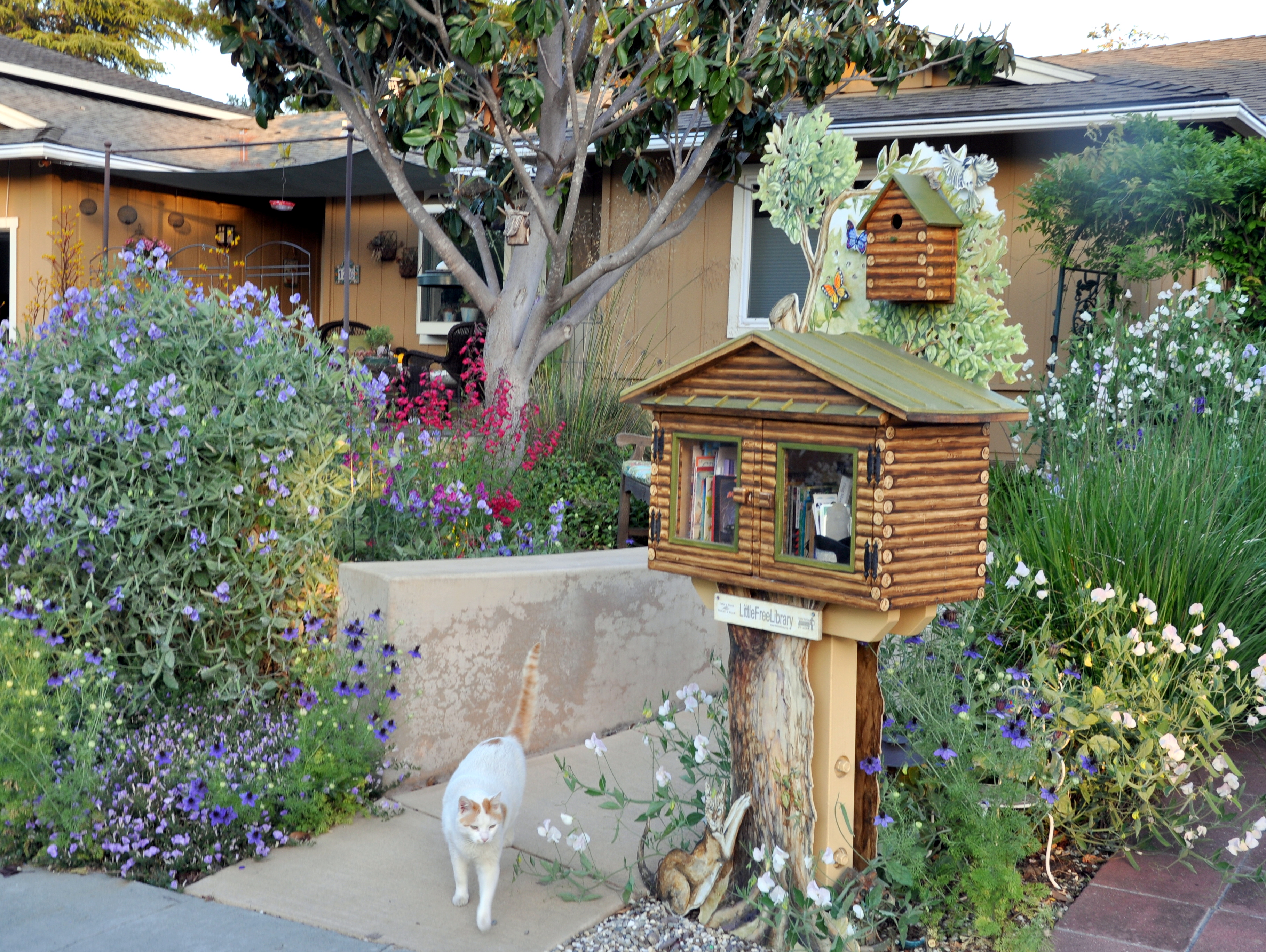
sweet peas near Little Free Library

Sweet Peas Growing Near the Little Free Library * Mouse the Cat on the Path

Click on over to see some of the other beautiful vases featured on In A Vase on Monday.

Anna at GreenTapestry

Christina at Creating My Own Garden of the Hesperides

and more.

Thank you Cathy at Words and Herbs and Cathy at Rambling in the Garden for your ongoing inspiration.

I think I’ll celebrate my WordPress anniversary with some freshly cut sweet peas.

WordPress 7th anniversary

SaveSave

SaveSave

SaveSave

My Miniature New Zealand Garden

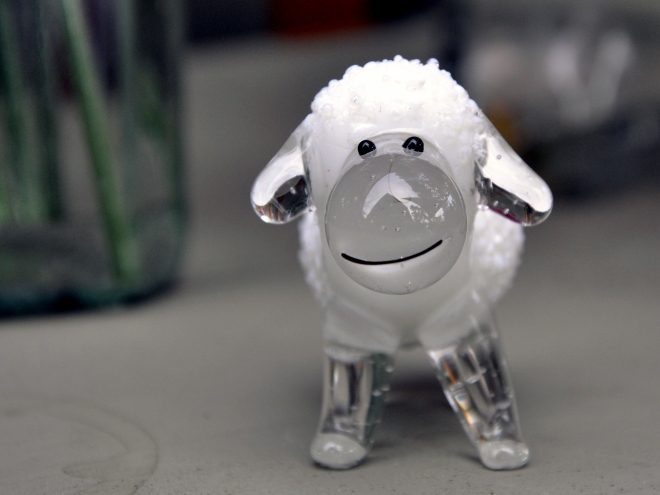
My miniature New Zealand garden started with a sheep.
New Zealand glass sheep

Glass sheep, crafted in New Zealand

Wooly sheep are an iconic Kiwi symbol of course, but this glass sheep sporting a charming grin is a gift from our gracious New Zealand hosts.

Pauline and her daughters presented each of us with a bag of New Zealand goodness at the start of our visit earlier this year. In case you missed it you can catch up here and here. Among the treasures were Pauline’s hand-made cards, delicious, local chocolates, and the sheep that launched my miniature garden.

Part of the fun of pulling together a miniature garden is using items you already have. If you can pick something up from the garden floor, that’s even better. The challenge is finding small-scale plants and flowers. I wanted to keep this miniature garden water wise, so I used succulents and drought-tolerant herbs. Dried moss defines the grassy area, so it looks like grass but doesn’t need watering.
Miniature New Zealand garden plants

Small-scale, water wise plants

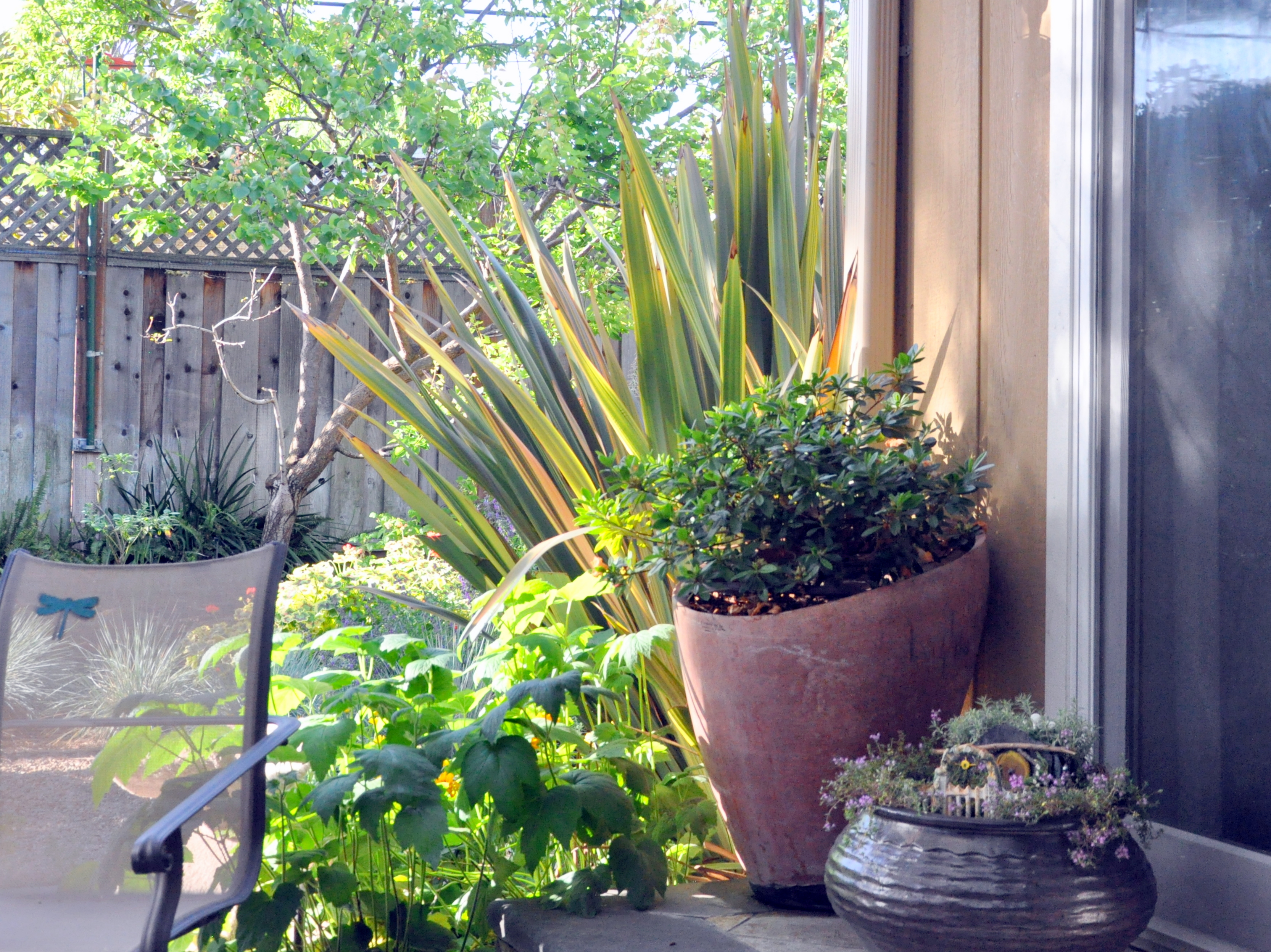
I’ve found from experience that shallow planters dry out quickly. I wanted to find a container that would allow for deeper roots, but one that would fit nicely on our back steps. I combed several nurseries and garden centers and in the end, I found what I needed in our back yard: our hose bowl. Serendipity!
Hose bowl with hose

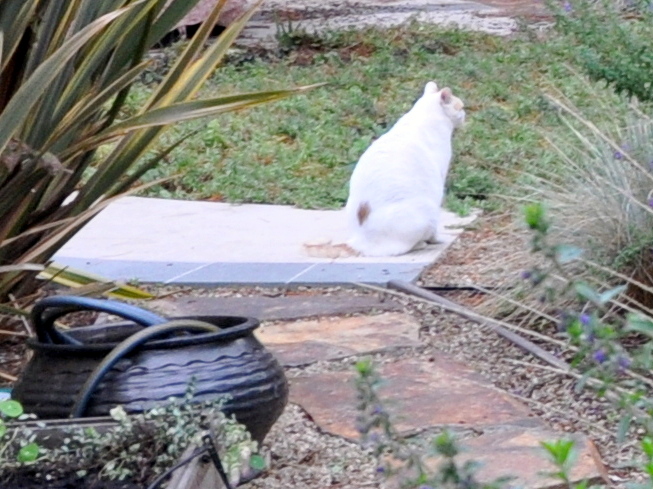
Hose bowl with the old hose (and Mouse)

I put up with our ornery garden hose for several years, so when it finally broke, I happily replaced it, this time with a retractable one. They don’t get tangled or require taming like the typical garden hose, especially when cold. Further, they shrink into a small space. I store my new hose in a much smaller pot and I repurposed the hose bowl into the base for my miniature New Zealand garden.
Hose bowl with plugged hole

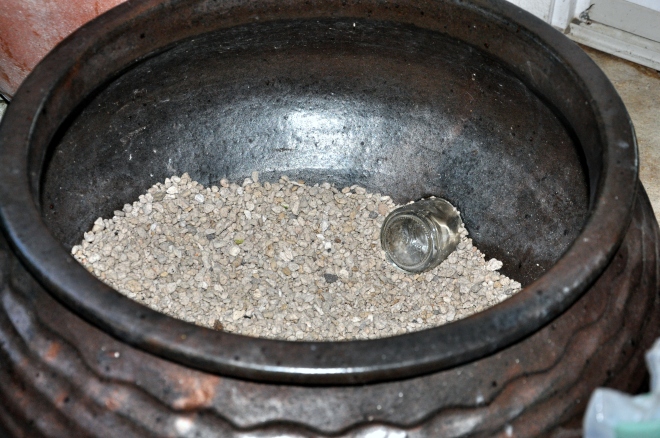
Hose bowl hole plugged with perfectly sized jar; lava rock for drainage

What separates a hose bowl from a regular pot is the hole for threading the hose. I easily solved that problem by blocking the hole with a perfectly sized jar, (more serendipity) then lined the bottom with a layer of lava rock. I filled the rest of the bowl with planting mix and then could get started on the garden.

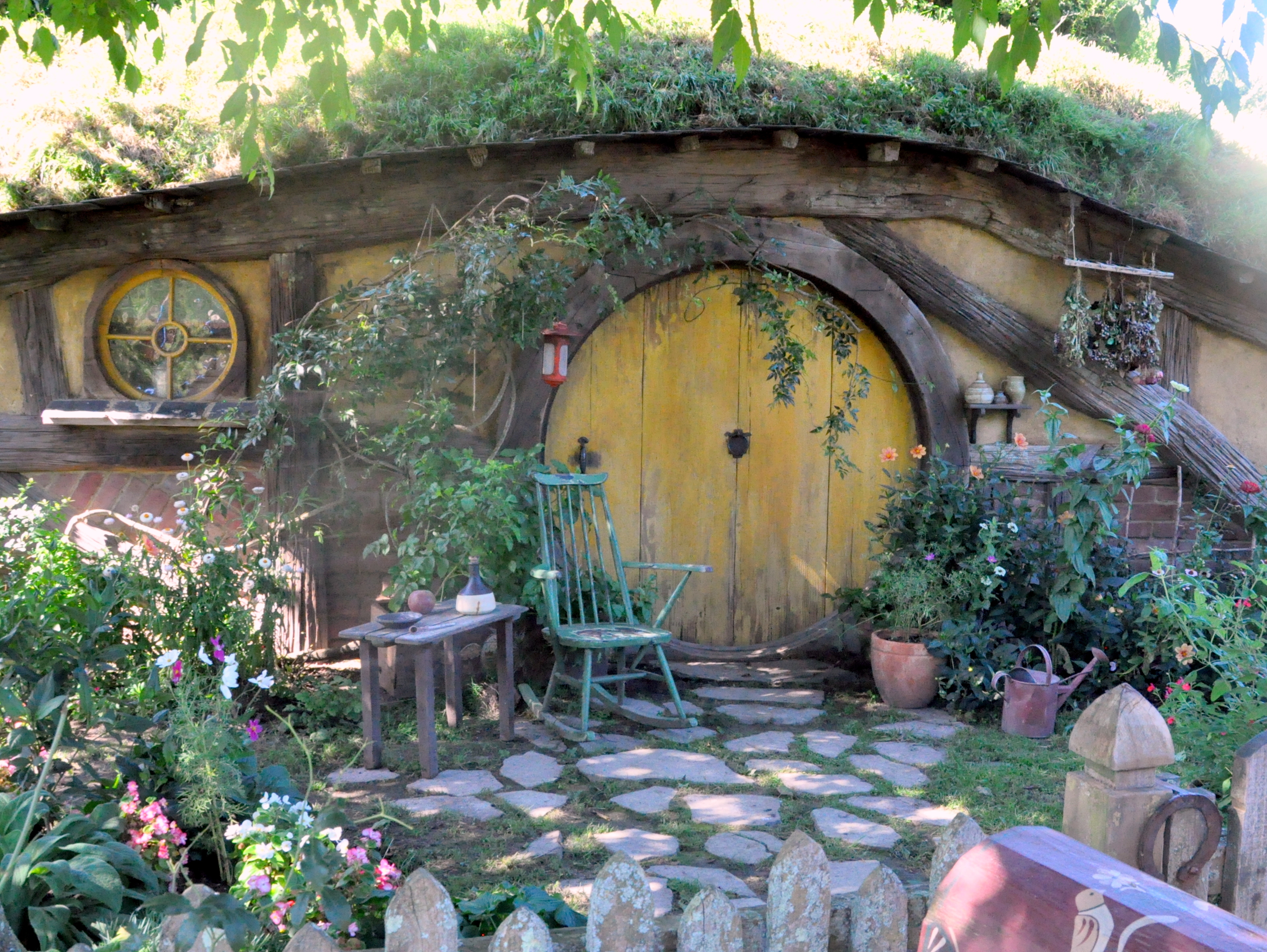
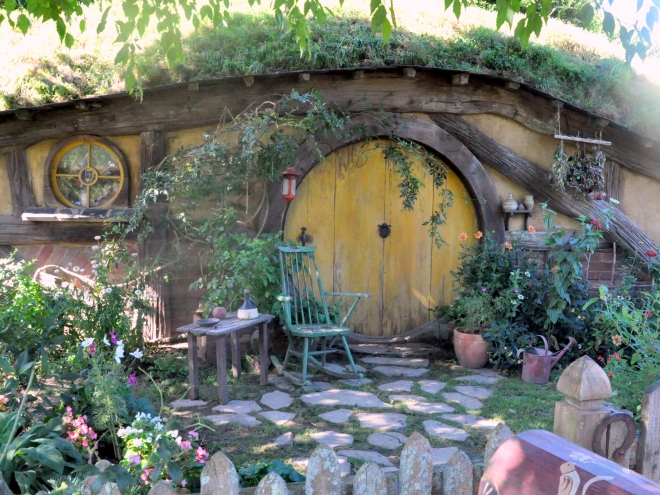
You may remember this photo from Hobbiton the Movie Set.
Yellow Hobbit Hole, New Zealand

Hobbit Hole, Hobbiton the Movie Set

I used this image as a starting point for the garden. In addition to the glass sheep, I made a walkway using Pāua shells gathered along the beach. I bought a few more packaged shells in Wanaka. As serendipity would have it, I’m growing New Zealand flax in our back garden. I used that as well.

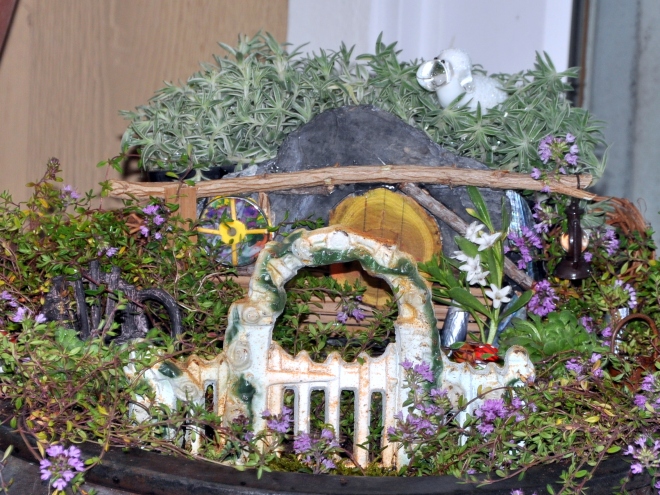
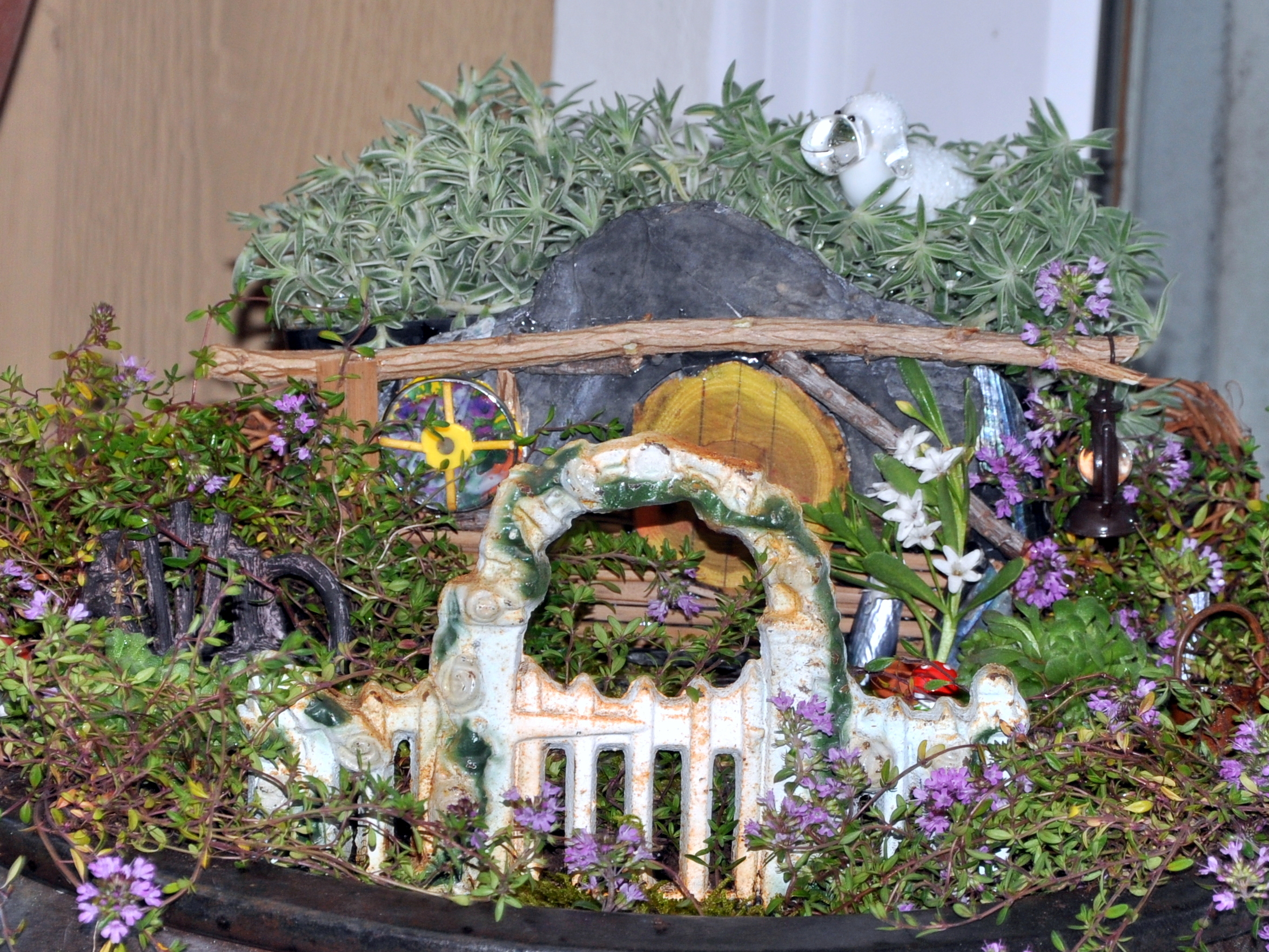
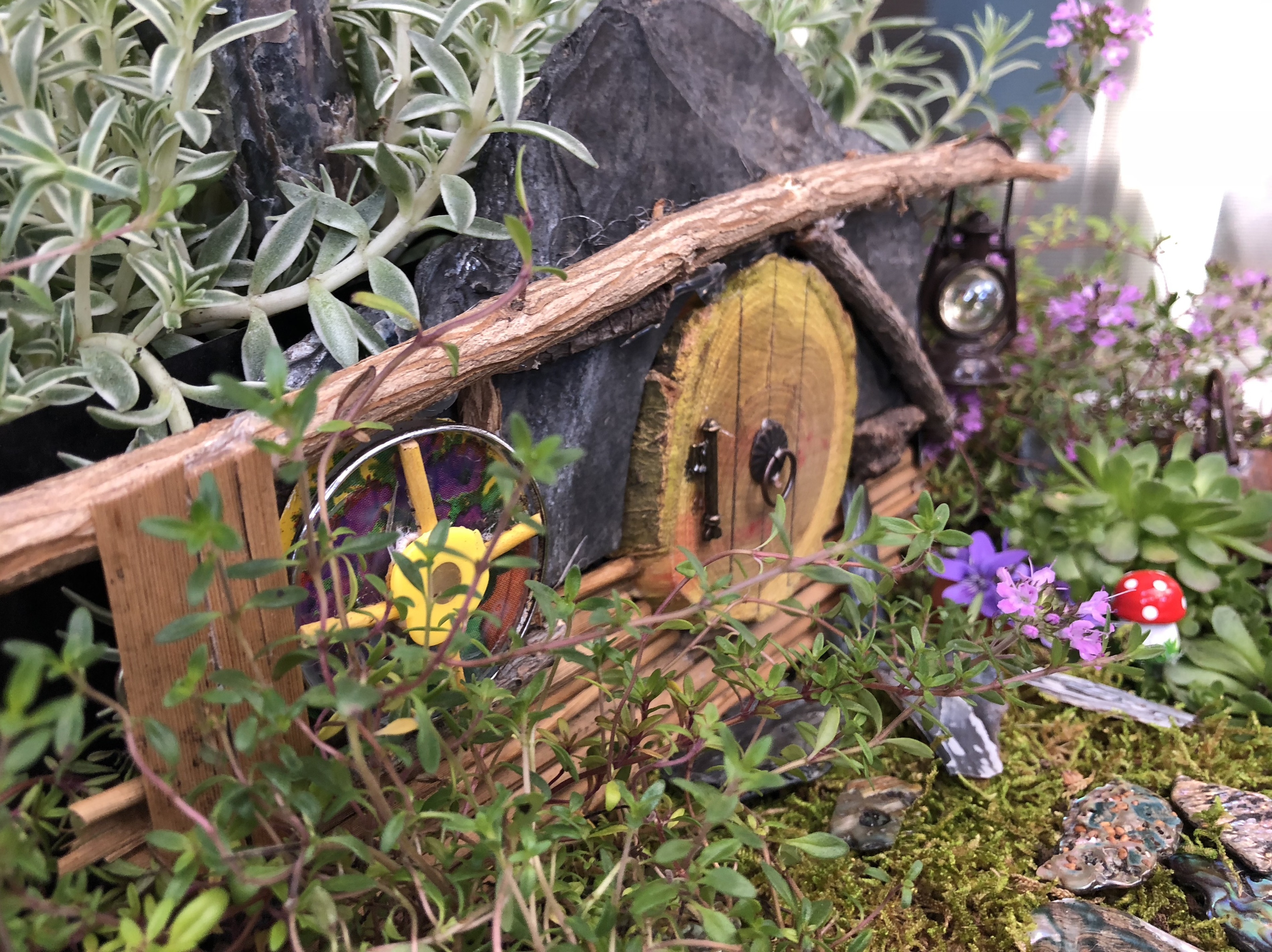
Here is my miniature garden homage to New Zealand.

(Click each gallery photo for details)

To create a grassy roof, I removed the bottom of two plant cell packs then placed them on the soil in the back. I left the sides of the container in place. The roots can grow down into the pot, but the containers will hold their shape. The glass sheep “grazes” along the roof.

Miniature kiwi garden

The Hobbit hole’s hilly roof

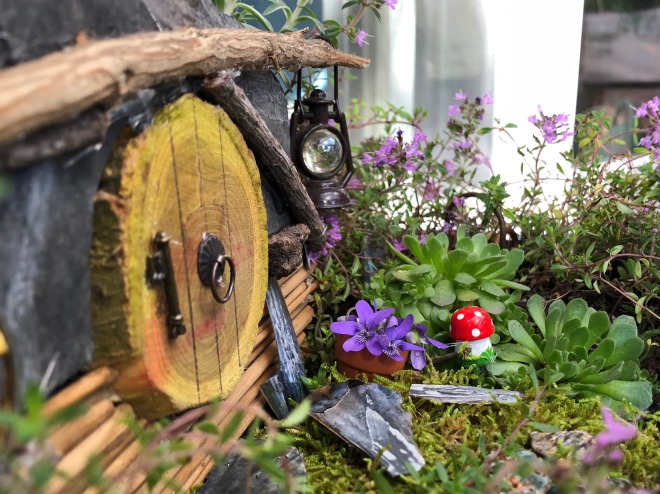
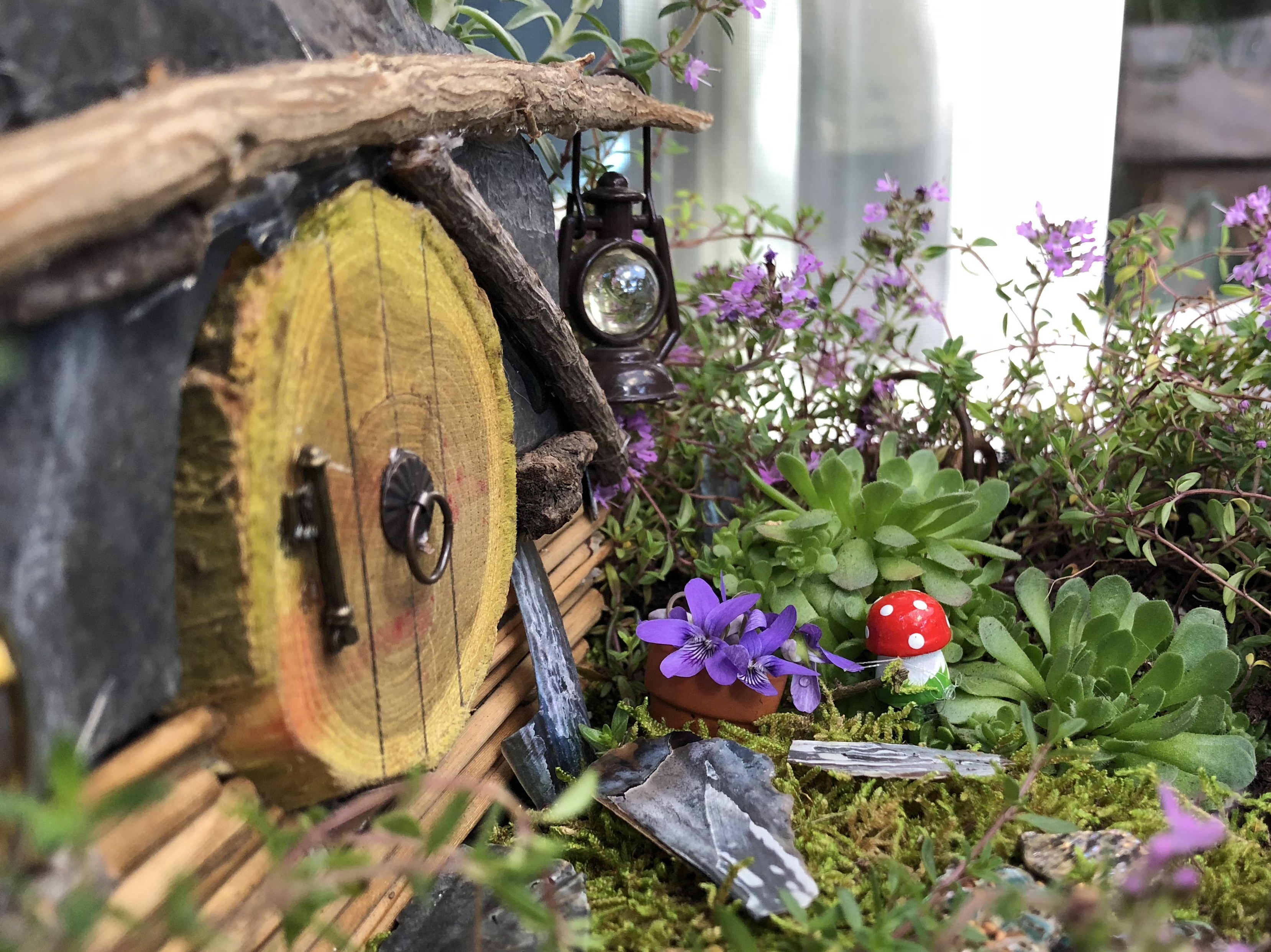
I used a small wooden stepping “stone” from one of my fairy gardens for the door. I glued a couple of embellishments from my scrapbooking supplies for the door handle and knocker.

Hobbit hole door

Hobbit hole door

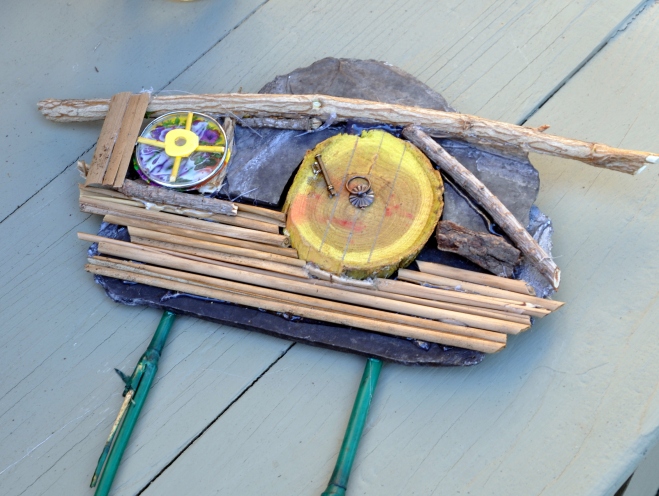
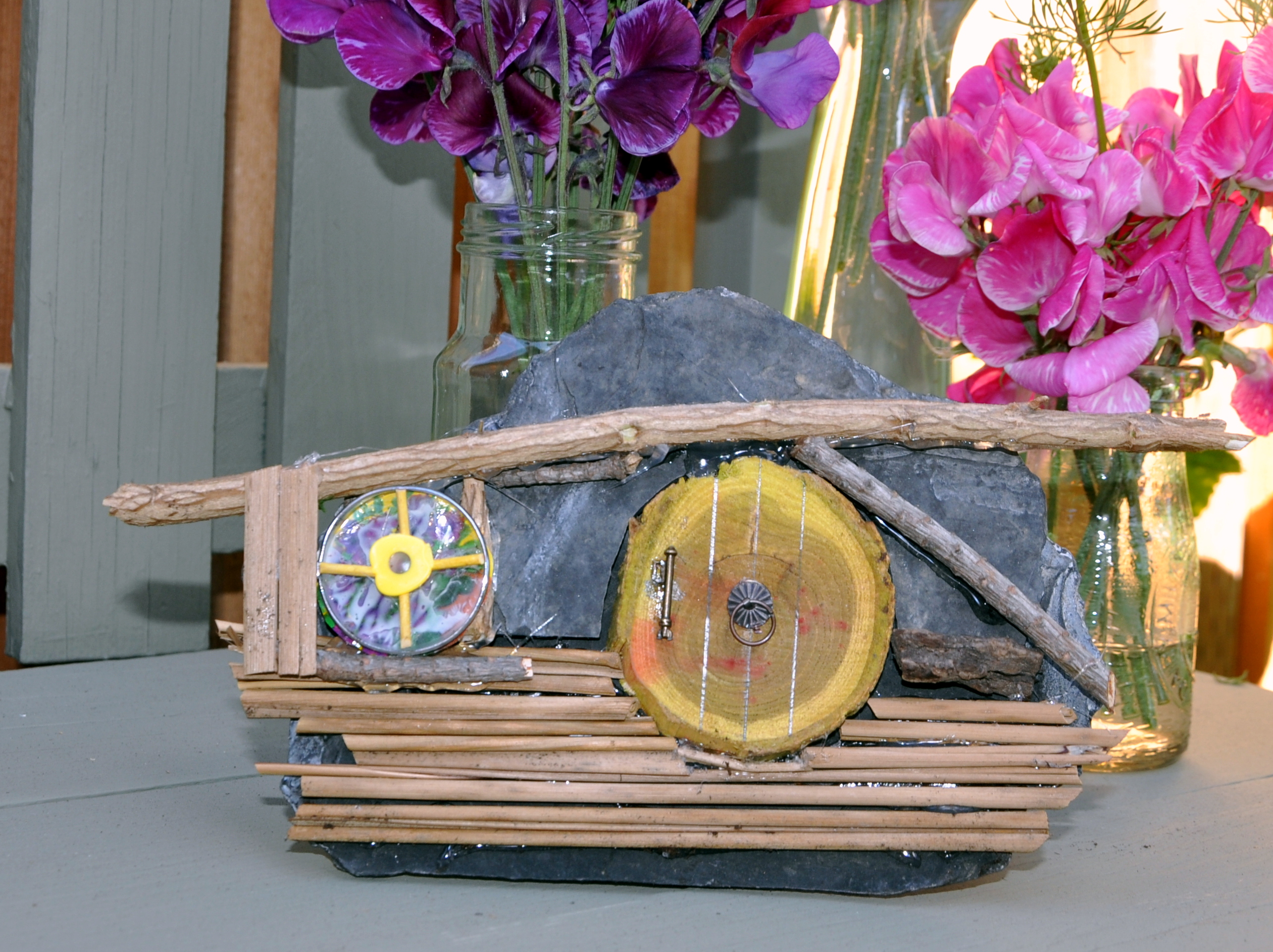
Just like the movie set, the frame of the Hobbit hole is a facade. Pieces of a broken desk-top fountain create the foundation. “Lumber” across the top and sides are twigs dropped from a neighboring pine tree, pruned branches, and detritus from the garden floor. The lower half of the house is covered with dried New Zealand flax.

Broken fountain pieces use to frame Hobbit hole

Hobbit hole facade

Hobbit hole facade made from slate, flax, glass, wood, and recycled plant stakes
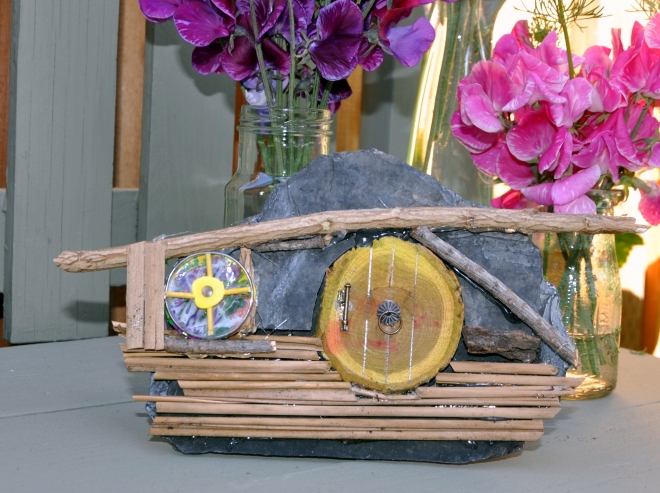
Hobbit hole window

Hobbit hole window (photo taken before the glue dried, now clear)

The Hobbit window “reflects” a piece of plastic from the bag of soil. The crossbars are yellow toothpicks cut to size with a small plastic clip in the center. Getting the plastic and the glass to stay put till the glue dried proved to be a slippery affair, but I finally got it to hold.
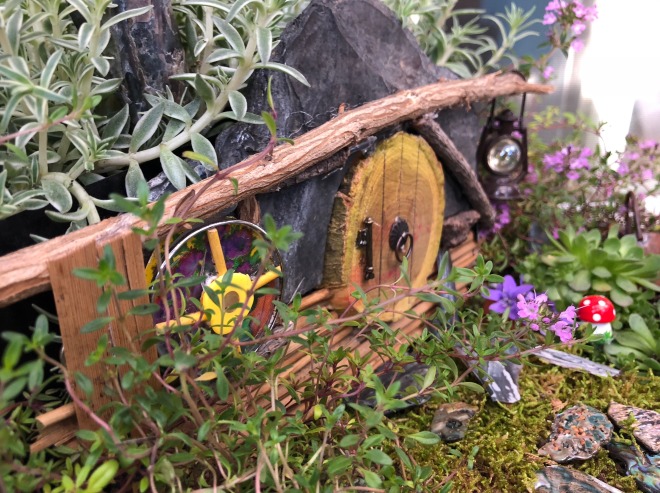
Hobbit hole window

Hobbit hole window

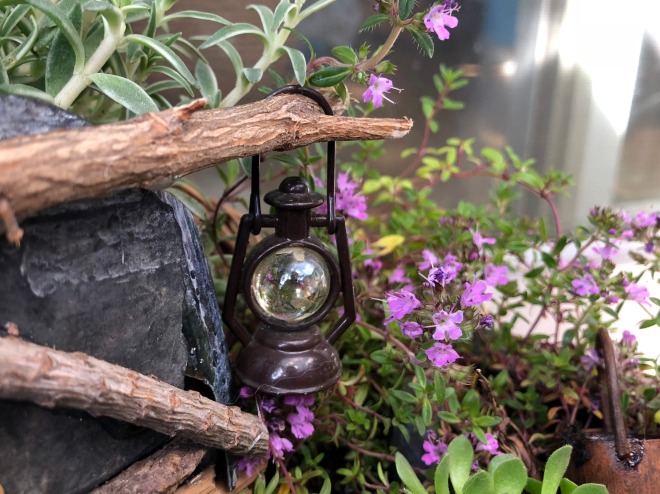
My friend Kelly sent me the small chair and the lantern you see hanging from the house. Aren’t they cute? Believe it or not I had a small, rusty watering can, once planted with a tiny succulent. The scale is off, but I love it there anyway.

Finally, a pair of spotted red and white fungus, similar to what we saw growing in Wanaka. I’ll say it again: serendipity!

More of the natural beauty of New Zealand

I can see the miniature garden from our bedroom and our living room. It’s another beautiful reminder of an extraordinary trip.
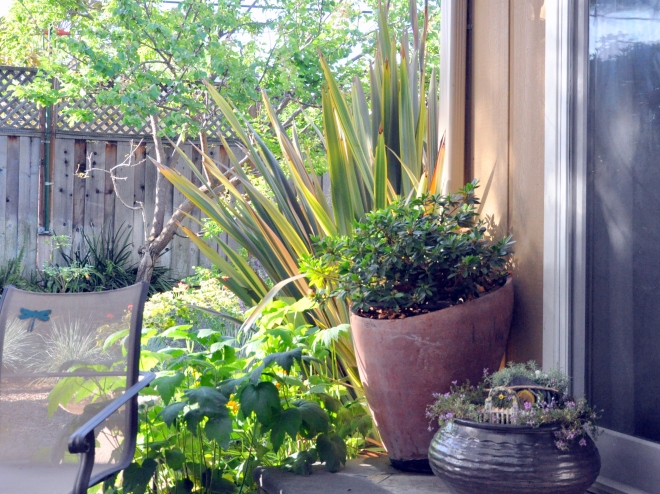
Miniature New Zealand garden and flax

Miniature Kiwi garden in the foreground. New Zealand flax growing at the corner of the house
Reveal: Thrift Diving’s 30-Day Outdoor Overhaul

My 30-day outdoor overhaul is complete. I came in just under the wire, with the goal of finishing by April 30th. It’s been a full month with one three-day weekend spent in Reno chaperoning my son’s Key Club event and another partial weekend away touring colleges. Throw in an unexpected root canal and it’s been quite the month. Phew!

Serena of Thrift Diving hosts 30-day challenges a few times a year. Several of us sign up for the extra motivation that comes with a deadline. Since I live in California, I’ve been lucky with the weather. We had a bit of rain on one of my painting days, and some windy days too, but nothing like the rest of the group. Serena actually extended the deadline by one week, since so many of the participants have had late-season snow.

I’ll be sure to share Serena’s post with all the challengers when they finish.

Without further ado, here’s what I accomplished this month.

Goals for the 30-Day Outdoor Overhaul

Goal #1: Clean, *repair* and paint my old potting bench

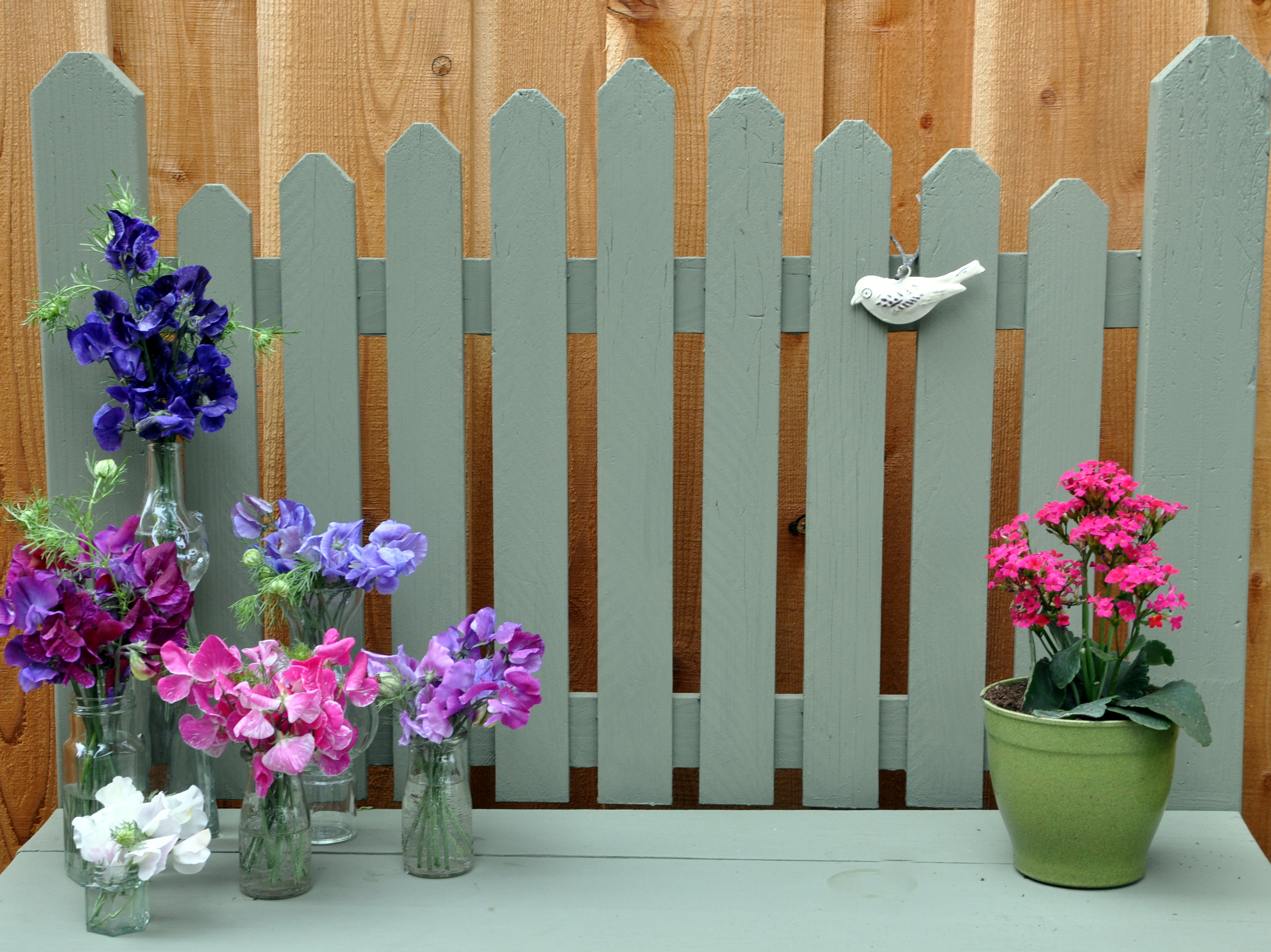
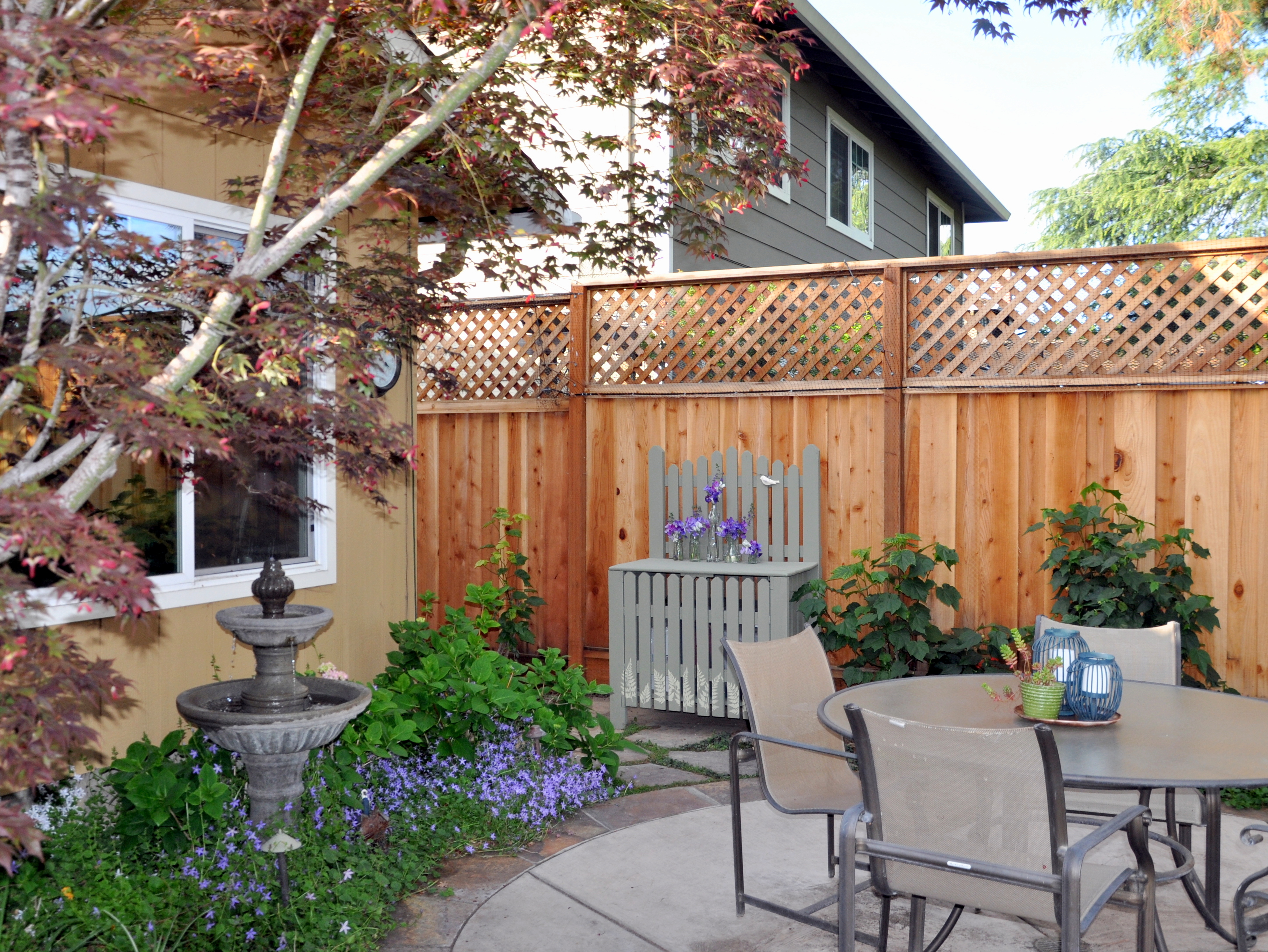
I’ve talked about repainting my potting bench for years but never quite got around to it. Now it’s done and I’m so happy. I painted the bench inside and out with two coats of Annie Sloan’s chalk paint. Once dry, I stenciled ferns along the bottom slats in a lighter shade of chalk paint. I arranged a variety of glass jars with fresh sweet peas along the top of the bench. I like the look of green and purple together. My friend Sherri gave me the decorative bird you see at the top of the bench. It’s perched on a pine tree twig.

Goal #2: Research gate options for side yard

About six months ago, I installed a make-shift temporary “gate” pictured above to keep Tessa from wandering out of the yard. I used an old wooden trellis, a 2 x 4 and a scrap of shade cloth, all items I had on hand. On the plus side, it served its purpose (keeping Tessa in the yard). On the down side it was ugly and impractical.

Once I started calling for quotes, however, the options for a metal gate seemed bleak. They’re all custom-made and cost thousands of dollars! Instead I worked out an alternate plan for free.

We extended our cat-fence netting all the way to the wooden front gate facing the street. We had just enough leftover from the back fence to finish the job. We used a remnant to cover the gate leading to the street. I’m so happy to have access to the side-yard once again and I’m pleased with the way it looks.

Here is a bit of serendipity. I reused the old trellis to complete goal 4. Though the bottom of the wooden trellis is partially decayed, I simply attached a pair of garden stakes with zip ties to support it and to keep the trellis off of the soil. Mike helped me pound the stakes into the ground to support the free-standing trellis.

 Goal #3: Outdoor sandbox for cats

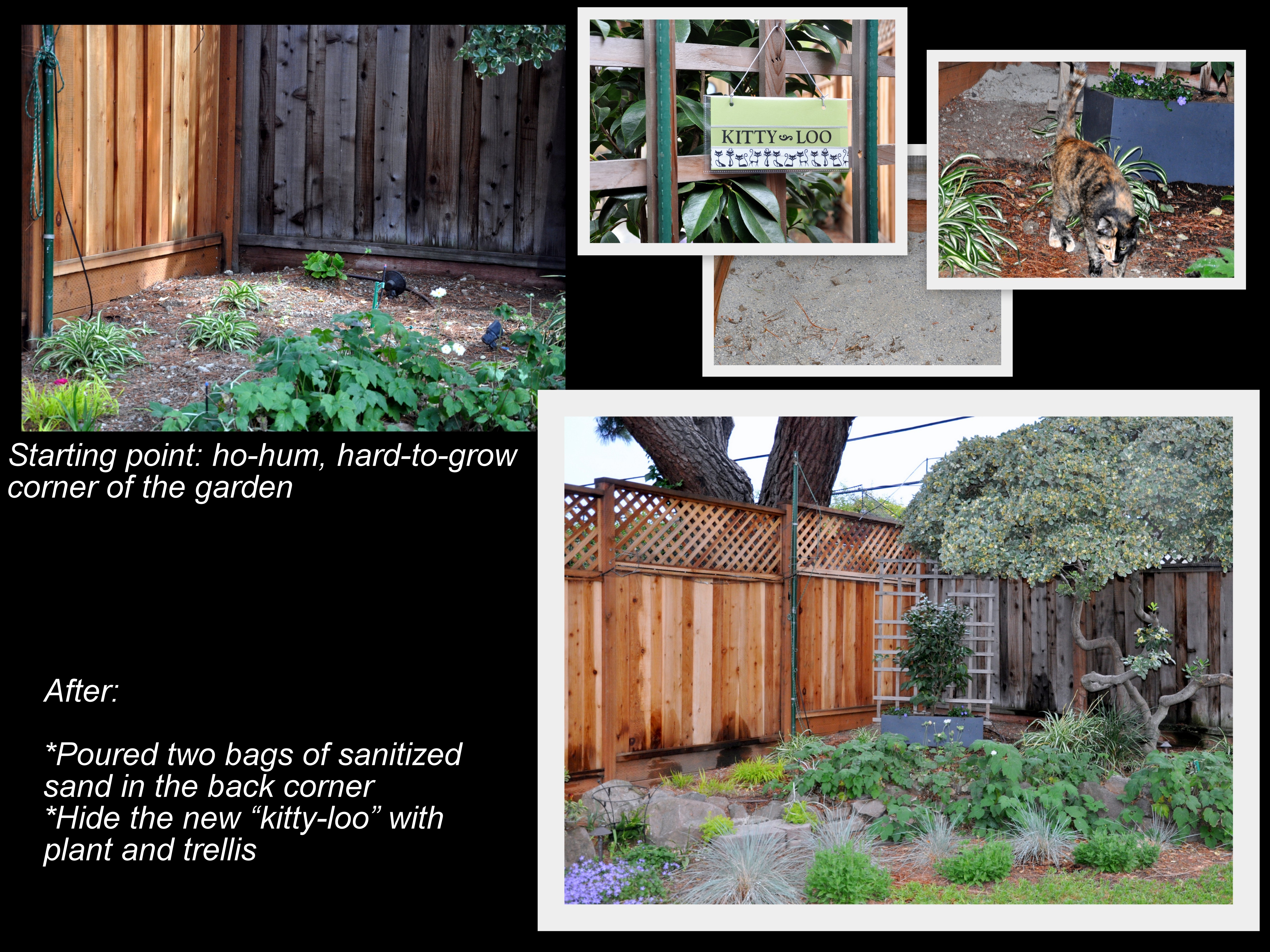
This goal is neither exciting nor blog worthy, but a goal is a goal. I picked up two bags of sanitized sand at a hardware store and poured it into the back corner of the garden.

Tessa and Mouse explored and then started using the sandbox. I’m hoping this cuts down on the deposits in other areas of the garden.

I made the Kitty-Loo sign out of scrap paper and Washi tape, then slipped it into the bottom of a page-protector. The silver cord came from my stash. I wanted something to photograph for this post besides a pile of sand.

Goal #4: Camouflage and Beautify

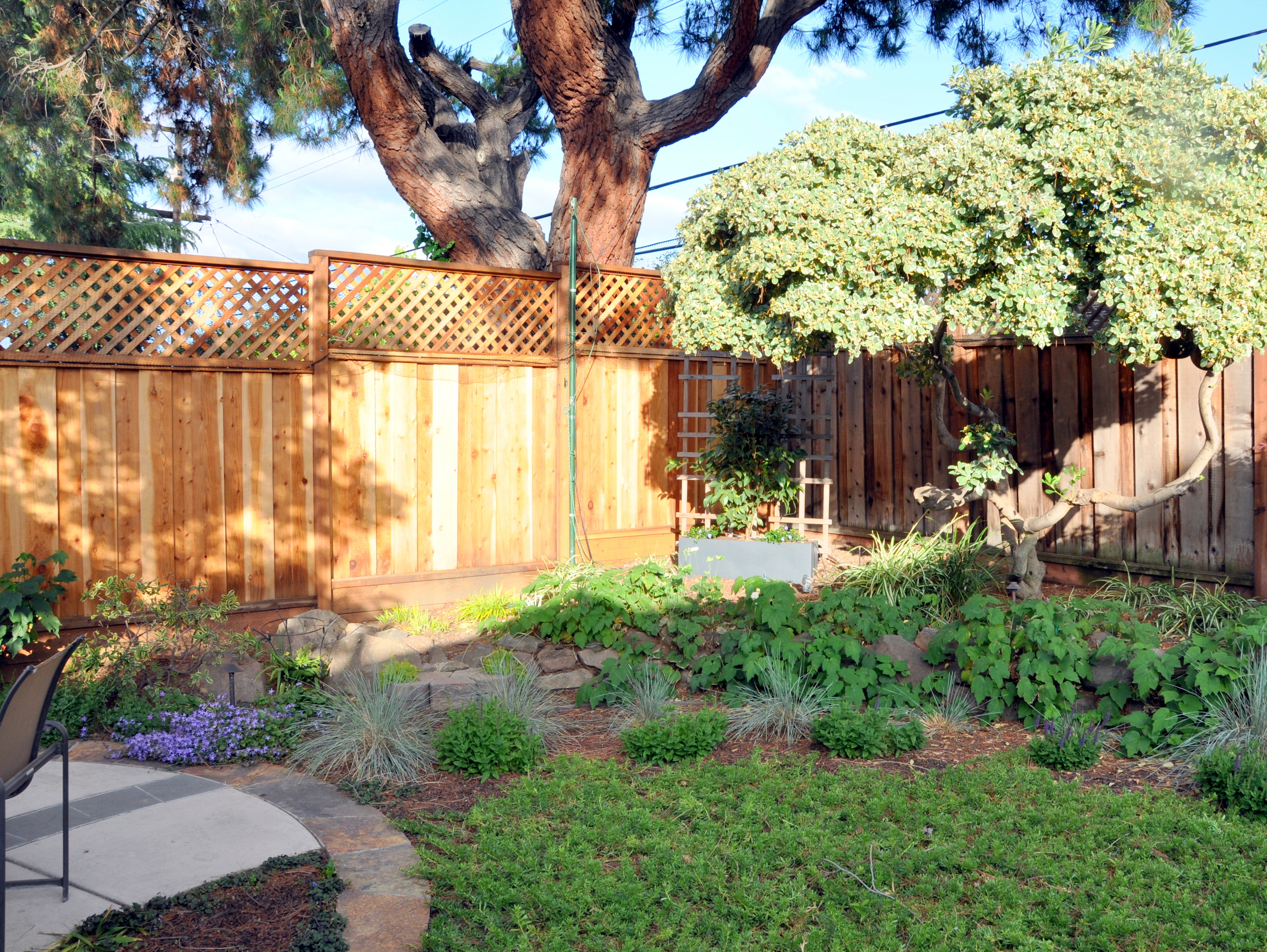
Goal 3 blends nicely with goal 4: camouflaging the kitty box and beautifying the back corner. I bought a 10 x 40 inch planting box, and set it on an angle in the corner near the back fence. Instead of a vine (my original plan) I bought a gorgeous white camellia. I planted purple periwinkle (vinca minor) on either side. The camellia will grow wider over time, eventually hiding the trellis all together. This corner looks so much better than it did.

Goal #5: Create a step-up to the raised garden along the back fence

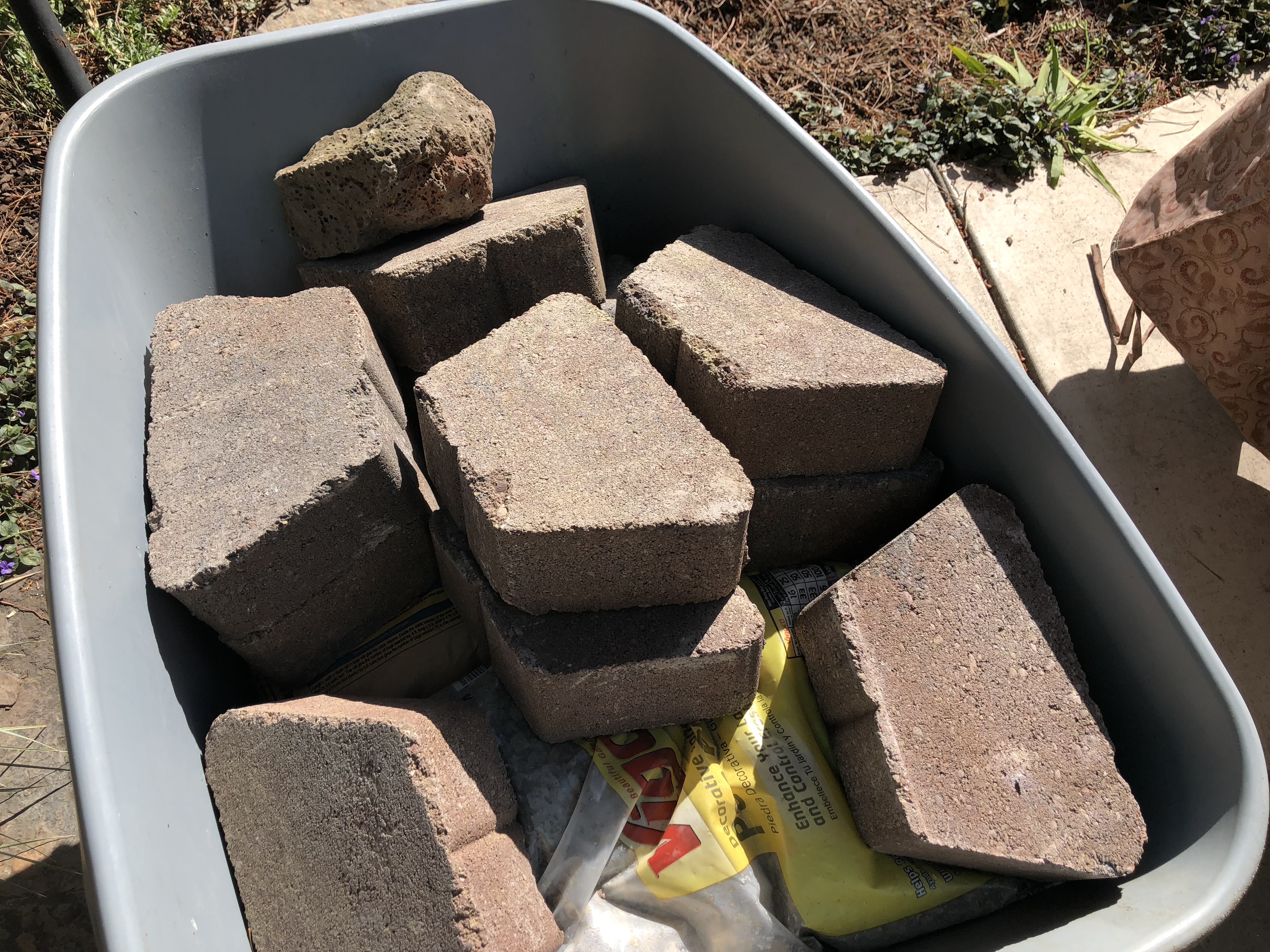
I used 10 inch pavers to create a small step-up to the elevated planting bed along our back fence. I only needed ten stones, and a bag of pea gravel to pull it together. Although the rock wall is natural and the pavers manufactured, I was able to soften the edges with a couple of plants. The first time I used the steps I felt like a kid in a candy shop. They work really well.

Home Depot garden paving stones

Future garden steps

garden near back fence

Garden, back left corner

garden near side yard

Garden near side yard

There are a number of challengers working hard to finish their outdoor projects. When Serena posts her blog with all the finishers, I’ll be sure to share it here with you.

If you think you might like to sign up for a future Thrift-Diving challenge, you can subscribe to Serena’s blog or follow her on Facebook at Thrift Diving.

Spring Colors: Cool as a Cucumber*

Spring Colors: Cool as a Cucumber*


Can you imagine a world without color?

Not me!

There’s room in every garden for the full rainbow spectrum. In my post Some Like it Hot, I featured many of the vibrant red, orange and yellow hues of my garden.

The cooler range of a primary rainbow includes blue, green, indigo and violet. They’re also my favorites.

In addition to providing a cool and lovely contrast to the heat of the garden, the cooler colors serve an important purpose. Green of course is the very backbone of plant life.

Plants derive their green color from a pigment called chlorophyll, literally translated as “green leaf”. This allows the plant to draw light and energy to thrive.


While the bright flowers get center stage, green is working hard in the wings to keep the garden healthy and strong. Green leaves also serve as excellent camouflage for beneficial insects such as praying mantis. Earth tones of brown and grey, provide birds with cover from predators.

Purple, violet and blue-like blooms attract bees, hummingbirds, bluebirds, and jays. Perhaps I should add “and gardeners” as green and purple are my two favorite colors.


I recently learned that

Purple is common in plants, largely thanks to a group of chemicals called anthocyanins. When it comes to animals, however, purple is more difficult to produce.

Source, Natural History Museum

I read years ago that there is no real blue when it comes to flowers. According to Mother Nature Network

There is no true blue pigment in plants, so plants don’t have a direct way of making a blue color,” Lee said. “Blue is even more rare in foliage than it is in flowers.” he added. “Only a handful of understory tropical plants have truly blue foliage.

While I’m on the subject of cool colors, I forgot to let you know the answer to the quiz on my Hobbiton Movie set post. I posed the question, “which of the three trees picture below is a fake?” The answer is The Oak Tree

From the blog The Curious Kiwi

The large oak tree above Bilbo’s house was cut down and transported to Hobbiton where its branches were bolted back in place. Thousands of artificial leaves were wired to the branches, all for a few seconds of filming.

*Cool as a cucumber – Bloomsbury International. Extremely calm, relaxed and in control of your emotions. This phrase may have originated from the fact that even in hot weather, the inside of cucumbers are approximately 20 degrees cooler than the outside air.How cool is that?

Spring Colors: Some Like it Hot

Orange nasturtium

This orange nasturtium has a banana-yellow center and a lovely pair of eyelashes

Nature always wears the color of the spirit.

– Ralph Waldo Emerson

Unless you’re an allergy sufferer, you probably love spring. It’s a magical time in the garden when spring colors emerge from winter’s slumber while the birds sing their happy tune.

Red and Pink


After years of planting assorted bulbs and spring-mix seed packets, it’s fun to see the color assortment burst forth. Wrapped around the perennials, and sometimes hiding below, touches of spring color emerge. To be fair, many of the weeds are colorful too. You just have to decide what stays and what goes.

Orange


According to birder Melissa Mayntz of The Spruce:

Different birds are attracted to different colors. Individual bird species may see the “best” colors as indicating a food source. Other birds may be more attracted to the colors of their own plumage as those could indicate a potential mate or another bird that is surviving well.

Most bright colors, however, can be used to attract birds, with certain bird species being more attracted to particular shades.

Red and Pink: Hummingbirds
Orange: Orioles, hummingbirds
Yellow: Goldfinches, warblers, hummingbirds

Yellow


Interesting that red, orange and yellow are the first three colors of a primary rainbow. I think nature is on to something, don’t you?

Not to be undone green, blue and violent show up every spring as well. They’re the cooler colors, providing a lovely contrast to the heat of the spectrum. Stay tuned for their turn in the garden.

ScrapHappy April

I’m joining Kate of Tall Tales from Chiconia once again for her monthly scrap-happy blog post. The challenge is to use scraps from other projects to make something useful, beautiful or both. Several bloggers post once a month showcasing a project made entirely from scraps.
pair of cats for adoption

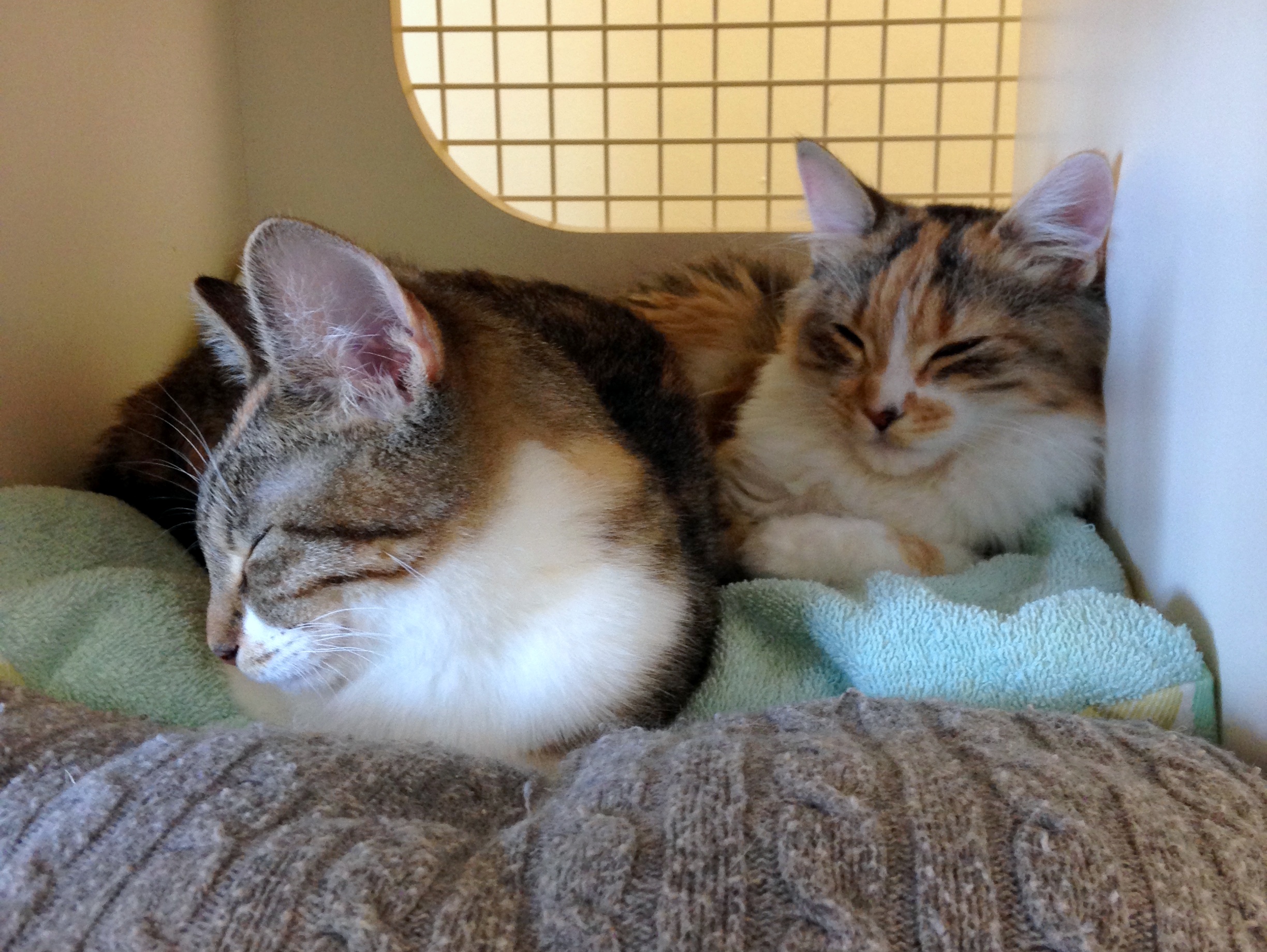
Lily and Petunia waiting for adoption while enjoying their cat beds. Photo credit: B. Solovei

This has been a two-part project. I wanted to make cat beds for an animal rescue group using scraps of fabric, old pillows and discarded clothing. I started last summer before the triple-digit heat set in.  It was simply too hot to do anything but huddle together in the one room with our portable AC unit. I made three cat beds, and then put the entire project on hold till the weather cooled.

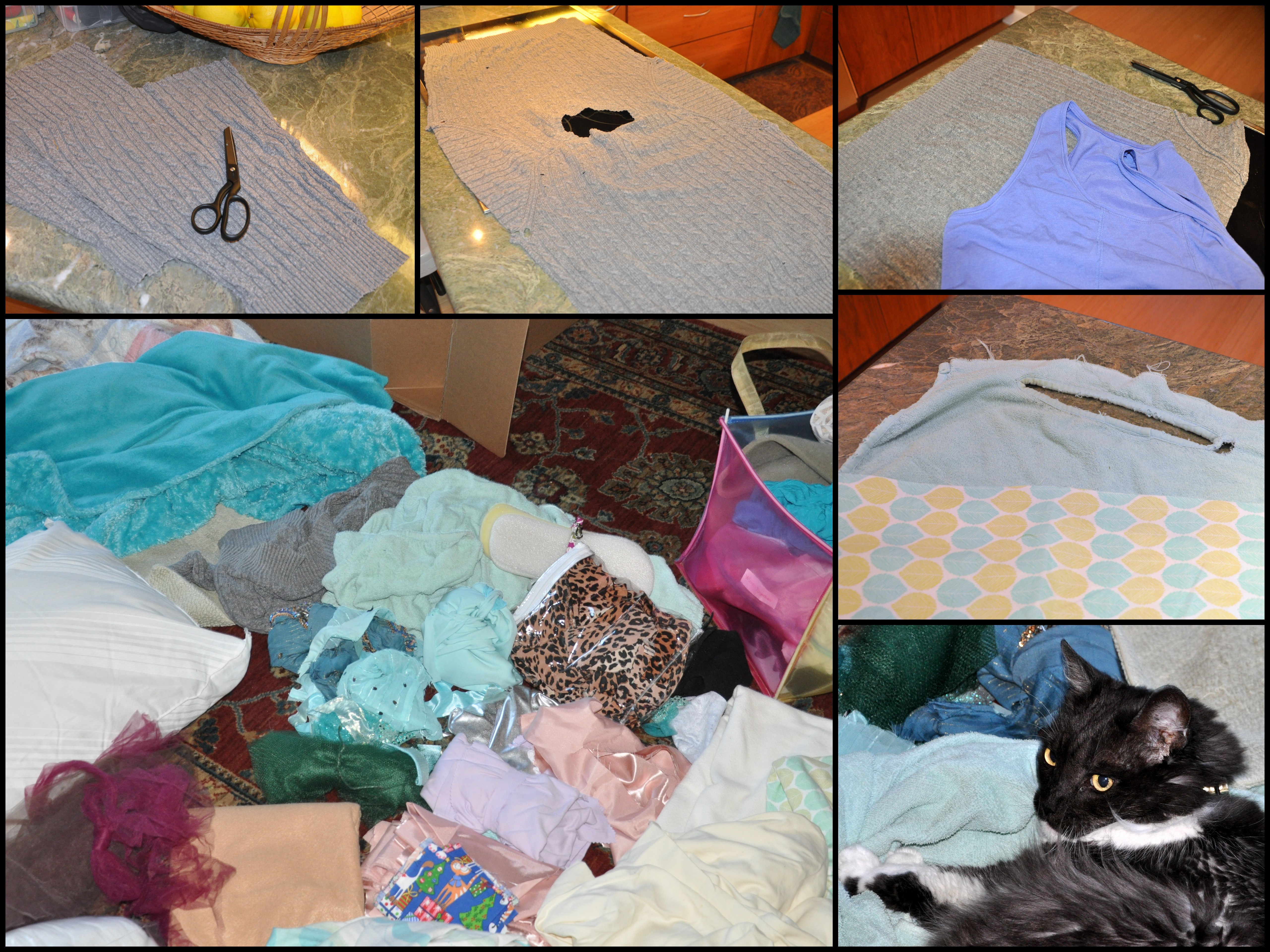
The first photograph below, shows all my scraps spread out on the floor along with some old bed pillows passed on to me by a client.

The grey sweater and aqua terry cloth robe belonged to my sister. They were ready for the scrap heap, but instead I repurposed them into cat beds as pictured above.

Scraps of material and clothing cast-offs

Cutting and repairing my sister’s grey sweater for one side of the pillow. Using a terry cloth pool coverup and part of my swing cover for a second pillow. Lindy loved having piles of scraps all over the floor

Tessa loved playing in the pile of scraps. She was still a kitten when I took these pics.
Cat beds made from fabric scraps

I stuffed the pillow on the left with fabric scraps and bit of batting. The scraps proved too heavy, so I made the rest of the cat beds using old pillows. The grey sweater made it into two pillows. Two old items of clothing are used on the reverse side of each pillow

Setting this project aside had an upside. Belinda, who volunteers for Nike animal rescue let me know that smaller, narrower pillows would be a better fit for the temporary cat enclosures.

cat beds

The second batch of cat beds

My second batch of cat beds are smaller. Tessa hopped up on the bench while I took photos, lending perspective to their size.

Tessa on the potting bench with cat beds

Tessa likes to be where the action is

Tessa with cat beds

Tessa checking out the cat beds

Each of the cat beds has a little story.

cat beds, side one

Cat beds, side one

The floral fabric is left over from recovering my patio furniture a few years ago. I sewed two scraps together to make it large enough for the pillow. The second pillow is a remnant my friend Marcia used to wrap a Christmas gift a few years back. The third pillow uses part of one of the pillows I used to stuff the cat beds. I covered the last two with leftover leopard fabric from a Halloween costume I made a few years back.

cat beds, side two

Cat beds, side two

I backed each cat bed with additional scraps scavenged from my sister’s worn pool cover up, a client’s old, stained sweatshirt and my tattered purple workout jacket.

I still have two, king-sized pillows to use for future cat beds. I really enjoyed this “scrap-happy” project.

Nike Animal Rescue Foundation

Nike Animal Rescue Foundation is a 501(c)(3) non-profit, all volunteer organization dedicated to providing assistance to cats and dogs in need. All the cats and dogs available for adoption can be viewed here on the site. We hold adoption fairs in the South Bay several times a month where you can see all the pets in person. You can read more about their volunteer efforts here.

From Kate’s blog:

“ScrapHappy is open to anyone using up scraps of anything – no new materials. Anything made of scraps is eligible. If your scrap collection is out of control and you’d like to turn them into something beautiful instead of leaving them to collect dust in the cupboard, why not join us on the 15th of each month? You can email Kate at the address on her  Contact Me page. New members are welcome. No long-term commitment required. Regular contributors will receive an email reminder three days before the event.”

Have you made something entirely out of scraps lately? Please share your link in the comments section, below.