Changing of the Colors: The Summer Edition


Who doesn’t like the spectacular color change that heralds the arrival of fall? New England’s tourist industry thrives as the green leaves give way to golden yellows, warm oranges and vibrant reds. Though less flamboyant, I present to you the changing of the colors: the summer edition.

First up, Hydrangeas. This lovely goes from bright green to pink, then softens to a dusty mauve before turning a cooler shade of green. You can snip flowers from the vine at this last stage, then brought indoors for drying.

Fading Hydrangea Collage

Hydrangeas Fade

Tomatoes need a variety of conditions before they turn from green to red. The smaller the tomato, the faster the transformation. Tomatoes need moderate temperatures, shelter from the wind and time.  The color can’t be forced.  According to Gardening Know How:

Tomatoes are triggered to turn red by a chemical called ethylene. Ethylene is odorless, tasteless and invisible to the naked eye. When the tomato reaches the proper green mature stage, it starts to produce ethylene. The ethylene then interacts with the tomato fruit to start the ripening process. Consistent winds can carry the ethylene gas away from the fruit and slow the ripening process.

If you find that your tomatoes fall off the vine, either knocked off or due to frost, before they turn red, you can place the unripe tomatoes in a paper bag. Provided that the green tomatoes have reached the mature green stage, the paper bag will trap the ethylene and will help to ripen the tomatoes.

Tomatoes from green to red

Ethylene Gas = Red Tomatoes

Pumpkins turn orange much the same way tomatoes turn red. In addition to color, they also need to harden before harvesting or they will quickly rot. We had a pumpkin survive on our front porch for over nine months one year. Once carved, however, the fruit rots within a few days. According to All About Pumpkins:

There are many indications that your pumpkin is ready to harvest. A Jack-O-Lantern variety should be predominately orange in color. If the vine has started to “go away” (meaning dying off and declining) this is another signal. Sometimes the stem is already starting to twist and dry. The most important indication to look for, is that the shell has started to harden. If you can easily indent the pumpkin skin using your fingernail, the fruit is still too immature to harvest. If you harvest it at this stage, your pumpkins will likely shrivel and spoil within days. When the shell has hardened, your pumpkin is ready to cut from the vine.

Pumpkin Turning Orange

“Acorn” Pumpkin Turning Orange

What’s changing colors in your garden? Do you have a favorite? Please let me know in the comments, below.
 

Green House Supply: Purveyor of Salvaged Curiosities

My friend Donna Boss has a charming business know as Green House Supply.  She employs her tremendous aesthetic using salvaged, vintage, and previously owned materials to create unique products.  She sells jewelry, ephemera, textiles, and other vintage pieces “designed to add to the patina of your life.”

Donna is also an avid gardener and co-founder of our elementary school’s outdoor classroom and organic garden.  We became fast friends over seeds and dirt and the politics of school volunteering.

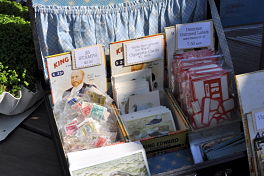
I recently attended one of Donna’s shows, hosted in her spacious garden.  Here are a few of her wares:

Greenhouse Design Radio Flyer with Annuals

Greenhouse Design Radio Flyer
planted with summer annuals

Ephemera notebooks

Notebooks Created Using Airmail Envelopes

Ephemera Jewelry

Timely Jewelry

Vintage Postcards, Stamps and Office Supplies
All my favorites!

vintage nautical alphabet

Nautical Alphabet
I bought letters to spell my husband’s name

Be sure to follow Green House Supply on Facebook for details of Donna’s upcoming shows.

Come see Donna’s wares at:

Goat Hill Fair, Booth #9

September 15th & 16th, 2012

♦   ♦   ♦

Lindy in the Garden: Our Big Girl Turns 10

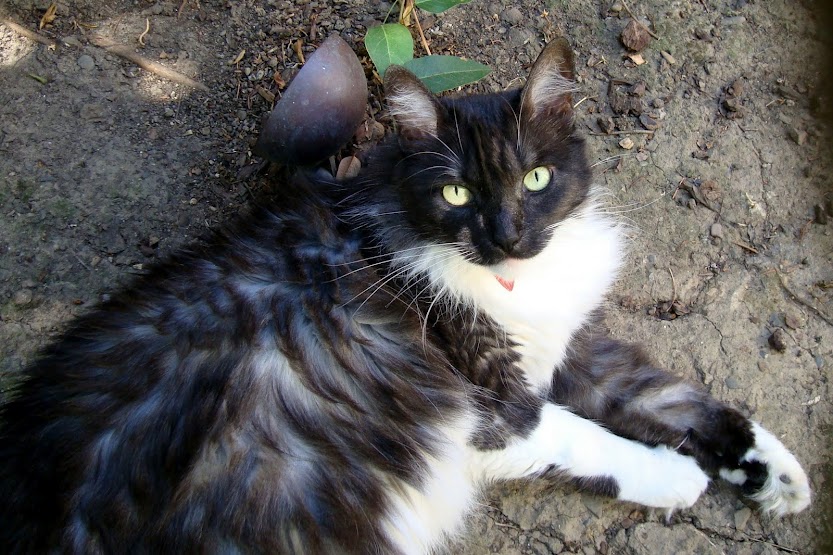
Lindy-Lu, our beloved black and white kitty, just turned ten. We adopted her seven years ago from our local Humane Society as a birthday gift for my oldest son. She’s been a gift to us all.

Tuxedo Cat, Lindy Lu

Our family looked at every single cat available for adoption that day, but in the end she chose us. She reached between the bars with her paw and patted my son.

Lindy is good-natured and outgoing and unlike most cats, she comes when called. She’s too big for our laps, preferring instead to lay across the back of the couch, nestling near our hair. The moment I head outside, she is by my side, following me from place to place.

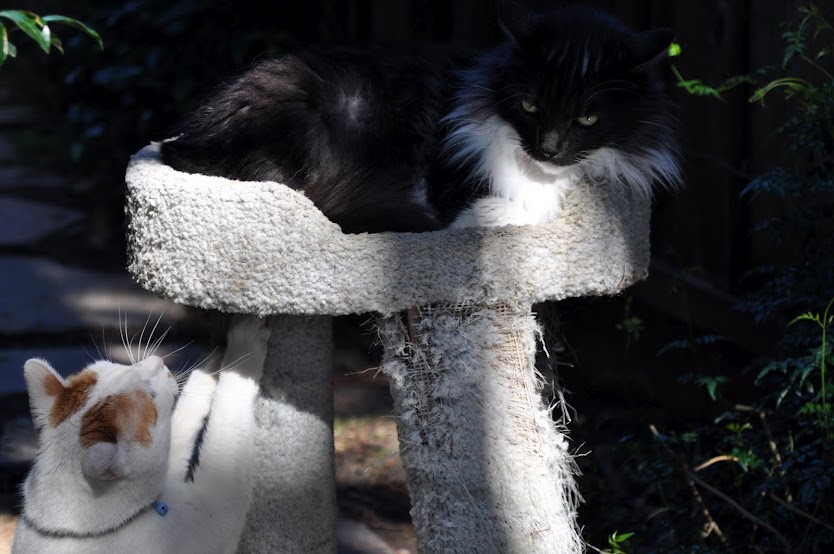
Lindy and Mouse the Cat

Mighty-Mouse, the neighbor’s kitty comes calling and wants to play. She’s receptive on occasion, but for the most part views him as an annoying little brother. At 16 pounds she could take him, but she prefers to give him a warning growl. Sometimes he actually takes the hint.
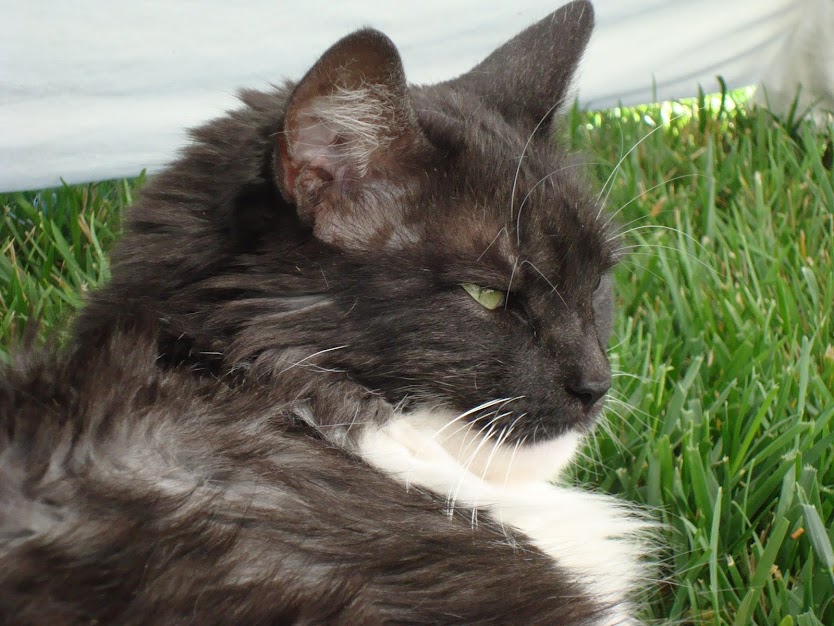
Black and White Cat

As I go about my gardening chores, she settles into the grass or between a couple of nearby shrubs. I often think she’s keeping an eye on me, offering her quiet companionship as she tucks in her paws and gives me the blink of acceptance. The garden wouldn’t be the same without her.

Blooming Thursday: Lemony Yellows


The first flower on my lemony yellow tour self-seeded from last year. Within two weeks it was covered in buds and blooms and tripled in size.  My friend Laura, referred to it as a Four O’clock, the time it usually blooms.  Our plant must think it’s in a different time zone, as it was in full bloom at 9:00 this morning.

Yellow Wildfowers

Lemony Yellow Wildflowers

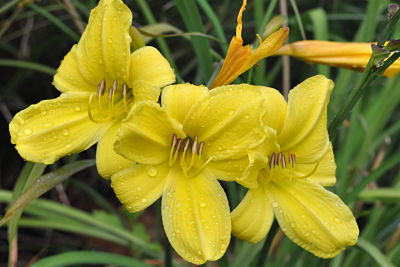
Next up are the ‘Evergreen Yellow’ daylilies surrounding our Magnolia.  Is it just me, or do the stamen look like delicate, curling fingers?

yellow daylillies

Trio of Daylily Flowers

Yellow Daylily

Yellow Daylily Up Close

Rounding up the tour, we have Fuzzy little Kangaroo Paws shooting up behind the lilies. They’ll grow to about three feet tall and will bloom now through fall.  Aren’t they sweet?

'Harmony' Kangaroo Paws

‘Harmony’ Kangaroo Paws

What’s blooming in your garden this Thursday?


Natural Gifts: Collecting Cosmo Seeds

The idea came to me a few weeks ago: I’ll collect Cosmo seeds to give as gifts for the holidays.

The prolific flowers are easy to grow and spectacular to behold. Cosmos grow in planters or directly in the ground, and thrive with little fuss.  It’s a cheerful gift for the middle of winter: the promise of spring blooms.  They’ve given me pleasure all summer long. I want to share that with others.

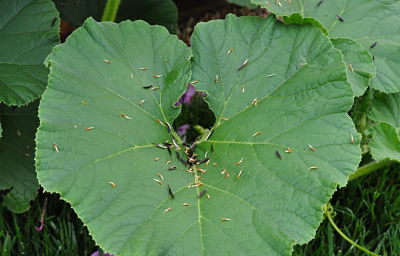
Collecting seeds is easier than I thought.  I’ve enlisted the services of my enormous pumpkin leaves. The vines have gently wrapped themselves around the base of the Cosmos, so they’re perfectly positioned for catching seeds.  What synergy.  I gently shake the seeds from the leaves into a bowl and bring them inside for safe keeping.

Cosmo Seeds

Cosmo seeds resting in the crook of a pumpkin leaf

Designing the seed packet will be fun.  I have several ideas rattling around in my head.   I might employ the use of my Creative Memories digital scrap-booking software to make postcard-sized packets.  I have several photos to use in the design as well.

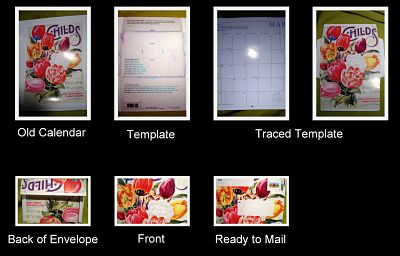
I’ve enjoyed making envelopes from prior year’s wall calendars so that also has possibilities.  I use a template to trace the envelope, then fold and seal.  I’ll download planting instructions from the internet and then print them on creamy card stock.

Calender into envelope

I turned my garden calendar pages into 4 x 6 envelopes.

My little seed packets will be small gifts with big potential, given with hope and affection.

Do you enjoy giving gifts from your garden?  Perhaps you make jam preserves, dried flower bouquets or lavender sachets?  I love hearing from you and hope you’ll share in the comments, below.
Garden Log: July 23, 2012


Here’s what’s happening in the garden:

Pink Cosmos

As the pale pink cosmos wind down, this bright pink beauty emerged nearby. Could it be the start of a whole new crop?

Flowering annuals

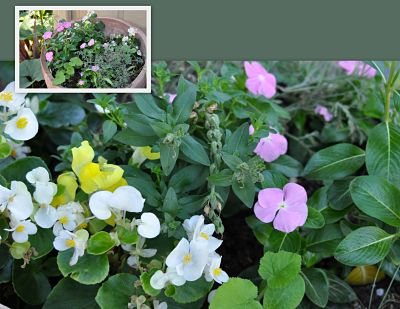
Our tall clay pot is a Hodge-podge of color. A few seeds, a few cell packs and a volunteer or two add up to Snapdragons, Vinca, California Poppies, Begonia, and a couple of Birdhouse Gourds.

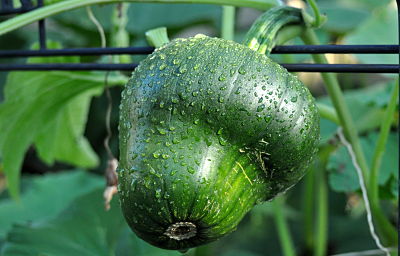
Pumpkin Hanging by a Thread

This pumpkin is literally hanging by a thread (see insert). It measures 35 inches in circumference, about 11 inches across.

Acorn-shaped pumpkin

One of the few surviving pumpkin transplants. Its funny shape reminds me of a large acorn. What do you think?

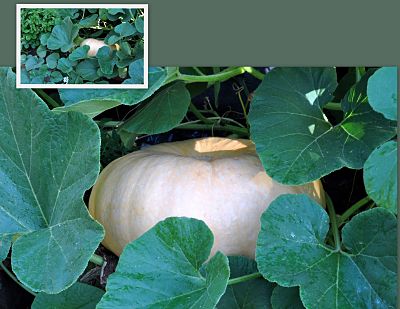
Large Pumpkin

The darling of the pumpkin patch. It measures 52 inches in circumference, about 17 inches across.

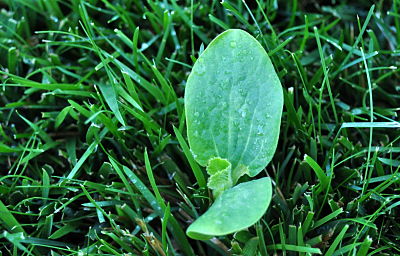
Pumpkin Sprout

This ill-fated pumpkin sprout has lost its way. It’s growing in the middle of the lawn, no doubt planted there by a squirrel.

I’m hiding indoors from the hot afternoon sun, but will check on the emerging Lacewings at dusk.

How does your garden grow?


Thrips: It’s What’s For Breakfast!

The garden thrips are on notice! Lacewings are on the scene.

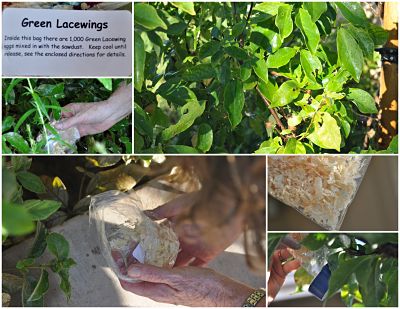
A small packet of lacewing eggs arrived yesterday by mail. The packet contained an unimpressive looking plastic bag that, to the naked eye, looked like a bag of sawdust. My eyes aren’t what they used to be so I examined the bag closely with my nifty light-up magnifying glass, a gift from Bruce and Shirley. Still no sign of those eggs. The instructions reassured me that the eggs were in there and would be “hatching any minute” if they hadn’t done so already. Well then, no time to waste!

After dinner, my husband watered the affected plants and the Magnolia tree and we set out the eggs. Seriously, it felt like a practical joke because I couldn’t see anything but the sawdust.

The instructions suggest stapling a paper cup to a tree leaf and filling it with some of the eggs.  That was the hardest part.  I’m clumsy, so trying to staple the bottom of a paper cup to a thin leaf at the top of a tree was…challenging. We scattered the rest of the eggs at the base of the plants.

Guess what? As of this morning, a few already hatched. The packet contained “1,000 eggs” though how you could have counted is anyone’s guess.  I hope the emerging larva are hungry.

We ordered our beneficial insects via the Internet from Orcon (Organic Control, Inc.) based in Los Angeles. If you live outside the states, search under “beneficial garden insects” for a source near you. Introducing the appropriate beneficial insect to your garden is safe for plants, people and pets, reducing the need for dangerous and toxic pesticides.

Floral Friday

Photographer Tamara Pruessner curates a feature on Google+ called Floral Friday. Fellow photographers and nature lovers post individual photos with the tag #FloralFriday, and as each one posts, they appear in a running thread. I’m amazed at the flow of creativity.

I’m not a professional photographer, but I do enjoy snapping pics in my garden, so I’ve joined in a time or two.

Cosmos

Cosmos

Bee in the Catnip

Bee Pollinating Catnip

If you have a Google + account, be sure to check it out. I think you’ll enjoy the sense of community, the beautiful flowers, and the effort to bring something positive in to this sometimes-dark and confusing world.

Blooming Thursday: Blushing Pinks

Growing up a redhead my mom never let me wear pink.  A ginger herself, she advised that pink was not our color.  She was right of course, but when you’re told not to wear something, you can think of nothing else.  Am I right?

Pink is definitely one of those colors that can easily be overdone, but not in the garden.  This has been my summer of pink.  The volunteer cosmos continue to splash color across the pumpkin patch.  The pink potted Hydrangea doubled in size and bloom production.  I added a few pink Vinca to one of the patio planters and rounded things out with a polka dot plant (Hypoestes phyllostachya), grown for its beautiful pink and green leaves.

Power to the Pink!

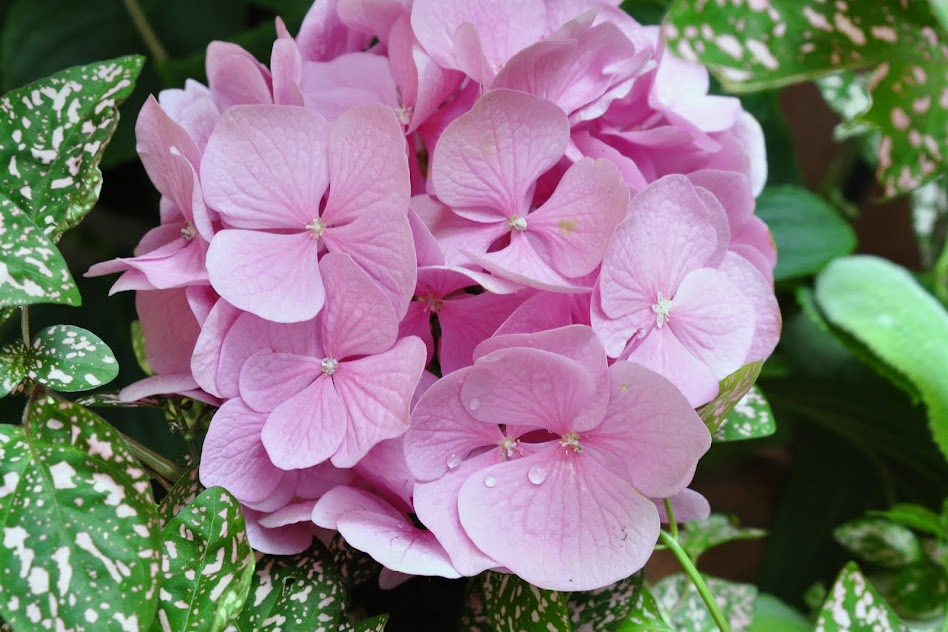
Pink Hydrangea with a Drop of Morning Dew

Pink Hydrangea with a Drop of Morning Dew

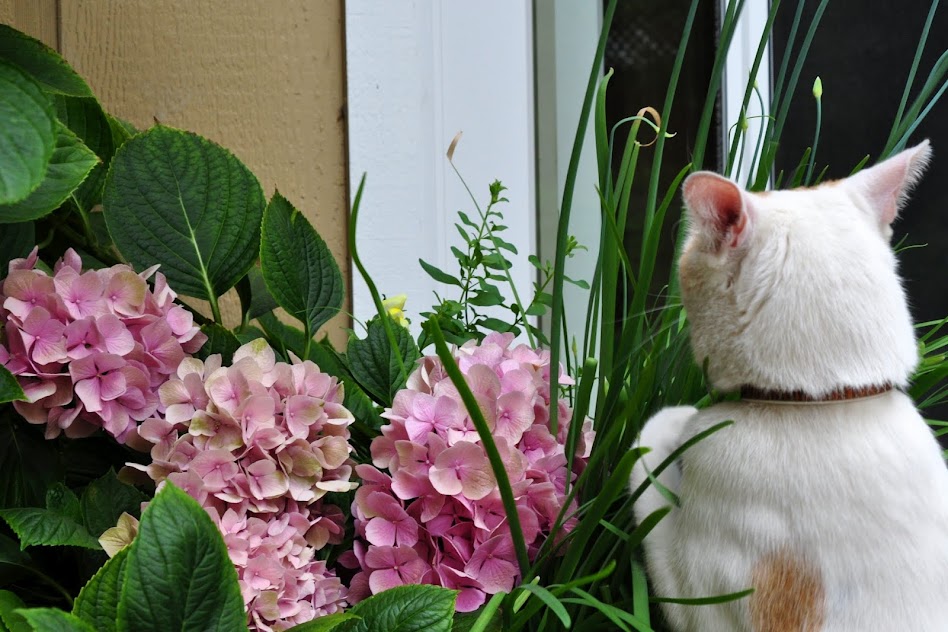
Kitty shows off his cute little pink ears

Kitty shows off his cute little pink ears

pink flowers

After my “week of bugs” this flower is starting to look just like one.

Pink Cosmos

Strong winds this week have the Cosmos  leaning sideways

What’s blooming in your world this Thursday?

And Then There Were Thrips

It’s been a month of pests for Gardening Nirvana as we’ve worked our way through aphids, scale and now thrips. Three different plants, three different pests, all living within a few feet of each other.

Foreground (emerging sunflowers); under window (Viburnum tinus), right of photo (scale-infected Magnolia)

Thrips now reside on the lower leaves of the Viburnum tinus immediately outside of our home office window.  It took us two summers to figure out what that…uh…pungent smell was.  We knew it was organic in nature, but it was so odoriferous, we assumed a small animal had died under the house or deck.  The smell eventually went away, the plants looked fine and we didn’t give it another thought.

Spring rolled around again, then summer and…that smell!  Aren’t you glad you are only reading about it?  The damage seemed to be happening at the base of the shrubs and along the back, making me wonder if it was lack of air circulation.  My husband’s sleuthing and a magnifying glass revealed that yes, we had a third infestation on our hands: thrips.

Plant Damage

Plant Damage

Thrips

Thrips

Through the wonder of the Internet and our postal service, a shipment of lacewing eggs, nested in bran, is headed for our front door.  When the tiny larvae emerge they feast on the thrips.  Adults need nectar and pollen to survive, so it’s important to have insectary plants in your garden to support the adult population.  The exciting news is that my sunflowers will flower within the next week or so, providing pollen to the emerging adults.  They like Cosmos and Sweet Alyssum, too, also growing our the garden.

Resources: