What’s That Buzz?

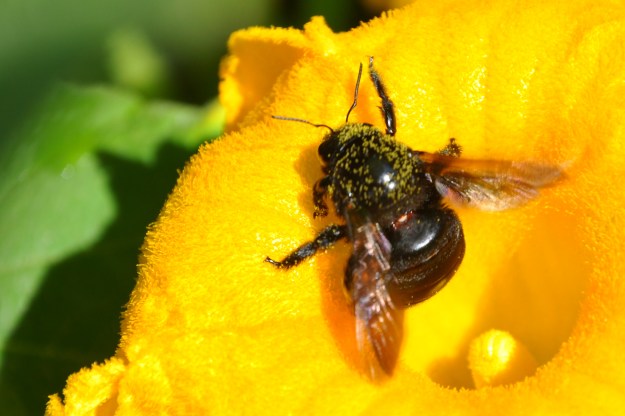
bee covered in pollenThe clichés are true. Bees are busy and they do buzz when they move from flower to flower.  My gardening confidence bumps up several notches when they come to town, knowing my pumpkin plants are in good ‘hands.’

I’m terrible at sitting or standing still for long, but find the garden helps slow me down.  While standing still, I notice so much more. This morning I saw three different birds in the orange tree, a snail meandering on an orange peel and a group of industrious, shiny black bees.

The standing still part didn’t last long as I followed the bee from flower to flower, snapping as many pictures as I could before the pollinator moved on. Within a few minutes another bee arrived and as I darted from flower to flower, so too did the bees. They make a frantic bzzz sound before landing, then silence as they dip head first into the flower, rolling their shiny bodies in golden pollen. No time to lollygag, they quickly emerge, darting to their next destination.

bee coated in pollen

A nice dip in the pool

Pumpkin plants produce several male flowers at the start of their growth. Within a few weeks the female flowers appear. Without those bees, all the flowers would eventually shrivel and die, leaving a healthy but fruitless vine.

pair of pumpkin flowers

A pair of male pumpkin flowers

What’s that buzz? It’s music to my gardening ears!

bee with glassy wings

Spreading glassy wings

bee ready for lift off

Ready for lift-off

bee and his shadow

A bee and its shadow

You can learn more about the critical role of pollinators at Pollinator Partnership.  The site has a fun, downloadable poster as well.

A Compost We Will Grow

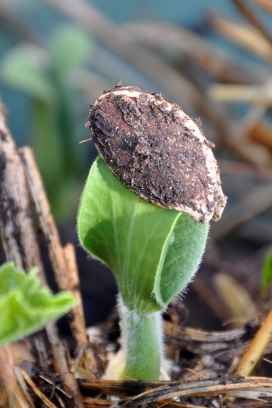
Pumpkin Seedlling with seed attached

What the well dressed pumpkin seedlings are wearing this season.

I popped the lid off the green compost bin and oh, what a surprise.

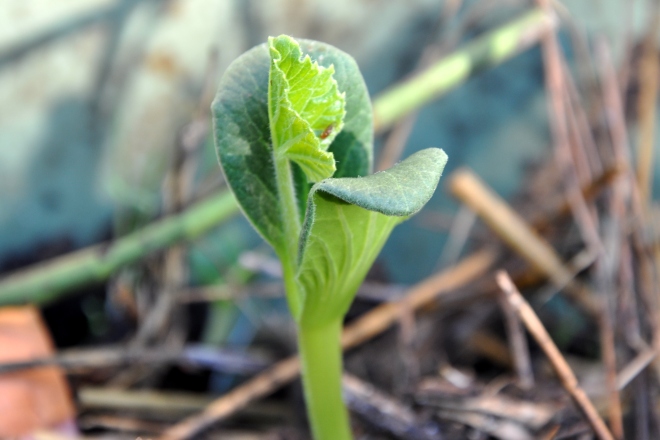
Along side the rotting leaves and decaying kitchen scraps, there is a lot of growing going on. The first thing I noticed: the pumpkins! They’re enjoying the warmth and shelter inside the bin. I’m surprised though that they’ve found enough light. Will you look at them growing so tall and straight?

Lanky blades of grass are also taking root, along with sprouts of a to-be-determined nature.  I’m using an old Rubbermaid bin for additional composting, since I quickly filled my tumbling composter.  It’s hard to get leverage with the shovel, however, so I’m not turning it as often as I should. Now I don’t have the heart.

Pumpkin Sprout

Happy Sprout

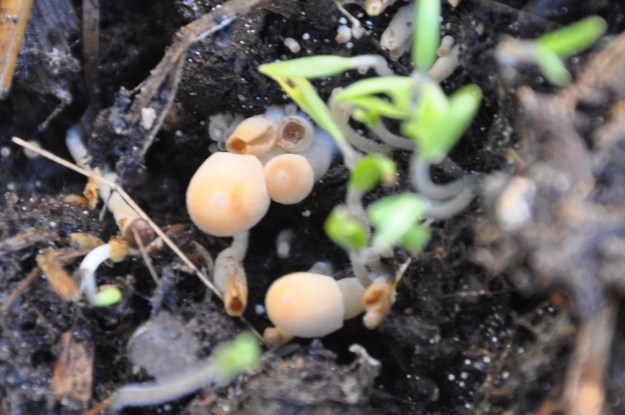
Mushrooms in compost

Finding Nemo?

Sprouting mushrooms are right at home, the more predictable compost heap resident. The silver cap would look great in the fairy garden, but I’m resisting temptation. Its questionable origin makes it an unsafe bet for a tiny garden with small visitors. It’s cute though…if you’re into grey flowers.

Mushrooms in compost

Grey Blooms: Tim Burton Inspiration

Pumpkins: Just the Facts, Ma’am

This slideshow requires JavaScript.

Pumpkins are so entrenched in our North American culture this time of year, that it’s easy to forget they’re not equally popular the world over.  They’re native to Central America and Mexico, but they’ve been grown in North America for five thousand years.
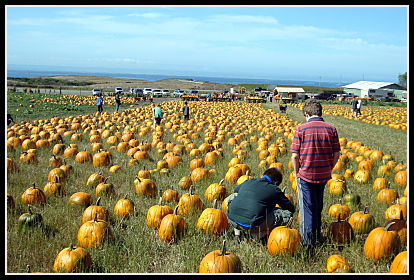
Bob's Pumpkin Farm, Half Moon Bay

Bob’s Pumpkin Farm, Half Moon Bay

Pilgrims learned to cultivate, grow and store pumpkins from the Native Americans.  Without them, they would have starved in those early 1600s winters. Pumpkin pie is traditionally served  at the Thanksgiving meal.  It’s easy to forget what a significant role it played in the early Pilgrim’s lives.
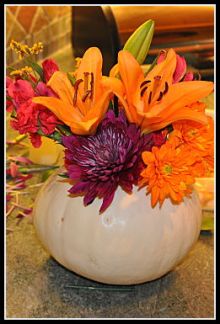
White pumpkin with flowers

Thanksgiving flower arrangement

We have a number of pumpkin festivals and pumpkin “patches” in our community.  We attended many of them when our boys were young, and were sorry when a few closed to make room for development.

The immensely popular Half Moon Bay Pumpkin Festival, dubbed the World Pumpkin Capital celebrates 42 years in 2012. The festival highlight for those of us serious about pumpkins, is the great pumpkin weigh-off.  Last year’s winning pumpkin tipped the scales at a mind-boggling 1,704 pounds. Unfortunately, the festival has grown so popular that it can take upwards of an hour to get to the center of town.  We joined friends for an off weekend last year, so we could drive through Half Moon Bay and along the beautiful coast, while avoiding the traffic nightmare.
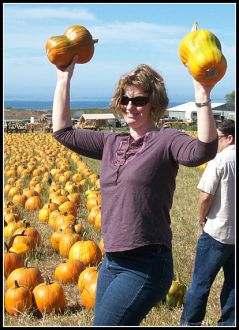
Bob's Pumpkin Farm

Lifting Weights at Bob’s Pumpkin Farm

I dream of growing our own “Atlantic Giant,” out back, but lack the stamina and will power of the serious growers. It’s fun to read about the efforts the hard-core growers employ, and to see the amazing results.  It was quite the thrill growing a 62 pound beauty this year.

I can’t wait to see what the seeds and flesh are like inside.  My husband lovingly carves our pumpkins year after year.  We dry and store seeds for the following season and the cycle begins anew.
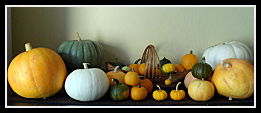
assorted pumpkins

2011 Pumpkin Crop

Pumpkin Facts

  • Pumpkins are a member of the gourd family, which includes cucumbers, honeydew melons, cantaloupe, watermelons and zucchini.
  • The largest pumpkin pie ever baked was in 2005 and weighed 2,020 pounds.
  •  In 1584, after French explorer Jacques Cartier explored the St. Lawrence region of North America, he reported finding “gros melons.” The name was translated into English as “pompions,” which has since evolved into the modern “pumpkin.”
  • Pumpkins are low in calories, fat, and sodium and high in fiber. They are good sources of Vitamin A, Vitamin B, potassium, protein, and iron.
  • The heaviest pumpkin weighed 1,810 lb 8 oz and was presented by Chris Stevens at the Stillwater Harvest Fest in Stillwater, Minnesota, in October 2010.
  • Pumpkin seeds should be planted between the last week of May and the middle of June. They take between 90 and 120 days to grow and are picked in October when they are bright orange in color. Their seeds can be saved to grow new pumpkins the next year.

 U.S. Census Bureau and the Guinness Book of World Records

Resources:

Halloween Countdown
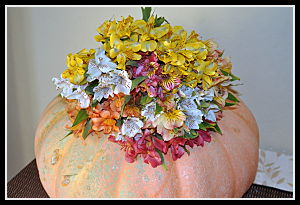
Pumpkins and Flowers
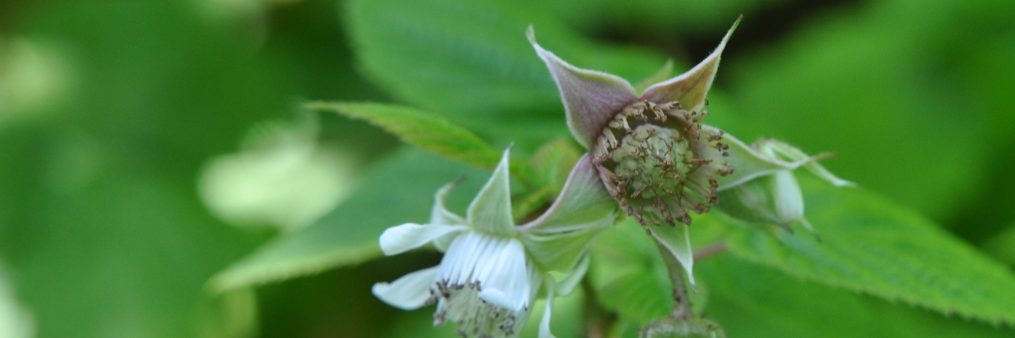
Pumpkins and Flowers

My Beautiful Garden Bench

garden bench with pumpkins

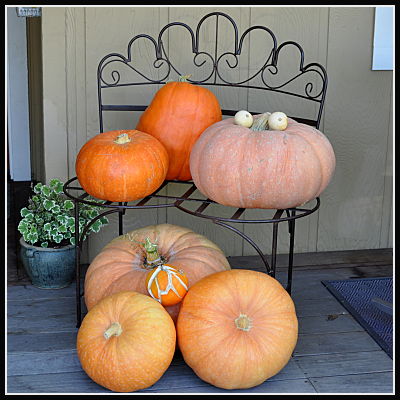
Our growing collection of pumpkins
(Note the tiny ones at the top. They didn’t turn orange in time, but will make excellent “eye balls” for one of the Jack ‘O Lanterns on Halloween.)

I attended the SummerWinds Nursery fire sale last week, and brought home a beautiful, forged-iron bench.  Made in Mexico, it features scroll work along the back and a heart-shaped seat.  I’m organized at heart, so it was impossible to resist.

My son was with me at the time, and looked askance at the cold, hard bench. I assured him that I had something else in mind, and it didn’t include seating. Under typical circumstances, I would admire the bench, dream of all the things I could do with it, then move on. It seemed extravagant to buy such a pretty bench as a plant stand.

We walked around the nursery parking lot, looked at what little remained at the fire sale, then worked our way back to the bench. The one-of-a-kind lovely was still there, with a fire sale price of 30% off. Further, 10% of the proceeds would benefit the San Jose Firefighters Burn Foundation. We paid for our purchases and into the car it went.

Coincidentally, we harvested our great pumpkins that same evening,  I brought home the perfect seat for our pumpkins. Once harvested and weighed on the Wii Fit, I relocated my beloved coleus to the back porch, creating a place of honor for our great pumpkins.  You can view the pumpkins seated on the bench from the street. It will be the perfect place for the Jack O’ Lanterns once carved.

Today we harvested the last five pumpkins, making room for the winter garden. My seeds are calling me. Time to get busy!

Go to the SummerWinds Almaden Nursery Facebook Page for updates on sales and plans to rebuild.

Harvesting Pumpkins: Three to Get Ready


Black cat with pumpkin

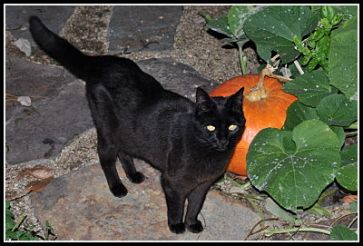
Slinky is ready for Halloween

What a joyous day!  Fall is in the air and pumpkins are in my house.  We harvested three orange lovelies this morning, then brought them indoors for safe keeping.  Two have been ready for a while but I left them on the vine for up to the minute ripening.  The third pumpkin was a surprise, in more ways than one.

We still have four extra-large pumpkins on the vine, hoping they’ll turn a bit darker.  Currently they have a peach complexion.  I lifted one of these large pumpkins away from the beds to give it more sun, and discovered a smaller pumpkin had been growing just below.  It has multiple cracks in an interesting geometric pattern, but each of the cracks healed over.  I can’t wait to take a picture and share it with you.  We’ve never seen anything like it.  I’m wondering if the extraordinary weight of the pumpkin above caused it to slowly crack, giving it time to heal as it split.  My husband and resident carver is looking forward to hollowing it out.  He thinks it will look like a star burst.  We’ll restrain ourselves until Halloween.

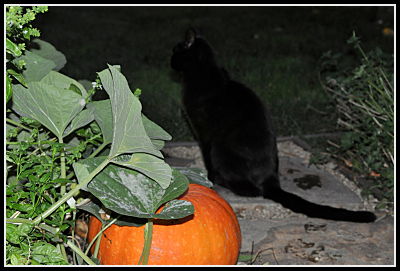
Slinky near the pumpkins

Do you think she’s waiting for The Great Pumpkin?

The plan is to give each of the larger pumpkins a name on our Wii Fit, so we can weigh them one by one.  Won’t that be fun?

Meanwhile, I’m practicing sitting on my hands.  Every time I go out there I want to harvest the fruit and make way for the winter garden.

Ò Ó Ò


Changing Seasons: The Pumpkin Knows

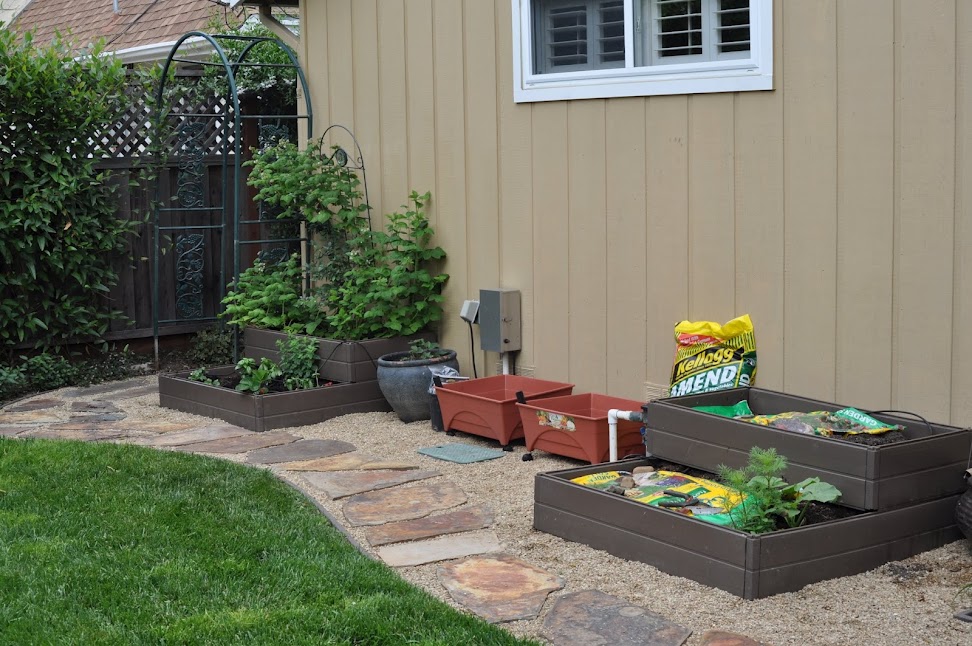
Vegetable Garden April

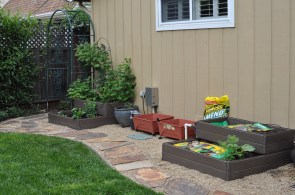
Vegetable Garden April 25, 2012

According to the sun, summer doesn’t end for another four weeks. It draws to a close, today, however for the 12 year-old in the house.  He reluctantly returns to school tomorrow.

Autumnal Equinox arrives September 22nd at 10:49 am EDT. The changing of the seasons in our sunny state are easy to miss. My son will wear shorts to school for several more months, and the rain doesn’t arrive till late October.

The Pumpkin Knows

Back in April, a small pumpkin seed knew it was time to grow. Genetic information, stored in that tiny seed pronounced that the soil and sun were a go. The seed pushed a pair of tender leaves up through the earth while setting down roots below. True leaves followed, right on schedule and within weeks the small plant was a vine. Tendrils curled out, looking for support, knowing the vine would grow and grow. Magnificent yellow flowers appeared, first male than female. They had a short window of time to attract a bee before curling up for the night. The first few pumpkins formed on the vine, but shriveled and died within days. Eventually the vines set larger fruit, first green, then yellow and now orange.

As the fruit matures, the once tiny plant sends the last of its energy directly to the pumpkins. It’s time for the plant to wither and die with the genetic understanding of a job well done. Trickle-down economics doesn’t work in the real world, but boy does it work in the garden. One small seed produces numerous edible flowers, then goes on to produce several jaw-dropping gourd-like squash. Each pumpkin holds hundreds of seeds, enough to eat and plant the following season. Pumpkins produce sweet flesh for cooking and baking. Sturdy, colorful pumpkin shells line windows and porches on Halloween, carved to perfection.

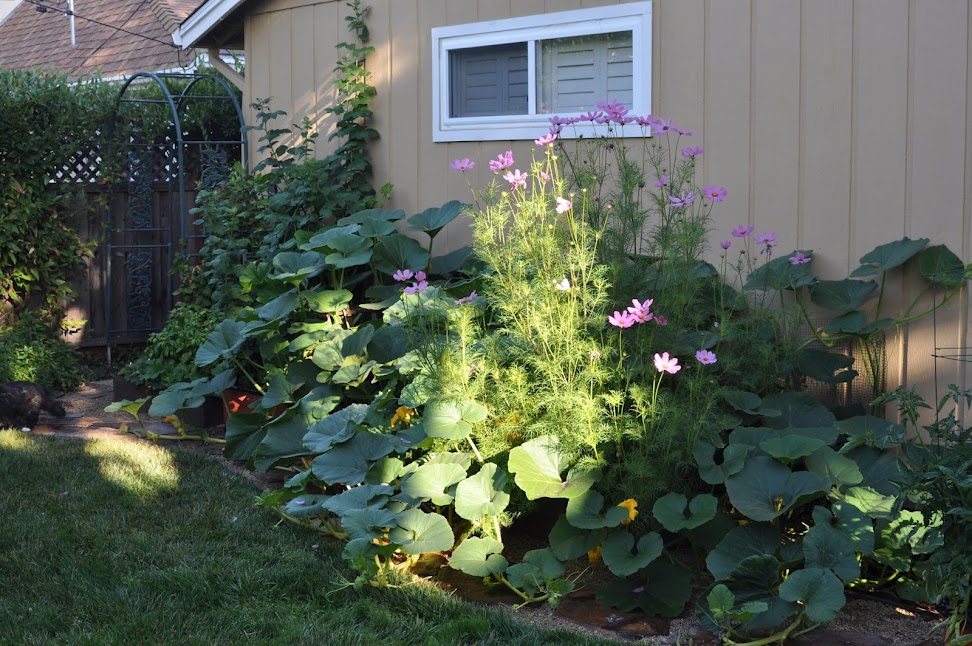
August Vegetable Garden

Vegetable Garden, August 25, 2012

The season is changing
The pumpkin knows
tiny seeds become heavy gourds,
vines turn brown
their cycle complete;
Jack O’Lanterns grin
at Trick-or-Treater’s feet.

-A. Milner

Pumpkin Update: Tired Vines, Happy Fruit

You’ll never guess what’s been hiding under the cosmos?

Give up?

A fully formed, lovely orange pumpkin!  I love surprises.

Pumpkin Collage

This is an exciting time of year in the garden.  Here is the pumpkin crop so far:

A. Grandaddy. This peach-colored pumpkin is a force to be reckoned with.  We have three growing in this size and shape.  Today we discussed stacking them to make a pumpkin “snowman.” I can’t wait to weigh them on my home scale.  I’m not getting on the scale, so I may as well use it for something.
B. Baby Bear. This little fella is probably full-sized but we won’t know till the color sets.  Most of our pumpkins started out a rich yellow, but this one has a bit of green to it. The leaves are smaller in scale, which tells me it won’t grow any bigger.  It’s about the size of a large apple.
C.  The Twins. These two pumpkins are leaning up against the house.  The vines are so thick that I’ve not been able to reach them for over a month.  I can’t wait to wrap my arms around them.
D. Peek-a-boo. The cosmos draped themselves over this orange lovely.  Do you see that little patch of orange peeking through the flowers?  I lifted the cosmos out-of-the-way and there it was, bottoms up.
E. Bottoms up. This one looks a bit like someone’s…bottom.  We’ll have to think of something clever for Halloween.  Suggestions are welcome and in fact encouraged in the comments section below.

There you have it.  Linus would be disappointed.  I’ve avoided religion and politics, but I simply can’t help myself:  I love talking about great pumpkins.

“I’ve learned there are three things you don’t discuss with people: religion, politics and the Great Pumpkin.”

-Linus in It’s the Great Pumpkin, Charlie Brown by Charles Schultz

Changing of the Colors: The Summer Edition


Who doesn’t like the spectacular color change that heralds the arrival of fall? New England’s tourist industry thrives as the green leaves give way to golden yellows, warm oranges and vibrant reds. Though less flamboyant, I present to you the changing of the colors: the summer edition.

First up, Hydrangeas. This lovely goes from bright green to pink, then softens to a dusty mauve before turning a cooler shade of green. You can snip flowers from the vine at this last stage, then brought indoors for drying.

Fading Hydrangea Collage

Hydrangeas Fade

Tomatoes need a variety of conditions before they turn from green to red. The smaller the tomato, the faster the transformation. Tomatoes need moderate temperatures, shelter from the wind and time.  The color can’t be forced.  According to Gardening Know How:

Tomatoes are triggered to turn red by a chemical called ethylene. Ethylene is odorless, tasteless and invisible to the naked eye. When the tomato reaches the proper green mature stage, it starts to produce ethylene. The ethylene then interacts with the tomato fruit to start the ripening process. Consistent winds can carry the ethylene gas away from the fruit and slow the ripening process.

If you find that your tomatoes fall off the vine, either knocked off or due to frost, before they turn red, you can place the unripe tomatoes in a paper bag. Provided that the green tomatoes have reached the mature green stage, the paper bag will trap the ethylene and will help to ripen the tomatoes.

Tomatoes from green to red

Ethylene Gas = Red Tomatoes

Pumpkins turn orange much the same way tomatoes turn red. In addition to color, they also need to harden before harvesting or they will quickly rot. We had a pumpkin survive on our front porch for over nine months one year. Once carved, however, the fruit rots within a few days. According to All About Pumpkins:

There are many indications that your pumpkin is ready to harvest. A Jack-O-Lantern variety should be predominately orange in color. If the vine has started to “go away” (meaning dying off and declining) this is another signal. Sometimes the stem is already starting to twist and dry. The most important indication to look for, is that the shell has started to harden. If you can easily indent the pumpkin skin using your fingernail, the fruit is still too immature to harvest. If you harvest it at this stage, your pumpkins will likely shrivel and spoil within days. When the shell has hardened, your pumpkin is ready to cut from the vine.

Pumpkin Turning Orange

“Acorn” Pumpkin Turning Orange

What’s changing colors in your garden? Do you have a favorite? Please let me know in the comments, below.


Garden Log: July 23, 2012


Here’s what’s happening in the garden:

Pink Cosmos

As the pale pink cosmos wind down, this bright pink beauty emerged nearby. Could it be the start of a whole new crop?

Flowering annuals

Our tall clay pot is a Hodge-podge of color. A few seeds, a few cell packs and a volunteer or two add up to Snapdragons, Vinca, California Poppies, Begonia, and a couple of Birdhouse Gourds.

Pumpkin Hanging by a Thread

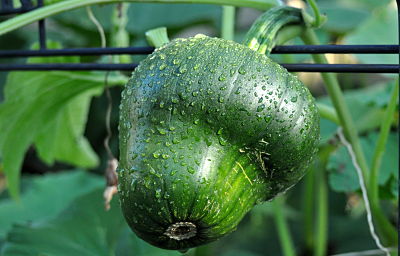
This pumpkin is literally hanging by a thread (see insert). It measures 35 inches in circumference, about 11 inches across.

Acorn-shaped pumpkin

One of the few surviving pumpkin transplants. Its funny shape reminds me of a large acorn. What do you think?

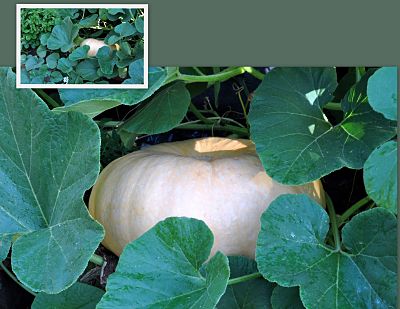
Large Pumpkin

The darling of the pumpkin patch. It measures 52 inches in circumference, about 17 inches across.

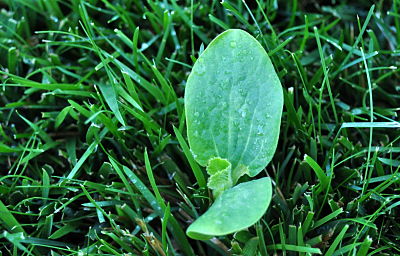
Pumpkin Sprout

This ill-fated pumpkin sprout has lost its way. It’s growing in the middle of the lawn, no doubt planted there by a squirrel.

I’m hiding indoors from the hot afternoon sun, but will check on the emerging Lacewings at dusk.

How does your garden grow?


Walking and Talking With My Pumpkin Vine

Video camera in hand, I walked the garden last night, taking traveling shots of the pumpkin vine. That’s my cat, Slinky, at the start of the video who is always glad to find me in the garden.  I look forward to seeing  her sweet little face peering around the corner.

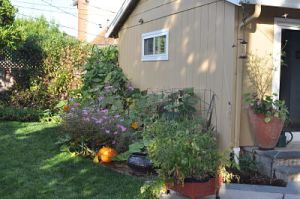
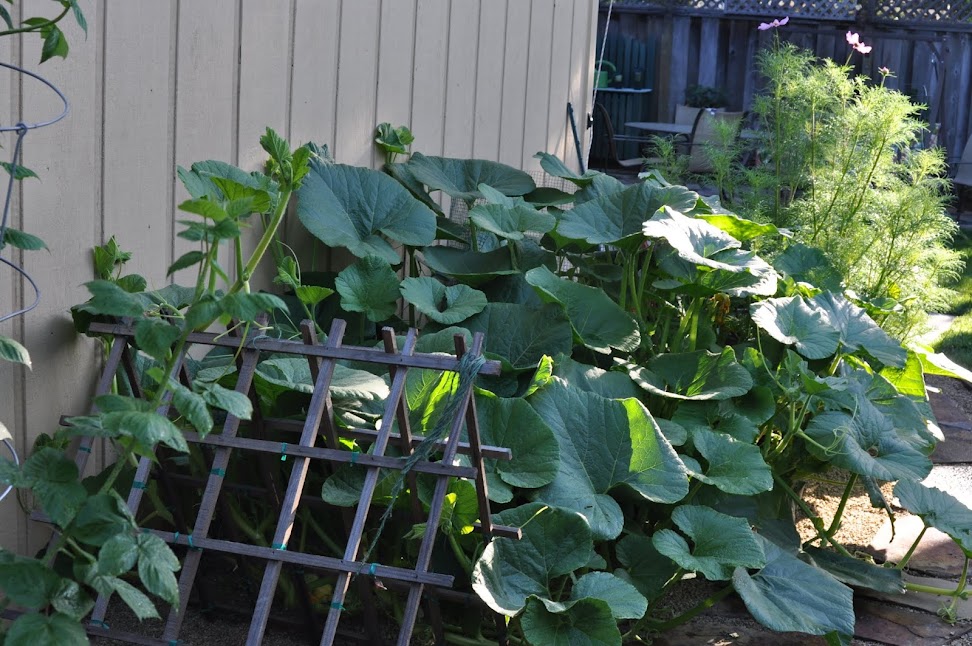
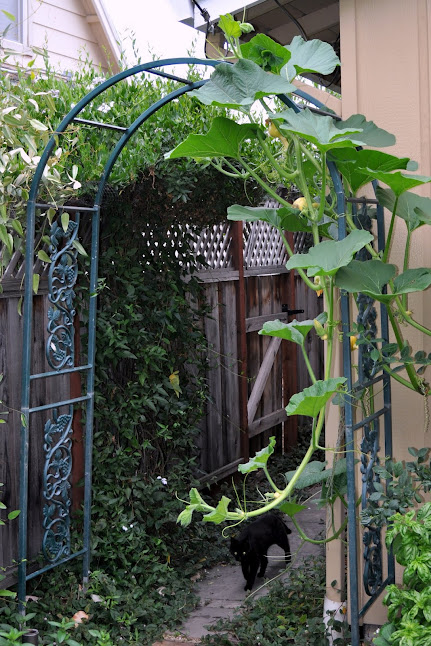
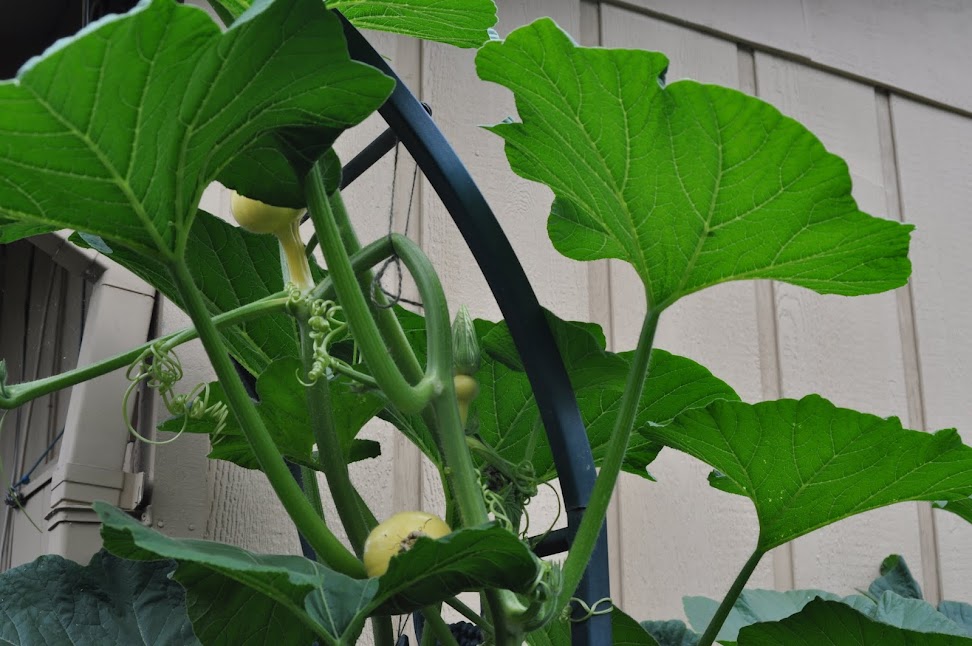
It’s been an exciting year in our pumpkin patch, thanks to a self-seeding vine in mid-April.  The vine traveled the length of the house, before shooting up the side of an arching trellis. I tied the vine with string to support the weight of some developing fruit. From there it trailed back toward the ground.  Last night I redirected the newest growth, a u-turn if you will, before it crossed the side yard and headed toward our neighbor’s fence.

Come along for the tour:

Pumpkin’s Progress in 90 Days:

Watch Me Grow

Watch Me Grow

Getting a Head Start

Getting a Head Start

Already Dwarfing the Indoor Transplants

Already Dwarfing the Indoor Transplants

Heading West

Heading West: Trellis Number One

Heading for Trellis Number Two

Heading for Trellis Number Two

Up, Over and Down Trellis Number Three

Up, Over and Down Trellis Number Three

Hanging on By a Thread

Hanging on By a Thread