Harvesting Pumpkins: Three to Get Ready


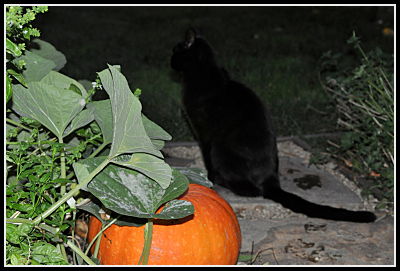
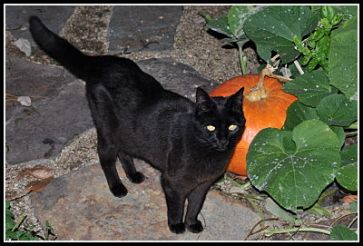
Black cat with pumpkin

Slinky is ready for Halloween

What a joyous day!  Fall is in the air and pumpkins are in my house.  We harvested three orange lovelies this morning, then brought them indoors for safe keeping.  Two have been ready for a while but I left them on the vine for up to the minute ripening.  The third pumpkin was a surprise, in more ways than one.

We still have four extra-large pumpkins on the vine, hoping they’ll turn a bit darker.  Currently they have a peach complexion.  I lifted one of these large pumpkins away from the beds to give it more sun, and discovered a smaller pumpkin had been growing just below.  It has multiple cracks in an interesting geometric pattern, but each of the cracks healed over.  I can’t wait to take a picture and share it with you.  We’ve never seen anything like it.  I’m wondering if the extraordinary weight of the pumpkin above caused it to slowly crack, giving it time to heal as it split.  My husband and resident carver is looking forward to hollowing it out.  He thinks it will look like a star burst.  We’ll restrain ourselves until Halloween.

Slinky near the pumpkins

Do you think she’s waiting for The Great Pumpkin?

The plan is to give each of the larger pumpkins a name on our Wii Fit, so we can weigh them one by one.  Won’t that be fun?

Meanwhile, I’m practicing sitting on my hands.  Every time I go out there I want to harvest the fruit and make way for the winter garden.

Ò Ó Ò


Sunflowers: Setting Sun on the Season

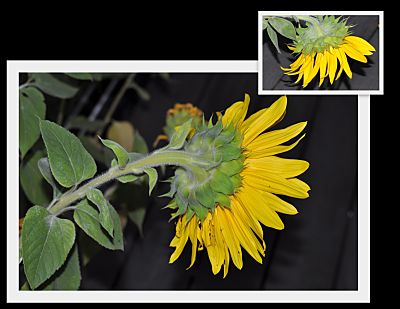
I knew this day would arrive, but oh how I’ll miss them.  The row of sunflowers lining the deck are starting to go to seed.

Impatient birds knocked over one of the lightweight planter boxes last week, smashing the largest flower head clean off the stalk and into a heap on the deck. My son helped me move the planters from the deck to the narrow space behind the lavender to stabilize the planters.  Now wedged in place, they won’t fall over, but they look like they shrunk two feet.  Hopefully the rest of the flowers will go to seed on the stalk. It’s a beautiful thing to behold.

Last year I placed the seed heads along our stone wall, just outside my office window.  There I could watch the squirrels pick them clean.  I don’t know why I find those cute little hands at work so appealing.  I’m annoyed when they chew off the pumpkin leaves, but delighted when they snack on the seeds.

For my readers living in different parts of the world:

Sunflower (Helianthus annus) is an annual plant native to the Americas. It possesses a large inflorescence (flowering head). The sunflower is named after its huge, fiery blooms, whose shape and image is often used to depict the sun. It has a rough, hairy stem, broad, coarsely toothed, rough leaves and circular heads of flowers. The heads consist of many individual flowers which mature into seeds, often in the hundreds, on a receptacle base. From the Americas, sunflower seeds were brought to Europe in the 16th century, where, along with sunflower oil, they became a widespread cooking ingredient. Leaves of the sunflower can be used as cattle feed, while the stems contain a fibre which may be used in paper production. – Wikipedia

Today I’m wearing my worn out but much-loved sunflower t-shirt with the saying “Love this Life” across the front.  It’s my own little sendoff to Helianthus annus, flower of the sun.

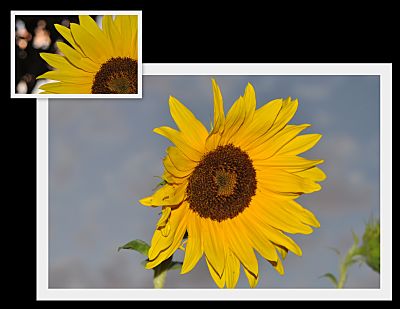
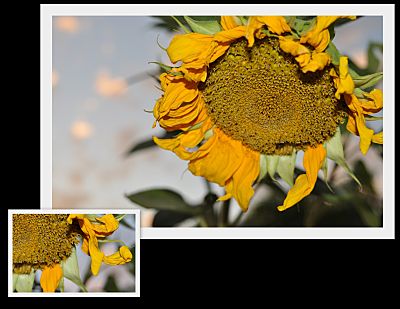
Here are the last of them, photographed at dusk.

Sunflower
Sunflower at Dusk
End of Season Sunflower

Floating rafts of sunflowers are being used to clean up water contaminated as a result of the 1986 accident at the Chernobyl nuclear plant in the former Soviet Union. The roots of the sunflower plants remove 95% of the radioactivity in the water by pulling contaminants out of the water.”

Birdhouse Gourd: Racing the Biological Clock

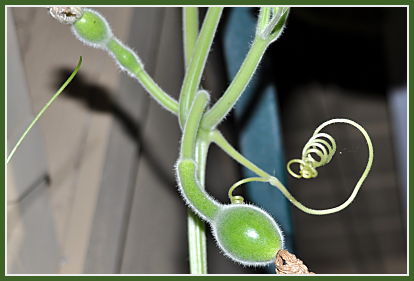
Our birdhouse gourd vines are sporting several small fruits, each one about two inches long. They’re the color of limes and about as large as an over-sized peanut. Aren’t they cute?

The question of the hour is will they grow up?

We found the seed packets on one of our nursery rounds, but not until after planting the rest of the garden. The idea of growing a birdhouse was irresistible so of course the packet made its way into my cart. I envisioned a garden full of birdhouses, just waiting for a feathered mama to claim them.

We have at least another month of warm weather, but will it be enough? Please send your happy-garden energy vibe. I’ll be sure to report back.

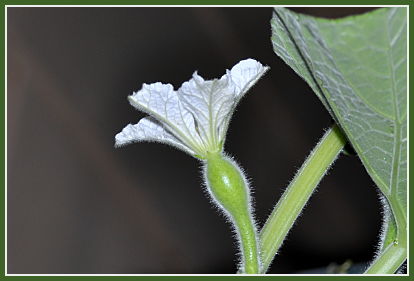
birdhouse gourd flower

Birdhouse gourd bloom

Birdhouse gourd bloom

birdhouse gourd fruit

Blooming Thursday: Garden Friendships

My friend Liz has been back in the States for several months, but it took her imminent departure for us to finally get together.  Our friendship is such that we can simply pick up where we left off, regardless of time passed.  Liz is also a gardener I admire and look up to.

Liz has the unique distinction of gardening through one spring and two summers.  She spends part of her year in California, the rest in beautiful New Zealand.  She taught me and some friends how to felt on one of her trips home.  I hope to learn how to eco-dye from her one day, too.

On her visit today, she came bearing gifts…and lunch!  So much for my hosting skills. We enjoyed delicious, home-made, vegetarian burritos while sitting on the patio talking shop.

You probably need to be a gardener to fully appreciate the first gift: a bag of worms and worm castings. I feel like a real gardener.  I have a worm bin, a kitchen scrap container, and soon my tumbling composter will arrive at my door.  I’ll be brewing garden goodness all winter long.

Worm Bin

Worm Bin

In addition to worms, I am also the lucky recipient of several eco-dyed pieces, one-of-a kind art made with natural dyes, leaves and flowers. The small pouch is made from reclaimed materials, printed with leaves, dyed, then hand-stitched.

Eco-dyed Pouch

Eco-dyed Pouch

The three pieces pictured below use a similar technique, but with paper. I love the artistry.

eco-dyed print

Eco-dyed Art Print

Eco-dyed paper

Eco-dyed Paper

My dear friend is not a fan of pictures, but she did let me take a closeup of her t-shirt. She bought the shirt at a thrift store, wrapped it around rose leaves, and dipped it in a natural dye. It’s exquisite.

Eco-dyed T-shirt


Eco-dyed T-shirt

You can learn more about eco-dying from India Flint.

Tumbling Composter: Waiting for UPS


Forest City Tumbling Composter

Forest City Tumbling Composter

It’s all coming together.  The Tumbling Composter I ordered online will arrive this week. My counter-top food scrap bin is almost full. There’s a bucket in the garage collecting spent flowers and the leaves on the Chinese Pistache are starting to turn!  I’ll have all the ingredients for my first batch of compost.

I looked at several varieties before settling on this model. My criterion was simple:  It had to be portable, affordable and resistant to rodents.  It’s constructed from recycled materials, also a plus, and the compact size is perfect for my small vegetable garden.

Why Compost?

  • Composting reduces the amount of waste you send to the landfill
  • Composting turns your waste into a useful product—and it does so without requiring additional resources.
  • Using compost in your garden reduces the need for water and fertilizers and helps eliminate the need for pesticides.
  • Composting provides you with a valuable experiential lesson in the cycles of nature and the folly of our throwaway culture that is likely to lead to other waste-saving measures as time goes by.   (Source: Sheryl Eisenberg, Natural Resources Defense  Council NRDC)

Additional Resources


Double Dentate: The Shape of Leaves to Come

Flowers and fruit are the garden darlings, but where would they be without leaves?  As a seed set roots, tiny leaves quickly follow, the building blocks of things to come.  Leaves are:

“a plant’s principal organ of photosynthesis, the process by which sunlight is used to form foods from carbon dioxide and water. Leaves also help in the process of transpiration, or the loss of water vapor from a plant.”

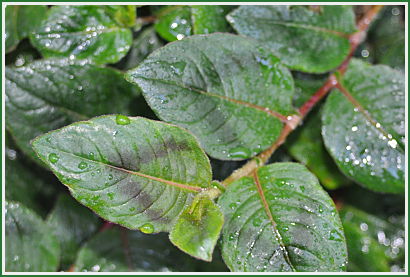
The shape of a leaf, known as the leaf margin, helps to determine the type of plant.  Leaf margins, or edges, include dentate, double dentate, crenate, ciliante, entire and lobate.  I traveled the garden with my camera this week, so I could get up close and personal with the powerhouse leaf.

The Shape of Leaves to Come

I enjoyed studying the different leaves in my garden, viewed with a more observant eye. Each plant has leaves that are fully formed, but it was also fun to observe the shape of leaves to come.  Some leaves stack in pairs, in alternating patterns, while others climb up the plants stem. My garden favorites:

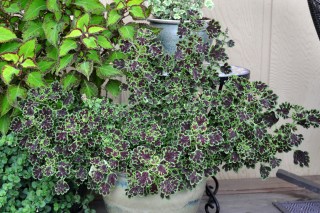
Inky Leaf Coleus

Inky Leaf Coleus: Lobed

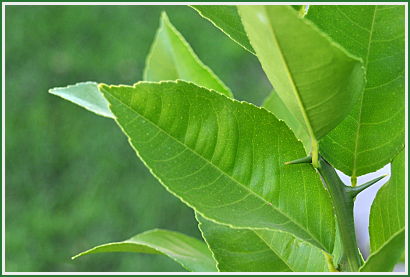
Lemon leaf

Dwarf Lemon: Entire Leaf

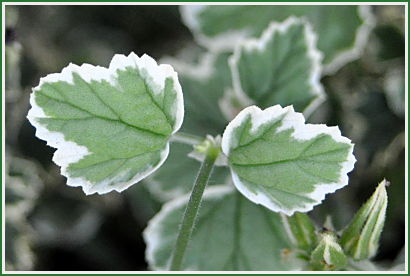
Scented Geranium Leaf

Scented Geranium Leaf: Dentate (or Serate)

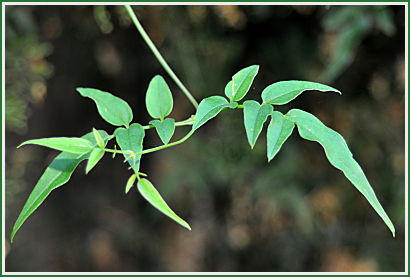
Star Jasmin Leaf

Star Jasmin Leaf: Lobate

Clover Leaves

Clover Leaves: Entire

Resources:

Complimenting the Sunflowers: The Color Purple

In color theory, yellow compliments purple. The colors are directly adjacent to one another on the color wheel, in the same way green is to red, and orange is to blue. Without consciously realizing it, I’ve complimented brilliant yellow sunflowers with purple Lavender, Ageratum and nearby Mexican Sage.

The sunflowers line the top of the deck, while the lavender shrubs grow in front. The fragrant flowers bump up against the steps, softening the hard edges. Lavender is one of my favorite plants. It blooms for months on end, with a distinctive scent, valued for its restorative and relaxing powers.  I dried a bunch of lavender in the garage, and used a few blossoms in my bath.  I’m dreaming up ways to share these powerful blooms this Christmas.

Lavender

Lavender Lines the Deck

This week I planted Ageratum and Baby Tears in a moss bowl, added some LEGO® Brick furniture and called it a Fairy Garden. It wasn’t until I took a step back from the arrangement that I realized I had surrounded the sunflowers with purple goodness. I love the shape of the fluffy blooms, but I also delight in the little saucer shapes with the dotted edges just before.

Ageratum

Ageratum Graces the Fairy Garden

Dominated by tall grass, the Dwarf Plumbago is easy to miss. It resides in the lower garden and to the right of the steps leading to the deck. Don’t you just love the red burst of seed pods in the center?

Dwarf Plumbago

Dwarf Plumbago

The magnificent Mexican Sage grows at the curb, in an otherwise unremarkable section of the sidewalk strip. The sage goes dormant around December, when we give it a hard prune, then resumes its show of color, spring through fall. It’s a popular plant with children on the block due to its soft, velvet-like flowers. The hummingbirds are also big fans, frequently tussling over the right of territory.

Mexican sage

Mexican Sage
Drought-Tolerant and a Hummingbird Favorite

On the subject of territory, my sister Sharon “owns” the color purple. It’s been her favorite her entire life. Sharon, this one’s for you.

Blooming Thursday: Gardens Throughout My Day

It’s so easy to get caught up in our day, isn’t it?  Everyone’s busy.  We rush from here to there, and back again if you have kids.  Who has time to slow down?

In truth, we all do.  Everyone gets 24 hours in a day.  It’s up to us to spend them wisely.  When my mom was in hospice at the end of her life, I read some interesting comments from a hospice nurse.  Most of her end-of-life patients regretted the things they didn’t do.  I try to remember that.

Yesterday, though I had plenty to do, I consciously slowed down.  I attend a fitness camp three morning a week at a local middle school.  We complete our drills in the interior quad, working hard for 50 minutes.  Then we all race to our cars and continue on with our hectic days.  I took a moment to return back to the quad, to admire and photograph this beautiful rose.

Rose at John Muir School

Blushing Rose at Fitness Camp

After driving my older son to school, I lurked in the parking lot till the coast was clear, then walked around to the front of the school and snapped a few shots. They have a lovely garden  just outside the office, with bright red geraniums, bushy ferns and a stand of magnificent trees. I never noticed the trees before yesterday. One of the small benefits of slowing down.
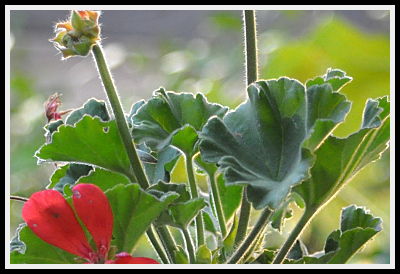
Red Geranium

Branham Geranium

Branham Office Garden

Branham Office Garden

On my drive home, I pulled over to admire the sunflowers growing a few blocks over. Kelly at Boomdeeada suggested I scout the neighborhood for similar flowers, since I seem to be growing a variety I didn’t plant. She might be on to something! It was a good excuse to finally get out of the car and see them up close.
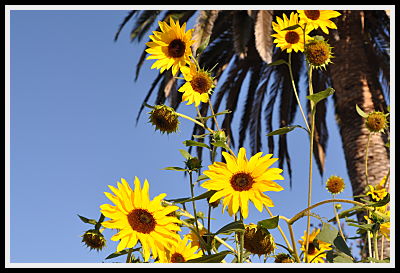
Neighboring Yellow Sunflowers with Palm Tree

Down the block, our neighbor Robert plants a colorful selection of annuals along the border of his white picket fence. He suffered a stroke a few years ago, and had a long trip back to wellness. I enjoy driving by his house and seeing his flowers in bloom. If he’s  sunning himself in the driveway, I’ll wave. I realize as I write this that he has no idea how much I enjoy those flowers. I plan to share that with him today.

flowers at picket fence

Robert’s Summer Display

My own welcoming committee is a pleasure to behold: a wall of sunflowers just outside the kitchen window, and my recently planted fairy garden. The purples and yellows are vibrant and fresh, as if to say “summer will never end.” Sure, I know better, but I still enjoy the charade.
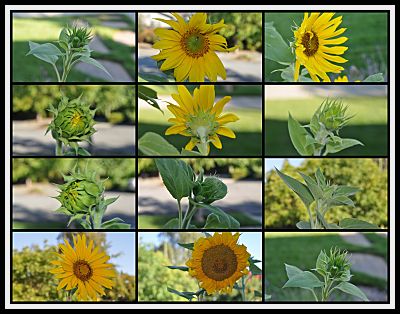
Sunflowers: The Sunny Dozen

Sunflowers: The Sunny Dozen
Photographed in order on deck

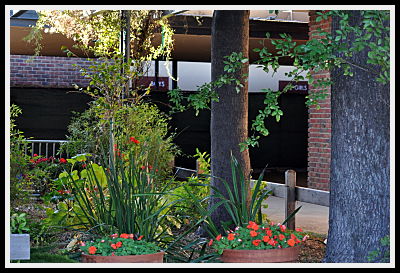
Wednesday is early out day in our school district so the boys return home in the early afternoon. My last stop was Office Max, for yet another round of school supplies. They have enormous clay pots planted in front of the store, brimming with colorful flowers. It’s challenging taking photographs under the mid day sun, but I still enjoyed the view. I appreciate strip malls that make the effort to bring beautiful gardens to an otherwise drab exterior.
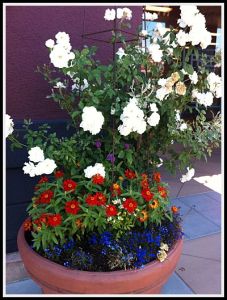
Office Max Flowering Pots

Office Max Flowering Pots

I perhaps owe having become a painter to flowers. ~Claude Monet

Office Max Gernaiums

Cascading Geraniums

Guess what? I still accomplished what I planned for the day, climbed out from under a writers slump, made phone calls, booked a client and nurtured my husband, two boys and four cats.

I encourage you to take five minutes for yourself today. Look at something familiar with beginners eyes. Taste. Smell. Marvel. Rather than imagining you are the center of the universe, try to be centered in the universe. You’ll be a happier person for it.
Winterizing the Double Wide Coleus

Inky Finger Coleus

Inky Finger Coleus
aka Double-Wide

My beautiful ‘Inky Fingers’ Coleus has been busy.  Unlike its tall neighbor, this Coleus is growing out instead of up. I’ve nicknamed it Double-Wide.

Double-Wide makes me smile when I walk up the patio steps. The colors are spectacular. I’ve grown fond of this plant and hope to winterize it if possible. I grew a spectacular Coleus in the same area last year.  It even garnered compliments from our landscape designer.  Sadly, as soon as the temperatures dropped, the leaves dropped too.  I thought it might come back the following year, but apparently when it’s done, it’s done.

Some brave souls bring their plants indoors for the winter, but I’m leery of what might move in with them.  After a summer dealing with aphids, scale, wasps and thrips, I’m reluctant to go that route.

This year I want to create a localized greenhouse for the two plants to see if they’ll make it through the winter.  I’ve done a bit of reading today, and learned that Coleuses grow as a perennial in Zone 10, an area quite a bit inland from our Zone 15.  I also learned that you can take multiple cuttings from the plant in late summer, and start next season’s plants indoors.  The challenge is lack of humidity in a dry, winter house.

Fall is still a few weeks away, so I will enjoy the plant outdoors for as long as I can.  I don’t have a green house so I would have to improvise with PVC pipe and heavy-gauge plastic.  Gardener’s Supply Company catalog sells garden quilt fabric and plant protection tents good to 24°F,  also possible options.

Do you plan to winter over some of your garden plants?  Have you had success in the past?  Tips welcome!  Please reply in the comments section below.

Back to School in the Fairy Garden


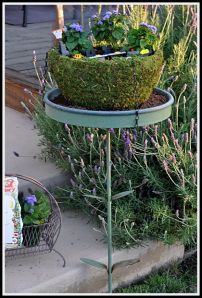
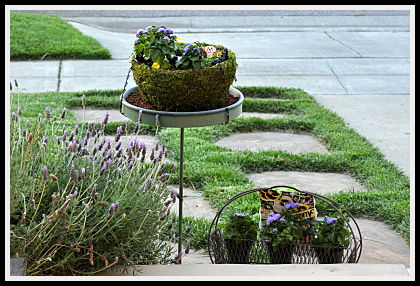
Fairy GardenOur local paper ran an article on fairy gardens recently with a few ideas I hadn’t thought of.  One suggestion was to plant a fairy garden in a pot up high for easy maintenance.  The other was to place it in a high-traffic area so others could enjoy it.

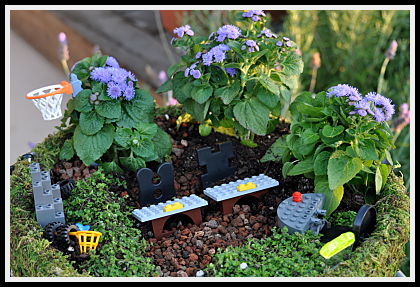
Today I did just that.  In honor of back-to-school month I planted a back-to-school themed fairy garden and placed it out front near the steps.  The bees found it immediately, then my son when he got home from school.  Can those ethereal garden fairies be far behind?

I used an old bird bath stand as a base, then added a fern-lined wire basket.  The fern-lined hanging basket came with three chains attached to a hook.  I pried the hook loose, then wrapped the chains under the bird feeder to secure it in place.

Lovely purple Ageratum line the back of the classroom, with Baby Tears serving as a walkway.  The classroom chairs are part of a stacking game.  I raided the LEGO® Brick bin for desks and playground equipment.  If you squint your eyes and employ your imagination, you might just see an apple on the teacher’s desk.

Fairy gardens were once the purview of small children, but they’ve enjoyed a resurgence among adults.  Blogs, books and websites abound with ideas and inspiration.  In the end, I think it’s fun to use your own imagination and if possible, items you have on hand.

This is a great project for the young and the young at heart.  Let me know how your garden turns out.  Be sure to report back…with pictures of course.  ♥

This slideshow requires JavaScript.

From Tonkadale Greenhouse:

For centuries, the world has been fascinated with the idea that “fairies and elves” live among us and have the power to spread magic and mischief throughout our homes and gardens.

While the existence of fairies is up to your own imagination, adding fairies to your garden is a way to participate in this centuries old tradition. It never hurts to please the fairies and sprites in order to gain their favor.