A Feast for the Squirrels

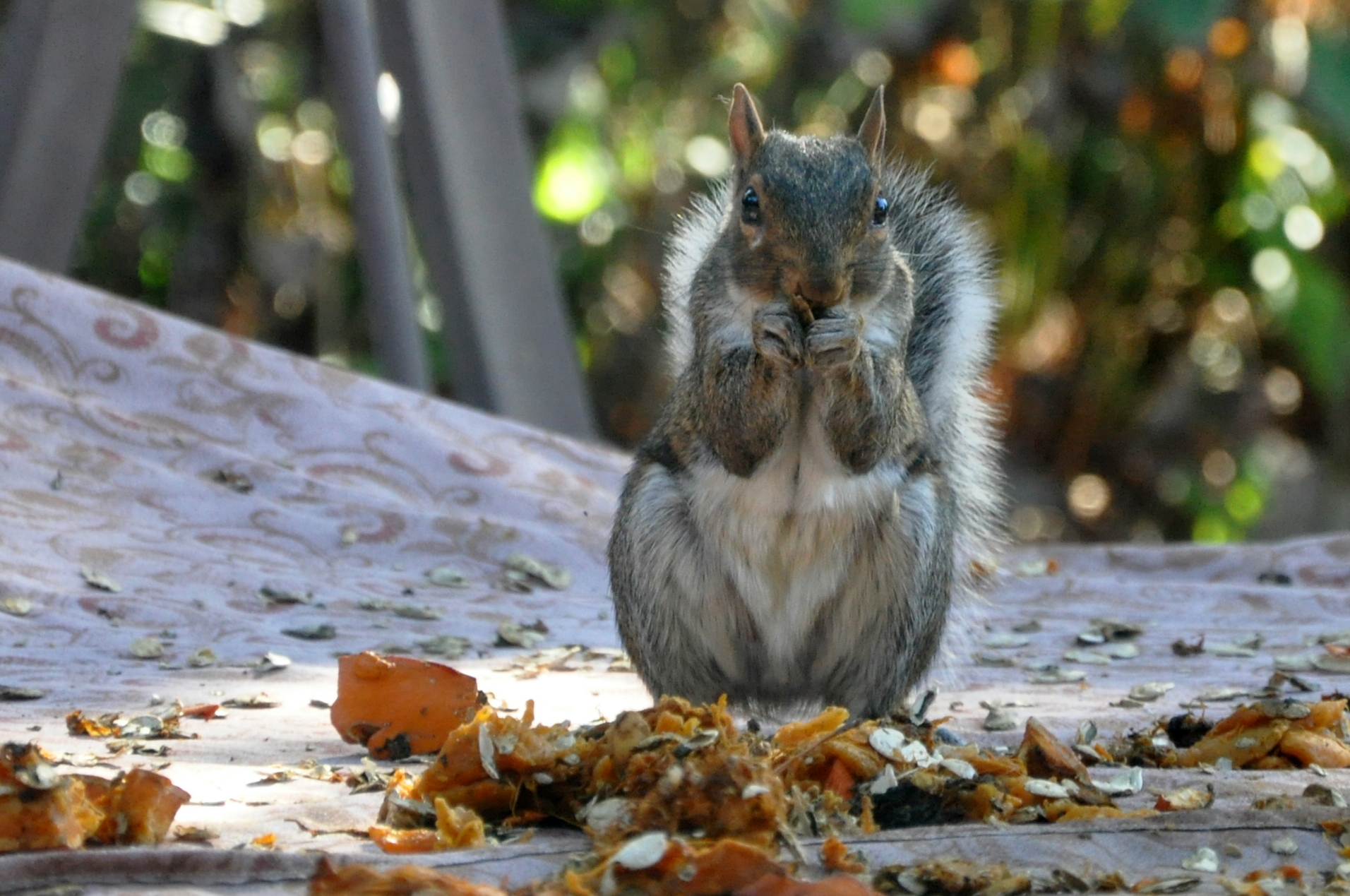
squirrel eating pumpkin seeds

Smile! You’ll be appearing on my blog next week

Since I’m taking one season off from pumpkin farming,  I had to do something with all those seeds. I prepared a feast for the squirrels. They’re not terribly fussy about table settings and I’ve never seen them use a napkin, so the work involved was minimal.

squirrel feast 2014

Squirrel Feast

After Mike finished his carving masterpieces, I scooped the pumpkin guts into a plastic bag and set them aside on the kitchen counter. My son’s friend asked why I was saving pretzels for the squirrels which made me laugh. I reused the bag the pretzels came in but labeled it ‘save for squirrels’ so that no one tossed it out.

We covered our outdoor table and chairs for the winter. I remain optimistic about rain. I plunked the squirrel feast in the center of the covered table so I would have optimum viewing.

squirrel eating pumpkin seeds on table

The good seeds must be at the bottom

The squirrels came and went all week. At one point there were five squirrels playing tag and taking turns on the table. Many of the visitors were camera-shy. I did my best to hide below the edge of my window sill, but the slightest movement sent them scurrying.

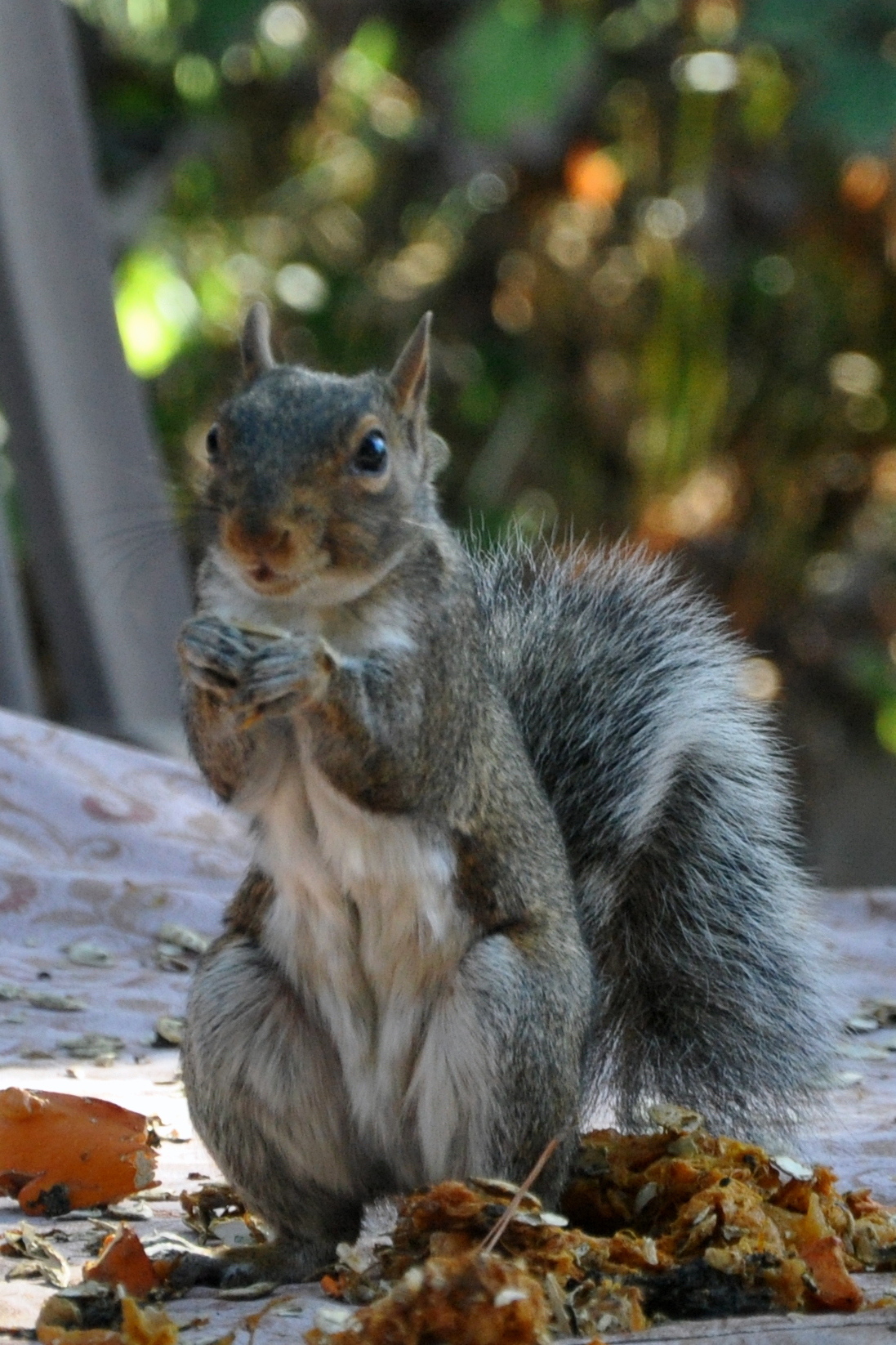
At last, this female squirrel arrived and happily nibbled and gathered while I clicked the camera.  Isn’t she pretty?

squirrel eating pumpkin seeds

Look at those dainty ‘hands’

Over the weekend, Boomdee posted a clever YouTube video of  a squirrel ‘carving’ a Jack ‘O Lantern.  She suggested they might just put my husband out of business. You decide.  :-)  I’m pretty sure you’ll smile either way.

squirrel eating pumpkins

She’s keeping an eye on me

Thanks for stopping by. Our forecaster says rain by mid-week. Fingers crossed. What is your weather up to?

A Painting for Alys

Something extraordinary happened. I’ve been searching all day for just the right words. My talented friend, Pauline, an artist and blogger living in New Zealand put her heart and soul into this piece . The mixed-media painting is currently traveling from New Zealand to California, a gift from dear Pauline. Did I mention that is was extraordinary? I’m counting the days till I can see it up close. I already know the love and care she poured into this piece.

In Pauline’s words: “I thought and then I stopped thinking and finally – finally, I made this with my hands and my heart, for Alys.”
Here is Pauline’s original post about the painting and the process. With thanks, from the bottom of my heart.

thecontentedcrafter's avatarThe Contented Crafter

October was a make it or break it month for me creatively.  I was way behind with so many projects – even my garden remained semi planted as I spent time doing things other than what I really wanted to do.

I started a painting way back in April.  At the time it was to be the first in a series of ‘Soul Portraits’, gifts for friends featuring my take on the preciousness of them, their lives, their gifts, their creativity.  Of course, I bit off more than I could chew and my first feeble attempts were unsatisfactory and I happily left the work sitting for days – then weeks – while I prevari wondered about what to do next…….

What happened next pretty much brought life as I knew it to a complete standstill – if you read my blog regularly you know what it was.  Next I adopted a…

View original post 1,113 more words

Seedy Business

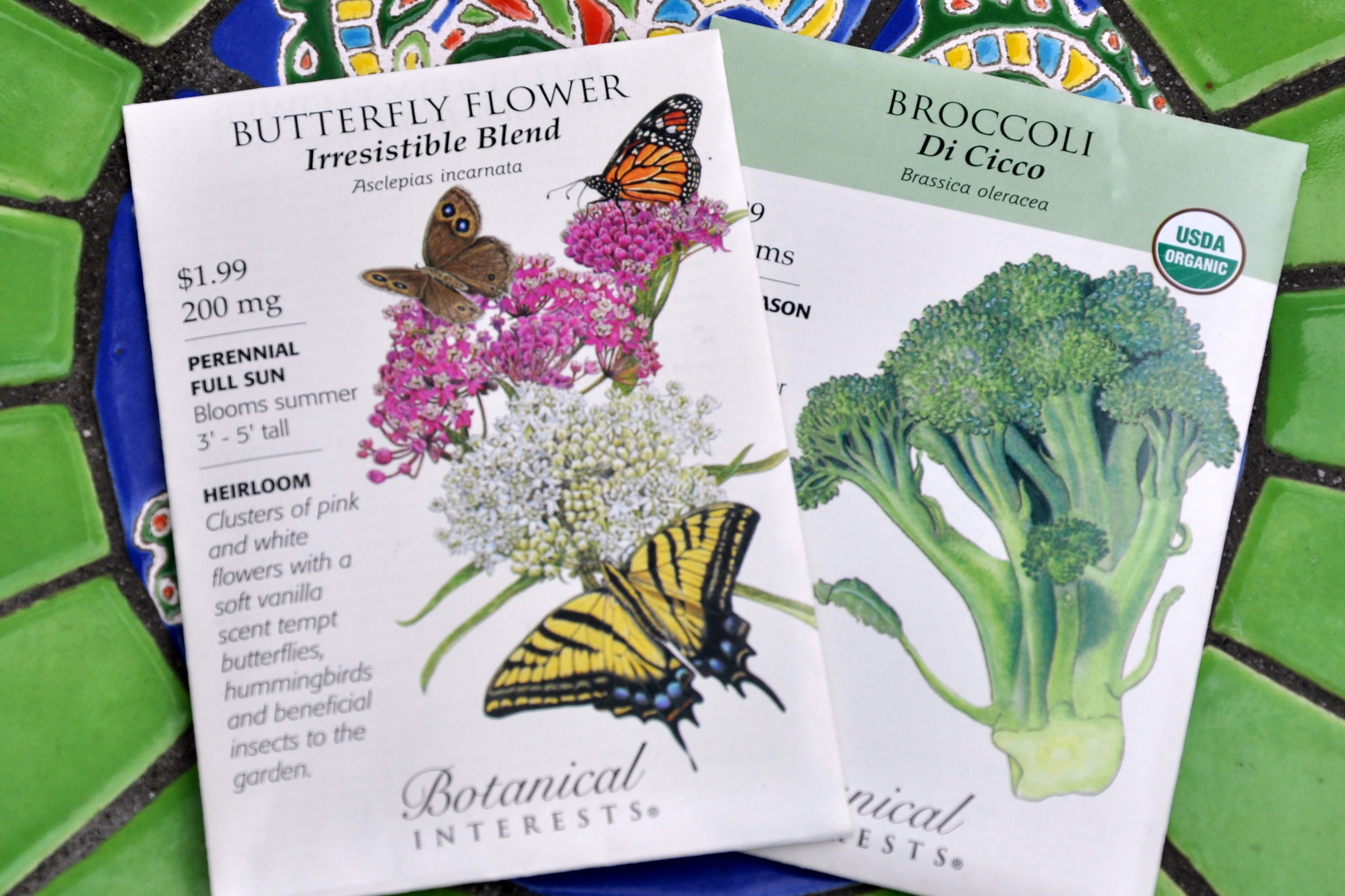
California’s drought drags on. To that end, I’ve planned my seedy business judiciously. About two weeks ago, this sweet little box of seeds arrived in the mail, my modest order from Botanical Interests. They even included “thank you lettuce.” You don’t see that ever day.

Botanical Interests Box of Seeds

Botanical Interests Box of Seeds

When I first starting buying seeds, I didn’t pay much attention to the source. Now that I’m better educated, I prefer buying organic where possible, while supporting small, independent companies.

Cover Crop:

Once the unidentified behemoth, aka the pumpkin/zucchini mystery plant, dies back, I’ll plant both vegetable boxes with a cover crop. Purchased online from Botanical Interests,

This hardworking combination of field peas and hulled oats is a legume and grass cover crop that quickly benefits the soil with nutrients and green matter, while helping suppress weeds. A great cover crop for established gardens, the mix is also perfect for improving areas being turned into gardens such as lawns and vacant lots.

Pea plants fix nitrogen and condition the topsoil while the pea flowers attract bees and other beneficial insects. As an added benefit the young pea shoots and tendrils are edible and can be used in salads or as a soup topping. Oats hold nitrogen, provide green matter and provide support for the pea vines.

cover crop seeds

Cover Crop Seeds

When planted in the fall, the oats and peas benefit from the cool weather but are killed by the cold temperatures of winter and won’t regrow in the spring. The dead plant material provides a wonderful winter mulch that helps prevent soil erosion and is ready to be tilled into the garden as soon as soil can be worked in the spring

Not bad for $2.99 a packet! I bought three.

Broccoli:

This is my only cool-season crop. I’ve grown it before and it got by on very little watering. I’m hoping for the same success to keep my water usage low.

Butterfly Flower:

After reading earlier this year about the decline in butterfly populations, I learned that one of the problems is the reduction in Milkweed. I’ve never seen it offered in our nursery centers, but found the seeds online.  It’s a perennial, and will replace the seasonal flowers I’ve grown for the past two years in the triangle near our front sidewalk.  The plant prefers swampy conditions, but they say it will do okay with ‘regular’ garden watering.

Butterfly Flower and Broccoli

Butterfly Flower and Broccoli

I’m trying not to get my hopes up, since San Jose is anything but swampy. I’ll be thrilled, though, if I can plant a healthy shrub that attracts Monarch’s and helps them on their way south.

Cat Grass Oats:

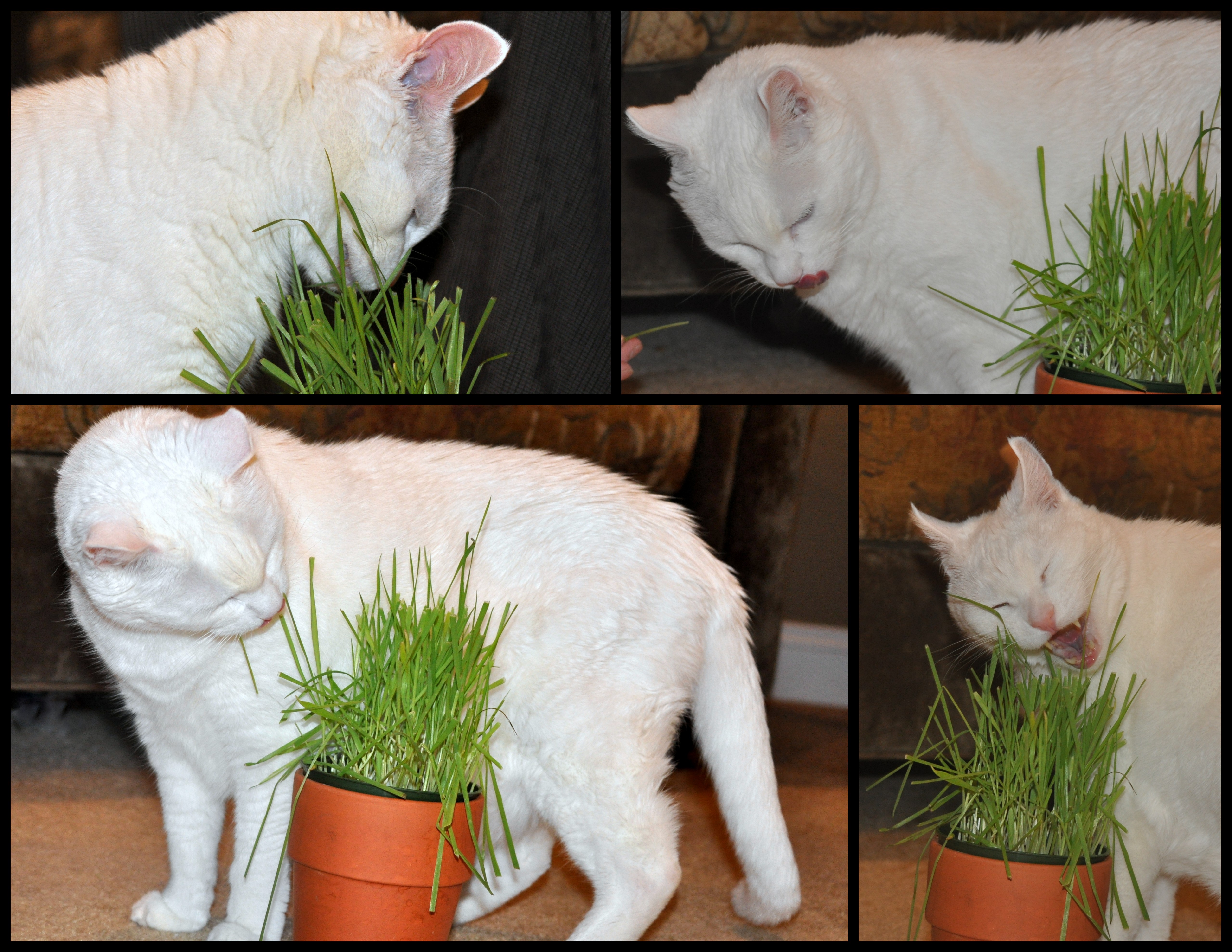
My sister’s indoor kitty, KT loves his greens. He prefers home-grown to what’s available at the market and I can grow it for a song year round. Pretty cool, eh?  So I plant a pot every few weeks and place it near the kitchen window. My sister brings me the empty pot, and I start a new batch so we always have them in rotation.

I tried to get Mr. Personality to pose for these pictures, but we wasn’t having any of it. He eventually nibbled on the corner of the envelope, before jumping down and moving on.

cat with grass seeds

“Clever” Photo attempt Number One

cat with seeds

“Clever” Photo attempt Number Two

Here is the lovely KT moving in for a nibble. Isn’t he the sweetest? KT started out as a foster cat, but she couldn’t let him go.

KT Loves his Greens

KT Loves his Greens

So, that’s my seedy business this fall. How about you? Are you dropping a seed or two into the earth, a greenhouse, or the time-honored pot in the windowsill?
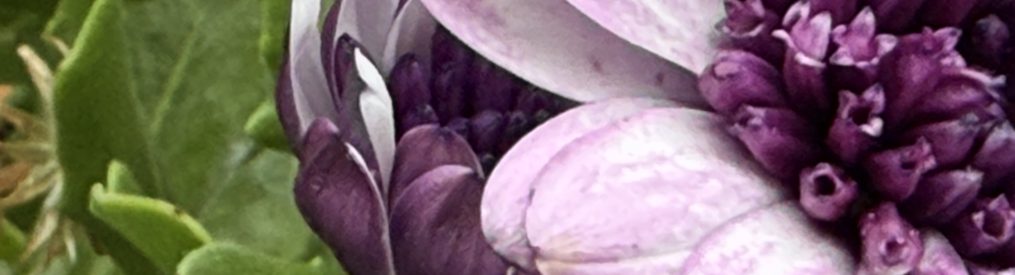
Planting Bulbs: I’ve Learned a Thing or Two

spring bulbs

This Year’s Bulb Lineup

Planting bulbs isn’t complicated. Keeping them under wraps till show-time is a whole different story.

Apparently most bulbs prove irresistible to squirrels. Three seasons later, I’ve learned a thing or two.

In the past, fall catalogs arrived brimming with the most beautiful bulbs imaginable. I let my imagination run amok, mentally placing  an order for 500 flowering bulbs in every shape and color. After tucking them into the earth, effortlessly and without two days of neck pain to follow, I would put my feet up and smile. Rounding out the fantasy, the following spring would arrive with the garden awash in yellow, purple and pink fragrant bulbs.

Ha! I crack myself up.

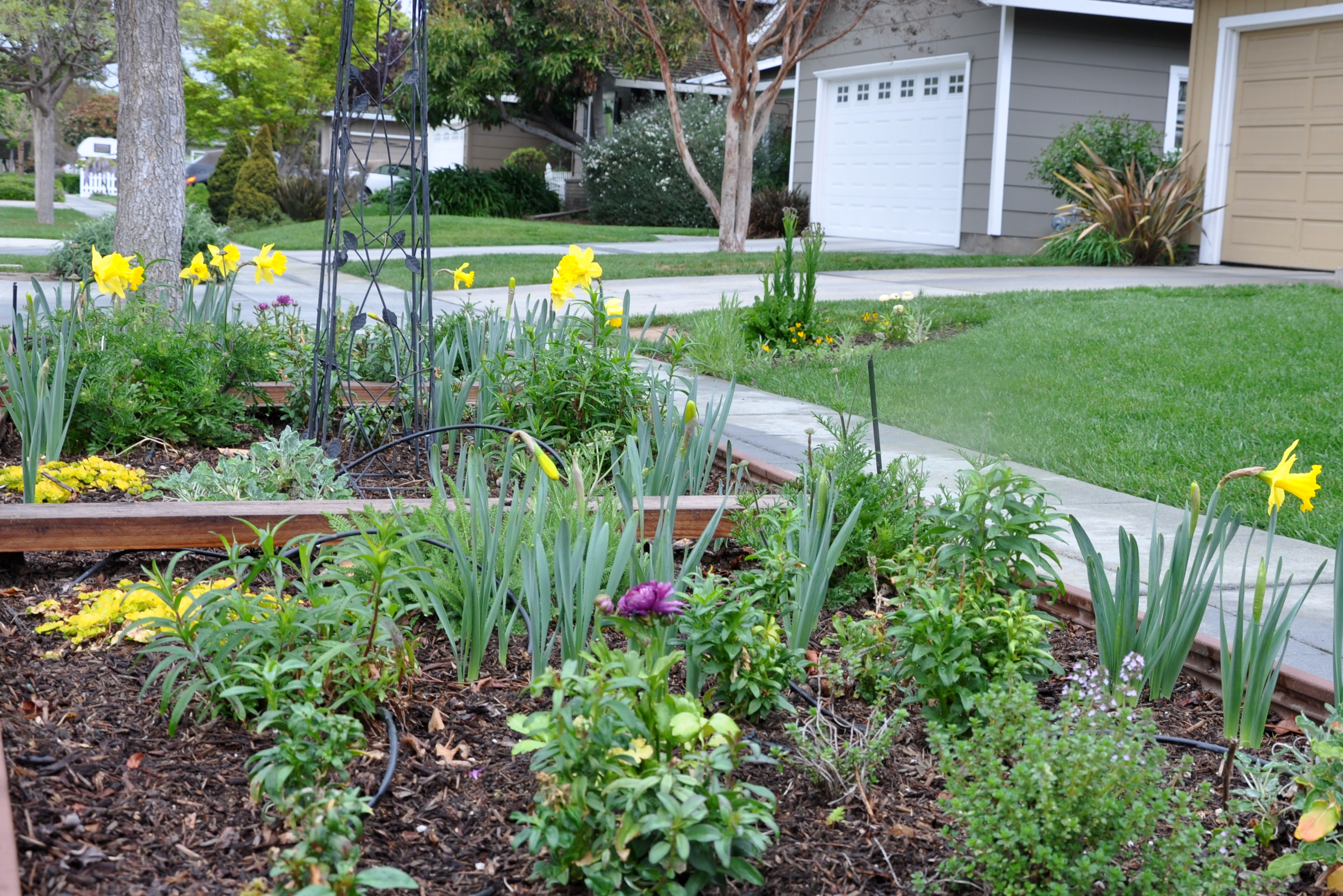
So, back to reality, I’ve learned to temper my expectations. A little reading on the various bulbs and corms revealed this useful nugget: squirrels do not like the smell or taste of daffodil bulbs. I planted fifty daffodil bulbs last year and they all came up. Further, they kept the curb garden looking bright and cheery in February, often our coldest, grayest month.

daffodils curb garden
Here’s the plan:

I’ll add 30 more daffodils to the curb garden in case a few of the bulbs from last year don’t recover. This year’s variety is ‘Ice Follies‘, a blend of softer yellows. They’ll provide a nice contrast to the bright yellow variety. I’ll also be able to determine what comes up from last season.

The Narcissus ‘Paperwhite Ziva‘ are for indoors. Two summers ago I bought a beautiful glass vase at a craft fair, but find it difficult to use for traditional flower arranging. It’s long and narrow. A friend suggested bulbs. It never occurred to me. The wall in our bedroom is a rich blue, the perfect accent for the bulbs.

Finally, the pink and purple hyacinth, the ‘William and Kate Blend‘ will go in a large planter just outside my back door. I don’t know why they’re named after royalty, but it made me smile.

Once planted, I’ll lay a screen over the pot to prevent digging. I’ll be able to keep my eye on it, so that when the time is right, I can remove the screen and allow them to grow into fragrant goodness. They remind me of my mom.

That’s the plan from here, folks. Fingers crossed, salt tossed over my shoulder, spin around three times in a circle and a graceful bow to our dear Mother Earth ought to do it. You know I’ll keep you posted.

Two Flowers Standing

One by one, the sunflowers faded. There are now two flowers standing.

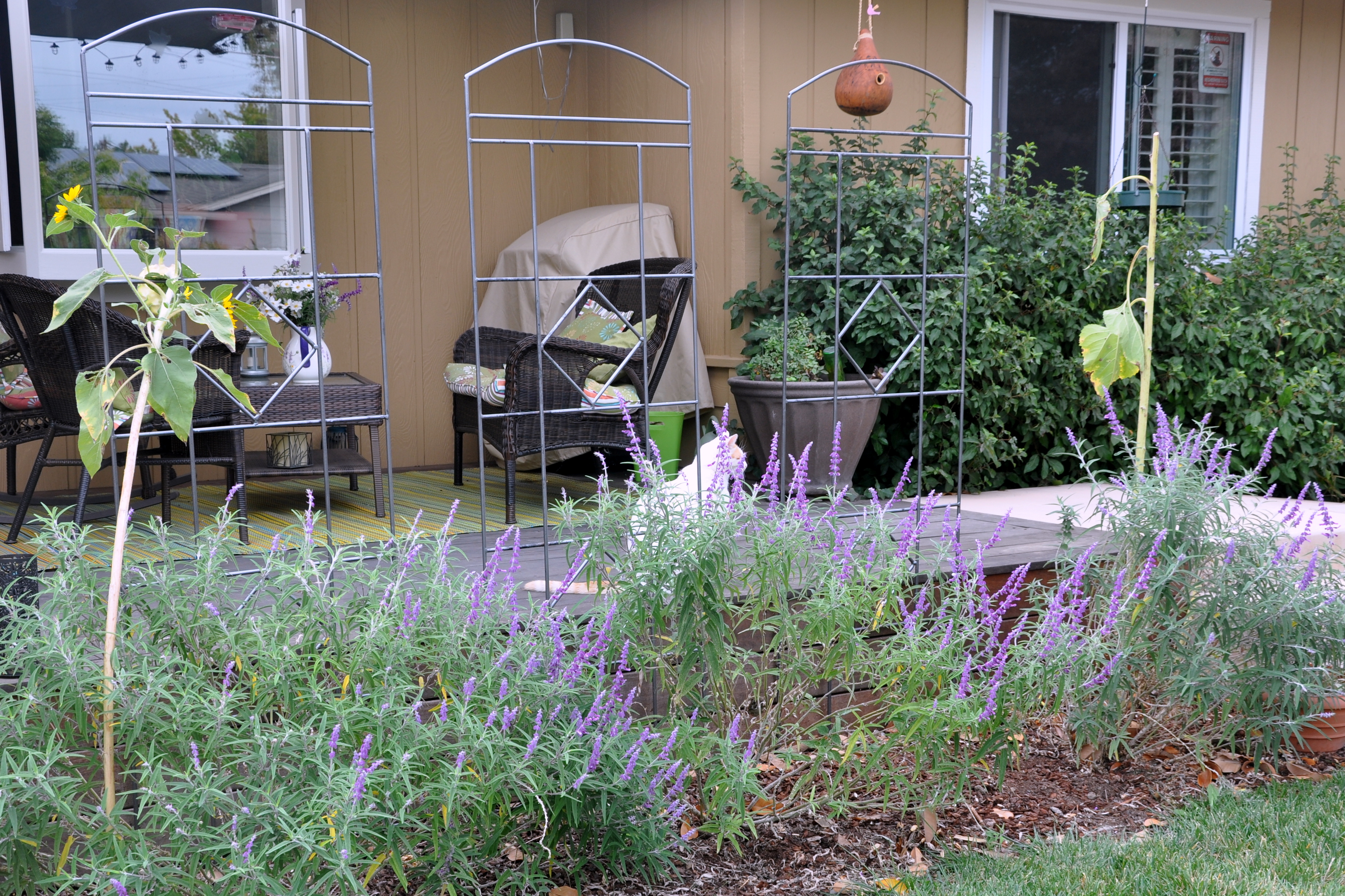
salvia and two sunflowers

Salvia flanked by two sunflowers

They look spent, but as long as the birds and squirrels keep coming, I don’t have the heart to pull them out. It’s been nice seeing the Salvia in all its glory after a summer spent in the sunflower’s shadow. The Salvia continues to bloom into late October. The bees and hummingbirds love the velvety purple flowers. Salvia thrives in dry conditions, making it the perfect drought tolerant plant.

salvia closeup

Salvia leucantha (Mexican bush sage)

I wasn’t sure if the tiny finches were still coming to eat sunflower leaves, but then I spotted one from the kitchen window.

finch eating leaf upside down

Goldfinch takes a bite

goldfinch eating sunflower leaf

I’ve got my eye on you

Squirrels are still climbing the trellis, looking for what remains of the seeds. They aren’t staying as long, so I’m guessing what’s left are empty seed shells. I’ll give it one more week.

squirrel stretching to reach sunflower

Checking out the seed supply

squirrel with aligned tail

I love his perfectly aligned tail

There is a lot to do this time of year, but it’s work I enjoy.


Our  Japanese Maple (Acer) is dropping a few leaves out back, but the Chinese pistache (Pistacia chinensis) is still green. When it does turn, its glorious and one of the reasons we planted it nearly twenty years ago.

Over the weekend I pulled out the last of the tomatoes. I left several tomatoes behind to go to seed in place. I hope to repeat my luck next year: an all-volunteer crop of delicious heirloom Roma tomatoes.

tomato plant collage

The last of the tomatoes for the season, emptied box with basil in the corner, the drooping plant as it ends the season, a wheelbarrow full of plants, some kind of infestation just started at the base of the tomato plants

The basil is hanging in there and still making into a few meals each week. It looks lonely in the otherwise bare planting bed.

basil plant

Basil hanging in there, all alone in the box

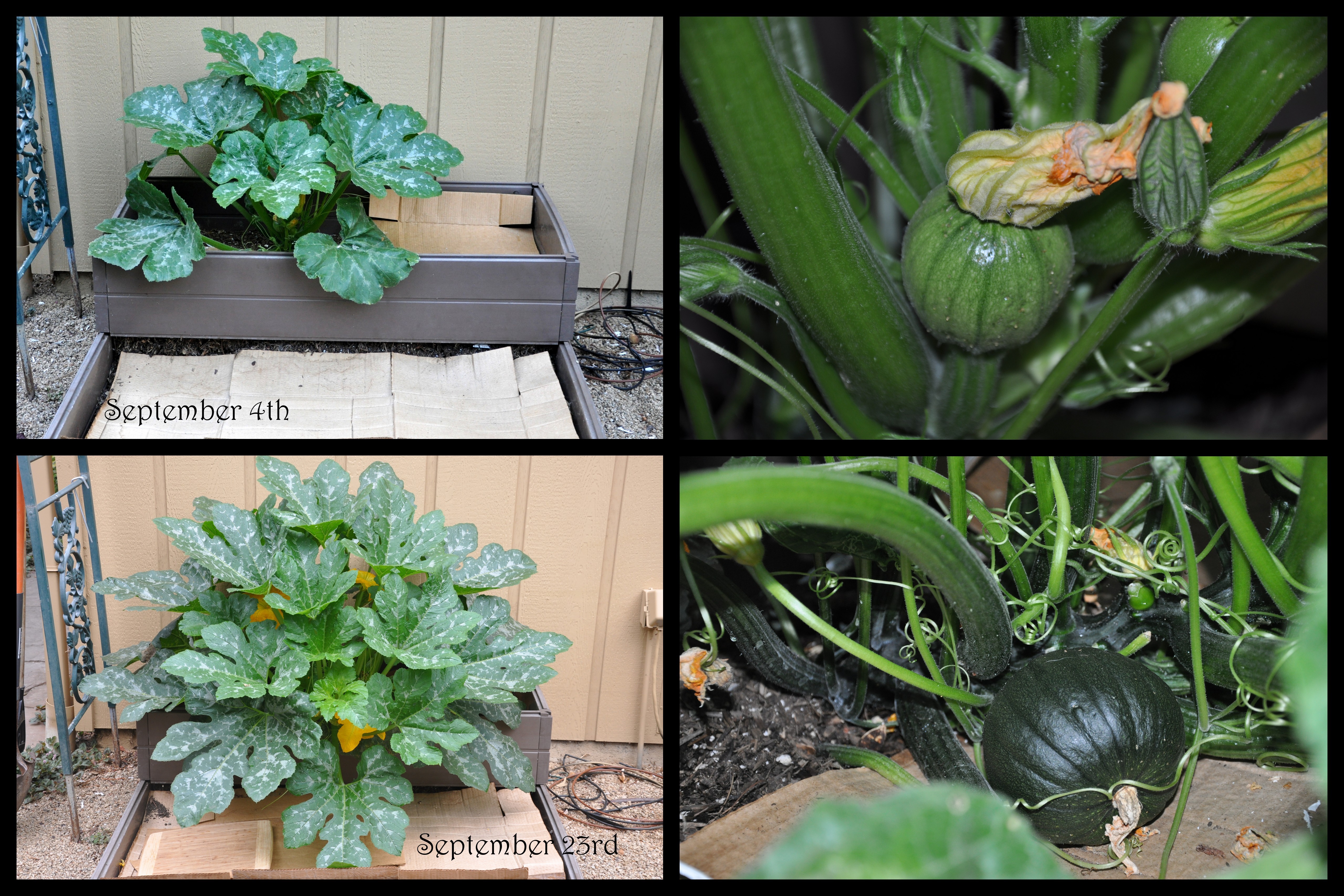
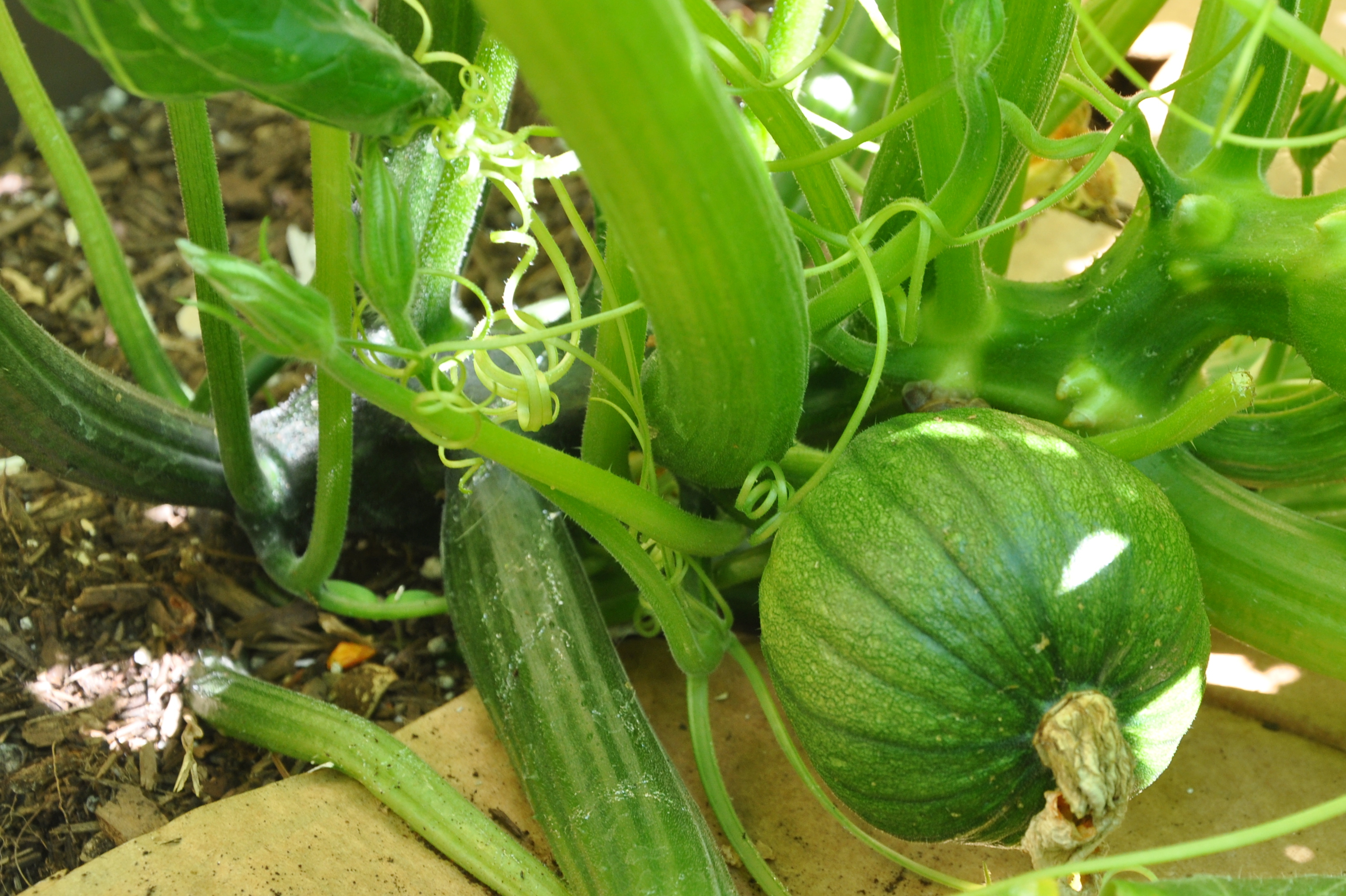
Meanwhile, on the other side of the vegetable garden, the ‘pumpkin plant that ate New York’ is taking over. The leaves are as long as my arm now, with several small fruits at the soil line. Though the leaves, stems and flowers all looked like pumpkins, the fruit is a dark green. I’ve never seen anything like it.

late season pumpkin plant growth

Late-season, over-the-top, self-supporting pumpkin plant

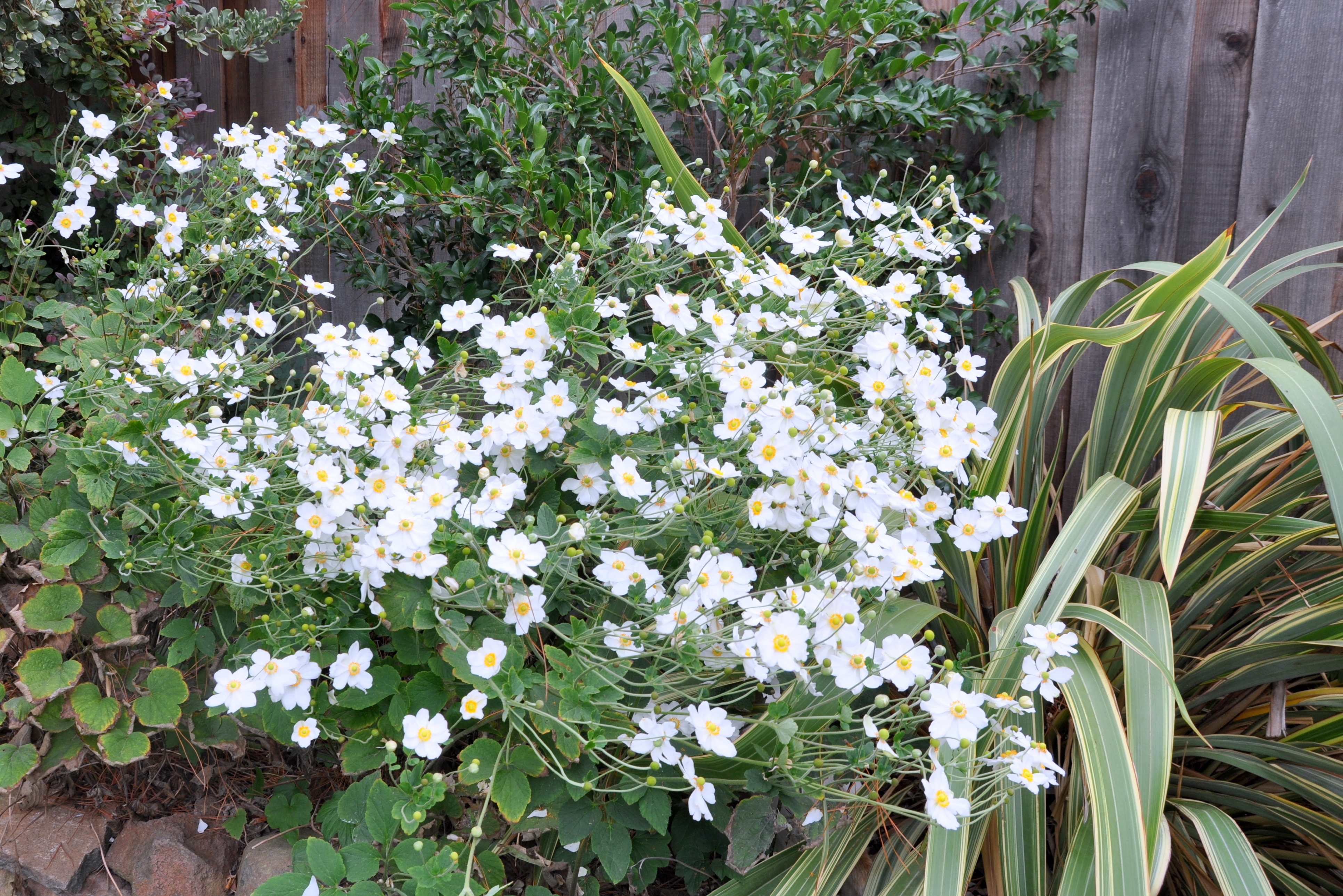
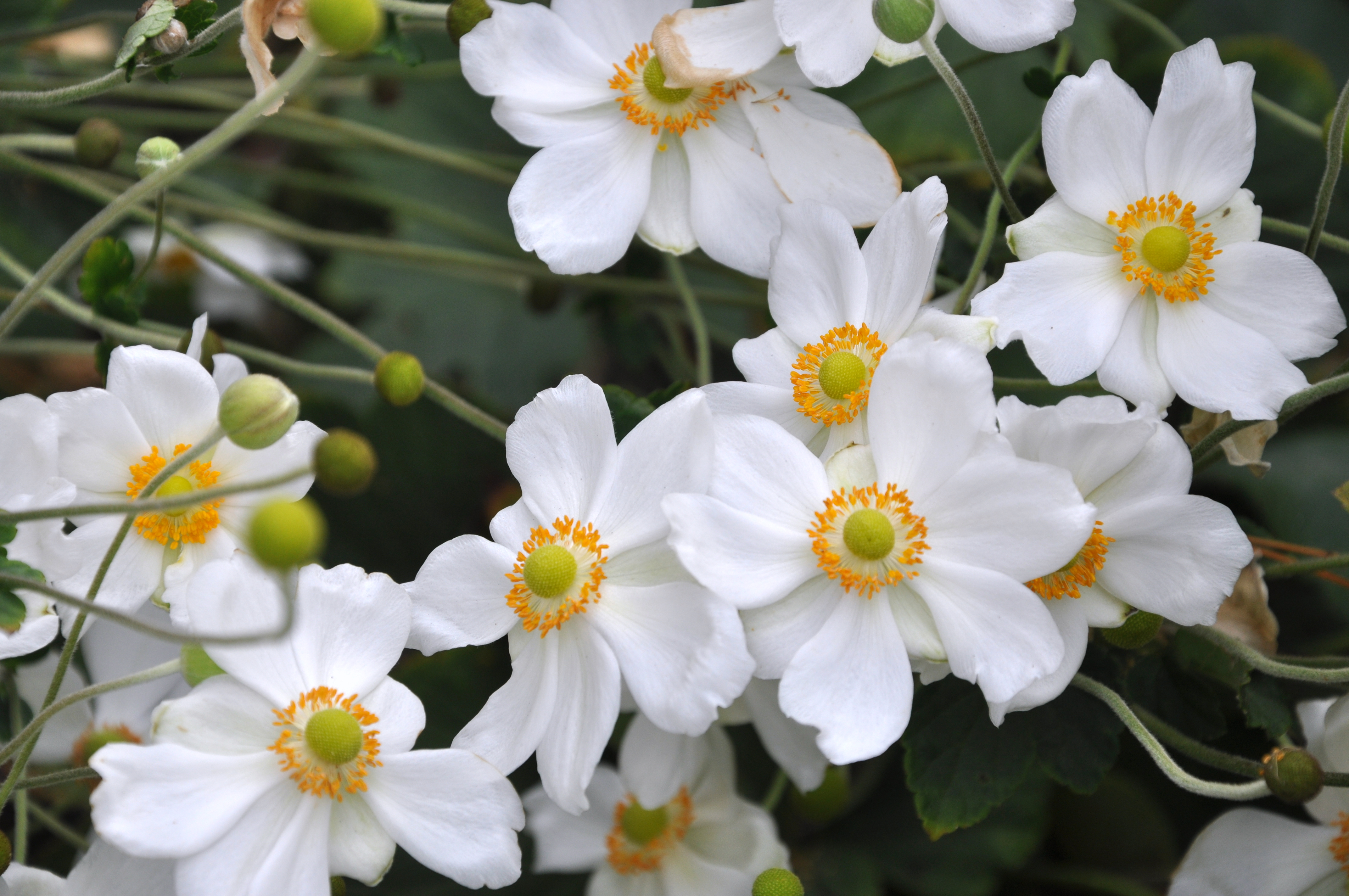
Japanese anemones (hupehensis var. japonica) dominate the rock wall and frankly, grow like weeds. I’ve tried to thin them but they come back stronger than ever. They’re a lovely sea of white flowers and the last to bloom before winter.

Last week I picked up some flowering bulbs, a little wiser than I was in previous years. I’ll share more about that later in the week.

I hope your week is going well.

Japanese anemones (hupehensis var. japonica)

Japanese anemones (hupehensis var. japonica)

Japanese anemones up close

Japanese anemones up close

Autumn in the Air, Confusion in the House

squirrel on trellis

Fall? How much time do I have to scavenge nuts and seeds?
According to my Old Farmer’s Almanac calendar, today is the first day of fall in the northern hemisphere. It’s officially known as the autumnal (fall) equinox.  It’s my favorite time of year.  Of course I say that on the first day of spring too.  I can never decide.

What’s fun when you blog, is you find yourself keeping up with people from around the world. Today I thought I was celebrating the first day of spring as well with Sarah the Gardener, The Contented Crafter, Teddy and Tottie, and the Road the Serendipity but further reading tells me that September 23rd is their official spring (vernal) equinox.

Our wedding day 19 years ago landed on the first day of fall, however it was September 23rd, not the 22nd. Now my head hurts. I checked out a couple of sites today and got differing answers:

An excerpt from Timeanddate.com says:

Fall is called autumn in many countries

Fall equinox, Northern Hemisphere:
September equinox 2014:
September 23, at 02:29 UTC

(USA & Central America, Asia, Canada, Europe, Northern Africa)

Fall equinox, Southern Hemisphere
March equinox 2015:
March 20, at 22:45 UTC

(Australia, New Zealand, South America, Southern Africa)

The Old Farmer’s Almanac website says:

In 2014, the autumnal equinox brings the fall season to the Northern Hemisphere on: September 22 at 10:29 P.M. EDT.

Math isn’t my strong point, so while trying to work this out in my head I discovered The World Clock – Time Zone Converter and now it all makes sense. Using UTC or Coordinated Universal Time, the first day of fall in California is technically September 23rd.

Happy Equinox, wherever you presently call home.

I’m going to rake a few leaves and then sit down with a hot cuppa.  All these math calculations hurt my brain.


My Garden has a Sense of Humour

A summer combating nasty little squash bugs did not prepare me for this:

late season pumpkin plant

Garden humour: Bug free, late season plant

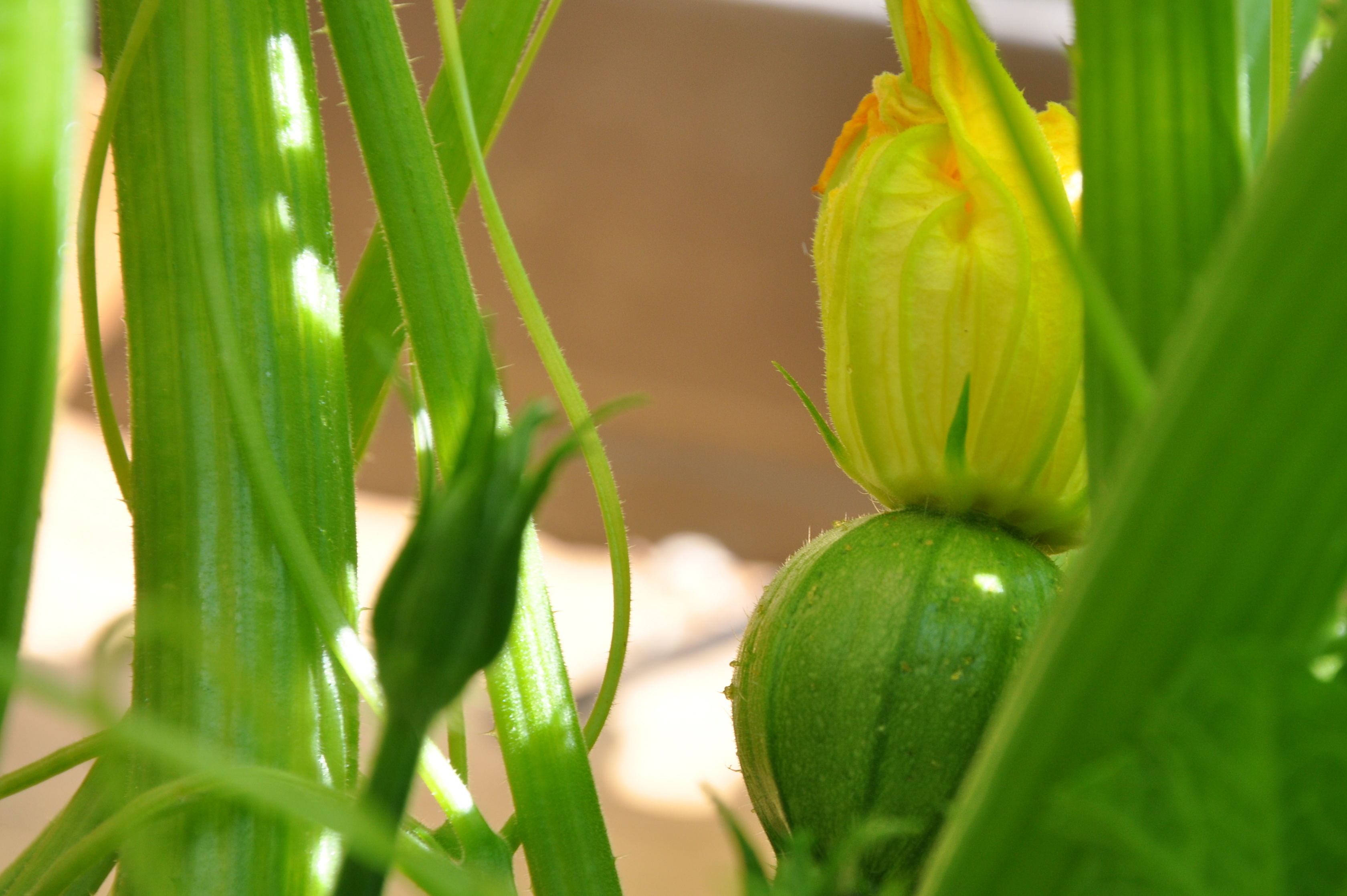
apple sized pumpkin

A peak under ‘the hood’ reveals an apple-sized pumpkin

companion fruit

…and a companion fruit

Yes, folks, my garden has a sense of humour.

It’s September 10th, just a few weeks shy of the first day of autumn, and here we have a happy-go-lucky, bug free, healthy pumpkin plant. This particular variety is out-shining all efforts to date. Further, it’s growing in the planting bed I’ve been preparing for the winter. I removed the drip irrigation lines, so the beds are dry. I covered most of the exposed dirt with cardboard to keep the cats out. I ran out of boxes before I had enough to cover the whole bed. That was all the invitation this plant needed to get started.

one week ago

Just one week ago

Day time temps remain high, but once regular night-time lows hit the fifties, this plant will close up shop. Meanwhile, I’ll enjoy it while I can, marvel at my garden’s sense of humour, and be humbled yet again.  I’ve been promoted from gardener to garden supervisor, just like that.

pumpkin bloom and tendril

Safety net: a small tendril wrapped around the flower, catching it when it dropped from the plant

Is there something unexpected in your life this week putting a smile on your face?

Tomato Swan Song

tomato harvest

This weeks tomato harvest

The heirloom tomato plants pumped out fruit all summer long. We ate them raw and in salads, sliced between sandwiches and Mike made the surplus into salsa. Oh yum.

Alas, tomatoes are a summer annual and they’ve come to an end. Here in the Northern Hemisphere,  fall is just a couple of weeks away. It’s time for the tomato swan song.

The plant is still pumping out fruit, but the lower leaves are browning and the fruit isn’t nearly as sweet.

tomato ripening vignette

Ripening vignette

tomato plant in decline

Tomato plant in decline

I collected a huge bowl earlier this week, washed them and popped them in the freezer. We’ll be able to enjoy them in another salsa or sauce. I harvested some green tomatoes as well, and put them in a paper bag. If green tomatoes have released a gas called ethylene then they’ll continue to turn red. Otherwise they’ll remain green. The bag simply traps the gas and allows nature to follow its course.

Here’s an excerpt from Garden Know How:

The main determiner in how fast a tomato turns red is the variety. It will determine how long it takes for a tomato to reach the mature green stage. Tomatoes cannot turn red, even forced by modern technology, unless it has reached the mature green stage.

Another factor  is the outside temperature. Tomatoes will only produce lycopene and carotene, two substances that help a tomato turn red, between the temperatures of 50 and 85 F. (10-29 C.) If it is any cooler that 50 F./10 C., those tomatoes will stay a stubborn green. Any warmer than 85 F./29 C., and the process that produces lycopene and carotene comes to a screeching halt.

Tomatoes are triggered to turn red by a chemical called ethylene. Ethylene is odorless, tasteless and invisible to the naked eye. When the tomato reaches the proper green mature stage, it starts to produce ethylene. The ethylene then interacts with the tomato fruit to start the ripening process. Consistent winds can carry the ethylene gas away from the fruit and slow the ripening process.

If you find that your tomatoes fall off the vine, either knocked off or due to frost, before they turn red, you can place the unripe tomatoes in a paper bag. Provided that the green tomatoes have reached the mature green stage, the paper bag will trap the ethylene and will help to ripen the tomatoes.

This year’s crop planted themselves. I call them ‘volunteers’, seeds unintentionally planted thanks to the wind or a bird dropping seed. They’re often the healthiest plants in the garden.  So while I’ve saved some seeds, I’m also lobbing the occasional tomato back into the veggie box, hoping they’ll plant themselves again next year.  Sometimes, a gardener just needs to get out-of-the-way.

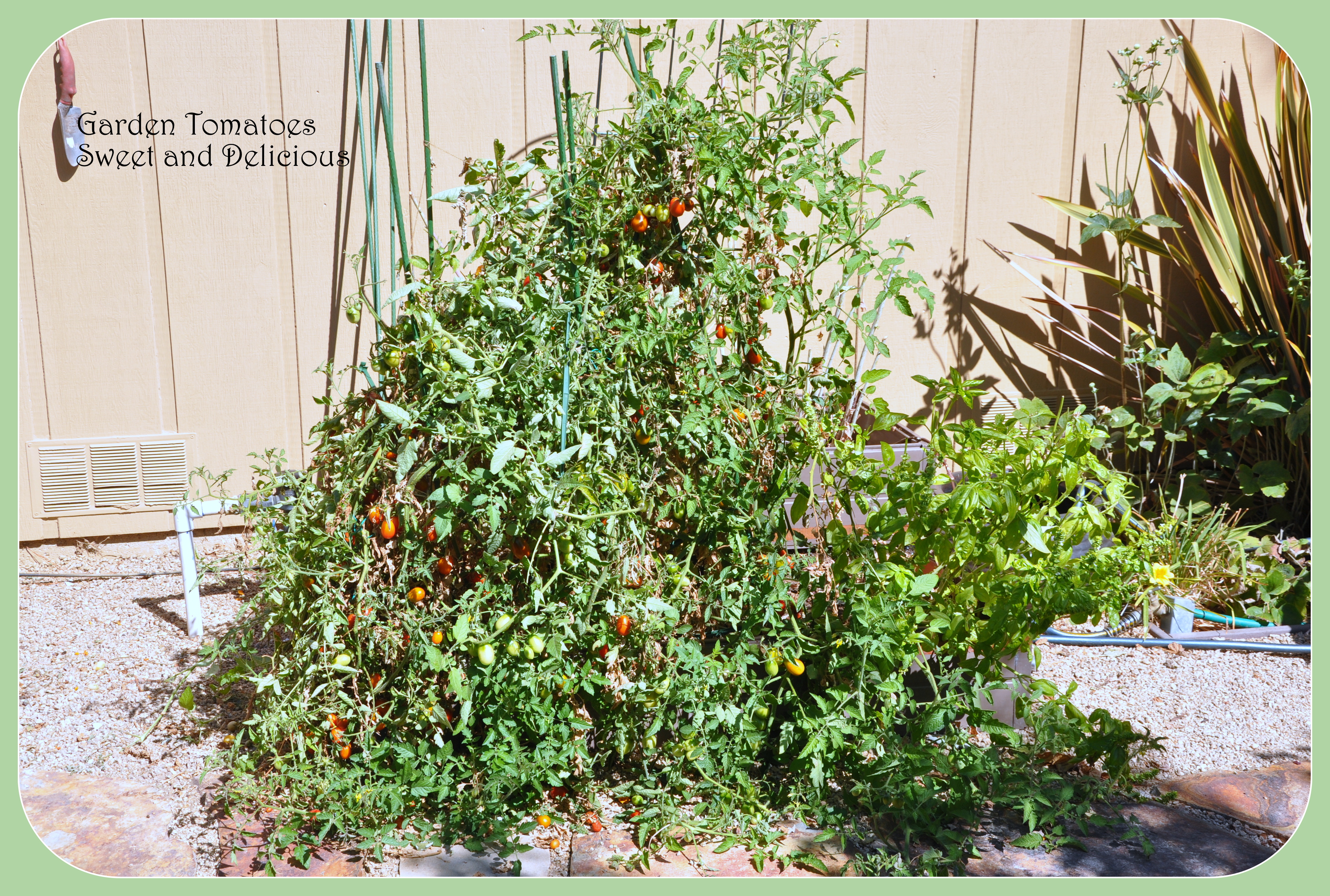
tomato long view

Tomato Plants: the long view Dear Reader, I wish you were here! This is a recent shot of my tomato plants. I’ve been harvesting tomatoes all summer long and putting them to good use. If you were here we could make a salad together while we caught up on our news. Until recently, that ugly pipe was hidden with cherry tomatoes. Just behind the tomato plants are the recently pruned raspberry vines. Let’s catch up soon. Cheers, Alys


Top Ten Reasons to Grow Sunflowers

Sunflowers are a delight in any garden. They do most of their growing up, not out and they don’t require a lot of fuss. They can grow from a seed to as tall as 25 feet (average is six feet) in just ninety days. What’s not to love?

Here are my top ten reasons to grow sunflowers:

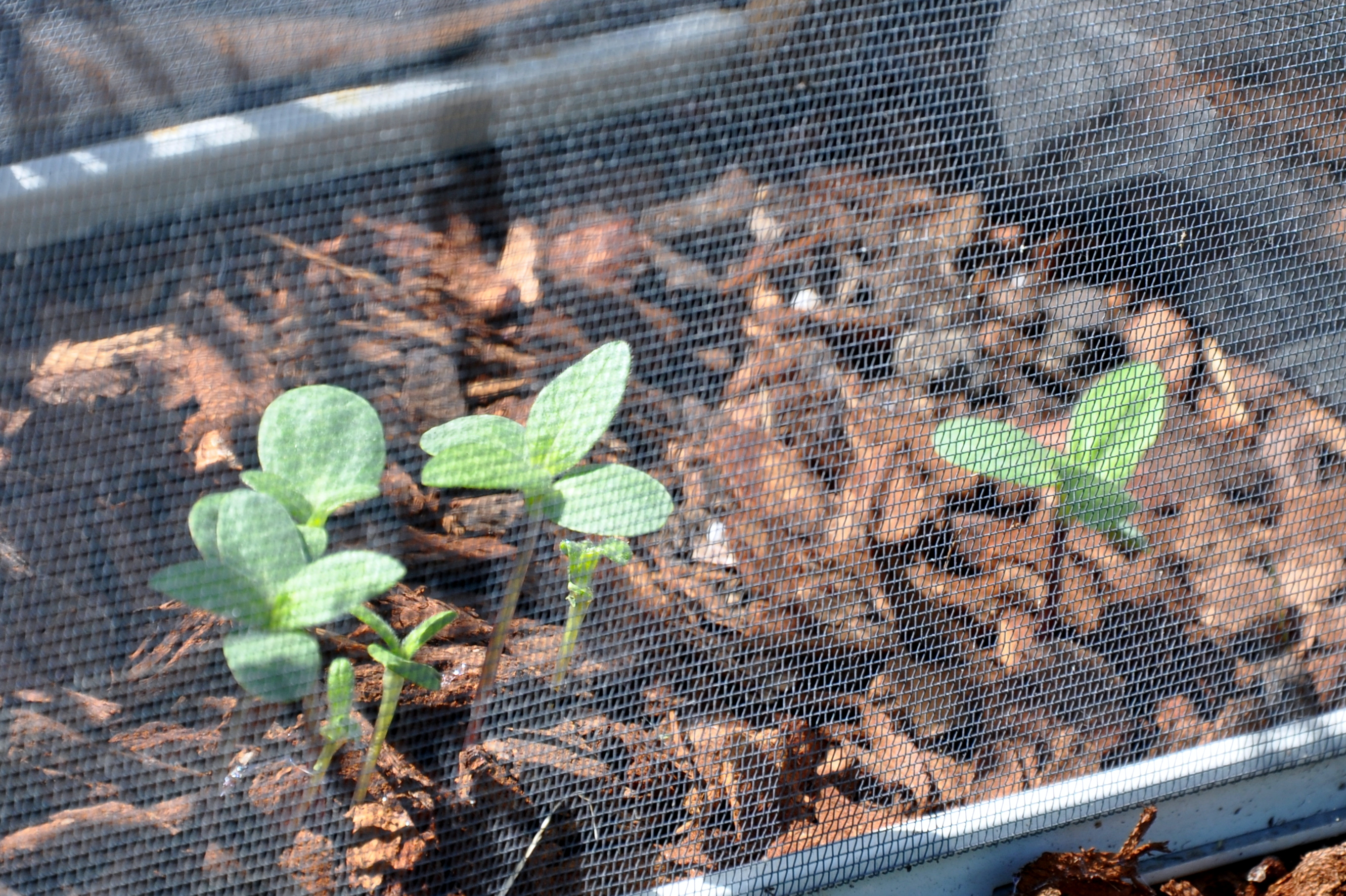
1. They’re easy to grow once they germinate. I’ve solved my squirrel-digging problem by covering them with screen savers until the seedlings take root.

sunflower seeds under screen saver

Sunflower seeds undercover

2. Sunflowers are bee magnets. We need all the bees we can get. You can read more about Colony Collapse Disorder (CCD) here.

sunflower and yellow bee

Bees grace the garden

bee and sunflower

Bee in flight

3. Mood enhancers. It’s nearly impossible to stroll past a strong, lemon-yellow flower and not smile.

pom pom sunflower

Joy in every bloom

4. Sunflowers are tall. Growing a flower you can look up to is always fun when you’re 5’10” (177 cm).

sunflower six feet

Six foot sunflowers

5. Bird watching.  Lesser Goldfinches like to eat sunflower leaves. They start low on the plant and move up, so apparently the more established leaves are the delicacy. After a few meals, the leaves look like lace.

sunflower bird collage

Lesser Goldfinch and a well-nibbled sunflower leaf

6. Grow your own privacy screen. What’s not to like about a flowering fence/privacy screen to keep things cozy on the front deck?

sunflower fence

Grow a summer privacy screen in no time

7. Self-healing. I came home a month ago and found one of the flower heads in my driveway, ‘harvested’ before its time. The plant generated several new flowers half way down the stalk of the plant.  That was a nice surprise.

sunflower forced growth

Sunflowers get a second life

8. Free entertainment outside your kitchen window. I parked my camera on the kitchen counter this weekend, ready for my seed-eating guests.  Squirrel antics make me smile.

squirrel snacking on sunflowers front deck

The real reason we grow sunflowers

9. Plenty of seeds to share. Each flower head produces hundreds of seeds, leaving plenty for harvesting and roasting, planting and sharing with the birds and squirrels.

squirrel eating pumpkin seeds

May I offer you some seeds?

10. Planting sunflowers gave me an excuse to publish a top-ten list.

Vintage Postage Give-away

Don’t forget to make your requests. My Vintage Postage Give-away ends this Sunday, August 31st, 2014.  You can read all the details here.

On the form below please request your first, second and third country of choice. Include your full name and mailing address. That’s it. Click on the list of postage stamp countries to see what’s available:

List of postage stamp countries

Sample vintage postage

Vintage postage issued mid-1937 to mid-1938.

What can you do with a bunch of old postage stamps?

  • Use them to make mixed-media art
  • Make a birthday card for someone special
  • Laminate them in strips and use them for bookmarks
  • Add them to a scrapbook page
  • Give them to a child and make up a story to go with them
  • Celebrate history
  • Take part in this gardening nirvana blogging adventure.

Please  send your request via the contact form, below. I would love it if you joined in the fun.

← Back

Thank you for your response. ✨

Butchart Gardens: A Canadian National Treasure

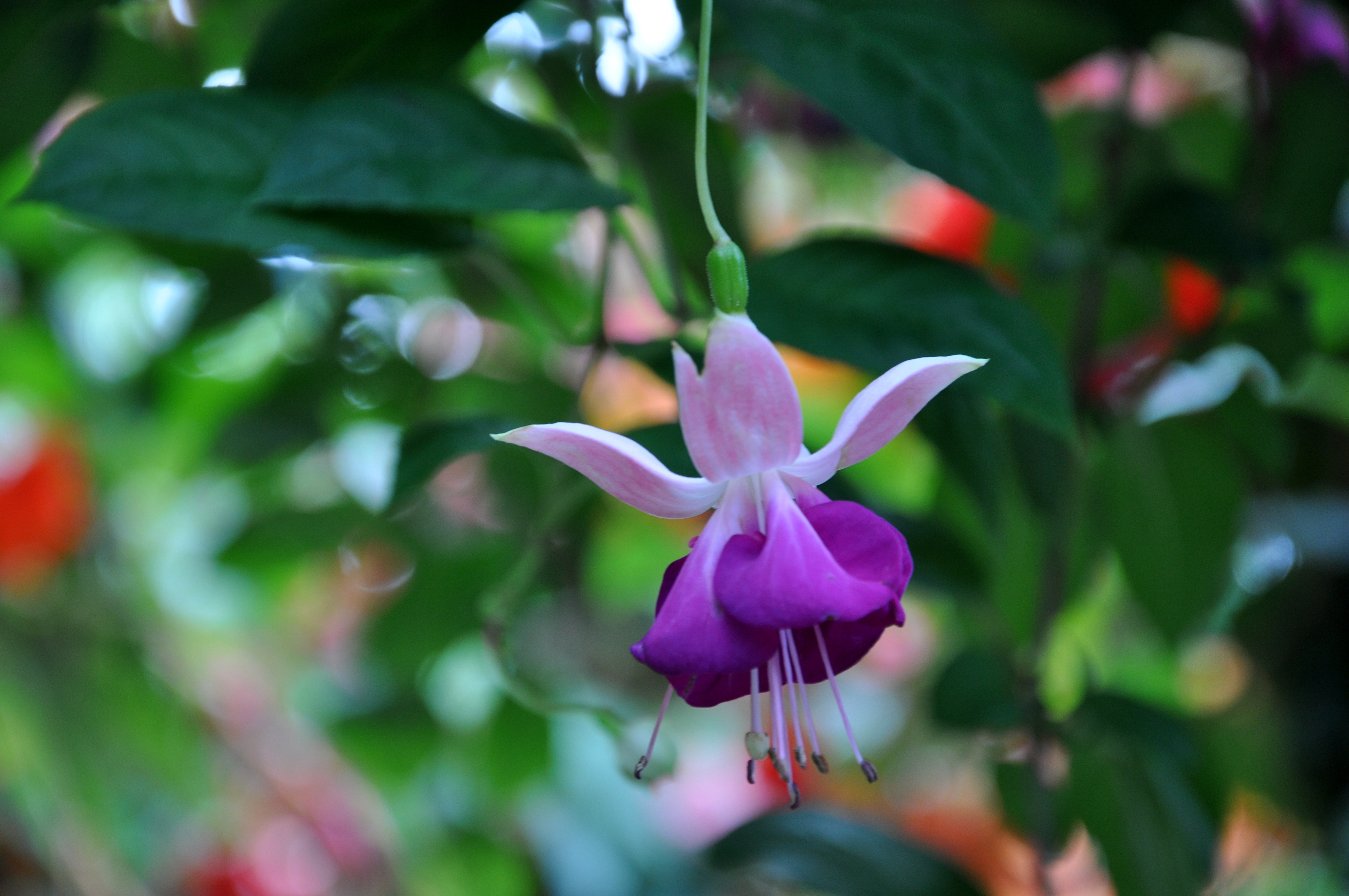
Butchart Gardens Fuchsia

Fuchsia housed in the former aviary

It’s hard to overdo the superlatives when describing Butchart Gardens. Magnificently creative and stunningly beautiful gardens attract a million visitors a year. Spending time among the flora was one of the highlights of my recent trip to Vancouver Island.

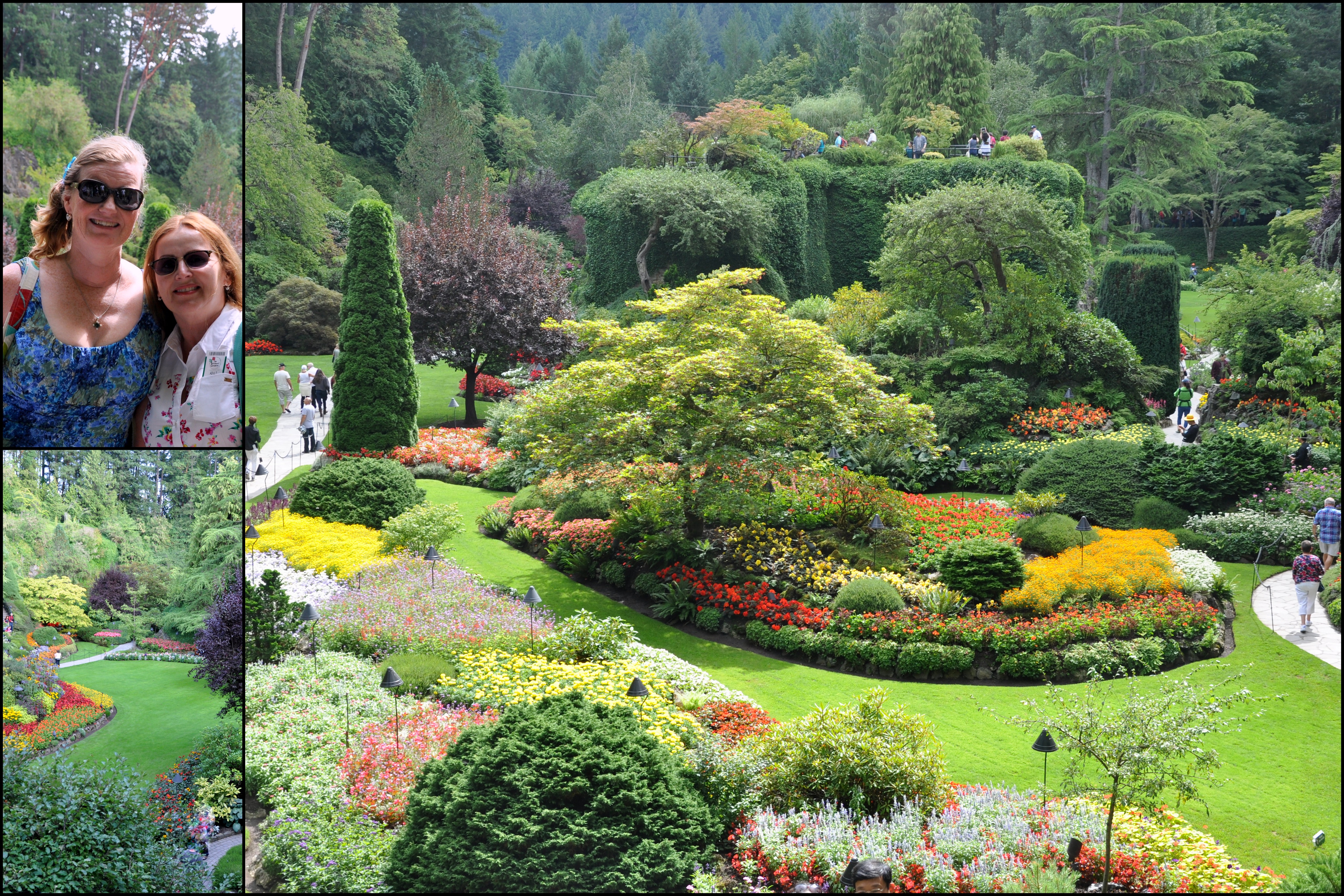
I spent the day at the gardens with fellow blogger extraordinaire, Boomdeeadda and her cousin, Sherri, also a blogger at Smackiland . We spent hours wandering the gardens, snapping photos, and laughing like school girls. Laughter is contagious when in the company of good friends. Looking back, it’s hard to say what was so funny, but we belly laughed throughout the day, making the garden experience all the richer. I highly recommend it. Even the bus ride back to our hotel was a hoot, but I’ll leave that story for another day.

butchart gardens sunken garden

Sunken garden and a couple of happy bloggers

According to our brochure

The Butchart Gardens cover more than 22 ha (55 acres) on a 53 ha (130 acre) estate. It began from an idea Jennie Butchart had to beautify the worked-out limestone quarry which had supplied her husband Robert Pim Butchart’s nearby Portland cement plant.
The gardens continually expanded over the years to become the world-famous Sunken, Japanese, Rose, Italian and Mediterranean in existence today.

You can read the full story of Jennie Butchart’s creative vision here.

In addition to the gardens, we enjoyed a high tea in the Butchart’s former residence.

butchart gardens tea room

Butchart home, tea room and menu

We rounded out the evening with a magnificent fireworks display viewed from one of the lawns.

fireworks show at Butchart Gardens

Trees on fire? Nope. Just an amazing fireworks show

What a day!

Here are a few additional photos (I took over 100!):

Butchart Gardens near entrance

Near the garden entrance

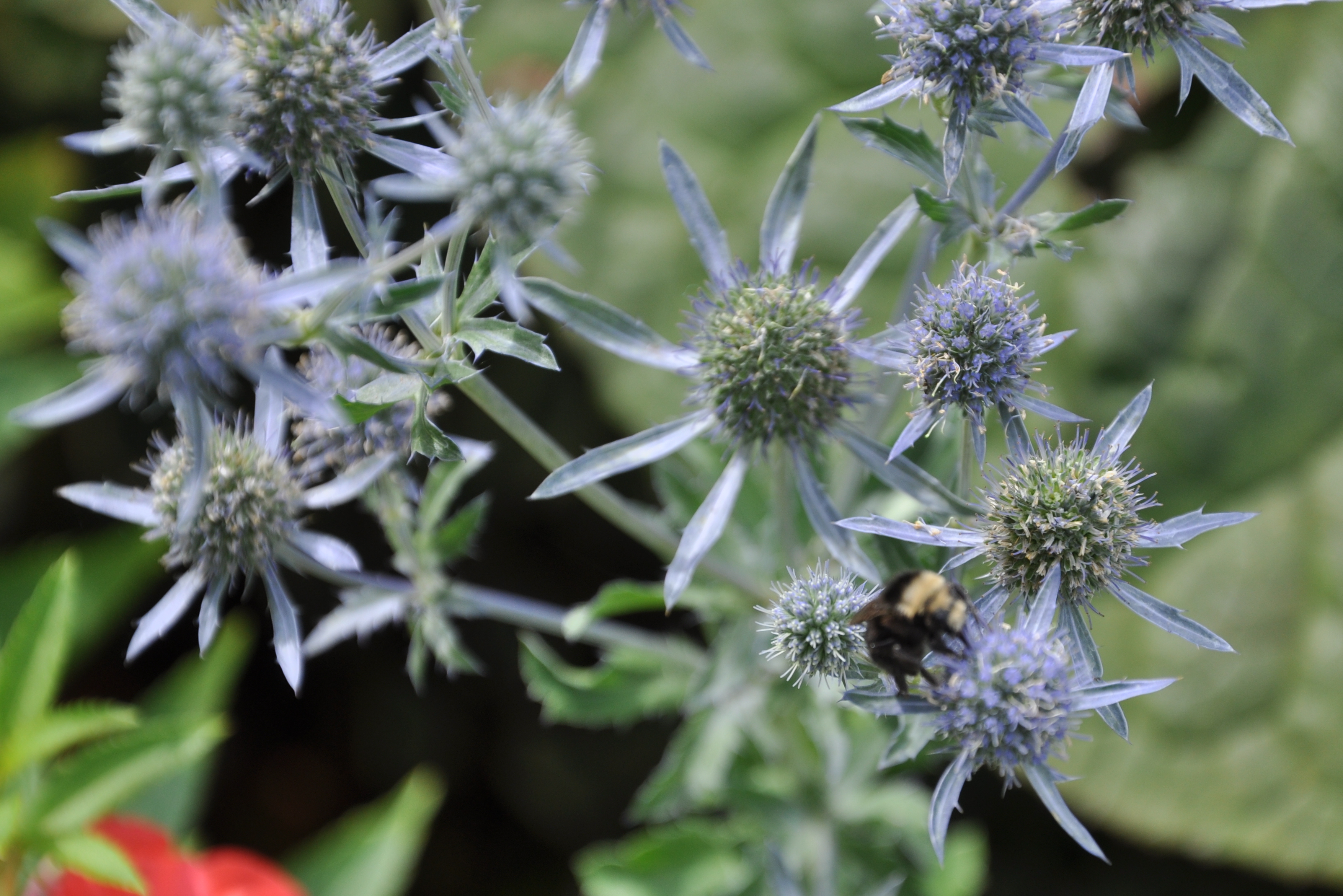
Eryngium (Sea Holly)

Eryngium (Sea Holly)

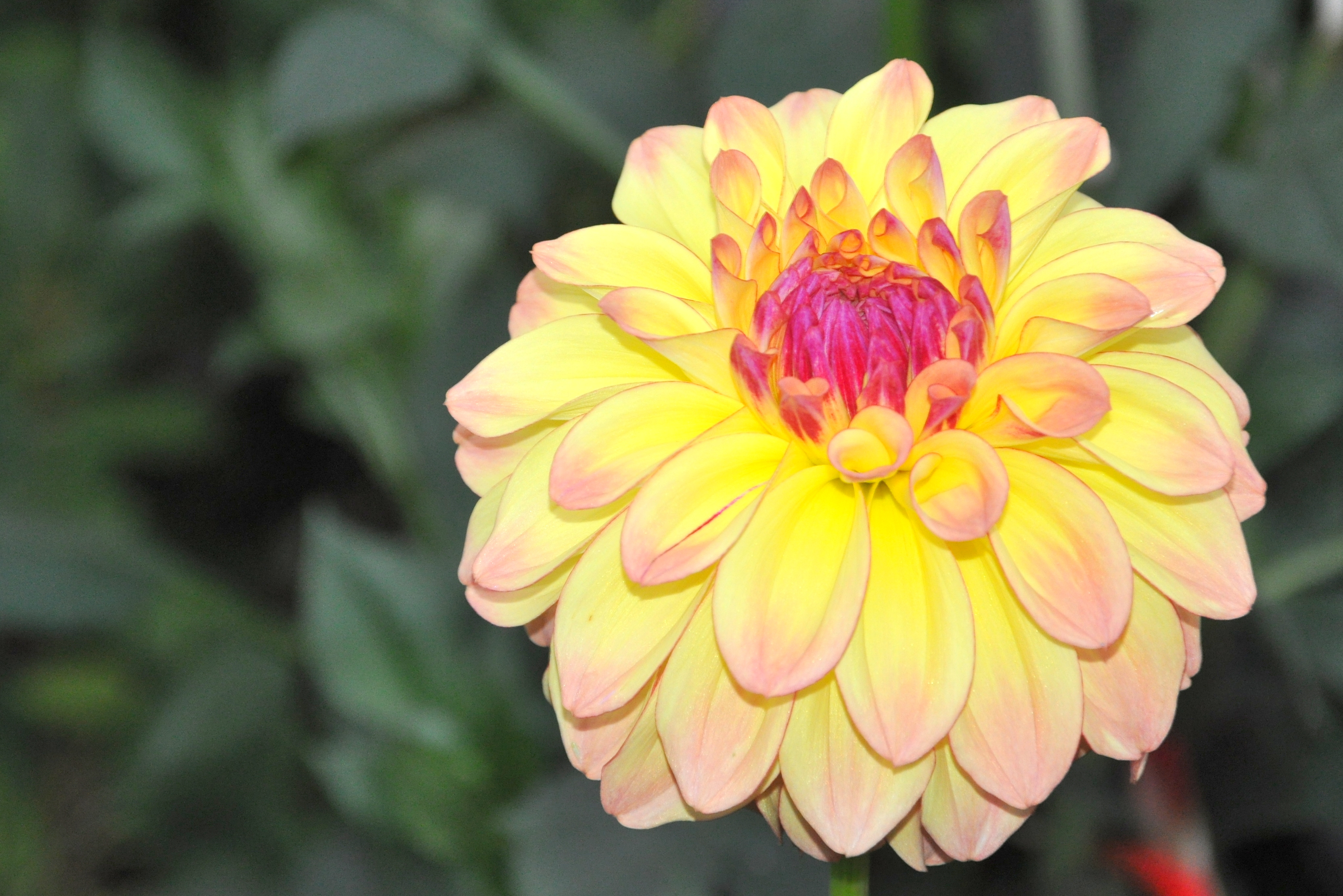
dahlia

One of an extraordinary display of Dahlia

Napa, California Earthquake

As many of you know, Napa, California experienced an Magnitude 6.0 earthquake early Sunday morning. We felt the shaking as far south as San Jose, but the epicenter was 104 miles (167 kilometers) away. One young child was seriously injured, but so far no fatalities. Other reported injuries were minor. I’ve attached a link with earthquake footage, charts, articles, etc. If you watch the first video, may I suggest you do so with the volume on low or off.

Earthquake Report, Napa Valley