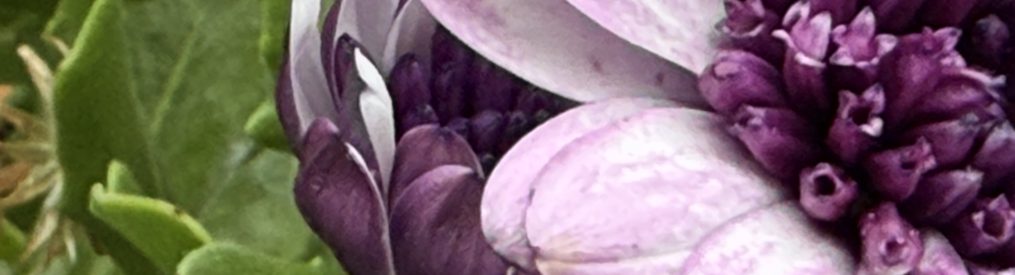
How to Revive Cut Flowers

I originally published this tip in October 2012. It continues to garner multiple views each week. I’m sharing it again in case you missed it.

Hat-Pin Trick

gerbera daisy with pin

Hat-Pin Trick

Cut flowers, especially those with hollowed stems, often droop after a short time in water. Why? Because the stem is no longer siphoning water.

Simply insert a pin or needle all the way through the stem of a drooping flower, about one-inch below the bloom. Carefully remove the pin and return your flowers to a vase of water. Within an hour or two, your flowers should be standing tall. I’ve used this trick successfully over the years with Gerbera daisies, roses and tulips.

Gerber Daisies hat pin trick

Gerbera Daisies Revived: The yellow flowers perked up; but the orange ones did not.

Rubber-band Recovery

If for some reason the hat-pin trick fails, here is plan B. Gather the flowers into a loose bunch and slide a rubber-band over the stems and up to the neck of the flowers. Wrap a second band around the bottom of the stems. Return to the vase, and enjoy your perky arrangement.

cut flowers rubber-band recovery

Rubber-band Recovery in Action

Edit your Collection

I don’t know about you, but I like to get as much “life” from my cut flowers as possible. Most mixed bouquet flowers have varying shelf-lives. Some blooms fade within a few days while others can last up to a week, maybe longer. Instead of dumping the entire bouquet, I change the water and return the flowers that still have life. As those fade, I’ll cut the healthy flowers down by a few inches and display them in a smaller vase. If I have nice greens, I’ll see what’s blooming in the garden and I’ll mix the two together. I make a game out of it to see how long the flowers will last.

Do you have any tips or tricks you’ve used to preserve the life of your cut flowers? Please share in the comments, below.
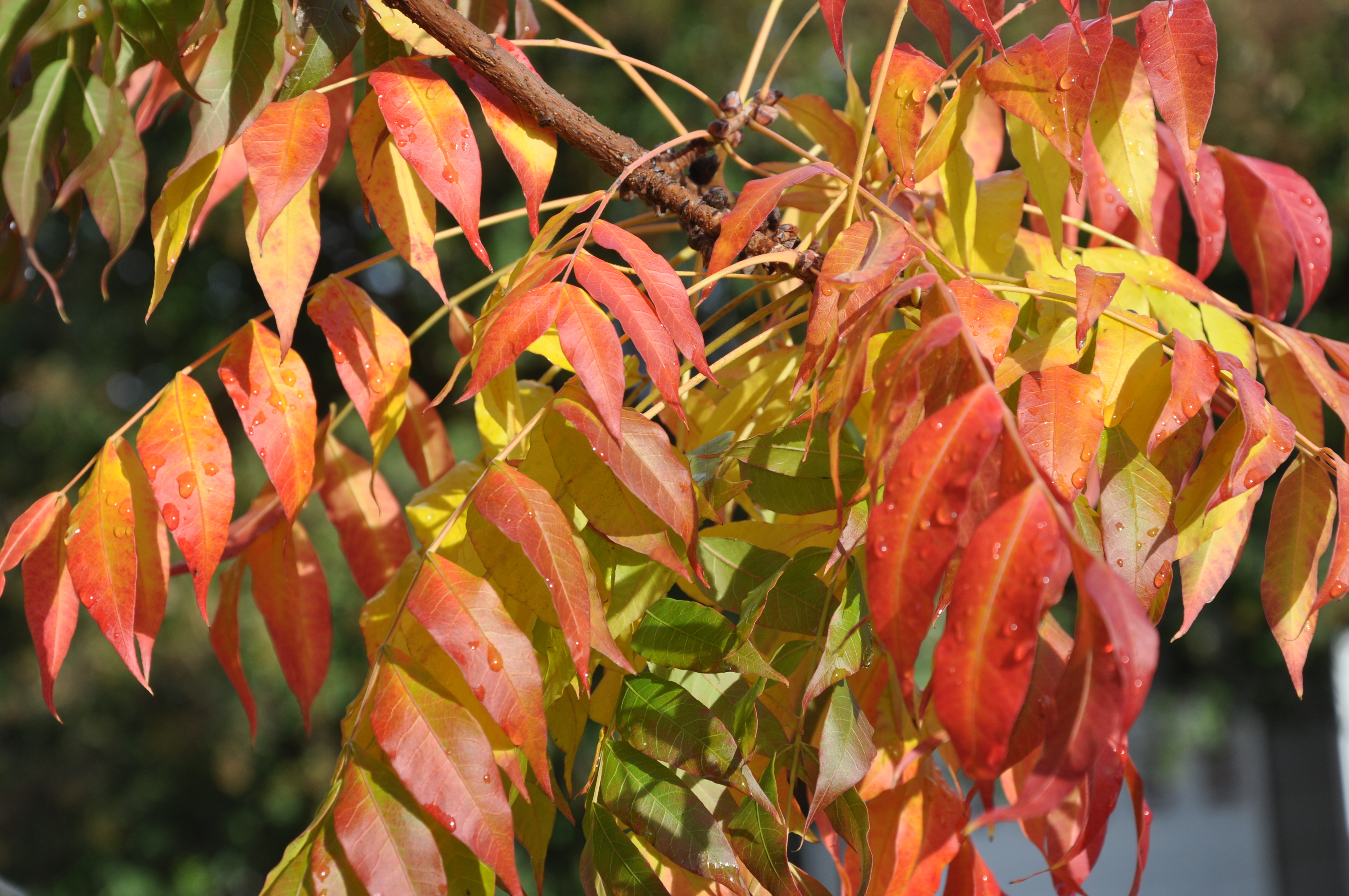
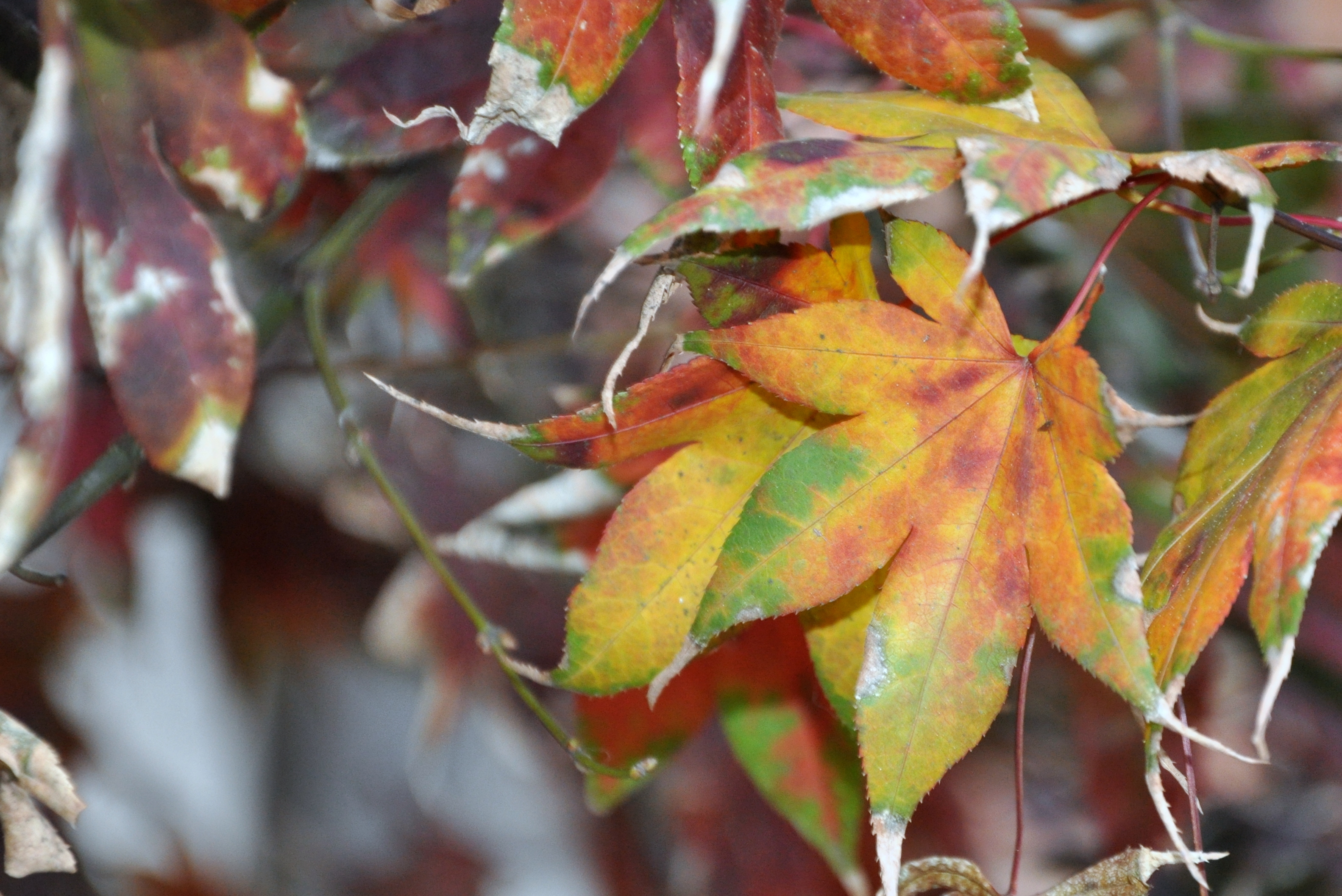
The Color of the Day is Orange

Winter solstice is just two weeks away. We’ve had a slow descent into fall this year with unseasonably high temps.  That said, the colors are finally here.

We’re expecting a storm worthy of a NOAAWatch this Thursday, with high winds and heavy rains. Anything left on the trees now will be long gone by Friday. I’m enjoying the color while it lasts.

We planted this tree 18 years ago specifically for its gorgeous fall colors.

DSC_0006

Chinese Pistache

This beautiful Acer grows outside our living room window. It’s a landing-place for hummingbirds, lesser goldfinch and a favorite of squirrels.

acer

Acer aka Japanese Maple

Several Abutilon grow along the fence. Their showy orange flowers are a hummingbird favorite.

Abutilon : Coral Bells

Abutilon : Coral Bells

Our oranges don’t taste very good (it’s an ancient tree) but the rats don’t seem to mind. When my boys were young, they enjoyed turning it into orange juice and selling it to passersby. It was the California version of a lemonade stand.

California Oranges

California Oranges

Are you as busy as I am this time of year?

Raindrops on Noses and Sheet Mulch in Gardens

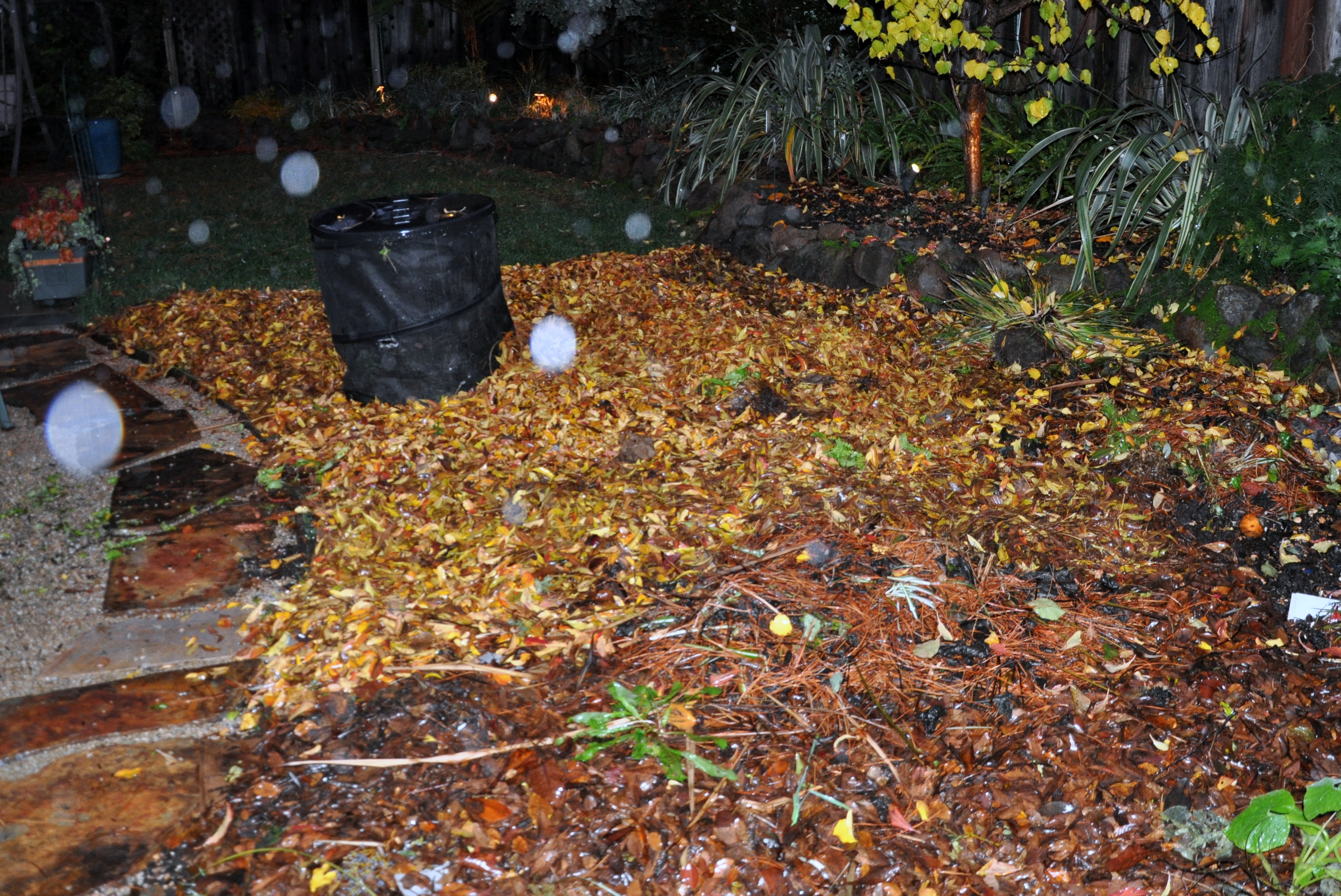
sheet mulching in the rain

Sheet Mulching in the Rain

Back to back storms this week lead to the usual traffic mayhem. A common refrain around here is that Californians don’t know how to drive in the rain. In the garden, however, all is well.

Anxious to finish my sheet mulching project, I’ve been gathering additional cardboard wherever I go. With my son’s help, I put down the last of the cardboard yesterday under a light rain.

With the cardboard in place, it was time to add a layer of garden waste.

Serendipity! Today’s storm brought a bundle of leaves to the ground, begging to be scooped into a wheelbarrow. I happily obliged.

It takes a lot of leaves to mulch a large area of lawn, so I gathered leaves in front of three different houses. No one complained! ;-) I started my sheet mulching project over a week ago, and after thirty minutes of digging managed to throw out my neck. It’s been a mess ever since and I worried I wouldn’t be able to finish the project on my own.  The better news is I did it. I raked, swept and scooped leaves for over two hours late this afternoon without stressing my neck. Ironically it hurts to stand up straight or lean back, but I’m fine bending over.

Whenever it rains, I find myself humming ‘Raindrops on roses’ from one of my all-time favorite movies, The Sound of Music. With apologies to Oscar Hammerstein I’ve come up with a gardening rendition. In case you’re not familiar with the tune, I’ve included  an audio clip below.
Raindrops on noses, this weather I’m smitten
Dark, cloudy skies, stormy weather has bitten
Brown, rotting leaves rainy weather does bring
These are a few of my favorite things.

Waterlogged earthworms are shaped like a noodle
Scooped from the gutter, in oodles and oodles
Soggy wet weather it makes my heart sing
These are a few of my favorite things.

Sweeping the gutters, the rain water splashes
Raindrops that stay on my nose and my glasses
Storm after storm rainy weather it brings
These are a few of my favorite things.

When my gloves tear, and my neck stings
When I’m feeling had
I simply remember my favorite things
And then I don’t feel so bad.

The incomparable Julie Andrews sings My Favorite Things in the 1965 movie classic The Sound of Music.

A Rat With a Ph.D.

You thought I was joking, didn’t you? How else can I explain the clever kitchen rat that continues to elude capture?

Two weeks ago today we realized that a cat named Mouse gifted our abode with a living rat. The irony! Mouse likes bringing us unharmed critters from the garden, including lizards and (gulp) rodents. Not only did the rat move in, he broke the dishwasher by chewing through the cord.

gnashing of teeth

Gnashing of teeth

Our earnest attempts at a humane, home-made trap failed. After a bit of research I found a no-kill trap that would do the job, but had to order it online from the store. That turned into a debacle and if interested,  you can read about it on my post titled Unwanted Gifts, Ahead by a Whisker.  After hours of credit-card, customer service, no-one-answers-the-phone-anymore-hell, I gave up and ordered from another online vendor.

Meanwhile, I called a couple of repair places to no avail.

When my live-in handyman finally returned from an eight-day trip to Argentina and said he could fix it, no problem. One visit to the hardware store and an $8 part later and we were back in business. Mike pulled the dishwasher away from the wall and found the beginnings of a nest but no rat. Further assessment of the cord proved once again that the rat has a Ph.D. He chewed through the ground wire and not the hot wire, which would have led to instant death.

The following Monday, my extra-small, Havahart humane trap arrived in the mail. The box looked battered and bruised, but the trap was in good working order. We set it up that night.

Ha! That’s probably what the rat sounded like when he scoffed at the trap. I’m not falling for that.

And he didn’t.

Night after night, we re-bated the trap with delicious pecans, pecans with peanut butter, peanut butter and pear and, the trap remain untouched.  No signs of droppings either. Then we heard him again, chewing under one of the cabinets near the sink.  I pressed  my ear to the cabinet, straining to hear where the chewing sound was coming from. I opened one of the drawers and then the cabinet, fully expecting an encounter. Nothing.

Exasperated, I set the trap aside for a few days, and went back to putting peanut butter and fruit on a pie tin under the sink.

Oh sure, that he ate! I found cute little teeth marks in the side of a chunk of peanut butter. Sigh.

If you’re looking for a motivational speaker for your next event, our resident rat can share a thing or two about tenacity and spunk. He’s* eluded the jaws of a cat, several humane traps and the temporary relocation of his dishwasher condo.

Check out this link and accompanying video: Rats are Smarter Than you Think.

*Note: I don’t know if the kitchen rat is a he or a she. I prefer to think it’s a he and not a mama about to have babies.

Tree Rat

Mouse or rat one summer in our orange tree


tree rat at birdfeeder

Tree rat snacking at the bird feeder once upon a time


The Case of the Shrinking Lawn

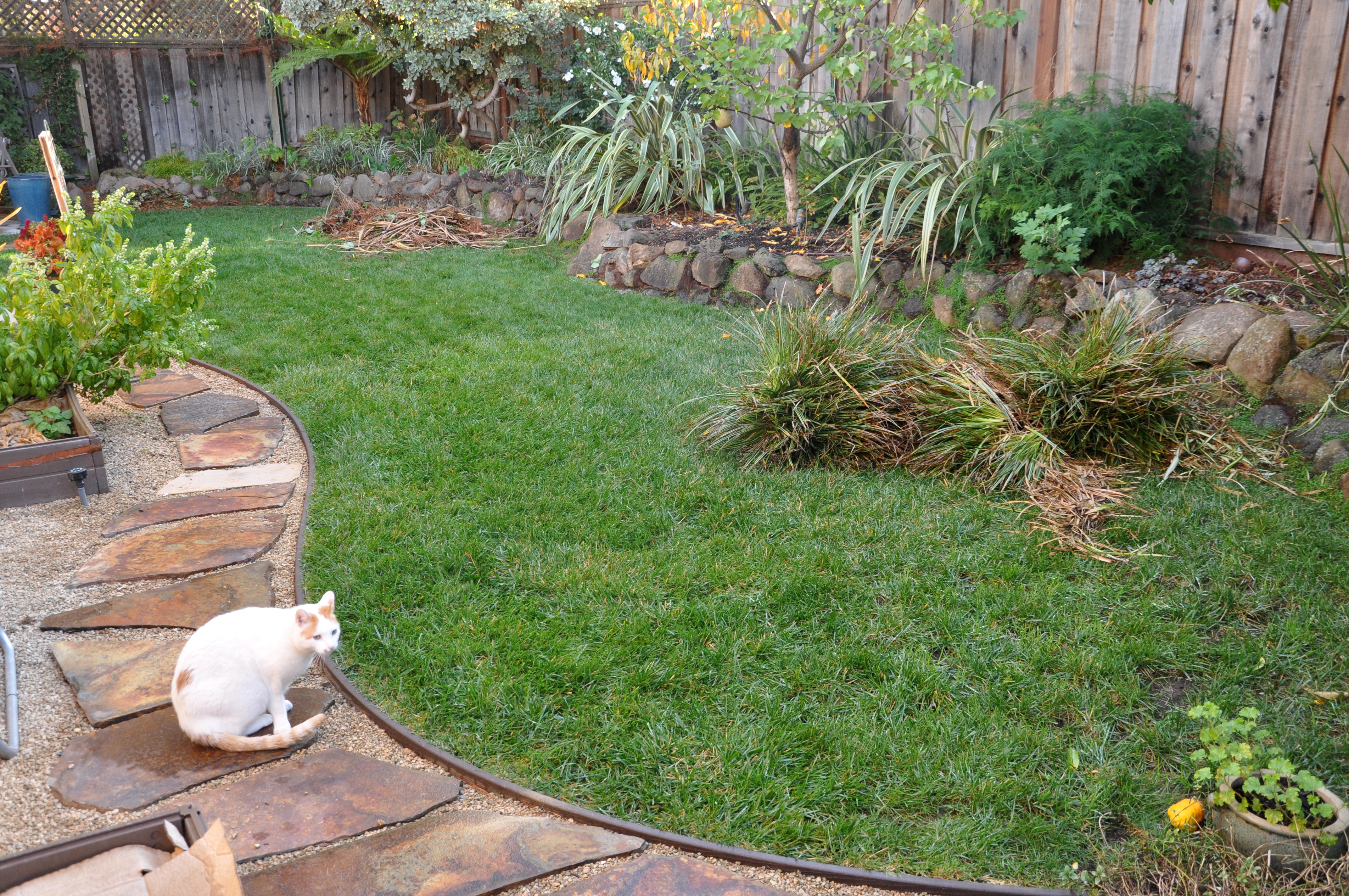
existing lawn

Existing Lawn

My lawn is shrinking, my lawn is shrinking!

Oh happy day.

We’ve been tossing the ‘lawn/no lawn’ ball back and forth for a while. We’ve reached a compromise and split the difference. Half the lawn in our back garden remains. The other half will convert to native perennials. I’m pretty excited. This change will reduce water use and attract native species to the garden.

After trying to dig up the lawn in our sidewalk strip last year, I learned it’s a slow and arduous task. I gratefully hired Nick to finish the job.

Imagine how thrilled I was when I read Diane’s post Undoing Three Years of Procrastination.  She explains a method known as sheet mulching, recently implemented in her own vast and beautiful Ontario garden. Instead of digging up the lawn, you apply layers of soil, cardboard,compost and mulch. They gradually decompose, and at the same time kill the grass, leaving rich, organic soil in its place.

Here are the instructions Diane used from Goodbye Grass, Hello Garden

Sheet mulching—a simple technique that involves layering cardboard, compost, and other organic material over the turf—kills the grass and leaves behind beds with rich soil. A considerable amount of organic debris goes into the bed construction, so stockpile plenty of autumn leaves, composted manure, and garden waste before beginning. Beds that are sheet-mulched this fall will be ready to plant next spring.

sheet mulching

Sheet mulching ingredients

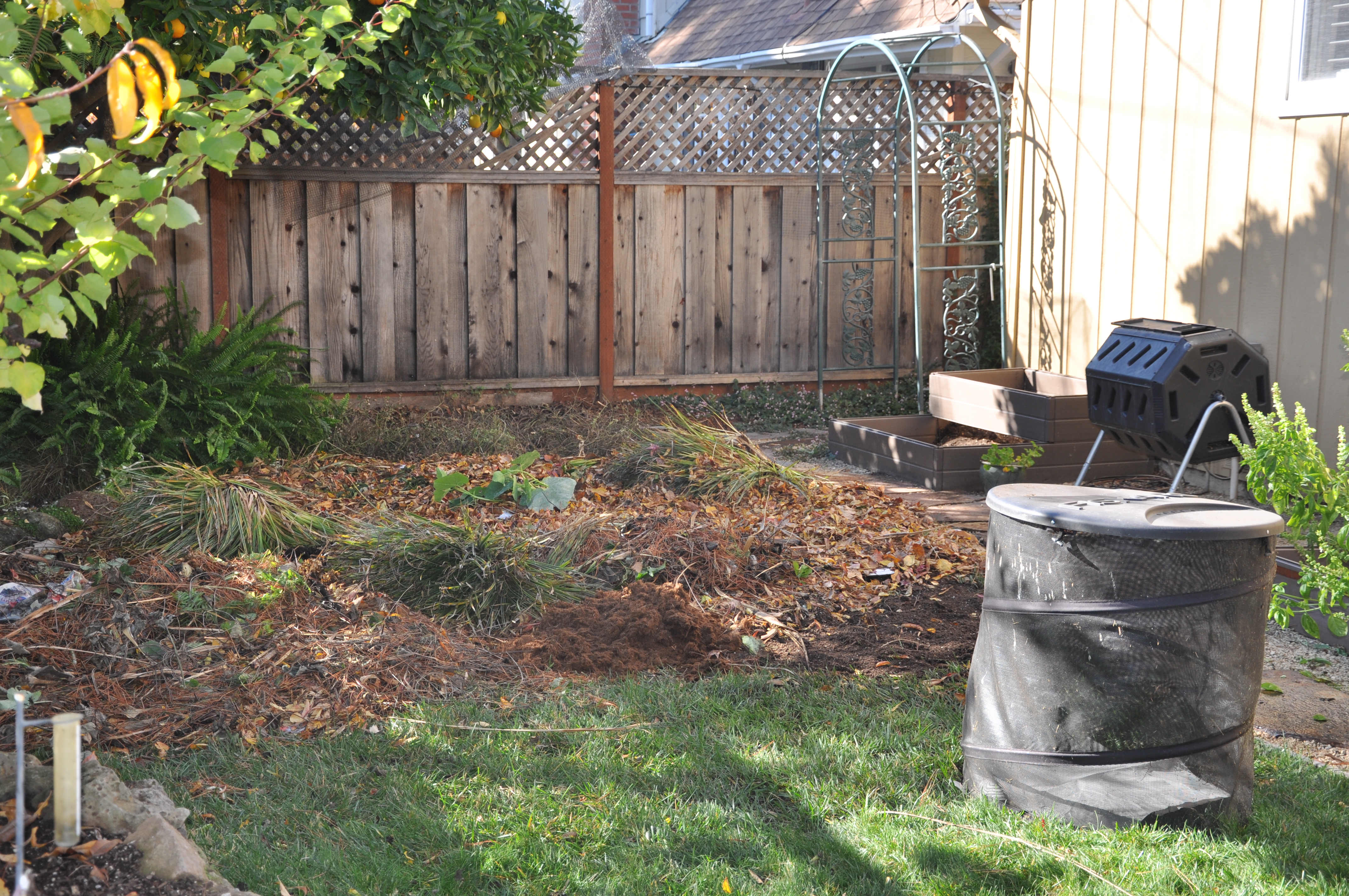
Last weekend I did a big yard clean up and created two small  piles of organic debris. This morning I brought home about a dozen free boxes from a local market and we got to work.  We ran out of ‘ingredients’ before finishing, but made a good start.

garden sheet mulching

Half way there

I emptied both of my composting bins as a base layer, then transferred soil from the summer vegetable beds. That was enough to cover about half of the area. We added the layer of cardboard and then covered it with decaying leaves, pine needles and other organic matter.  Once I gather additional cardboard and organic material to finish the rest of the area, I’ll buy mulch for the final layer.

Thanks for the inspiration, Diane!

Monarch Butterflies and the Butterfly Effect

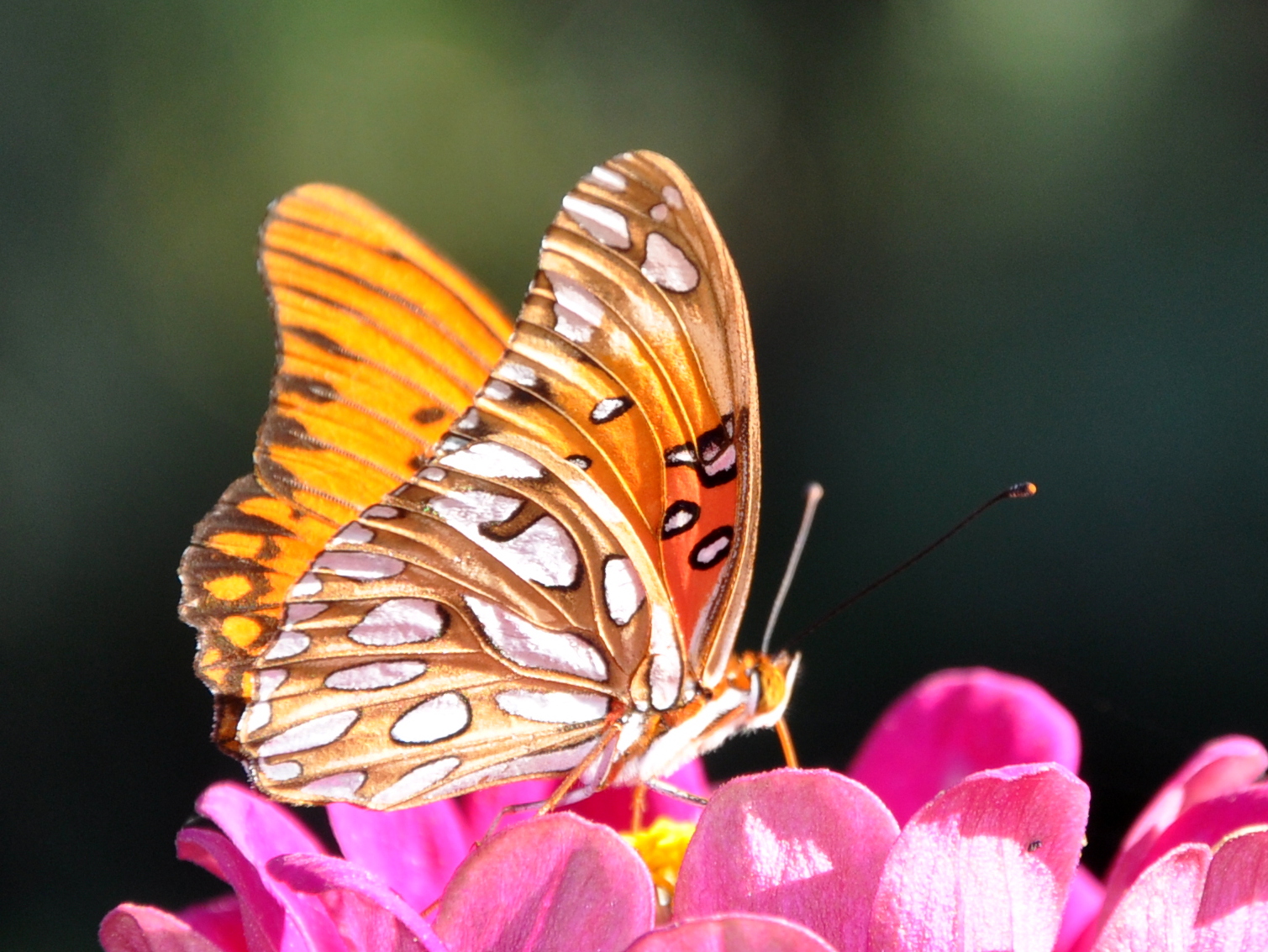
monarch on zinnia

Monarch visiting a Zinnia flower

My friend Candace shared an article this weekend from the New York Times on the shocking decline of the Monarch Butterfly. I’ve been following their plight, and blogged about it earlier this year.

Here’s a bit of background:

Unlike most migrating species, monarch butterflies employ an improbable strategy that splits their round-trip migration between generations. Their life cycles must be intricately synchronized with those of the milkweed on which they lay their eggs.

Monarchs returning from Mexico reach the Southeast soon after native milkweeds appear in spring, producing the first of up to three generations that breed on new milkweed through summer. When the perennials start dying back in the fall, a final generation of butterflies typically emerges in a sexually immature state. Rather than reproduce when food is scarce and caterpillars might freeze, they fly to Mexico, to wait out the winter.

In the Midwest, which produces half of Mexico’s wintering monarchs, the scores of wild milkweed species among grasslands and farms are fast disappearing.

Nearly 60 percent of native Midwestern milkweeds vanished between 1999 and 2009, the biologists Karen Oberhauser and John Pleasants reported in 2012 in the journal Insect Conservation and Diversity. The loss coincided with increased applications of the weed killer Roundup on expanded plantings of corn and soybeans genetically altered to tolerate the herbicide. Meanwhile, monarch reproduction in the Midwest dropped more than 80 percent, as did populations in Mexico. Source: New York Times

Like many backyard gardeners, I wanted to do something to help, so I bought a packet of Milkweed seeds advertised as Butterfly Flowers. They are the genus Asclepias incarnata. What I didn’t know is that Swamp Milkweed continues to grow past the time the butterflies should be heading south.

butterfly collage july 2014

Monarch sipping nectar from Statice

According to the article, our good intentions could be backfiring.  Here’s an excerpt:

There’s this huge groundswell of people planting tropical milkweed, and we don’t know what it’s doing to the butterflies,” said Francis X. Villablanca, a biology professor at California Polytechnic University. “We’re all in a rush to figure it out.”

Dr. Altizer fears that when monarchs encounter lush foliage in the fall, they may become confused, start breeding and stop migrating.

“It’s sad, because people think planting milkweed will help,” she said. “But when milkweed is available during the winter, it changes the butterfly’s behavior.”

The times article linked to additional reading including ways to create habitat for Monarchs. I also learned at The Exerces Society for Invertebrate Conservation that its important to plant Milkweed native to our area. I found a site called Larner Seeds and ordered a species of Milkweed better suited to San Jose.

The Butterfly Effect

The butterfly effect is a scientific theory put forth by Edward Lorenz. It’s described this way:

In chaos theory, the butterfly effect is the sensitive dependence on initial conditions in which a small change in one state of a deterministic nonlinear system can result in large differences in a later state. The name of the effect, coined by Edward Lorenz, is derived from the metaphorical example of the details of a hurricane (exact time of formation, exact path taken) being influenced by minor perturbations such as the flapping of the wings of a distant butterfly several weeks earlier.

Ray Bradbury’s uses the butterfly effect in his chilling short story, A Sound of Thunder. Wealthy hunters pay a large sum of money to travel back in time to kill a dinosaur. They must stay on the approved path, and shoot the dinosaur, seconds before the animal dies from a falling tree. The hunter steps off the path and irrevocably alters time. When he returns to the present his reality is permanently altered. Devastated, he looks down at his boot and sees a crushed butterfly.

Could we be witnessing our own ‘butterfly effect’? Please share your thoughts in the comments section below.
Additional Resources on the Monarch’s plight include:

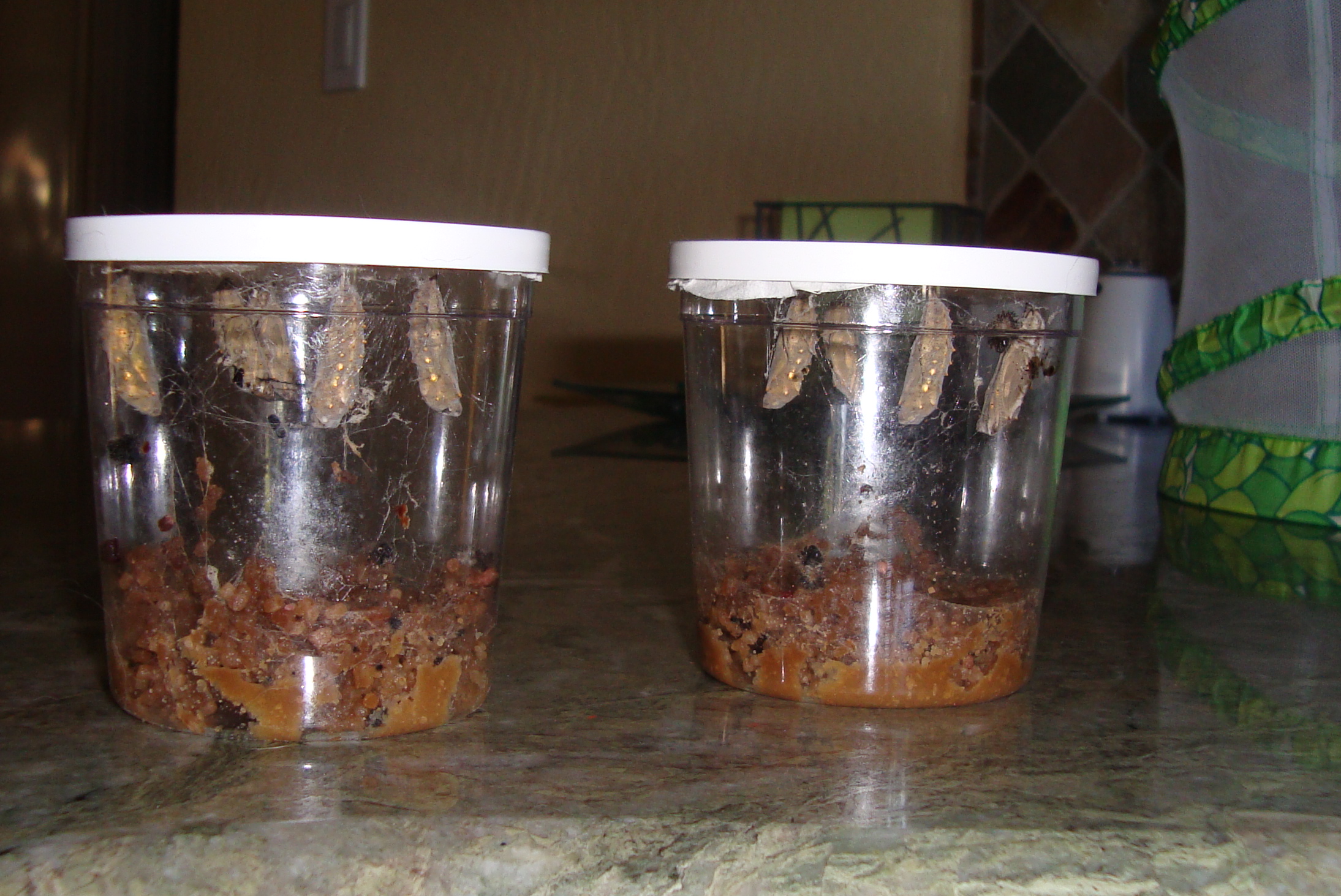
Butterfly Chrysalis

Butterfly Chrysalis

Butterfly Habitiat

Butterfly habitat: My son raised and released five Monarchs several years ago

The Unexpected

One of the best things about gardening is the unexpected.  Like the weed growing through the crack of an urban sidewalk, nature lets us know that she’s got things under control. So while I till the soil with great expectations, and smile when things I plant grow, I also delight at what I didn’t see coming.

Here are a few:

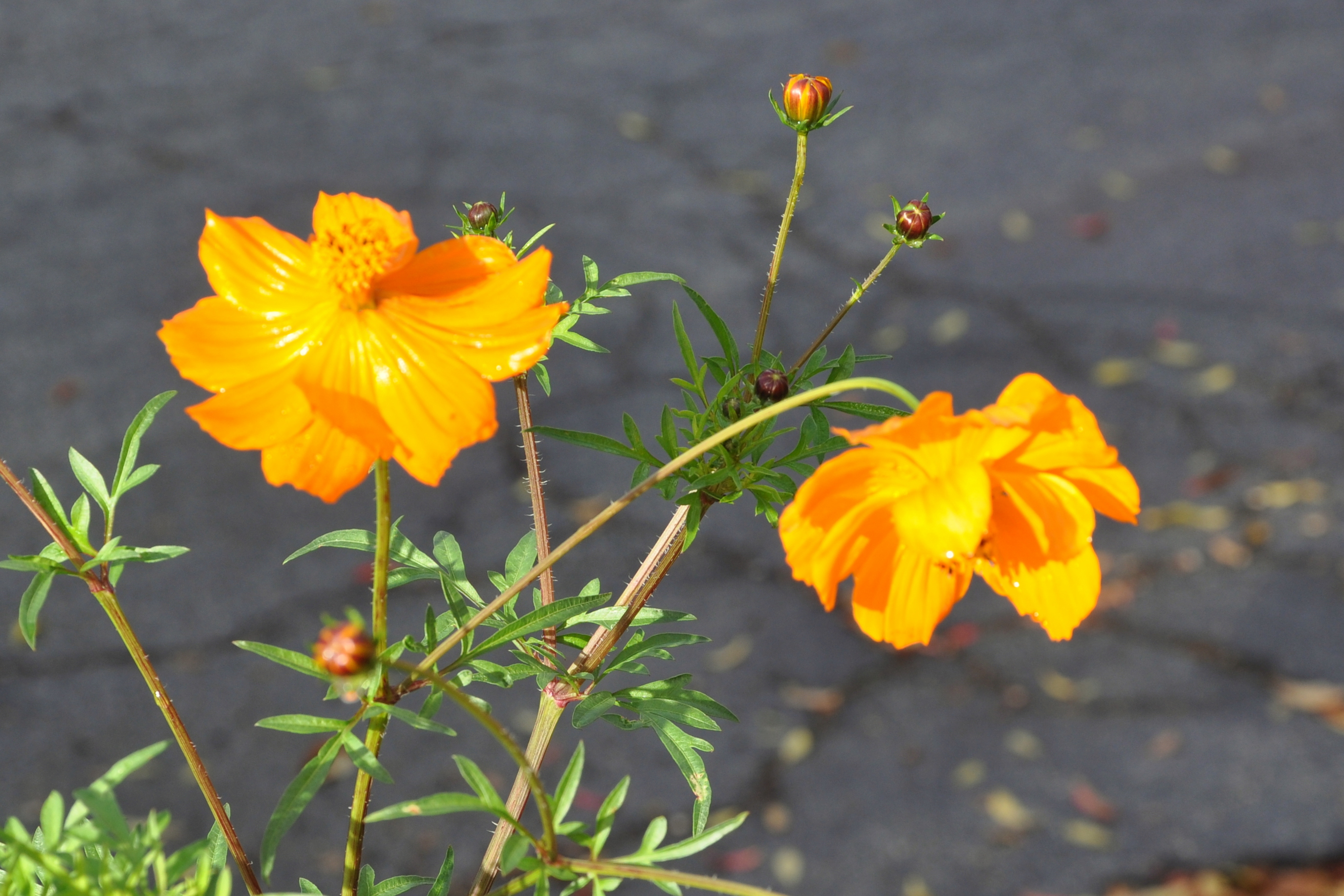
Orange Cosmos

orange cosmos

Orange Cosmos burst on the scene

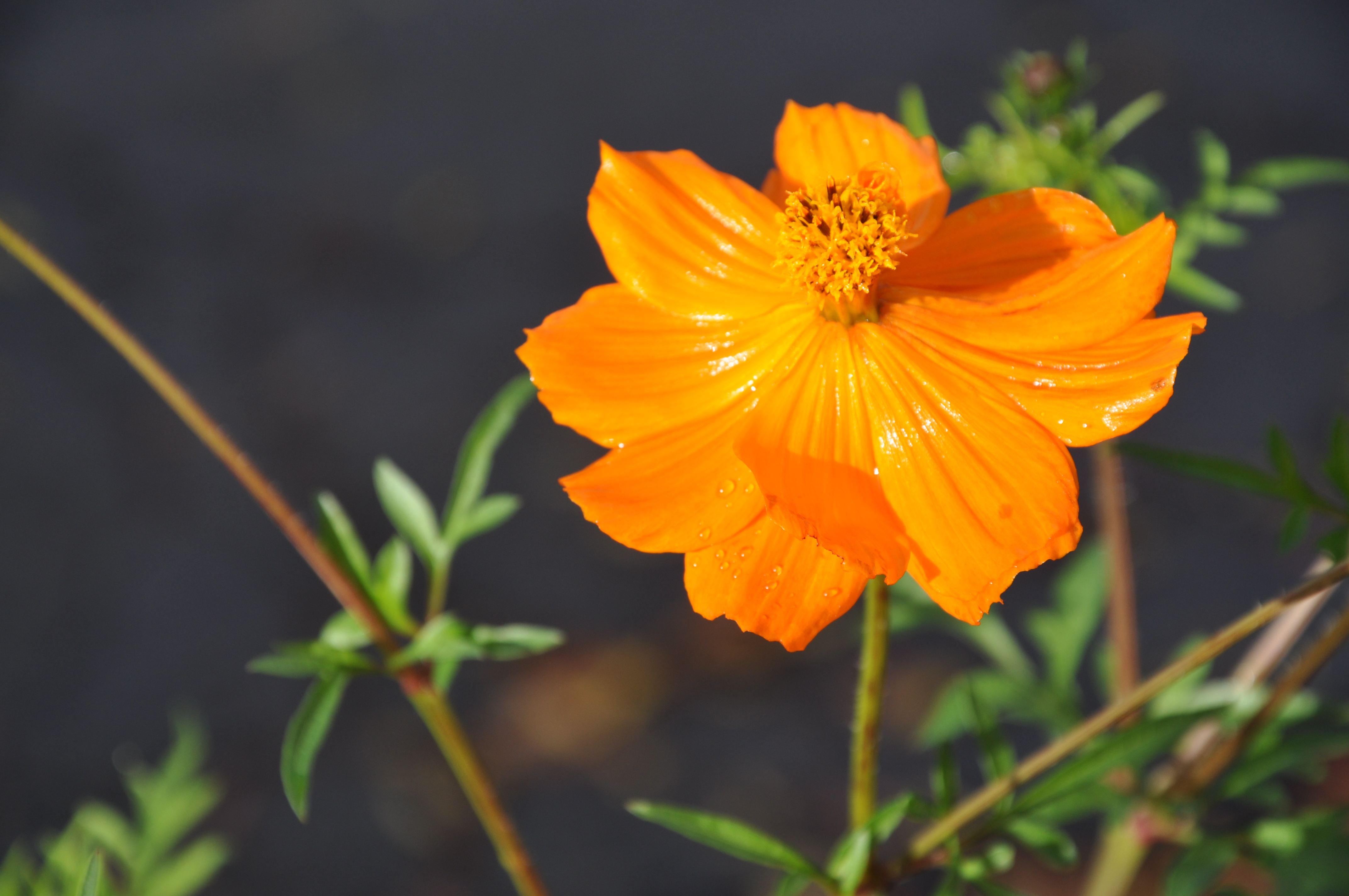
I’ve grown pink and white cosmos, from seed and from starters. One summer a volunteer crop grew as tall as me , producing flowers all summer long.  That same year I gave away seeds at Christmas. They’re such an easy-breezy flower to grow. Imagine my surprise though to discover this mystery plant was orange.  Isn’t it stunning? This plant is a meter tall and started blooming this week.

orange cosmo

Late afternoon bloom

Tomato, Tomato

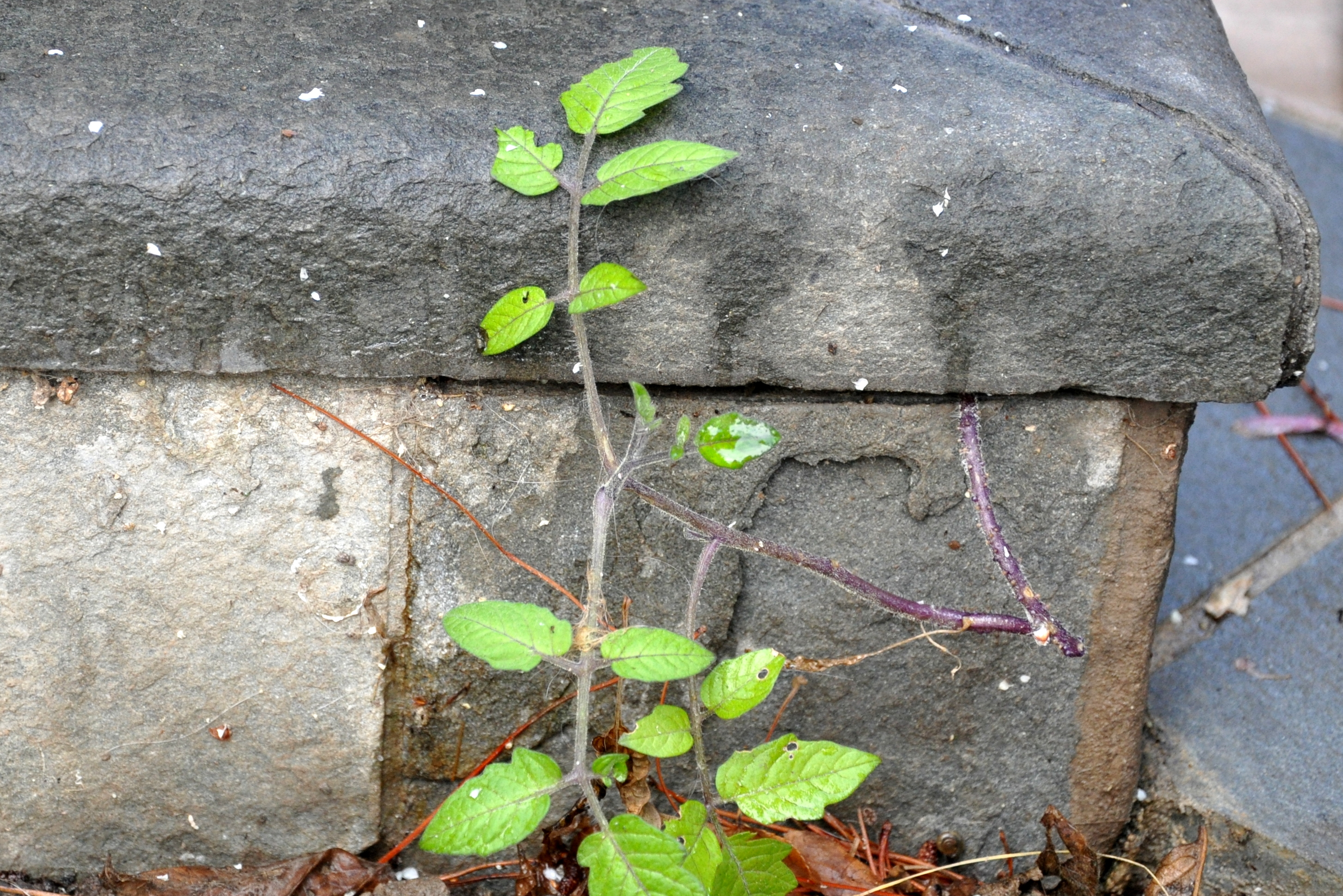
tomato plant in crevice

Out of step: Tomato plant grows from the patio steps

After clearing away the last of the Anemones, I found a tomato plant growing out of the bottom of the patio steps. It was probably staying warm from the plant cover and didn’t know it was fall.  I can’t bare to pull it out, so I’ll leave it for now and see what the plant has in store. It makes me smile

Passionate Pink

Pink zinnia

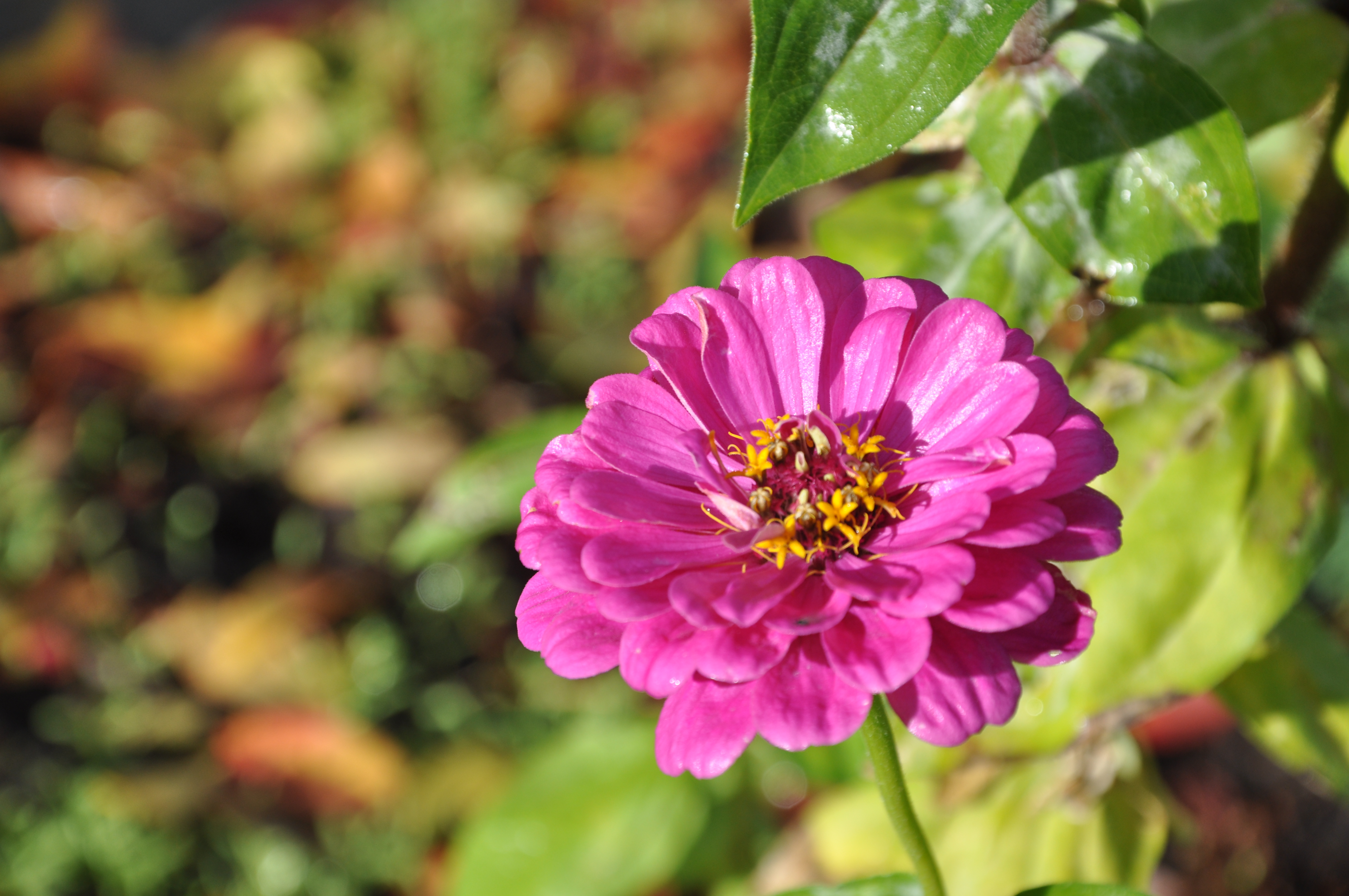
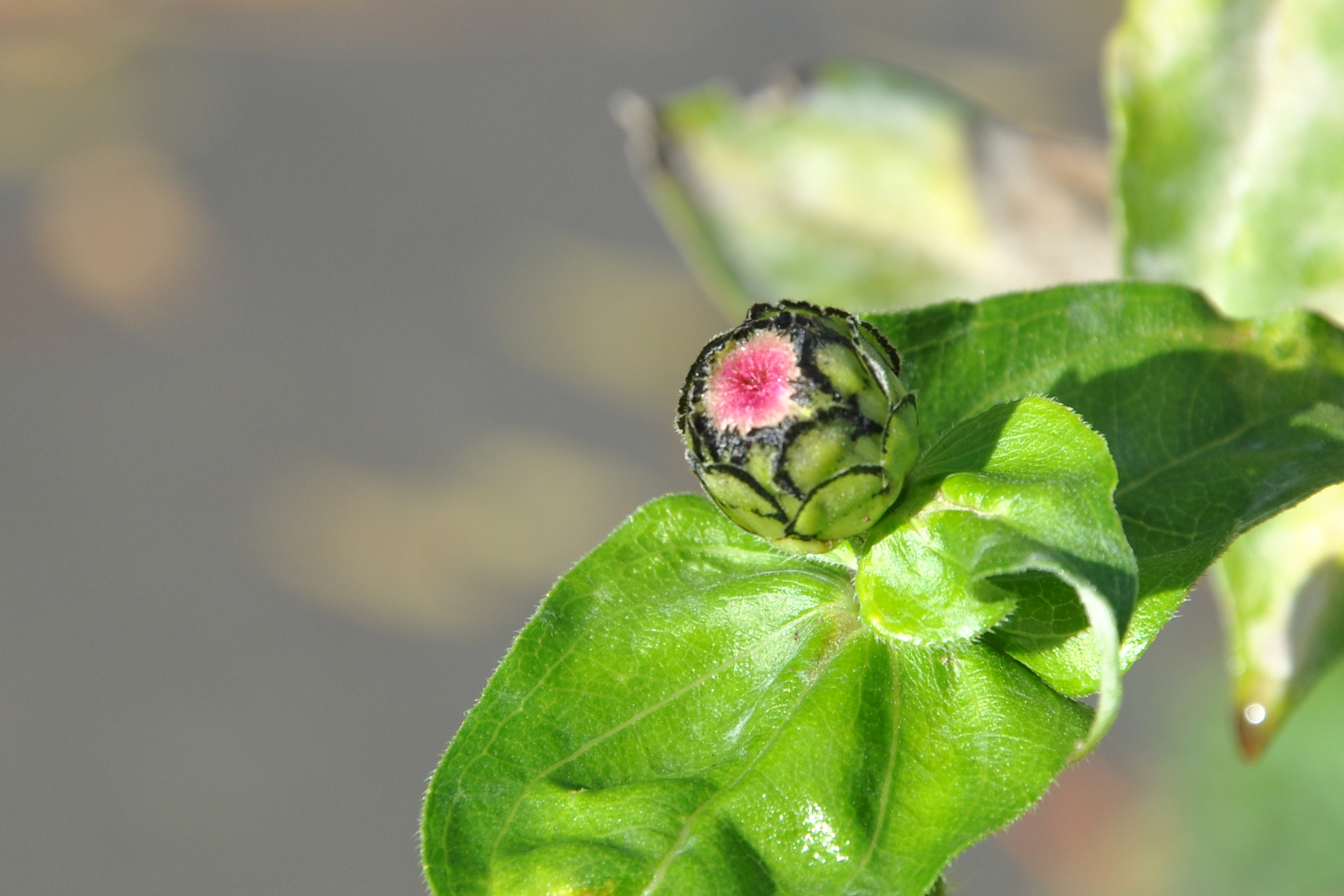
Zinnia bud

Tomorrow’s Zinnia

This self-sown Zinnia took the place of the Bachelor Buttons in my triangle garden. It offers a pretty pop of pink as the rest of the annuals go to sleep, an unexpected color on this gray day.

Another Pumpkin?

fall pumpkin

The little pumpkin that tried

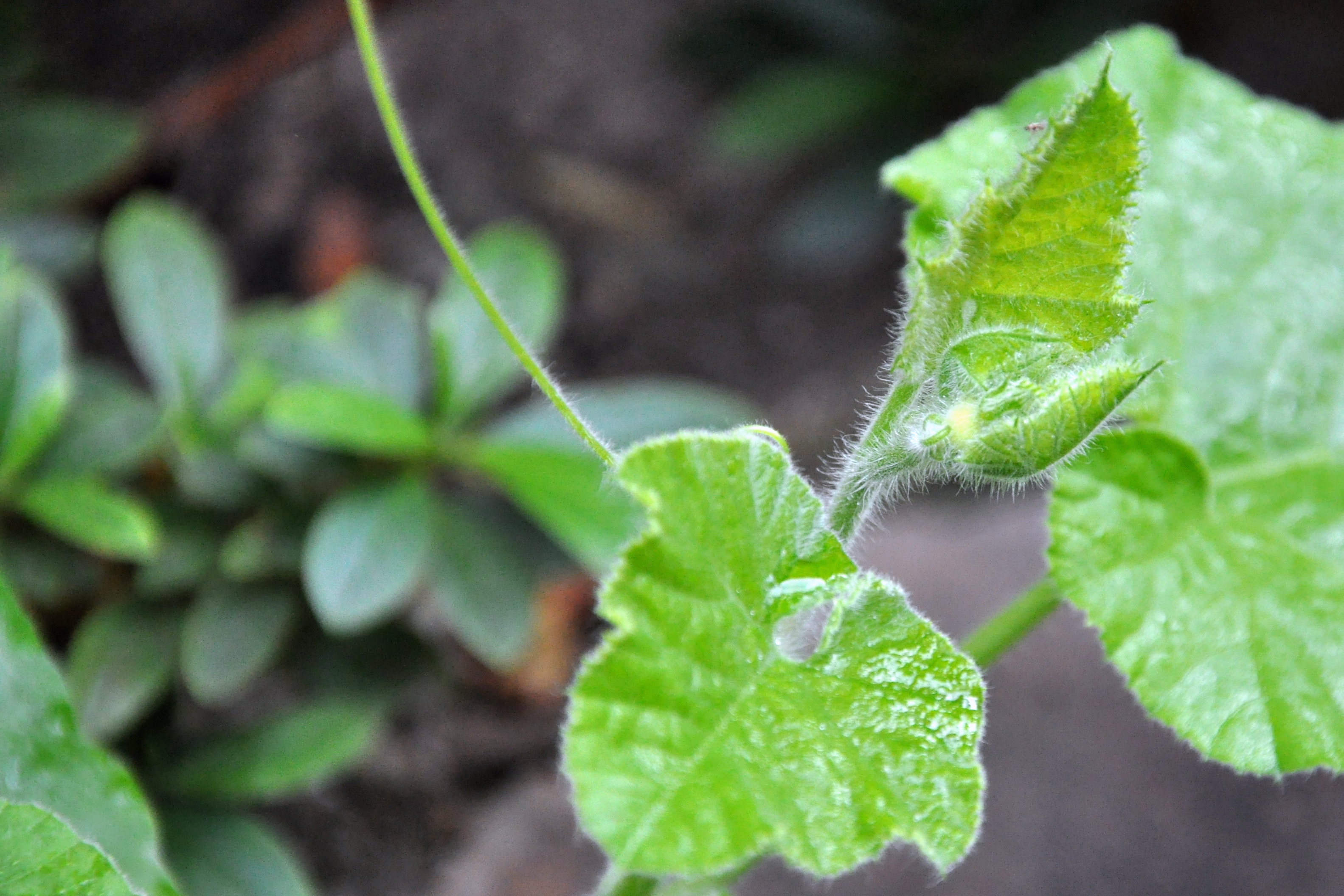
Look at this little pumpkin trying to grow. It even flowered.

Nature’s Ribbon

Have you ever curled ribbon with the edge of your scissors?  If you scrape the wrong edge, you end up straightening the ribbon instead. That’s why I’m particularly impressed with this self-curled edge of a fern. This plant makes it look easy.

nature made curlicue

Garden ribbon

Wishing you a weekend of the beautifully unexpected*

*Rats and broken appliances do not apply

Hummingbird Haiku

Anna’s hummingbird
with effortless charm and grace
nature’s perfection.

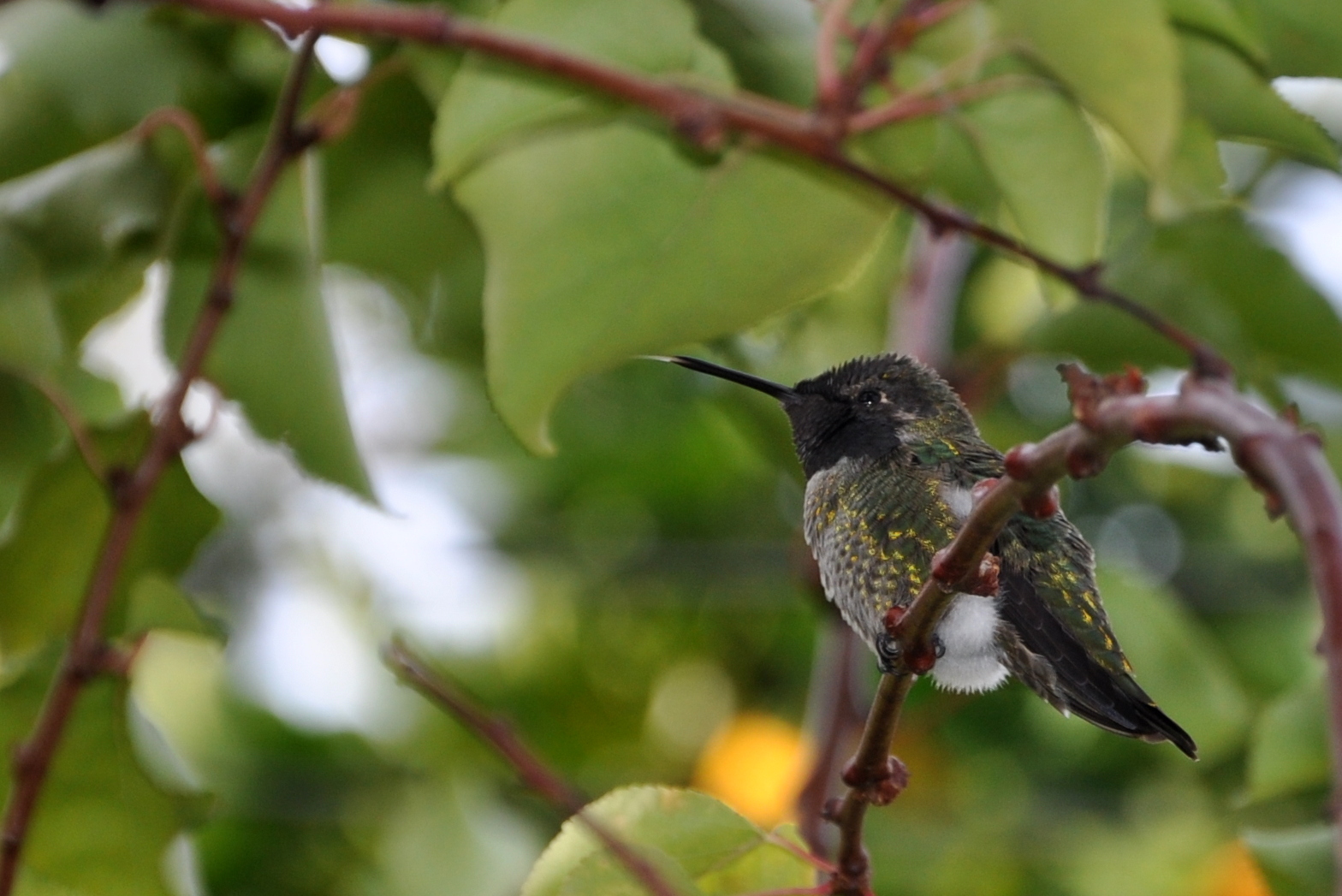
male anna's hummingbird

Iridescent Gorget

Iridescent gorget
visible in the dappled sun.
Handsome little bird.

anna's hummingbird tongue

A wisp of a tongue, a moment’s rest

I followed closely
as you flew from tree to tree
at last a small pause.

hummingbird scratching

Satisfying an itch

Soft, quiet feathers
So glad you’ve stopped for a rest
and to ease that itch.

Anna's hummingbird at rest

Always in style

Gorgeous hummingbird
your feathers are always in style
white tushy, dark eyes.

humminbird bottom

The End

A Garden Dressed in White

“The first of all single colors is white … We shall set down white for the representative of light, without which no color can be seen; yellow for the earth; green for water; blue for air; red for fire; and black for total darkness.” — Leonardo Da Vinci

When I studied color theory, it surprised me to learn that white pigment is the absence of color whereas in light, white is the combination of all color. Scientifically speaking, white isn’t a color at all, but as ‘non-colors’ go it’s loaded with symbolism and meaning.

I also learned today that white or pale flowers are more strongly scented than their darker counterparts. Who knew!

Come join me for a walk through my mid-autumn garden. The ‘color’ of the day, isn’t a color at all.

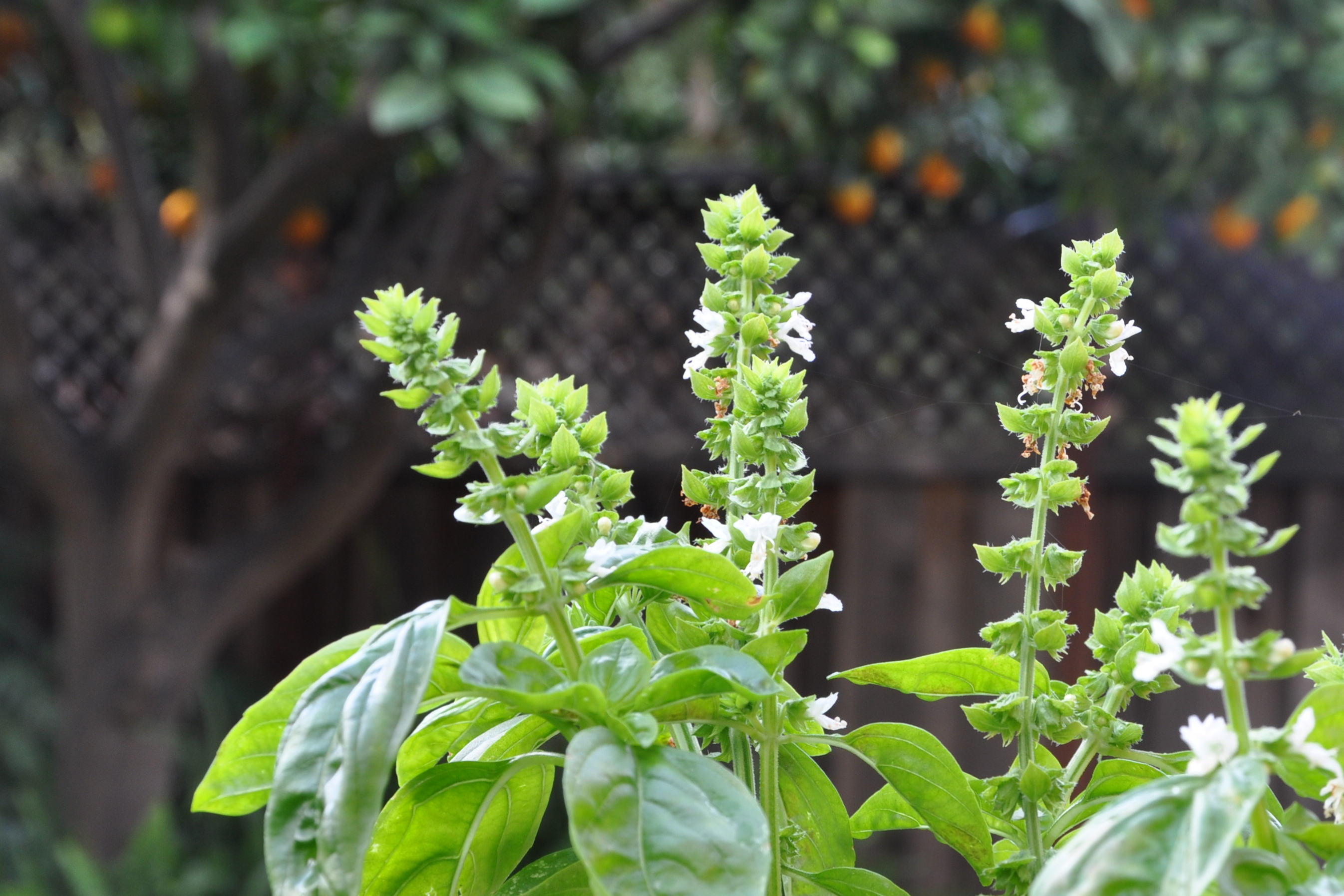
flowering basil

Flowering basil

The rest of the vegetable garden went to sleep in October, but this pretty plant continues to thrive.

bacopa

Bacopa: This survived the summer heat and very little water

I gave this potted Bacopa very little water this summer. Now that it’s cooler and we’ve had a bit of rain, the plant revived.

camellia

Camellia along the back fence

This gorgeous, Camellia is one of my favorite splashes of white this time of year.

cosmos

A fading Cosmo, one of the lasts flowers in the curb garden

This Cosmo looks tired, but it is November. She’s been pumping out blooms for some time.

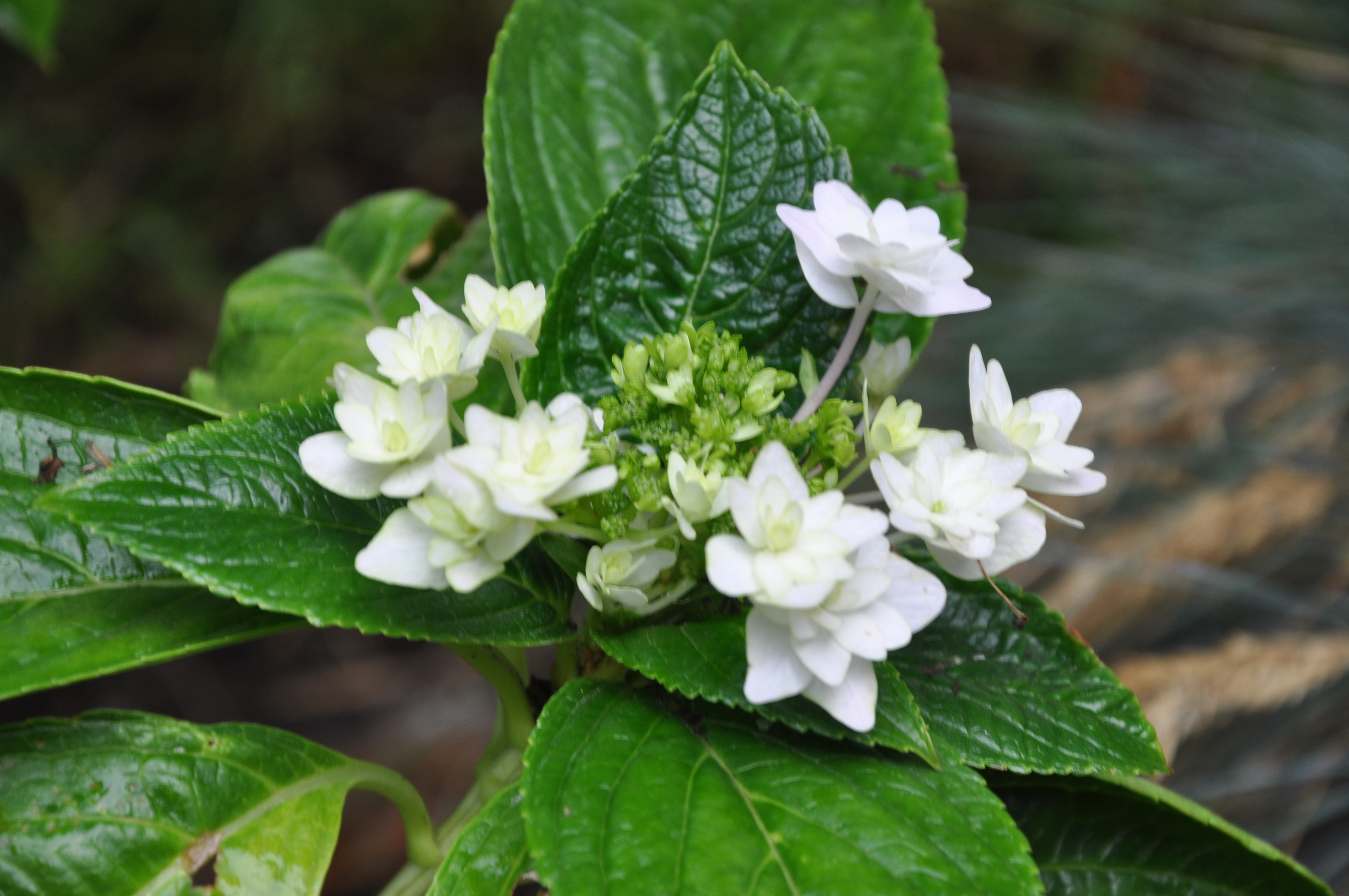
hydrangea

Hydrangea, grateful for some rain

Again, one of the last blooms on this plant.

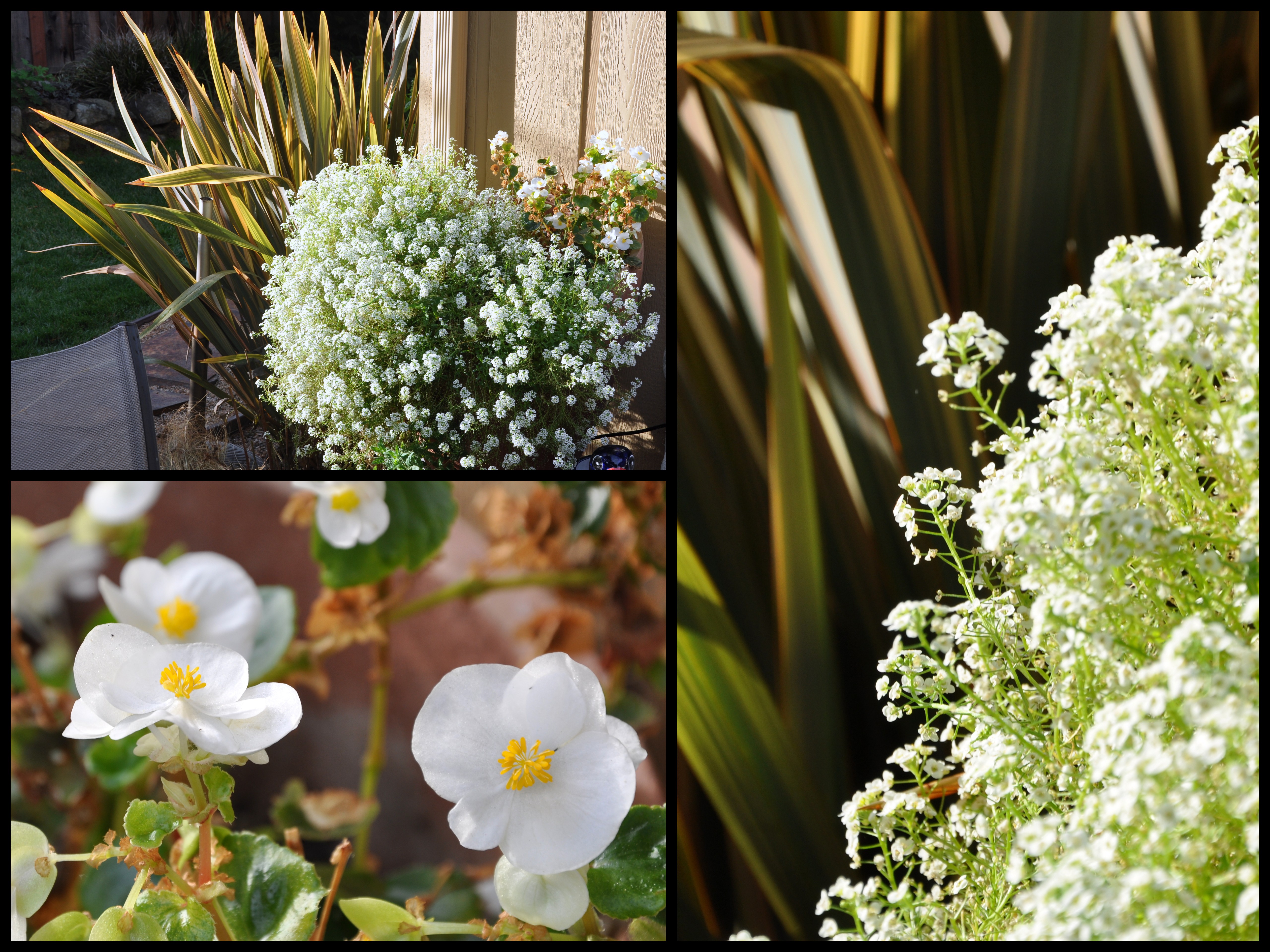
sweet alyssum and begonia

Sweet Alyssum and Begonias on the patio

There are a few begonias in the back of this pot, but the summer belonged to my Sweet Alyssum. As it goes to sleep, a pretty white shower drifts below.
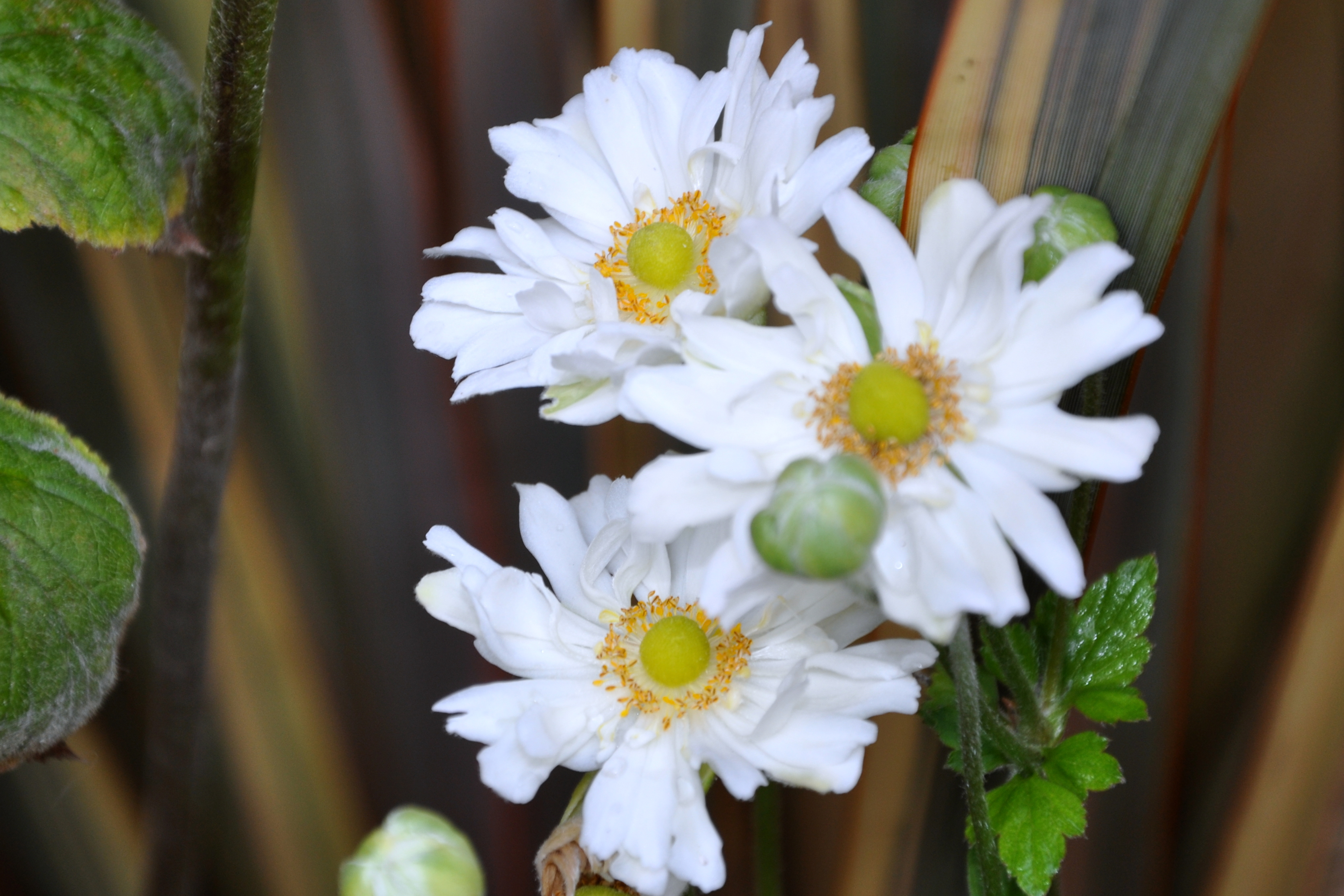
amemone

The last of the Anemone. They’ve been flowering since August
Saying Goodbye to King Tut

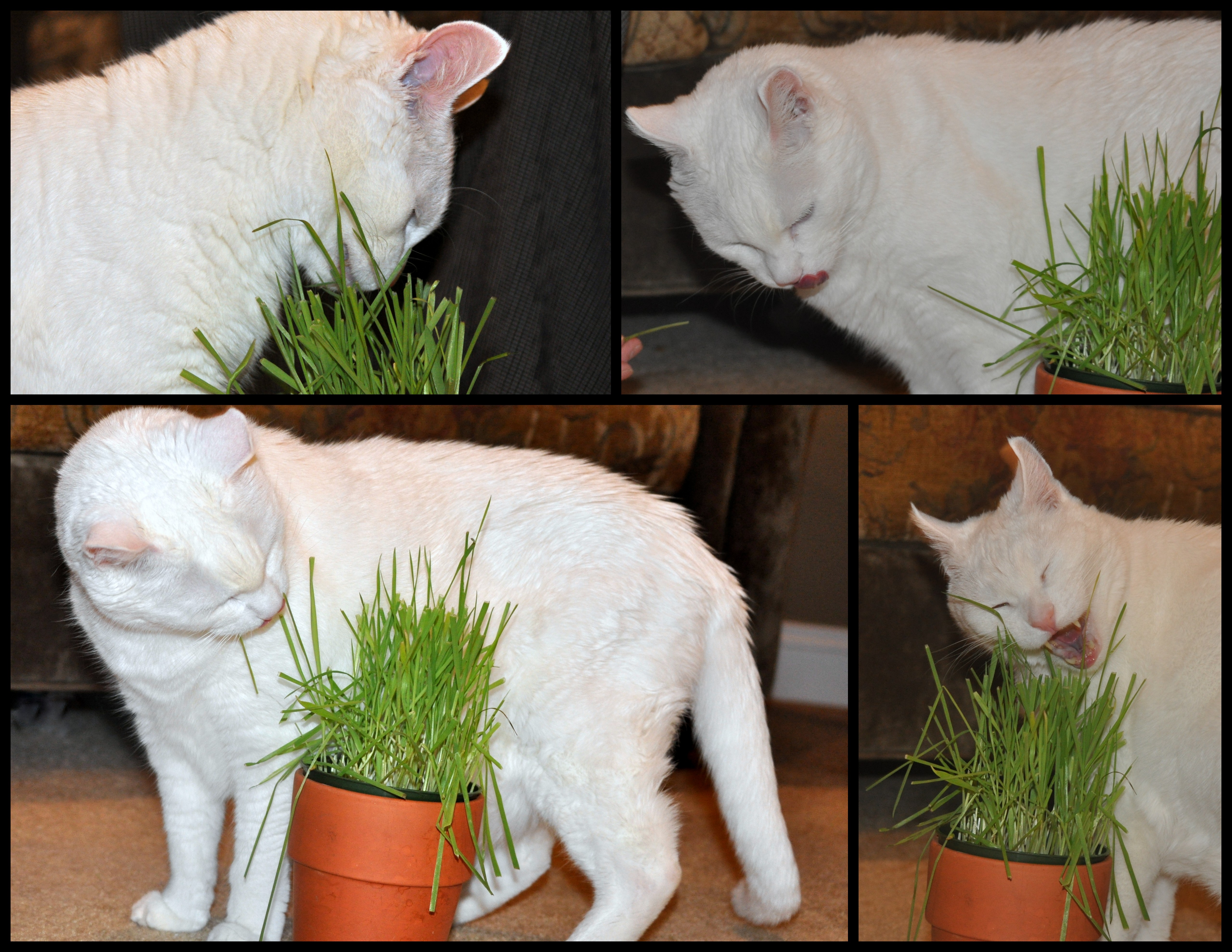
My sister’s beloved kitty died yesterday. He’s been a wonderful companion to her and will be sorely missed. He had the whitest coat, emerald-green eyes and the cutest little ears. He also had a sweet personality to match. Farewell KT.

KT Eating Kitty Greens

KT Eating Kitty Greens

Additional Reading:

Sensational Color: All about the color white.

Wikipedia: White

Color Matters: Basic Color Theory

Stress and a Pair of Garden Shears

curb garden

Curb garden in need of some TLC

It’s been a stressful week. When your heart is open, it acts a bit like a sponge. The sadness of others laps at my soul.

The news isn’t mine to share, and sharing it won’t change it anyway. Instead, I donned my garden gloves, picked up a pair of garden shears and got busy. In my world, pruning is therapeutic.

Cutting away at dead growth or removing crossed or brittle branches helps shape the plant and ready it for fall. I worked my way through the curb garden, the triangle garden, the side garden and one of the areas in front of our sickly tree.

As I reached into the soil to plant additional bulbs, I unearthed several narcissus from last year. I tucked them back in for the winter, and made new holes a few spaces over. I like imagining the bulbs resting under ground, storing energy till they make their early spring debut.

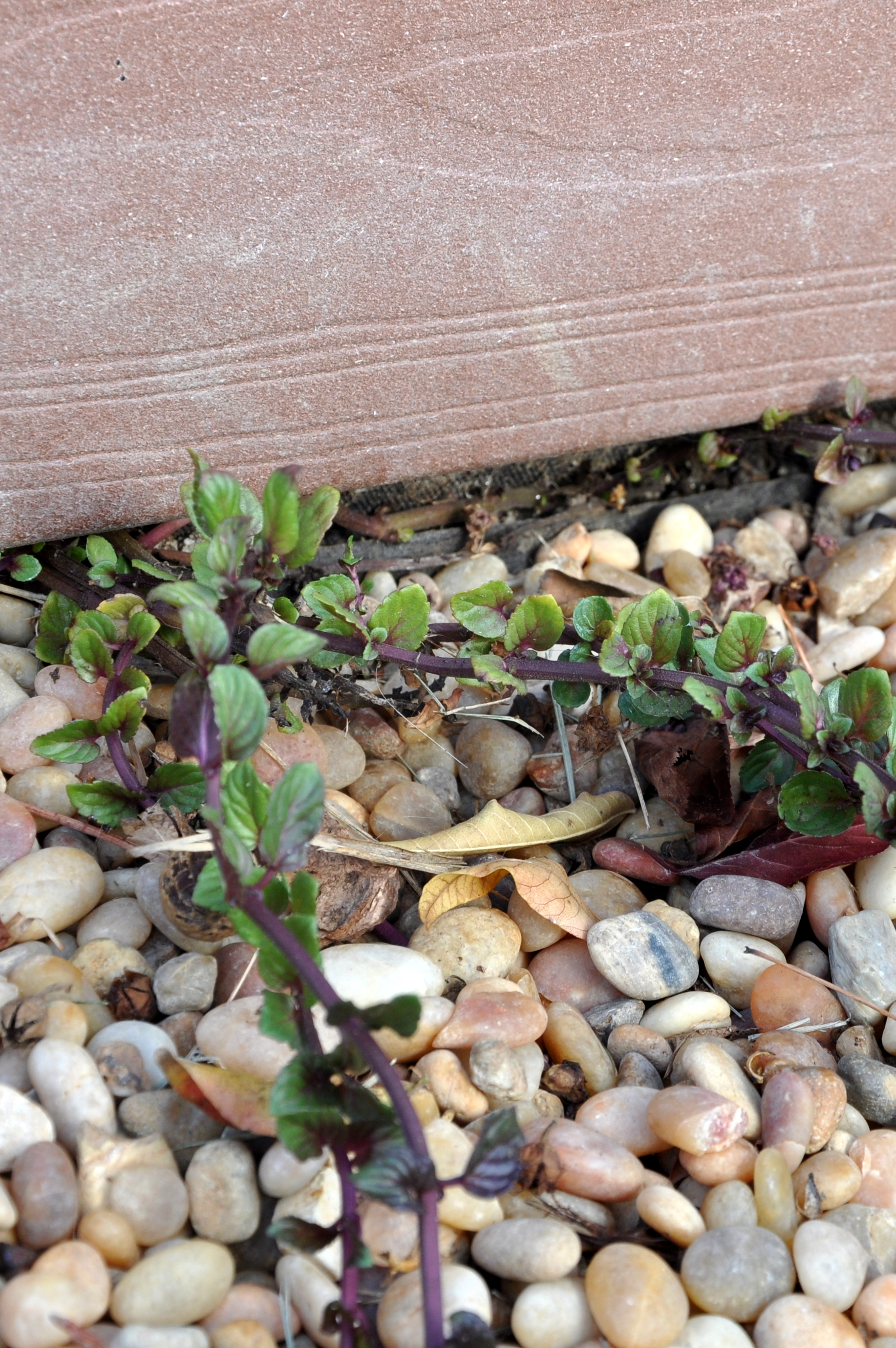
chocolate mint

Chocolate mint taking a shortcut

Chocolate mint has been running amok, sending shoots out of the bottom of the planter box. I cut back what I could, then stretched the shoots over the top of the box and pruned them clear of the gravel. That incredible scent tickled my senses as I ran my hands through the leaves.

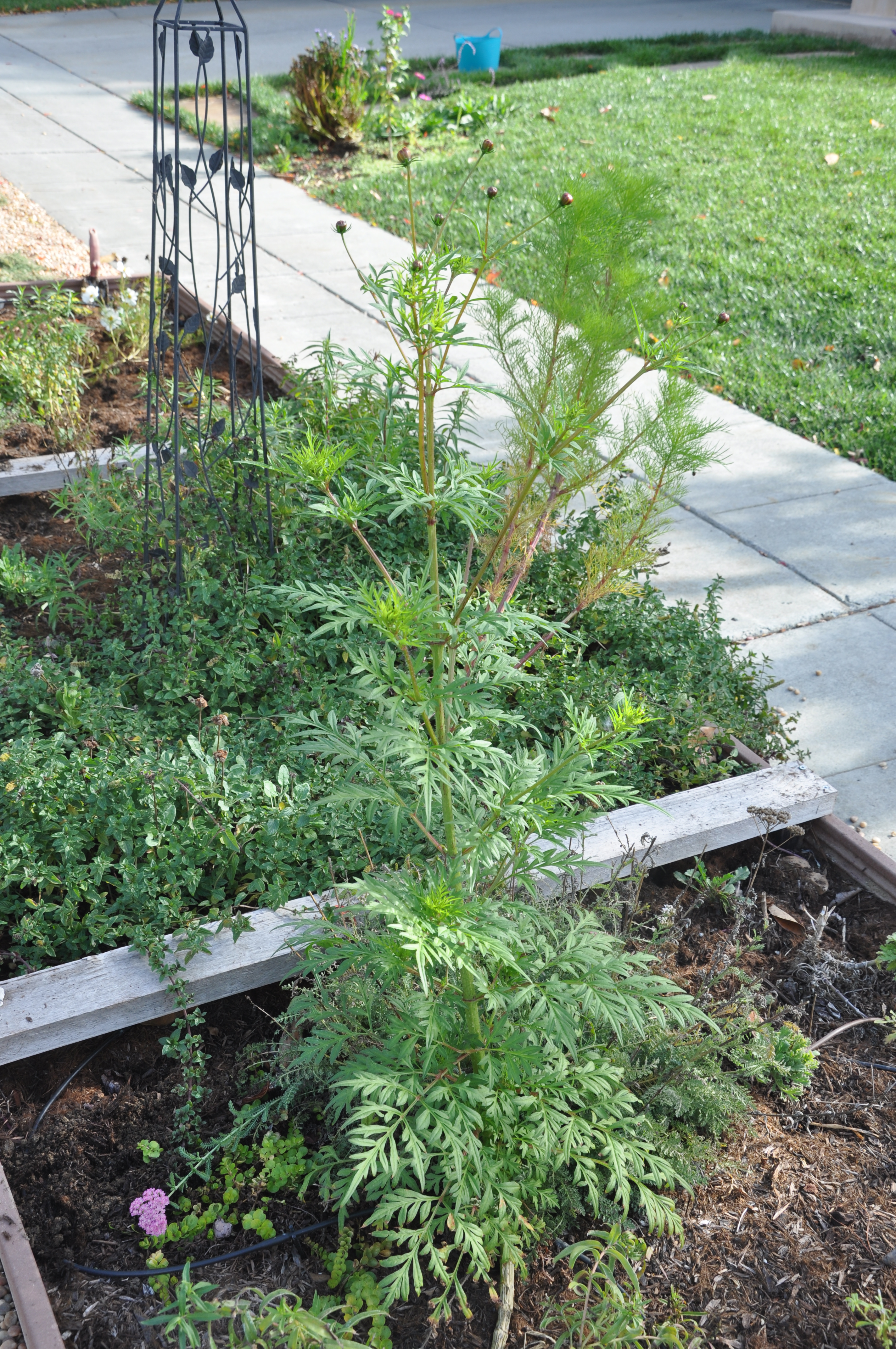
Two unidentified plants are now a meter tall. I don’t know what they are but they’ve made it this far so they get to stay. Novelty is good, even it they do look a bit out-of-place.

mystery plants

Two mystery plants, one meter tall

I pruned away the diseased branches of our Magnolia. It’s possible I went too far this time, but after hours spent trying to defeat Magnolia scale, drastic measures were due.I removed branches from the shrubs below the tree, taming them back to the walkway’s edge. The last of the summer annuals were next. Piles grew in corners here and there. I filled the wheelbarrow, made another pile on a small tarp and brought order to the garden. My back ached as it grew harder and harder to stand up. I worked some more.

garden surprise

A lovely garden surprise

By day’s end, I’d logged four hours in the garden. I pruned, pulled, chopped, raked, and swept.  I planted spring bulbs and dressed the side yard with a thick layer of mulch. Exhausted, I finally called it a day. I packed up my tools, washed away the day’s dirt and took my boys out for a quiet dinner.

Some days you tend a garden; some days the garden tends you.