Soothing Pinks and Welcome Purples

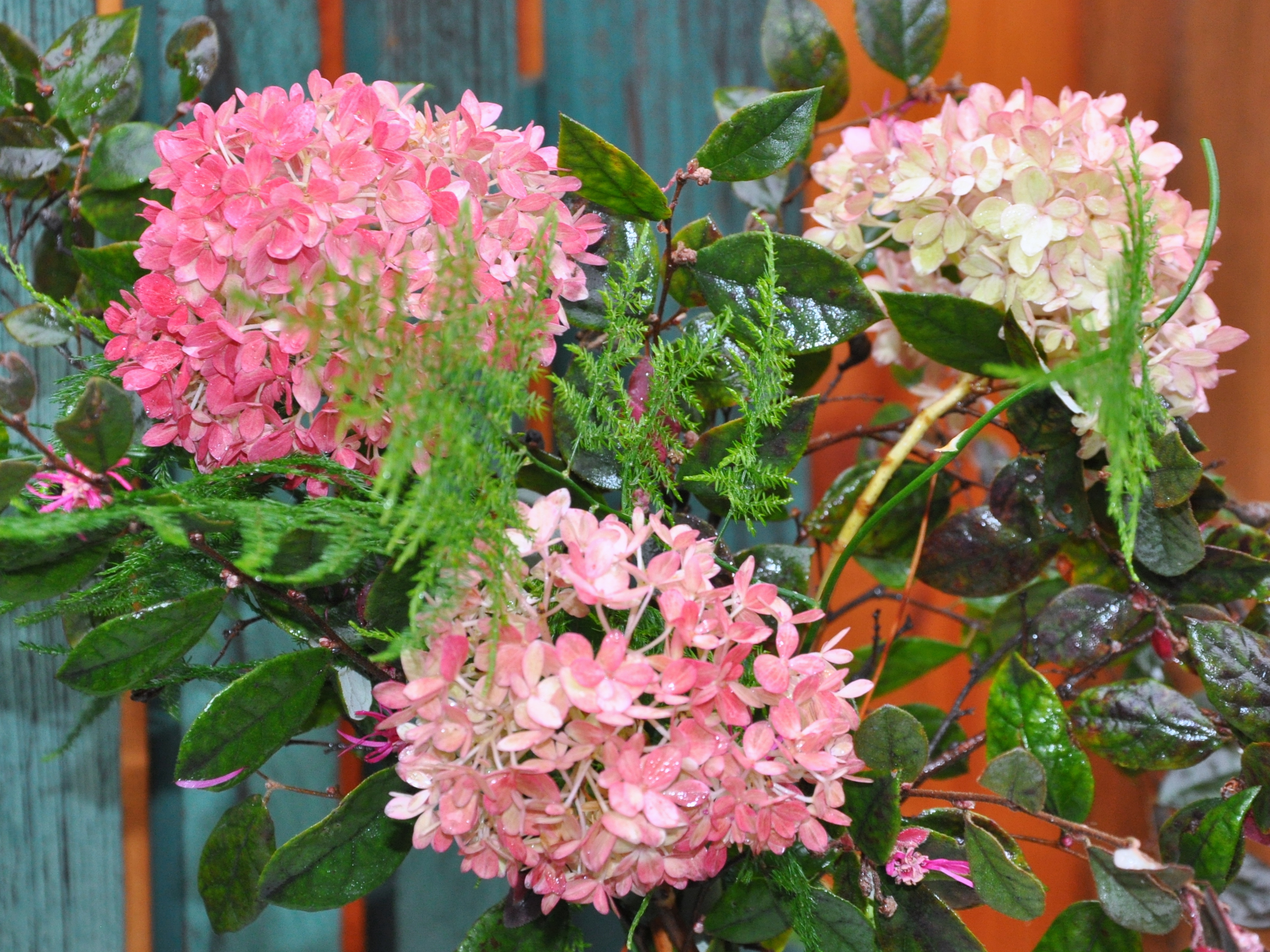
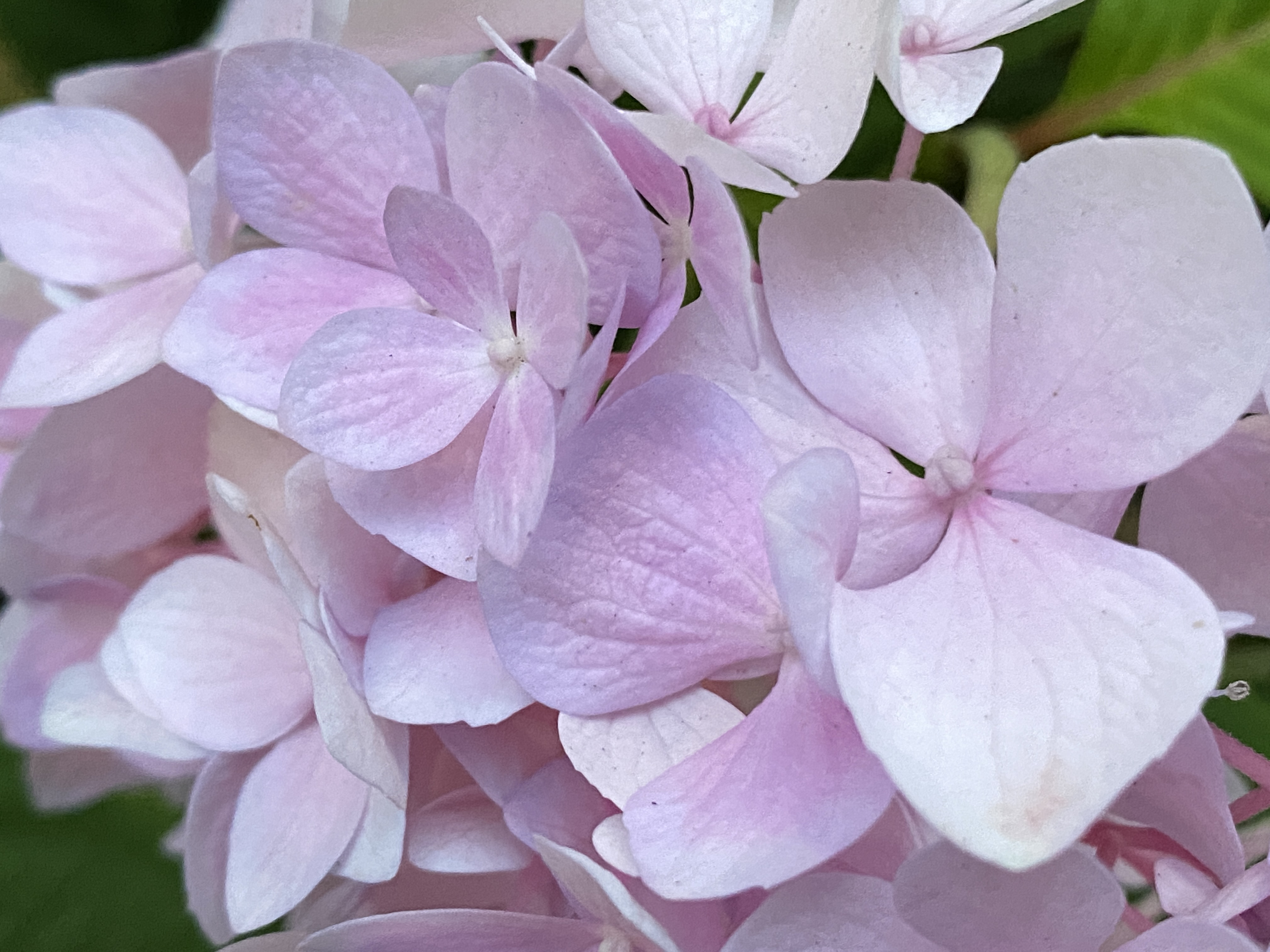
An impromptu browse through the garden this morning revealed unexpected pinks and purples on a dark and drizzly day. December rain cleared most of the remaining foliage on the dormant hydrangea bringing into focus a pair of out-of-season blooms blushing against the grey sky. These garden anomalies make me smile.
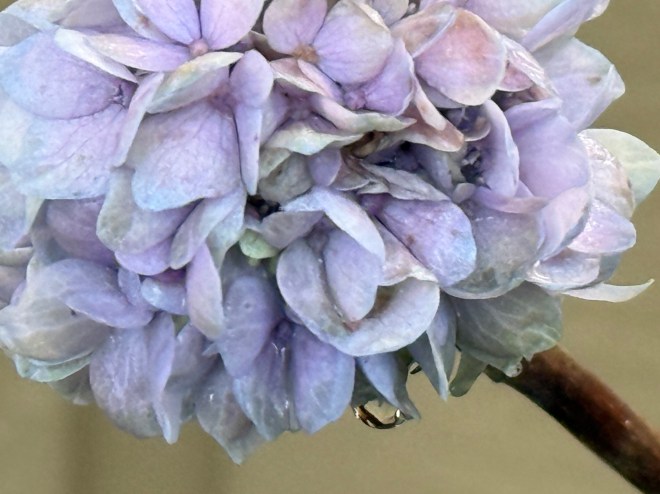
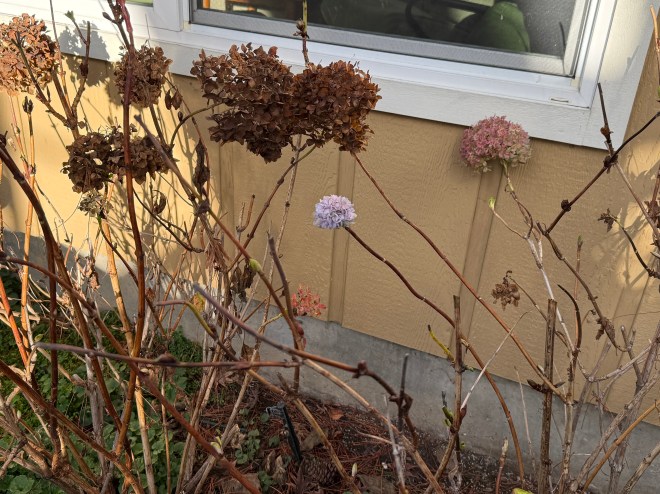
Raindrops linger amid the lavenders, pinks, and blues of this small, January hydrangea
Off-season pink hydrangea

According to Jafe Decorating, “Pink is widely recognized for its calming and soothing effects on the human psyche. Studies have shown that exposure to the color pink can reduce feelings of anger, aggression, and anxiety, creating a serene and tranquil environment, helping to alleviate stress and tension.”

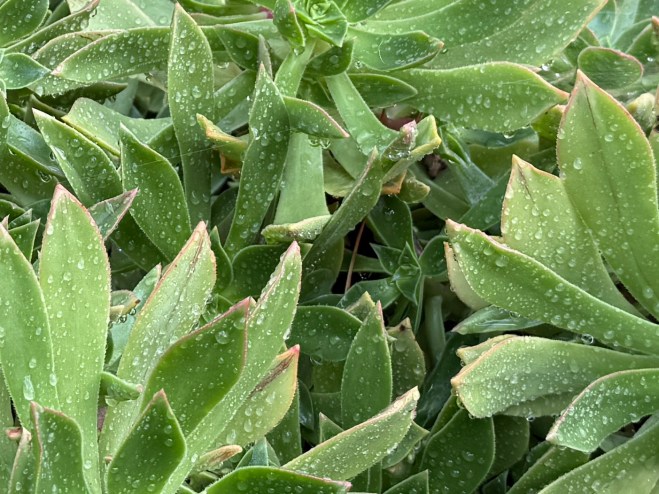
Shades of pink and purple appear in the center of this succulent
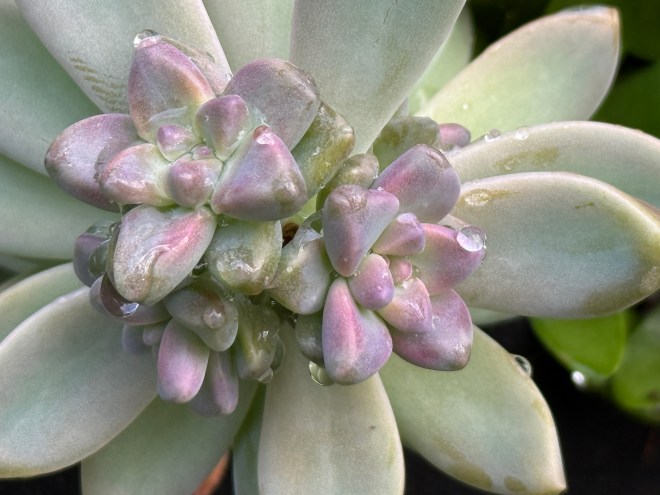
Succulent, possibly a Pachyphytum

and along the edges of its companion.
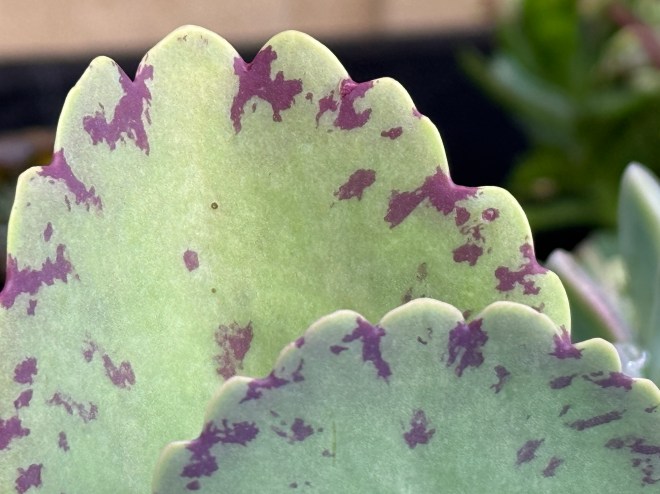
Penwiper Plant (Kalanchoe marmorata)

These plants came in a hanging basket and made do with cramped quarters for some time, but once they had room to spread out, they quickly dominated this raised bed. They tolerate the cold and can mostly handle the heat, though they get a bit of sunburn on scorching days.
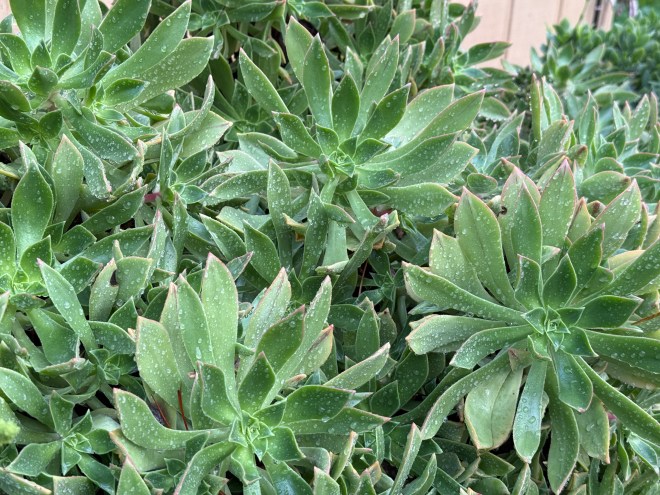
Aeonium haworthii
Aeonium haworthii

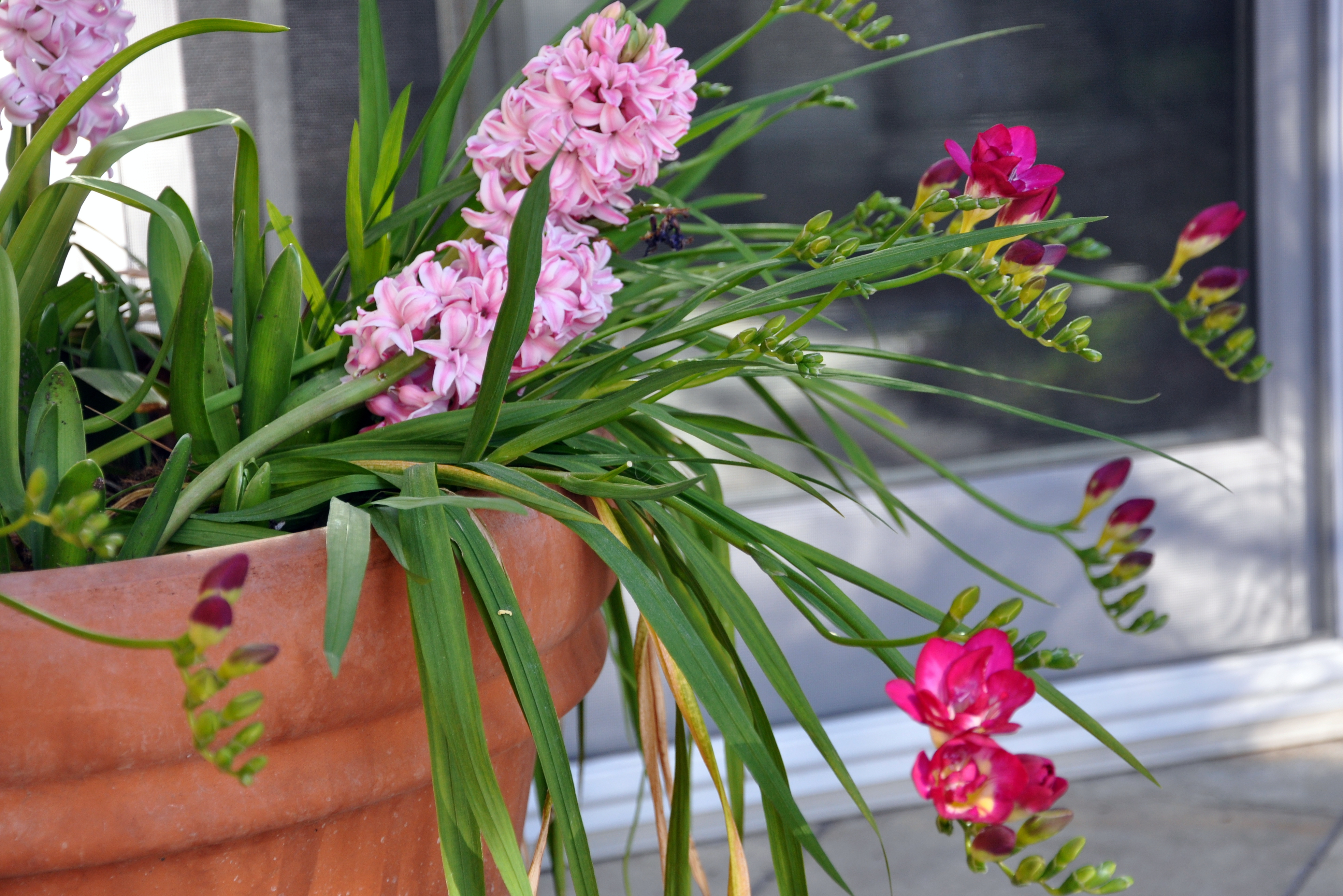
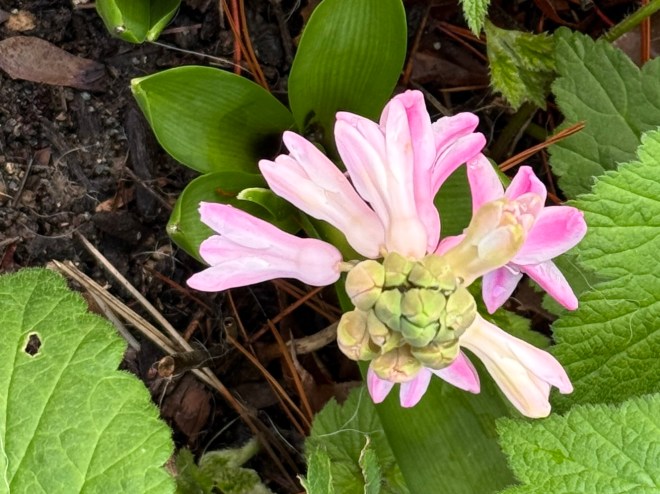
At the corner of our patio, the first of the pink hyacinths is up, with more pinks and purples to follow. They remind me of Mom, who once gave each of us one for Christmas along with a glass bulb-growing vase. I still remember what a thrill it was seeing that fragrant flower emerge from the top, but being able to see the roots, too.
By now, I was on a mission to find anything remotely pink or purple in the garden. Everything smells wonderful after a rain, so I took my time and turned up one more, this tiny flowering ground cover that self-seeds as it pleases, and has done so for thirty years.
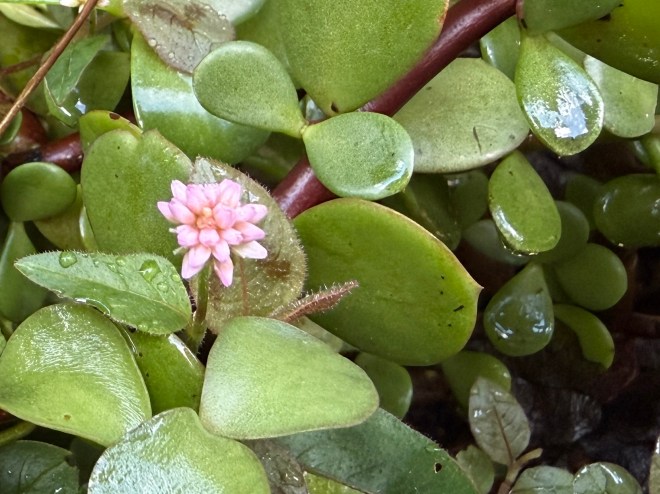
Pink knotwood (Persicaria capitata)

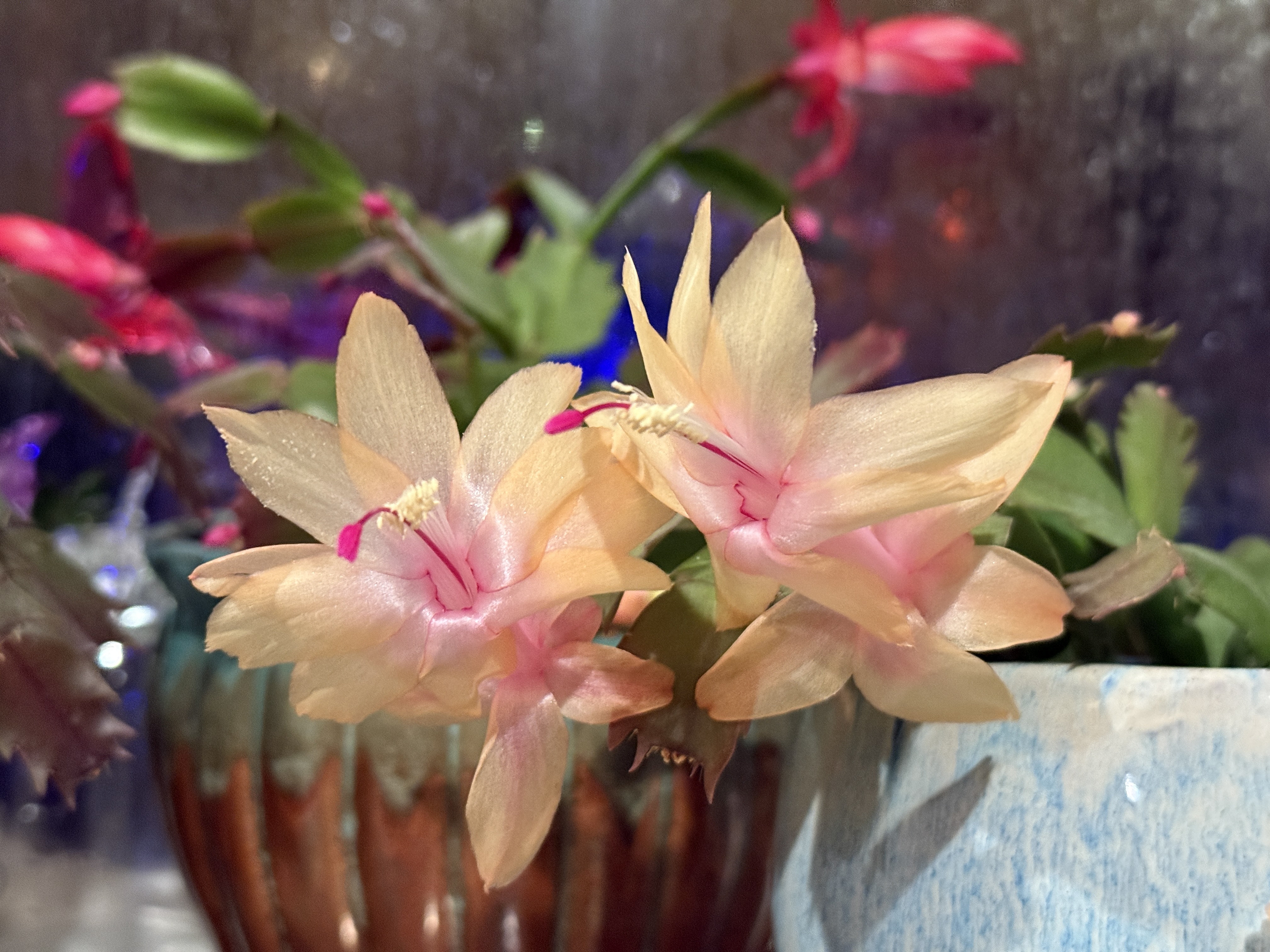
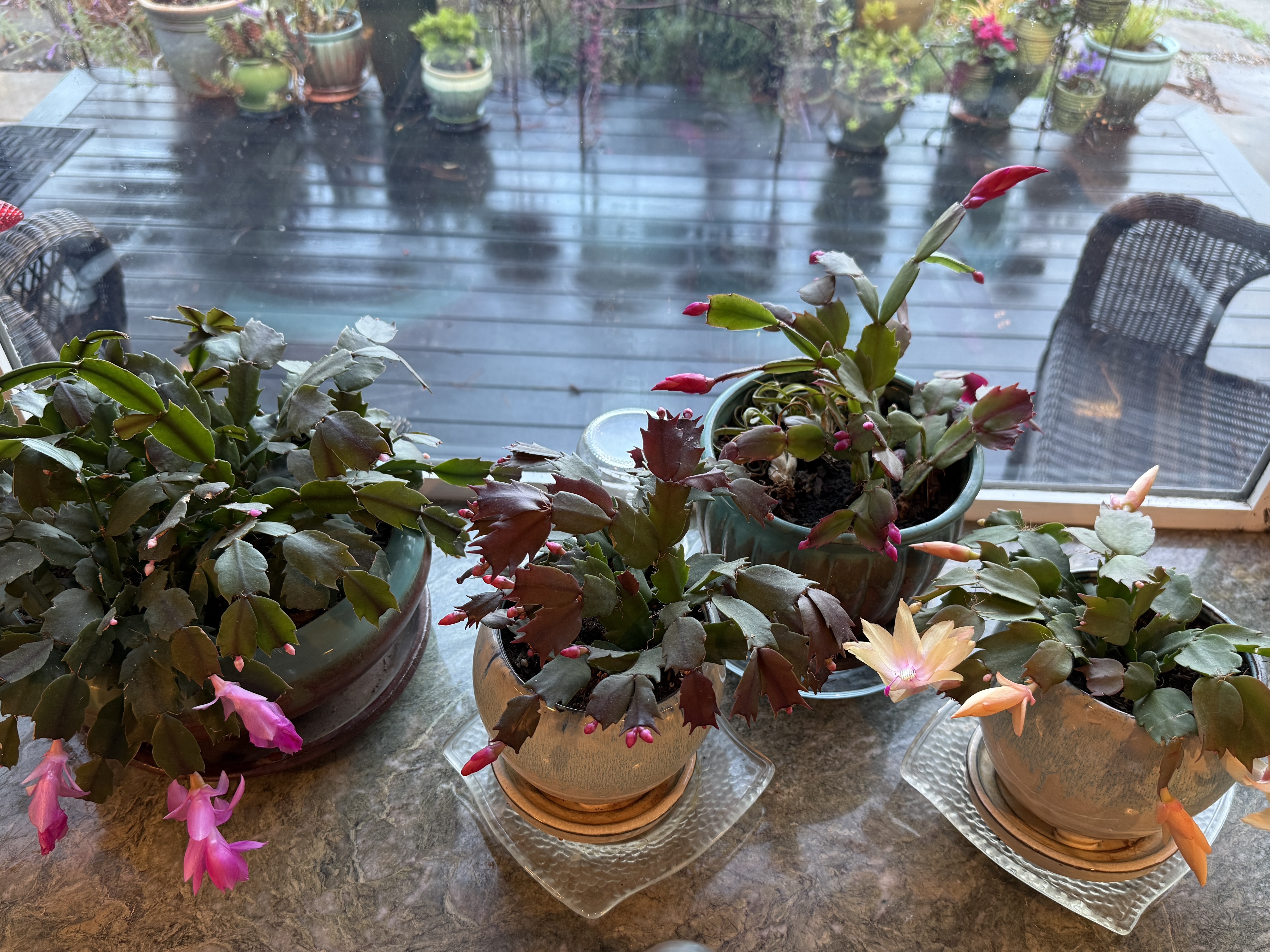
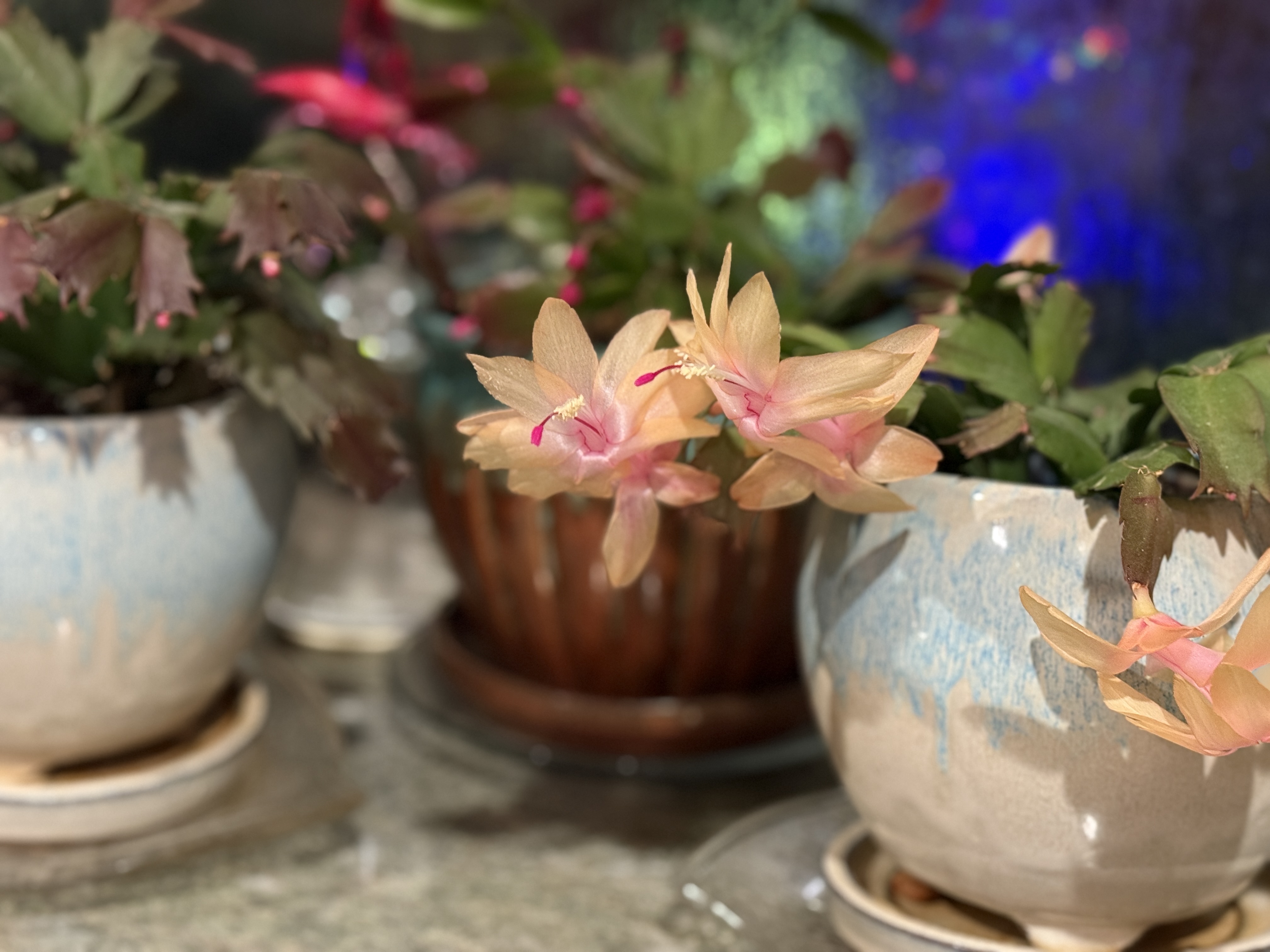
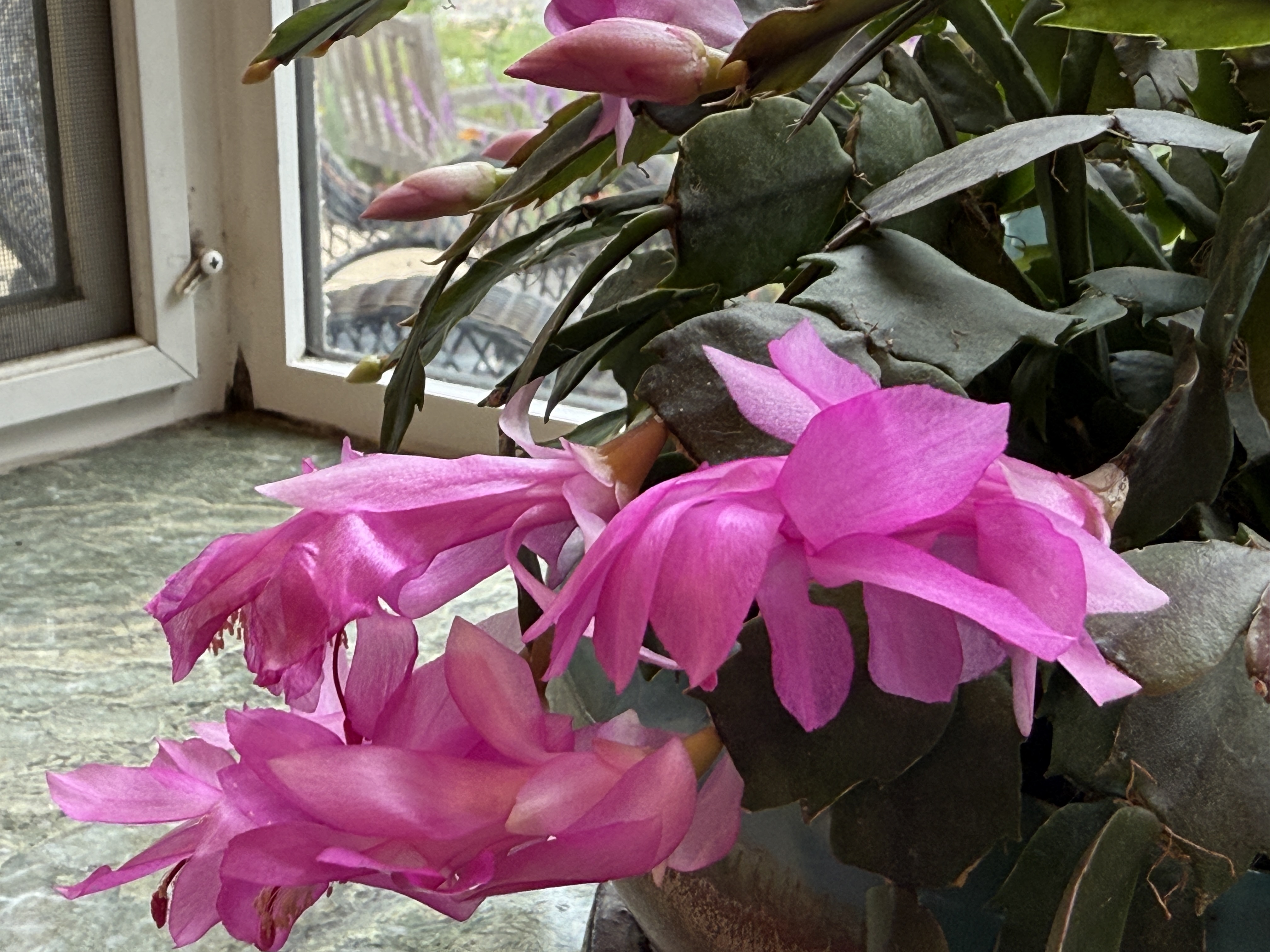
The last of the pinks is a collection of Christmas cacti that live on the kitchen counter under diffused light. I can’t remember a time when they bloomed so profusely. They are a balm for the weary soul.
A Week of Flowers: Scented One and All

Today is the final day of Cathy’s garden meme. I’ve enjoyed revisiting many of my garden favorites, even if I only managed three out of seven days.

A tip of the hat to the other gardeners who shared photos and checked in all week, and to Cathy for inviting us to share.

As we head toward the winter solstice, we can look back and forward, while enjoying the in between. It’s time for spring and summer gardens to rest, so that they can burst forth with color, energy, and strength the following year. I realized today that most of my spring garden favorites have an intoxicating scent. I’ve gradually introduced seven of the ten most fragrant flowers.

Now close your eyes and imagine the warming earth, bulbs breaking ground, and finally flowers releasing that wonderful scent. Floral scents attract birds, bees, bats, and other pollinators, each fragrance drawing the right crowd. Who’s to say that we don’t play a part as well as we breathe in that aromatic scent, breathing out a bit of energy as we inhale, exhale, inhale, and repeat.

Mmmmmmm

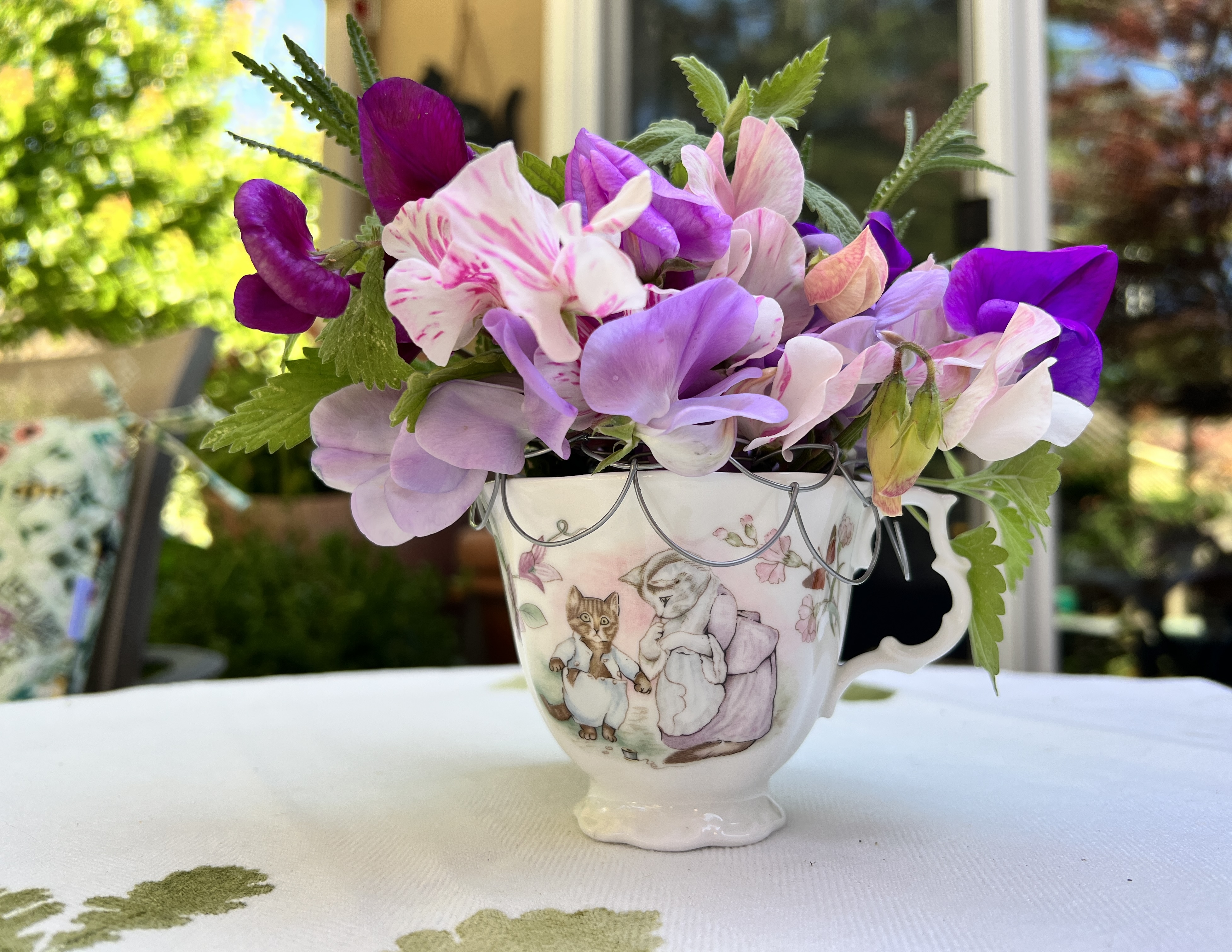
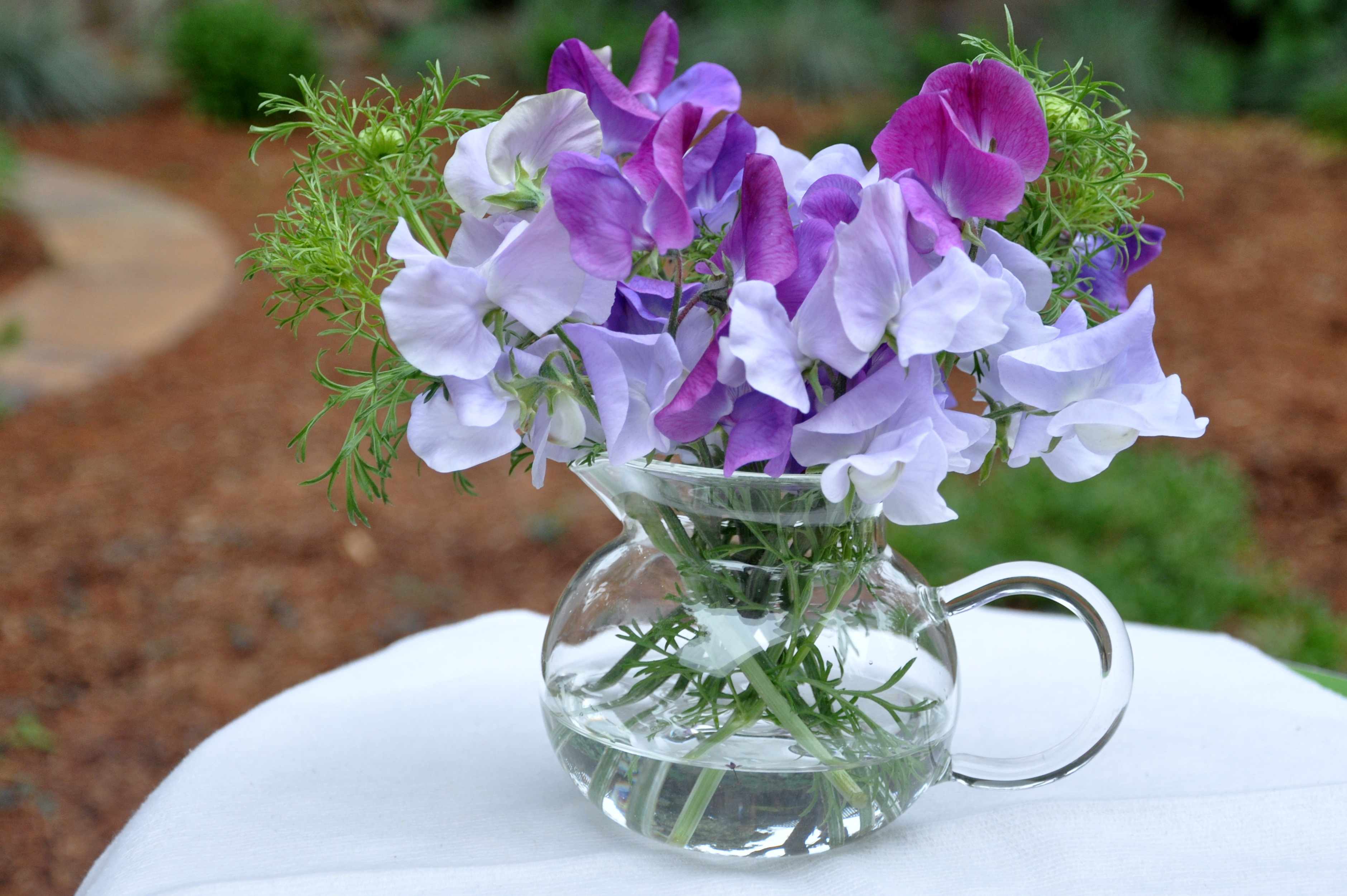
Sweet Peas

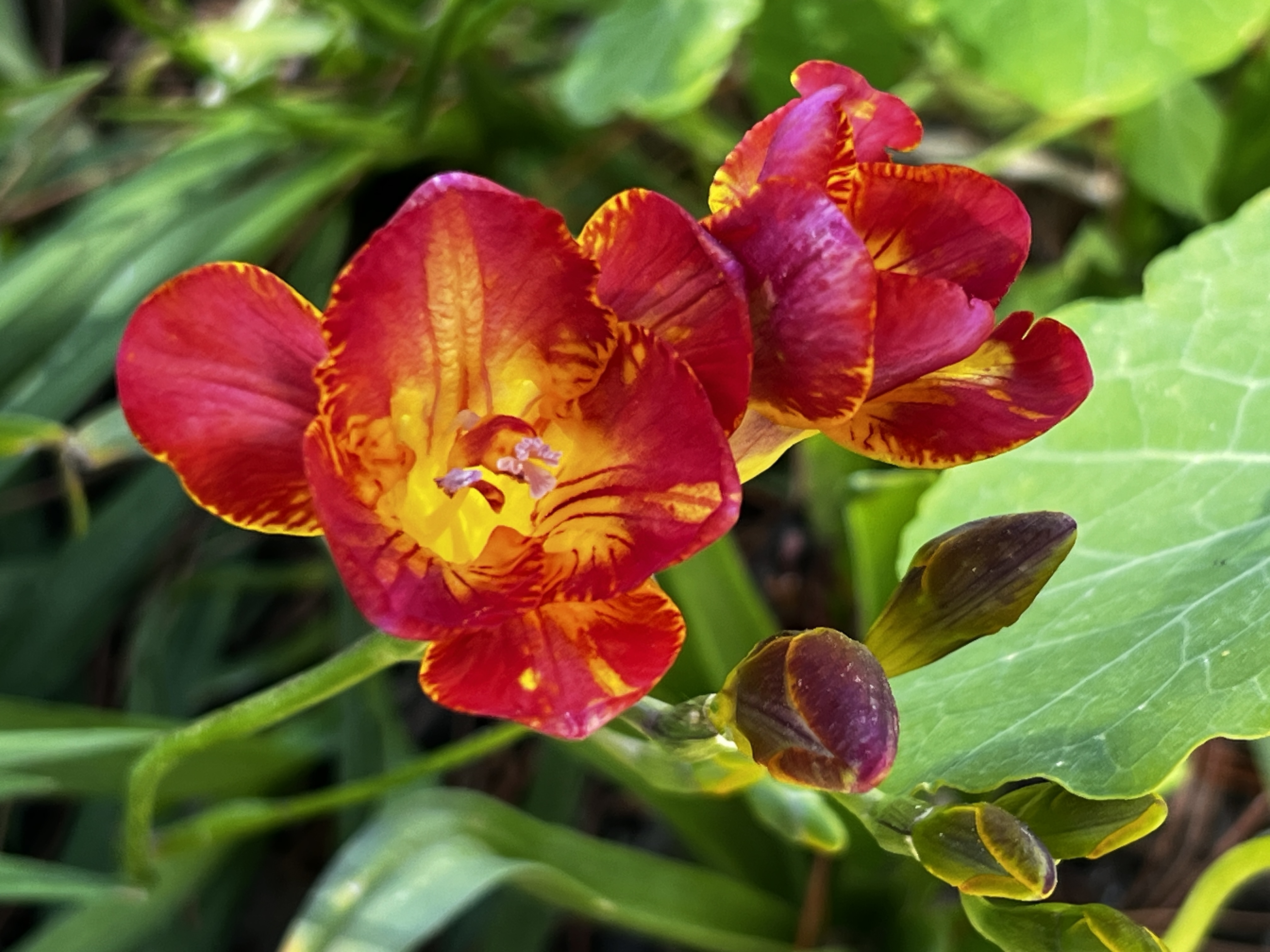
Freesias

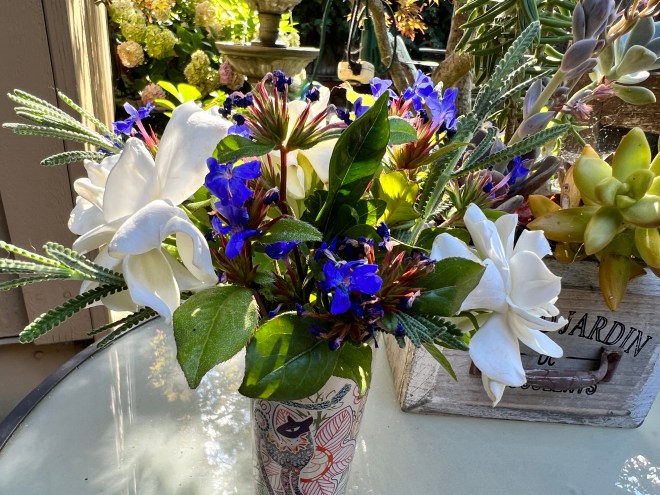
Gardenia’s in a vase

A colorful floral arrangement featuring white gardenias and vibrant blue flowers, displayed in a decorative cup on a table.

Lavender

Close-up of a lavender flower with small purple blooms, set against a softly blurred background of blue flowers.

Hyacinth

Thank you once again, Cathy.

A Week of Flowers: Looking Back

A picturesque garden scene featuring a hydrangea bush with pink and blue blossoms, set near a stone fountain and a wooden fence.
Pink and Blue Hydrangea

Cathy of Words and Herbs is hosting a week-long meme celebrating the stars of our gardens over this past year. It’s a chance to look back and also to imagine forward, as to garden well, is to plan. That doesn’t mean all goes according to plan, but you learn that planting lettuce in the heat of the summer or forgetting to get your bulbs in the ground on time can lead to disappointment.

Without further ado (it’s day five, but this is the first day I’ve had time to post), here are a few of my garden darlings, and an adorable photo of our grand-pooch.

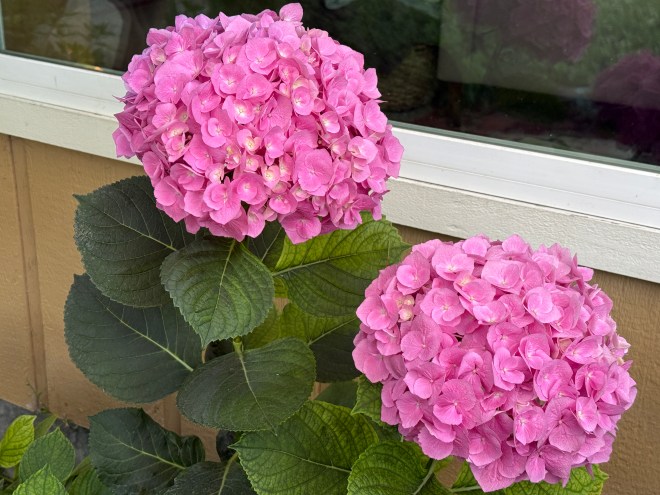
Our pink and blue hydrangeas are summer stunners. These are known as Bigleaf Hydrangeas(Hydrangea macrophylla).They span shades of fuchsia to cranberry, periwinkle to admiral blue, and even shades of green. It all comes down to the soil pH.

A smiling dog sitting in front of vibrant pink and blue hydrangea bushes in a garden.
Two blooming pink hydrangea flowers with lush green leaves, situated near a window.
Oversized Hydrangea blooms

According to Wikipedia:

“The pink hydrangea has risen in popularity all over the world, especially in Asia. The given meaning of pink hydrangeas is popularly tied to the phrase “you are the beat of my heart,” as described by the celebrated Korean florist Tan Jun Yong, who was quoted saying, “The light delicate blush of the petals reminds me of a beating heart, while the size could only match the heart of the sender!”[36]

Hydrangeas were used by the Cherokee people of what is now the Southern U.S. as a mild diuretic and cathartic; it was considered a valuable remedy for bladder stones.

If you follow this link to Cathy’s page, you will find other garden bloggers sharing their favs.

Thank you for hosting, Cathy, and for all the goodwill.

My Left Hip

My Left Hip

After several years of near-constant pain and impaired mobility, I had my right hip replaced in February, followed by a new left hip earlier this month. I’m relieved to have both surgeries behind me.  To pass the time, I cropped a photo of one of my new joints, added a pair of eyes, and created a less clinical image of the new joint.

X-ray image of a hip joint replacement with a smiley face added for a whimsical effect.
Screenshot

Today, my in-home PT assessed my balance using the Berg Balance Scale, and I scored 47 out of 56. A score of 41-56 indicates low risk and independent walking. I’ll take it.

Over the next four weeks, I could dislocate my hip if I move it past a 90-degree angle, which, in garden-speak, translates to averting my eyes as the weeds sprout. After an unusually mild November, we’re finally seeing true fall weather, including rain. All those weed seeds have been waiting in the wings for their grand entrance. 

They’re unlikely to go to seed any time soon, and the wet ground will make removal easy when I can finally kneel in the dirt, so for now I must bide my time.

As I heal, I’m able to take photos from a standing position. Mike’s also taking me on daily drives for a change of scenery. Nature is a balm.

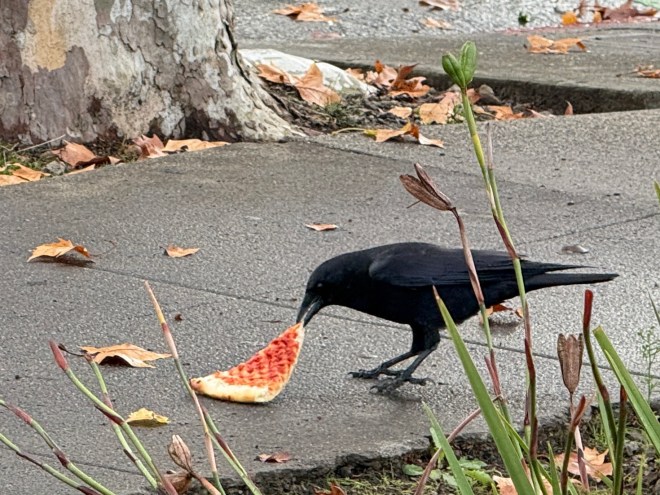
From the car window, I watched a crow enjoy a slice of sidewalk pizza in nearby Los Gatos.

A crow standing on a sidewalk enjoying a slice of pizza, surrounded by fallen leaves and greenery.

I snapped this view of Silicon Valley in the misty fog at the top of Harwood Hill in San Jose.

A foggy view of Silicon Valley from the top of Harwood Hill in San Jose, with greenery in the foreground.

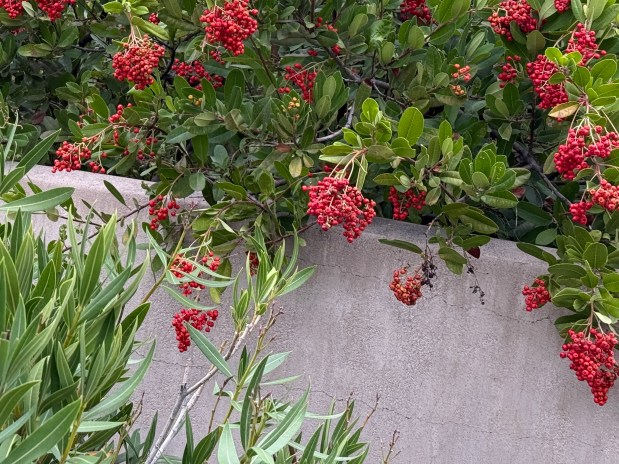
Heteromeles, commonly known as toyon, are native to our California coast. Not only do they provide food for birds, bears, and coyotes,

“The plant has been used as a treatment for Alzheimer’s disease by indigenous people of California, and recent research has found several active compounds that are potentially beneficial to Alzheimer’s treatment. These include icariside compounds, which protect the blood-brain barrier and prevent infiltration of inflammatory cells into the brain.” Source Wikipedia

A close-up view of bright red toyon berries contrasting against lush green leaves, with a textured grey wall in the background.

The brilliant red berries brighten autumn’s grey days.

These Canada Geese were impervious to the rain outside the Cambrian Community Center. It must be nice to have a built-in raincoat.

Two Canada Geese in the foreground with several others in the background, surrounded by fallen leaves on a rainy day.
Two Canada Geese standing on green grass, with patches of fallen leaves in the background.

Closer to home, a neighbor’s cat named Thor visited our front deck.

A fluffy cat with blue eyes sitting on a wooden surface, surrounded by green plants and purple flowers.

This potted alstroemeria recovered well after a broken pipe nearly drowned the plant. Once the roots dried and the heat of summer passed, it made a full recovery.

A potted alstroemeria plant with green leaves and a single pink and white flower blooming, set against a natural garden background.

I plan to follow in the plant’s footsteps and make a full recovery as well.

Celebrating the Gardeners of In a Vase on Monday

A dozen years ago, Cathy at Rambling in the Garden started a meme called “In A Vase On Monday”, or IAVOM. She wanted to challenge herself to regularly cut and arrange flowers and greens from her garden. She also challenged fellow garden bloggers, launching a wonderful garden blog meme. It’s a simple concept: cut flowers from your garden, arrange them in a jar or vase, and share them virtually with others. Gardeners post from the UK, Germany, the US, and other parts of the world. Charming, eh?

I’ve enjoyed sharing a garden vase, off and on, over the years, but I lack the dedication of the Monday Vase die-hards. I applaud all of you.

I’m sharing two vases today that highlight my joy of blogging. For me, it’s about the community formed through sharing photos and words, about finding your people in this sometimes fractious world. “In A Vase on Monday” does just that.

I’ve followed Cathy at Words and Herbs for close to 14 years. She posts a beautiful vase most Mondays. 

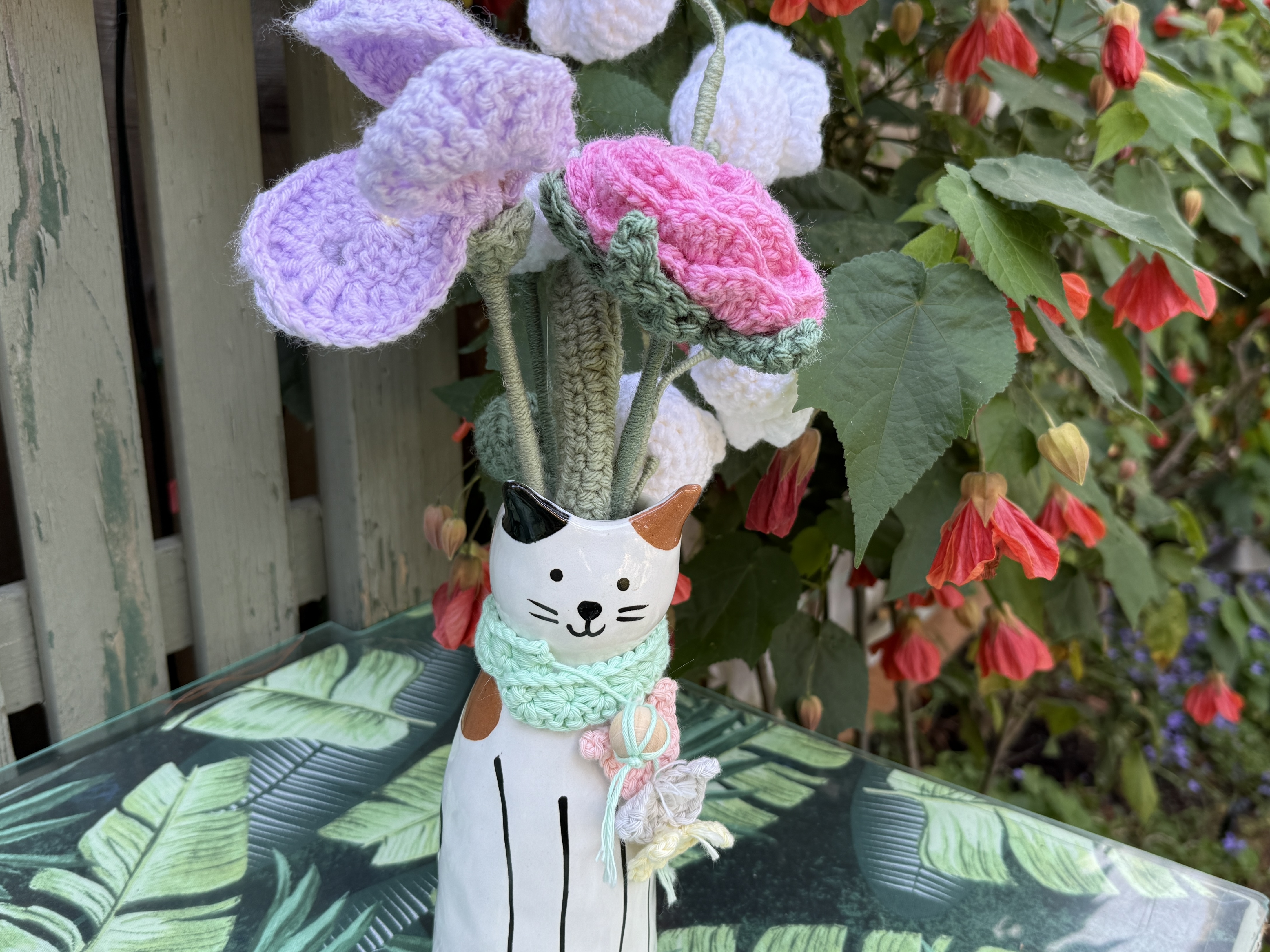
The vase below holds crocheted flowers, a Mother’s Day gift from my youngest son; however, kitty’s “scarf” is an intended bookmark, straight from Cathy’s crochet hook.

Cathy mailed several crocheted bookmarks for our Little Free Library all the way from Germany. Sweet, right? I placed some of her bookmarks in our tiny library; one became a gift topper for a friend,

A crocheted sunflower with green leaves attached to a decorative envelope featuring a floral and turtle design.
Flower bookmark
A ceramic cat vase wearing a crocheted scarf, surrounded by colorful blooms in a garden setting.
Crocheted bookmark/cat scarf

and this one is now wrapped around my kitty vase and will become part of my vase rotation. Please enjoy Cathy’s extraordinary garden at Words and Herbs. 

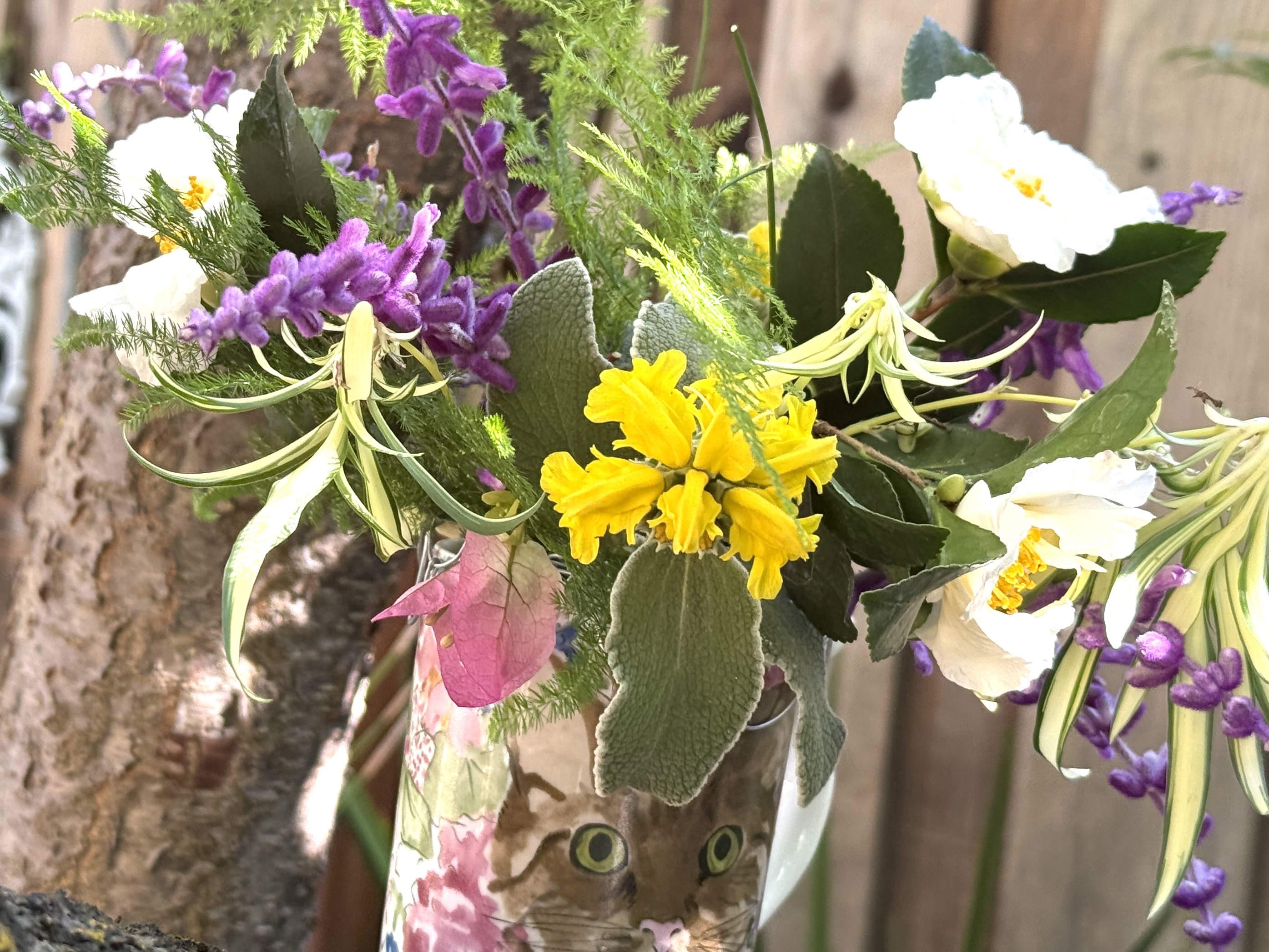
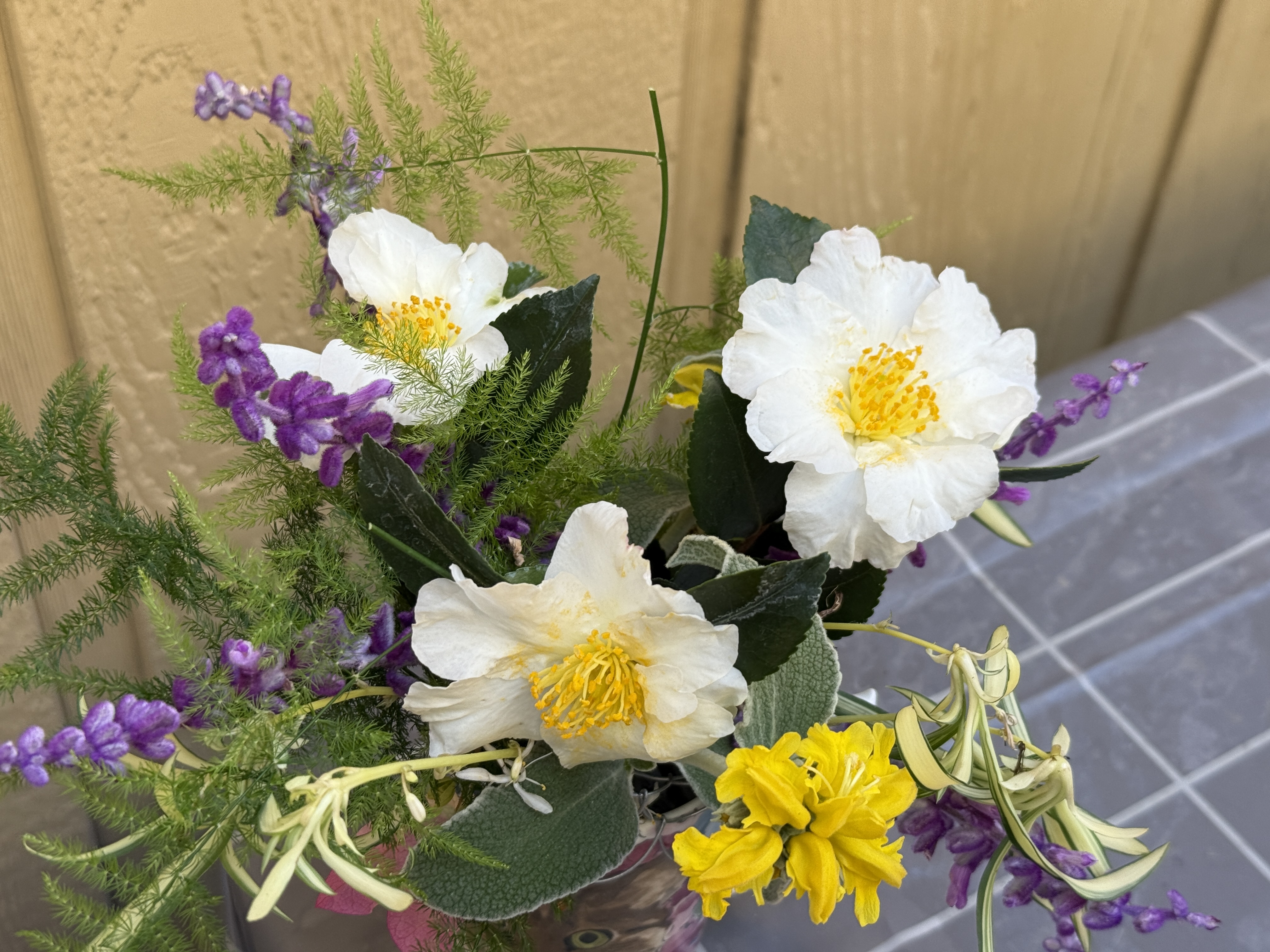
This second vase is a treasured teacup, a gift from my university friend, Carrielin. I’ve had it for forty years. In mid-October on Eliza Waters’ IAVOM post, I spotted the same cat design. I checked with Eliza to confirm, and sure enough, it’s from the same collection of porcelain art, Couer Minou-ettes, by Portuguese designer C. Pradalie. The pieces aren’t rare, but even so, it delighted me to spot the same design, with flowers, from a fellow garden blogger. Eliza shares from her beautiful garden most Mondays.

If you would like to see what these gardeners and others have shared in a vase today, please follow this link to Cathy’s blog, then check the comments for additional vase posts.

Happy Anniversary in-a-vaser’s.

Wisteria: Know Before you Grow

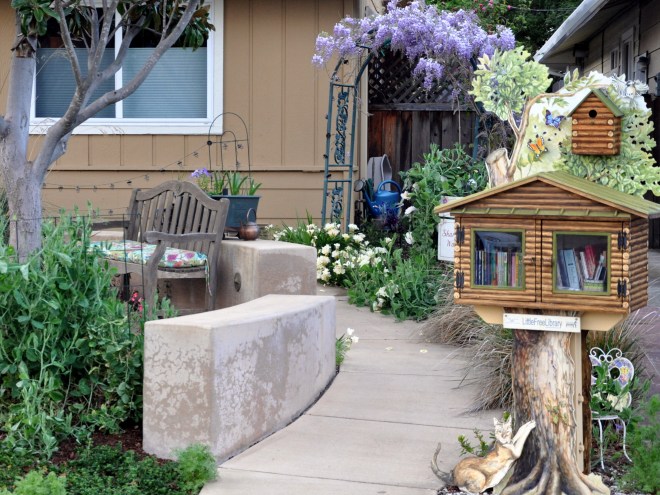
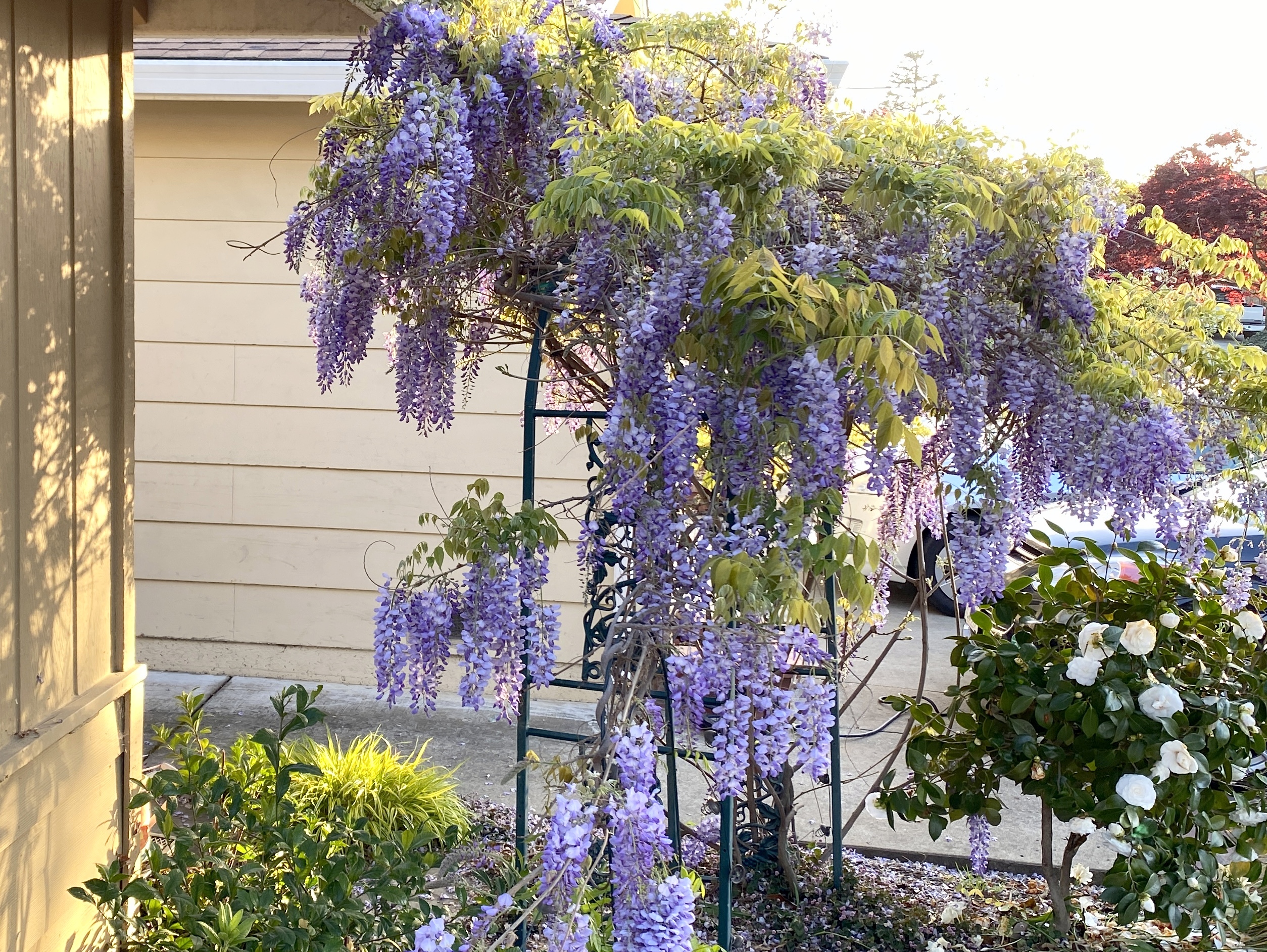
Wisteria symbolizes longevity and grace. For years I longed to have one in our garden. Aren’t they stunning? They need space to grow, though, and space is always at a premium in the garden, because nature abhors a vacuum, and this gardener feels compelled to plant any available earth.

A charming garden scene featuring a stone pathway, a wooden bench with colorful cushions, a whimsical little free library made from wood, and vibrant greenery, including wisteria flowers hanging above.

Then opportunity knocked.

When our young Magnolia became infested with scale, I tried to save the tree by manually scraping the scale into a bucket —an arduous, odiferous task. The scale quickly returned, along with ants. I pruned away the center, looked at organic options, and eventually contacted an arborist, but it was all for naught.

It’s tough losing any tree, but here was my chance to grow a Wisteria vine. We repurposed an arch from the back garden, placed it at an angle in the front garden, and planted the vine. The first year of growth was underwhelming, as it often is, but in the years that followed, the vine took off. It flowered vigorously in early Spring, then sent out a second set of blooms later in the year.

A vibrant Wisteria vine with cascading purple blossoms, growing over an arch in a garden, with a fenced area and other plants in the background.

At some point, though, the tree went from vigorous to invasive. I couldn’t keep the tendrils off our roof, our neighbor’s roof, a nearby tree, and so on. Clearly, I should have done my research, as I recently read that it is “known for its vigorous and potentially destructive growth.” Now they tell me.

I get attached to plants and trees, and this was no exception, but I’m pragmatic as well. Risking life and limb, damage to the house and the tree nearby meant it had to go.

It was labor-intensive. I started with small garden shears, graduating in size to the base of the tree’s substantial girth. I tried digging out the roots, then Mike had a go, until it became apparent the roots would need to be removed by a tree stump removal service.

A landscaped yard showing a pathway leading to a house, surrounded by green plants and a small tree.
Space after removing Wisteria

The space looked empty for a time, but I’ve since planted several succulents that had outgrown their pots. They took to the spot immediately, and by next Spring, they will be well established. They’re also water-wise plants that don’t require much fuss. The freesias came up quickly around the stone walkway, but it will be several months before they flower.

A close-up view of a garden bed featuring various succulent plants and green shoots along stone pathways, with mulch covering the soil.
View of a garden with a large Magnolia tree, featuring a stone walkway and various plants, including succulents and freesias, set against a suburban street.
Walkway facing street

Lesson learned: know before you grow.

Reflecting the Garden

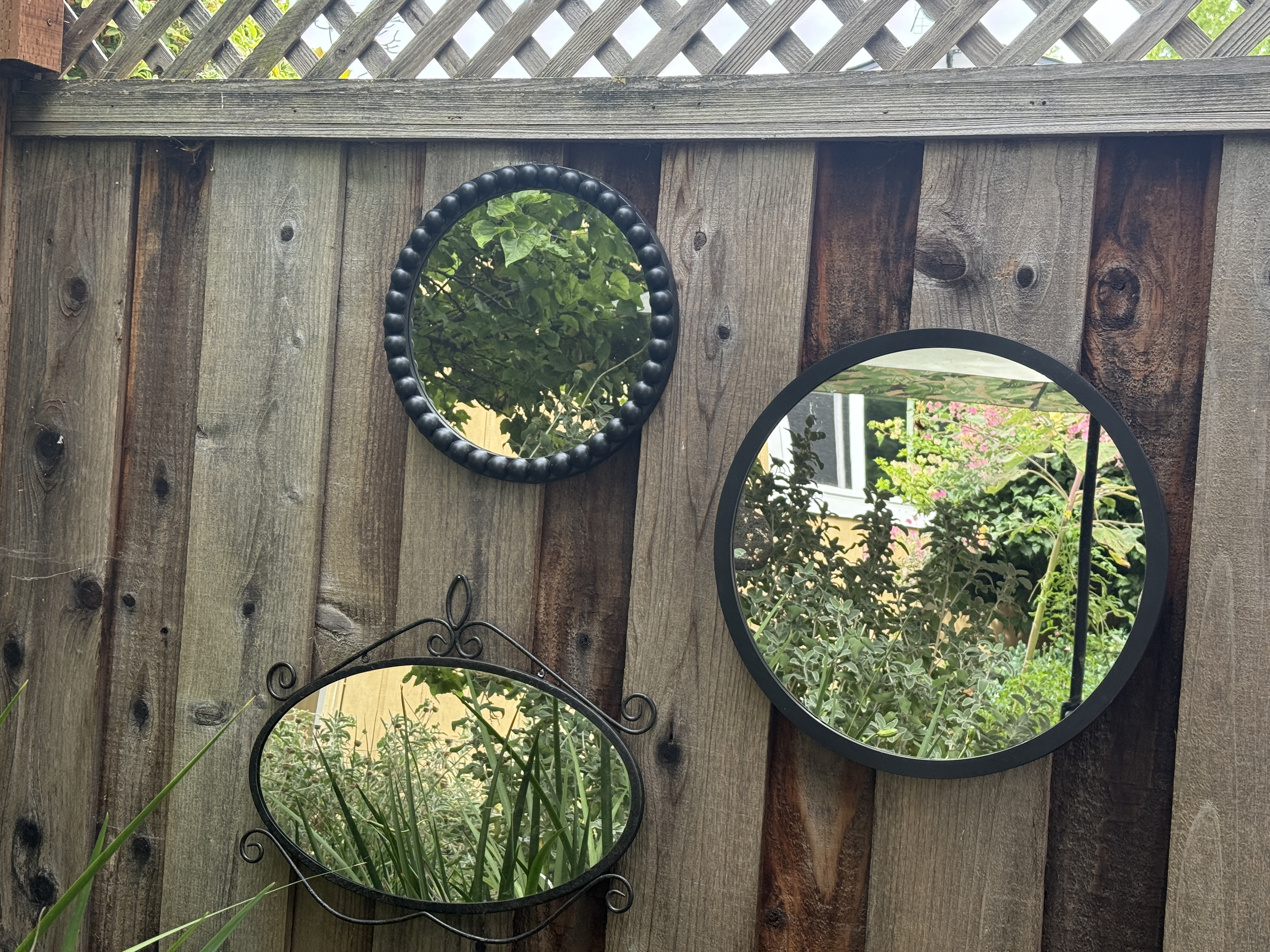
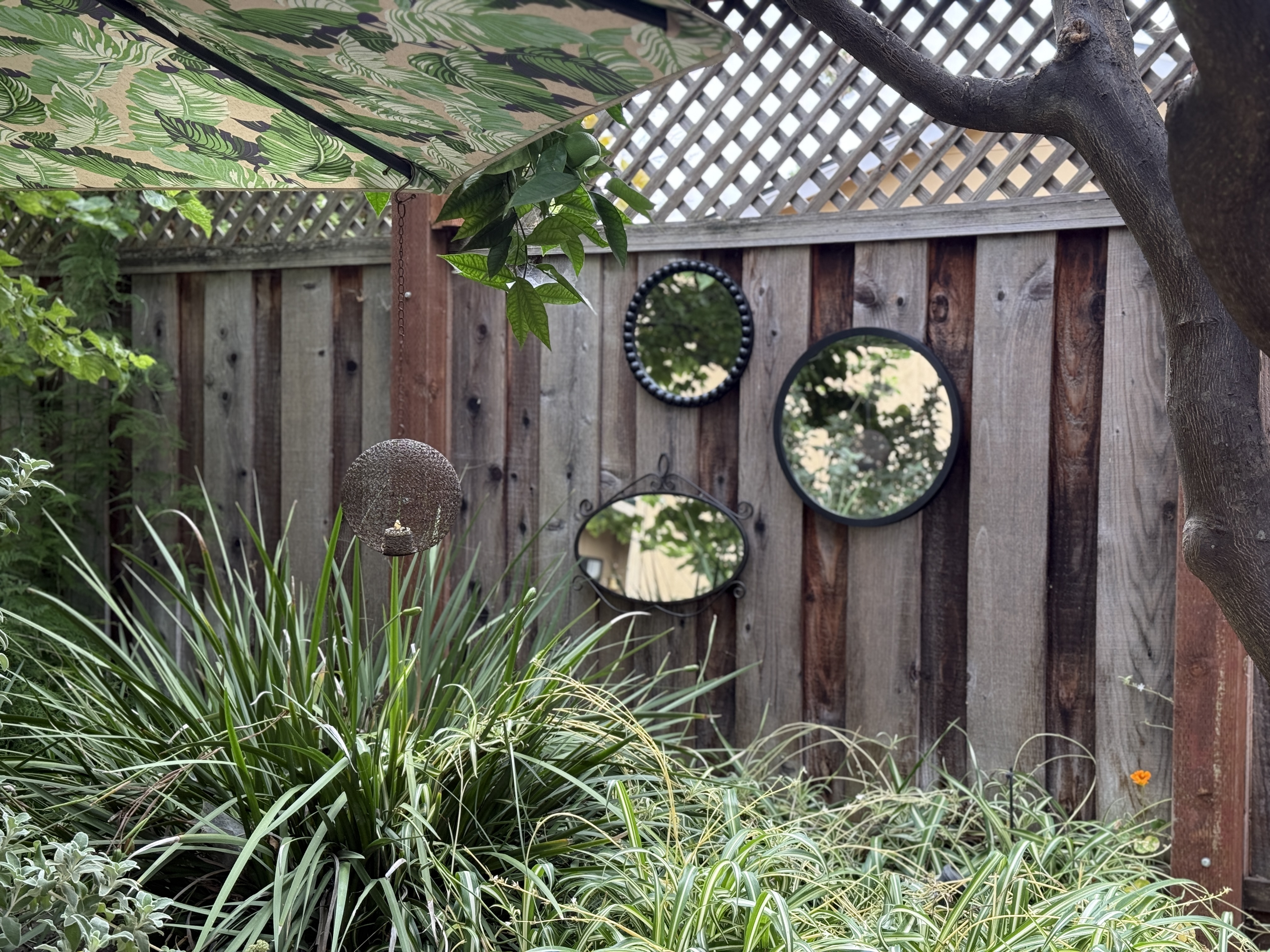
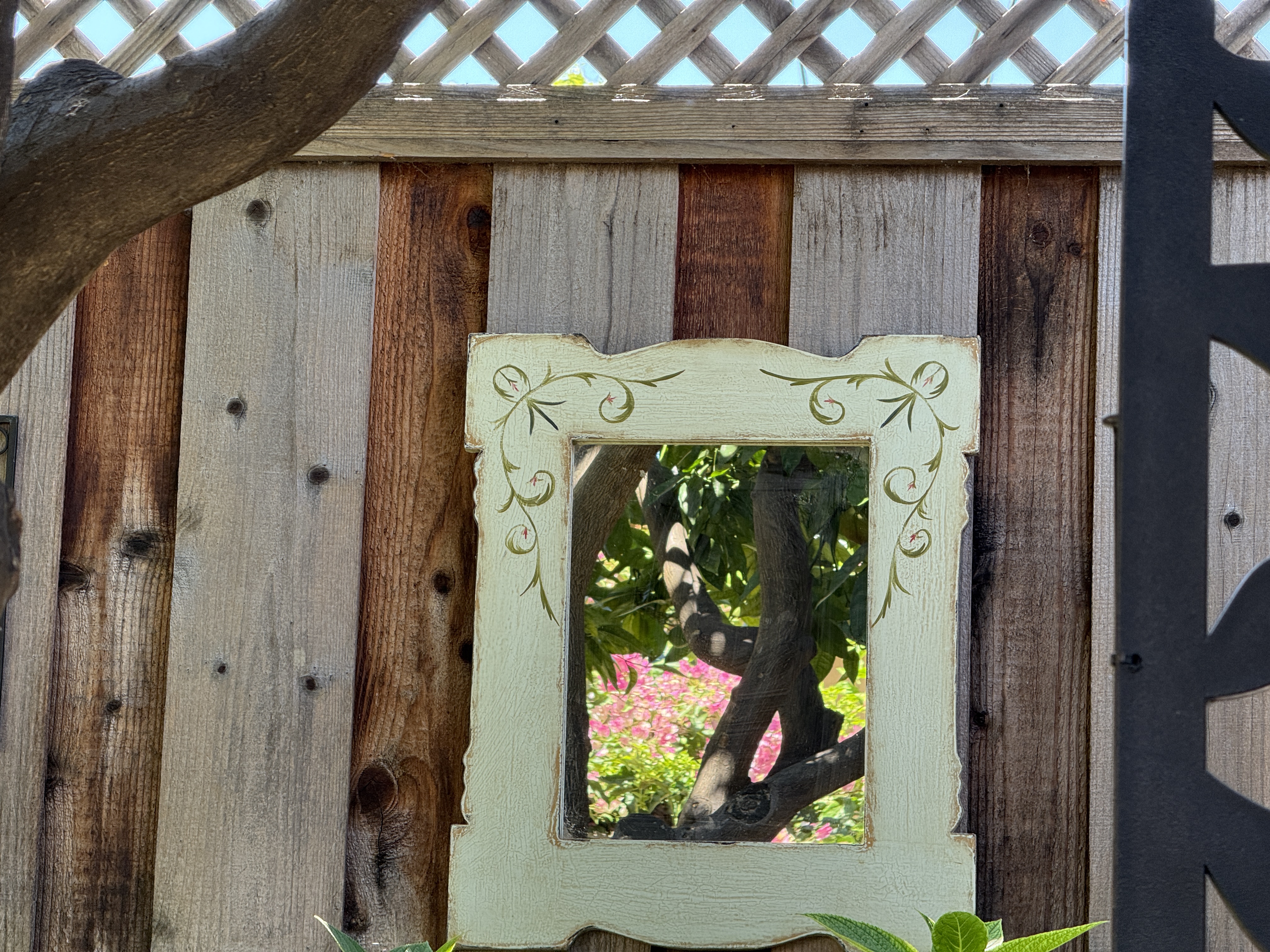
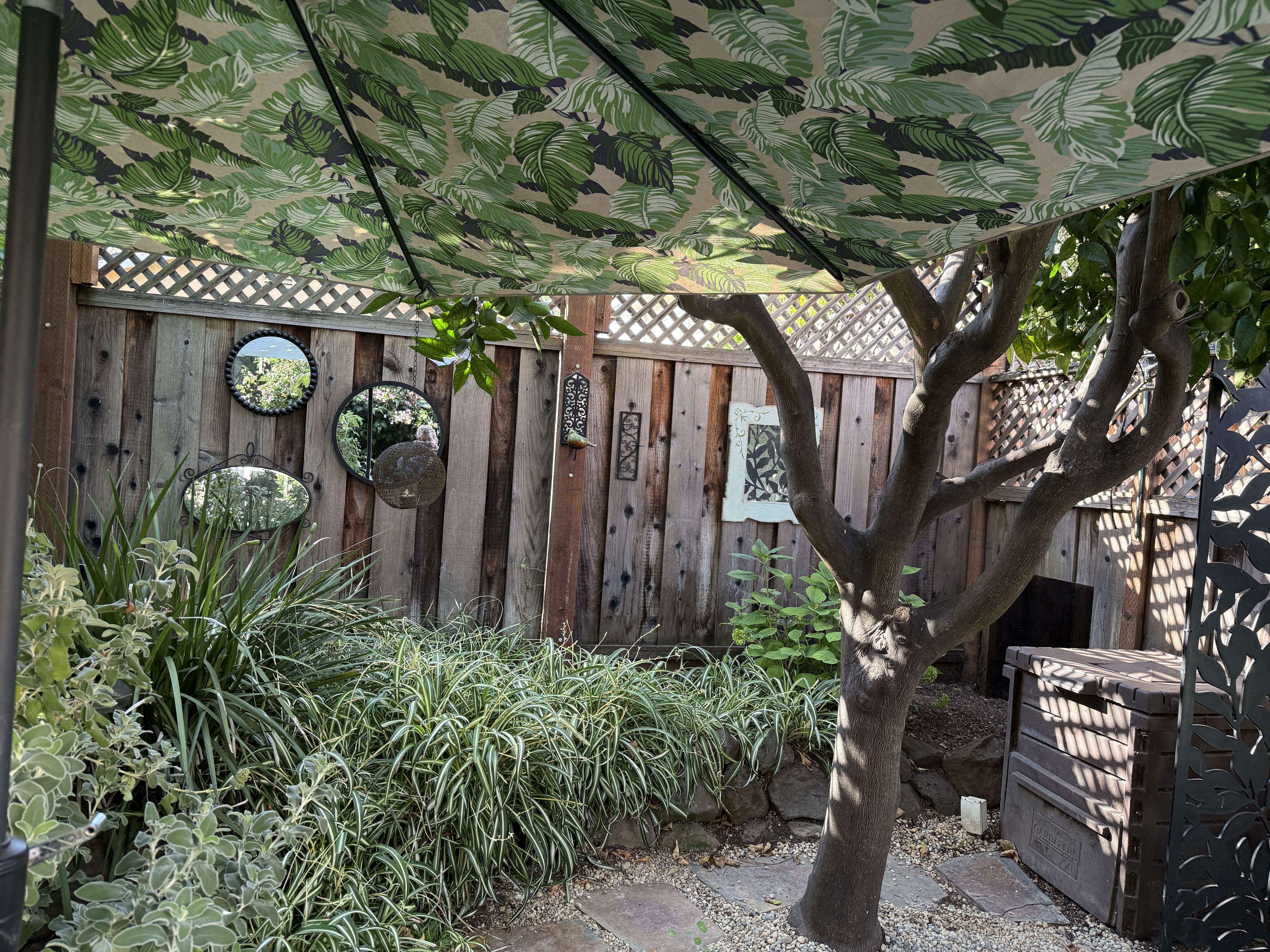
As we head into the cooler autumn months, I’ve been reflecting on a few garden projects, notably thrifting, painting, and arranging mirrors along the corner garden fence.

I’ve hung mirrors in the garden before, and continue to enjoy the placement. (summer, 2021) Why look at a dull, brown fence when you can hang mirrors instead?

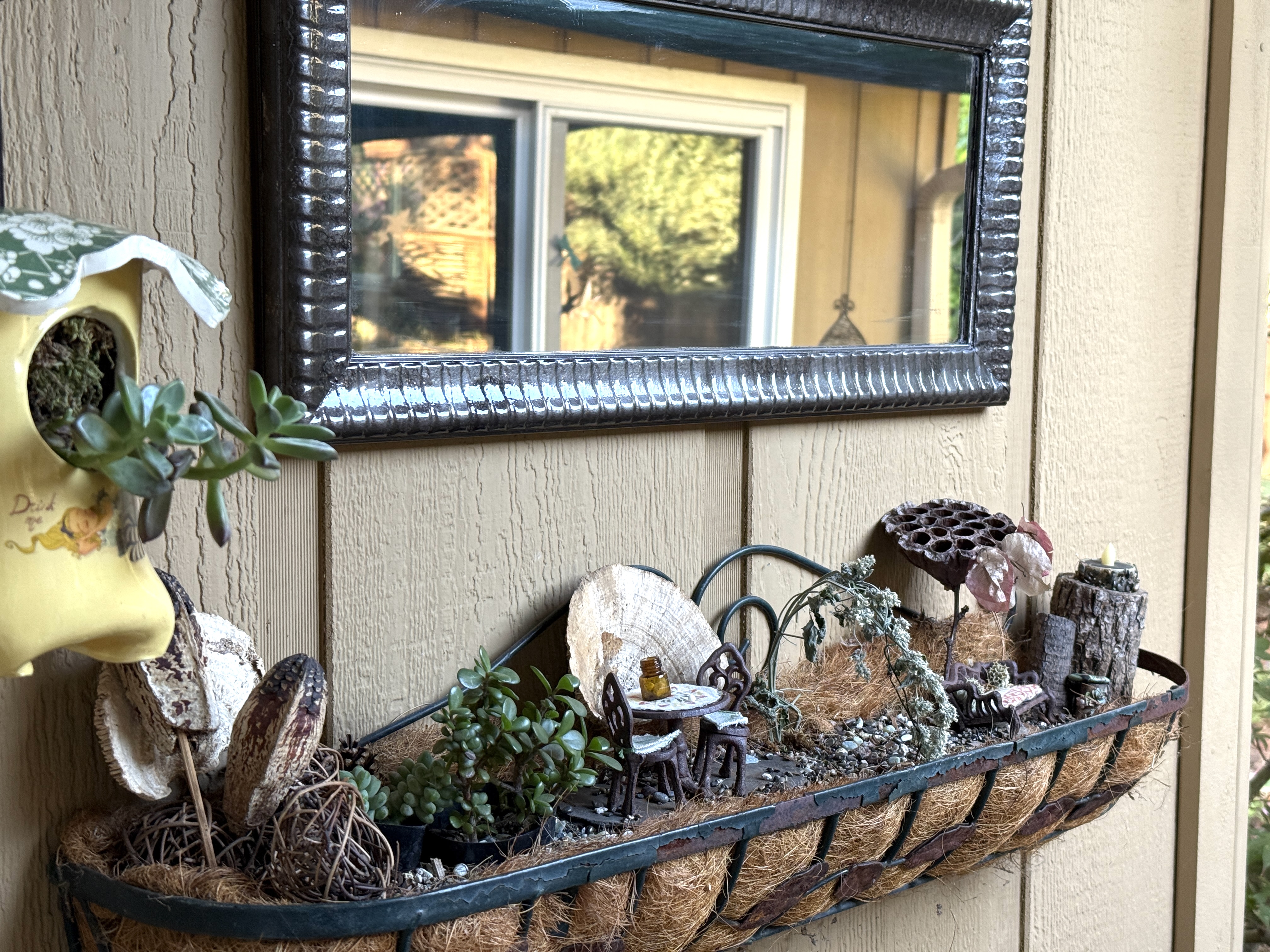
It wasn’t easy finding mirrors. I went to several thrift stores before my luck changed, and I found four mirrors at one of our local Goodwill Industries shops. Three of the mirrors had black frames, and the fourth was a shiny silver. I painted it a warmer color and hung it above my wall-mounted fairy garden.

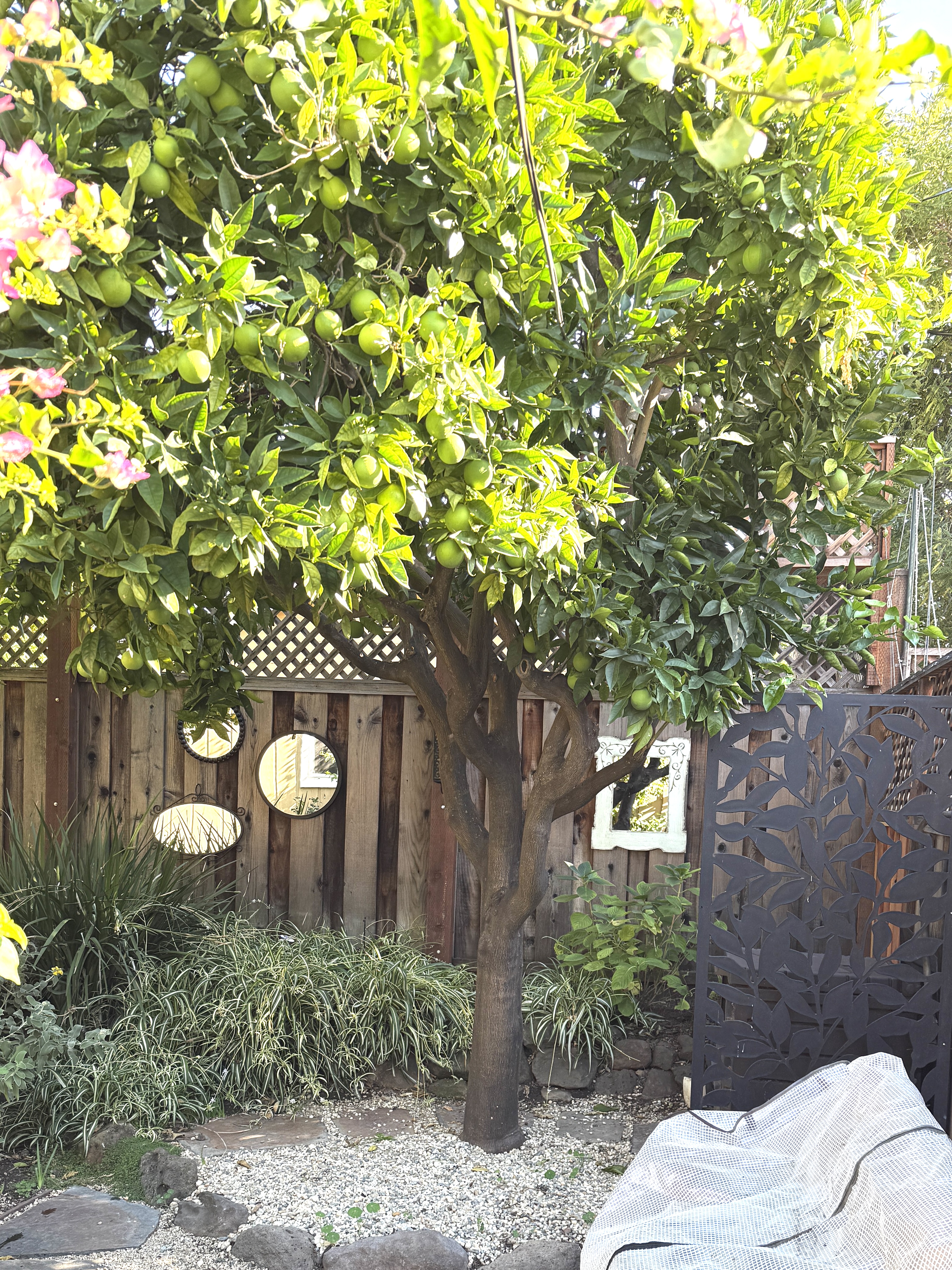
I hung the remaining three mirrors on the fence under the tree, only to realize I needed a few more to fill the space. Eventually, I found enough mirrors to fit the bill, and I’m pleased with the extra light and reflection they bring to that corner.

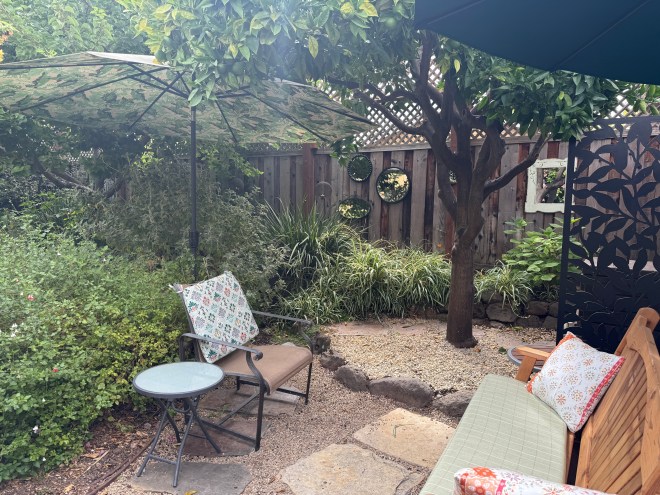
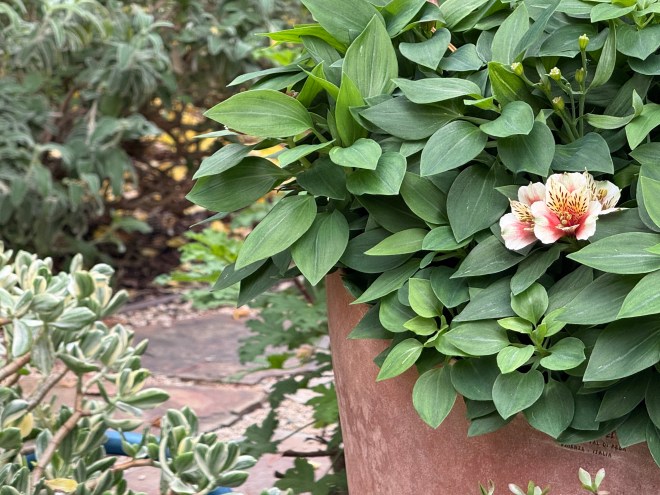
About a year ago, I made another change by removing the ferns growing under the orange tree in the same corner. The orange tree is about fifty years old, so the fruit it produces is no longer sweet. Further, the oranges are challenging to harvest. When we were younger, I climbed on the ladder to get some of the low-hanging fruit, but it wasn’t all that safe. We bought one of those extending poles with a fruit-gathering basket on the end, but it proved cumbersome. It also tended to break the branch with the fruit. The tree continues to provide shade and the wonderful scent of orange blossoms, but it had become a dumping ground of partially consumed fruit from hungry overnight critters. In the end, I hired a tree service to prune the tree, fruit and all, away from the fence. We’ve enjoyed a year without the mess of rotting oranges, fruit flies, and broken branches. I wish I had thought of it sooner.

Note: Move the slider, below, to see the orange tree and ferns, a year apart.

The last adjustment involved moving a molded panel with a leaf motif to disguise the enclosed compost system. Mike attached one side of the panel to the fence, and we repurposed a post to support the other side.

These changes opened up the space, allowing us to add a couple of chairs and small tables to accompany the glider. Removing the ferns lets us see the rock wall and the plants behind it, and we can now walk to and from the compost bin, especially in the wetter months, without rubbing up against wet ferns. I put down gravel and the self-seeded nasturtiums are coming up as predicted. They’re easier to manage, lower in height, and beautiful.
Another significant change to the garden involved removing our beautiful wisteria. It wasn’t a decision I took lightly, but in the end, it made sense. I’ll write more about that this week.

Sunflowers: It was the Squirrel’s all Along

American humorist Erma Bombeck once quipped that when she wanted her children to take their vitamins, she threw them on the floor and commanded, “Don’t touch those.” She always made me smile.

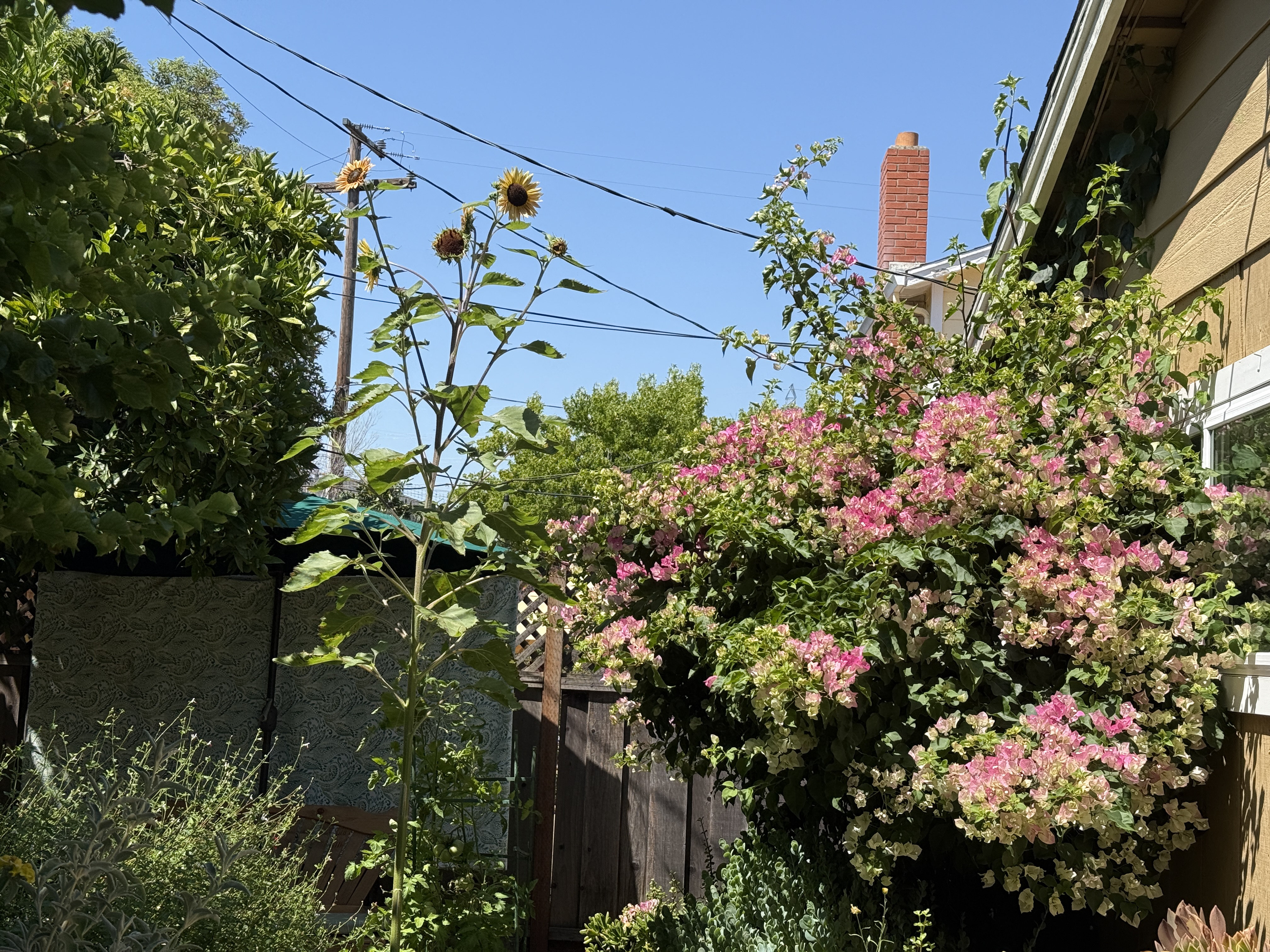
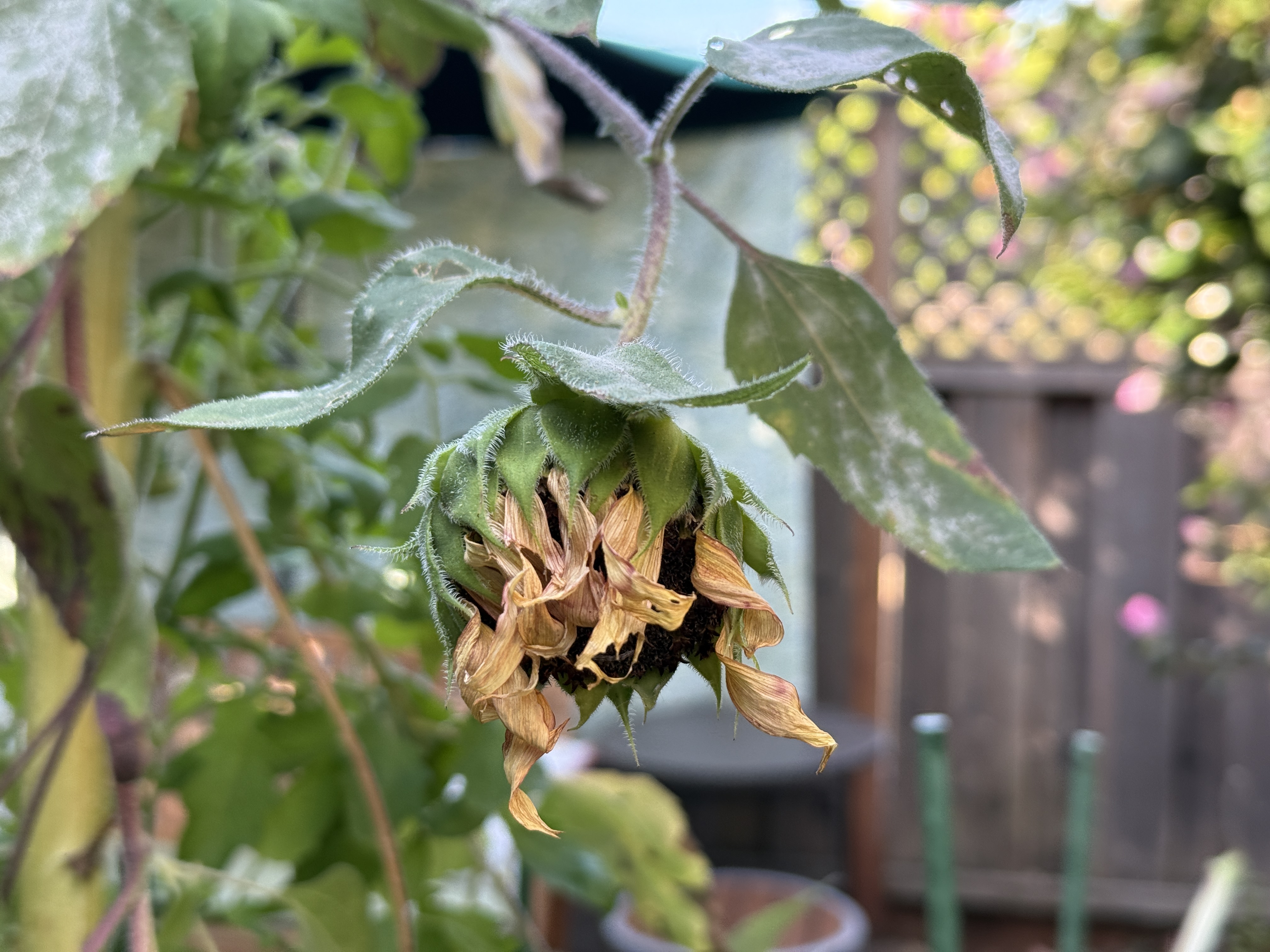
In recent years, I’ve loosely applied this approach to planting sunflowers. (This year’s “self-seeded sunflower gallery picutred below).

It’s not the seed’s fault that they are tasty morsels before they hit the ground. Over the years, I’ve planted seeds “three to a hill” as the packet recommends, only to have them dug up the following day. I’ve started seeds indoors, but end up with leggy transplants. I bought domes to cover my plantings a few years ago, and that seemed to work, but again, the plants weren’t as sturdy.

Last year, I bought a pair of tender seedlings from a local farm stand. One creased, folded, and closed up shop almost immediately. The other eventually succumbed as well.

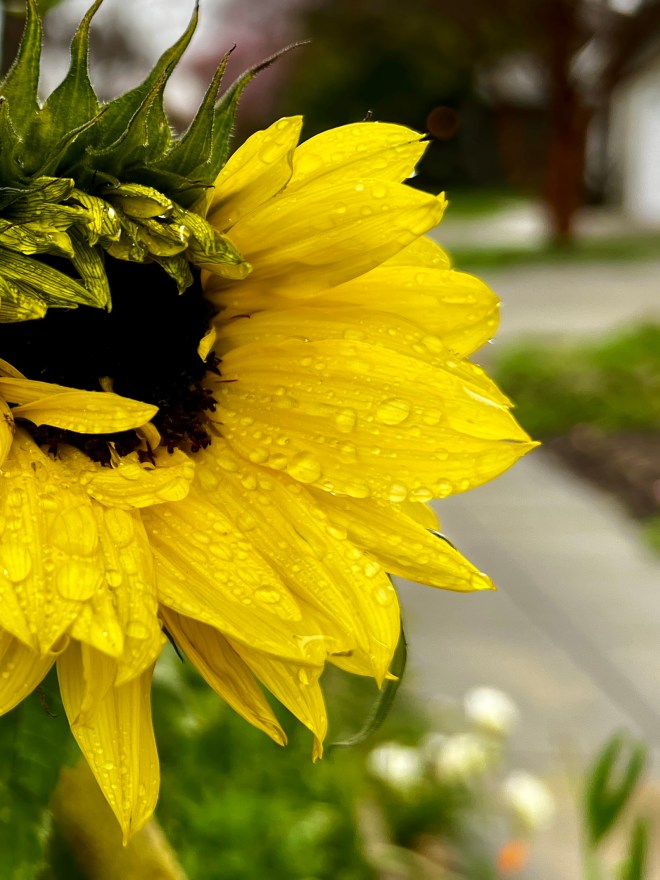
Then a wonderful thing happened. On the other side of the planting bed, a small sunflower plant appeared. Then another one. I couldn’t believe my luck. I didn’t plant them, yet there they were, tall and proud and happy in the sun.

Sunflower

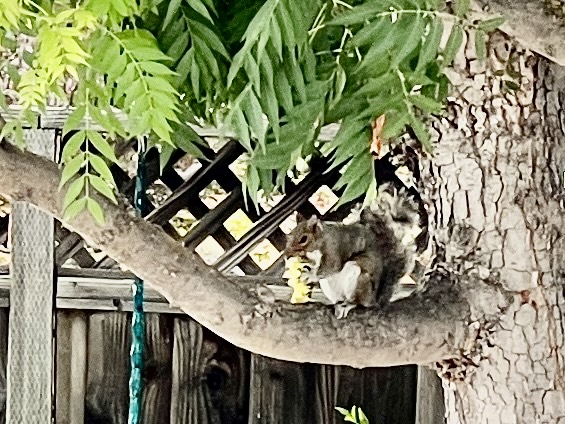
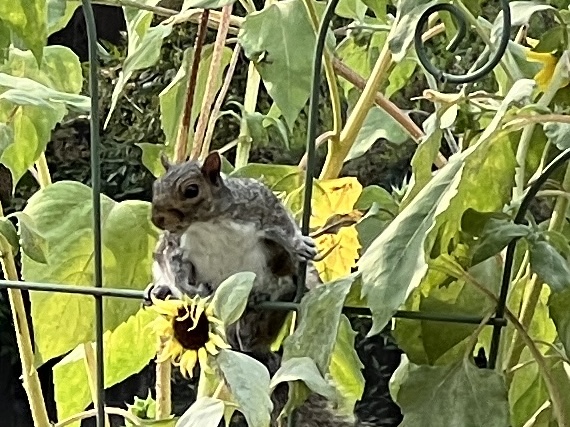
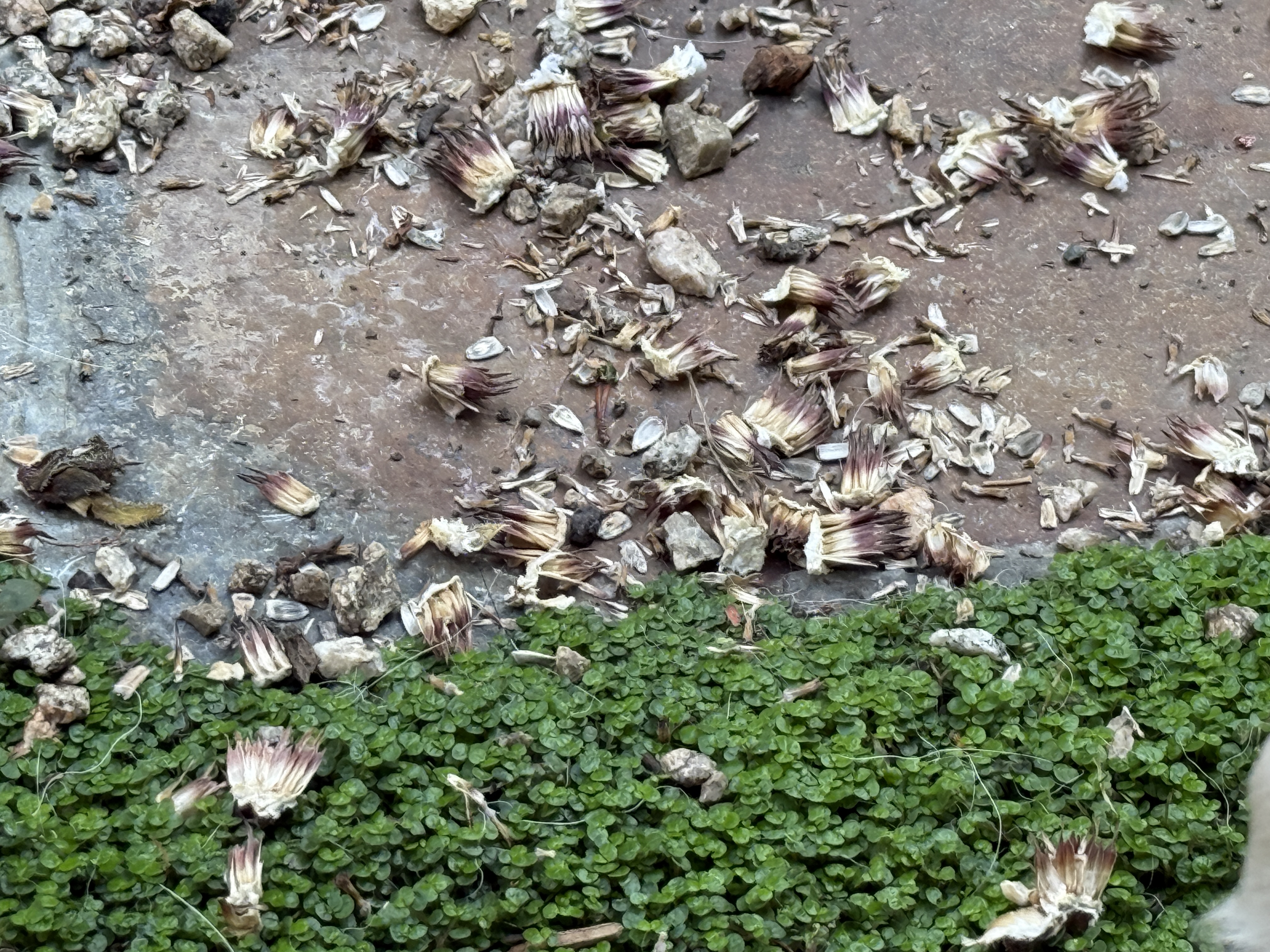
I checked on them every day, welcomed the bees with whispered tones in case my neighbors were within earshot, and enjoyed those golden flowers reaching toward the sun. As the flowers faded and the seeds formed, our neighborhood squirrels knew what to do.

In this scenario, the squirrels are Bombeck (dropping the seeds), and they’re also the kids on the floor (scrabbling to pick them up). Since they can’t eat all of them (did you ever hide the last cookie from a sibling?), they happily bury a few on the spot. Your’s truly becomes the “middle manager” nodding in agreement while sipping a bevy and checking social media every ten minutes while those squirrels get to work.

The “squirrel of life” is complete.

Tomatoes for the Win

By early spring, I’m dreaming of the promise of delicious, home-grown tomatoes. They are one of the great summer pleasures, succulent, sweet, and refreshing on a hot day.

When the goddess of gardens bestows her goodness on a crop, I bow to her greatness. I no longer take credit for a good season, nor do I blame myself for a mediocre one. Tomatoes are a fussy lot, requiring wind, but not too much; heat, but not excessive; just the right amount of water; and a placement in the garden that would make a garden landscaper proud.

If you find locations for your tomato plants that are akin to a witness protection program, you might avoid nasty pests like hornworms, aphids, whiteflies, and spider mites. That said, no guarantees.

When I traveled to Ohio for a week in July, I made sure that the men at home checked on the fruit production daily. You would think we were raising chicks instead of tomatoes.

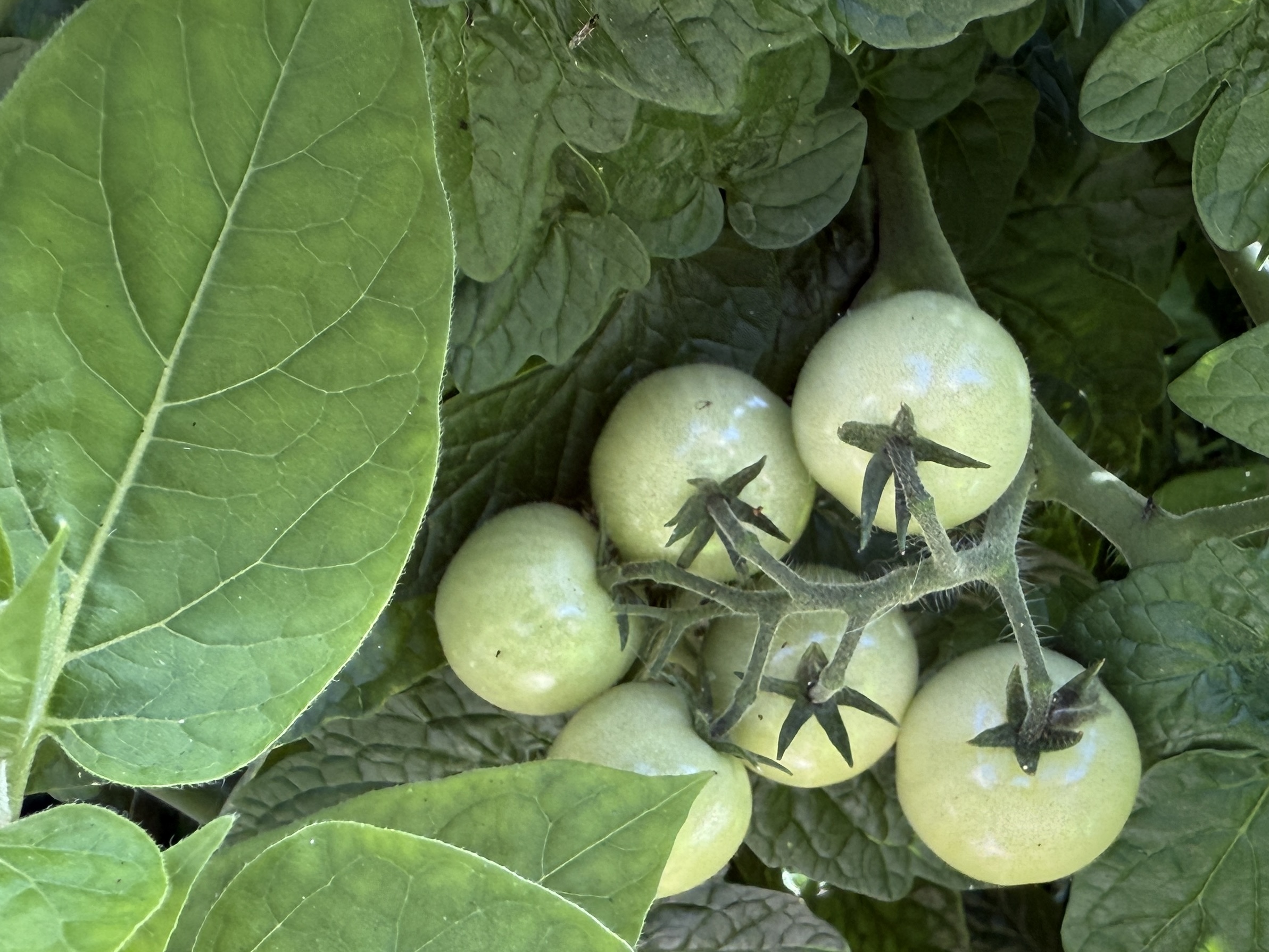
All this fuss has been worth it. Both the Beefsteak and the Cherry Tomato plants have produced mouthwatering fruit. We’ve enjoyed caprese salads, improved lunchtime sandwiches, enhanced green salads, and popped cherry tomatoes as a snack.

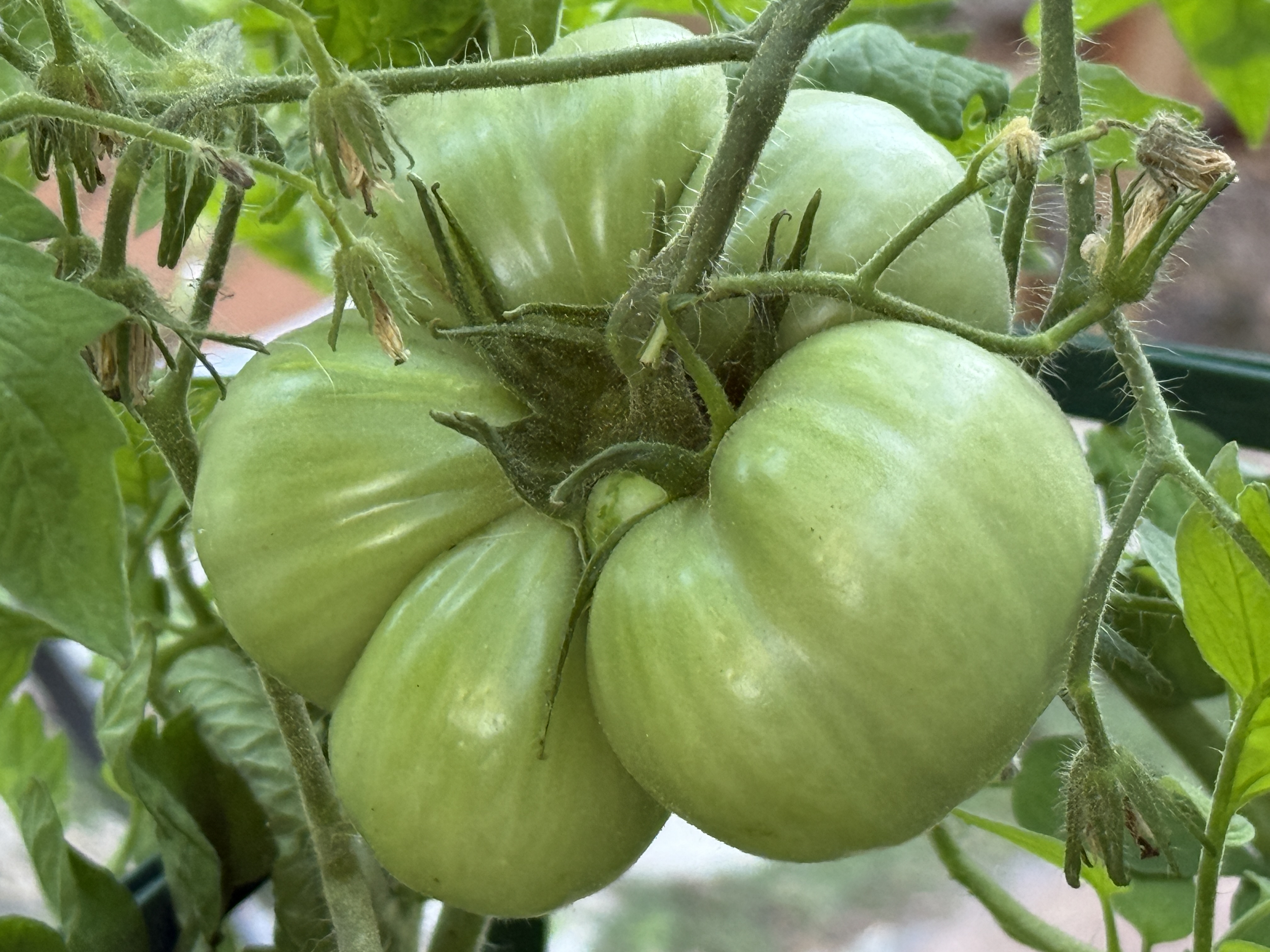
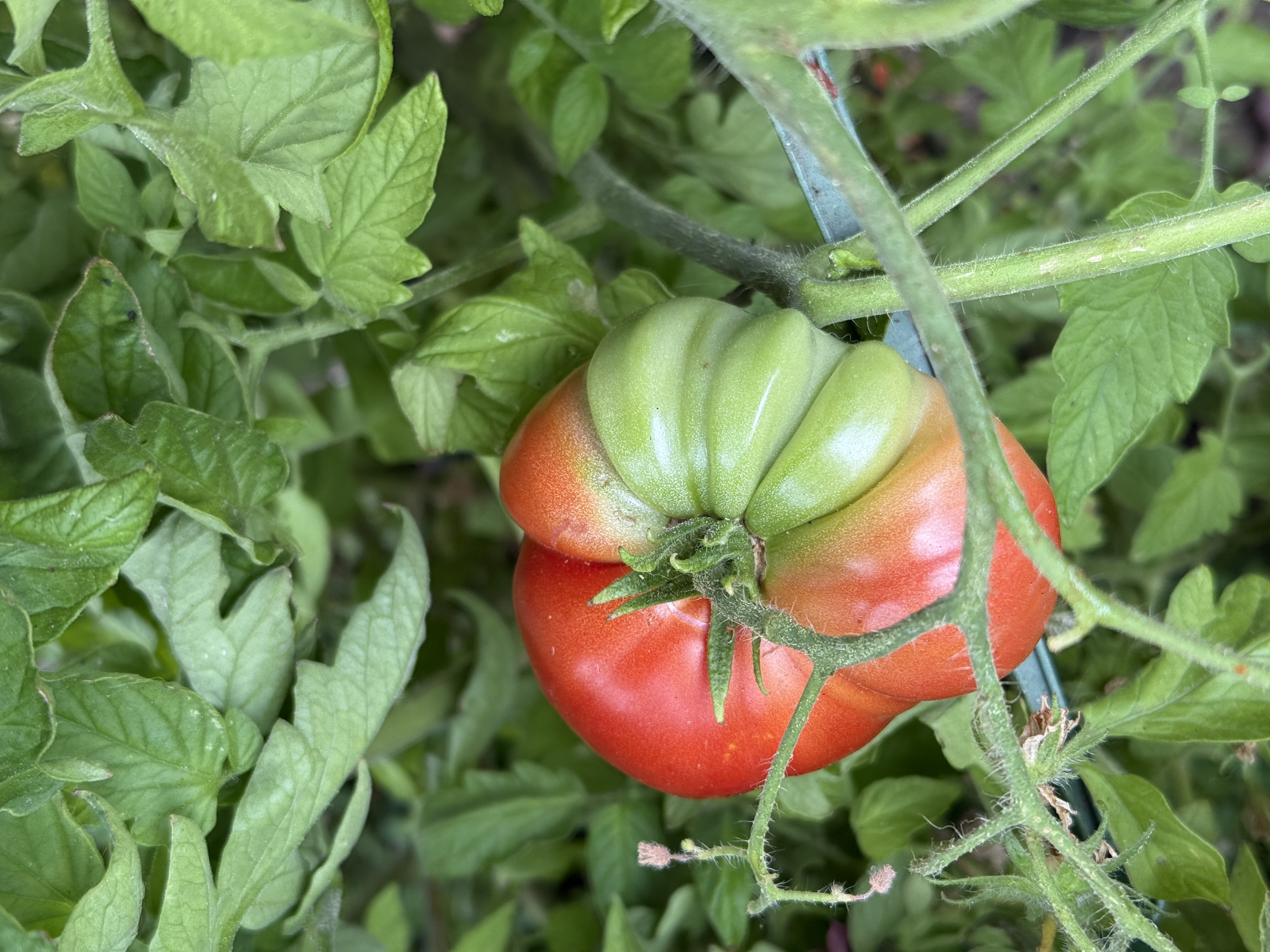
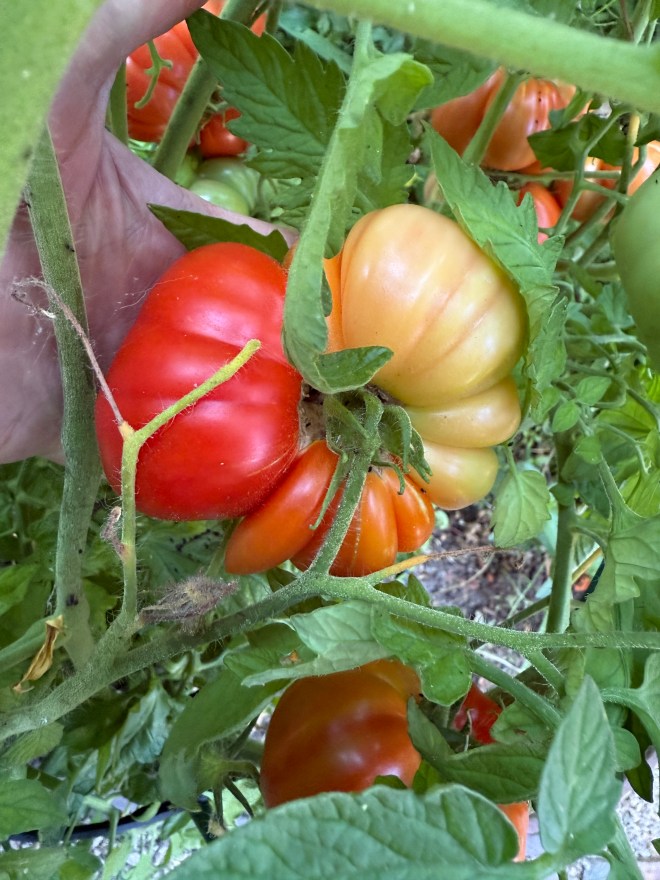
I harvested this magnificent crop of Beefsteak tomatoes on August 3. Tomato carnage began three days later.

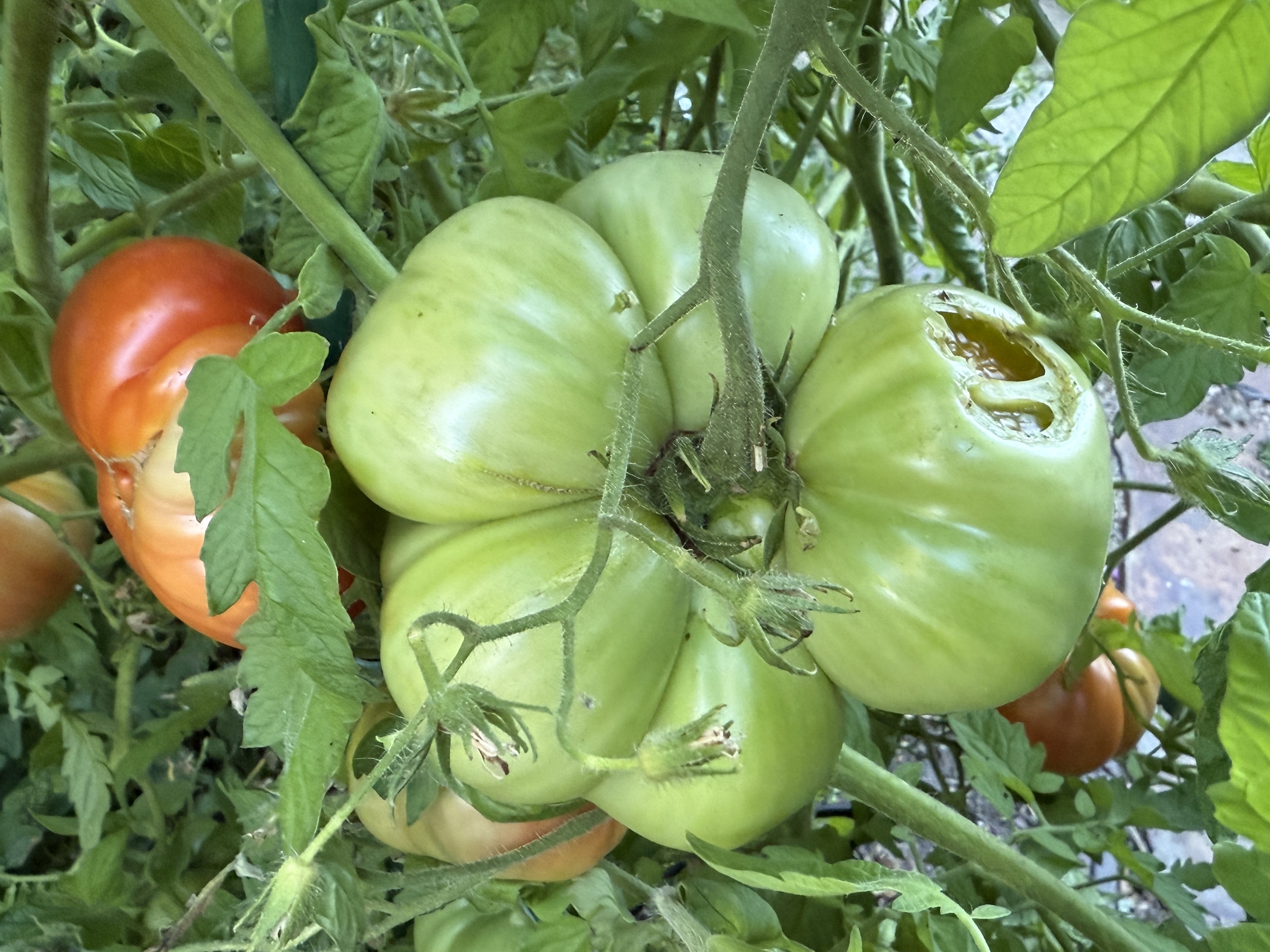
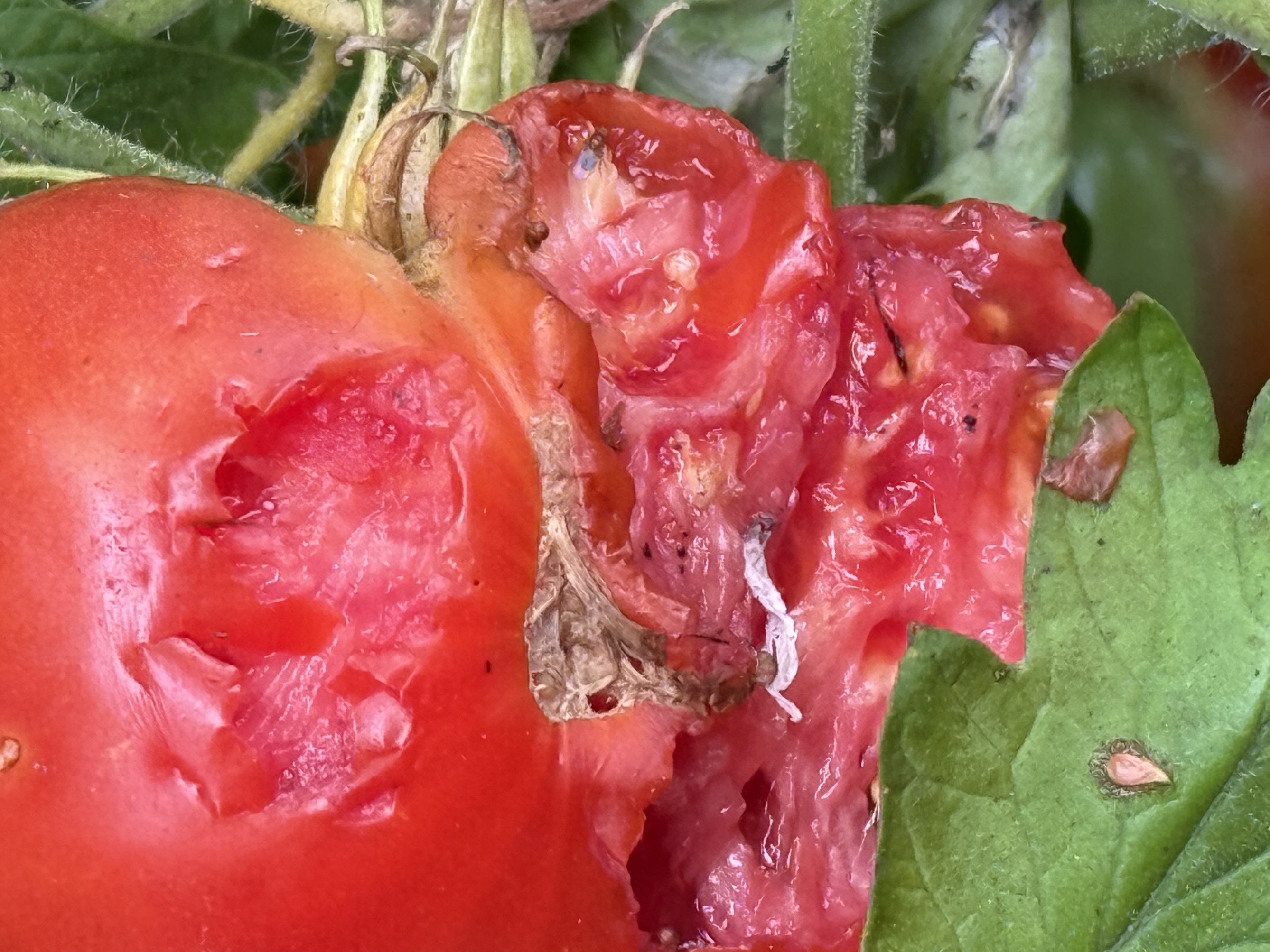
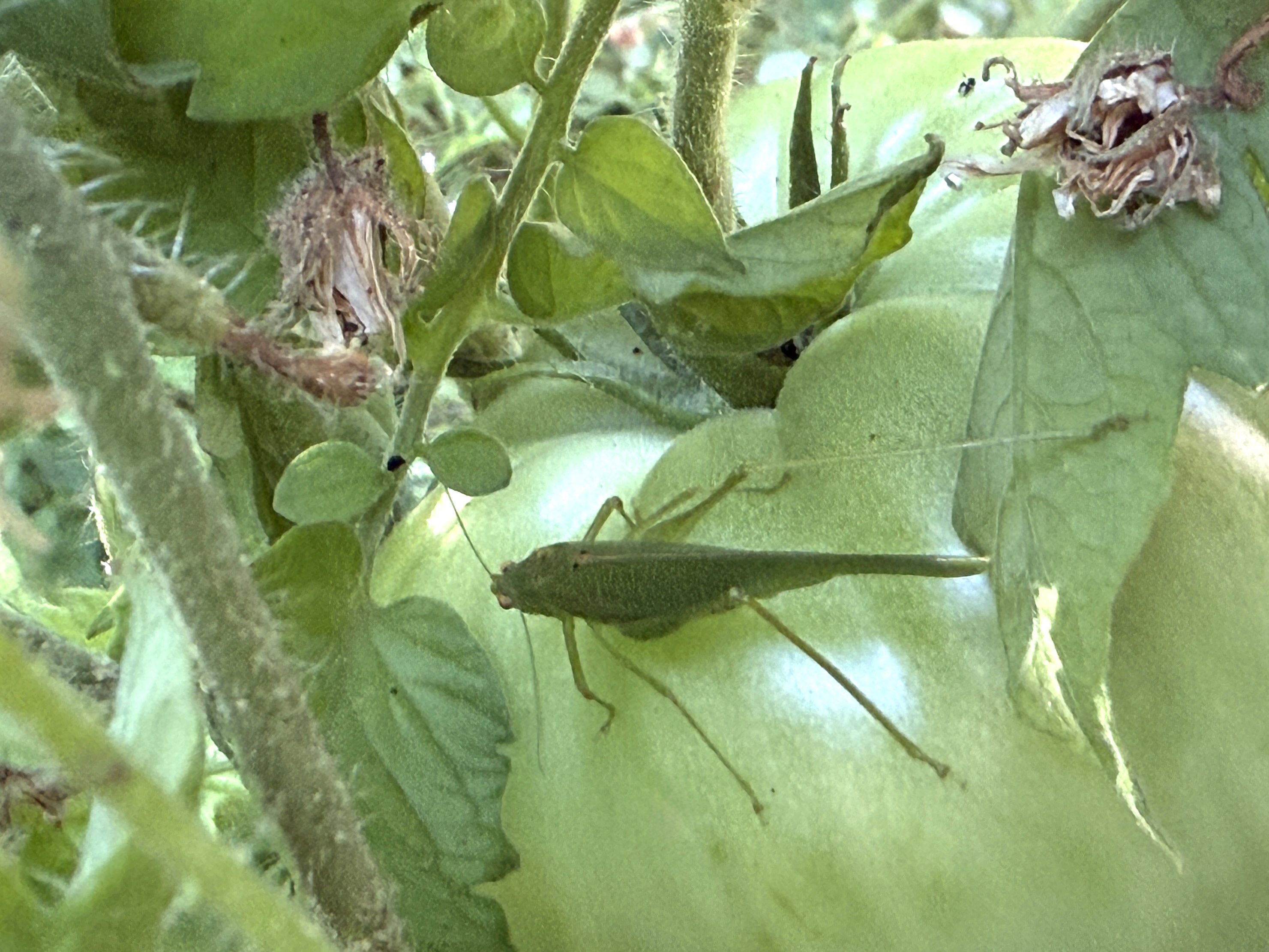
The first and largest tomato on the vine was the first to go. Just a few nibbles at first, but of course, more followed. In the ensuing days, I found a tomato splattered on the walkway, half-eaten fruit on the plant, and, comically, some critter dragged the remains of a tomato half way up the bougainvillea. Meanwhile, the plant continues to grow taller, parallel to the self-seeded sunflower, but as we head into September, it’s all but done.

All is not lost, though. The cherry tomato plant appears free of fruit until you peek behind the foliage. Tiny orbs of goodness continue to color unmolested, sure to delight our taste buds for a few more weeks.

We will enjoy every last one.

Fairy Gardens and Gossamer Wings

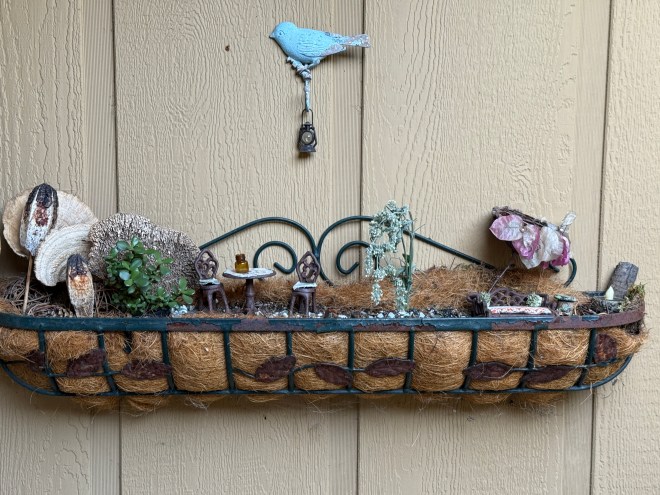
One of my fairy gardens is just outside our back door, mounted on the side of the house at eye level. It’s a daily reminder to stay in touch with my inner child, my muse, and lately, my sanity. Puttering in the tiny garden draws my attention away from reality for a few hours.
When we were young girls, my sister Sharon and I loved rearranging the furniture. It was a way to change our environment and to surprise our mother when she came home from work, and it didn’t cost us anything. We still laugh about it.

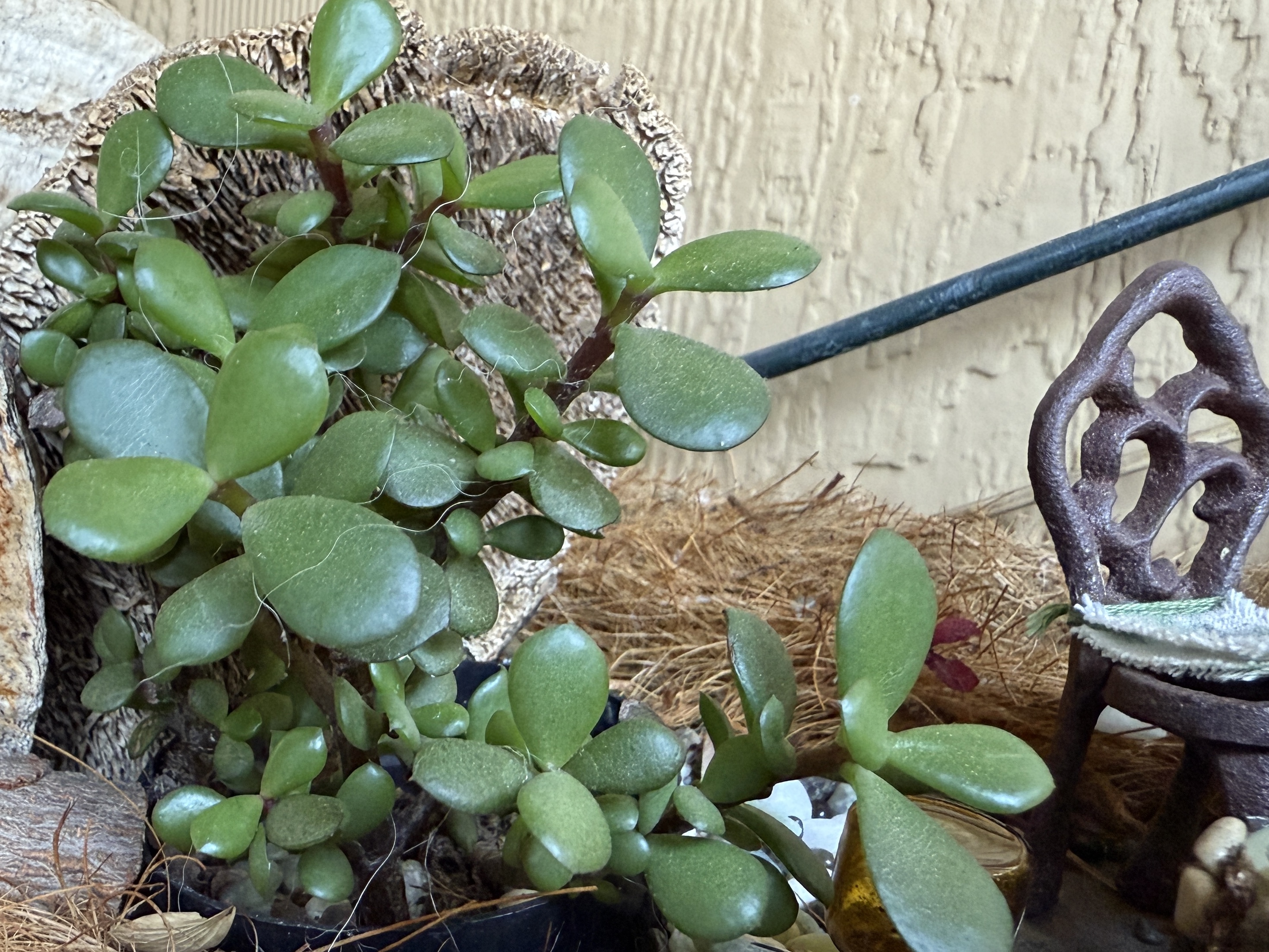
This week, I decided to rearrange the elevated fairy garden. I’ve had two small succulents planted there, but one has been struggling for a while.

They’re only a few inches apart, but one is getting too much sun. I transplanted it to a shady spot, considered buying another one, but in the spirit of rearranging the furniture, I opted for the assorted treasures I already had.

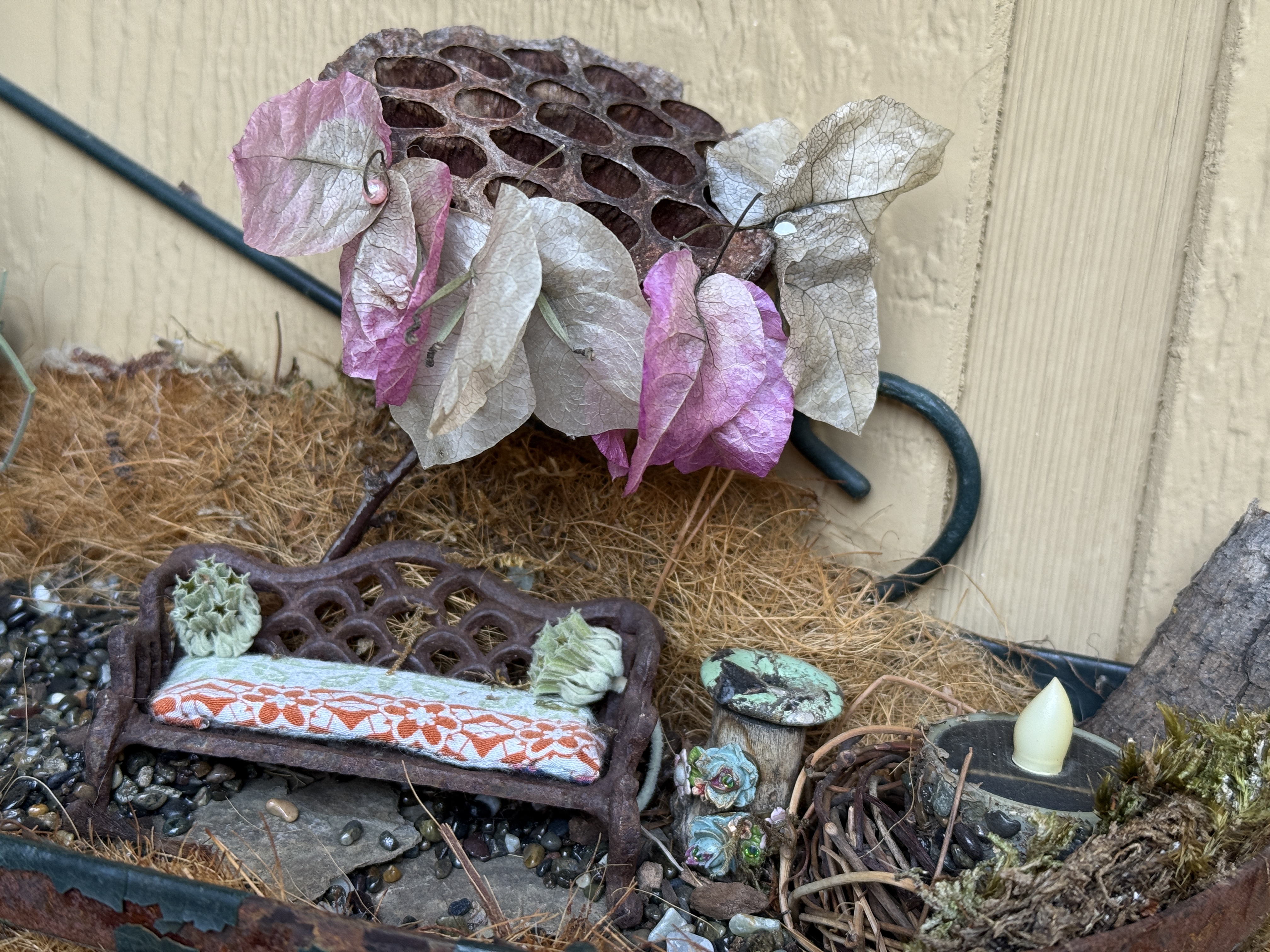
I moved the tiny garden bench to the spot vacated by the plant. Shade is essential during San Jose summers, so I crafted a wee sun umbrella. The umbrella’s structure is a lotus pod rescued from a floral arrangement sent to me as a thank you a few years ago. It’s been in the background of the fairy garden for a while. It’s now the base of the umbrella, with dried bracts from the bougainvillea held in place with sewing pins. I replaced the too-short stick with a twig from the fruit tree. Ah, shade.

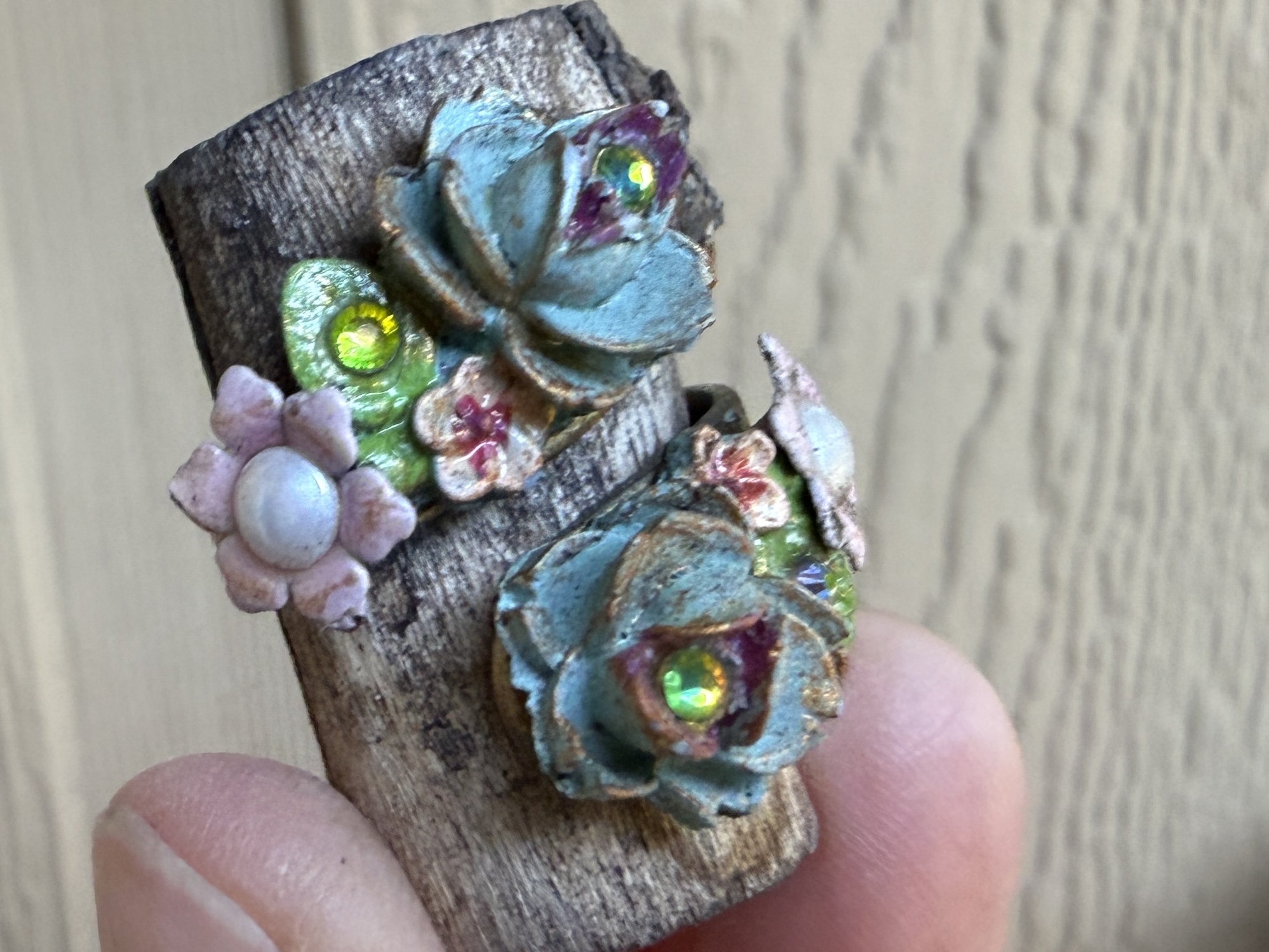
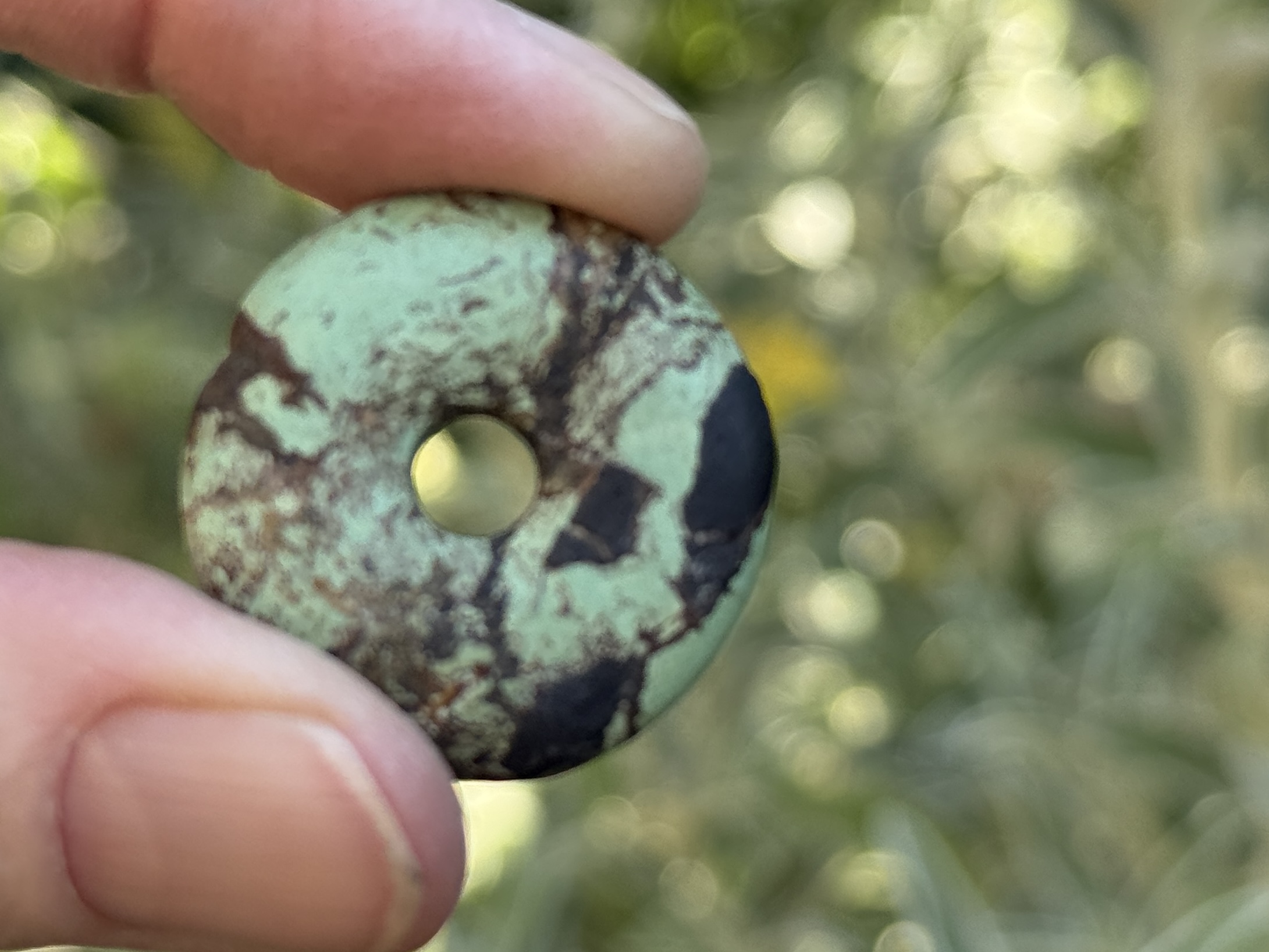
A couple of small seed pods were the perfect size for tiny toss cushions, creating a relaxing resting spot for imaginary visitors with wings. Next to the garden bench, I’ve improvised a side table from a small bit of garden debris, topped with a green finding from my button jar. I wrapped the base of the table with a ring purchased in Victoria, Canada, a few years ago. I loved the look of the ring, but it is so uncomfortable that I never wore it. It works well in this miniature garden, and I can enjoy it in a different way.

Mike suggested a solar light for the garden and I happily agreed. I wrapped the light with sticky tape, then rolled it in dirt and gravel to help it blend in. It’s nestled in the remains of twigs that once covered hanging lights.

Next up, I added a garden arch that now separates the table and chairs from the lounge.

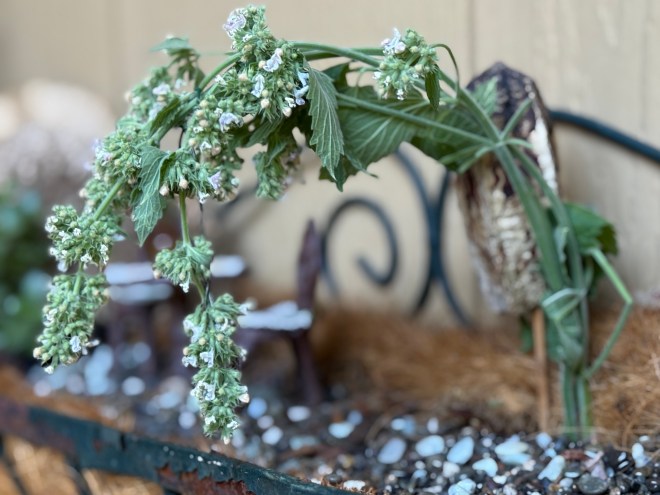
I braided three lengths of Nepeta, also known as catmint, while it was still soft, gently bending them into an arch and holding them in place with a length of florist wire. It’s drying nicely into a scented and wispy arch.

I invite you to close your eyes and imagine yourself in flight with gossamer wings and a light heart. The garden is ready for you. All are welcome.