A Wing and a Prayer

Praying Mantis

Praying Mantis

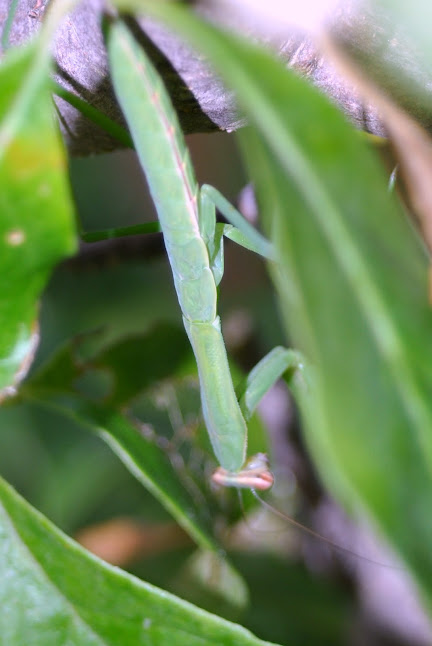
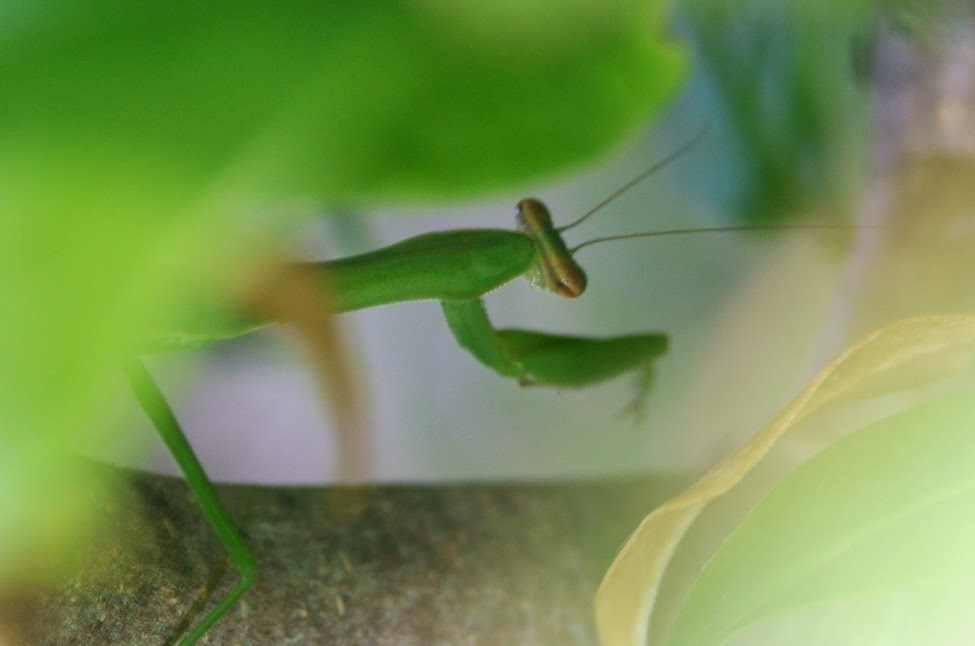
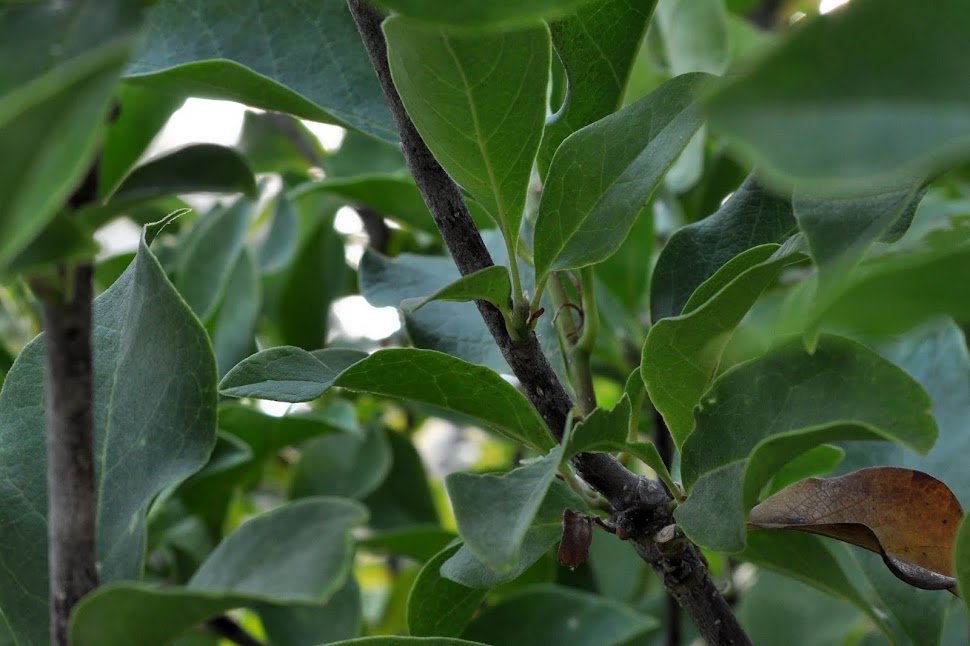
Mulling over my options in front of our infested Magnolia tree, I noticed an interesting green shape on one of the leaves.  It took a moment for my eyes to adjust before realizing I was staring at a Praying Mantis.

I squealed at my husband to please run and get the boys and the camera, while I kept my eye on our new best friend.  It was incredible the way it matched the color of the leaves.  My older son thought it was “creepy,” but my 12-year-old likes bugs  so he was excited to see one in our garden.

Mantids are beneficial for the garden, but none of my reading yesterday suggested them for scale. Wouldn’t it be amazing if this shiny green creature planned to feast in the tree?

Mantid Looks Away

Mantid Looks Away

Mantid Stretched Out

Mantid Stretched Out

Check out PrayingMantis.org to learn more about these fascinating insects.

Garden Fail: Scale

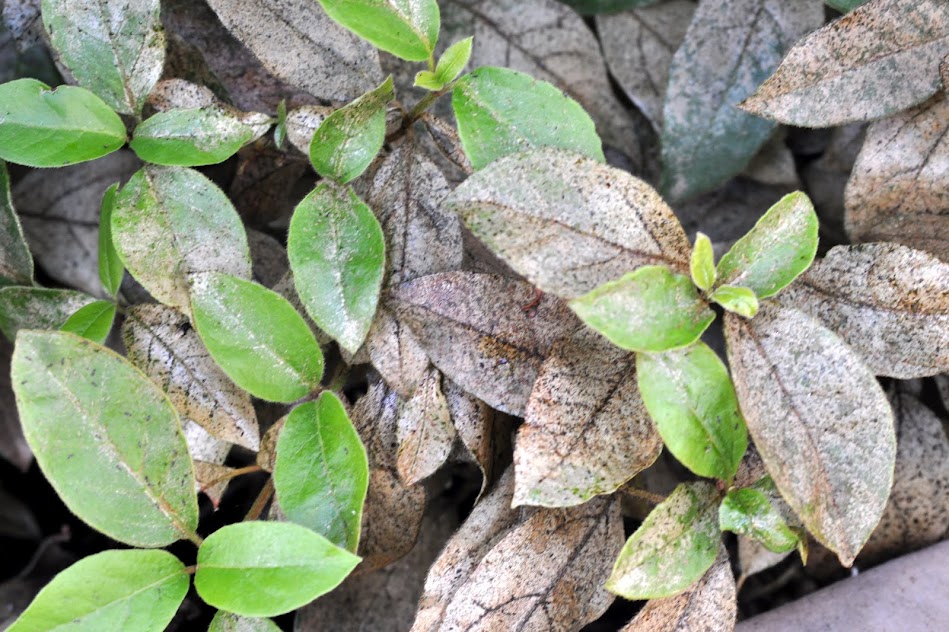
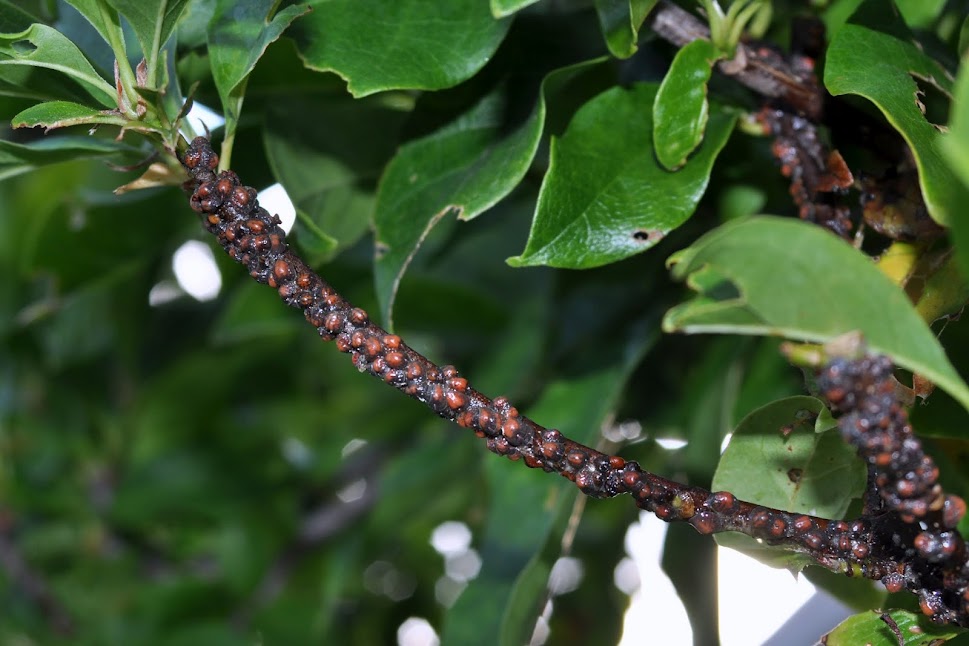
Our purple tulip Magnolia has scale, an infestation as repulsive as it sounds. It’s equally harmful and can ultimately kill the tree if left unchecked. We’ve been researching organic solutions, preferring beneficial insects if possible.

From the reading I’ve done, the scale may have been present months ago.  Beautiful blossoms covered the Magnolia last spring, with no signs of the scale.  In late June, however, I noticed some damage to of the leaves of the inner tree and only then did I discover the scale.  We have all the tell-tale signs, now that I know what to look for:

  • Crusty bumps along the branches
  • Sticky leaves caused by scale excretions
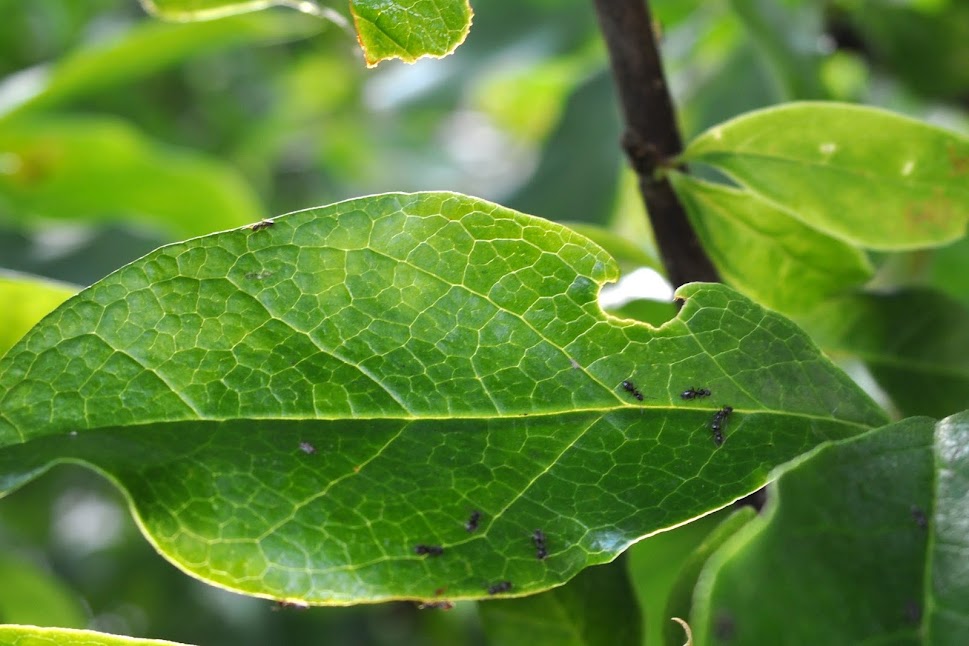
  • Ants on the leaves.  They eat the sweet excretions and are known to defend the scale since they provide a food source.

Here are a few more details from the College of Agriculture Sciences at Penn State:

Magnolia scales are usually massed on the undersides of 1 and 2-year-old twigs, with heavy infestations completely encrusting branches. Other indicators of a scale infestation include reduced foliage and flower production, undersized leaves and twigs, and a black sooty mold on the foliage. After digesting the plant fluid, the scale excretes a clear sticky liquid called honeydew, which provides an ideal substrate for the black sooty mold fungus to develop. Magnolia scale infestations often go unnoticed until the leaves and twigs of the host plant turn black with sooty mold. The honeydew also provides a food source, attracting ants, bees, wasps and flies.

Healthy Magnolia Branch

Healthy Magnolia Branch

Scale Infestation on Magnolia Branch

Scale Infestation on Magnolia Branch

Ants eat the excreted Honeydew

Ants Eating the Excreted Honeydew

The more I read, the more discouraged I become. Even the less organic solutions are often ineffective.  I read an extensive article saying that Predatory Beetles worked well, only to learn they are no longer commercially available.  Aphytis melinus is another possibility, and probably our next, best option. Pruning away the worst of the branches seems like a good idea, too.  I would hate to have this spread to our larger magnolia just a few feet away.

Suggestions welcome!

Walking and Talking With My Pumpkin Vine

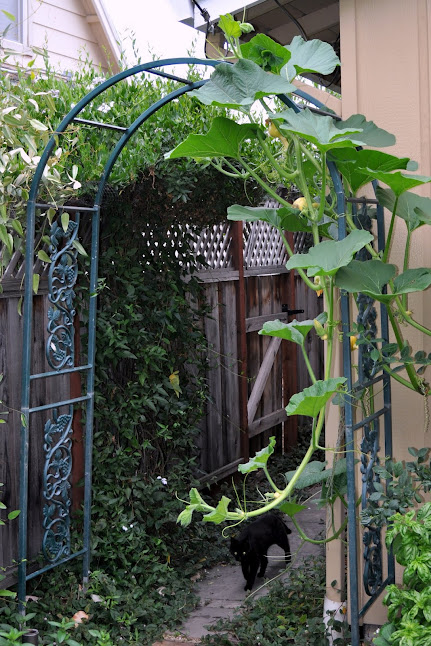
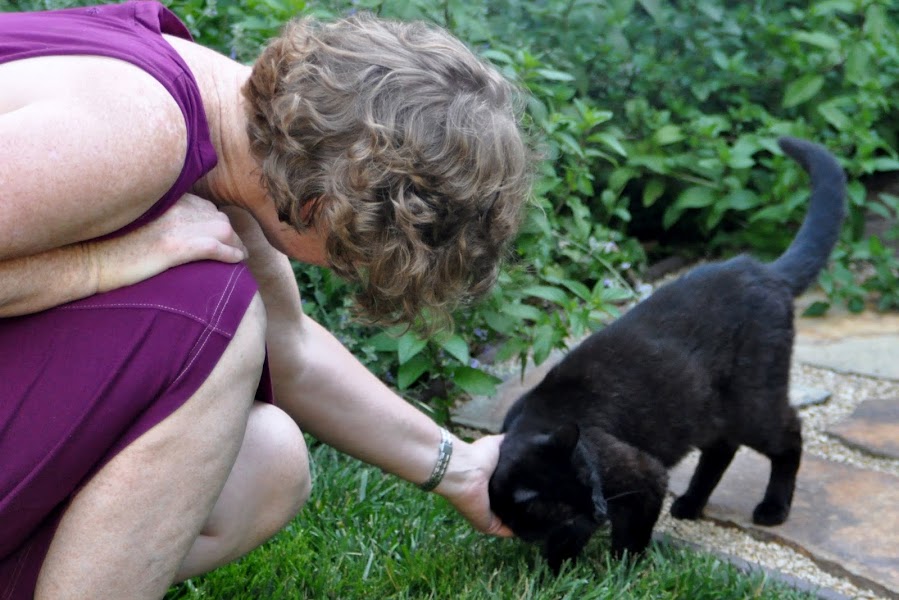
Video camera in hand, I walked the garden last night, taking traveling shots of the pumpkin vine. That’s my cat, Slinky, at the start of the video who is always glad to find me in the garden.  I look forward to seeing  her sweet little face peering around the corner.

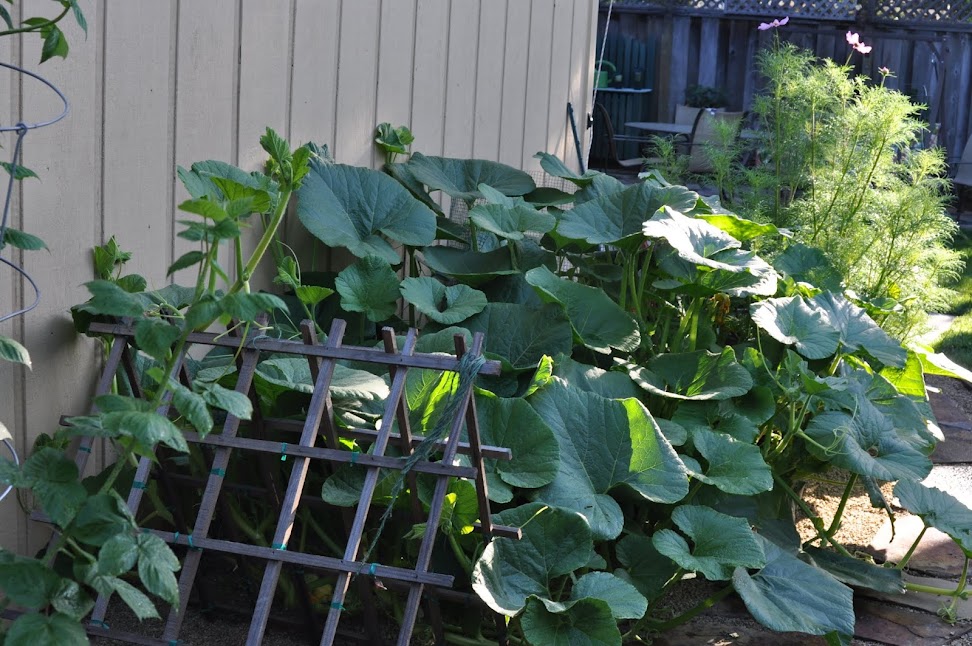
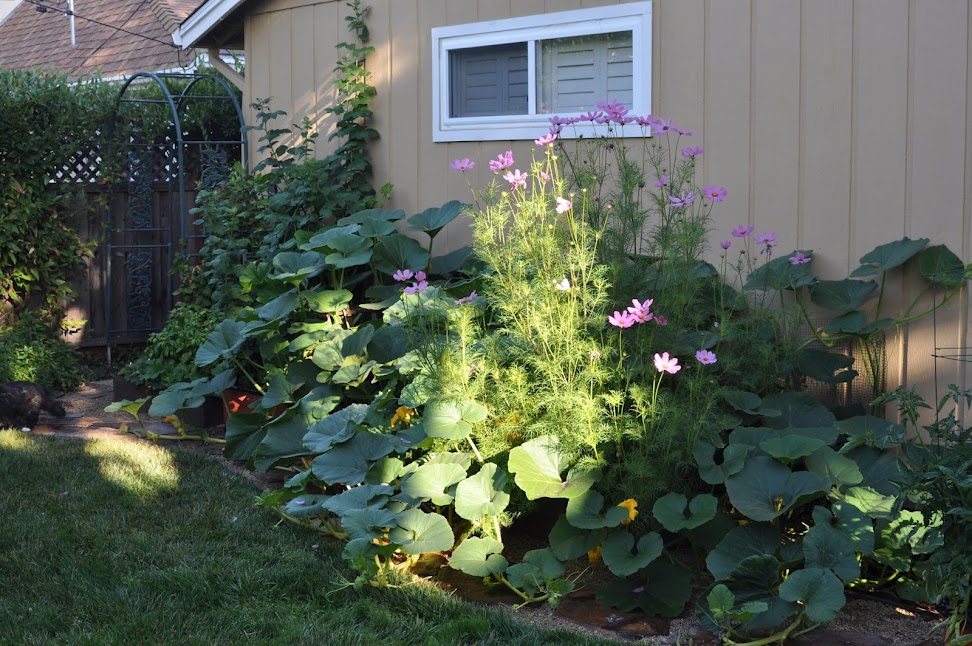
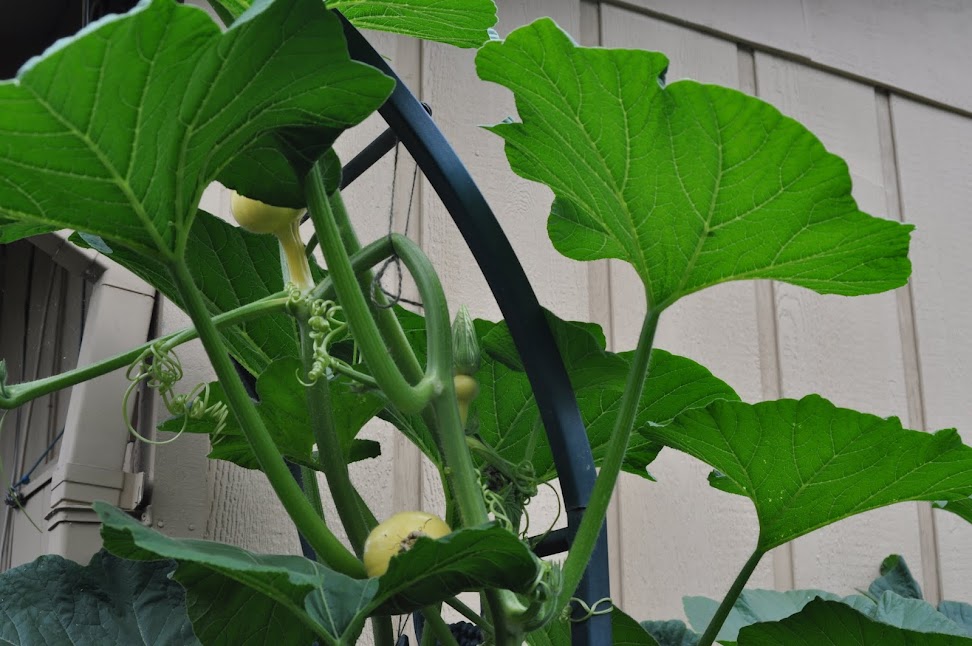
It’s been an exciting year in our pumpkin patch, thanks to a self-seeding vine in mid-April.  The vine traveled the length of the house, before shooting up the side of an arching trellis. I tied the vine with string to support the weight of some developing fruit. From there it trailed back toward the ground.  Last night I redirected the newest growth, a u-turn if you will, before it crossed the side yard and headed toward our neighbor’s fence.

Come along for the tour:

Pumpkin’s Progress in 90 Days:

Watch Me Grow

Watch Me Grow

Getting a Head Start

Getting a Head Start

Already Dwarfing the Indoor Transplants

Already Dwarfing the Indoor Transplants

Heading West

Heading West: Trellis Number One

Heading for Trellis Number Two

Heading for Trellis Number Two

Up, Over and Down Trellis Number Three

Up, Over and Down Trellis Number Three

Hanging on By a Thread

Hanging on By a Thread

Grass: The Long and Short of It

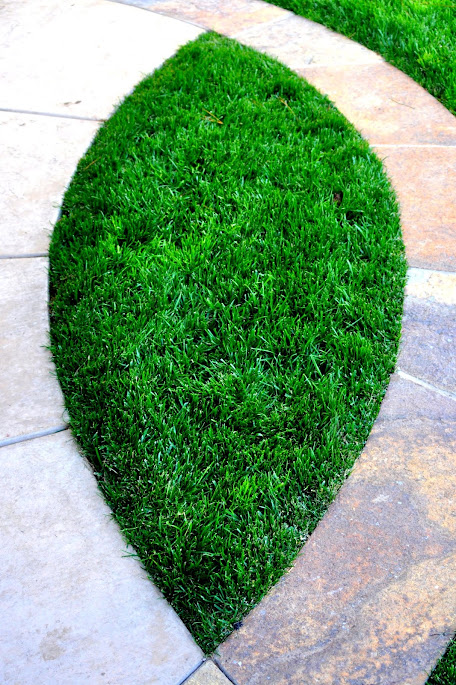
Green, green grass of home

Green, green grass of home

Silicon Valley is known for its innovations and mild temperatures, but not for its annual rainfall.  In a good year our arid climate averages 14 to 18 inches of rain. Planting grass should be an extravagance in this highly populated, rain-thirsty climate.

We have healthy, water-guzzling grass growing in our own yard, as do our neighbors, up and down the block. Planting a lawn is a suburban tradition, but one that probably needs to end. For years, a trip down the street of an average neighborhood revealed a vast expanse of green, carefully grown, manicured, fertilized, trimmed and of course watered lawns.

I struggle with this as I’ve become more aware of the toll it takes on our environment. When we redesigned our garden, I was all for a reduction in our lawn foot print, but my husband wanted to maintain an expanse for the boys to run and play.  When they were smaller, they ran around on the grass, tumbling, wrestling or dashing through the sprinklers on hot days.  It was a safe place to play, breaking falls and cooling tender feet. They don’t play that way anymore.  Perhaps a lawn is something we maintain for a finite amount of time, like sandboxes and swing sets.  Once our children are grown, we’re happy to replace those things.  Why not our thirsty lawns?

Could replacing lawns be the next paradigm shift?  Ashtrays are no longer standard in automobiles or airplanes.  Twenty years ago that was unthinkable.  As our consciousness rises, so too will our innovations.  When we say “going green” it will have nothing to do with our love affair with the front lawn.

Cooling Off in the Grass

Cooling Off in the Grass

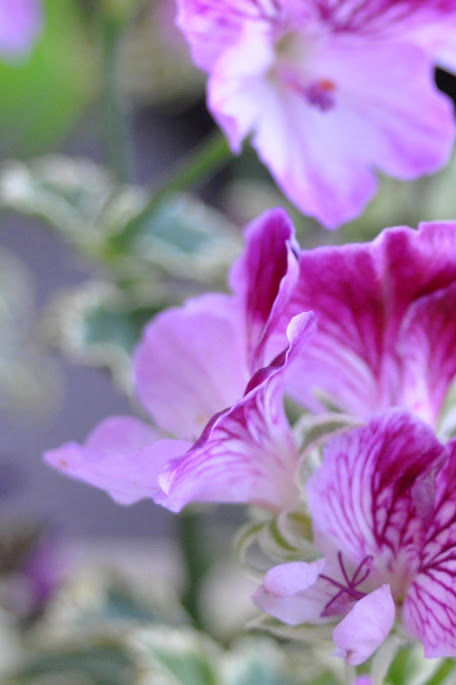
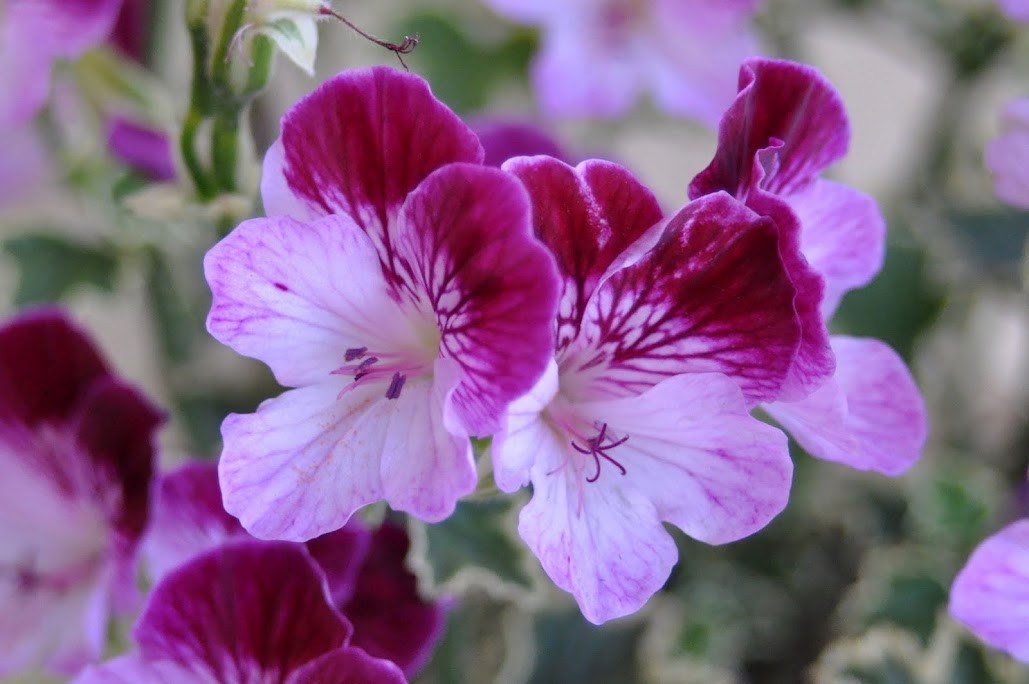
Blooming Thursday: Pelargonium Stunner

Pelargonium 'Old Bury Duet'

Pelargonium ‘Old Bury Duet’

I fell in love with this Pelargonium on my last trip through the nursery. I was racing to the front of the store with my 4th of July annuals and it stopped me in my tracks. This ‘Old Bury Duet’ was nestled on a table with equally gorgeous coleus which seem to grow well on our deck.

Of course the big question is “where will I plant it?” The snapdragons in the planter at home were healthy, but the companion Lobelia looked tired.  I never have much luck with Lobelia.  Upon further reading, I’ve learned it prefers cool weather.  Once our temps rise, the plants quickly dry out.  So…

Into the cart they went.

Once home, I transplanted two of the snapdragons into a pot with the roses where they get more sun, and moved the rest to another flowering pot out back.  The Lobelia moved to a cooler spot, but they sadly are no more.

Now my trio of front door planters include the new  Coleus ‘Inky Fingers’ and the Pelargonium ‘Old Bury Duet,’ along with the existing coleus and the trailing flowers.

What’s blooming on your Thursday?

Duet of Color

Duet of Color

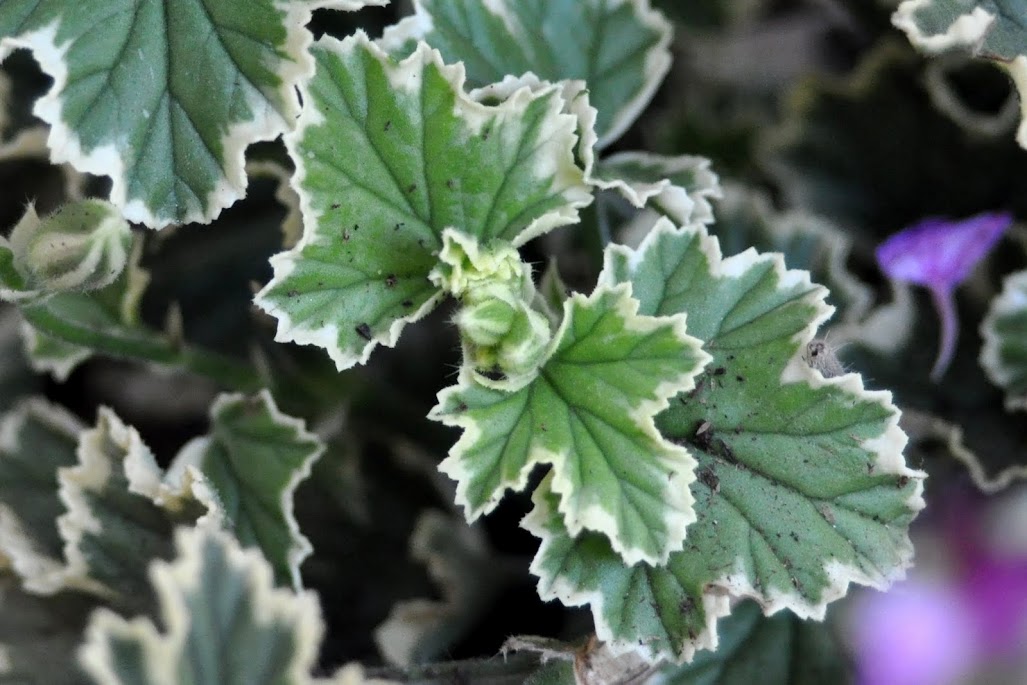
Variegated Leaves

Variegated Leaves

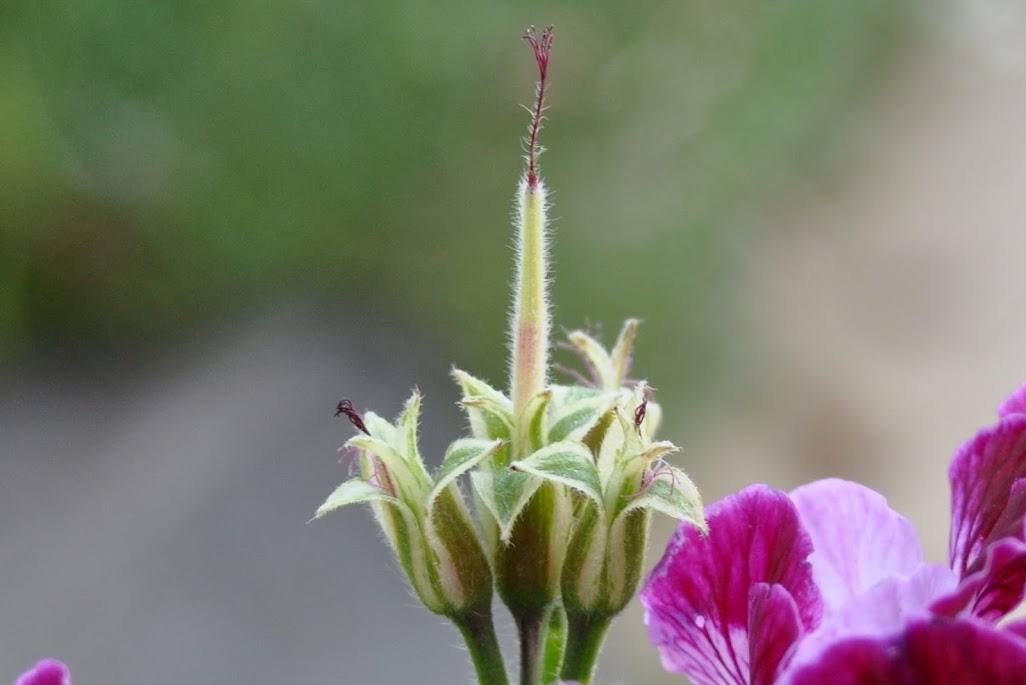
Torch Like Beauty

Torch Like Beauty

Friend or Foe?  Do you know?

Friend or Foe? Do you know?

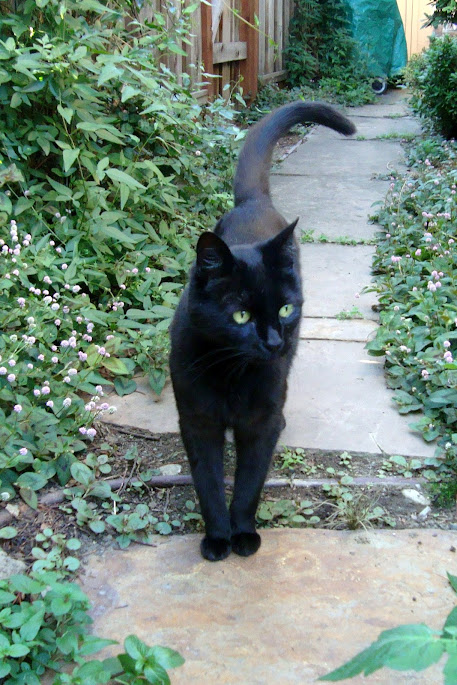
Slinky in the Garden

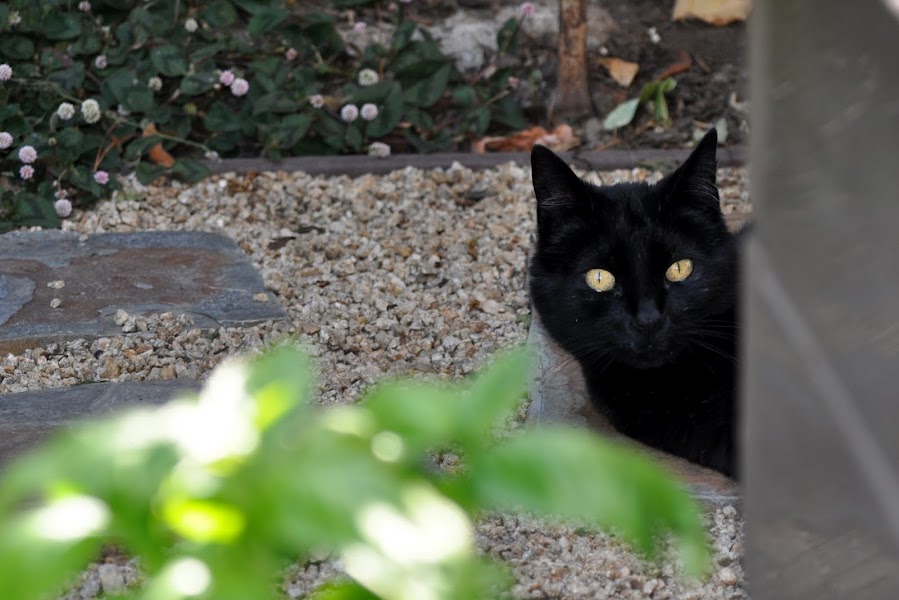
Slinky's Domain

Slinky’s Domain

Slinky Malinki, our shiny black kitty, arrived a few years back. Her haunting green eyes, spoke of unhappy lives; slight moves put her on the attack.

We fed her each day; she would eat and run away, returning each night for a meal.

Should I venture a reach? She would greet me with teeth, trying to pet her lost all its appeal.

Slinky gradually came ‘round, but remains leery and unbound, affection is given with care.

Now she sleeps near my pillow and head-butts my face, it’s hands she continues to fear.  Each passing year, a little less fear, what I wouldn’t give to let her know she’s safe.

Slinky Near the Strawberry Patch

Slinky Near the Strawberry Patch

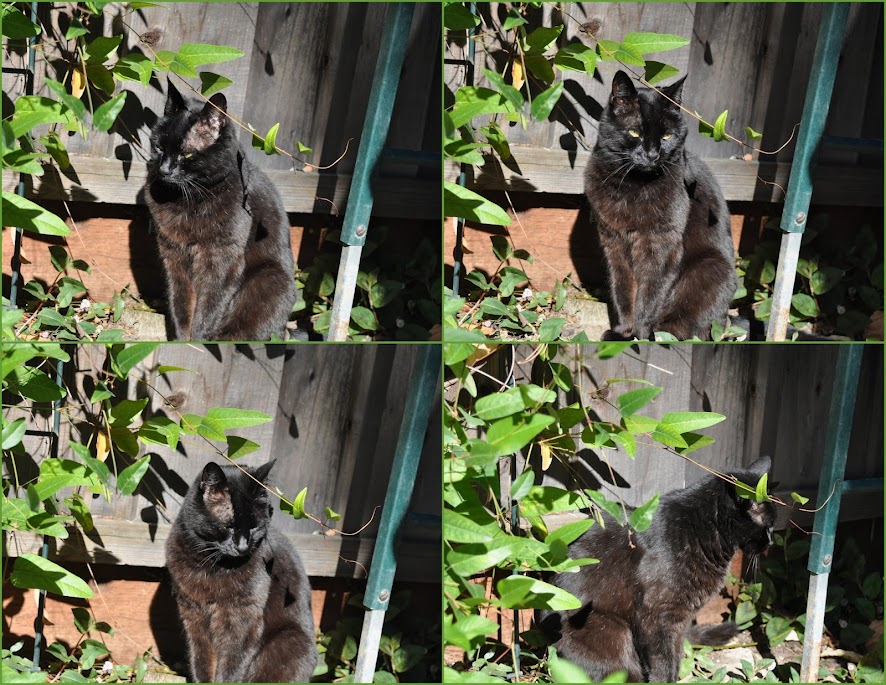
Like a Sunflower, Slinky Rotates with the Sun

Like a Sunflower, Slinky Rotates with the Sun

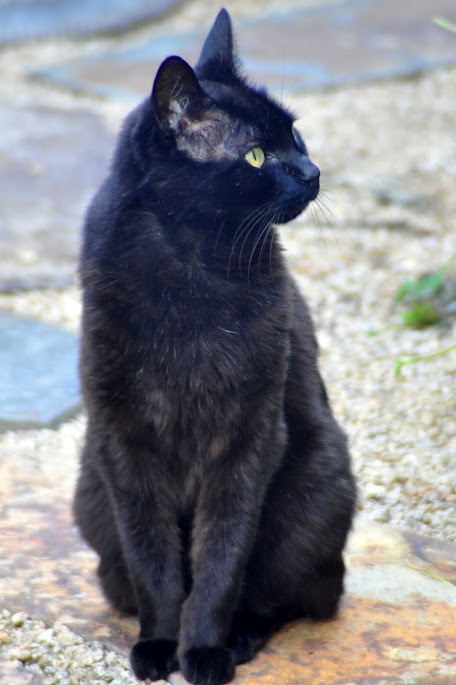
Proud Lady

Proud Lady

Making Progress

Making Progress

Did you know:

  • Cats head-butt as a way of showing affection.
  • Feral cats can be tamed.  Here is an informative, compassionate article written by The Lucky Few
  • We named our Slinky after a wonderful children’s book: Slinky Malinki by New Zealand writer Lynley Dodd

Mason Bees Move In!

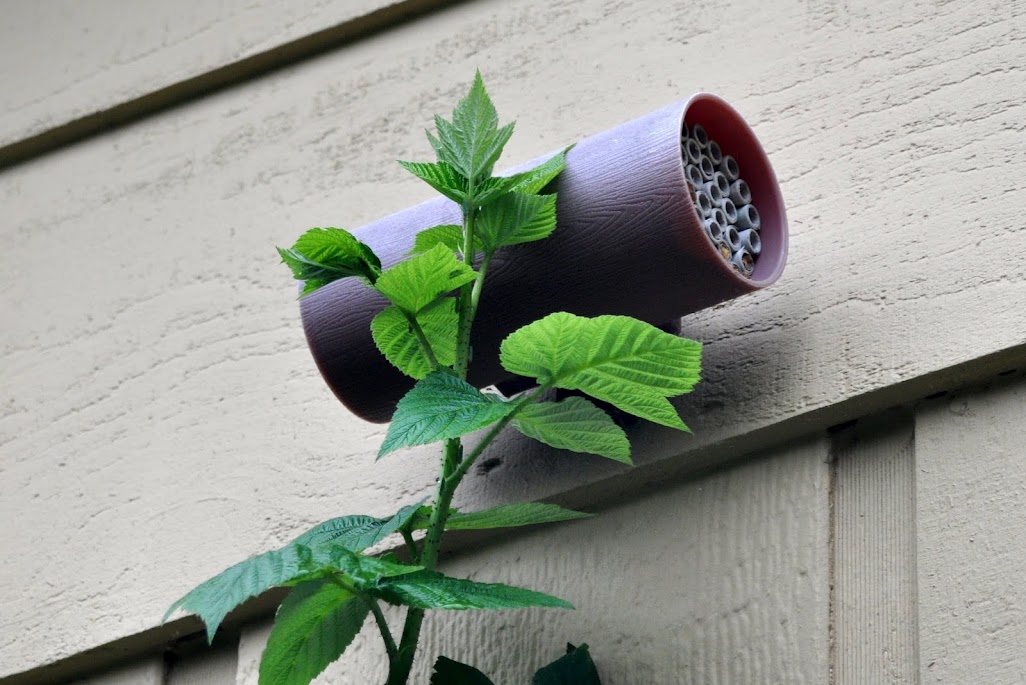
I snapped this photo of our Mason Bee Habitat, unaware that several of the tubes were already filled. We mounted the tubes to the side of the house above the vegetable garden last summer, but never saw any activity.

Mason Bee Tubes

Mason Bee Tubes

I prepared to write about my disappointment when the enlarged photo revealed this:

Mason Bee Tubes

Mason Bee Tubes
Space Still Available

Those clever Masons have been nesting away while I had my nose to the ground, planting.

We bought our Orcon PlanBee! kit at Yamagamis Nursery, along with a book by Christopher O’Toole called The Mason Bees, Taking the Sting Out of Beekeeping. Mason bees live in holes like hollowed-out twigs or reeds, so they are easily attracted to nesting tubes like the ones pictured above. Blue orchard and horn-faced bees are spring season pollinators and will only sting if squeezed or stepped on. They don’t have a queen, so no hive to protect.  They are both beneficial and docile.

You can read more about these beneficial Mason Bees and their nesting habits in this wiki article. Resources, below, for buying or making a nesting box of your own.

Growing a Birdhouse

Birdhouse Seeds

Birdhouse Seeds

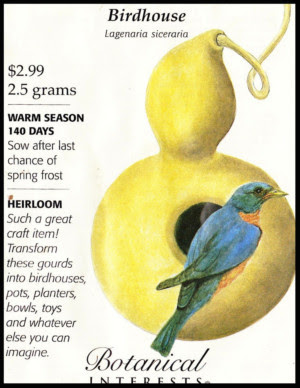
Though we were out of room in our planter boxes, we went ahead and tucked in a few of these Gourd hard-shelled birdhouse seeds. They were too cool to pass up.

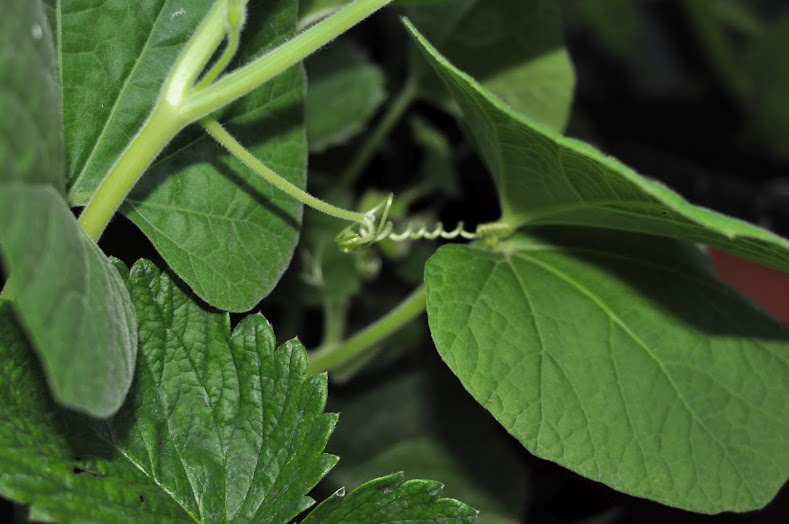
Botanical Interests gourd heirloom seeds grow into the birdhouse shape on the left. When dried, they last indefinitely. Gourds can be carved, painted or drilled. I sure hope we can grow at least one. We have two viable plants, each about 18 inches long. The packet says the vines can grow an astonishing 15′ (5 meters) to 35′(11 meters) long.

The pumpkin vines are about a month ahead in the growing cycle, so as those vines give the last push towards ripening, the gourd vines will have lots of room to grow.

Here are a few pointers on birdhouses:

  • Drill the hole for the size of the intended bird and not a speck more. This prevents predatory birds from following the mama bird indoors. The entrance hole should be high enough that the mama bird can line her nest and still protect her young from view.
  • Likewise, the  perch often shown on commercially produced birdhouses is not only unnecessary, but again allows a predator a place to perch and peer in.
  • Drill a small hole in the bottom of the birdhouse to allow for drainage.

Fingers crossed!

Gourd Vines

Gourd Vines

Sunflower Success

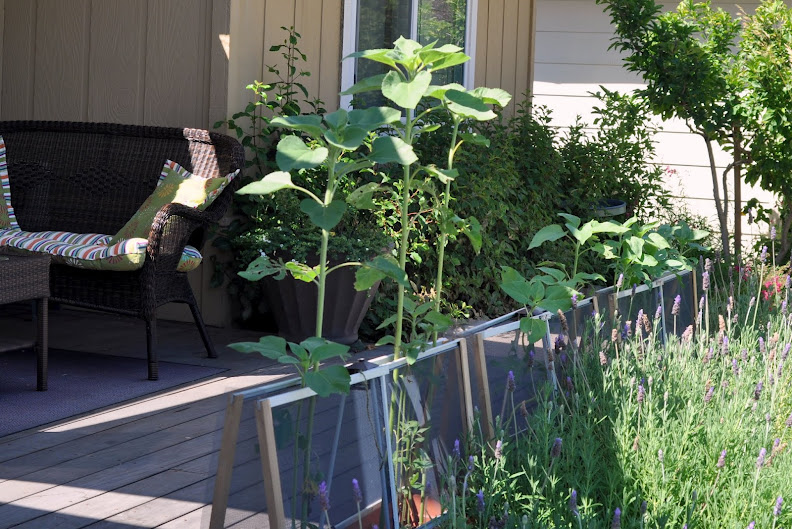
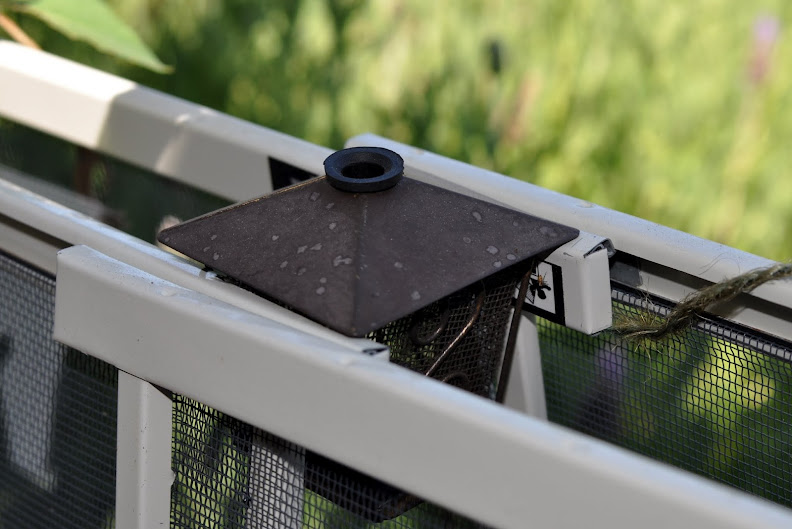
Early in the season I envisioned a wall of sunflowers growing across the front of the deck. After several false starts, I configured a system of screens, designed to deter squirrels and birds from eating the seeds and seedlings. It worked! All three planters have several healthy plants. I can’t wait till they flower. I can see the plants from my kitchen window as well as on deck, and they can also been seen from the street.

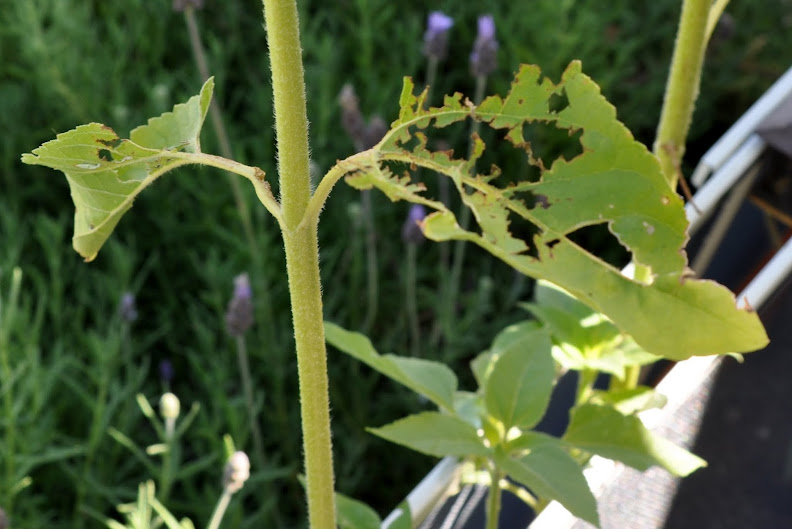
The lower leaves are full of holes but no sign of the culprit…until this week when I saw a bird in the act of pecking away at the leaves. My friend Doug, also a nurseryman, thinks they are trying to get to the as-yet unavailable seeds.  The leaves look tattered, but the plant remains healthy so all is well.

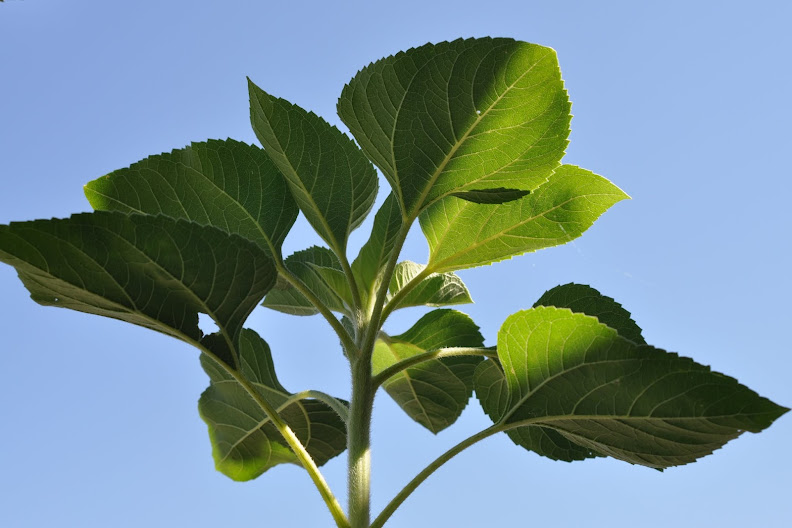
With warmer temperatures, the plants are shooting skyward. I can’t wait till they bloom.

Wall of Sunflowers

Wall of Sunflowers

Broken Lantern Covers Keep the Screen Open

Broken Lantern Covers Keep the Screen Open at the Top

Lantern Cover in Place

Lantern Cover in Place

Sunflowers: Looking Up

Sunflowers: Looking Up

Bird Snack

Bird Snack

The Ladybug Diet

Water First to Disperse the Pests

Water First

Weight Watchers teaches you to eat well, and South Beach helps break sugar cravings, but have you heard of the Ladybug Diet?  Those red-spotted beauties consume several times their body weight, ridding your roses of numerous garden pests.  I wish I could consume several times my body weight in a day and remain looking as fresh as the Coccinella septempunctata.

Ladybugs, also referred to as ladybirds, eat Aphids, Spider Mites, Thrips, White Fly and other harmful pests.  They are a boon to organic gardeners and a treat for the youngsters in the house, who enjoy setting them out at dusk.

Most garden centers now sell containers of live lady bugs.  I bought ours at Almaden Valley Nursery. Keep them in a cool place during the day when they’re inactive.

Tuesday night we watered the infested plant, cut open the mesh bag and offered them dinner.  By morning, they had done a decent job eradicating the pests.   Some years it takes two “applications” to wipe out the aphids or flies, but it’s always a treat to see hundreds of them gathered in one place so we don’t mind.

Ladybugs and Aphids

Ladybugs and Aphids

Garden Lady's: Nature's Pest Control

Garden Lady’s: Nature’s Pest Control

Dinner Awaits

Dinner Awaits

It's 9:00.  Do you know where your ladybugs are?

It’s 9:00. Do you know where your ladybugs are?

Read more about these farming heroes and the origin of the ladybug rhyme at Animal Planet.