Thrips: It’s What’s For Breakfast!

The garden thrips are on notice! Lacewings are on the scene.

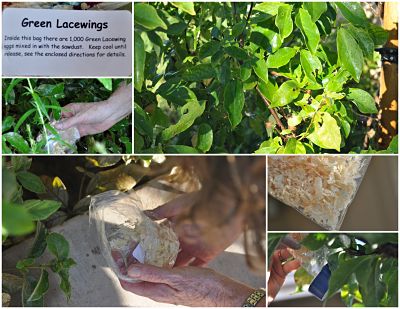
A small packet of lacewing eggs arrived yesterday by mail. The packet contained an unimpressive looking plastic bag that, to the naked eye, looked like a bag of sawdust. My eyes aren’t what they used to be so I examined the bag closely with my nifty light-up magnifying glass, a gift from Bruce and Shirley. Still no sign of those eggs. The instructions reassured me that the eggs were in there and would be “hatching any minute” if they hadn’t done so already. Well then, no time to waste!

After dinner, my husband watered the affected plants and the Magnolia tree and we set out the eggs. Seriously, it felt like a practical joke because I couldn’t see anything but the sawdust.

The instructions suggest stapling a paper cup to a tree leaf and filling it with some of the eggs.  That was the hardest part.  I’m clumsy, so trying to staple the bottom of a paper cup to a thin leaf at the top of a tree was…challenging. We scattered the rest of the eggs at the base of the plants.

Guess what? As of this morning, a few already hatched. The packet contained “1,000 eggs” though how you could have counted is anyone’s guess.  I hope the emerging larva are hungry.
We ordered our beneficial insects via the Internet from Orcon (Organic Control, Inc.) based in Los Angeles. If you live outside the states, search under “beneficial garden insects” for a source near you. Introducing the appropriate beneficial insect to your garden is safe for plants, people and pets, reducing the need for dangerous and toxic pesticides.

Floral Friday

Photographer Tamara Pruessner curates a feature on Google+ called Floral Friday. Fellow photographers and nature lovers post individual photos with the tag #FloralFriday, and as each one posts, they appear in a running thread. I’m amazed at the flow of creativity.

I’m not a professional photographer, but I do enjoy snapping pics in my garden, so I’ve joined in a time or two.

Cosmos

Cosmos

Bee in the Catnip

Bee Pollinating Catnip

If you have a Google + account, be sure to check it out. I think you’ll enjoy the sense of community, the beautiful flowers, and the effort to bring something positive in to this sometimes-dark and confusing world.

Blooming Thursday: Blushing Pinks

Growing up a redhead my mom never let me wear pink.  A ginger herself, she advised that pink was not our color.  She was right of course, but when you’re told not to wear something, you can think of nothing else.  Am I right?

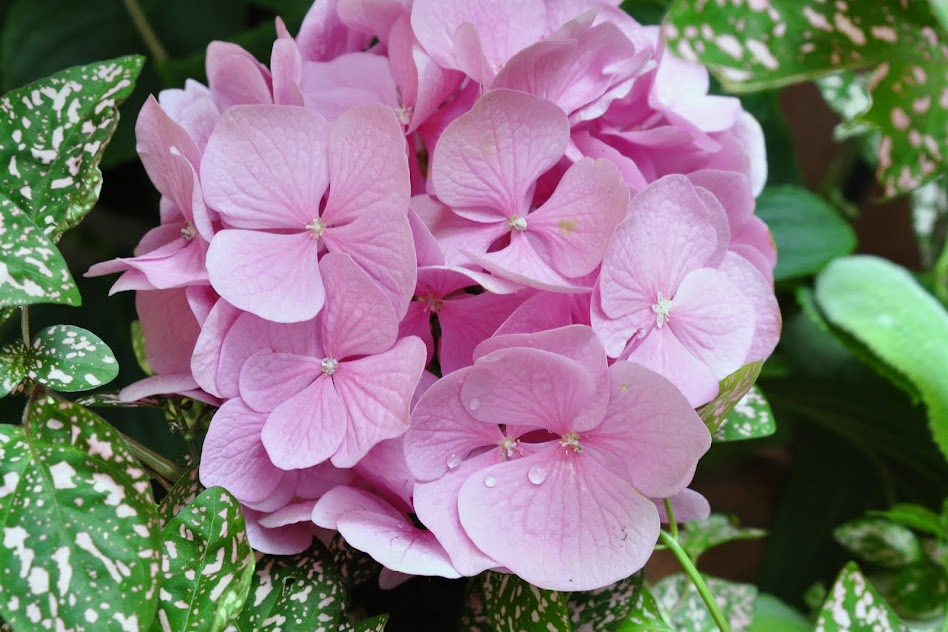
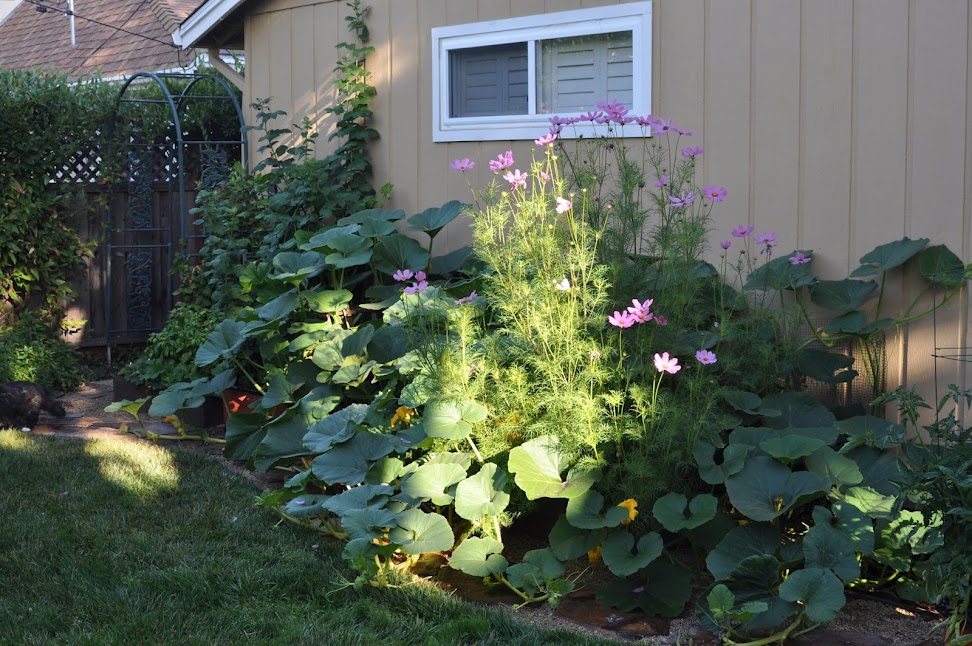
Pink is definitely one of those colors that can easily be overdone, but not in the garden.  This has been my summer of pink.  The volunteer cosmos continue to splash color across the pumpkin patch.  The pink potted Hydrangea doubled in size and bloom production.  I added a few pink Vinca to one of the patio planters and rounded things out with a polka dot plant (Hypoestes phyllostachya), grown for its beautiful pink and green leaves.

Power to the Pink!

Pink Hydrangea with a Drop of Morning Dew

Pink Hydrangea with a Drop of Morning Dew

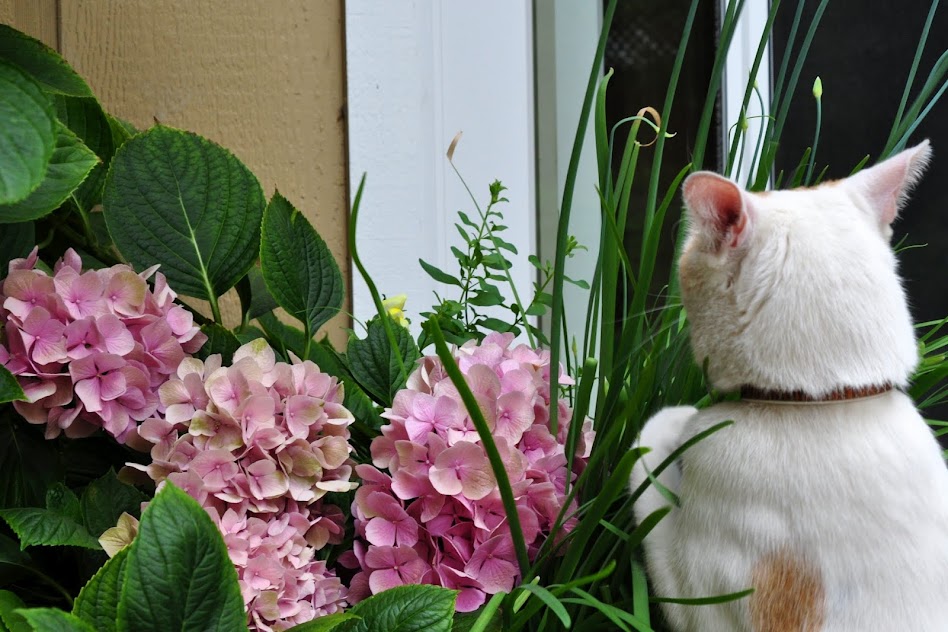
Kitty shows off his cute little pink ears

Kitty shows off his cute little pink ears

pink flowers

After my “week of bugs” this flower is starting to look just like one.

Pink Cosmos

Strong winds this week have the Cosmos  leaning sideways

What’s blooming in your world this Thursday?

And Then There Were Thrips

It’s been a month of pests for Gardening Nirvana as we’ve worked our way through aphids, scale and now thrips. Three different plants, three different pests, all living within a few feet of each other.

Foreground (emerging sunflowers); under window (Viburnum tinus), right of photo (scale-infected Magnolia)

Thrips now reside on the lower leaves of the Viburnum tinus immediately outside of our home office window.  It took us two summers to figure out what that…uh…pungent smell was.  We knew it was organic in nature, but it was so odoriferous, we assumed a small animal had died under the house or deck.  The smell eventually went away, the plants looked fine and we didn’t give it another thought.

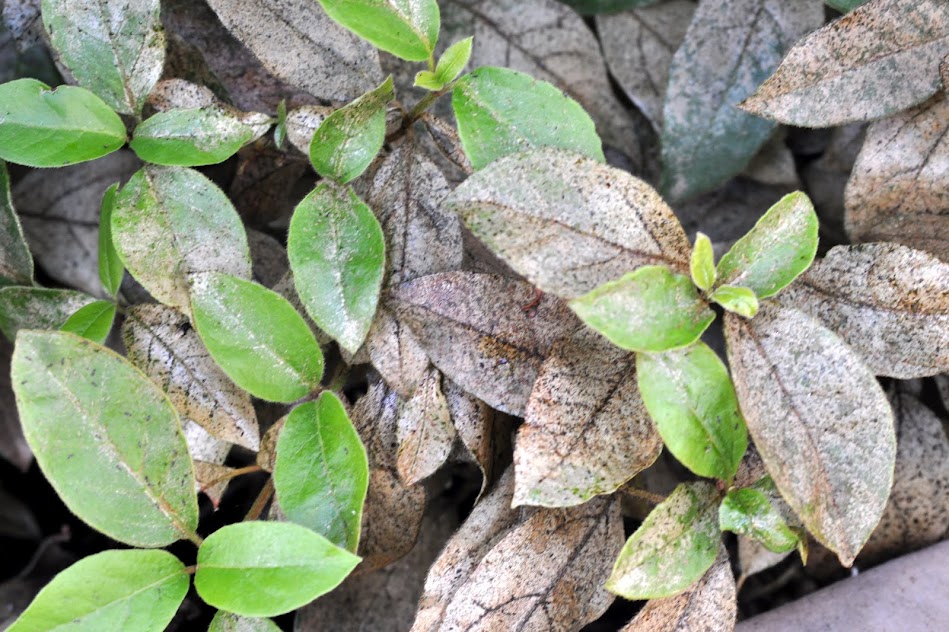
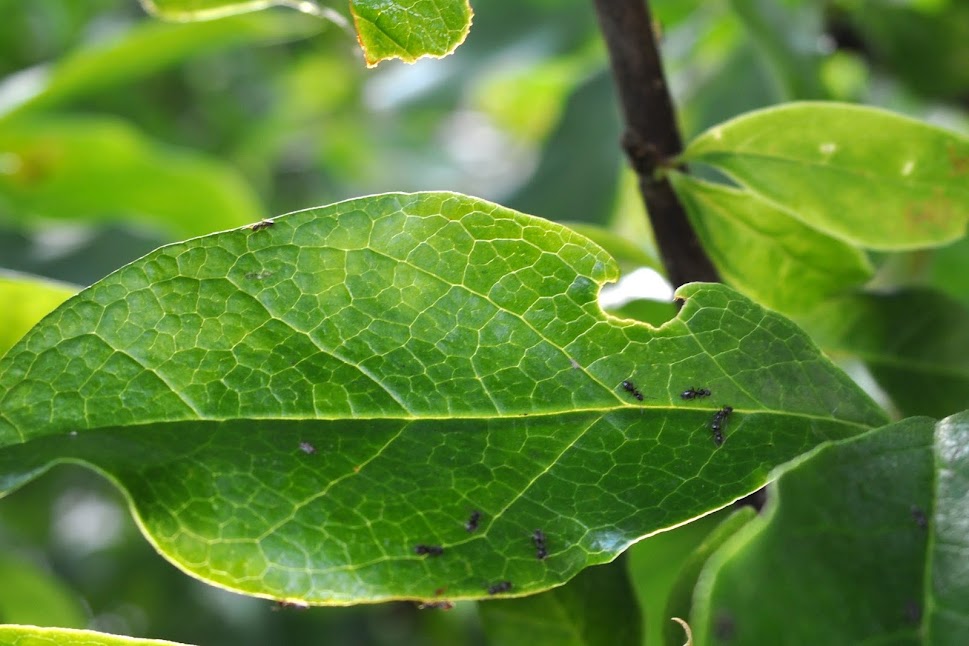
Spring rolled around again, then summer and…that smell!  Aren’t you glad you are only reading about it?  The damage seemed to be happening at the base of the shrubs and along the back, making me wonder if it was lack of air circulation.  My husband’s sleuthing and a magnifying glass revealed that yes, we had a third infestation on our hands: thrips.

Plant Damage

Plant Damage

Thrips

Thrips

Through the wonder of the Internet and our postal service, a shipment of lacewing eggs, nested in bran, is headed for our front door.  When the tiny larvae emerge they feast on the thrips.  Adults need nectar and pollen to survive, so it’s important to have insectary plants in your garden to support the adult population.  The exciting news is that my sunflowers will flower within the next week or so, providing pollen to the emerging adults.  They like Cosmos and Sweet Alyssum, too, also growing our the garden.

Resources:

A Wing and a Prayer

Praying Mantis

Praying Mantis

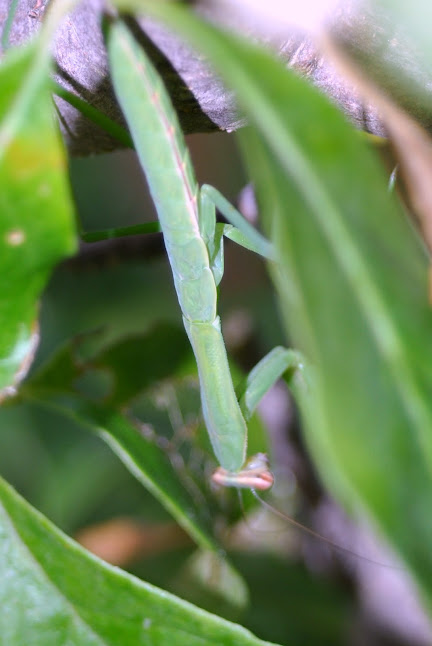
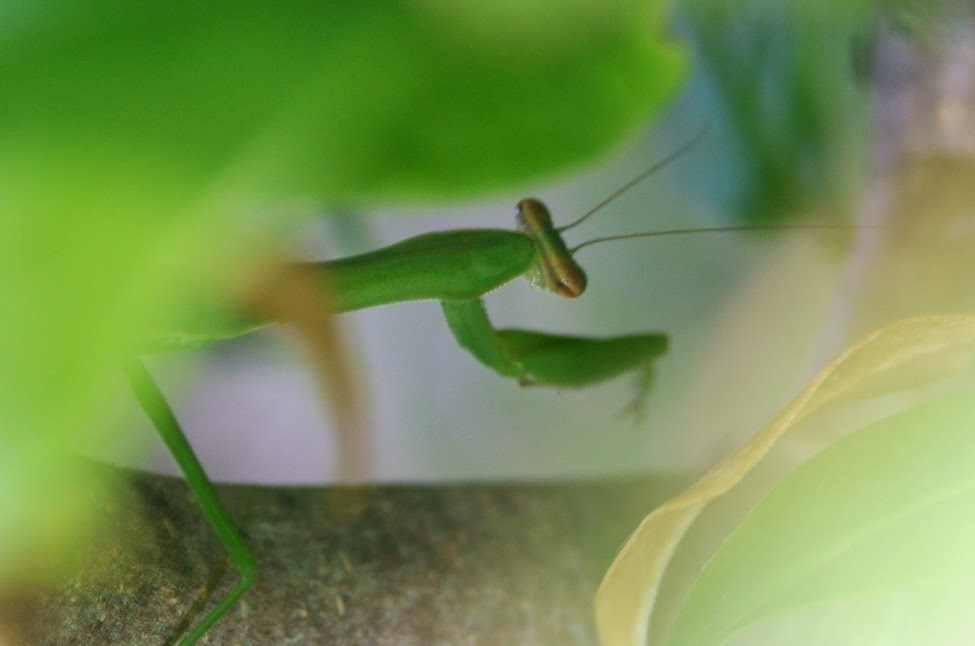
Mulling over my options in front of our infested Magnolia tree, I noticed an interesting green shape on one of the leaves.  It took a moment for my eyes to adjust before realizing I was staring at a Praying Mantis.

I squealed at my husband to please run and get the boys and the camera, while I kept my eye on our new best friend.  It was incredible the way it matched the color of the leaves.  My older son thought it was “creepy,” but my 12-year-old likes bugs  so he was excited to see one in our garden.

Mantids are beneficial for the garden, but none of my reading yesterday suggested them for scale. Wouldn’t it be amazing if this shiny green creature planned to feast in the tree?

Mantid Looks Away

Mantid Looks Away

Mantid Stretched Out

Mantid Stretched Out

Check out PrayingMantis.org to learn more about these fascinating insects.

Garden Fail: Scale

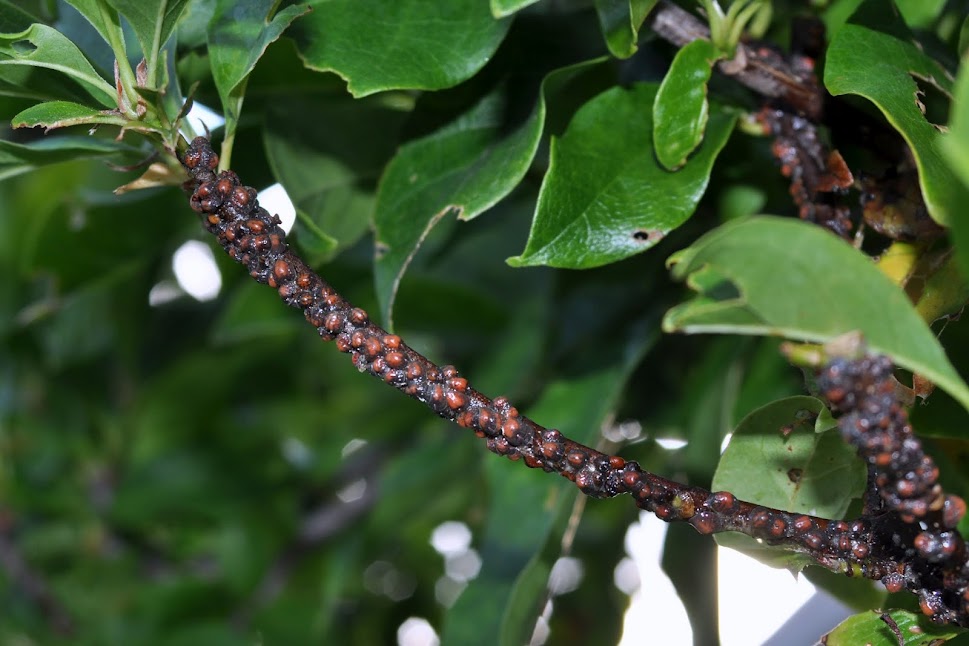
Our purple tulip Magnolia has scale, an infestation as repulsive as it sounds. It’s equally harmful and can ultimately kill the tree if left unchecked. We’ve been researching organic solutions, preferring beneficial insects if possible.

From the reading I’ve done, the scale may have been present months ago.  Beautiful blossoms covered the Magnolia last spring, with no signs of the scale.  In late June, however, I noticed some damage to of the leaves of the inner tree and only then did I discover the scale.  We have all the tell-tale signs, now that I know what to look for:

  • Crusty bumps along the branches
  • Sticky leaves caused by scale excretions
  • Ants on the leaves.  They eat the sweet excretions and are known to defend the scale since they provide a food source.

Here are a few more details from the College of Agriculture Sciences at Penn State:

Magnolia scales are usually massed on the undersides of 1 and 2-year-old twigs, with heavy infestations completely encrusting branches. Other indicators of a scale infestation include reduced foliage and flower production, undersized leaves and twigs, and a black sooty mold on the foliage. After digesting the plant fluid, the scale excretes a clear sticky liquid called honeydew, which provides an ideal substrate for the black sooty mold fungus to develop. Magnolia scale infestations often go unnoticed until the leaves and twigs of the host plant turn black with sooty mold. The honeydew also provides a food source, attracting ants, bees, wasps and flies.

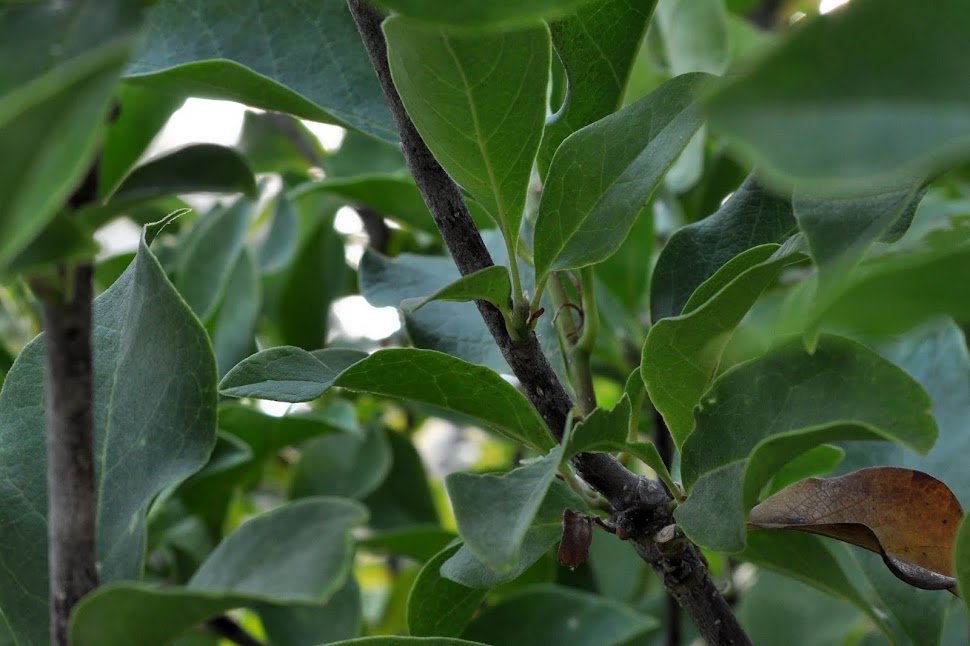
Healthy Magnolia Branch

Healthy Magnolia Branch

Scale Infestation on Magnolia Branch

Scale Infestation on Magnolia Branch

Ants eat the excreted Honeydew

Ants Eating the Excreted Honeydew

The more I read, the more discouraged I become. Even the less organic solutions are often ineffective.  I read an extensive article saying that Predatory Beetles worked well, only to learn they are no longer commercially available.  Aphytis melinus is another possibility, and probably our next, best option. Pruning away the worst of the branches seems like a good idea, too.  I would hate to have this spread to our larger magnolia just a few feet away.

Suggestions welcome!

Walking and Talking With My Pumpkin Vine

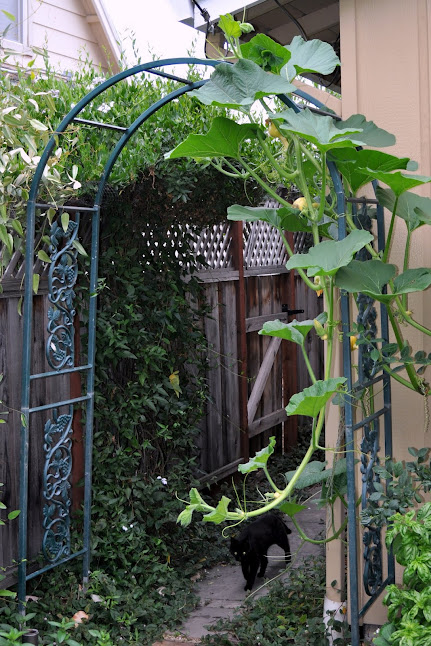
Video camera in hand, I walked the garden last night, taking traveling shots of the pumpkin vine. That’s my cat, Slinky, at the start of the video who is always glad to find me in the garden.  I look forward to seeing  her sweet little face peering around the corner.

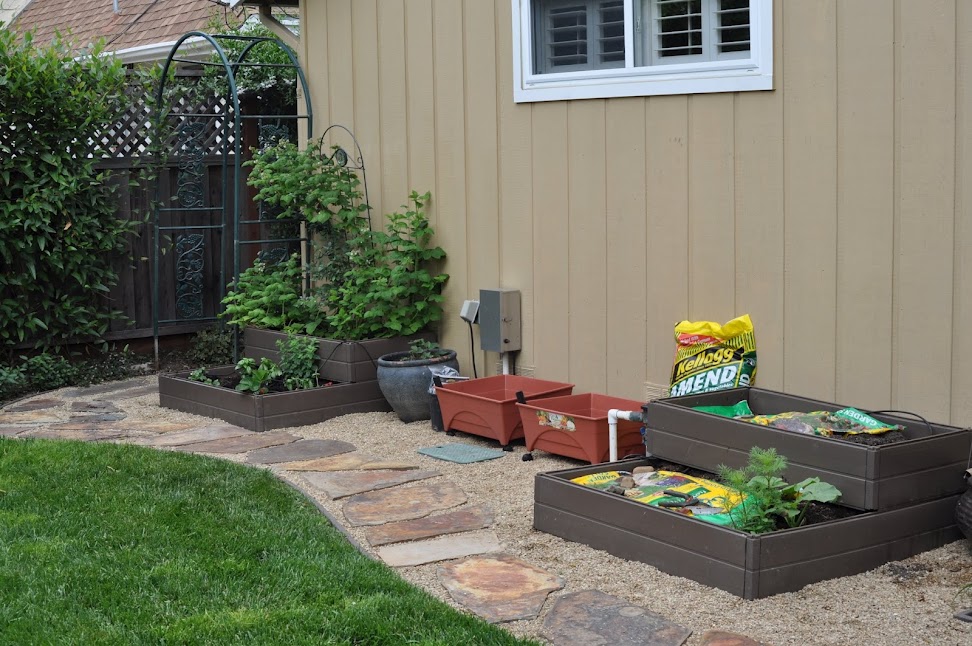
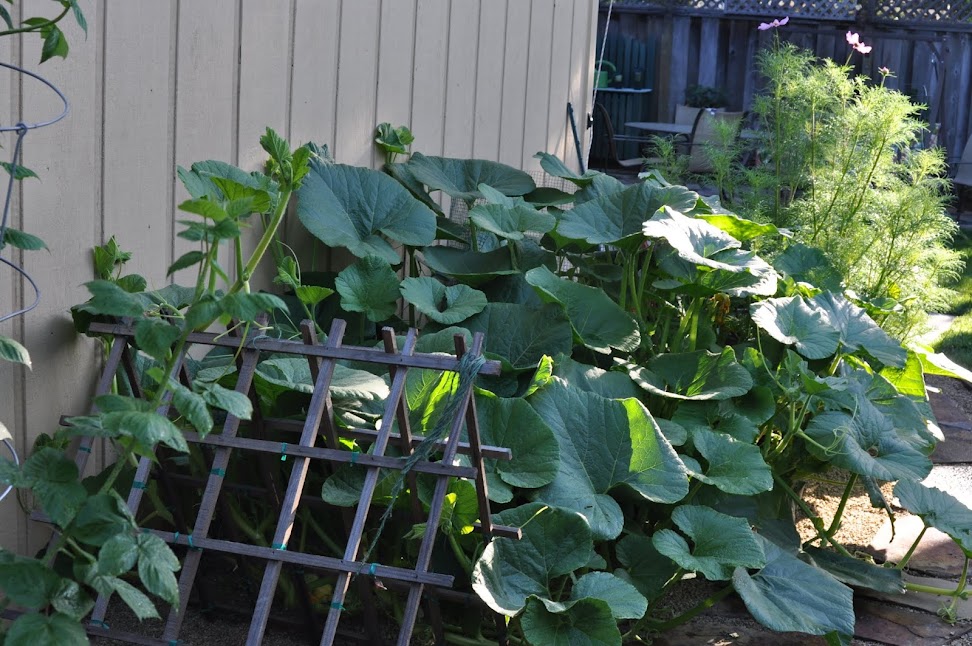
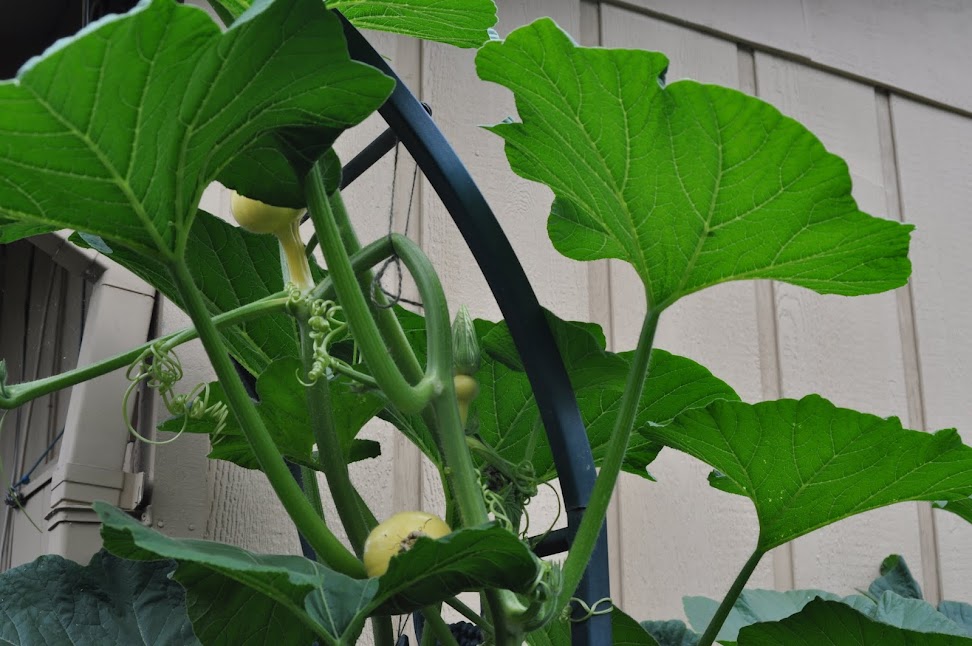
It’s been an exciting year in our pumpkin patch, thanks to a self-seeding vine in mid-April.  The vine traveled the length of the house, before shooting up the side of an arching trellis. I tied the vine with string to support the weight of some developing fruit. From there it trailed back toward the ground.  Last night I redirected the newest growth, a u-turn if you will, before it crossed the side yard and headed toward our neighbor’s fence.

Come along for the tour:

Pumpkin’s Progress in 90 Days:

Watch Me Grow

Watch Me Grow

Getting a Head Start

Getting a Head Start

Already Dwarfing the Indoor Transplants

Already Dwarfing the Indoor Transplants

Heading West

Heading West: Trellis Number One

Heading for Trellis Number Two

Heading for Trellis Number Two

Up, Over and Down Trellis Number Three

Up, Over and Down Trellis Number Three

Hanging on By a Thread

Hanging on By a Thread

Grass: The Long and Short of It

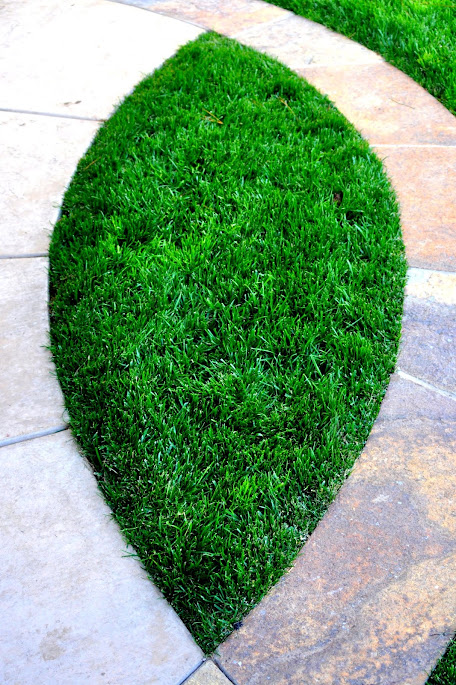
Green, green grass of home

Green, green grass of home

Silicon Valley is known for its innovations and mild temperatures, but not for its annual rainfall.  In a good year our arid climate averages 14 to 18 inches of rain. Planting grass should be an extravagance in this highly populated, rain-thirsty climate.

We have healthy, water-guzzling grass growing in our own yard, as do our neighbors, up and down the block. Planting a lawn is a suburban tradition, but one that probably needs to end. For years, a trip down the street of an average neighborhood revealed a vast expanse of green, carefully grown, manicured, fertilized, trimmed and of course watered lawns.

I struggle with this as I’ve become more aware of the toll it takes on our environment. When we redesigned our garden, I was all for a reduction in our lawn foot print, but my husband wanted to maintain an expanse for the boys to run and play.  When they were smaller, they ran around on the grass, tumbling, wrestling or dashing through the sprinklers on hot days.  It was a safe place to play, breaking falls and cooling tender feet. They don’t play that way anymore.  Perhaps a lawn is something we maintain for a finite amount of time, like sandboxes and swing sets.  Once our children are grown, we’re happy to replace those things.  Why not our thirsty lawns?

Could replacing lawns be the next paradigm shift?  Ashtrays are no longer standard in automobiles or airplanes.  Twenty years ago that was unthinkable.  As our consciousness rises, so too will our innovations.  When we say “going green” it will have nothing to do with our love affair with the front lawn.

Cooling Off in the Grass

Cooling Off in the Grass

Vertical Veg: The Art of Growing Vegetables in Small Spaces

Sprouts

Sprouts

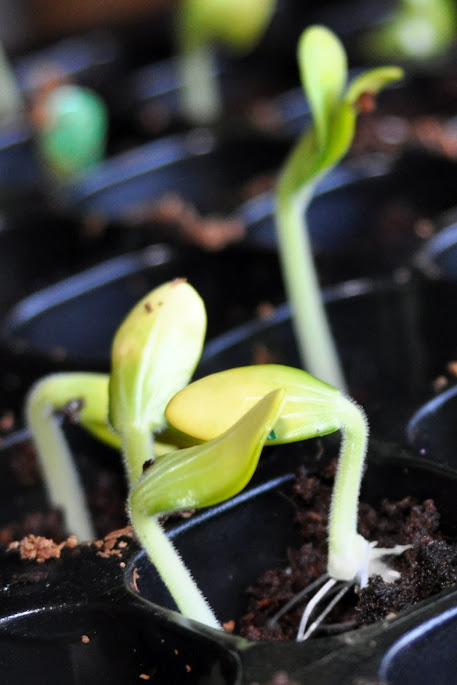
My friend Susan shared an intriguing link to a site called Vertical Veg. It’s all about growing food in containers and tiny spaces.

The site and accompanying blog is chock full of ideas for growing your own vegetables when space is at a premium. Mark Ridsdill Smith founded Vertical Veg because “I love growing food, but also because it ties in with my dream of cities where people live in closer connection with the seasons, nature and their food.”

For years my own garden was also a series of pots, hanging baskets, and containers as I moved from rental to rental.  I grew flowers and herbs, but never vegetables.  Clearly I missed out.

If you’re yearning to grow your own food but live in small or temporary quarters, I suggest you check out Mark’s site.  It’s fun and inspiring exploring what’s possible.

Why grow vertical from Vertical Veg:

  • You’ll have fresher, healthier food quite literally on your doorstep.
  • You’ll save money.
  • You’ll bring greenery, flowers and wild life to your urban (concrete?) neighbourhood.
  • You’ll find a hobby that many find rewarding, relaxing and creative – and that can be good for both mental and physical health.
  • If you’re into sustainability stuff, you’ll find lots of opportunities for recycling (making your own containers, converting waste food into worm compost), reducing your waste food by only picking what you need, and cutting your carbon footprint.
  • If you’re into food, you’ll love the super fresh veg, the abundance of herbs, and the opportunity to grow crops unavailable (or expensive) in the shops.
  • And last but not least, you’ll meet new neighbours – food growing is a shared language with wide appeal across generations and cultures.

It’s hard to argue with that!

Check out Vertical Veg and let me know what you think.

Blooming Thursday: Pelargonium Stunner

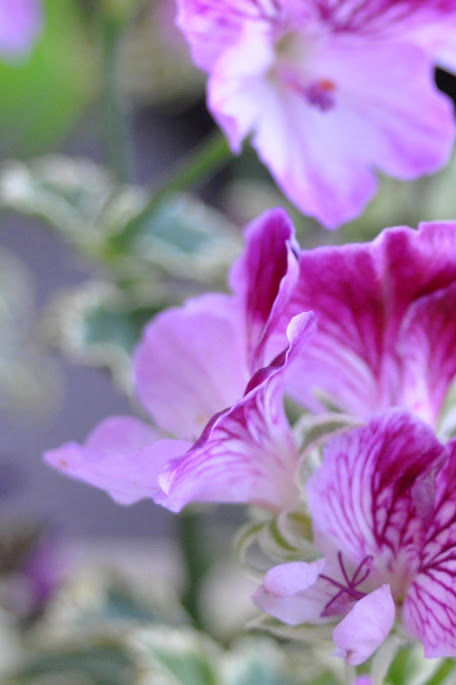
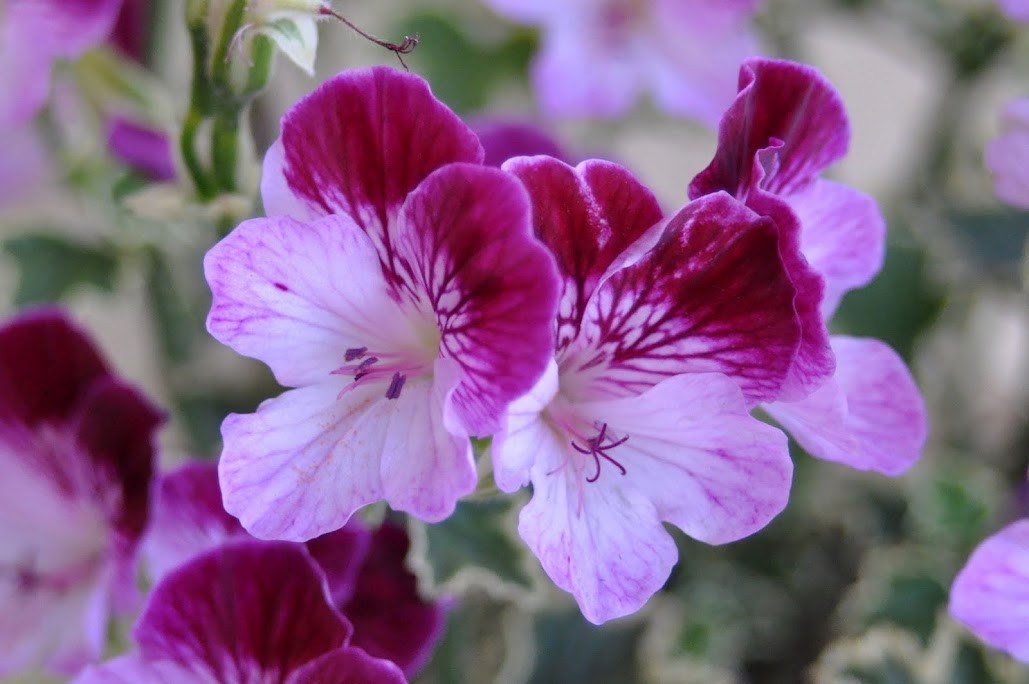
Pelargonium 'Old Bury Duet'

Pelargonium ‘Old Bury Duet’

I fell in love with this Pelargonium on my last trip through the nursery. I was racing to the front of the store with my 4th of July annuals and it stopped me in my tracks. This ‘Old Bury Duet’ was nestled on a table with equally gorgeous coleus which seem to grow well on our deck.

Of course the big question is “where will I plant it?” The snapdragons in the planter at home were healthy, but the companion Lobelia looked tired.  I never have much luck with Lobelia.  Upon further reading, I’ve learned it prefers cool weather.  Once our temps rise, the plants quickly dry out.  So…

Into the cart they went.

Once home, I transplanted two of the snapdragons into a pot with the roses where they get more sun, and moved the rest to another flowering pot out back.  The Lobelia moved to a cooler spot, but they sadly are no more.

Now my trio of front door planters include the new  Coleus ‘Inky Fingers’ and the Pelargonium ‘Old Bury Duet,’ along with the existing coleus and the trailing flowers.

What’s blooming on your Thursday?

Duet of Color

Duet of Color

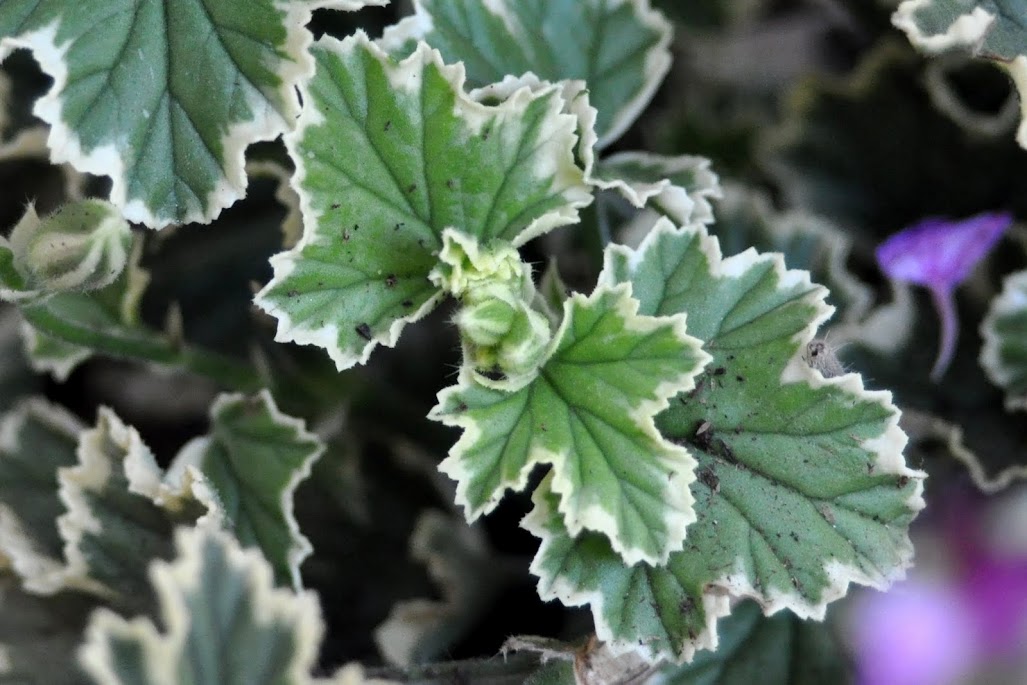
Variegated Leaves

Variegated Leaves

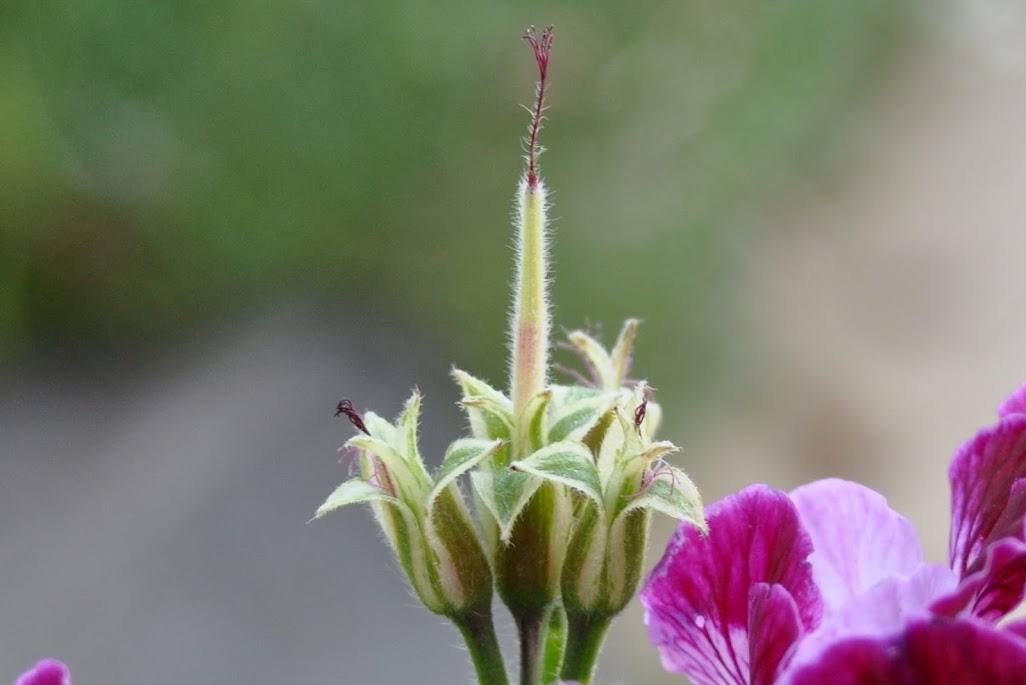
Torch Like Beauty

Torch Like Beauty

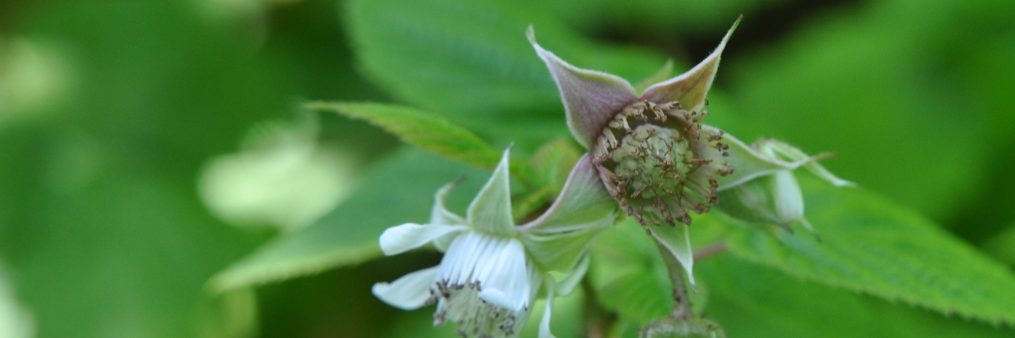
Friend or Foe?  Do you know?

Friend or Foe? Do you know?