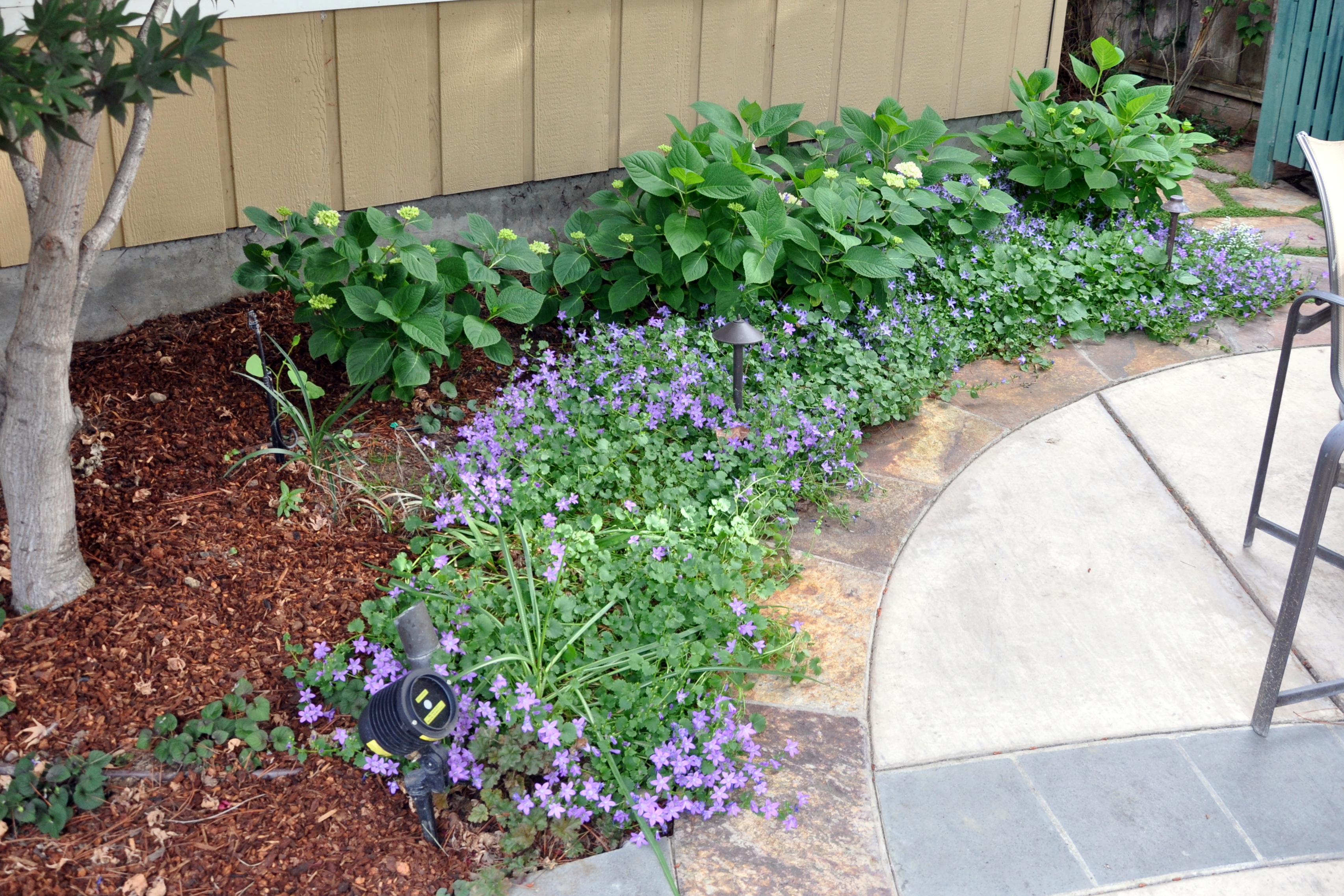
Plant Chatter: Can You Hear Me Now?

The headline “Plants Talk. Plants Listen” caught my eye this morning.  What followed was a fascinating article on a plant’s ability to ‘warn’ it’s neighbors of an aphid attack.  Taking it one step further, scientists believe that the chemicals released when the plant is under attack may also attract beneficial wasps.

According to the article:

These chemicals come from the injured parts of the plant and seem to be an alarm. Maybe not an intentional warning like, “Watch Out! Aphid Attack!” but more like a simple distress call like, “Aphids! Aphids! Aphids!” or, “Attack! Attack!” The chemicals the plants pump through the air are a blend of organic molecules — alcohols, aldehydes, ketones and esters — known as volatile organic compounds, VOCs for short.

Intriguing.  Further:

Not only do plants use airborne chemicals, they send signals underground, through their roots. Some make ultrasonic “clicking” sounds. What feels to us like a quiet day in the forest may in fact be a hurly-burly of wafting, pulsing, clicking plant-to-plant communication.

If you’re as intrigued as I am, I encourage you to read the entire article. The drawings are hilarious, too. NPR: Robert Krulwich on Science

Meanwhile, I’ve been doing my own communing with the garden and trying to pull myself out of  a slump.  Onward.

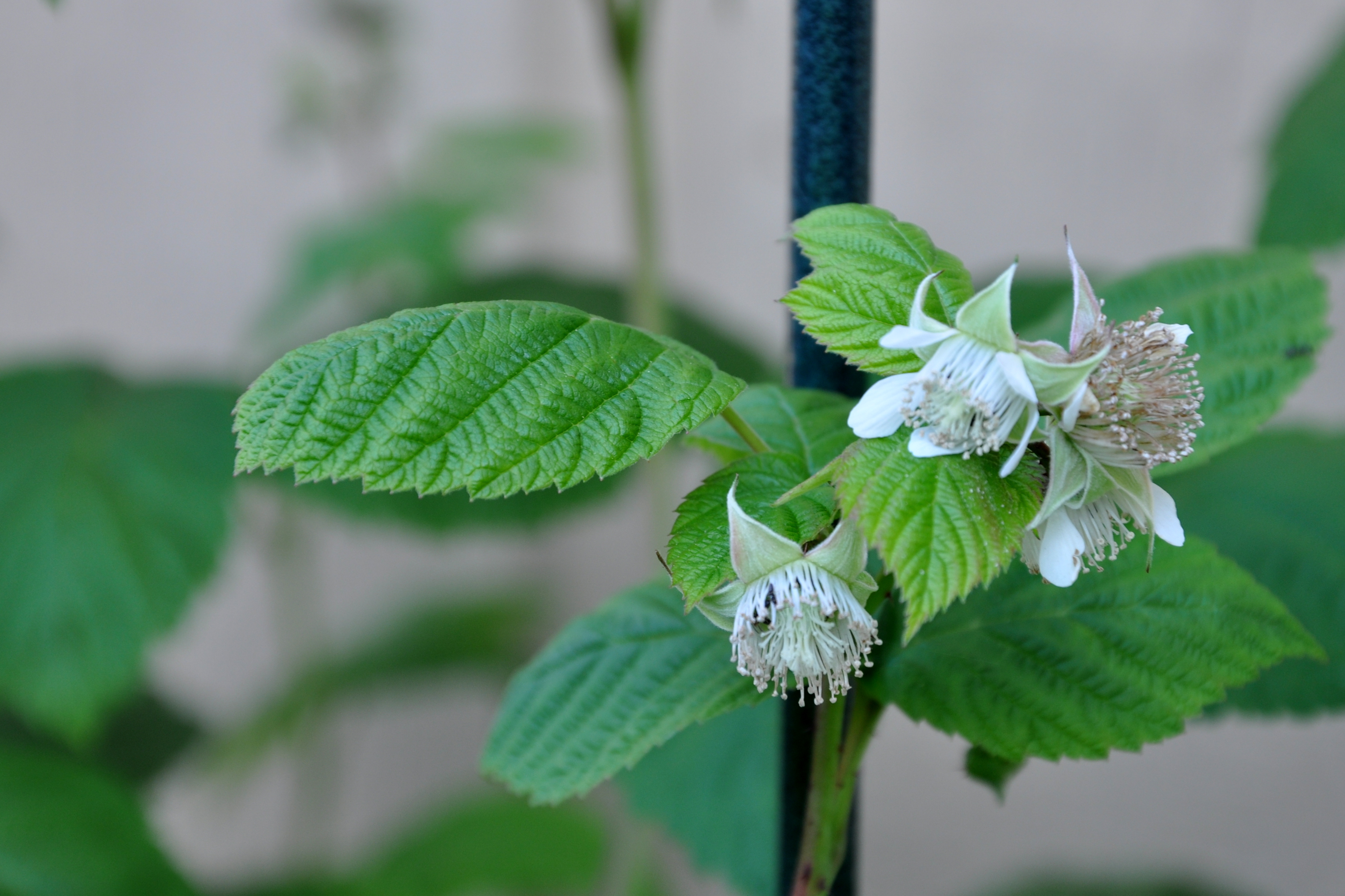
raspberry flowers

Flowering raspberries

When You Garden You’re Never Alone

Though gardening often feels like a solitary activity, I’m never alone for long. Our mostly indoor cats can’t resist the view of me kneeling on the ground.  One, two and maybe even three of them will venture out to see what I’m up to.

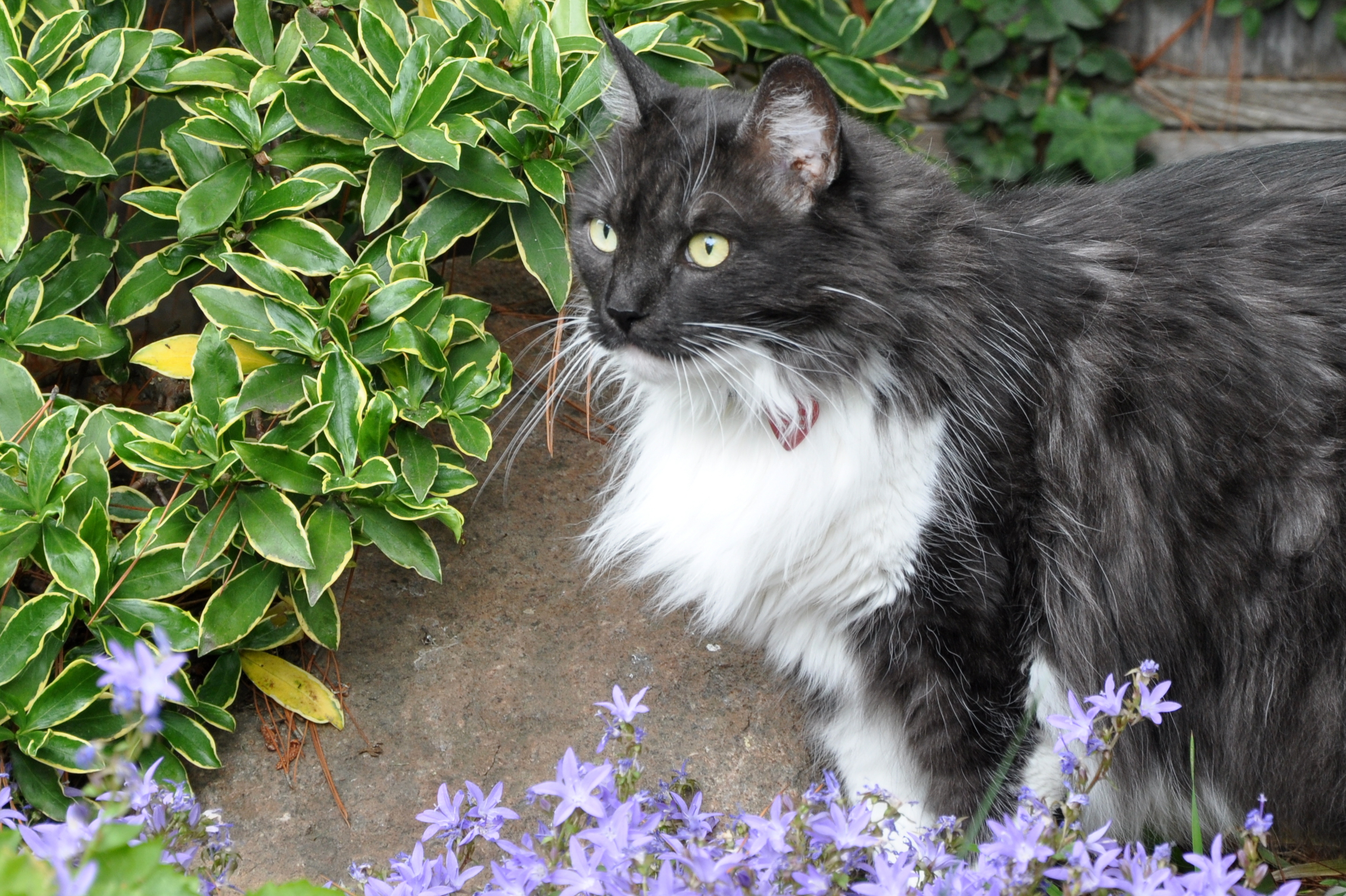
Thursday, as I planted and pruned, mulched and swept Lindy was on the scene.  She sits on the warm stones and keeps an eye on things, moving when I move to other parts of the garden.

lindy on the stones

Lindy keeps watch

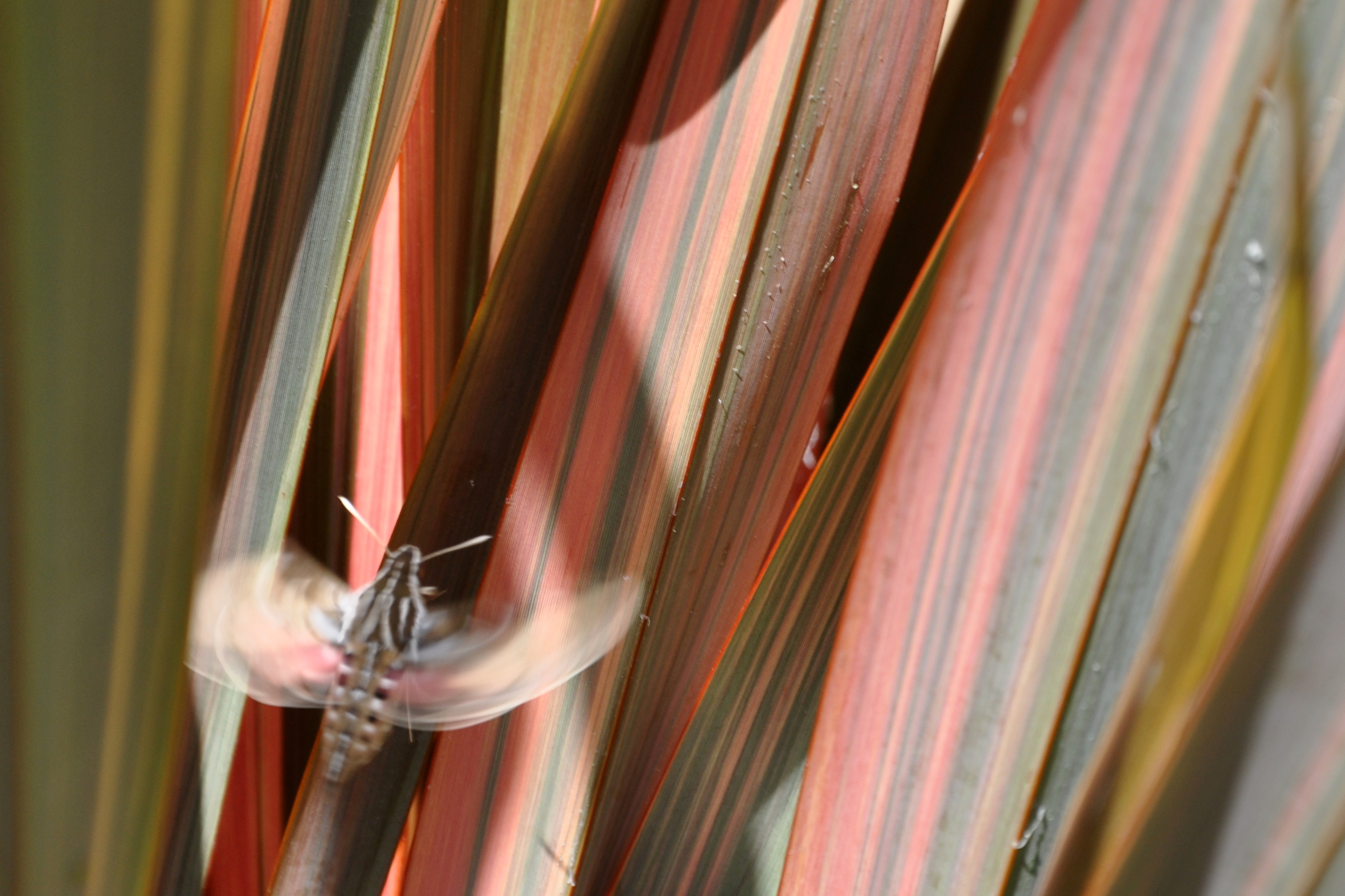
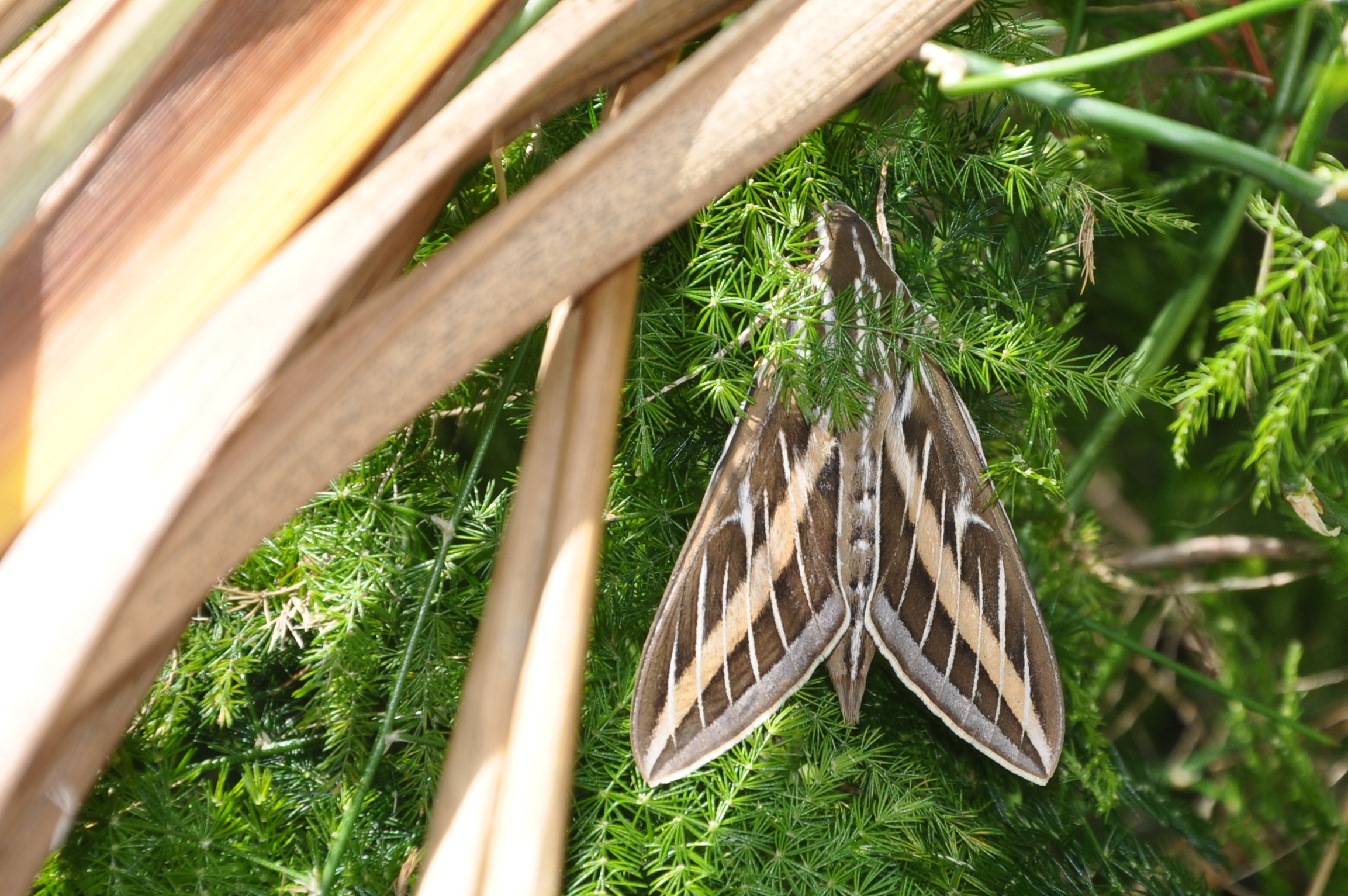
After tending to the basil and tomatoes on one side of the garden, I moved to the fence line to prune the dead growth on my fern. As I stepped down from the rock wall, I heard a loud fluttering.  I’m used to the sound of bees and hummingbirds, but this was different.  Within seconds of focusing on what looked like a huge moth, a hummingbird swooped down in the same direction.

Oh darn…where is my camera when I need it?

As the hummingbird flew away, the ‘moth’ settled into the clippings of my recently pruned fern.  Not wanting to lose track of the visitor, I looked over my shoulder for my camera, then walked backwards to get it.  Camera in hand I attempted multiple shots of the wings in flight.  That thing moved fast!  It zipped around the garden, plant to plant and finally disappeared behind the flax.

moth

Hovering moth

moth at rest

Moth at rest

Now I’m full of questions.  What was that winged visitor? Was it food for the hummingbird or prey?  Was it just a coincidence that they flew at each other, before they both moved away?  Where is my backyard manual when I need it?

I finally managed a few shots, then continued with my work.  That’s when a squirrel in the pine tree started telling me off.  It isn’t a sound you can ignore.  I made my cluck-cluck-clucking sound but he wasn’t impressed.  There was nothing left to do but take his picture and walk away.

squirrel

Garden patrol

As I packed up my tools and readied for my appointments, I tried to imagine things from their perspective.  They spend far more time in the garden than I do.  Suddenly a middle-aged red-head with long green gloves and sharp tools is bobbing up and down among the plants. I am the interloper, not them.

Lindy was back inside by now, preferring the soft rug and the cooler temps.  Or, maybe she took the hint. The moth and hummingbird were probably working as a team, hoping  to chase me off.  When that didn’t work, the squirrel started shouting from the tree tops: “Can’t you take a hint?”

Excellent team work. I wonder if they think they’re rid of me for good?

Have you ever been told off by a squirrel?

Basil: Round Two

In case you missed it, my first attempt at growing basil this season failed miserable.  The basil grew fine, but then the snails ate it to the quick.  Turns out basil is one of their favorites.

basil fail

Two tiny ‘sticks’, formerly known as basil, right

Today I planted more basil, but with additional precautions.  I bought a packet of copper tape and wrapped it around the planter bed. A small electrical charge will keep them from crossing the copper tape.  One package was just enough.  The new basil is now planted next to the tomatoes.  The plants do well together, so they already have synergy going for them. Last year’s basil grew close to the tomatoes and remained healthy all season.

Since snails are resourceful, I needed to take additional steps to keep them out of the bed.  Clippers in hand, I removed all the lower, over-hanging tomato leaves.  There is no sense wrapping the box in copper, only to provide a nice bridge into the box for tasty dining.

Snail bridge?  All Clear.

Snail bridge? All Clear.

With my gloves firmly in place, I ran my hand along the under side of the upper box, making sure any hiding places were clear.  You don’t want to box the snails *inside* the planting bed.  I’m going outside one more time around dusk to be sure I haven’t missed any interlopers.

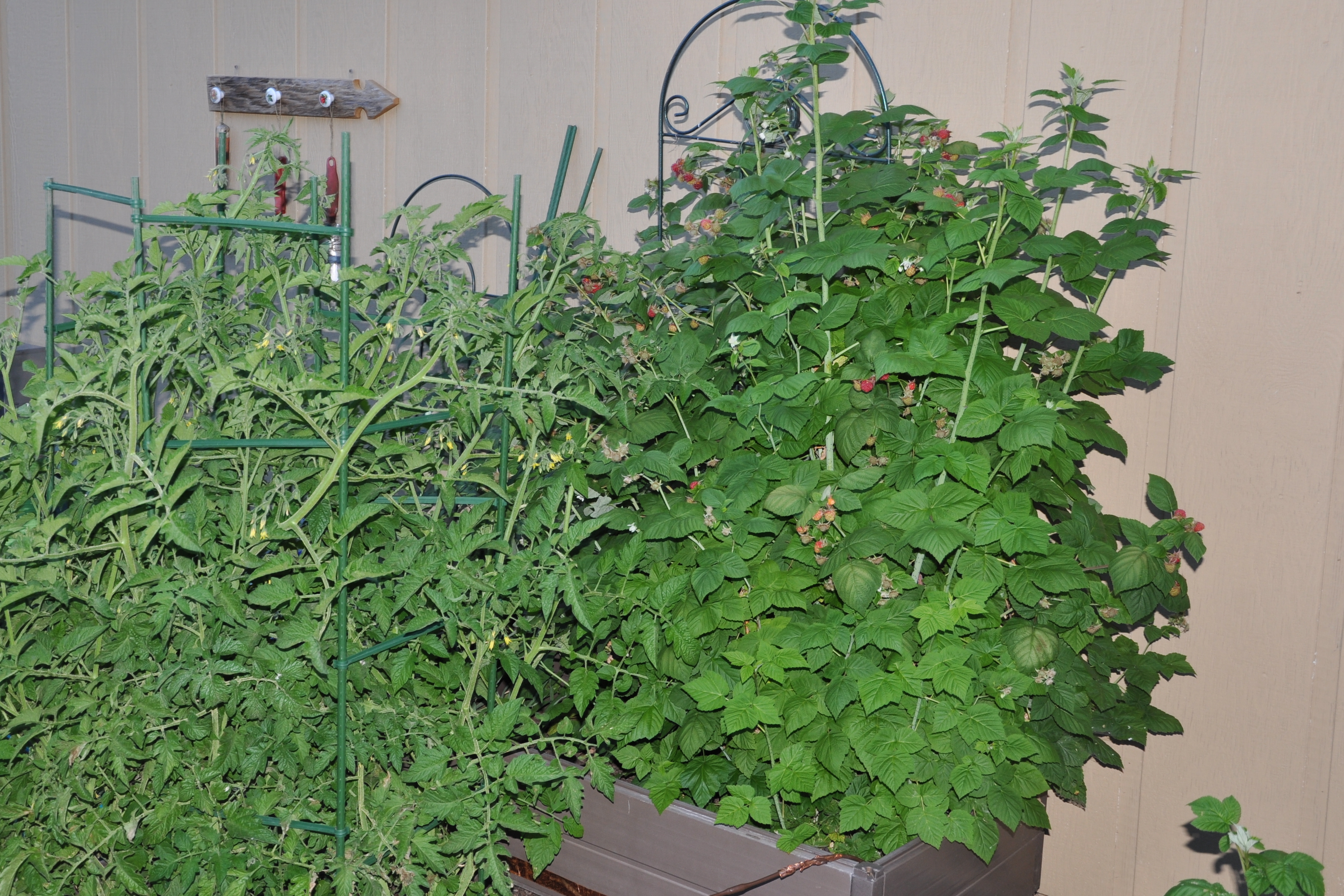
Meanwhile the tomatoes, no doubt confused by our warm winter, are growing like weeds.  They volunteered in the planter box…

volunteer tomatoes

Self-sown (volunteer) tomatoes

in the gravel walkway…

tomato in gravel

I’ll just set seed here if you don’t mind

and they volunteered in the compost bin.

tomatoes in compost barrel

Tomatoes growing through the cracks of the composting barrel

No shortage of tomatoes this year.

On the subject of compost, I’ve stopped turning the bin for now.  I want those adventurous tomatoes  to have a fighting chance.  I scooped out handfuls of compost and used it to dress the tomatoes and basil.  I’m still amazed when I see the rich, black compost, knowing it came from dried leaves, twigs and kitchen scraps.  It feels like my own little magic show in the garden.

newly planted basil

Newly planted basil, dressed in organic compost, surrounded by copper barrier tape

Now that basil, round two is safely tucked in and the tomatoes are sporting a few flowers, I’ll soon  have the makings of a delicious caprese salad.

Meanwhile, check out this fabulous site All About Slugs: find out what really works to control the slimy menace.

We focus on reliable information and natural, tested solutions that really work. We never recommend anything that isn’t safe for children, pets, wildlife and the environment. You can control these pesky pests and still enjoy a beautiful, safe and natural yard and garden.

The site provides a list of slug and snail resistant plants, many of which already grow in my garden. Of course I’m trying to grow three of their favorites too: basil, lettuce and strawberries (the fruit, not the leaves).

For a chuckle or at least a guffaw, take a look at Slugapalooza. You’ll find clever poems, drawings and photos and (I kid you not) an ‘interview’ with a snail. Enjoy!

Paradigm Shift: Gardening in a Drought

Thomas Kuhn used the duck-rabbit optical illusion to demonstrate the way in which a paradigm shift could cause one to see the same information in an entirely different way. Source, Wikipedia

Duck-Rabbit_illusion

Used to illustrate a paradigm shift. Do you see the duck? The rabbit? Both?

I’m applying those principles to my garden.  Instead of simply planting what I like year after year, I’m now thinking about water conservation first, then figuring out from there what to plant.  This isn’t a new reality for our semi-arid climate.  In an average year, our rainfall is a mere 14 to 18 inches (35 to 38 cm).

Living in a developed country, we take water for granted.  We open a faucet and water flows: fresh, safe and abundant.  Actually, the first two are correct, but as we face year two of a drought, further complicated by an unseasonably warm winter and spring, abundant may no longer be the case.

We’re making incremental steps to reduce our water usage. While these changes are small and, forgive the cliché, a mere drop in the bucket, I think they’re worth doing.

Last week we finished removing the lawn from the sidewalk strip.  This allowed us to cap off several sprinkler heads, and divert a smaller amount of water to one raised flower bed.

Over the weekend, I reduced the number of water-thirsty pots by half, then planted what remained with succulents. Native to warm, dry climates, succulents can go days without a drink.

Instead of lavender, drought-tolerant Mexican Bush Sage lines the deck.

There are a number of things you can do to improve water efficiency, but we’re already doing them:

  • Watering in the early morning
  • Use of a drip-irrigation system, delivering measured water directly to the source to avoid run off and rapid evaporation.
  • Use of native plants
  • Mulch to preserve moisture in the soil

The next logical  step is to replace the lawn.  Once a status symbol of the rich, water-thirsty lawns eventually found their way into suburban gardens.  I hope their popularity is on the way out.

Major changes are time-consuming and costly, so we are making our changes  incrementally.

Here’s what we planted:

Senecio Vitalis

Senecio Vitalis

Panda Plant Kalanchoe tomentosa

Panda Plant ‘Kalanchoe tomentosa’ from Madagascar

assorted succulents
Left, Echeveria agavoides * Upper right, Echeveria peacockii * Lower right, Rainbow Elephant Bush Portulacaria afra ‘Variegata’

The other part of the water equation is indoor use. I’ve ordered a free water audit through the City of San Jose. They read your water meter, check for leaks, and determine water flow from sinks, showers and toilets. They make suggestions for laundry and dishwasher efficiency, shower duration, etc. They’ll audit our garden use as well. I’ll report back when they complete our audit next week.

Have you ever made a paradigm shift? Please let me know in the comments below.

Easter Flowers and Kindred Spirits

This sweet little ceramic chick appears every spring. It was a gift from Nichole, a family friend and our go-to babysitter when our boys were young. She’s always been a wonderful presence in our lives.

garden posy

Garden Posy

I gathered a few flowers from our spring garden today, with just enough purple and yellow blooms to fill the tiny vase.

The garden posy includes Snapdragons, Daffodils, Bachelor Buttons, Pincushion flowers, Campanula, Statice and a mystery flower.

I photographed the same flower just last week at a home tour.

mystery flower

Mystery flower

Then one appeared in my garden, probably carried by the wind or dropped by a bird last season.  It pushed its way up between two shrubs and flowered today. Serendipity!

Can you help me identify the flower?

mystery flower

Mystery flower: white, purple and yellow

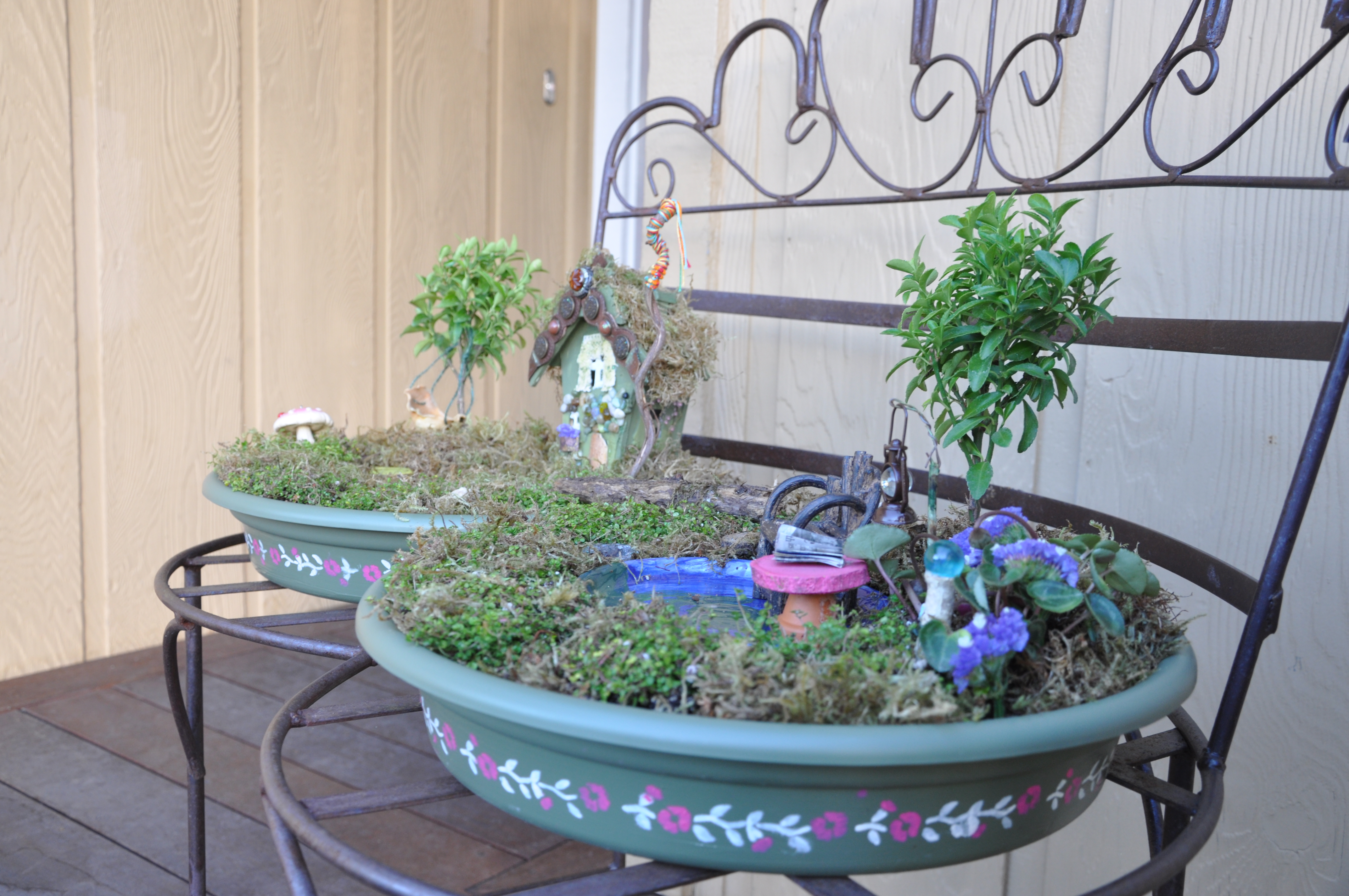
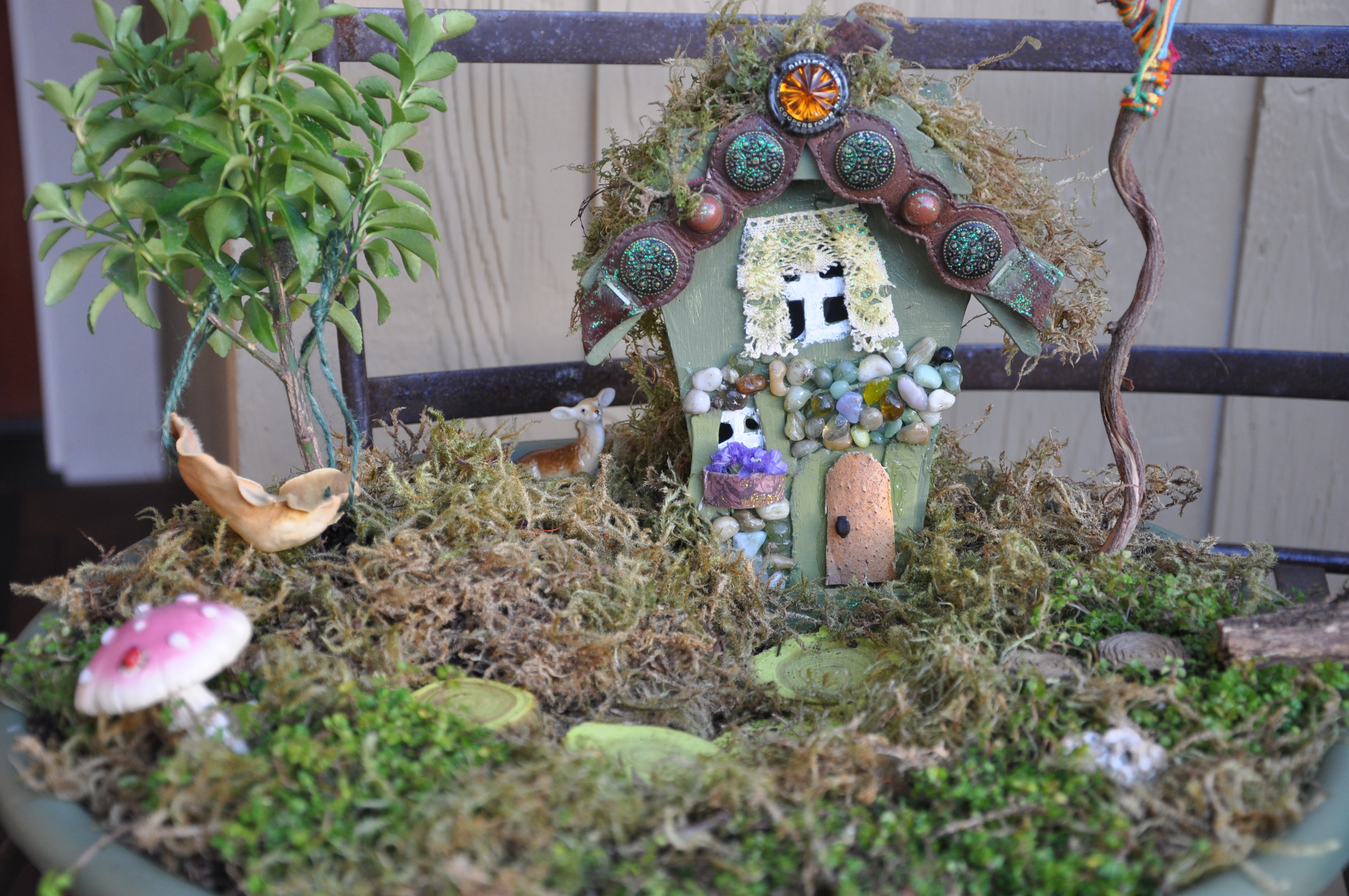
After a hectic few days, I was finally able to catch my breath. I opened an extra-special package from my kindred spirit, Boomdee. I wish you could have seen the smile spread across my face as I opened the tiny treasures. The sweetest little chair appeared, along with tiny wooden stepping ‘stones’ in a lovely moss-green.  An adorable lantern, also on display in Alyster the Gnome’s cozy home sent my heart a flutter.  Isn’t that the cutest thing you’ve ever seen?

easter fairy garden

Impromptu Easter fairy garden

step right up

Step right up

There were more treasures and a beautiful card and the most amazing package you’ve ever seen, decorated with bunnies, a fence and pretty spring flowers. Be still my heart. This paper posy decorated the card inside.

crafting goodness from Boomdee

Crafting goodness from Boomdeeadda

If you’re not already following her blog, you’re missing out. If you’re a regular follower of Boomdeeadda you’re already shaking your head and saying, “I know, I know, fantastic, right!?”

Happy Easter!

Fairy garden furniture available at Corinthia Flowers.  Check it out!

Three Garden Projects, All in a Row

Hurray for Nick Timmermann!  Nick completed all three garden projects for me over the past two days.

You may remember that I managed to get most of the dead hardenbergia vine pulled, but had to stop at the roots. The same went for my attempt at removing the grass in the sidewalk strip. My back and neck can no longer handle that kind of heavy digging.

The third project on the list was to remove the depleted lavender (thanks to an early frost) and replace it with Mexican Bush Sage. I went to four nurseries and garden centers over the past two weeks looking for the plants without success.  Central Wholesale Nursery said they were seeing a shortage of plants. At the start of the recession, growers reduced production.  Now that people are buying again, they’re having trouble keeping up with the demand. Nick went back this week and they just got them in!

I’ve been waiting to get the front garden rehabbed before our Little Free Library dedication. Now I can move ahead.

Here’s Nick’s handy work, starting with my attempt at digging up the grass, left, and the completed garden strip, upper right:

Curb garden

Colorful pebbles, stepping-stones and thyme replace the 18-year-old, water-guzzling lawn

I’m trying to reduce my water use and getting rid of the lawn in the sidewalk strip was a first step. We replaced it with tiny pebbles and drought tolerant thyme, capping off several sprinkler heads in the process.

sage replaces lavender

Out with the old, in with the new

wooly thyme

Wooly thyme planted between the rocks

Colored pebbles and slate stepping stones

Colored pebbles and slate stepping-stones

I loved the lavender and was sorry to see it go. That said, here was another opportunity to reduce water usage. The Mexican Bush Sage prefers dry conditions and needs almost no water once established. These plants will fill the space within a season. Meanwhile, I’ll put in some sunflower seeds and mulch and see if I can outsmart the squirrels.

As the daffodils slowly fade, the perennials are taking over.  I’m loving all that color.  Here are a few closeups:

red buckwheat

Red Buckwheat

snapdragons and daffodils

Snapdragons and daffodils

Scabiosa

Scabiosa (it’s prettier than it sounds)

I ♥ flowers. Don’t you?

Blood Moon Lunar Eclipse

Last night we got to experience a total lunar eclipse from our back yard.  Good thing, too, since it happened after midnight.  We all went to bed around ten and set an alarm  for 12:00.  My youngest son asked me this morning if he got up to see it or if he had just imagined it.  So much for laying down memories!

Mike took some photos, which I’ve included below.  They’ll make great memories for us, but if you want to see the true majesty of this eclipse, you can check it out at Bad Astronomy.

blood moon

View from the backyard: 9:09 pm

Full moon, 9:09 pm

Full moon, 9:09 pm

Full Blood Moon: 12:50 am

Full Blood Moon: 12:50 am

According to Phil Plait of Slate:

there will be three more total lunar eclipses visible to the United States over the next year and half: in October this year, and in April and September of 2015. While their won’t be any bright stars near the Moon for the eclipse in October, the planet Uranus will be only a degree away! There’s also a partial solar eclipse two weeks later, on Oct. 23, 2014! That’ll be a treat. And if you live in Australia there’s a nice annular solar eclipse on April 29; this is when the Moon is slightly smaller than the Sun and leaves a ring of Sun around the dark Moon.

Do you enjoy watching a lunar or solar eclipse? If so, please share your memories in the comments below.

Screen Saver, Garden Style

If you’re looking for a screen saver for your tablet or PC, I’m afraid you’ve come to the wrong post. If you’re a bit of a klutz like me, however, this post is for you.

I’ve walked into our screen door on more than one occasion, with the full force of my being.  I’m always completely stunned each time, as if it’s never happened before.  Last summer my son’s friend hit the screen with such force that it tore out of its frame.  I felt ever so slightly vindicated. His friend wasn’t hurt of course, and they both laughed it off, but our screen has taken a real beating.  We’ve had to replace it at least twice in the past several years, and didn’t even bother to repair the current one when the lower corner came loose.  The cats immediately claimed it as their own.

After the most recent screen crash, my husband applied a strip of black electrical tape at eye level and called it a day. Though lacking in aesthetics, it was a brilliant idea. It worked.

I’ve tried attaching clever little pins in the past or stickers from my stash, but they never stay put.  Then I found these:

magnetic screen savers

Magnetic Screen Savers

They’re mirrored magnets.  You place one on the inside of the screen and attach the mirrored magnet to the outside.  I think they’re fun in a kitschy sort of way and they get the job done.

Problem solved: screen saver, garden style.**

**Disclaimer: they don’t work when you have a cat snoozing across the door’s threshold. =^..^=

cat in the doorway

Have you every walked through a screen door? You can tell me. I promise not to share it with anyone other than the internet.

It’s all in the Timing

Great cooks make it look easy.  They pull together a variety of dishes and manage to have everything on the table at the same time.  It’s all in the timing.

For three years now, I’ve tried to plant the tomatoes and basil so that they’re ready to go at the same time as well.  I love caprese salad, and the novelty of growing two of the three main ingredients is fun.

Here’s one of our salads from last summer.

Caprese Salad

Caprese Salad

In prior years, the basil took off, and the tomatoes took a long time to catch up.  This year all the tomatoes self seeded in late winter, sending me scrambling for basil.  I purchased a small plant from the nursery, and planted it near the volunteer potato.  It was about the same size as the tomatoes when it went into the ground, so I patted myself on the back and figured a job well done.

Ha!

potato plant

Scene of the crime

Something devoured my plant!  I’m not naming names or anything, but their initials are ‘S’ and ‘S’.  Those slippery, slimy garden pests noshed my lovely plant down to the nubs.  Boo!

Now here we are three weeks into spring, the tomatoes are taking off and the basil is…well…gone.

basil plant eaten by snails

Once upon a time I was a Basil plant

I was chatting with my friend Kirra today and she mentioned planting her basil by mistake too close to the tomatoes.  Then it hit me.  Last year I planted the basil and the tomato side by side without any problems.  Since tomato leaves are poisonous, I wonder if the proximity kept the S’s away?  It’s worth a try.

Just before hitting the publish key, I searched the term ‘tomato companion planting’ and you’ll never guess what came up: basil!  Last summer was a happy accident.  So I’ll be headed to the nursery for another small plant, and now I know exactly where it should go.

tomato plants

Hearty Tomatoes

Do you have a favorite summer salad?

The Fruits of My Labor

developing plums

Developing Plums

Gardens, like children, need nurturing to grow. Genetics certainly plays a role. Environment is significant too. A little TLC, however, goes a long way to ensure a happy, healthy garden. Today, I’m enjoying the fruits of my labor, literally and metaphorically.

This is the break-out year for our four-in-one fruit tree. We bought the grafted, stone-fruit tree as a gift for my son’s 10th birthday. I researched the guidelines for pruning the tree, and received additional tips from my nurseryman friend, Doug. Following that advice, I pruned the branches by 40-50% every year for the first three years. It seemed drastic to my young son who was pretty upset with me even though I was able to show him the research. One of the four grafts died, and I’ve never heard the end of it.

Where was I…oh yes, the fruits of my labor. Well guess what? This is year four and the tree is now covered in fruit. There is more fruit than we’ve had in the first three years combined.

future plums

Blushing fruit in the dappled sun

four in one fruit tree

Branches laden with fruit

Last year’s small bounty disappeared overnight. This year we have so much fruit that the rats and squirrels have only made a small foraging dent. We might actually be eating peaches, plums and nectarines this summer. Oh happy days!

Do you have a favorite fruit?