Xylocopa varipuncta: Love and Romance in the Garden

What a romantic! Did you know that the Xylocopa varipuncta, also known as the male Valley Carpenter Bee emits “a rose-scented blend of volatiles”  from within “massive thoracic glands.”¹

You can’t make this stuff up, folks.

While courting the shiny black females,

female carpenter bee

Female Carpenter Bee

the amber male, with his bright green eyes and fuzzy amber body, emits a special cologne.²

Valley Carpenter Bee

Valley Carpenter Bee

The female decides if she likes his cologne and only then does nature takes its course.

When Love-in-a-mist met the Valley Carpenter Bee, it was a match made in gardening heaven.

love in a mist with Valley Carpenter Bee

Valley Carpenter Bee circling a Love-in-a-mist flower

Love in a mist flowered all over the garden this spring, both front and back and the bees love it. It makes me so happy to see them buzzing from bloom to bloom. Sometimes I just sit nearby and watch them work.

bee on love in a mist

The more typical, seen daily be the dozen

What surprises me is that most of the bees are small with stripes. There are dozens of them throughout the day working in the garden.

Conversely, the golden hunk of bee is an occasional visitor.

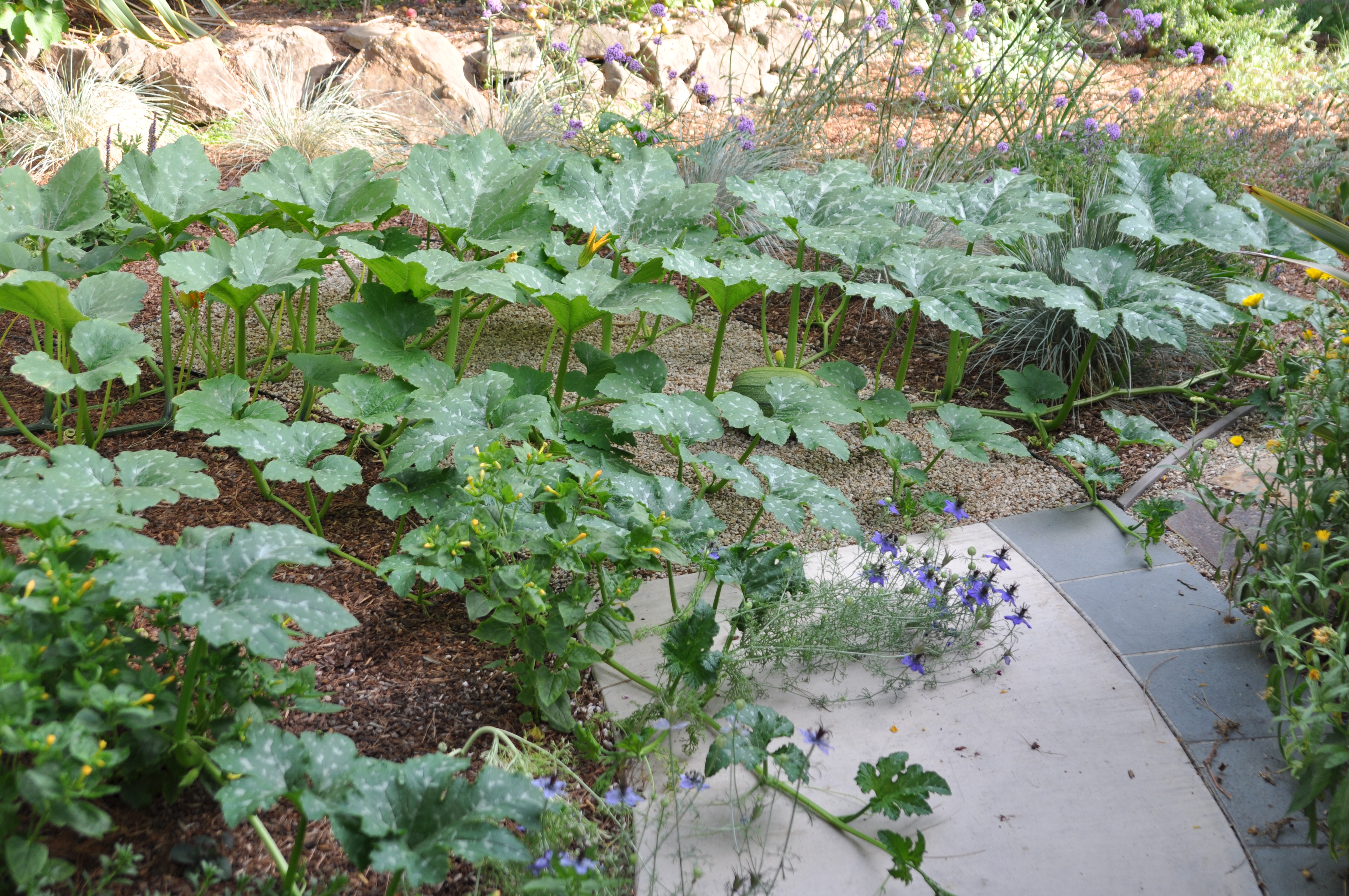
Meanwhile, his female counterpart is out back pollinating the pumpkin planted by the squirrel.

pumpkin vine

Runaway Pumpkin Vine…and yes, love in a mist

The pumpkin vine is racing across the garden at record speed and it’s only June. In all my years of gardening, I’ve never seen anything like it.

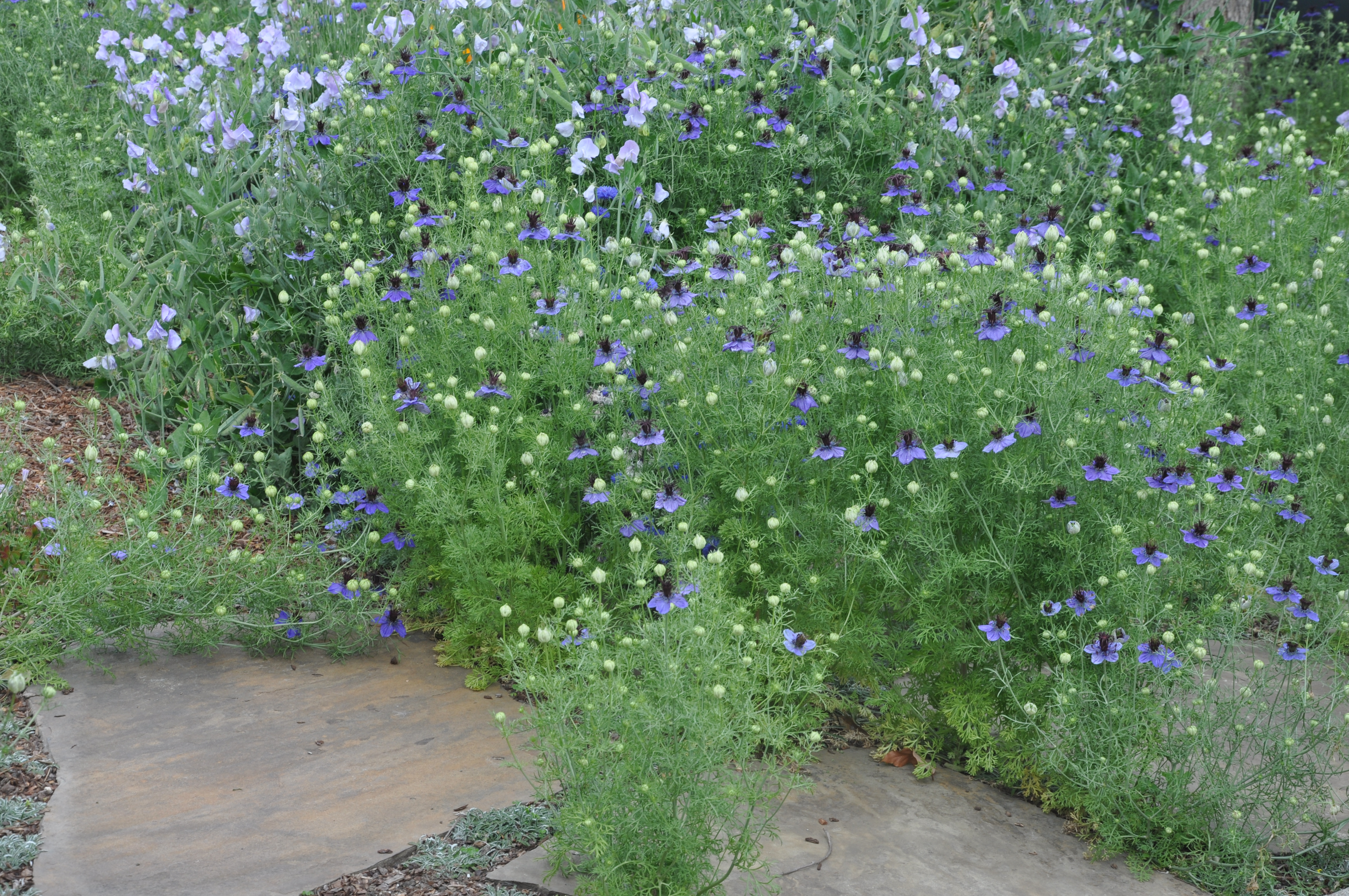
The bees working in my garden are docile. They don’t mind my presence as I brush up against the flowers, currently referred to by my family as “the jungle”. Love in a mist has completely taken over.

love in a mist takes over

The Jungle

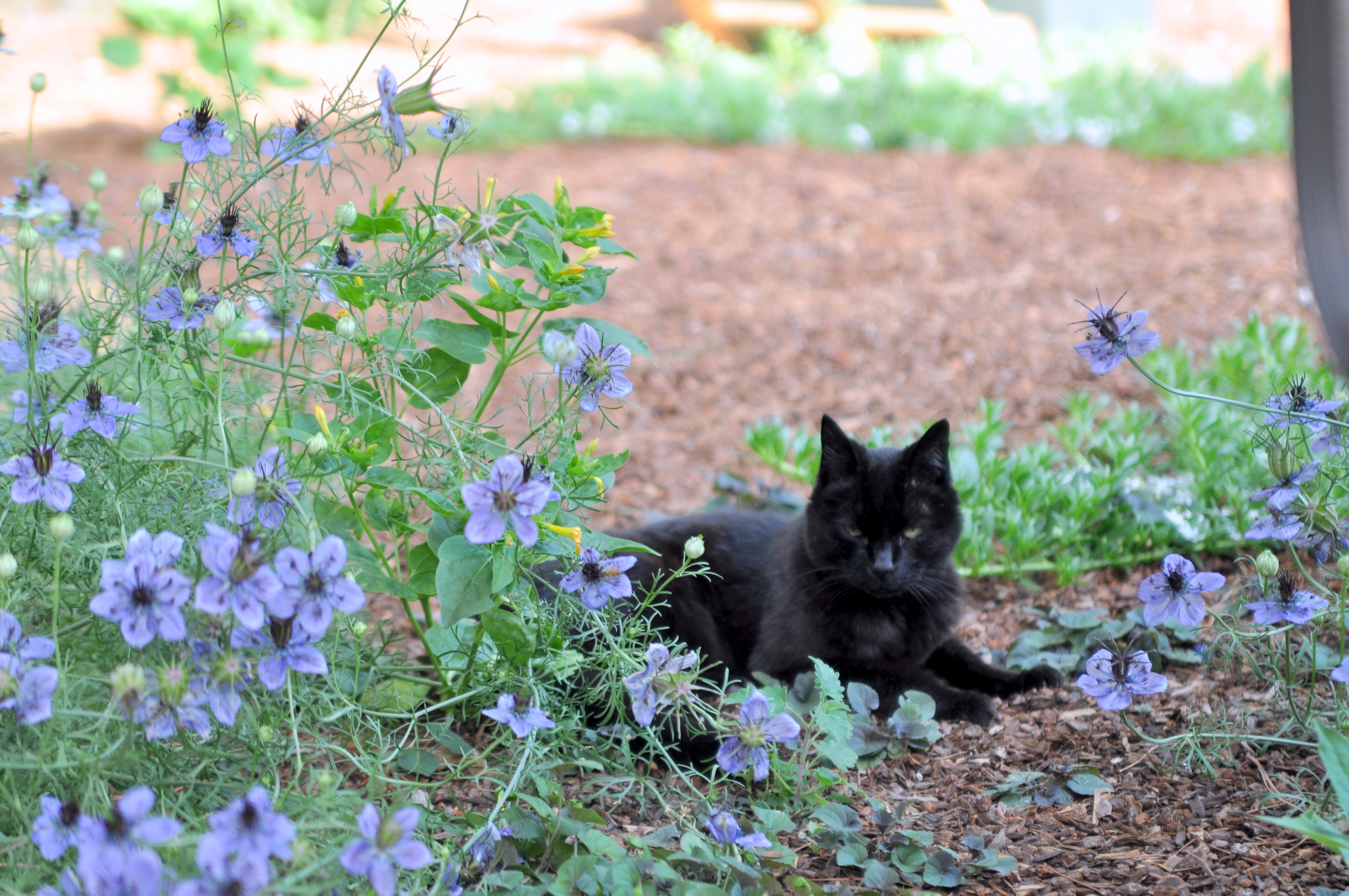
slinky love in a mist

Slinky guards her catnip near the love-in-a-mist

Slinky likes to rest near one of the flowers in the back, but to be fair, it’s also close to her secret Nepeta plant, also known as catnip.

Mouse is also enamored with this flower, attracting lots of camera time with his antics.

In case it’s not obvious by now, I love this beautiful plant and the ease with which it grows. The original seeds were part of a “seeds that attract hummingbirds and bees” packet a few years back. They didn’t do much throughout the drought, but they’ve loved our season of rain.

We’re in the midst of a long heat wave now, so it could spell the end. I’m enjoying them while they last.

¹Wikipedia: Xylocopa varipuncta

²Native Bees: What’s the Buzz

A Garden Under the Influence of Rain

wisteria vine

Wisteria refreshed

It’s been an extraordinary spring!

Everywhere I turn I see a happy garden under the wonderful influence of rain. I’m taking none of it for granted.

From the self-seeded pumpkins,

2016 garden pumpkin near patio

Self-seeded pumpkin, impervious to the cool night temperatures

to the spontaneous cottage garden

2016 sweet peas love in a mist poppies

My all-volunteer (self-seeded) garden

everything seems larger than life.  It’s rare for San Jose to get rain this far into the year, but we continue to get small storms every week or so keeping things fresh and alive.

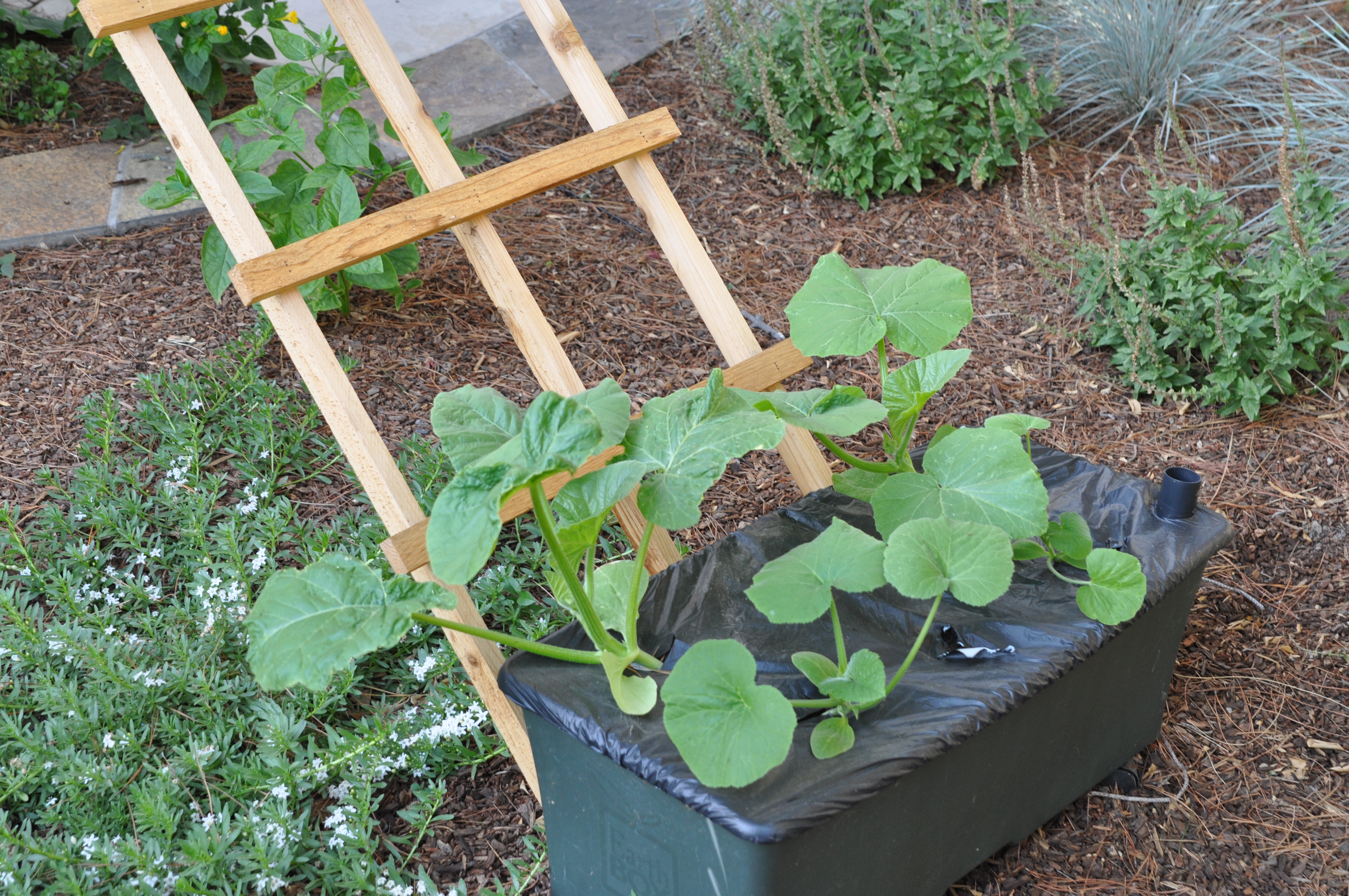
I prepped an Earth Box for some pumpkin seeds, and following the package instructions, waited for warmer nighttime temps. I needn’t have bothered. There are two self-seeded pumpkins growing across the back garden doing just fine. They don’t mind the cooler nights and show no signs of slowing down. Emboldened by last year’s pumpkin success (no water, no squash bugs) I’m happy to see these two doing well.

2016 pumpkin vine self seeded

Another self-seeded pumpkin, already setting flowers

The tomatoes doubled in size within a few weeks. I’m glad I staked them from the start. They always looks so small when they’re just getting started, but I’ve learned the hard way how difficult it is to stake them once they are under way.

2016 garden tomatoes

Tomatoes Doubling Down

The raspberry canes survived the move and several of the canes are setting flowers. There is nothing quite so good as a fresh, warm berry from your garden. Grow, berries, grow!

I missed the memo about Nasturtiums taking over the garden, but I don’t mind. They’re beautiful, colorful and edible and they’re supposed to keep the bad bugs away. So far so good so I say “go Nasturtiums.” There are strawberries hiding under the flowers which is probably just as well. If the birds don’t see them, they can’t eat them.

nasturtiam close up

Variegated Nasturtium

Thanks to the heat and rain, the basil is already flowering. The flowers are pretty but they take away all the energy from the leaves so I’m pinching them back every other day. I made this same mistake last year. The tomatoes take longer to fruit so while I’m waiting for tomatoes, I’m having to discourage the basil from flowering. Hopefully I can stay on top of it. Caprese salad is in my future!

I’m really happy with my raised (Trug) planting bed. I wrapped the legs with copper tape before adding a single plant, and it worked. No snails! I used strips of burlap as mulch this year, with plenty left on the roll for years to come. It was also supposed to discourage the cats from using the boxes for other purposes, but they think it’s a delightful place for a nap.

2016 slinky in the planter box

Slinky found her way to the planting box

slinky in the planter box

Cozy

mouse in the garden bed

Nasturtiums and Mouse the Cat

What an incredible spring.

March 10th vegetable garden

March 10th, 2016

vegetable garden may 5th

May 5th, 2016


Indexing the Garden: It’s a Whole New Page

I’ve been toying with the idea of creating a plant index for my blog. It’s been easy to put off because listing a bunch of plants seemed fairly mundane.

I started it last week  and worked on it here and there and it’s now (mostly) done. Once I got going, I actually enjoyed the process. I worked from memory, notes, trips to the garden, some landscape plans, more trips to the garden and my good ol’ blog. Thank you to those of you who encouraged me, through comments, to give this a go. Since so many of the plant names are Latin, I typed first, then proofed, then added the words to the dictionary. Spell check can only take you so far: Thymus pseudolanuginosus for instance. Do you know if I spelled that correctly?

Here’s the intro and a snippet from the page:

Here’s What I Grow

When introduced to someone new, I exchange pleasantries but let them know that I’m bad with names. I’ve tried using mnemonic devices and sometimes they work. I’ve learned that I need constant reinforcement before a name sticks.

So it goes with the names of plants. Hence this page: Here’s What I Grow

This page will remain a work in progress, because that is the nature of gardening. I plan to keep it as up to date as possible, hoping it will help with my memory along the way.

Links highlighted in green will take you to an image of that plant in my garden unless otherwise noted.

Annualsannual plant blog banner

Alyssum

Cornflowers ‘Bachelor Button’

Hypoestes phyllostachya ‘Polka dot plant’

etc, etc

Using Picasa I created narrow photo-banners for each category, i.e. annuals, succulents, trees, to break up the sections. I have a lot more linking to do, but may just start adding links as I go forward.

Here is my new Page in its entirety. I’ve documented over 70 plants, trees and shrubs so far with a few more to go. I’m toying with the idea of adding a weed section, since they too grow in my garden. Making it official might only encourage them.

Have you considered adding a page to your blog lately?


Who’s That Pollinator: Wasp or Bee?

flower garden poppies love in a mist sweet peas

An Amazing Spring: Everything you see here self-seeded thanks to gentle, frequent rain. The Love in a Mist are now blooming, along with California poppies and sweet peas which appear to have swallowed the trellis

Late afternoon is a happy time in the garden. With spring in full bloom, bees and possibly wasps are doing what they do best: pollinating.

One of the many joys of blogging is learning new things. Though humbling, it’s also interesting when a long-held belief is knocked off its center.

For starters, take a look at this all-black bee.

Xylocopa tabaniformis

Xylocopa tabaniformis visiting the sweet peas

Someone told me years ago that these were carpenter bees. I took that at face value, having no reason to contradict it. They love traveling between my pumpkins and sunflowers. They’re frequent and welcome visitors in my garden, moving quickly from bloom to bloom. I’m always enamored with the yellow coating after they’ve dipped into the center of a flower. They’re docile as well, a nice quality when you’re up close taking pictures.

I was also told they would eat wood, including your house and that they were “bad” bees. I’ve since read that some carpenter bees are more problematic than others, but that overall they should not be viewed as pests but as beneficial pollinators. Are you as confused as I am?

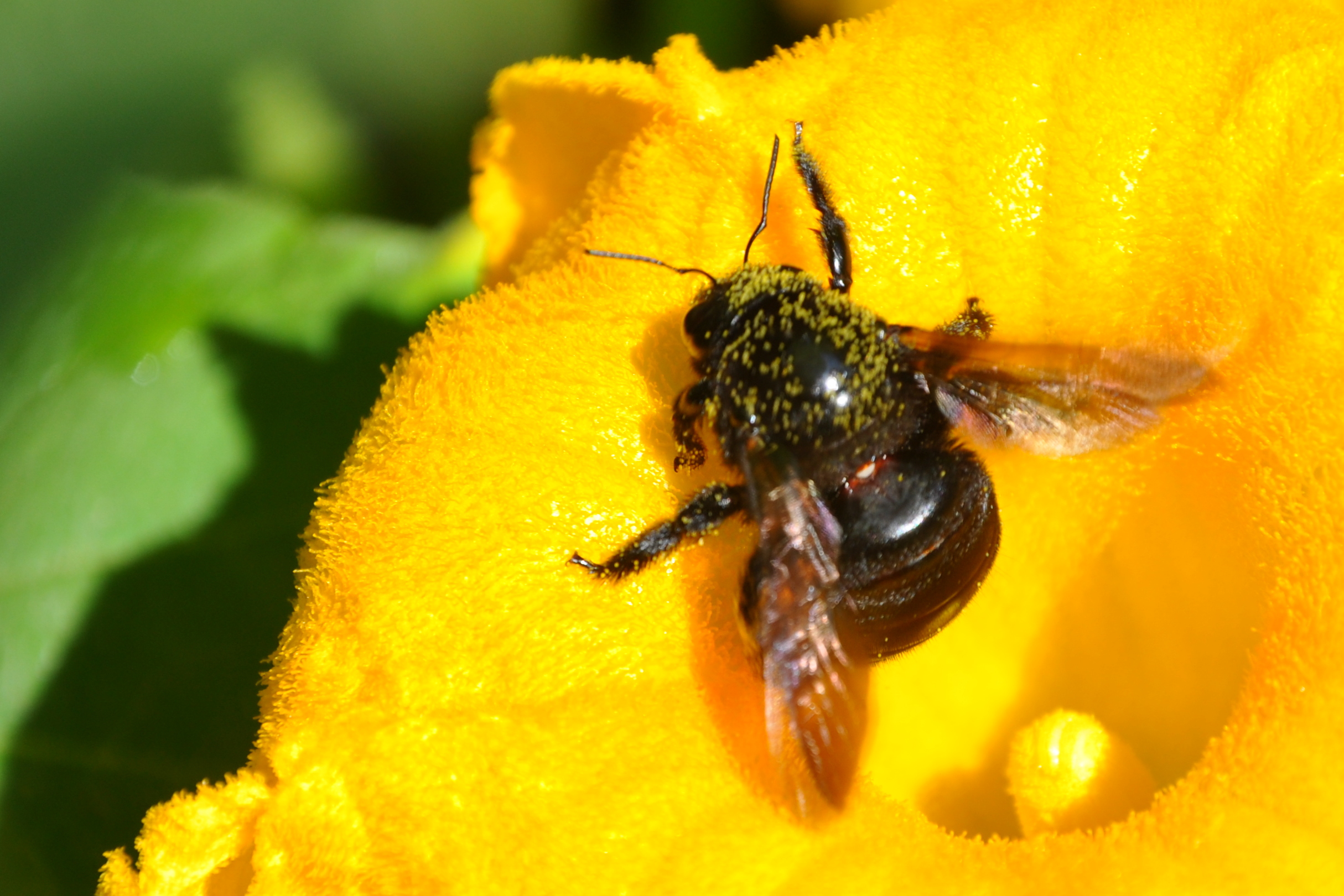
Xylocopa varipuncta

Xylocopa varipuncta gathering pollen on a love in a mist

I spotted this beauty today touching down on the love in a mist. Research tells me it’s also a carpenter bee, though the golden color is quite distinct from its shiny black cousin. Varipuncta looks like it’s wearing a golden fur coat, making it hard to distinguish between the bee and the pollen it gathers.

Xylocopa varipuncta

Xylocopa varipuncta alternate view

Rounding out the collection is a pollinator formerly known by yours truly as “A bee”, a nondescript, generic term I use for any sort of flying, pollinating “bee” in my garden. Now I’ve been forced to reconsider this description as well, allowing for the possibility that this is a wasp or a hover-fly. Any guesses?

bee or waspEvery year I find a paper wasp’s nest under the eaves, but they’ve never been aggressive. Today I read that yellow jackets and hornets are aggressive, but like most bees, paper wasps are gentle.

Why We Need Bees:

If you’re as fascinated as I am, here are a few links:

No Bigger Than Thumbelina

fairy garden jungle

Fairy garden jungle?

Imagine for a moment that you’re no bigger than Thumbelina. You’ve been away for a while, and when you return your garden is overgrown.

Nature’s been kind this year. The longed-for rain finally fell and the earth smiled. Precious seeds pushed up through the dampened soil, welcomed by the warming sun.

curb garden pink flower

They grew healthy and strong. Encouraged by continued rains, seedlings turned into plants. Starter leaves became true leaves and from there they spread. Tiny greens stretched out across the land, filling the once-vacant landscape.

The fairy house still stands, but the garden surrounding it looks more like a forest. The giant gardener who presides over the land retreated for quiet contemplation.

Allowing nature to be her guide, the giant gardener issued a decree:

The land heretofore known as the fairy garden will be given over to the trees and any tiny deer passing by.

fairy garden deer

Foraging in the forest

And it was so.

The giant gardener waved her magic spade and a lake-side, fairy-sized, mossy, watery retreat appeared.

fairy garden lake

Fairy Garden Lakeside Retreat

Verdant moss to tickle the toes blankets the earth. Tiny succulents line the edges for privacy and a break from the wind.

fairy garden chair and lantern

For reading by lamp light

A small chair for reading nestles in the greens, and a hammock is at the ready nearby.

fairy garden hut with canopy

Lots of places to relax, but it’s particularly fragrant under the umbrella

Fairies can cool off in an improvised lake, a ceramic bowl rescued from a nearby thrift shop.

fairy garden ceramic pond

On Fairy Garden Pond

All our welcome in the wee-sized, lake-side fairy garden retreat.

A straw umbrella, made from the shell of an orange and a few strips of raffia give shelter from the hot sun.

fairy garden grass hut

Refreshed from a recent rain

There is, however, a small price of admission: one must possess a child-like imagination and the ability to leave one’s worries at the foot of the tiny ladder below.

fairy garden rope ladder

Leave your troubles at the foot of the ladder

Top Ten Reasons to Grow a Fairy Garden

Everyone loves a top ten list.*

If you’ve been on the fence about starting a fairy garden, read on. By the end of my top ten, I hope you’re ready to let your creative juices take flight.

Lets dig in.

10

Fescue yurt and an orange peel umbrella

Fescue yurt and an orange peel umbrella

Fairy gardens are a short cut to our inner child. Not the cranky, I-don’t-want-to-take-a-bath-and-go-to-bed inner child but the child that loves digging in the dirt with a spoon.  Remember chasing butterflies and dandelion fluff on a warm summer day? Fairy gardens are a wonderful way to express that carefree joy once again.

9

Replanted Fairy Garden, The Long View

Fairy Garden on the Deck

You don’t need a lot of space to grow a fairy garden. You can plant in a pot on your patio or fill an old wheelbarrow in your back yard. Grow your tiny garden indoors or out. Let your imagination be your guide.

8

fairy garden lavender bed

Lavender mattress frame

Fairy gardening is affordable…or free. You don’t need to buy a thing. A traditional fairy garden might live under a shrub or near the forest floor. Smooth stones make wonderful seats and twigs are perfect for fences, walkways and four-poster beds.  Fairies enjoy resting on the soft side of a flower petal with a blanket fashioned from a sprig of fern.

7

One spooky Halloween night

One spooky Halloween night

Decorating on a dime. If you love decorating but have run out of money or rooms, this is the hobby for you. You can switch out the decor of your tiny garden as often as you like. It’s fun to put up lights for the holidays or lay down green stones for St. Patrick’s Day. The sky’s the limit, without the price tag.

6

fairy garden chairs and tableFairy gardens are a fun way to up-cycle household items. I’ve used wine corks, empty tea light holders, scraps of ribbon and the cap from a bottle of champagne, pictured above. You can use up old paint, or give a second life to a discarded toy. I love the challenge of using things I have on hand.

5

Fallen Log Bridge

Fallen Log Bridge

Scavenging for your fairy garden is a great way to spend time outdoors. I brought home a tiny “log” from one of my hikes and turned it into a bridge. I used broken twigs from a pine tree to make a small rope ladder. One year I fashioned a hammock from the soft petal of a magnolia. Using nature’s discards is fun.

4

fairy garden birthday

Celebrating birthdays in the fairy garden

At a loss for words? Fairy gardens are wonderful conversation starters for guests five through 105. People always have questions or comments when they see my fairy garden. Chatting about fairies is a terrific icebreaker.

3

Fairy House

This fairy house roof line is decorated with straps from an old pair of sandals, a bottle cap and a bit of glitter. The door is cut from the tough bark of a large fern with a seed for a door handle.

Fairy gardening is a unique way to express thoughts and emotions that are hard to put into words. Creative endeavors help lower stress and anxiety. An hour in your fairy garden can help you feel calmer and happier. It allows you to create something uniquely yours which in turn can bring you a sense of pleasure.

2

fairy garden sign and hammock

Tiny garden gifts from friends: a wee little welcome sign, a small hammock and a woodland chair

Your friends will join in the fun. A few of my friends started their own fairy garden. Several others send me wonderful little garden treasures in the mail. I’ve found a few anonymous surprises on my doorstep and even more in the garden. My neighbor’s daycare children add flowers and the odd sticker to let me know they’ve stopped by. It’s fun to be a part of this not-so-secret society of fairy lovers.

1

fairy garden rope ladder

This way to the fairy garden

Designing and tending a fairy garden allows your imagination to soar. There are no rules, no guidelines and no restrictions. Creative endeavors relax the mind and feed the soul. Even the busiest among us can carve out time to tend to a wee garden. In exchange, the tiny garden will tend you.

Stay tuned for my latest fairy garden creation: time at the lake.

*There’s a website called ListVerse that publishes top ten lists. According to their About page: “We publish lists that intrigue and educate, specializing in the bizarre or lesser-known trivia.”

It’s The Little Things

In the sweetness of friendship let there be laughter, and sharing of pleasures. For in the dew of little things the heart finds its morning and is refreshed. Khalil Gibran

I’ve always loved this quote. It’s beautiful, lyrical and true.

This little nest landed in the garden under the Chinese pistache tree. I spotted it in the tree late last year after the leaves dropped for the winter. Before I could take a picture, it came down in the wind. It is actually illegal to remove a bird’s nest, but once it’s on the ground…and empty, you can pick it up and admire mama bird’s nesting skills. I kept the little nest indoors through the wet months, then returned it to the garden for bird recycling.

Bird's Nest

Bird’s Nest

My friend Marcia and her lovely daughters dropped of this sweet little heart on Valentine’s Day. It’s a birdseed cake, shaped into a heart and ready for hanging in the garden. I love this little heart, and the big hearts that placed it on our doorstep.

birdseed heart

Heart Shaped Birdseed Cake

And on the subject of big hearts and little things, my friend Kelly, sent me a few packets of sweet pea seeds for our summer garden. She thoughtfully included purples, so that when my purple-loving sister stopped by, she could enjoy them too.

sweet pea seeds and gift bag

Sweet pea seeds from Kelly

Those tiny seeds didn’t amount to much in the first year, leaving me wondering what I did wrong. I take it personally when I can’t get something to grow.

Last year, they came up on their own, filling a corner nicely till the first heat wave laid them low. Like me, they wilt in the heat. They were stunning while in bloom though, and those little seeds taught me a thing or too along the way.

sweet peas

Sweet Peas, 2015

This year something big happened. It rained. Then it rained some more. I noticed seedlings spreading all over the front garden, right next to the newly planted California natives. Those little seedlings shot up and out and eventually filled out an entire corner of the front garden.

sweet pea collage Nov to April

Self Sown Garden

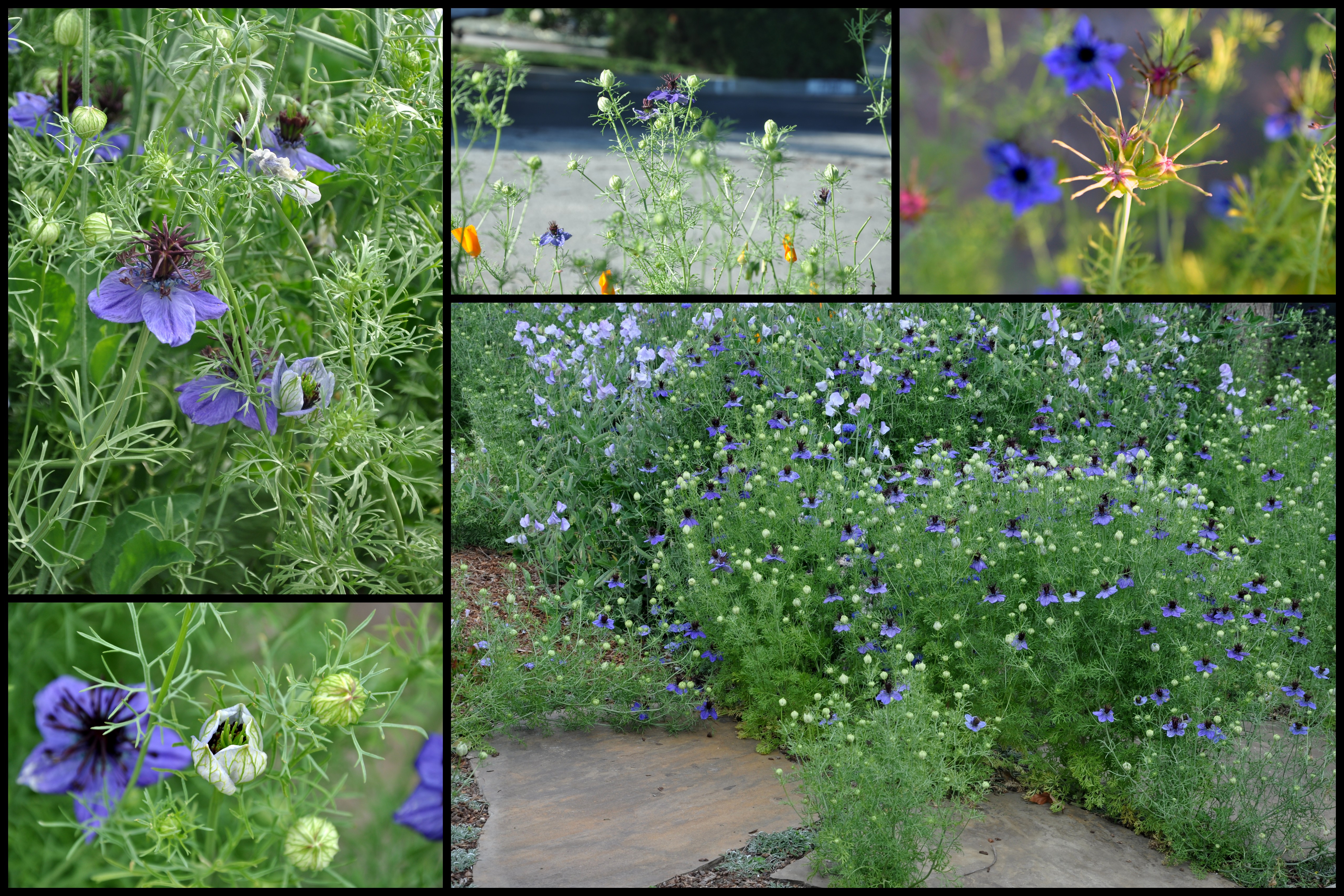
The garden is flourishing with an all-volunteer mixture of sweet peas (Lathyrus odoratus), love-in-a-mist (Nigella damascena) and bachelor buttons also known as cornflowers (Centaurea cyanus).

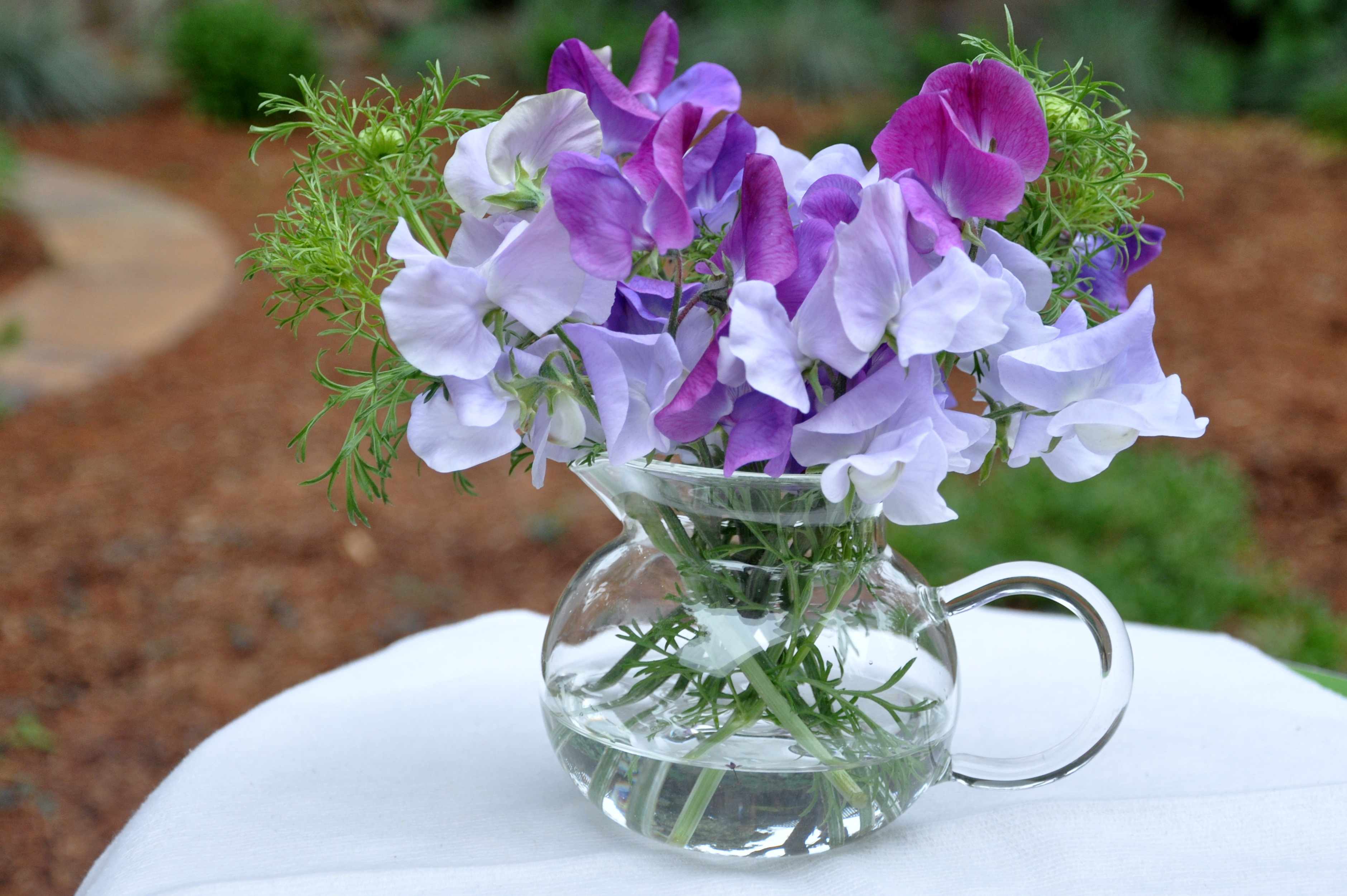
Now that I have several blooms, I’m going to start cutting indoor bouquets. The scent is out of this world.

sweet pea blooms april 2016

Bachelor’s buttons, pink and blue, Love-in-a-mist in the background, lavender and fuchsia sweet peas

“…for in the dew of little things the heart finds its morning and is refreshed.”

What is your favorite little thing?

My Garden has a Great Sense of Humor (Humour)

My Garden has a Great Sense of Humor (Humour)

Note: I started my schooling in Canada, and learned to spell humour ending in “our”. We moved to California in the late sixties and I had to relearn the American spellings of humour, judgement, and colour.

Now that I have a global blog following, I’m acutely aware of the different spellings. American English prefers humor whereas all the other main varieties of English prefer humour. I’m always worrying that I’ll offend people (which comes from my British upbringing). What to do what to do?

Where was I?

Oh yes, my garden. My garden has a great sense of…playfulness.

If you’re a regular around here, you know that we replaced our lawn with California native plants last fall.

california native plants

Newly planted California Natives, November, 2015

Then it rained! Wet, wonderful, welcome rain. All those seeds lying dormant around the garden sprang to life. Sweet peas, love-in-a-mist, bachelor buttons and others slowly overtook the new landscaping.

march 5th sweet peas

A plethora of sweet peas (March 5th, 2016)

By the end of March, I pulled out one of my garden trellises and staked it in the ground. These flowers plan to stay awhile. It makes me smile (and cringe a little too). I hope the California native buried under all those sweet peas will survive this temporary but beautiful upstart.

 sweet peas March 27th

Sweet peas and love-in-a-mist take over, March 27th, 2016

Our lemon tree enjoyed the showers as well, but I think this is carrying “fresh” a bit too far. Avert your eyes if necessary and move on to the next photo.

pointing finger lemon

Rain kissed lemon tree using a gesture considered rude in many places

I popped the following photo on my Facebook page last week and asked friends to guess its true identity. If you didn’t know, it might be mistaken for an invading alien. In reality, it’s a recently undressed California poppy. They’re beautiful to the last, don’t you think?

funny poppy stem

Alien landing or a California poppy recently undressed?

funny snail in garden

Hmm, more ironic than funny

Okay, so the snail working its way across the sweet peas after a recent rain isn’t that funny. I’m trying to keep my sense of humour/humor though. Where there’s rain, there are snails. You take the good with the “oh no, snails!”

acer in March

Acer shows off fall colors in early spring

The bright blue sky and the orange leaves remind me of fall, not spring, but here is the Acer setting wonderfully orange leaves. It makes me smile.

funny mouse in the grass after a rain

Snicker

Still not smiling? How about this pic of Mouse moving in for a nibble of grass? I smile whenever I see his little pink tongue.

cat smelling flowers

Is the cat wearing flowers or are the flowers wearing the cat?

While we’re on the subject of Mouse, I didn’t even notice his head in the flowers until I downloaded the pics. Silly kitty,

funny rock and roll horns poppy

Rock n Roll hands?

Last but far from least, doesn’t this remind you of Rock n Roll hands, or horns?

I hope I’ve left you with a smile.

Quotable

I have many problems in my life, but my lips don’t know that. They always smile. ~ Charlie Chaplin

Be someone else’s sunshine. Be the reason someone smiles today. ~ unkown

A warm smile is the universal language of kindness. ~ William Arthur Ward

Happy Easter

fairy garden with ceramic bunny

Spring in the fairy garden

easter flowers in ceramic chick

Treasures from the garden

pair of pink cosmos

Pink cosmos with a sunshine center

For those who celebrate, Happy Easter.

Tilling the Soil, Tending my Soul: Planting a Summer Garden

Over the years, the arrival of spring usually means one thing: it’s time to plant a summer garden. Last year I skipped the garden entirely. Year four of the drought and mandatory water rationing put the kibosh on a summer garden. Instead of planting tomatoes, I finished sheet mulching the lawn in the back garden and let the rest of the grass die. What a summer, eh?  It was disheartening.

This year is different. For starters, the lawn is gone. In its place: native plantings that will thrive throughout our hot, dry summers. Also in place this year is our newly installed rain catchment system. Harvesting rain water for our vegetable garden should see us through at least half the summer if not more. Mike is connecting a drip system to the tank so that we can water judiciously. I’m hoping it will last all summer.

All this is to say that I’m gardening guilt-free this season.

I’ve also nearly doubled my planting space using a space-efficient gardening box called a VegTrug Elevated Garden.

The only practical place for a vegetable garden in our yard is along the back of our house. Unfortunately, that same spot houses an electrical outlet, a low-voltage transformer and an irrigation manifold intake valve.

collage irrigation manifold

The “business end” of the garden

All of those unattractive components used to hide behind shrubs. Several years ago we removed the shrubs to make way for a vegetable garden. We added a pair of 4 x 4 elevated beds assembled from a kit, fitting them around the boring but necessary items that are part of the business end of the garden.

planter box one

Planting Box One: Upper half, transplanted raspberry vines, nasturtiums, lower box, cosmos and nasturtiums

nasturtium

Edible Nasturtium

planter box two with tomatoes

Planting Box Two: Heirloom tomatoes, three varieties, cosmos and nasturtiums

We added gravel to fill in the odd spaces.

When I grew pumpkins, the gravel provided space for the vines to grow, but otherwise it wasn’t any use for planting.

I spotted the VegTrug in one of my gardening catalogs and inspiration struck. I went out back and measured the distance between the two existing boxes, allowing for the immovable pipe protruding out of the ground.

Oh-my-gosh!!!

The longer of the two Trugs would not only fit, but would have the perfect amount of clearance off the ground and away from the house. I placed the order.

UPS left the box on our front deck while my husband was away on business and my son at school. I couldn’t get it to budge. I opened the box where it sat and carried the pieces through the house and out the back door.

vegtrug assembly

Assembling the VegTrug

I watched a YouTube video ahead of time so I would be able to assemble it (mostly) myself. I sorted the pieces, doubled checked the parts and assembled the legs. No problem. The long planks were a bit unwieldy and they suggested a second person help with that part. In my impatience, I tried to do this on my own, and promptly dropped one of the boards on my little toe. Boy did that hurt. And before you ask, yes the foot with the recent surgery. I felt like a fool.

Later that afternoon, my son helped me with the larger pieces before it started raining. When Mike came back from Brazil at the end of the week, he helped me finish the assembly and move the planter into place.

I have to say, I am in love with this planting box. It’s elevated, making it easy to plant. The inverted triangle means that you use less soil. Deeper rooted plants go in the center where the soil is deep. I planted the shallow rooters along the sides.

fish bowl view before

Fish-eye view of garden boxes before placing the Veg Trug

fish bowl view after

Fish-eye view of garden with new VegTrug

It comes with a removable cover to keep the bugs out, while allowing water to flow through.  The cover frame breaks apart into smaller pieces for easy storage when it’s not in use. They’ve thought of everything.

Not willing to take any chances, I wrapped the legs with copper tape. Sorry snails, you’ll have to look elsewhere for dinner.

Thanks to tips from Pauline and Sarah, both New Zealand gardeners, I’ve added nasturtiums to the mix this year. I had a vague notion of companion planting, but somehow never researched the pros and cons. I’ve just been lucky most years, other than snails of course, that the pests stayed away. A couple of seasons of nasty squash bugs sent me scrambling for an organic deterrent. Nasturtiums help keep the bad bugs in check.

If all grows well, it will be a summer filled with raspberries and strawberries, three varieties of heirloom tomatoes and delicious sweet basil. The nasturtiums are also edible, but I’ll let them grow and do the job of keeping nasty pests at bay. I planted the lower boxes with one of my new summer favorites. Cosmos grow like weeds, providing cut flowers all summer long.

vegetable garden march 21 2016-003

Newly planted vegetable garden

Soil, tilled.

Soul, tended.

I am one happy gardener.