The Mantises are Here

Earlier this summer, I found a mantis egg case on the garden fence, but until this week, I hadn’t seen a single mantis. I said as much to Mike on Friday. Then, as we sat on the glider in the corner of the garden, I spotted a bright green one on a sunflower stalk.
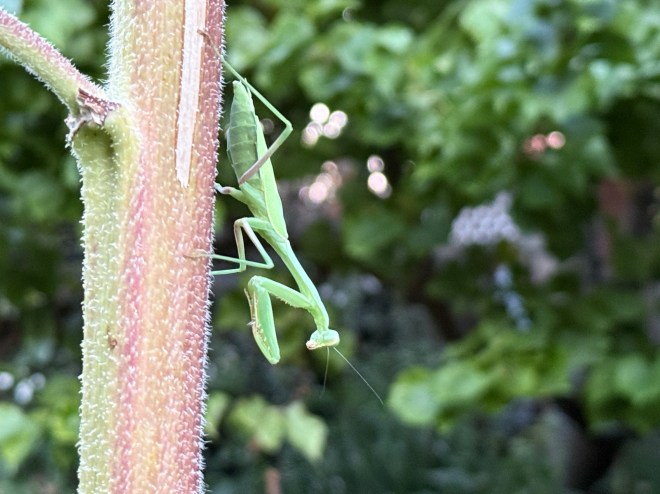
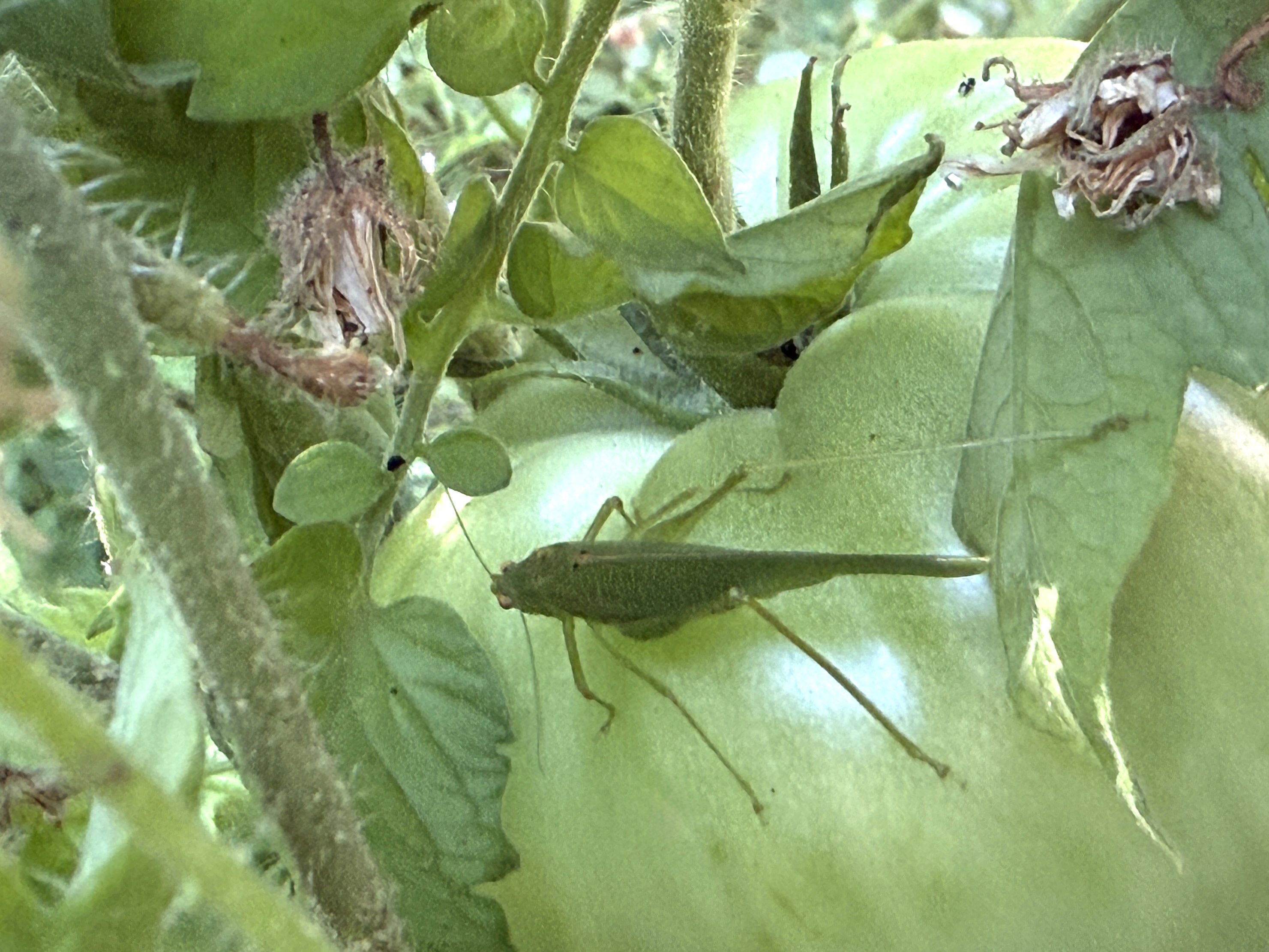
I find it challenging to photograph them clearly, but I have fun trying. They’re otherworldly with their triangular-shaped head that swivels slowly while the rest of the body appears at rest. Mantises are ambush predators, which is why you find them almost immobile on a leaf or branch, patiently waiting to pounce. I’ve never seen one catch its prey, and I’m happy to remain in the dark. Mating practices can be equally harrowing for the male, so I’ll give that a pass as well.

Saturday, while pruning, I saw a second, smaller mantis on the other side of the garden, marveling at my good luck spotting two in a short period of time. I moved further along the fence to complete other work, and within half an hour, it had moved on.
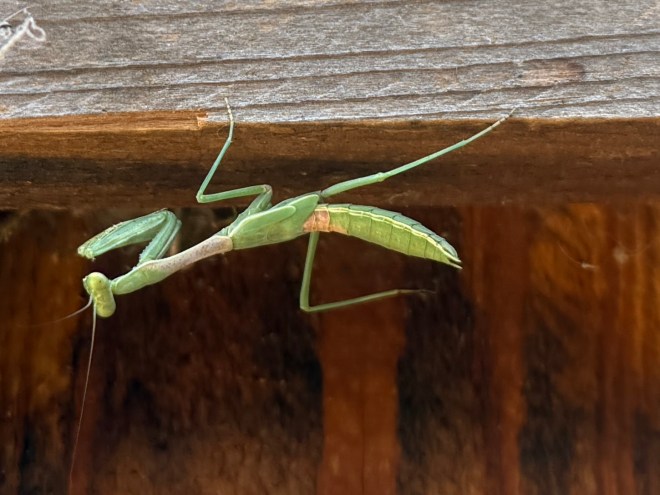
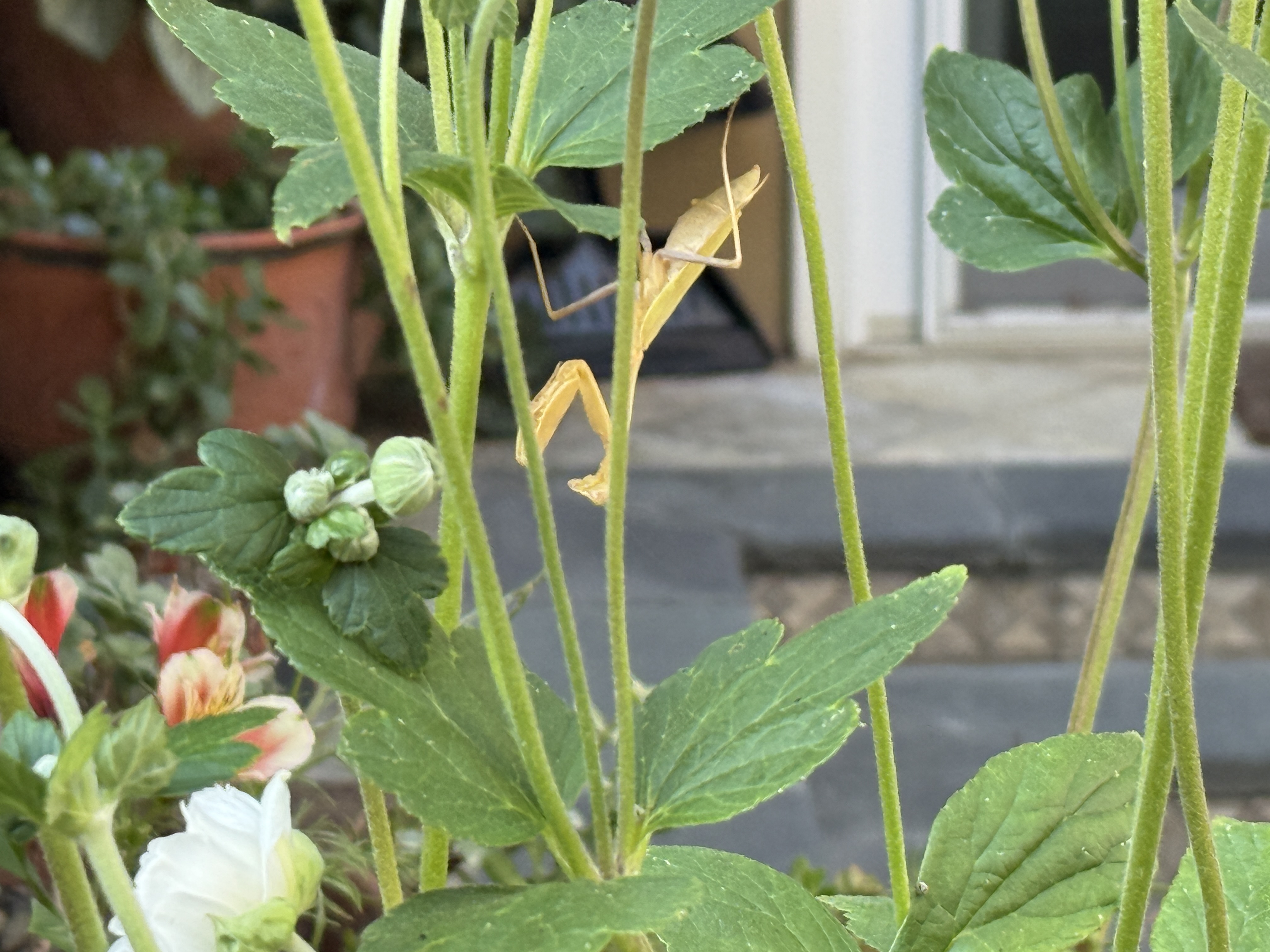
As I started putting my tools away, I crossed the garden and spotted a third one, more orange than green, so it really stood out on the green stem of the anemone. When they feel threatened, they rear up to a standing position, so I’m careful to keep some distance. They’re not harmful to humans, but I don’t want to agitate them when all they’re doing is waiting for a meal.
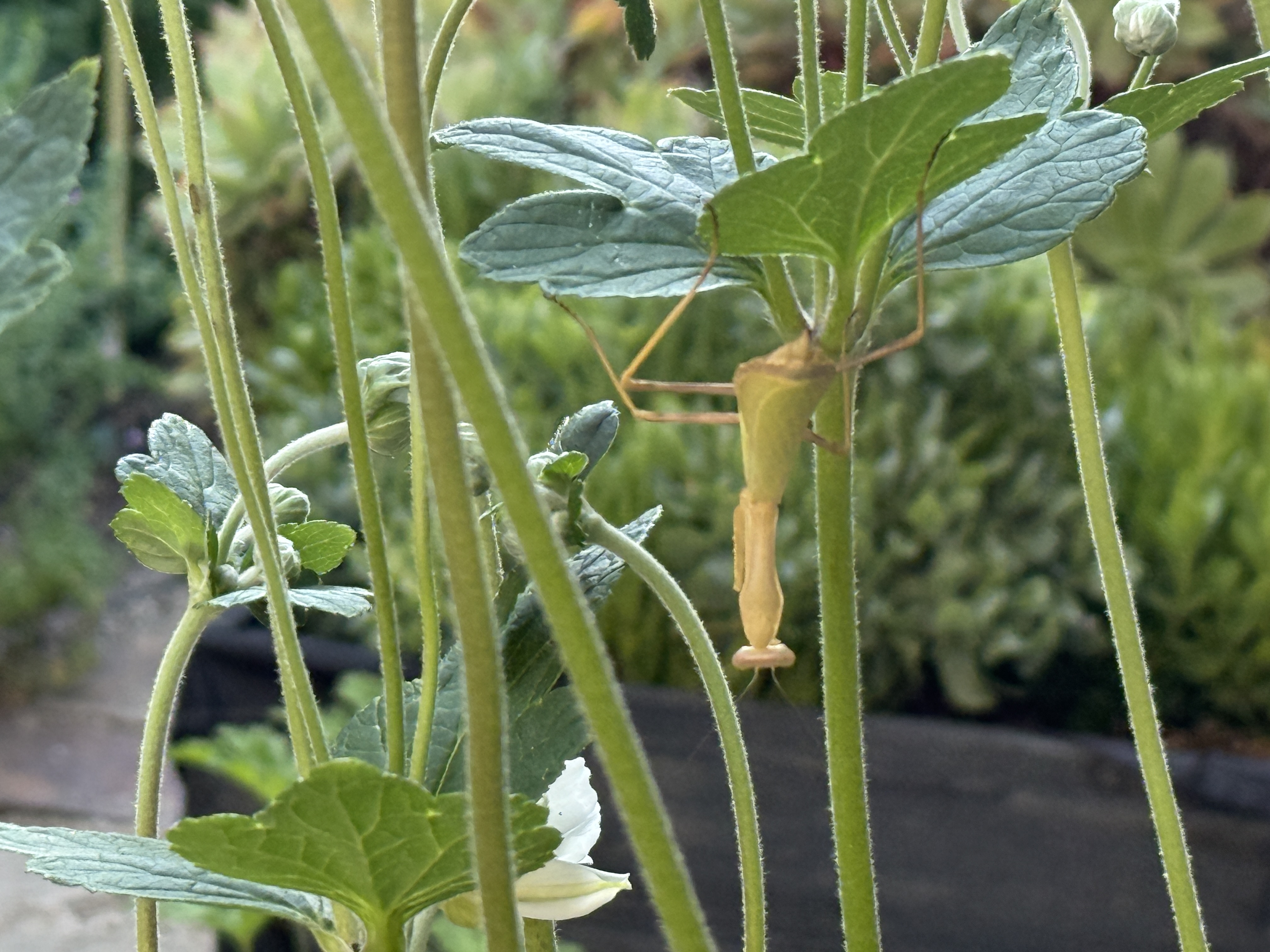
I checked the anemone this morning, and the mantis is still there forty-eight hours later. It’s currently hanging upside down, showing little interest in relocating and seemingly unbothered by my camera intrusions.
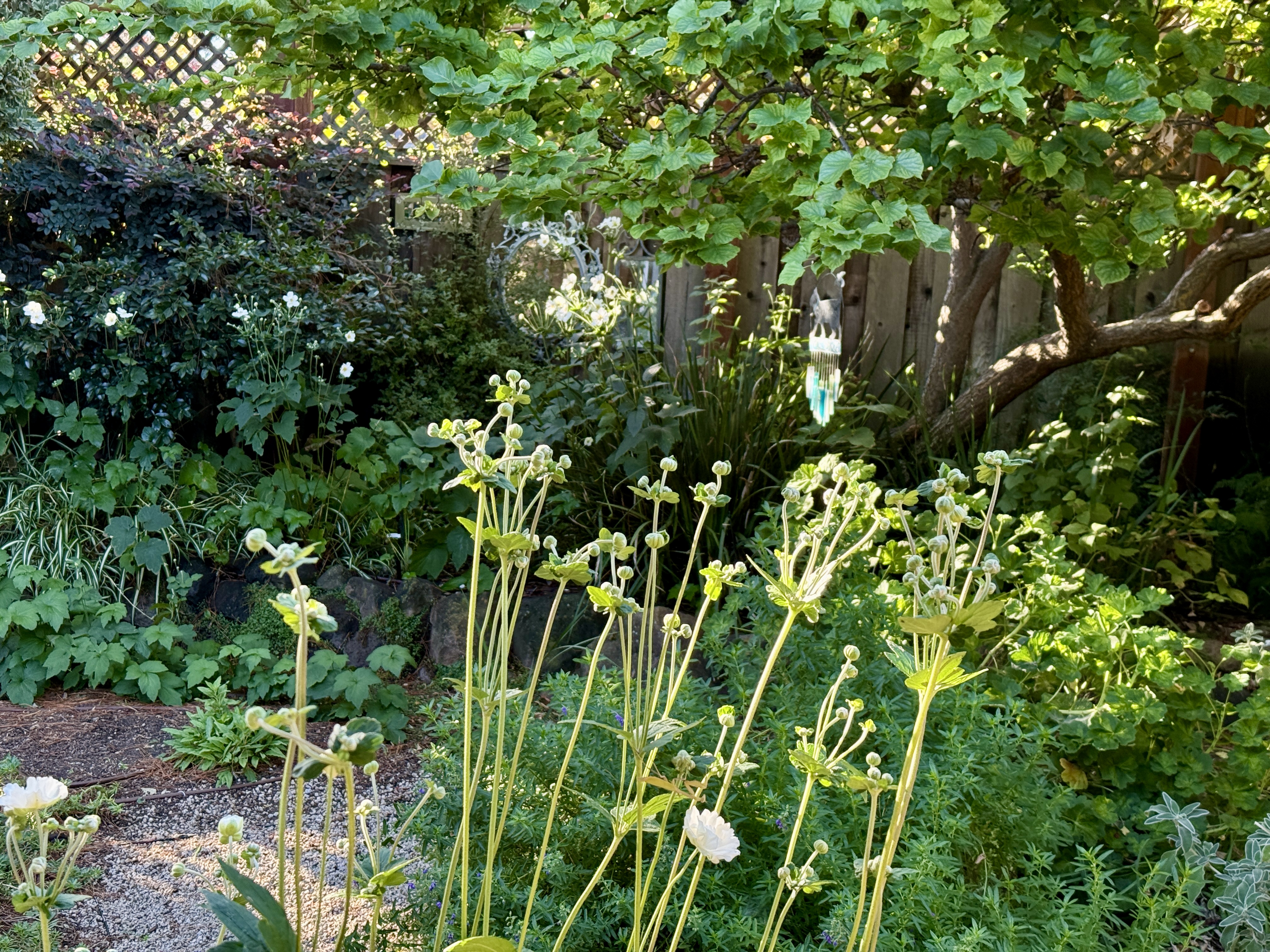
I’m glad they feel at home.
Tomatoes for the Win

By early spring, I’m dreaming of the promise of delicious, home-grown tomatoes. They are one of the great summer pleasures, succulent, sweet, and refreshing on a hot day.

When the goddess of gardens bestows her goodness on a crop, I bow to her greatness. I no longer take credit for a good season, nor do I blame myself for a mediocre one. Tomatoes are a fussy lot, requiring wind, but not too much; heat, but not excessive; just the right amount of water; and a placement in the garden that would make a garden landscaper proud.

If you find locations for your tomato plants that are akin to a witness protection program, you might avoid nasty pests like hornworms, aphids, whiteflies, and spider mites. That said, no guarantees.

When I traveled to Ohio for a week in July, I made sure that the men at home checked on the fruit production daily. You would think we were raising chicks instead of tomatoes.

All this fuss has been worth it. Both the Beefsteak and the Cherry Tomato plants have produced mouthwatering fruit. We’ve enjoyed caprese salads, improved lunchtime sandwiches, enhanced green salads, and popped cherry tomatoes as a snack.

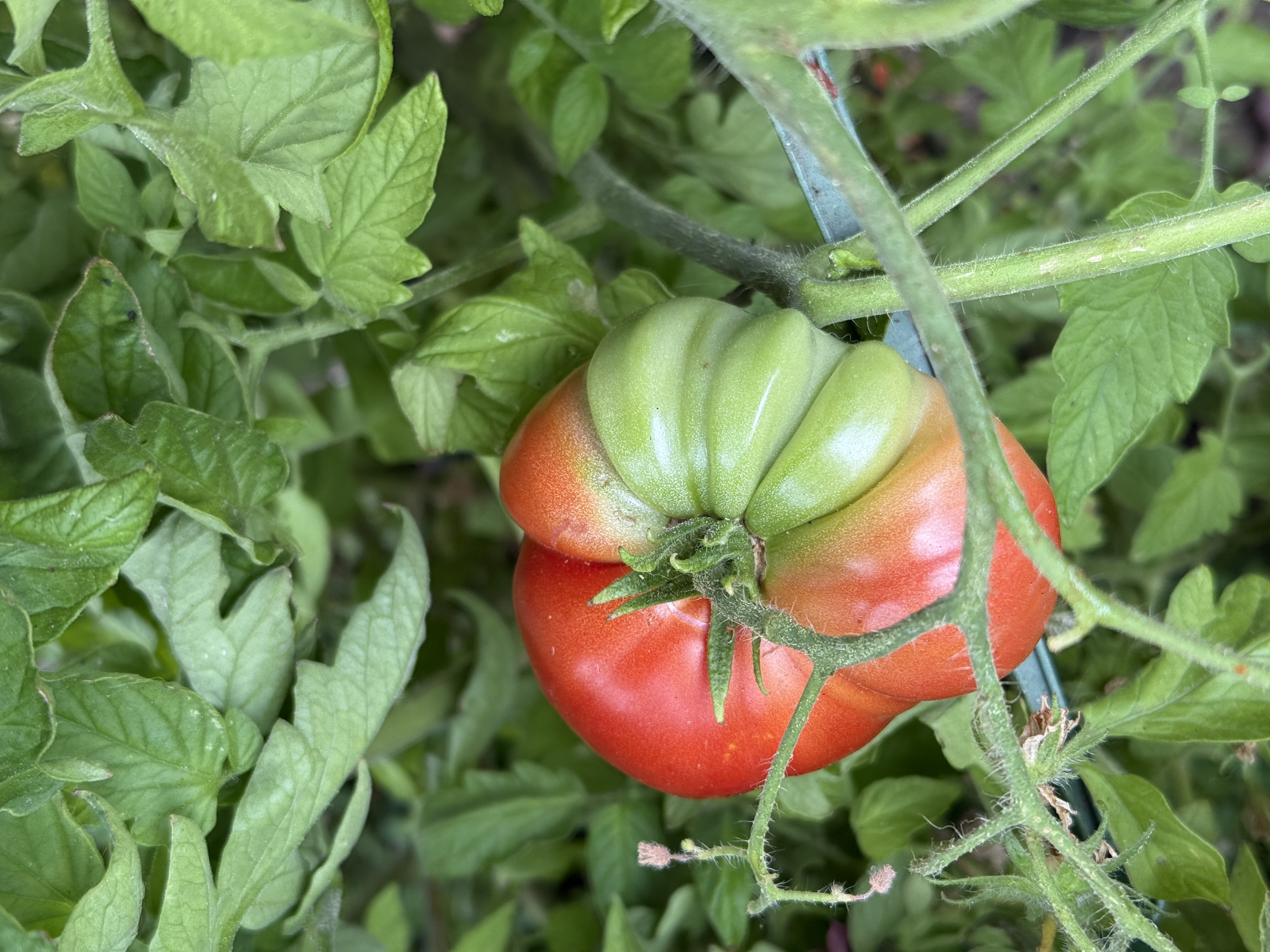
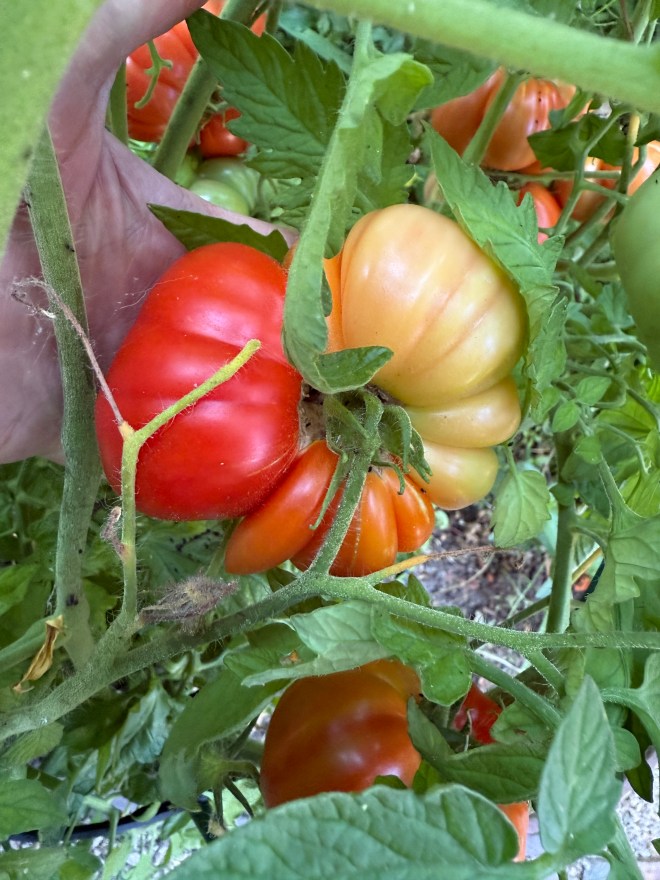
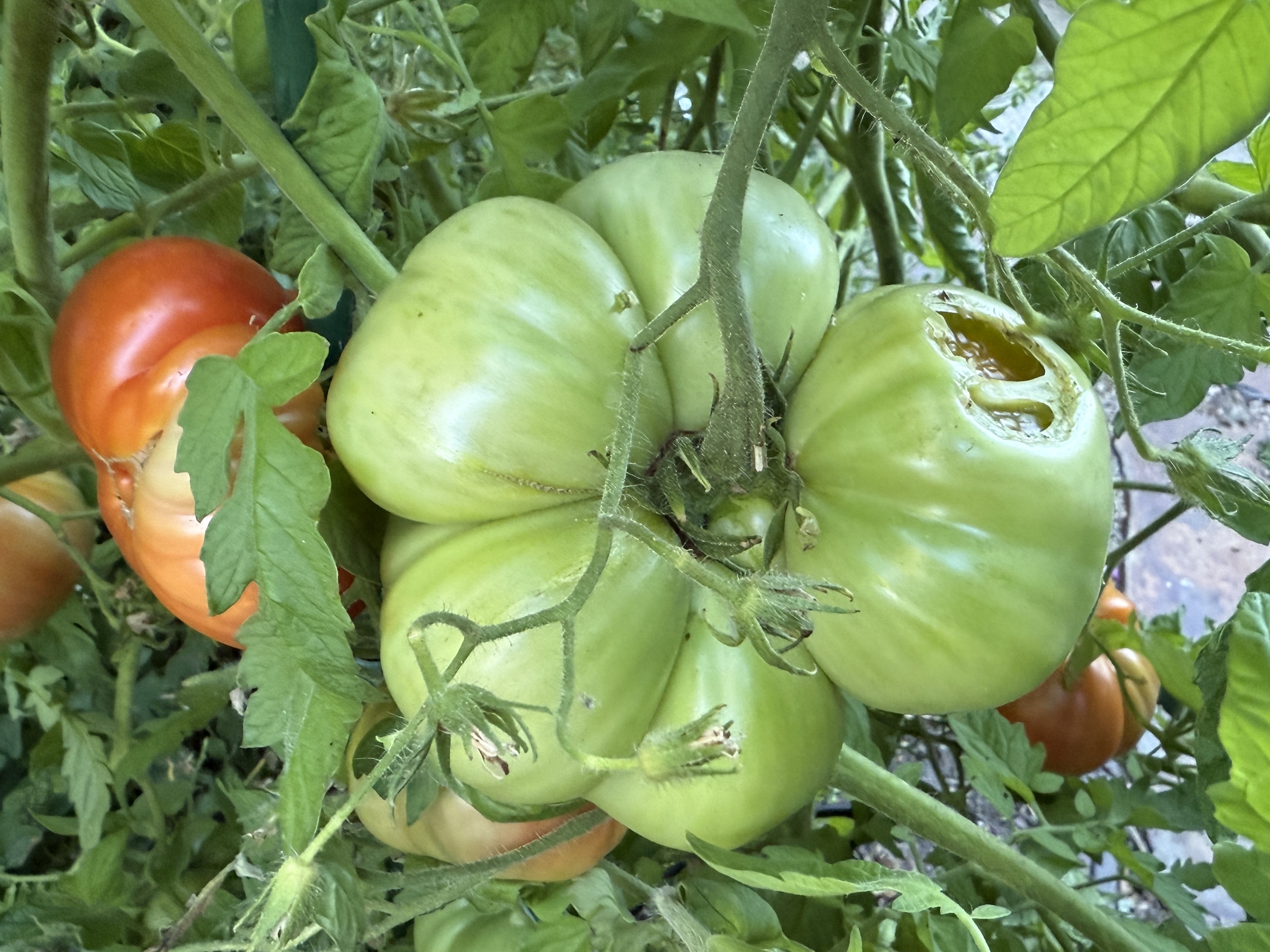
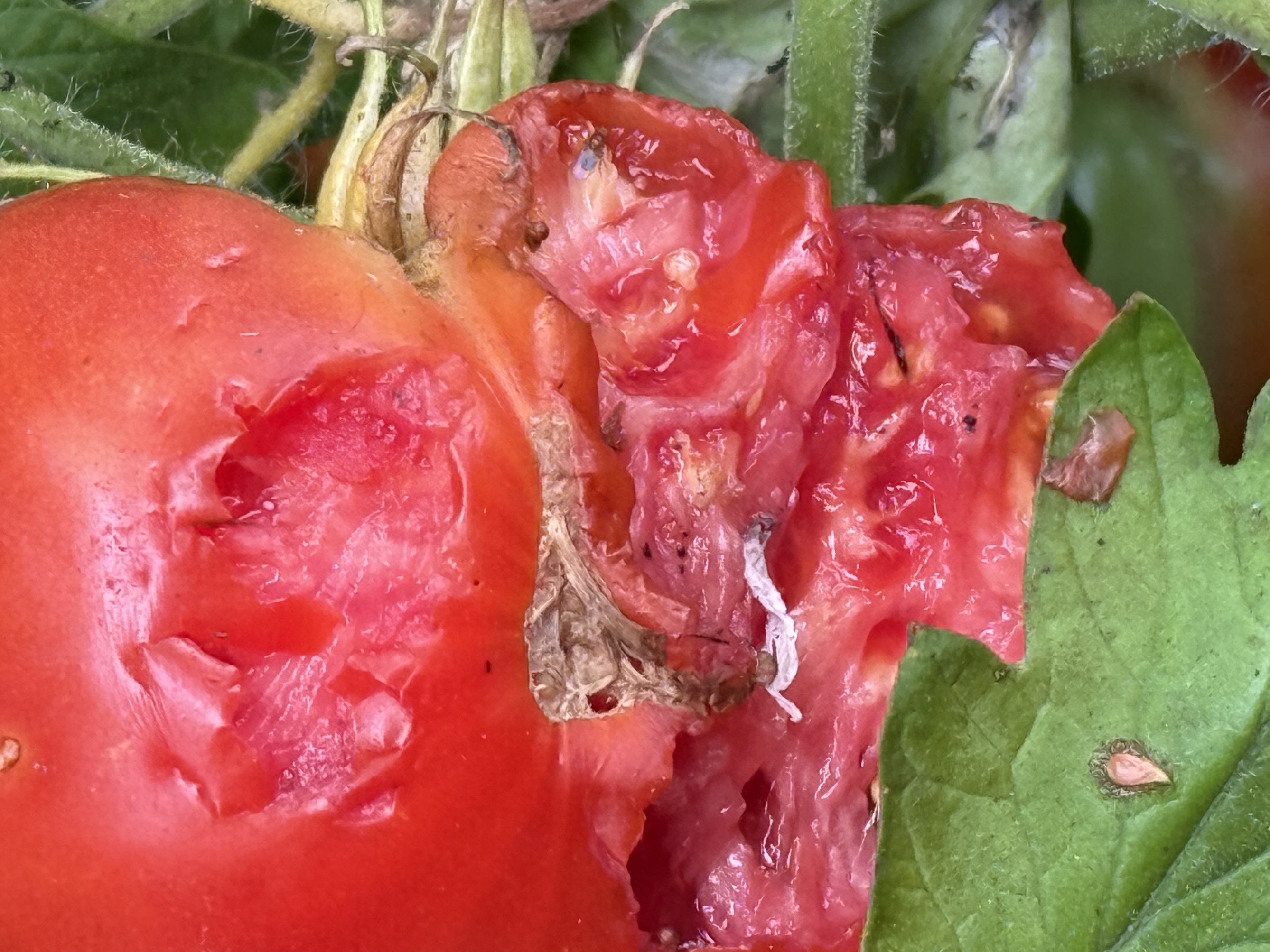
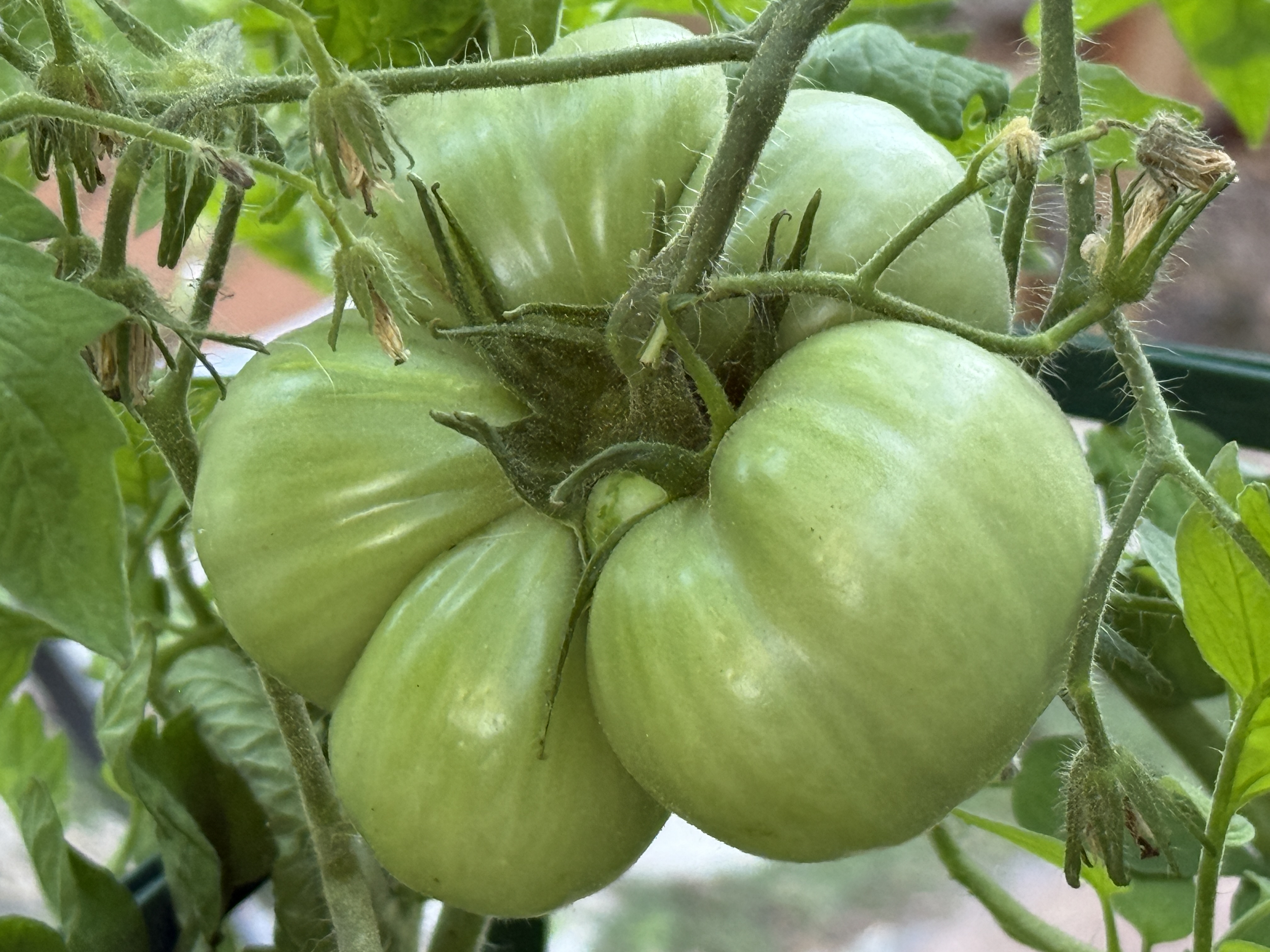
I harvested this magnificent crop of Beefsteak tomatoes on August 3. Tomato carnage began three days later.

The first and largest tomato on the vine was the first to go. Just a few nibbles at first, but of course, more followed. In the ensuing days, I found a tomato splattered on the walkway, half-eaten fruit on the plant, and, comically, some critter dragged the remains of a tomato half way up the bougainvillea. Meanwhile, the plant continues to grow taller, parallel to the self-seeded sunflower, but as we head into September, it’s all but done.

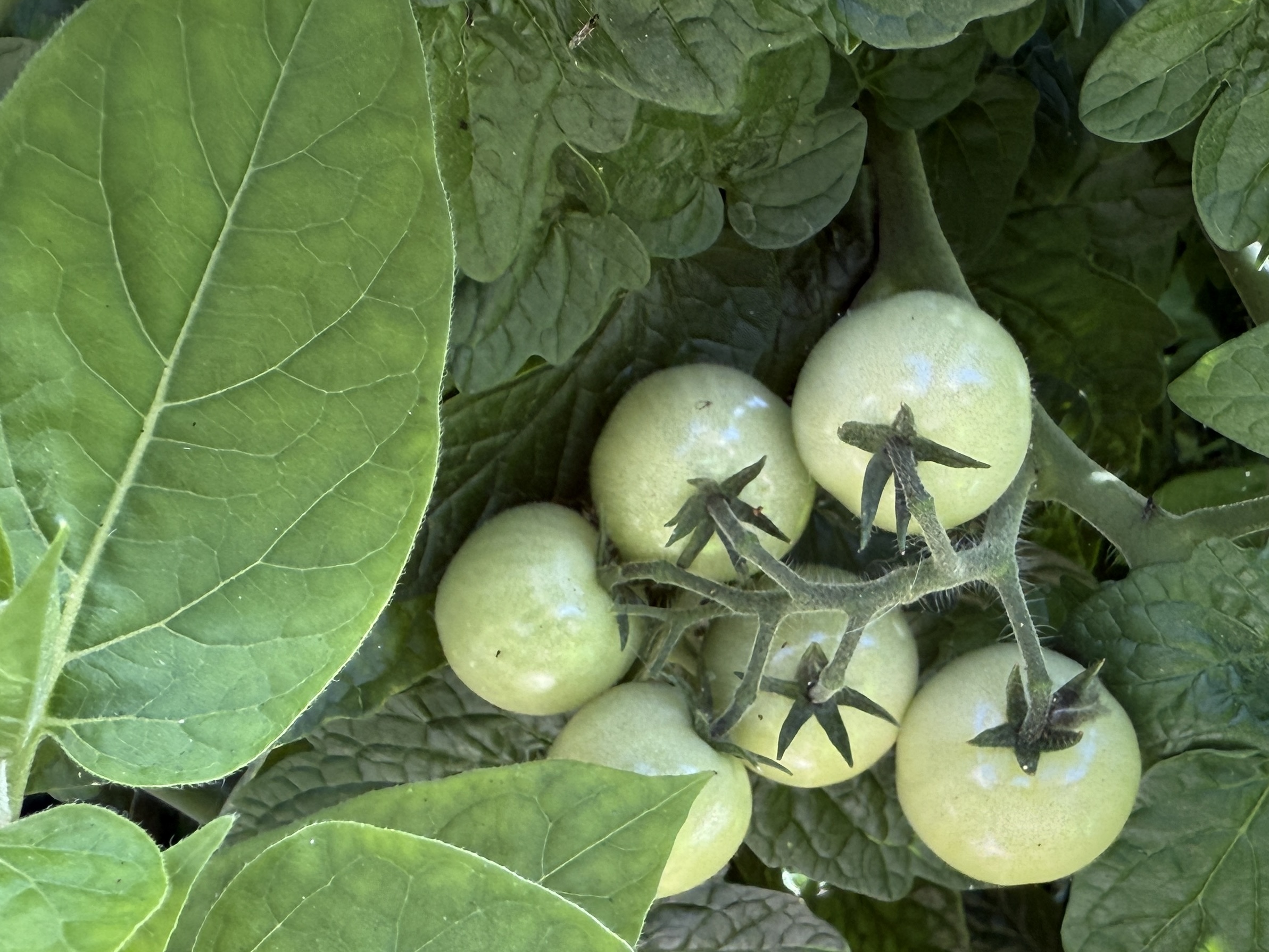
All is not lost, though. The cherry tomato plant appears free of fruit until you peek behind the foliage. Tiny orbs of goodness continue to color unmolested, sure to delight our taste buds for a few more weeks.

We will enjoy every last one.

Summer Solstice in San Jose

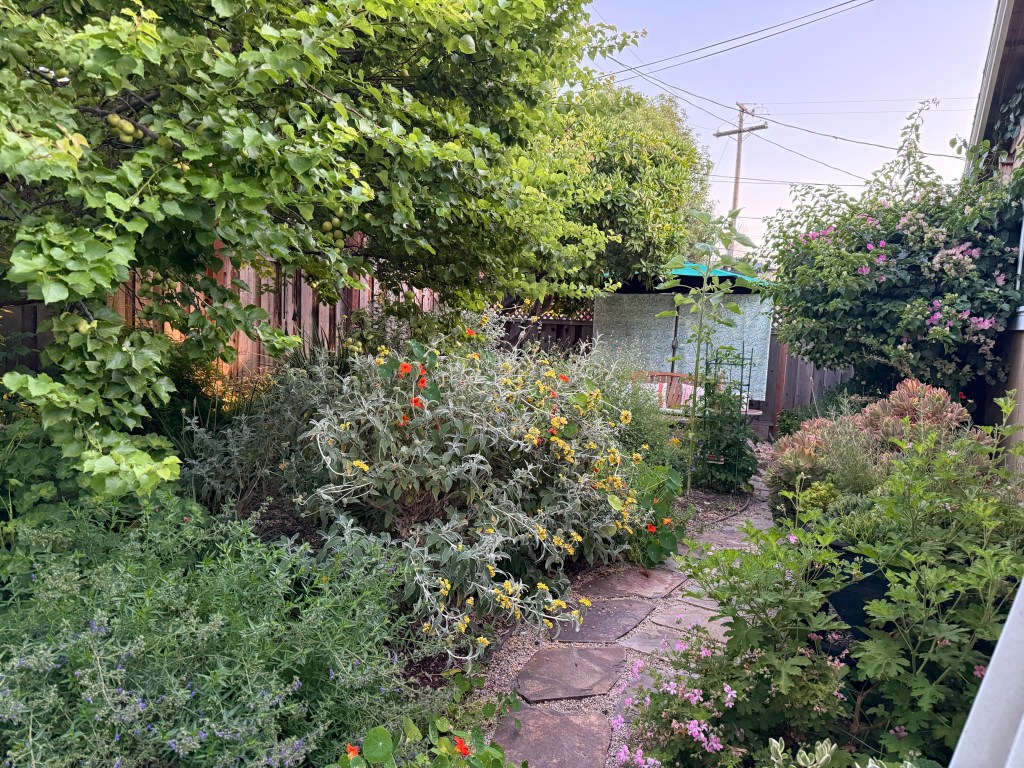
The summer solstice is upon us again, a great time to wander the garden with gratitude for nature’s gifts. I appreciate the warm, rich soil and the wonders that emerge from it. Tiny seeds grow up to be plants, shrubs, and trees, providing shelter, food, oxygen, and, for many of us, a place for quiet reflection and joy.

Here are some of the simple pleasures outside our door.

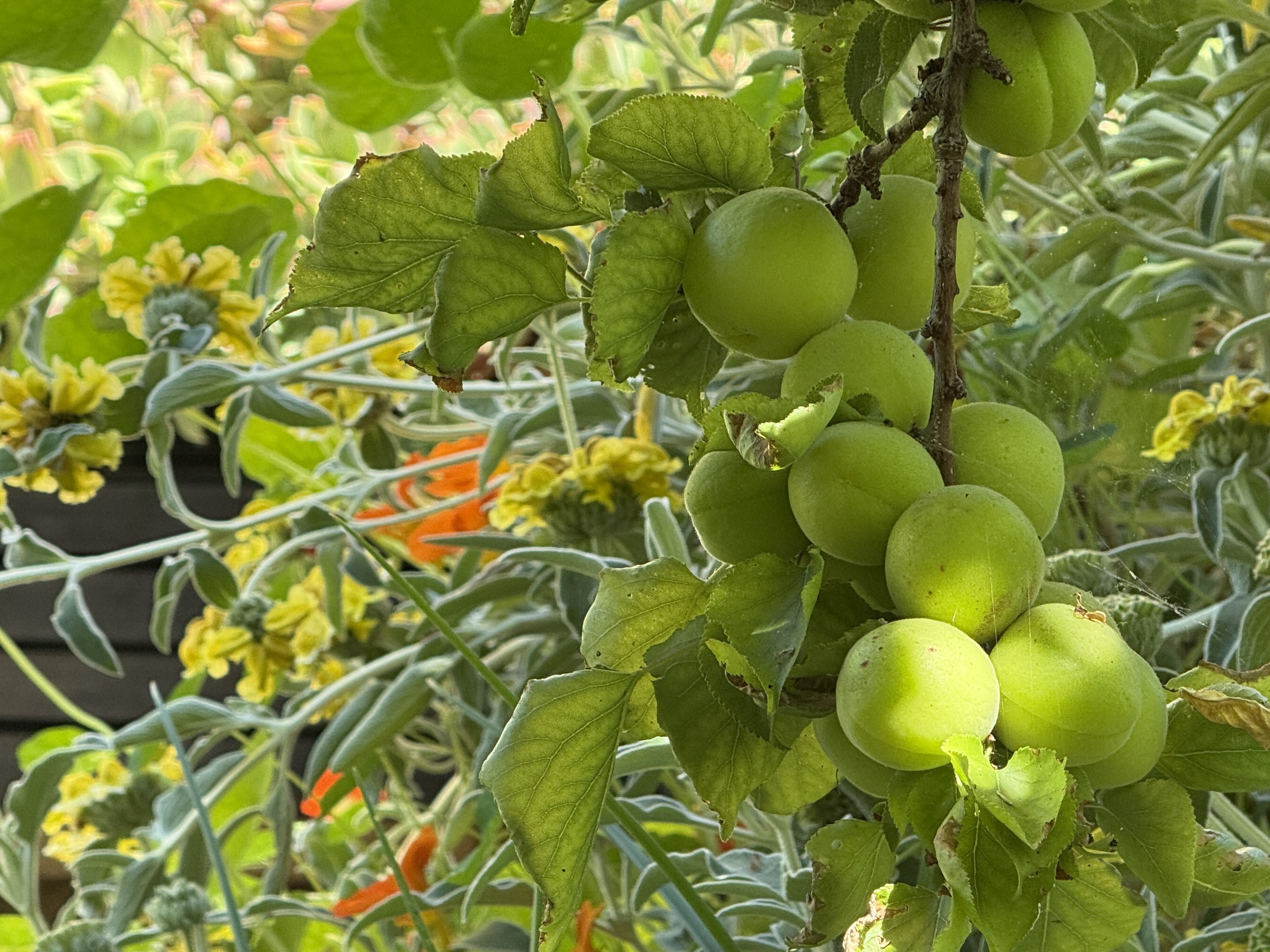
Our 15-year-old grafted fruit tree once produced four types of fruit. For several years now, production has been limited to apricots and plums, and with an active squirrel population traveling the highway known as our back fence, most of the fruit is partially eaten and tossed to the ground for night critters to feast on.

This summer is different. My youngest son is home for a time, along with his sweet pooch, a playful, burly husky/shepherd mix. Mike has a theory that the squirrels are steering clear of the dog.

To our astonishment, the tree is heavy with ripening fruit, which should be ready for picking next month.

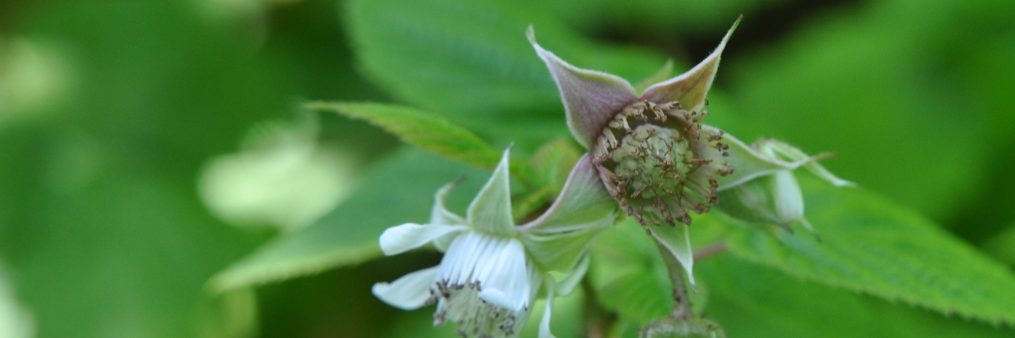
We have a few raspberries growing in the shade of the same tree, which are melt-in-your-mouth good.

The tomato plants we bought earlier in the season are beginning to pump out green fruit. Homegrown tomatoes are the best. We have a beefsteak tomato plant in a small sun area and a cherry tomato growing near the nepeta.

The annual sweet peas came and went quickly this season, but it all worked out since I needed to make room for the established Russian sage. Every year, someone asks if they can have some seeds. When I pulled out the last vines, I left a pile along our walkway for neighbors to help themselves. I’ll send what’s left in a week to the composter.

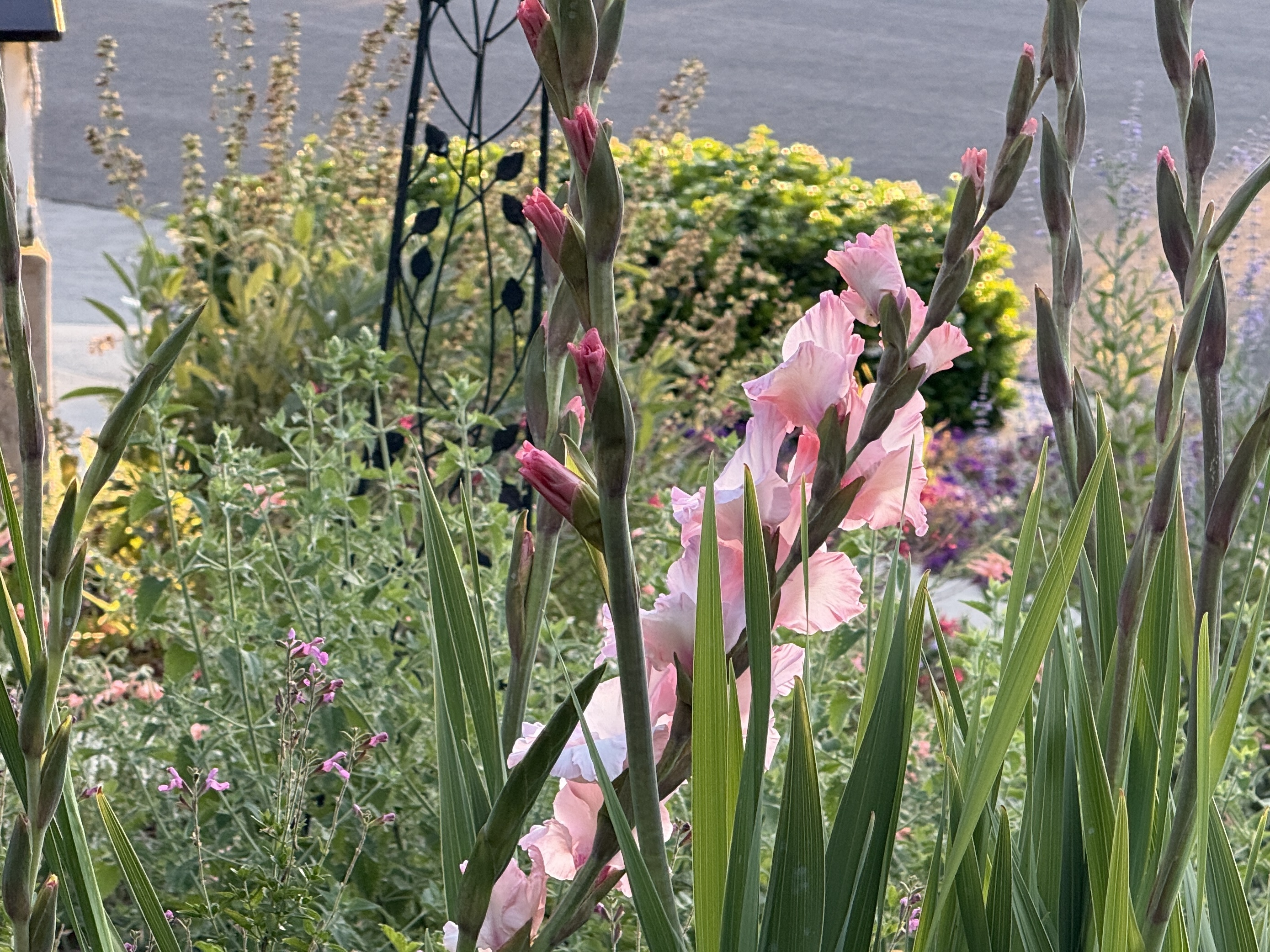
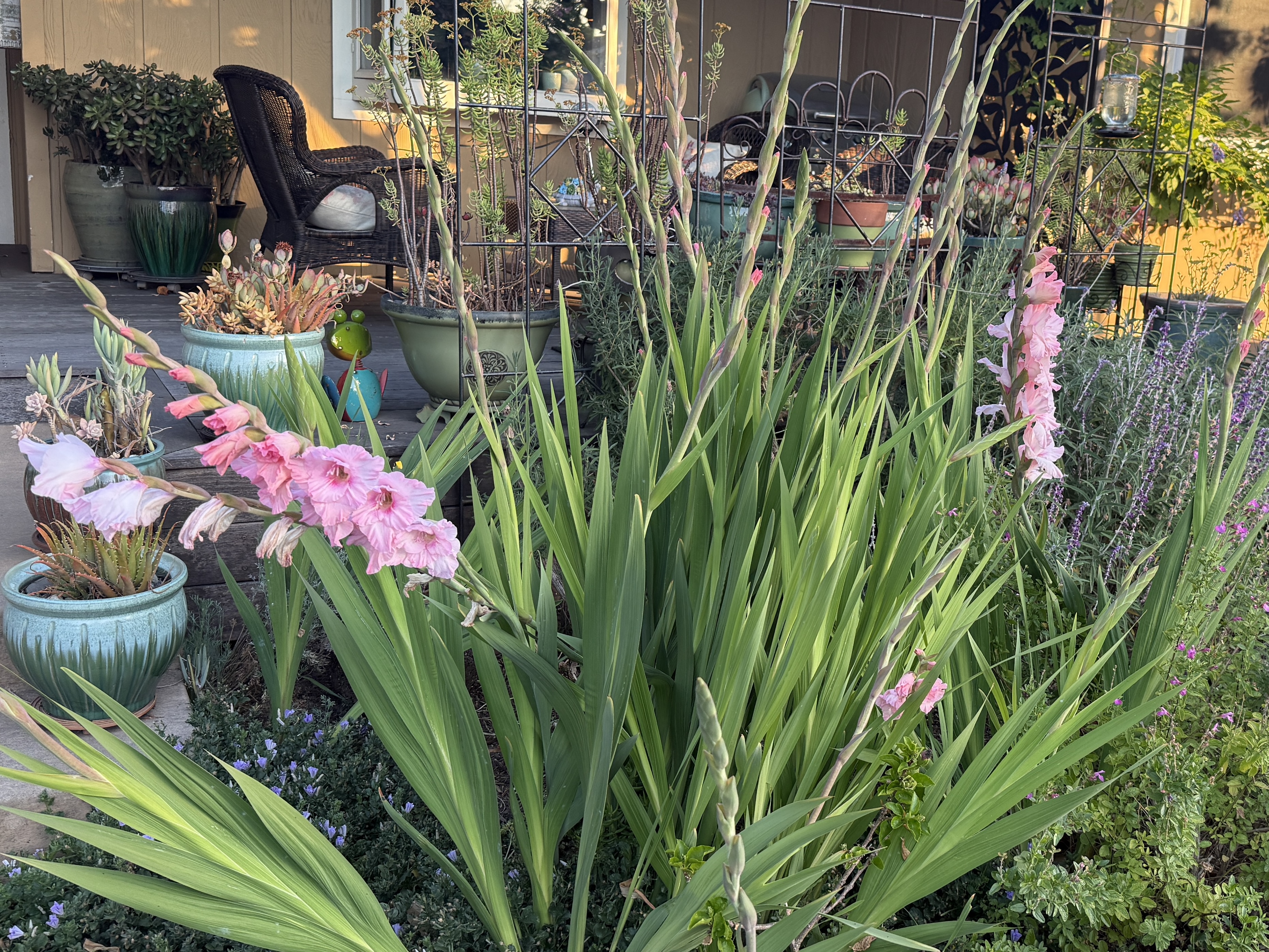
Pink gladiolas populated the front and back gardens this year. I planted several in our curb garden last fall, feeling proud of myself for getting them into the ground on time. Then, the City of San Jose said my curbside planting box was a “safety hazard,” so when we applied for a new tree permit, they tagged the curb garden and told me it had to go. It’s a different story for another day. The gladiola bulbs have turned up in several places and are making a lovely show.

Throughout the garden, seasonal volunteers spread into empty spaces, including a single sunflower and a handful of purple nigella. Several plants are comingling with die-hard nasturtiums trailing up the salvia and just out of reach of the fruit tree.

A nasturtium with wanderlust traveled up a small table in between the slats. Nearby, an ambitious tomato plant grew out of the sides of the compost bin.

As the sun set, I took these last few shots, casting a yellow glow across the pittosporum. Summer has arrived in San Jose.

Sun and Rain

We’ve had intermittent rain these last few weeks but found time to work in the garden and visit an open-space preserve. On colder days, we seek out the sun’s warmth by standing on the sidewalk with the sun on our shoulders for a few moments before returning to various tasks.

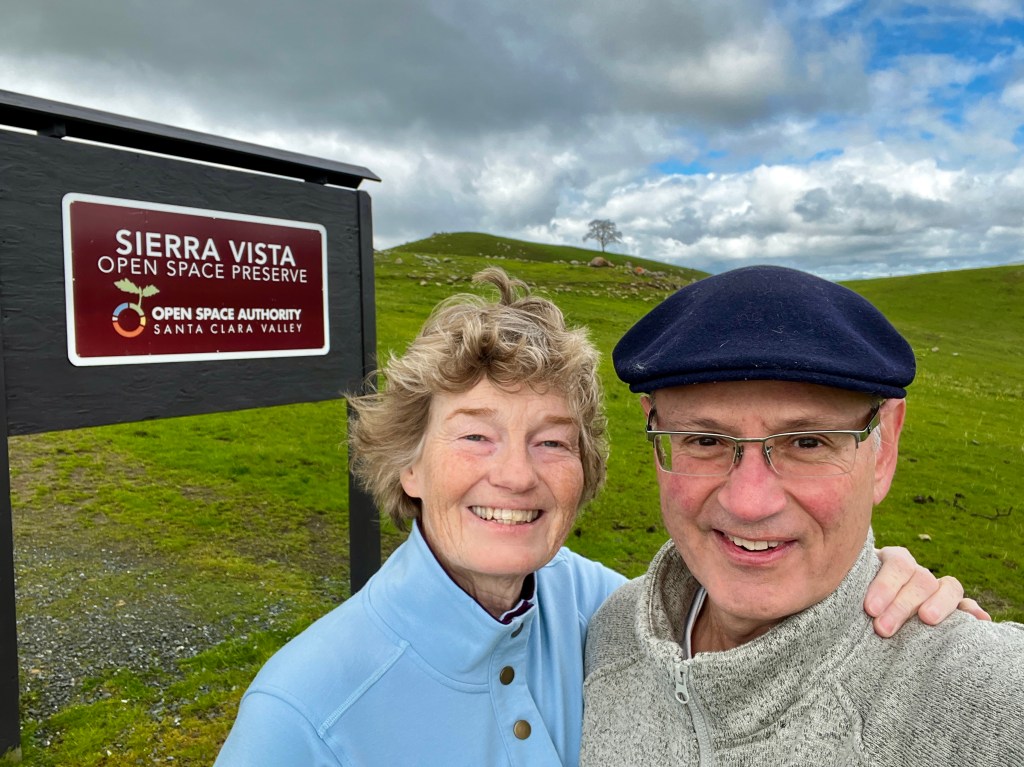
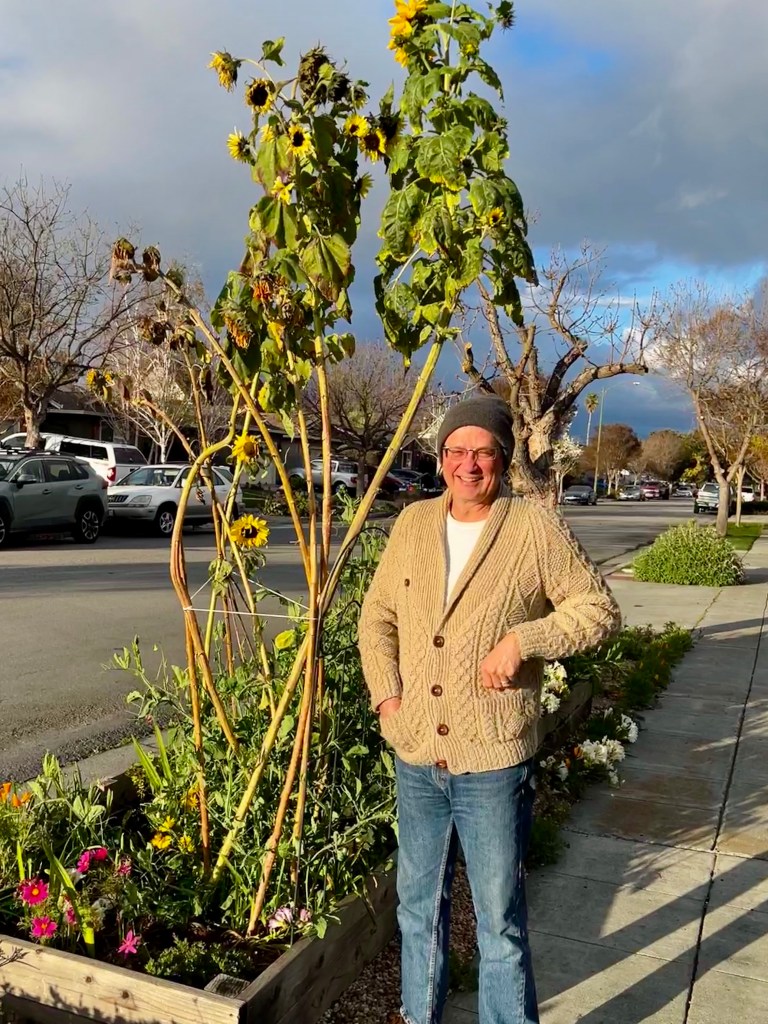
Mike soaking up some sun under stormy skies

Another winter of unusually heavy rains means lots of beautiful new growth and plenty of weeds. It’s easy to get the weeds out of the ground now, but it’s amazing how quickly the surface soil dries at season’s end. Unlike large parts of the country, San Jose is semi-arid, with most of our rainfall between November and March. After many years of drought, getting so much rain has been a gift.

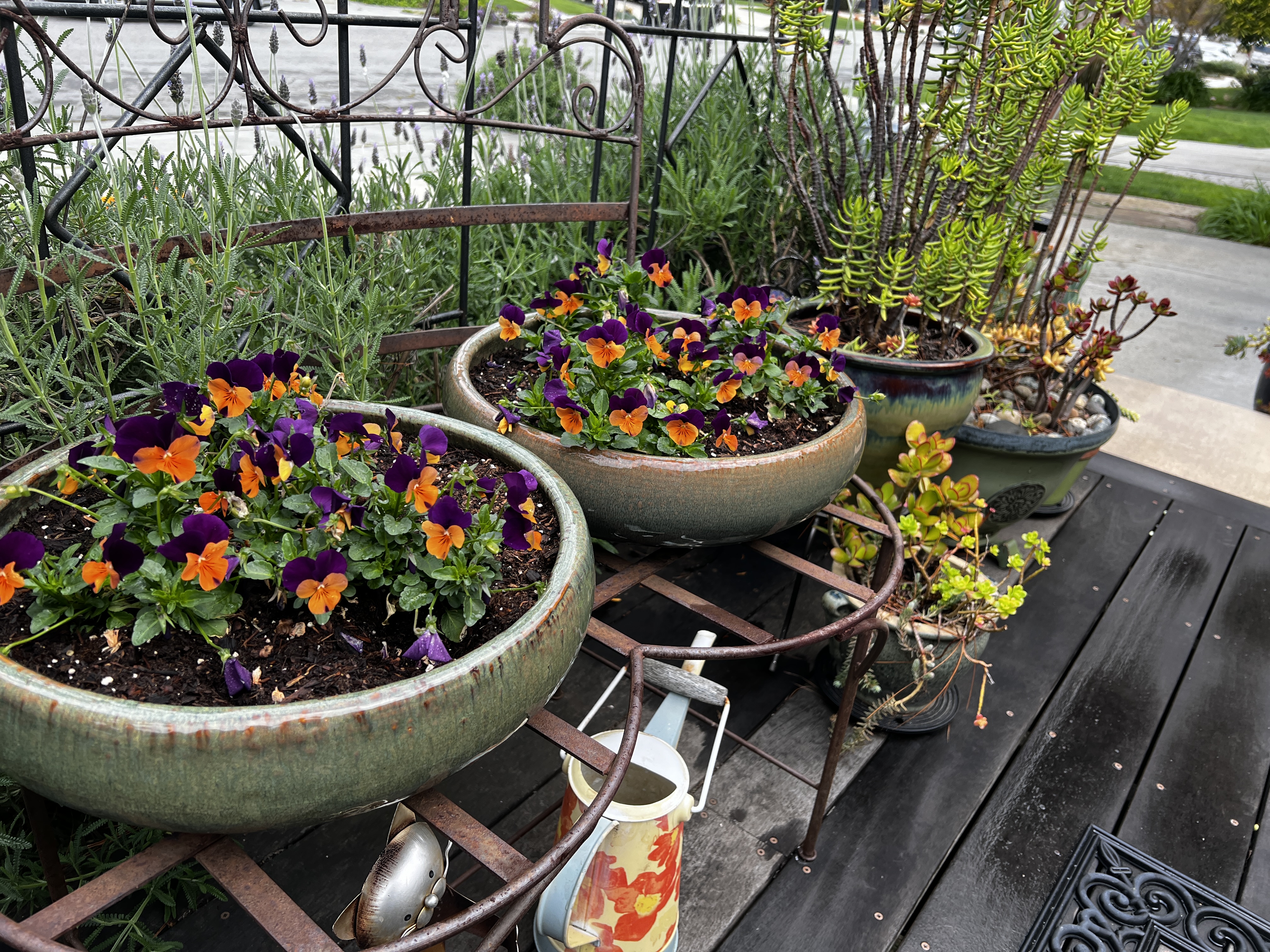
I did some rearranging on the deck, moving a few succulents to make room for a potted Yarrow.

Together, we wrangled a huge pot from the deck to the area just in front of the deck and to the right of the steps leading to the garden. As the new plants in front of it fill out, it will look like part of the planted landscape. It’s too large and prickly to transplant easily, but since the pot has drainage, the plant is free to set down roots.

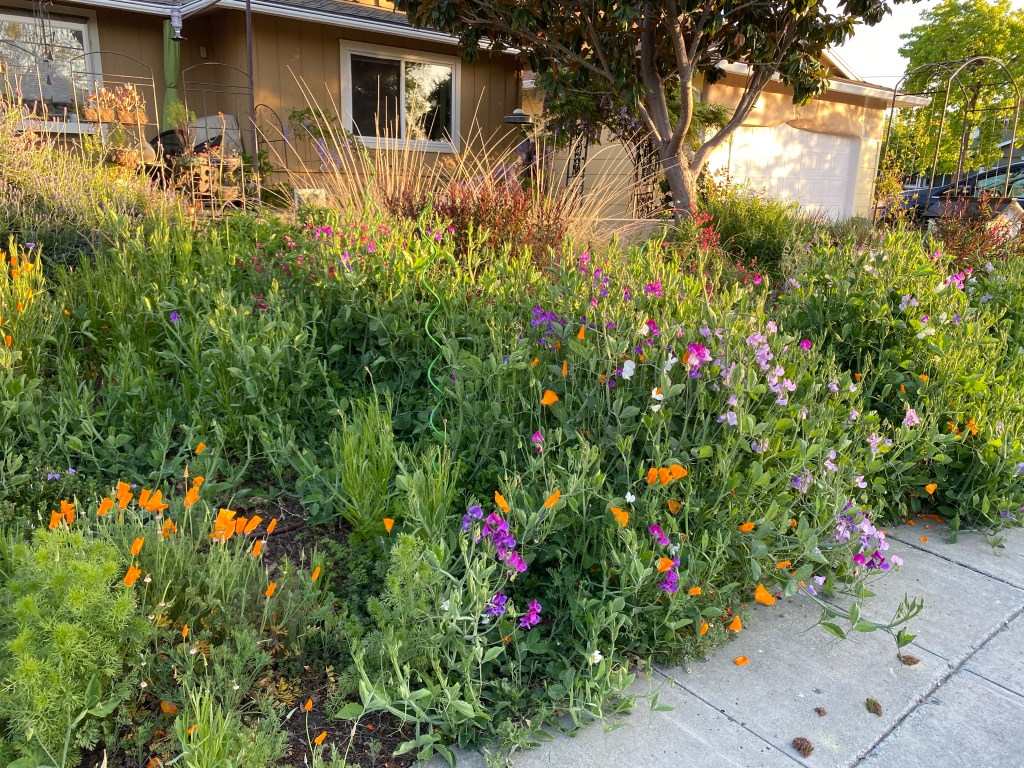
Last year, I dug out some overgrown grasses and planned to put down pavers to make a path. After meeting with a vendor and receiving the first quote, I soured on the idea. Then, I came to my senses and realized plants are more fun anyway. We’ve cleared a few overgrown shrubs and replaced them with beautiful, native, or water-wise plants.

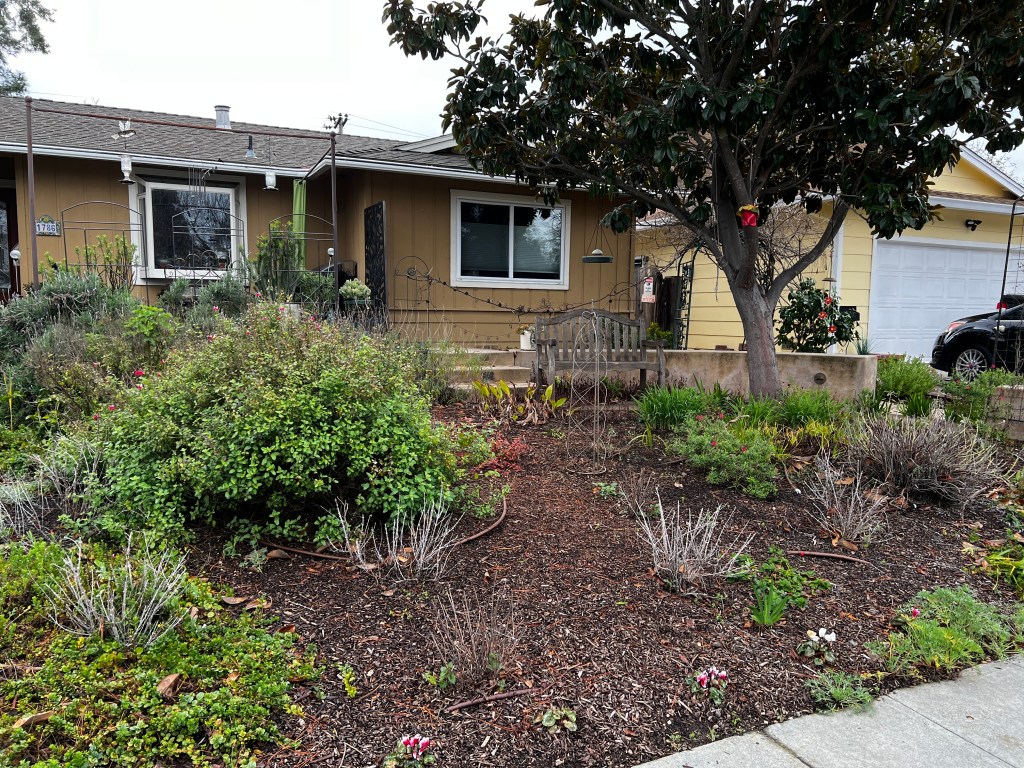
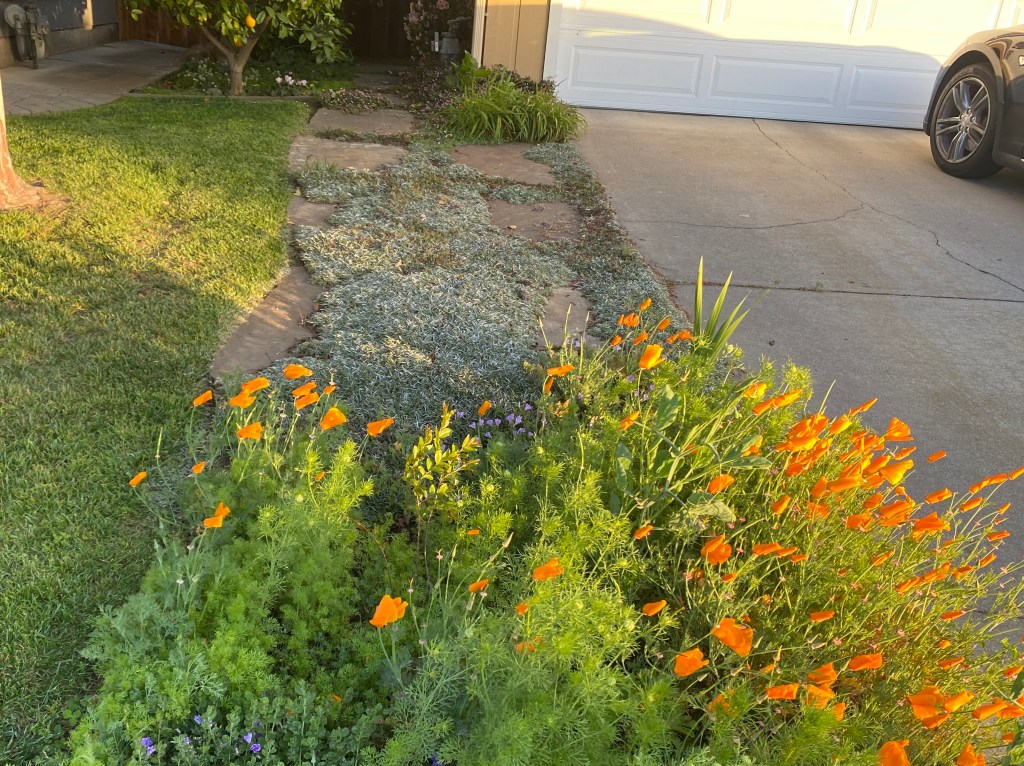
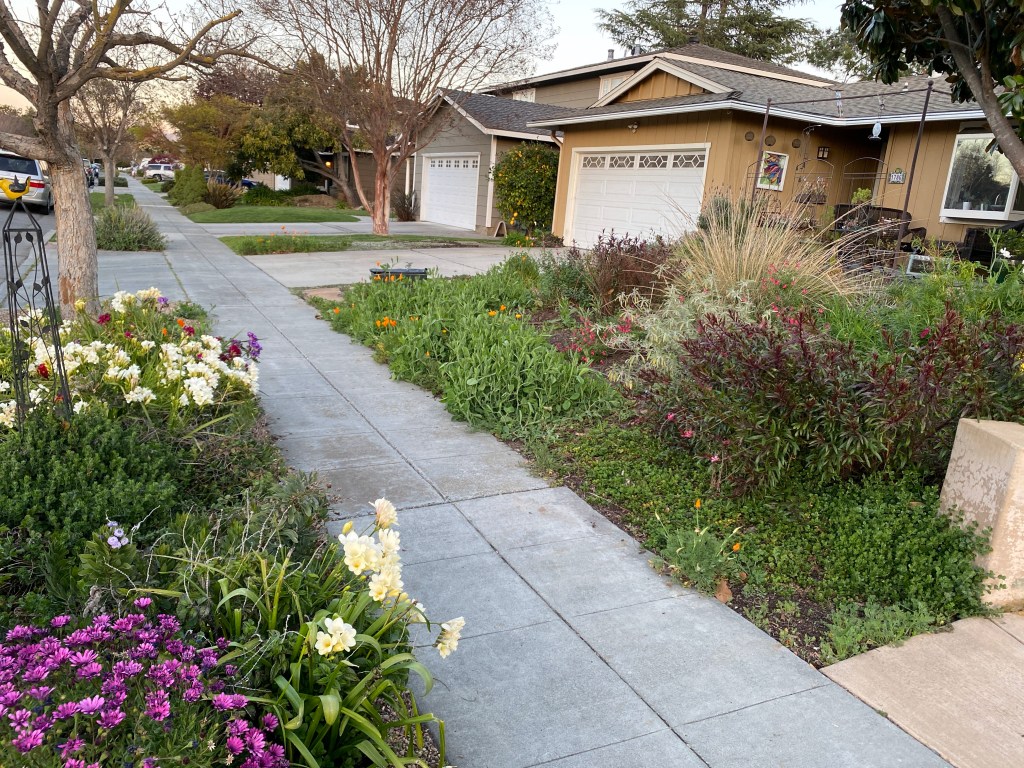
Front garden, old and new: California poppies along the walkway

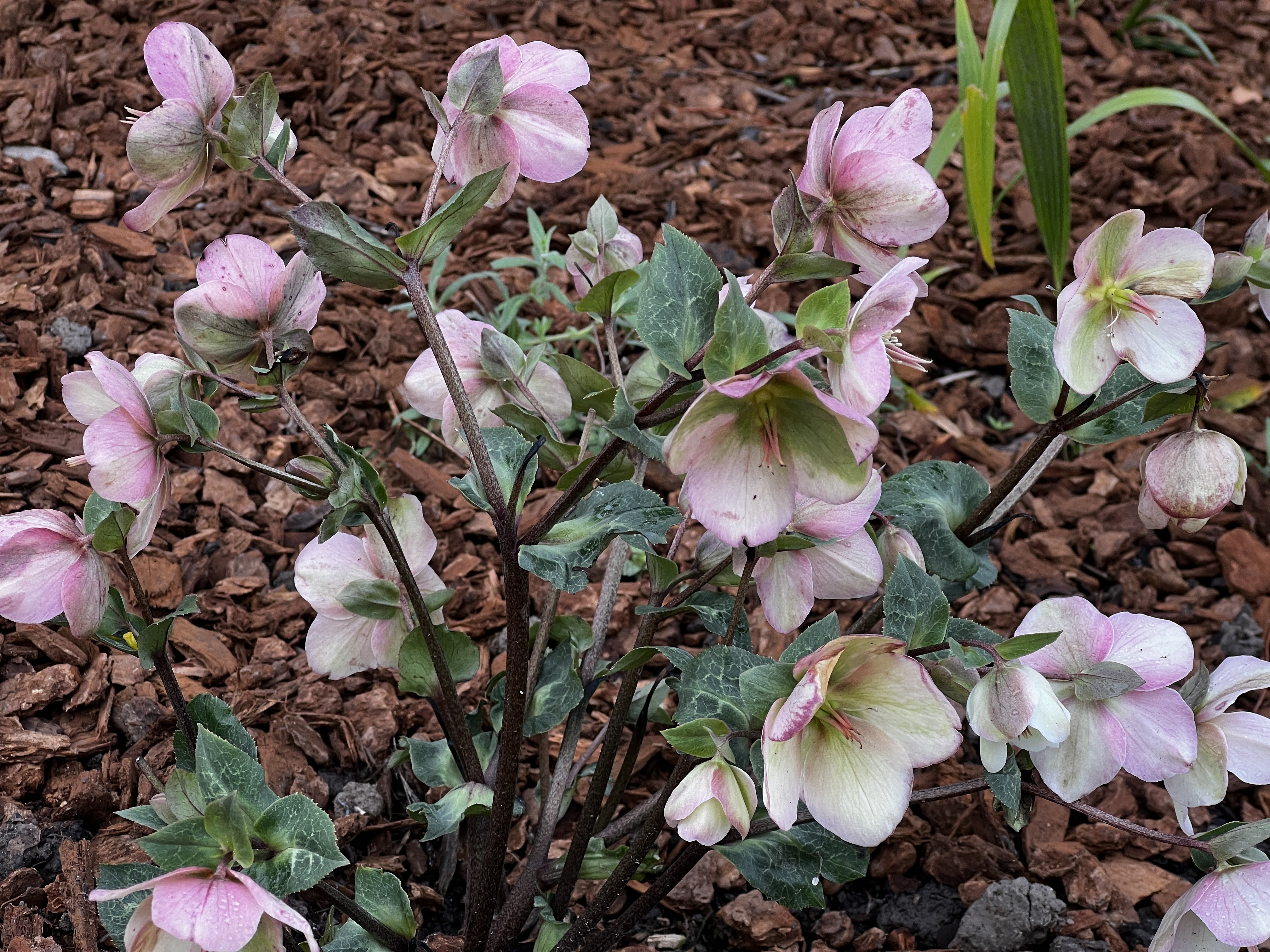
This year, hellebores, hostas, and carnations, also known as dianthus, are new to the garden. They’re tucked in with a thick layer of mulch to retain moisture and deter weeds. I can vouch for the first part of that equation, but weeds, cockroaches, and ivy will outlive us all.

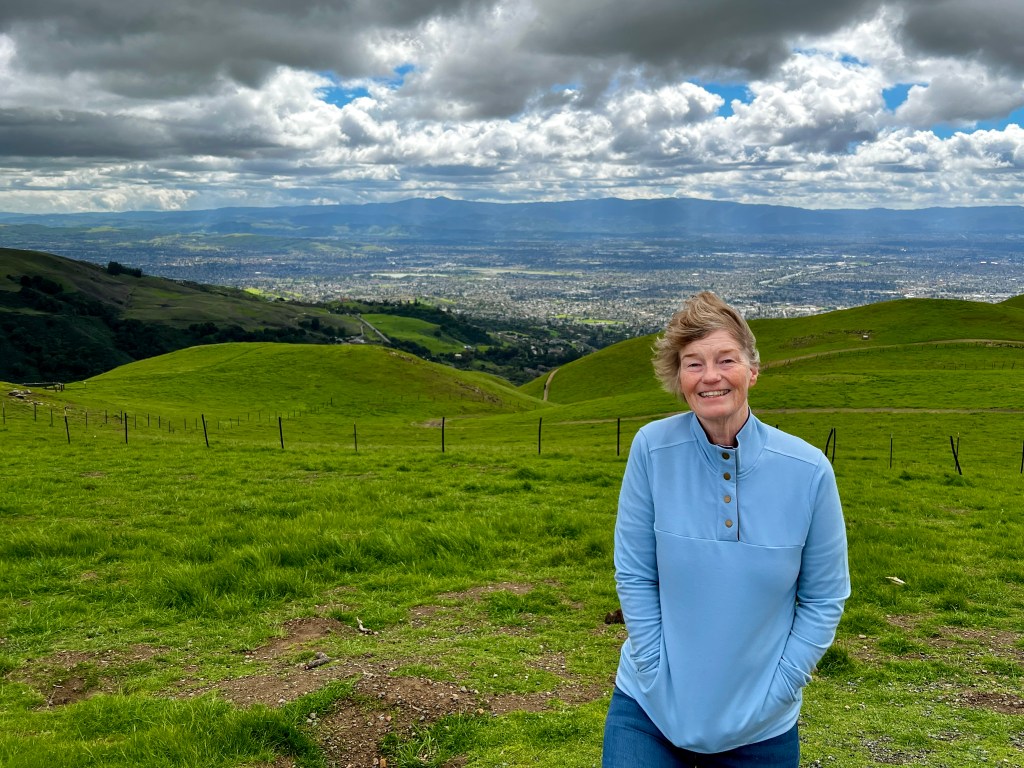
With the garden tasks settled for now, Mike suggested a drive up to Sierra Vista Open Space Preserve. It’s been almost a year since we’ve been up that hill. I thought we had dressed warmly, but a cold wind blew through our layers, so we didn’t stay long.

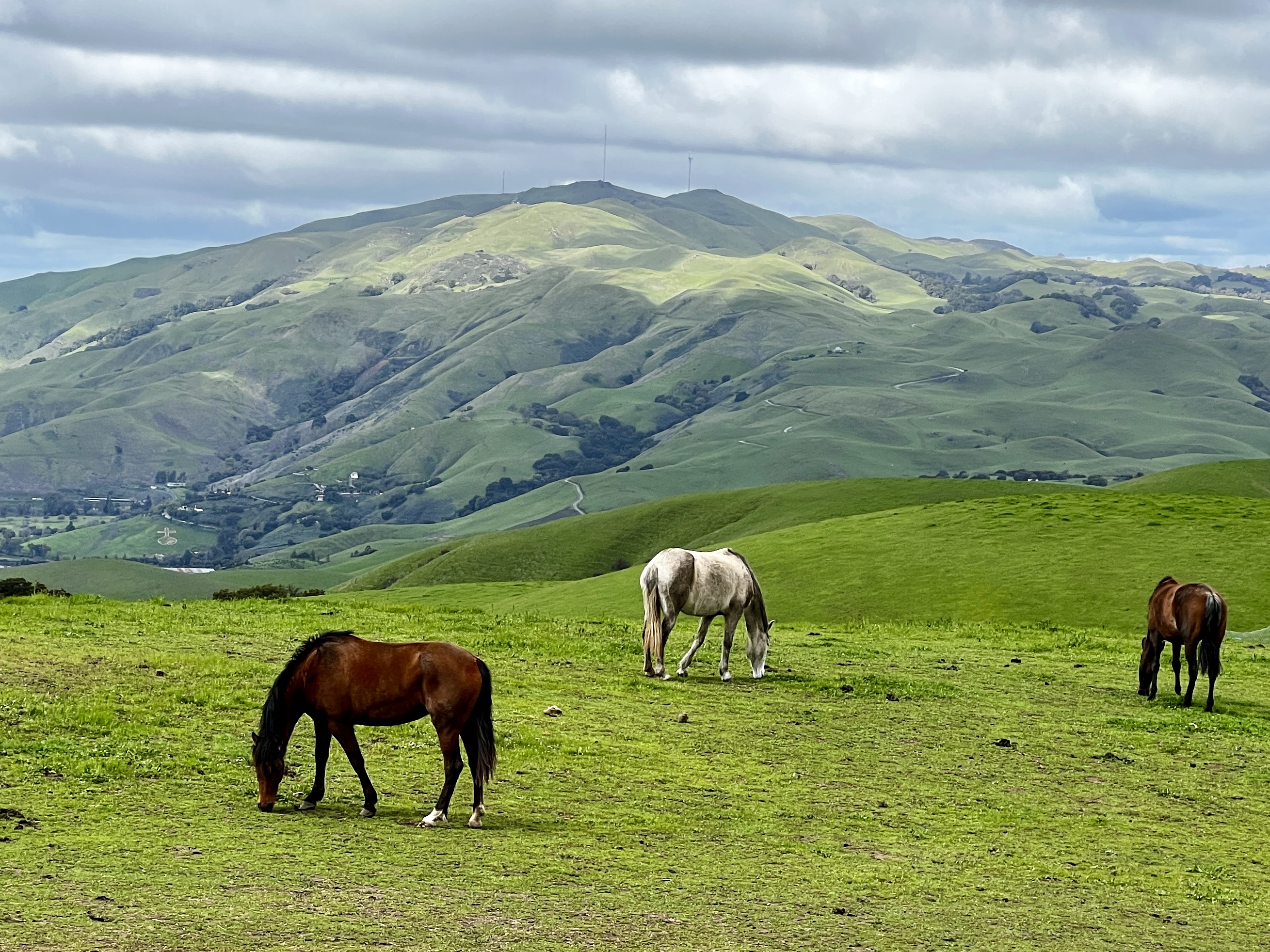
I enjoyed seeing the cows with a few calfs and grazing horses. There were dozens of ground squirrels everywhere we looked, and they seemed unphased by our presence.

It will be nice to visit again when it’s warmer. April is just around the corner, and by May, we often suffer through our first heat wave. We’ll see how it goes.

A New Gardening Season

We spent an hour at a local garden center this morning, filling our cart with various lovelies. After checkout, we stopped at a Burmese restaurant for lunch before returning home.

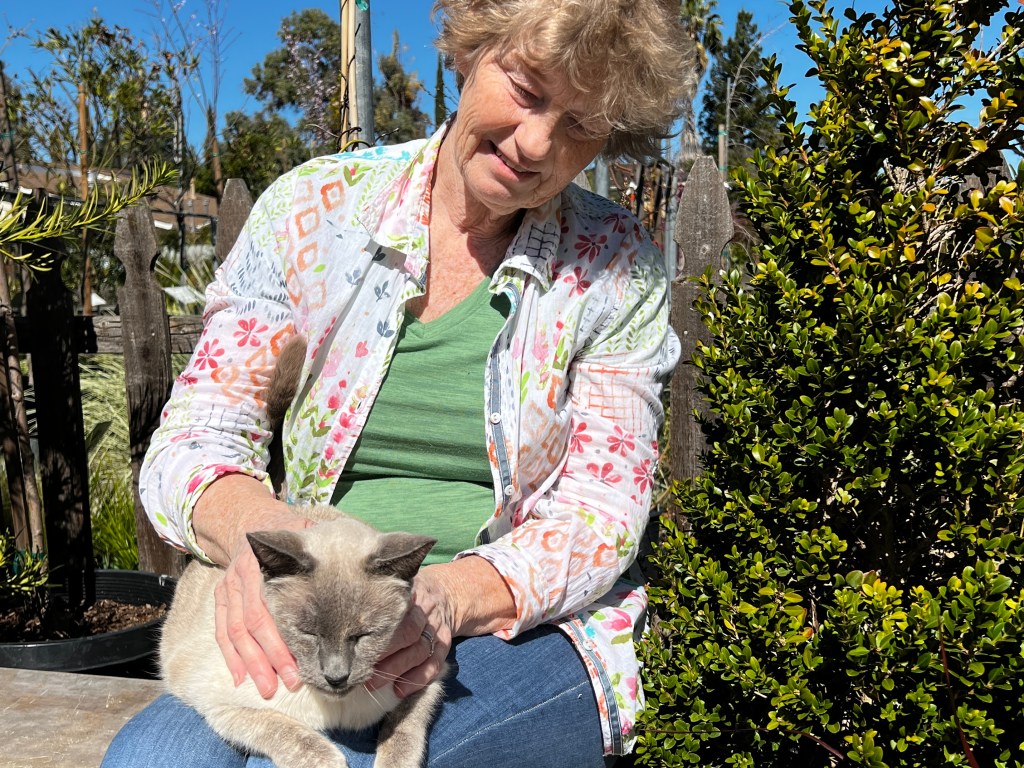
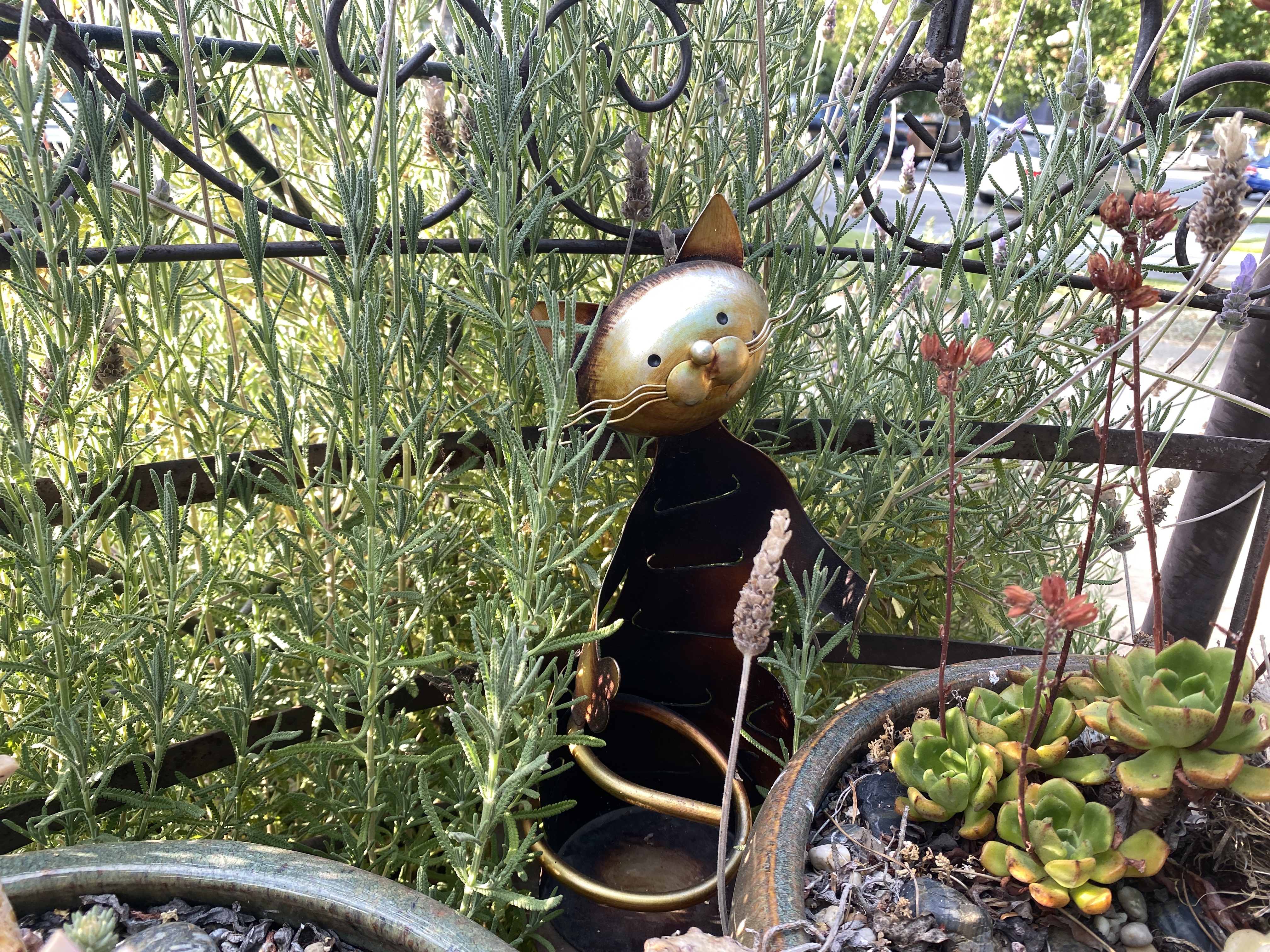
Almaden Nursery: Having a moment with the resident cat

I unloaded the car, placing each plant in an approximate location for its new home. We’ve planted several new perennials, and by we, I mean Mike. He’s happy to dig the necessary holes and repair the irrigation along the way.

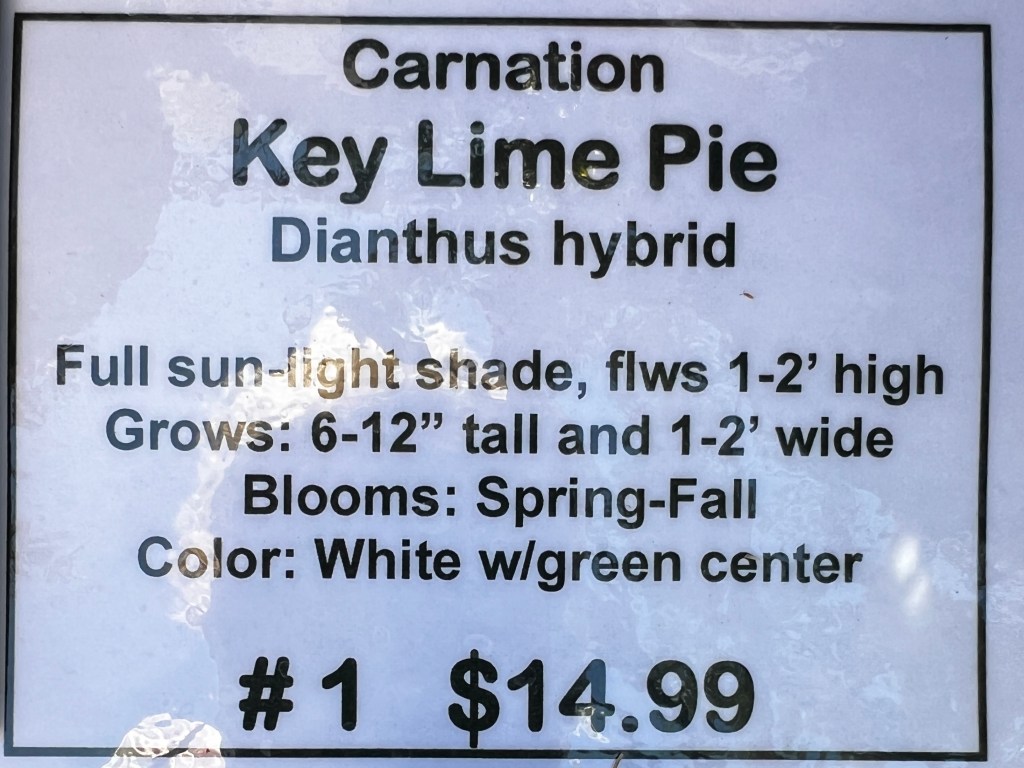
I’m most excited about the peach, lime, and red carnations, not just because they’re named after pies. I’ve never grown them before. There is nothing quite like the promise of a new gardening season.

I asked Mike to remove an overgrown salvia to restore balance to the front garden’s planting scheme. The shrub grew taller and broader than expected, and even after heavy pruning, it seemed out of place.
Overgrown salvia

We planted three purple African Daisies along the front path and have yet to plant the lamb’s ear and yarrow, both needing full sun. I have a spot for them in the back garden. I’ll take pictures soon.

While Mike dug holes in the front garden, I dug up several self-sown nepetas, aka catnip, for our neighbors. After last year’s heavy rains, I had a bumper crop of catnip. It’s nice to share it with fellow cat lovers and the cats that love them.

cat and nepeta
Tessa enjoying the nepeta

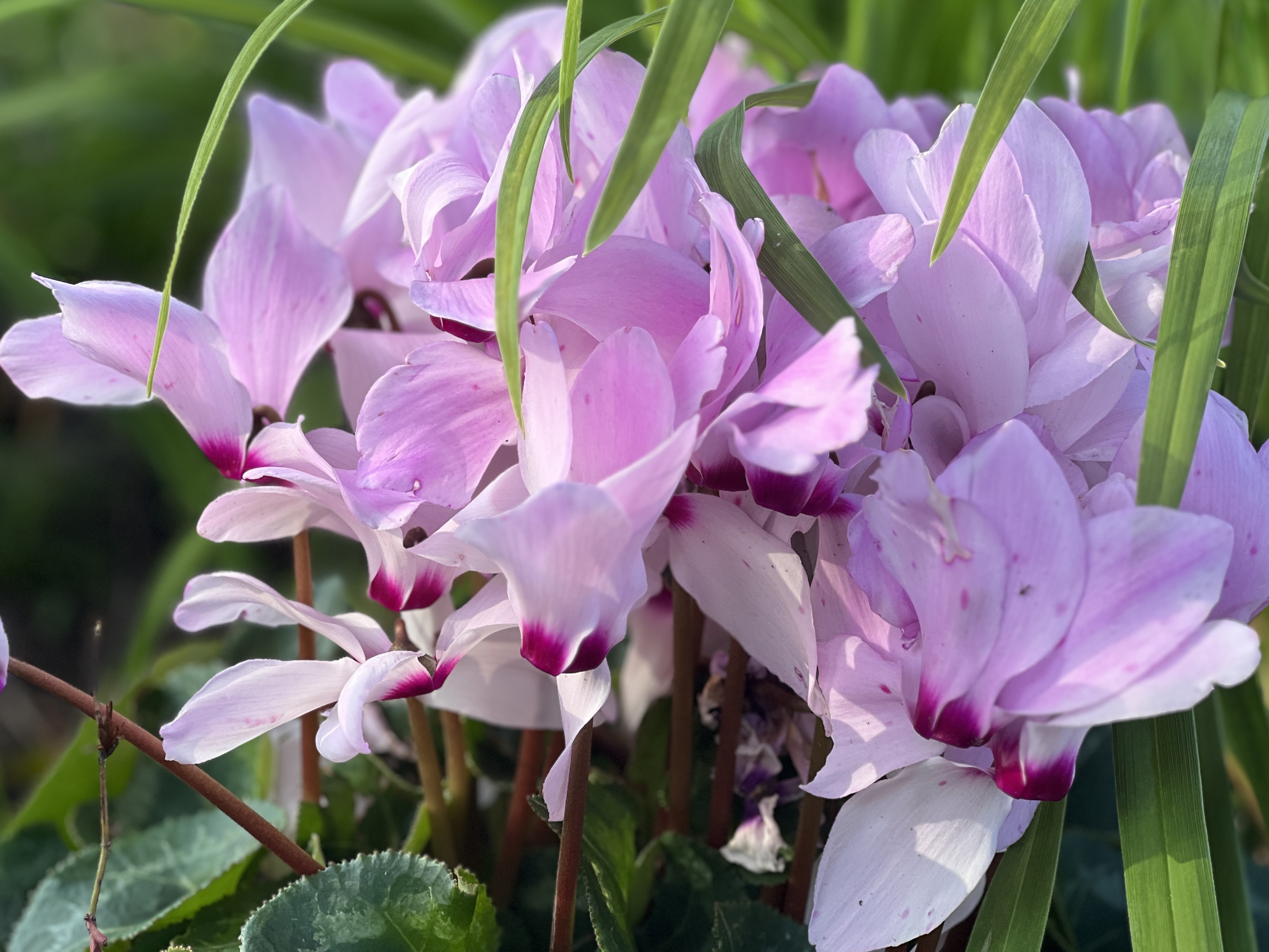
Elsewhere in the garden, the freesias continue producing fragrant clusters in abundance. I’ve been bringing bunches of them indoors.

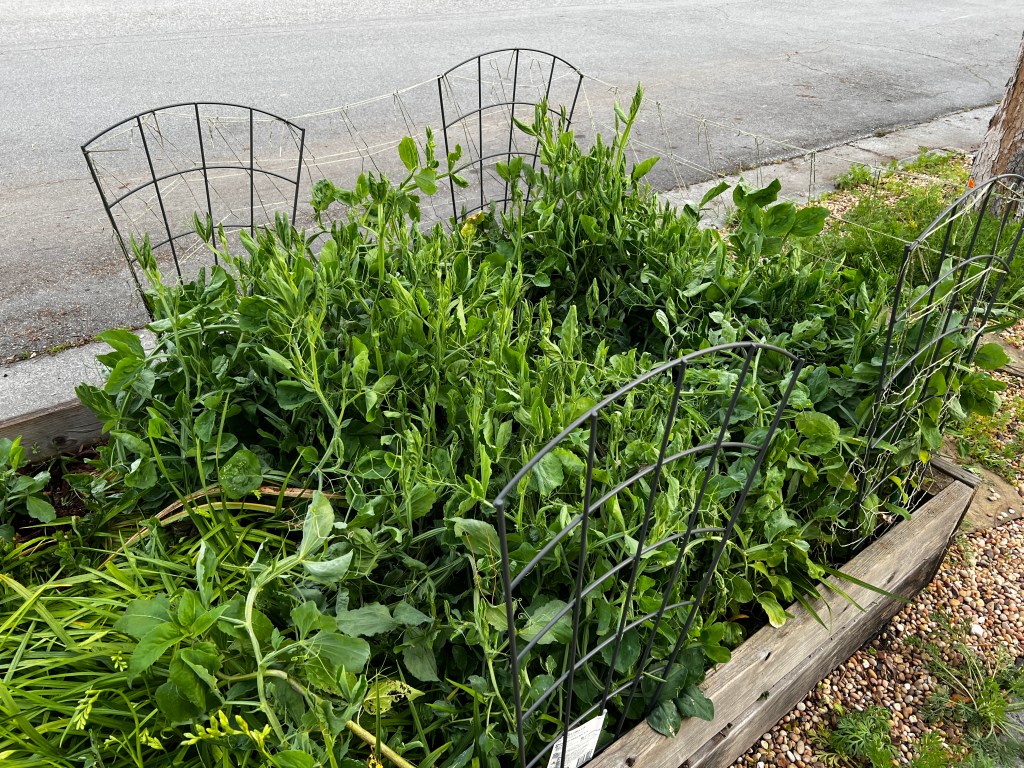
A couple of weekends ago, I placed netting around the edges of the planter box to support the emerging sweet peas. Today, I spotted the first sign of color.

The unexpected winter crop of mammoth sunflowers towers over the curb garden, but the flowers are fading, leaving behind a bird and squirrel smorgasbord. I will cut the stocks down to a meter or so, leaving them in place to support the crop of sweet peas moving in that direction.

I tucked a dozen gladiola bulbs in the space between all that growing. They should emerge sometime in June.

This week’s forecast is warm and dry, with a chance of rain on Friday. I hope that comes to pass, as it would be an excellent way to settle the garden.

Meanwhile, we have foraging birds and squirrels taking advantage of the abundance of seeds.

When I’m indoors looking out the window, the birds and squirrels strike delightful poses, but my camera phone can’t quite capture them. This afternoon, I looked up and spotted a squirrel dead center in the garden, standing up and appearing to look right at me. I’m sharing the photo even though it could be sharper.
Here’s another shot from the sideyard of a well-fed California Grey.

This pair of mourning doves spent an afternoon out back, but they’ve relocated to parts unknown. I don’t miss that mournful cooing, but I love watching them. Ana’s hummingbirds are enjoying the fountain along with an assortment of small songbirds.

This is my time of year!

When the world wearies and society fails to satisfy, there is always the garden.” – Minnie Aumonier

Sunday Snapshot: Tripping Hazards and Mackerel Skies

It’s early Sunday evening here in San Jose. We’re holding our proverbial breath for the next 24 hours as a weather front passes through. We’re in a “severe drought” with fire conditions two months ahead of the norm. The last thing we need is the predicted round of dry lightening. Last year similar conditions started wildfires up and down the state with devastating results. The weather warnings make it hard to relax.
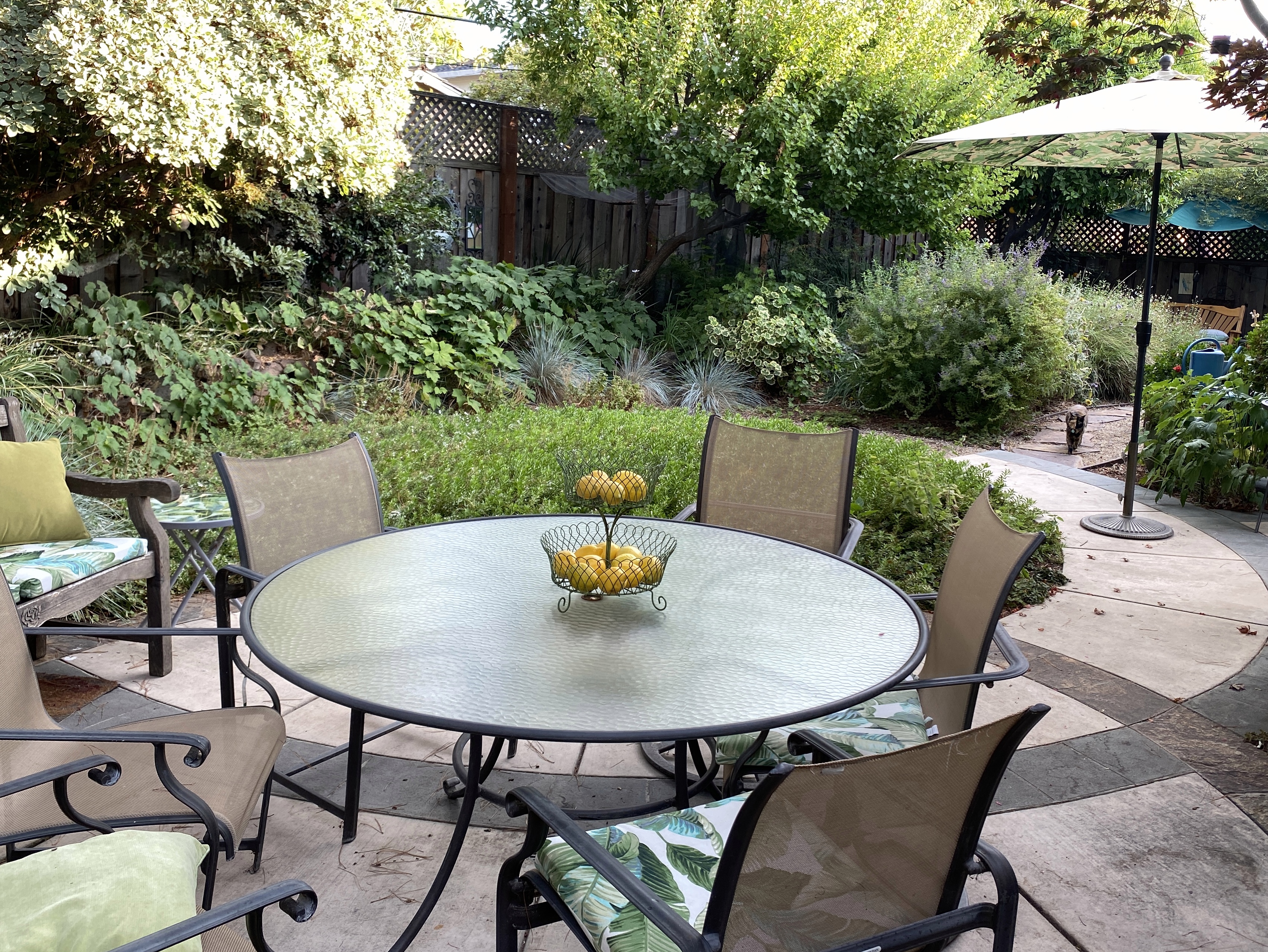
I hosted our book club this week for the first time in two years. We gathered in the garden for a catch-up and a light meal. I filled my tiered vintage basket with fresh lemons, and debuted my new tablecloth. It’s the little things, eh?

The following snapshots are from the garden this week. Our Bougainvillea is filling out beautifully, and the pink bracts frame the tiny white flower within. Mama finch

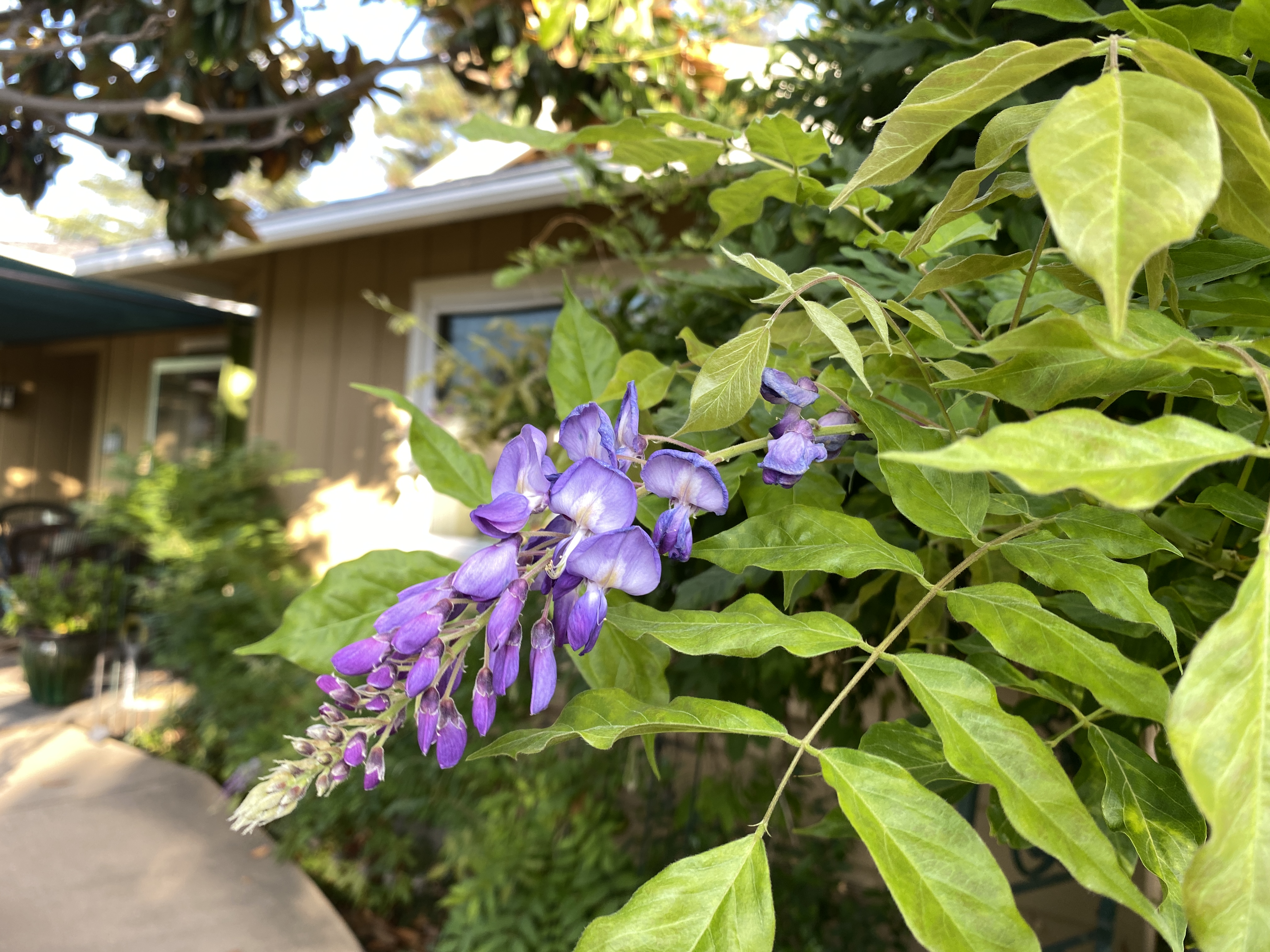
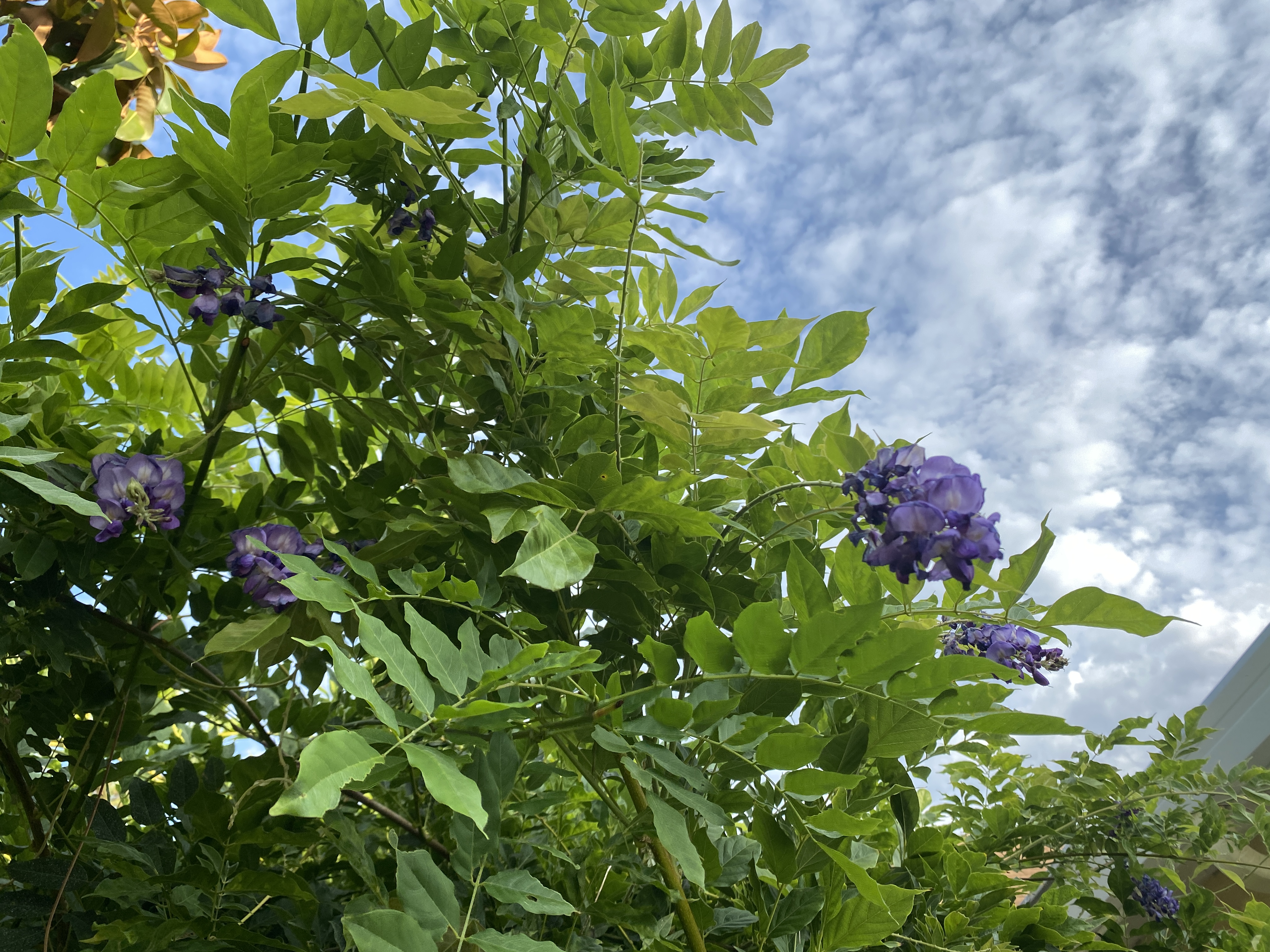
never returned to her nest, so after climbing on a ladder to be sure she didn’t leave eggs behind, I removed her nest so we could finally open the patio drapes. Our wisteria is in bloom for the second time this season. The flowers were more spectacular in the spring, but now lush green vines show-off the new color. The green and yellow Japanese forest grass reminds me a little of the character Cousin Itt from the 1960s TV show The Addam’s Family. The last photo is of Tessa wrapped between my feet, posing a tripping hazard. I managed to remain upright nonetheless.

Photos appear in a gallery view. Click on individual pictures to enlarge.

I’m sending good vibes to our friends in Germany where the weather has been unkind. My heart goes out to you. Alys

Thirty Days in the Garden: Can You Spot the Imposter?

Weeds are imposters. They’re like a spy at a cocktail party, standing tall in their green suit, effortlessly blending in. To the untrained eye, they look like everyone else at the party.

They can’t fool this gardener. I’m a professional.

Not really, but as weeds go, I know things.

I’ve been uprooting the same half a dozen weed varieties in this garden for over twenty-five years. I know when they’ll appear in the garden, and I’ve learned ways to minimize them. Eradication, however, is futile. To garden is to weed.

Walkway to the right of the driveway, weeds running amok

I don’t mind weeding for the most part. I do it mainly by hand and at times find it therapeutic.

Walkway to the left of the driveway, more weeds

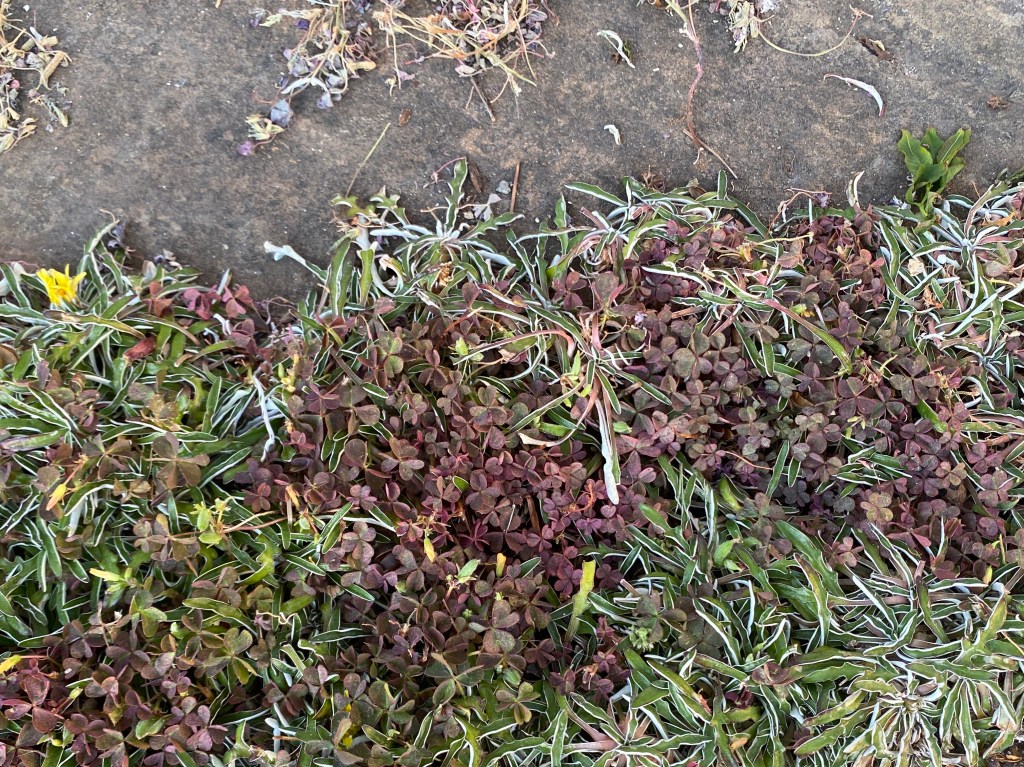
Oxalis, however, is a scourge. Oxalis grows along the walkway on both sides of the driveway. Dymondia grows between the paving stones. It’s described as “a dense mat that over time will choke out weeds.” Ha! The oxalis mocks me. It spreads its roots under the paving stones, then grows up through the dense planting. If flowers quickly, so if I don’t nip it in the bud, it quickly produces more weeds.

Weed-free Dymondia

Oxalis hides in other parts of the garden, but it’s easier to pluck when you can get at the roots. I have to be in a reasonable frame of mind to weed the walkway, knowing that the oxalis will live another day before I start.

Oxalis growing through the Dymondia.

Even the origin of this weed’s name sounds sinister:

Early 17th century via Latin from Greek, from Oxus ‘sour’ (because of its sharp-tasting leaves).

Lexico.com

Oxalis is native to North America. It grows in poor soil and needs very little water to survive. It flowers eight months of the year. It’s sounds like a garden darling if you’re fooled by this sort of thing.

Oxalis is easy to spot and remove when it grows elsewhere.

I know better. Yes, it’s a lovely green, but the oxalis has to go.

Thirty Days in the Garden: A Sweet Pea Update

I’ll be the first to admit that I’m a bit obsessed with sweet peas. I look forward to them every year. These unassuming flowers have the ability to uplift. They’re sweetly scented and delicate, cast in soft colors and pale hues.

Here’s what the sweet peas looked like three weeks.

March 27, 2021

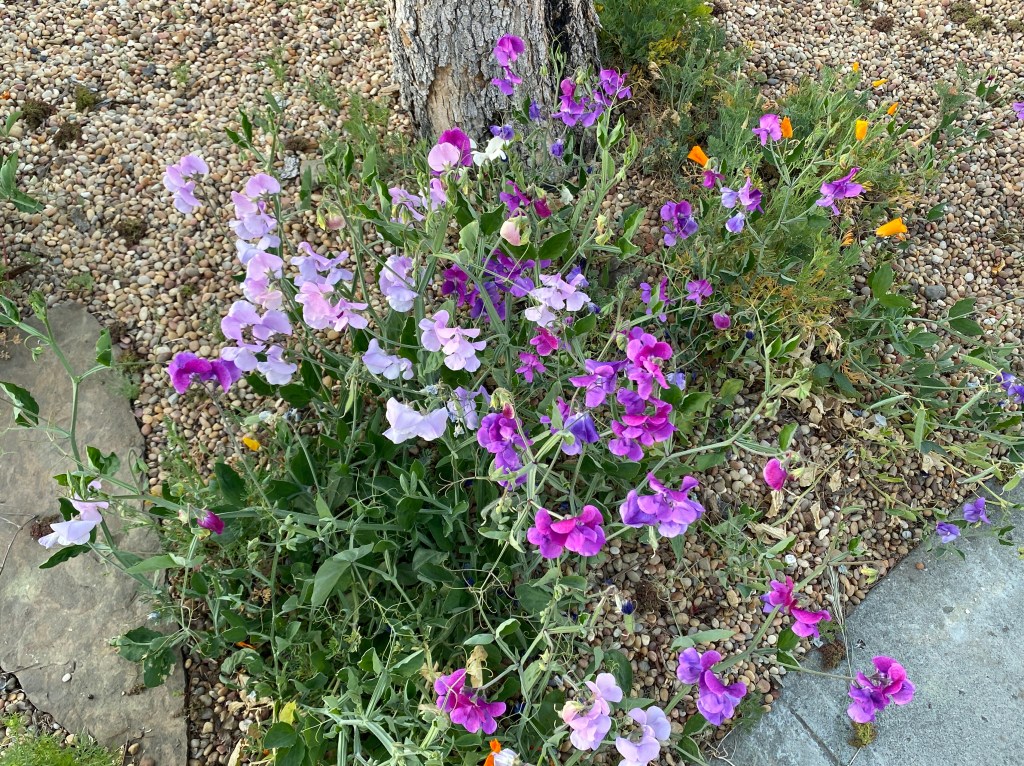
This is what they look like today. I’ve added stakes for climbing, just visible in this photo. In the past I’ve used a portable folding fence, but I prefer the look of these stakes. The stakes are designed for tomatoes, so they’re nice and sturdy.

April 19, 2021
April 19, 2021

I let the sweet peas go to seed every summer. They replant themselves in the fall, impervious to the cooler weather or the ocassional frost. They start flowering in March and fill the garden through May. Our summer heat is no match for these shade-loving sensations, so I enjoy them while I can.

Because they self-seed, I’m intrigued that the color variations don’t change. The flowers come back, year over year, in white, lavender, fuchsia, purple, and soft pink. As the last of the freesias fade, the scent of sweet peas takes over. I’ve cut a few of the flowers here and there, but I’ll soon have enough to start cutting small bouquets. It’s such an enjoyable task filling a small jar with wisps of green and scented sweet peas. I look forward to it every year.

2015: This watering can vase is 27 years old

I didn’t expect to see the sweet peas growing in the gravel this year as they’ve done in the past. Last summer we hired a handyman to rebuild the deteriorating planter box and at the same time replace the weed cloth under the gravel. The sweet peas are back, rooted in the small amount of soil deposited by the wind.

Sweet peas growing in shallow dirt and gravel

What an amazing plant!

Sweet!

Thirty Days in the Garden: Kalanchoe Thrysiflora

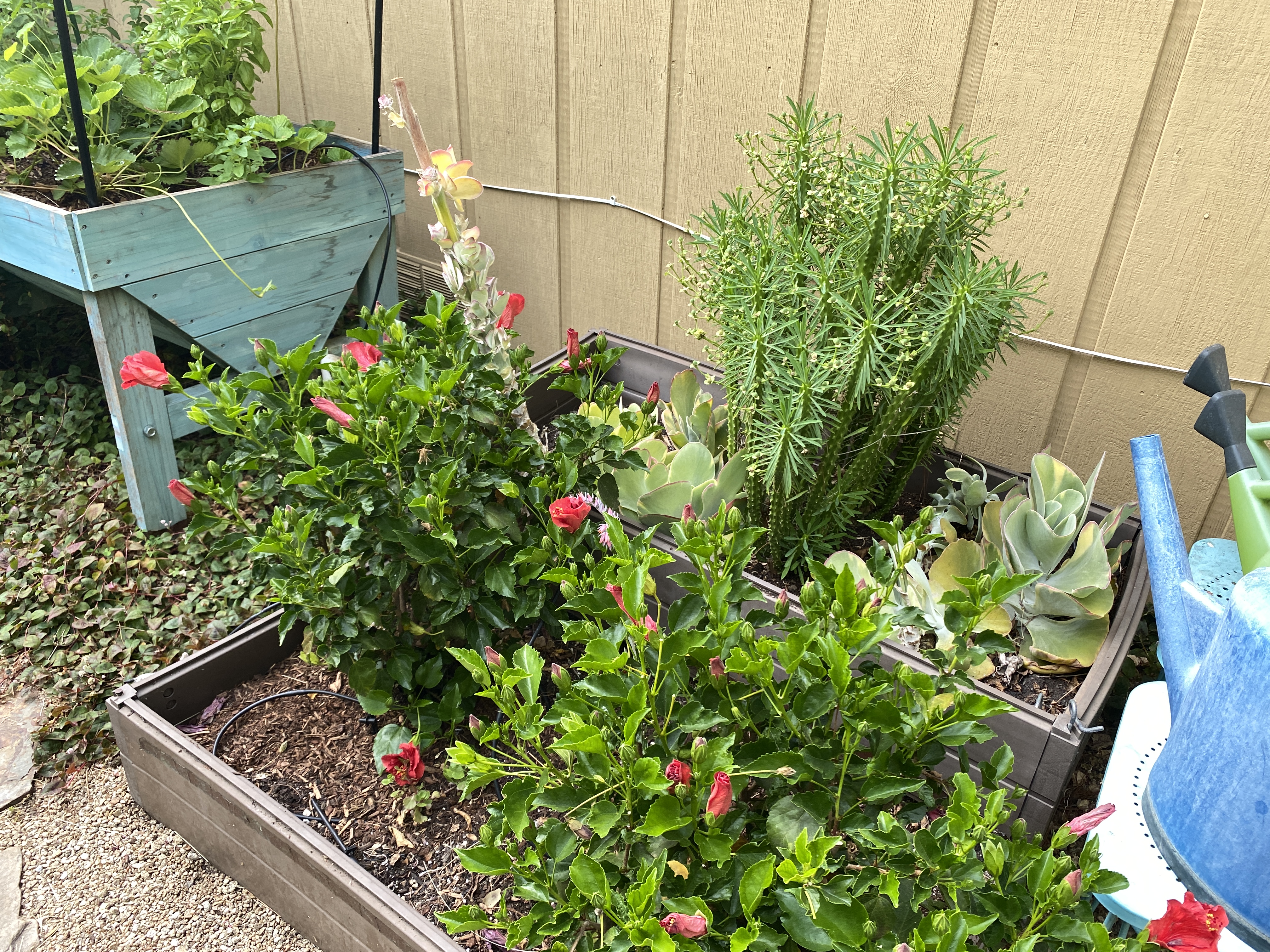
A couple of summers ago, I emptied one of the planting beds and filled it with succulents. I’m always looking for ways to save water. I’d never planted a Kalanchoe thrysiflora, so I didn’t know what to expect. I loved the saucer-sized leaves and the unusual growth pattern, so into the cart they went.

Succulents, July 2020

California just ended the second year of dry conditions. We’re not officially in a drought, but water rationing can’t be far off. I keep adapting. I used to buy annuals each summer and fill pots on the deck. I’ve now replanted all of my containers with succulents. They have the added benefit of growing slowly, so they don’t need translating for several years. That said, it’s time for several of my succulents to find a place to spread out. Pots can only take you so far.

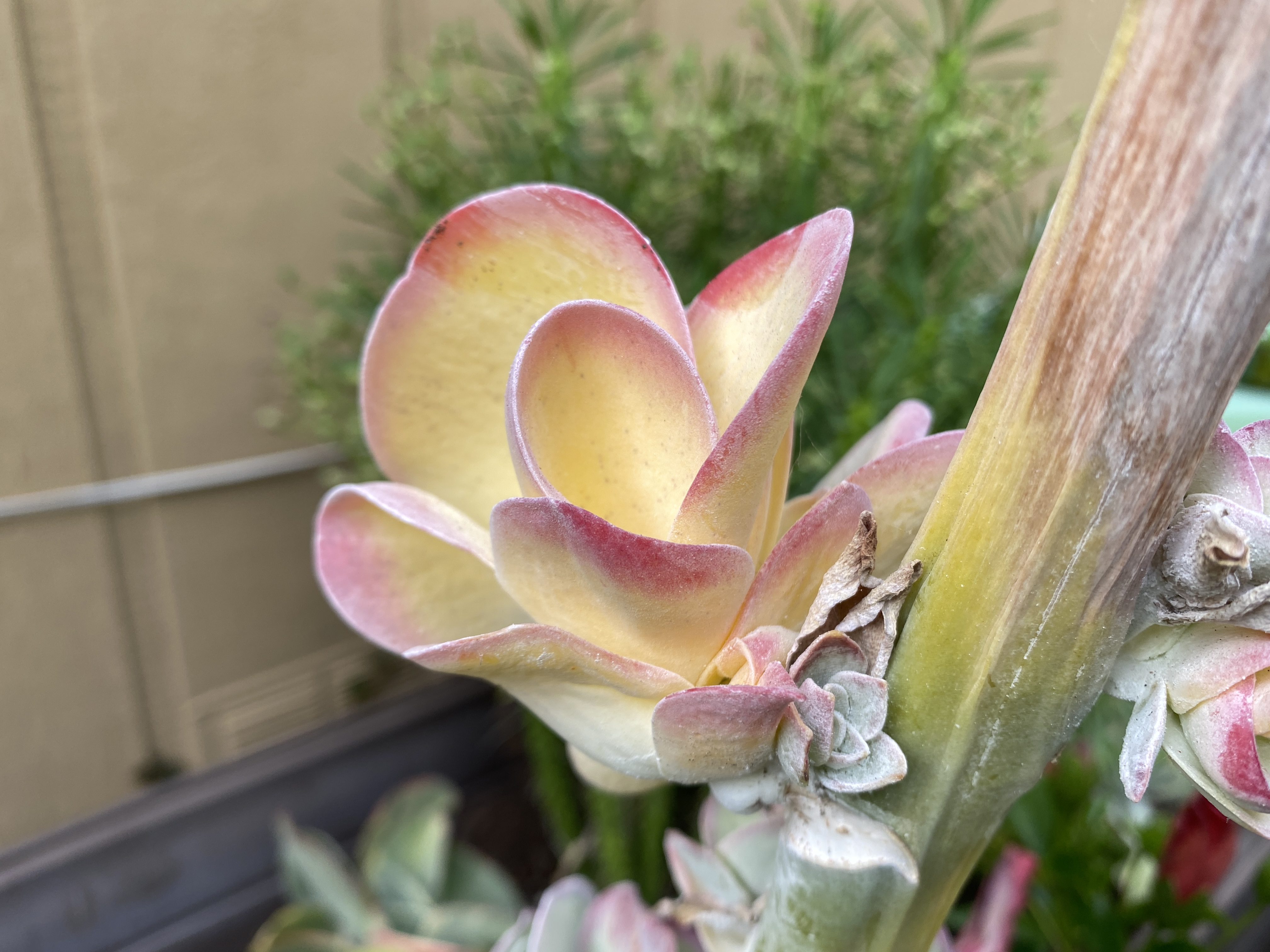
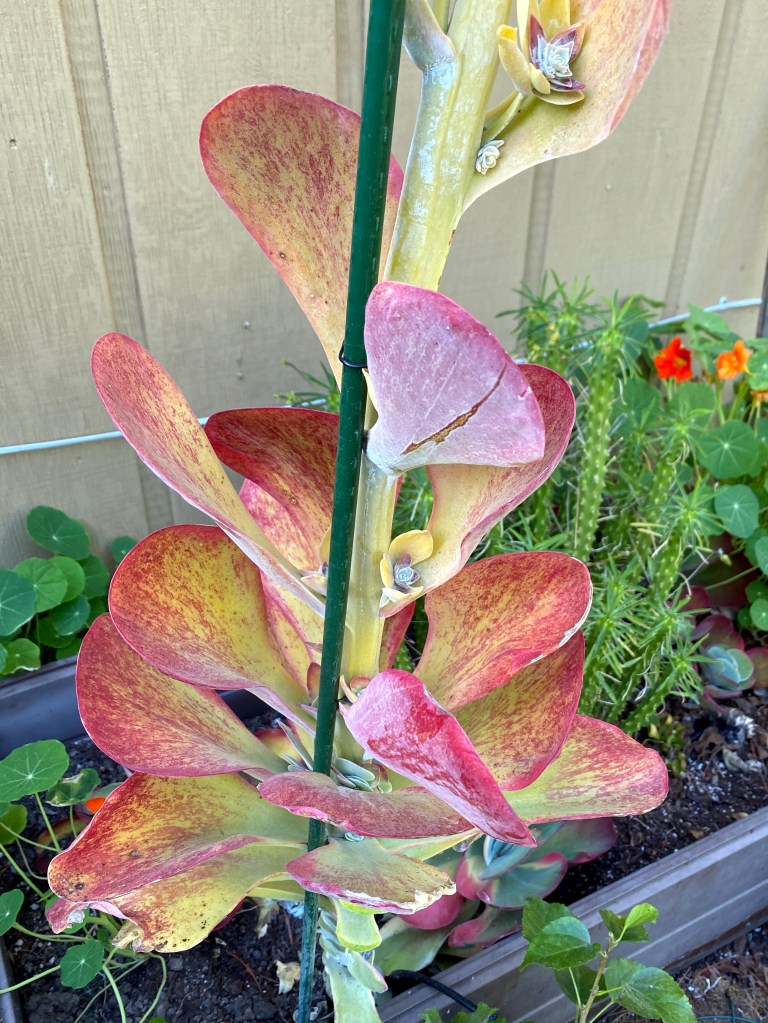
Kalanchoe thrysiflora are informally called paddle plants or pancake plants. The leaves remind me of saucers, with slightly upturned edges and pretty trim.

I didn’t know that the plant would bolt after it flowered, so imagine my surprise when the Kalanchoe tripled in size. I had to stake the plant over the winter to keep it from toppling. The plants unique qualities are enchanting. I learned today that I can propagate more.

Gorgeous red and yellow leaves

Over the weekend I noticed tiny florets or offsets along the stem of the plants. These can be propagated as well according to gardening know-how, though I’ll need to read more on this technique. You can cut the leaves, allow them to scar, then plant. I’m not sure how to remove the offset, though I’m curious to try.

Flowers
Tiny offset on the mature plant

What do you think? Would you grow this unusual plant in your garden or a sunny window? I’m rather smitten.

Two-Faced Tessa in the Garden

Tessa came to live with us in the most round-about way. She stowed her wee self into the battery compartment of Mike’s Tessla. We’ll never know how she got there, and it was a production getting her out, but after that ordeal, she was here to stay. We were not in the market for a third cat and certainly not a kitten, but as John Lennon said: “Life is what happens to you while you’re busy making other plans.”

Tessa's portal

Tessa lounging in her kitty portal

Tessa turns three this May.  She’s affectionate when it suits her in the most endearing way. Our sweet tortie climbs on your chest and looks into your eyes, before tucking in her chin and producing a raspy, satisfied purr. We adore her!

Tessa near the rocks

Tessa near the rock wall

Tessa spends her time prowling the compost bin for rats, chasing squirrels and play-fighting with Mouse the Cat, aka, Bubba. He’s more than twice her age and close to double her weight, but they go at it like a pair of kittens.

Tessa in the garden

We call this “the look”

When Tessa first arrived, a steady stream of friends stopped by, intrigued by her unusual markings. Eventually, I created a Two-Faced Tessa The Cat Facebook Page and my son set up an account for her on Instagram as twofacedtessa.  My son attends university several hundred miles away so the updates naturally dwindled, but the pics he posted in the early years are delightful.

Tessa in the fruit tree

Tessa in the fruit tree

I hope her sweet face cheers you as you go about your day.

Tessa in the sun rear view

Tessa on her own terms

Here is a gallery of some of our favorite pics: