Fairy Gardens and Gossamer Wings

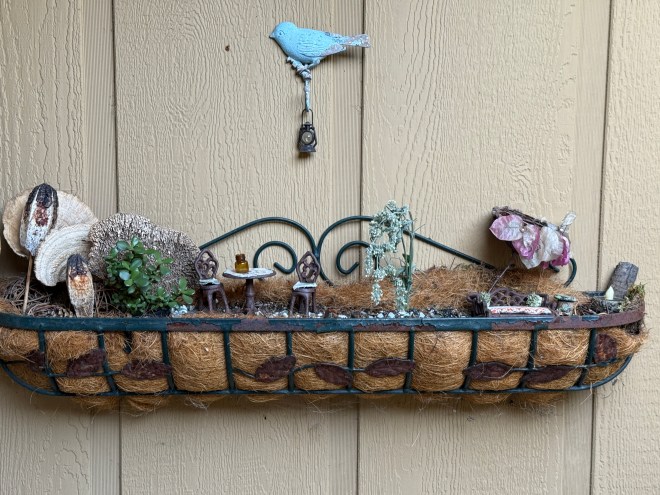
One of my fairy gardens is just outside our back door, mounted on the side of the house at eye level. It’s a daily reminder to stay in touch with my inner child, my muse, and lately, my sanity. Puttering in the tiny garden draws my attention away from reality for a few hours.
When we were young girls, my sister Sharon and I loved rearranging the furniture. It was a way to change our environment and to surprise our mother when she came home from work, and it didn’t cost us anything. We still laugh about it.

This week, I decided to rearrange the elevated fairy garden. I’ve had two small succulents planted there, but one has been struggling for a while.
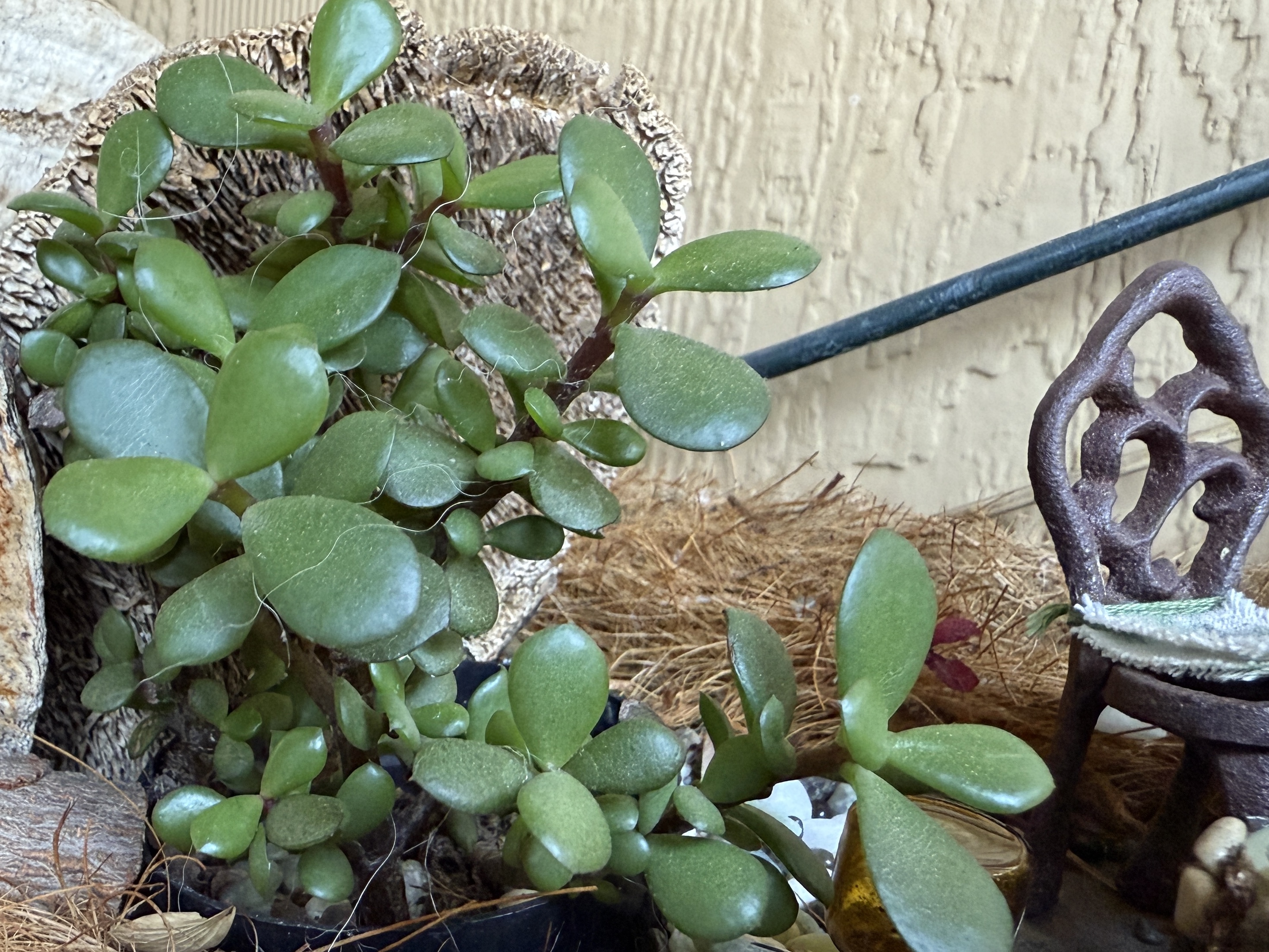
They’re only a few inches apart, but one is getting too much sun. I transplanted it to a shady spot, considered buying another one, but in the spirit of rearranging the furniture, I opted for the assorted treasures I already had.

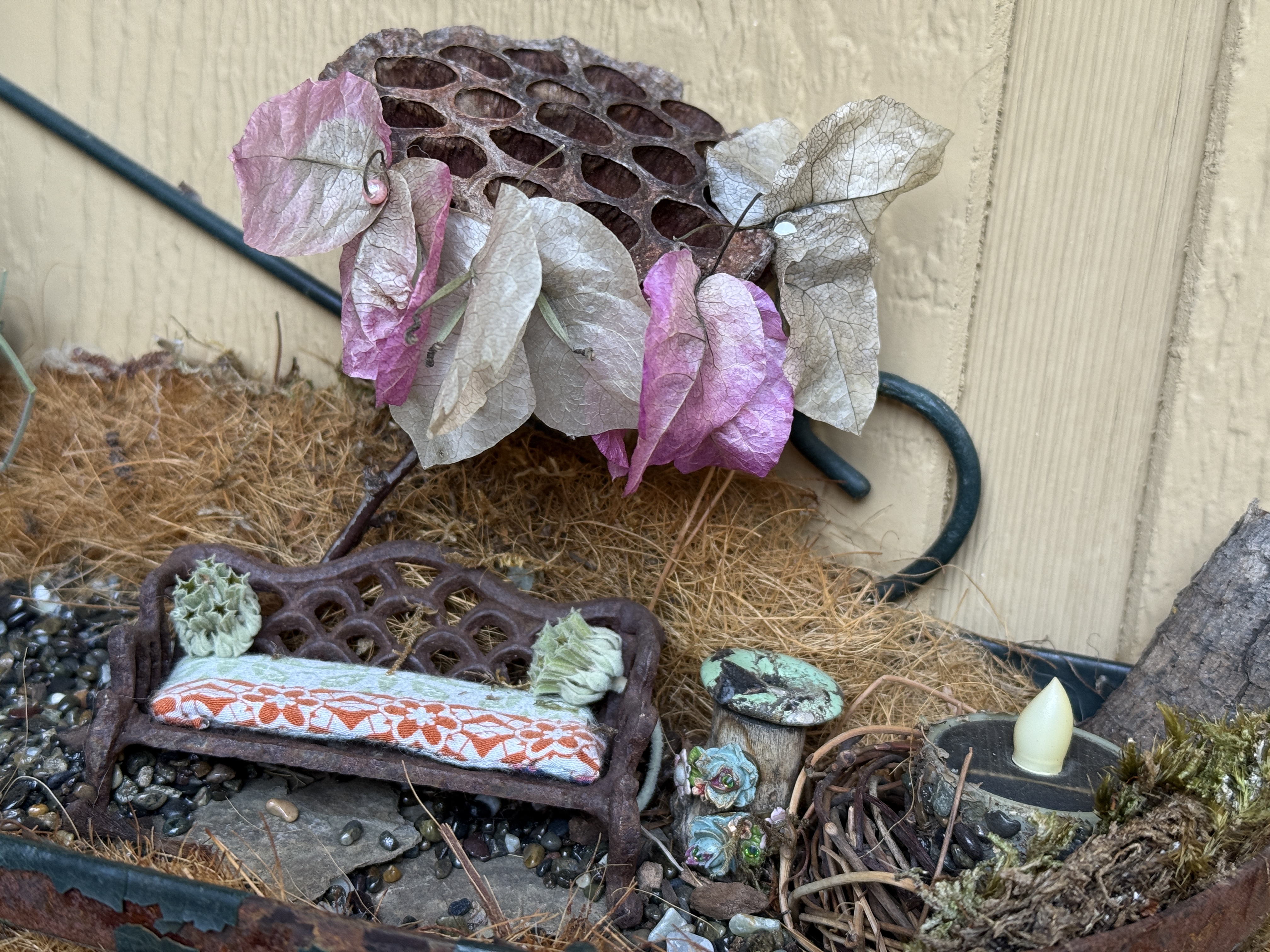
I moved the tiny garden bench to the spot vacated by the plant. Shade is essential during San Jose summers, so I crafted a wee sun umbrella. The umbrella’s structure is a lotus pod rescued from a floral arrangement sent to me as a thank you a few years ago. It’s been in the background of the fairy garden for a while. It’s now the base of the umbrella, with dried bracts from the bougainvillea held in place with sewing pins. I replaced the too-short stick with a twig from the fruit tree. Ah, shade.

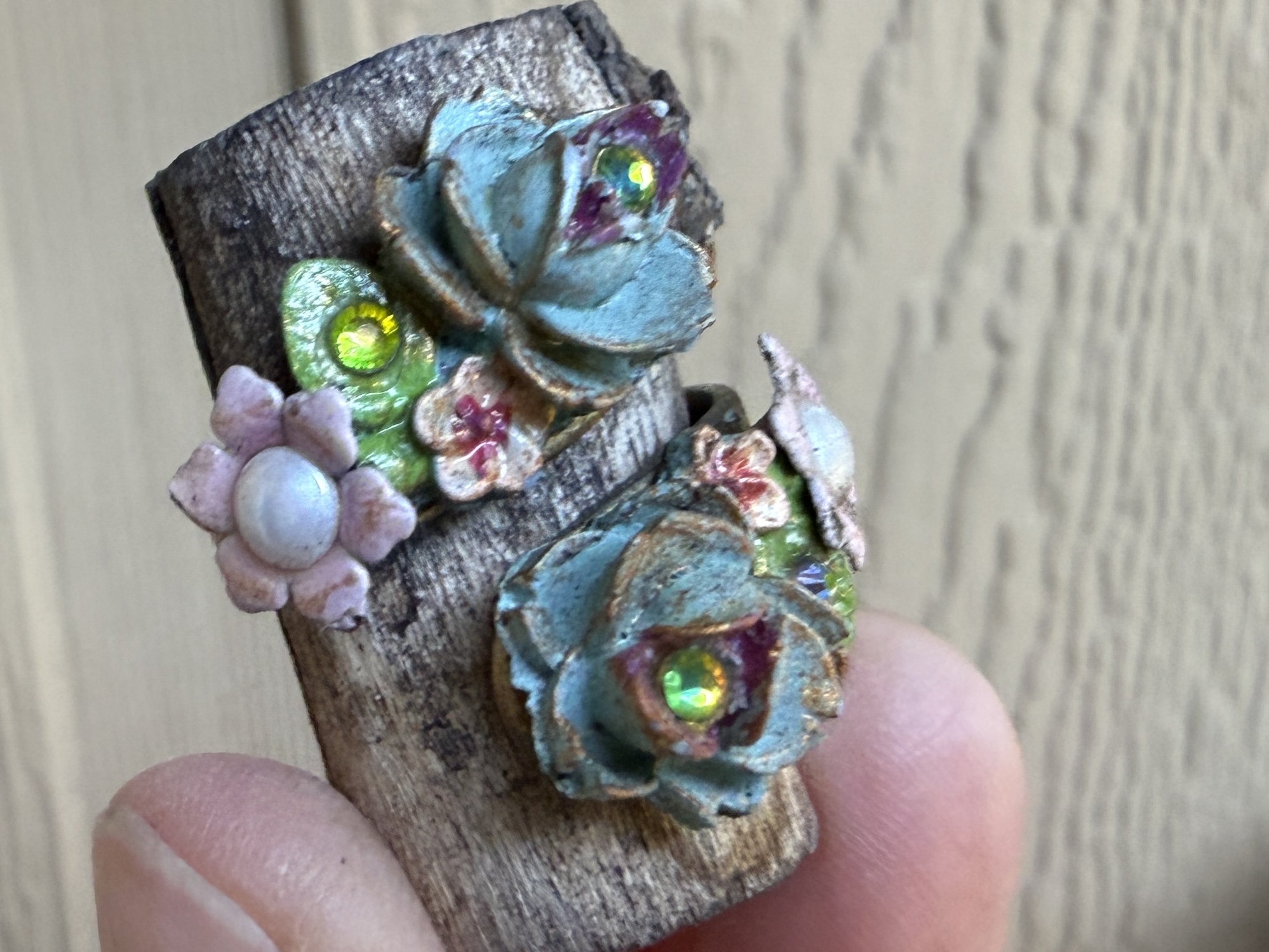
A couple of small seed pods were the perfect size for tiny toss cushions, creating a relaxing resting spot for imaginary visitors with wings. Next to the garden bench, I’ve improvised a side table from a small bit of garden debris, topped with a green finding from my button jar. I wrapped the base of the table with a ring purchased in Victoria, Canada, a few years ago. I loved the look of the ring, but it is so uncomfortable that I never wore it. It works well in this miniature garden, and I can enjoy it in a different way.
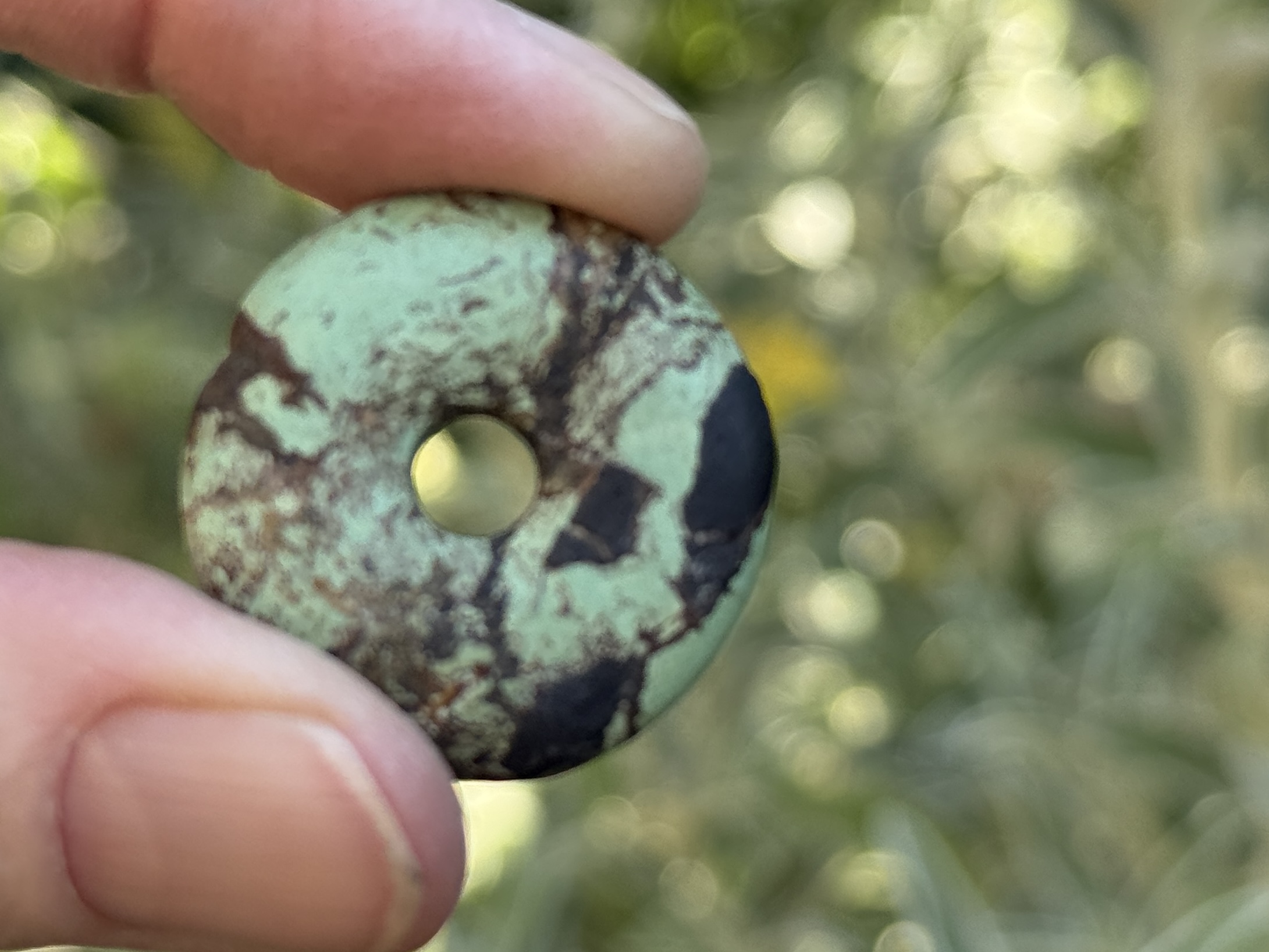
Mike suggested a solar light for the garden and I happily agreed. I wrapped the light with sticky tape, then rolled it in dirt and gravel to help it blend in. It’s nestled in the remains of twigs that once covered hanging lights.

Next up, I added a garden arch that now separates the table and chairs from the lounge.

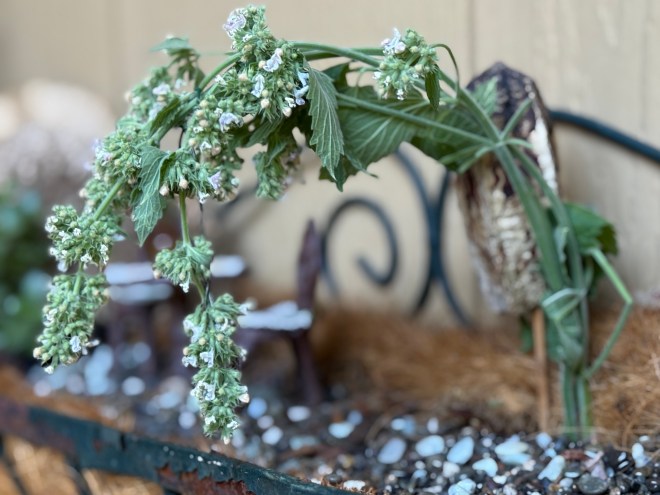
I braided three lengths of Nepeta, also known as catmint, while it was still soft, gently bending them into an arch and holding them in place with a length of florist wire. It’s drying nicely into a scented and wispy arch.
I invite you to close your eyes and imagine yourself in flight with gossamer wings and a light heart. The garden is ready for you. All are welcome.

Summer Approaches

Our summer solstice is still three weeks away, but all the signs of the season have arrived. When we left for Vancouver in mid-May, the California poppies in the front garden were ending the season as the nigella bloomed.

I had hoped the poppies might linger, as the orange and purple look pretty together. Flowers have their own time and place, so, of course, nature took its course. It’s one of the joys of gardening.

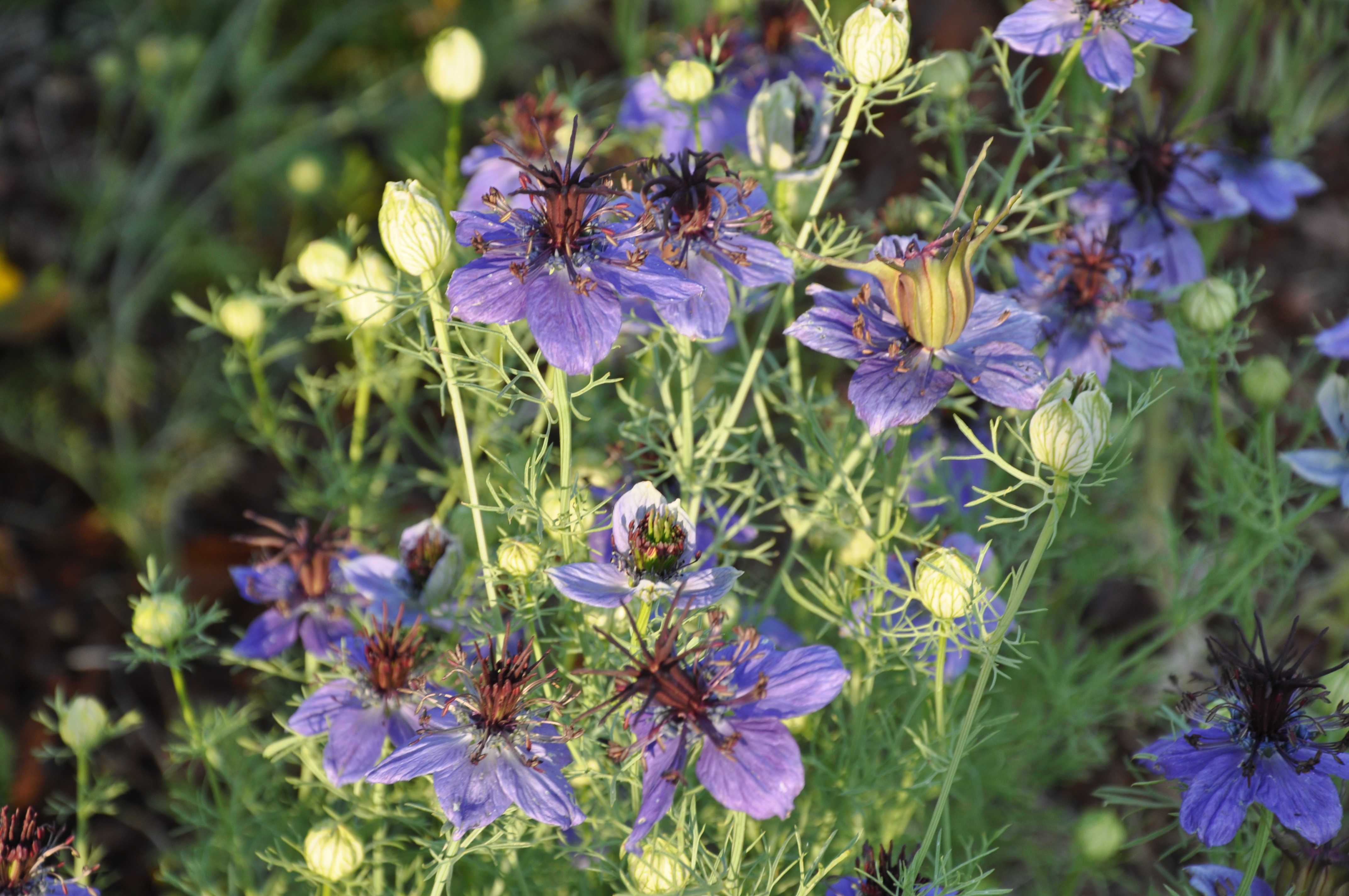
Nigella

I laughed when one of the seed pods split open as I worked along the path, spewing tiny seeds in my direction, which bounced off my cheek. The seeds could almost be mistaken for course black pepper. I swept them into the garden and will enjoy what takes hold next season.

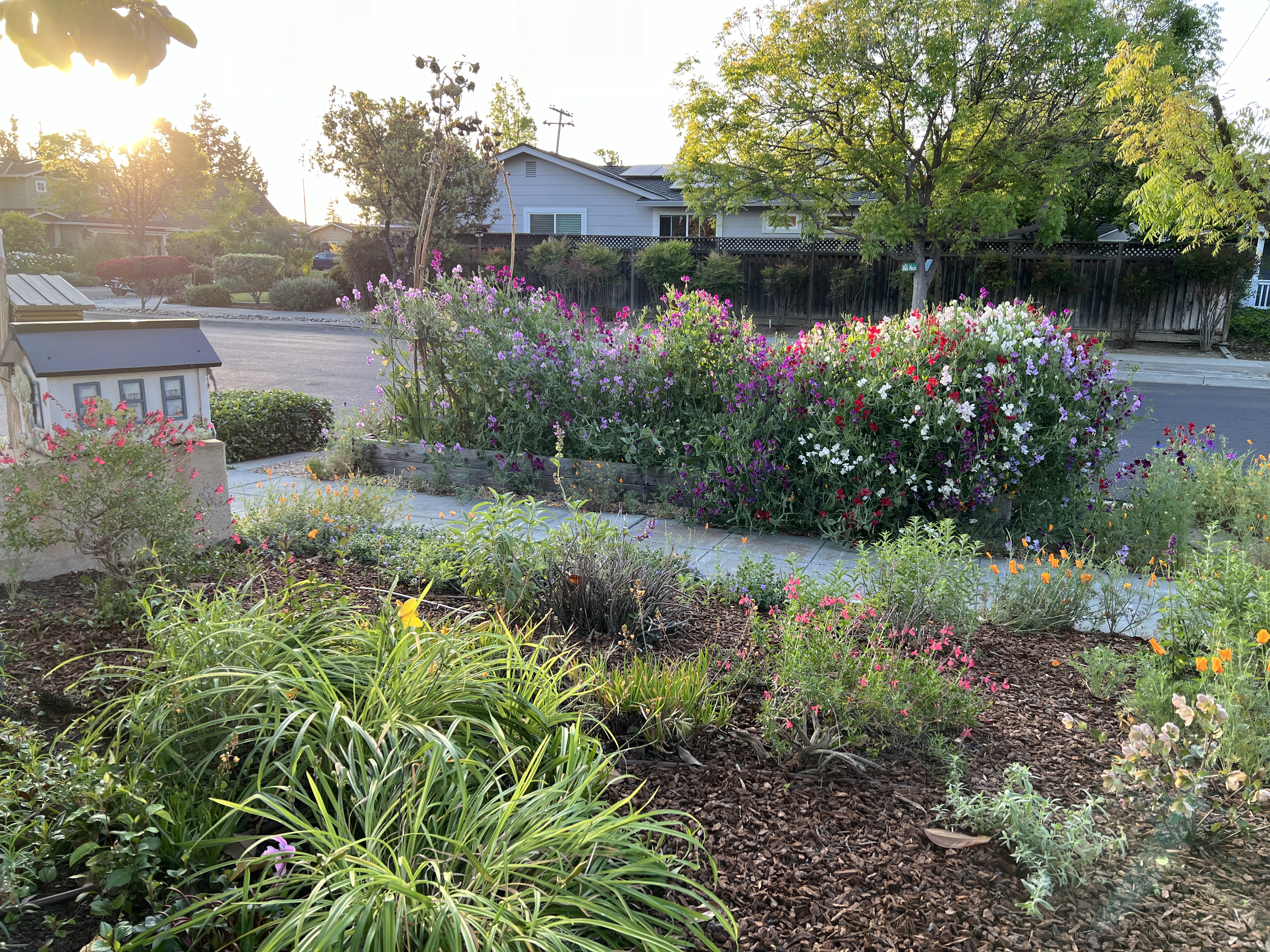
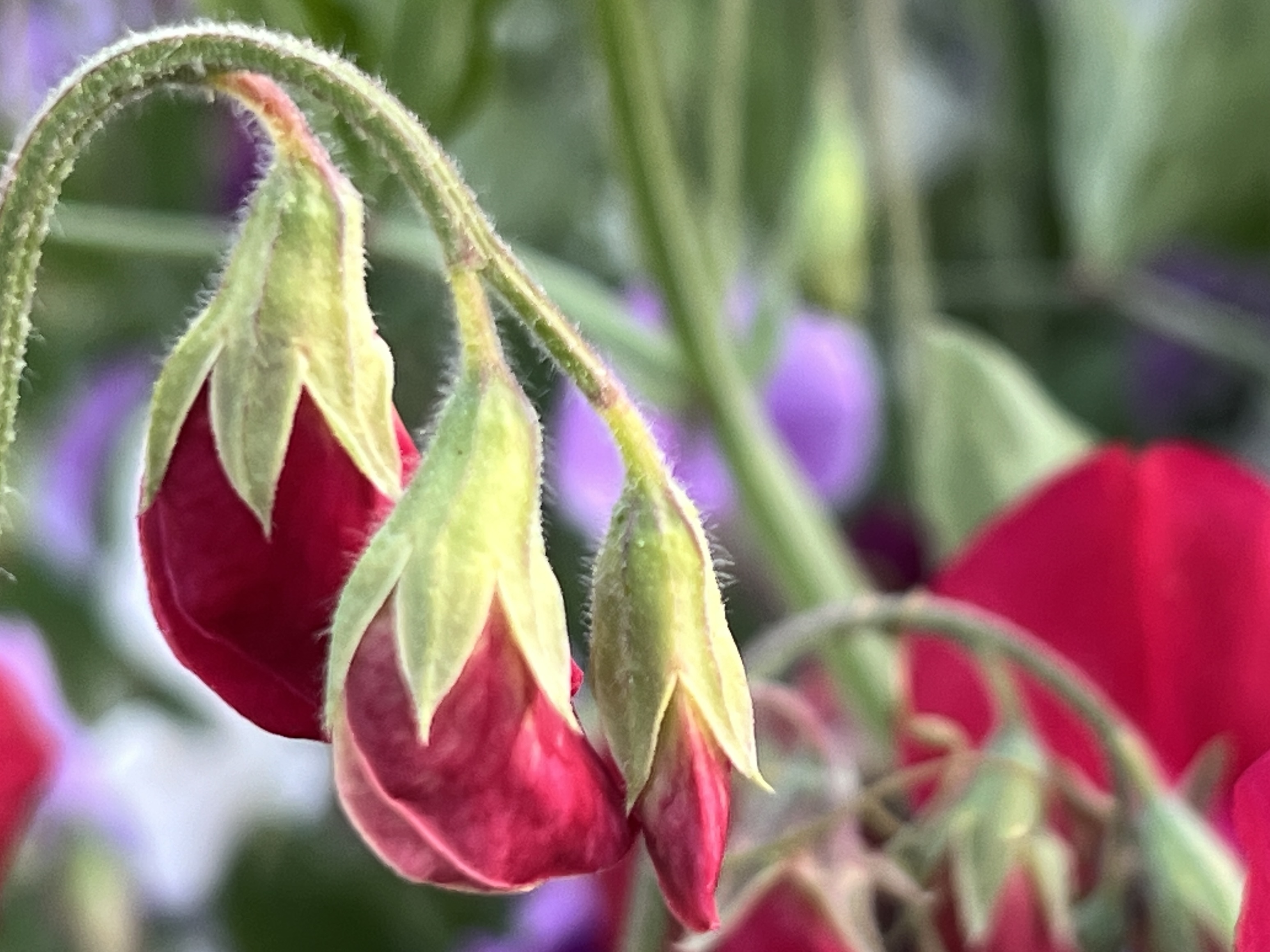
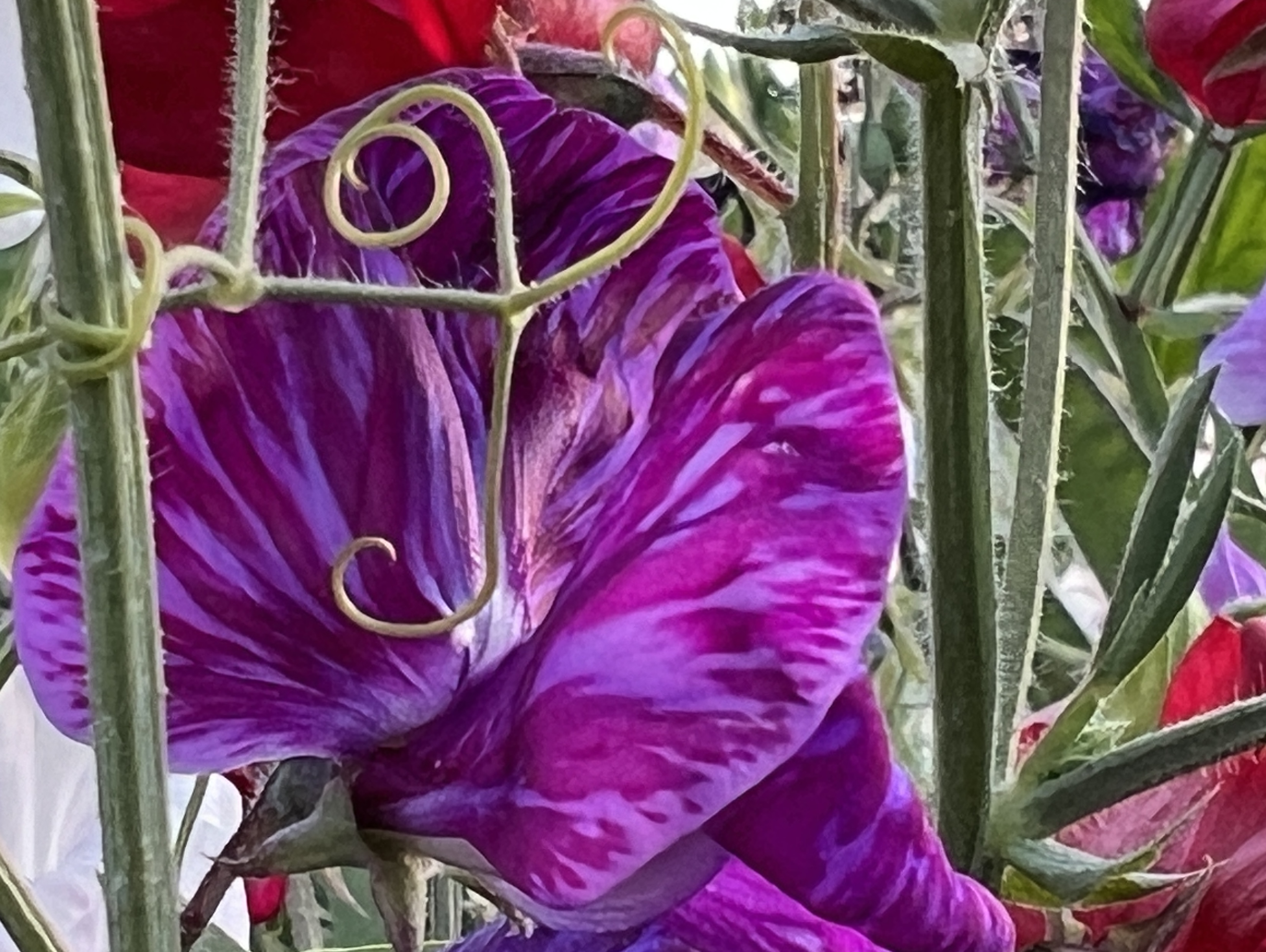
With the first San Jose heat wave, the sweet peas cry uncle and begin to set seed. I leave the plants for a few weeks to allow the seeds to drop. This past week, I removed the plants, gathering seeds to offer to friends while leaving an equal amount to self-seed in the fall.

As I removed the sweet peas from the curb garden, I uncovered sturdy gladioli. The sweet peas created a dense cover, but the gladiolus thrived and were none the worse for it. Today, we planted two tomato plants, four sunflowers, and some strawberry starters. The existing ground cover has room to spread its delicate leaves, with lovely purple flowers to contrast the yellows, pinks, and, of course, green.

Over the long weekend, Mike put up the shade sails in the front and back while I uncovered the garden swing, tables, and the like. With virtually no rain until October, we can leave things out.

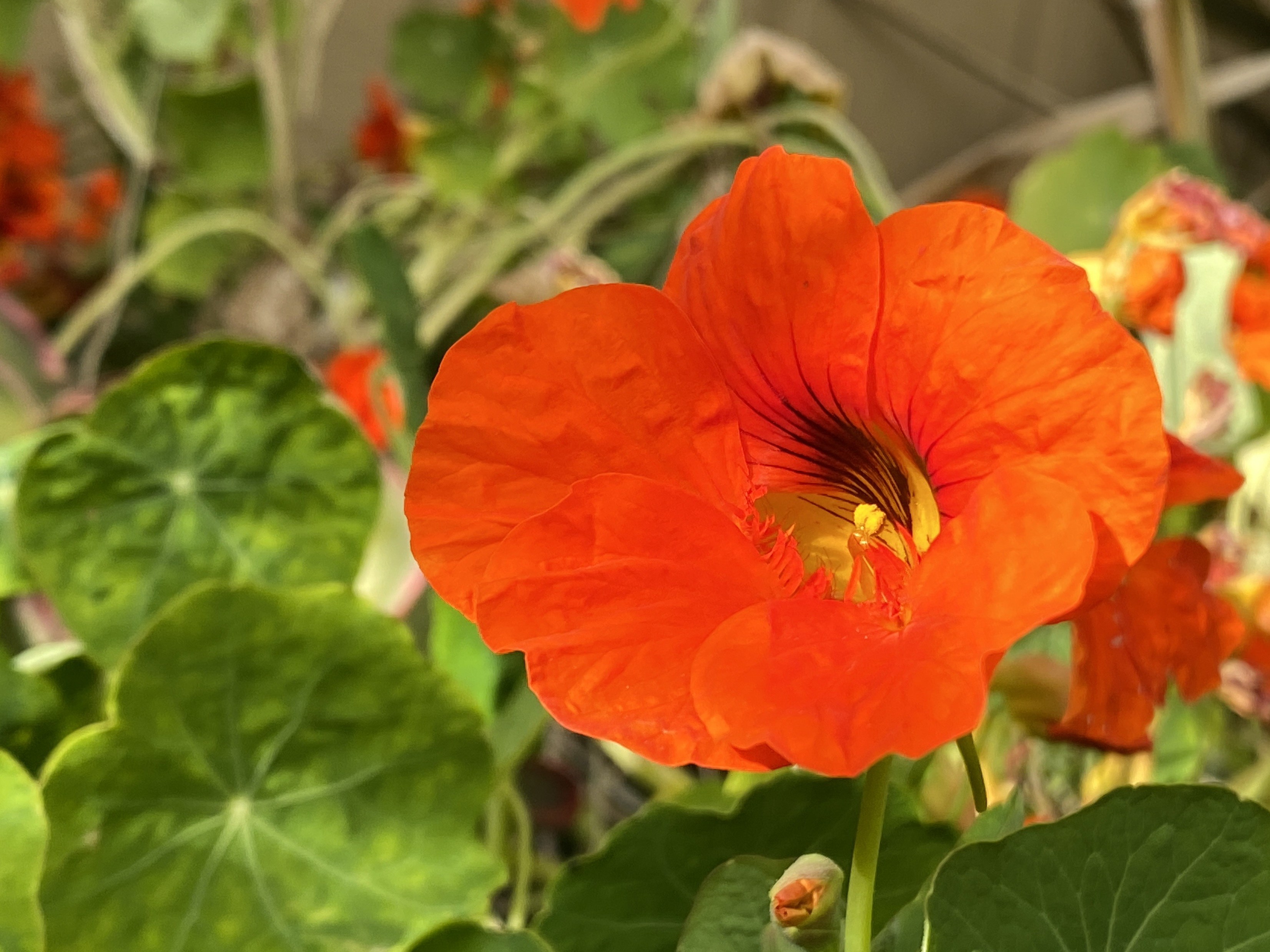
Nasturtiums spread throughout the back garden, traveling up, over, and around various obstacles, spreading stunning shades of orange, yellow, and, occasionally, red. They took over one of the garden paths while we were away, and how I wish I had a photo of our cat’s expression when he couldn’t pass.

My garden has found its rhythm these past few years as natives are more established, and annual seeds, bulbs, and rhizomes reliably return, filling the garden with spring’s abundant gifts. Back-to-back seasons of welcome rain certainly helped create healthy roots.

We’re expecting temperatures around 90F (32C) this week, so my time in the garden is limited. I’m glad to have accomplished so much in the last two weeks with Mike’s help, and every day, I celebrate this lovely patch of earth.

An Instrument of Grace

We’re heading into another heatwave, though nothing as brutal as the recent Pacific Northwest. Gardening takes place in the morning, then after dinner till sunset.

The gladiolas are multiplying. They’re short-lived but spectacular.

Yesterday, I enjoyed a rare, unscheduled day, and I spent a good portion of it in the garden. I made an early trip to a garden center and hauled home eight bags of garden mulch. It helps retain moisture, and with drought conditions, we need to preserve every drop. I harvested some on our compost mulch as well. I’ll share more about that endeavor in a future post.

A thick layer of mulch

San Jose Water Company’s directive asks us to cut back lawn watering to two days a week. We replaced our lawn with native plants several years ago during the last major drought, so we’re now able to water with an efficient drip system just one day a week. Last week we checked the level of our rainwater tanks, and they’re at about 75% capacity.

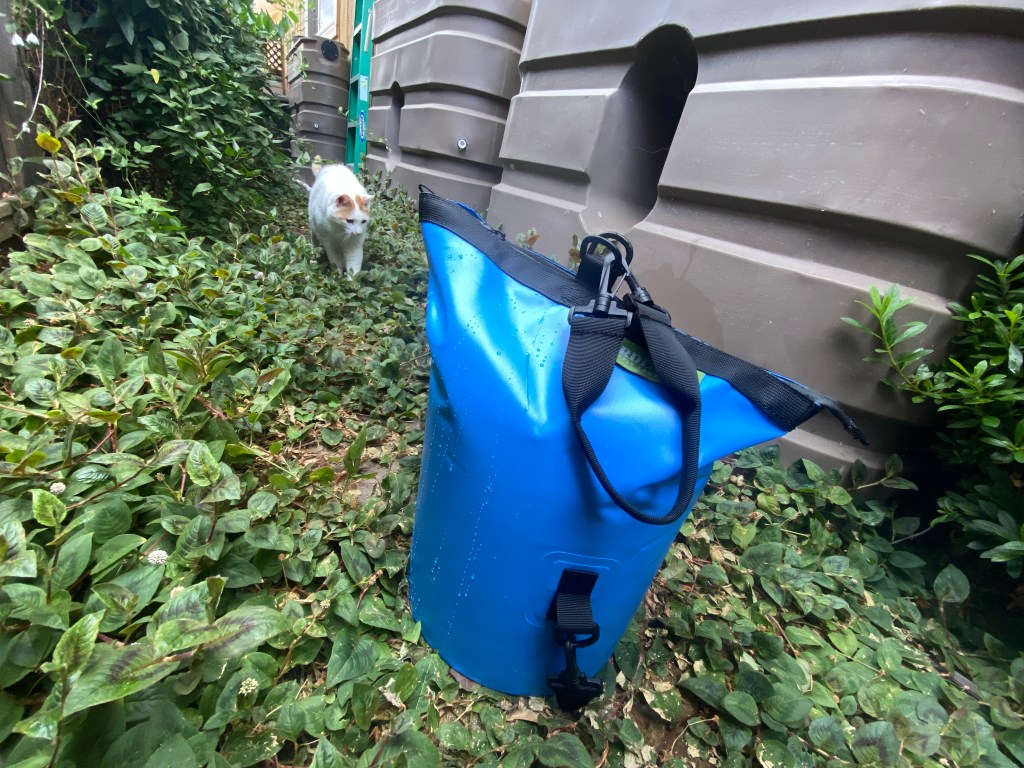
One of three rainwater tanks and the filled watering bag, zipped across the top with an opening to pour

How bad is it? Our semi-arid climate averages 15 inches per year. This past season we got just over five inches.

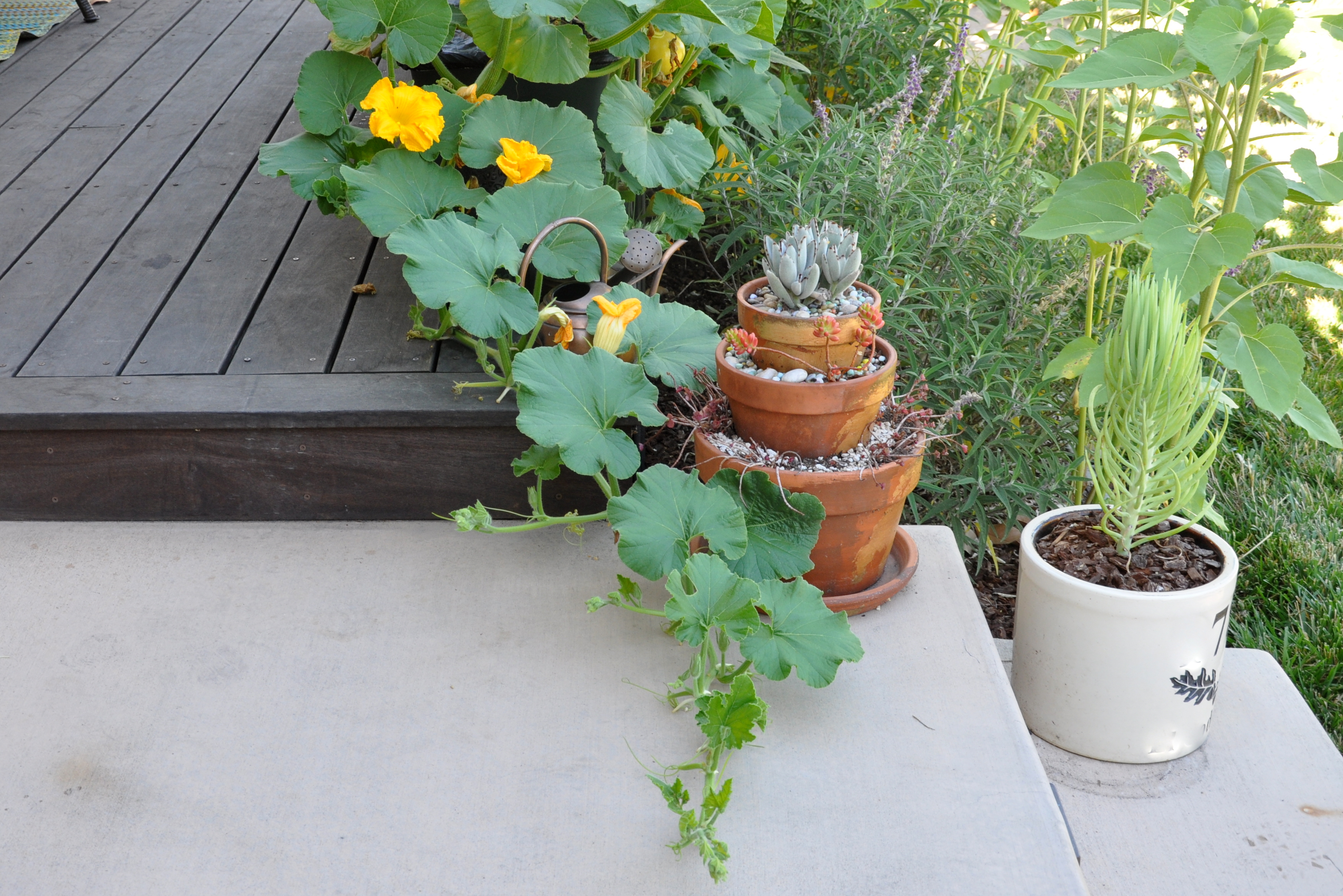
It’s shameful to admit that when I’m in a rush (or if I choose to use that as an excuse), I go the lazy route and fill my watering cans from the hose bib at the front of the house. However, I recently bought a nifty watering bag to make it easier to transport water from the tanks in the back, side yard, then carry through the house to the deck to water the succulents.

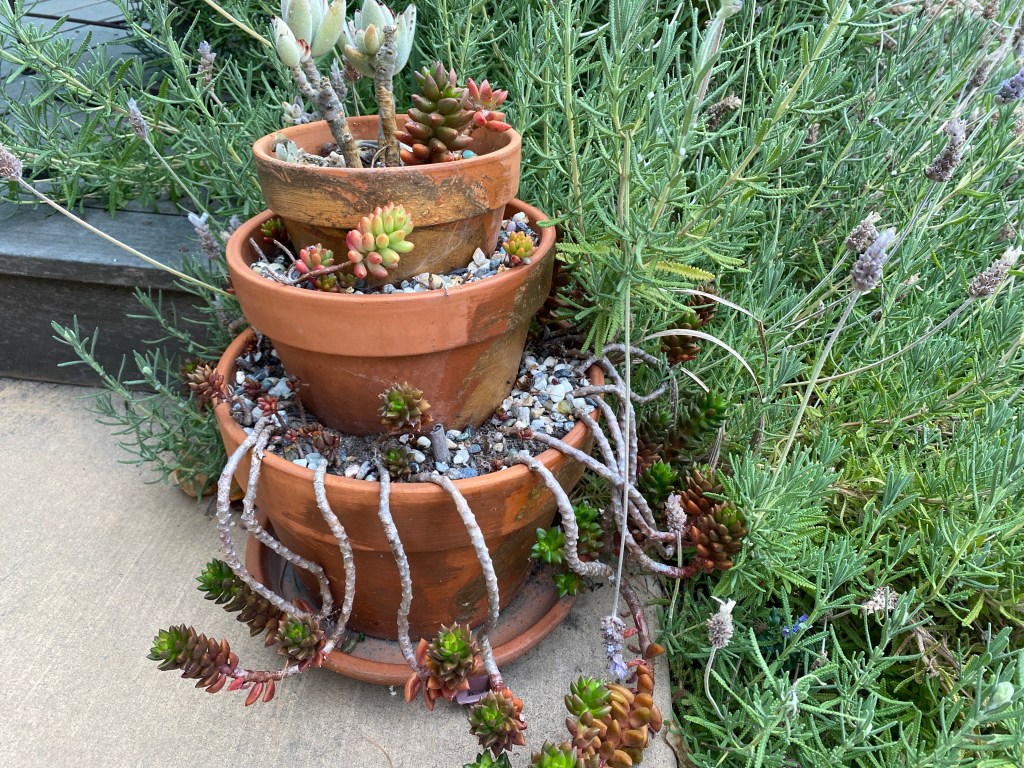
Succulents along the front of the deck (and a fairy teahouse made from a birdhouse gourd)
In serious need of repotting
Front garden viewed from deck

The sweetpeas don’t last past June in San Jose. It’s just too hot. So I let them go to seed and then pull them out, assuring a healthy crop next year.

The California poppies, nigella, and cornflowers went to seed as well, leaving some bare patches in their wake.

Last week I bought white verbena and five gorgeous Russian sage to fill the spot. They’re both drought tolerant. Since the in-ground drip system is in place, these plants won’t consume additional resources. I stopped buying summer annuals during the last drought, filling pots with succulents instead. Succulents get by on minimal water and prefer to dry out between watering unlike most plants.

Front garden viewed from street: Verbena, foreground and purple Russian sage

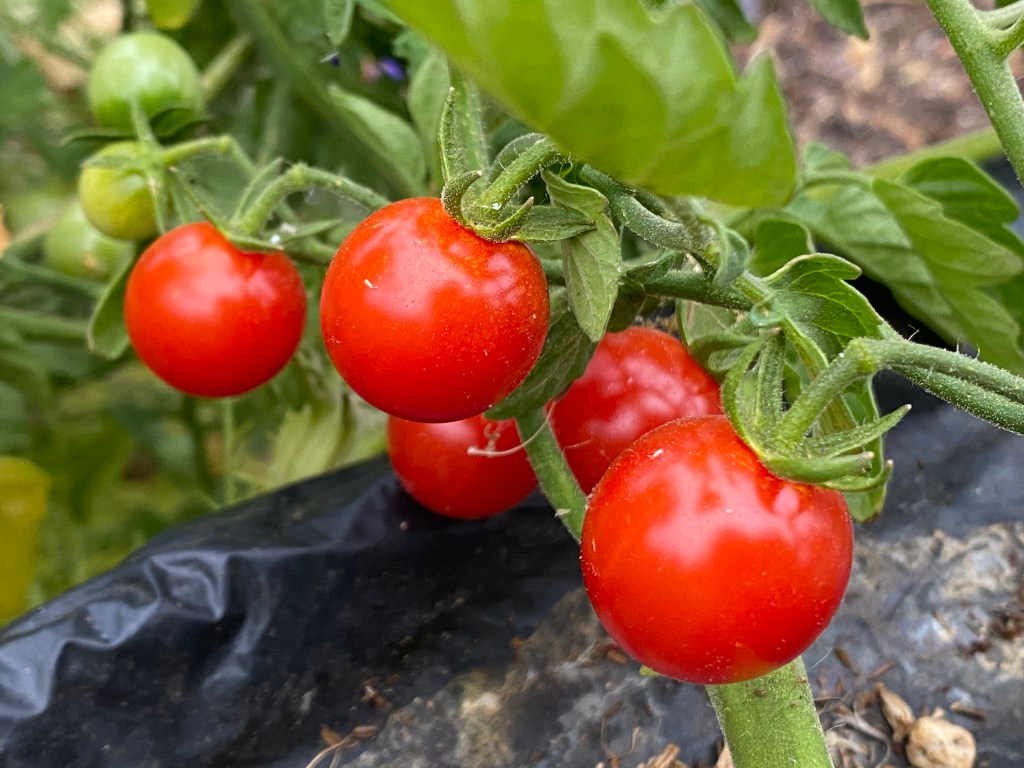
We’ve had success with two of our four tomato plants. One of the two plants in the EarthBox died almost immediately, but the second one thrived. It’s producing gorgeous cherry tomatoes daily.

They are as sweet as they look

The two tomatoes in the VegTrug are healthy, but the cherry tomato plant is the star. The basil is coming along nicely, so we’ll soon be enjoying that in our salads as well.

Cherry tomatoes and herbs in the VegTrug

May Sarton’s quote captures some of the essences of gardening. I’m more at peace after a day spent among the plants.

“Everything that slows us down and forces patience, everything that sets us back into the slow circles of nature, is a help. Gardening is an instrument of grace.” May Sarton

Waking up to Paperwhites

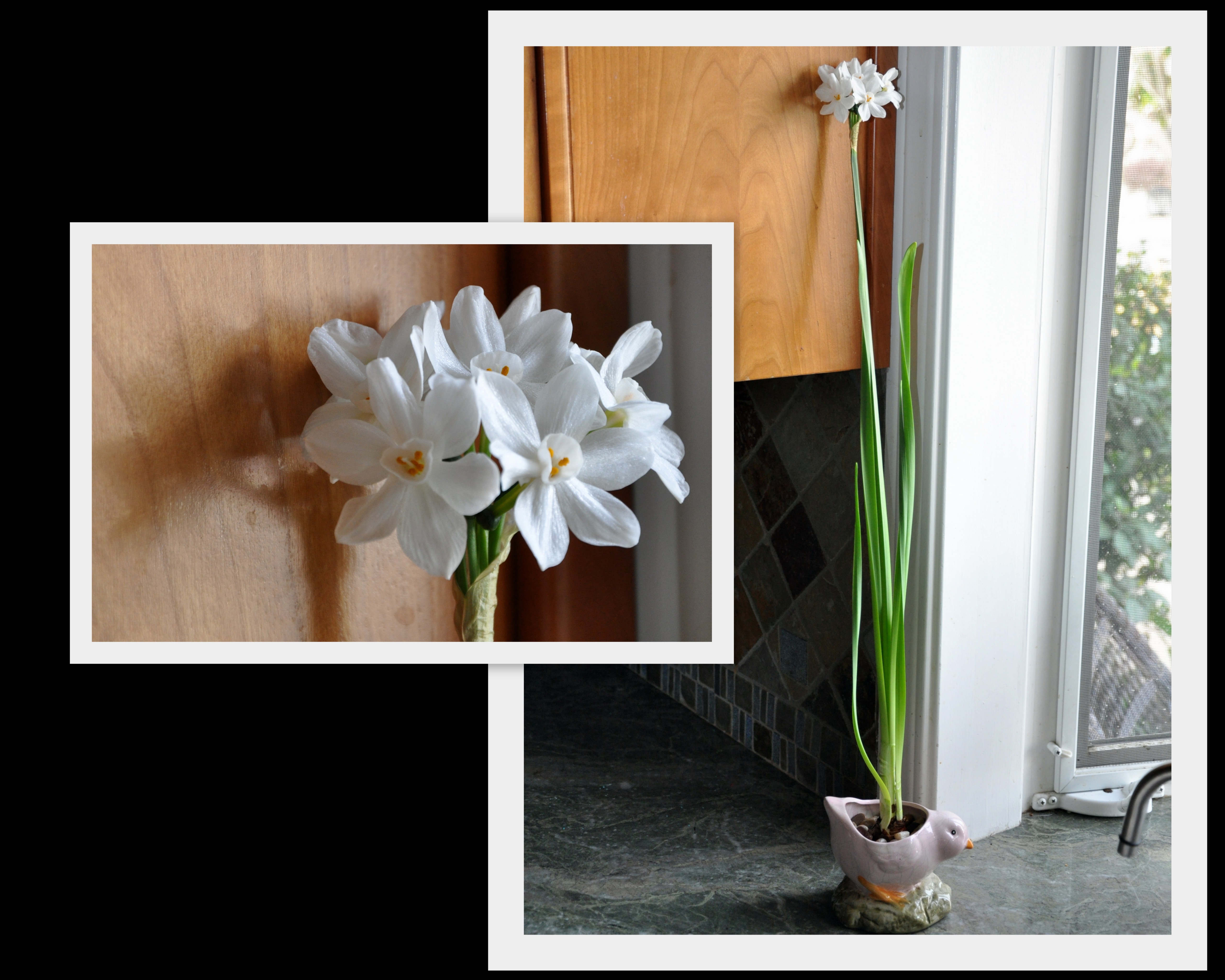
paperwhites in bloom

Paperwhites in the morning. Better than an alarm clock

A few of the paperwhite bulbs I planted indoors are in bloom, and they are fragrant beyond belief. It was the first thing I noticed when I opened my eyes this morning. Just one of the bulbs in our bedroom has flowered so far, but the intoxicating scent fills the room. I can see a few buds on the other plants, so I’m in for a sensory treat later in the week.

paperwhite showing roots 2-4-2015 4-09-10 PM

Closeup view of Narcissus Paperwhite roots

Note: I carried the vase outside for better light

Out in the kitchen, the scent greeted me again. If I were a bird or a bee, the message would be clear: I’m irresistible! That’s why my Latin name is Narcissus.

paperwhite in pink chick  2-4-2015 4-05-55 PM

Paperwhite and chick

The single bloom in my little pink planter makes me giggle. It seems improbable that the long, lean stem could remain upright, but so far, so good.

I will definitely be planting more of these indoors in the future. It’s been a splendid treat.

How about you? Do you ever grow bulbs indoors?

Heirloom Tomatoes: My Garden Darlings

If you’ve been following along, you know that I didn’t plant a single tomato plant this year.  Hard to believe, eh?

Self-seeded or Volunteer Tomatoes

Self-seeded or Volunteer Tomatoes

Last year my friend Doug gave me several varieties of Baker Creek Heirloom tomato seeds. I planted them in my City Picker but they were slow to grow. I hedged my bets with an organic nursery plant and finished off the summer with tomatoes to spare.

This year the heirloom tomatoes self-seeded one box over. Further, a variety of tiny cherry tomatoes flourished out of the bottom of the rotating compost bin.  Two additional plants showed up in the gravel walkway, a larger cherry tomato and another heirloom. What a bounty!

April 9, 2014

April 9, 2014

Tiny Cherry Tomatoes

mini cherry tomatoes

Mini cherry tomatoes

Since a speck of a tomato seed managed to sprout through a crack in the rotating composter, I felt compelled to let it grow. I staked the plant when it showed signs of surviving the season, and eventually it produced small, bright red fruit, just like you see in the grocery store. Of course the problem with most tomatoes from the store isn’t the appearance but the taste. These tiny tomatoes are flavorless. What a disappointment.

Cherry Tomatoes: The Sequel

cherry tomatoes

More cherry tomatoes

At the back of the garden, leaning up against the house, is another volunteer. This one produced larger cherry tomatoes, also a brilliant red. They’re a bit sweeter than the tiny cherry, but again bred for appearance and not flavor.

Baker Heirloom Tomatoes

heirloom tomatoes

Heirloom Tomatoes

Tomato gold! These are the sweetest, juiciest and most prolific tomatoes in the garden.  Honestly, there is no turning back once you’ve tasted them. What luck to have an entire crop of these delicious fruits.  I sliced open several today for seed saving, but plan to do all my vegetable seed purchasing from them in the future. In case you’re interested, check out Rare Seeds Baker Creek Heirloom Seeds.   

From there About page:

The family works extensively to supply free seeds to many of the world’s poorest countries, as well as here at home in school gardens and other educational projects. It is their goal to educate everyone about a better, safer food supply and fight gene-altered, Frankenfood and the companies that support it.

You can also follow them on Facebook.

What to do with all those tomatoes:

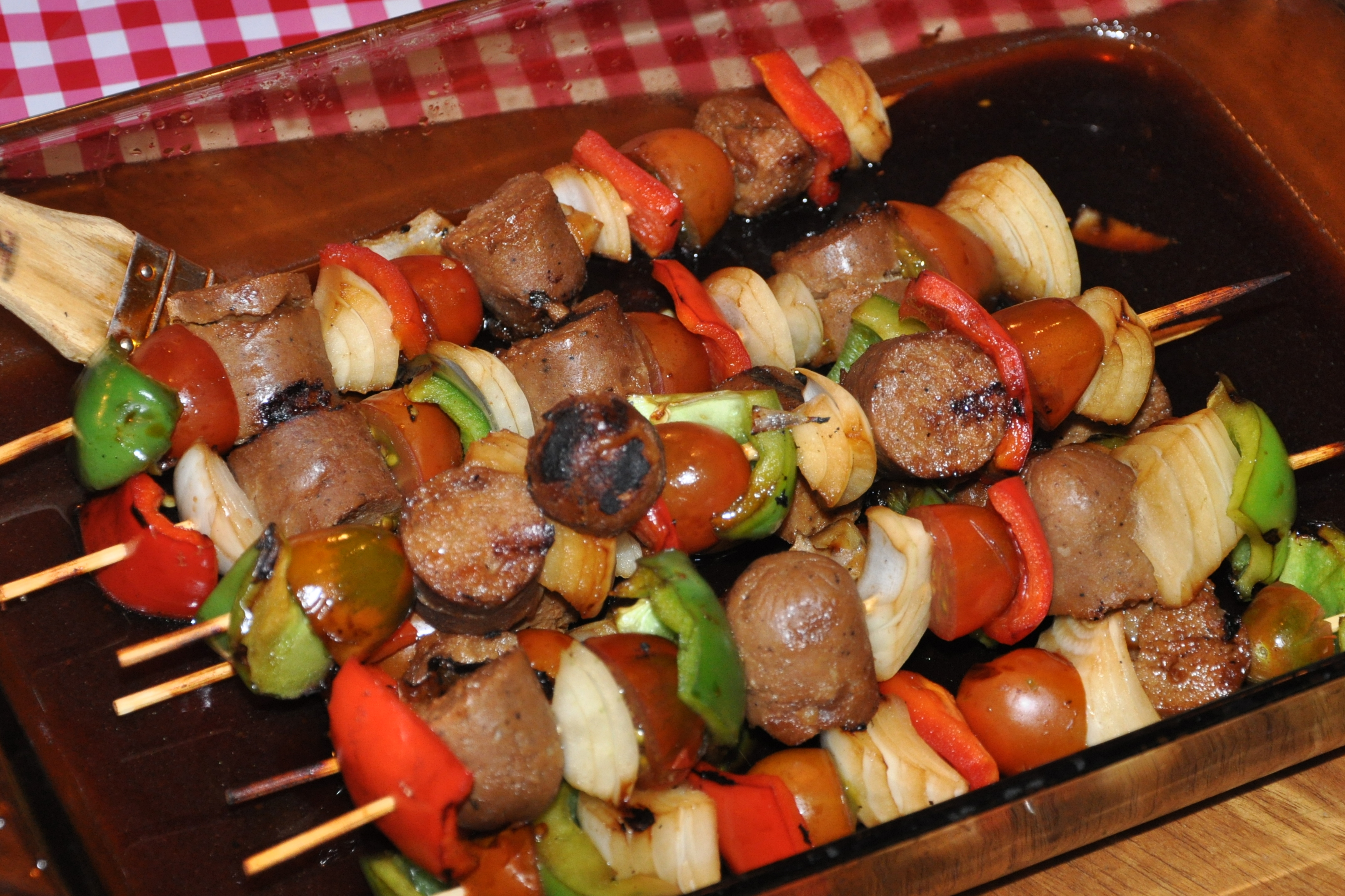
vegan kabobs

Vegan kabobs for the 4th of July

Made with tomatoes, onions, red peppers and vegan Field Roast ‘sausages‘.

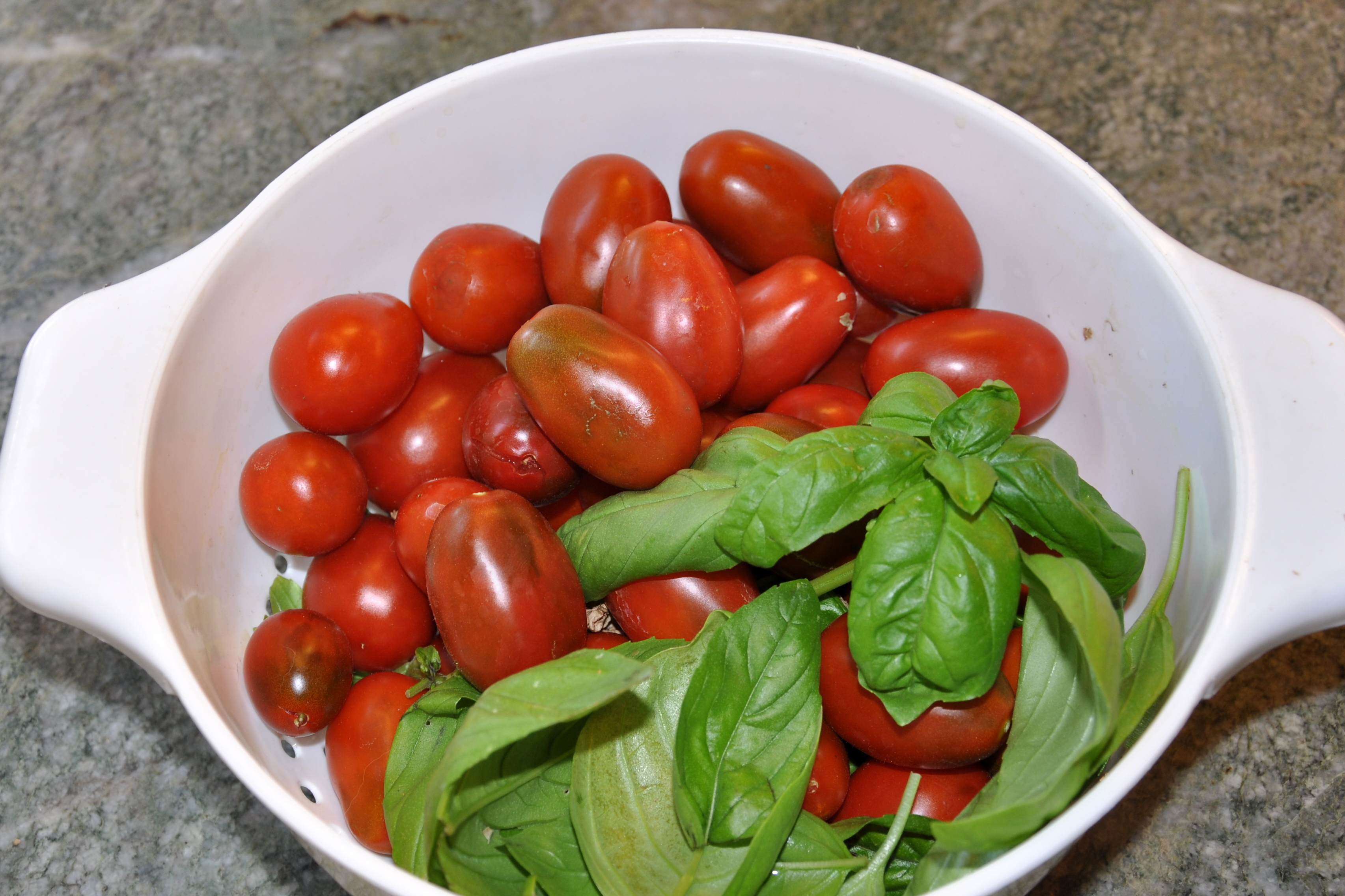
heirloom tomatoes and fresh basil

Fresh basil and tomatoes.

Eat them straight from the bowl.

frozen tomatoes

Freeze them, then turn them into salsa

Sarah the Gardener taught me that not only can you freeze tomatoes, but that the skin falls off of them when they’re thawed. Mike made several batches of tasty salsa. Here’s a similar recipe.

And of course share with anyone who’s interested.

How do you like your tomatoes?

tomato mozzarella basil salad

Tomato, basil mozzarella salad

Smiling Sunflowers

bee and sunflower

Incoming bee

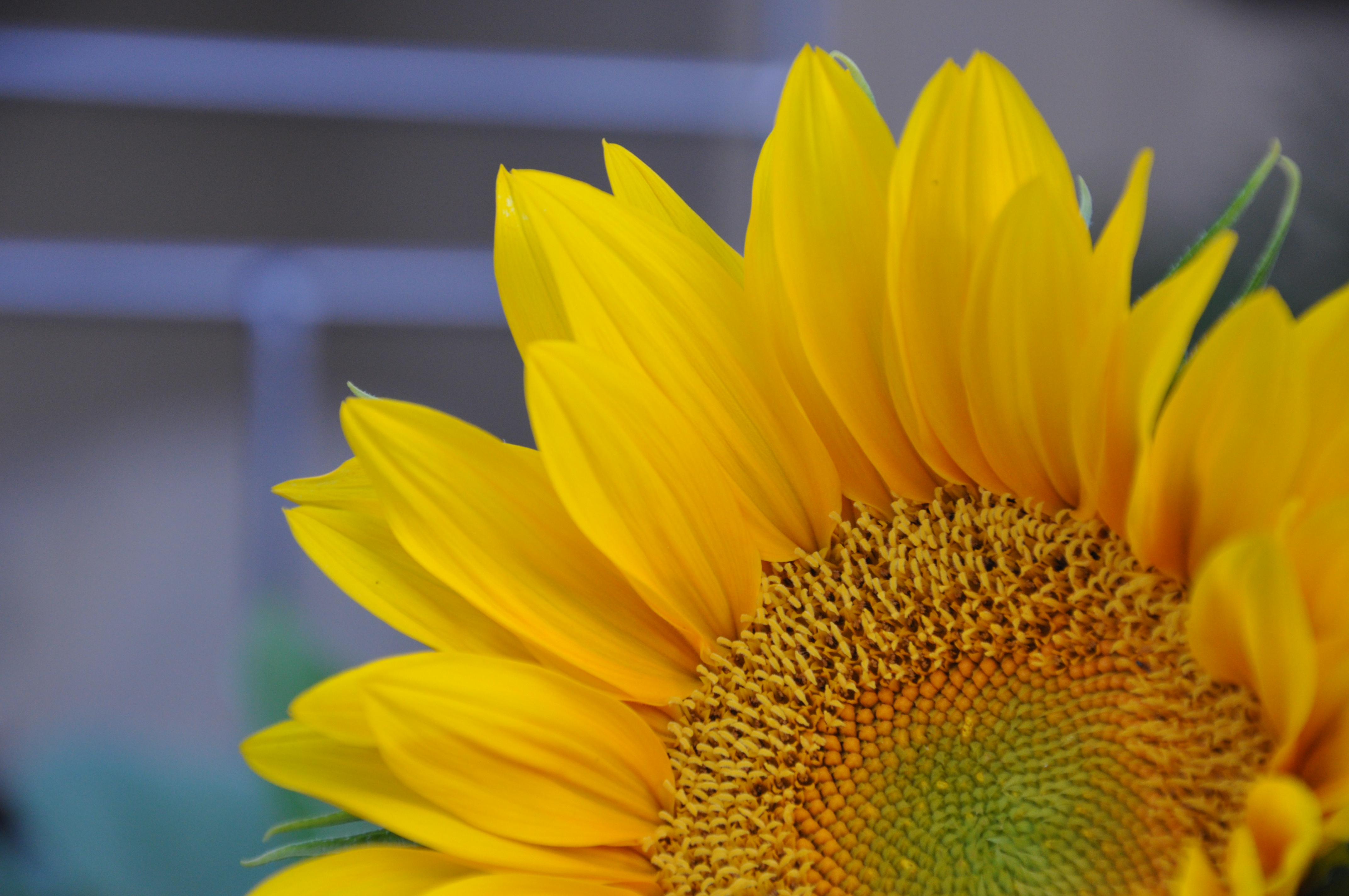
Okay, technically sunflowers don’t smile. The effect is pretty much the same, though.  When I look out my window they’re waving in the breeze, nodding their sunny flower heads and vibrating with bees.  Maybe I’m the one smiling, but either way it’s contagious.

sunflower and yellow bee

Bees move between the sunflowers and the pumpkin vines

The tallest of the sunflowers is my height: 5’10” or 177 cm. It was the first on the scene.  I planted a variety of sunflowers this year, so each one is a bit different. One of the flowers just reaches my knee.

pair of sunflowers

Brothers and sisters

knee high sunflower

Knee high sunflower

Yesterday I gently untangled a few overzealous pumpkin vines, redirecting them back towards the deck. As soon as the sunflowers go to seed, they’ll be overrun by squirrels. I don’t want my furry visitors trampling the pumpkins in their quest. Sunflower stems are sturdy enough to support the heavy seeds. They are not, however meant to withstand the added weight of a squirrel running up and down at snack time.

A little history:

Sunflower (Helianthus annus) is an annual plant native to the Americas. It possesses a large inflorescence (flowering head). The sunflower is named after its huge, fiery blooms, whose shape and image is often used to depict the sun. It has a rough, hairy stem, broad, coarsely toothed, rough leaves and circular heads of flowers. The heads consist of many individual flowers which mature into seeds, often in the hundreds, on a receptacle base. From the Americas, sunflower seeds were brought to Europe in the 16th century, where, along with sunflower oil, they became a widespread cooking ingredient. Leaves of the sunflower can be used as cattle feed, while the stems contain a fibre which may be used in paper production. – Wikipedia

sunflower leaves and bud

Sunflower bud, about a week before it bloomed

opening sunflower

Ready to meet the world

sunflower

Bronze-centered flower

Here’s a story that will leave you smiling like a sunflower:

The Fukushima Sunflower project is now following the lead of Chernobyl, and fields of sunflowers are bursting into bloom across this contaminated area of Japan. Volunteers, farmers, and officials planted the flowers so that they can absorb the radiation that leaked into the soil from the region’s damaged nuclear power plant. There are concerns that the contamination is mainly in the topsoil and that the roots of the flowers are too deep to absorb it. Time will tell whether this project will be a success.

Officials are hoping that the local economy will benefit as much from the project as the environment. They are hoping tourists will come back to the region to admire the sunflower fields. Due to this magnificent flower’s ability to assist in getting rid of nuclear waste, it has become the international symbol of nuclear disarmament.

I’m smiling. How about you?

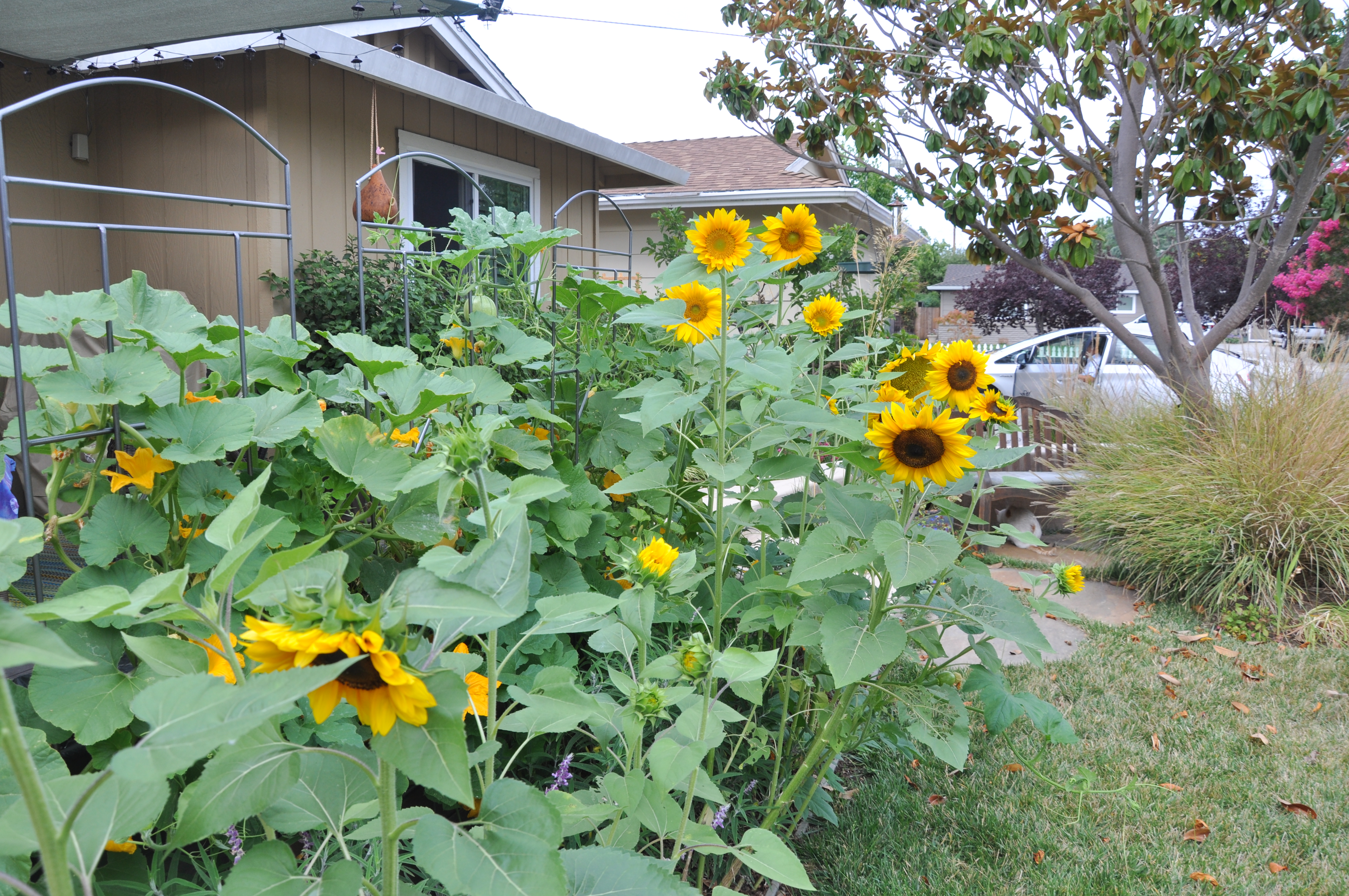
sunflowers near walkway

Sunflowers along the deck

DSC_0117

Pumpkin’s Progress: Growing Like a Weed

Pumpkins grow like weeds. That’s a good thing. Within days of planting, flat, white seeds crack under the warm soil and  sprout. Cotyledons give way to true leaves and off they go. Leaves and stems shoot up so quickly that if you stood still awhile, I’m sure you could see them grow.  I’m a fan of every stage.

The size of the leaf is a good indicator of the size of the fruit to come.True leaves are prickly and so are the stems, which are hollow. They remind me of large, green drinking straws. Stems and leaves lead you to think you have a small shrub on your hands, but then strong, curling tendrils appear and the plant takes off down the garden path, up the trellis and around the bend.

A decade ago, before we knew a thing about growing pumpkins, a self-seeded vine grew across the path, into a  garden bench, and out the other side. It eventually set fruit, a lovely, heart-shaped pumpkin that hung from the garden bench door. We left the door open the rest of the season, delighted at the rambling pattern and the speed at which it grew. My boys were 3 and 6 that year, so you can imagine the daily joy of discovery. We headed out back in those early fall days to see what those pumpkins were up to.

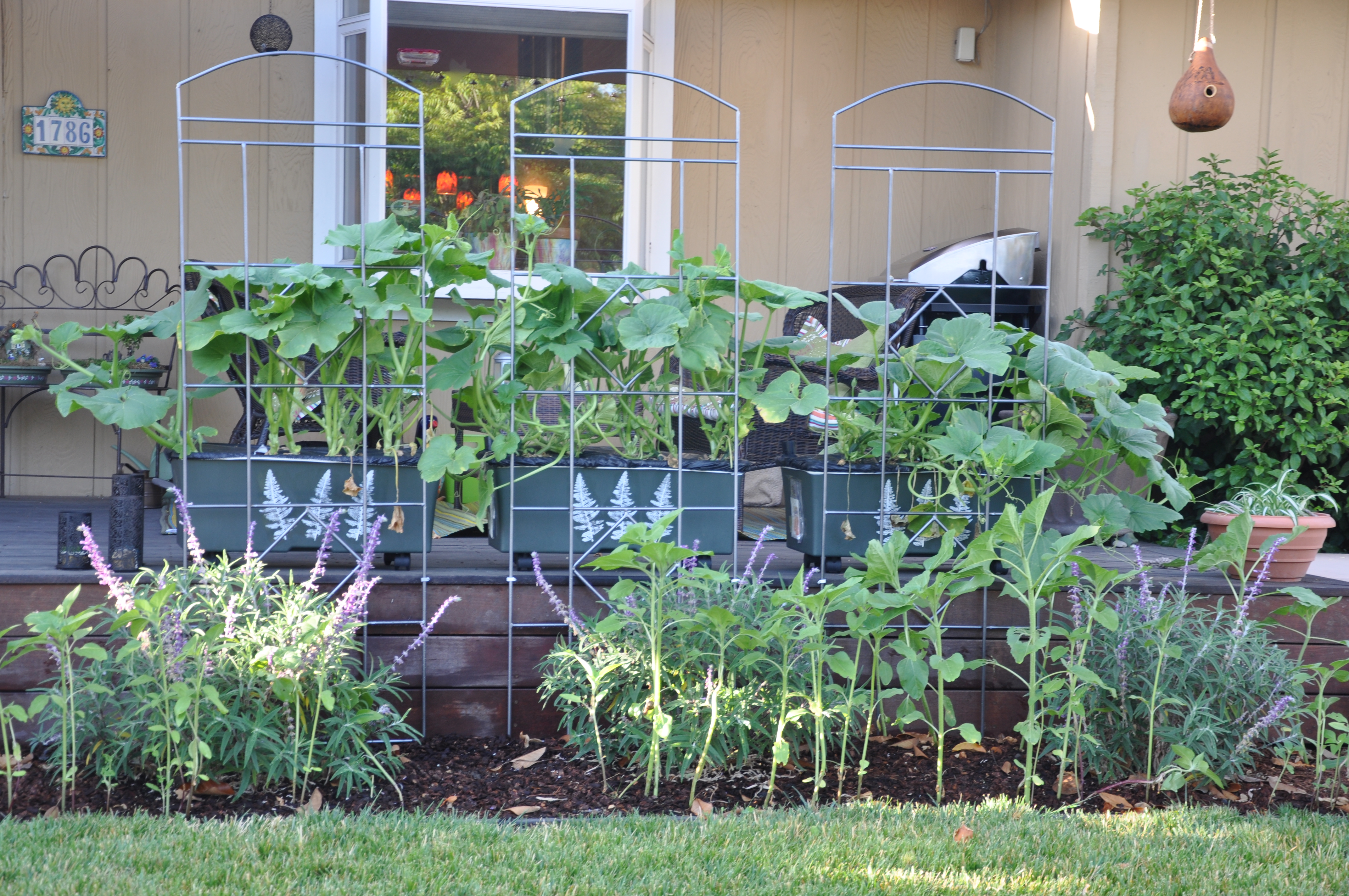
It’s been such a pleasure growing this year’s crop in EarthBoxes™. They’re right outside my kitchen window, so I see them several times a day. We sit on the deck in the evenings and on weekends, and now feel like we have a ‘fourth wall’ on deck. The pumpkins and sunflowers together formed a beautiful screen.

Here’s a look at their progress since early May.

May 3, 2014

May 3, 2014

My stenciled EarthBoxes™ planted with three types of seeds: an assortment of saved seeds from last year (the mystery box) along with  Botanical Interests ‘Jack-o’-lanterns’ and ‘Luminas’.

May 11, 2014

May 11, 2014

Hearty seedlings in just one week.

May 30, 2014

May 30, 2014

About thirty days in, and look at them grow. You can see the start of the sunflowers near the lawn, also started from seed. I’ll write more about them later this week.

June 13, 2014

June 13, 2014

I added trellises to allow the vines to grow up as well as out. The birds land there, before diving in to the sunflower leaves. Why won’t they eat the squash bugs instead?

June 30, 2014

June 30, 2014

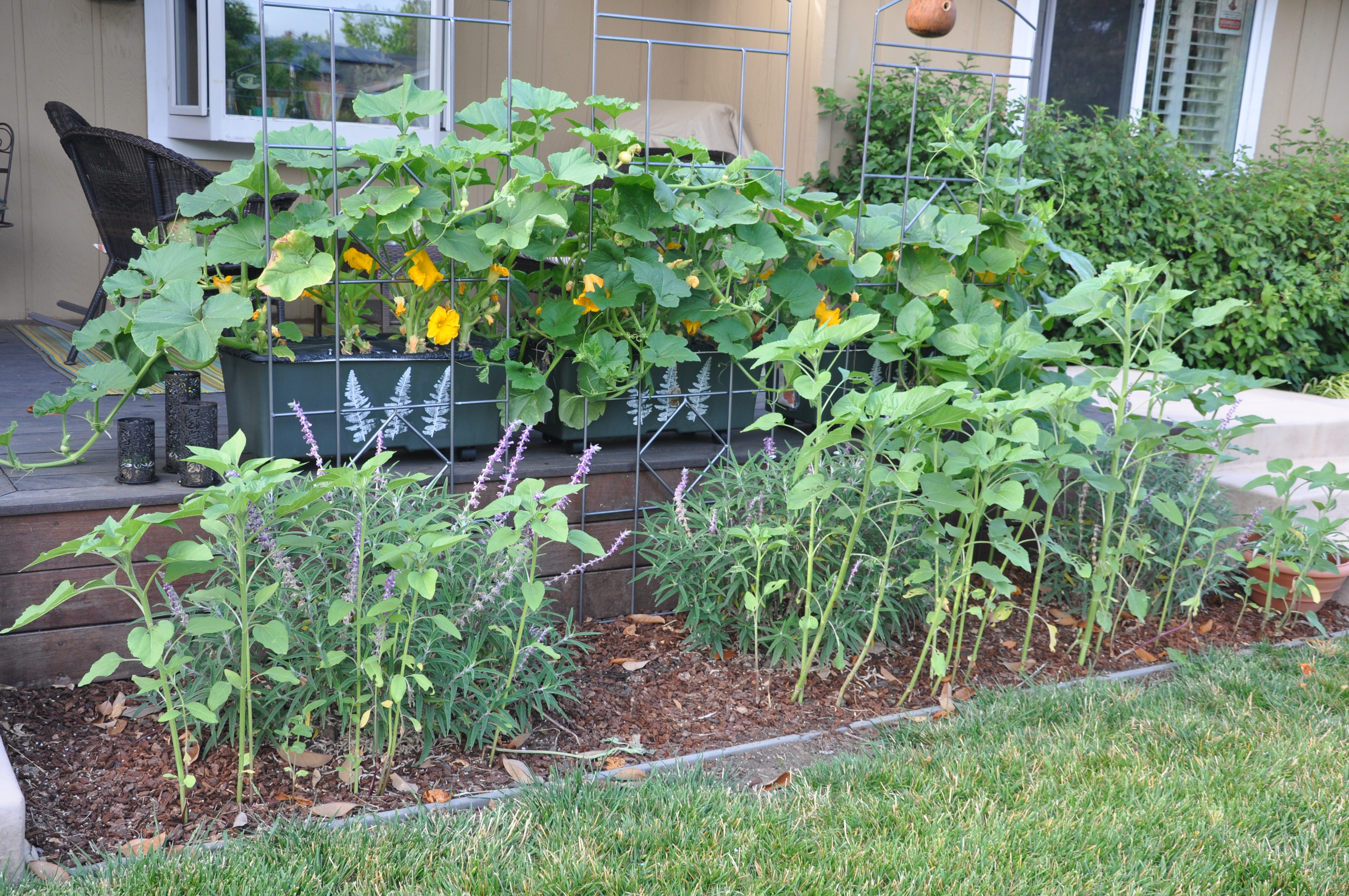
Golden flowers attract bees and wasps. I love spending time out there in the morning before the heat descends. It’s a challenge photographing the bees. They move in and out of the flowers with speed and efficiency. I still try though. I have about 75 blurred photos, but I refuse to give up.

July 4, 2014

July 4, 2014

The vines got a bit of window dressing for Independence Day. They’re beautiful on their own, but a little red, white and blue called attention to their magnificence. They’re wilting in the heat in this picture, but a long drink after dusk set things right.

At the risk of stating the obvious, I love growing pumpkins. Thank you for following along with my gardening obsession.

For the Love of Pumpkins

I love my pumpkins. After a good night’s rest I’ve decided that I won’t take it lying down.

Their demise that is.

In case you missed yesterday’s post, my nemesis the squash bug recently moved in. You can catch up here.

pumpkin female flower with bee

Female flower at the ready as a bee swoops in

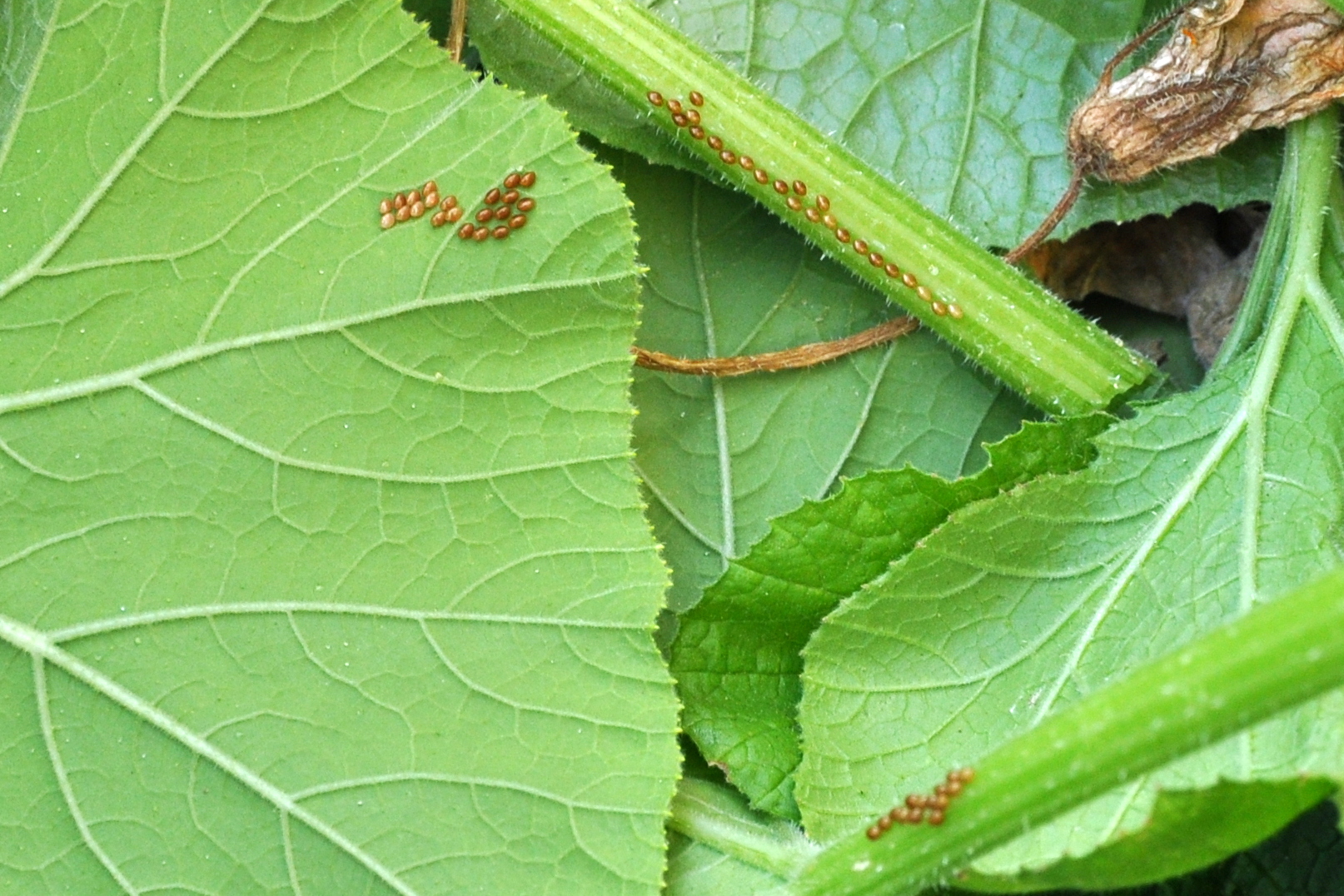
Actually I did take one thing lying down: pictures. How else would I get a shot of the underside of the leaf and the attached eggs?

squash bug eggs

Squash bug eggs on the underside of a pumpkin leaf

squash bugs on stem

Leaves, tendrils, flowers and…more eggs

In a word, yuck!

I laid flat on my back and took photos looking up. Fortunately, no one walked by at the time or they surely would have called the paramedics. Amazingly, I managed to get back up, then spent the better part of an hour looking at the underside of every leaf on the pumpkin vines.

That scrutiny lead to another discovery: eggs on some of the pumpkin plant stems. In the end I’d scooped several adult bugs into my dry bucket, along with infested leaves and stems. I removed dead or browning leaves as well as spent flowers, making it easier to detect the adult bugs  They were happy to crawl on my glove and from there they went into a bucket. I dumped the infested leaves and bugs into the curb side green waste site, and within an hour the ‘green monster’ came by and scooped the entire pile into the back of the truck. This was another tip from one of the sites: rip them out and compost them.

pumpkin infested stems and leaves

Infested stems and leaves

The lovely Pauline at The Contented Crafter looked up companion plantings for me, something I hadn’t thought of nor come across in my reading. Ah, the web is vast indeed.  There is enough room in the boxes for additional plantings so I’ll give it a try.  Nasturtiums unfortunately need opposing growing conditions, but dill might work. I’m going to look for some at the garden center.

It’s unlikely that I removed all the eggs this morning. I’m pretty sure others still lurk on the vine. With daily checks, however, I hope to slow them down and possibly keep them at bay.

Stay tuned.

pumpkin vine trails deck

Trailing the deck

Mystery Solved: Love-in-a-mist

Pauline noted that ‘every garden needs a bit of mystery’ but for now I’m happy to have this one solved.  I posted this photo last week, and asked for help identifying it. Extensive Google searches were no help.

mystery flower

Mystery flower

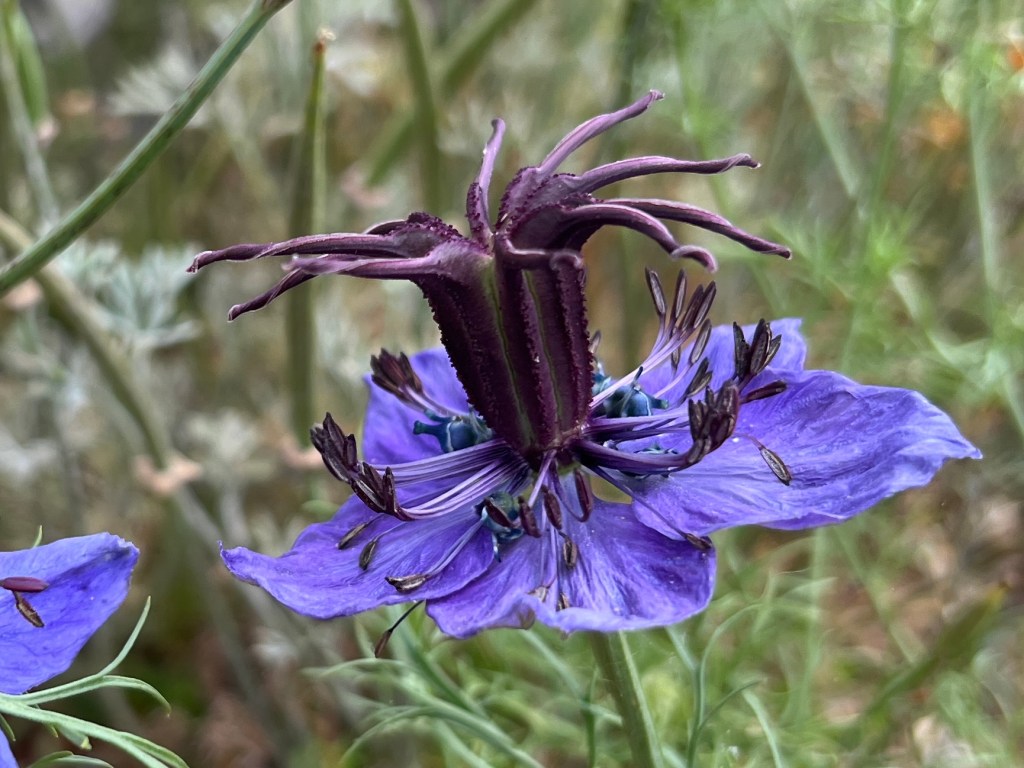
Three cheers for my blogging community! Cathy of Words and Herbs thought it might be ‘Nigella.’ Anne of Anne Lawson suggested ‘love-in-a-mist.’  They’re both right.

These wonderful, self seeded flowers are Nigella damascena – Love-in-a-Mist.   Thank you both.

purple love-in-a-mist

Nigella damascena in bloom and going to seed

buds and bloom

Buds and Blooms

California Avocado Cupcakes

Over the weekend I sampled a delicious avocado cupcake at Sunset Celebration Weekend.  I meant to share it with you yesterday. The cupcake and the frosting both contain avocados as a healthy fat alternative.  You can download the recipe at the California Avocado Commission. Please let me know if you give them a try.

Screen Saver, Garden Style

If you’re looking for a screen saver for your tablet or PC, I’m afraid you’ve come to the wrong post. If you’re a bit of a klutz like me, however, this post is for you.

I’ve walked into our screen door on more than one occasion, with the full force of my being.  I’m always completely stunned each time, as if it’s never happened before.  Last summer my son’s friend hit the screen with such force that it tore out of its frame.  I felt ever so slightly vindicated. His friend wasn’t hurt of course, and they both laughed it off, but our screen has taken a real beating.  We’ve had to replace it at least twice in the past several years, and didn’t even bother to repair the current one when the lower corner came loose.  The cats immediately claimed it as their own.

After the most recent screen crash, my husband applied a strip of black electrical tape at eye level and called it a day. Though lacking in aesthetics, it was a brilliant idea. It worked.

I’ve tried attaching clever little pins in the past or stickers from my stash, but they never stay put.  Then I found these:

magnetic screen savers

Magnetic Screen Savers

They’re mirrored magnets.  You place one on the inside of the screen and attach the mirrored magnet to the outside.  I think they’re fun in a kitschy sort of way and they get the job done.

Problem solved: screen saver, garden style.**

**Disclaimer: they don’t work when you have a cat snoozing across the door’s threshold. =^..^=

cat in the doorway

Have you every walked through a screen door? You can tell me. I promise not to share it with anyone other than the internet.