WindowAlert: Protect your Songbirds

We invite birds to our garden in a variety of ways using fragrant flowers, flowing fountains and feeders.  To that end, it was disheartening when the occasional feathered friend mistook our window for the sky.  That unmistakable thud left an indelible mark on our soul.

The good news: by applying WindowAlert™ Decals, collisions are largely a thing of the past. According to their site:

WindowAlert is a window decal that may be applied to home and office windows. The decals contain a component which brilliantly reflects ultraviolet sunlight. This ultraviolet light is invisible to humans, but glows like a stoplight for birds. Birds have vision that is up to 12 times better than that of humans. WindowAlert decals help birds see windows and avoid striking the glass.

The decals are removable and re-positionable.  The static cling variety can be cleaned by rinsing in warm water as necessary.  I purchased the Decorative Leaf Decal, but they are  available in a variety of shapes.

Support your local garden center or nursery if you can.  I shopped at Los Gatos Birdwatcher in our community.  You can also buy directly from the WindowAlert site.

Rehabing the Swing

In need of some TLC

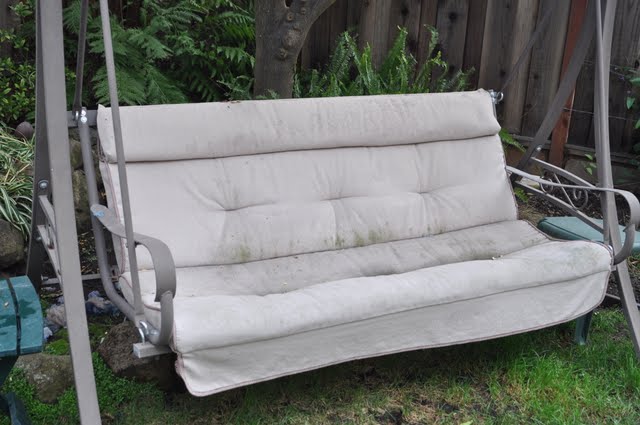
My readers know how I love my swing.  Sadly, it took a tumble in a wind storm, flipping heals over casters into the rock wall. The lower frame is sound, but that brief flight and subsequent landing tore one inch gashes into the canopy frame.

Before dismantling the canopy frame this winter, I thought it was simply bent and needed straightening.  Now that we’ve taken it apart, the mechanical fix is more complex.

The no-cost fix is simple: we’ve relocated the swing to the shady part of the garden, where it now rests under the orange tree.  Who needs an artificial canopy when nature has provided one in my backyard.

The seat cushions are a different story: they need a good overhaul.  I used an old, flocked table-cloth to cover the cushions off-season and it worked well.  Then spring rolled around and the neighborhood squirrels decided it would make excellent nesting material.   They had that cloth de-flocked in two days!   I get lazy in the colder months so between the unceremonious toss of the swing and the table-cloth dismemberment, I simply turned a blind eye.  Last summer I put a towel over the cushions, and made do with the bent top.  Neither one had any affect on my impromptu nap schedule.

Now that the yard is spruced up, my swing looks neglected.  It resembles a dorm room couch, minus the cookie crumbs, but with plenty of mold to give one pause.

Time to call on my sewing skills.  I’ll let you know how it goes.

Lavender Caper

"...Here's flowers for you: Hot lavender, mints, savory, and marjoram." The Winter's Tale

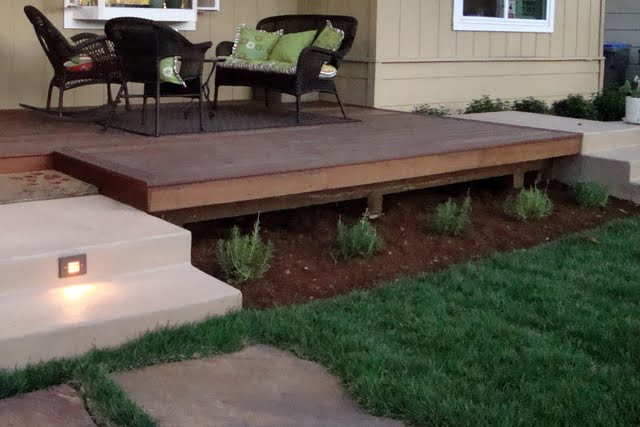
It’s a mystery. Two summers ago we planted a row of lavender along the front deck. Five small plants with big potential. Within a few months they would be peeking over the edge of the deck, covered in fragrant blooms.

The plants doubled in size, supporting each other as they grew out and up. They bumped up against the lawn; spilled on to the stairs. Except for one. One of the five plants was still below deck. Like the runt of the litter, I reasoned, the smaller plant needed more time.

My well-honed sense of symmetry was eschew; I wanted each of these plants to grow into one cohesive row. The plant seemed healthy. It branched, it flowered, and it grew. Every few days I would lean over the edge of the deck, lifting its branches skyward. Perhaps this lovely lavender had simply lost its way.  “Stand tall,” I encouraged; that space is yours to fill.

I sought the advice of a couple of garden experts. One suggested it was something in the soil. I asked if it was possibly a dwarf variety but they didn’t think so. Nearly two years later the plant is still small.

I’m pragmatic when it’s time to pluck annuals from the earth and I can thin seeds and pull weeds with impunity. Giving up on an established perennial, however, feels like the gardener’s equivalent of throwing in the towel. If only the plant would send me a sign by turning brown, falling over or displaying a visible blight. Then I would be ready to let it go.

June, 2010

February, 2012: One of these plants, is not like the other...

Dwarfed by the Others

California Gold

Tall, graceful golden grasses grace the garden.  I’ve tried capturing that movement with my still camera for a year.  While poking around with my camera yet again, I decided to record 10 seconds of movement and song instead.

Here is my own little homage to our beautiful golden state.

Breezy

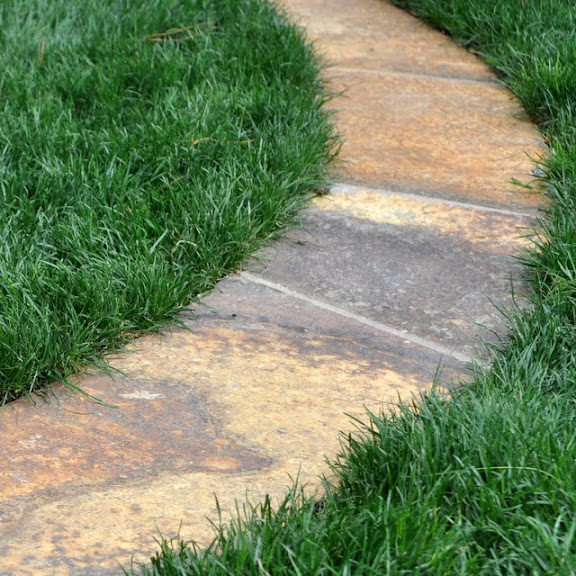
We inadvertently matched the walkway to one of our cats

Golden cats abound: the neighbor's cat blends in

Golden Field Stone

X Marks the Spot

Nestled below the Magnolia

Storm's Brewing

Second Chances

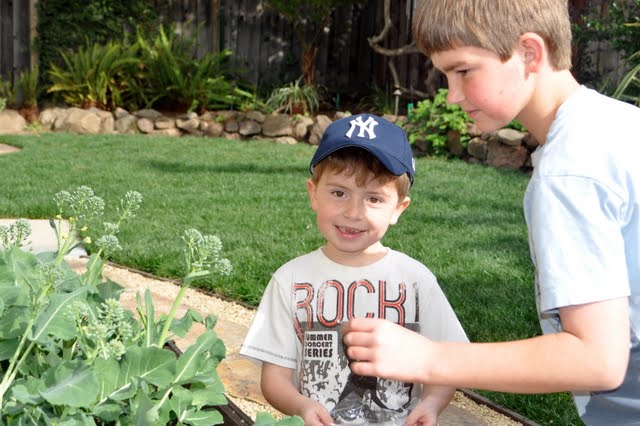
There is no accounting for taste.  It’s one of life’s mysteries.  I’ve raised two sons in one household with identical  food choices, but only one of them  loves fruits and vegetables.  I continue to re-introduce different foods, he continues to eschew most of them.   Broccoli is not on his short list.  He says it’s too bland.

Today, he turned a corner!  He invited a young friend to stop by to see the new garden.  Together they swept gravel from the path.  With joy and pride he trimmed small florets of broccoli to send home with his mate.   He then nibbled on one of the organic florets and pronounced: “I like it because it is bland.”   Three cheers for second chances and the power of a garden.

Reading the Fine Print

When my nine-year-old son discovered Fruit Cocktail trees, he could talk of nothing else. I’d never heard of them till our neighbor shared her plans to plant an edible garden. For the uninitiated, a “fruit cocktail” is a multi-grafted fruit tree; one tree, four varieties of fruit.

These trees are a boon for suburban gardeners with tiny lots. Another plus is the harvest season. The fruits mature at slightly different times extending the bounty gradually over the season.

Last spring we had beautiful fruit, but we were ill-prepared for nature’s scavengers. The squirrels and rats picked the tree clean in a day. We’re more prepared this year and will “net the tree” as soon as the flowers begin to fruit.

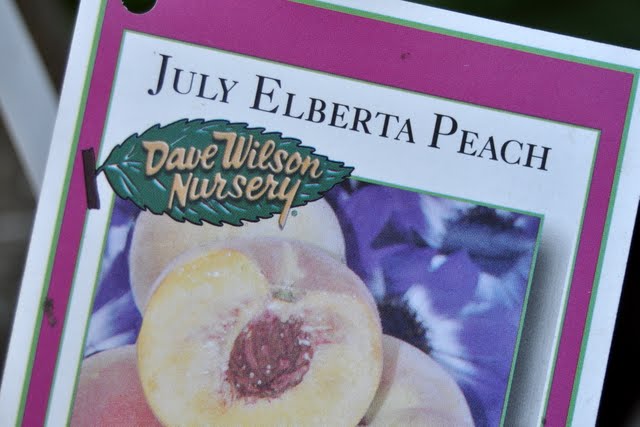
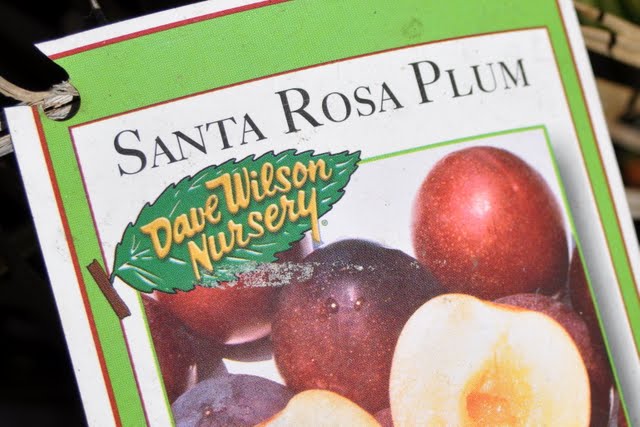
I photographed the beautiful blooms today, then removed the identifying tags. Reading the fine print on the back of each one made me smile.

A few gems:

“Self-fruitful in most climates.”
“Excellent pollenizer”
“…some tartness near the skin.”
“Tangy when firm-ripe, sweetest when soft-ripe.”
“Reliable, heavy-bearing tree.”

Blooming Apricot

Blenheim Apricot: Dave Wilson Nursery

July Elberta Peach Bloom

July Elberta Peach

Santa Rosa Plum Bloom

Santa Rosa Plum Bloom

Fantasia Nectarine Bloom

Fantasia Nectarine

Ah, fertility!

We purchased our Fruit Cocktail at Almaden Valley Nursery (thanks Doug!)
Wholesaler: Dave Wilson Nursery

Garden Jewels: Dress to Impress

The well dressed garden always looks smart.  Unpretentious, she boasts the latest colors and styles.  Last season’s fuchsias look timeless tucked neatly in front of hydrangeas.  Lacy ferns appeal to her feminine side, always graceful and light.

Her classic beauty lends itself to the yellow of a rose, evoking the earthy scent of lemon wafting through the air.  Grassy skirts compliment her regal stature, with a showy crown of alyssum just for fun.

The well dressed garden knows how important it is to accessorize.  Accessories take the garden from now to wow.

She’s agreed to share some of her favorites here, gifts from cherished friends.

Even a robin would buy a home from this lovely gift-giver

A ruby-red heart from a grammatical guru

The Happily Ever After Woods

Soleada de un viejo amigo, querido

It's True

Garden Log: February 22, 2012

Small Harvest

With temperatures in the mid-seventies this week, we’ve been spending a lot of time outdoors. The official start of spring is still four weeks away, so I know this weather won’t last. It was a great opportunity to accomplish some garden chores.

Harvesting:

I cut the larger broccoli crowns, along with the flowering plants that bolted last week, and left the smaller florets behind. With luck, we’ll have a few more servings before all plants go to seed. I soaked the cuttings in warm salt water before wrapping them in a towel to crisp in the fridge.

Pruning:

Following my friend Doug’s instructions and the notes I found on-line, I pruned our two-year old, “four-in-one” fruit tree. The soft buds are plump on all four grafts and a few have started to flower. I put some of the cuttings in a vase indoors and will recycle the rest curbside. San Jose’s excellent recycling program converts green waste into mulch!

The aforementioned fruit tree was my son’s 10 year birthday gift, so the pressure to prune it properly runs high. He refused to watch, even though I read to him how important pruning fruit trees is in the first four years to establish a strong tree. It was fun to read the origins of the phrase “nipping it in the bud.”
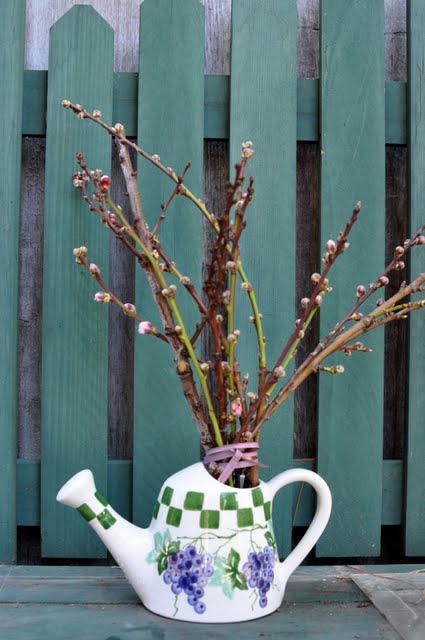
Four-in-one Fruit Tree Buds


Transplanting:

My husband helped me drag the water-logged roses to the front deck where we replanted them in a pot. We displaced the  plants when we installed the patio out back so I was happy to find them a home. I’m sure I’ve disappointed a few squirrels.  They dig up the planter every few days leaving dirt all over the deck.  Since they don’t stay to clean up the mess they don’t have a say in the matter. The roses will soon bloom, discouraging all that plunder.

Maintenance:

We store our emergency/earthquake kit under a potting bench in two air-tight containers. I knew it was time to update the water along with a few other items, but for all my love of gardening, I’m a bit squeamish about spiders. Mike pulled out the bins and stacked them on the table so I could empty, sort, clean and replace items as needed. I washed the blankets, pillow cases and the canvas tote and made a note to replace the water boxes and a few batteries. Otherwise it was in decent shape. As I went to replace the oil cloth cover I discovered one of the largest, hairiest garden spiders I’ve ever seen. We stood and debated its livelihood for a moment: I knew it was alive; my husband said dead. I carried the cloth to the far reaches of the garden to relocate the arachnid. As we stood staring at it, one of the cats crawled under the cloth and then jumped out the other side. The two of us jumped in unison, momentarily convinced that “Sir Harry” was out for blood.

Sir Harry

Next week: a trip to Almaden Valley Nursery to source and price some plants.
My Beautiful Back Yard

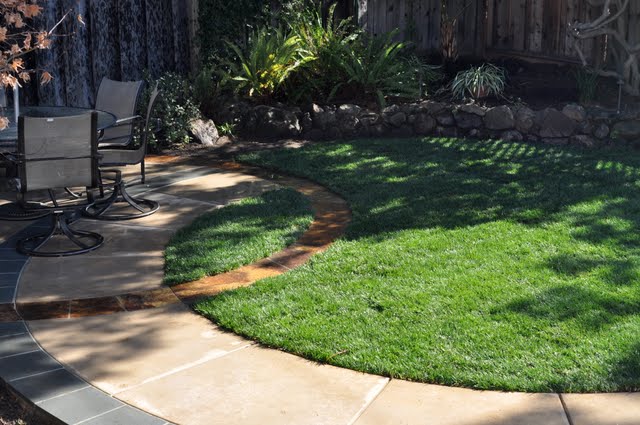
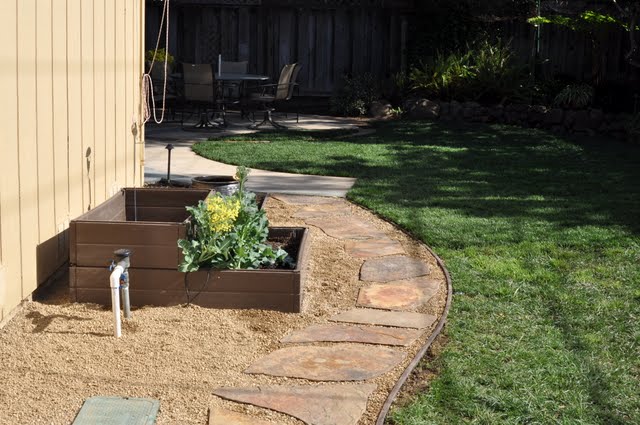
The Natural Bridges landscaping crew put the finishing touches in place on Friday. In a few weeks we will re-plant the area under the living room window and in the corner by the steps. Otherwise, its done!

The weather is glorious so we’re outdoors enjoying our new space. I’m still pining for some seasonal rain, while at the same time enjoying what nature is offering.

Intersecting Circles and Paths


Long view of the raised beds and the patio


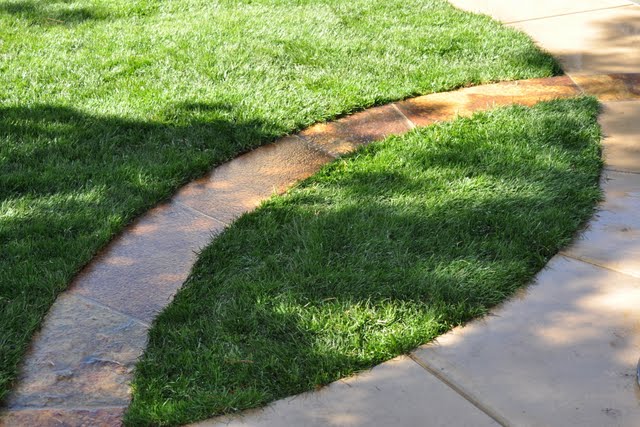
"Cat's Eye" shape, one of my favorite elements of the design


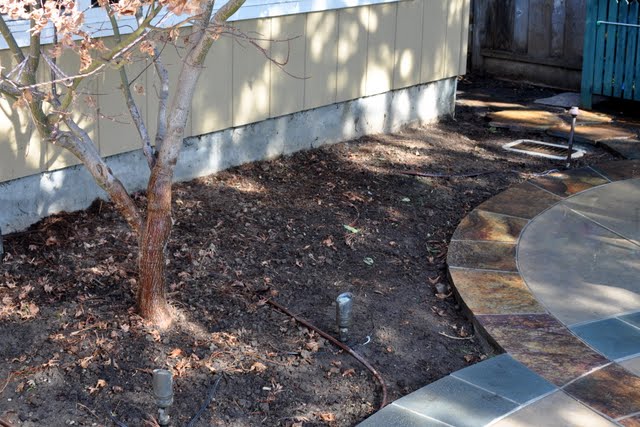
This area will be re-planted in a few weeks

A small bare patch for future annuals


The Broccoli Bolted

Broccoli

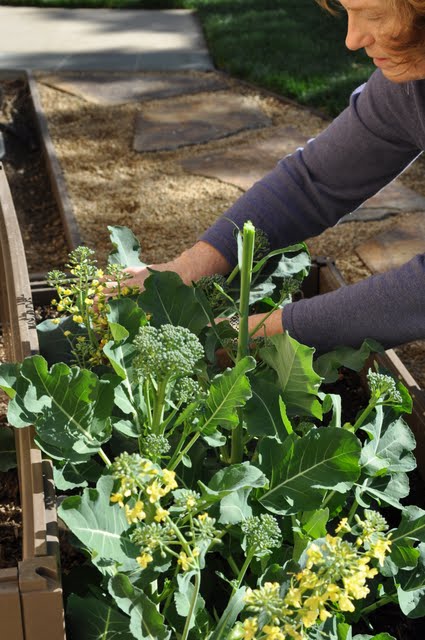
It didn’t run down the street or anything like that, but in garden parlance, it bolted.  This can happen for a variety of reasons, I’m just surprised that it happened so fast.

My vegetable plot is tiny so every plant counts.  With only four plants, I certainly wasn’t producing much more than a meal’s worth of this delicious green. Things were looking promising until this week, when each plant took a different turn.

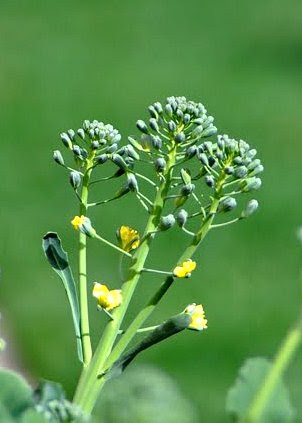
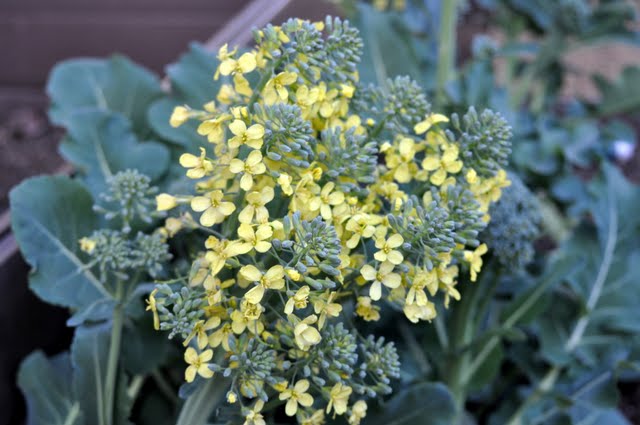
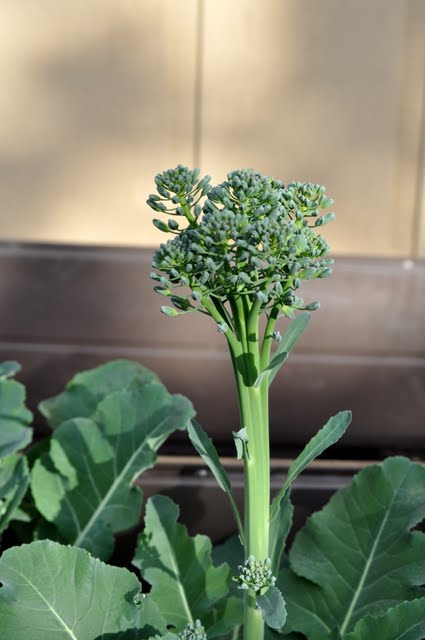
Two of the four remaining plants flowered.  Yes, yes, it’s pretty and all but now it’s no longer edible.   One of the plants suddenly shot up tall and straight.  My husband asked, optimistically if was broccoli rabe, a distant and reviled cousin, seeking to explain the unusual appearance.

Tomorrow I’ll harvest the sturdier stalks and will  hope to get some additional florets from what remains.  According to this Growing Broccoli Guide I should:

Cut fall heads with less stem attached, leaving as much of the plant intact as possible to produce smaller side shoots or “florets,” which you can harvest until a hard freeze. When you bring broccoli indoors, soak the heads in lightly salted water (1 to 2 tablespoons (15 to 30 ml) of salt per gallon (4 l)) for 30 minutes before cooking or storing. This will drive out any cabbage worms hiding in the heads. Broccoli will keep in the refrigerator in a plastic bag for 7 to 10 days and can be eaten fresh, and it freezes well for future use.

Next year I’ll try a different winter crop.  In another twenty years, I’ll have this gardening thing down.

Too Flowery....

Too tall...

Just Right!