Sunflower Power: Still Number One

I’m a firm believer in one of the following two clichés:

  • Variety is the spice of life.
  • Familiarity breeds contempt.

Can you guess which one?

Emerging Sunflower

Emerging Sunflower, 2013

sunflower 2012

Sunflower, 2012

Sunflower going to seed 2011

Sunflower going to seed, 2011

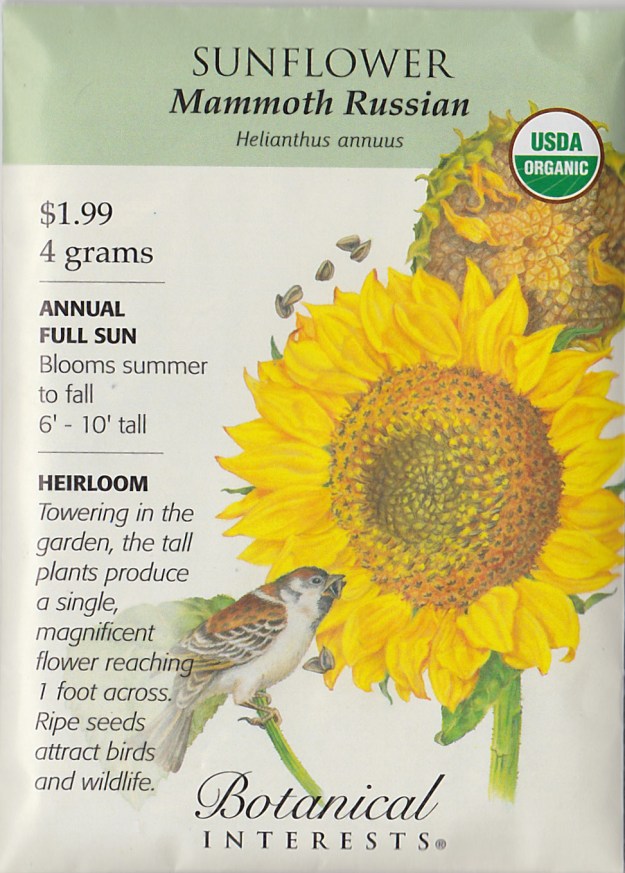
sunflower packet

Hope blooms from a packet of seeds

Did you guess?

I love the variety a garden affords. When you live and play in California soil, variety abounds. That said, I have three garden favorites that appear year after year: pumpkins, tomatoes and sunflowers.

My top three favorites never breed contempt. For over a decade now, sunflowers make the list. One tiny seed leads to a magnificent flowering plant, growing a majestic 5 – 12 feet (1.5 to 4 meters) or more. As they grow, they attract  beneficial insects.  They’re a huge favorite with the bees.  Sunflowers produce a mass of seeds which we generally ‘offer’ the squirrels at season’s end. The bright yellow flower is my favorite anyway, so I’m happy to share the remaining spoils.

How about you: variety, familiarity or a little of both?

sunflower collage 2013

Sunflowers, 2013

Also from gardeningnirvana:

My Secret Garden

secret garden girlThe Secret Garden, published in 1910 by Frances Hodgson Burnett, is noted as ‘one of the best children’s books of the twentieth century.’  I don’t know if I actually read it as a child, but the idea of a secret garden has stayed with me always. Who doesn’t like a good mystery?  Throw in a secret key and a beautiful garden and you’ve got the makings of a rich childhood fantasy.

Earlier this year I discovered a beautiful line of crafting paper by graphic 45 based on Burnett’s book.  While I was purchasing my own sheaf of paper in California, Boomdee was doing the same in Edmonton, Canada.  I just know they were thinking of us when they designed this nostalgic product line.

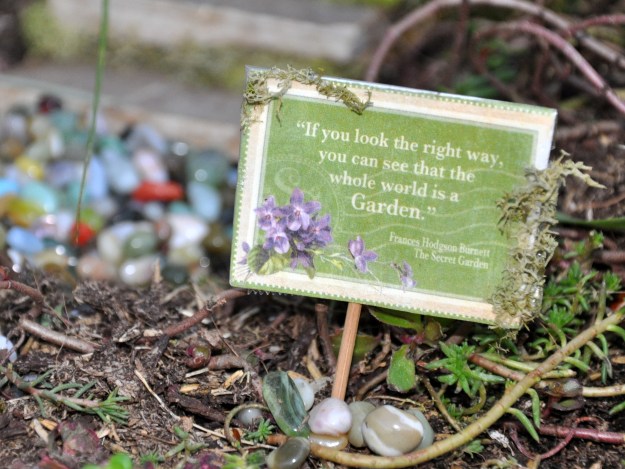
Secret Garden Quote

Secret Garden

Paper intended for scrapbooks doesn’t usually end up in the garden.  For a variety of reasons (well one really) paper and water don’t mix.  I decided to buck the trend, however, and figure out a way to combine my love of tiny gardens, secret gardens, crafting paper and children’s lit.

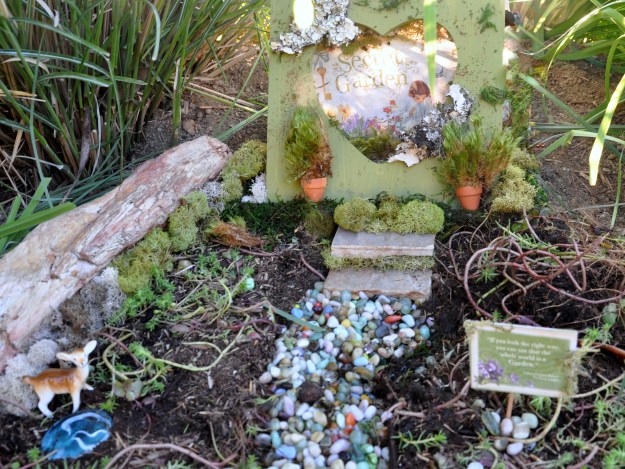
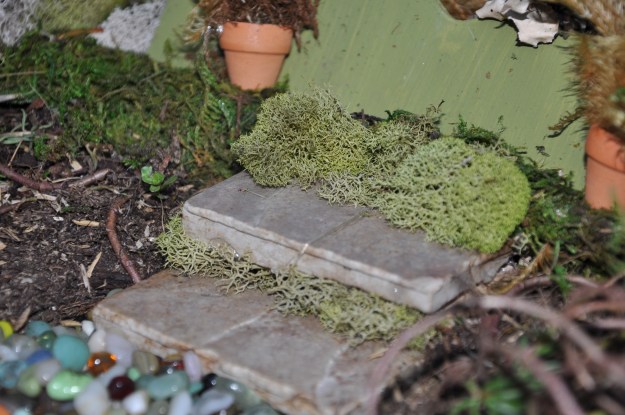
Using a plastic tray and a generous amount of cello-tape, I waterproofed the paper for the background as well as the sign.  I purchased a small wooden frame for a dollar at our local craft store and painted it a soothing garden green.  Touches of moss and dirt gave it a woodsy touch, as well as the Sedum and petrified wood nearby.  A small gravel path leads to the heart-shaped entrance.  Stairs (made from leftover tile pieces) sit on small wooden blocks.  Just follow the colorful path.

Secret Garden Entrance

Secret Garden Entrance

Please follow the path

Please follow the path

Garden Steps

Garden Steps

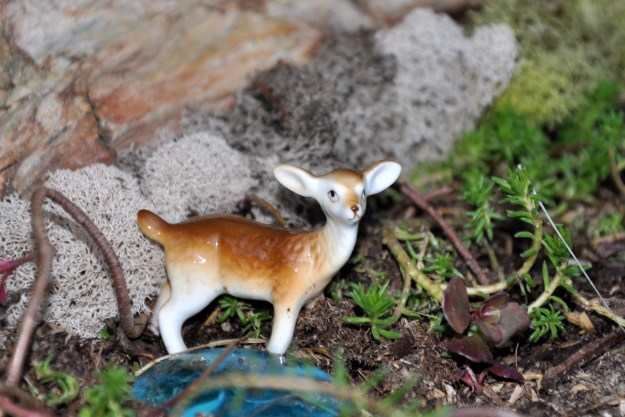
tiny dear secret garden

Please come this way…

Paper design by graphic 45

Paper design by graphic 45

You’ll be seeing more of this lovely paper in a craft-it-forward project later this year.

For additional inspiration, check out the links below:

Boomdeeadda, Boomdeeadda

Welcome Boomdee and Mr. B.

A Fairy Garden Welcome for Boomdee and Mr. B.

I once marveled at friendships forged by letter-writing, the back and forth exchange of lives via the written word. What fun it would be to share the minutia of life with a kindred soul.

I’ve found that kindred spirit here on WordPress at Boomdeeadda!  Instead of forging a paper friendship, we’ve connected through our blogs. It started simply enough, with an exchange of comments. Before I knew it, I was following Boomdee and checking in every day. We connected on Facebook, Pinterest and finally Skype.

It’s been an extraordinary journey, one of affection and discovery, leading the Boomster to my doorstep this week. The odds that we would ever meet seemed improbable: she lives in Alberta, Canada; I’m in San Jose, California. But connect we did and due to this amazing blogging community, we found ourselves together in a cozy tea shop swapping stories and sharing our mutual admiration of our fellow bloggers.

Boomdee is warm and kind, generous to a fault, clever, creative and fun. I wish you could hear her laugh or collect one of her spontaneous hugs. Like a couple of school girls, we found something to laugh about around every corner.

Beautiful Boomdee Near the Fairy Garden

Beautiful Boomdee Near the Fairy Garden

Alyster dropped by for a visit.

Alyster came with!  What a nice surprise.

Lisa's Tea Treasures with Boomdee and Sharon

We donned wigs and false eyelashes, then went out for tea.

I’ve been teasing all week that I would like her to move here, but in reality, well… I would like her to move here.  Sure, it’s impractical with jobs and family and lives, but the alternative meant saying goodbye at the curb. Alas, with heavy hearts, we did.

Safe travels my friend. You’ve filled me with joyful memories…until we meet again.

Boomdeeadda is…

No need to take my word for it.  You can go see for yourself. :-)

Mid-Week Trifecta at the SF Flower Show

Wednesday, was opening day at the San Francisco Flower & Garden Show.  It was also the first day of spring and a day out with good friends, the perfect, mid-week trifecta.

So…two out of three ain’t bad.

The mere mention of the word ‘spring’ puts a bounce in my step.  Seeing two girlfriends for a day of hang time was awesome as well.  It was the much-anticipated show that left me feeling a bit deflated.

The show changed venues over the years and seems to have decreased in size and spectacle, perhaps a sign of the times.

At the heart of the show are display gardens.  This year’s theme, Gardens Make the World Go Round, featured the ‘World’s Largest Rotating Succulent Globe.’  That was pretty cool, though not something the average gardener could reproduce out back.  It’s been entered into the Guinness Book of Records.
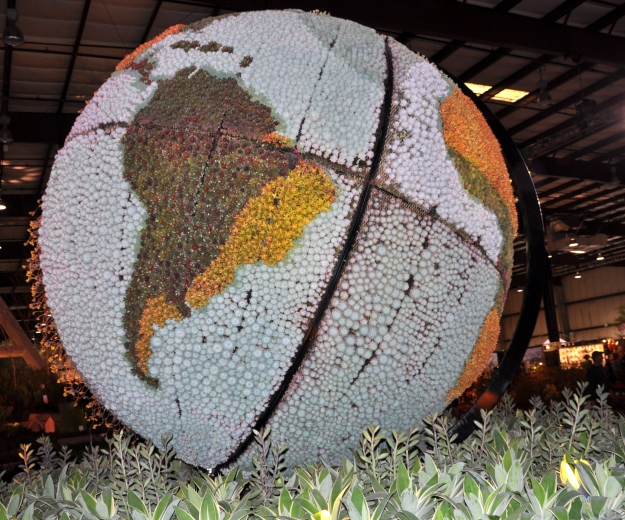
Rotating Succulent Glove

Rotating Succulent Glove, Designed by Robin Stockwell of Succulent Gardens

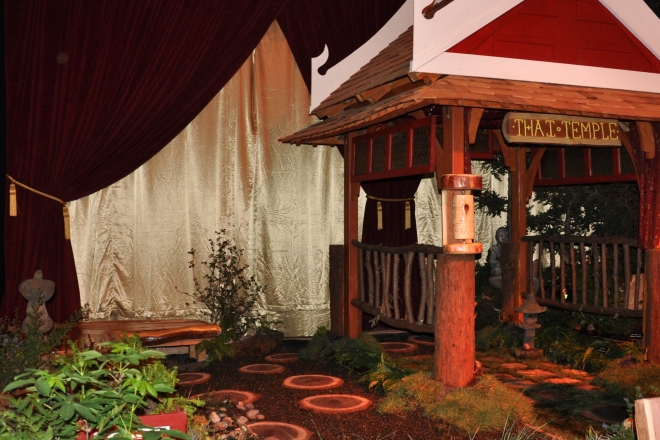
Beyond that, only two gardens caught my eye.  The first was ‘Thailand,’ a silver-medal winner designed by Bay Maples, featured below.  The second, ‘Mexico: Inside Out’ swept the awards.  More on that later in the week.

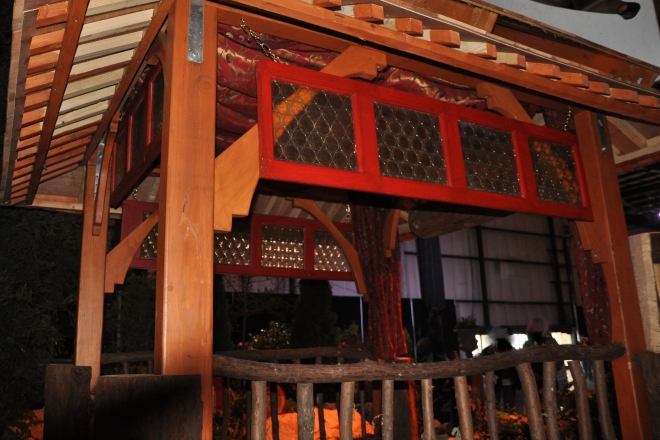
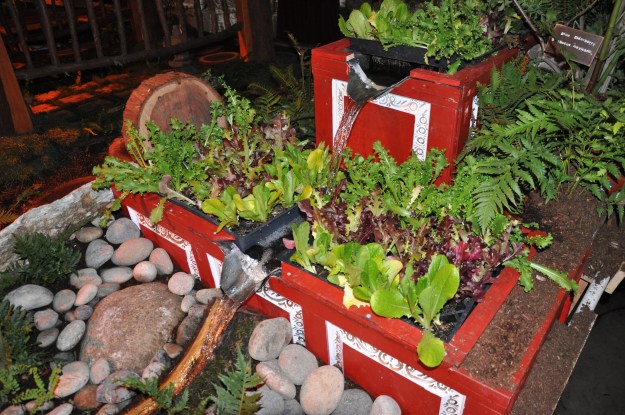
I spoke with designer Alan Hackler who, coincidentally, also lives in San Jose.  He’s passionate about re-purposing resources, and is known to stop at construction sites, to reclaim materials for use in client projects. Hackler’s show entry featured planter boxes made from old garage doors, reclaimed lumbar, a used pond liner and other reclaimed materials.  The ‘temple’ also features the window panels from former garage door.  Fun!  I loved the aesthetic and his enthusiasm for his art and craft.  The design was restful and inviting.
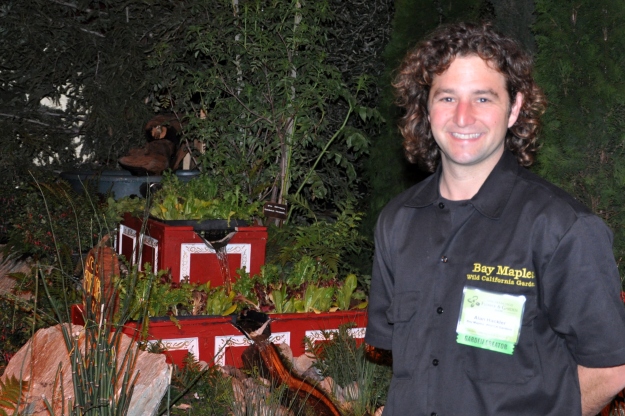
Alan Hackler, Bay Maples
Alan Hackler, Bay Maples

Thai Temple garden show

Thai Temple Garden

Temple built with reclaimed materials

Temple built with reclaimed materials

From the program:

Inspired by the Buddhist temples of Thailand, our garden is intended to evoke the tranquility and simplicity of an ancient meditation space. Ecological gardening techniques featured are salvaged and re-purposed materials, locally sourced materials, and water efficient plantings.
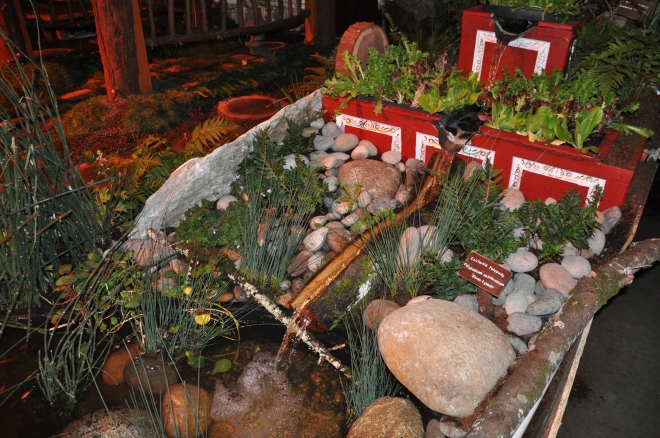
Thai garden water feature

Recycled pond liner, boxes made from old garage doors

The garden features only California native plants to demonstrate that water conscious, climate appropriate plants can be used to achieve nearly any garden theme or motif. All Redwood logs were sourced from two downed trees salvaged from the Santa Cruz hills. Another water-smart feature about our garden is the recirculating aquaponic vegetable beds. This is inspired by the flooded rice fields of Thailand.
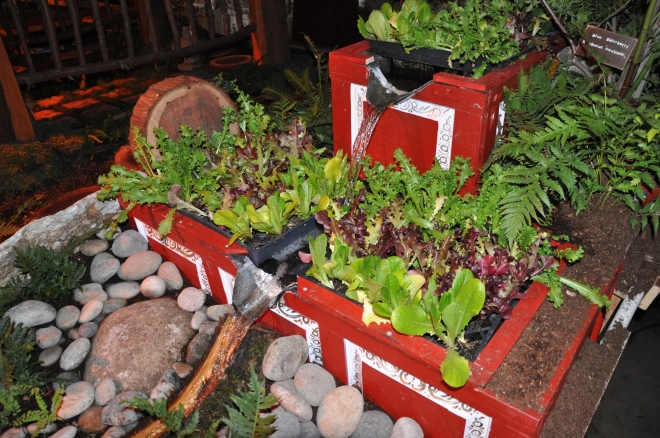
thai garden edible garden

Thai Edible Garden

Bay Maples: Wild California Landscapes

The San Francisco Flower and Garden Show runs through Sunday, march 24th, 2013
When a Rose, Isn’t Just a Rose

Should I or shouldn't I?

Should I or shouldn’t I?

I’ve had my eyes glued to the inner branches of a rosebush all weekend. I’m right back at it today.  This isn’t just ‘any’ rosebush.  In fact, it’s not even my rosebush.

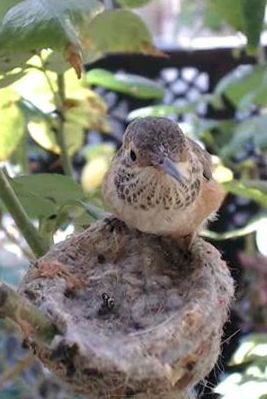
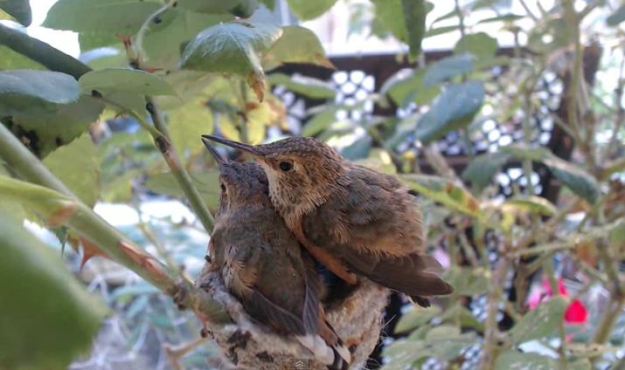
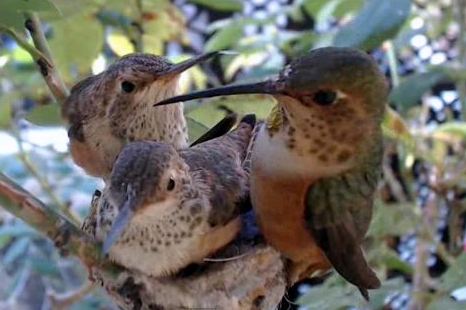
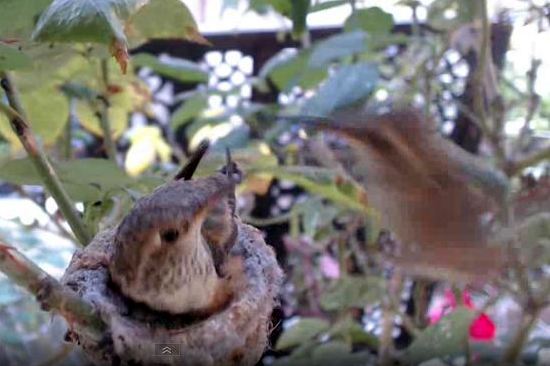
Tucked into the branches of this very special rosebush are a pair of nesting Allen Hummingbirds.  They’re expected to fledge at any time.  It’s mesmerizing watching the activity at the nest, something you wouldn’t normally see. Thanks to an astute gardener and the wonders of streaming video, you can see Phoebe’s nest 24/7 courtesy of a webcam just inches from the nest.

I’ve been snapping screen shots for the past few days, whenever ‘Faith’ or ‘Sandy’ start hovering above the golf-ball sized nest.  Most of my screen shots are false alarms.  Then, while I was seeing one of my boys off to school, one of the girls fledged the nest.

Then…she came back!  She left again (when I turned my back), and again returned.  It’s been quite the morning. I have two windows open on my computer as I write this, wishing you were all sitting here with me watching the show.

Sandy fledged, then returned

Sandy fledged, then returned

Once hatched, the hummingbirds leave the nest within twenty days or so.  Sadly, many don’t survive the first year, but those that do can live upwards of 12 years.  After watching the nest for so long, I’ve started to think of them as ‘my baby birds.’  I’ll bet everyone else feels the same way.  In fact, Phoebe has quite the following.  As of this writing, she’s had close to 15 million views in over sixty countries.

I encourage you to click on the webcam link below. If you miss the fledge, chances are she’ll be nesting again soon.  Phoebe returns to this rosebush every year, laying five clutches a season.

Here’s what you might see:

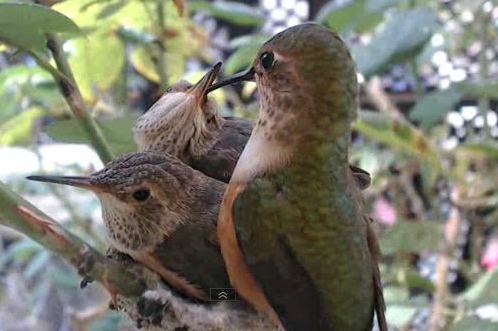
  • Mama Phoebe feeding her offspring.
  • Faith and Sandy fledging (leaving) the nest
  • Grooming (known as preening)
  • Dozing…so darn cute when they close those eyes

Be sure to tell a friend!

Phoebe Allen webcam streaming live from California (PST)

Phoebe, Sandy and Faith

Phoebe, Sandy and Faith

Phoebe feeds her brood every 15-30 minutes

Phoebe feeds her brood every 15-30 minutes

Trying out the wings

Trying out her wings

Dedicated to Erica and Joe. Thank you for making this all possible.

Grateful Orange

It’s easy to take things for granted when they’re plentiful and so it goes with oranges. Since living in California, I can hardly remember a time when they weren’t around. We have an orange tree in our garden that came with the house. It’s probably been there 25 years.

When my boys were young they loved making orange juice, though individually the fruit isn’t always sweet. I love the smell of oranges lined up on the kitchen counter, sliced and waiting for the juicer.

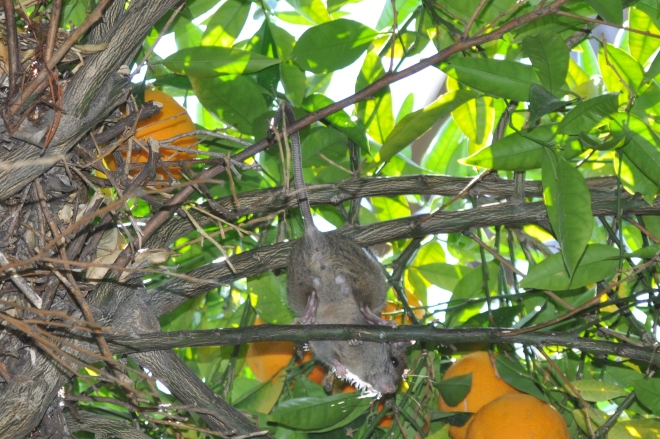
Our plentiful oranges keep the neighborhood rats from getting scurvy as well. The tree offers shade in the summer and currently shelters a large nest for opossums or squirrels. It’s a well-rounded tree.

Orange Tree, Nest and Tree Rat

Orange Tree, Nest and Tree Rat

California is now in day five of an unusual cold snap, with temps dropping into the twenties and low thirties.  That’s about ten degrees below normal for this time of year, threatening citrus growers up and down this large state. Prolonged temperatures in the mid-twenties or below cause damage to citrus crops.

According to Newser:

State wide, large growers deployed wind machines to keep the warm air closer to the ground and irrigation to raise the temperature in the groves. Rows farthest away from the protection could be damaged, Story said. And farmers who do not have wind machines could lose crops.

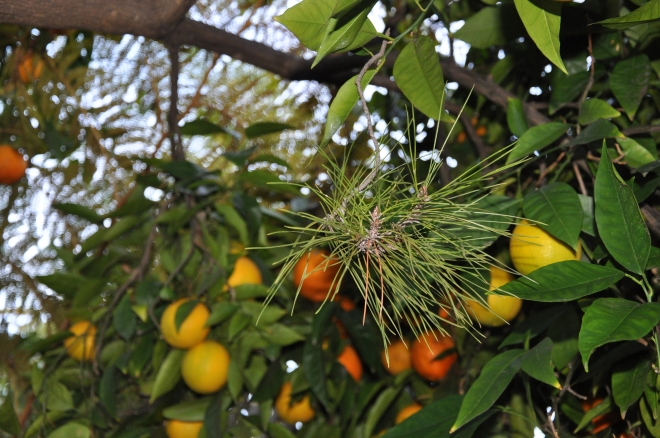
Our tree is far too big to drape in frost cloth. There are no industrial strength fans to force down warm air. The health of the tree is in the hands of nature. The orange tree grows at the corner of the fence.  Neighboring pines tower nearby. That shelter may see it through. I hope so.

I hope, too, that our weather returns to a seasonal normal.  Then citrus growers up and down the state will prevail. It’s a great reminder to appreciate all we have.  I’m grateful for the orange.

Orange Tree with Pine Bough

Orange Tree with Pine Bough

Smile! You’re On Gardening Nirvana

Some days you get lucky.  Today was one of them.

Like the felines in the house, many of the garden visitors put on a show till the camera comes out. Then they’re off, lickety-split.  Today I was able to snap some cuties.

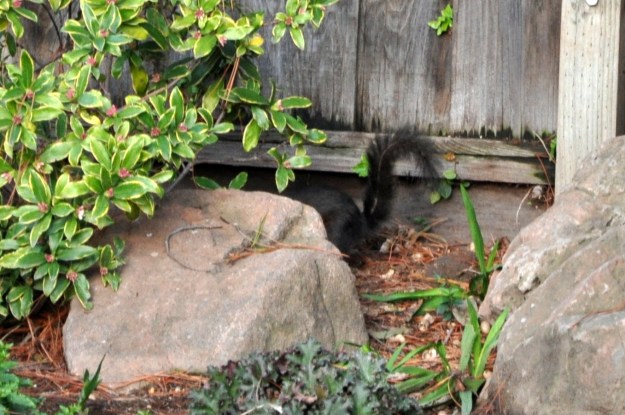
First up, this dark brown squirrel.  Most of our native squirrels are grey with a white belly.  This little fellow is dark brown with an amber belly, pressed up against the fence. He’s been busy stashing peanuts in a corner behind a rock. They nab the peanuts from our neighbor’s yard, then head over our fence to either bury them or eat them.

Dark squirrel with amber belly

A dark squirrel with amber belly hugs the fence

Stashing his peanuts behind the Daphne

Stashing his peanuts behind the Daphne

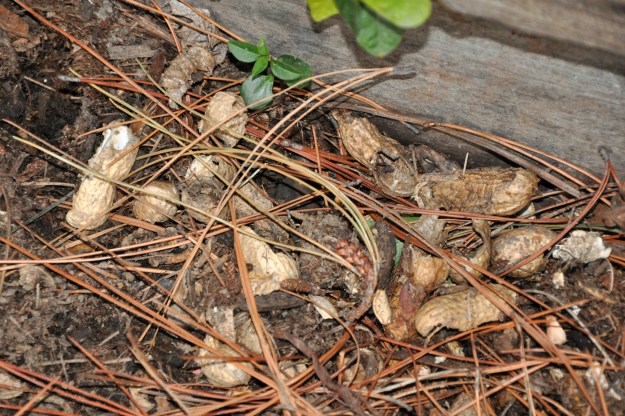
Peanut Wasteland

Peanut Wasteland

A more typical gray squirrel passed through with a peanut in his mouth.  Isn’t he adorable?  He jumped into one of the planters when he saw me, then ran back to the lawn to squirrel away his peanut.

Grey Squirrel with Peanut

Grey Squirrel with Peanut
I wanna hold your hand!

We enjoy frequent visitors at our hummingbird feeders.  Today I ‘searched’ the orange tree with my camera lens to see if I might spot a nest. In retrospect, given the number of squirrels and rats that visit each day, the tree is probably far to active for nesting. I followed the bird’s flight with my camera lens and captured a few shots of a hummingbird new to our area.  I’ve never seen one like it.  My research says there are a dozen hummingbird species in California, but none of them resemble this little one.  Take a look at this species list and let me know what you think.

DSC_0014

It’s been bitter cold for several days, down to freezing most nights.  I’m keeping the feeders topped off, especially after learning that the non-migratory birds are nesting from now until May or June.  I wonder where they go to stay warm?

I originally planned to hang bags of laundry lint for nesting material in the spring.  Since learning that hummingbirds are nesting now through May, I plan to hang lint tomorrow.

In my fantasy world, I have an invisible cloak like Harry Potter.  I would spy on all the wildlife up close without fear of detection. Would you like to join me?

Rain Drops and Earworms

I’ve had an “ear-worm” stuck in my head for a day now. It’s the song made famous by Burt Bacharach, called Rain Drops Keep Falling on My Head. It started in the garden yesterday, in the rain, of course. It continued well into today’s cold, dry weather and refuses to let up. I wish I could say the same for the rain which has let up. Again.

I understand that the rain is not for everyone. People living in Hamburg, Germany or Seattle, Washington get plenty. Living in a semi-arid climate like California means our rain is minimal compared to many other areas of the world.

I’ve always liked the rain. It’s fun to walk in it. I’ve been known to pull weeds while it’s pouring down. The sound of the rain on the roof at night is both calming and romantic. Gathering puddles bring out my inner child. It’s true that I don’t like to drive in wet weather. People seem to lose their heads when it rains. They drive too fast, follow too closely and we have the invariable car pile ups. Away from that nonsense, however, I do enjoy the wet stuff.

While snapping pics in the drizzle and humming my rainy day song yesterday, it was clear to me that all the plants in my garden agree. Rain drops keep falling…

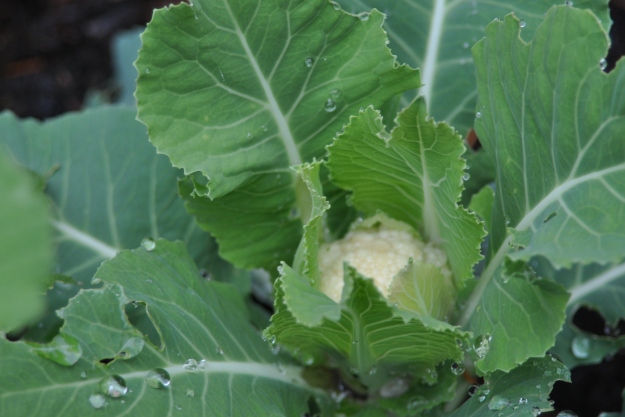
Cauliflower with rain drops

Rain refreshed cauliflower

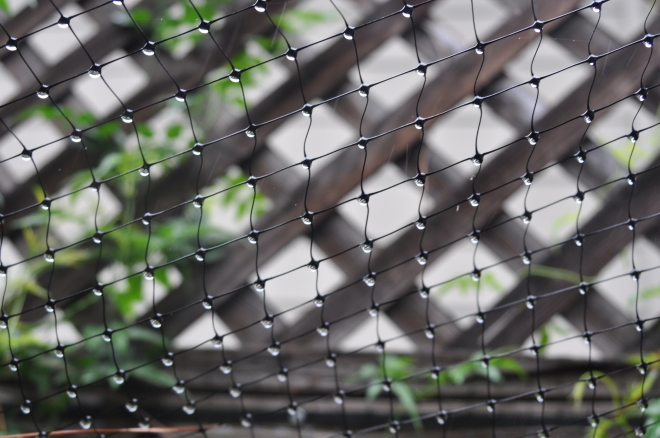
cat fencing collects rain

Cat fencing holds rain drops

Rain and Light

Rain and Light

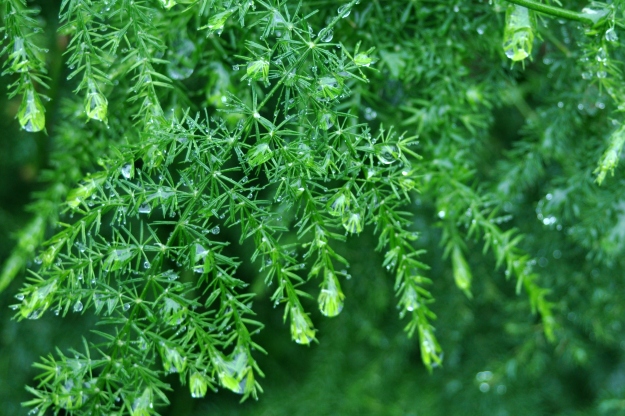
Rain drop fern

Delicate fern; beads of rain

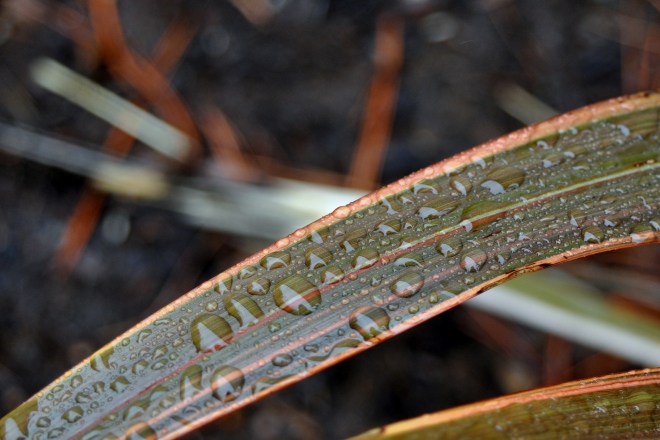
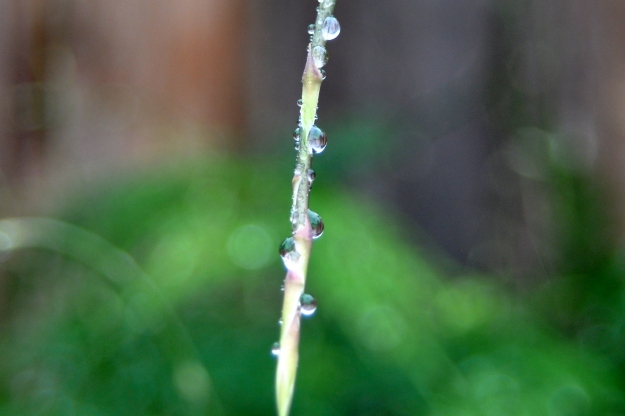
Rain drops cling to new growth

Rain drops cling to new growth

Average Annual Rainfall (in inches):

  • San Jose, California – 15 inches
  • Edmonton, Alberta, Canada – 19 inches
  • Hamburg, Germany – 28 inches
  • London, England – 29
  • Seattle, Washington – 38 inches
  • Kauai, Hawaii – 460 inches

Mellow Yellow, Garden Gold

Yellow is a happy color. It exudes warmth and cheer. In the garden, it weaves its way through most seasons: striking daffodils in the spring, followed by snapdragons and sunflowers in the summer and fall.  As the blooms fade, several trees take over, dropping golden-yellow leaves in.

What’s unusual this year is the number of summer plants still in bloom.  Our deciduous trees have lost most of their leaves in time for winter solstice. I thought the snaps were done until several days of heavy rain.  Now they’re back to in soft, buttery shades of yellow.

A tomato plant still towers in the side yard, sending out tiny yellow blooms. Several pumpkin plants self-seeded and flowered as well.  Even in California, it’s unusual to see pumpkins bloom so late in the year. I’m trying to squelch my fears about global warming.  Perhaps my garden’s micro-climate is simply in sync with the menopausal gardener.

Using yellow in the garden from Sensational Color:

  •  Yellow is considered a warm color in landscape design.
  • Yellow’s appearance in the garden has a stimulating effect.
  •  Yellow flowers come forward in the landscape, helping to make a large garden feel cozier.
  •  Yellow lilies make for a bright, long blooming addition to any garden.
  •  Yellow’s complimentary color in the garden is purple.
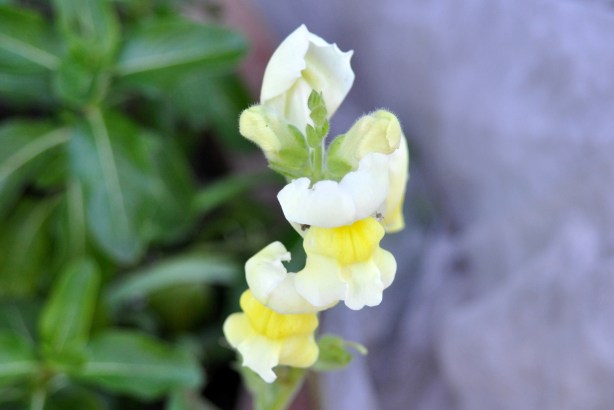
Snapdragons

The Snapdragons returned after a heavy rain. I didn’t notice the tiny grey spider when I took the picture.

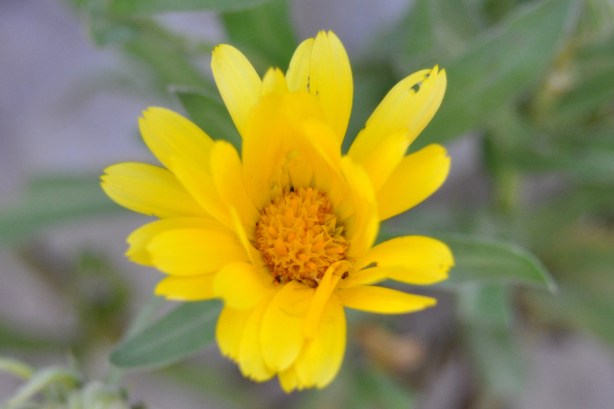
Yellow Wildflower

Yellow Wildflower Still Blooming

Pumpkin Flower

It’s mid-December. Do you know where your pumpkin flowers are?

Fruit-Loop Tree?

Fruit-Loop Tree? Nope! Just three stages of an orange

Side Yard Tomato

Side Yard Tomato

Fruit Cocktail Tree Leaves

Fruit Cocktail Tree Leaves

The Color Yellow:

The Big Chill: Out of the Crisper and into the Soil

Three's a Charm

Three’s a Charm

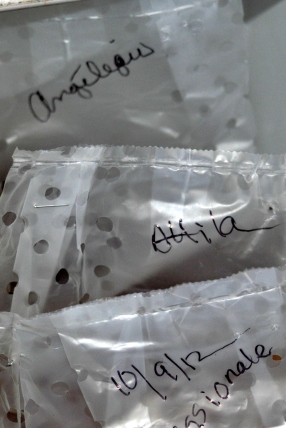
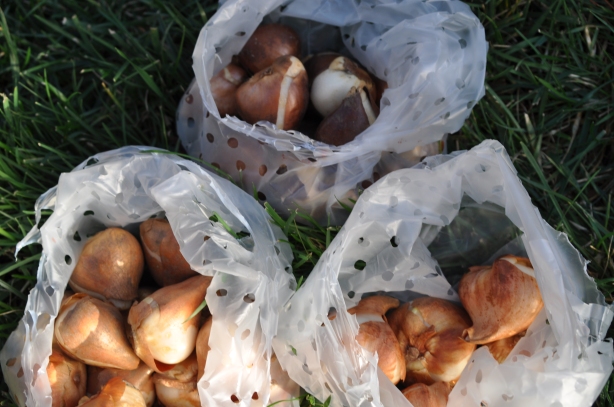
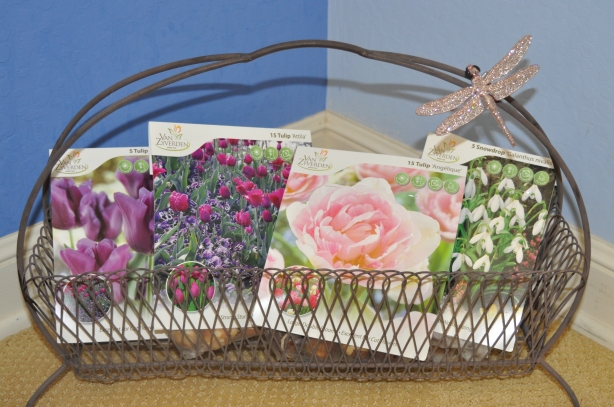
When you live in a warm climate like California, it helps to employ a bit of trickery with the tulips.  So when I bought three bags of tulip bulbs back in October, the first step was a cool dark rest in the crisper drawer of our fridge.  Keeping bulbs in the frigid dark, prompts their DNA into thinking they’ve been through an early chill.

Today I planted about a dozen bulbs along the rock wall near the garden fence, convinced that the racing squirrels overhead were just waiting to dig them up for lunch. I tamped the soil firmly and with determination, hoping they’ll stay planted through early spring.  I buried the rest of the bulbs in a variety of pots, and in a few random locations around the garden.

Ready to Plant Tulip Bulbs

Ready to Plant Tulip Bulbs

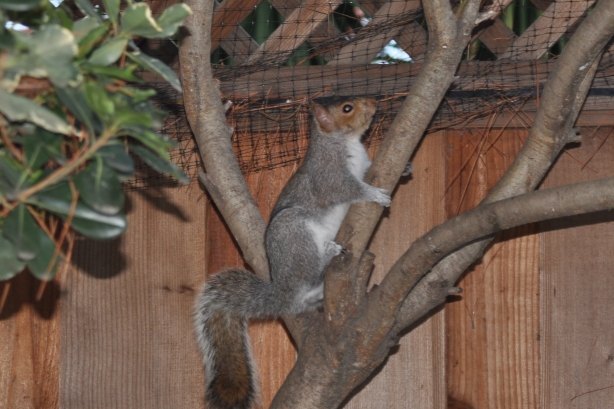
Squirrel in the Pittosporum

Squirrel in the Pittosporum

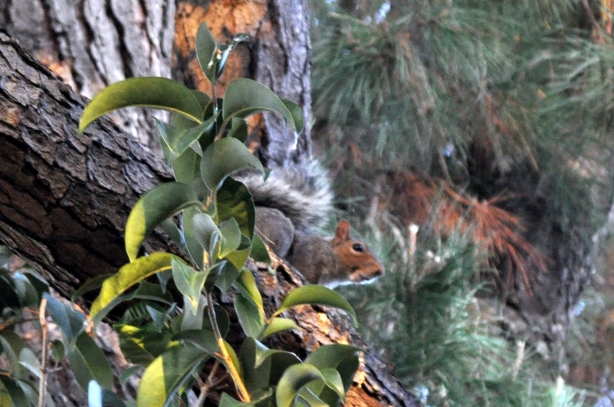
Squirrel in the Pine

Squirrel in the Pine

Figuring I could hedge my bets (or chance of survival) by interspersing the bulbs in heavily planted pots, I tucked them deep into the corners and under the canopy of existing plants. I hope they survive the onslaught of the squirrels. They’ll be a magnificent if they do.

Tulip Bulbs

Tulip Bulbs