Little Free Library of Distinction

I’m so excited!

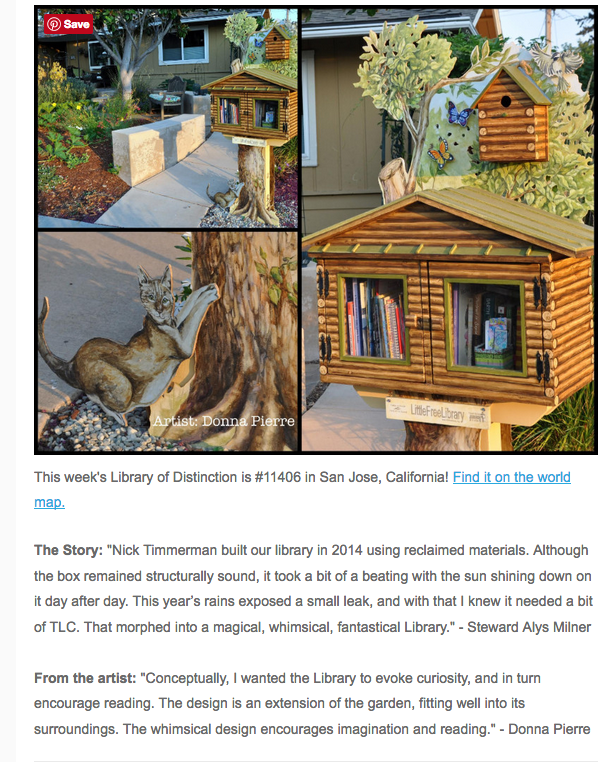
Our curbside Little Free Library is this week’s LFL Library of Distinction.

From the Little Free Library Newsletter, September 2017

Little Free Library of Distinction

Little Free Library of Distinction, September, 2017

The entry appears in the Little Free Library newsletter under the heading: One Library got a whimsical makeover

Here’s the link.

This is a great opportunity to bring attention to our library, and a wonderful way to celebrate and promote Donna Pierre’s stunning work. Here is how the whole thing came about.

After Donna put the finishing touches on our revamped library,  I sent updated photos via the LFL website. They wrote back letting me know they would update the map within three days.

Our registered Little Free Library is searchable via the world map along with 50,000 other libraries in over 70 countries worldwide. Through the Little Free Library movement, millions of books are exchanged annually. It is a joy to be a part of the movement.

Within a few days of submitting the new photos, I received this email:

Congratulations! Your Library has been selected as a Library of Distinction. Its unique design and the creativity and enthusiasm you have put into it make it an inspiring example for other Little Free Library stewards to follow.
We will share images of your Library and the story behind it in our weekly e-newsletter to Little Free Library fans and on our Libraries of Distinction Pinterest board.
If there are any details on your Library’s design or history that you’d specifically like to share in our e-newsletter, please respond directly to this email with that information; about 3-4 sentences would be perfect.
 
Attached you will find a certificate to commemorate this achievement, please feel free to print it and show it off to all of your friends! Keep up the good work.
Cheers,

The Little Free Library Team

Donna attached this handsome cat to the base of the library. I reworked the white sign by smudging it with green ink. Instead of re-attaching it to the face of the library, Mike installed cup hooks below the box for the sign to hang free. I didn’t want to do anything that would distract from Donna’s design.

There are perhaps no days of our childhood we lived so fully as those we spent with a favorite book.

–Marcel Proust

Save

Save

Save

Save

Not a Zucchini?

There are three volunteer pumpkin vines growing along the side of our deck. At least I thought so. Upon closer inspection, one of the plants might be a zucchini.

Zucchini or Pumpkin plant

Zucchini or Pumpkin? July, 2017

Zucchini or Pumpkin?

Zucchini or Pumpkin? August, 2017

Zucchini is an American term for courgette or summer squash. They’re harvested when the fruit is small and cooked in a variety of ways. When left unchecked, they will grow substantially. I learned from Sarah the Gardener that overgrown courgettes are known as marrows.

I’ve never been a fan of zucchini. People wonder “how can you be a vegetarian and not like zucchini!?”  I don’t mind it in soups or zucchini bread, but otherwise I’ll give it a pass. My favorite greens, in the following order, are broccoli, green beans, snow peas, bell peppers, and several others I’m forgetting and then zucchini. Technically, zucchini are a fruit, but most of us think of them as a vegetable. That said it still doesn’t make the list when I could be eating pears, green apples, kiwi, grapes, and melon. Sorry zucchini.

I digress.

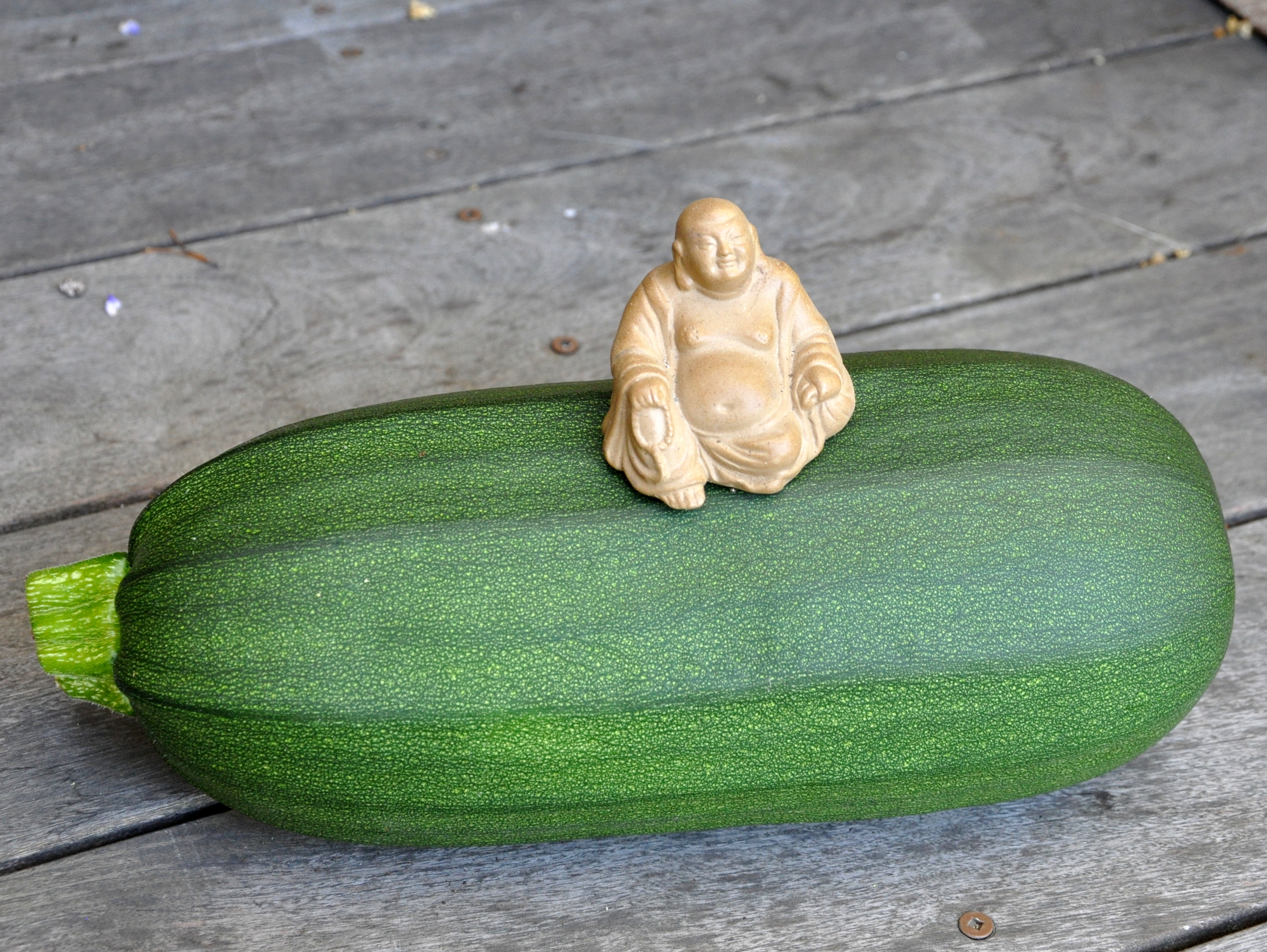
Pumpkins and zucchini (or courgettes) are members of the Cucurbita pepo or Cucurbita genus. The leaf and flower of both plants look quite a bit alike. Our plant, however, didn’t develop a trailing habit. It grew more like a shrub.  While making the garden rounds, I notice the unusual growing habit of the fruit. Unlike a typical pumpkin it was long and narrow. When Mike returned from a long trip to South America, he pronounced “It’s a zuke.” He grew up in an Italian family where his mom prepared lots of zucchini in her day.

Apparently I had an overgrown zucchini (marrow) on my hands. I would follow Sarah’s lead and prepare it for eating. Sarah made marrow chips with her overgrown fruit. She’ll show you how here.  Sarah says they’re delicious. I could disguise the flavor and texture through food preparation. Brilliant!

I cut the fruit from the plant and left it to harden off on the deck for a few days. I kept an eye on it outside my kitchen window.

Zucchini or Pumpkin?

Miniature Buddha for scale

You know where this is going, right? It started turning orange!

Not a zucchini?

Time will tell.

Save

Save

Save

Save

Save

Save

Save

Save

Save

Save

My Ever-Changing Garden

One of the simple pleasures of gardening is the ever-changing landscape. No two plants are alike and no two seasons are quite the same. There are happy accidents everywhere, helping balance the ever-present and predictable weeds.  San Jose summers are hot and long, but occasionally nature serves us a reprieve. I relish those days when the stars align and I have both the time and the weather to spend outdoors getting things done.

Of all the things you can grow in a small garden, pumpkins are among the most spectacular. It seems you can witness the change every day. Within 90 to 100 days, one healthy seed can sprout, grow, flower and fruit, trailing across the landscape at amazing speed.

Self-seeded pumpkin vine

Self-seeded pumpkin vine growing along the side yard

A couple of pumpkin seeds took root in our narrow and shady side yard, with one of those two vines traveling the length of the house and eventually rounding the corner. That vine is now winding its way across the patio.  With leaves the size of a platter and flowers as broad as your hand, watching pumpkin plants grow evokes a certain optimism and joy.

pumpkin vine on patio

The pumpkin vine emerging from the side yard and crossing the patio

Years of drought brought about many changes to our garden. It started with the removal of the “grass strip” between our sidewalk and the street. My husband grew up with spacious, green lawns. His reluctance to remove the lawn took some time to overcome, but in the end we replaced all of our lawn with native plants.

In preparation, I sheet-mulched half of the back yard for close to a year. The process destroyed the lawn, amended the soil, and prepared the area for native plants, all at the same time.

sheet mulching

The process of sheet mulching: cardboard, dried leaves and other organic material

We replanted the entire area with California native and drought tolerant plants. They use far less water than a lawn, attract beneficial insects and birds, and are healthier than the monoculture of a lawn.

sheet mulched back garden

Healthy soil, several months after sheet mulching

back garden patio and native plants

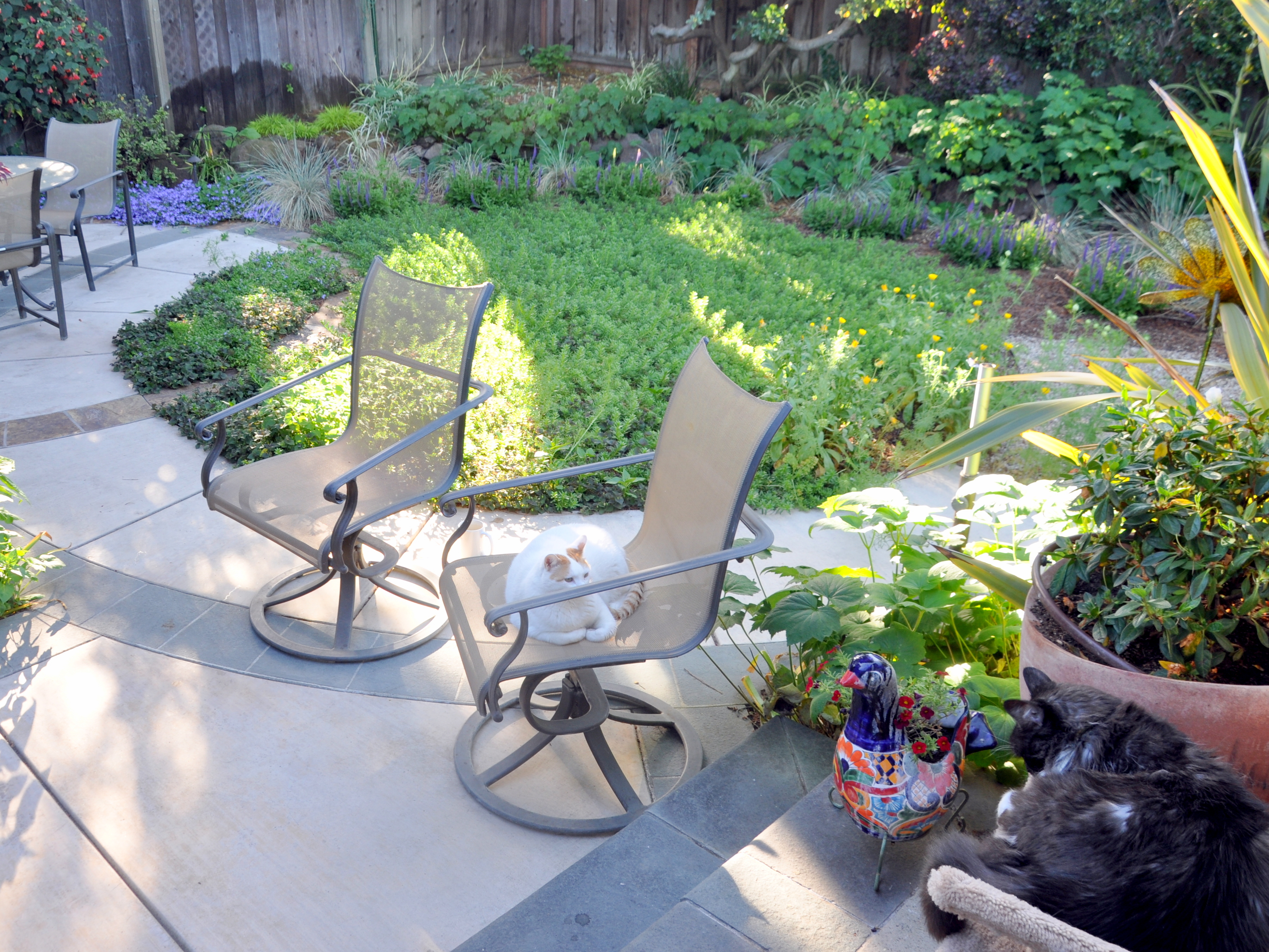
Back garden replanted with natives (Mouse and Lindy on the chairs)

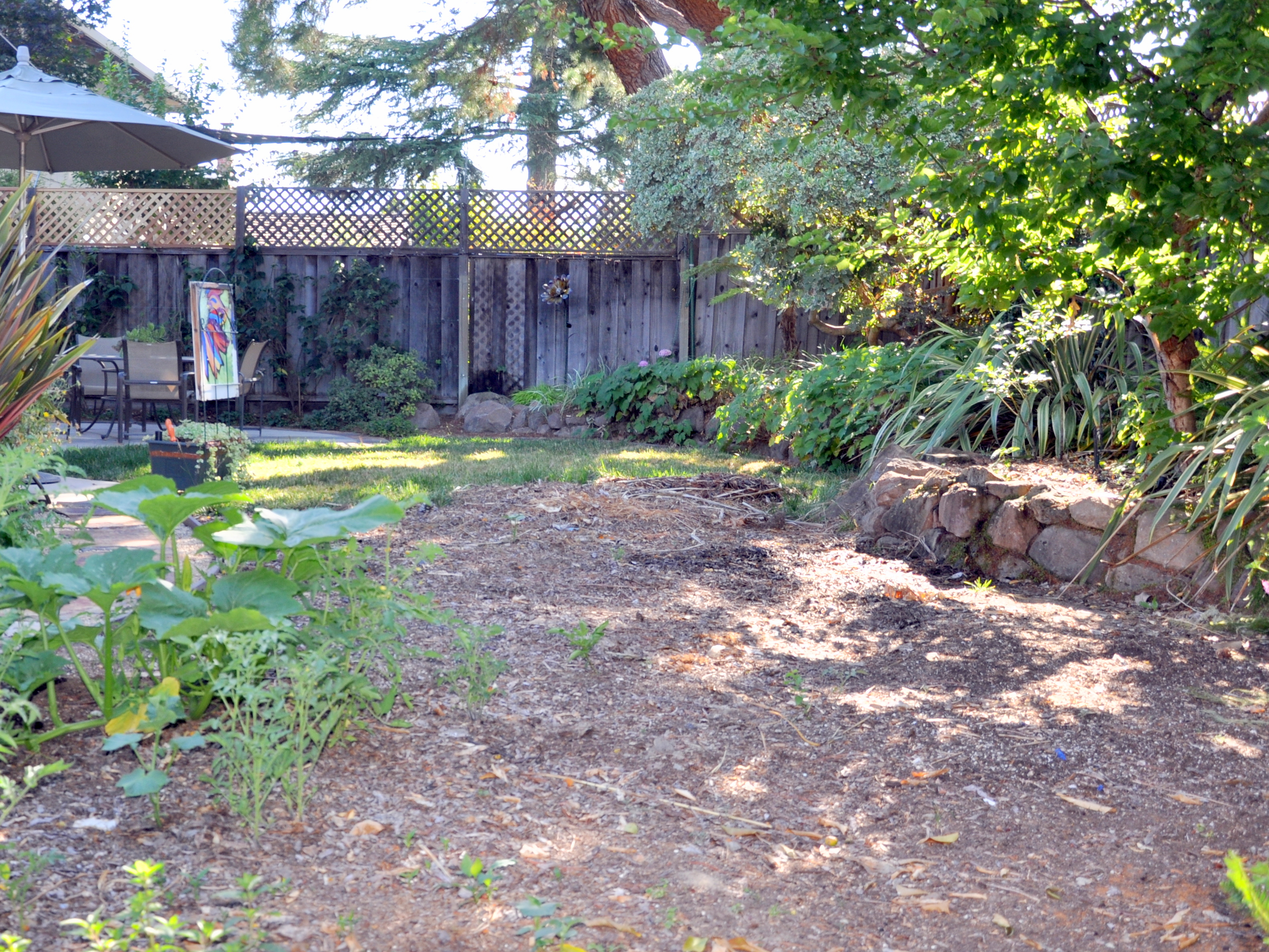
Back Garden: Half of the dried out lawn and half sheet-mulched lawn

Back Garden: Half of the dried out lawn and half sheet-mulched lawn

native plants back garden

Back garden replanted with natives about a year later

Removing the front lawn also brought about interesting changes. The act of turning the soil for native plants invigorated dormant seeds. The year after the lawn came out, we not only had native plants but sweet peas, cornflowers, California poppies and Nigella.

When the  garden looked bare after the sweet peas went to seed, I hit upon the idea of planting pumpkin vines in their place.

front garden pumpkin vines

I planted a few pumpkins in the front garden (the only plants that are not self-seeded this year)

I’m enjoying the variety of successive planting.  I smile when I see a neighbor through my kitchen window slowing down to look at the garden. Tending a healthy garden means others can passively enjoy it too.

Learning to love succulents has been another big change for me. One by one though, I’ve been replacing potted annuals with succulents.

Succulents are well suited to our dry, arid climate. They get along well sitting in sandy soil. I water them sparingly, perhaps once a month, and in turn they reward me with color change and tiny blooms.

I planted a miniature peace garden earlier this year, only to see it collapse during a heat wave. The baby tears baked in the sun, even under the eaves of our house. I slipped out a few times to water the plants, but that tiny garden didn’t survive in  the shallow bowl and the pounding sun.

miniature peace garden fizzle

Peace garden fizzle: triple digit temperatures were too much

miniature peace garden

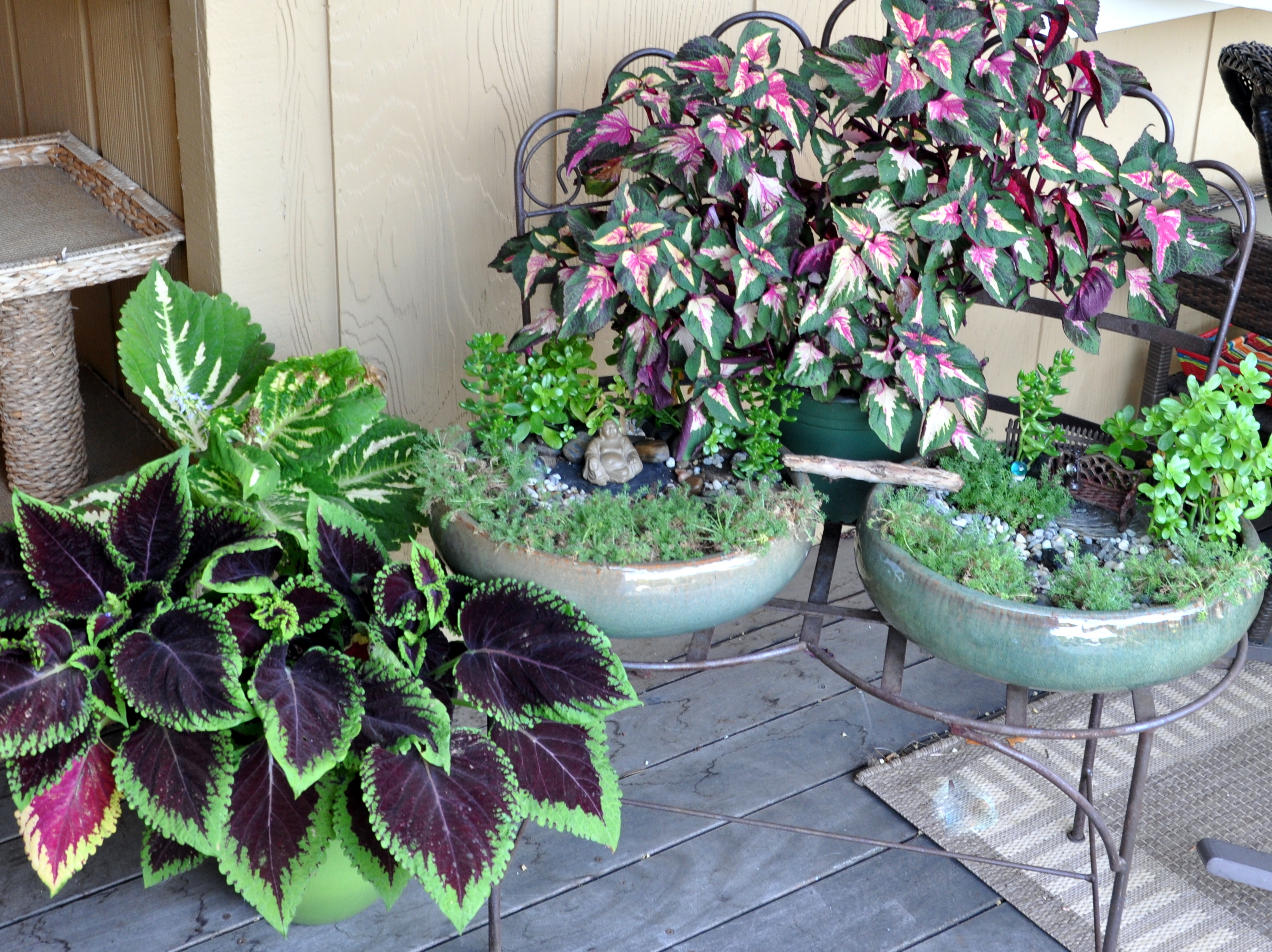
Replanted miniature peace garden, sheltered by a coleus

Since I refuse to embrace any metaphors about a dead or dying peace garden, I composted the dried plants and started over. This time I changed out the annual baby tears for succulents and added chamomile, which can go almost dry between watering. I shaded the entire mini garden with a coleus, my one concession this summer to a water-loving plant. I find the color variations irresistible.

There is a twinkle of autumn in the air today, a reminder of the seasons ahead. My garden is a wonderful teacher, regularly reminding me that change is good.

Are there interesting changes going on in your life?

Save

Save

Save

Save

Save

Save

Solar Eclipse in My Garden

It’s been an exciting day here in North America. Depending on where you live, you could witness the first total eclipse of the sun in the U.S. from the Pacific to the Atlantic since 1918.

AccuWeather total solar eclipse

Map of total solar eclipse route. We live in the 70% range – Source: AccuWeather

Here in San Jose, we witnessed a partial solar eclipse for about 2 1/2 hours. It reached its maximum impact at 10:21 a.m. when I popped outside with my camera to take some garden pics.

The occluded sun cast crescent-shaped shadows on the ground and the side of the house. I took this photo one minute before maximum impact.

crescent shaped shadows eclipse

During the eclipse: Crescent shaped shadows cast by the tree on the side of the house

Here’s what I noticed in the garden:

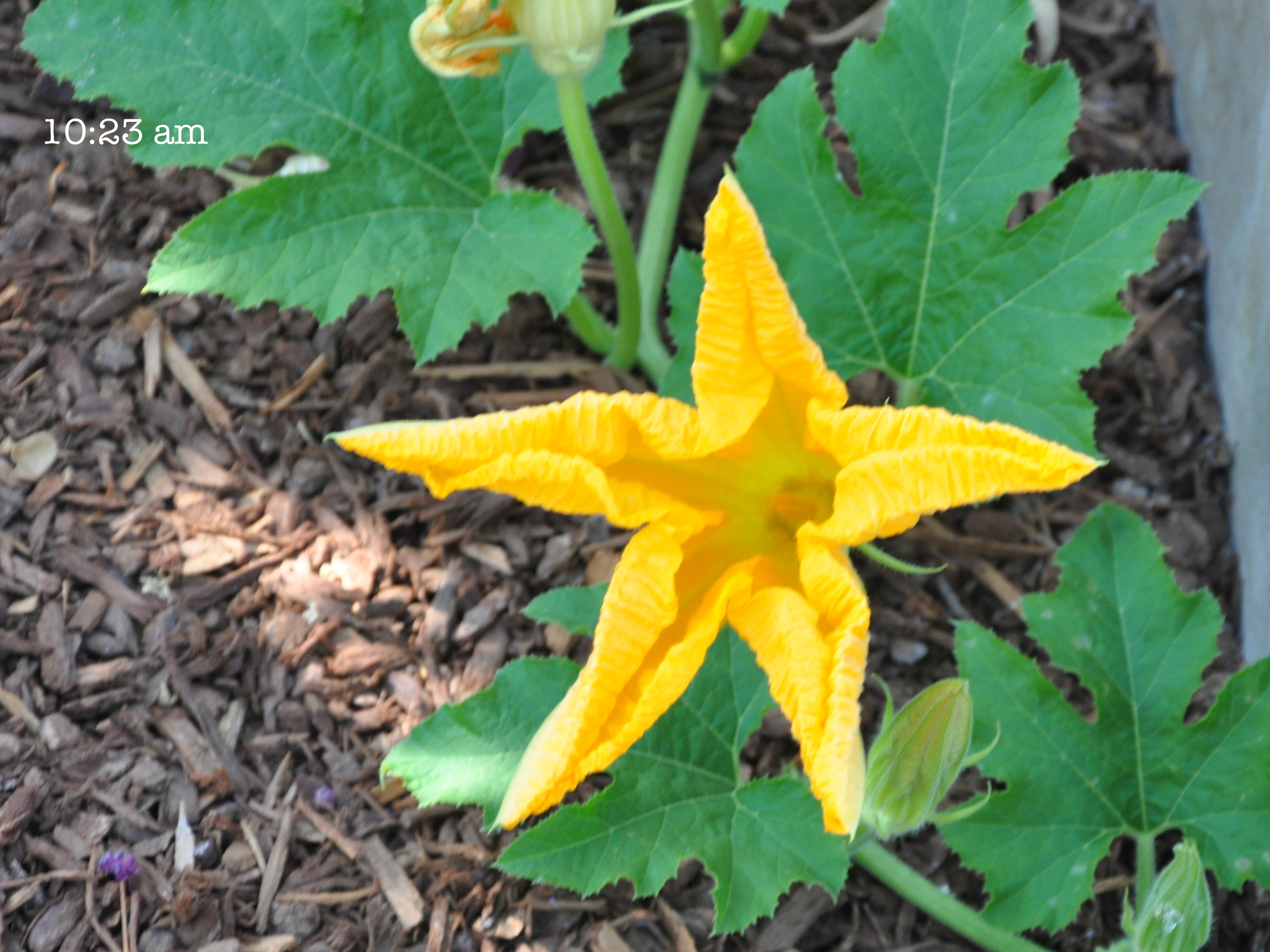
Most of the flowers in bloom remained open with one exception: the pumpkin blossoms. The flowers started curling in, and when I checked on them after lunch, they had closed up tight. Fascinating!

pumpkin blossum during solar eclipse

During the Eclipse: Pumpkin blossom closing in 10:23 am

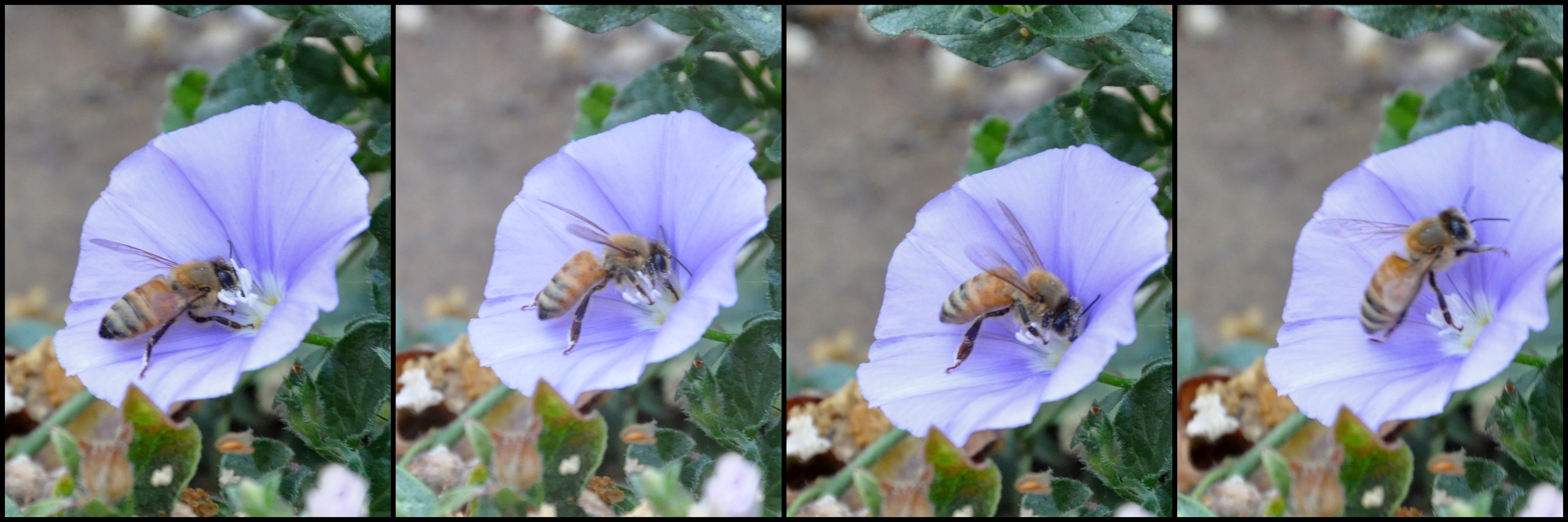
It was eerily quiet when I went outside. We had less birdsong than usual.  The bees, however, continued on with their day.  I admire their industrious nature and silently thanked them for keeping our planet afloat.

bees during solar eclipse

During the eclipse: the bees didn’t seem to register any difference

National Public Radio aired live updates throughout the day, and though it’s radio and not TV, they managed to convey the excitement as the eclipse crossed a thin ribbon of states.

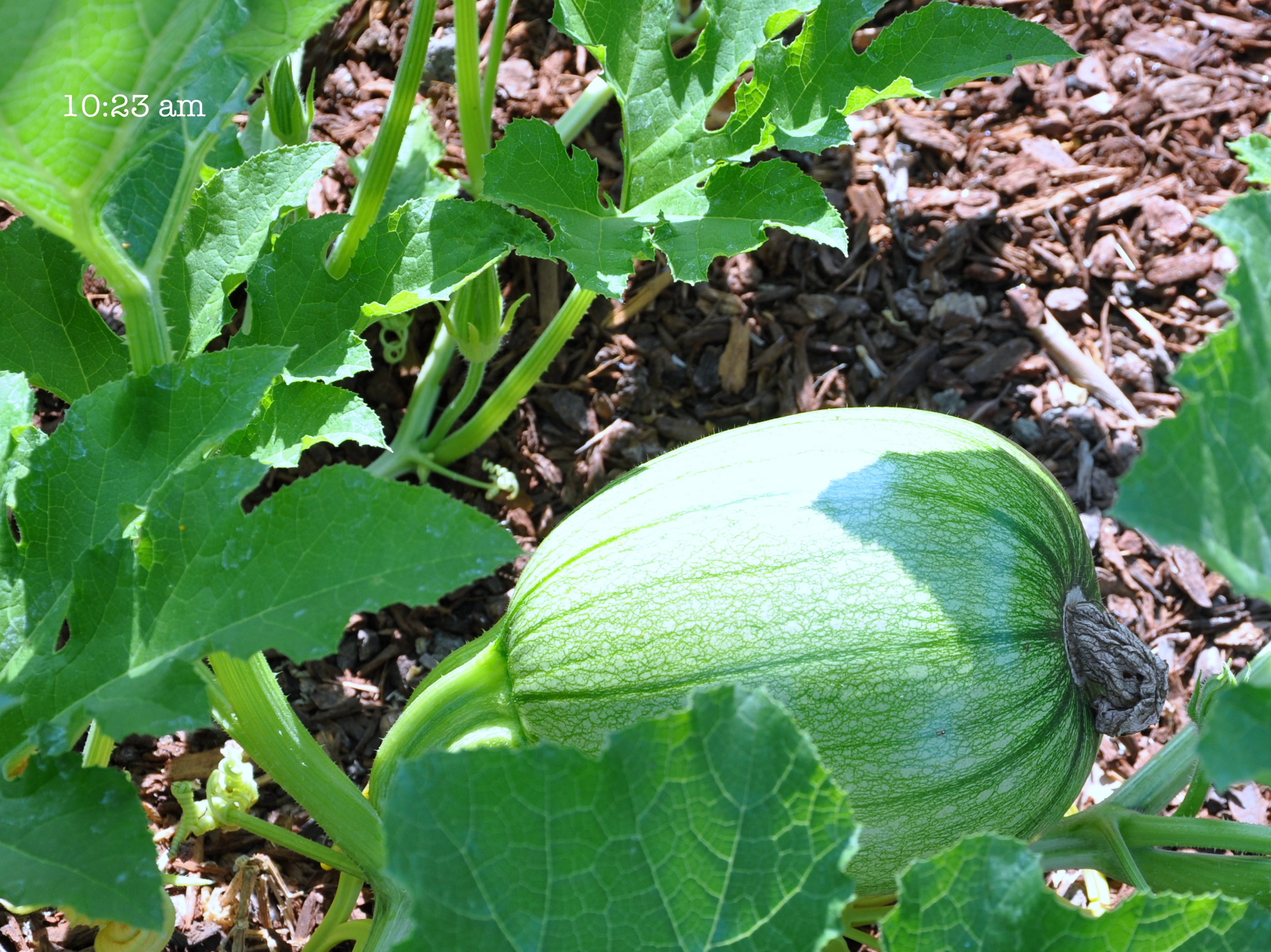
Back in the garden, I enjoyed the interesting shadows.

Pumpkin in shadows solar eclipse

During the Eclipse: Pumpkin fruit in shadows 10:23 am

California poppies during the solar eclipse

During the eclipse: California poppies 10:24 am

pumpkin shadow during solar eclipse

During the eclipse: Arching ribbon of shadow on the pumpkin’s surface 10:35 am

Indoors, the cats were oblivious. (See Monday through Sunday for comparison…ha!)

Did you witness all or part of the eclipse today?

Save

Save

Save

Save

Save

Experimenting with Chlorophyll Prints

Transferring the image of a leaf to paper has been around for years. It’s only recently though, that I learned of a technique using a Big Shot, one of those crafting tools I’ve put off buying for years.

Sizzix Big Shot

Sizzix Big Shot

Dawn, who blogs at Petals. Paper. Simple Thymes created these beautiful cards using the technique. Dawn’s post and her stunning cards were the impetus I needed. I bought a Big Shot so I could give the technique a try. I’m sharing the Big Shot tool with my sister, Sharon, who makes all of her own cards. We bought some fun dies for her to use for her holiday cards this year.

As Dawn says, this is a wonderful opportunity to combine two loves: gardening and paper crafts.

According to Wiki:

Chlorophyll (also chlorophyl) is any of several closely related green pigments found in cyanobacteria and the chloroplasts of algae and plants.[1] Its name is derived from the Greek words chloros (“green”) and  phyllon, (“leaf”).[2] Chlorophyll is essential in photosynthesis, allowing plants to absorb energy from light. – Wikipedia

The technique is simple. You sandwich a leaf or petal between a folded piece of paper, run it through the Big Shot, and the green pigment created by the chlorophyll transfers to the paper.  As Pauline King would say, I’m at the messy stage of this process. I’ve yet to make a single card, but not from lack of trying.

I gathered several scraps of paper from my stash to get started, including an old file folder, card stock, old-fashioned typewriter paper and vellum.

File folder leaf print

Paper: File Folder * Verdict: so-so

chlorophyll prints watercolor paper

Paper: Watercolor * Verdict: Nice most of the time but not for all plant material

velum paper chorophyll print

Paper: Velum * Verdict: It looks like a Rorschach Test

I quickly learned that all paper is not created equal. In the end it was a scrap of watercolor paper that worked the best. It absorbed some of the natural moisture and showed off the texture of the plant material to good effect.

My collection of leaves were a mixed bag as well. Some were so wet and juicy, that they produced images that were half leaf imprint, half splat. My prints are definitely not ready for prime time, but I am having fun.

I’m still trying to get a good imprint from my coleus leaves. They’re a beautiful mix of red and green and sometimes purple. They’re also heart-shaped. If I can manage to get the impressions just right without the extra moisture they’ll look terrific on a card.

My favorite imprints so far are the fern and the Nepeta.

This imprint is from my lacy fern, a plant I’ve carted around with me for nearly thirty years. It went from a small, seventy-nine cent plant on my nightstand, to owning a corner of our garden. I love it.

Chlorophyll transfer fern and sweet pea

Chlorophyll transfer of fern and sweet pea petal to watercolor paper

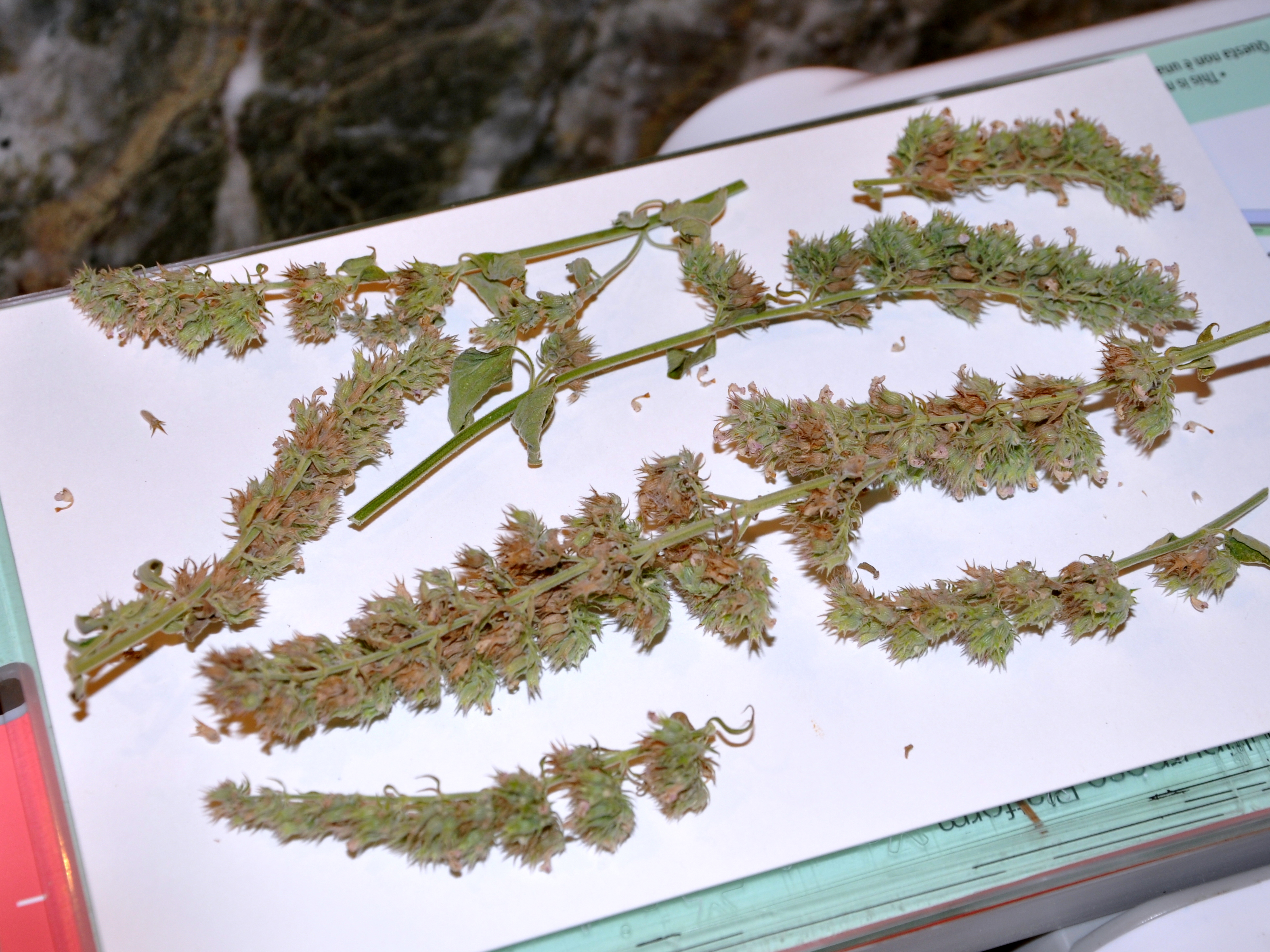
The Nepeta or cat nip also transferred well, and comically, retained some of its potency. Mouse the Cat hopped up on the desk and enjoyed the scent.

Nepeta catmint transfer print

Mouse Approved

Nepeta (cat mint) transfer

Nepeta (cat mint) transfer

I’ll keep experimenting and hope to eventually have some bona fide cards to share. I tossed the small samples, but gathered the rest of them into a sample booklet, held together with baker’s twine and a few strips of Washi tape.

Chlorophyll Samples

Chlorophyll Sample Booklet

Have you been working away at a technique for a while with mixed results? Let us know in the comments below.

Save

Save

Celestial Seasonings Tea and Tour

Celestial Seasonings Tour Center

Celestial Seasonings Tour Center

We toured the Celestial Seasonings factory in Boulder on our recent visit. The tour is free and includes the opportunity to sample several hot and iced teas. It was raining the entire time we were there, making it all the more delicious. There is nothing quite like hot tea on a rainy day, especially when there’s a fun tour in the mix as well.

Celestial Seasonings Tea Room Samples

Tea Room Samples

Celestial Seasonings Rooibos Madagascar Vanilla

My current favorite, and an award winner too * Celestial Seasonings Rooibos Madagascar Vanilla

I grew up drinking black tea, mostly Red Rose Tea, a Canadian brand dating back more than a century. My dad drank tea, so of course my sister and I wanted to drink tea, too. Mom on the other hand drank black, instant coffee. [Shudder].

Over the years I switched from black tea with milk and sugar to tea with just sugar. Then Celestial Seasonings came along in the seventies, and I was an herbal convert.

The tour guide pointed out that 80% of what they produce is not actually tea, but an herbal infusion.  It’s all “tea” to me, and I’m happy to consume green, Jasmine, Rooibos, also know as redbush, and vanilla flavored herbals.

As factories go, Celestial Seasonings is small. They have a simple assembly line, along with pallets of herbs and spices stacked floor to ceiling. I also loved the fact that the equipment used for packaging the tea dates back to the forties. They essentially recycled an assembly line once used for packing cereal. There is one special room set aside for peppermint and spearmint. The mint is quite potent, and would quickly infuse all the other ingredients if stored together. The moment you walk into the room your eyes water and your sinuses open. It was quite an experience. It’s no wonder mint tea is so good when you have a cold.

One of the things I liked when the teas first hit the market, were the pretty designs on the package along with an inspiring quote. Sleepy Time was the first of two herbal blends, and remains the most popular around the world.

Celestial Seasonings original art department

Celestial Seasonings original art department

Celestial Seasonings origin story

Celestial Seasonings origin story

The “ticket” for the tour is a twin package of tea bags. There are several urns of brewed tea in the tea room. You’re issued a small ceramic mug when you walk in the door, and you’re free to sample as many and as often as you like. The tea room is also an art gallery, featuring several of the artists who’ve designed the clever packages over the years.

Celestial Seasonings original art work

Celestial Seasonings original art work

You can pose with the Sleepy Time Bear, or nip in to the mythical scene from the original packaging.

Sleepy Time Tea Room

Yours truly in the Sleepy Time Tea Room

Like any self-respecting enterprise, the factory tour exits via the gift shop. You’ll get no complaints from me, though. They sell art, greeting cards, tea of course, herbal lotions, and postcards.

Celestial Seasonings gift shop window

Celestial Seasonings gift shop window

It was a perfectly wonderful afternoon in every way.

From their website: Celestial Seasonings was founded more than 40 years ago with one goal: to provide delicious, high quality teas that are good for our customers and good for the world.

We think it’s important to share with you the steps we take to ensure that our teas are of the highest quality, deliver the great taste you expect and are produced in a way that protects the Earth’s natural resources. Celestial Seasonings and our parent company, Hain Celestial, stands up as leaders on important topics such as GMO labeling, sodium and sugar intake and animal welfare. We want to offer the best products and help our consumers make the best choices for themselves and their families.

We call our sustainability story “Blended With Care: From Seed to Sip”, and we’d like to take you through it in eight steps – from the farmers’ fields to your teacup. You can read more on their website.

So are you a tea drinker? Please let me know via the poll below.

Save

Save

Save

A Moral Obligation

#Black WomenBeing

Safety Pin Box subscription material July, 2017

A moral obligation is “a duty which one owes, and which one ought to perform, but which is not legally bound to fulfill.”

In the proverbial perfect world everyone would honor their moral obligations. We would do unto others as we would have them do unto us, regardless of race or color.

The color of your skin should be irrelevant.

Yet in this country, it’s not.

An abhorrent display of white supremacy played out in Virginia this weekend. Most who looked on are horrified.  Most.

The United States is a nation built in part on the backs of African slaves.

Slavery in America began when the first African slaves were brought to the North American colony of Jamestown, Virginia, in 1619, to aid in the production of such lucrative crops as tobacco.  Wikipedia

Saturday’s Twitter hashtag espousing #ThisIsNotUS was no doubt created as a panacea to the horrors of the white supremacist terrorism on display in Emancipation Park.  Not all white people are racist of course, but we all need to be accountable.  Yet the most profound tweets came from people like @wikepediabrown who tweeted:

When you say you repudiate the documented history & testimony of people who have endured a racist America since its inception.

I’ve been doing the emotional work this year of coming to terms with my own white privilege, an academic concept more recently brought into the mainstream via the black lives matter movement. I’ve subscribed to Colorlines, joined the NAACP and for a time attended local meetings of SURJ which stands for Showing Up for Racial Justice. Shortly after the November election I joined #Safety Pin Box for “effective measurable ally-ship. One of the early tasks asks us to evaluate our media consumption,  because “consuming media without a critical eye lowers your ability to be compassionate to marginalized people.” My personal goals are to remain open, honest, and inquisitive. My challenge is to set aside ego and understand this is not about me or my own personal defensiveness (i.e. I’m not a racist, I didn’t vote for 45, etc.)  Lilla Watson says “If you have come to help me, you are wasting your time. If you have come because your liberation is bound up with mine, then let us work together.”

We have a sitting president who couldn’t even manage a few sentences without dropping his nonexistent moral compass and blaming “all sides” for the atrocities that played out this weekend.

The leader of this powerful country couldn’t bring himself to voice the truth. Racism and white supremacy are alive and well in this country, emboldened when a portion of this country elected such a hateful man. After a horrific week of playing brinkmanship with the man-child running North Korea, the week ended with horrific violence on our home turf.

We have so much work to do.

Let it begin with me.

Resources:

Colorlines:  “Colorlines is a daily news site where race matters, featuring award-winning investigative reporting and news analysis. Colorlines is published by Race Forward, a national organization that advances racial justice through research, media and practice.”

NAACP: “The mission of the National Association for the Advancement of Colored People (NAACP) is to ensure the political, educational, social, and economic equality of rights of all persons and to eliminate race-based discrimination. The vision of the National Association for the Advancement of Colored People is to ensure a society in which all individuals have equal rights without discrimination based on race.”

Safety Pin Box:  What is an “Ally”? “Ally” is the term commonly used to refer to someone from a privileged group who supports the efforts of oppressed people. White “allies” support Black people in their pursuit of full liberation from anti-Blackness and white supremacy. This support is given wholly and unabashedly and is demonstrated financially, physically, emotionally, and spiritually.

Allies to not define what it is to be an ally, rather allyship is defined by the oppressed people being supported. If Black people choose to have white people a part of their freedom work at all, they reserve the right to fully define what allyship they require.

There are many issues with “allies”, both the term itself and how it manifests practically. We use the term “ally” to broadly identify white people who looking to support Black liberation both with their resource and with their deeds.

Many will claim they are allies, few will do the work necessary to demonstrate their commitment to eradicating white supremacy. Ally work is a privilege and not a right. No white people are entitled to Black revolutionary efforts or Black spaces. Ever.”

Southern Poverty Law Center: “The Southern Poverty Law Center is dedicated to fighting hate and bigotry and to seeking justice for the most vulnerable members of our society. Using litigation, education, and other forms of advocacy, the SPLC works toward the day when the ideals of equal justice and equal opportunity will be a reality.”

Please add your own in the comments section, below.

Save

Save

Save

Save

Save

Colorado Postcards

We’ve just returned from a beautiful, restful and enjoyable trip to the state of Colorado. Our friend Claire remarried in a lovely outdoor ceremony 70 miles north of Denver in a place called Fraser (population 1,200) near Winter Park. Winter Park is a major destination for skiers during the winter months, but at this time of year the area is sparsely populated and peaceful. The population nearly triples during the winter. I’m not a skier, but I can appreciate the adventure and beauty that Winter Park has to offer.

We spent the morning of the wedding in the village at Winter Park, riding the gondola and enjoying the vistas before driving to nearby Fraser.

Winter Park Village, Winter Park, Colorado

Winter Park Village, Winter Park, Colorado

What a unique wedding! The ceremony took place outside with cool weather and a few thunderclaps but no rain. We sat on long wooden benches, covered with beautiful sections of old quilts.  Claire’s daughters walked her down the aisle.  I’ve known them since they were young girls and have enjoyed watching them grow into bright and warm young women.

The groom and several guests wore kilts in honor of Jame’s Scottish heritage. After the ceremony we enjoyed drinks and hors d’oeuvres in a wonderful old barn, outfitted with more quilts and artifacts from the old west.  The reception followed in a nearby canopied field.

Fraser Wedding

Fraser Wedding

The drive to and from Winter Park took us through the breathtaking Rocky Mountains. We stopped mid-drive at the Continental Divide. The Divide extends along the Rocky Mountains. According to Wiki, “Drainage water west of the Continental Divide flows to the southwest via the Colorado River and the Green River into the Gulf of California.”

Colorado Rocky Mountains, Berthoud Pass Arapaho

Colorado Rocky Mountains, Berthoud Pass Arapaho

It was a treat getting out of San Jose’s hot, dry summer for several days. We enjoyed cooler temperatures, a few unexpected thunder claps, a light rain and warm sun. Perfection.

The day after the wedding we headed to Boulder, Colorado, a two hour’s drive away. Mike booked the most amazing room at a vintage hotel built in 1909. What a nice surprise! The hotel is full of old-world charm, with carved wooden banisters, original tile floors and a few artifacts from the day. Even better, it’s in the heart of downtown Boulder, walking distance to fun shops and unique restaurants.

Boulderado Hotel, Boulder, Colorado

Boulderado Hotel (with Mike)

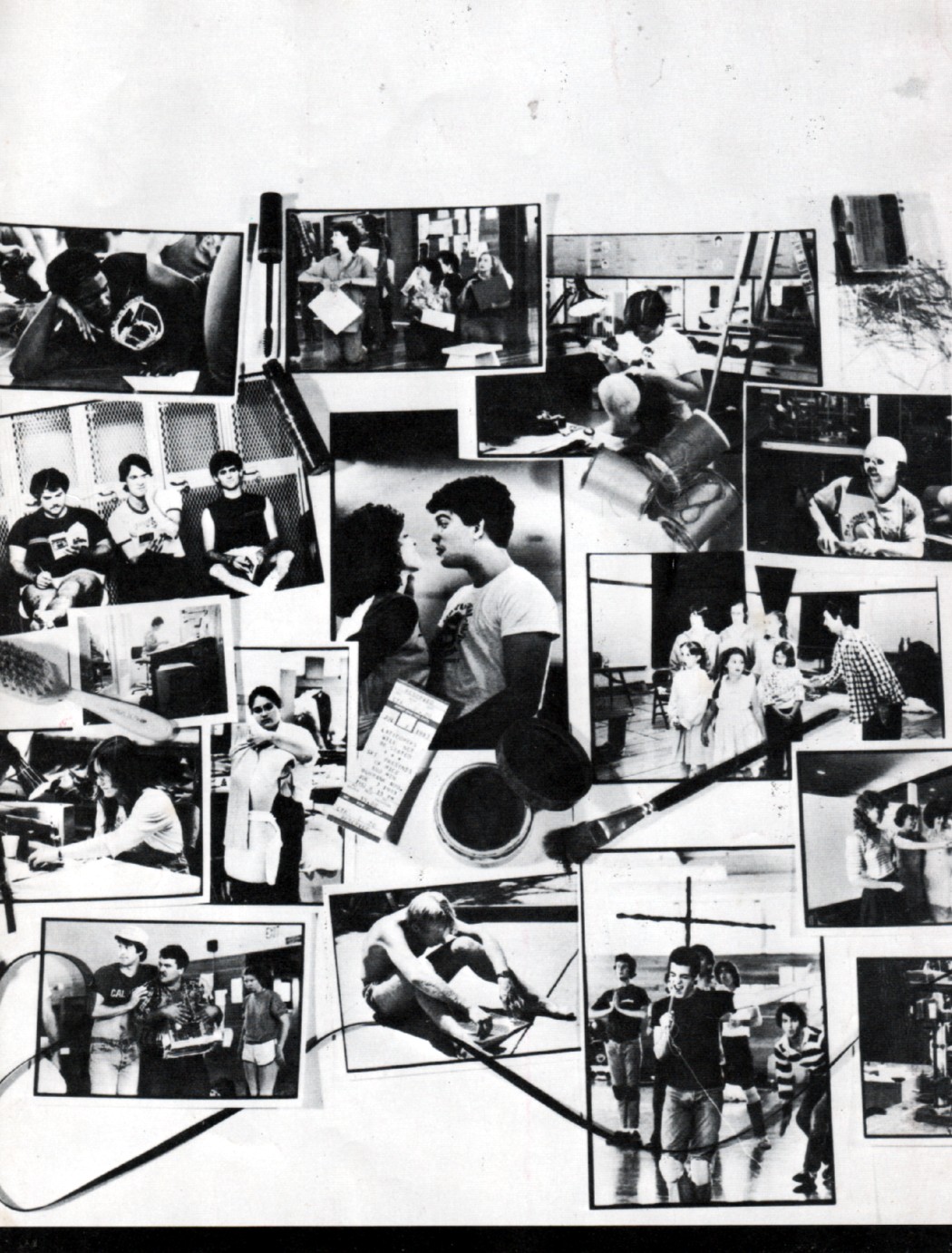
Alys and Carmen collage

With my friend Carmen. Our high school yearbook photos, 1977 and in Boulder, Colorado, 2017

One of the highlights of our time in Boulder was the chance to see my friend Carmen. I haven’t seen her in 40 years! I posted about our trip on Facebook and she mentioned that she lived close by. She drove from Colorado Springs to meet us for brunch, followed by lots of catching up.  We had a wonderful time.

On our last day in Colorado, we drove to Denver and spent hours at the Denver Botanical Gardens. I’ve been to many botanical gardens over the years, and this is by far my favorite. If I lived locally, I would visit again and again. I took over 225 photos while we were there, and I barely scratched the surface.  We enjoyed cooler weather for most of the day and a bit of rain which I loved. We lunched outside under a tree while it rained, enjoying a hearty, vegetarian soup.

Denver Botanical Gardens

Denver Botanical Gardens

While it’s always great to travel, it’s good to be home.  The boys took care of the house and the kitties while we were away, a first for the two of them together.  It made traveling a breeze.

My youngest son starts his senior year next week, so we’re happy to have had this time before the onslaught of college applications and the like.

Wish you were here!

Hot August Melancholy

Hot August days invite a certain melancholy. As July comes to a close, an ancient grief rises to the surface and the more I swat it away, the more it demands my time. My nine-year-old self rises to the surface and reminds me of my terrible loss: the death of my father on an oppressively hot, early August day.

Dad was a horticulturist by trade, but his love of gardening came home with him as well. He built our Ontario garden from scratch, changing a mound of dirt into what felt like paradise.

Daddy's Easel

Daddy’s easel, hung on the wall of my crafting area. Photos of his model of the Golden Hind, Dad with a dog on someone’s porch, the flower shop he once owned with my Mum in Seaforth, Canada

If he were with me today, I would place my hand in his and we would walk through my garden together.

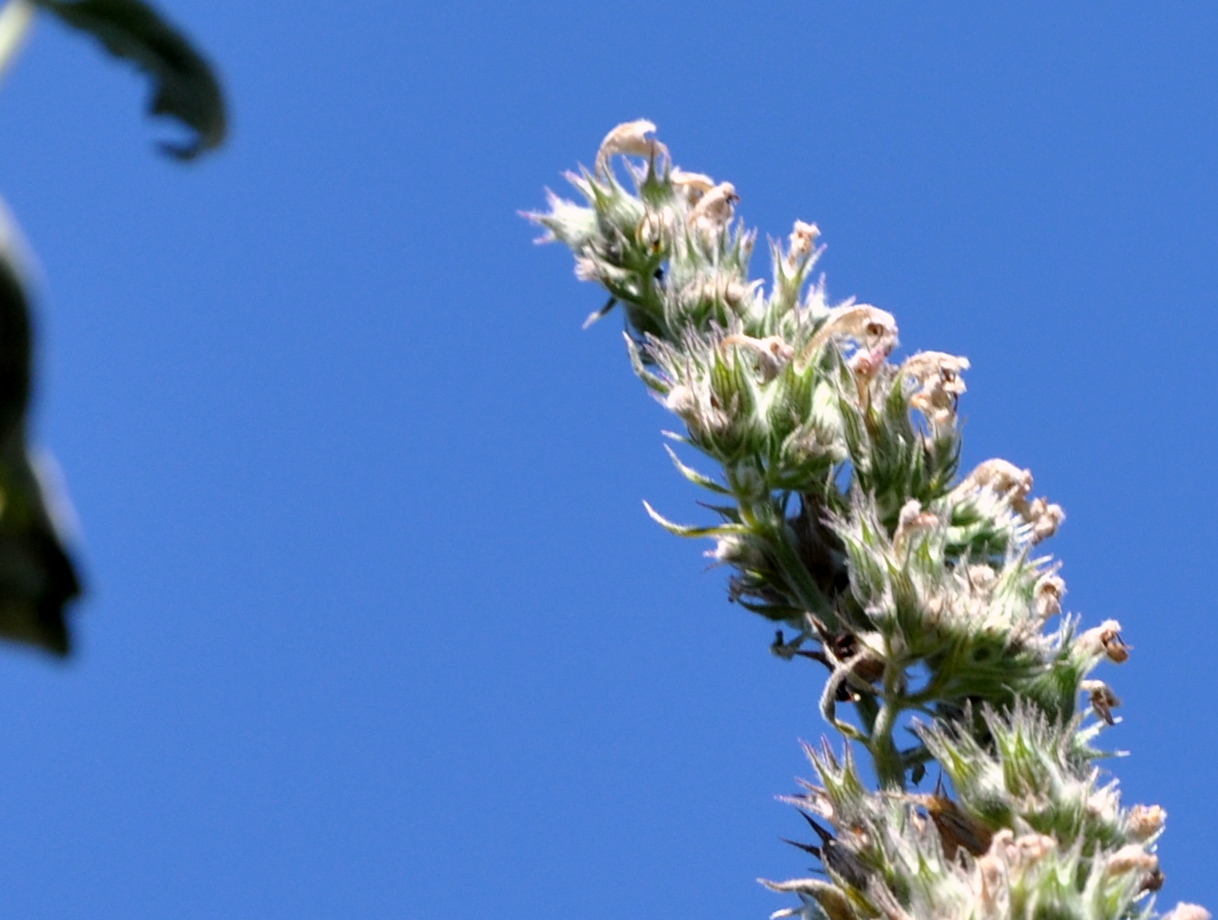
bee on chocolate mint

A bee gathers pollen from the chocolate mint in bloom

I once captured bees in a jar to show my dad I was brave. He explained in his kind way why I should set them free. They’re good for the garden he said. I was six at the time but for some reason that memory remains sharp and clear. Perhaps when memories are scarce, we hang on to what we can.

bee on chocolate mint flower

A bee travels the garden

We had a shorter growing season in Canada, but Dad was able grow tomatoes each summer. What fun we had harvesting the fruit and bringing it through the back door for our lunch.

curb garden tomatoes

Three green tomatoes, coming along nicely in the curb garden

tomato plant flowers

Tomato plant in bloom

Dad didn’t grow pumpkins in our Ontario garden. It would be especially fun to show off my beautiful specimen and to smile about the squirrels that most likely planted them.

tree rat with birdseed

A tree rat helps himself to some bird food late one night

Dad loved all animals, once rescuing a mouse from a group of boys on the street in his home town of Oldham, England. I too rescue rats and mice and though most people cringe, I couldn’t imagine it any other way.

Mouse curb garden

Mouse surveying the curb garden

Daddy would surely get a kick out of a different kind of mouse: Mouse the Cat. Mouse is a rescue too, in his own way.

I descended from a long line of people who rescue strays. It’s a wonderful lineage.

These hot days will pass and my mood will lift, but for now I’m making room for that ancient loss and grief.

Save

Save

Save

Garden Tomatoes: An Uninspired Tale

I’m not sure what to think about this season’s garden tomatoes. The expression “failure to thrive” comes to mind. Sadly, the basil and the corn in this box aren’t doing so hot either.
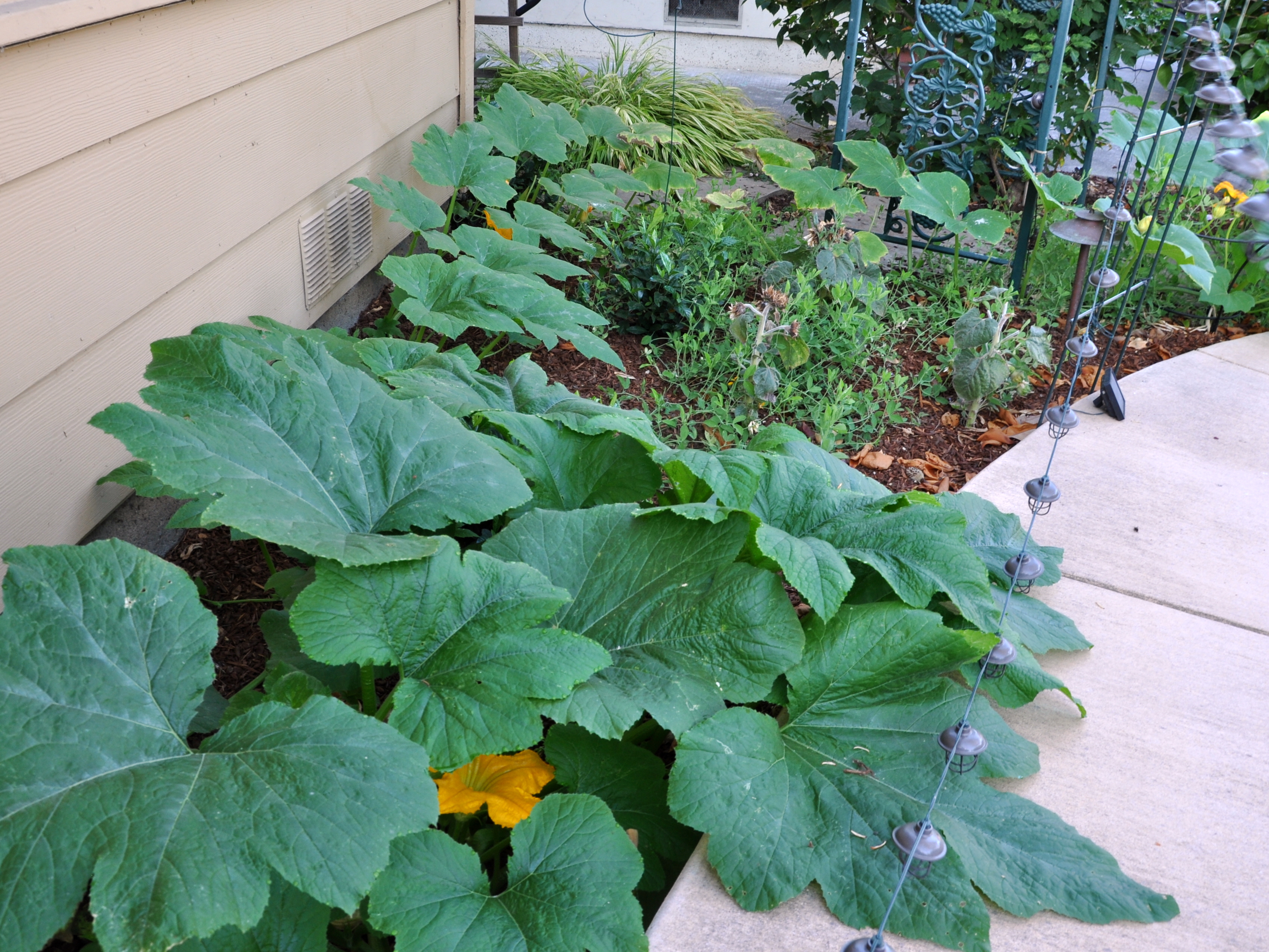
VegTrug with corn, basil, tomatoes

VegTrug planted with basil, tomatoes and corn. They’ve all remained small

Generally speaking, tomatoes are fairly easy to grow. The plant is part of the nightshade family, so their poisonous leaves remain untouched. The small yellow flowers attract the bees and before you know it (usually!) you have a vine of ripening tomatoes. Sometimes it’s hard to keep up with the production as they fruit all at once. That has not been a problem this year.

I planted half a dozen bedding plants in the spring. Some years I start from seed, but I didn’t save any last year so I went the lazy route. I put several small tomato plants in my raised VegTrug and three more in my vegetable box.

native garden and veg trug

May, 2017. Everything looked healthy in May. The nasturtiums surrounded the tomatoes, until the heat set in

I had one more plant in need of a home, so I popped it into the curb garden where it would get plenty of sun in the company of the perennials.

It’s taken nearly four months for three of the plants to produce.

orange cherry tomatoes

The first of the tomatoes

orange tomatoes in planting box

The first of the tomatoes in the planting box. They’re small but delicious

The plant in the curb garden never grew more than a few inches tall and the same goes for the plants in the VegTrug.

curb garden tomatoes orange

Tomatoes growing on the left side of curb garden box…all five of them!

I amended the soil, and watered faithfully once the rain stopped. The plants aren’t drooping or diseased and there is no sign of garden pests. They’re just small and sad and completely unremarkable.

Poor soil could be the culprit though I amended the soil with coffee grounds which I got for free at our local Starbucks. I kept an eye on the water and I know they’re getting full sun.

Since I really wanted at least one healthy tomato plant, I bought a larger bedding plant in a different variety and planted it in the curb garden. It’s too late in the season to start over with a small plant or from seed. All the perennials are thriving in the box so I know the soil is robust. The new plant looks healthy so far, no thanks to my mad gardening skills.

tomato plant curb garden

Newly planted curb garden tomato plant

newly planted tomato

Flowers on the newly planted tomato

Time will tell.

Meanwhile, fire season is upon us. Locally, we’ve seen three small fires, two in San Jose and one in nearby Saratoga. They were all extinguished within 24 hours. A fire in nearby Saratoga burned on the other side of the ridge from the camp where my son volunteers. That definitely gave me pause.  The emergency alert system sent out a text saying to shelter in place, but when I checked on my son he said all was fine. We learned the following day that the alert went out to everyone in the county!  I’m glad the system works, but the error unnecessarily alarmed a lot of people, including this worrywart of a mom.  The largest active fire is in Mariposa/Detwiler. It’s burned 76,000 acres so far, but crews have it 40% contained. My hat is off to these firefighters that work tirelessly under unimaginable conditions throughout the fire season.

2017 Detwiler Fire map

Source: Google Maps

Save