May Flowers

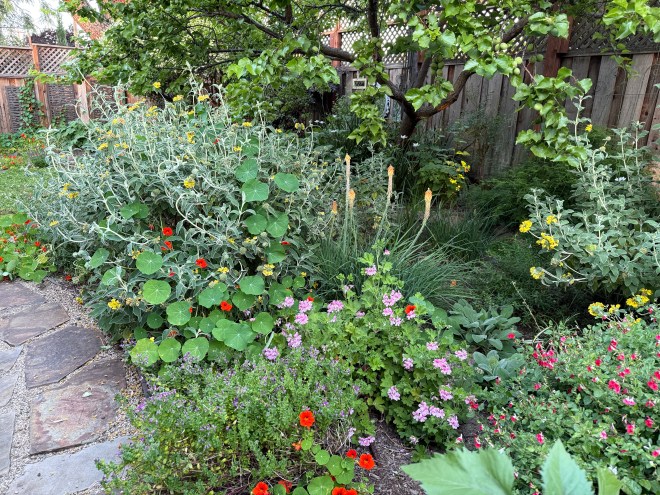
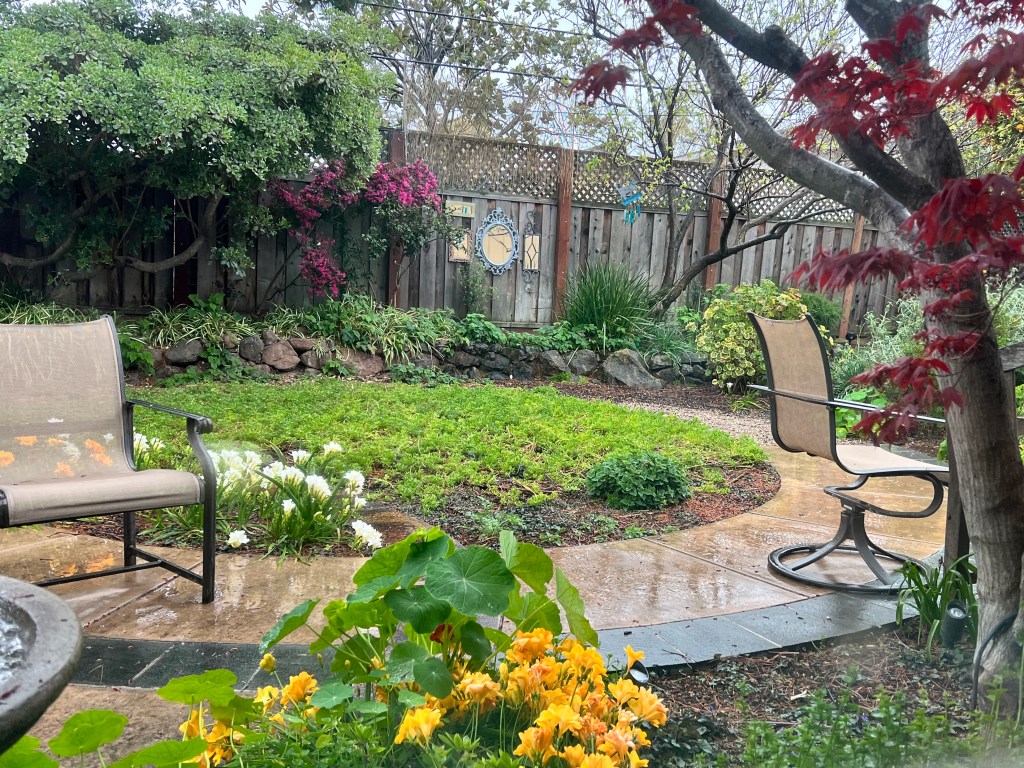
As my mobility improves post-hip surgery, I find getting up and down in the garden easier. Over these past weeks, I’ve brought the weeds under control, making daily weeding more manageable.

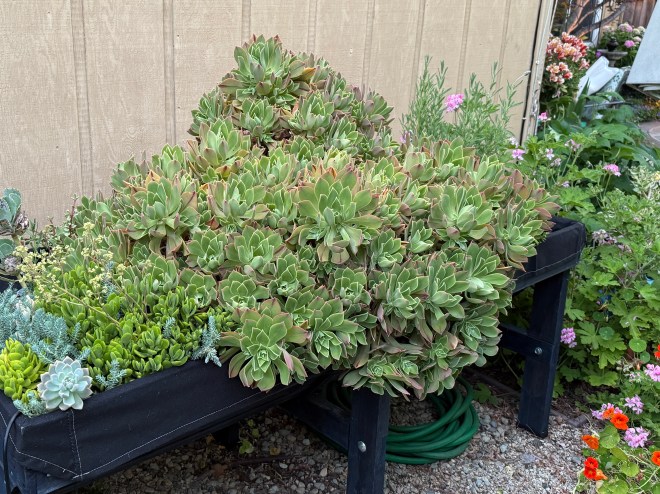
Yesterday, I looked under the veg trug, now home to a collection of well-established succulents, and spotted a just-out-of-reach oxalis, an invasive plant considered a weed in this area. My inner monologue cautioned against it, as I would have to kneel on the gravel path, bend at the waist, twist my neck, and then reach back to grab the weed. If you know anything about oxalis, you’ll know that the roots are strong and rarely willing to part company with the earth. I could have retreated and found my kneeler and a garden fork, but impatience got the better of me, and I went for it. Success! The weed is gone, I returned to an upright position, and I’m none the worse for wear. It’s the little things.

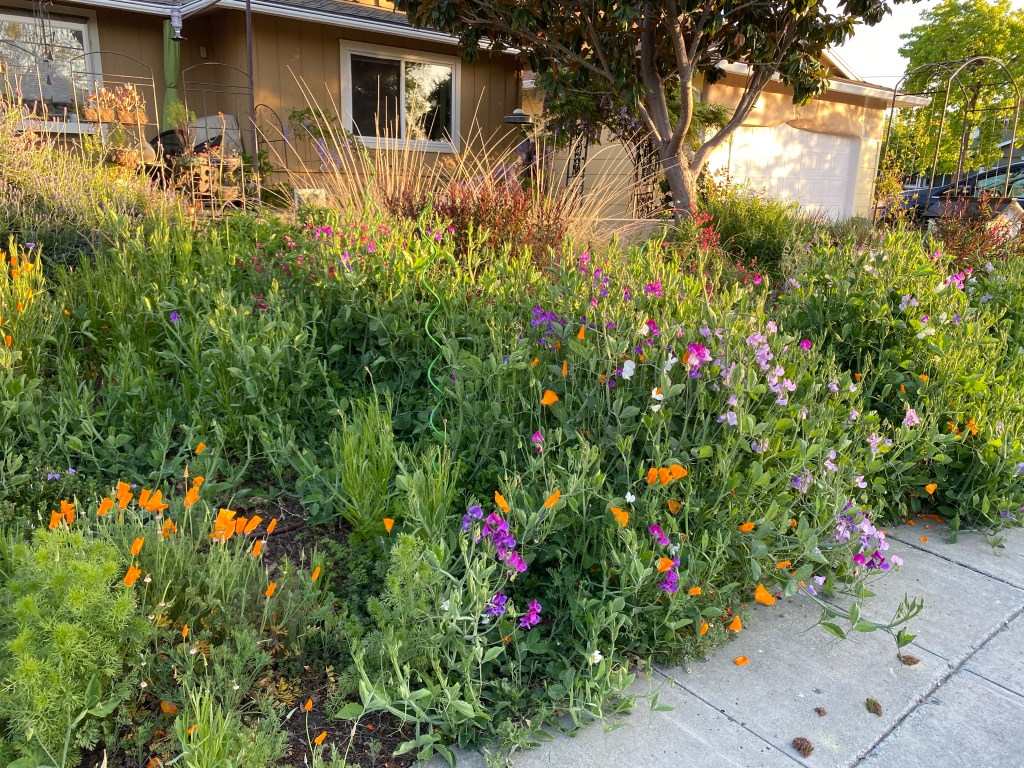
As I putter about, there’ve been joyful discoveries in the garden this year. Just a few days after commenting to Mike that I missed the self-seeding cornflowers, a beautiful, single, purple stem of one appeared in the front garden. They used to produce an impressive array of colors in pinks, blues, and purples, but equally rewarding, the birds loved the seeds.

The first of the cornflowers

When the plants were producing well, I spotted several birds feasting in the late afternoon. I left the plants past their prime so the birds could enjoy the bounty, and I assumed my seasonal crops resulted from dropped seeds. Then, for reasons unknown, they didn’t return. Seeds can lie dormant in the soil for various reasons, so perhaps they’ve been missing the garden secret sauce required for a prolific crop. Now at least one has returned. It makes me happy.

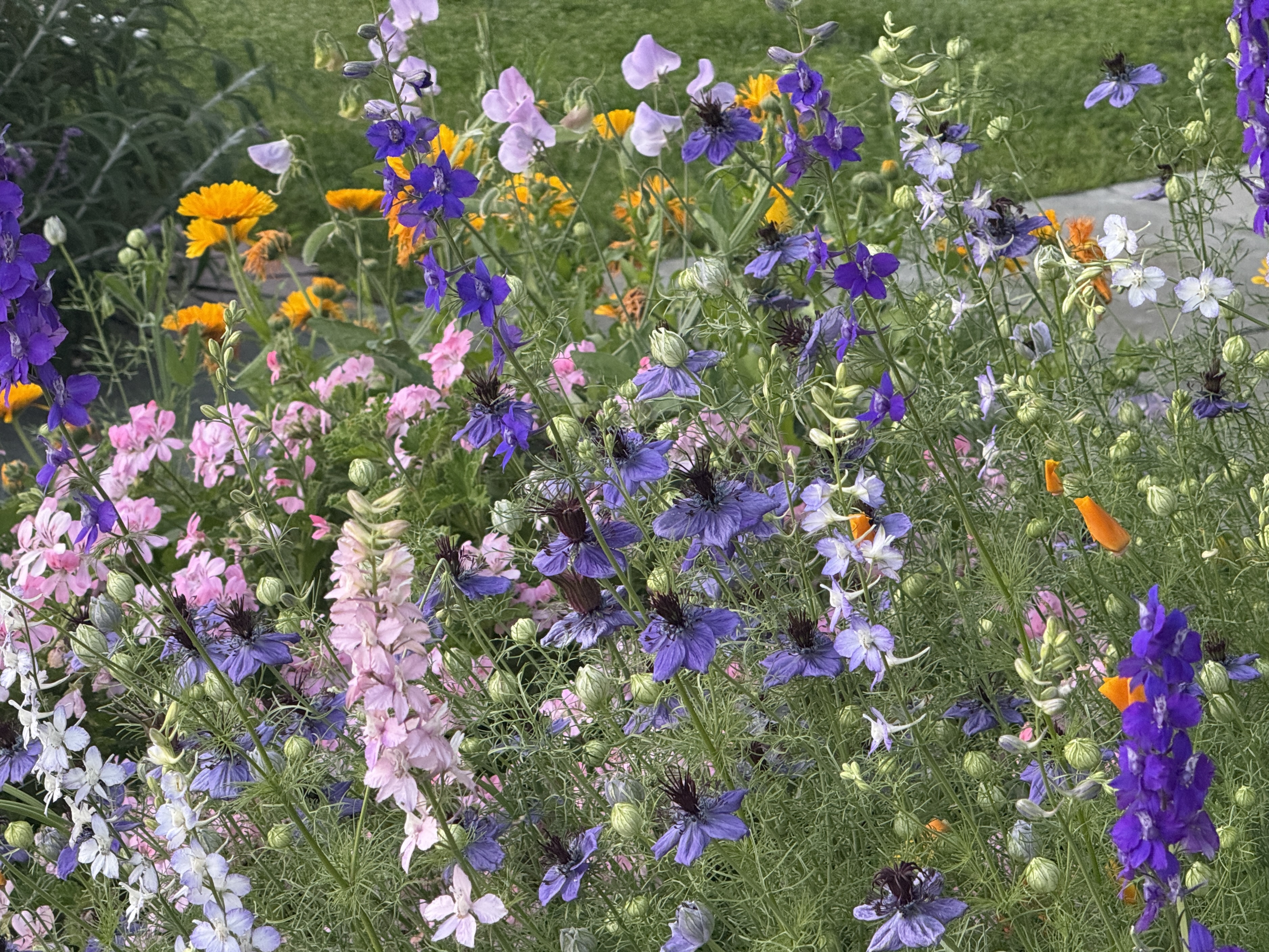
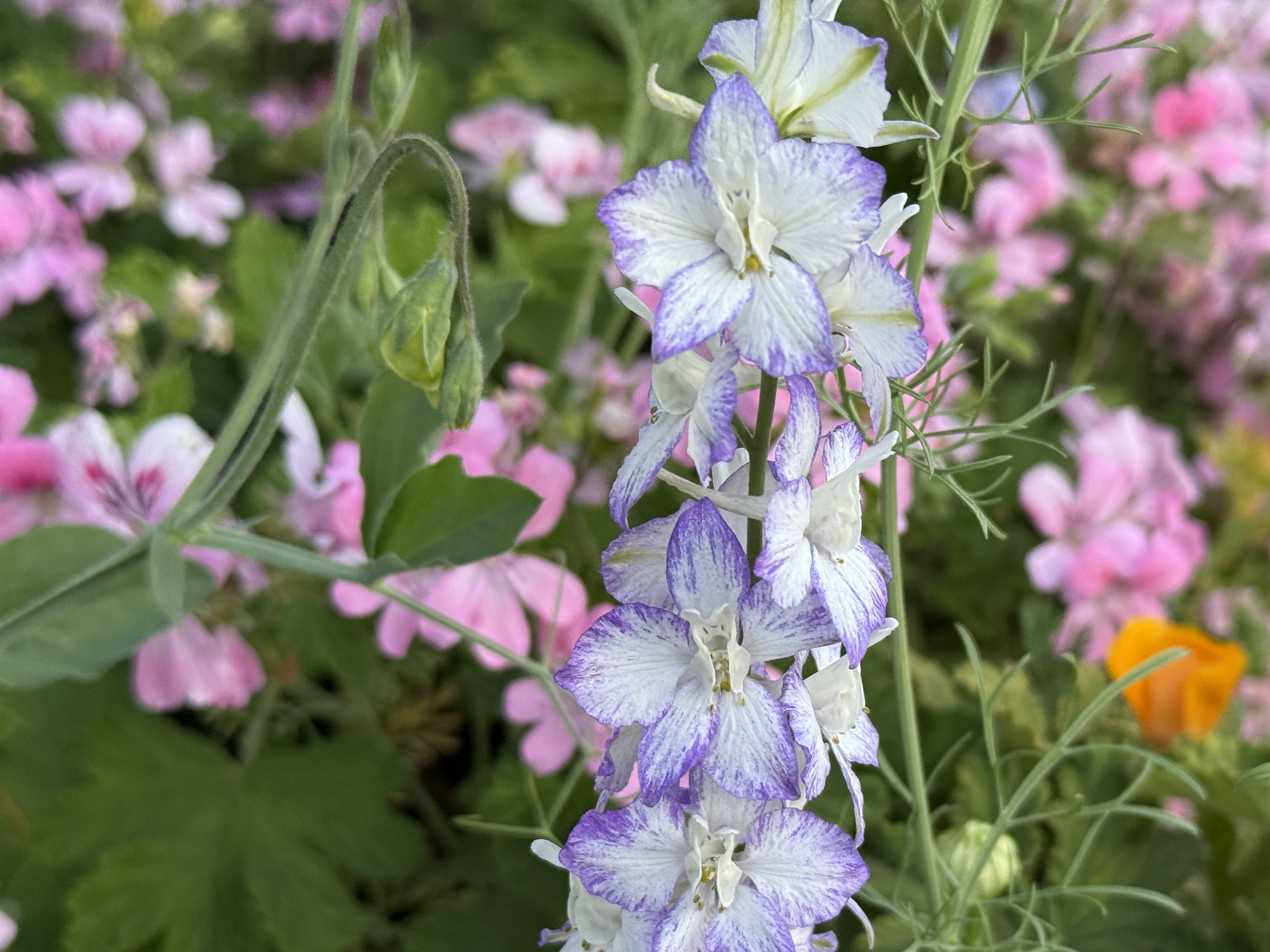
Also new(ish) is a tall, slender, annual flowering amongst the California poppies and nigella along the driveway. My phone identifies the flower as a Delphinium. Last year, a single flower emerged in the same spot, so I looked it up to be sure it wasn’t a weed. It went to seed and then I gave it a good shake, allowing the seeds to fall to the earth below. Now they’re back, standing tall and looking lovely.

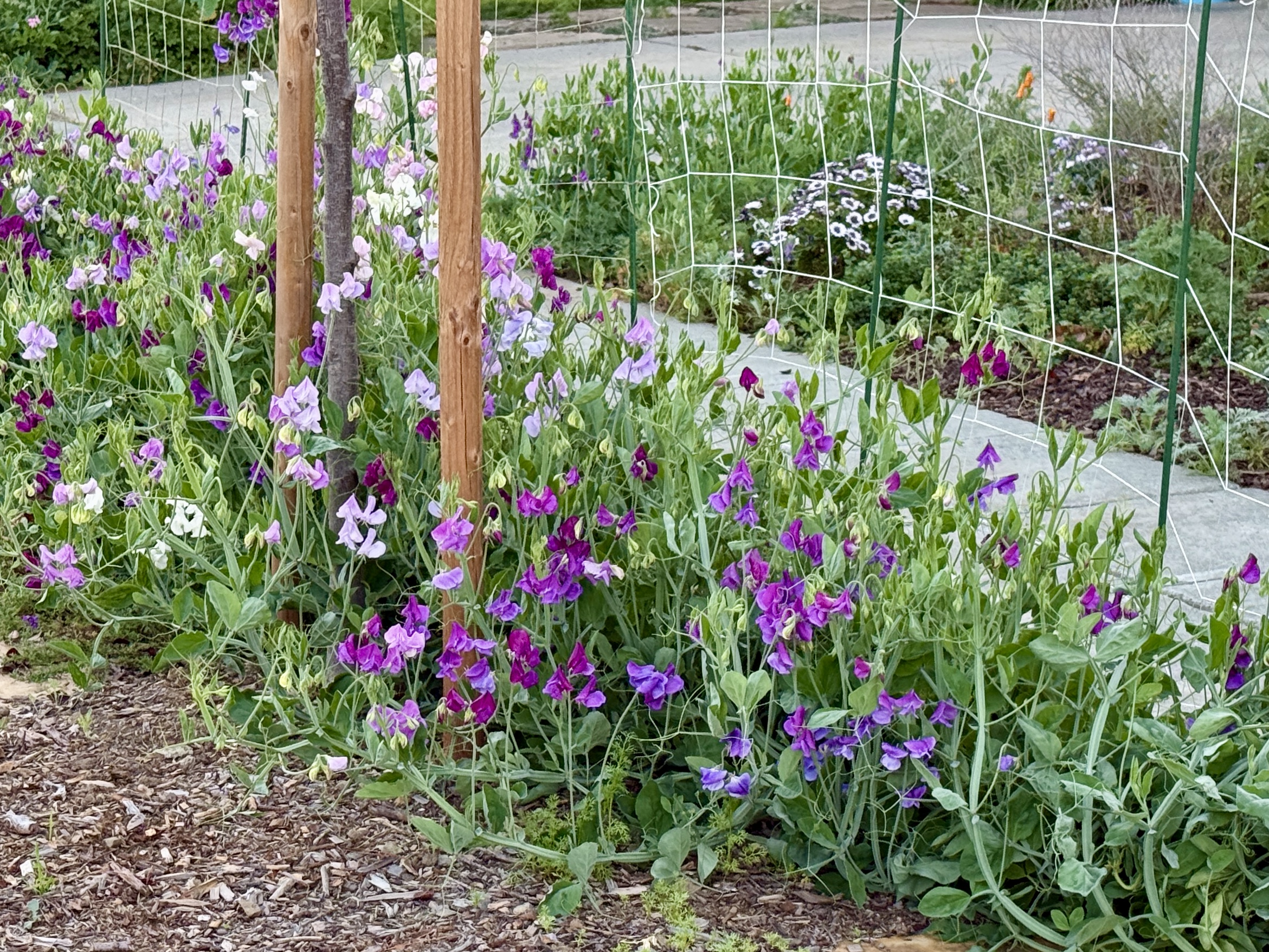
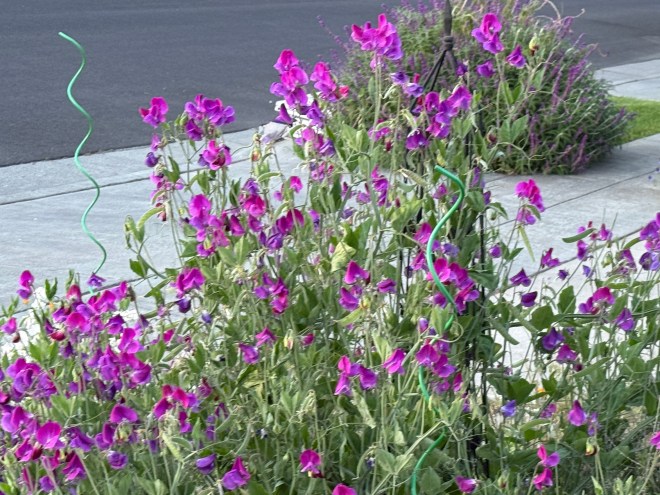
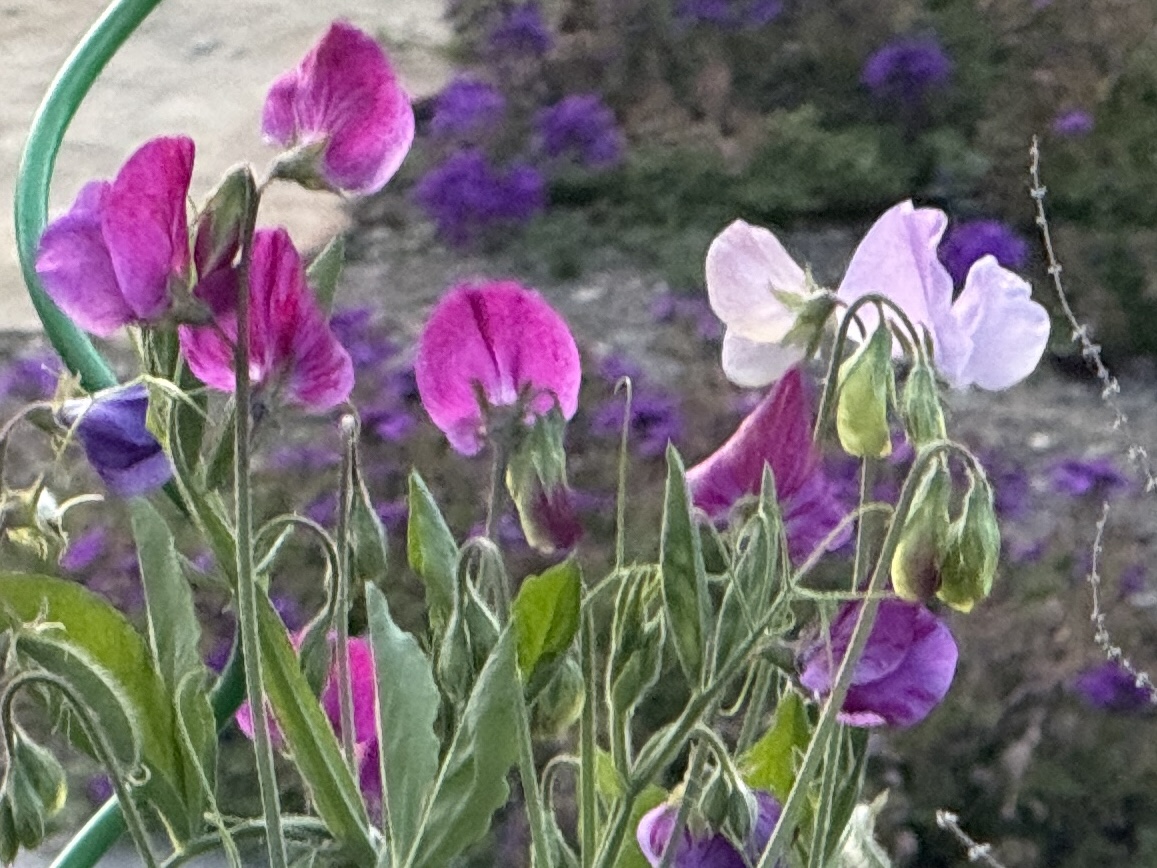
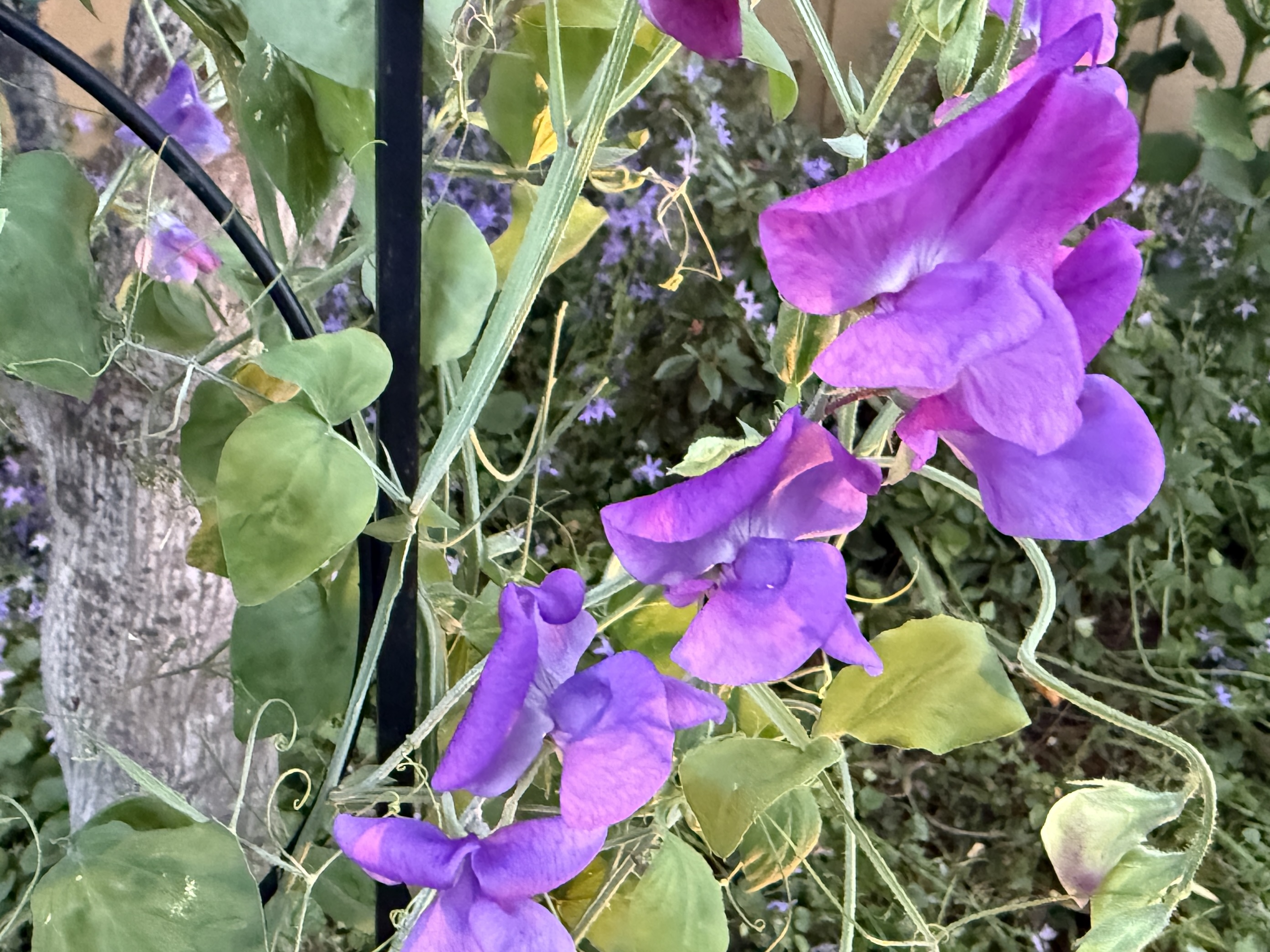
For the first time, a sweet pea, usually prolific in the front garden, traveled with some transplanted bulbs last fall, and it’s now growing under the maple tree in the back garden. I gently wrapped the trailing vine to a trellis, and it’s growing with abandon.

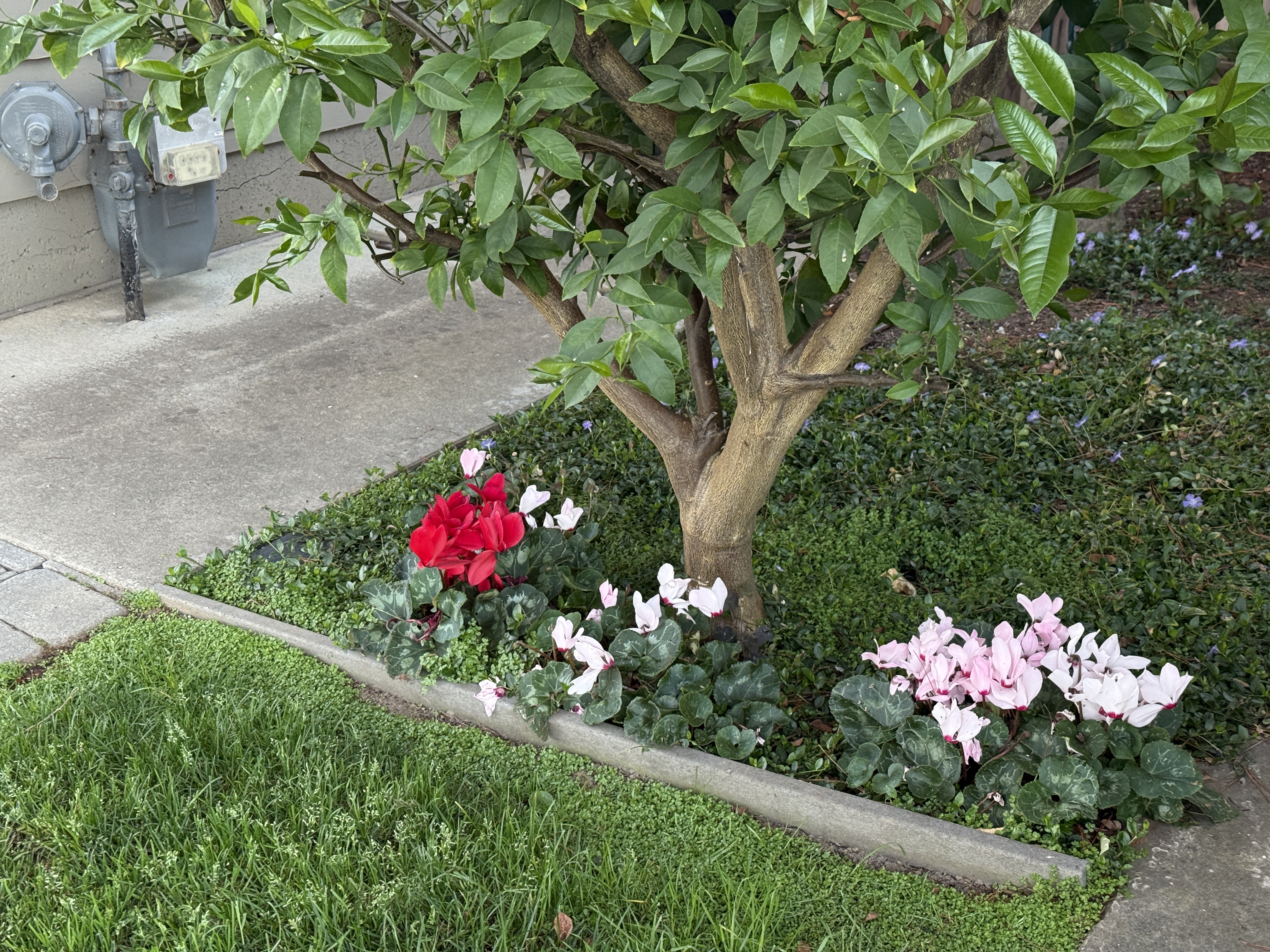
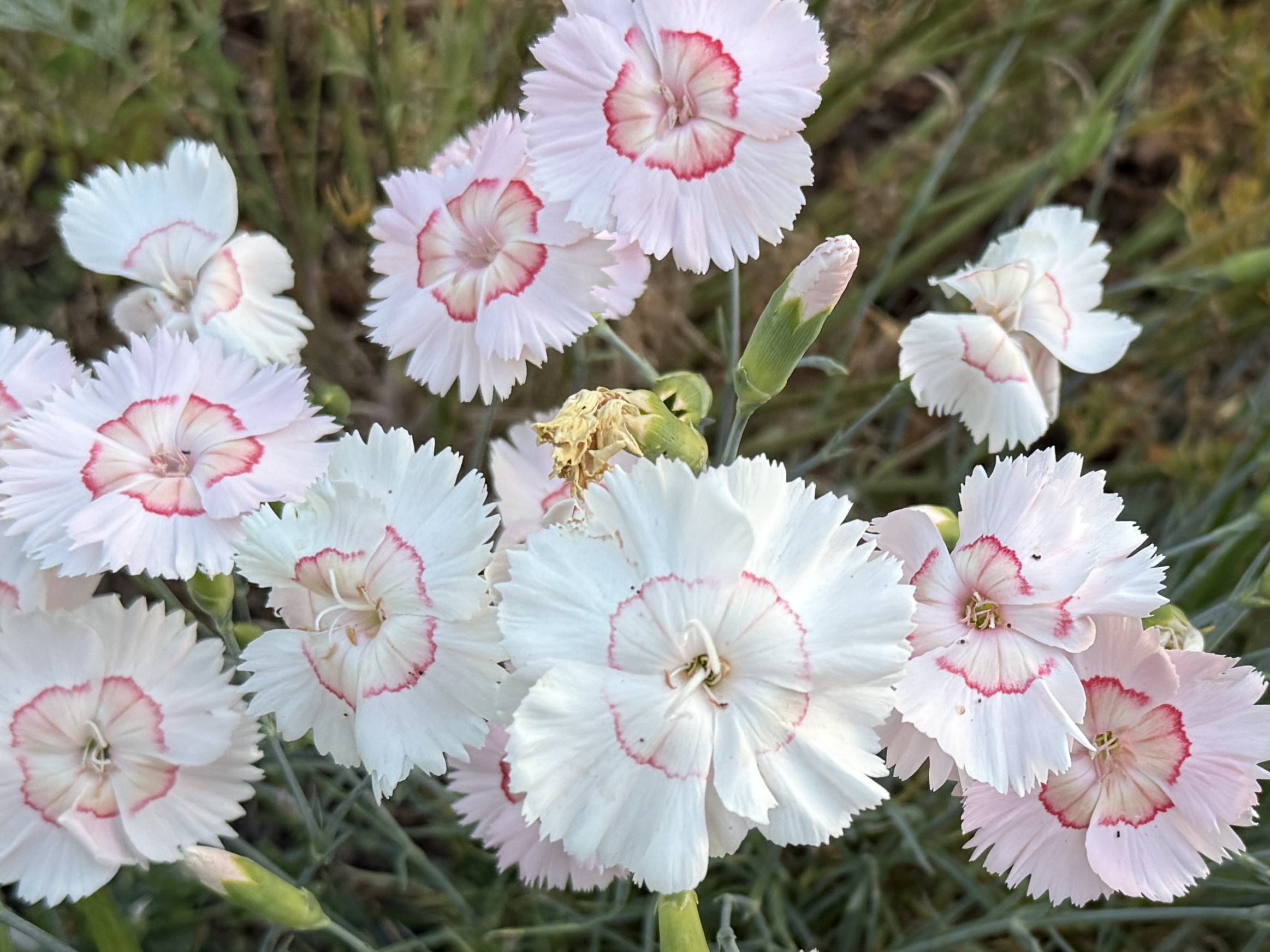
The carnations we planted last year have doubled in size and production, enough so that I’m comfortable cutting a few for a vase.

Mike dug holes for a pair of tomato plants, and as always, we cross our fingers and hope they like the new spot. Our tomato production is spotty at best, but the sweet flavor of a garden-grown gem keeps us trying year after year.

I’ve been playing in the dirt my whole life, and though my body has aged, gardening never gets old.

Gardenia’s in a Vase on Monday

Lucky me! After another wet winter, the gardenias put out plentiful, magical, scented blooms, just waiting to be cut for a vase.

I’m joining “the Cathys” for a weekly meme encouraging bloggers to share something “In A Vase On Monday” or IAVOM. It’s a mouthful, and it’s fun.

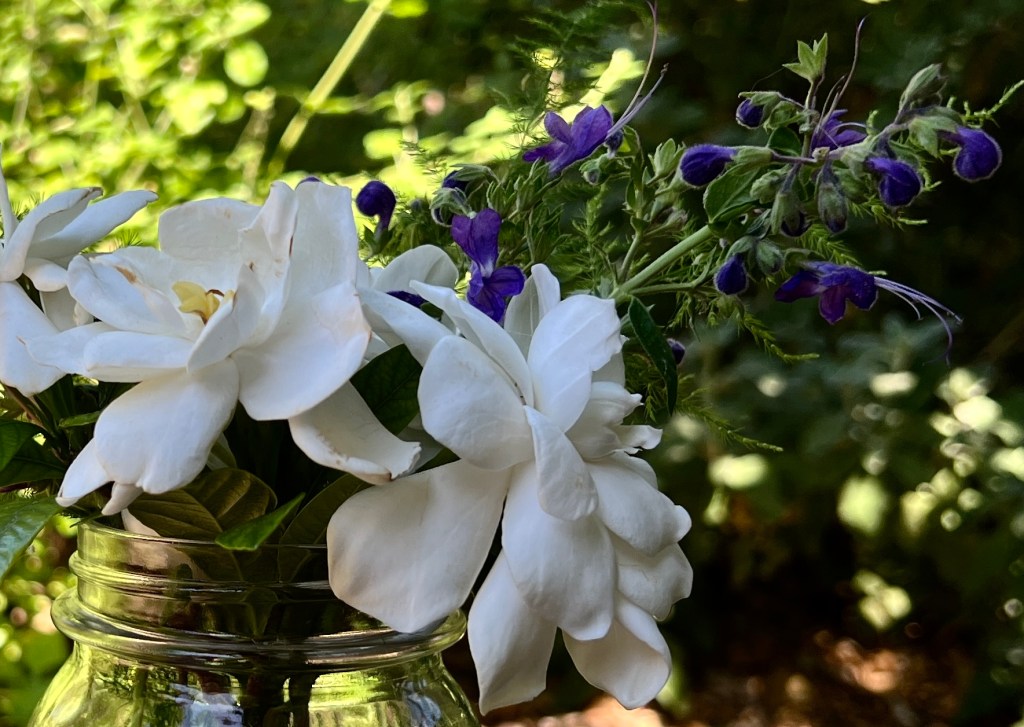
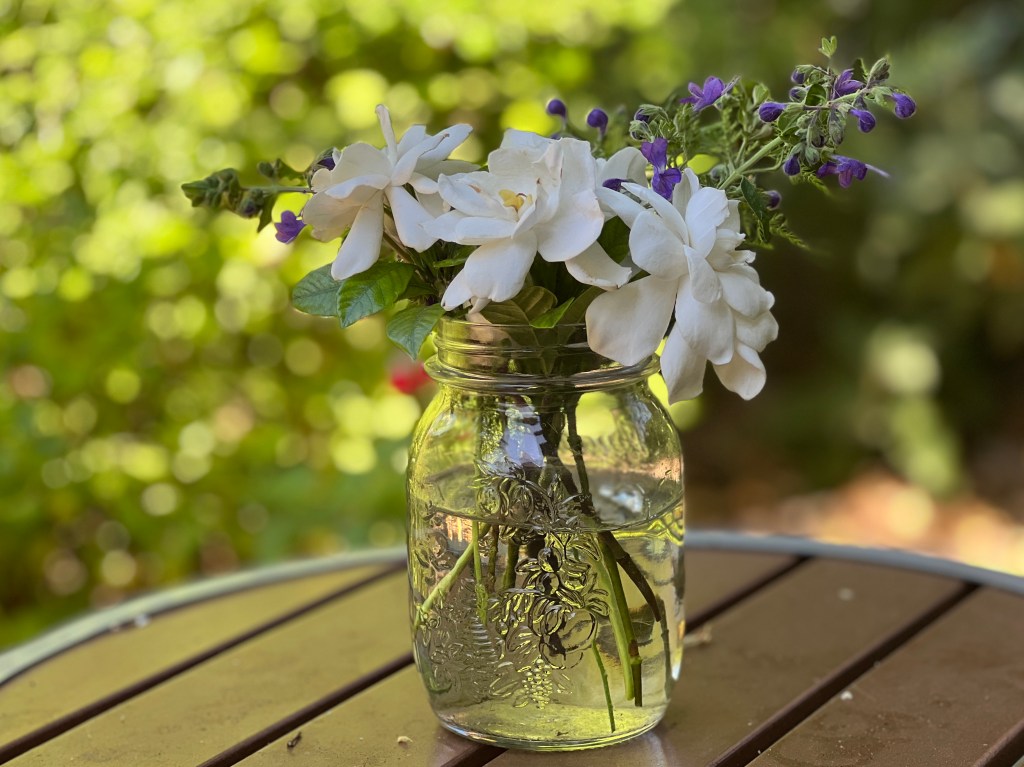
I’ve arranged five gardenias in a glass jar, some asparagus fern, and a few swigs of purple salvia. Gardenias don’t last long in a vase, but it’s still worth bringing a few indoors. They turn brown and droop, but the intoxicating scent remains. With greenery to keep the flowers company, I can overlook the droop for that scent.

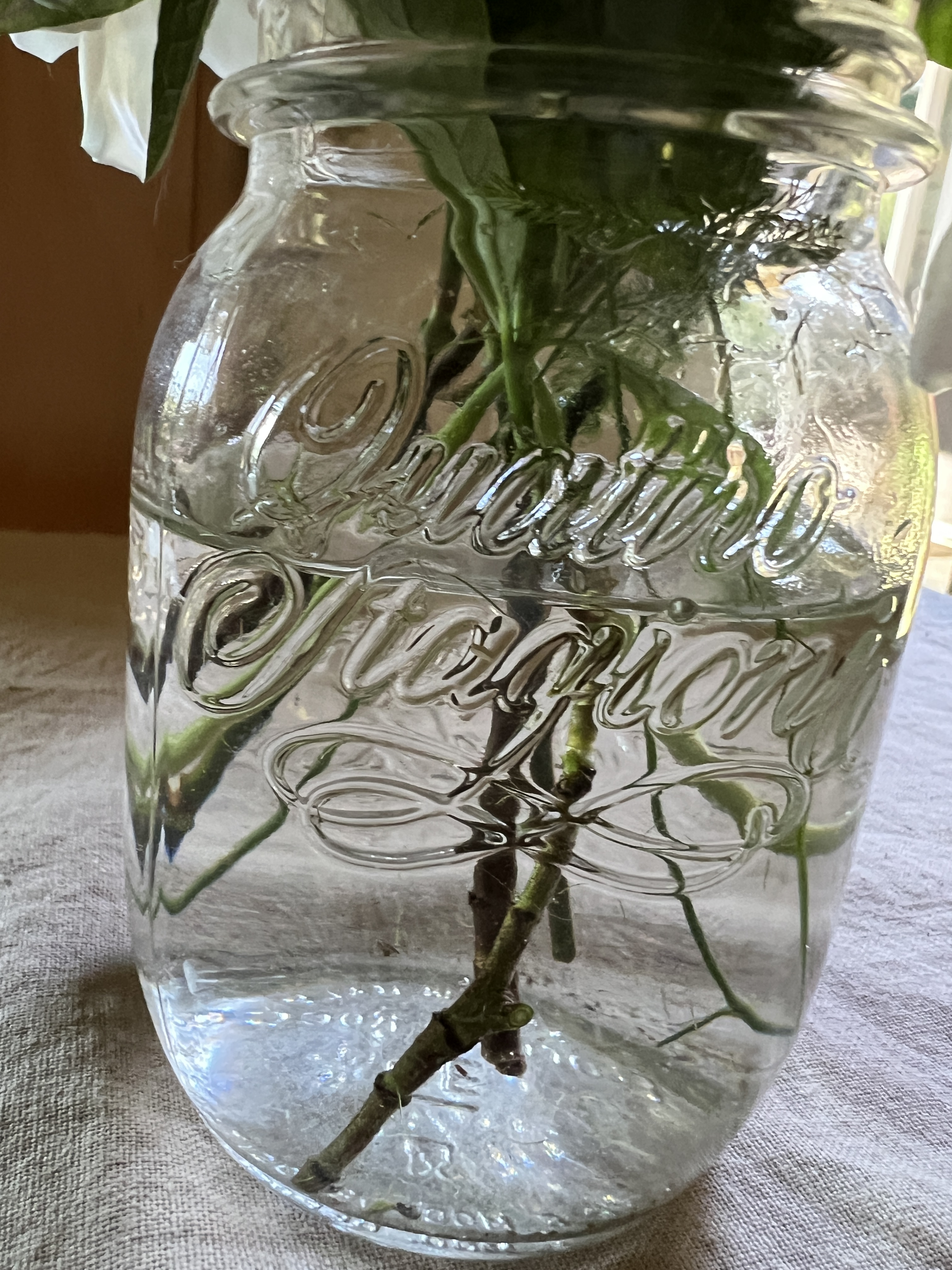
Instead of a vase, I’ve arranged my cut flowers in one of my favorite glass jars. The Quattro Stagionioma sauce is long gone, but the beautiful embossing lives on. It’s challenging to take pictures of glass, but I’m hoping you can see a bit of the pretty pattern.

For some beautiful inspiration, check out some of this week’s vases.

Cathy, the gardener who started IAVOM, shares her gorgeous roses and a history lesson from her English garden today at Rambling in the Garden.

From Cathy’s Bavarian garden, a stunning purple arrangement at Words and Herbs.

Eliza Waters shares the last of her stunning peonies, which were grown in her garden in Massachusetts, US, creating a breathtaking arrangement.

Sun and Rain

We’ve had intermittent rain these last few weeks but found time to work in the garden and visit an open-space preserve. On colder days, we seek out the sun’s warmth by standing on the sidewalk with the sun on our shoulders for a few moments before returning to various tasks.

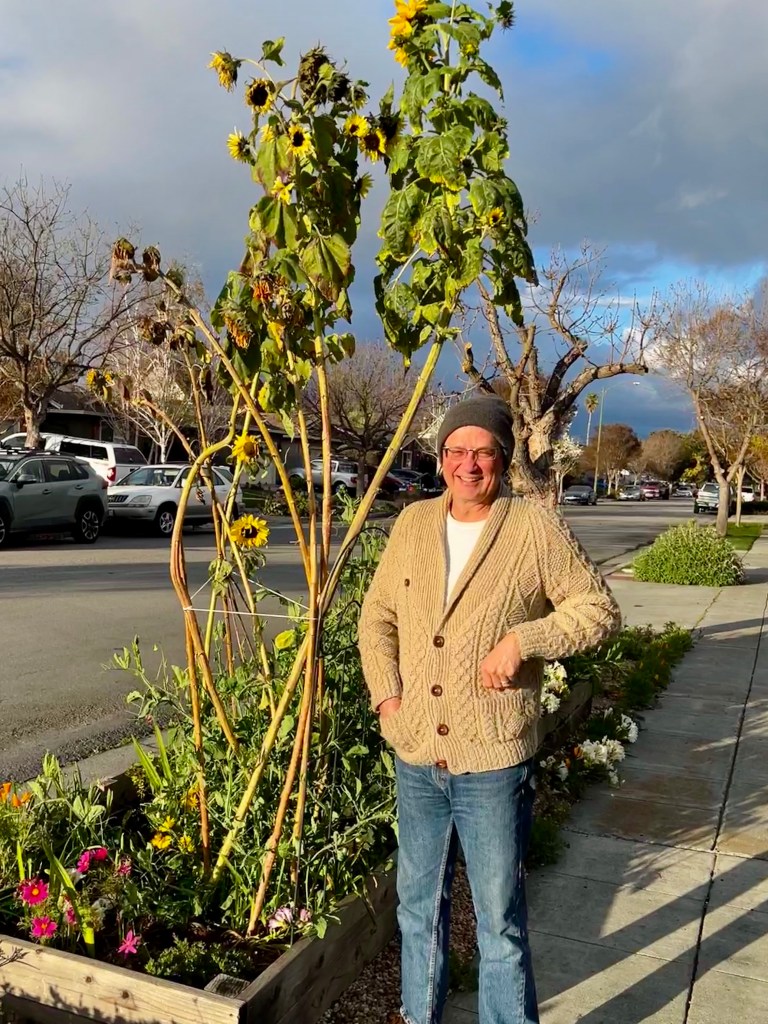
Mike soaking up some sun under stormy skies

Another winter of unusually heavy rains means lots of beautiful new growth and plenty of weeds. It’s easy to get the weeds out of the ground now, but it’s amazing how quickly the surface soil dries at season’s end. Unlike large parts of the country, San Jose is semi-arid, with most of our rainfall between November and March. After many years of drought, getting so much rain has been a gift.

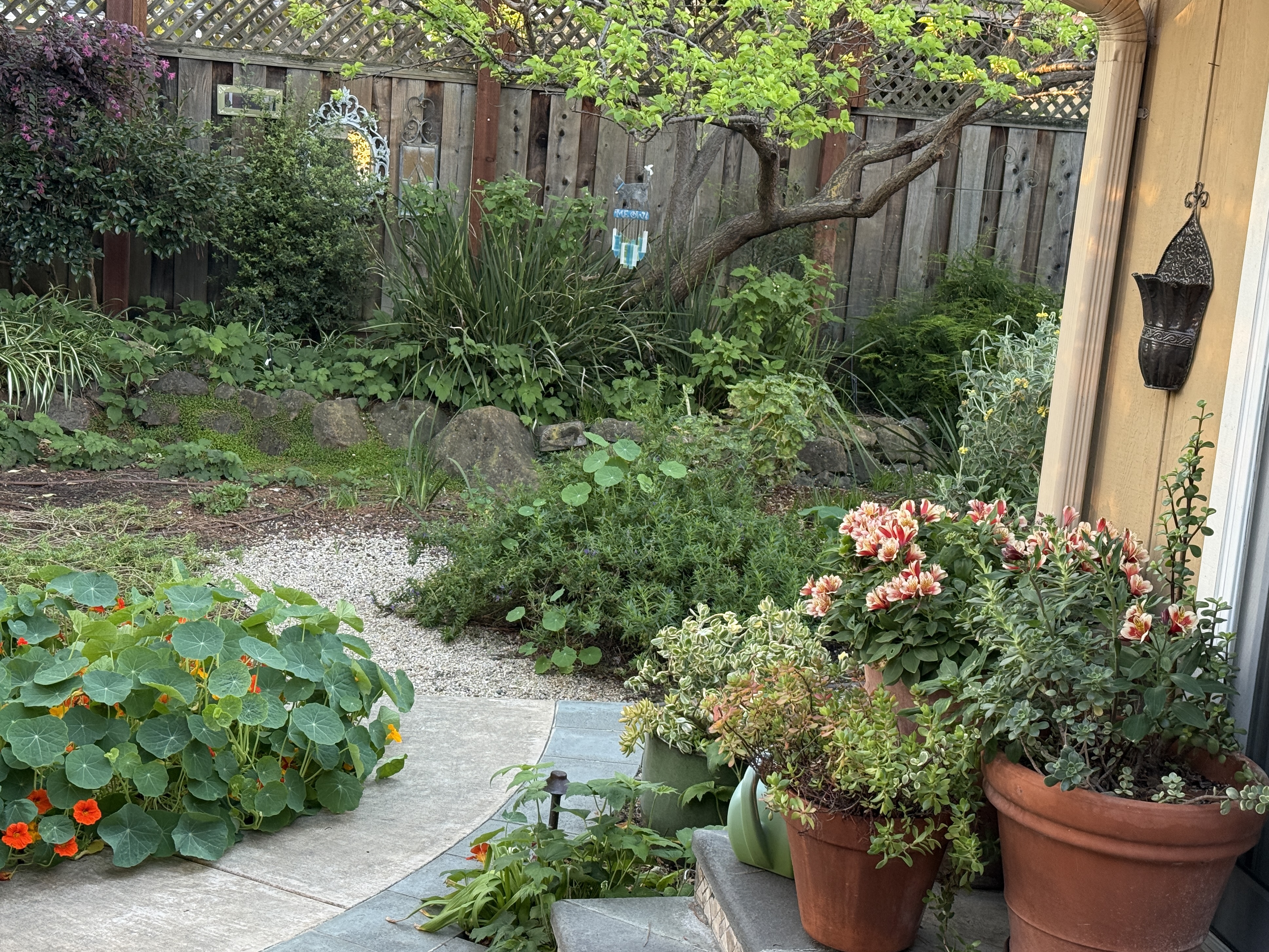
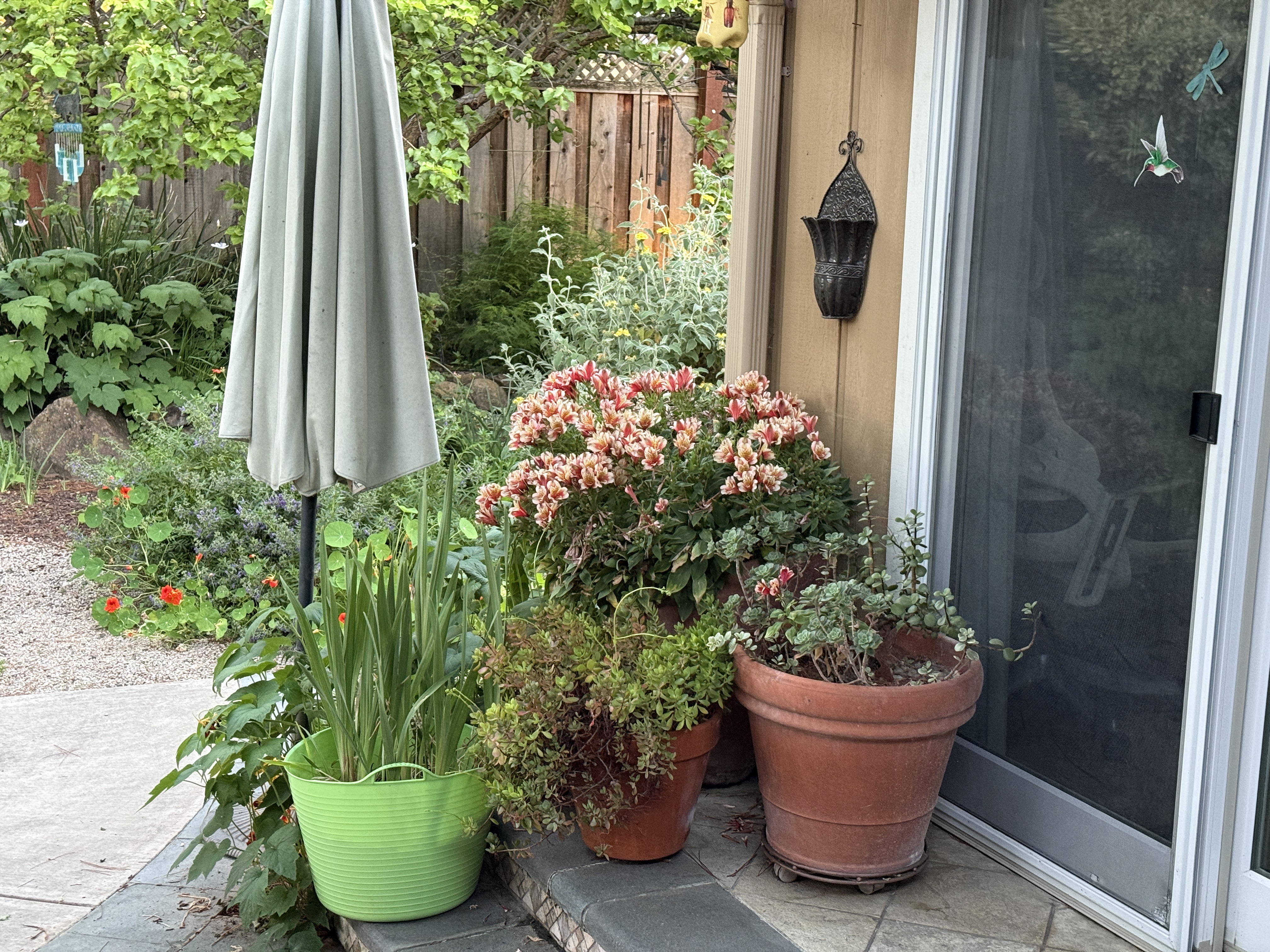
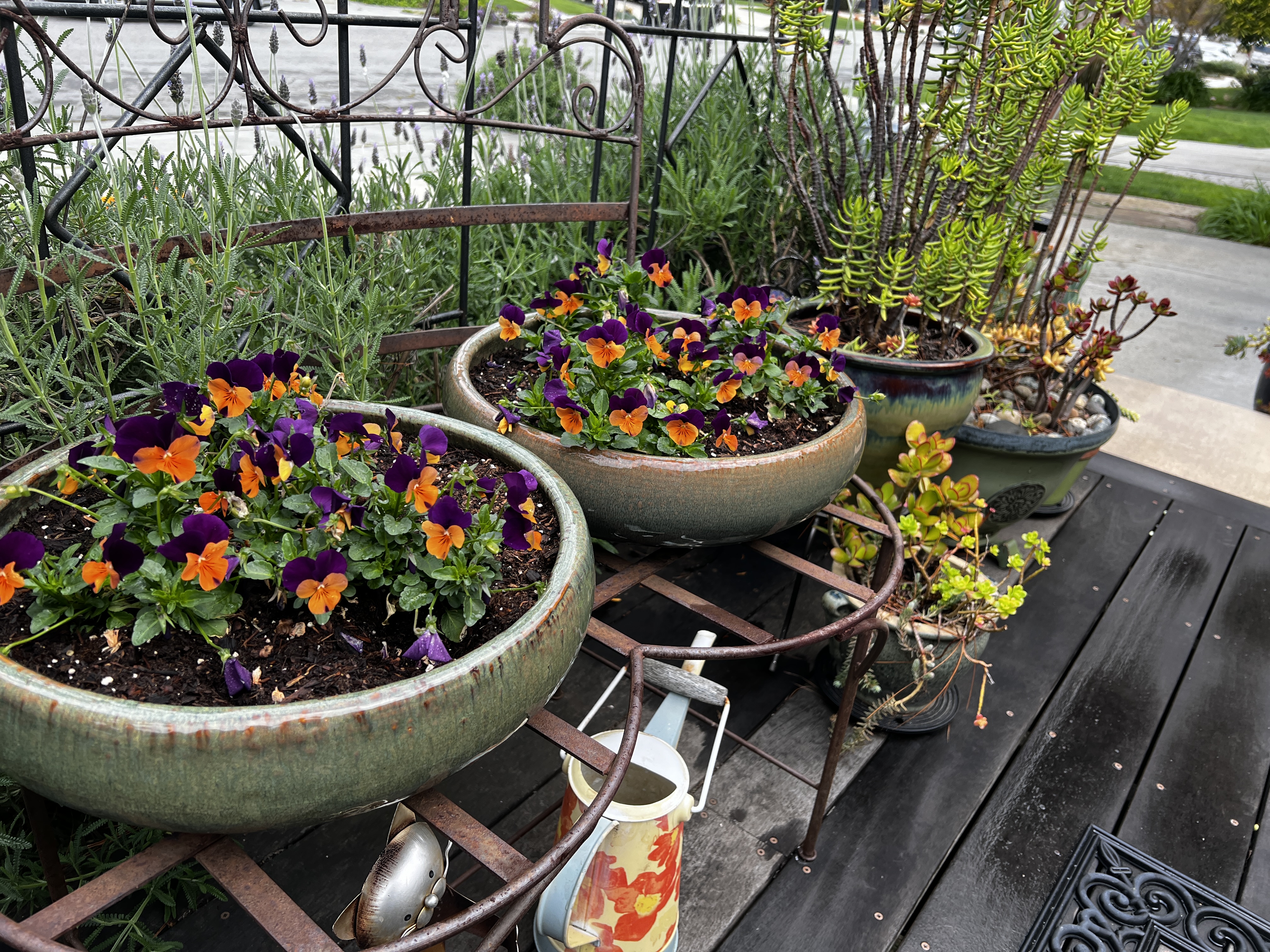
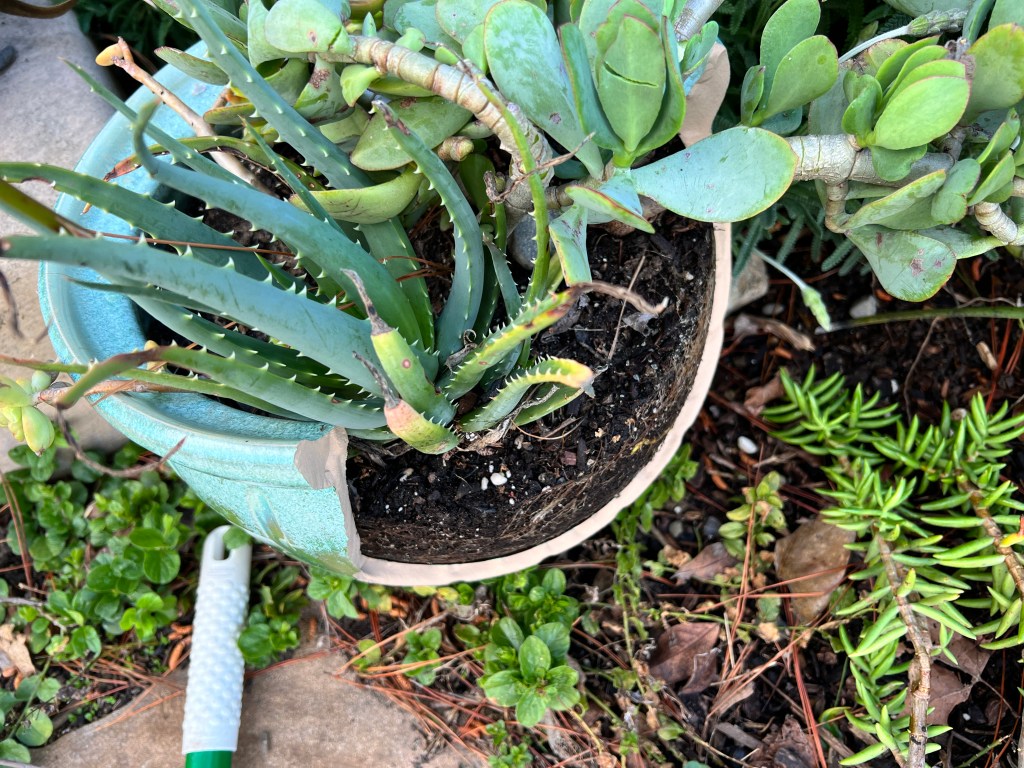
I did some rearranging on the deck, moving a few succulents to make room for a potted Yarrow.

Together, we wrangled a huge pot from the deck to the area just in front of the deck and to the right of the steps leading to the garden. As the new plants in front of it fill out, it will look like part of the planted landscape. It’s too large and prickly to transplant easily, but since the pot has drainage, the plant is free to set down roots.

Last year, I dug out some overgrown grasses and planned to put down pavers to make a path. After meeting with a vendor and receiving the first quote, I soured on the idea. Then, I came to my senses and realized plants are more fun anyway. We’ve cleared a few overgrown shrubs and replaced them with beautiful, native, or water-wise plants.

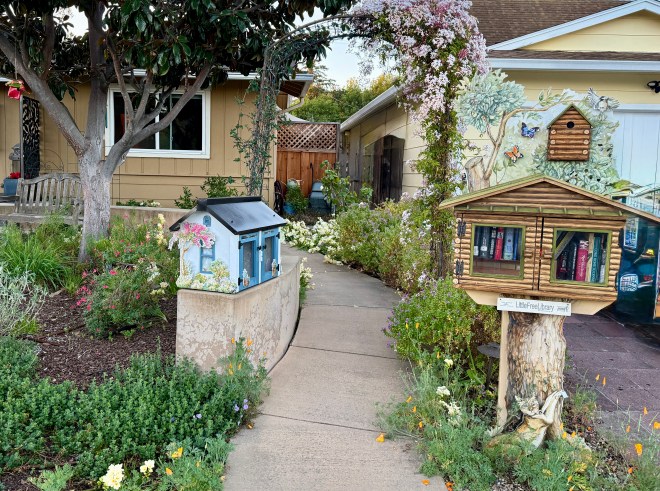
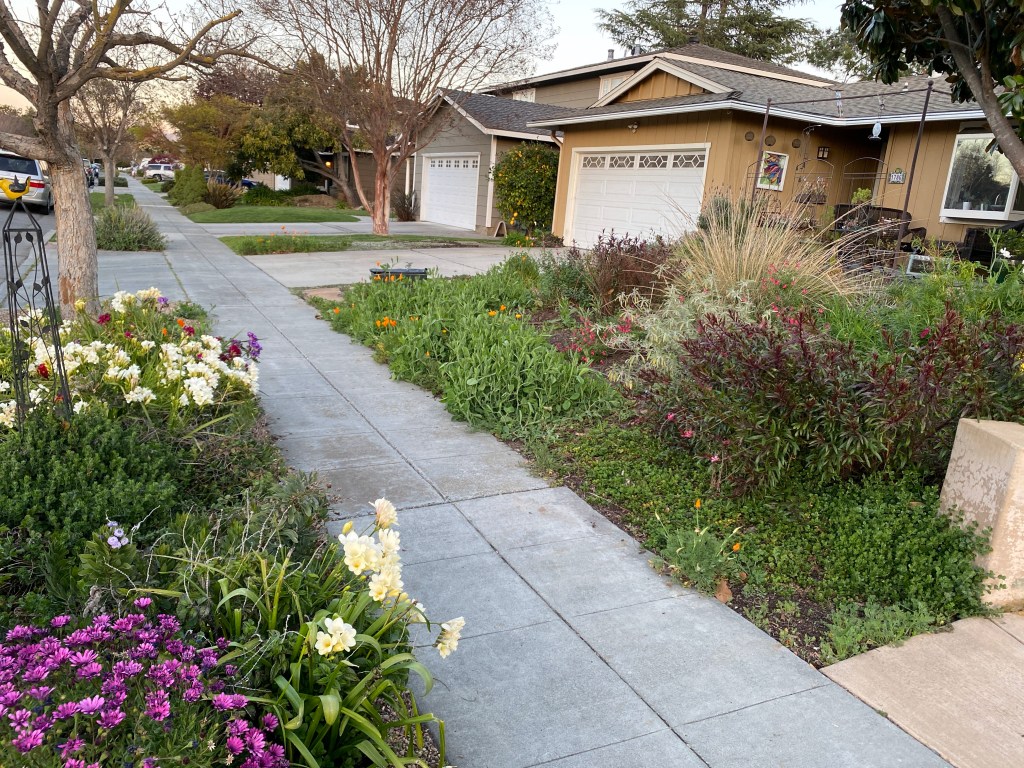
Front garden, old and new: California poppies along the walkway

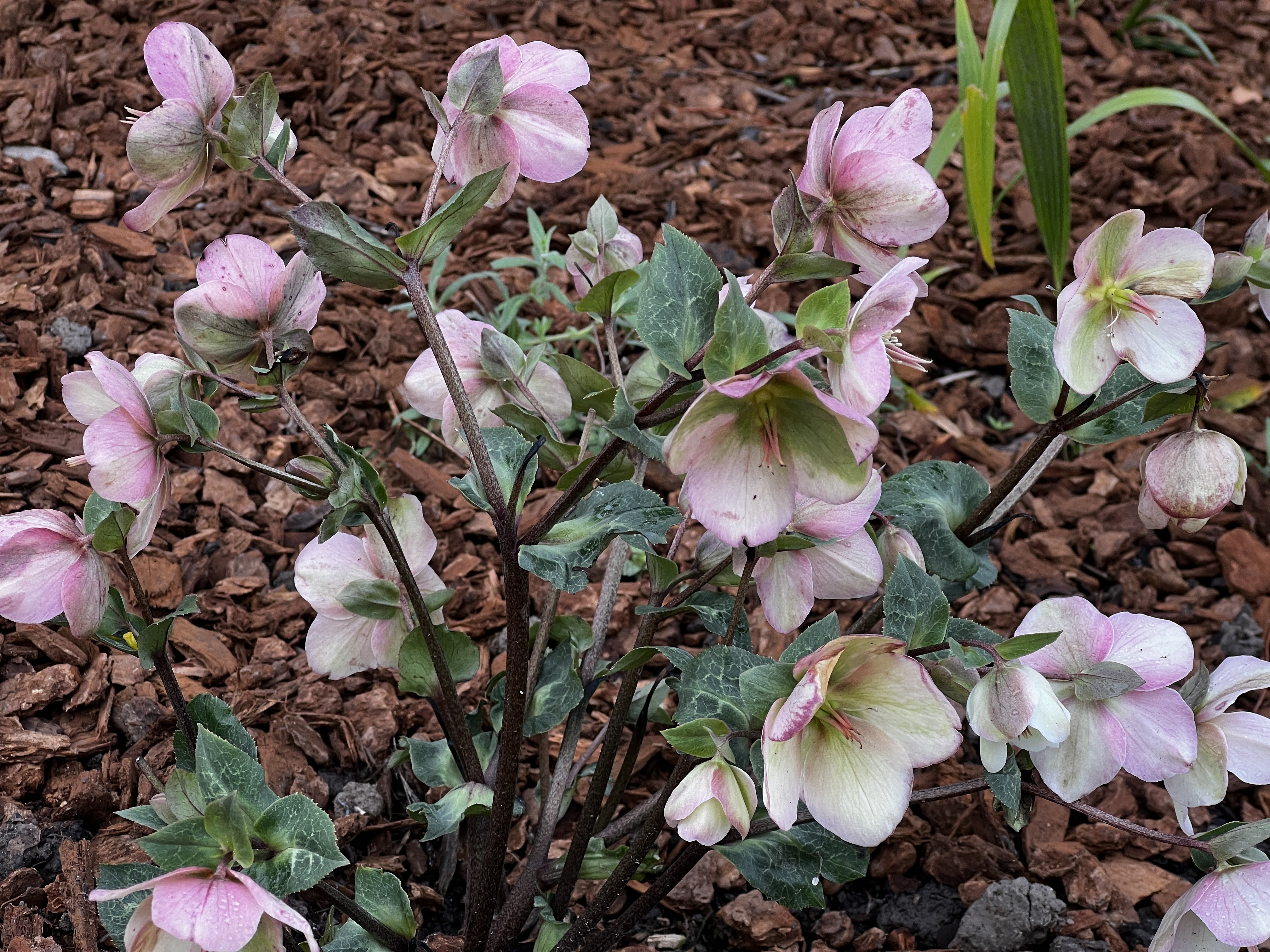
This year, hellebores, hostas, and carnations, also known as dianthus, are new to the garden. They’re tucked in with a thick layer of mulch to retain moisture and deter weeds. I can vouch for the first part of that equation, but weeds, cockroaches, and ivy will outlive us all.

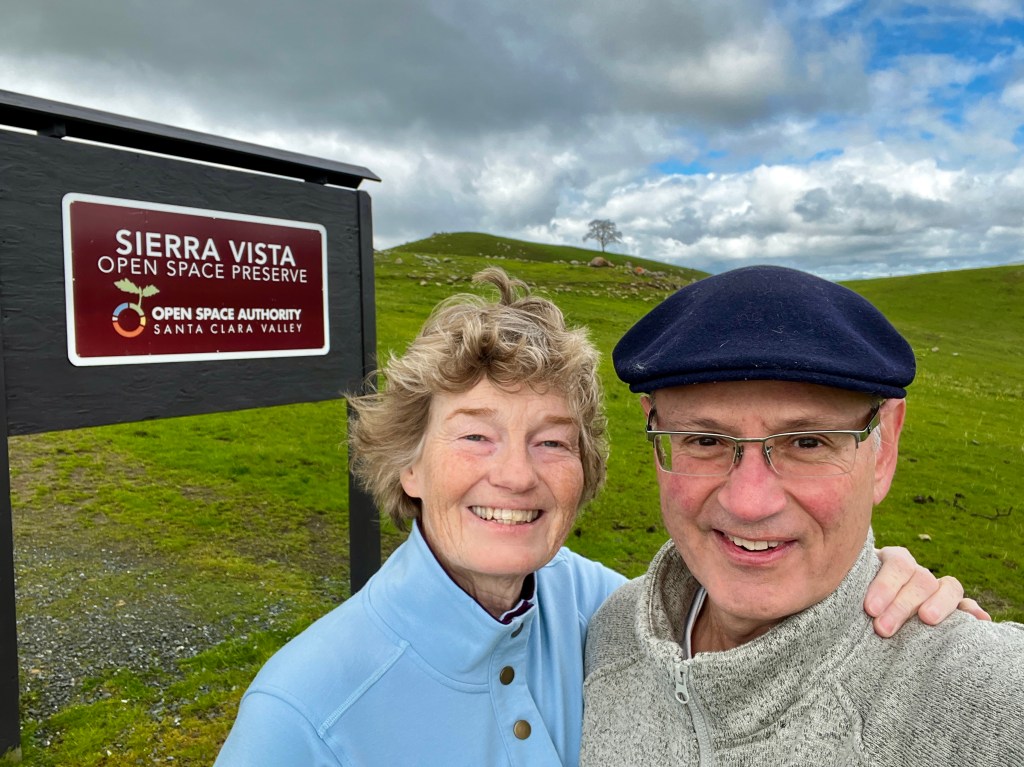
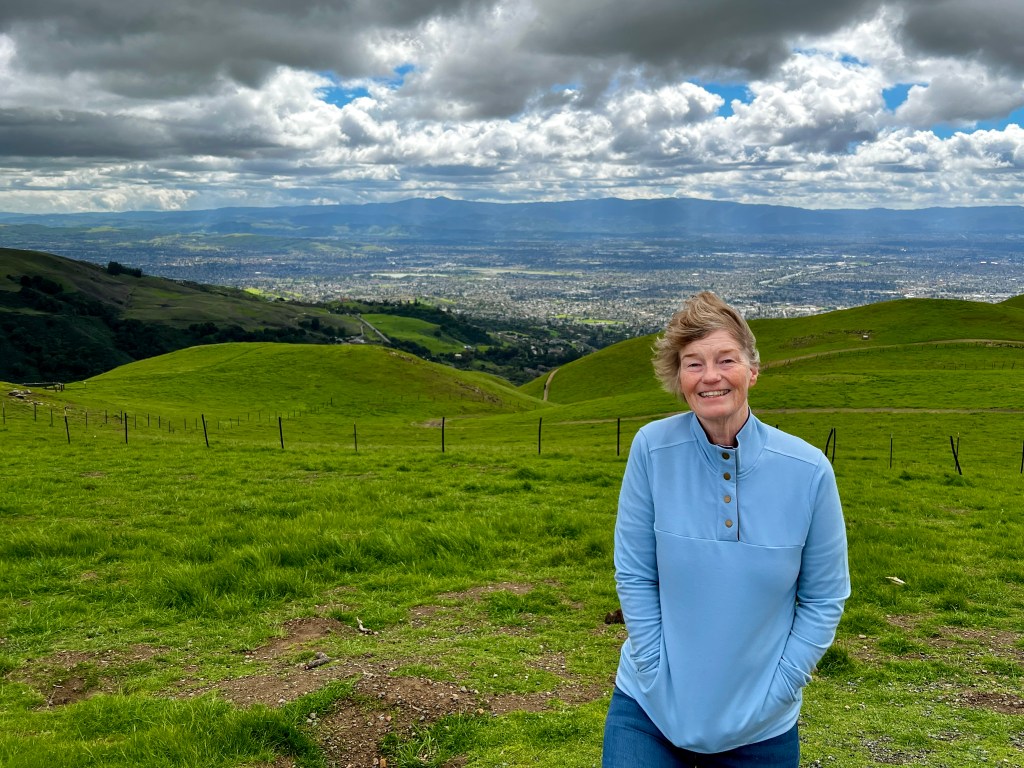
With the garden tasks settled for now, Mike suggested a drive up to Sierra Vista Open Space Preserve. It’s been almost a year since we’ve been up that hill. I thought we had dressed warmly, but a cold wind blew through our layers, so we didn’t stay long.

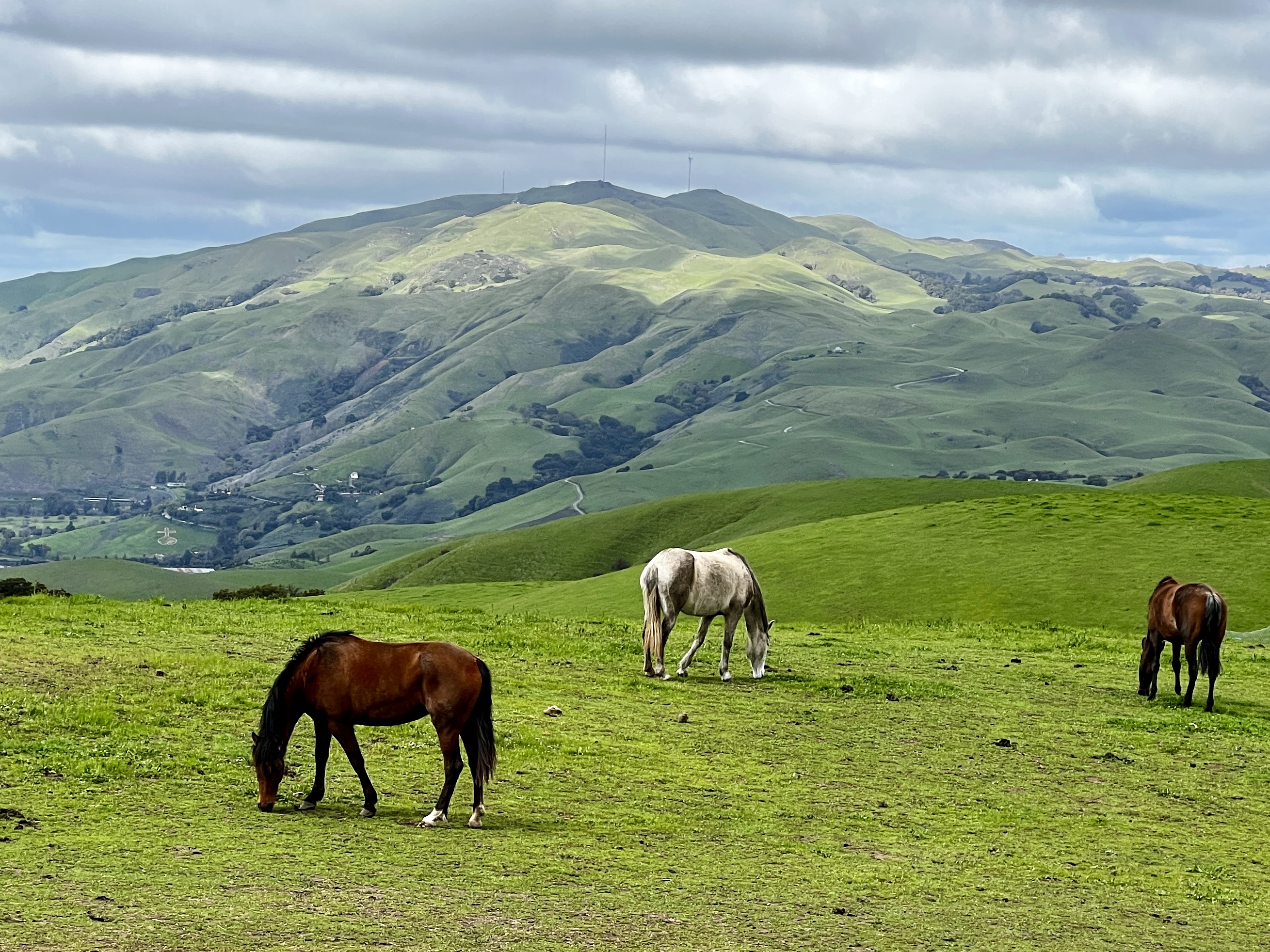
I enjoyed seeing the cows with a few calfs and grazing horses. There were dozens of ground squirrels everywhere we looked, and they seemed unphased by our presence.

It will be nice to visit again when it’s warmer. April is just around the corner, and by May, we often suffer through our first heat wave. We’ll see how it goes.

A Week in Pictures: March Draws to a Close

We woke up Wednesday morning to grey skies but no rain. I thought we missed the hyped storm, but it was running late.

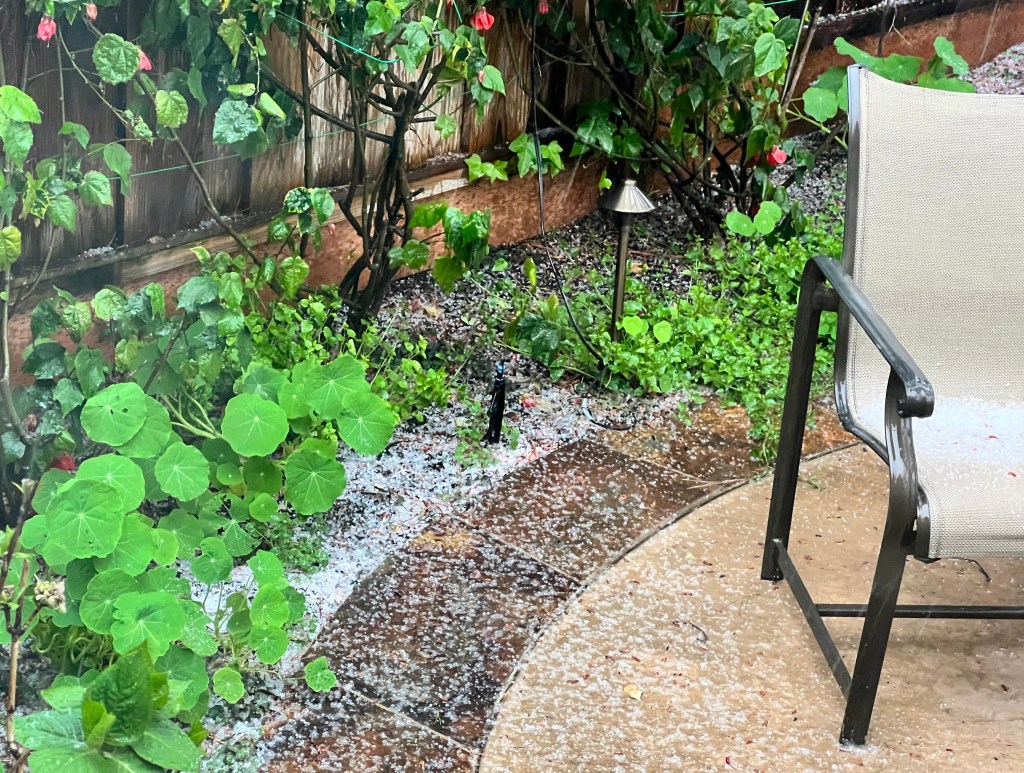
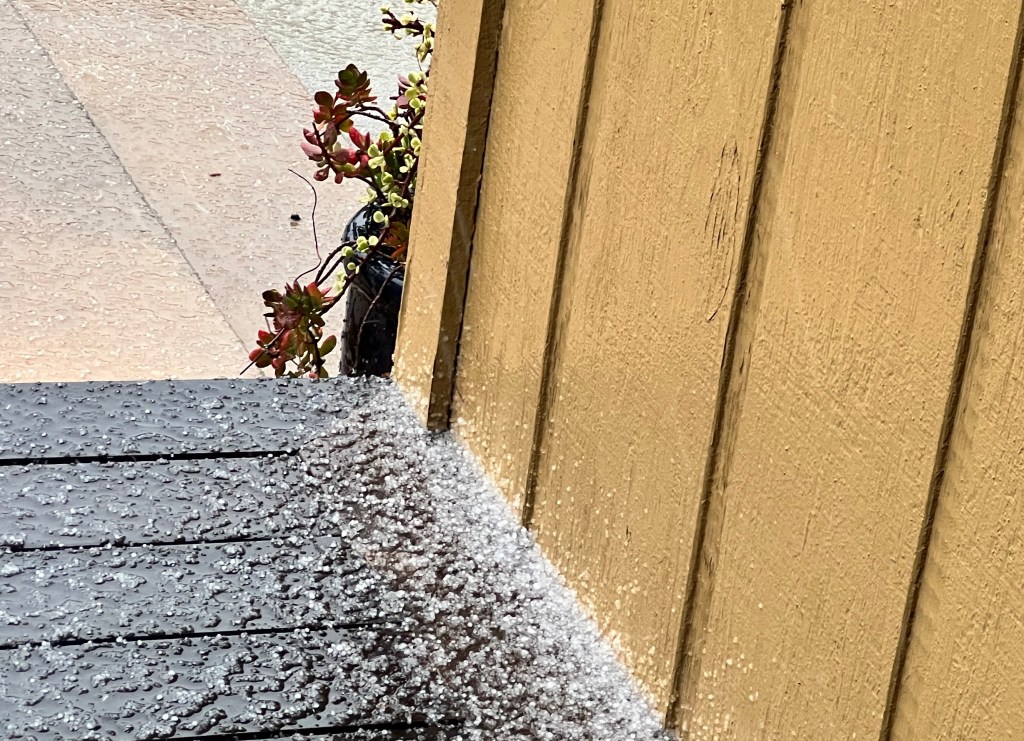
By mid-morning, the skies darkened, and the rain followed. Between 10 and 2, we had thunderstorms, followed by hail, which eventually gave way to sunshine. Cold temperatures left a shallow layer of snow in the foothills.

I can’t remember a time when we sampled such varied weather.

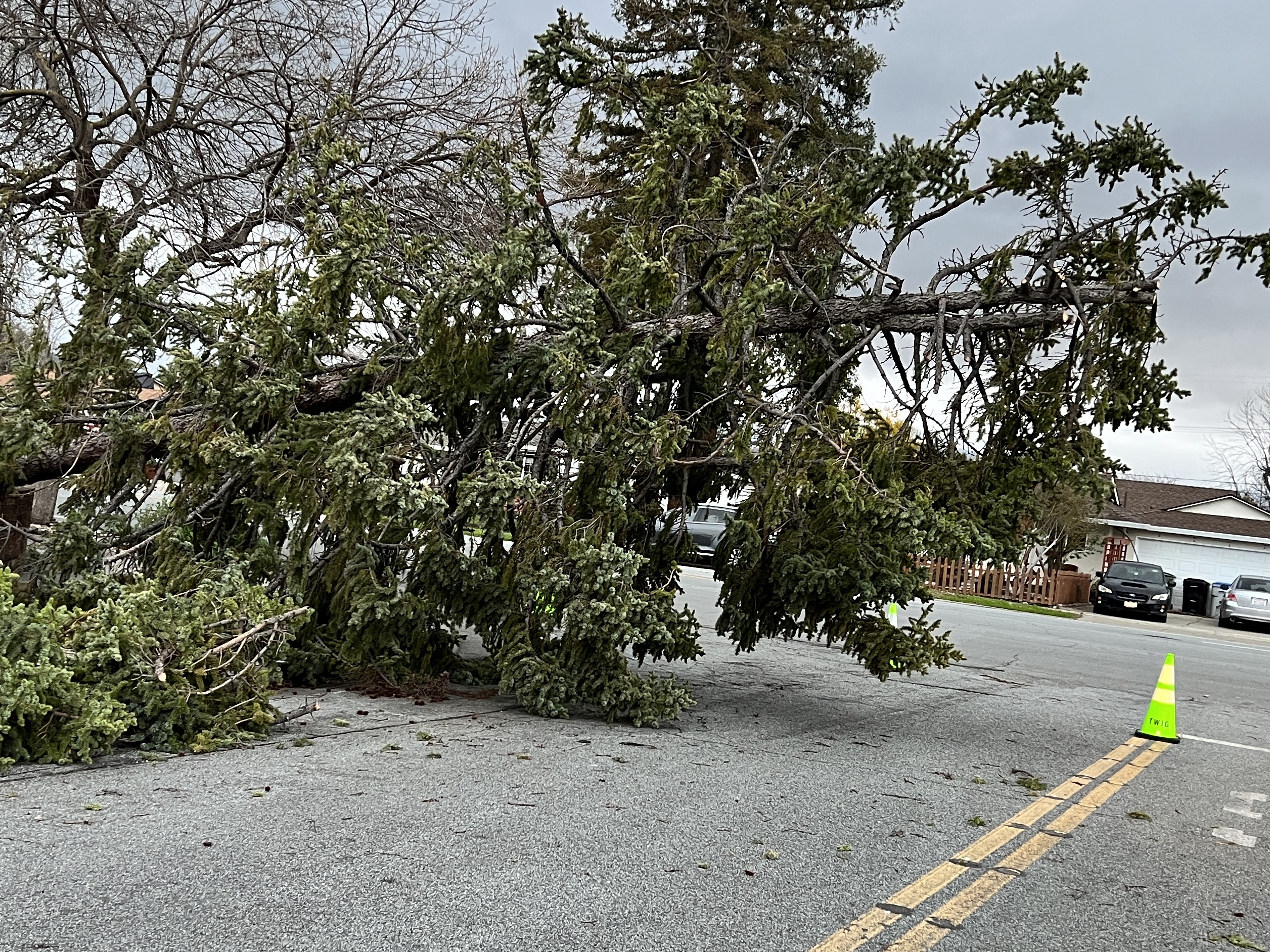
The winds remained at bay, and the power stayed on, but we stayed vigilant about falling trees.

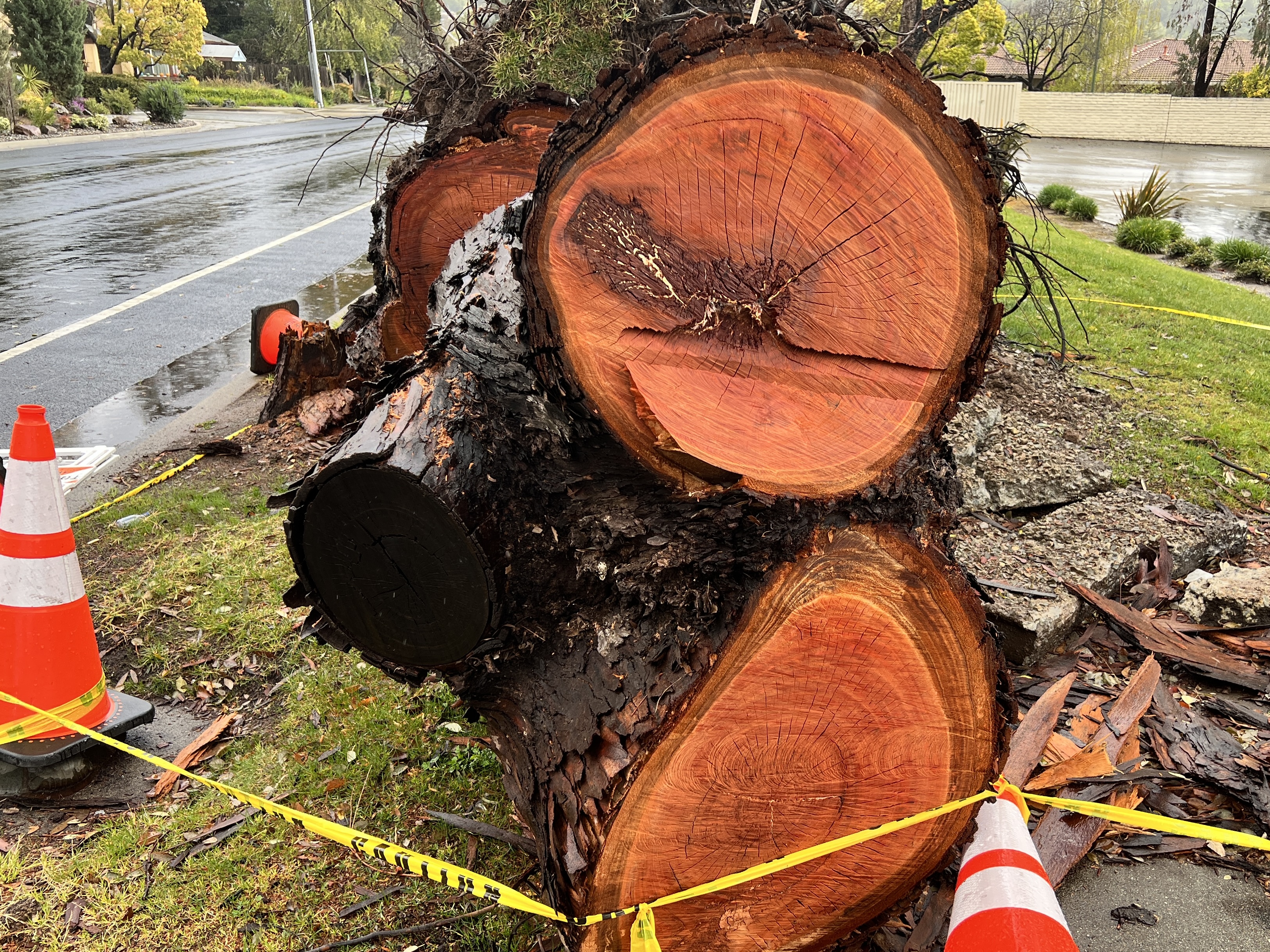
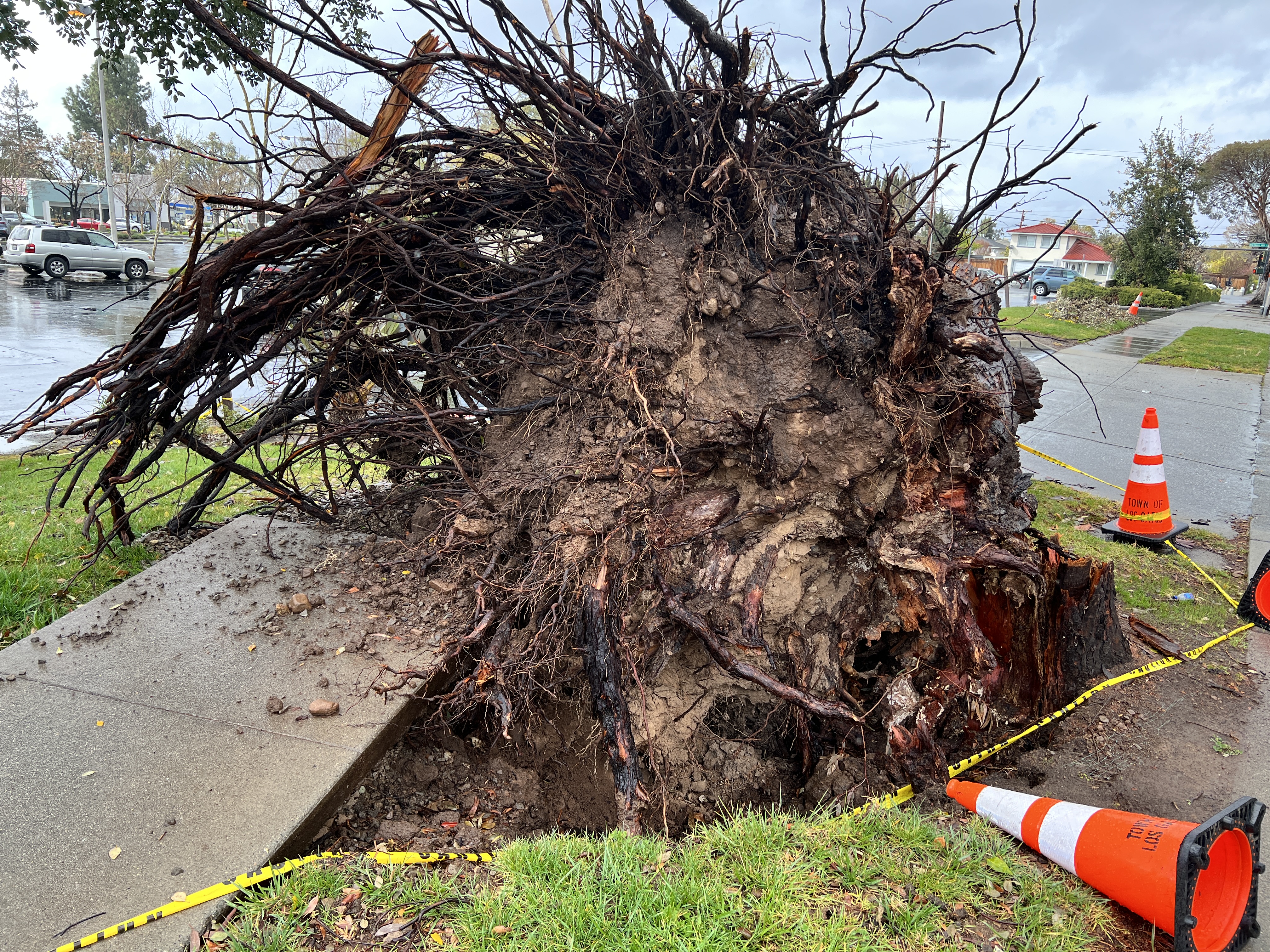
I paid a visit to my favorite crafting store and saw the remains of this once-towering tree. Unfortunately, one of the recent storms toppled the tree, lifting the sidewalk as it crashed across the drive, smashing into a small sign. Thankfully no one was hurt.

Thursday and Friday delivered uneventful weather, and today we enjoyed warm, clear, and sunny skies.

Our cats, Tessa and Mouse, are sleeping soundly after a day of fresh air and sunshine. They used to quibble over the basket on the table behind the couch, so now there are two. Never mind that they have dozens of cozy spots for slumber throughout the house. Like toddlers, bickering is more fun.

I replaced my label-maker after 15 years of reliable service, never imagining it would double as a chin rest.

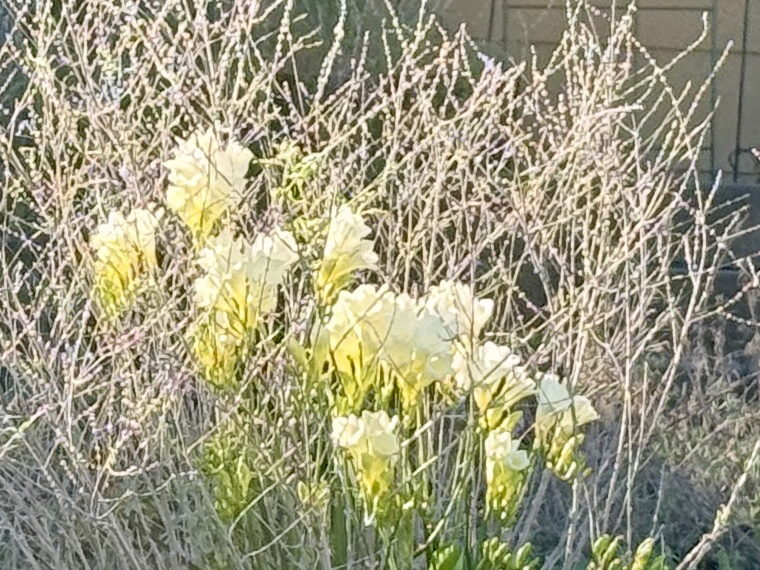
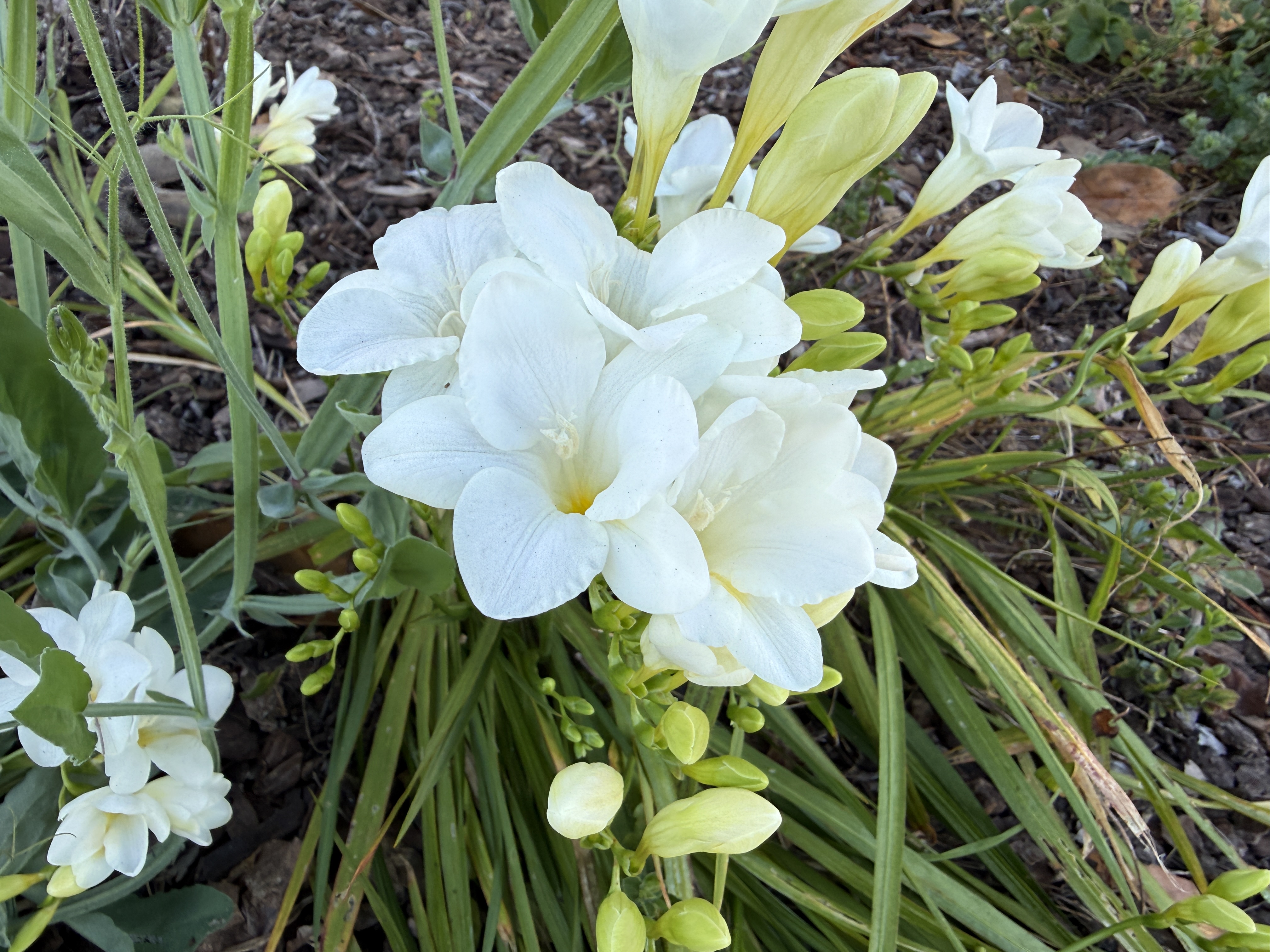
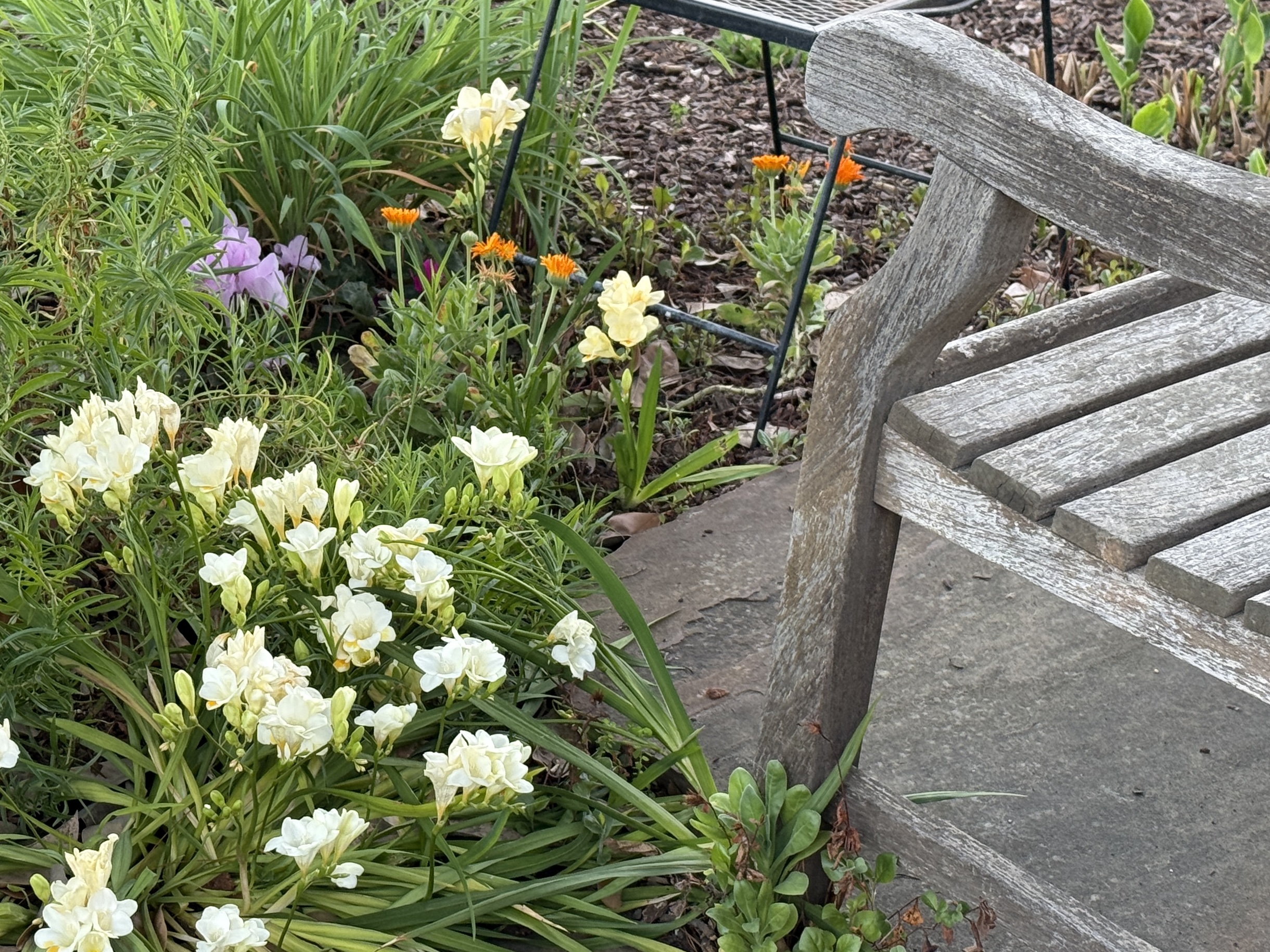
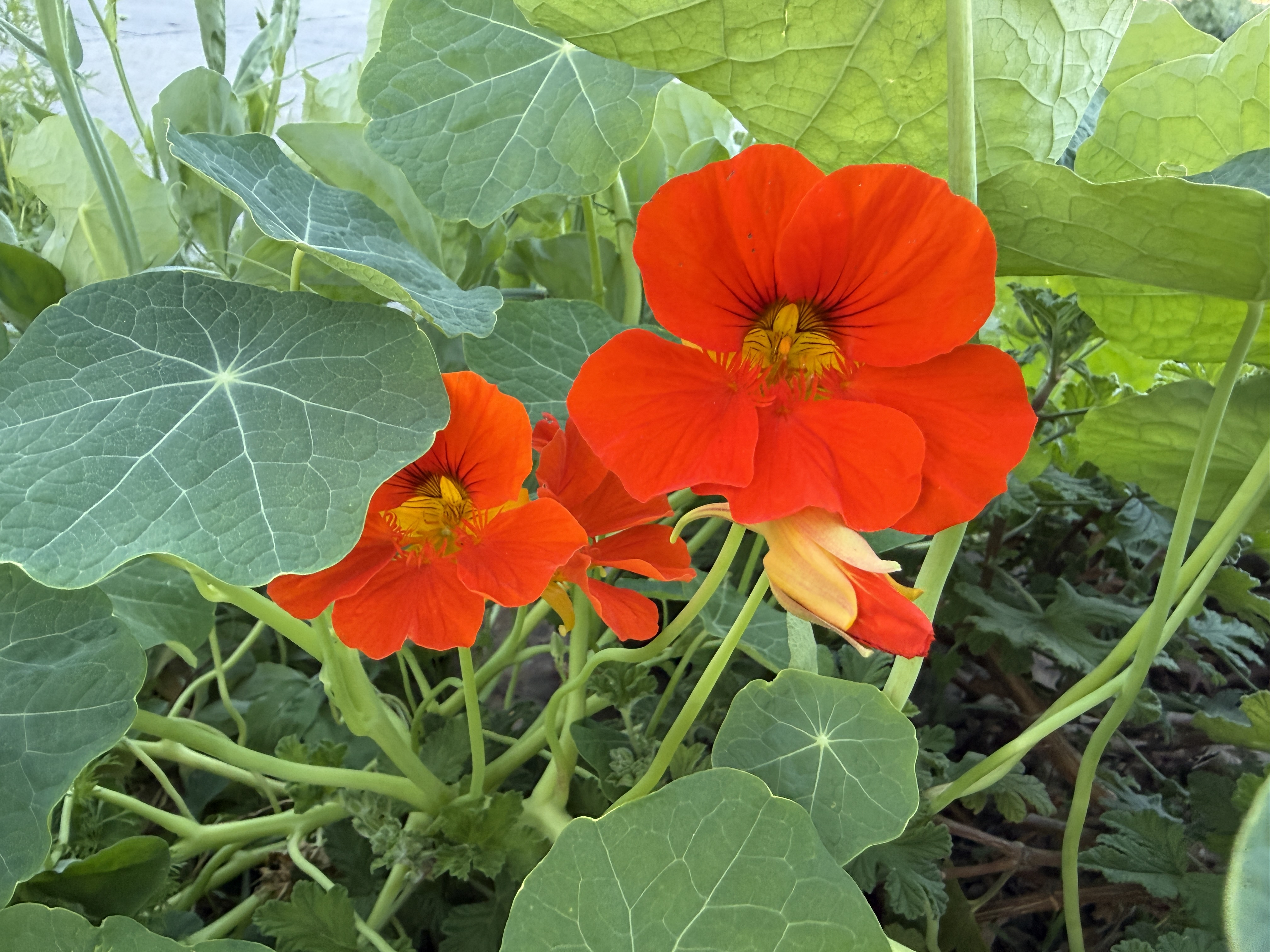
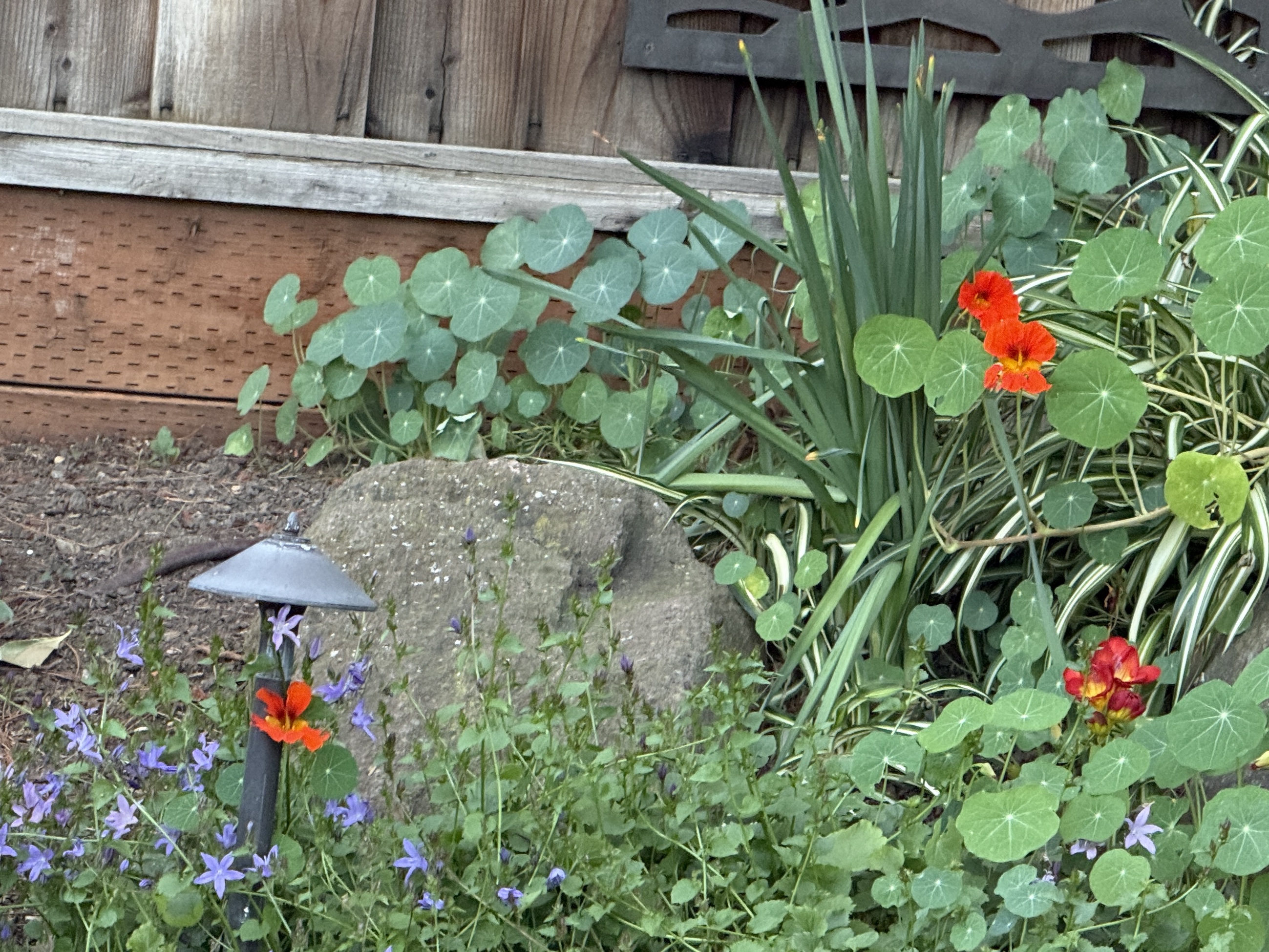
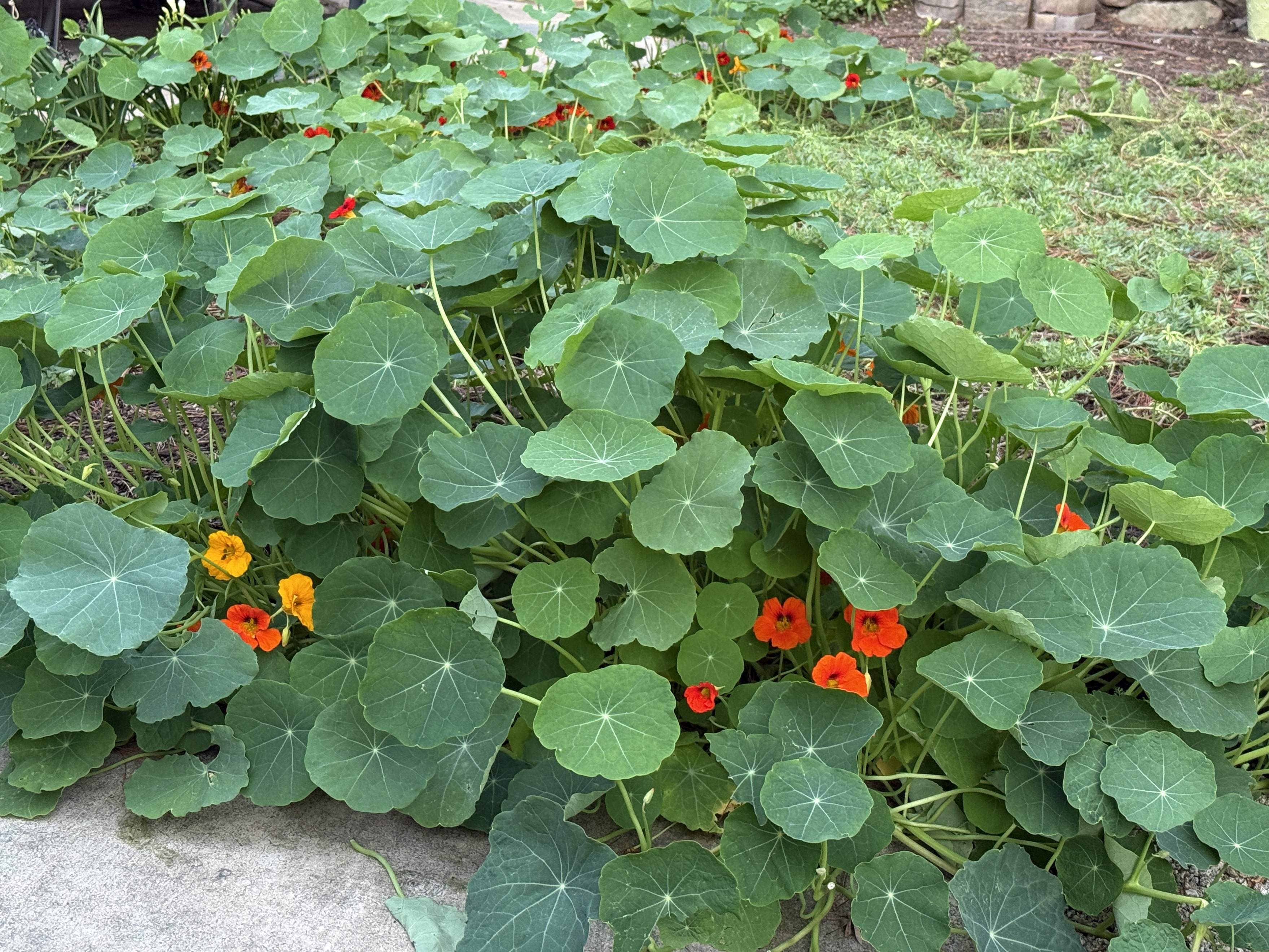
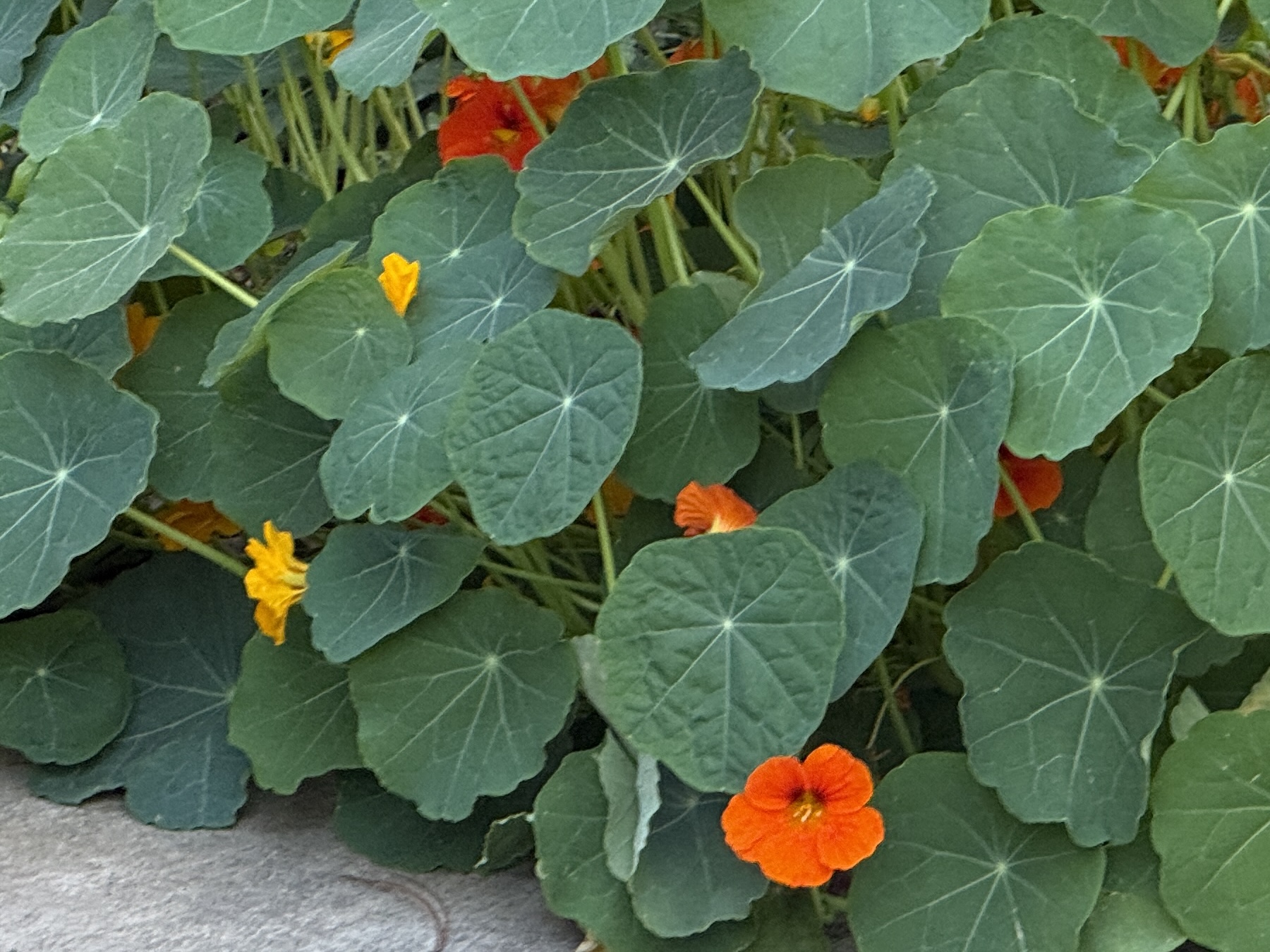
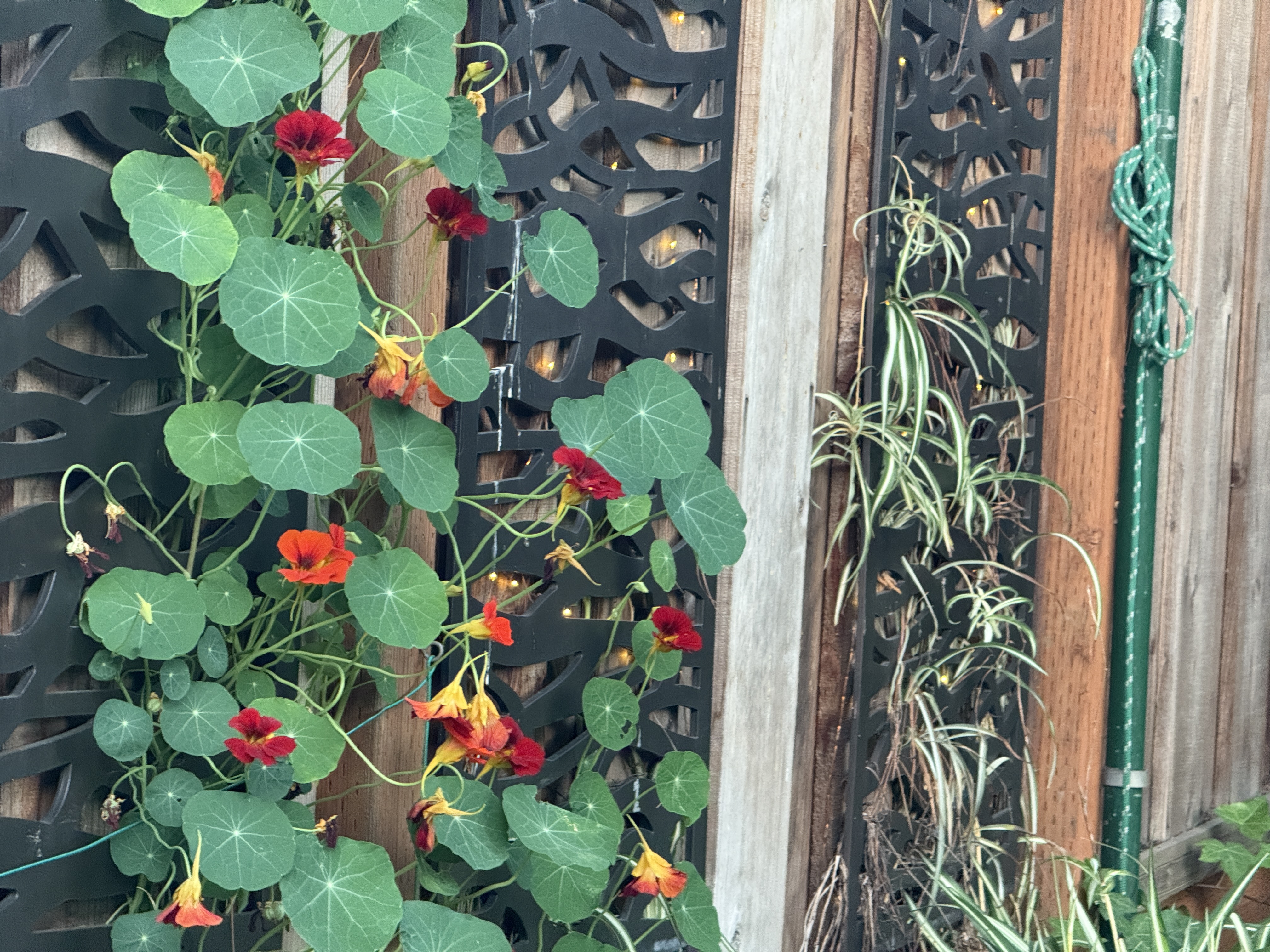
Intoxicating Freesias continues to dominate in the garden, with purples and reds joining the earlier yellow and white mix. The nasturtiums are back, and several nepeta have self-seeded as well. Now that the hydrangea is covered in fresh leaves, pink and blue flowers will soon follow.

April hath put a spirit of youth in everything.

-William Shakespeare

Spring: It’s Official!

Today marks the vernal equinox here in the Northern Hemisphere. So, at 5:24 p.m. eastern time, spring will officially be underway. I’m ready!

California has had a rough winter, with 12 significant storms since late December. Our beautiful state swings from drought to drench with little in between, with devastating consequences.

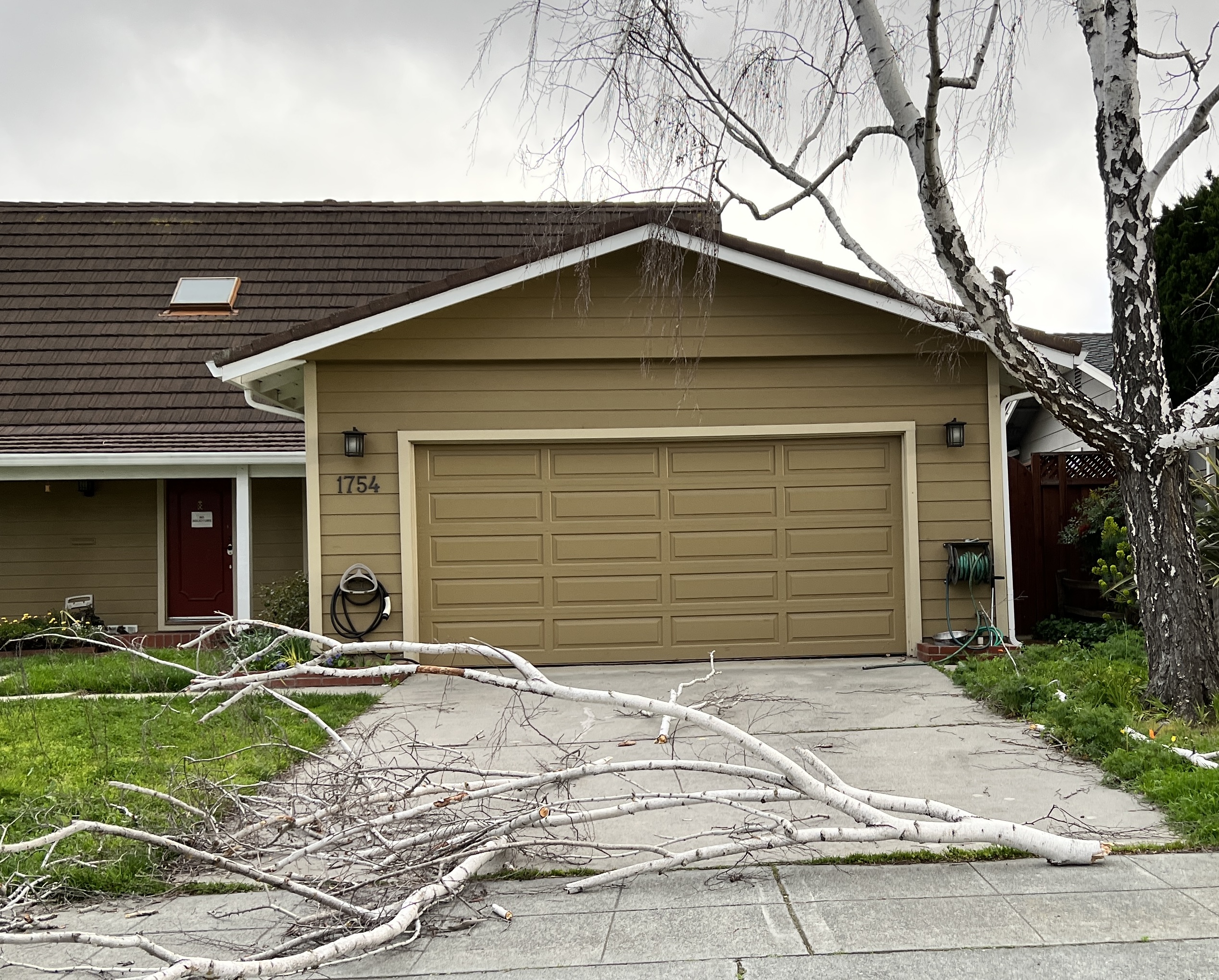
Our suburban neighborhood is not at risk for floods, but the wind storm that followed last week’s rain packed a brutal punch. We lost power for 28 hours, along with several businesses, large and small. Traffic lights were out at major intersections, making it challenging to get anywhere and scary. Trees, large and small, were uprooted and dropped on fences, roadways, sidewalks, and trails. Snapped twigs and branches littered the roads along with debris the winds gathered along the way.

The railing across our deck twisted in the wind, then fell into the garden with the windchimes and two hummingbird feeders. Parts of our roof tiles littered the deck, and our back fence is now leaning precariously. One of my frost covers has traveled to parts unknown, and one of the two hummingbird feeders smashed, leaving broken glass and sugar water in its wake.

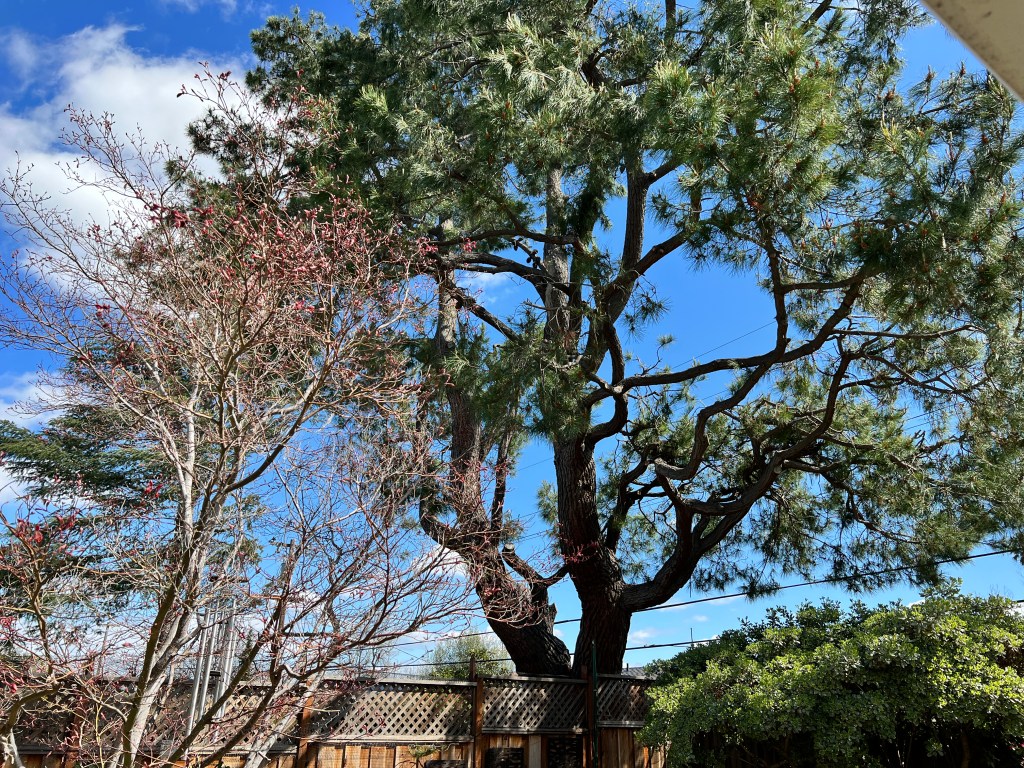
An enormous Monterey Pine leans across our back fence, making it hard to relax in the living room of our home when the wind is strong enough to shake the house. I’ve worried through many storms that the tree might come down, though, in a stroke of good luck, I had the tree assessed by an arborist late last year, then arranged to split the cost of a significant pruning. The arborist says the tree is “extremely stressed by drought conditions.” Removing dead and dying branches took a day and five crew members. The tree sits in our neighbor’s yard and towers over four properties. During the worst of last week’s windstorm, I either left the house or hung out in the front corner of the house, farthest away from the tree. I’m happy to report that the tree remained upright.

That evening, we found a charging station with power so Mike could get his electric vehicle charged for a presentation the following day. As we drove to a power station, we passed neighborhoods in complete darkness, while others kept their power.

Using the FDA guidelines for food safety, I had to pitch 90% of the food in our fridge and freezer. Fortunately, we have the resources to replace what we lost, but it is a painful reminder of many struggling to get by. An extra cash donation to our local food bank is in order. The needs here are significant.

These storms haven’t ended the drought but have filled several reservoirs, which is excellent news. Melting snowfall is also a significant water source during the warmer months, so as long as it melts slowly, it’s a fabulous resource for our parched state.

Here are a few welcome signs of spring.

Thirty Days in the Garden: A Sweet Pea Update

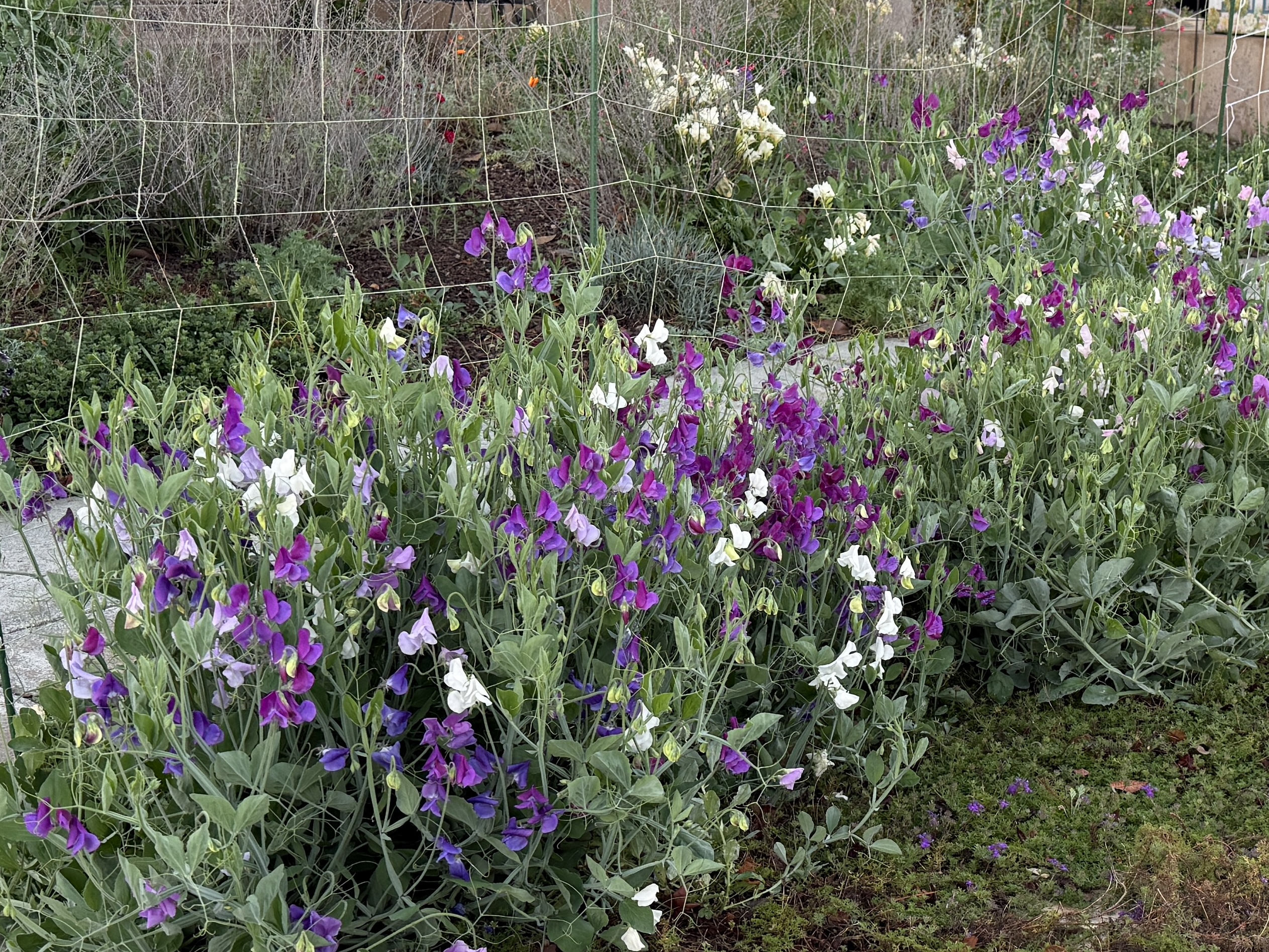
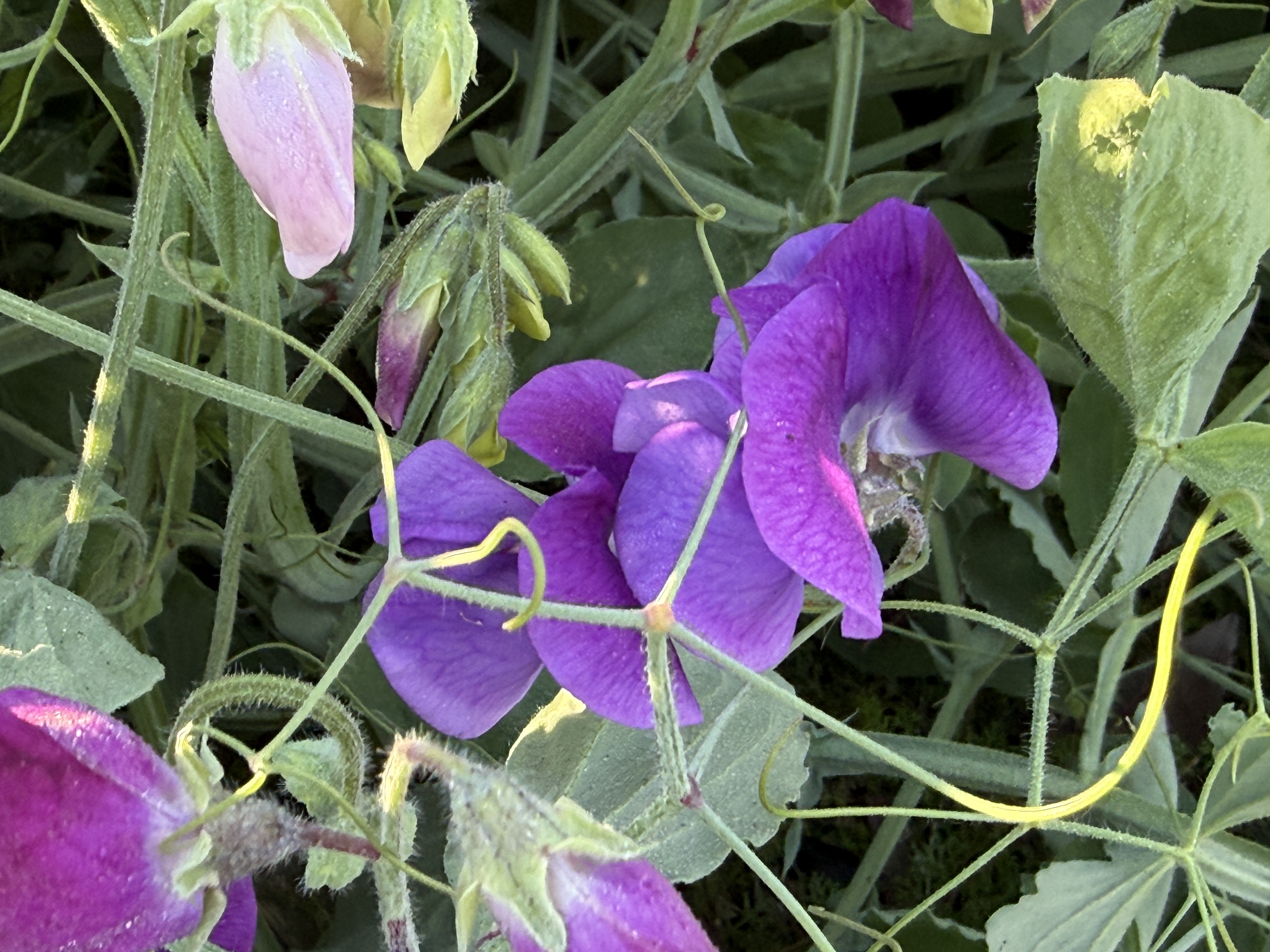
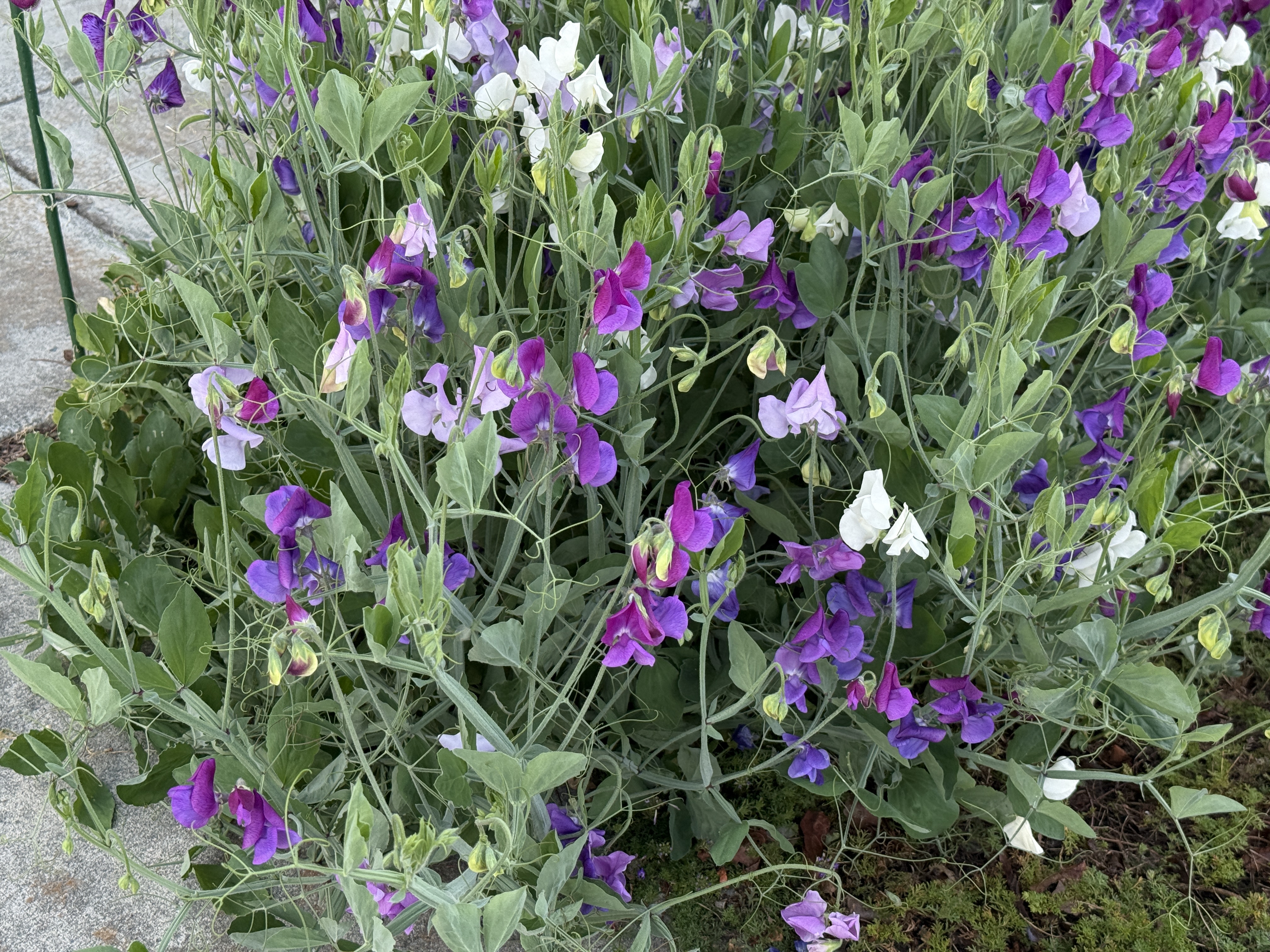
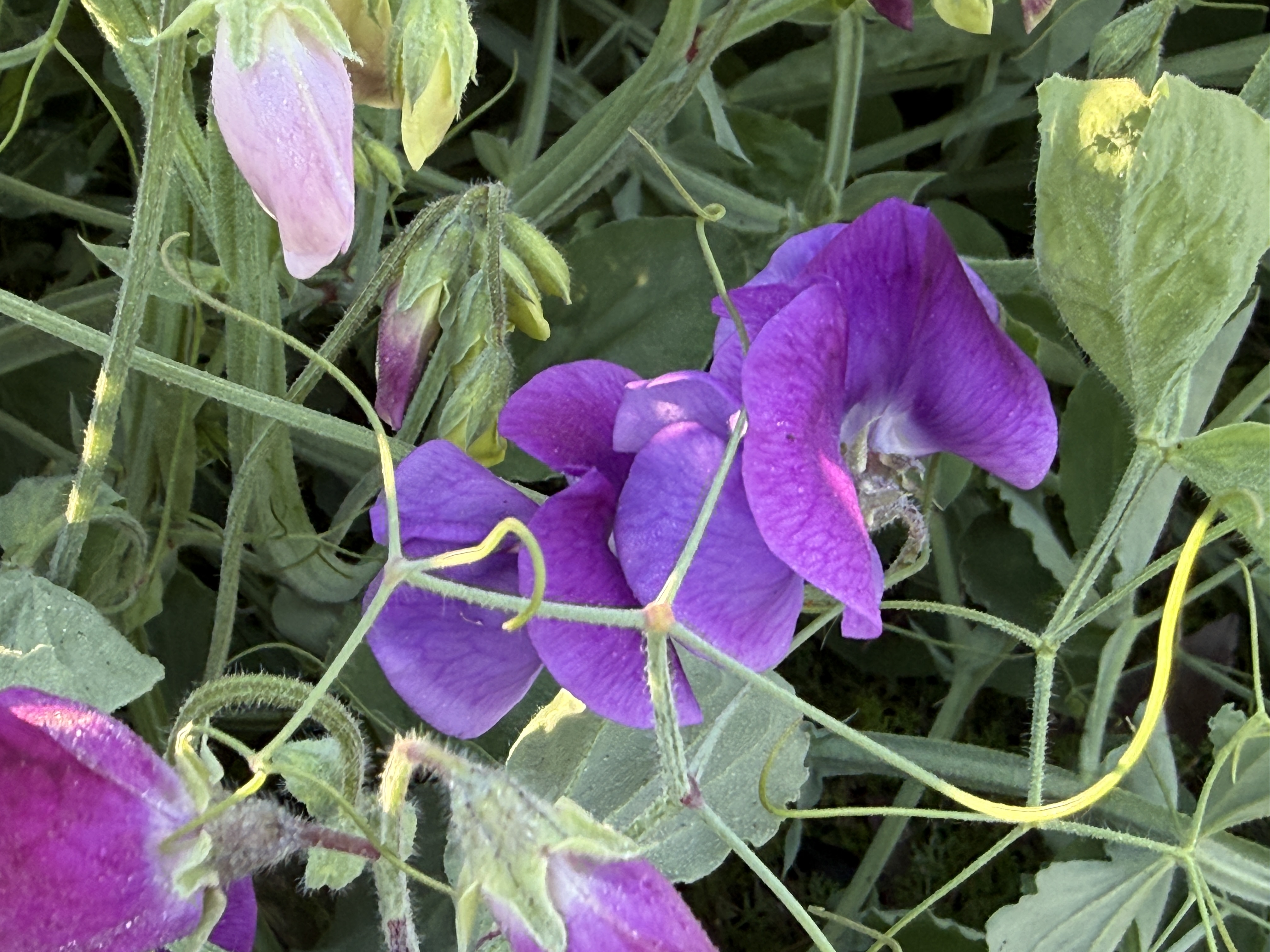
I’ll be the first to admit that I’m a bit obsessed with sweet peas. I look forward to them every year. These unassuming flowers have the ability to uplift. They’re sweetly scented and delicate, cast in soft colors and pale hues.

Here’s what the sweet peas looked like three weeks.

March 27, 2021

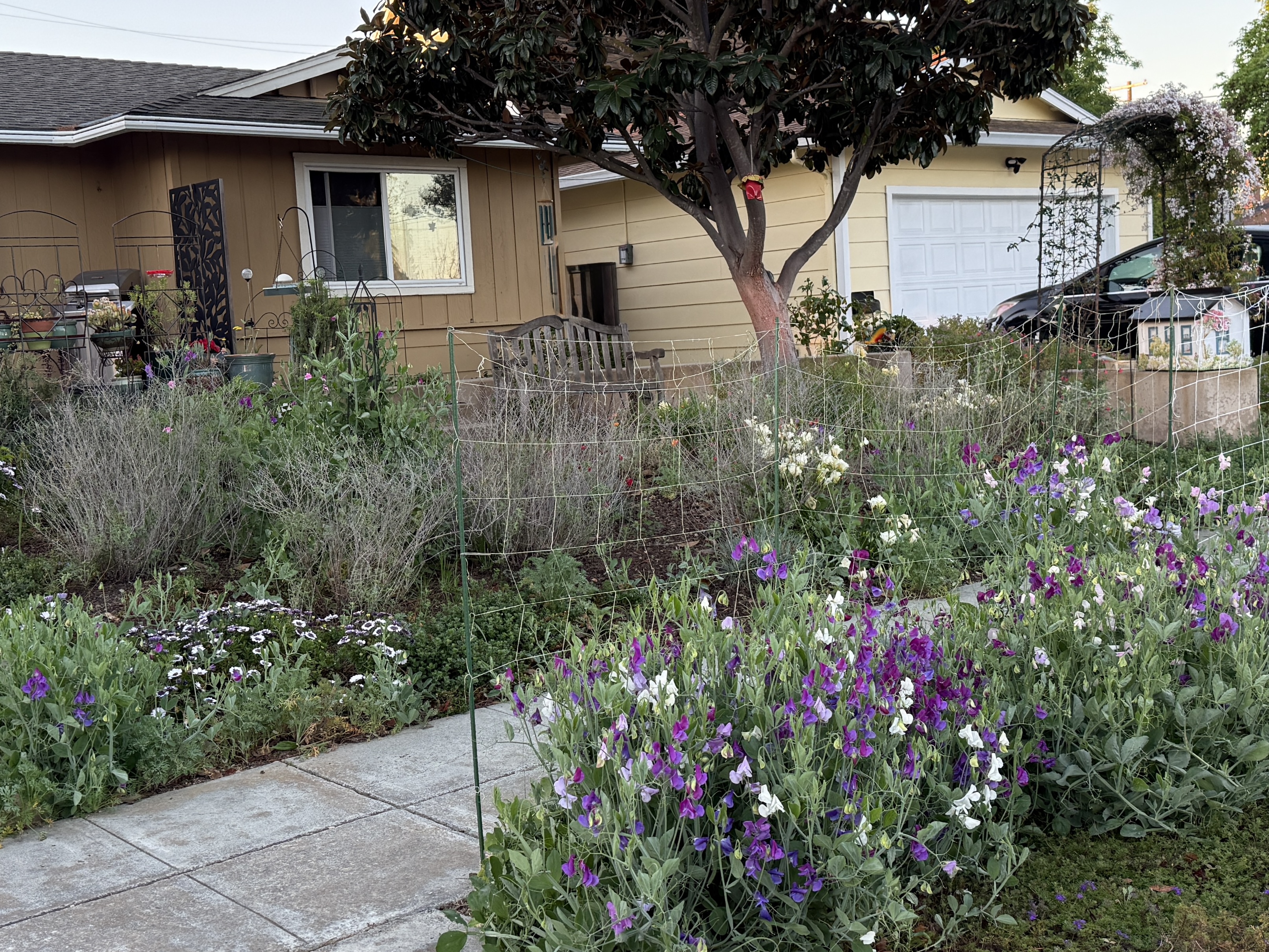
This is what they look like today. I’ve added stakes for climbing, just visible in this photo. In the past I’ve used a portable folding fence, but I prefer the look of these stakes. The stakes are designed for tomatoes, so they’re nice and sturdy.

April 19, 2021
April 19, 2021

I let the sweet peas go to seed every summer. They replant themselves in the fall, impervious to the cooler weather or the ocassional frost. They start flowering in March and fill the garden through May. Our summer heat is no match for these shade-loving sensations, so I enjoy them while I can.

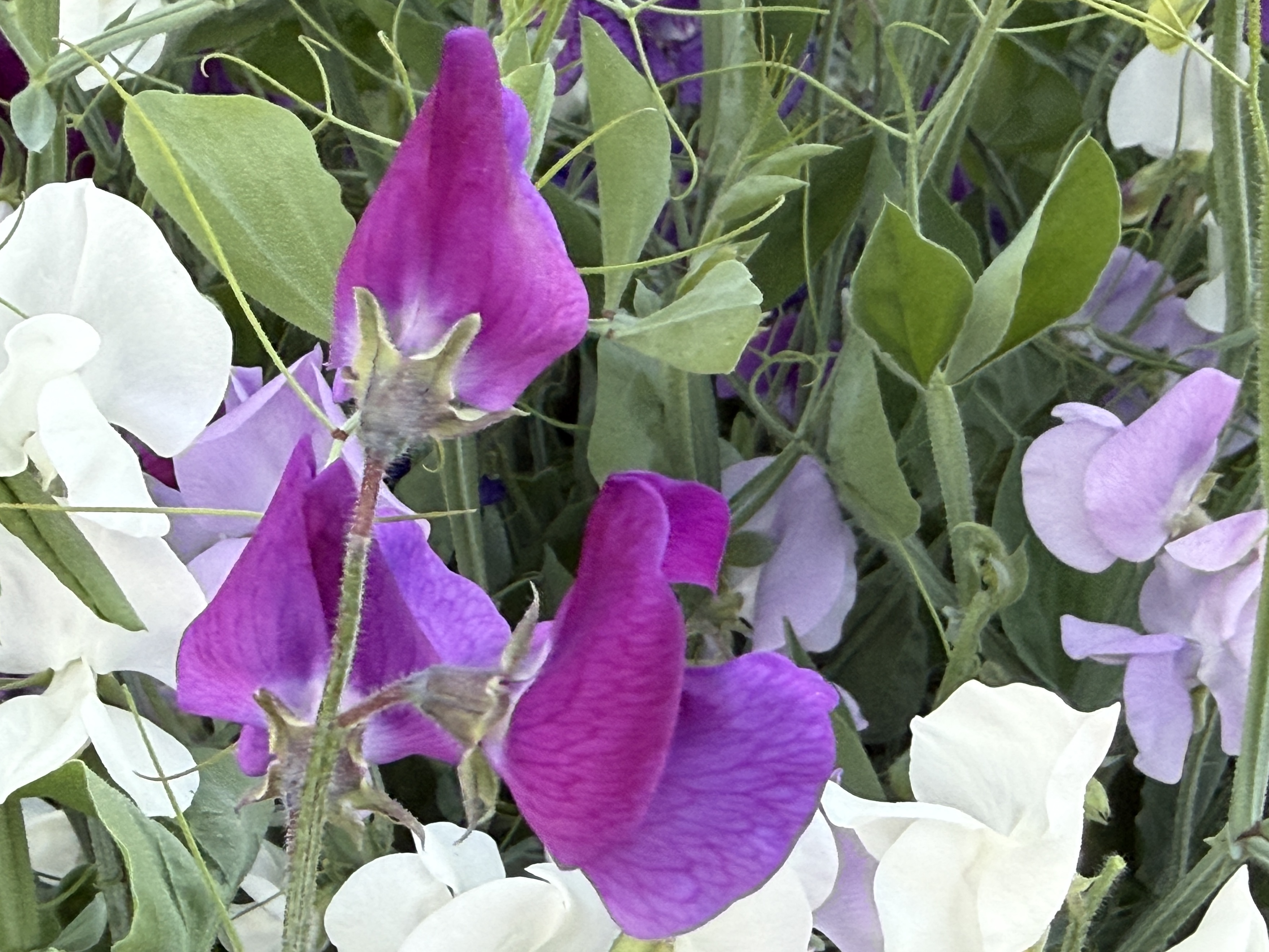
Because they self-seed, I’m intrigued that the color variations don’t change. The flowers come back, year over year, in white, lavender, fuchsia, purple, and soft pink. As the last of the freesias fade, the scent of sweet peas takes over. I’ve cut a few of the flowers here and there, but I’ll soon have enough to start cutting small bouquets. It’s such an enjoyable task filling a small jar with wisps of green and scented sweet peas. I look forward to it every year.

2015: This watering can vase is 27 years old

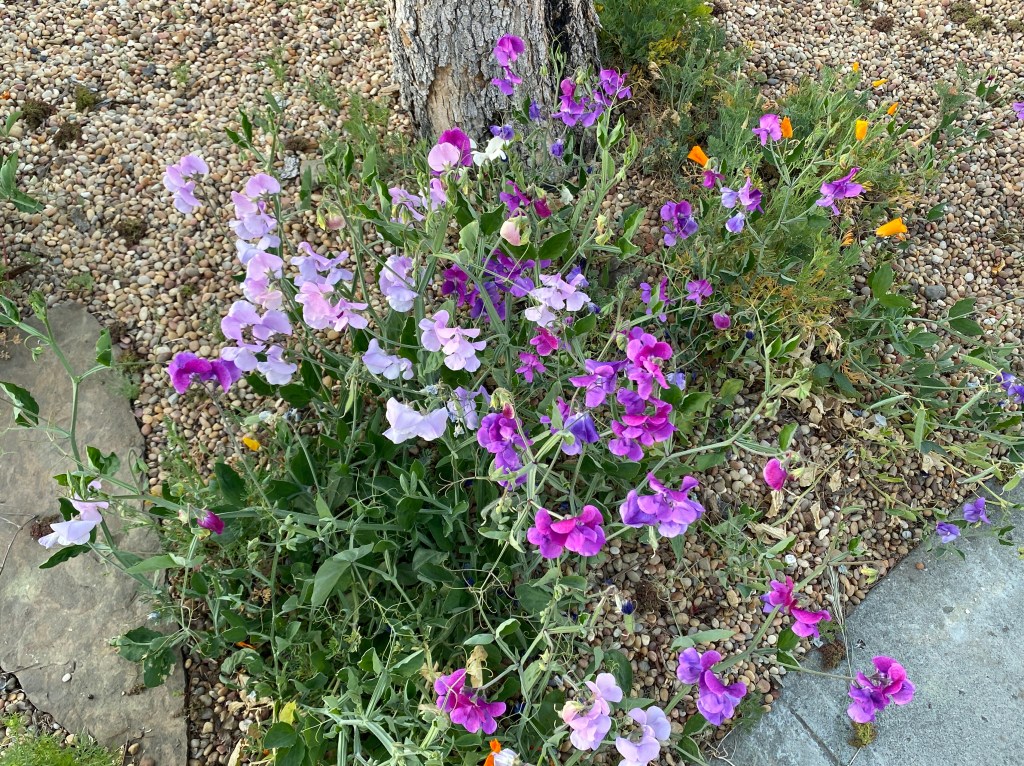
I didn’t expect to see the sweet peas growing in the gravel this year as they’ve done in the past. Last summer we hired a handyman to rebuild the deteriorating planter box and at the same time replace the weed cloth under the gravel. The sweet peas are back, rooted in the small amount of soil deposited by the wind.

Sweet peas growing in shallow dirt and gravel

What an amazing plant!

Sweet!
Looking Forward to Spring

Looking Forward to Spring

My heart quickens this time of year. Spring is a treat for the heart and soul and a gift to gardeners the world over.

Lots of color in the curb garden

After a year fraught with unpredictability, I find comfort in the familiar. A trip through the garden teases all the wonderful things to come: buds and bulbs emerge, old-growth gives way to the new, and even the emerging weeds portend more time outdoors.

In the northern hemisphere, the vernal equinox arrives on March 20, 2021. It signals the beginning of spring, though the changes are subtle in California. While much of this country is buried in snow and killer ice, our risk of a hard frost has safely passed.

Self-seeding sweet peas, cornflowers and poppies line the sidewalk. Soon they’ll be in full bloom

There are fewer opportunities to plant these days. Like most gardeners, a brown patch of soil is quickly filled with something new. I’ve reserved my EarthBox® for a tomato crop, but the garden is otherwise fully occupied. That’s not a bad thing, per se, but I do love adding new color here and there.

Front garden facing house. Within a month this will fill in once again.
Garden patch along driveway
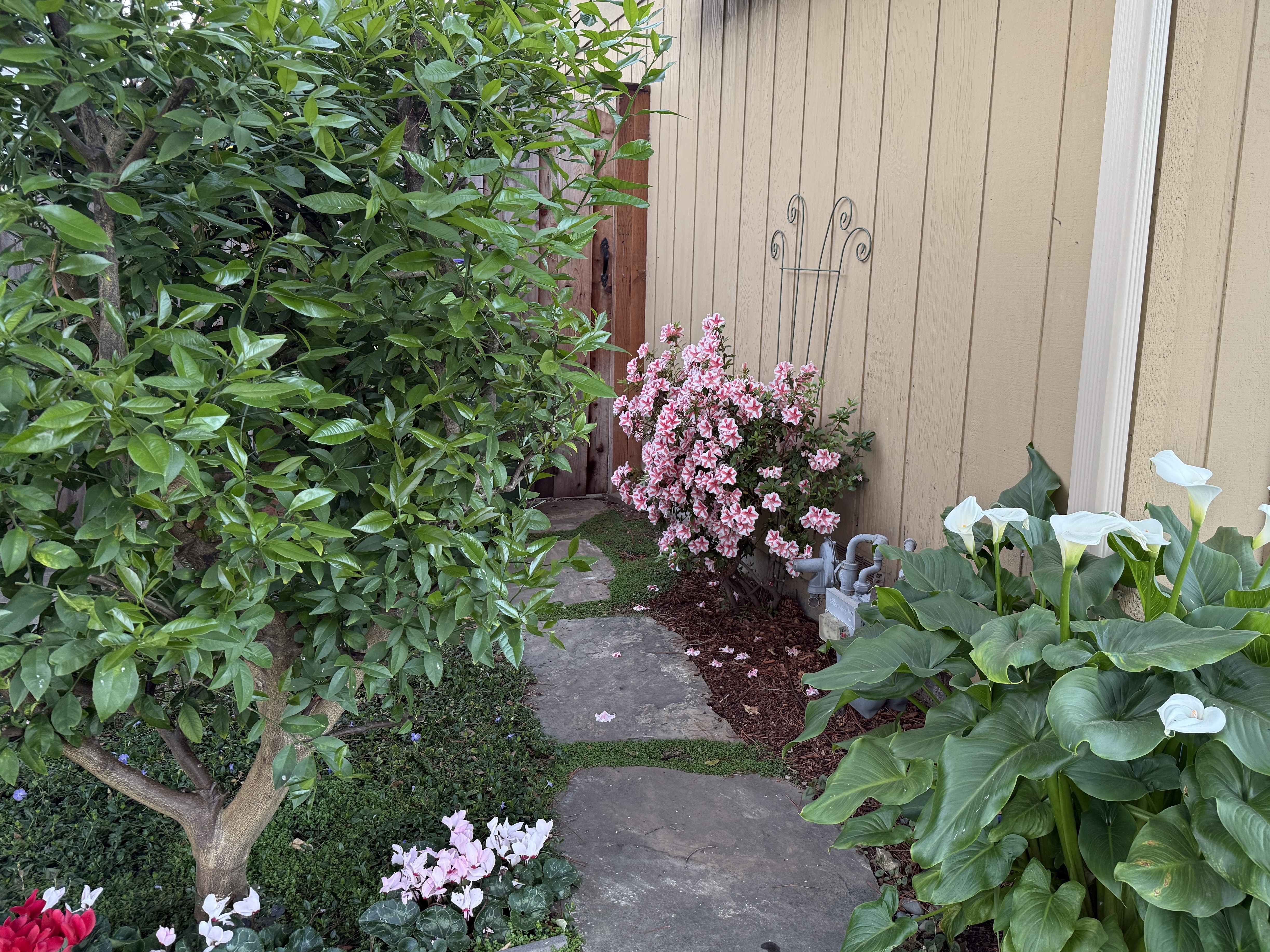
Side yard shared with neighbor (lemon tree, dinosaur topiary, and other assorted plants)
Abundant lemons this year (they really are yellow, though they look orange in this photo)

Birdsong and buzzing bees are the soundtracks of the season. The effervescent Ana’s hummingbirds are ever-present, but their numbers grow. I spotted one gathering fluff for her nest last week, wishing for the thousandth time that I had my camera in tow. I let the anemone flowers go to seed in the fall. They open like a kernel of popcorn in late winter, producing small clouds of soft white down. It’s always a treat to see the birds grab a bit of fluff.

Anemone flowers gone to seed in foreground. Volunteer spider plants along the fence line.
This is a blurry photo from a few years ago, but I’m included it as evidence of this charming visitor

Of course, not all “fluff” is intended for nature but tell that to the squirrels. The original cover of our swing is dismantled every year. The California Grey squirrels shred the cover to get to the batting inside. I repaired this corner a few years ago using an old tea towel and polyester batting. Apparently, the squirrels are not that discerning. They’ve torn through the tea towel to get to the synthetic batting inside. How do they know it’s there? Why do they want that scratchy stuff for their nest? Rhetorical questions, I know.

Swing carnage
Swing cover damage

I treated myself to a pair of new gardening tools this weekend: a pair of clippers and a long-handled weeder. I’m counting myself lucky that I made it out of the store without serious injury. The edge of that tool is sharp. I’m ridiculously excited to use it, though, on a patch of unwanted grassy weeds.

Tessa in the garden

Spring is around the corner, and the vaccine rollout is finally underway Things are looking up! I’m ready.

A Month into Spring

Time may be a social construct, but Spring arrives reliably year after year. Paper calendars are optional.

Welcome rain for a parched garden

The first bulbs emerge in February, a little pre-season treat. In our garden, that means hyacinth and once-upon-a-time, crocus. I haven’t noticed the crocus in recent years, but given their small size, they may simply be growing out of view.

Pink hyacinth

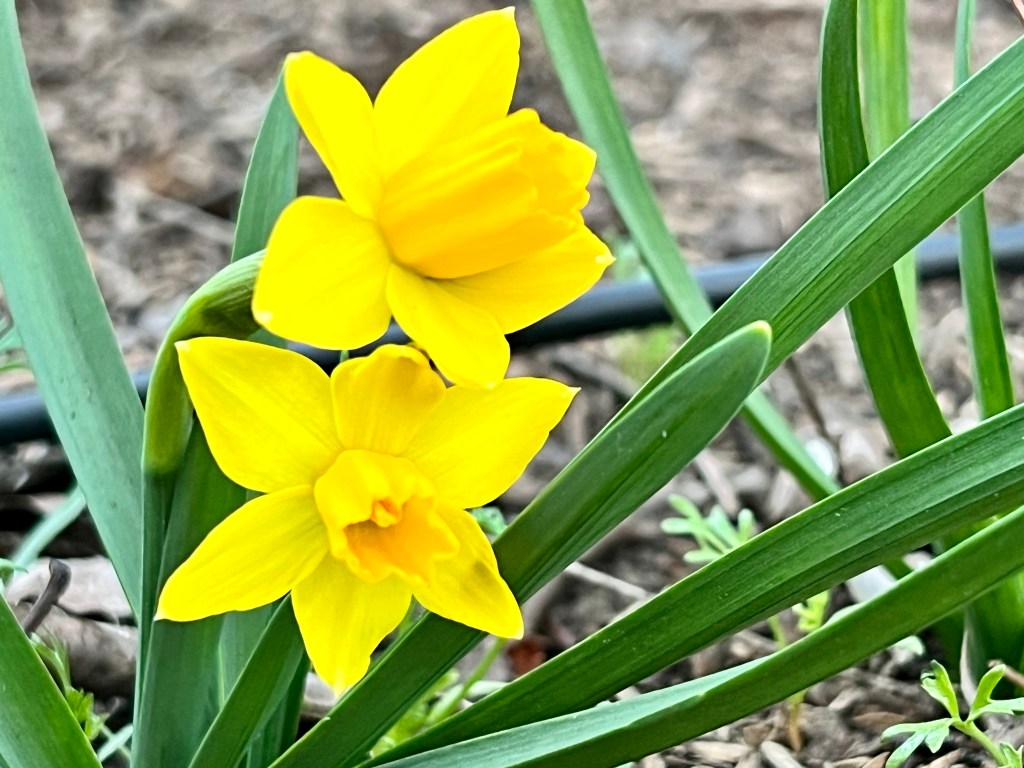
Soon the narcissus follows, bright and showy and strong.

Harbingers of spring: Yellow Daffodils

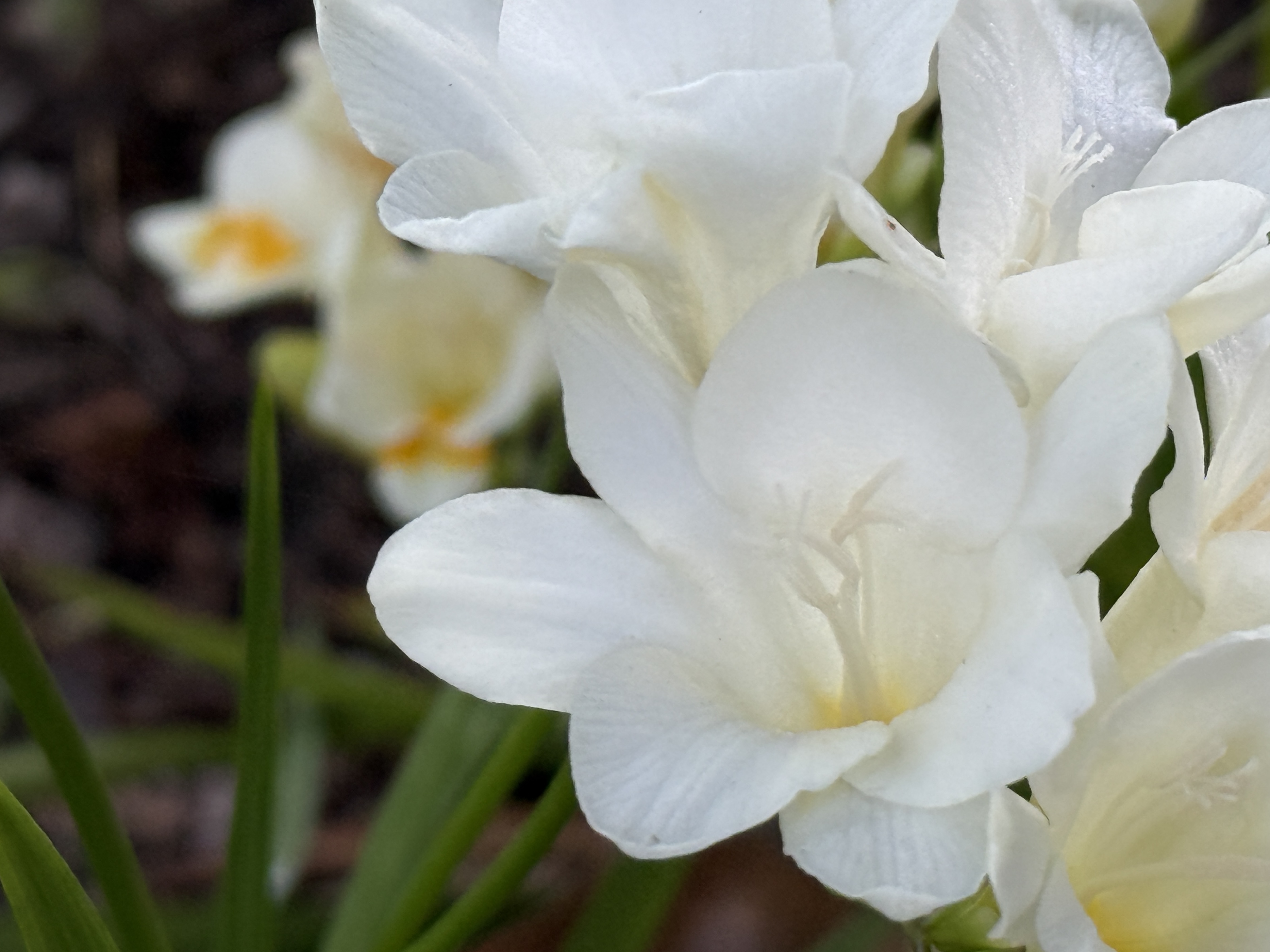
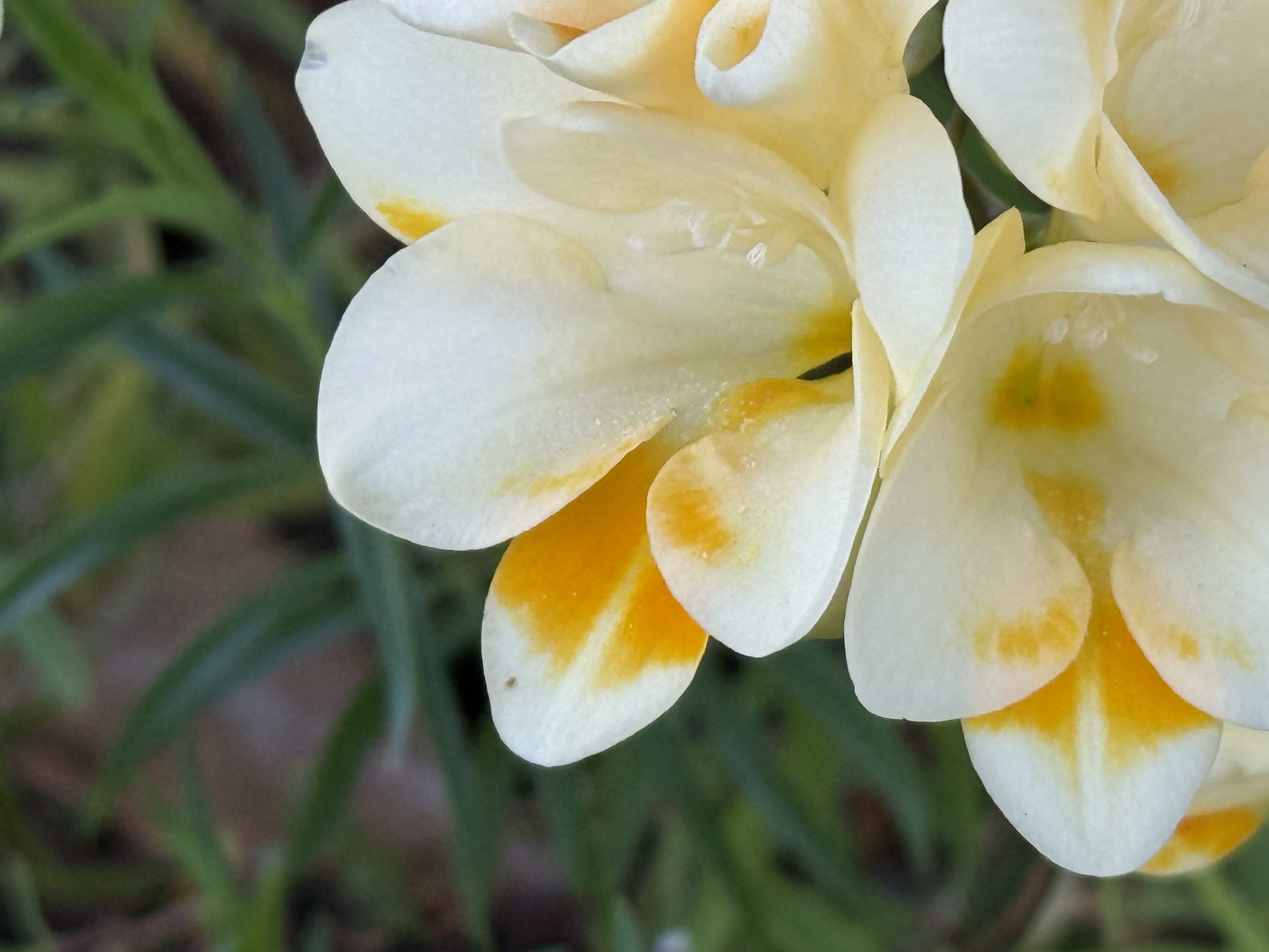
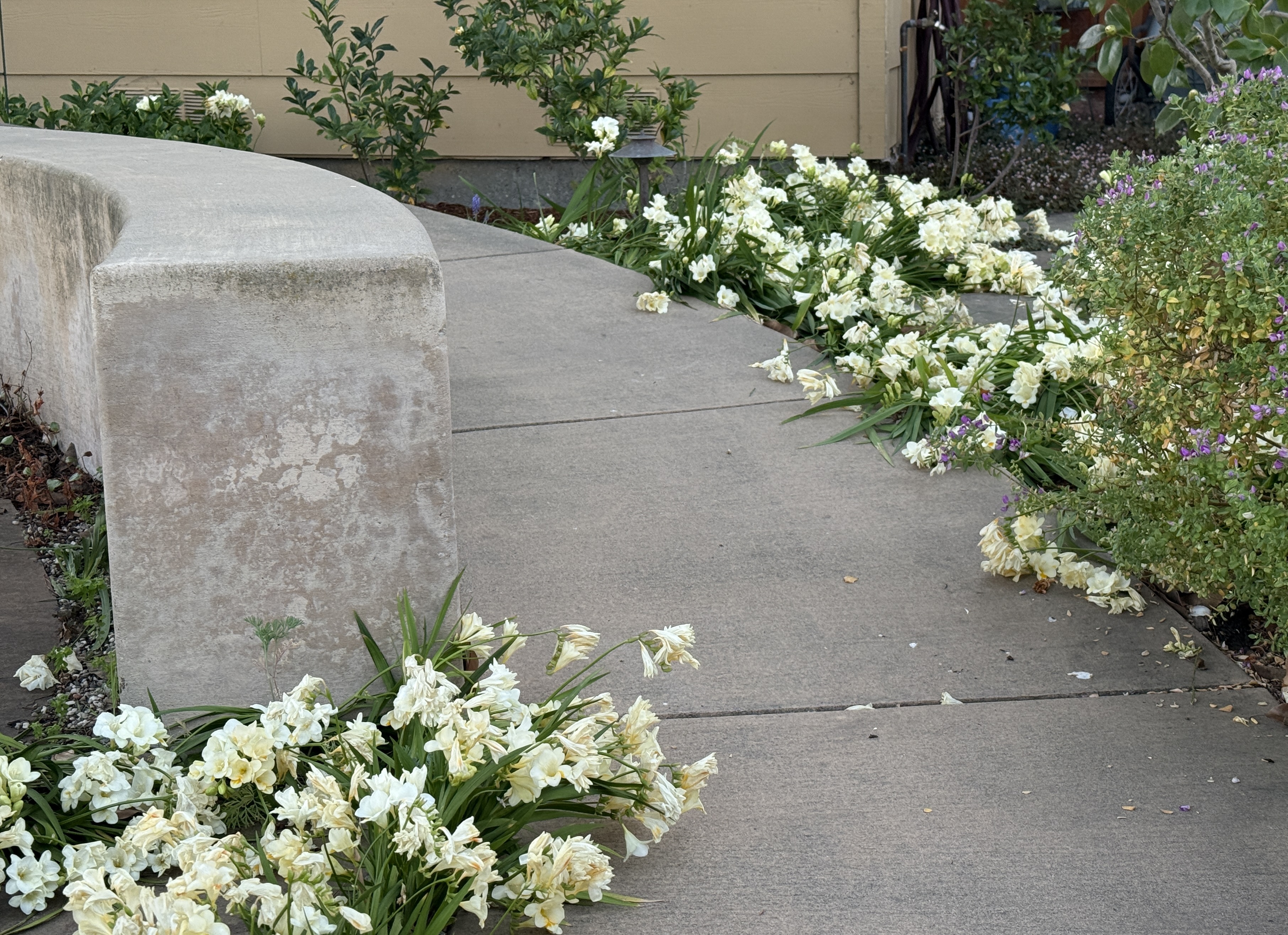
Freesias are my new favorite. They multiply year after year, adorning the garden with an assortment of color and an intoxicating scent. I planted one assorted packet several years ago, and have reaped the reward of purples, reds, pale yellows, and the prolific whites. They dazzle our passersby from the curb garden and along the curving ramp to our front door.

A trio of colored Freesia

Brilliant white Freesia

As the flashy bulbs finish for the season, perennials carry on with the show. Bright pinks, lavenders, and yellows contrast against the ever-present greens.

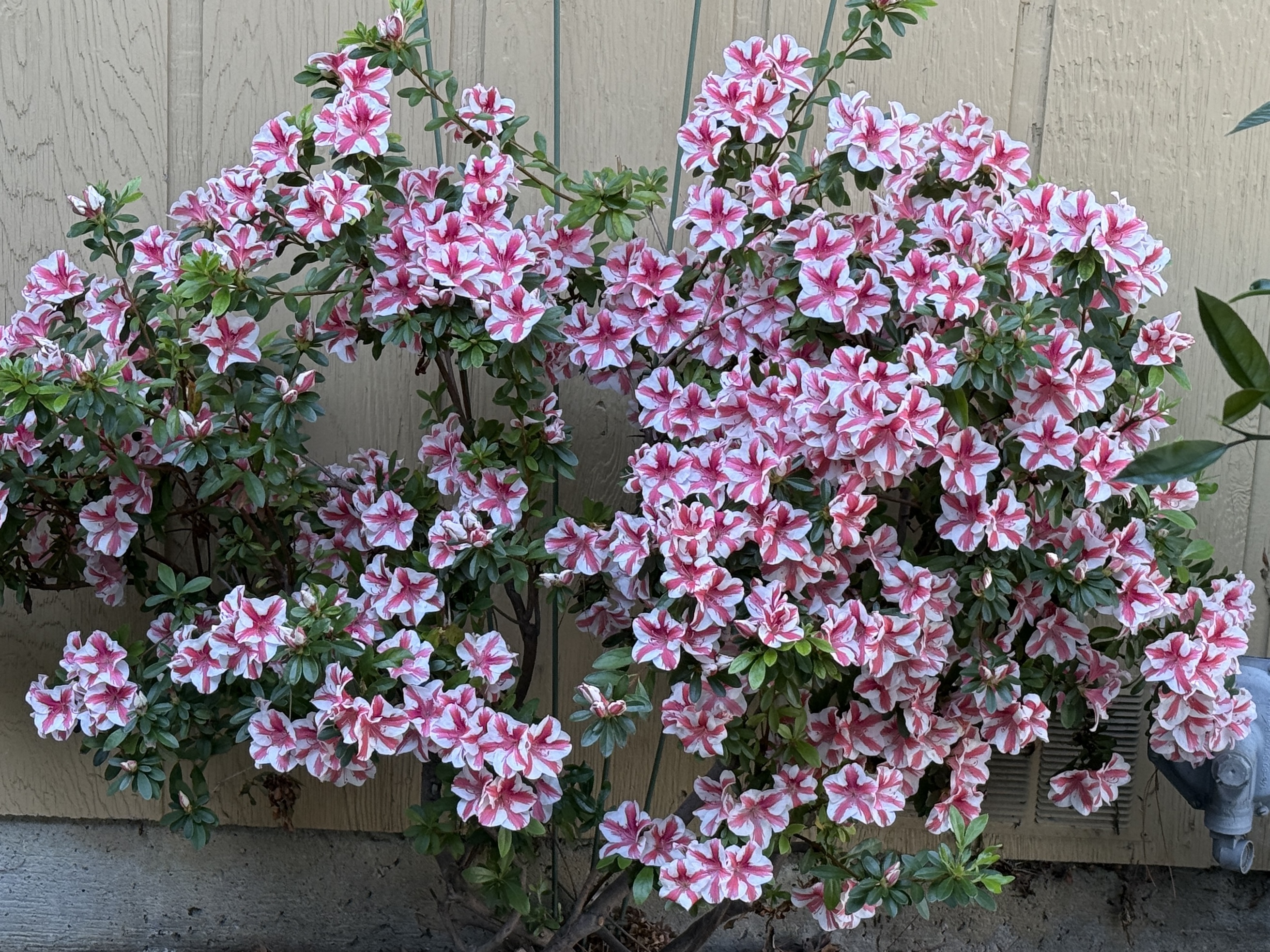
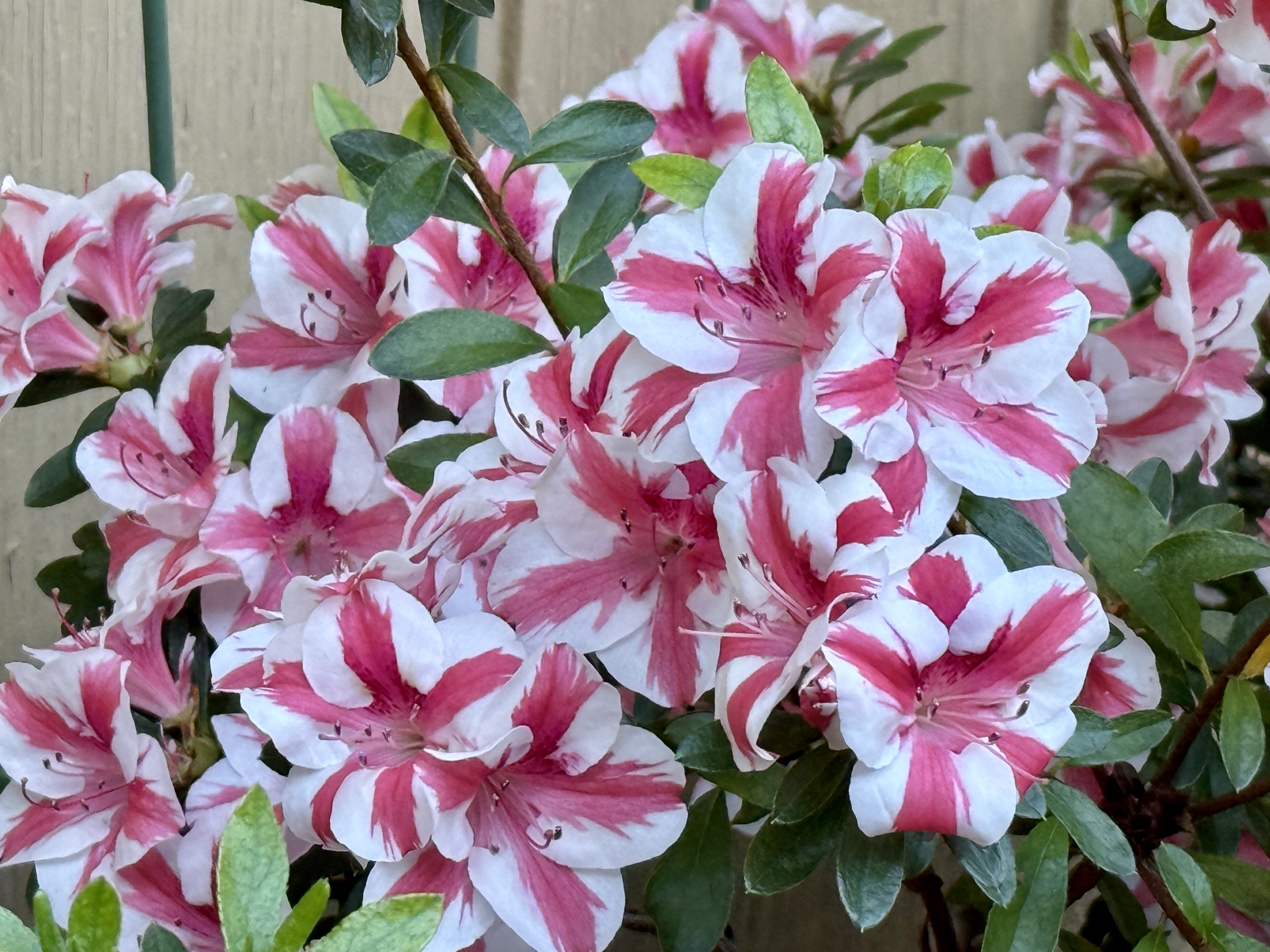
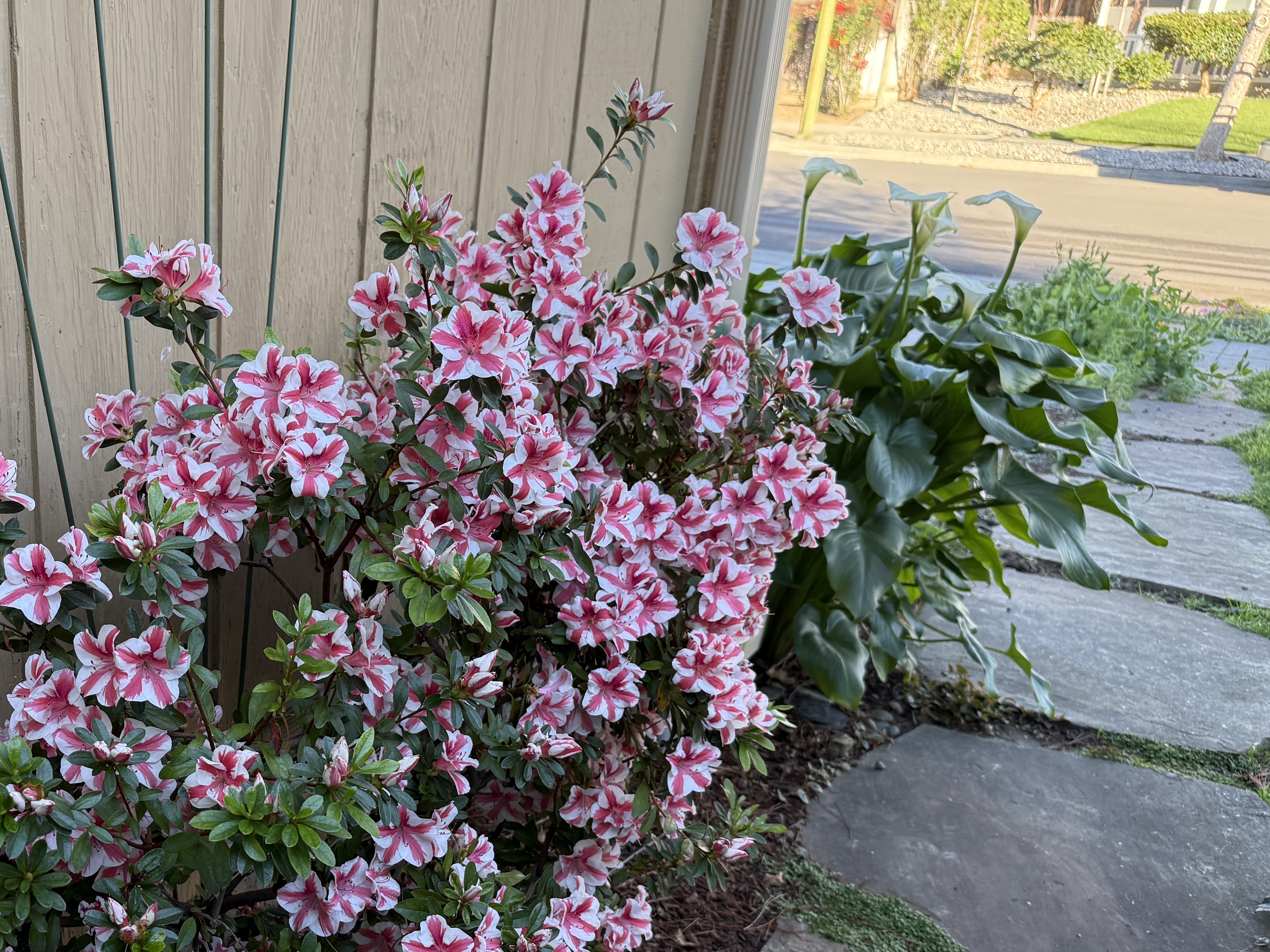
Dark pink azalea

Azalea close-up

Pale pink Azalea

Shiny new growth emerges on all the plants like a chick from an egg, small and tender at first, then vital and strong.

It’s not all fun and games. The weeds emerge, even with our meager rain, opportunistically growing beneath the established ground cover. They grow parallel to the lacy foliage of the California poppy, perhaps thinking I won’t notice.

They’re no match for this gardener.

As I hobbled to and from the car earlier this year, I would bend down and pluck one or two weeds. Now that I’m fairly mobile, I’m methodically clearing them from the garden.

The worst of the weeds gather near the curb, so I sat on the pavement there and got to work.

Over a few weeks, I worked my way down both sides of the drive, around the raised bed known as the curb garden, and then finally into the main garden.

Front Garden

Getting lost in thought as I pull weeds and tidy the beds is wonderfully therapeutic. It helps keep the worrying thoughts at bay. I hear bird song from the trees. I try to count bees, smiling to myself when I lose track. An abundance of bees is essential for our survival. My garden is content to do its part.

Garden Gallery:

Occasionally a lizard darts out of its hiding place and they always give me a start. They too are a gift to the garden, so as my nervous system relaxes, I count my many blessings and carry on with my day.

To plant a garden is to believe in tomorrow. – Audrey Hepburn

Vernal Equinox: The Garden Always Knows

I refer to my calendar each year to confirm the first day of spring. My garden needs no such reminder. While I’m busy planning in my head or on paper, my garden knows it’s time to spring forth. Every year it takes my breath away. I’m more steward, than gardener most days. I keep the weeds at bay, train the vines away from the sidewalk and trim away spent flowers or browning leaves.

In truth, none of these things are necessary. I like a tidy garden, so grooming the plants brings me pleasure. It’s also an opportunity to kneel on the earth, a way to feel connected to something magnificent. Mother Earth never ceases to amaze me.

According to The Farmer’s Almanac:

“On the equinox, Earth’s two hemispheres are receiving the Sun’s rays about equally because the tilt of the Earth is zero relative to the Sun, which means that Earth’s axis neither points toward nor away from the Sun.”

Meteorologically speaking, March 1st is the first day of spring in the Northern Hemisphere. Astronomically, the equinox is generally considered the start of spring. Today is the day that both hemispheres have exactly the same amount of daylight. That in itself is something fun to celebrate.

Come have a look at my garden on this cool, overcast, early spring day.

California poppy

California poppy, waiting to open. It’s our state flower

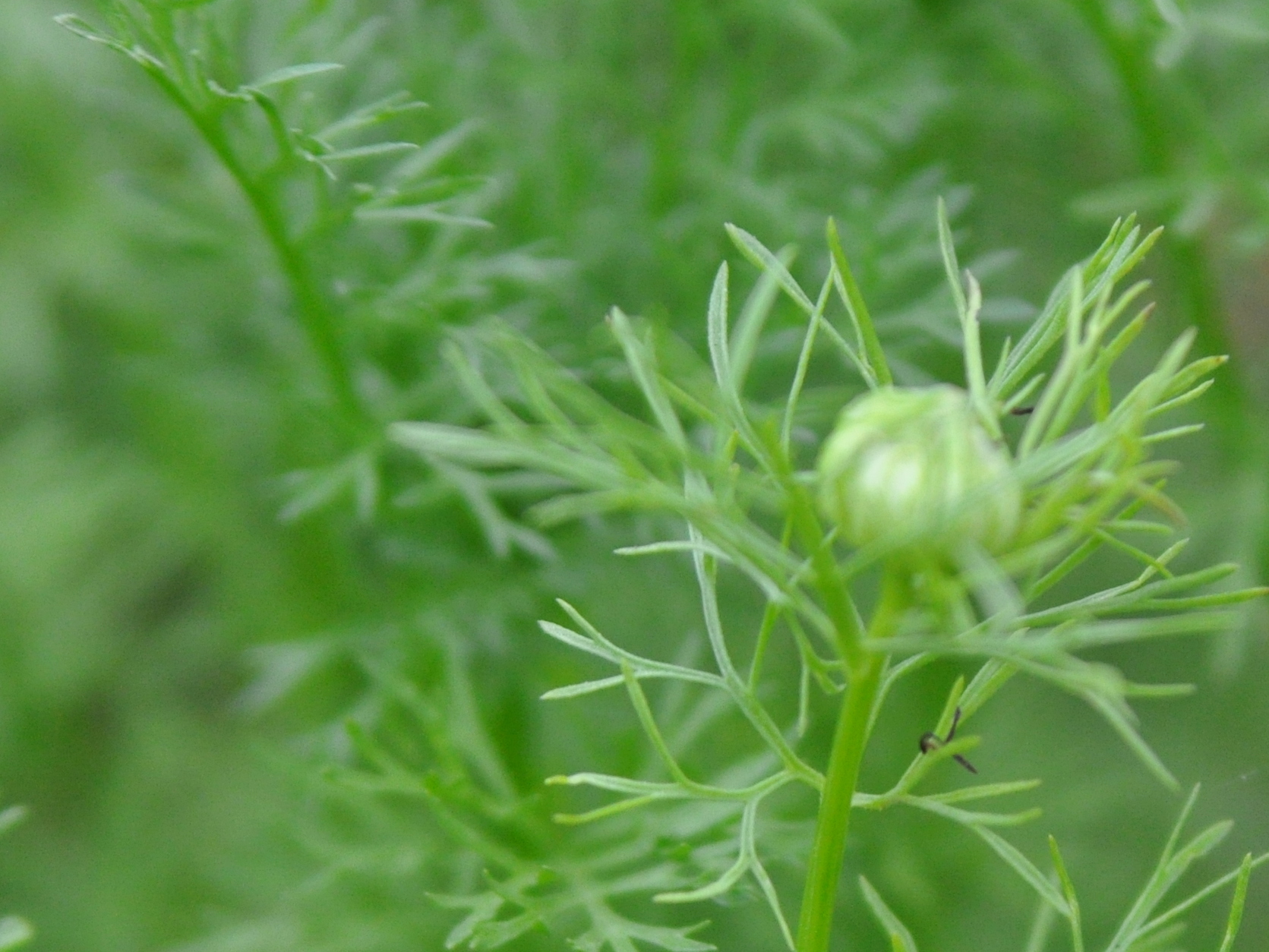
Cornflower bud

The first of the cornflower buds

Nigella bud

Nigella ready to bud. The bees love them.

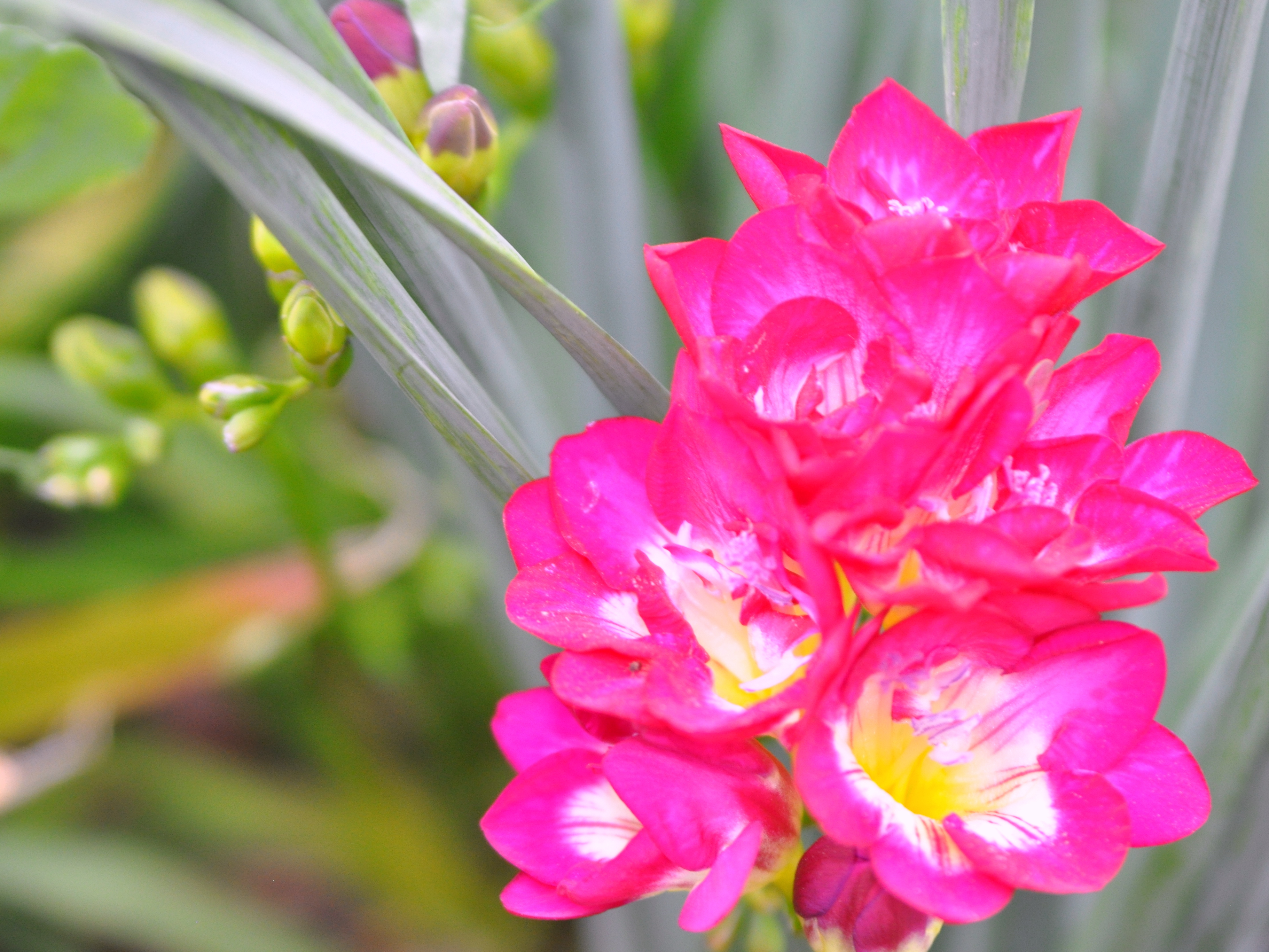
Fuchsia freesia

Fuchsia freesia (say that three times)

curb garden spring

The narcissus stems make great supports for the budding sweet peas in the curb garden

three flowers in the curb garden

The beauty of threes

assorted freesia

Assorted freesia

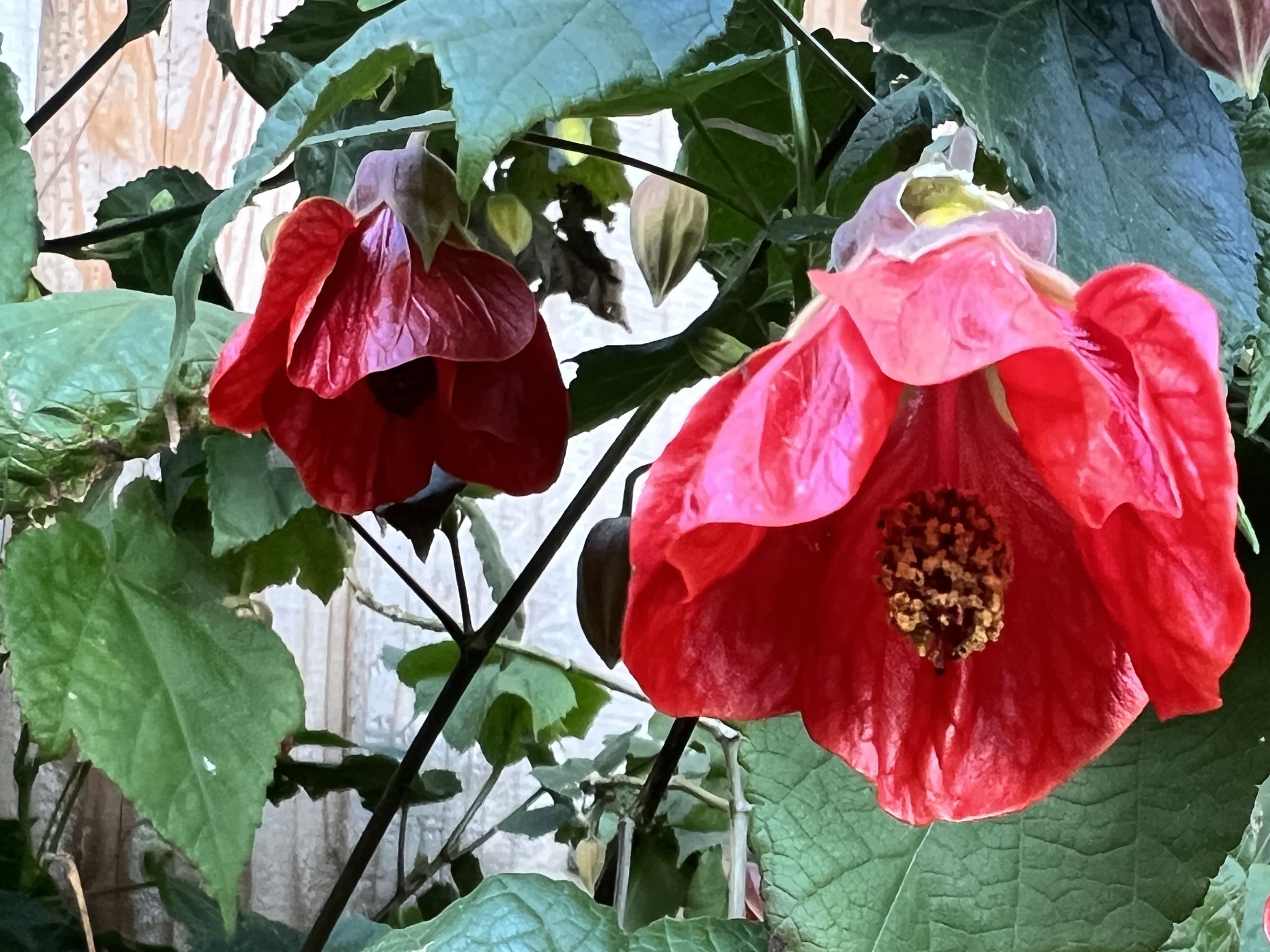
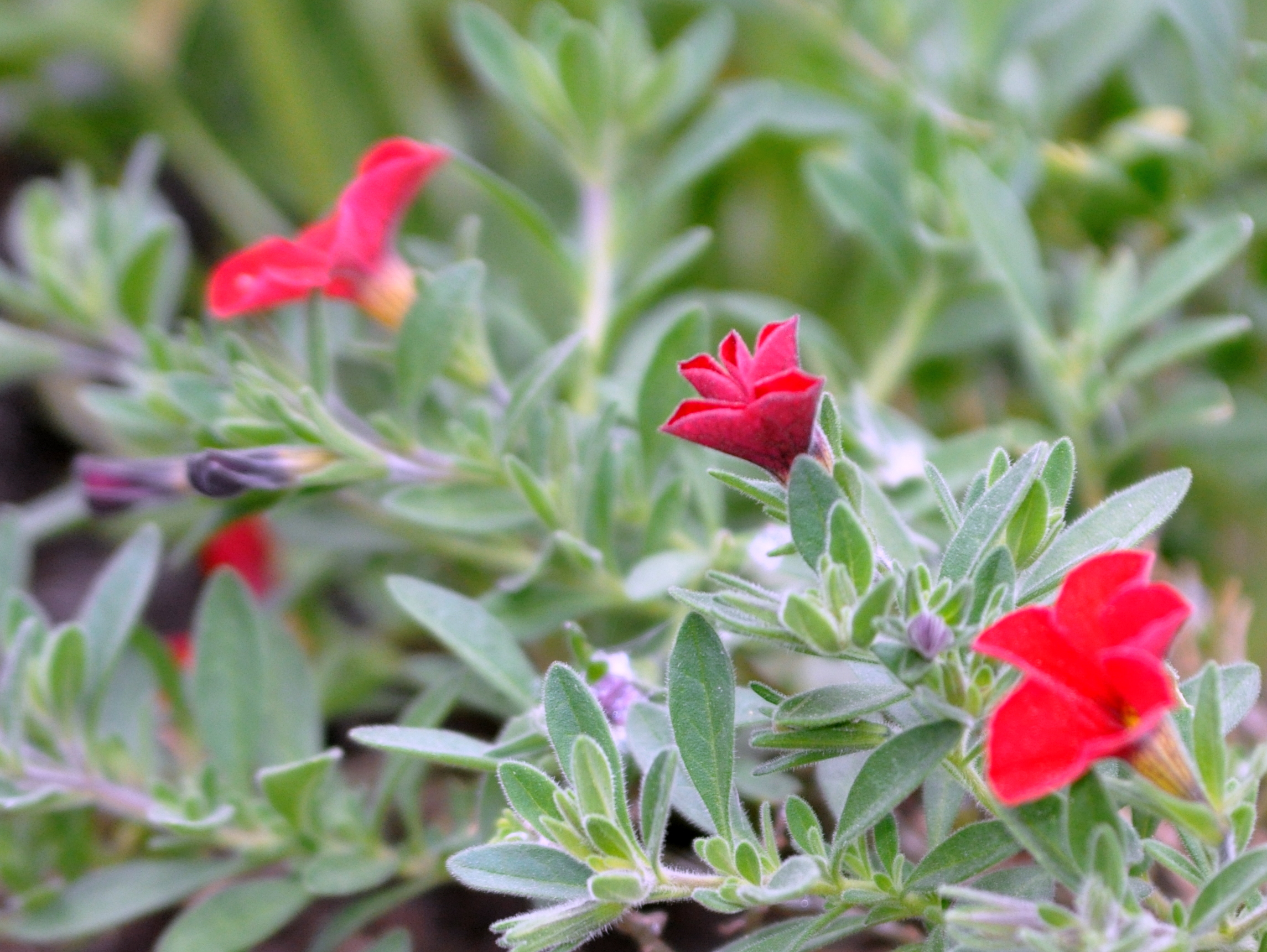
mystery flower red

I planted this in a pot last summer and I forget what it is

yellow freesia and violets

Yellow freesia with violets at their feet

I have a bounce in my step and a racing heart. Spring, glorious spring. You never let me down. Are you ready for the changing season? Are you entering Spring or Autumn?

Save

Save

Save

WordPress Needs a Scratch-and-Sniff Feature

Spring: when the birds sing, the flowers bloom and the intoxicating scent of the garden can bring you to your knees. I snapped photos today, with Mouse the Cat at my heals. We’ve been inhaling the tantalizing scent of freesias scattered throughout the garden.

mouse with flowers at his feet

Mouse tries out a new pair of shoe buckles

Freesia are native to Africa, named after a German botanist and now growing in San Jose. They get around.

yellow freesia

Yellow freesia

I bought a bag of assorted colors several years ago, and they’ve come back bigger and better every year. So far I’ve seen yellow, red and white (my favorite) but I think a few purple ones will be up soon. I took a handful to a friend today with a few sprigs of asparagus fern. The wonderful scent lingered in my car even after they were gone.

red freesia

Red freesia

white freesia

White freesia near the walkway

Freesias, sweet peas and daffodils

white freesia

Freesia toppling over the walkway

white freesia curb garden

Freesia in the curb garden

Wouldn’t it be nice if you could press your nose to your screen and drink in that scent? Perhaps one of those twenty-something technical geniuses will develop a scratch-and-sniff like feature.

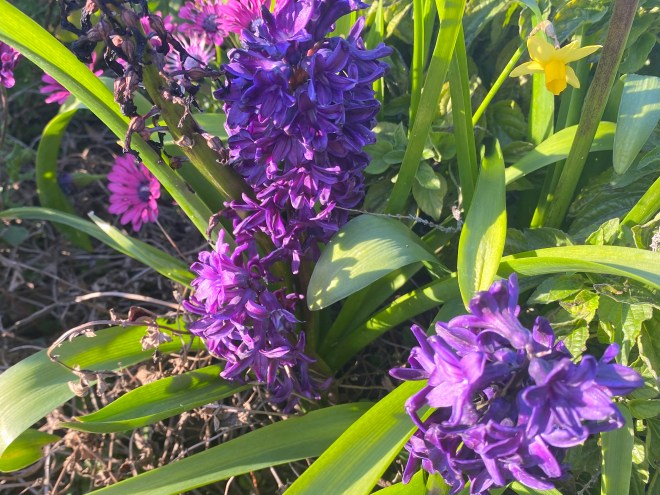
The hyacinths are also up dusting corners of the garden with their potent scent.

purple hyacinth

Purple Hyacinth (William of ‘William and Kate’)

hyacinth

Pink Hyacinth (Kate of ‘William and Kate’)

It’s no surprise that even manufactured scents try to borrow from nature: rose-scented perfume, lemon-scented dish detergent and lavender-infused essential oils. Nothing tops nature.

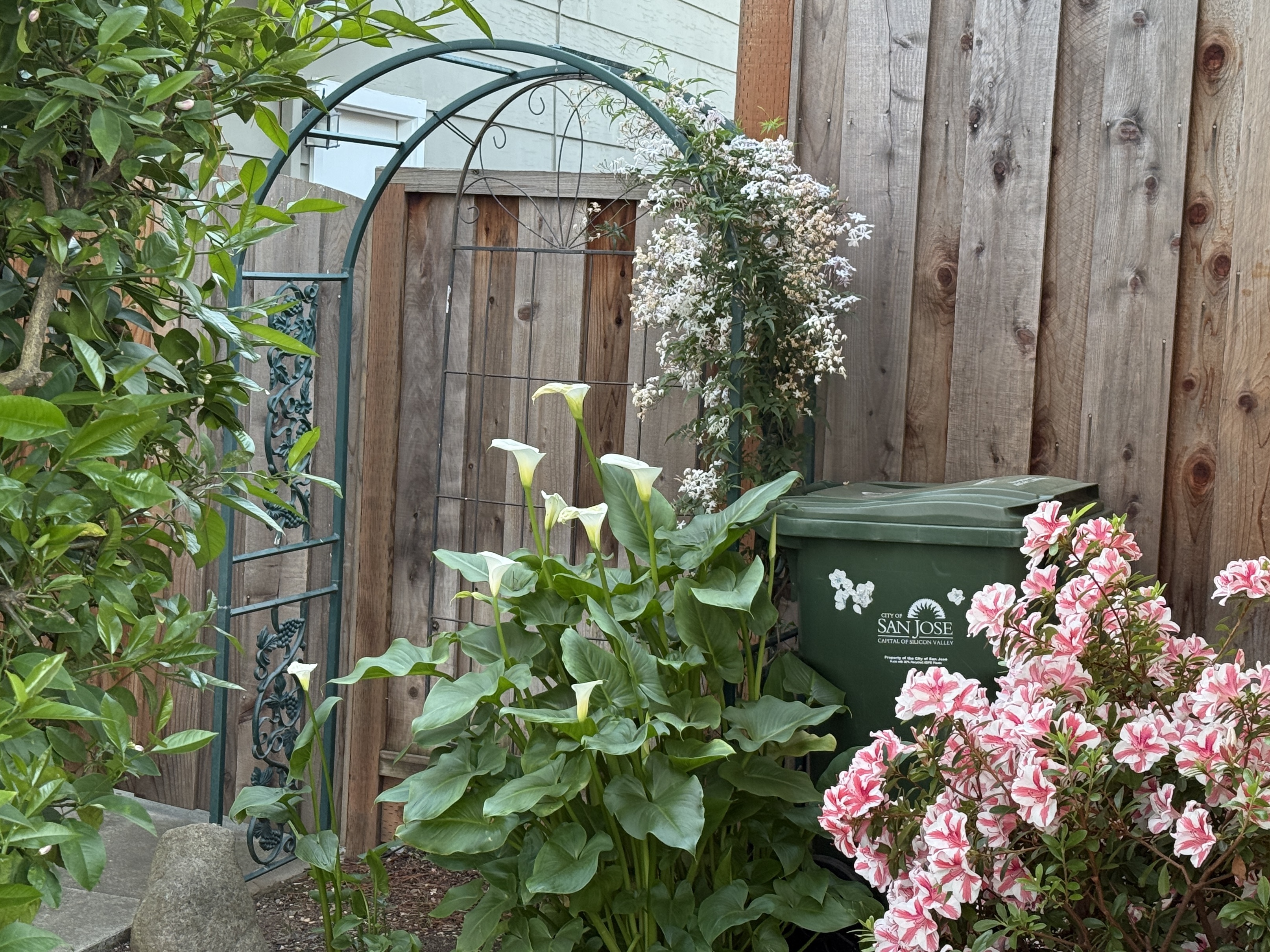
Along the fence, our jasmine vine is in full bloom, inviting me to linger under its shade. I hope it survives the abuse it will get when work boots hit the ground. It’s time to replace the fence.

Star Jasmine

Star Jasmine vine

curb garden

Curb garden with daffodil and freesia

daffodils in the curb garden

Narcissus: 1) Daffodils; 2) Mouse the Cat

The flower is the poetry of reproduction. It is an example of the eternal seductiveness of life. Jean Giraudoux

So what do you think? Could “scratch and sniff” be the wave of the future? Mmmmmmm

Save

Save

Save

Save

Save