Pssst! Over Here! In the trunk…

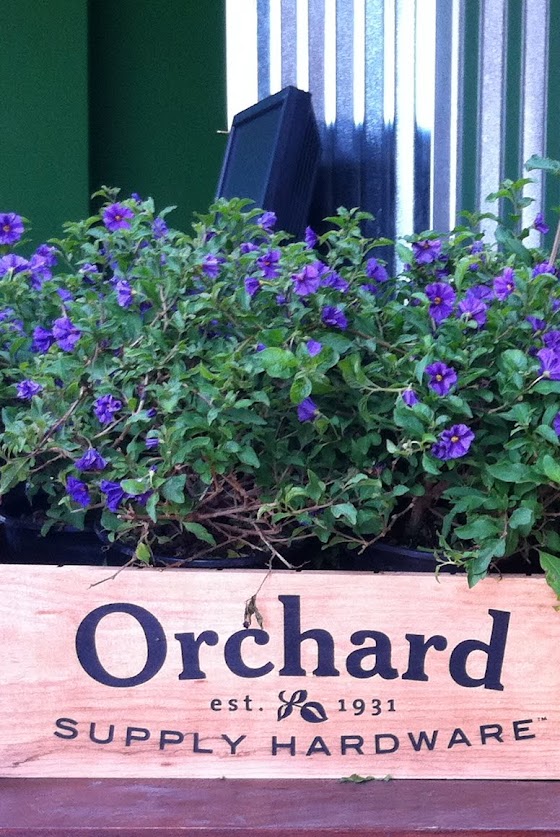
OSH Garden Center

I jumped out of my van in the Orchard Supply Hardware (OSH) parking lot and made a beeline for the garden center.  A friend recommended an EarthBox® for growing tomatoes and I was hoping to find one there (no luck).  Our local OSH relocated to the former Mervyn’s site where, coincidentally, I had my first “real” job working in gift wrap.  The new garden center has a recording of birds chirping in the background.  Corny as it sounds, it’s actually very nice.

As I headed for the double doors I heard my name.  I met Barbara through my son’s school, but didn’t know she was a gardener until I took my son to her home for a party in their back yard.  I was green with envy!  She has a beautiful garden on a double-sized lot and she has chickens.  They make the best fertilizer around.  Barbara also shares my fantasy of buying the neighbor’s house for the sole purpose of expanding her garden.

We chatted about our boys, but first she popped the trunk so I could ogle her flats of flowers and vegetables.  It makes me giggle when I think about two women with their heads bent over a trunk, admiring all those plants. Ah, the joys of bonding over eggplant and tomato starter plants. I’m still smiling.

Garden Center Greeting

Weeds: Green Isn’t Always a Good Thing

Oxalis, pretending to be ground cover

If you garden, you weed.  The end.

Seriously, every garden has weeds; it’s only a matter of degrees.  I’m an expert weeder myself, probably because pulling weeds falls into the category of garden organization.  I  pull weeds and restore order.  It’s therapeutic clearing out the interlopers, those pervasive plants that sneak into the garden beds when you aren’t looking.  They pretend to be the real deal as they vie for water and nutrients, using clever camouflage and stealth tactics to avoid detection.  I know the regulars around town: oxalis, dandelions and spotted surge. Now and again I spot something new and unfamiliar.  I pause overhead, garden fork in hand, wondering if I should give the newcomer a chance.  I once let a glossy green plant grow in our side yard, only to learn from my friend Doug that it was invasive.  It’s still popping up!  I’ve also yanked out plants, only to realize it was an annual re-seeding from the previous year.  I was amused to discover this week that the plant I left growing next to the Chinese Pistache is a volunteer broccoli plant.  How fun that was!

When you garden you have an intimate knowledge of weeds and their habits; where they’ll grow and when. If you don’t pull them out by the roots early, they’ll flower and drop seeds.  Once they go to seed you’ve extended an open-ended invitation to return year after year.

To Weed, or Not to Weed?

I made my rounds today, fork in hand, with a strong wind kicking up pollen.  We have rain in the forecast, so I figured I would get this first round done before the rain helps plant a new batch.

Do you have a garden “chore” that you secretly love?

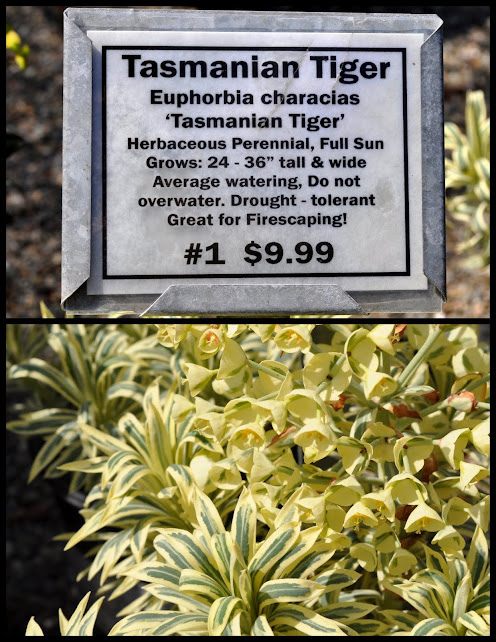
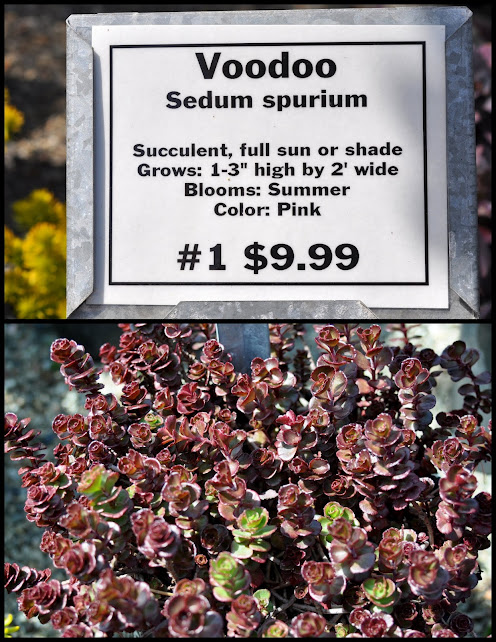
Next House: Voodoo and Tasmanian Tigers

Garden nurseries and animal shelters have the same effect on my psyche: I want to bring everything (and everyone!) I see home.  I chant my “all things in moderation” mantra, and tell myself I can visit those plum trees and flowering succulents any time I want.   When possible, I stay out of animal shelters all together, since a steady stream of stray cats and the occasional dog make it to my door on their own.  I value the necessary work that our shelters provide, but find it disheartening to see so many animals in need of a good home.  Nurseries, on the other hand are always great fun.

My husband and I have a saying between us when we pine for something we unattainable: next house, code for it’s not going to happen.  So…in my next house, I’ll plant the following:

Ruby Clusters: Jewels for the Common Gardener

Tasmanian Tiger: Where the Wild Things Are

Voodoo: For my Tim Burton Inspired Fairy House

If you had the space and place, the time and the money, what would you grow?

Plants available at Almaden Valley Nursery in Silicon Valley.

Blooming Thursday: Geranium Containerem

Geranium: Old Faithful

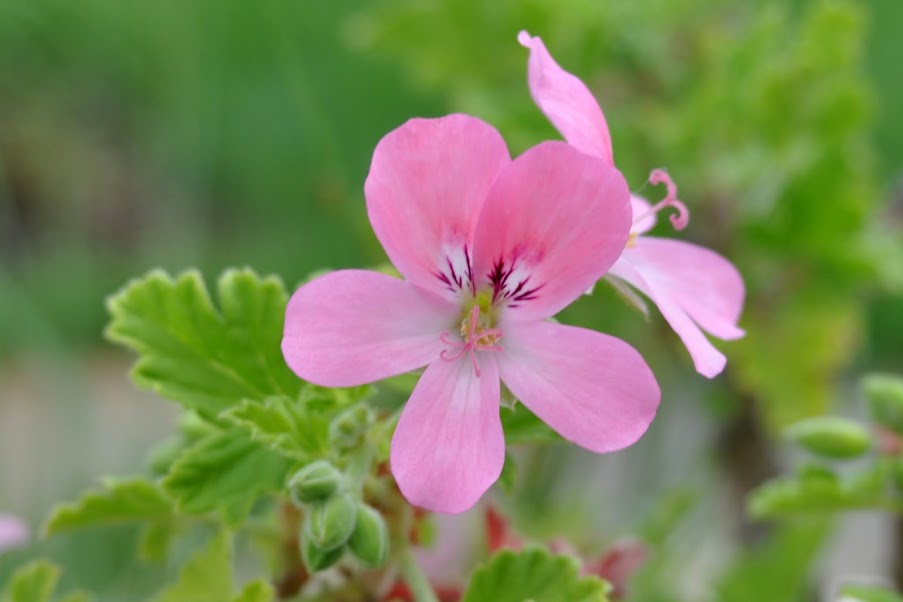
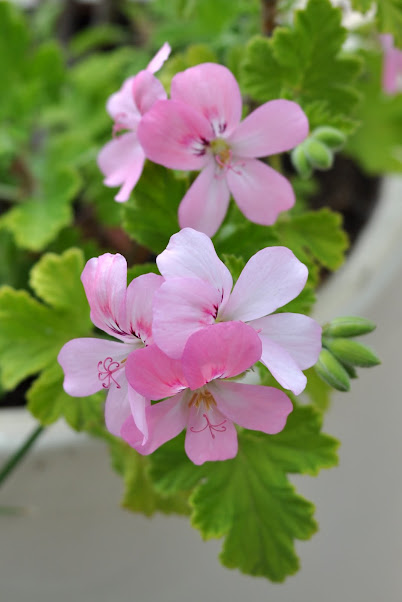
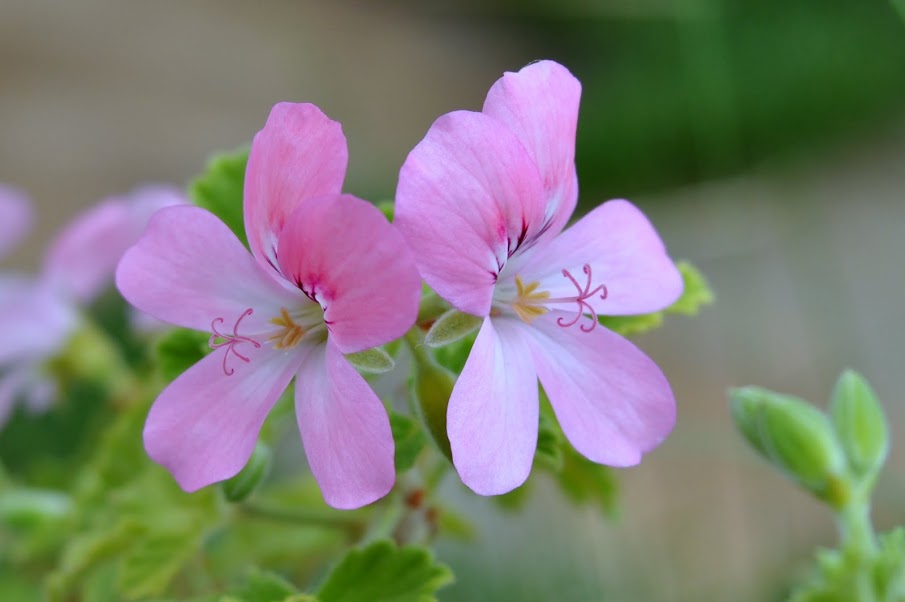
Geraniums are the garden work-horse. In our zone, they flower three seasons  of the year and remain hardy down to at least 30 degrees Fahrenheit. They enjoy full sun and a good soak during the summer months, but the rest of the year they just hang out in the pot, content. Our pretty-in-pink geranium asks for very little, yet produces these beautiful blooms. I don’t see geraniums in local gardens like I used to, so perhaps they’ve fallen out of favor.  When I envision geraniums, I imagine them tucked up along white picket fences or grazing the corners of a bucolic cottage porch.  Time and again, geraniums appear in greeting cards and calendars, imparting a sense of nostalgia and harmony.  I saw several varieties when I traveled through Europe in 1989, dreaming of recreating that essence when I returned home.
Do you have geraniums in your garden?

Geranium Pink

If I were a paint color:
Several shades of subtle pink

Geraniums: Cheerful Splendor at the Edge of our Deck

Pumpkin Sprouts!

Quack-quack!!!

The pumpkin seeds are sprouting.  Yippee!  They look so hearty and healthy.  I prepared the beds last week with fresh amended soil.  We had success with bat guano fertilizer last year, so I’ll use that again this season.  One application did the trick.

We live close to Half Moon Bay, California, home of the World Championship Pumpkin Weigh-Off.  The event attracts growers from around the United States.  We fantasize each year about growing “a big one” but in reality we’re just happy when they grow into whole fruit without sacrificing too many to the rats and squirrels.

I love this time of year!

So then she said...

Twinsies!

Let me take a look under the hood...

Pumpkin Seed Convention

Such Promise in a Packet of Seeds

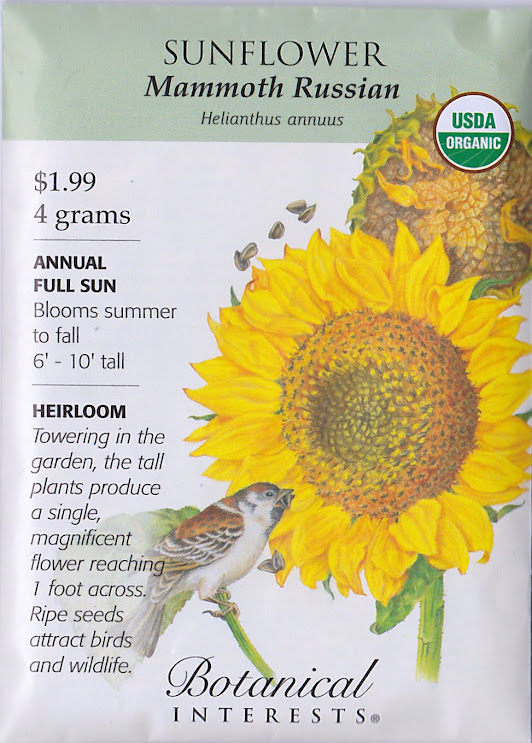
Organic Sunflower Seeds from Botanical Interests

Just imagine:  for $1.99 (plus tax) you can hold a handful of summer potential in a slim packet of seeds. I’ve been dropping seeds into the earth since I was five, forever optimistic that what I planted would grow.  And grow they did!  Given the right amount of water and sun that slip of a seed knows to break through the earth, set roots below and then do what it does best: grow up and out as it morphs into leaves, branches, flowers and fruit.  When the cycle is complete, that clever plant turns to seed so the process can begin anew.

Nothing epitomizes this cheerful process like sunflowers.  Helianthus annuus are easy to grow and spectacular in size. A regular show-stopper along the garden path, they follow the sun throughout the day, then reset at night. Glorious flowers and abundant seeds attract wildlife as they reach skyward.

Once these cold spring days are behind us, I’ll tear open that packet and gently tuck each seed beneath the soil.   All that promise in a packet of seeds.

Here’s what we’ll plant this year (descriptions from the seed packets):

Sunflower ‘Mammoth Russian‘ from Botanical Interests®

Heirloom Towering in the garden, the tall plants produce a single, magnificent flower reaching 1 foot across.  Ripe seeds attract birds and wildlife.  Annual full sun, blooms summer to fall 6′ – 10′ fall”

Sunflower ‘Evening Sun‘ from Botanical Interests®

Heirloom Fiery shades of vivid gold, autumn orange, warm mahogany and blazing bronze! A dazzling cut flower and enticing treat for birds.  Annual full sun.  Blooms summer to fall, 6′ – 8′ tall”

One of last year’s sunflowers: From Seed to Tower in an Hour

The default direction of the sunflower head is to point east towards sunrise: Helianthus: Flowers of the sun

Blooming Thursday: Enjoying the Rain

We’re enjoying a wet spring break, with rain falling most days.  I woke to a heavy squall around five this morning and never got back to sleep.  The sound of rain at that hour is soothing and invigorating, unless of course you’re a cat.  Falling rain is simply annoying.  Our kitties cast a backward glance as I open the door, as if to say “make it stop!”

If the flowers could talk, they would tell a different tale.  I’ll attempt to interpret with photos, below.

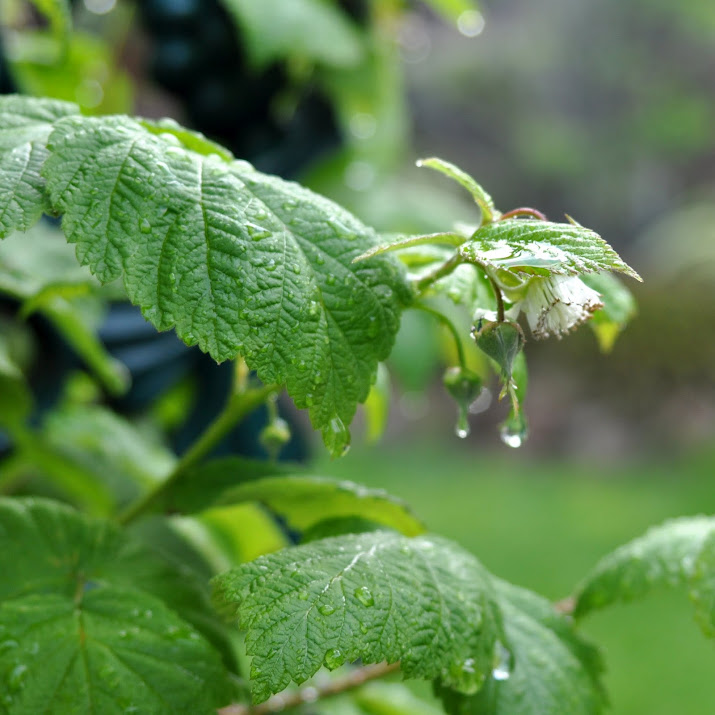
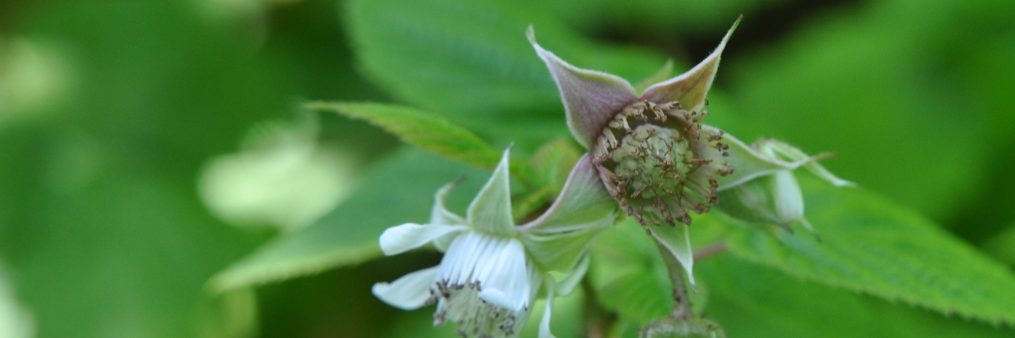
Raspberry Flower about to Fruit

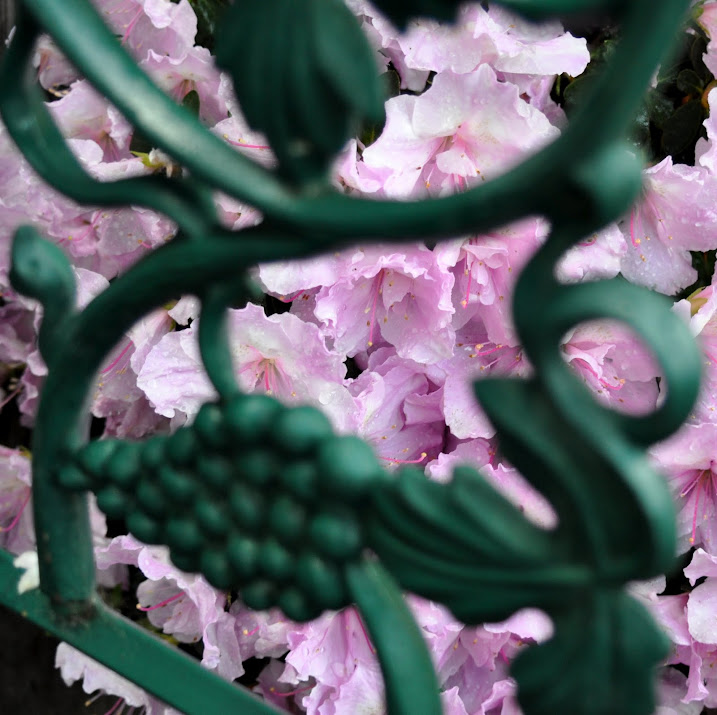
Through the Grapevine

A New Garden Addition

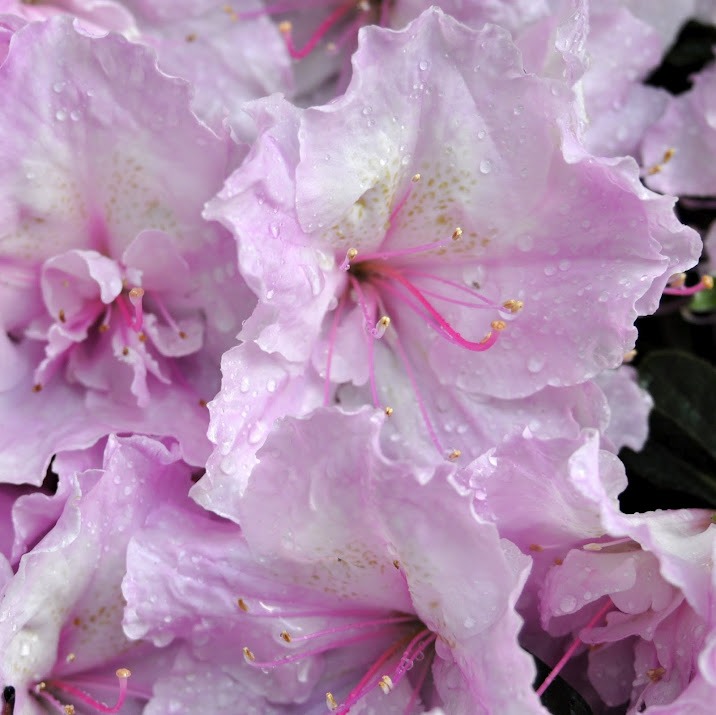
Pink Azalea Closeup

Refreshed

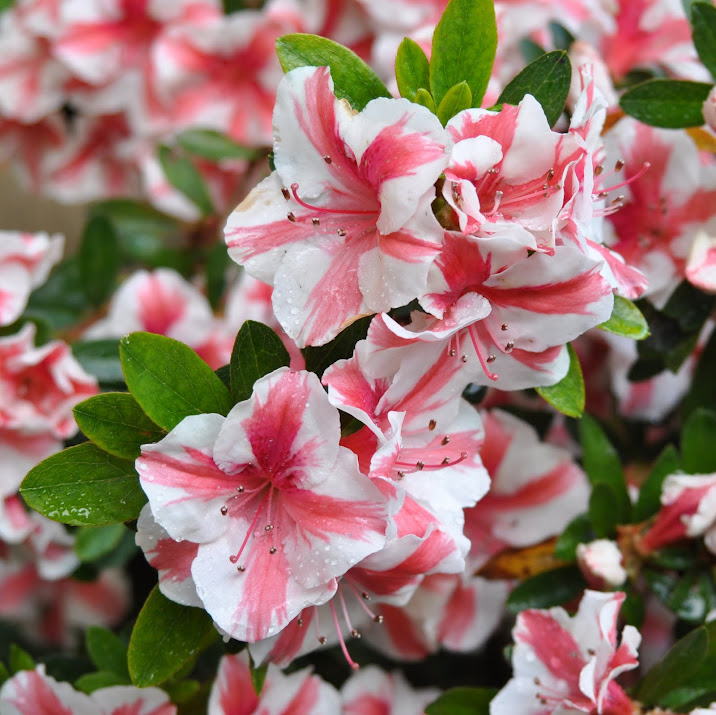
Candy-cane Azalea Smothered in Blooms

Starter Pumpkins: Countertop Seeds

Seed Starter

For the past several years, we’ve purchased a variety of pumpkin seeds for my son’s Christmas stocking.  We start the seeds indoors in April or May to give them a fighting chance against birds and squirrels.  We have them in the ground by June, ready to harvest in August or September.

This year we started our seeds in a Burpee Self-Watering Seed Starting System®.  The kit comes with 72 cells, a planting medium, a moisture-mat and a greenhouse-styled dome.  Everything you need for success except water!  Our new crop includes Lumina (white), Baby Pam (pie), Magic Lantern (20 lb orange), Munchkin (miniature, orange) and Howden Biggie (40-60 lb. orange).

In the past the seeds were usually jumbled together, so we never knew what was what till they started to produce.  We were more methodical this year now that my son is older and more interested in the varieties.  I photo-copied the seed packets on heavy card stock and taped them to chopsticks.  When we transplant outdoors, the plant labels will be ready to go.

Every year we hope for one large pumpkin, but we’re never willing to sacrifice the other fruit to nurture just one plant.  Once again, I imagine we’ll simply let nature takes its course (except for the squirrels of course).  The chicken wire barrier keeps the nibblers at bay till the young plants begin to grow.

Pumpkin Seeds: The Start of Something Big

The Plants are In!

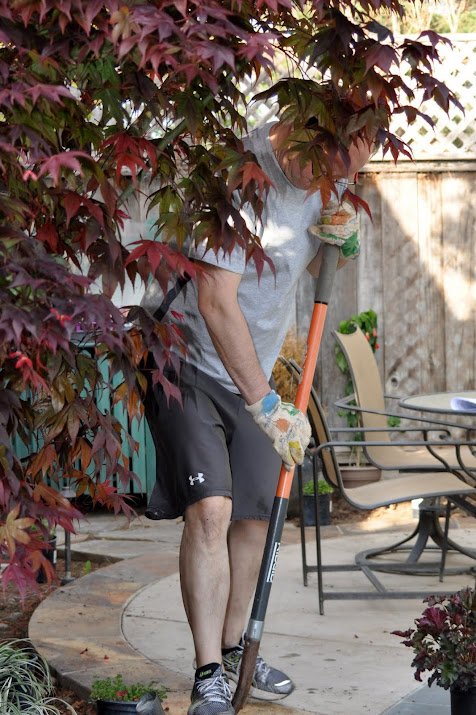
Resident (Self-described) Hole Digger
My Husband, Mike

We’re sore and tired but content with the satisfaction that comes from an honest day’s work. It’s been a few years since we’ve planted for the better part of a day but we did it. Mike prefers sailing to gardening, but at the start of our marriage, he designated himself the resident hole-digger. Am I ever lucky!

The plants near the house went in quickly. The soil is free of roots and was easy to work. The challenge was the planting area under the neighboring pine. I cut away several surface roots before digging was under way, but the roots are invasive, in some cases two inches in diameter. We ended up tag-teaming the larger holes, digging a little, cutting the roots and then digging some more.

Getting Started

We made a quick run to the local Home Depot for redwood mulch, but underestimated by about 10%. Otherwise, the planting and mulching are done.

I can’t wait to get started on the vegetable beds!

Plant Placement

Putting Down Roots

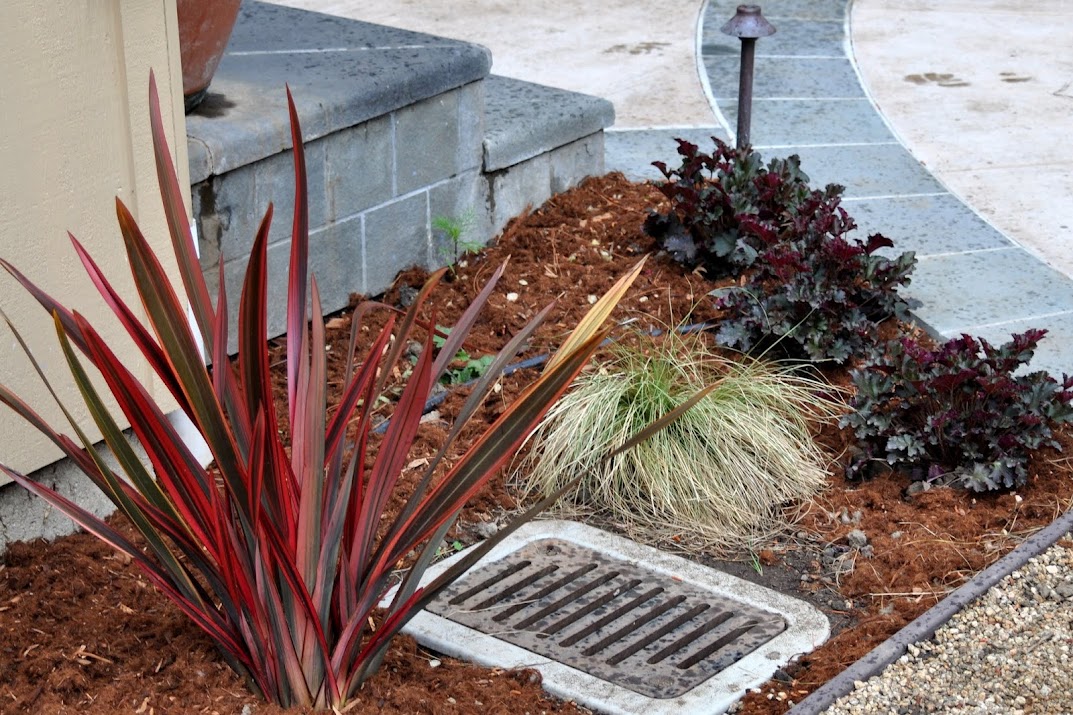
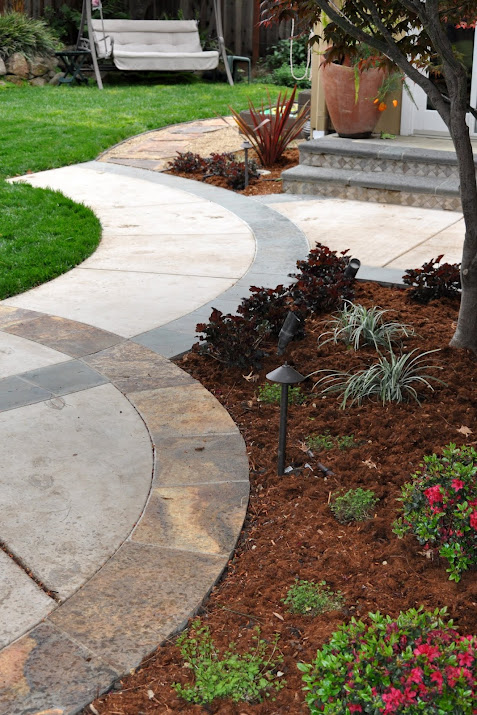
Planting Area Adjacent to the Steps

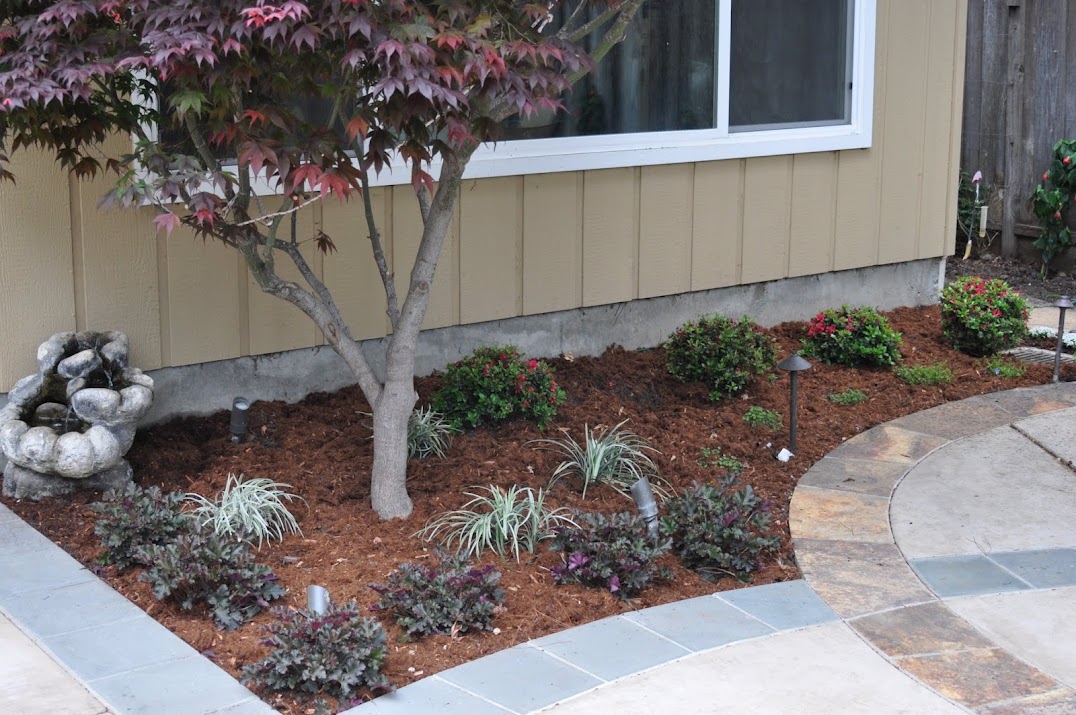
Planting under the Living Room Window
Don't the plants look cozy under all that mulch?

Abutilons Along the Fence Line

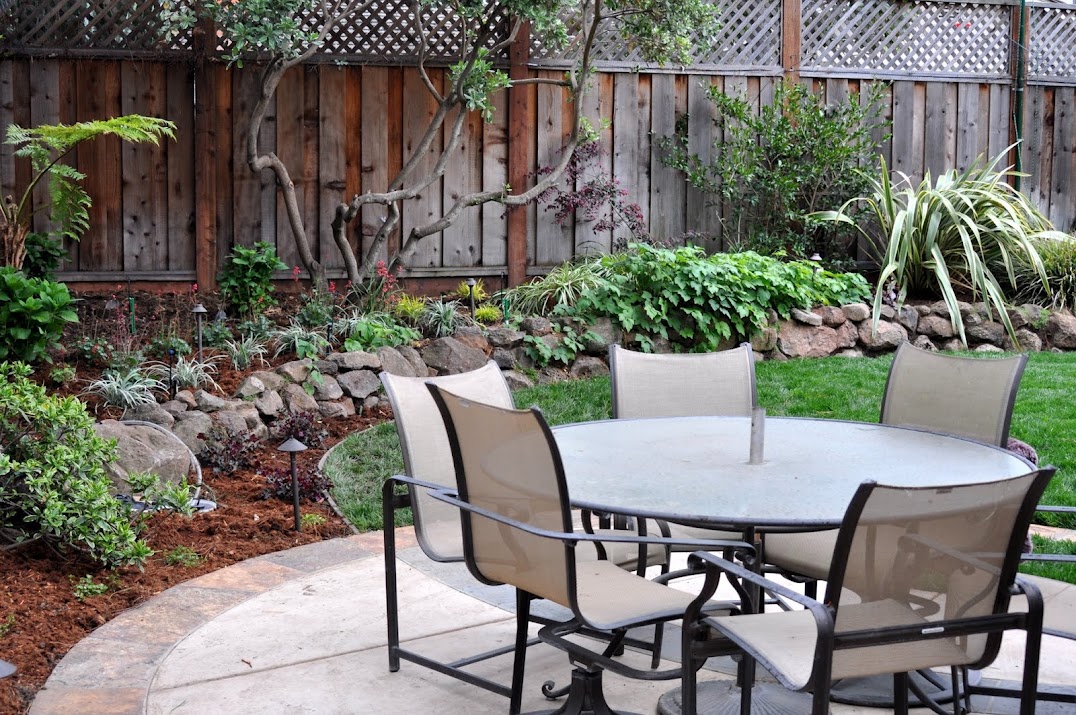
View from the Corner of the House

Paradise Found

Plant Legend

Corner Near Steps:

Heuchera micrantha ‘Palace Purple’ Coral Bells
Liriope muscari “Variegata” Lilyturf
Phormium hybrid ‘Maori Sunrise’ New Zealand Flax
Hemerocallis hybrid ‘Evergreen Yellow’ Daylily

Under Window:

Azalea kurume hybrid “Hino crimson” Azalea
Campanula poscharskyana Serbian Bell flower
Heuchera micrantha ‘Palace Purple’ Coral Bells
Liriope muscari “Variegata” Lilyturf

Fence Line:

Abutilon hybridum ‘Flowering Maple’
Campanula poscharskyana Serbian Bell flower

Back Corner:

Campanula poscharskyana Serbian Bell flower
Hakonechloa macra ‘Aureola’ Japanese Frost Grass
Hemerocallis hybrid ‘Evergreen Yellow’ Daylily
Hydrangea macrophylla ‘Nikko Blue’ Garden Hydrangea

The Bad News…

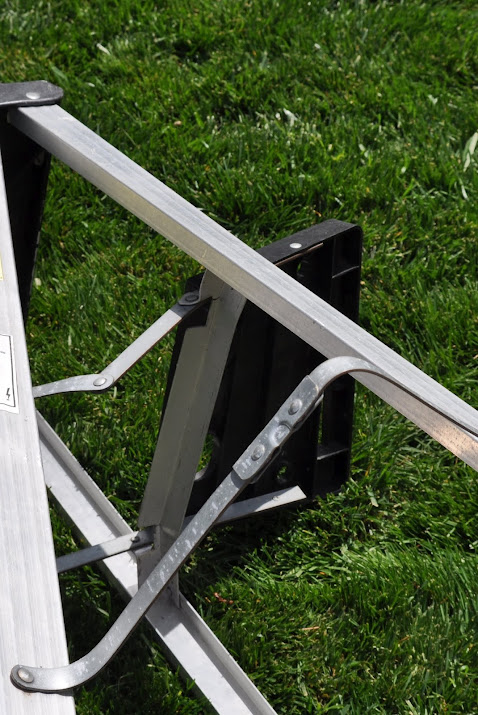
Broken Ladder, Wounded Pride

I fell off a ladder trying to net the fruit tree.  The good news: I landed in a soft growth of ferns.  The bad news: my son saw me fall and he’s a bit worried.  The good news:  no real injuries other than my wounded pride, a bruise on my shin and a tender tailbone.  More  bad news: I broke the ladder.  The good news:  this paragraph has drawn to a close.

We bought bird netting for the fruit tree and I was attempting to drape it from the top.  The leg of the ladder sank into a soft patch of dirt, fell sidewise into the fence and deposited me backwards. It’s hard not to feel like the village idiot. It’s not the first time I’ve been up on a ladder.  I should have made sure that fourth leg was stable.

So, the netting is now unceremoniously stuffed around the tree.  Next time…I’m glad I get to say next time.

Ladder Safety according to the OSHA Quick Card complied by the United States Department of Labor.

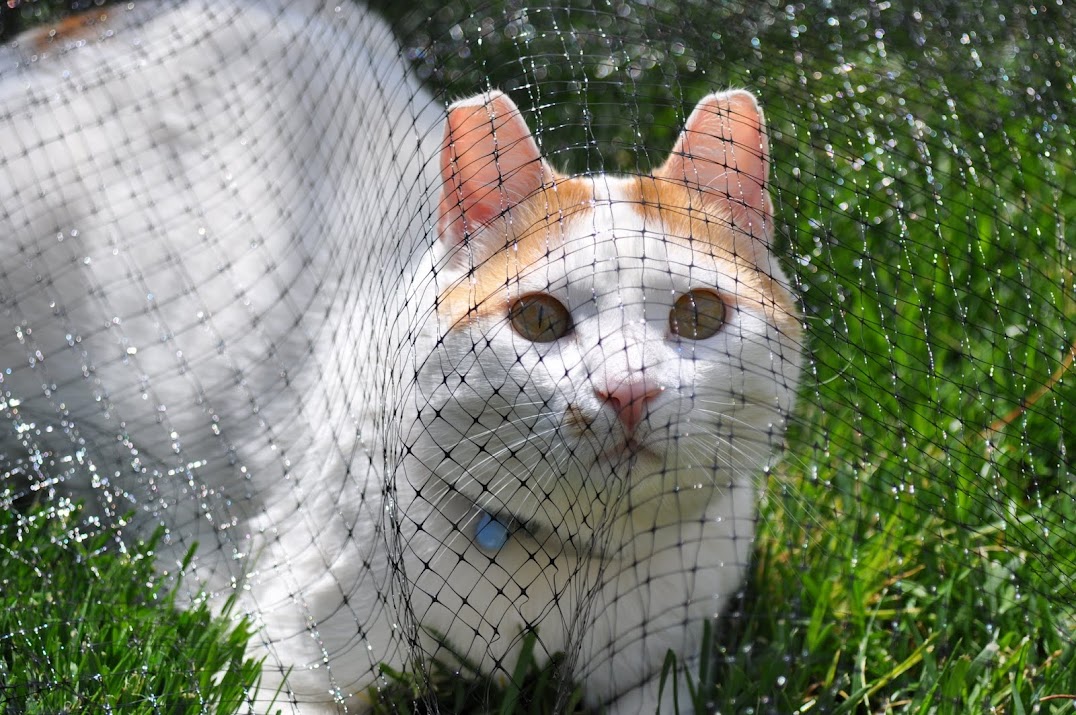
Kitty Decided to Net Himself

Practicing His "I'm Innocent" Look