One Thing

Have you ever popped in to a craft store to get one thing? Then you pay for one thing and you’re quickly on your way?

That’s never happened to me either.

So it goes with my decision to make a handful of Halloween-themed cards. Scrapbook Island is one of those places that holds you in its grasp. You zig and zag, cooing at the beautiful paper and then you end up chatting with one of the creative women on staff. Then someone pops in to buy a spider web stencil, changes her mind, and before you know it, that stencil ends up in your hand basket. Wait a minute. When did I pick up a hand basket? Wasn’t I in here for one thing?

Like a kid in a candy shop, if you’ll pardon the expression, my eyes are bigger than my actual time available.  I don’t do much scrapbooking anymore, as my boys now eschew all motherly attention and heaven forbid, photographs. I’m lucky to get a couple of candid shots on Christmas day. Thanks, however, to the talented influence of my sister Sharon and my crafty friends Boomdee, Kristi and Stephanie, I’ve caught the card-making bug.

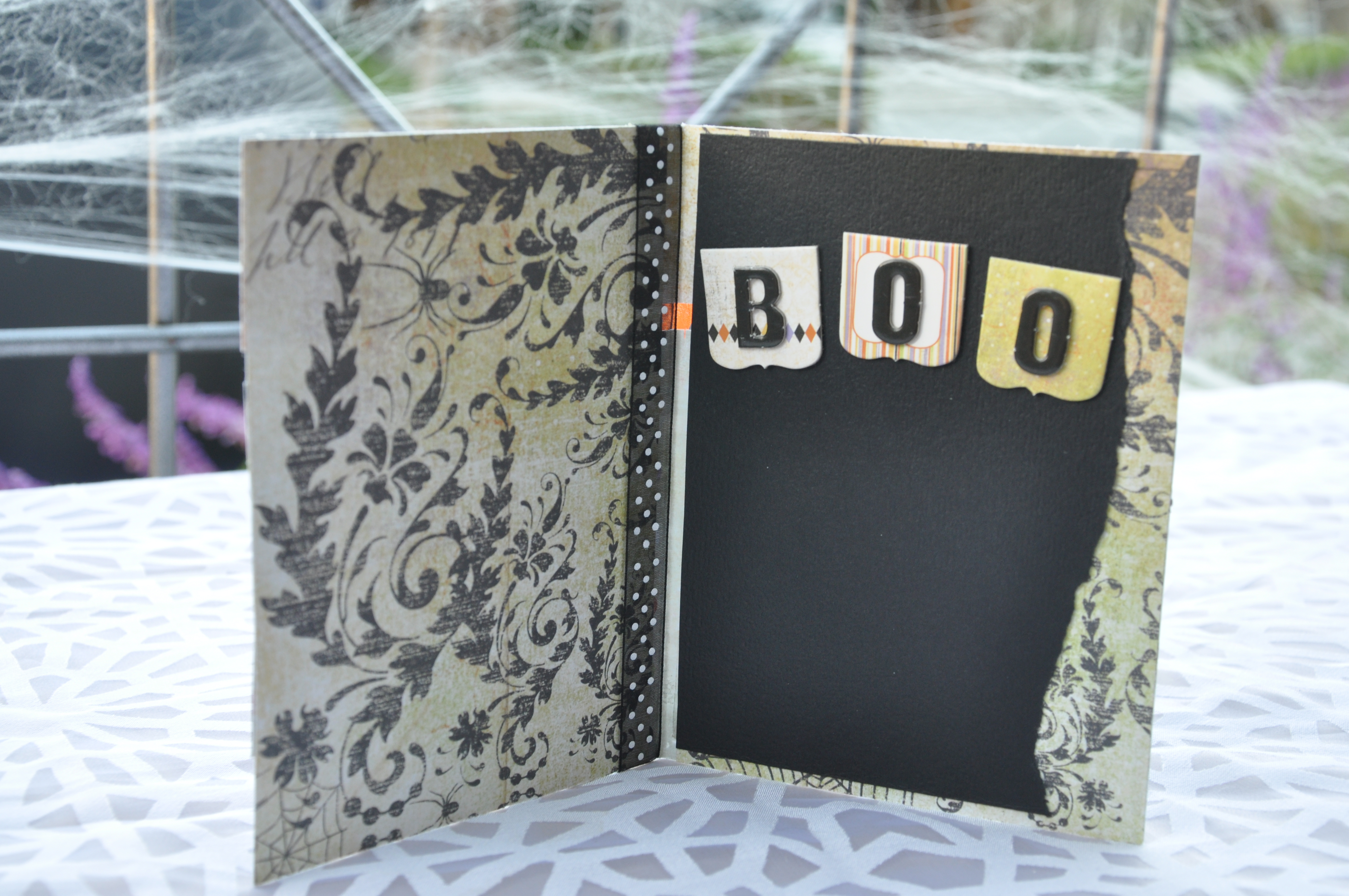
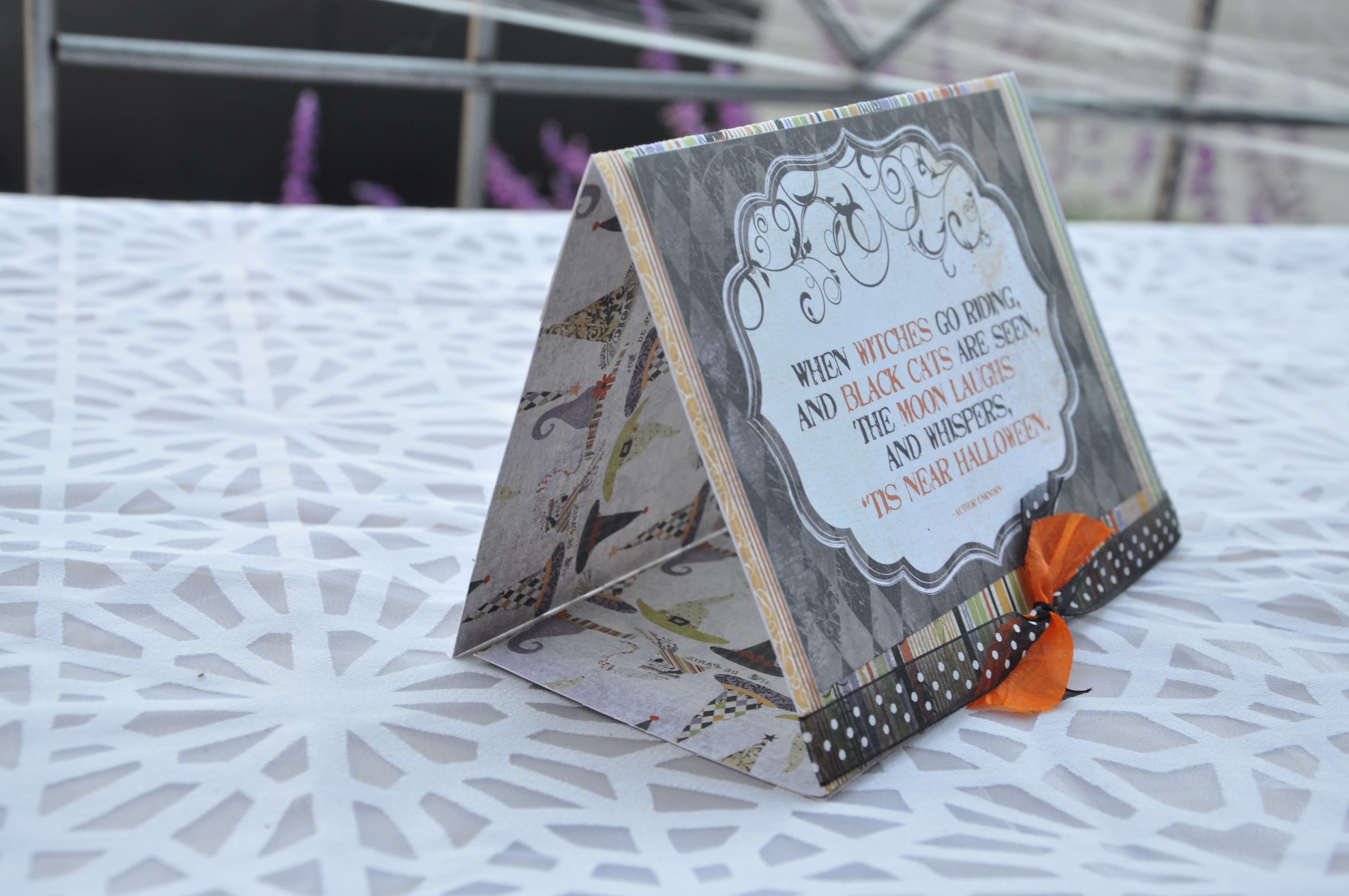
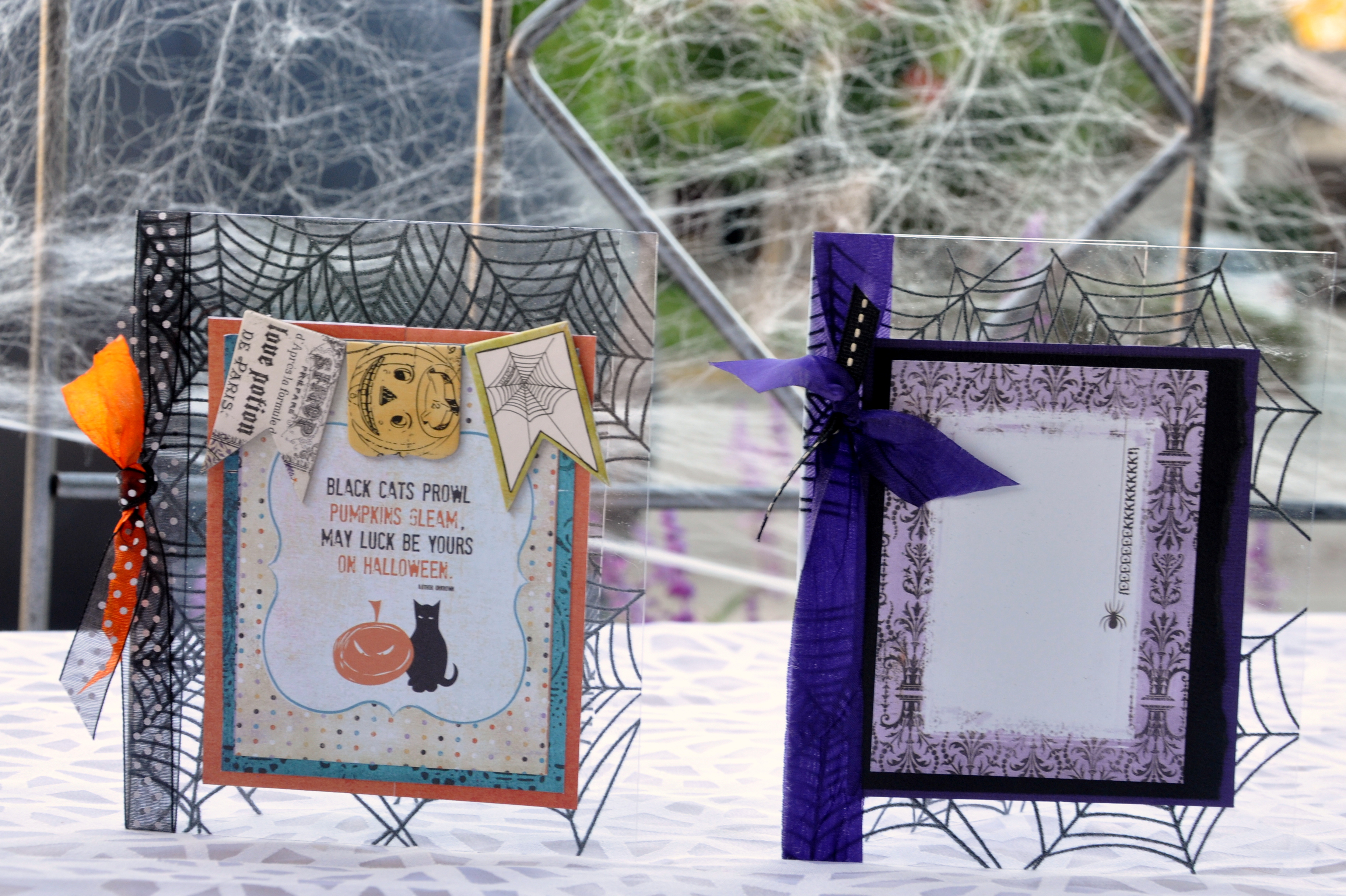
So on a hot day in late September, I sat near the window and made cards.
DSC_0029 DSC_0031 DSC_0034 DSC_0035 DSC_0036 DSC_0037 DSC_0038

I listened to Pandora Radio’s Halloween Party station to get into the right mood. I used my new stencil, old book pages from a vintage shop, and ribbon from the Island. I bought plenty of black paper that day, and a few yards of silky ribbon.  After some brief instruction on the virtues of different inks, a small bottle or two came home as well. In the end, I made seven cards and a big ‘ol mess but oh what fun, what fun!

envelopes and stamps

Envelopes and stamps

The post office doesn’t sell Halloween stamps, so I settled on Ray Charles in a bright orange shirt and assorted farmer’s market stamps.  No sense making a card and a fancy envelope, only to settle for dull and boring postage.  Now to address those cards and get them in the mail.

No-Candy Countdown:

I’m candy-free, 23 days and counting! We can talk about my paper habit in another post.

Pumpkins on Parade:

Or in other words, a parade of pumpkins. Can you believe it?
October pumpkin harvest

Pumpkins on Parade

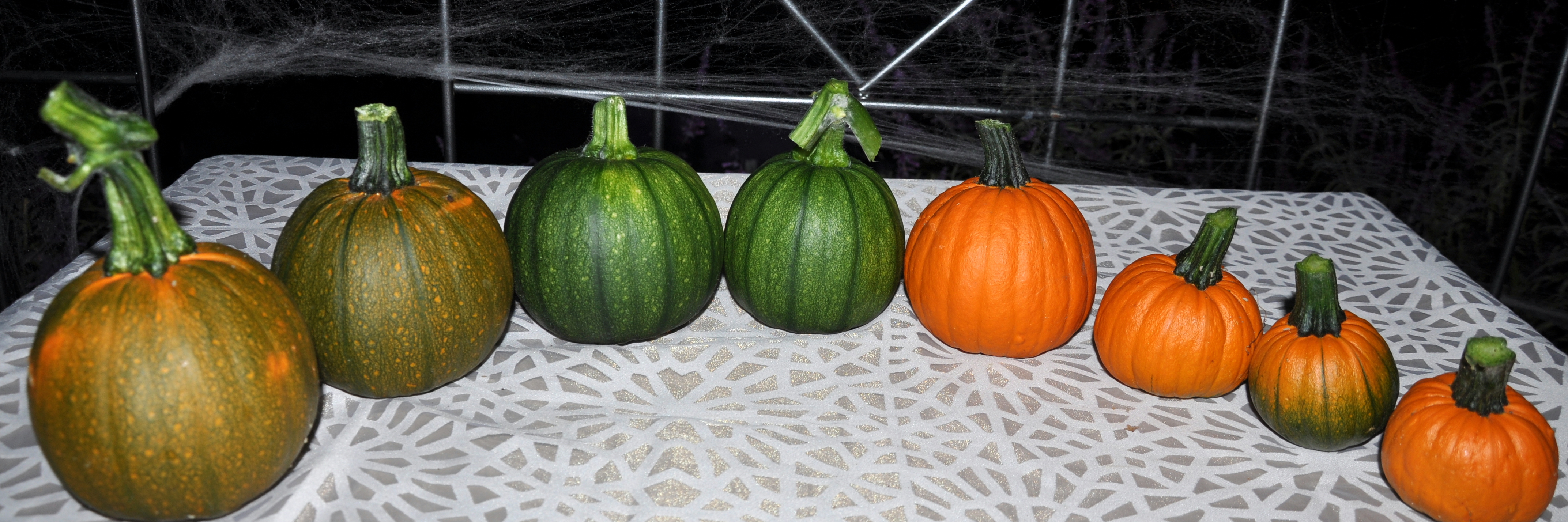
I ran out of daylight, so I harvested these in the dark. Now that the nights are cooler, the plant is closing down. The leaves are turning to brown in some places, powdery with mildew in others.

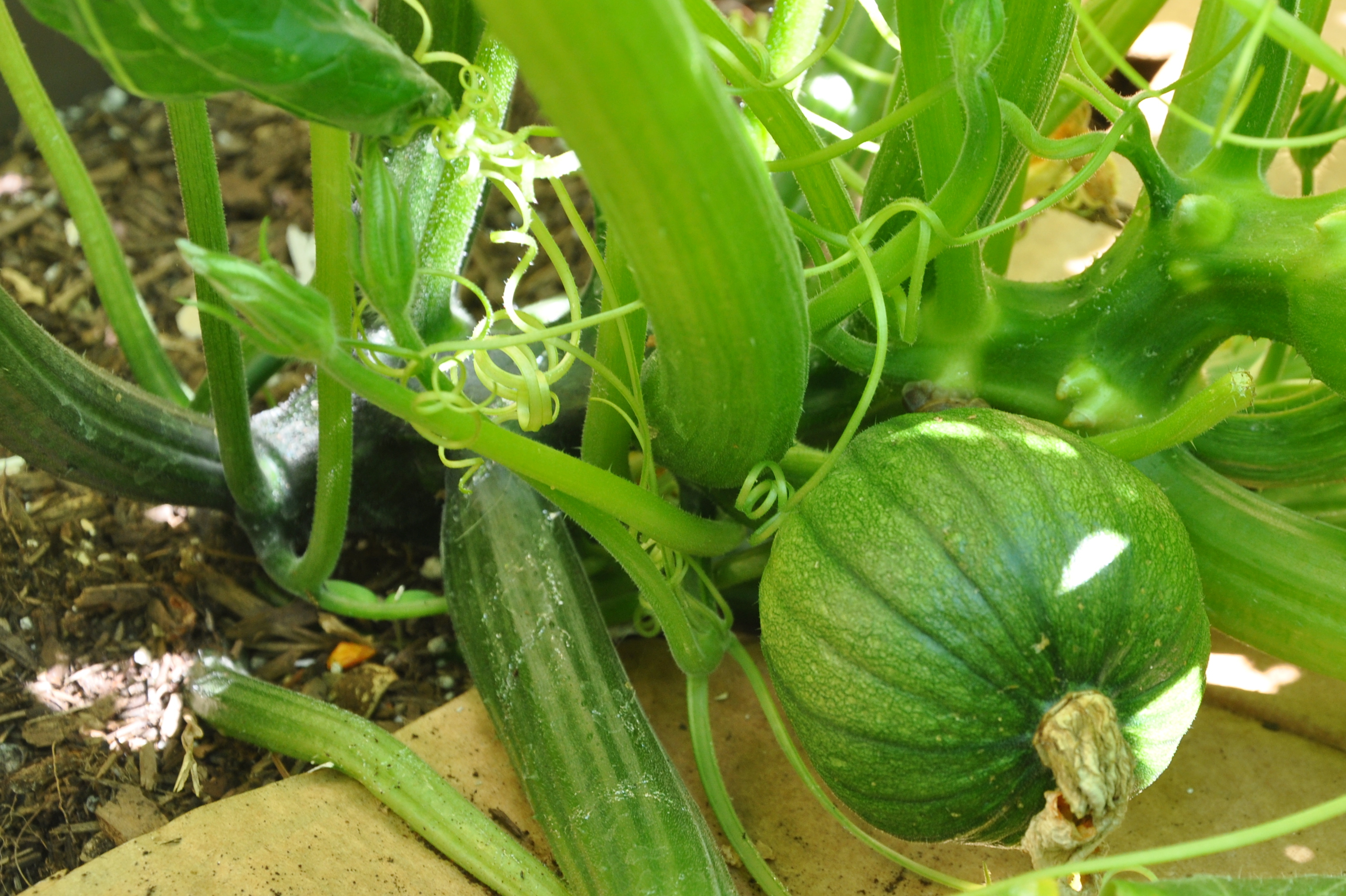
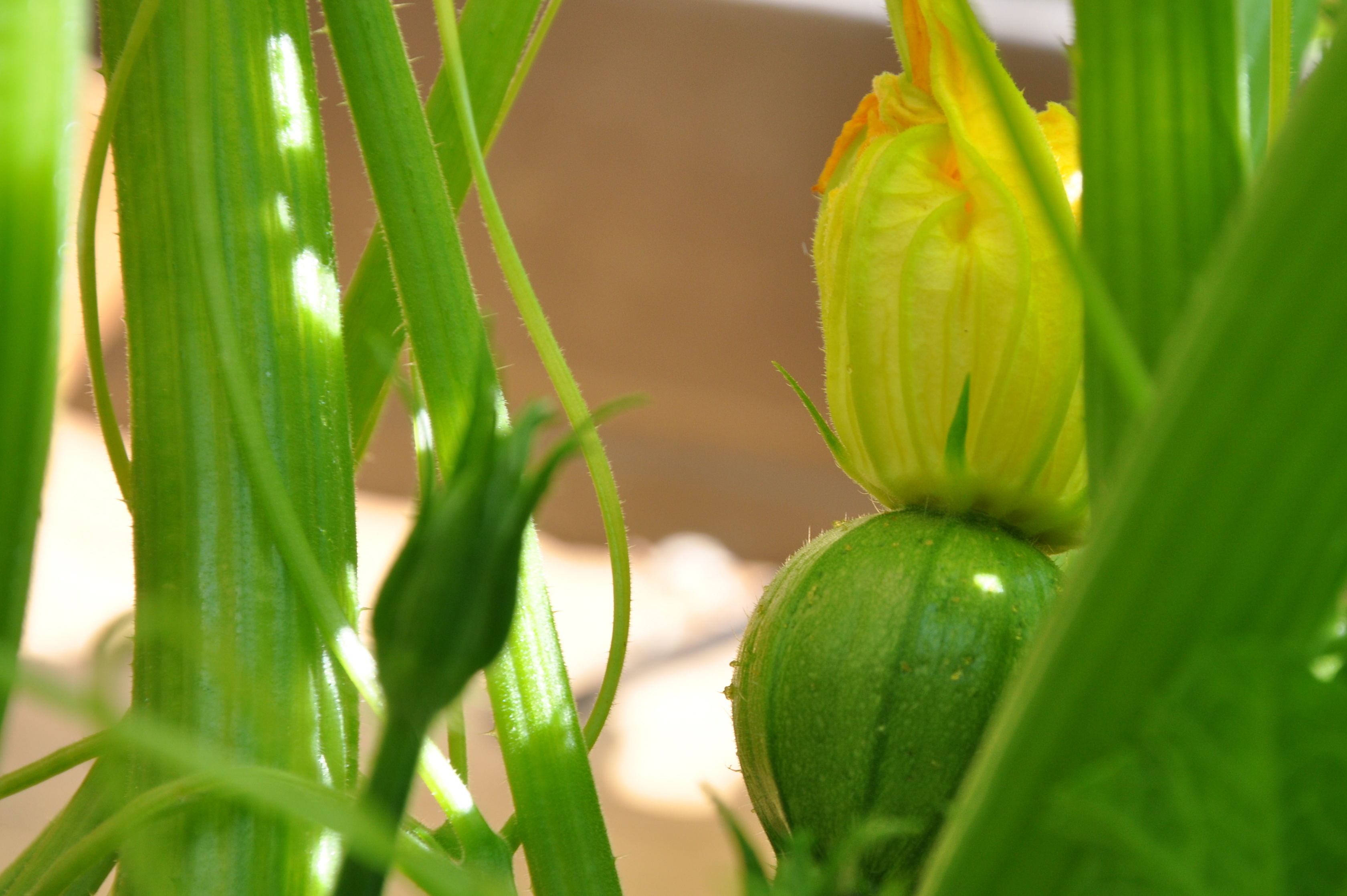
My mystery plant grew over the edges of the box, while at the same time producing eight pumpkinesque pieces of fruit. Did I mention that it grew without a trace of water at the roots. No signs of squash bugs either. One of my readers suggested a possible hybrid. I wonder if there is a way to find out? Unlike the vines I’m used to, all the fruit formed close to the soil line on short stems. The plant just started to send out vines in the last few weeks.  This fruit is hard as a rock and heavy too.  I’m just tickled to pieces to see so many of them turn orange. I’m leaving them outside to harden for a few days, unless we get that promised rain.

Gosh I love October.  Color me orange with joy.

Mystery Plant Shows its True Colors

The ‘mystery plant that ate the vegetable box‘ continues to grow.  Our temperatures remain warm, night and day, so the plant is spreading happily over the edges of the box, and pumping out fruit like nobodies business. I can’t get over it.

late season pumpkin plant

It’s a Pumpkin After All

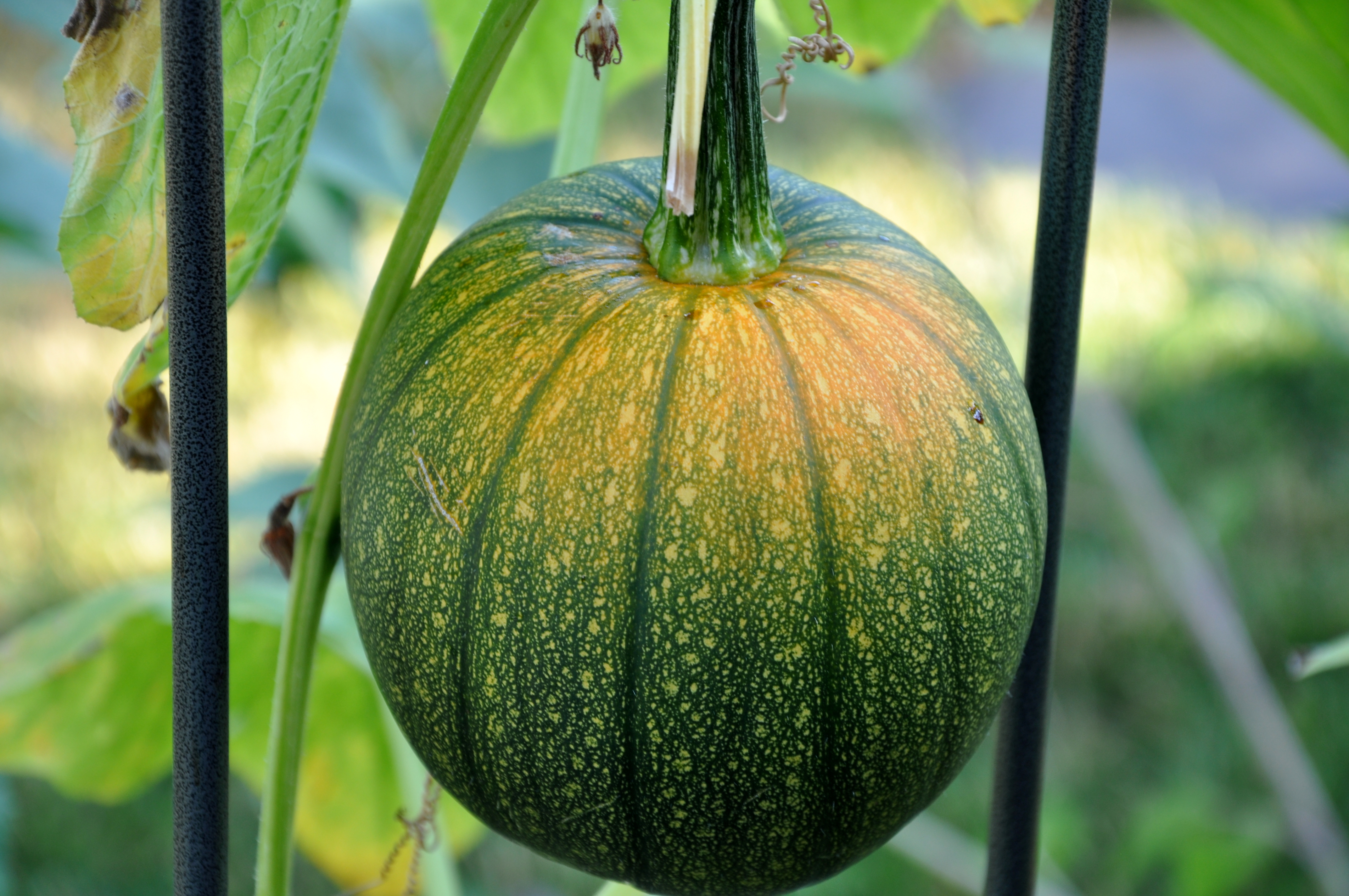
I thought it was a late season pumpkin, but could not fathom why it was growing in a box without water. I’m still perplexed.  Someone suggested that it might be a round zucchini instead. The fruit grew quickly to the size of a small cantaloupe or a very large apple, but remained dark green and hard.  Whenever I looked under the prickly leaves I saw new growth.  Whatever it is, I love the plant’s tenacity.

green squash

Dark, Green and Healthy

Today I took another look and saw orange. Squeeeee!!!
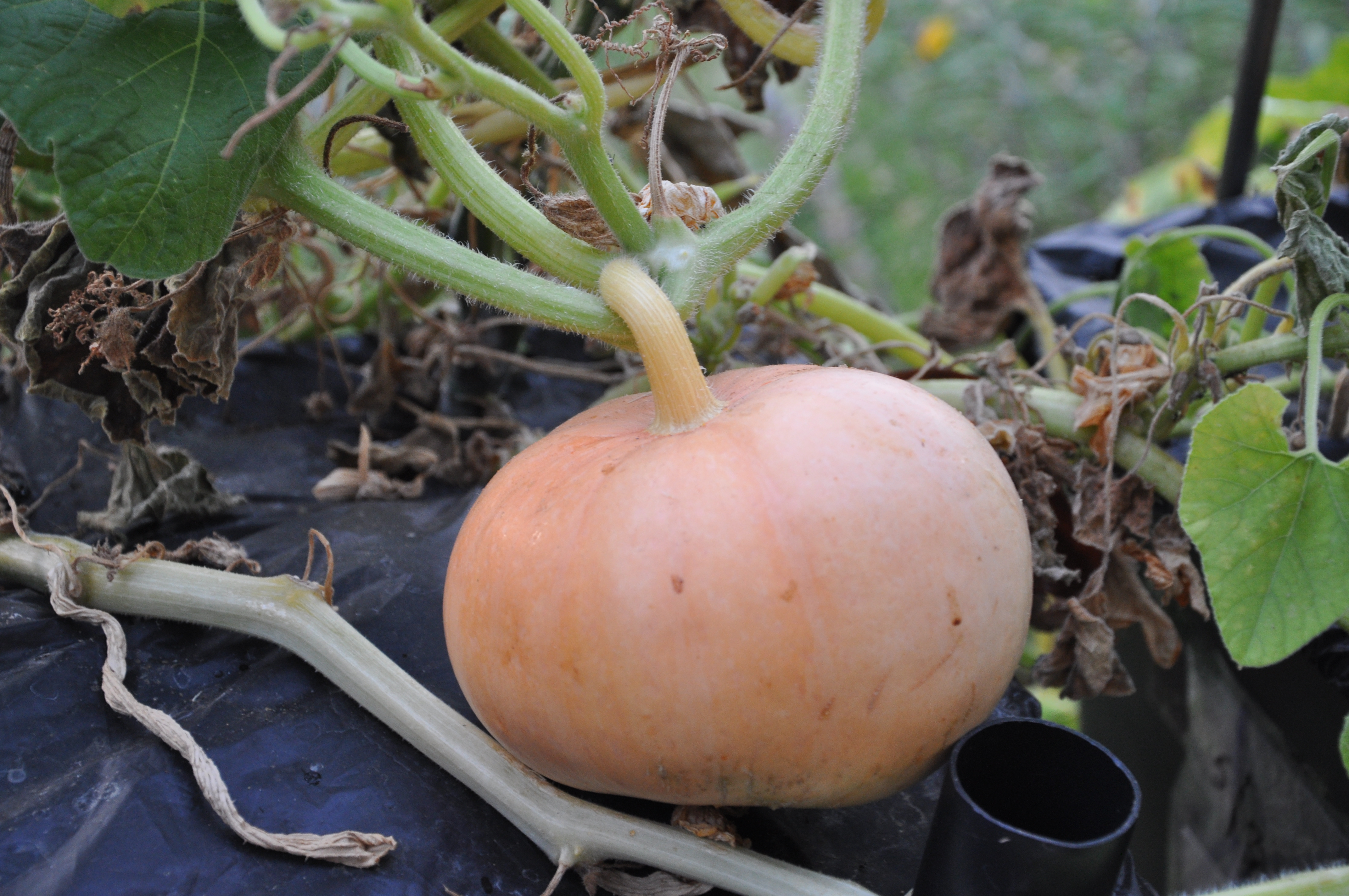
I think I’ll have a couple of small pumpkins out back after all. No signs of squash bugs either.  This month keeps getting better and better.

orange squash

Shades of Orange

No-Candy Countdown:

Throughout October, I’m keeping track of the candy I **don’t** eat.  Who thought that not eating something could be this fun?  Today I rewarded myself with smiling face stamps on my countdown calendar.  It’s the little things, isn’t it?

candy countdown calendar

Candy-Free Halloween Countdown

Under-the-sea Costume Update:

No time today. Hopefully this weekend.

Pumpkins on Parade:

The lovely Cathy, who blogs at Words and Herbs suggested the following:

Love the pumpkin outfit again today! Those sunglasses reminded me of Elvis… wonder if that might be a possible one? ;-)

This pumpkin’s for you, Cathy. I’ve added a video clip of one of my personal Elvis favorites, In The Ghetto to go with it.

pumpkin elvis

Pumpkin Elvis

Please keep sharing your ideas for pumpkin dress up. I’ll be catching up on comments and your posts over the next few days, but I’ll be back here at Gardening Nirvana on Monday. Time permitting, I’ll be further along on my costume by next week. I hope to see you then.

My Garden has a Sense of Humour

A summer combating nasty little squash bugs did not prepare me for this:

late season pumpkin plant

Garden humour: Bug free, late season plant

apple sized pumpkin

A peak under ‘the hood’ reveals an apple-sized pumpkin

companion fruit

…and a companion fruit

Yes, folks, my garden has a sense of humour.

It’s September 10th, just a few weeks shy of the first day of autumn, and here we have a happy-go-lucky, bug free, healthy pumpkin plant. This particular variety is out-shining all efforts to date. Further, it’s growing in the planting bed I’ve been preparing for the winter. I removed the drip irrigation lines, so the beds are dry. I covered most of the exposed dirt with cardboard to keep the cats out. I ran out of boxes before I had enough to cover the whole bed. That was all the invitation this plant needed to get started.

one week ago

Just one week ago

Day time temps remain high, but once regular night-time lows hit the fifties, this plant will close up shop. Meanwhile, I’ll enjoy it while I can, marvel at my garden’s sense of humour, and be humbled yet again.  I’ve been promoted from gardener to garden supervisor, just like that.

pumpkin bloom and tendril

Safety net: a small tendril wrapped around the flower, catching it when it dropped from the plant

Is there something unexpected in your life this week putting a smile on your face?

Here a Squash, There a Squash

Everywhere a squash-squash.

Operation Dill and a Harvest Quandary sparked lots of great suggestions. A quick read of the comments section here and you’ll be up to date.

The onslaught of squash bugs continues unabated, but now I have a plan.

squash bugs on the trellis

Squash bugs wait in line to audition for the next horror movie

I guess I should specify another plan since the first three failed.

In Plan A I would stealthily plant pumpkins in the garden in front of the house,  far away from last year’s buggy fiasco. I would smugly dust my hands together, sit back, and wait for my glorious harvest. Those squash bugs have excellent radar and within a month, they found the plants and started their own little family. Plan B kicked in when I found the offending eggs on the backs of the vines. It required handpicking eggs and bugs from leaves and stems and sending them away on the weekly yard waste collection truck. (I wonder if the trash collector saw me smiling and waving in his rear-view mirror as he drove off with the bugs)? Plan C as in “Can’t a gardener Catch a break here?” kicked in this week. Now that the vines are dying back the plants are setting fruit. It was the next logical stop on their squash destroying journey.  Before throwing in the towel, I did what any blogger would do: ask the tribe for advice.

Thank you, tribe!

Plan C in 4 Parts:

1. Harvest my trio of pumpkins. I’m leaving for vacation, and I can’t risk the heartbreak of losing my tiny crop. Following advice, I wiped off the outer shell with a bleach and water solution. I set them to dry and warm in the kitchen window with the green sides facing the sun

pumpkin trio

Harvested Trio

beach bath

Pumpkins freshen up (1 part bleach, 8 parts water)

2. Wrap the bottom of a pair of pantyhose around the entire (newly discovered) pumpkin. Post a sign, just in case the crafty bugs can read.

squash bugs keep out

Please don’t judge: It’s possible the bugs can read

3. Tiptoe away from the vine growing on the other side of the deck (nothing to see here folks, move along, move along).

M's pumpkin

M’s pumpkin vine

4. Cross my fingers, stand on my head, rub my lucky kitty and marvel at the tiny seedling breaking ground nearby.

new pumpkin plant

Just getting started

So, there you have it. I know I’ve been boring you silly with pumpkin problems this week. Here are some other garden updates:

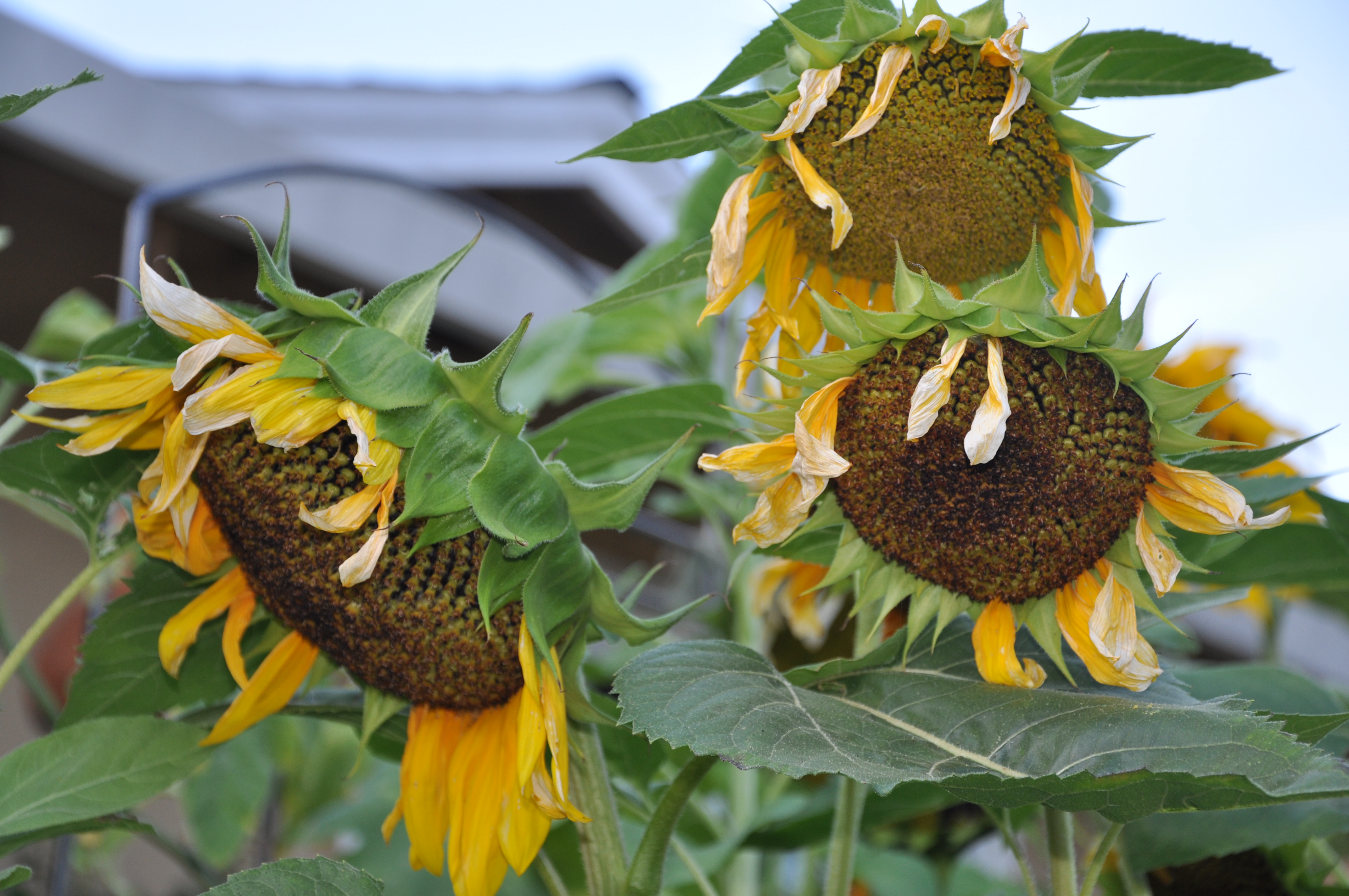
The sunflowers enjoyed a glorious run. Plenty of seeds to feed the birds and the squirrels, with leftovers to plant for next year.

sunflowers going to seed

Sunflowers bow their heads as the flowers go to seed

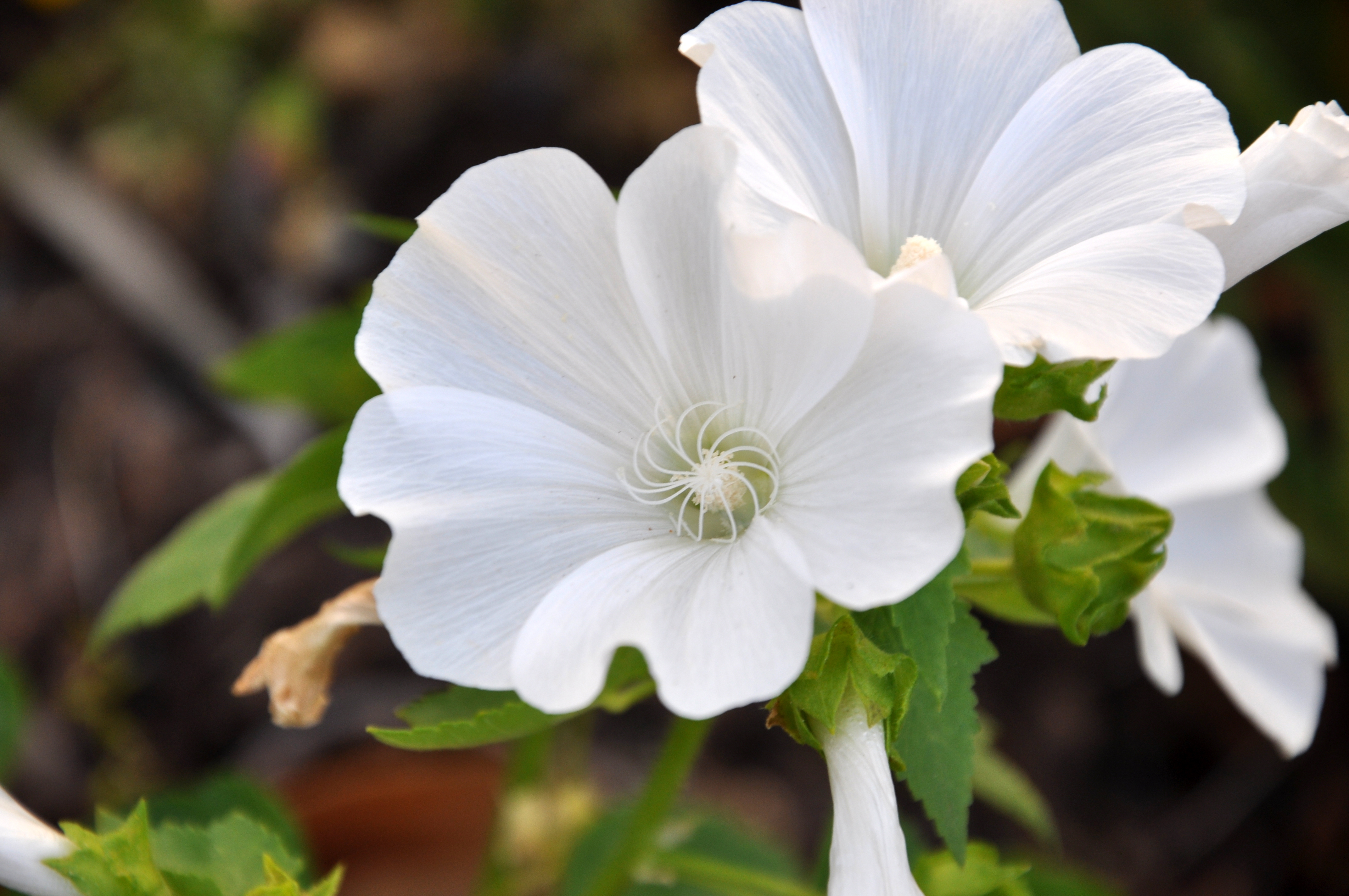
This delicate flower appeared last week. It’s from a butterfly and hummingbird seed mix. I don’t know what it is but it sure is pretty.

white flower annual

A new addition to the triangle garden

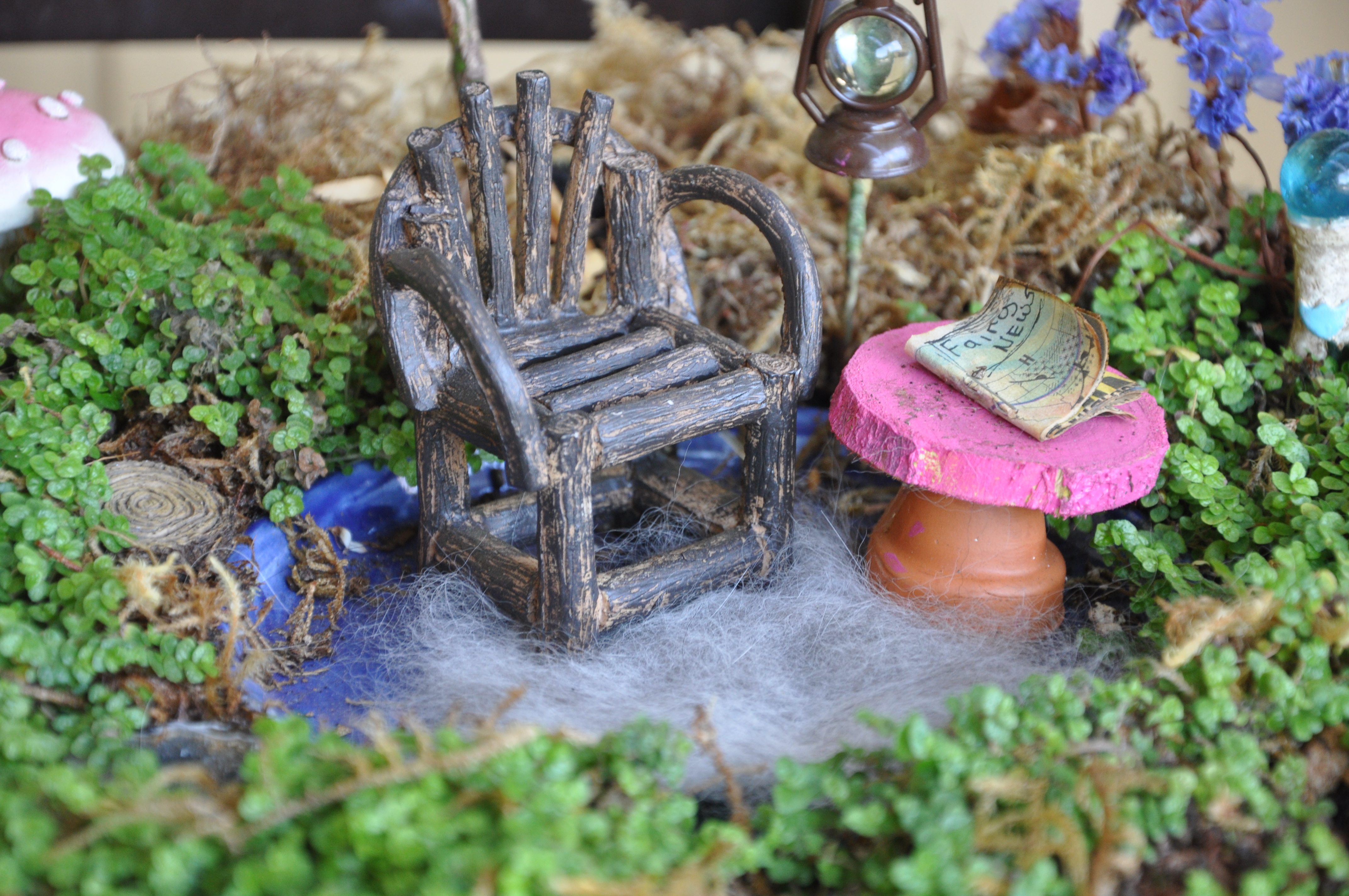
Two for one: brush the cat, carpet the fairy garden.

fairy garden rug

Lindy-Lu gets a nice long brushing and the fairy garden acquires a rug

Another late-season arrival from the seed mix.

small purple flowers

Dainty little flowers

Please don’t forget to send in your request for free vintage postage stamps. In case you missed the original post, you can read about it here. Then make your request.

Vintage Postage Stamp Giveaway

Vintage Postage Stamp Giveaway

Operation Dill and a Harvesting Quandry

Squash bugs, you’re on notice: Operation Dill is under way.

My lovely little pumpkins are ripening but it’s a race against the clock.

Precious Pumpkin No 1

Precious Pumpkin No 1

Precious Pumpkin No 2

Precious Pumpkin No 2

Precious Pumpkin No 3

Precious Pumpkin No 3

With less and less vine for the squash bugs to eat, my trio of pumpkins remain vulnerable. Last year this happened…

This pumpkin never had a chance

2013: A sad day

I’ve been hand picking squash bug eggs and removing adults from the vines for weeks, but predictably I missed a few. They hatched into destructive nymphs. I just can’t keep up.

Pauline at The Contented Crafter suggested planting dill. Apparently when grown together, pumpkins and dill make excellent companion plants. I raced to the garden center between appointments, but between the heat and my busy schedule, I didn’t plant them right away.  I deposited all six pots on top of the EarthBox, leaving them to wilt.  Boo!

I eventually gave them a good soak and they recovered. I pulled the three pumpkins together in a group, careful not to break the vines. I surrounded the fruit with dill.

ripening pumpkins

Ripening pumpkins

Curious how they would react, I placed a dill plant near a bug congregation. They scattered! Ha!!!

Then I had a good laugh at myself. Of course they scattered when a bunch of leaves disturbed their reverie.

Would it last?

I checked last night and found an adult intruder sitting on the pumpkin stem.  No, no, no!

Next Monday I leave for a much-anticipated, week-long vacation to Victoria, Canada with my bestie Boomdee. Yay, me!

The men of the house will do a cursory check on the plants, but none of them are on board with hand-picking bugs while I’m gone.

So…should I harvest them Sunday morning before leaving town, hoping they’ll continue to color? Or should I leave it up to Operation Dill and take my chances?

What would you do?

Six Ways to Control Squash Bugs in your Garden by Sarah Toney


Nymph: Science vs Mythology

pumpkin turning orange

Pumpkin beginning to turn orange

A mythological nymph is:

a minor female nature deity typically associated with a particular location or land form. Different from goddesses, nymphs are generally regarded as divine spirits who animate nature, and are usually depicted as beautiful, young maidens who love to dance and sing; their amorous freedom sets them apart from the restricted and chaste wives and daughters of the Greek polis. They are believed to dwell in mountains and groves, by springs and rivers, and in trees and in valleys and cool grottoes.

Cool!

Unfortunately, I haven’t seen any of those in the garden. On the other hand, a biological nymph is:

the immature form of some invertebrates, particularly insects, which undergoes gradual metamorphosis (hemimetabolism) before reaching its adult stage.[ Unlike a typical larva, a nymph’s overall form already resembles that of the adult. In addition, while a nymph moults it never enters a pupal stage. Instead, the final moult results in an adult insect.

Oh-oh.

With all my due diligence, I missed a few of the squash bug eggs. The following video tells the rest of the story:

I removed the offending nymphs and even more eggs this morning, but it was impossible to get all of them. I’m going to figure out a way to create a barrier between the pumpkin and the bugs without harming the bees or the plant.  Stay tuned.

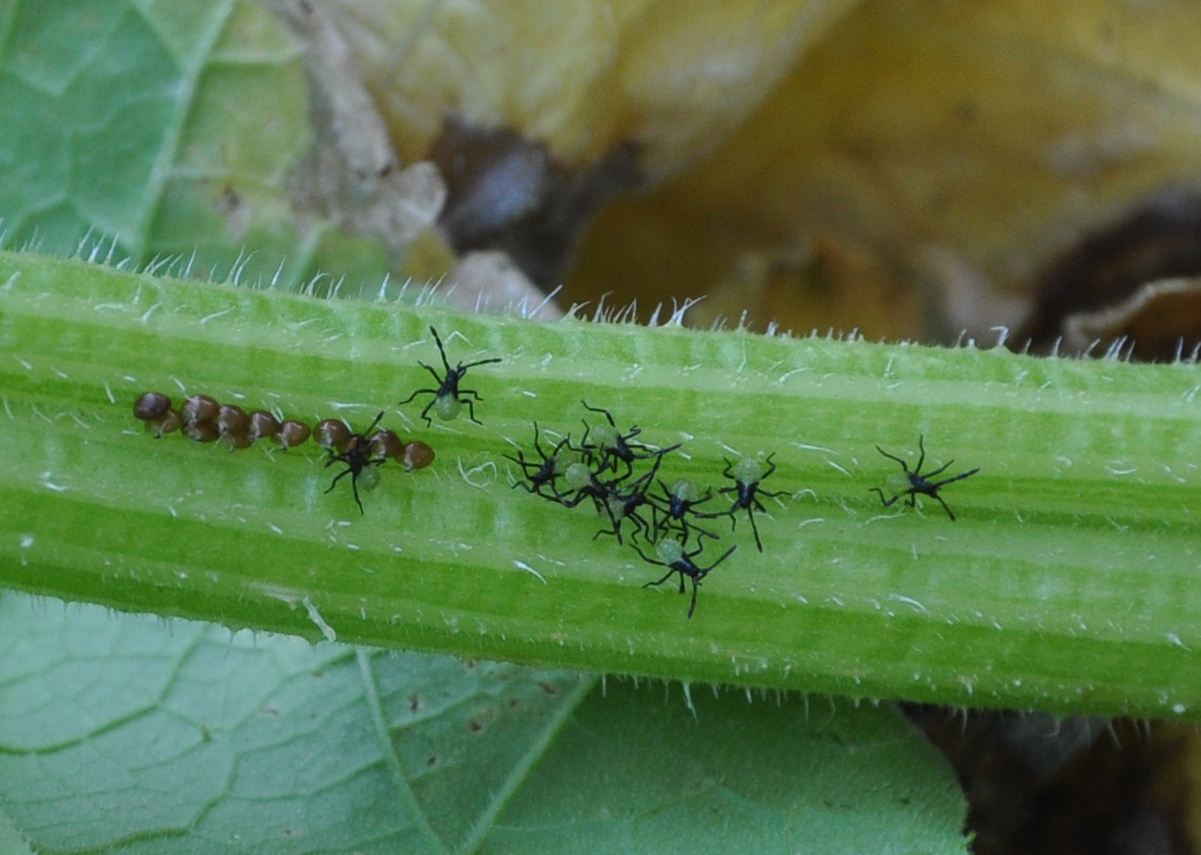
Freshly hatched squash nymphs

Freshly hatched squash nymphs

Squash bugs overrun a pumpkin leaf

Squash bugs overrun a pumpkin leaf

removing squash bugs

Squash bugs: off the vine and into the bucket

Mid-Summer Caretaker and the Mighty Seed

By the calendar, it’s mid-summer here in California. Our growing season is longer than most, given our mild climate and rich, agricultural soil. That said, pumpkins and sunflowers adhere to their own cycle and that cycle is coming to an end.

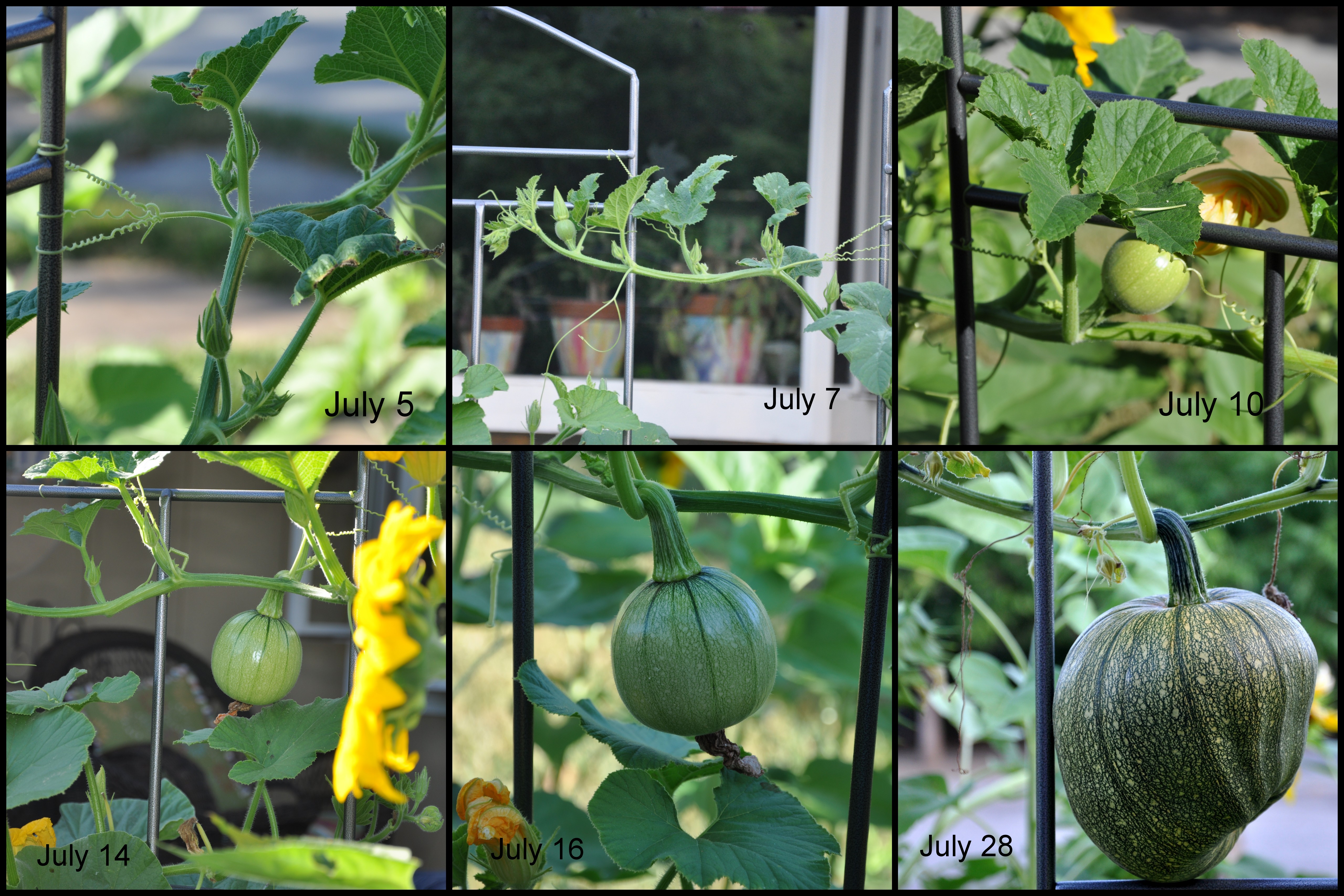
pumpkin progression july 2014

July growth

fading pumpkin vines

Fading vines as all the energy now goes to the fruit

Like many things in life, the anticipation often outranks the reward at the end. It’s the growing that brings so much pleasure. It’s also humbling to realize that much of what’s happening outside these four walls has nothing to do with me.  Nature knows what she’s doing.  While a bit of help from water, fertilizer and nutrient-rich soil is a must, once provided she can take it from there.

sunflowers setting seed

Sunflowers bowing from the weight of the seeds

water on a sunflower

A bit of water pools on the underside of a sunflower

I tend the garden anyway, battling drought conditions, air pollution, nasty bugs and the adorable menace, the western gray squirrel. I’m a caretaker more than anything else.

Squash bug hide and seek

Squash bug hide and seek (we’re still here)

Once you’ve gardened, it’s impossible to feel the same way about the fruits and vegetables that make it to your table.  Something as tiny and unassuming as a seed has all the DNA it needs to know when and where it should grow and for how long.  Helpers, in the form of pollinating bees or seed-scattering birds, also play a role.  I’ve gardened my entire life and I’m still in awe when a seed cracks the earth and a leafy green sprout appears.

According to Boundless Biology:

Seed plants are cultivated for their beauty and smells, as well as their importance in the development of medicines. Plants are also the foundation of human diets across the world . Many societies eat, almost exclusively, vegetarian fare and depend solely on seed plants for their nutritional needs. A few crops (rice, wheat, and potatoes) dominate the agricultural landscape. Many crops were developed during the agricultural revolution when human societies made the transition from nomadic hunter–gatherers to horticulture and agriculture. Cereals, rich in carbohydrates, provide the staple of many human diets. In addition, beans and nuts supply proteins. Fats are derived from crushed seeds, as is the case for peanut and rapeseed (canola) oils, or fruits such as olives.

We live in an amazing world.

Pumpkin’s Progress: Growing Like a Weed

Pumpkins grow like weeds. That’s a good thing. Within days of planting, flat, white seeds crack under the warm soil and  sprout. Cotyledons give way to true leaves and off they go. Leaves and stems shoot up so quickly that if you stood still awhile, I’m sure you could see them grow.  I’m a fan of every stage.

The size of the leaf is a good indicator of the size of the fruit to come.True leaves are prickly and so are the stems, which are hollow. They remind me of large, green drinking straws. Stems and leaves lead you to think you have a small shrub on your hands, but then strong, curling tendrils appear and the plant takes off down the garden path, up the trellis and around the bend.

A decade ago, before we knew a thing about growing pumpkins, a self-seeded vine grew across the path, into a  garden bench, and out the other side. It eventually set fruit, a lovely, heart-shaped pumpkin that hung from the garden bench door. We left the door open the rest of the season, delighted at the rambling pattern and the speed at which it grew. My boys were 3 and 6 that year, so you can imagine the daily joy of discovery. We headed out back in those early fall days to see what those pumpkins were up to.

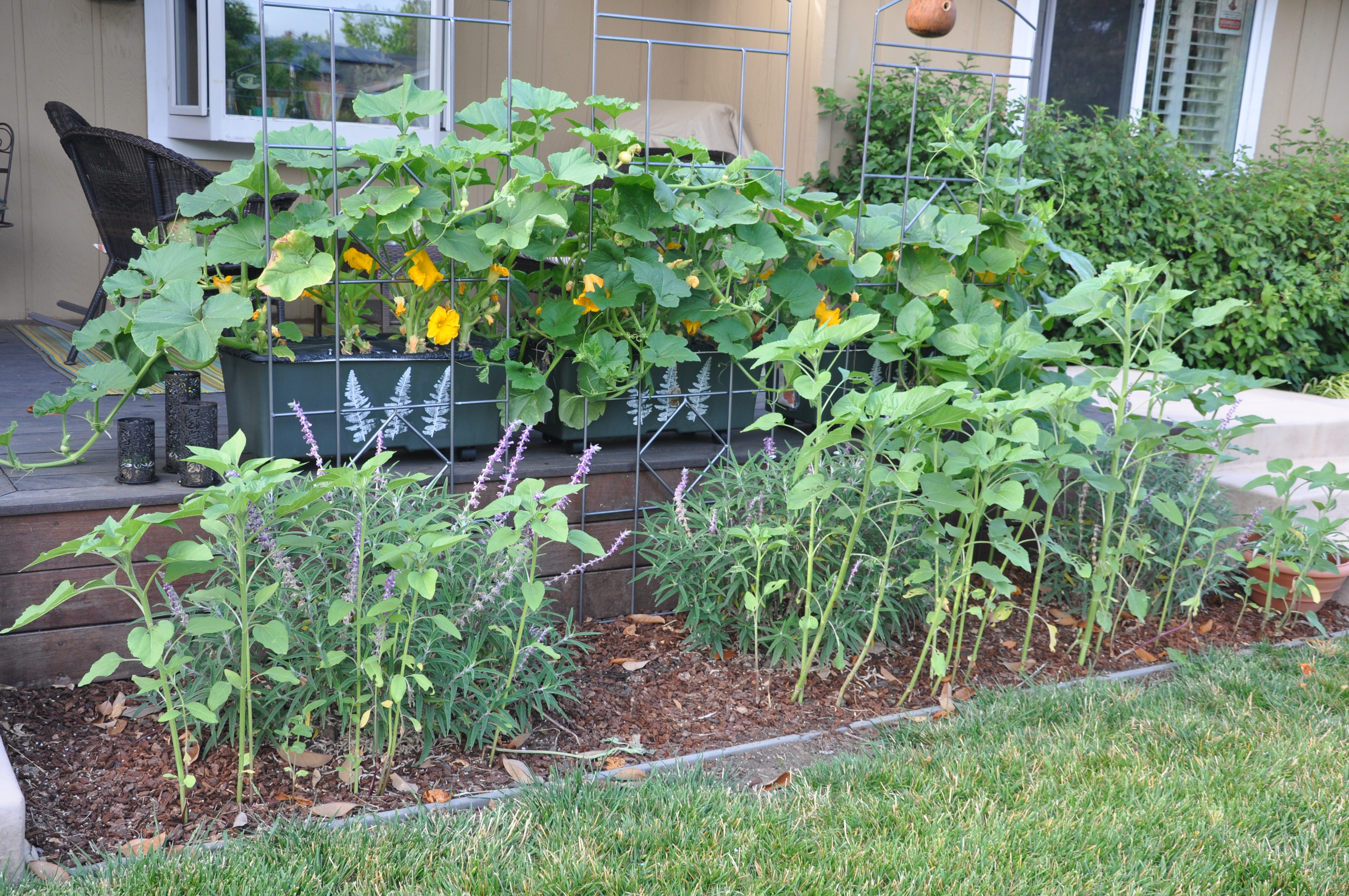
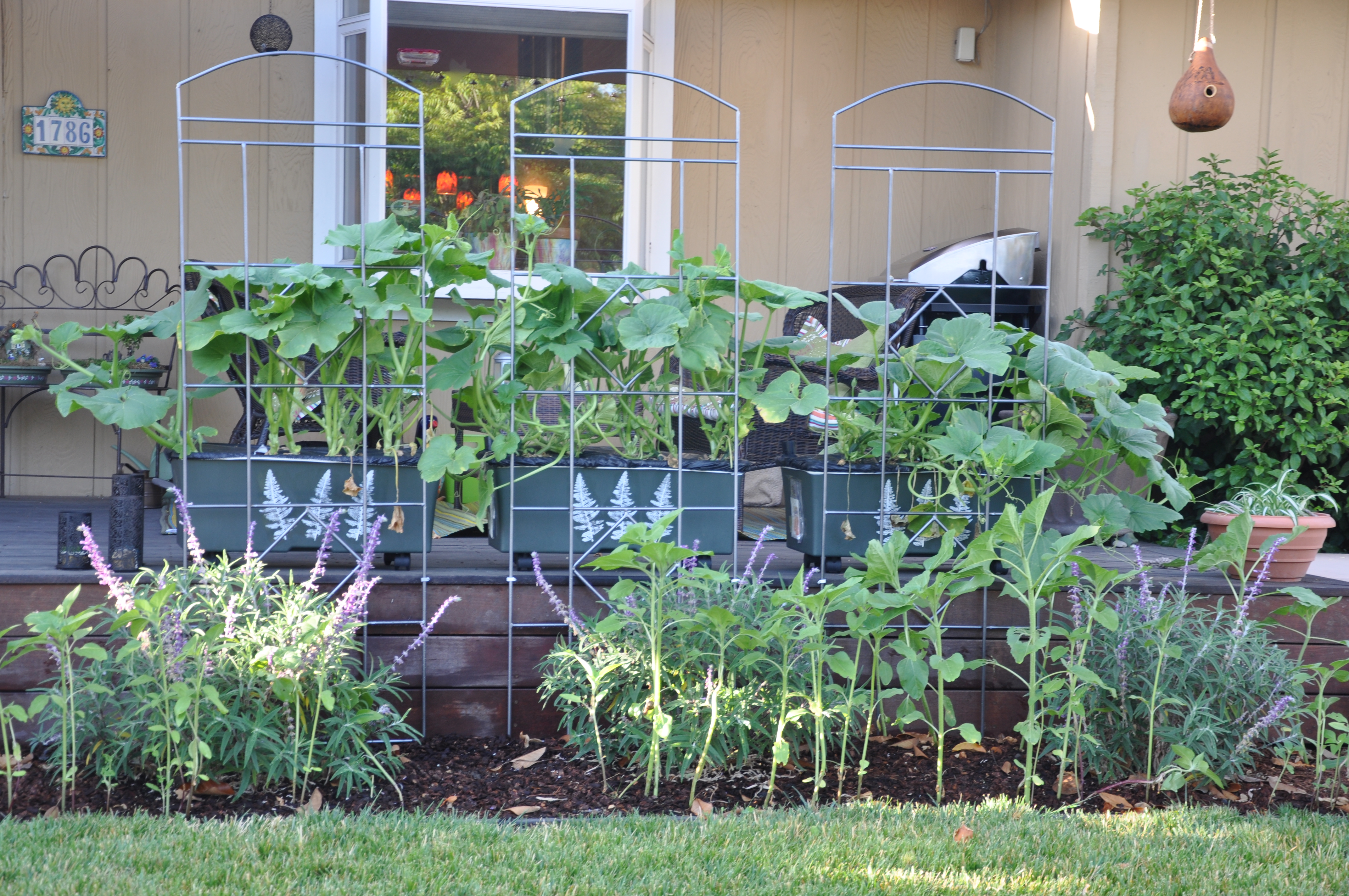
It’s been such a pleasure growing this year’s crop in EarthBoxes™. They’re right outside my kitchen window, so I see them several times a day. We sit on the deck in the evenings and on weekends, and now feel like we have a ‘fourth wall’ on deck. The pumpkins and sunflowers together formed a beautiful screen.

Here’s a look at their progress since early May.

May 3, 2014

May 3, 2014

My stenciled EarthBoxes™ planted with three types of seeds: an assortment of saved seeds from last year (the mystery box) along with  Botanical Interests ‘Jack-o’-lanterns’ and ‘Luminas’.

May 11, 2014

May 11, 2014

Hearty seedlings in just one week.

May 30, 2014

May 30, 2014

About thirty days in, and look at them grow. You can see the start of the sunflowers near the lawn, also started from seed. I’ll write more about them later this week.

June 13, 2014

June 13, 2014

I added trellises to allow the vines to grow up as well as out. The birds land there, before diving in to the sunflower leaves. Why won’t they eat the squash bugs instead?

June 30, 2014

June 30, 2014

Golden flowers attract bees and wasps. I love spending time out there in the morning before the heat descends. It’s a challenge photographing the bees. They move in and out of the flowers with speed and efficiency. I still try though. I have about 75 blurred photos, but I refuse to give up.

July 4, 2014

July 4, 2014

The vines got a bit of window dressing for Independence Day. They’re beautiful on their own, but a little red, white and blue called attention to their magnificence. They’re wilting in the heat in this picture, but a long drink after dusk set things right.

At the risk of stating the obvious, I love growing pumpkins. Thank you for following along with my gardening obsession.

For the Love of Pumpkins

I love my pumpkins. After a good night’s rest I’ve decided that I won’t take it lying down.

Their demise that is.

In case you missed yesterday’s post, my nemesis the squash bug recently moved in. You can catch up here.

pumpkin female flower with bee

Female flower at the ready as a bee swoops in

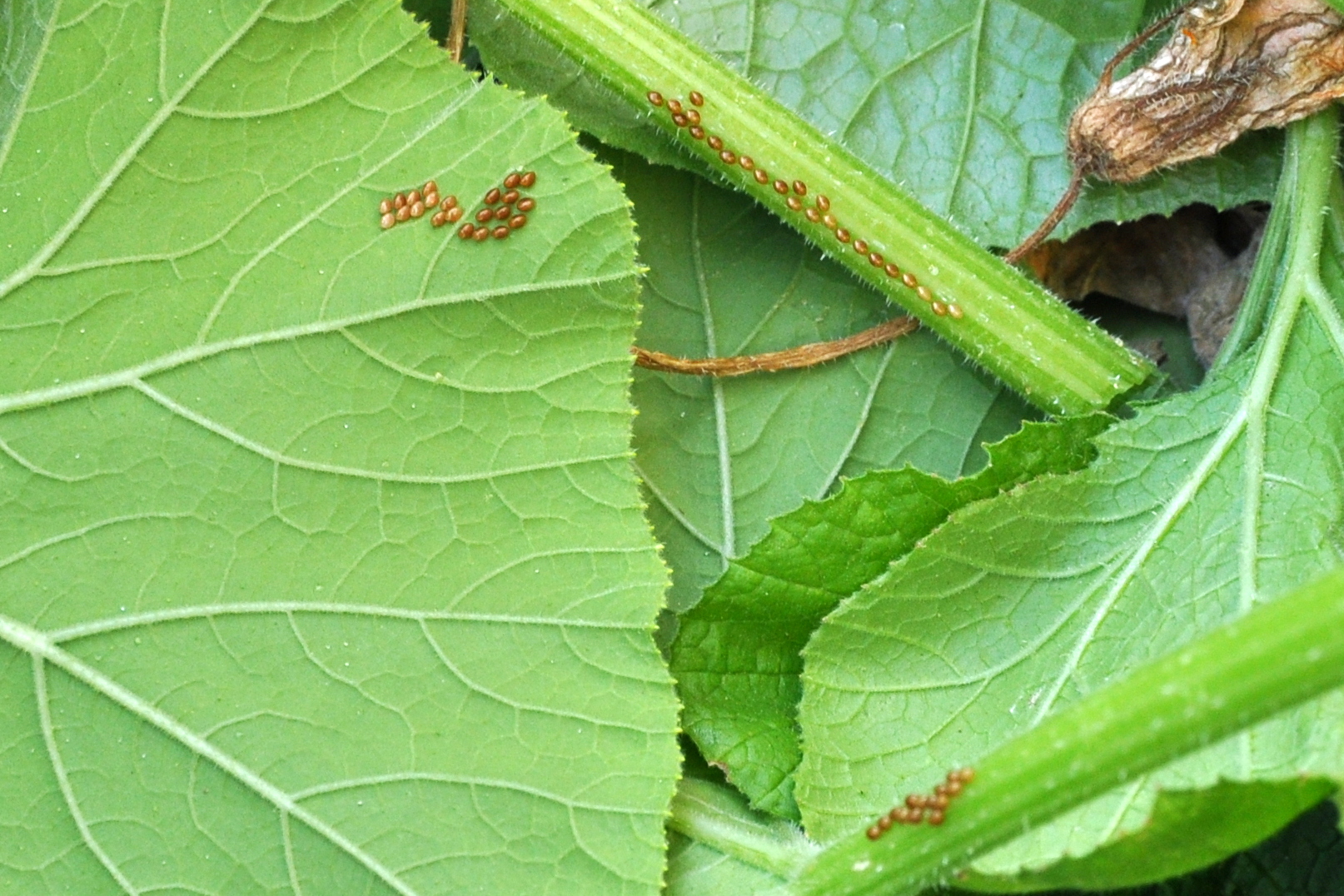
Actually I did take one thing lying down: pictures. How else would I get a shot of the underside of the leaf and the attached eggs?

squash bug eggs

Squash bug eggs on the underside of a pumpkin leaf

squash bugs on stem

Leaves, tendrils, flowers and…more eggs

In a word, yuck!

I laid flat on my back and took photos looking up. Fortunately, no one walked by at the time or they surely would have called the paramedics. Amazingly, I managed to get back up, then spent the better part of an hour looking at the underside of every leaf on the pumpkin vines.

That scrutiny lead to another discovery: eggs on some of the pumpkin plant stems. In the end I’d scooped several adult bugs into my dry bucket, along with infested leaves and stems. I removed dead or browning leaves as well as spent flowers, making it easier to detect the adult bugs  They were happy to crawl on my glove and from there they went into a bucket. I dumped the infested leaves and bugs into the curb side green waste site, and within an hour the ‘green monster’ came by and scooped the entire pile into the back of the truck. This was another tip from one of the sites: rip them out and compost them.

pumpkin infested stems and leaves

Infested stems and leaves

The lovely Pauline at The Contented Crafter looked up companion plantings for me, something I hadn’t thought of nor come across in my reading. Ah, the web is vast indeed.  There is enough room in the boxes for additional plantings so I’ll give it a try.  Nasturtiums unfortunately need opposing growing conditions, but dill might work. I’m going to look for some at the garden center.

It’s unlikely that I removed all the eggs this morning. I’m pretty sure others still lurk on the vine. With daily checks, however, I hope to slow them down and possibly keep them at bay.

Stay tuned.

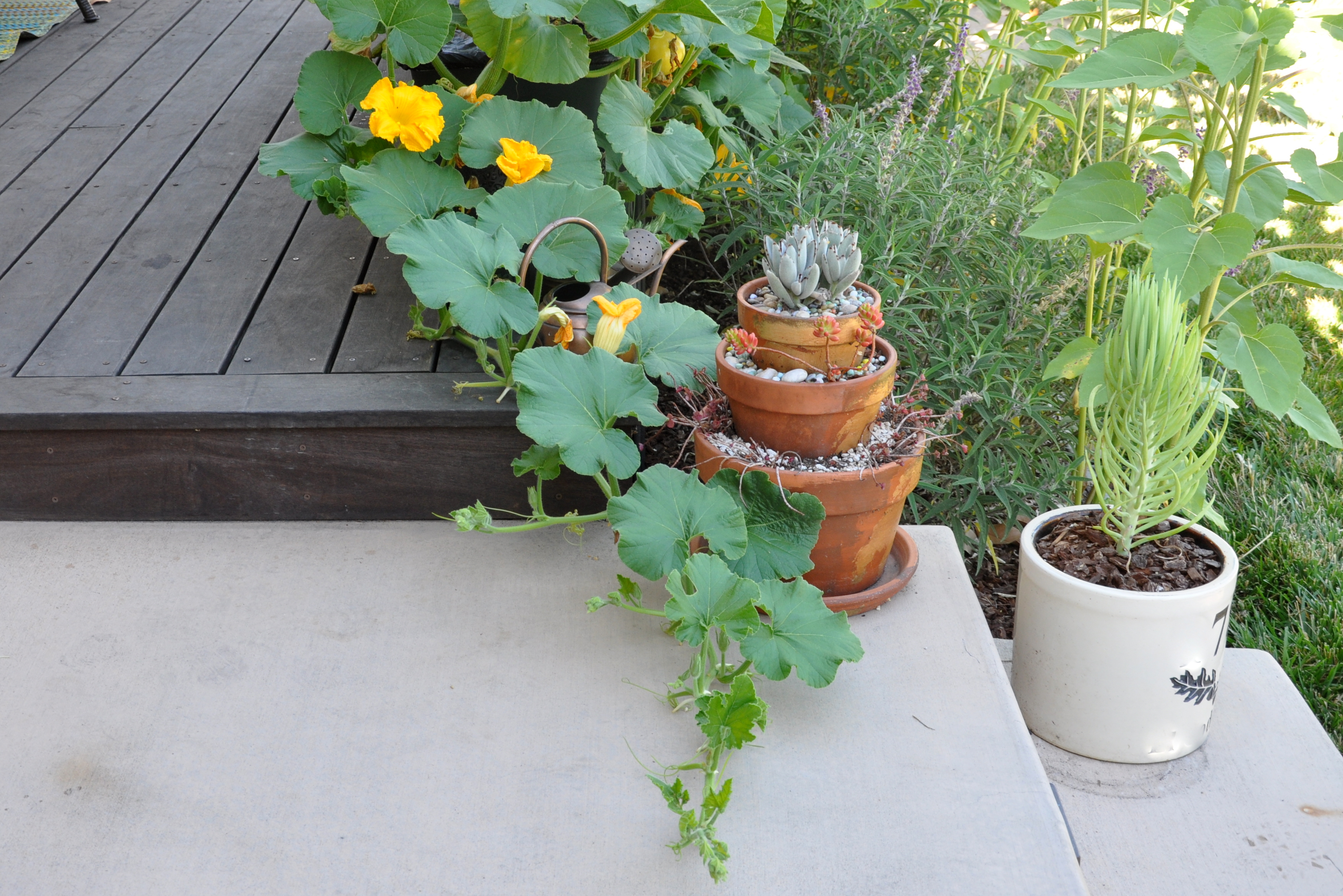
pumpkin vine trails deck

Trailing the deck

Decoy Pumpkin Fail

Did you hear that long exhale? It’s been one of those weeks in the garden.

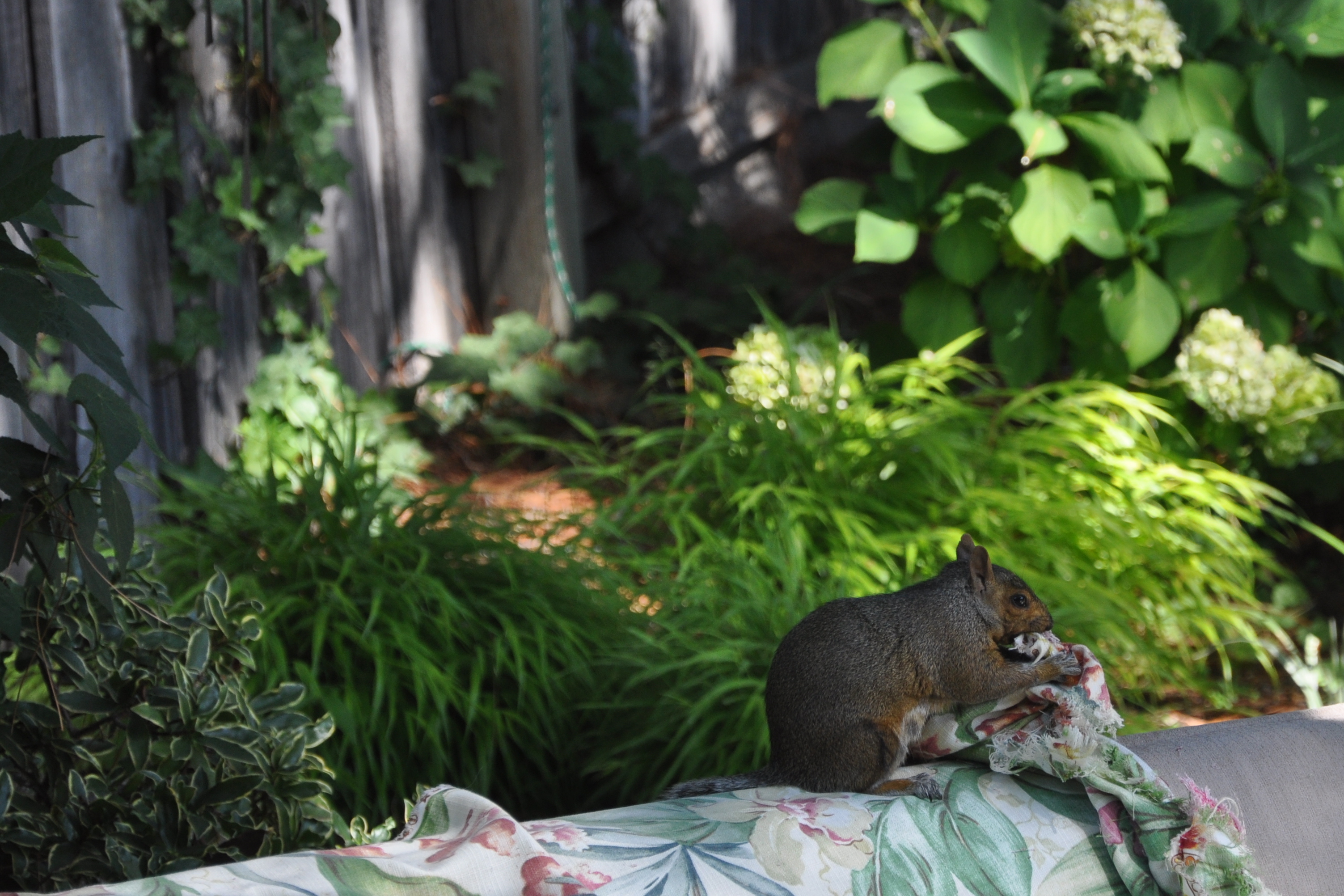
A squirrel shredded my garden swing cover.

squirrel eating cover

Gathering nesting material

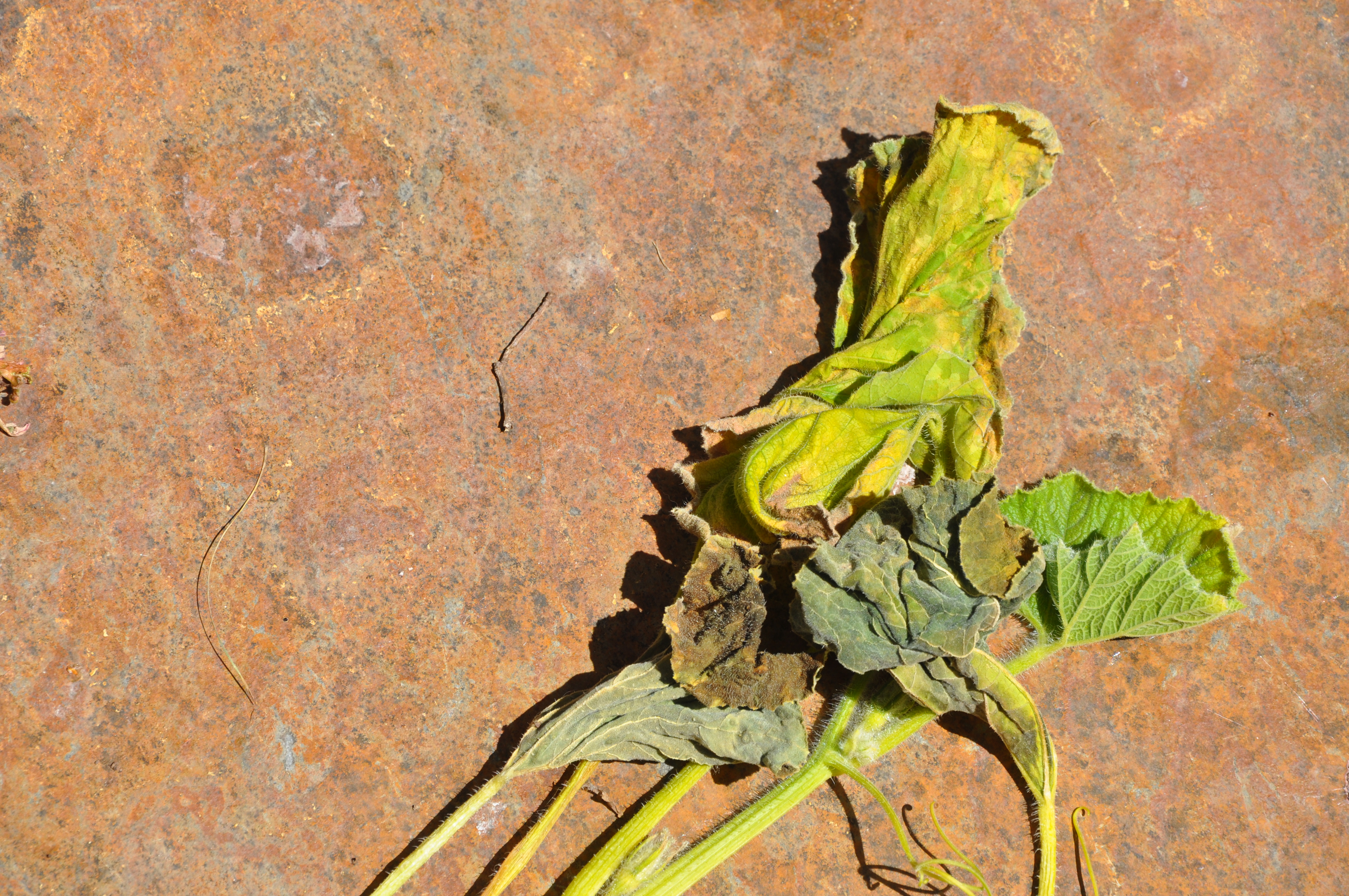
My decoy pumpkin died…

dead pumpkin decoy

Decoy pumpkin no more

…and the dreaded squash bugs descended on my beloved pumpkins.

pair of squash bugs

Squash bugs dancing a jig…or something

A bit of history

I spotted a single squash bug on the side of the house in early spring. Thanks to a dry, warm winter, they happily overwintered. Further reading tells me they’re a hardy bunch and can survive under a blanket of snow. In any event, they’re back.

The idea was to plant a decoy pumpkin in the back garden, hoping to draw them away from the other plants.  I planted three varieties of pumpkins in EarthBoxes™ on my deck, as far away as possible from the ‘scene of the crime.’

Unfortunately, the irrigation in the decoy box stopped working. Pumpkins are thirsty plants, and by the time I realized, it was too late. Whether or not it would have worked is anyone’s guess, but it’s now a moot point.

A colony of squash bugs are now residing om my beloved deck-top vines.

I’ve learned a thing or two from a handful of sites, but nothing that gave me any hope. Apparently squash bugs need the squash to reproduce. They’ll go in search of other food, but it’s not until they find a squash plant that they set up house.  Some of the professional growers plant ‘sacrificial’ crops like pumpkins (what!!!) to defer the damage away from pricier crops in the same family. Imagine choosing cantaloupe over pumpkins. Why I never!!!

After last year’s debacle, I assumed the bugs liked the fruit alone and that I would be safe until then. Nope! They lay eggs on the underside of the leaves.

Damage

According to John Capinera of The University of Florida:

The squash bug causes severe damage to cucurbits because it secretes highly toxic saliva into the plant. The foliage is the primary site of feeding but the fruit is also fed upon. The foliage wilts, becomes blackened, and dies following feeding; this malady is sometimes called “anasa wilt.” Often an entire plant or section of plant perishes while nearby plants remain healthy. The amount of damage occurring on a plant is directly proportional to the density of squash bugs.

The plants look healthy. I’ve been knocking the large bugs off the leaves, but I’ve yet to go in search of the dreaded eggs.  The bees are a buzz every day, moving from flower to gorgeous flower.  A couple of pieces of fruit have reached the size of a baseball.

pumpkins on deck

Deck-top pumpkin crop

developing pumpkin

Developing pumpkin

Regardless of the outcome of this year’s crop, it might be time to take a year off between plantings. I know a lot of gardeners rotate crops for this reason. I took a break from growing tomatoes after a nasty tobacco (tomato horn worm) infestation.  They’ve been fine ever since.

I’ll keep you posted.

 Resources:

The Old Farmer’s Almanac: Squash Bugs

University of Florida: Entomology and Nematology

Living with Insects: Squash Bugs