Reflecting the Garden

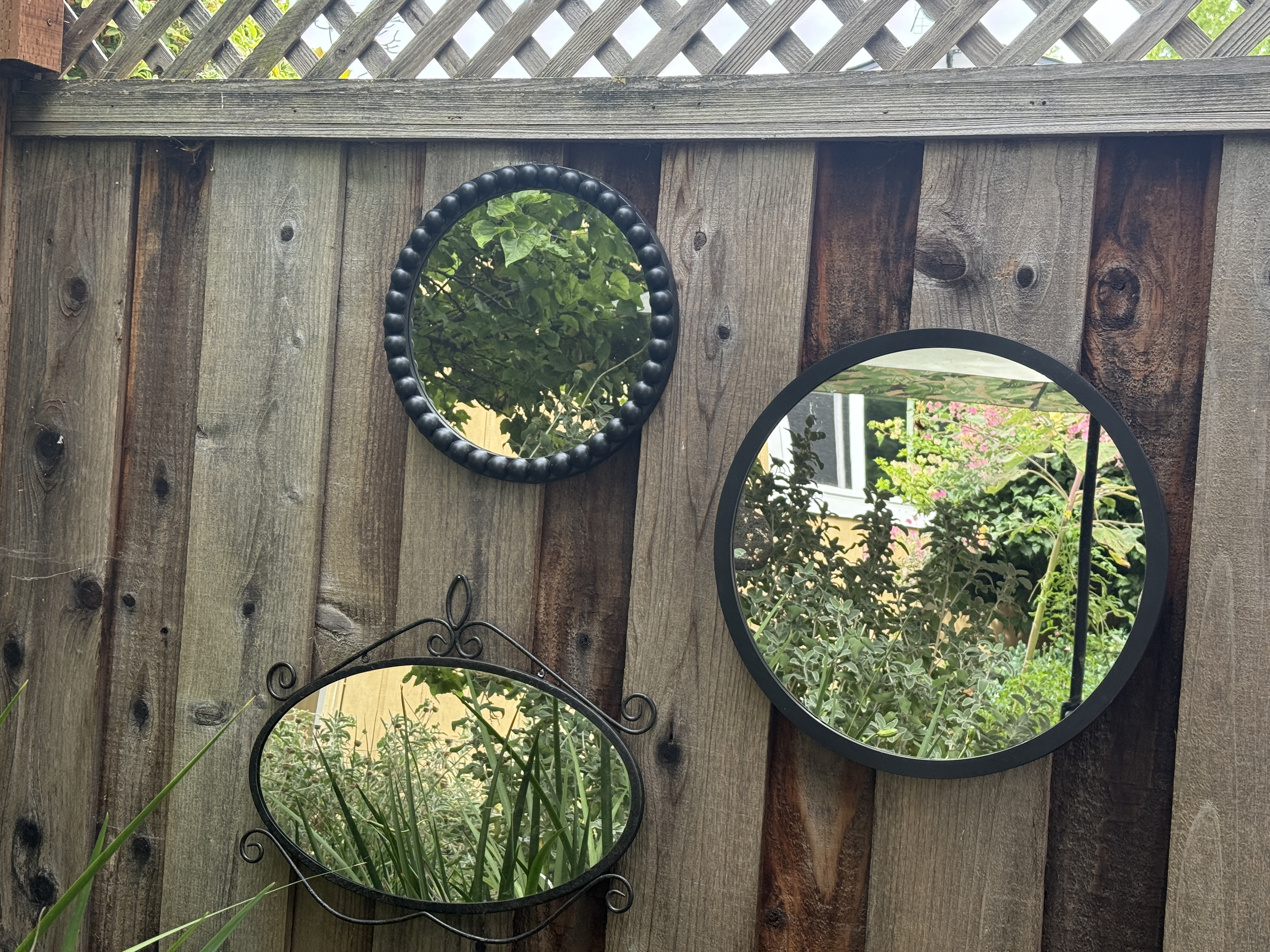
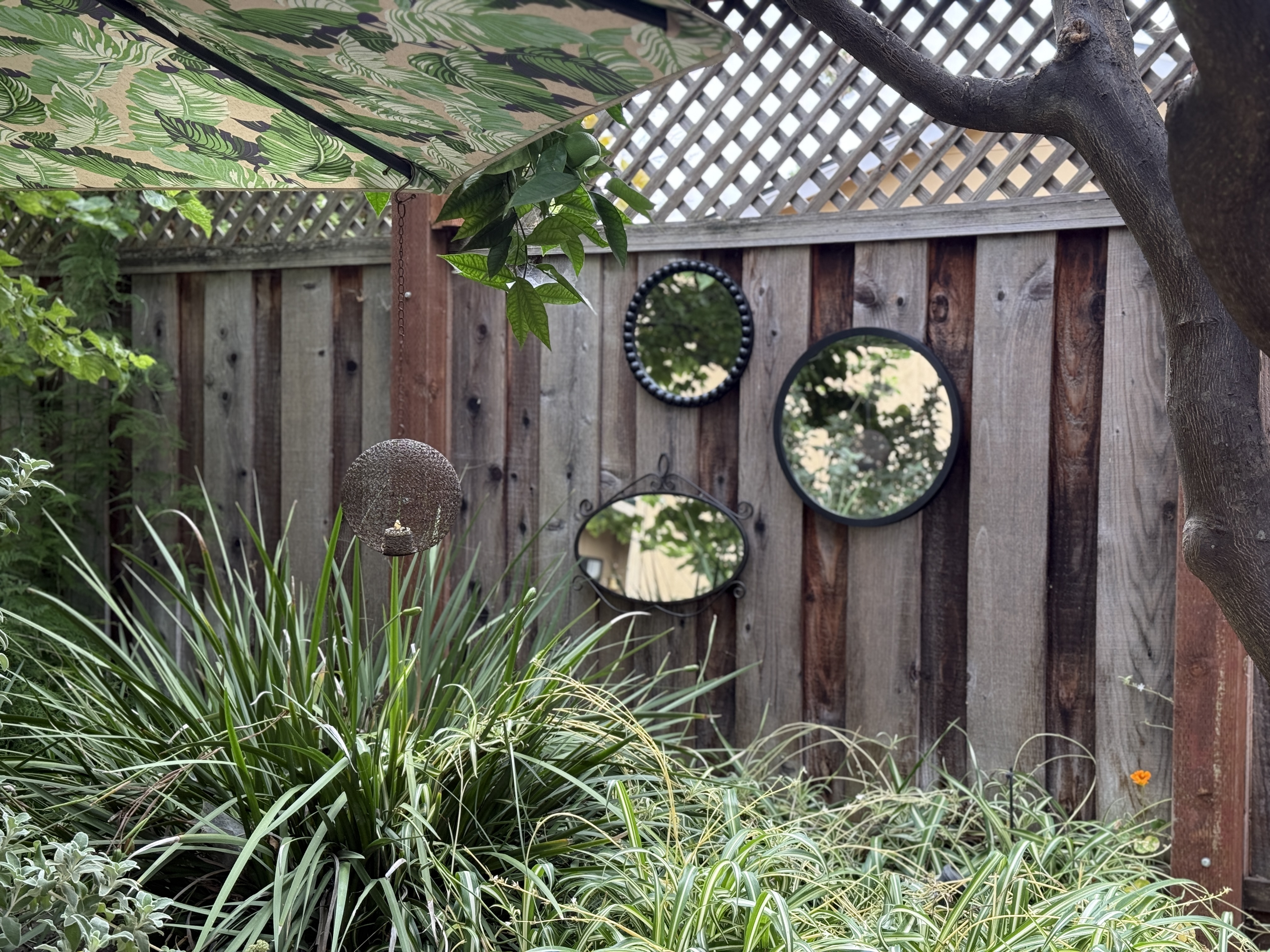
As we head into the cooler autumn months, I’ve been reflecting on a few garden projects, notably thrifting, painting, and arranging mirrors along the corner garden fence.

I’ve hung mirrors in the garden before, and continue to enjoy the placement. (summer, 2021) Why look at a dull, brown fence when you can hang mirrors instead?

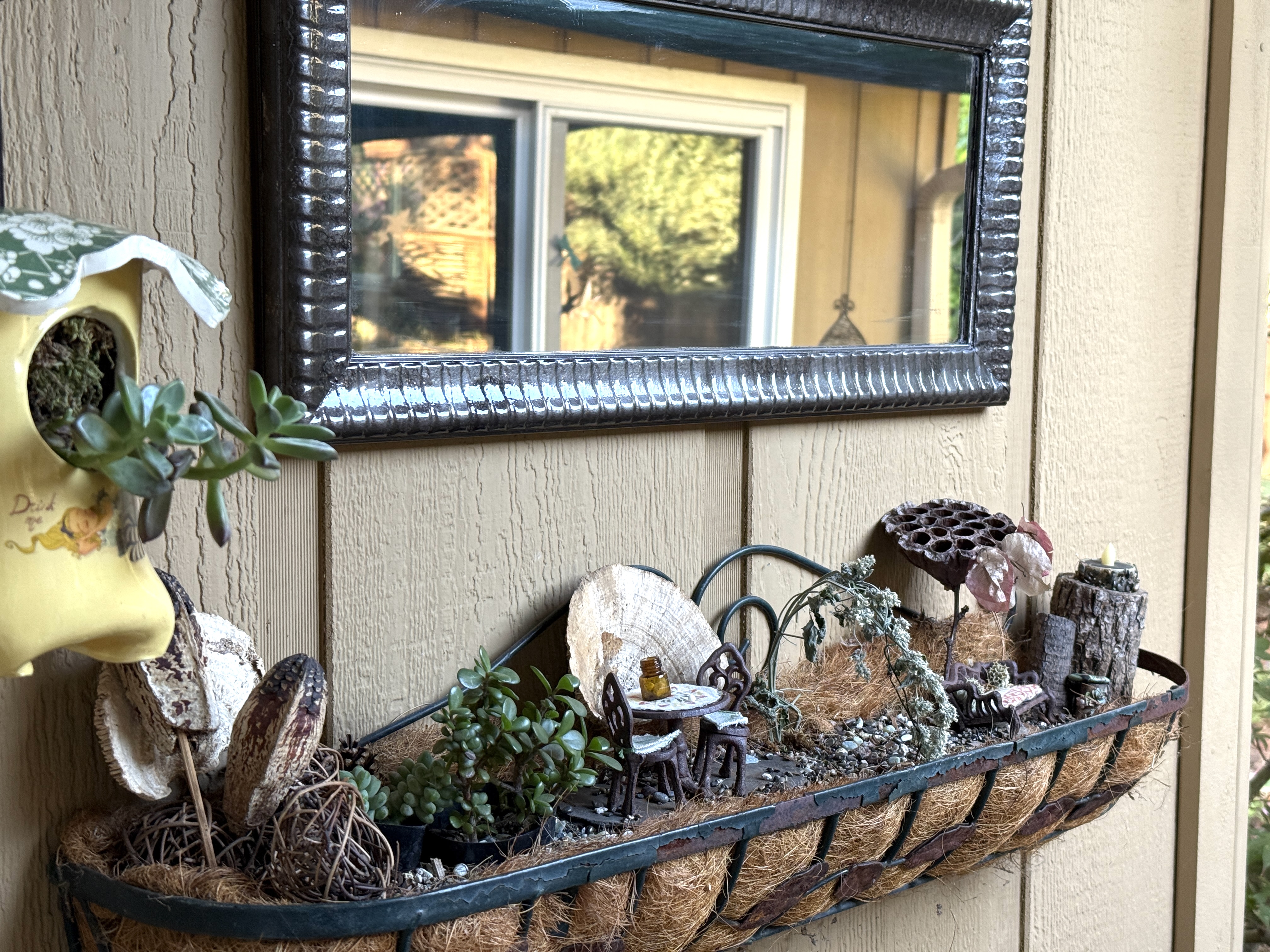
It wasn’t easy finding mirrors. I went to several thrift stores before my luck changed, and I found four mirrors at one of our local Goodwill Industries shops. Three of the mirrors had black frames, and the fourth was a shiny silver. I painted it a warmer color and hung it above my wall-mounted fairy garden.

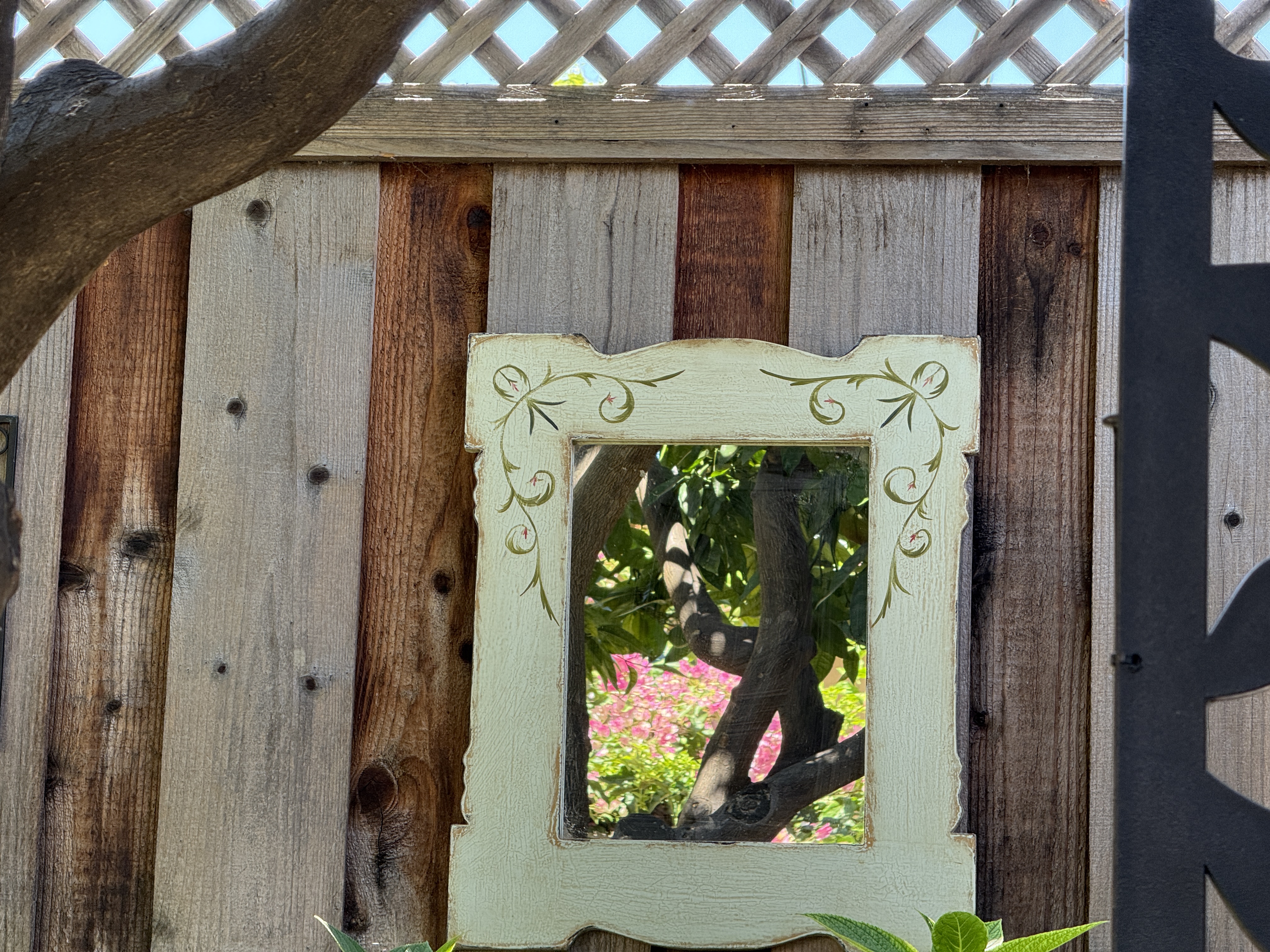
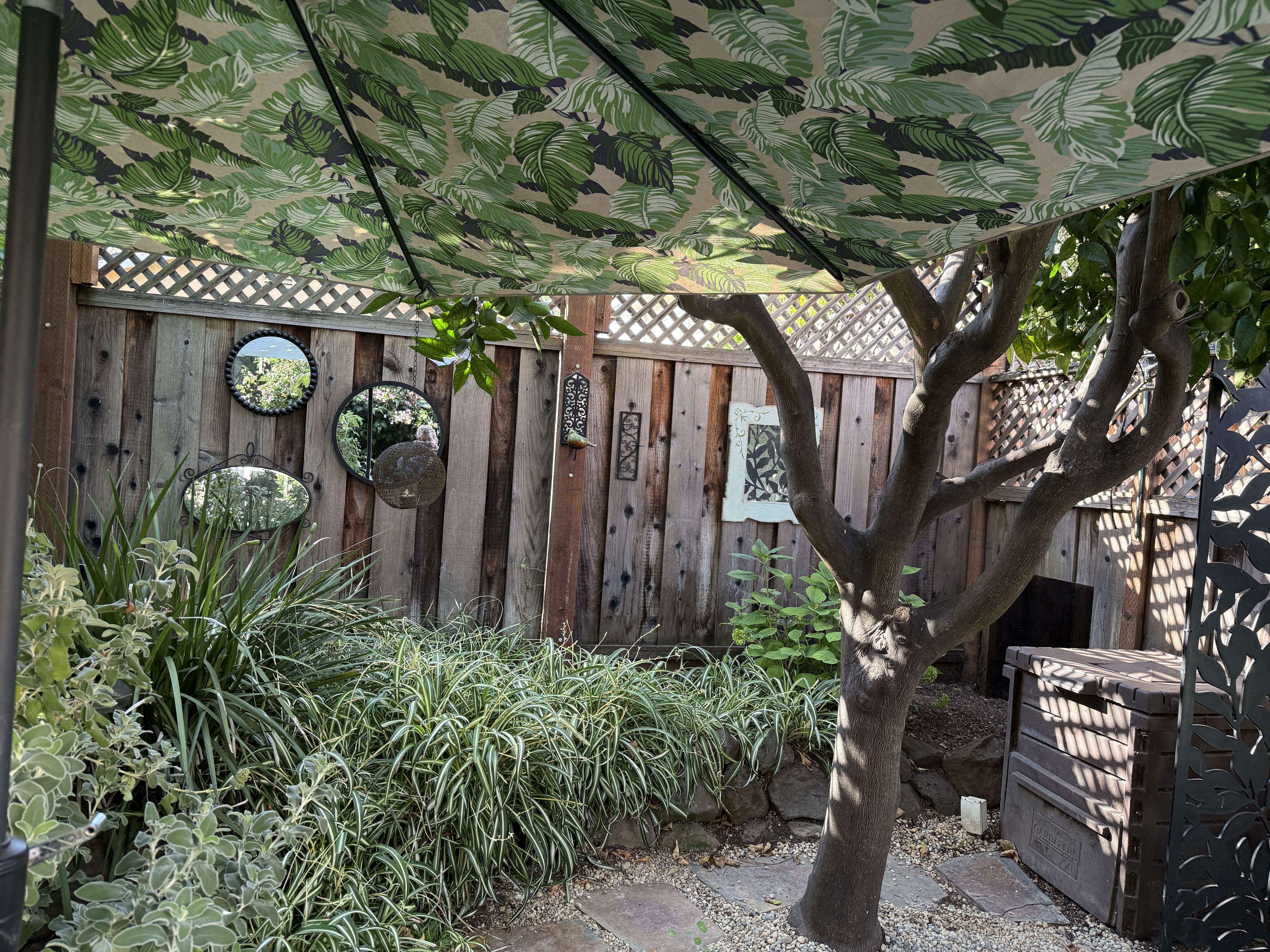
I hung the remaining three mirrors on the fence under the tree, only to realize I needed a few more to fill the space. Eventually, I found enough mirrors to fit the bill, and I’m pleased with the extra light and reflection they bring to that corner.
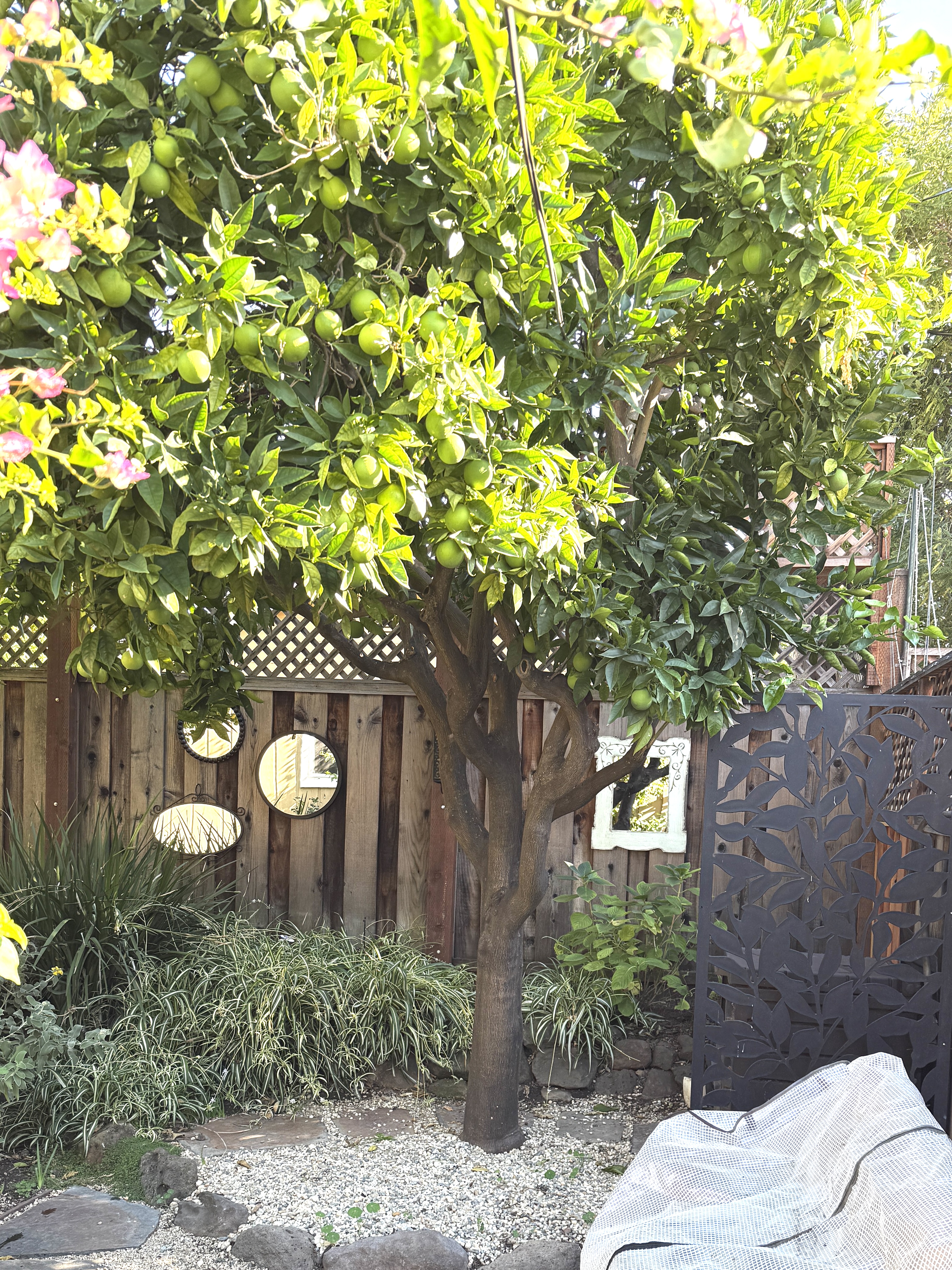
About a year ago, I made another change by removing the ferns growing under the orange tree in the same corner. The orange tree is about fifty years old, so the fruit it produces is no longer sweet. Further, the oranges are challenging to harvest. When we were younger, I climbed on the ladder to get some of the low-hanging fruit, but it wasn’t all that safe. We bought one of those extending poles with a fruit-gathering basket on the end, but it proved cumbersome. It also tended to break the branch with the fruit. The tree continues to provide shade and the wonderful scent of orange blossoms, but it had become a dumping ground of partially consumed fruit from hungry overnight critters. In the end, I hired a tree service to prune the tree, fruit and all, away from the fence. We’ve enjoyed a year without the mess of rotting oranges, fruit flies, and broken branches. I wish I had thought of it sooner.

Note: Move the slider, below, to see the orange tree and ferns, a year apart.

The last adjustment involved moving a molded panel with a leaf motif to disguise the enclosed compost system. Mike attached one side of the panel to the fence, and we repurposed a post to support the other side.
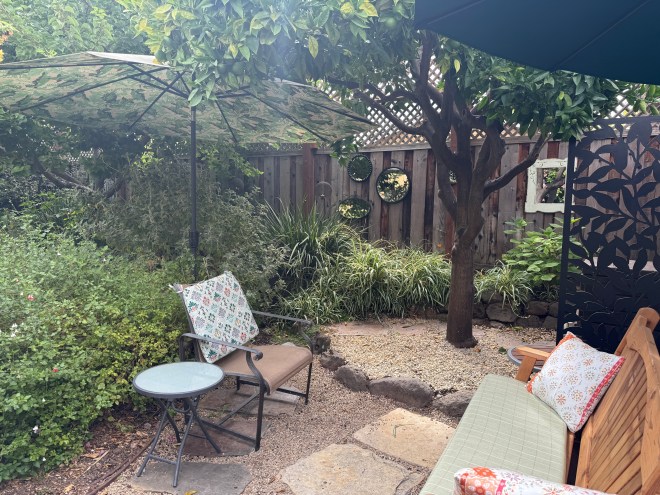
These changes opened up the space, allowing us to add a couple of chairs and small tables to accompany the glider. Removing the ferns lets us see the rock wall and the plants behind it, and we can now walk to and from the compost bin, especially in the wetter months, without rubbing up against wet ferns. I put down gravel and the self-seeded nasturtiums are coming up as predicted. They’re easier to manage, lower in height, and beautiful.

Another significant change to the garden involved removing our beautiful wisteria. It wasn’t a decision I took lightly, but in the end, it made sense. I’ll write more about that this week.

Slugs and Snails and…Slugs and Snails

You witness life at a whole different level when you crawl around in the dirt.  I was up close and personal with the camera this week, taking pictures of the flowering catnip.  I turned to my left and caught sight of a snail, sliding its way up the side of a fern.  I took several shots, none of which came out, of the snail’s careful journey.  As the gastropod gained height, the fern slowly gave way.  Up and up went the snail, down and down went the frond.  Mesmerizing!  Eventually the snail’s green path dropped but the gastropod, undeterred, continued its ascent.  I backed up and saw the rest of his slippery group heading toward cool shelter for the day.

I felt strangely voyeuristic.  Inadvertently, I stumbled upon the secret hiding place of these unwanted helix aspersa.  I don’t like it when they snack on my garden, yet they seemed harmless and graceful as they slipped out of sight. A friend recently wrote an interesting blog entitled, Evolution: Escargot, Erotica, Empathy about her own awakening to the multitude of creatures that inhabit a French field.

It’s an interesting metaphor for life, I suppose: it’s easier to fear and hate what we don’t like or understand.  A little knowledge goes along way to level the (French) field.

Ascent

Fairy Garden Improvements

According to the ancient art of Feng Shui, a home’s entryway is critical to our well-being. Kathleen McCandless, author of Feng Shui That Makes Sense says:

 “The entry is not only the first impression of your living space, it is also a key component in whether or not you will experience comfort, safety and happiness while you live there. The most important consideration in Feng Shui is whether or not a space allows us to feel ”safe”.  If we do not feel 100% safe in our environment, we will not relax…”

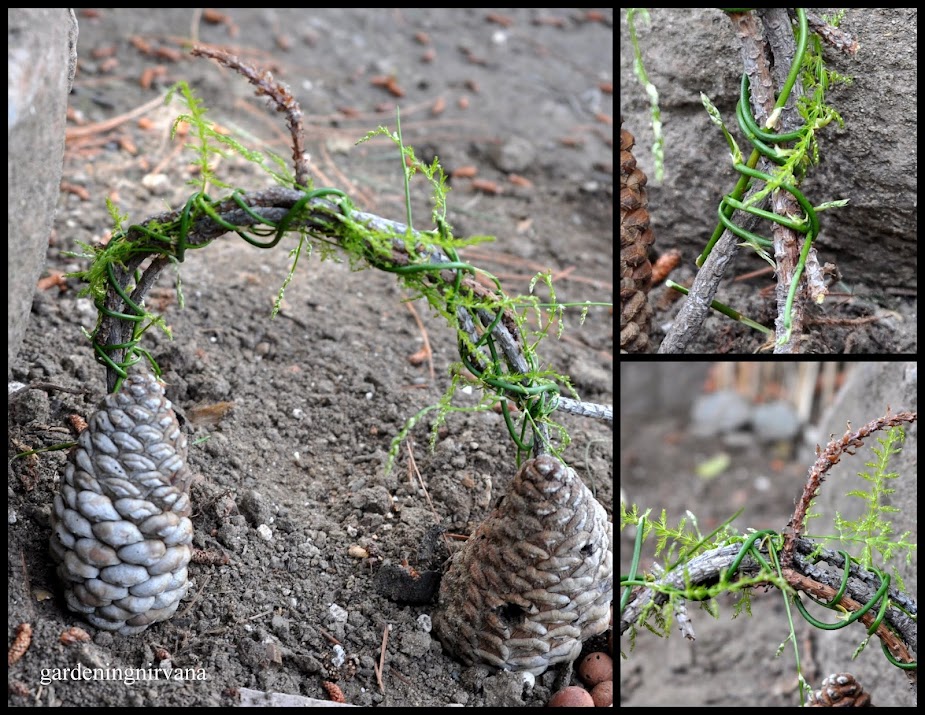
To ensure the well-being of the garden fairies,  I created what I hope will be an inviting entryway.  I braided three soft branches from the overhead pine, then wrapped them in tender shoots of Asparagus fern creating a gentle arch.  A pair of pine cones flank the arch for stability.  The airiness of the ferns should appeal to the light-hearted nature of garden fairies, so that crossing the threshold is a delight.

Braided Archway

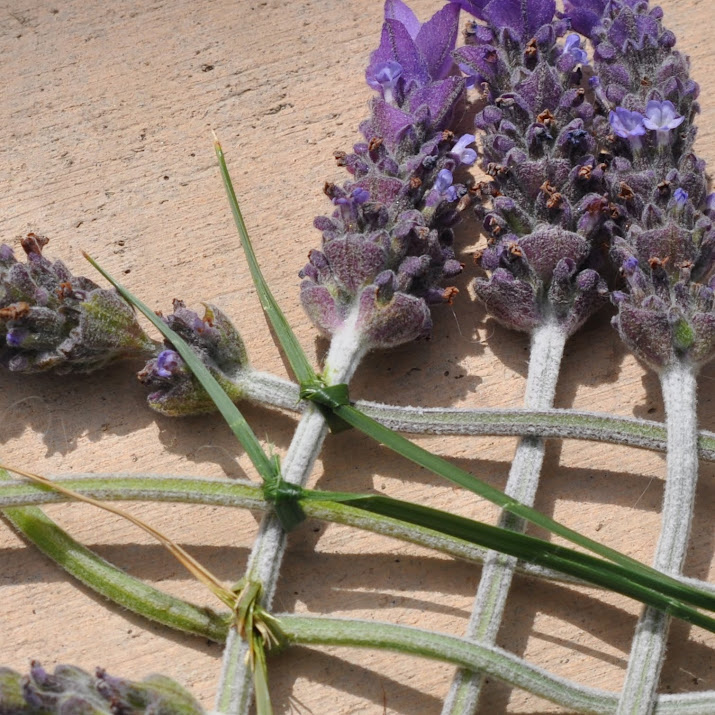
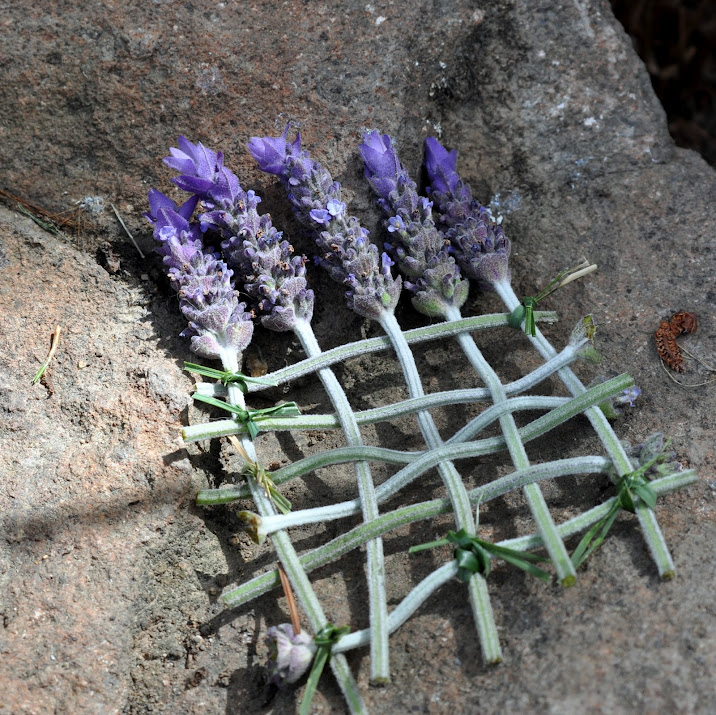
While my fingers remained nibble, I braided a lavender bed. Lavender contributes to a calm sleep, also essential to general well-being. I lashed the corners with tall grass using simple knots to keep the corners united. The bed is tucked into a sleeping loft in the crook of one of the rocks .

Knotted Corners

Lavender For a Restful Sleep

I found a beautiful mound of moss under the garden swing. If I’m successful transplanting it, the cool moss will make a lovely addition to the fairy home interior. More news tomorrow.

Today’s Blog is Brought to you by the Number 9

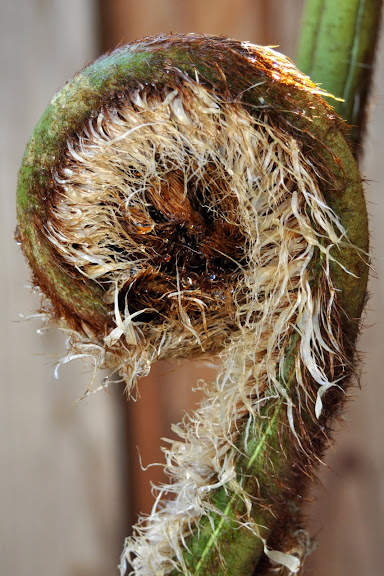
Magic Fern Number 9

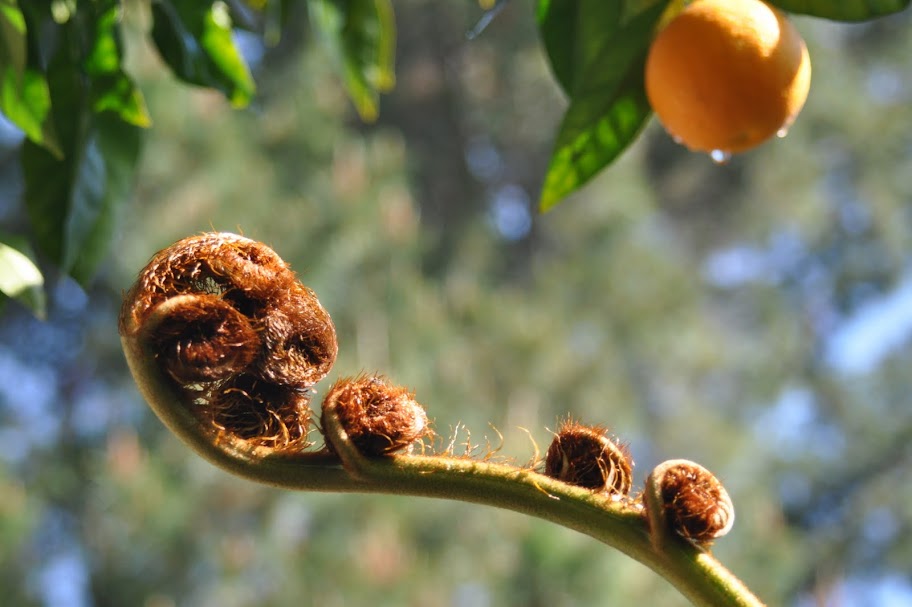
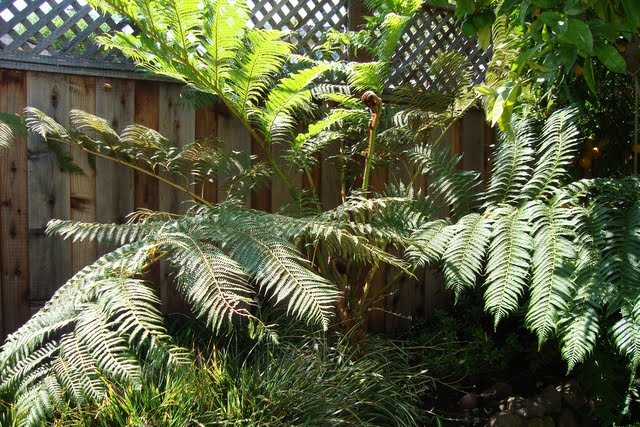
This glorious fern lives under the orange tree in our yard.  It fascinates me!  I’ve been searching Google images all morning, but I can’t seem to locate a similar one.  When I do I’ll post the botanical name.

From early March through late June or July, it unfurls these otherworldly fronds.  When I started photographing the process I expected it to take several days.  Two days later the tightly wound coils unfurled, leafing out into large, fan-like leaves.

I learned the hard way that the dusting of brown feathery scales is a skin irritant, no doubt a natural defense mechanism against foes and photographers alike.  I had to toss all clothes in the wash and shower-mid day to stop the infernal itch.  Beware!

Now that fern-unfurling has arrived in my backyard, I’ll be out there everyday, camera in hand.   I’ll keep a respectful distance of course.  Birding is fun but ferning is funnier!

Tightly Coiled

Happy Under the Orange Tree

Update:  This is a Woodwardia fimbriata, commonly known as a Giant Chain Fern

Garden Wanderings: The Good, The Bad and The Ugly

It’s fun traversing the garden with my camera in hand.  The lens helps me see things in a different light, though I’m not always able to capture it.  Beautiful, golden grasses grow at the edge of our garden, but I’ve never been able to record and share their beauty as they move in the wind, offset by the vivid blue sky.  The grasses remind me of a film from my childhood of “amber waves of grain.”

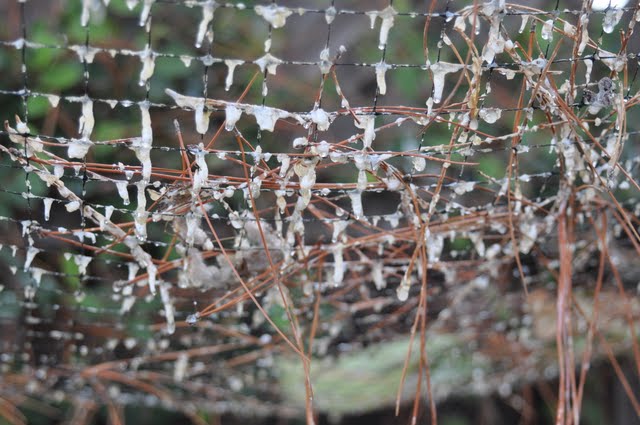
In reality, not everything in the garden is as beautiful as amber waves of grain.  This month I’ve decided to capture the good (flowering vines), the bad (frost damage) and the ugly (pine sap) of my recent garden wanderings.  Here goes:

Hardenbergia violacea 'Happy Wanderer' (Purple Vine Lilac)

Wrapping Around the Trellis

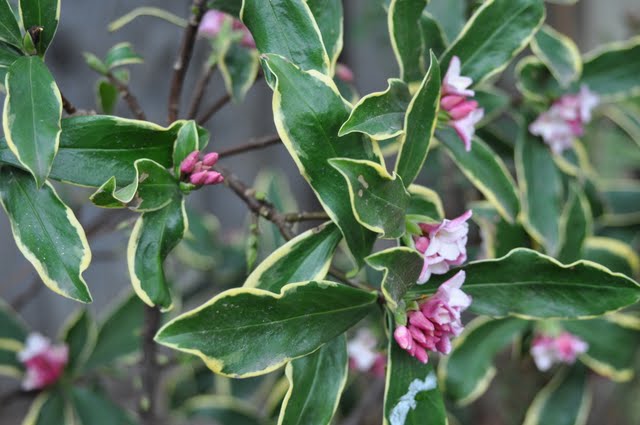
Daphne Odora

Frost-damaged Ferns

Pine Sap Clings to the Cat Netting

Ferns Unfold

As August unfolds, so too do the Ferns

I’ve always had an affinity for ferns. One of the first house plants to grace my home at the age of 16 was an Asparagus Plumosa. We lived in a two-bedroom apartment with no place to garden, so my mother let me keep a dozen houseplants on a stand just inside our front door. She once told me I handled the plants in the same manner as my deceased, horticulturist father. What a compliment!

My transient lifestyle continued well into my thirties as apartments and room-rentals came and went, but the houseplants always followed. In 1988 I bought two small ferns for $1.79 and planted them in a pot next to my bed. I traveled to Europe and back, leaving them in the care of a good friend. In 1989 they moved from Campbell to San Jose; then back to Campbell for a spell. I married and moved to Fremont for a year before we bought our home in 1996 in San Jose. By now they were a tangled twosome, bursting from a heavy pot, filled with thorns and in desperate need of a transplant, but they continued to climb and grow. At last liberated from their pot, they were free to spread along the back fence of our garden. They shelter cats in the heat of the summer and shade the occasional lizard. When I’m lucky enough to have some cutting flowers I add some feathery ferns to the bouquet. When my back is turned they twine around the fruit tree and climb through the fence. I brave the thorns to tame the wild beast, nursing nicks and cuts for a week. All relationships have their ups and and downs. But after 23 years, I would say that we are in it for the long haul. I wouldn’t have it any other way.