Spring Bulbs: To Plant or not to Plant?

River of Hyacinth FlowerThat is the question. The answer: it’s complicated.  I’m perusing the Fall Netherland Bulb Company catalog this morning.  It arrived about a month ago, far too early to take it seriously.  Now that fall approaches, I’m giving it a second glance.  Years ago I planted several bulb varieties from Costco. Either I made the beginners mistake of planting them all upside down, or they didn’t like our soil.  Not a single one came up!  Perhaps a squirrel dug them up behind my back, but I never saw evidence of that.

I know many bulbs need frost first, then a proper thaw to get them going.  Was it foolish to assume that bulbs sold in our town would actually grow in our temperate climate?

One year a friend gave me a pot of paper white Narcissus.  Once the plant was spent indoors, I transplanted the bulbs outside.  Do you know what happened?  Nothing.

As I gaze lovingly at the ‘Tulip Fat Tuesday Blend,’ I can picture the purple and yellow blooms scattered all over my yard. Further on, they’ve dedicated a page to  ‘Darwin Hybrids’, including Tulip Beauty of Spring. The petals remind me of a fresh peach.

The most intoxicating of all bulbs are the Hyacinth. Their scent makes me giddy. I received my first Hyacinth as a Christmas present from Mom. I grew it indoors in a glass jar. I still remember the beginning of the transformation and that incredible smell when it bloomed. Planting something with evocative memories isn’t always a good thing. Tied up with the memory of that flowering bulb are things I would like to leave in the past.

So, to plant or not to plant? The icon on the cover says “Bulbs: dig, drop,done.™”  They don’t know the half of it.

Hyacinth orientalis ‘Blue Jacket’, exactly as I remember mine.

A Taste of Fall: Flower Season Winding Down

The air feels like early fall today.  It really cooled down in the past 24 hours.  The crisp breeze foreshadows the season to come.
We’ve enjoyed a week of warm weather, lasting well into the evening, enjoying several meals on the patio. Today it’s 15 degrees cooler than predicted.  As our days are shorten the pumpkin leaves are turning a tell-tale brown.  Even my beloved cosmos are showing signs of decay.  In California, warm weather continues well into October, but the growing season is definitely winding down.

It dawned on me today that the bounty of flowers we’ve enjoyed all summer will soon be a sweet memory. I decided to take pictures of each lusty bloom. Mother Nature is about to pull a blanket over the garden.  Summer annuals will finish their cycle as they set seed and wither.  Perennials go dormant.  The Chinese Pistache treats us to an autumn show, with golden, red and amber leaves drifting to the ground below.  The maple out back does a strip tease as well, but often in slow motion.  Depending on the wind and the rain, our maple may hang on to the changing leaves for some time.

So to my lovely garden belles, arranged below in rainbow order, won’t you please take a bow?

Firecracker Annual

Blooming Since July, Part of the 4th of July Trio

Carpet Roses

Carpet Roses at the bottom of the ramp

Garnet Penstemon

Garnet Penstemon rustling under the Magnolia

Dusty Pink Hydrangea

Dusty Pink Hydrangea, spectacular under the living room

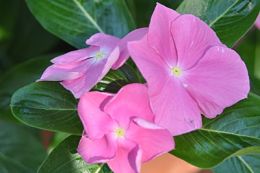
Pink Vinca

Pink Vinca lives in a pot on the back steps

Sunflower

Sunflower: The first of the Season

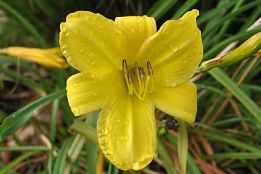
Yellow Daylily

Yellow Daylily fans out under the Magnolia tree

Yellow Four o'clock Flower

Yellow Four o’clock Flower re-seeded from last summer adds cheer to a shady side yard

Yellow Snapdragons

Yellow Snapdragons, a hardy little annual

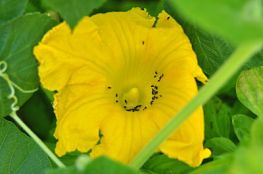
Pumpkin Flower (Male)

Male pumpkin flower, hopeful, even at this late date

purple bellflower

Purple Bellflowers surround our patio

Dwarf Plumbago

Dwarf Plumbago sits below the tall grass in a corner of the front yard

Status Annual

This bluish status was part of my red, white and blue display for July 4th.

English Lavender

English Lavender lines the bottom of the front deck and attracts lots of beneficial bees.

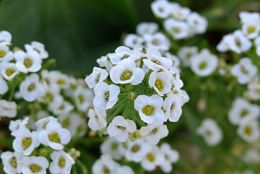
Sweet Alyssum

Sweet Alyssum completes the trio of red, white and blue 4th of July plants.

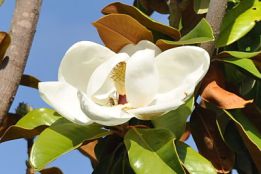
White Magnolia

White Magnolia cradles a bee

Anemone

Anemone run along the back rock wall. They’ve taken over that corner of the garden.

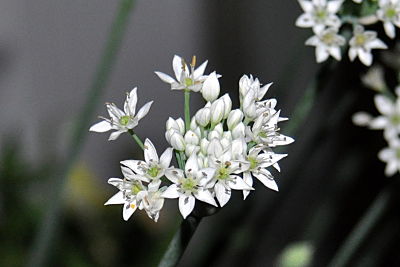
Wild Onion

Wild Onion
A garden surprise this summer

White Begonia

Begonia always remind me of my mother

Are you curious what these blooms look like before they flower? Find out on Flower Buds: The Shape of Things to Come.
If you linked back for answers to the quiz: Who’s who or what’s what? the answers are:
a. 4 Hydrangea
b. 1 Allium Stellatum
c. 2 anemone
d. 3 Four o’clock
e. 5 Snapdragon

Sure-Close: A Gift From Howard

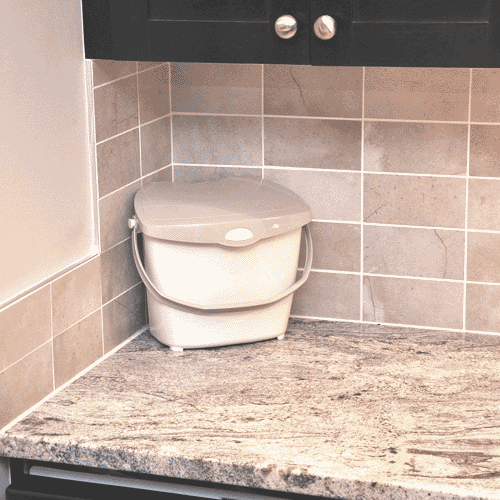
Sure-Close Food Scrap Collection Container

Sure-Close Food Scrap Collection Container

My friend and neighbor Howard stopped by last week carrying a small bucket in his hand.  I was momentarily confused when he said he had something for me, and wondered what was inside.  The “small bucket” turned out to be the coolest of inventions: a food scrap collection container, called a Sure-Close, to be used along with an outdoor composting bin!

I’ve been talking about composting for years, and took an amateurish stab at it once, but this charming gift was the impetus I needed to get going.

The Sure-Close food scrap collection container features:

  • A vented lid to allow moisture to evaporate and feet on the bottom allow for airflow.
  • A lid that stays open for easy filling, but stays closed if you accidentally drop it.  They had me in mind when they added that feature.
  • A lid that completely removes for ease of cleaning. I don’t know about you, but if something is difficult to keep clean, I’ll simply avoid using it. I like this feature.
  • Several handles or grips.  Many containers look nice but are difficult to use.  The Sure-Close has three different grips, so it’s easy to lift, move and empty into your outdoor composting bin.

Why compost? From the Sure-Close website:

Most of the organic waste we produce comes from our kitchens as food scraps. A kitchen container that makes it easy for people to collect, store and transport their food scraps to the green bin goes a long way toward encouraging participation.

For Ottawa’s Green Bin program, the city wanted a kitchen container with ventilation in order to allow moisture to evaporate from organic waste. Without the moisture, contents are less likely to smell. Enter the Sure-Close kitchen container. Developed by two Ottawa-based companies, designers DW Product Development, and manufacturer Ottawa Mould Craft, this little beige beauty brings high-tech design and engineering to your counter top.

No more excuses.  This will be gardeningnirvana’s year of the compost.  I’m so excited.

Composting Recipes:

I jotted the following notes into a notebook two years ago so I would be ready to move from “accidental composter” to the real deal.

In half-inch thick layers:

  • Combine 3 parts “brown” organic material to one part “green”
  • 3 parts brown includes dried leaves, small twigs, etc.
  • 1 part green includes grass, cut flowers, coffee grounds, egg shells, tea bags and fruit or vegetable peels
  • Mix into a bin approximately 3′ x 3′ x 3′
  • Add a small amount of moisture as needed and turn once a week.

Serves several plants.

Or, you can go with my friend Bob’s version:

  •  Take it all, throw it in a pile, come back in a year.

The Tale of the Traveling Shoji Screen


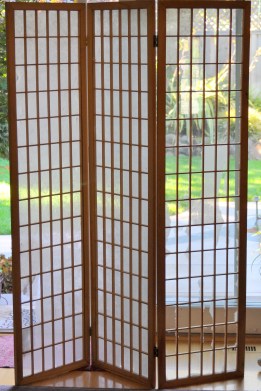
I’m a big fan of Shoji Screens, the light-weight room dividers originating in Japan.  In my alternate universe, the one without cats and boys and a clumsy gardener (that’s me) I have a house with sliding paper walls.  In my real world, I almost pulled it off…

The Screen:

Damaged Shoji Screen

Damaged Shoji Screen

My son created a “technology corner” in the living room a few years back, a cozy place to hang out and to store his hand-held gaming system.  It was an unsightly collection of cords and blankets, but who was I to stifle his creativity.  That said, I was desperate for an attractive way to hide it from view. His upended gym mat did the job but offended my sense of aesthetics.

On the other side of town, my friend Barbara was ready to part with a paper Shoji screen.  Lucky me!  It was the perfect solution.  For months the lovely white screen hid things from view and everyone was happy.

The Deck:

You’ve no-doubt heard that boys become young men. Sitting at a desk with a real computer suddenly has more appeal.  In a flash, the Shoji screen was no longer necessary.  Happy to use it elsewhere, I took it outside to use on the deck.  It looked so pretty with the sun shining through, while effectively filtering the heat.  Within minutes a breeze upended the screen, toppled it over the settee and tore a gaping hole in the paper-like covering.  No!!!

The Dye:

Tie Dye at Laura's

Tie Dye at Laura’s

My crafty, self-described hippie friend Laura took one look at the damaged screen and suggested I re-cover it with a panel of tie-dyed silk.  What a great idea! She hosts a tie-dye party in her driveway each year, setting up assorted dyes for a free-for-all.  It’s great fun.

We shopped for silk, but found it pricey at $25 a yard. Instead, I bought an end-piece of cotton muslin wide enough to cover all three panels for less than $12 bucks.

The Shift:

Re-covered Garden Swing

Re-covered Garden Swing

After dying, setting and re-washing the fabric, it was ready to go. I was nervous tackling this new project, so I kept putting it off.  Yesterday, as I cleaned and prepped for my book club, I had a garden epiphany. While brushing pine needles off the garden swing I remembered the extra fabric. In early May I re-covered the swing and planned on making toss cushions with the remnants. I wondered if I had enough to make a matching screen instead?

Re-covered Shoji Screen

Re-covered Shoji Screen

Kismet!  I had exactly enough fabric to cover the screen.  The heavy-duty, sun-friendly Sunbrella fabric would be the perfect complement to the swing, while at the same time providing a sturdy panel. The leftover pink trim was just enough to cover the sideboard.

I had a similar mental shift when I realized that my tie-dyed panel would make a beautiful, one-of-a-kind, softly draping table-cloth.

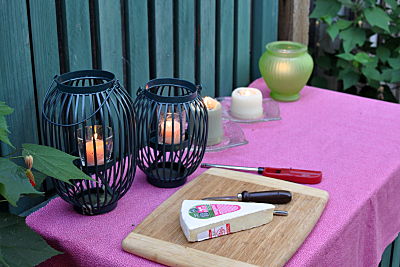
Oops! Cheese-Lover

Oops! Cheese-Lover

I glued and stapled my way to a paneled screen, then hauled out the iron and the pinking-shears and by days end I was able to entertain my book-loving friends in style.

Call me crazy!  Then share a story of your own in the comments below.


Blooming Thursday: Books and Flowers


My book club meets once a month with each of us taking turns as host.  Tonight was my turn, and the first time in a few years that it landed on a warm, August night.  Awesome!  I couldn’t wait to play host in the garden.

I spent part of the morning shopping for food, sweeping and washing the patio and then I went really crazy and took out the iron!  I don’t know what came over me.  Probably that ironing post on Boomdeeada. I ironed the cloth napkins, a fabric remnant for the sideboard, and the tablecloth.

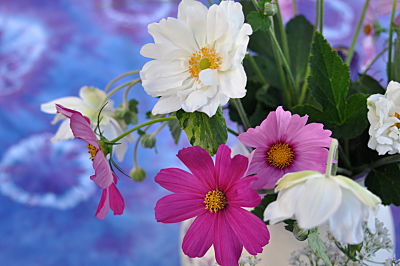
Tie-dyed tablecloth and garden flowers

Tie-dyed tablecloth compliments the garden flowers

The tablecloth wasn’t a tablecloth at all before today, but a piece of muslin, recently tie-dyed purple and originally intended to re-cover a folding screen. That’s a long story for another post, but now it’s a tablecloth. As my head filled with details of candles, flowers and other little niceties that make hosting fun, it occurred to me that I might have enough fabric left over from recovering my swing in early May to repair the screen.  The remnants were for making swing cushion covers, but covering the screen would be more interesting.  Would I have enough?

Amazingly, I had exactly what I needed with just a small square of fabric left over.  I used fabric trim to cover the side board, a splashy pink against the subtle green.  Really, I should have my head examined for tackling this project today. What was the rush?

Candles on Sideboard

Leftover pink trim makes the perfect sideboard cover

Three smashed bottles of tacky-glue later, the screen was 90% complete.  I’ll post pictures tomorrow.

I rolled up the used newspaper, put away my tools, vacuumed the rug and jumped into the shower with 40 minutes to spare.

The evening came together nicely.  It’s great seeing friends and discussing books. Our pick this month was The Bean Trees by Barbara Kingsolver, described as

  “a story about love and friendship, abandonment and belonging, and the discovery of surprising resources in apparently empty places.”

Thumbs up for the book! Thumbs up for the Bookettes, too. Thumbs down for the crazy gardener who still thinks she can do it all.

Book Club Friends

The Bookettes


Yamagami’s Nursery

Purple Heliotrope

Purple Heliotrope

Yamagami’s Nursery, located in Cupertino California, has been around since 1948.  In a town known for tech behemoth Apple, inc. the nursery is a delightful throw back to a simpler time.  Taro Yamagami originally sold fruit from a stand on the same spot, gradually giving way to plants.  It became a full-fledged nursery by the early 1950s and it remains today in its original location.  If you ask any serious gardener in the Valley, chances are they’ve heard of and shopped at Yamagami’s.

Yamagami's glazing ball

Glazing Ball (I’m too clumsy to own one)

We actually left empty-handed on a recent trip, but not for lack of wanting.  We were in search of beneficial insects and eventually resorted to the web since our request was somewhat obscure.  They sell ladybugs, earthworms and Praying Mantis eggs but no Lacewings.

The nursery walkabout is always fun.  It’s a spacious two acres, with interesting plants tucked in with  gorgeous pots, garden ornaments and a help center.  I always feels at home.  When we were there in July they posted a sign alerting guests to the nesting bird in a nearby plant: “Shhh quiet please, bird nesting.  This plant is temporarily not for sale.”  I snapped a photo at a respectful distance.  Even the neighboring birds feel at home.

Yamagami's bird nesting sign

Quiet Please, Bird Nesting

In addition to the nursery, Yamagami’s has a helpful website and a monthly newsletter covering soup to nuts issues around gardening.  You can subscribe to their newsletter here.

If you’re planning a visit to Apple headquarters, be sure to visit the nursery as well.

In the meantime, here is a virtual tour of Apple, Inc. and a few more snapshots from Yamagami’s.

Yamagami's Nursery Collage

Yamagami’s Nursery Collage

Pumpkin Update: Tired Vines, Happy Fruit

You’ll never guess what’s been hiding under the cosmos?

Give up?

A fully formed, lovely orange pumpkin!  I love surprises.

Pumpkin Collage

This is an exciting time of year in the garden.  Here is the pumpkin crop so far:

A. Grandaddy. This peach-colored pumpkin is a force to be reckoned with.  We have three growing in this size and shape.  Today we discussed stacking them to make a pumpkin “snowman.” I can’t wait to weigh them on my home scale.  I’m not getting on the scale, so I may as well use it for something.
B. Baby Bear. This little fella is probably full-sized but we won’t know till the color sets.  Most of our pumpkins started out a rich yellow, but this one has a bit of green to it. The leaves are smaller in scale, which tells me it won’t grow any bigger.  It’s about the size of a large apple.
C.  The Twins. These two pumpkins are leaning up against the house.  The vines are so thick that I’ve not been able to reach them for over a month.  I can’t wait to wrap my arms around them.
D. Peek-a-boo. The cosmos draped themselves over this orange lovely.  Do you see that little patch of orange peeking through the flowers?  I lifted the cosmos out-of-the-way and there it was, bottoms up.
E. Bottoms up. This one looks a bit like someone’s…bottom.  We’ll have to think of something clever for Halloween.  Suggestions are welcome and in fact encouraged in the comments section below.

There you have it.  Linus would be disappointed.  I’ve avoided religion and politics, but I simply can’t help myself:  I love talking about great pumpkins.

“I’ve learned there are three things you don’t discuss with people: religion, politics and the Great Pumpkin.”

-Linus in It’s the Great Pumpkin, Charlie Brown by Charles Schultz

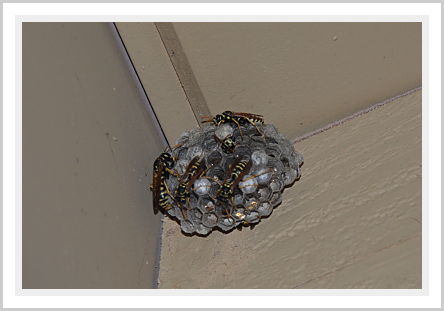
Wasp’s Nest Under the Eaves

I’m fascinated and disturbed by the wasp’s nest under the eaves.  They picked a high-traffic area to set up house, right outside our back door.  Two years ago they chose a similar spot, but I was able to remove the nest within a day.  I annoyed two of them, but the nest was empty so they grudgingly relocated without a fuss.

Wasp's Nest

This nest filled up quickly, with several adults keeping watch.

According to National Geographic:

“Despite the fear they sometimes evoke, wasps are extremely beneficial to humans. Nearly every pest insect on Earth is preyed upon by a wasp species, either for food or as a host for its parasitic larvae. Wasps are so adept at controlling pest populations that the agriculture industry now regularly deploys them to protect crops.”

I’m still trying to control the spread of scale and thrips in the front garden and imagine these wasps could help.  Just yesterday I clipped away a few wheelbarrow loads of brown, stained under-growth from the thrips infestation.  I moved on to the Magnolia to do battle with the remaining scale.  The purchased lacewings emerged and presumable got to work, but the damaged leaves had to be removed.

Should the wasp’s nest stay or go? Further reading in an article from Purdue University suggests leaving the nest intact.

Most home owners do not realize that wasp nests are cleaned out each fall by the wasps themselves. The empty nests contain nothing but the outside paper shell at that time. This too will break down and disintegrate through the winter. Wasps never re-use the same nest from season to season, so letting mother nature take care of them through time, is usually the best control method we have.

For now, that’s exactly what we plan to do.

•More about wasps from National Geographic.
•Leaving the nest: a perspective from Purdue University Plant and Pest Diagnostic Lab.

Looking up at the Cosmos


Looking up at the cosmos this evening was a treat. I fell in love this summer with these magnificent flowers.  Like any new love, I’ve enjoyed the novelty and discovery of uncharted territory.

Writing about cosmos for this blog and snapping dozens of photos along the way has enriched my garden experience. I’ve captured small changes I might have otherwise missed in pictures and prose.  Such simple pleasures.

All week I’ve wanted to gather a few seeds, but the heat has been oppressive. This evening, after an hour of tending to the less glamorous garden chores, I sat cross-legged in front of the cosmos and took a moment to enjoy the view.  Then, using a soft toothbrush, I swept up the seeds gathering on the pumpkin leaves below.  I’ll package some of the seeds for holiday gifts and the rest will be carefully stored in my Seed Keeper for next year.  I’ve spotted several black and white songbirds lately, so I’ve left plenty of seeds behind for them too.

Seeds safely stowed, I rolled on my back and took a few photos from the ground looking up.  For a moment in time I was a girl again, lying barefoot on the grass, eyes skyward.  Time for a bit of daydreaming until reality intrudes.

Cosmos looking up

Cosmos Looking Up

Cosmo seeds

Cosmo Seeds

Cosmo seeds

Cosmo seeds at the Beach


Allium Stellatum by Nightfall

I see beautiful white stars on this hot summer night, though I’ve cast my eyes down, not up. By the light of the moon, Allium Stellatum, also known as  Prairie Onions, are covered in tiny, star-like blooms.  The Allium set buds nearly two weeks ago. This evening they’re covered in flowers.  A light, sweet onion scent lingers above the soil

Many flowers close up shop for the evening. It’s a nice surprise finding these tiny flowers wide awake and enjoying the August heat.

Allium Stellatum or Prairie Onion

Allium Stellatum or Prairie Onion

Allium Stellatum

Star light, star bright

True star-gazers might catch a falling star tonight as the Perseids shower the night sky with meteors.  They will reach their August peak this weekend, visible to the naked eye in most parts of North America.