Beginning Birding: Hummingbird Class

Don’t you just love learning new things?  It’s especially fun when it’s something your passionate about.  We took a hummingbird class at the spectacular Los Gatos Birdwatcher.  This locally owned store describes themselves as

the nature lover’s general store, specializing in everything to do with bird feeding and bird watching.

If you’re local, or planning a visit to the area, it’s a must see. The owners and staff are wonderful people, knowledgeable and helpful in every way.  Their current dog in residence is a chocolate Cocker spaniel named Marley.

Lisa Myers of Let’s Go Birding presented the hummingbird class, then lead us on a two-hour field trip Saturday morning.  We had so much fun.  Lisa leads a variety of birding trips throughout the bay area.  She’s incredibly knowledgeable with a wonderful sense of humour.

Lisa Myers and Freddy Howell

Lisa Myers and Freddy Howell

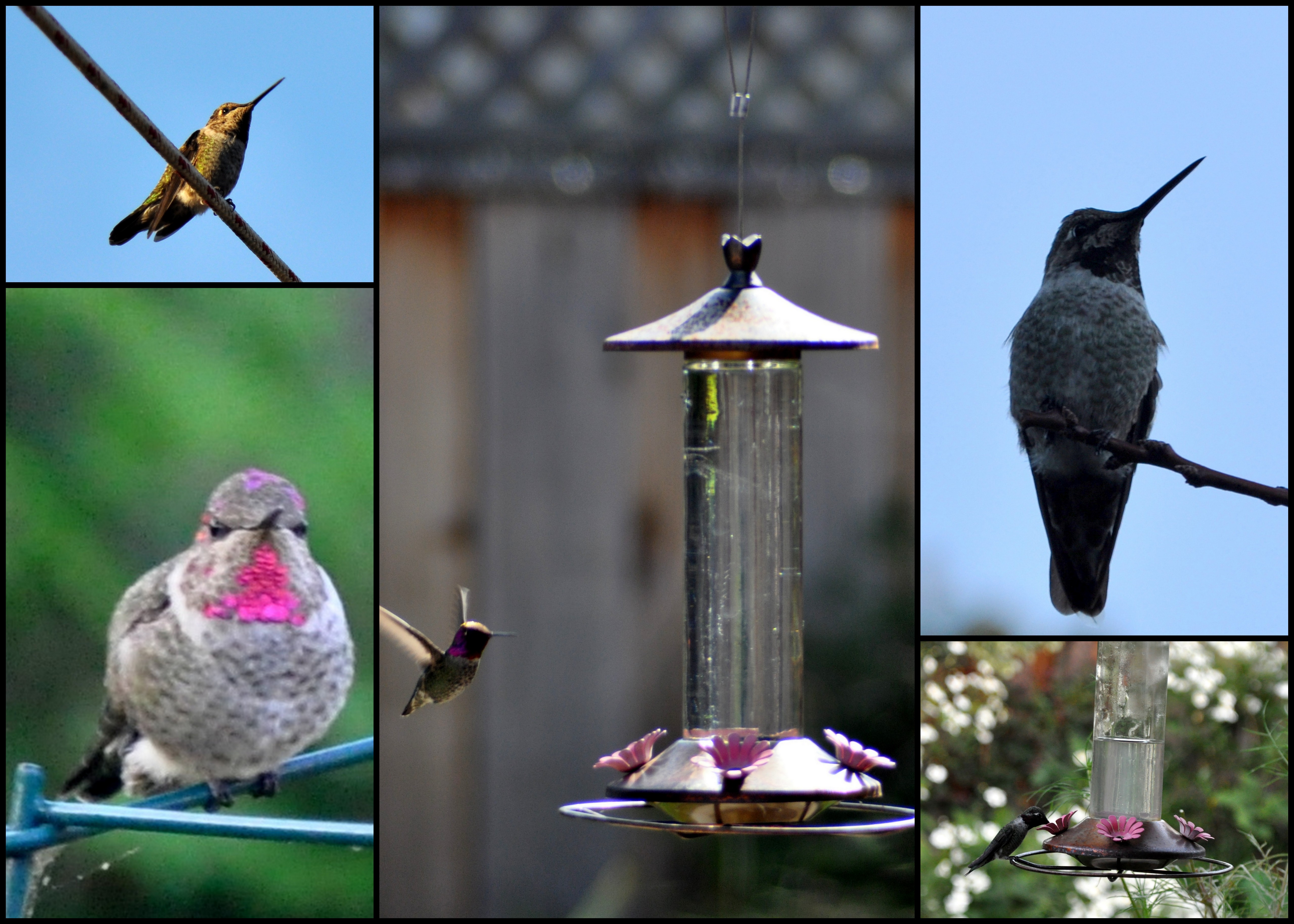
We’ve been feeding hummingbirds in our garden for as long as I can remember. We have several feeders and hummingbird-attracting plants.
2014, 03-20

Hummingbirds in our garden

I’ve read a number of books and articles over the years, but still found much to learn.  It’s also nice spending time with a group of  like-minded folks.

Here are a few things I didn’t know:

  • There are over 300 species of hummingbirds, but only six or seven in the Bay Area.
  • Hummingbirds are native to the Americas.  They’re not found anywhere else in the world.
  • Yellow attracts bees, red attracts hummingbirds.  Therefore a hummingbird feeder with yellow plastic ‘flowers’ sends out mixed messages.
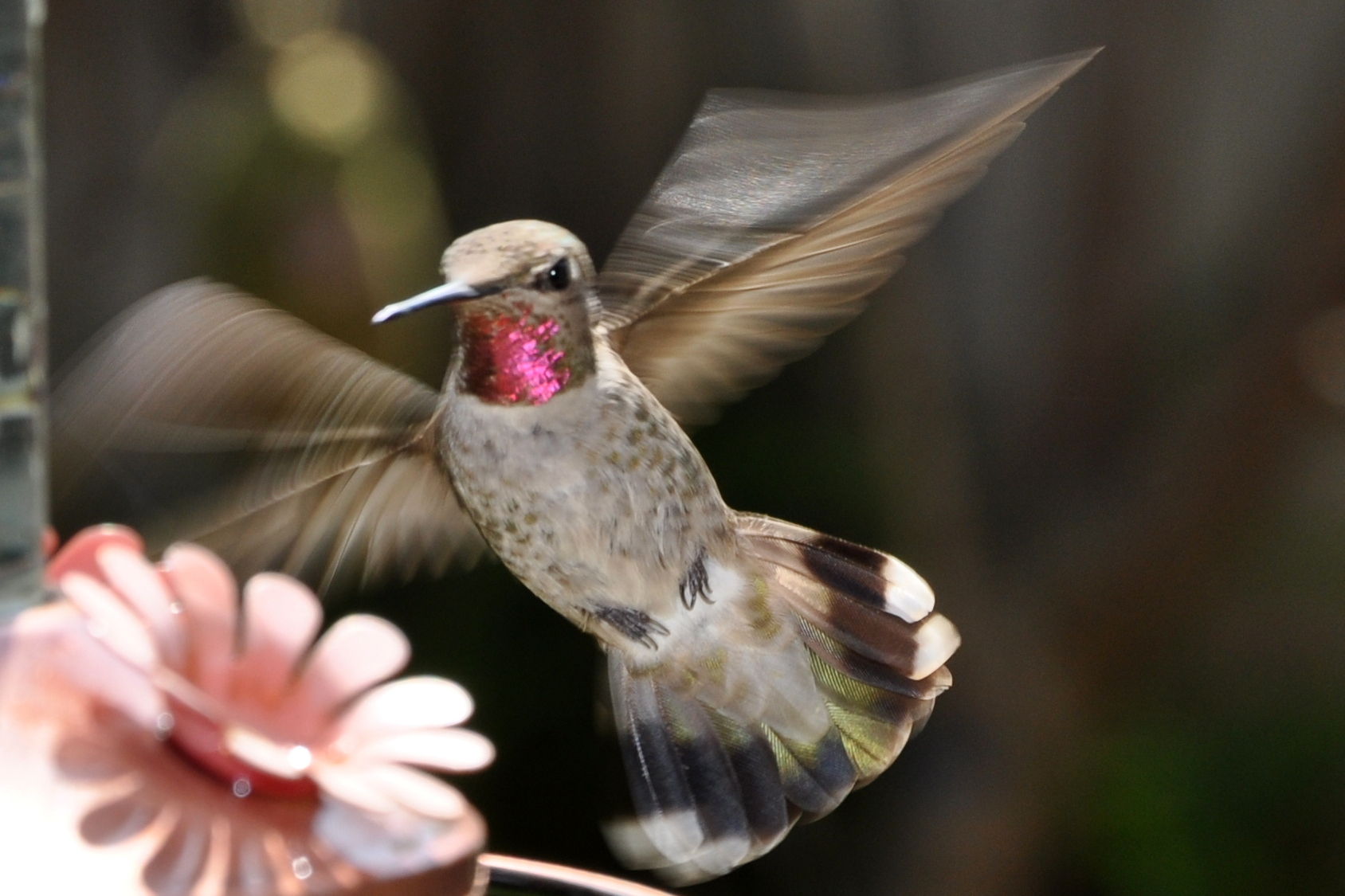
  • Anna’s Hummingbirds, native to our area, live here year round. There is no need to remove feeders during the colder months.
  • Hummingbirds are the only bird that can hover in the air, as well as fly forward and backward.
Anna's hummingbird

Anna’s Hummingbird

It was fascinating learning about torpor. Hummingbirds enter this state of hibernation nightly to conserve energy.  I found the following explanation at ScienceBlogs™

Even sleeping hummingbirds have huge metabolic demands that must be met simply to survive the night when they cannot forage. To meet this energetic challenge, hummingbirds save enough energy to survive cold nights by lowering their internal thermostat at night, becoming hypothermic. This reduced physiological state is an evolutionary adaptation that is referred to as torpor.

Torpor is a type of deep sleep where an animal lowers its metabolic rate by as much as 95%. By doing so, a torpid hummingbird consumes up to 50 times less energy when torpid than when awake. This lowered metabolic rate also causes a cooled body temperature. A hummingbird’s night time body temperature is maintained at a hypothermic threshold that is barely sufficient to maintain life. This threshold is known as their set point and it is far below the normal daytime body temperature of 104°F or 40°C recorded for other similarly sized birds.

Isn’t that interesting?

Please be sure to check back tomorrow for news and pictures from our two-hour field trip to the Santa Clara Valley Audubon Society.

Fabulous resources in Silicon Valley:

Garden Triangle

Around this time last year, I removed a wedge of lawn near the sidewalk to make room for some flowers.  That nifty little triangle of dirt proved to be a lot of fun.  Through spring, summer and early fall, an assortment of flowers bloomed. By late November, most of it had gone to seed.  All that remained was the Statice, relocated from the curb garden earlier in the year.

My reward for letting the plants go to seed: a host of spring ‘volunteers.’

Here is a photo from February 25th:

wedge garden

Wedge garden: February 25th

Here it is today:

wedge garden march 26th

Wedge garden: March 26th

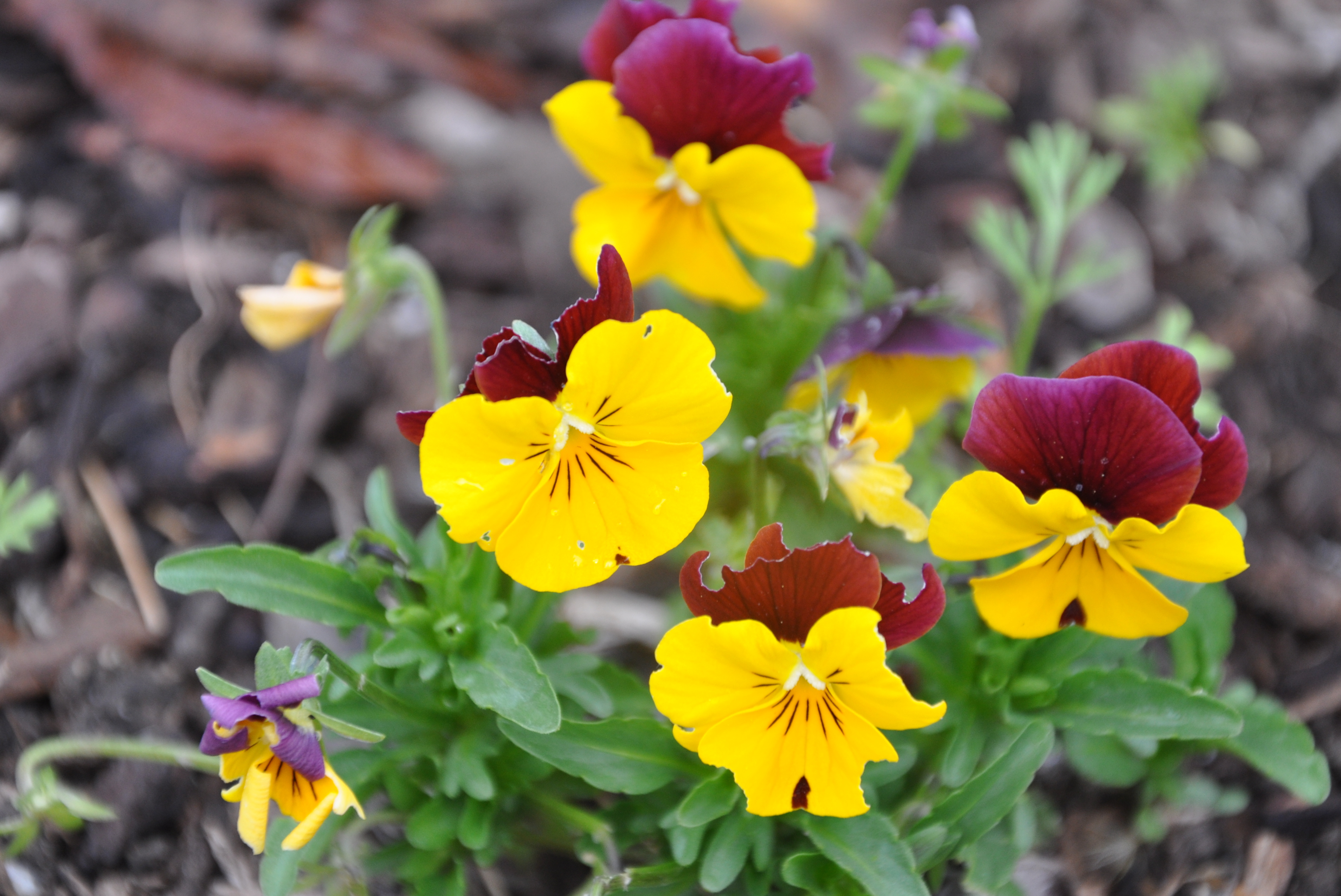
The Statice really filled out. It’s also about to bloom. The purple and yellow pansies are blooming for the second time and the seedlings have doubled or tripled in size. Now that the growing pattern is taking shape, I transplanted a few volunteer seedlings heavily concentrated at the curb. Spade in hand, I held my breath and took the plunge. They drooped for half a day, then bounced right back. Now I’ll have a nice mix throughout the triangle.

congregating at the curb

Congregating at the curb

garden pansies

Garden pansies spring back to life

purple statice

Purple Statice

any guesses

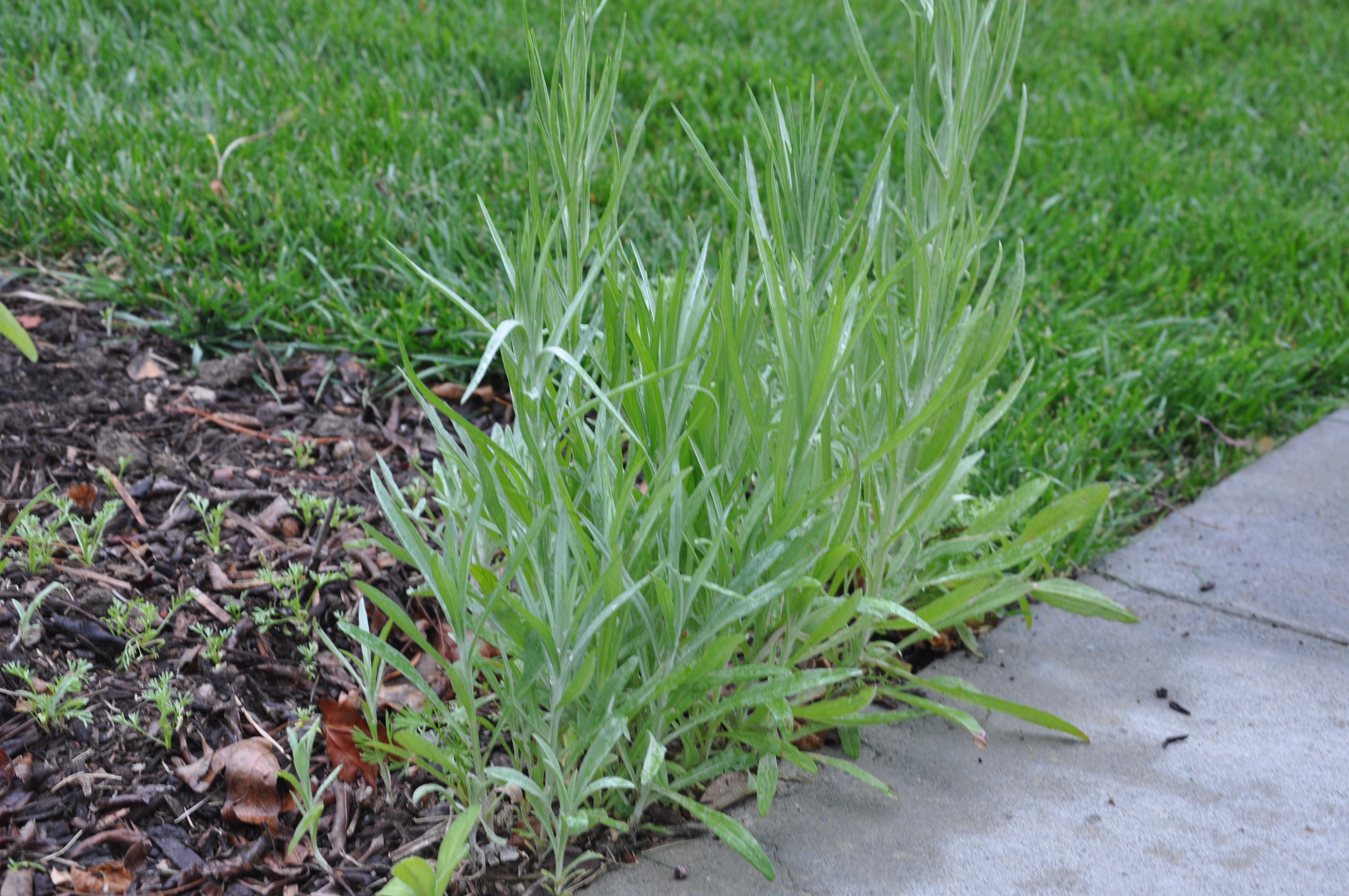
Still a mystery. Any guesses?

I collected a lot of seeds last year, including Cosmos, Bachelor Buttons, Four O’clock’s and Zinnias.  Between the collected seeds, the volunteers and the bag of wildflowers (intended for last year but lost, then found) the garden should bloom all season.

Do you have a favorite spring flower?  Is there something you’ve always wanted to grow?  Let me know in the comments below.

Daffodil Dance

Shortly after planting my daffodil bulbs, I saw signs of digging everywhere. Little pockmarks appeared in the same random pattern as the naturalized bulbs. Foiled again!

I fluffed up the soil and hoped for the best. Surely the anonymous foragers left a few behind.

All that worry was for not. (Which is almost always true, but that is for another day). Apparently daffodils (narcissus) aren’t that tasty. I’ve since learned that it’s one of the few bulbs that even bunnies will leave alone.

All fifty bulbs came up! Ten are in bloom, with several more about to bud. I’m so cheered by these flowers.

It’s easy to see the inspiration for William Wordsworth’s poem Daffodil:

“Ten thousand saw I at a glance,
Tossing their heads in sprightly dance.”

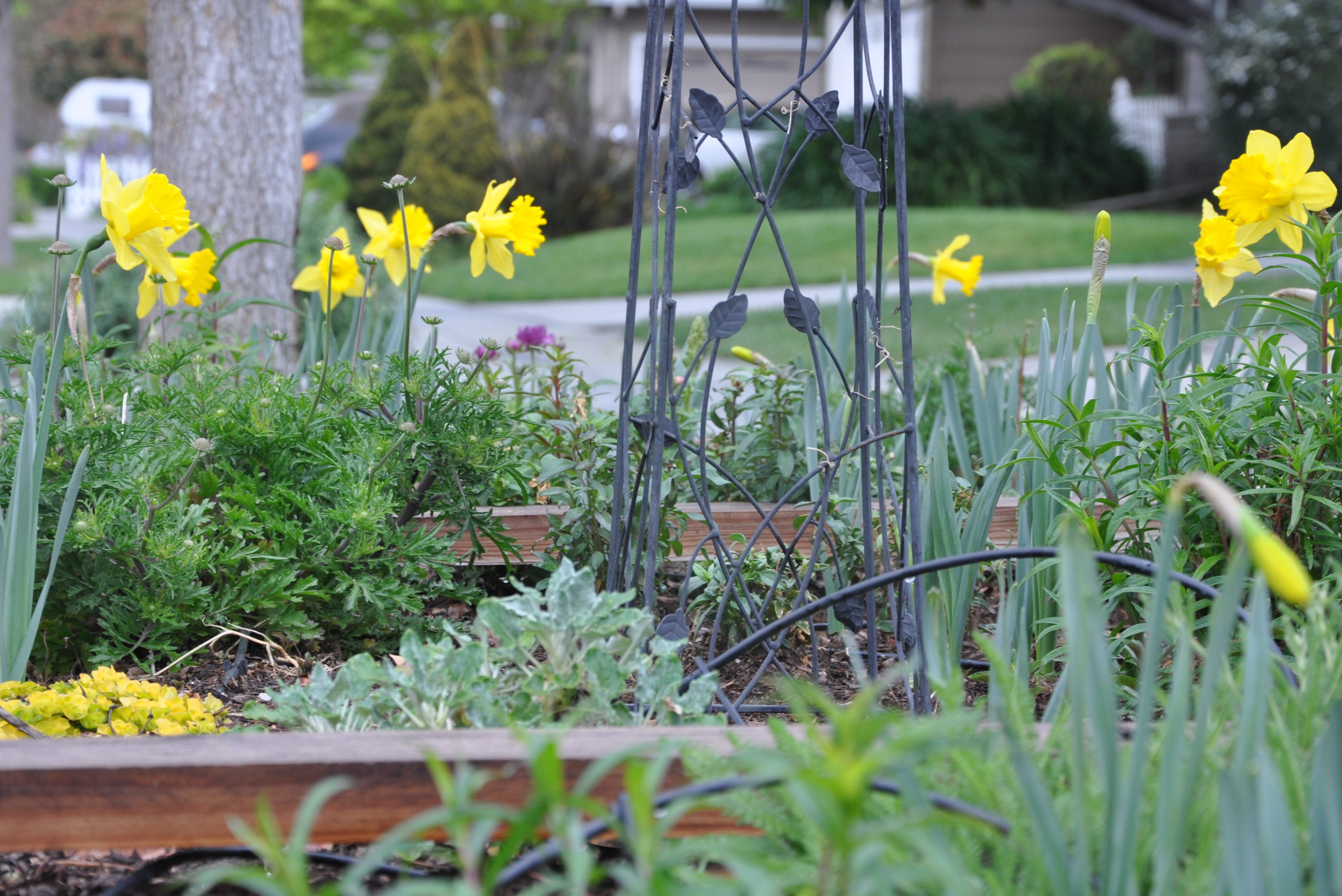
curb garden daffodils

Curb garden daffodils

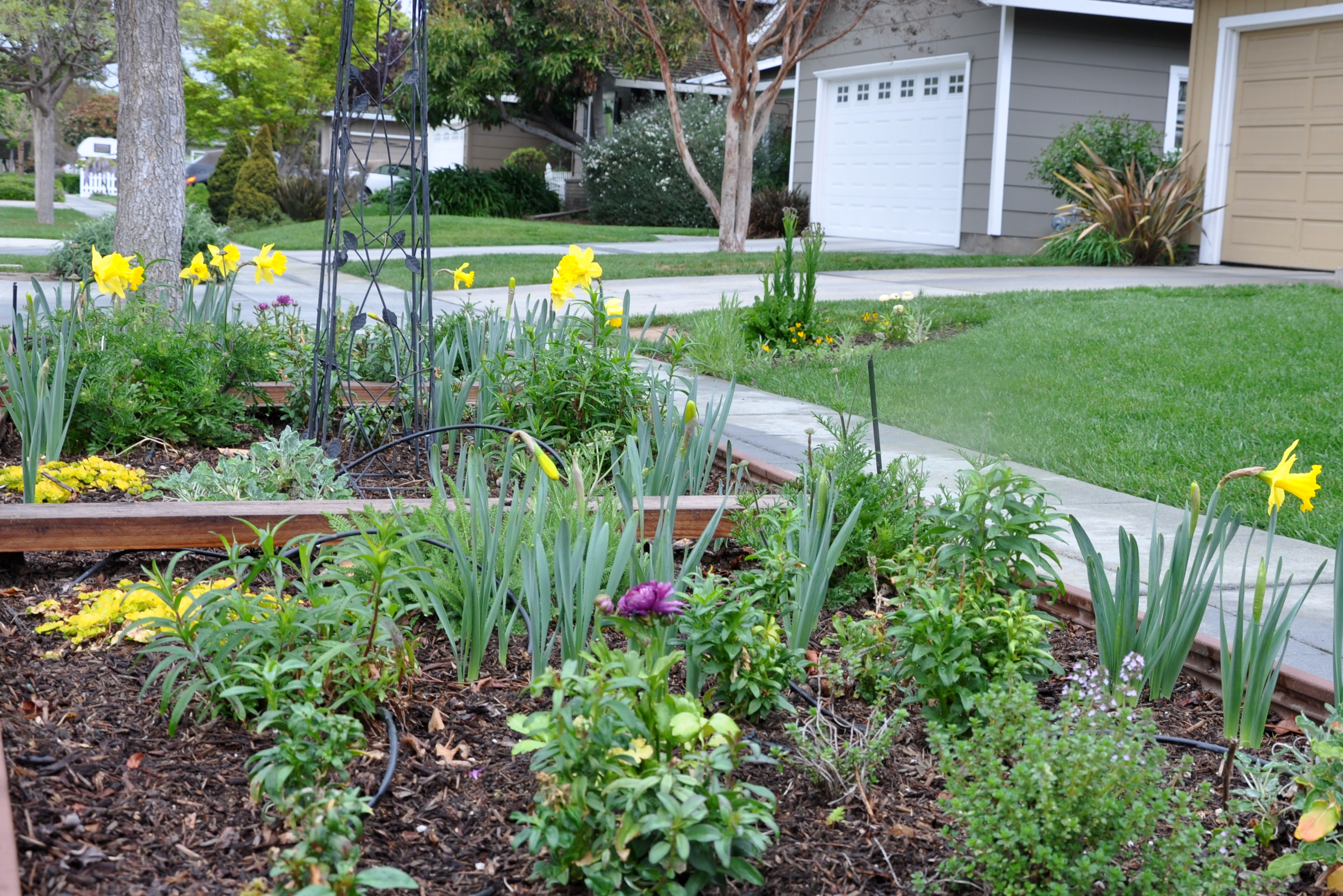
the long view

The long view

spreading cheer

Spreading cheer

A lovely rendition of William Wordsworth’s Daffodil:

Tools and Snails: This Way

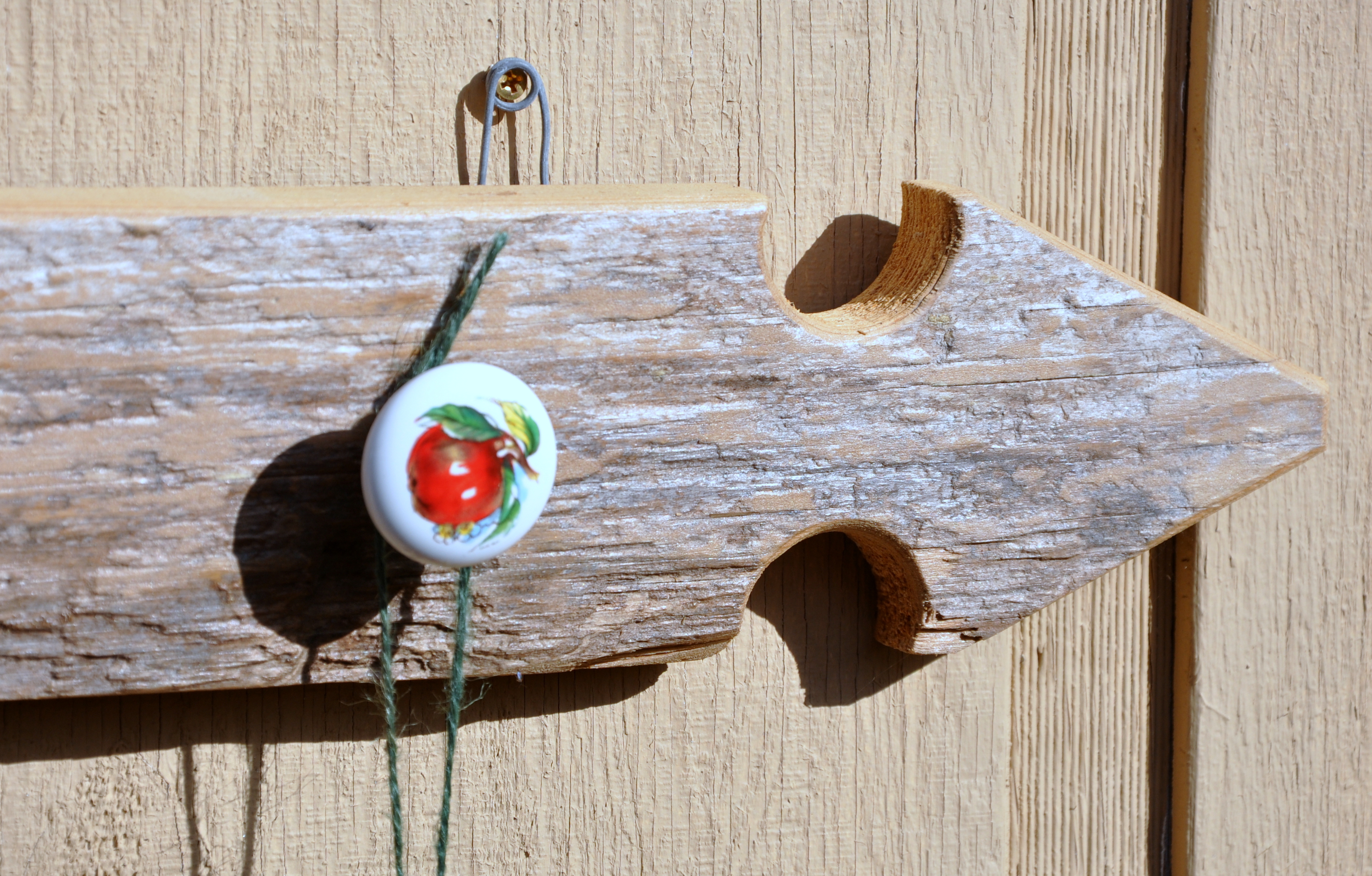
Check out my new tool holder.  My friend Nick made it from reclaimed fencing and ceramic knobs.  Nick Timmerman is also the talent behind our Little Free Library. If you missed that post, you can read about it at Little Free Library: Books for Everyone.
garden tools

Garden Tools, Reclaimed Fences

The tool holder is hanging from the side of the house near the vegetable garden.  It’s great to have a handy place to put my oft-used garden tools. They’ll be right where I need them throughout the growing season.  The arrow points away from the garden.  It’s a subliminal message directed at the snails: lunch is that way. Nothing to see here, mollusks.

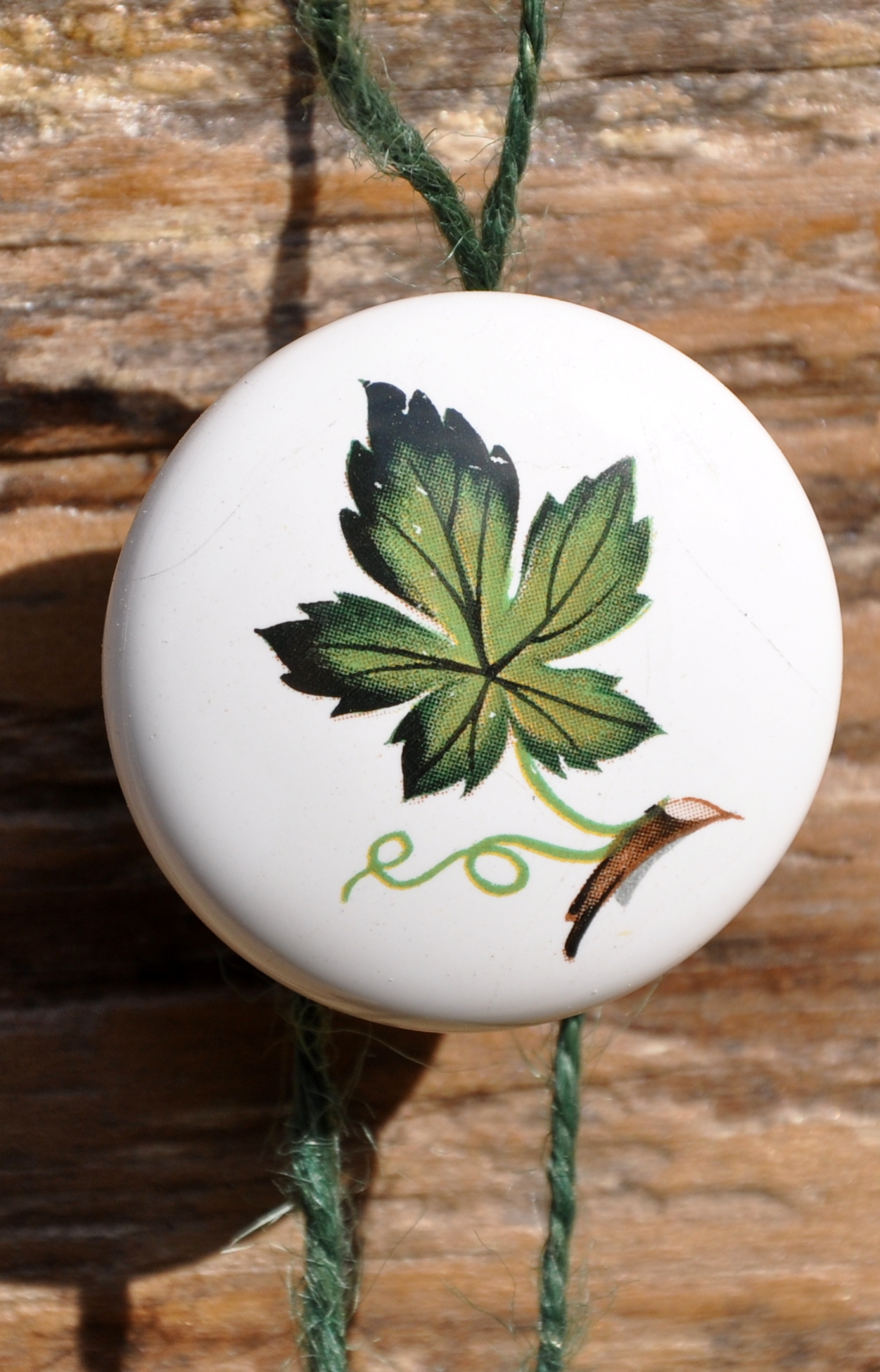
ceramic knobs

Ceramic knobs

Nick reclaimed the knobs from his mother’s former kitchen. They looked vaguely familiar at first, but I couldn’t recall why. Later I remembered buying the very same knobs for a project years and years ago.

What goes around, comes around, in more ways than one.

Thanks, Nick!

Ceramic knobs

Memories, from the corners of my mind

EarthBox: Growing our Salad

earthbox

Earth Box

Inspired by Pauline at The Contented Crafter, I planted an EarthBox™ this weekend with assorted salad greens.  The heirloom tomatoes self-seeded this year and are well on their way. I’m looking forward to a summer full of fresh garden salads.

The EarthBox™ planting system is a great way to grow vegetables in small spaces.  It’s a fully contained gardening system.  The box comes with

  • an aeration screen
  • fill tube
  •  Dolomite
  • Fertilizer
  •  Mulch cover

You pack the lower corners of the box with potting mix, then add additional mix to the two-inch mark.  On top of the mix you add a layer of Dolomite (premeasured and provided in the kit).  After mixing in the Dolomite, you create a small trench down the center of the box and add the premeasured fertilizer.  Finally, you add the remaining soil, the cover, and you’re ready to plant.

Our backyard garden has very little full sun. This box allows me to extend my growing space by wheeling it to the edge of the patio in the path of the sun. It’s a great system for first time gardeners, since all the guess-work is done for you. It conserves water, another plus since you add water through a fill tube. This encourages the water to flow to the bottom where the roots will follow. No surface drying and no leakage.

I used a similar product called a City Picker for last year’s tomatoes. The plants did well, but it was difficult to stake them in such a shallow pot. They’re growing in the raised beds this summer instead.

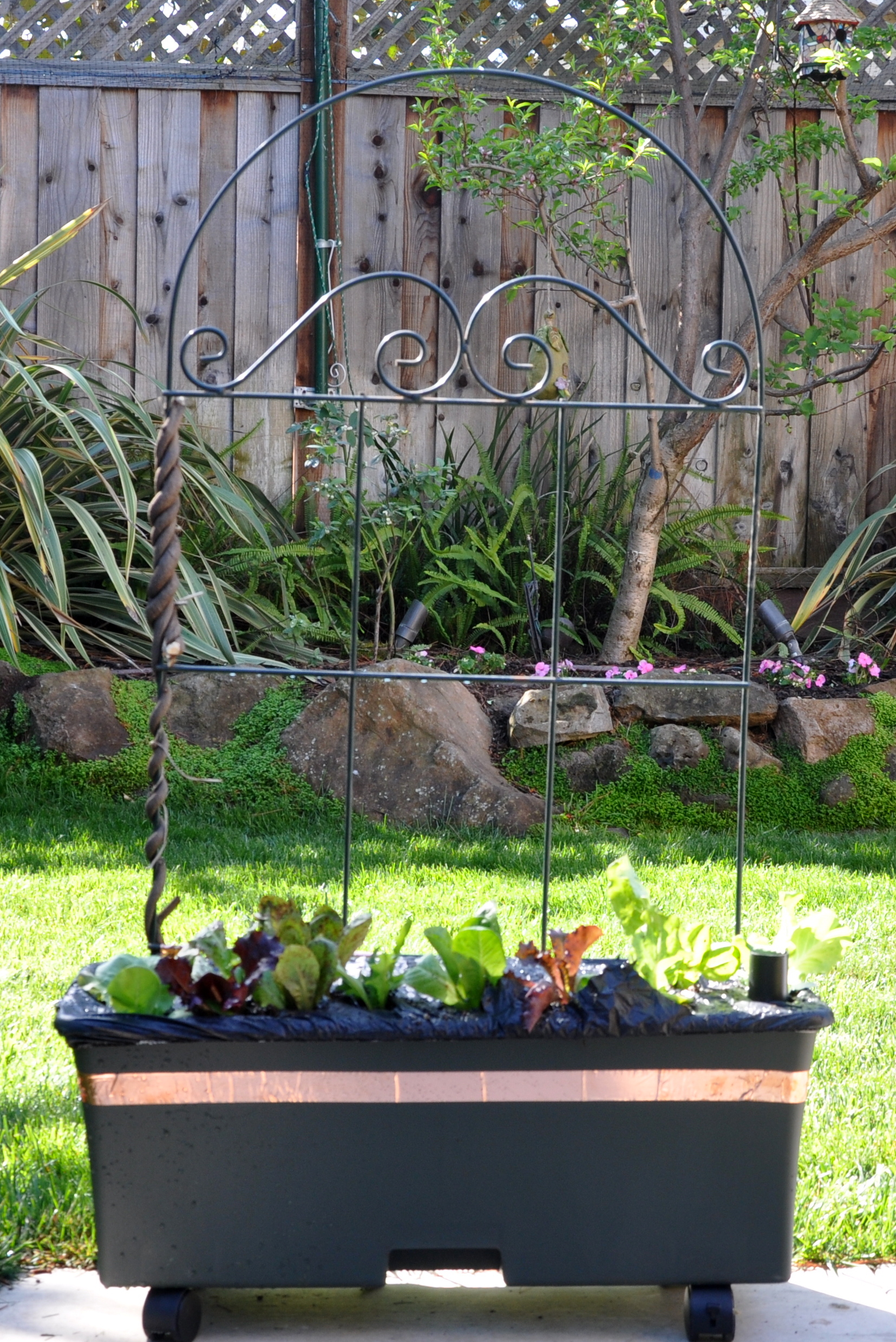
I added a band of copper tape barrier to the box and the lower rungs of the trellis. The tape creates a small electrical charge that snails won’t cross. It’s a cruelty-free, organic way to ensure snail-free salad.

DSC_0081

Copper tape discourages snails

copper tape on trellis

Copper tape on trellis

Last, but not least, I planted a handful of sweat peas from seed along the back of the box. (Thank you, Boomdee). If all goes according to plan, I’ll have a box brimming with purple flowers and fresh salad greens for months to come.

EarthBox looking down

EarthBox™ (looking down)

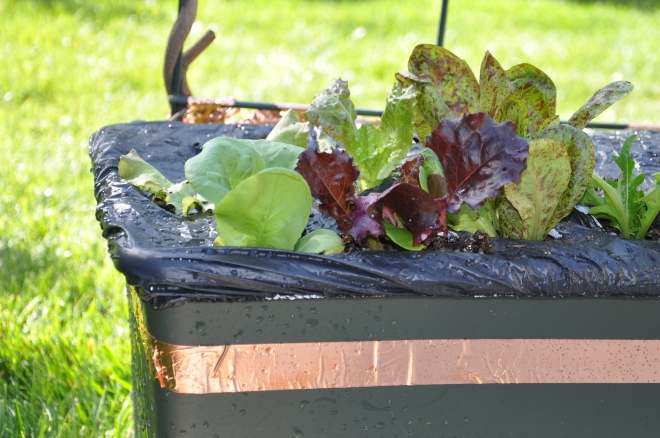
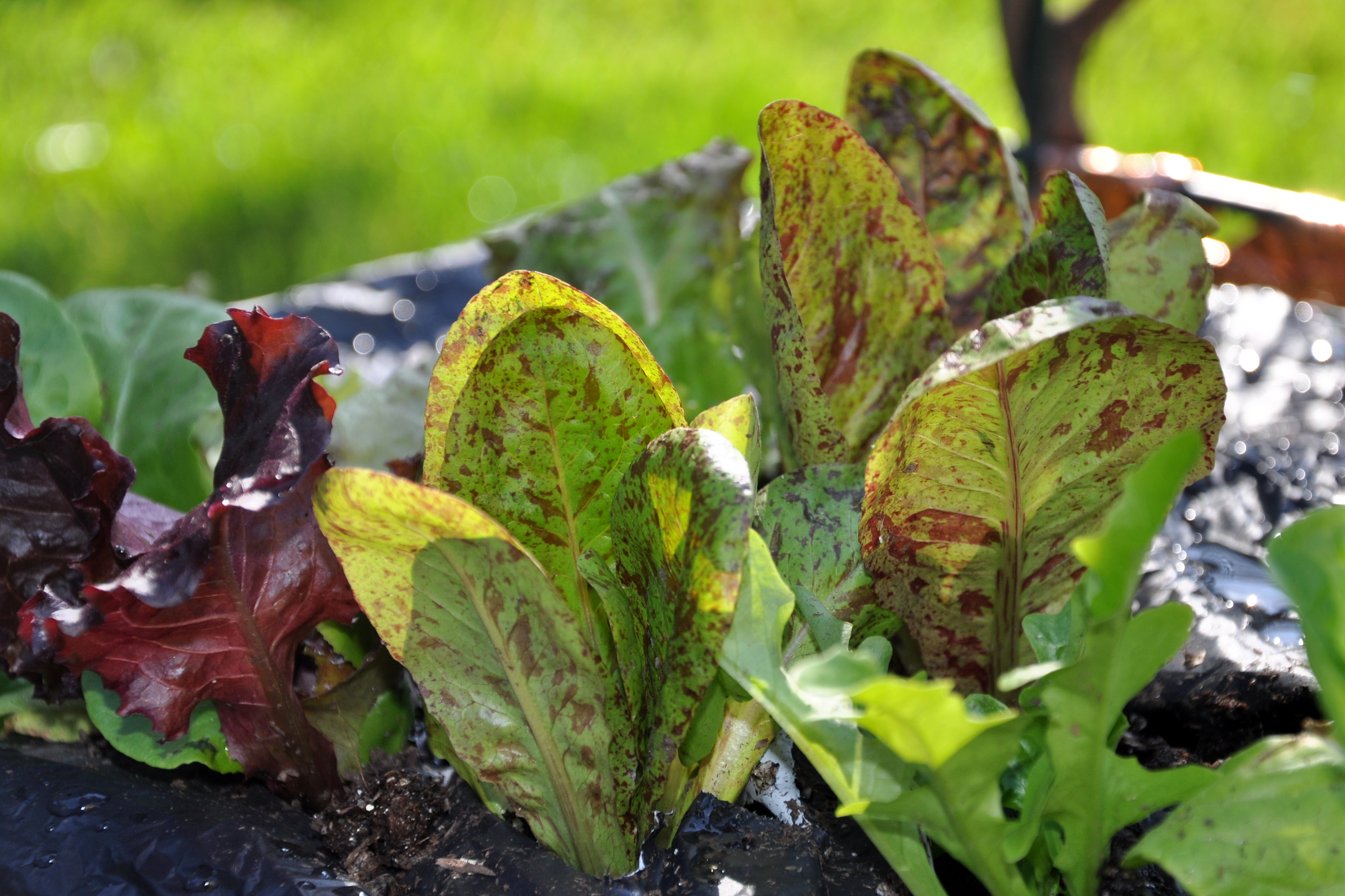
Organic Mixed Lettuce

Organic Mixed Lettuce

Additional Resources: How to plant an EarthBox™.

Vintage California: Stunning Display Garden

Tuesday night I attended a preview of the San Francisco Flower and Garden Show. This year’s show features 16 display gardens in addition to plants, seeds and other garden wares for sale.

Vintage California won several awards and it’s easy to see why. Designed by Brian Koch of Terra Ferma Landscapes, the garden features an enormous orb built with discarded grape vines. I felt like a kid in a fort.

The structure is both ethereal and substantial, a bit reminiscent of a nest.  I’m picturing birds swooping in and out of the branches while I sip my crisp glass of wine, below.

From the show’s site, Vintage California:

is a response to the wine country landscape and the periodic clearing of vines that have lost favor or popularity. This removal of vines is a process where large excavators scrape the landscape clean of the vines, posts and wires and then pile them up to be burned. Witnessing this take place while visiting wine regions has left a strong and lasting memory with us. The rustic beauty of the region and the interdependence of the winegrowers, the vines and, now, the natural ecosystems are what inspire us. The vine orb, which is the centerpiece of the design, is constructed of old vines that have outlived their value to the vineyards.

Vintage California

Vintage California
Terra Ferma Landscapes
Brian Koch, designer

I don’t know if it was intentional, but the row of grasses, planted on a gentle slope, are reminiscent of rolling hills of grapes. My in-laws had a small vineyard in Calistoga before they passed. I think they would have enjoyed this.

Underneath the vine orb

Underneath the vine orb

Inside the orb a low rock wall flanked both sides, with a small fountain between stones.

centered under the vine orb

Centered under the vine orb

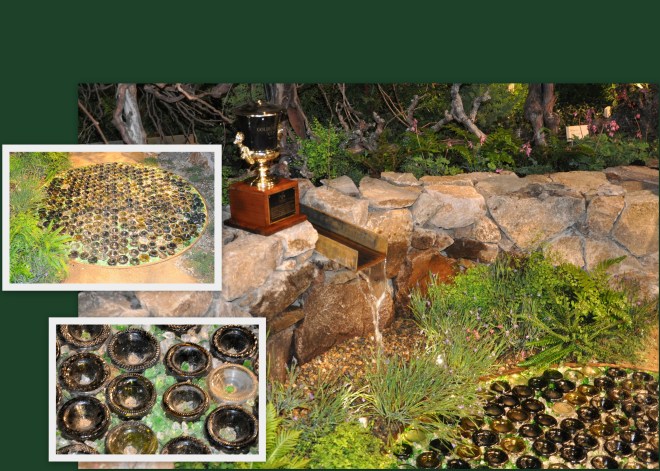
A clever use of sea glass and discarded wine bottles forms the floor of the garden. I was a bit tentative walking on it, but it proved substantial. Isn’t it pretty?

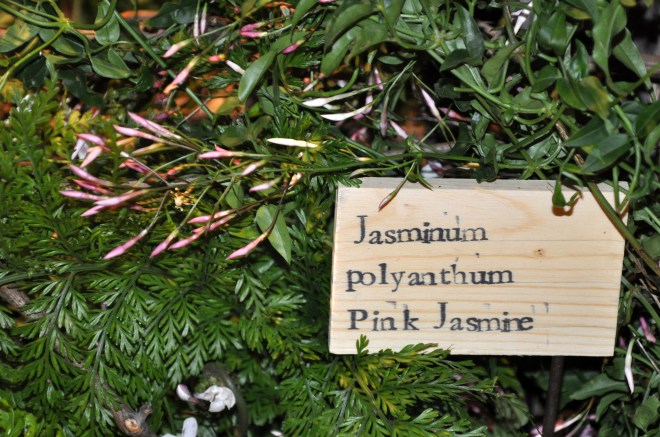
plant markers

Clever markers, hand-stamped on scraps of wood

Throughout the garden, plant-markers sported hand-stamped descriptions on what looks like small scraps of wood. It added to the vintage vibe.

garden exit

Exiting the garden

The garden, planted with greens and purple hues and the incredibly fragrant Jasmine is restful. Congratulations to the designer and his team.

DSC_0119

If you live in the Bay Area, there’s still time to attend the show. It runs through Sunday, March 23rd.  Tickets and info here.

Vernal Equinox, Always on Time

Variety adds spice, predictability keeps us grounded.

I enjoy the novelty of each season, and their predictable arrival.  Though it feels like winter passed us by, the planet continues to rotate. Once a year I celebrate the Vernal Equinox, aka the first day of spring.

I found a super-cool site called Time and Date that spells out the specifics if you’re curious.  I was.  I love learning new things. As gardeners in the Northern Hemisphere welcome spring, green thumbs in the Southern Hemisphere are seeing in the first day of fall.

My celebration is simple: I plant.  Nothing says spring like tucking seeds under the soil with optimism in your heart.

I also pulled weeds, topped of the planter boxes with rich soil, checked on the mini-greenhouse *and* remembered to do a good job with my sunscreen.  Lindy kept me company, happy to be outdoors on this glorious day.

lindy-lu

Lindy-lu

Planter boxes, rotating composter, mini-greenhouse and worm bin

Planter boxes, rotating composter, mini-greenhouse and worm bin

The hummingbirds circled the feeder, jockeying for territory.

hummingbird at feeder

Swooping in for some nectar

They’re also drinking from the Abutilon lining the fence.

Abutilon lines the fence

Abutilon lines the fence near the patio

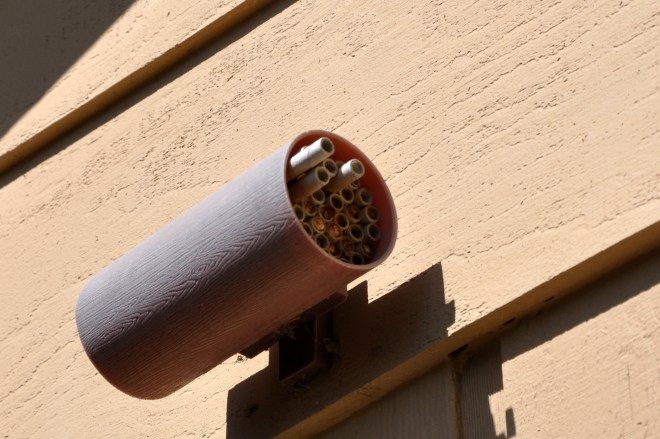
I heard a squirrel overhead, and noticed activity in the little mason bee nesting house.  What a day!

Mason Bee Habitat

Mason Bee Habitat

How is this for serendipity: the lovely Boomdee sent me several packets of sweat peas, and they arrived yesterday!  Perfect timing.  She sent a purple variety as well so that my sister, Sharon can enjoy them when she’s here.

goodies from Boomdee

Goodies from Boomdee

To round out the day, I popped in to SummerWinds Nursery and picked up an EarthBox™ and some potting mix.  I’m planting assorted lettuces in the front of the box, with the sweet peas in the back.  The trellis from the now-deceased Hardenbergia is the perfect size.  I’ve placed it at the edge of the lawn near the patio for easy viewing.  I can’t wait to watch them grow.

There is much more to do, as their always is this time of year, but I enjoy it all.  Wishing you the best of the new season, be it spring or fall.

Opening Night: San Francisco Flower and Garden Show

at the show

With my friend Candace wearing our beautiful Hawaiian leis.

Last night was great fun.  I attended the opening night celebration of the San Francisco Flower and Garden Show.

We were ravenous when we first arrived, so we took a cursory look, then found the buffet.  Sated, wine glass in hand, we sat near the podium where they announced the winners.  Then we were off.

She showcase gardens are incredible works of art, combining plants and trees with hard-scaping. The effort it takes to install one of these gardens is monumental, but by the time we arrived, all was in place and looking fabulous.  These shows are always crowded, so one of the best parts of attending last night was the smaller gathering of people. The downside is that we missed the commerce portion of the show, vendors selling garden-related fare as well as plants and seeds.  I don’t *need* a thing, but it’s always fun to look.

There are 16 gardens displayed this year.  American Community Garden Association created one of the designs.  Three colleges, including  Academy of Art University, Arizona State University and Foothill College presented collaborative efforts.  The rest of the garden creators are professional landscapers and designers.  They were all beautiful and incredibly diverse.

Here are a few (Note: the photos are mine, the descriptions come from the show program).

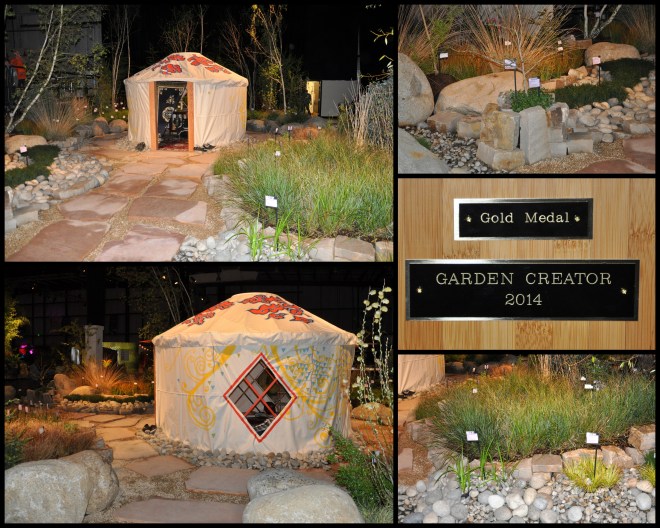
Sanctuary Steppes

Remember how excited you got as a kid when you used Mom’s bed sheet to make a tent in the backyard? You and your buddies thought it was the coolest thing ever. Yurts will have that effect on kids. As adults, our needs are more. Imagine a garden sanctuary where you enter a realm that soothes and calms. The healing plants or herbs are not just ornamental. Inside the yurt you touch the earth. You can even gaze at the stars through that opening. The paths are for walking meditation. The open courtyard and fire pit are for story telling late into the night. Other sculptural elements awaken us to be mindful of many things.

garden yurt
Sanctuary Steppes
Garden Hortica, Jeffery Lim
Healing Spirit Plants, Richard Koenig
Village Yurts

The idea of a yurt in the middle of a garden sure sounds like fun. I love the surrounding paths and the beautiful plants.

Anchored

We are Inspired by the boatyards of the Northern California coastline. Like these yards, we use materials that are readily available, practical, and that we can find at low-cost. These materials include discarded decks, arbors, play structures, tailings, and concrete forms, and many, many fence boards. We bind these materials with metal fasteners and use them in new ways to create space, pattern and texture in our garden. Inspired by marine spirit, practical materials and modern lines, our garden introduces a refreshing style to the Bay Area garden.

McKenna Landscape Leslie McKenna

Anchored: McKenna Landscape
Leslie McKenna

garden bench

Anchored: Trying on the garden for comfort

anchored

Anchored: the long view

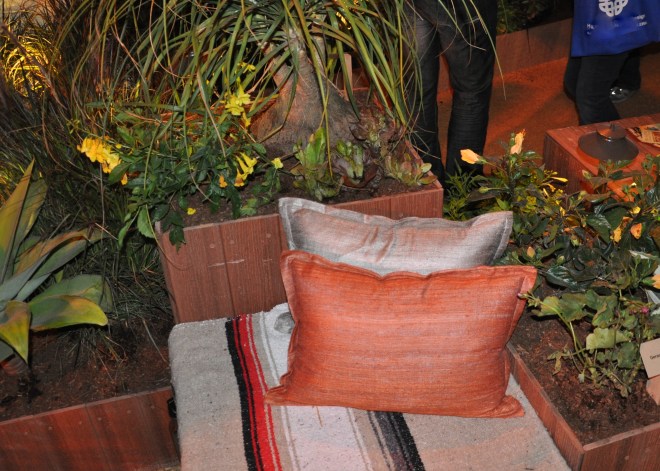
There were so many clever ideas in this garden. The top of the outdoor bar incorporated nautical rope under a piece of glass (see photo collage, bottom right). They used anchors and seashells throughout the design and beautiful reclaimed wood. The garden was warm and comfortable.

Days Gone By

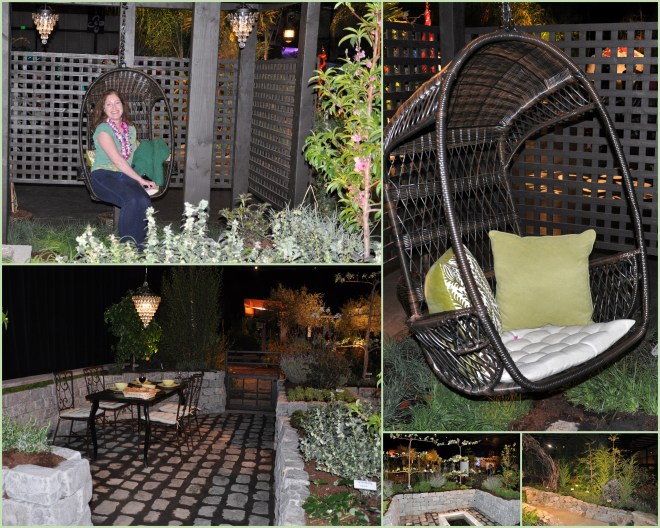
Days Gone By demonstrates how a garden can embody the unique character of a place’s heritage while incorporating modern details that evolve and enliven it. All details were selected with functionality in mind. The paving in the garden is original cobble used in San Francisco streets in the 1800s, evoking a feeling of wandering through the city in humbler days.

We both took a turn on the garden swing and loved the cozy appeal. Everything in the garden is edible, including the cat grass planted beneath the swing.

Days Gone By

Days Gone By
Hortisculpture Landscape, Rebecca Pollon
Extol Construction, Edwin Moriarty

Days Gone By: Espaliered fruit trees

Days Gone By: Espaliered fruit trees

I have more to share, so please stop by again soon. Meanwhile, what do you think so far? Can you picture yourself in one of these gardens?

San Francisco Flower and Garden Show

Guess where I’m going tonight?

I’m off  to the San Francisco Flower and Garden Show.  It’s not longer in San Francisco, but in nearby San Mateo, but that is beside the point.  It is so much fun.

I’ve attended this event in the past, but tonight is different. It’s the opening night celebration and a first peek at all the show gardens.  Here’s is what the show coordinator has to say:

Be the FIRST to stroll through the fabulous gardens and gorgeous floral designs BEFORE the Show opens its doors. The party takes place right in the showcase gardens. Be greeted to the gardens with a floral lei compliments of the Hawaiian Islands.  Sip a glass of wine as you stroll among the flowers. Listen to music by Grammy-award winning musician Ken Emerson and his band. Chat with the designers, enjoy hor d’oeuvres and watch the presentation of the coveted design awards before they are announced to the public.

Proceeds from tonight’s event supports the American Community Gardening Association: “Creating Community Through Gardening

ACGA is a national organization of professionals, volunteers, grassroots gardeners and supporters of community greening in urban and rural communities. The Association recognizes that community gardening improves the quality of life for people by providing a catalyst for neighborhood and community development, conserving resources and creating opportunities for recreation, exercise, therapy, employment and education. To learn more about the organization visit their website at http://www.communitygarden.org/.

I’ll have lots to share later in the week so be sure to check back.  Meanwhile, here are a few photos from last years show.

succublent globe

Larger than life globe covered in succulents

garden seating

Garden seating

waterfall

Whimsical waterfall

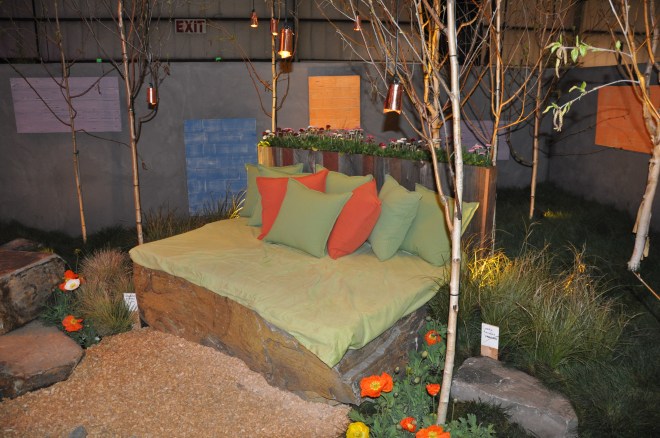
sleeping spot

Restful sleeping under the stars
It always sounds good, but about those bugs…

succulent garden

Succulent garden

DSC_0002

St. Patrick’s Day Whimsy

St. Patrick’s Day means different things to different people. For me it was always an excuse to wear green (my favorite color) and to act silly.

Image my delight to find another gardener in our neighborhood who feels the same way. I discovered her clever shrubs last fall on my morning walk. She prunes the plants into orbs, then gives them different haircuts. In October they had a Halloween theme. My one regret was not getting back there with my camera. Then last week, I saw this:

Neighborhood garden

Neighborhood garden

This is a gardener with a fabulous sense of humour. I popped over there Sunday morning when the light was still good, and took some closeups of these delightful merry-makers.

Happy go lucky

Happy go lucky

green hedges with faces

Too much green beer?

Back home I spent a few hours greening up the fairy garden while visiting with my sister.

I may have to stay up all night to see if I spot fairies *and* leprechauns in the wee garden.  Wouldn’t that be great fun?

fairy garden

Fairy garden

Creating fairy gardens is a wonderful way to relax.  It blends creativity, a bit of gardening and the challenge of using what you have on hand.  If you’ve never tried it, why not give it a go. You’re in for a pleasant surprise.

Even Kermit the Frog eventually agrees, it’s okay to be green. ♣♣♣

hint of a rainbow

Just a hint of a rainbow

green glass path

Follow the path

fairy garden

Can you see the pot of gold at the “end” of the rainbow?

frog on the path

The path offers a bit of camouflage

What’s in the Fairy Garden?

  • Miniature white cyclamen
  • Baby’s tears (transplanted from the back garden)
  • Miniature ‘trees’ (name escapes me)
  • The tiny frog and deer flew in from Canada (gifts from Boomdee)
  • The craft foam fence is a cast off from my son’s craft kit
  • I made the pot of gold from left over gold leaf, paper and a small clay pot
  • An old string bracelet is now a rainbow ‘flag’ near the pot of gold
  • The ‘flag pole’ is a piece of dried Hardenbergia vine, once wrapped around a trellis.
  • The shamrock buttons and green glass were a splurge from last year. Honestly, how can anyone resist shamrock sparkle buttons at eye level in the shop?