My Left Hip

My Left Hip

After several years of near-constant pain and impaired mobility, I had my right hip replaced in February, followed by a new left hip earlier this month. I’m relieved to have both surgeries behind me.  To pass the time, I cropped a photo of one of my new joints, added a pair of eyes, and created a less clinical image of the new joint.

X-ray image of a hip joint replacement with a smiley face added for a whimsical effect.
Screenshot

Today, my in-home PT assessed my balance using the Berg Balance Scale, and I scored 47 out of 56. A score of 41-56 indicates low risk and independent walking. I’ll take it.

Over the next four weeks, I could dislocate my hip if I move it past a 90-degree angle, which, in garden-speak, translates to averting my eyes as the weeds sprout. After an unusually mild November, we’re finally seeing true fall weather, including rain. All those weed seeds have been waiting in the wings for their grand entrance. 

They’re unlikely to go to seed any time soon, and the wet ground will make removal easy when I can finally kneel in the dirt, so for now I must bide my time.

As I heal, I’m able to take photos from a standing position. Mike’s also taking me on daily drives for a change of scenery. Nature is a balm.

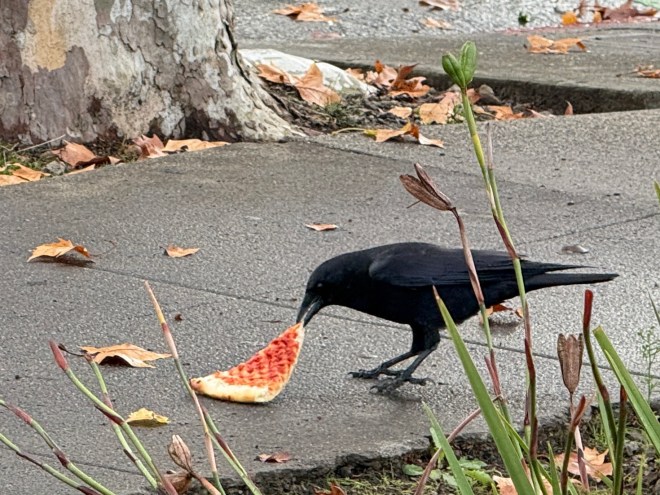
From the car window, I watched a crow enjoy a slice of sidewalk pizza in nearby Los Gatos.

A crow standing on a sidewalk enjoying a slice of pizza, surrounded by fallen leaves and greenery.

I snapped this view of Silicon Valley in the misty fog at the top of Harwood Hill in San Jose.

A foggy view of Silicon Valley from the top of Harwood Hill in San Jose, with greenery in the foreground.

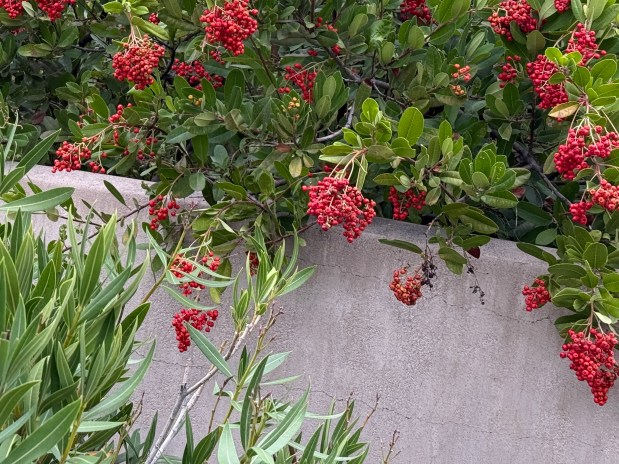
Heteromeles, commonly known as toyon, are native to our California coast. Not only do they provide food for birds, bears, and coyotes,

“The plant has been used as a treatment for Alzheimer’s disease by indigenous people of California, and recent research has found several active compounds that are potentially beneficial to Alzheimer’s treatment. These include icariside compounds, which protect the blood-brain barrier and prevent infiltration of inflammatory cells into the brain.” Source Wikipedia

A close-up view of bright red toyon berries contrasting against lush green leaves, with a textured grey wall in the background.

The brilliant red berries brighten autumn’s grey days.

These Canada Geese were impervious to the rain outside the Cambrian Community Center. It must be nice to have a built-in raincoat.

Two Canada Geese in the foreground with several others in the background, surrounded by fallen leaves on a rainy day.
Two Canada Geese standing on green grass, with patches of fallen leaves in the background.

Closer to home, a neighbor’s cat named Thor visited our front deck.

A fluffy cat with blue eyes sitting on a wooden surface, surrounded by green plants and purple flowers.

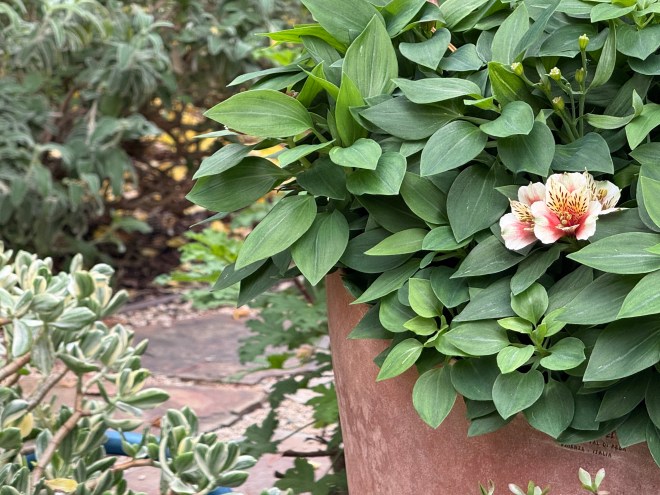
This potted alstroemeria recovered well after a broken pipe nearly drowned the plant. Once the roots dried and the heat of summer passed, it made a full recovery.

A potted alstroemeria plant with green leaves and a single pink and white flower blooming, set against a natural garden background.

I plan to follow in the plant’s footsteps and make a full recovery as well.

Wisteria: Know Before you Grow

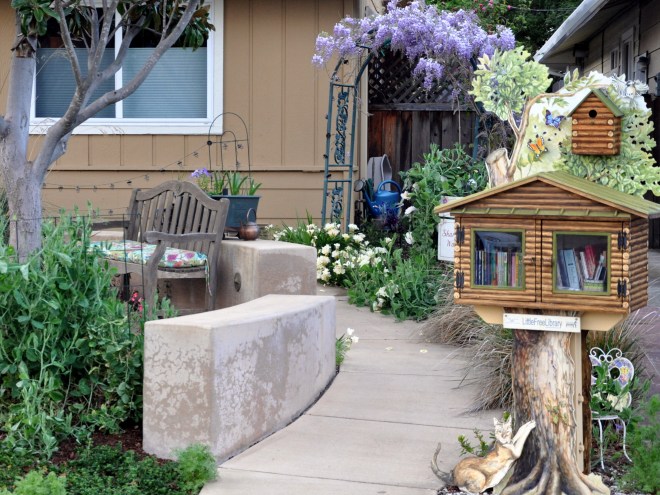
Wisteria symbolizes longevity and grace. For years I longed to have one in our garden. Aren’t they stunning? They need space to grow, though, and space is always at a premium in the garden, because nature abhors a vacuum, and this gardener feels compelled to plant any available earth.
A charming garden scene featuring a stone pathway, a wooden bench with colorful cushions, a whimsical little free library made from wood, and vibrant greenery, including wisteria flowers hanging above.

Then opportunity knocked.

When our young Magnolia became infested with scale, I tried to save the tree by manually scraping the scale into a bucket —an arduous, odiferous task. The scale quickly returned, along with ants. I pruned away the center, looked at organic options, and eventually contacted an arborist, but it was all for naught.

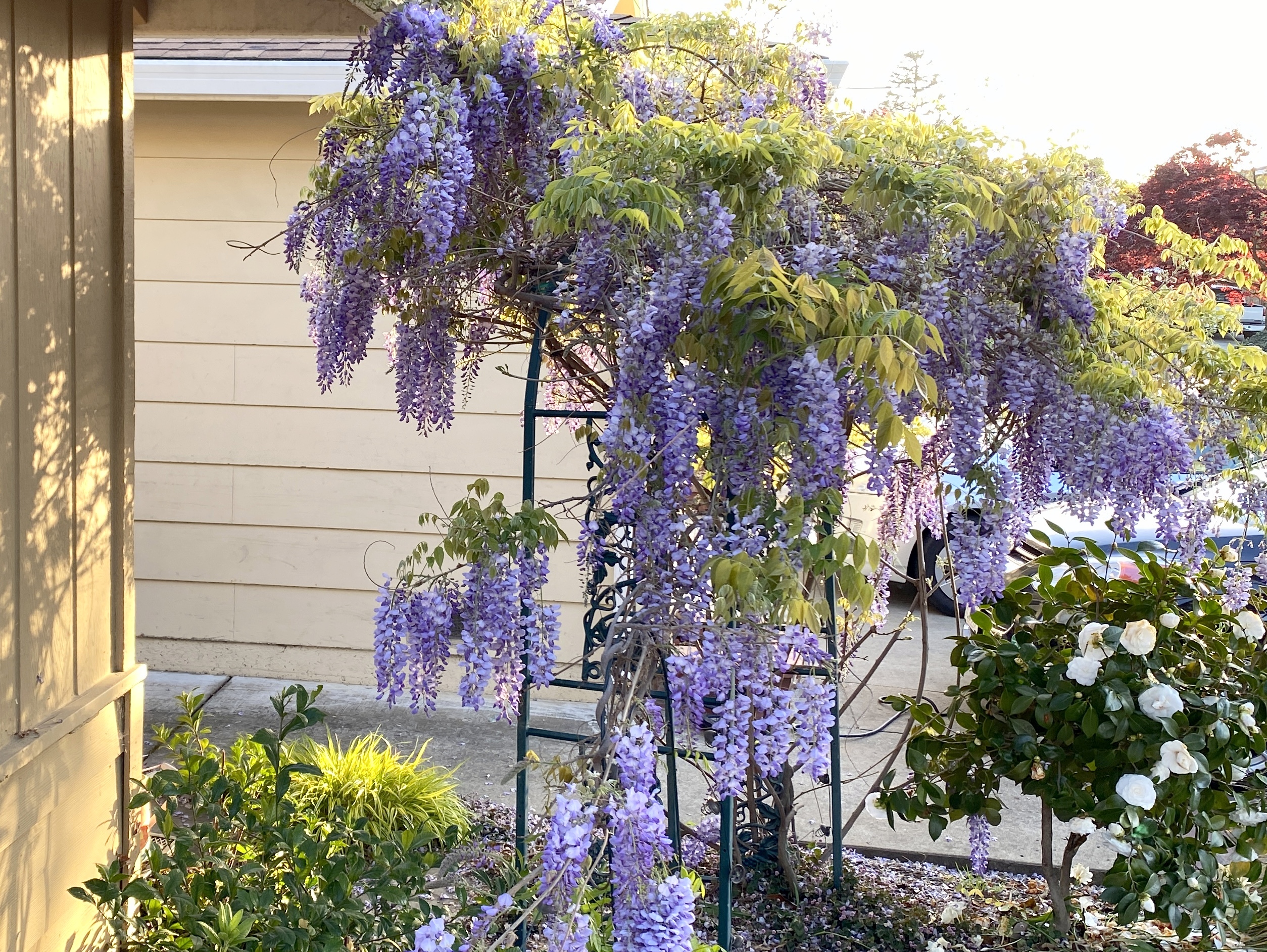
It’s tough losing any tree, but here was my chance to grow a Wisteria vine. We repurposed an arch from the back garden, placed it at an angle in the front garden, and planted the vine. The first year of growth was underwhelming, as it often is, but in the years that followed, the vine took off. It flowered vigorously in early Spring, then sent out a second set of blooms later in the year.

A vibrant Wisteria vine with cascading purple blossoms, growing over an arch in a garden, with a fenced area and other plants in the background.

At some point, though, the tree went from vigorous to invasive. I couldn’t keep the tendrils off our roof, our neighbor’s roof, a nearby tree, and so on. Clearly, I should have done my research, as I recently read that it is “known for its vigorous and potentially destructive growth.” Now they tell me.

I get attached to plants and trees, and this was no exception, but I’m pragmatic as well. Risking life and limb, damage to the house and the tree nearby meant it had to go.

It was labor-intensive. I started with small garden shears, graduating in size to the base of the tree’s substantial girth. I tried digging out the roots, then Mike had a go, until it became apparent the roots would need to be removed by a tree stump removal service.

A landscaped yard showing a pathway leading to a house, surrounded by green plants and a small tree.
Space after removing Wisteria

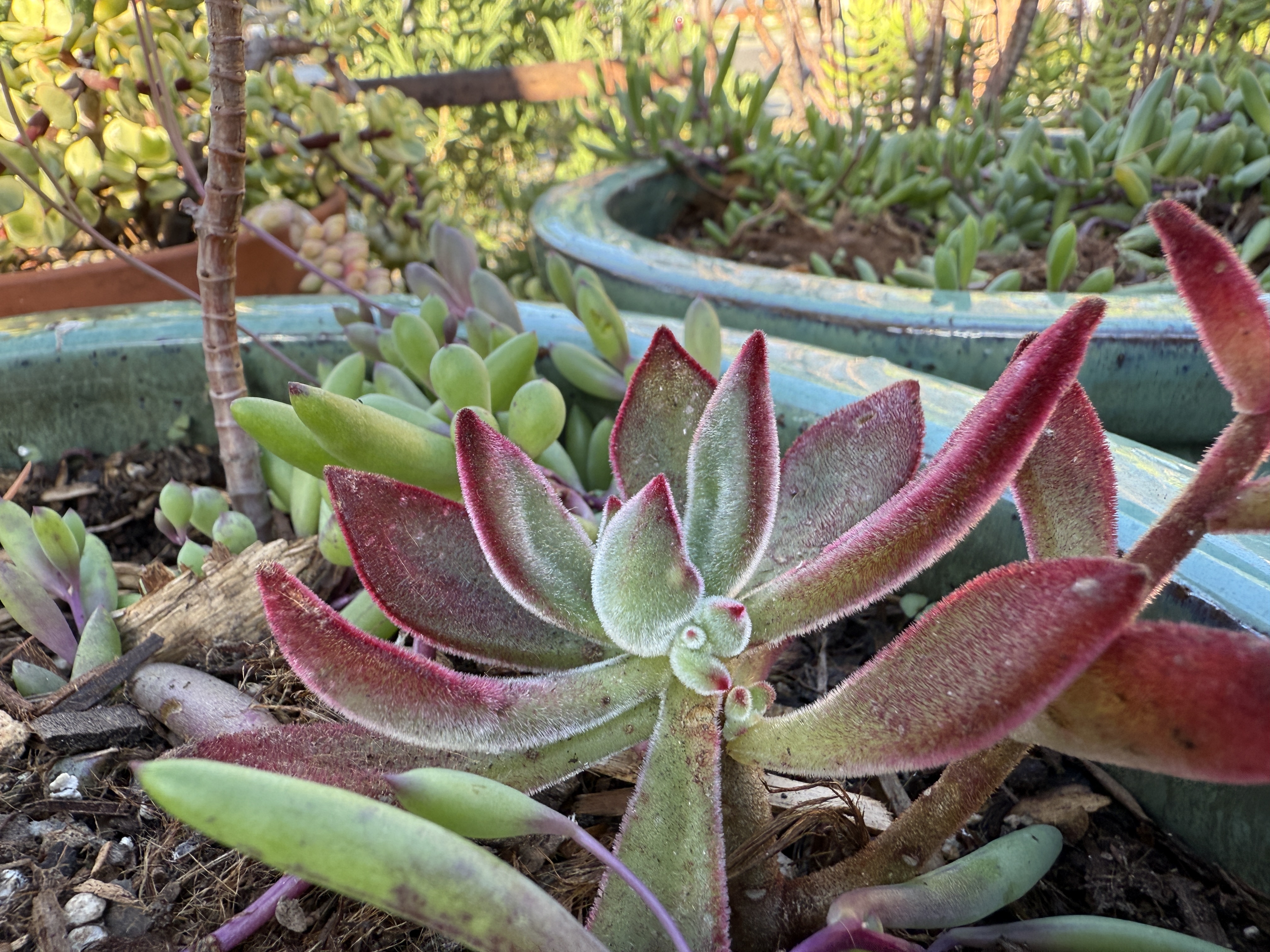
The space looked empty for a time, but I’ve since planted several succulents that had outgrown their pots. They took to the spot immediately, and by next Spring, they will be well established. They’re also water-wise plants that don’t require much fuss. The freesias came up quickly around the stone walkway, but it will be several months before they flower.

A close-up view of a garden bed featuring various succulent plants and green shoots along stone pathways, with mulch covering the soil.
View of a garden with a large Magnolia tree, featuring a stone walkway and various plants, including succulents and freesias, set against a suburban street.
Walkway facing street

Lesson learned: know before you grow.

May Flowers

As my mobility improves post-hip surgery, I find getting up and down in the garden easier. Over these past weeks, I’ve brought the weeds under control, making daily weeding more manageable.

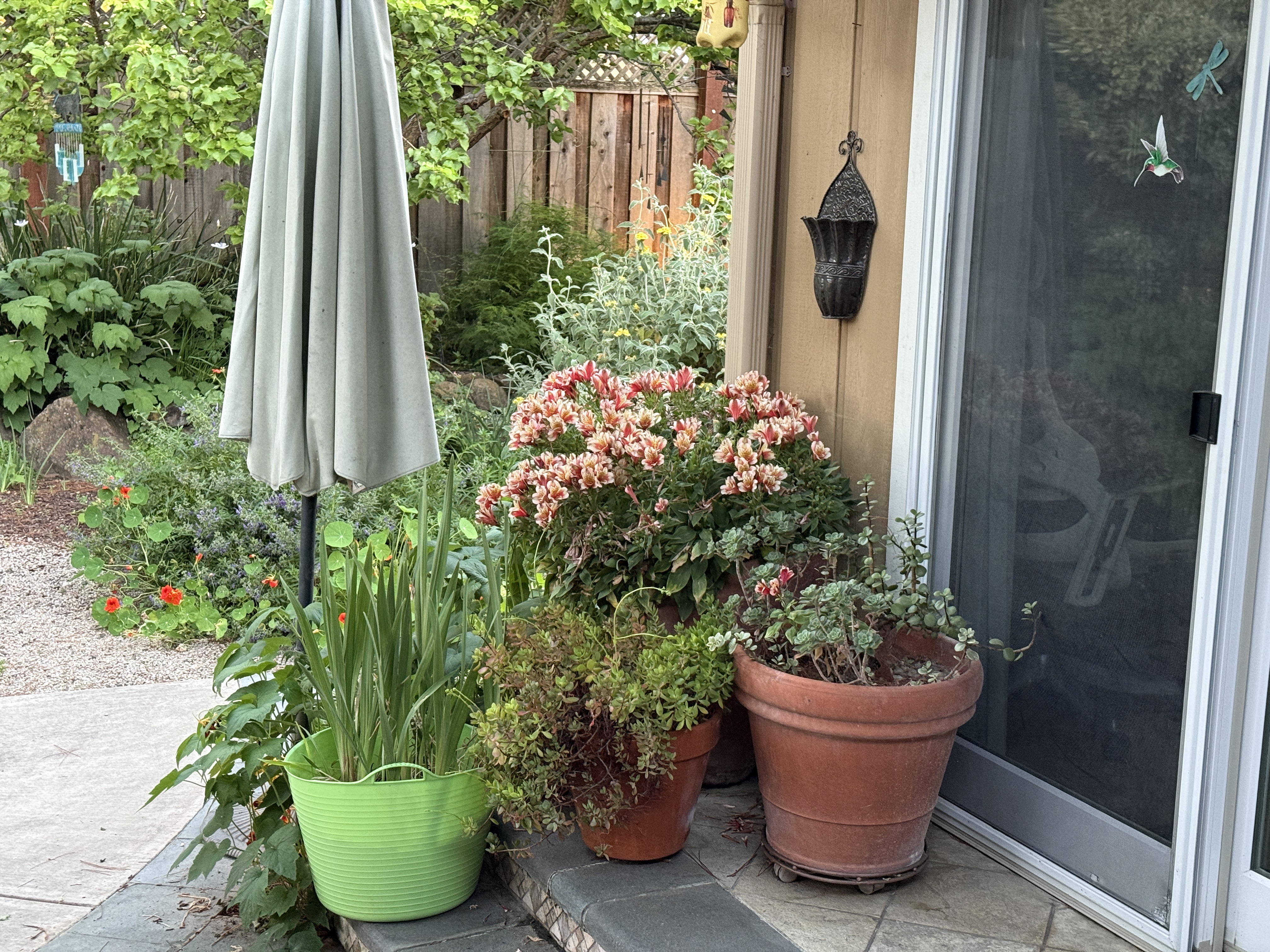
Yesterday, I looked under the veg trug, now home to a collection of well-established succulents, and spotted a just-out-of-reach oxalis, an invasive plant considered a weed in this area. My inner monologue cautioned against it, as I would have to kneel on the gravel path, bend at the waist, twist my neck, and then reach back to grab the weed. If you know anything about oxalis, you’ll know that the roots are strong and rarely willing to part company with the earth. I could have retreated and found my kneeler and a garden fork, but impatience got the better of me, and I went for it. Success! The weed is gone, I returned to an upright position, and I’m none the worse for wear. It’s the little things.

As I putter about, there’ve been joyful discoveries in the garden this year. Just a few days after commenting to Mike that I missed the self-seeding cornflowers, a beautiful, single, purple stem of one appeared in the front garden. They used to produce an impressive array of colors in pinks, blues, and purples, but equally rewarding, the birds loved the seeds.

The first of the cornflowers

When the plants were producing well, I spotted several birds feasting in the late afternoon. I left the plants past their prime so the birds could enjoy the bounty, and I assumed my seasonal crops resulted from dropped seeds. Then, for reasons unknown, they didn’t return. Seeds can lie dormant in the soil for various reasons, so perhaps they’ve been missing the garden secret sauce required for a prolific crop. Now at least one has returned. It makes me happy.

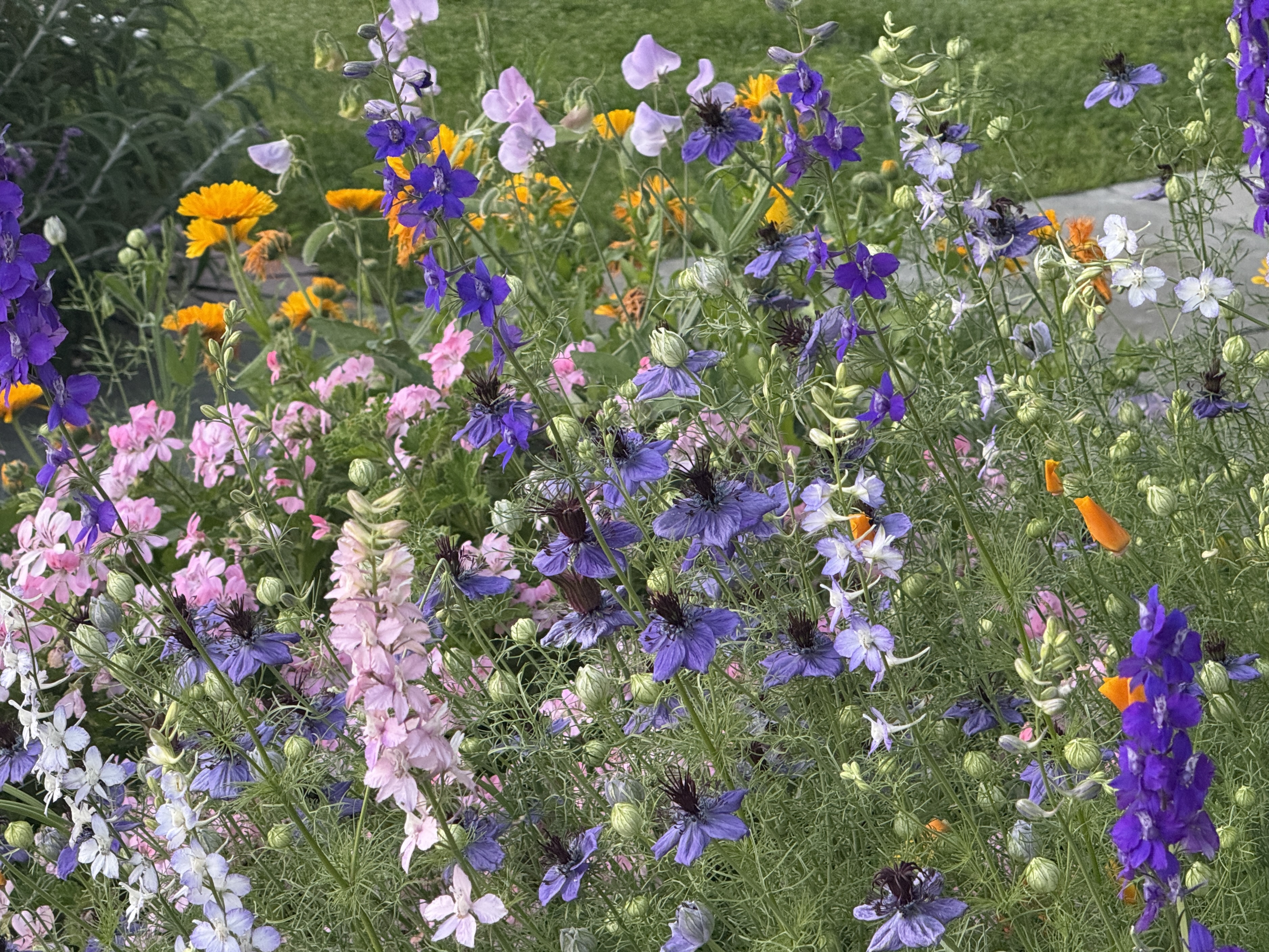
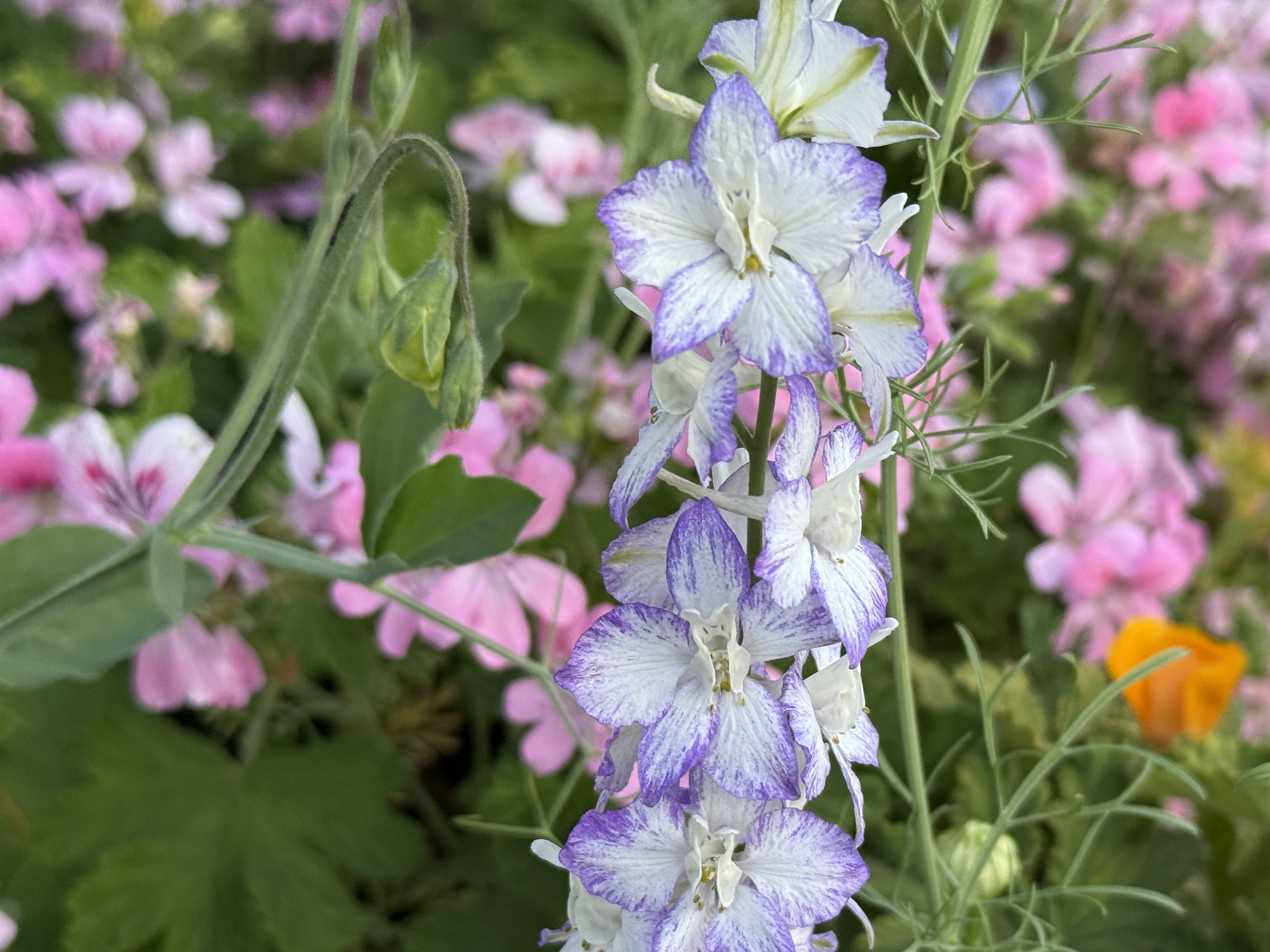
Also new(ish) is a tall, slender, annual flowering amongst the California poppies and nigella along the driveway. My phone identifies the flower as a Delphinium. Last year, a single flower emerged in the same spot, so I looked it up to be sure it wasn’t a weed. It went to seed and then I gave it a good shake, allowing the seeds to fall to the earth below. Now they’re back, standing tall and looking lovely.

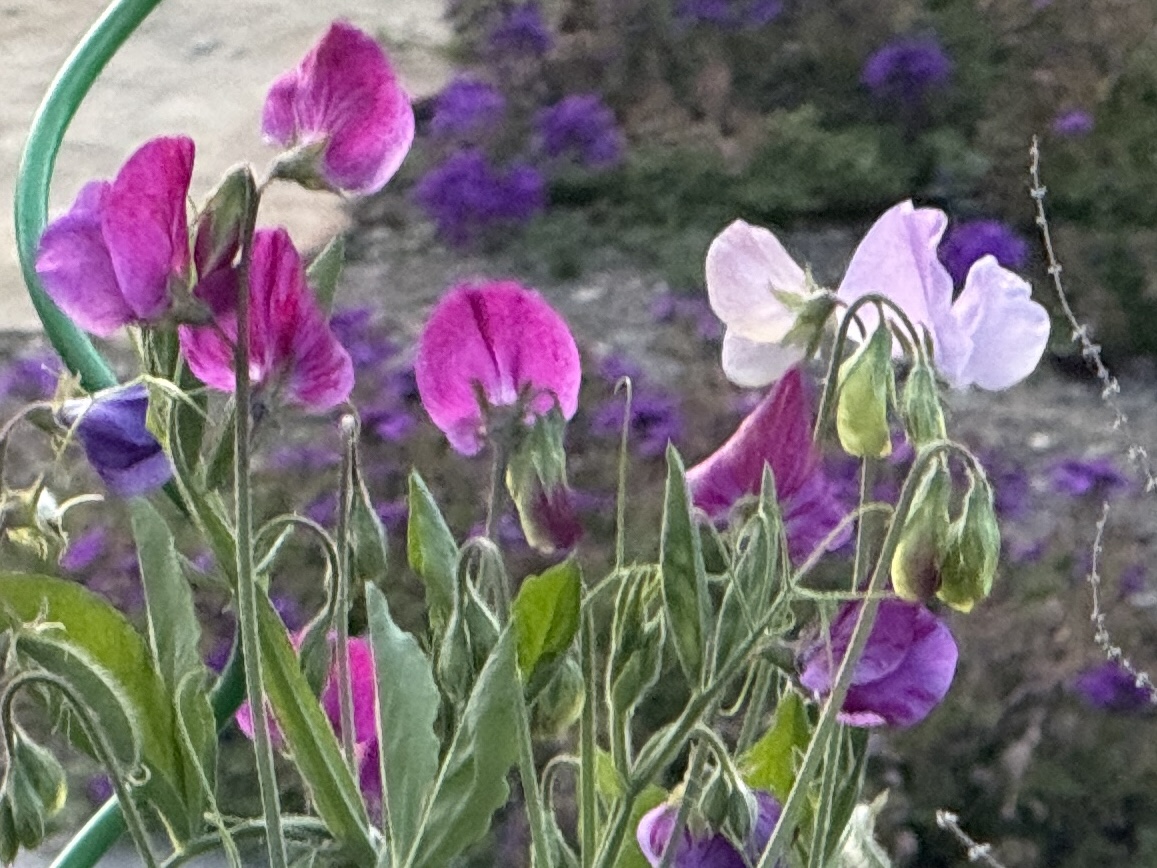
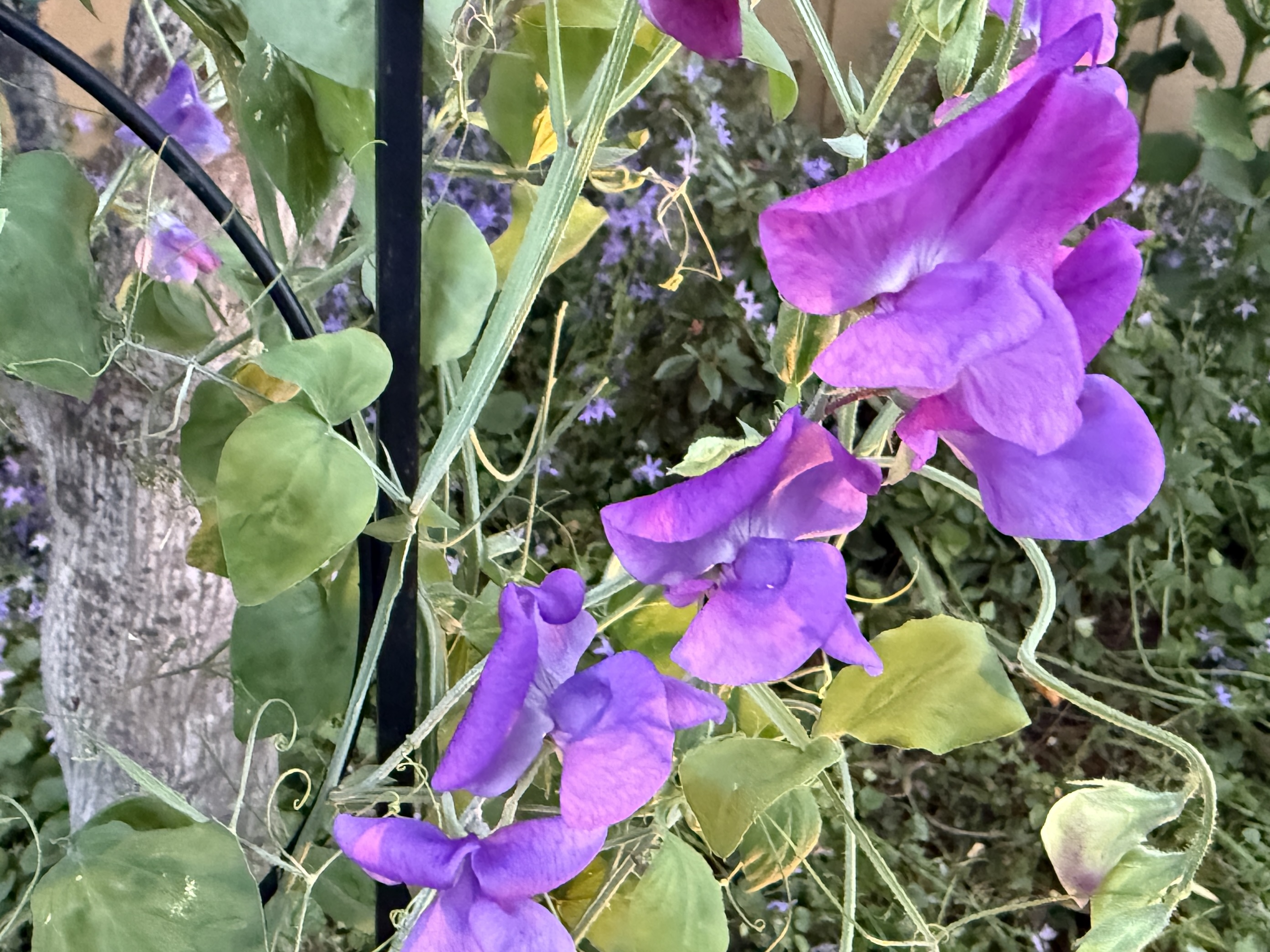
For the first time, a sweet pea, usually prolific in the front garden, traveled with some transplanted bulbs last fall, and it’s now growing under the maple tree in the back garden. I gently wrapped the trailing vine to a trellis, and it’s growing with abandon.

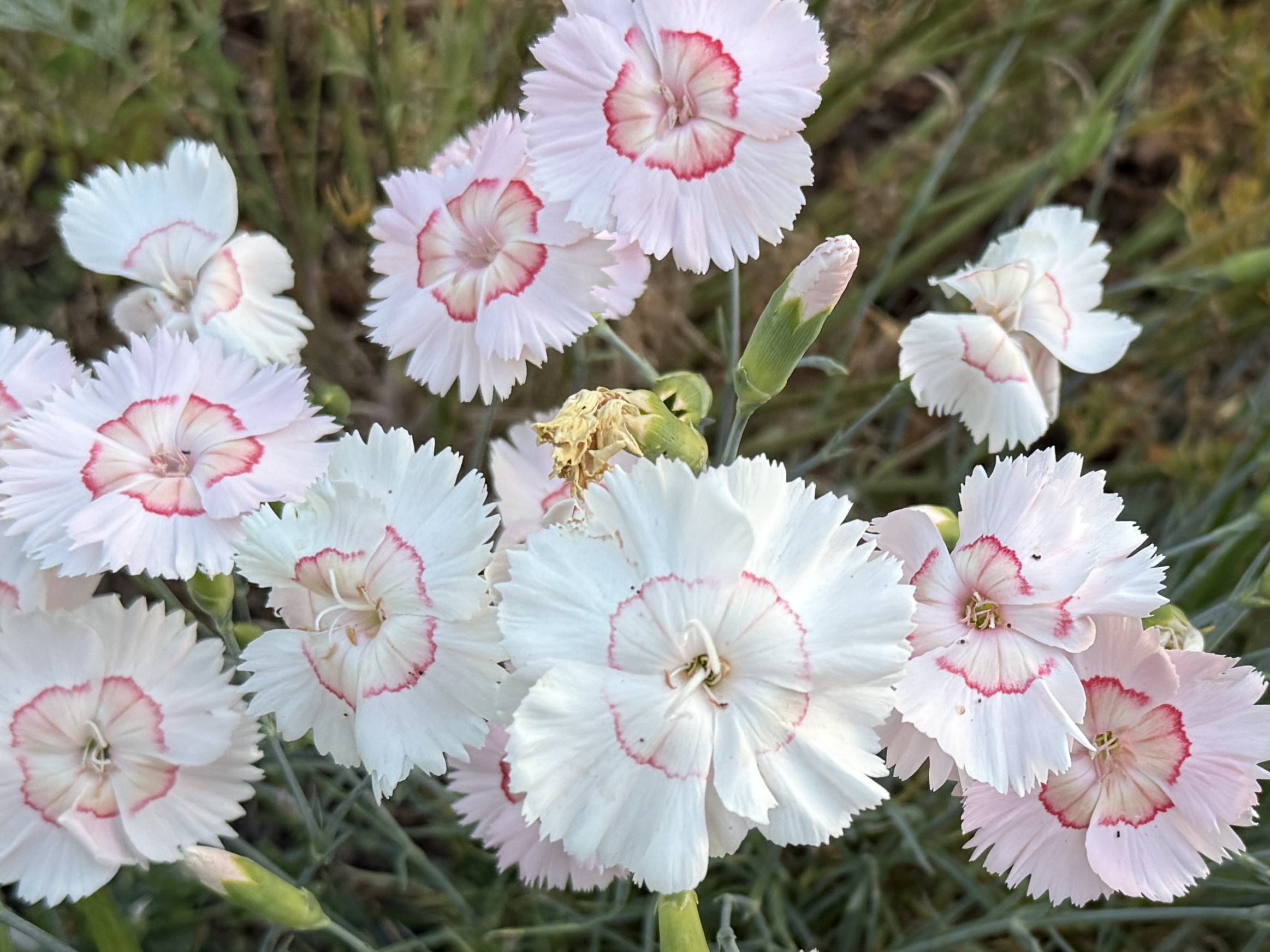
The carnations we planted last year have doubled in size and production, enough so that I’m comfortable cutting a few for a vase.

Mike dug holes for a pair of tomato plants, and as always, we cross our fingers and hope they like the new spot. Our tomato production is spotty at best, but the sweet flavor of a garden-grown gem keeps us trying year after year.

I’ve been playing in the dirt my whole life, and though my body has aged, gardening never gets old.

Earth Day: If Nasturtiums Ruled the World

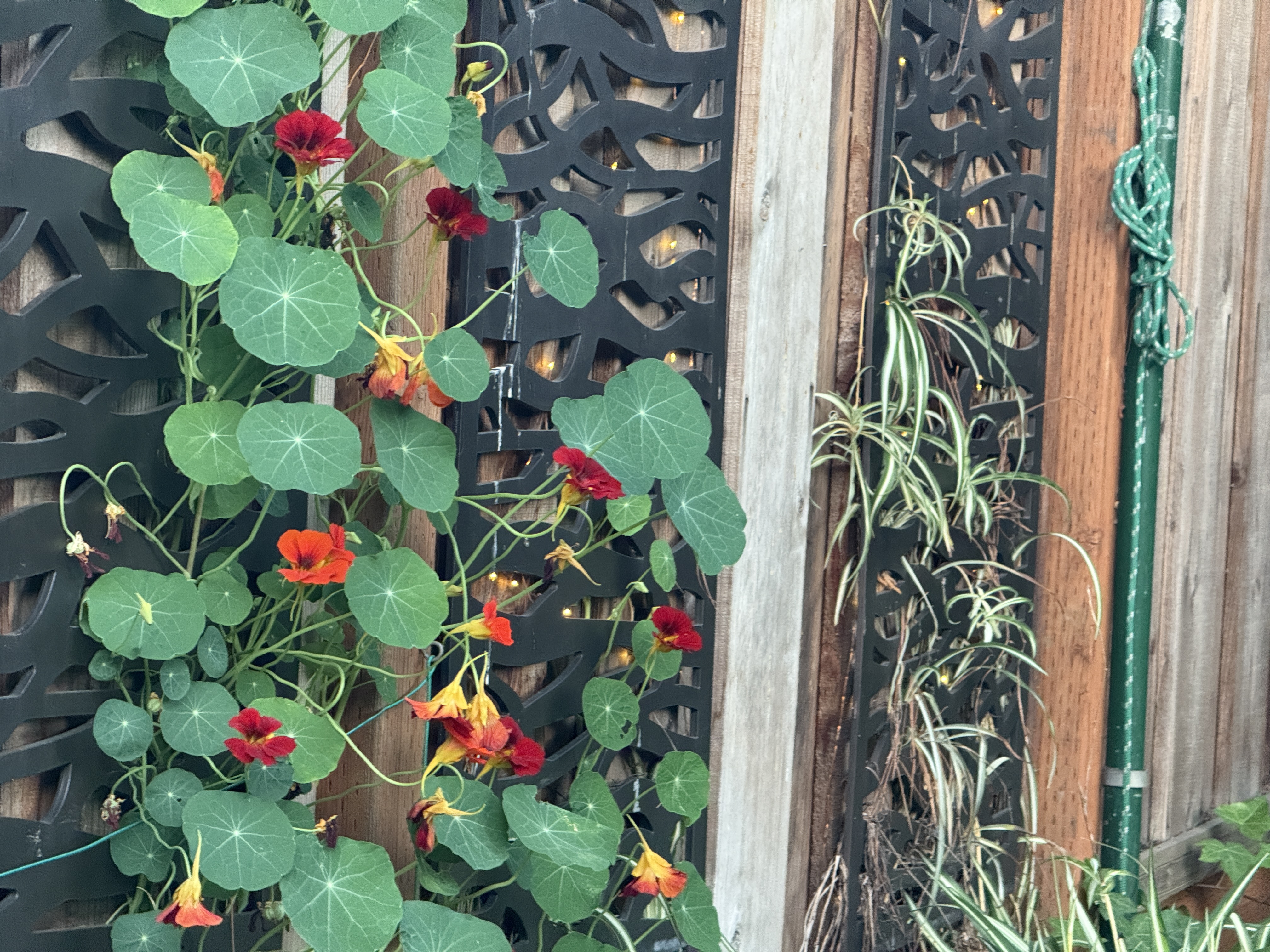
Nasturtiums have taken over the garden this spring. They bloom exotic oranges, sunny yellows, and a few brilliant reds. Leaves shaped like small lily pads are often as big as saucers. Leaf size varies, each slightly ruffled around the edges with a stem supporting the leaf like a delicate umbrella, filtering the sun yet inviting the light.

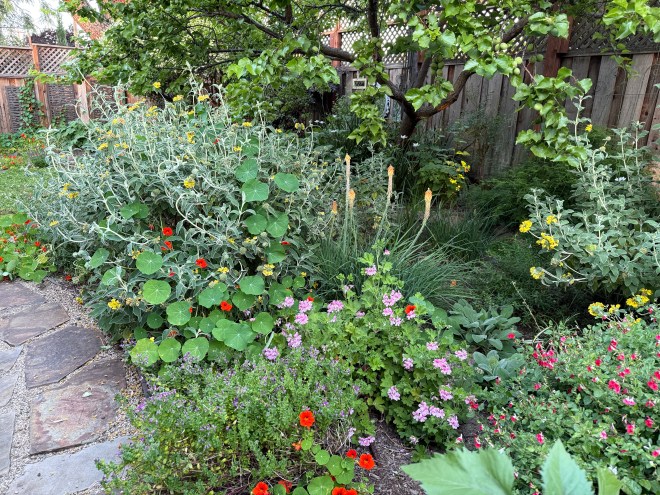
Nasturtiums are happy in the sun and the shade. They return year after year, asking for little in the way of watering and pruning. A gentle rearranging of the meandering vines keeps the walkways safe from trips. They play well with others, happy to twine themselves up nearby shrubs or carry on down the path.

Depictions of nasturtiums appear in botanical art and paintings, much like geraniums. They’re a flower for the people. These garden gems stand tall, faces lifted toward the sun, gently bending with the breeze that moves across the garden late in the day.

The flower and the nasturtium leaves are edible, containing various minerals and antioxidant compounds. They could feed the masses if we could replicate all that goodness.

If nasturtiums ruled the world, they would remind us daily how nice it is when we all get along. They would stand for justice, fairness, honesty, and respect, leaning on each other for support in all their beautiful shades.

Thank you, planet Earth, for all your gifts.

On this Earth Day, we will all try to do better.

A bit about Earth Day from Wikipedia:

“In 1970, the seeds that grew into the first Earth Day were planted by Wisconsin Senator Gaylord Nelson. An ardent conservationist and former two-term governor of Wisconsin, Nelson had long sought ways to increase the potency of the environment as a political issue. The extraordinary attention garnered by Rachel Carson‘s 1962 book, Silent Spring, the famous 1968 EarthriseNASA photograph of the Earth from the Moon, the saturation news coverage given to the Santa Barbara oil spill[18] and the Cuyahoga River catching fire in early 1969[19] led Nelson to think the time was ripe for an environmental initiative. As a result of interactions with his staff and with Fred Dutton,[20] a prominent Democratic operative who had been Robert Kennedy’s presidential campaign manager, Nelson became convinced that environmental teach-ins on college campuses could serve as such a vehicle.[21

Gardening Without Rain or Pain

After a parched January, the skies opened up and delivered much-needed rain. I’m grateful for every drop. It’s fun to imagine droplets trickling down to the garden’s roots, perhaps encountering an earthworm as they travel. After years of gardening and drought in this semi-arid state, I take nothing for granted.

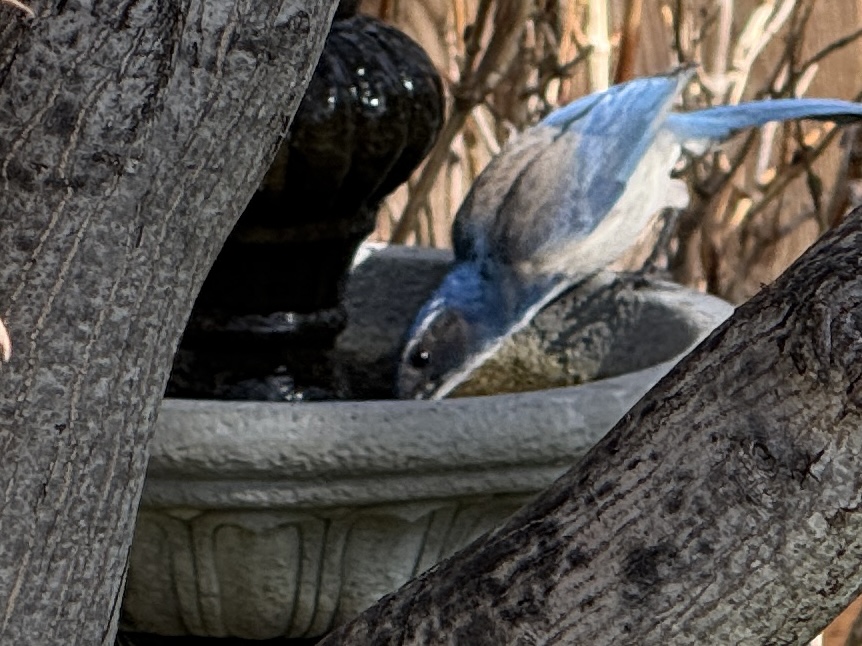
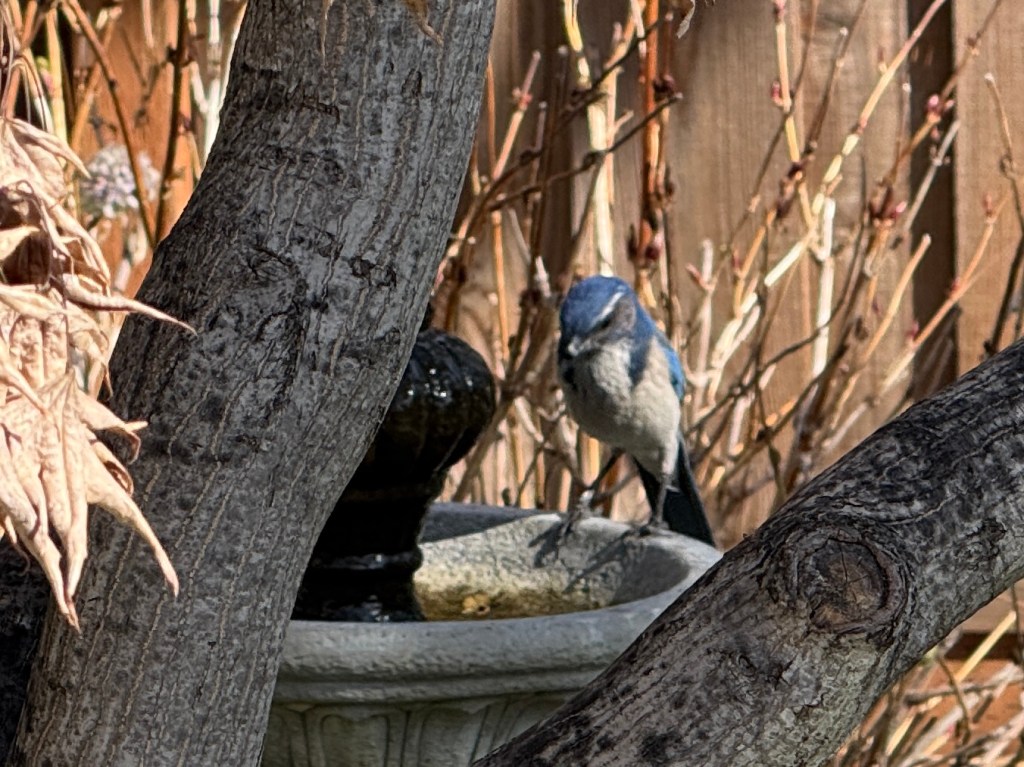
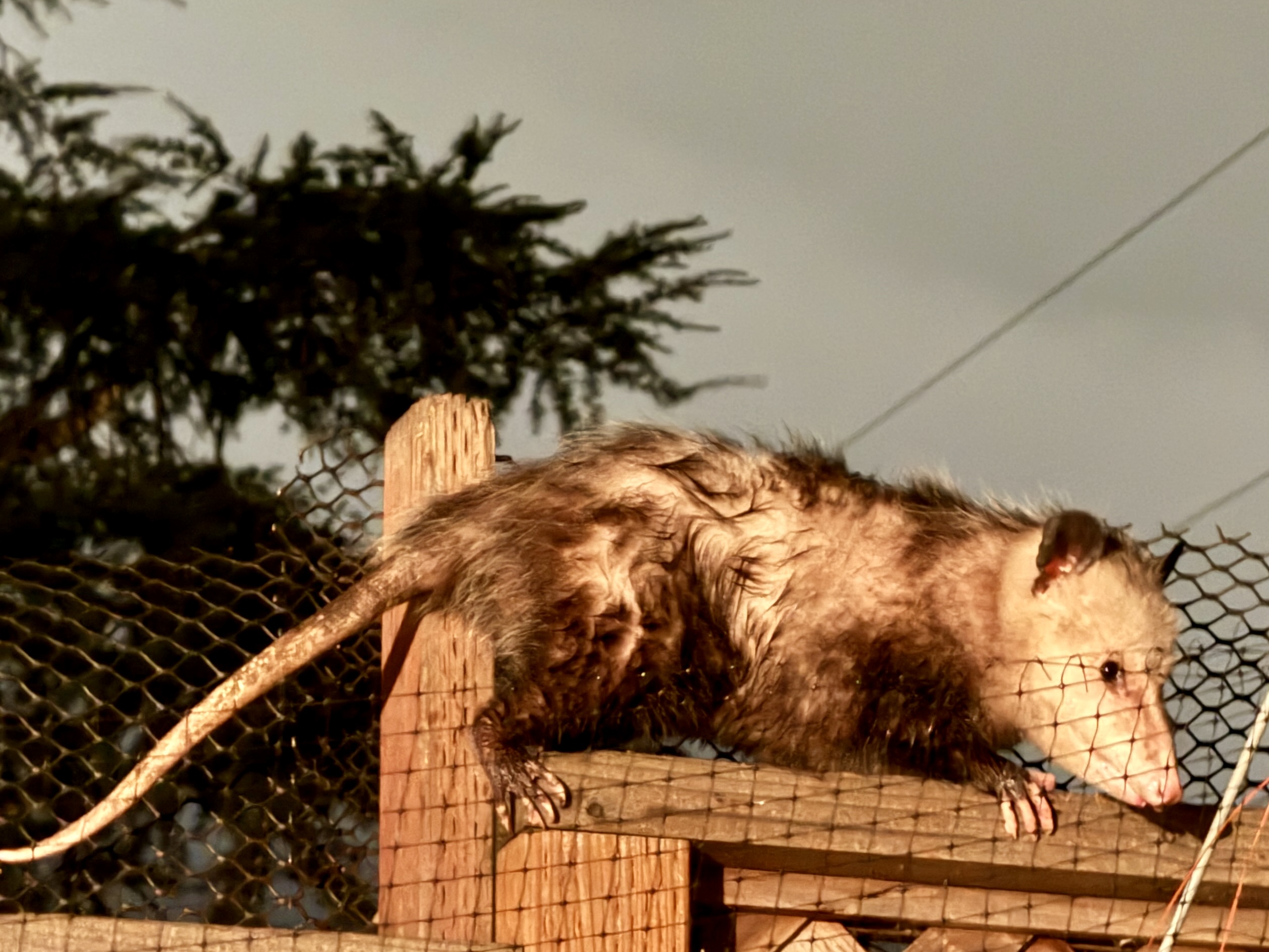
Various birds, squirrels, and perhaps this Virginia Oppossum drink from our fountain and the smaller birdbath on our deck. All thirsty guests are welcome.

We had one week in January with unseasonable temps in the seventies (F) and no rain; Mike ensured these water sources were clean and full.

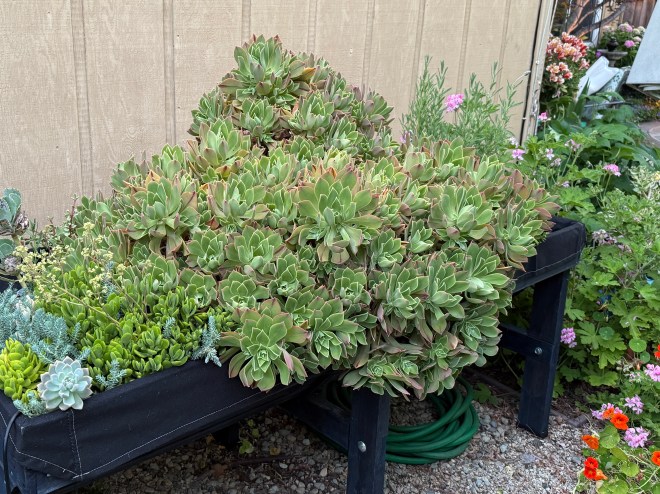
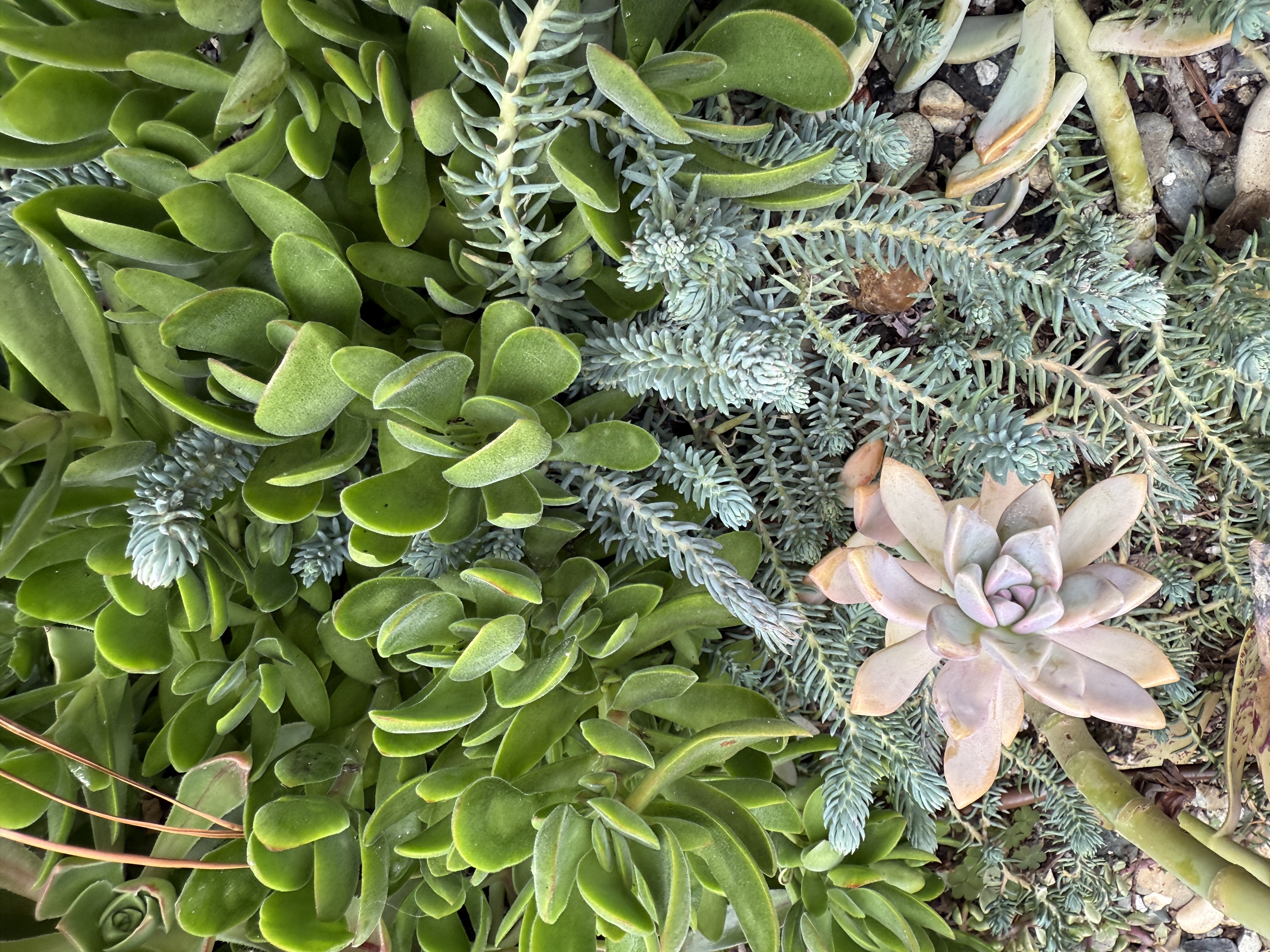
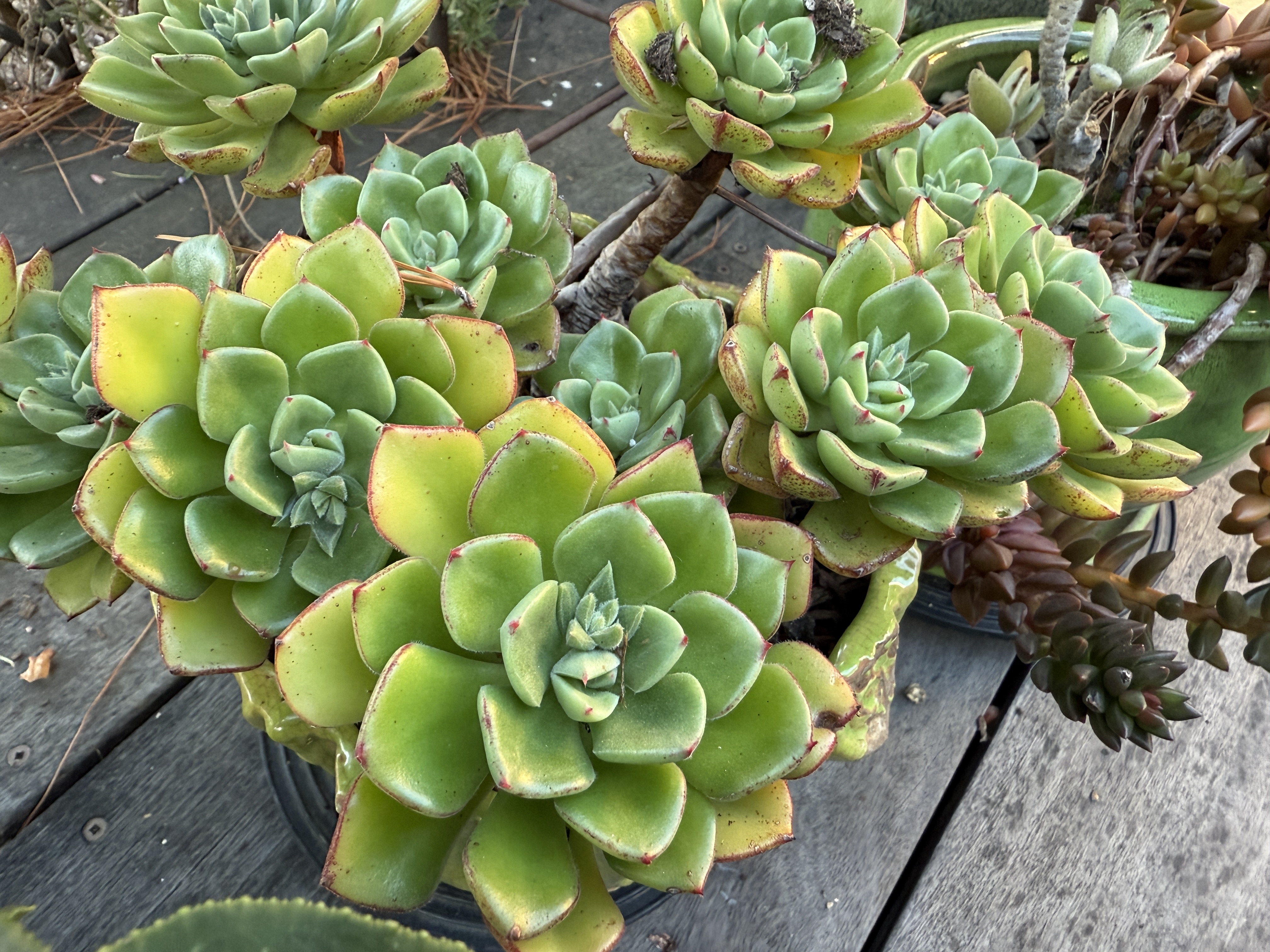
Over time, I’ve replaced potted plants along the deck with succulents. Succulents store moisture in their leaves, allowing the plant to go one to three months without water. Conversely, most summer annuals need near-daily watering, so I’ve learned to (mostly) resist when I head to the garden center.

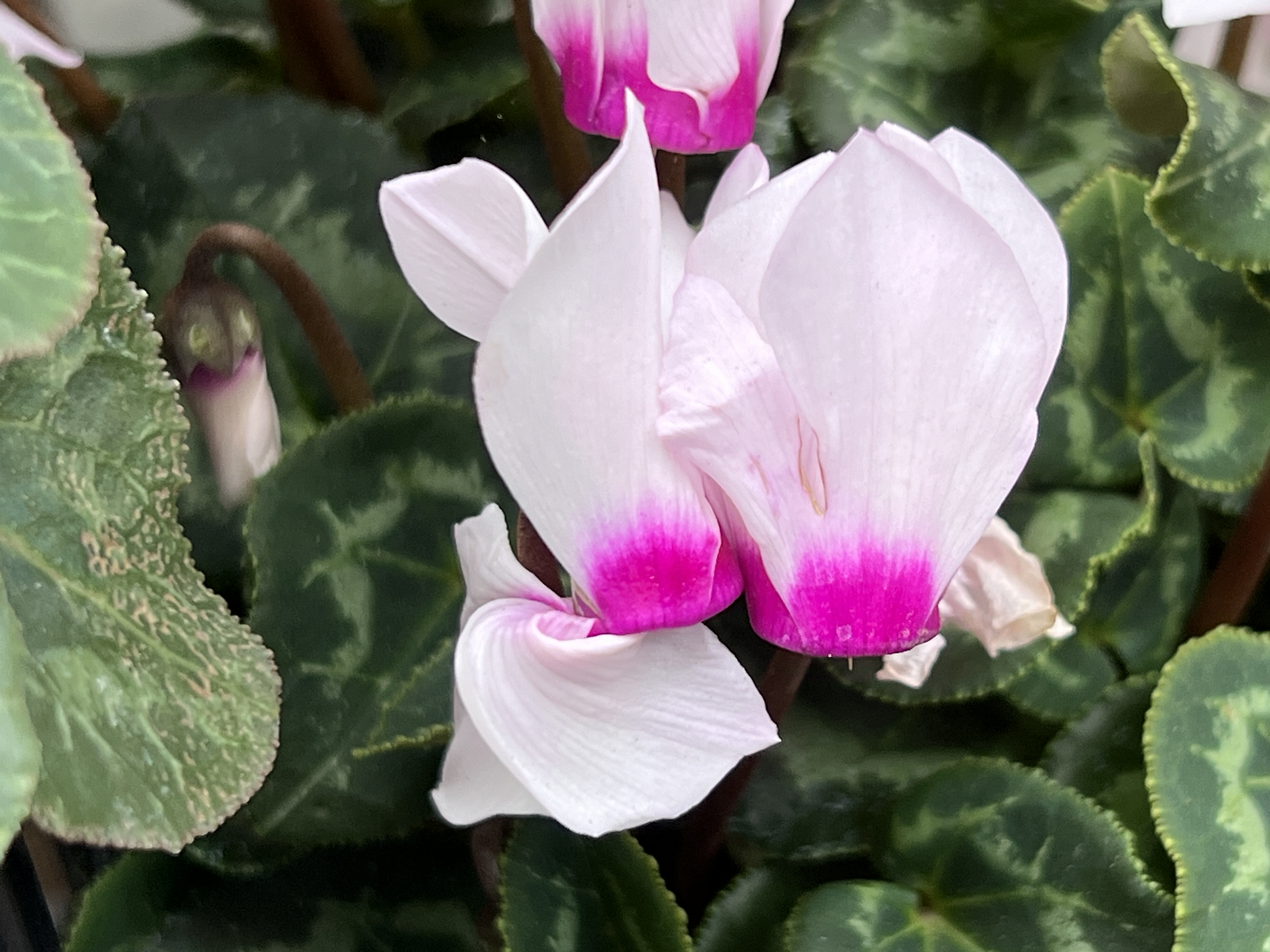
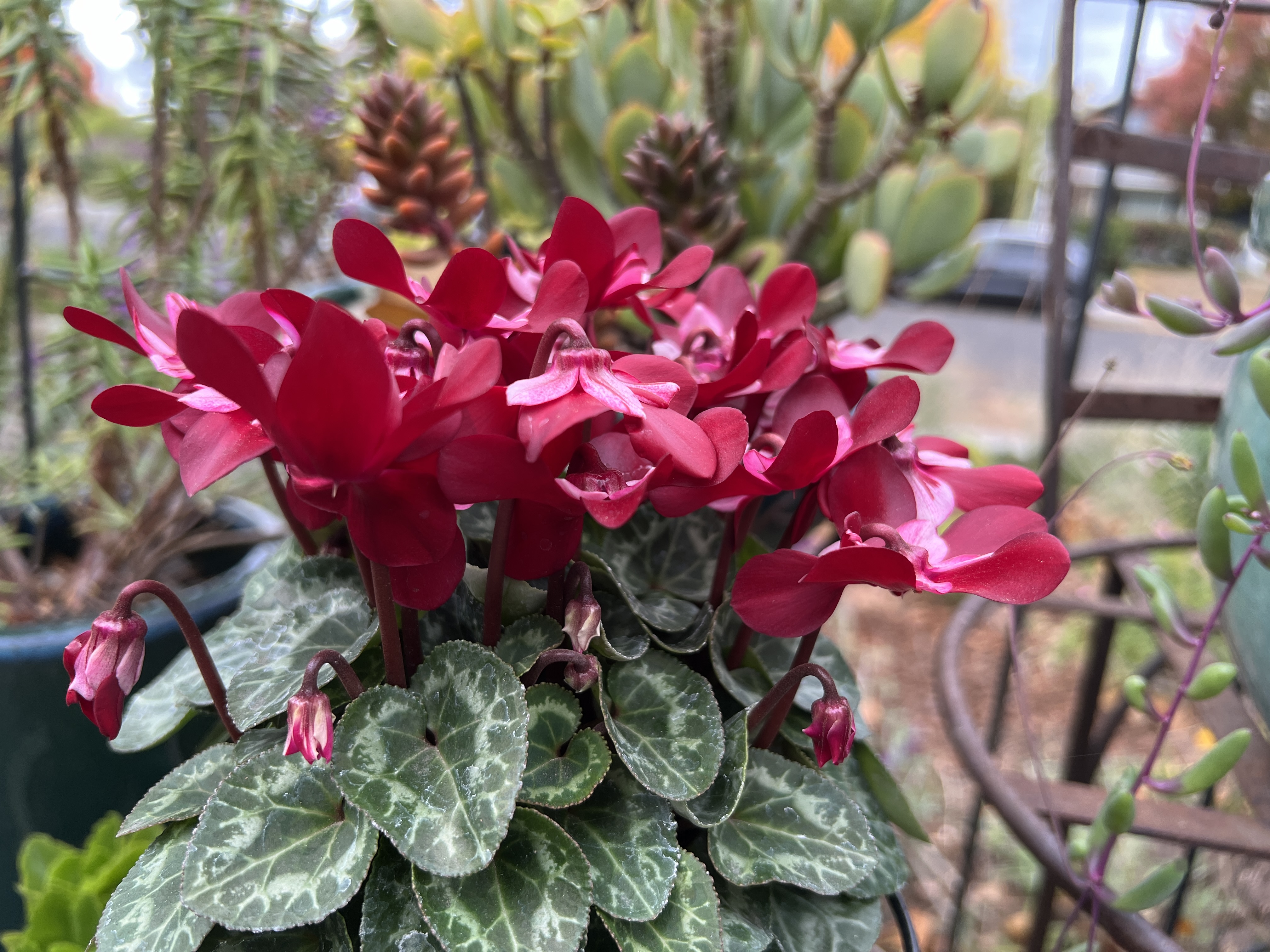
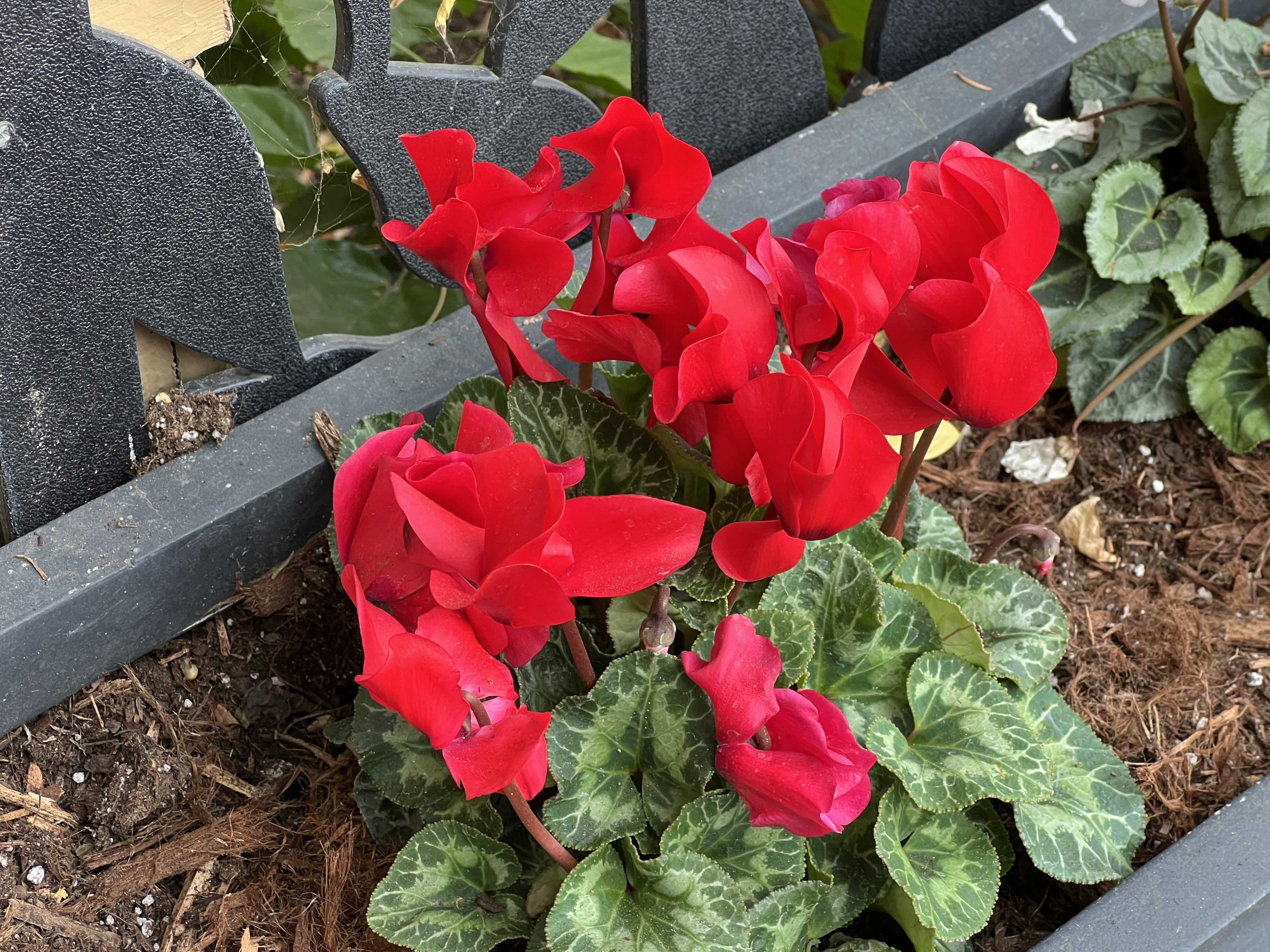
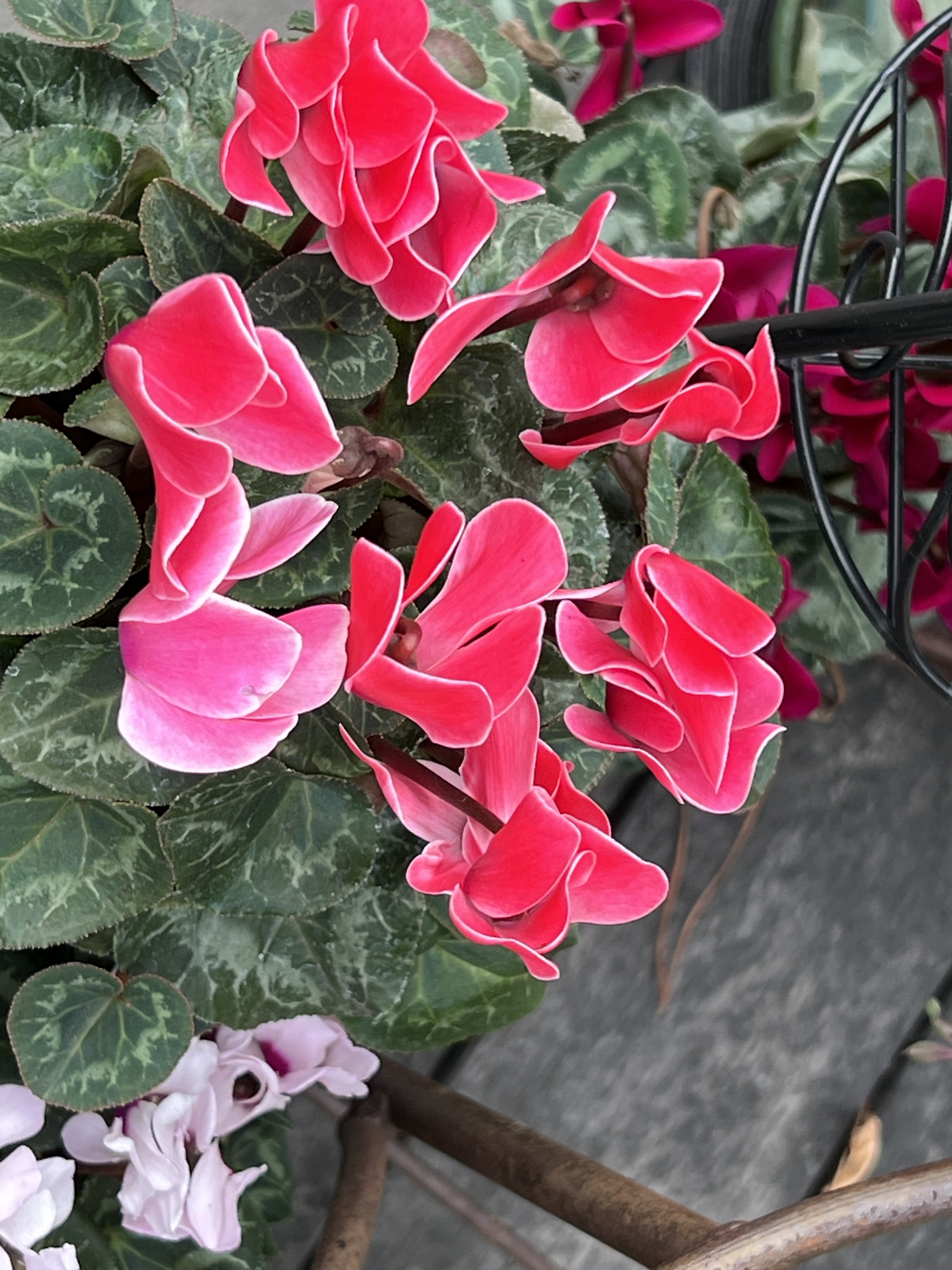
The newest addition to our deck is called an Othonna Capensis. It has thin purple stems and tiny yellow flowers. I transplanted it last summer into a waiting pot, but I wasn’t sure it would make it. The roots were loose and thin. To the contrary, it’s filled the pot nicely and its sending trailing purple offshoots down the sides. I add a few potted cyclamen for color in the fall, and when the corms go dormant, I replant them in different parts of the garden for color the following year.

Working in my garden has been physically challenging these past few years as the pain in my hips worsened. After five years of maneuvering through the US medical system, I finally had a complete hip replacement this past Wednesday. From a medical perspective, the surgery was unremarkable, and I was able to come home the same day. I need to replace the left hip in the future, but I want to fully recover before contemplating another surgery.

If you garden in the Northern Hemisphere, you’ll know February is a decent time to be off your feet. The first six weeks of recovery will carry me through the end of winter, leading to the effervescent gifts of spring.

I’ll be ready.

Puzzles and Paper Scraps, Postage and Permits

Assembling a jigsaw puzzle is the ultimate escape. It’s engaging but not taxing, and with one thousand pieces, it requires time and patience.

Conversely, I had neither time nor patience throughout December, yet I started assembling a puzzle anyway, and once done, I started another one.

Studies suggest that puzzles increase the production of dopamine, a chemical that regulates mood, memory, and concentration. Once I cracked open the puzzle box, the sorting began, and the list of things I needed to do fell by the wayside. A spell had been cast, one puzzle piece at a time.

Most of the time, I’m an organized and capable person, so I’m uncomfortable feeling this scattered. I planned to make Christmas cards this year and had the supplies. Making cards and corresponding with friends is a joy. I eventually sat down at my crafting table and created a dozen cards, but by day’s end, fatigue won out, and most of my cards remained unsent.

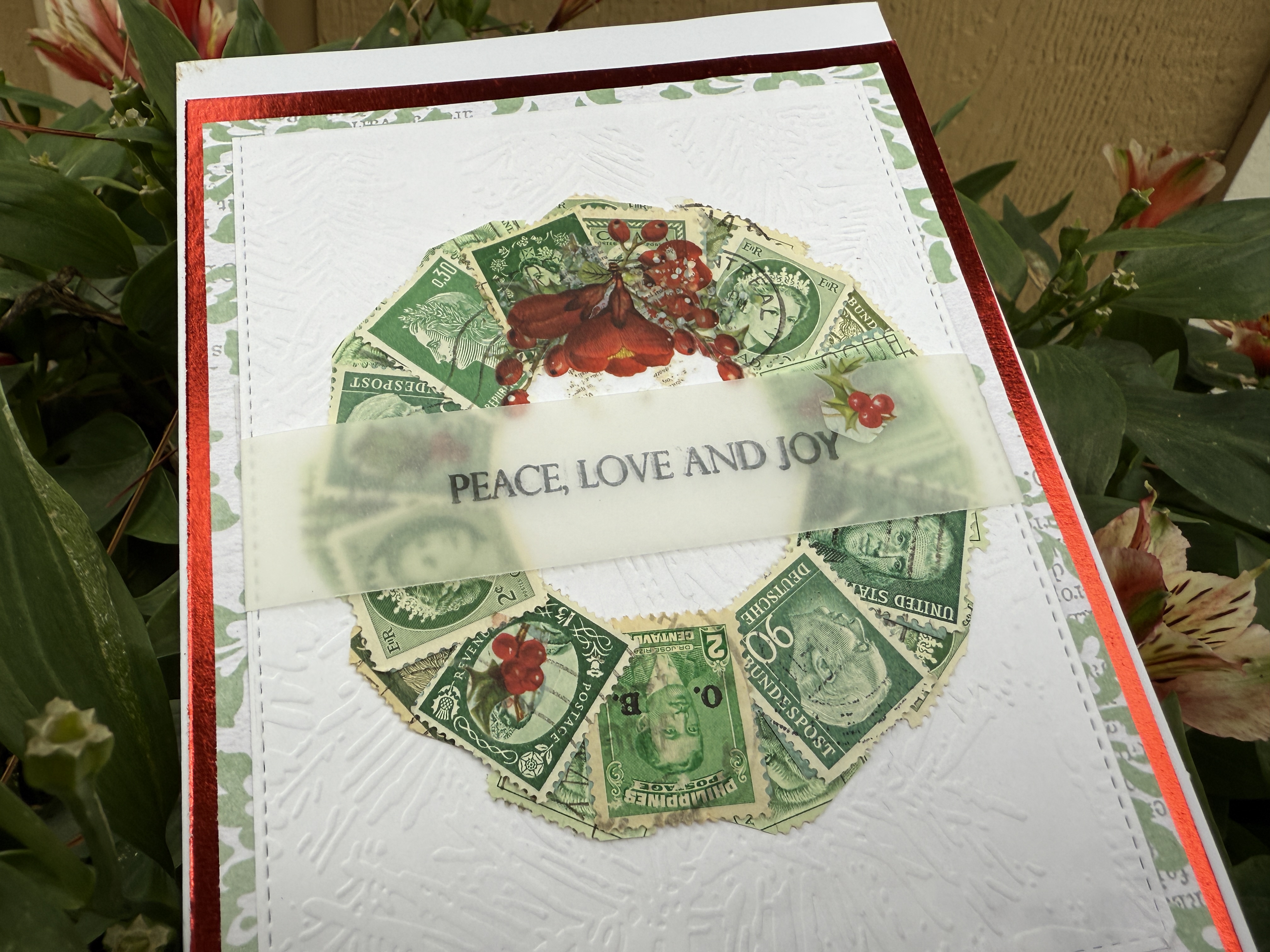
I made one card, using scraps, to join Kate’s ScrapHappy blog hop mid-December, but I lacked the time to create a post.

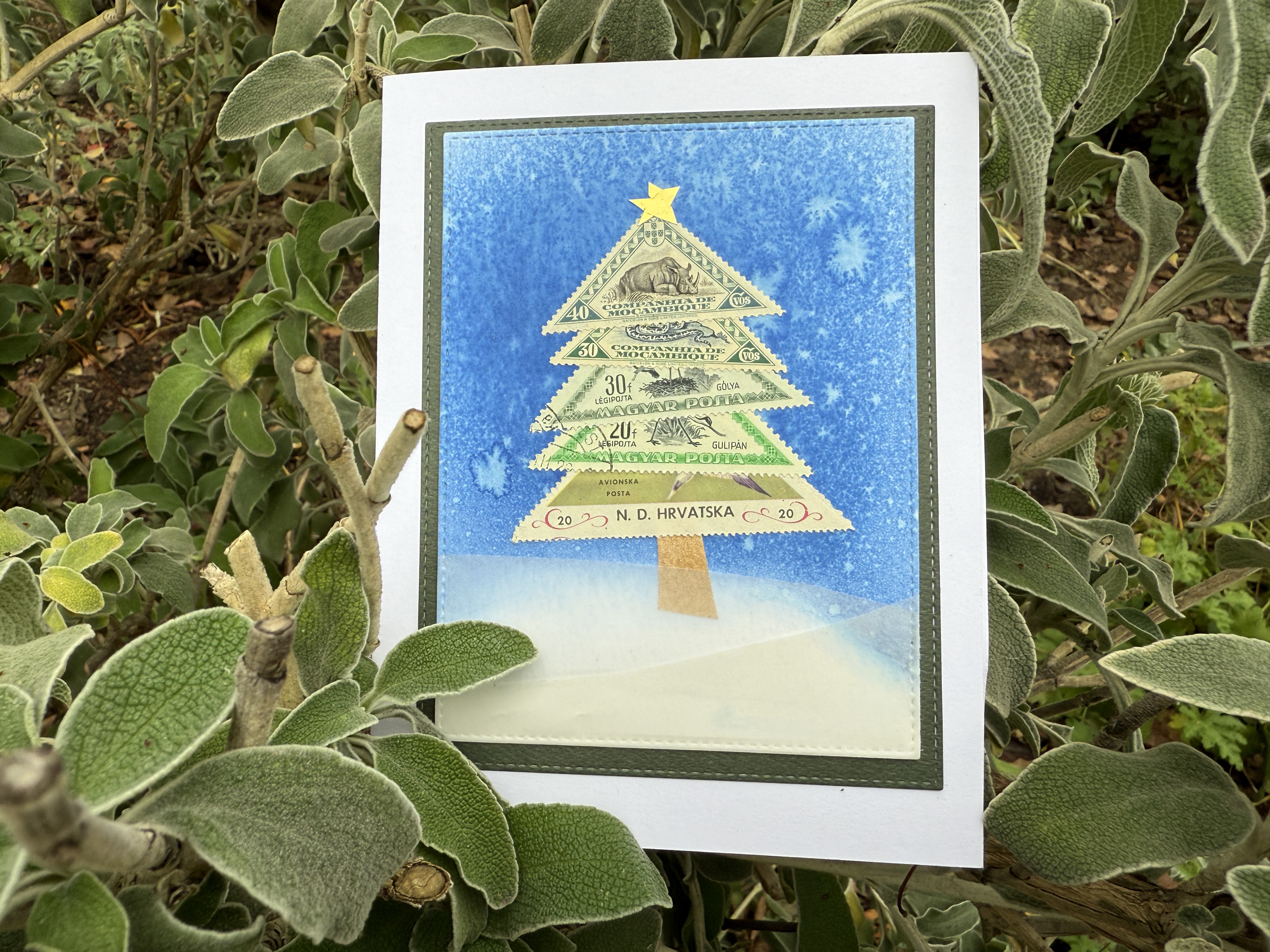
Earlier in the year, I set aside vintage Christmas postage to make a card from a friend’s stash. You guessed it: finished but unsent.

And Permits? How did that get into the title?

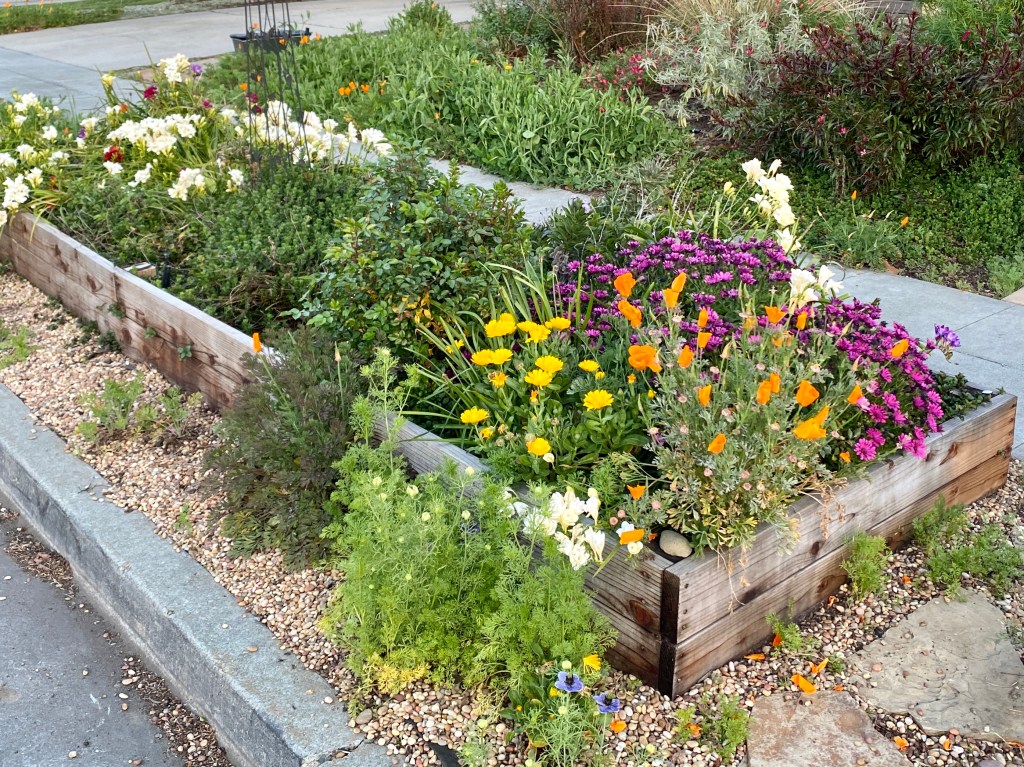
It’s a long and tedious story, so here’s my attempt at brevity. The space between the sidewalk and the street, known locally as the sidewalk strip, is the homeowner’s responsibility, but the City governs usage. When we bought our home nearly thirty years ago, we inherited a strip of lawn. We applied for a permit and planted a “street tree.” During the worst of the drought years, we removed the lawn. Mike built a planter box in its place, and I’ve happily planted seasonal flowers, tomatoes, and whatever else wanted to self-seed there for many years.

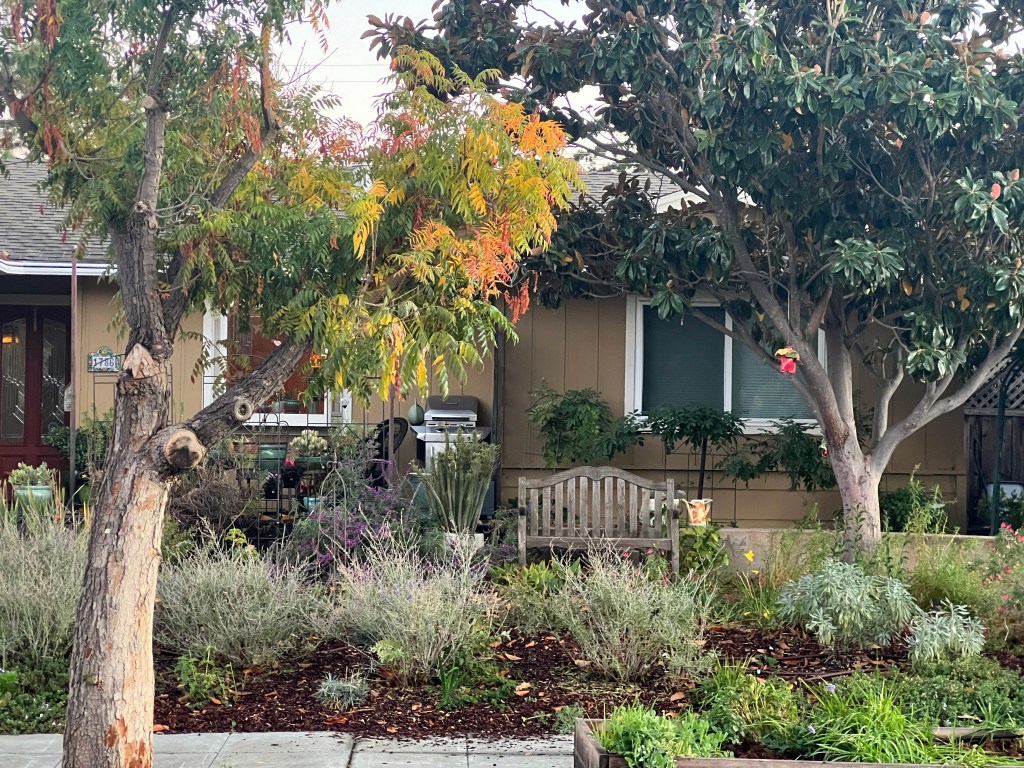
In the last decade, the tree declined. We applied for a permit to replace the tree. The City denied our request, saying the tree wasn’t sick enough. City workers came through this spring and pruned every tree on the block to prepare for road work, leaving a sickly tree in its wake. They approved our second request to remove and replace the tree.

Two weeks later, we received a Repair Notice and Permit saying we had to remove the planting box, calling it a tripping hazard. I’ll share more details in a future post, but suffice it to say I’m sad, disappointed, and, for a time, overwhelmed by the amount of work it would take to dismantle my beloved curb garden, not to mention the expense.

The City gave us thirty days to remove the tree, the planting box, and all the soil and gravel, plants, bulbs, and irrigation that went with it. When I called, they offered an extension but refused to budge on the planter.

I can always send those Christmas cards next year.

It’s time to start a new puzzle.

Butterflies Real and Imagined

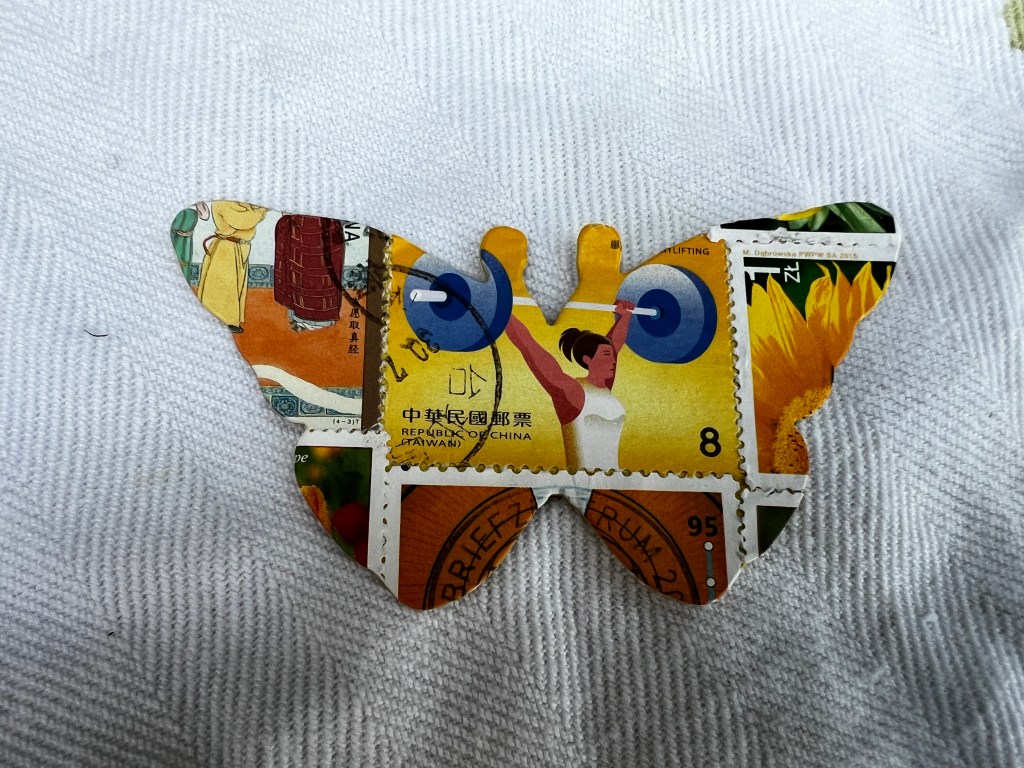
I’ve been crafting cards again with canceled postage stamps, this time an assortment of yellow postage from China, Germany, and Poland.

The blue barbell weights on the center stamp reminded me of “eye spots,” a common butterfly marking. Two theories behind these markings exist: one is that they look like the eye of a predator, as cited in this Natural History Museum article, and the other, according to LiveScience, posits that prey is scared off by patterns that mimic toxic substances.

The spots are stunning, nonetheless, and what luck to find a postage stamp that so perfectly imitates these markings.

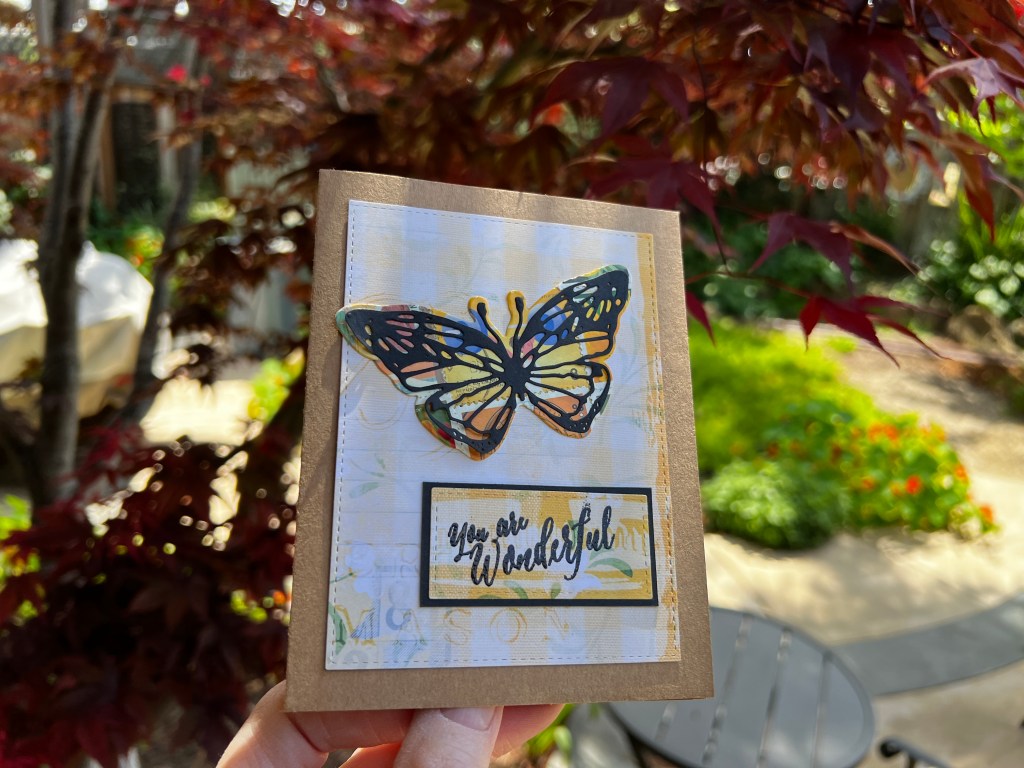
I cut the solid shape from the postage using a two-part butterfly die set, forming a yellow butterfly. I cut the delicate layer from thin black paper.

Using a craft paper card base, I attached the butterfly to a scrap of yellow paper and stamped the greeting in black ink. Creating this imaginary butterfly was a treat.

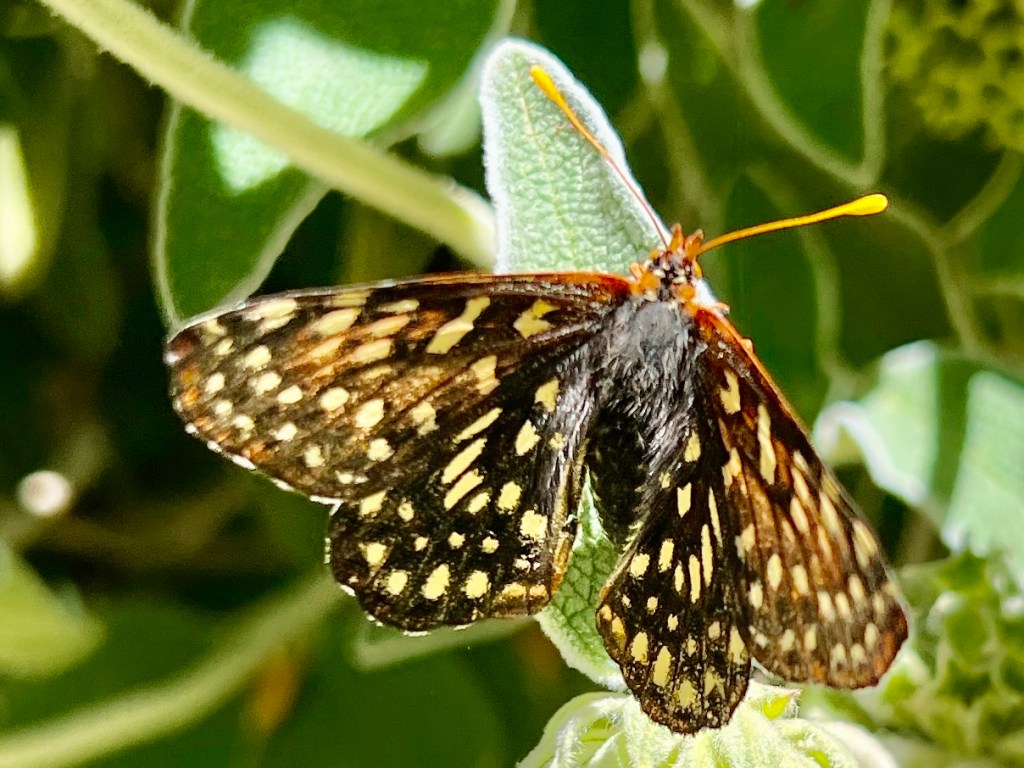
Photographing real butterflies takes patience and sometimes dumb luck. The following image features dumb luck for the win.

Checkerspot butterfly

A Checkerspot butterfly rested briefly in the garden, with yours truly tiptoeing behind it, holding my breath as I took the picture. I managed three shots before the butterfly moved on, and I’m sharing the best of the three.

pbmGarden catalogs and shares stunning butterfly photos as they visit her Chapel Hill, North Carolina garden. If butterflies are your thing, take a look. You won’t be dissappointed.

Squirrel Shenanigans

I finally spotted a squirrel enjoying the long-awaited sunflower seeds. Squirrel-watching is quite entertaining.

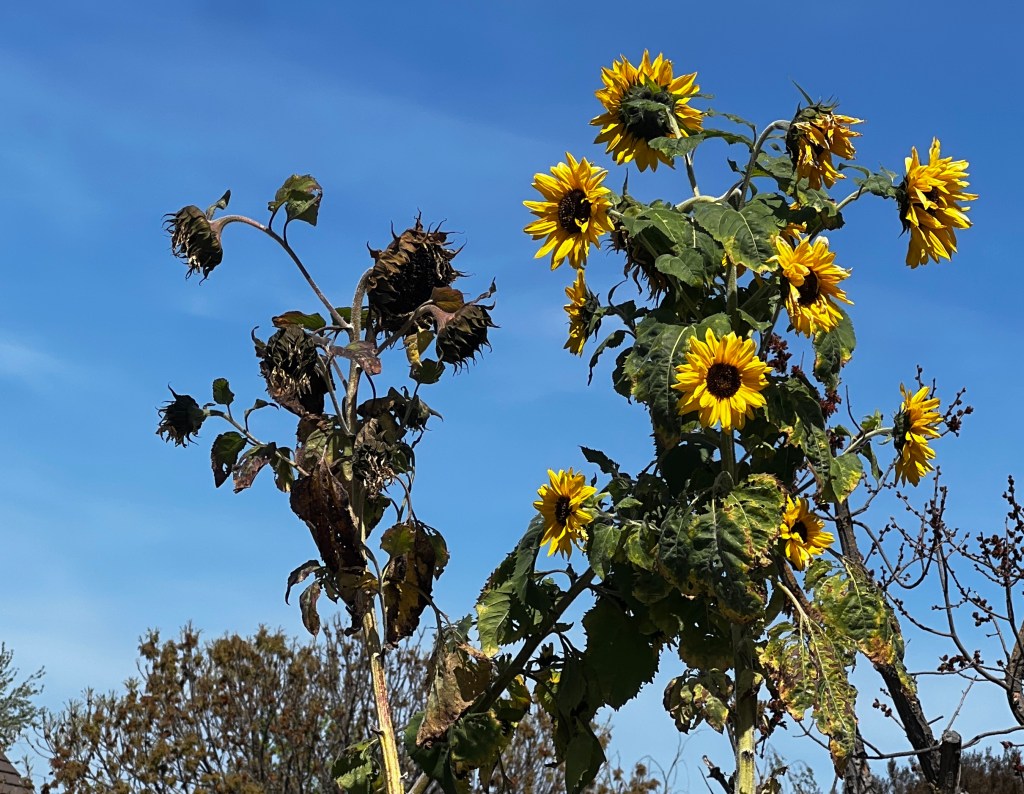
Sunflower seeds are like chocolate for squirrels. To my amazement, ‘Mammoth Sunflowers’ self-seeded in January. That’s never happened before, or if a seedling should arrive out of season, it perishes post haste.

By March, the sweet peas took off, quickly surrounding the lower half of the remaining sunflower stalks, so I left them in place to dry. The thick stems of the sunflowers made excellent stakes for the climbing sweet peas.

I wondered aloud to Mike if the sweet peas’ soft scent overwhelmed the subtler smell of the sunflower seeds since they don’t generally get this far along without a squirrel or two snapping off the seed heads.

This week, they figured it out.

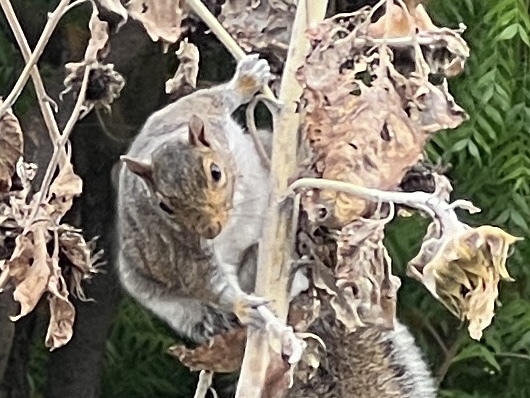
I happened upon a squirrel at the top of the eight-foot stalk, and then I ran inside to get my camera phone. I tiptoed down the path and tried to hide behind a tree, but the squirrel was on to me. I got a couple of snaps as the squirrel climbed down.

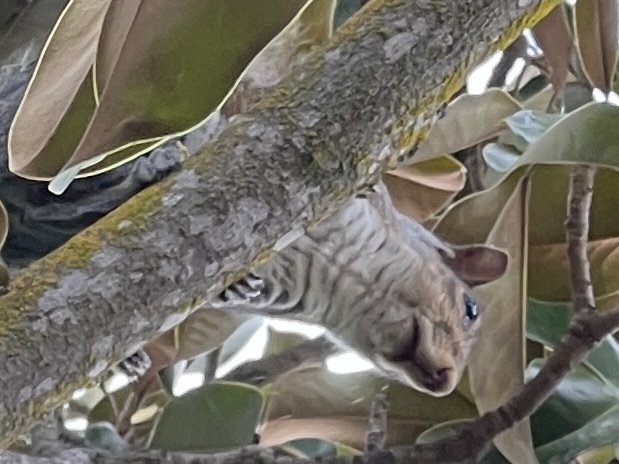
At the same time, another squirrel rustled in the Magnolia tree overhead. I looked up expecting a bird, but a squirrel appeared, carefully camouflaged against the trunk, hanging upside down while munching away.

I managed four photos in all before they moved on.

Not for the first time, I have renewed appreciation for nature photographers who capture clear, crisp, gorgeous images of wildlife. It’s fun to capture snapshots, though, and its nice to know they can find food, water, and sanctuary in my garden.

A Lovely Patch of Earth

My garden is a magical place where fairies roam, and flowers grow.

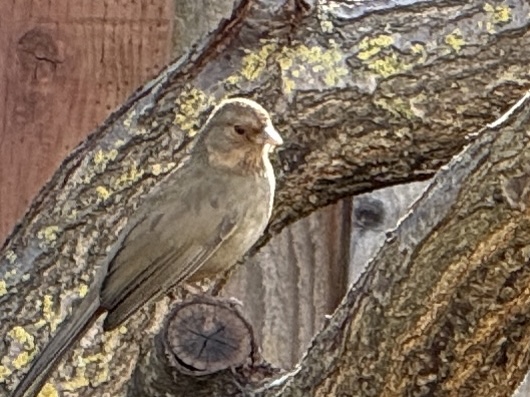
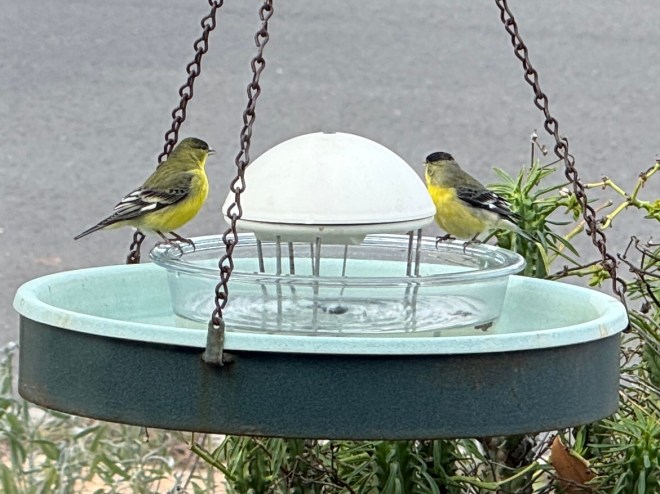
Daily visitors include marauding squirrels, delicate hummingbirds, mourning doves, and songbirds with handsome yellow chests singing their hearts out in search of a mate.

It provides a refuge for spiders and mantis, which in turn keep the less beneficial bugs at bay. Fence lizards also have a place.

When I gather a spade of dirt and unearth a worm, I apologize and return it to the soil. Some of the hardest workers are unseen and unheard but equally deserving of our respect.

Baby Carrots Fresh from the Earth

Bees are welcome and encouraged with plentiful pollen to gather for their queen. Paper wasps live under the eaves, an equally beneficial guest in the garden’s echo system. They’re not aggressive like yellow jackets, but they are easily mistaken for them. I was pleased to learn the difference.

Paper wasps

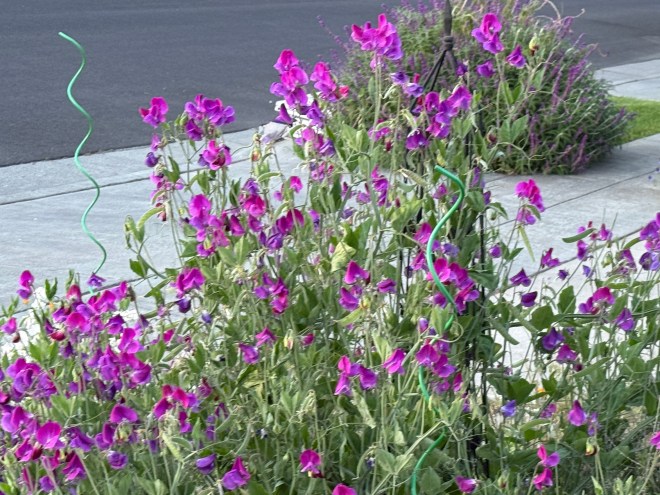
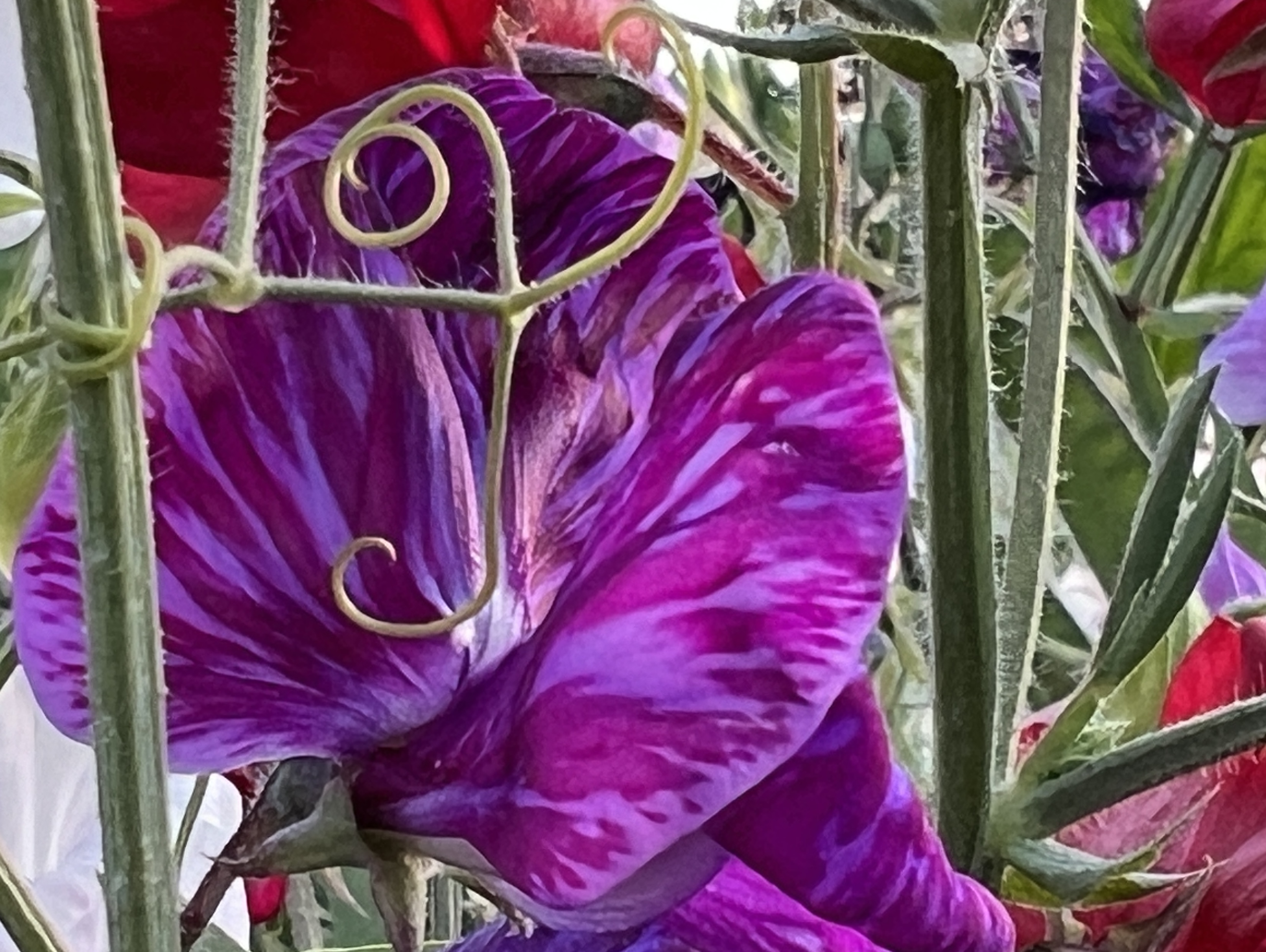
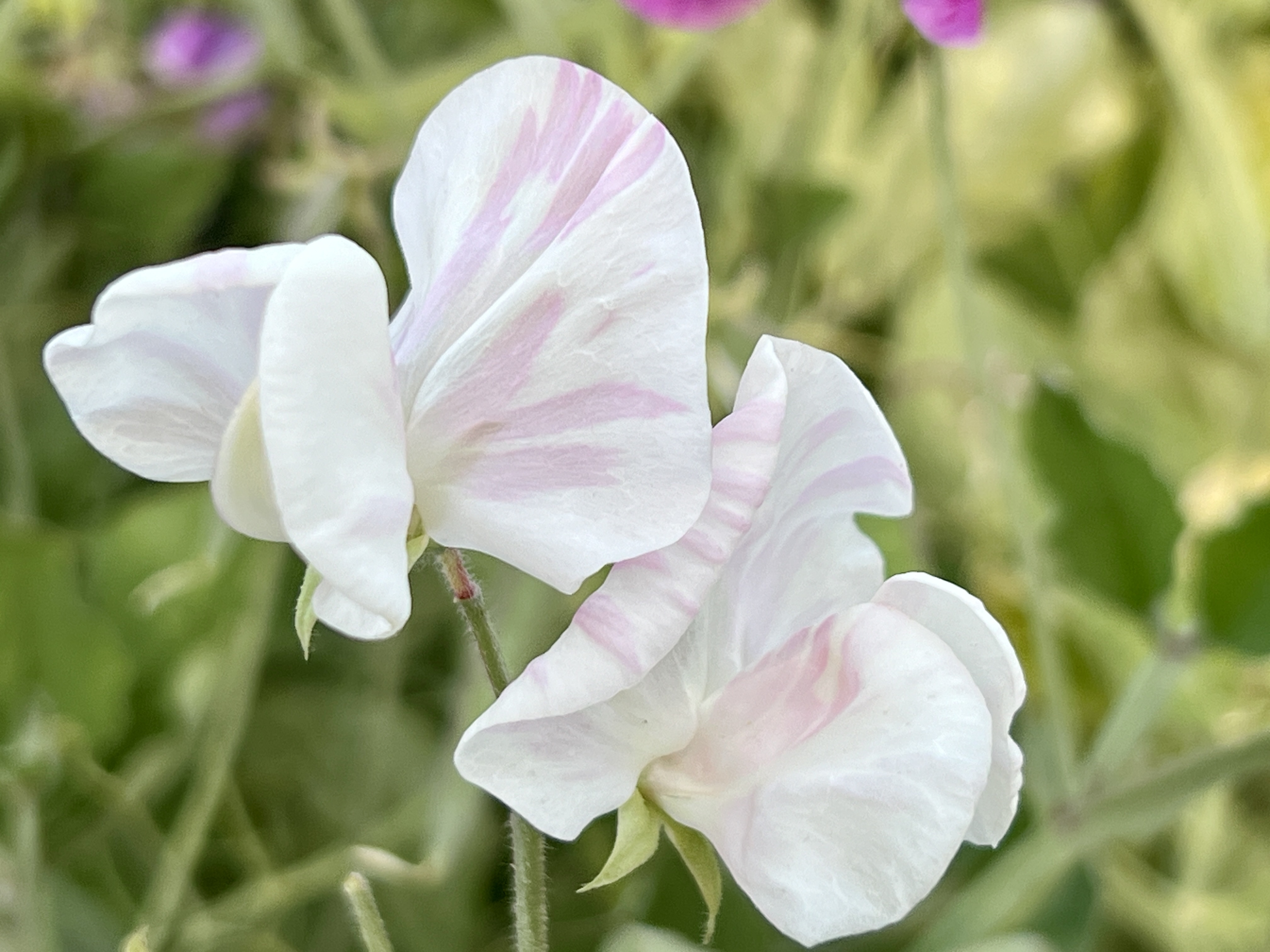
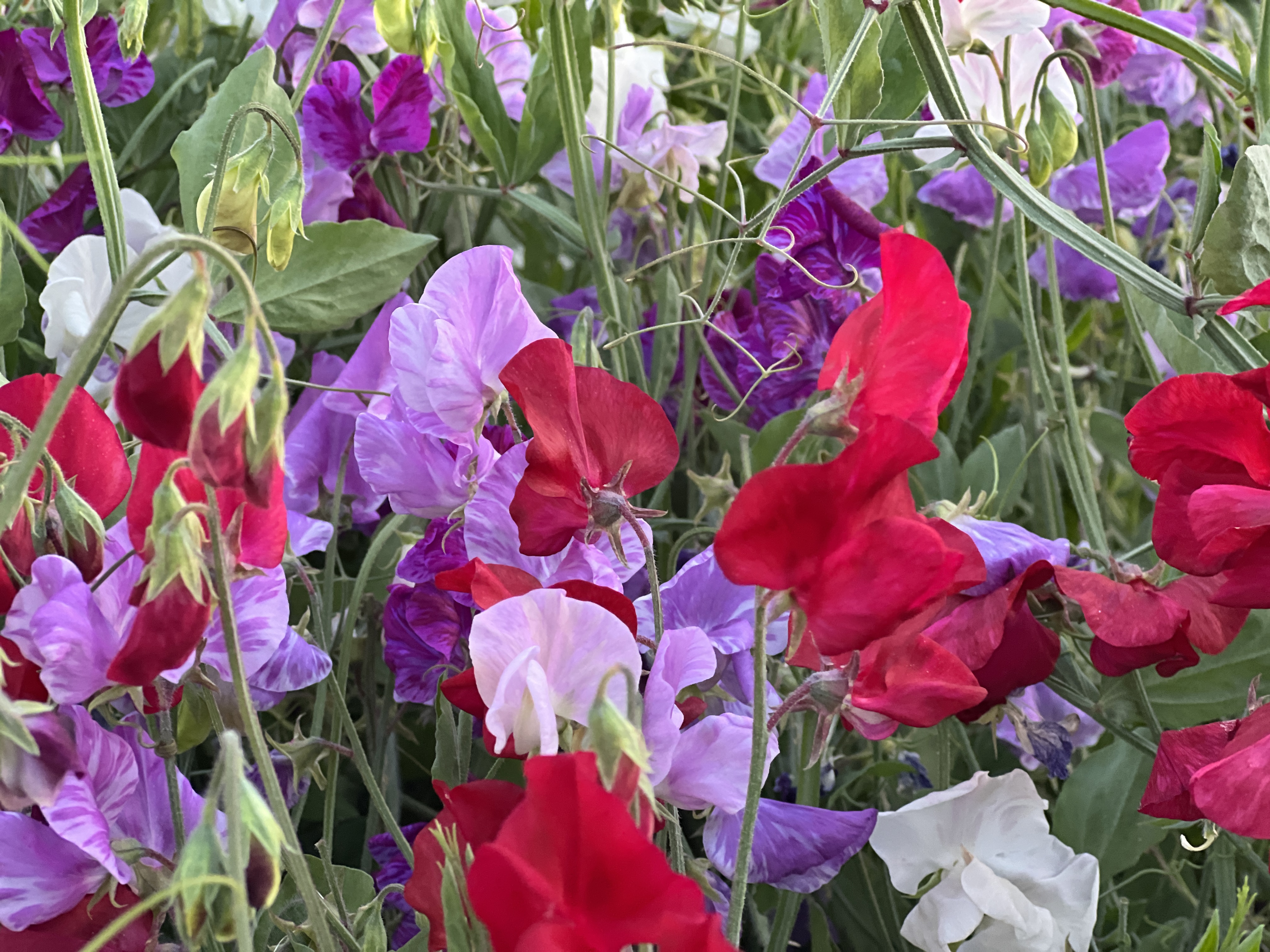
Over the years, small packets of seeds have morphed into returning gems. Sweat peas are the garden darlings, with soft, fragrant petals ranging from pale pinks to rich purples and reds. They elicit comments from passersby, generating a feeling of nostalgia.

Nasturtium, purchased as a few bedding plants years ago, cast about the garden with brilliant, showy orange flowers and broad, flat leaves that remind me of paper fans.

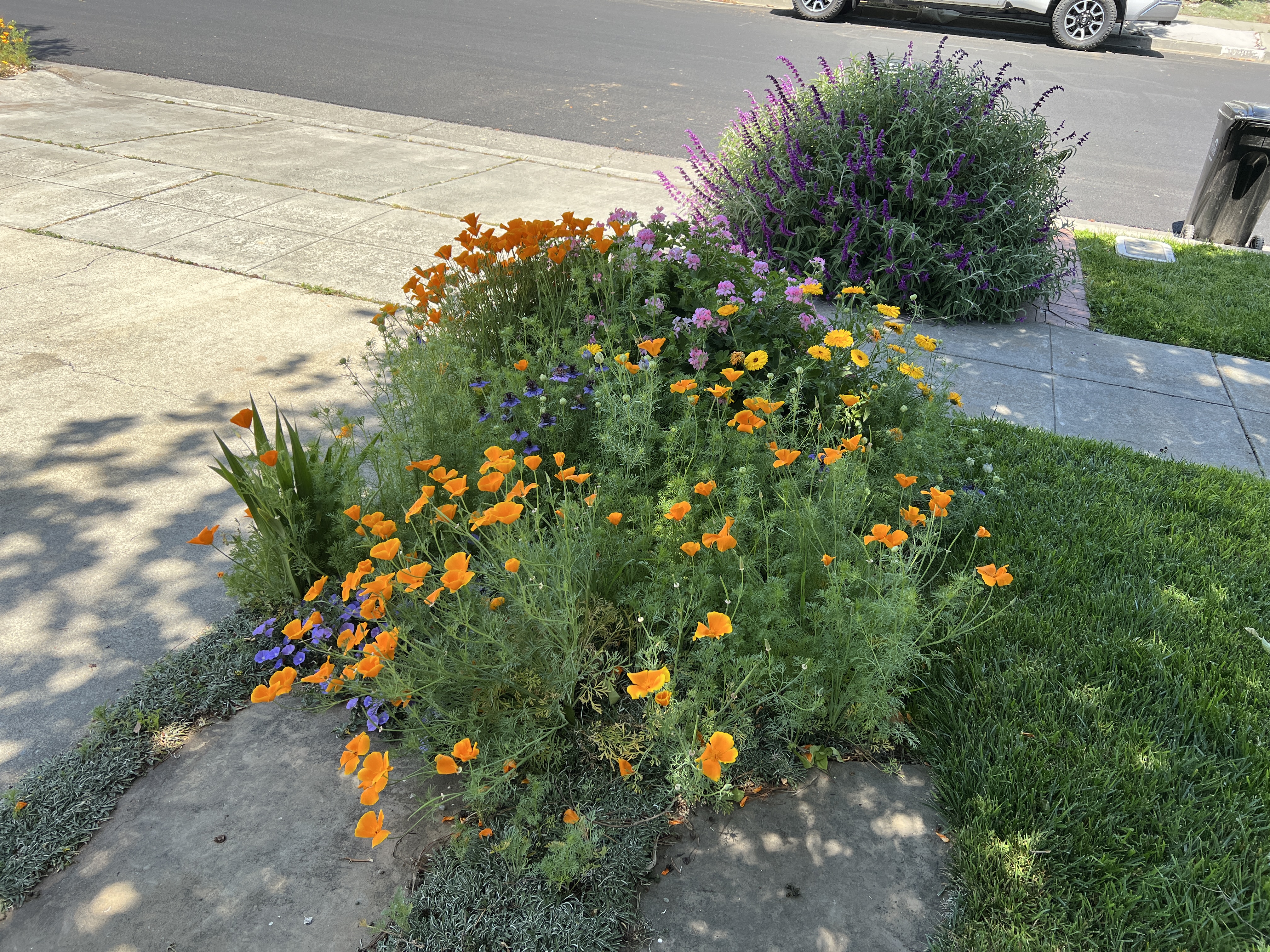
California poppies spread across the walkway this year, with several taking up residence around the curb garden and along the drive. They, too, were first scattered from a packet of seeds. 

Two seasons of welcome rain have filled reservoirs and water tanks while affording gardeners a reprieve from regular watering.

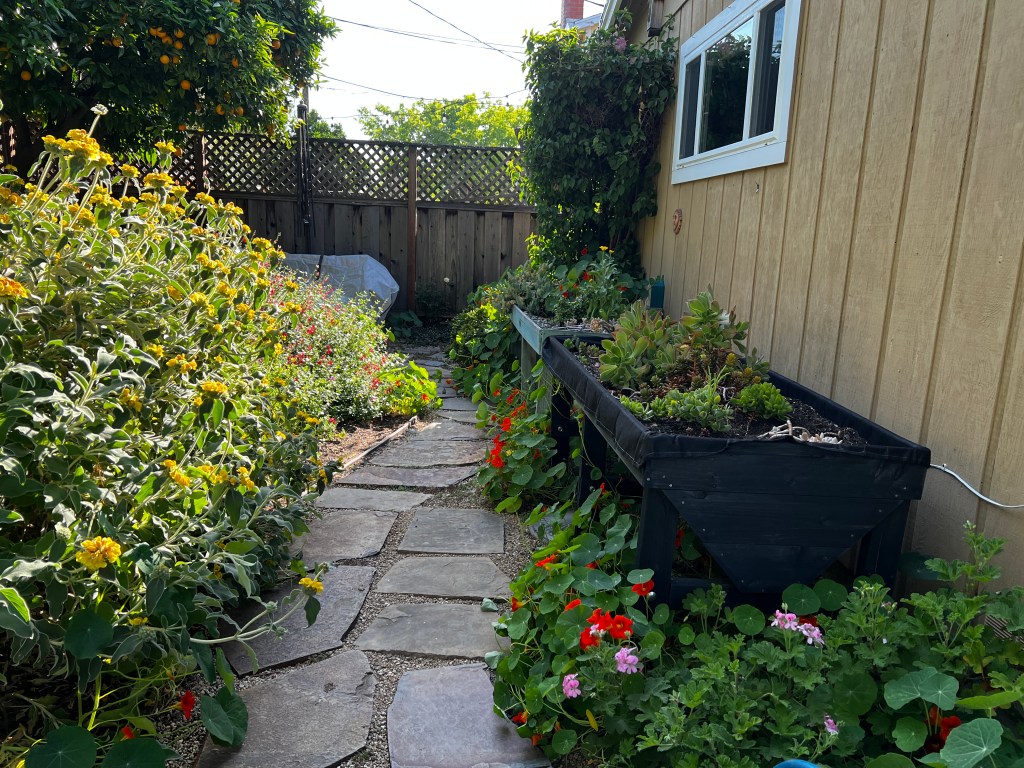
The garden continues to evolve, moving from the manicured lawn and roses we inherited when we bought this house to a garden filled with native and drought-tolerant plants, three mature trees, and a deck lined with succulents instead of thirsty annuals. The slider featur below shows the back garden in 1996 and 2024.

I’m grateful for the sun and the wind, the rain when it falls, and this lovely patch of earth outside my door.

Rainbows and Dreamers, Gardens and Rain

We’ve had rain, sun, wind, and California cold this month, but nothing compared to Canada and the Midwest. I’m sending warm vibes to folks who are enduring -40 C/F.

My San Jose garden enjoyed the recent rain, a gentler version of last year’s repetitive atmospheric rivers. Slow and steady wins the race where rain is concerned. I’m grateful.

Without further ado, and In rainbow order, here are a few January garden gems:

Red abutilon is starting to reappear. I like to imagine a garden fairy trying on this beautiful dress.

Orange stocks have appeared for the first time on a pair of succulents in a pot on the deck. I transplanted these plants a few years ago, so seeing this new development is exciting.

Like a child at a candy shop, I can’t tell you how exciting it’s been to have a towering yellow sunflower in the middle of January.

Green is everywhere, but I’m featuring geranium leaves below. I love the multi-colored leaves.

Blue is tricky in the garden, so you have to play along here. This hydrangea flower has shades of blue and arrived well past its season’s prime, as evidenced by the faded brown flower by its side.

Violet is a garden favorite. I’m featuring another hydrangea, a Serbian bellflower, and what I thought was a salvia, but I’m no longer sure. Please let me know if you know differently.

Finally, I’m featuring black and white, not “colors/colours” at all, but I can never resist sharing what I refer to as fluff: The spent seeds from last summer’s Anemone. When I trim back the plants in early fall, I like to leave a few for the hummingbirds. They collect the Dandelion-like fluff for their nests. Aren’t they dreamy?

With a hat tip to Kermit the Frog’s Rainbow Connection, “A lover, a dreamer, and me.”