Thwarting Squirrels: A Different Kind of Screensaver

Screened In

I headed to my local garden center this week in search of Floating Row Covers (I blogged about them here).  I got lazy, and drifted into the Home Depot parking lot instead since it’s closer.  After a frustrating search on my own, then with the help of an employee,  it was apparent the cupboards were bare.  Sure, I could have come home and called around town or simply ordered row covers online, but I really wanted to find a solution pronto for my sunflower seed challenge: keeping squirrels at bay till the seeds grow.

I wandered the store looking for inspiration, and found a role of screening used to repair screen windows and doors.  I still wasn’t sure what I would use to support the screening, but at least it would fit two of my requirements:  it would allow air to circulate and the seeds would be easy to water.  While kneeling in the aisles comparing materials and dimensions, I noticed adjustable window screens and had my ah-ha moment.  They were perfect in every way.  The light wood and aluminum frame offered the support I needed and the screen would deter the four-legged pests.  Hurray!

With a bit of trial and hardly any error, the plan worked.  I tied a pair of the adjustable screens together using garden twine.  I folded them tee-pee style over the planter boxes and determined the angle and width of the sides.  I made a template using the back side of one of last year’s calendar, then cut scraps of an old screen into the correct shape.  Mike helped me staple those in place along the ends.  I now have functional, reusable tents for my planters.  The last step was to figure out a way to secure the tents to the planter boxes.  I found my answer on my husband’s work bench: sliding window locks!

I will bravely plant more seeds this week.  Once they emerge I’ll report back.  Wish my luck.
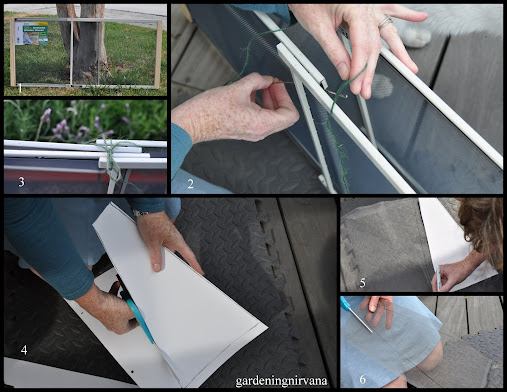
Assembling the Squirrel Barrier

Squirrel Barriers

Materials:

Back to the Drawing Board: Sunflower Seed Do-Over

Sunflower Seedlings: Long Gone

Did you see the sweet little photo I posted earlier this week?  It was my celebratory shot of my emerging sunflowers.  If I hadn’t snapped a picture, I’d have thought I imagined the whole thing.  Squirrels, you are my nemesis.

I lived with my discouragement for a few days then tried again.  I transplanted the seedlings I started indoors and planted the last of the remaining seeds in the pots along the deck. I covered some of the seeds with makeshift domes.  The larger dome worked and the three remaining seedlings are okay…for now.  The other “dome” was too light: I caught the squirrel lifting it up right in front of me.  The nerve! What remains: three little stick shaped shoots (photo “unavailable”…ha!).

Happiness arrived today in the form of an email from Botanical Interests entitled Sow Successful.  What timing.  I learned about soaking seeds for faster germination and I learned about Floating Row Covers or FRC.  I’m going to wrap up this post and head to my local garden center now before it closes.  Stay tuned…

In the meantime, you many want to take a look at Botanical Interests In The Garden blog.

Pumpkin’s Progress: Wilted Seedlings, Sagging Ego

First, the clichés:

Never give up hope. It’s not over till it’s over. Don’t give up!  Don’t be discouraged!  Okay…but…

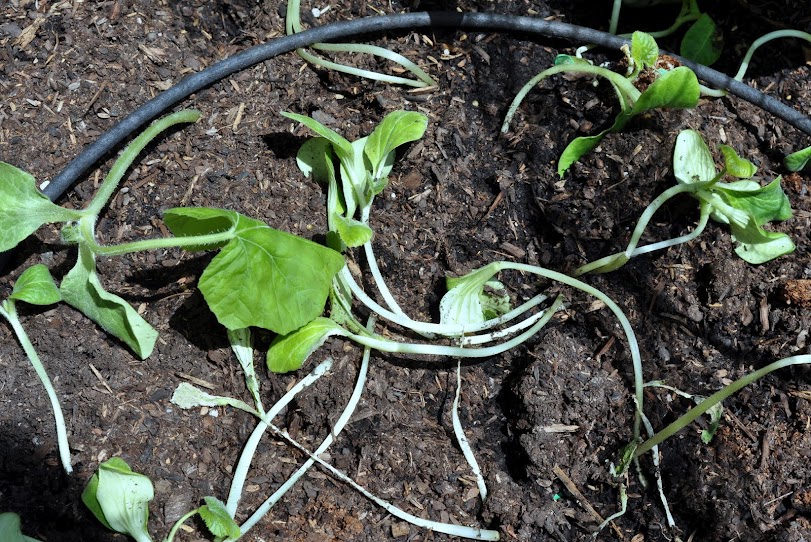
Wilted Pumpkin Seedling

I am discouraged.  We transplanted our pumpkin seedlings Sunday evening into freshly prepared planter boxes.  The process was challenging on two fronts.  First, the seed pods were so close together, that the leaves and stems entangled.  As I gently pulled them apart, several of the stems bent or snapped.  It was disheartening.  Second, the seed pods had to be pushed out from the bottom, instead of scooping out from the top, further damaging the tender plants.  I improved my technique as I went along, so the lower box looks a bit better.

On the bright side, I have a reserve of seeds in all six varieties, so I’ll plant those directly into the bed.  Stay tuned.

Has this ever happened to you?

Lower Box

Volunteer Pumpkin
This seed survived the winter and is doing just fine without my help

Fairy Garden: The Rolling Stone Gathers Moss

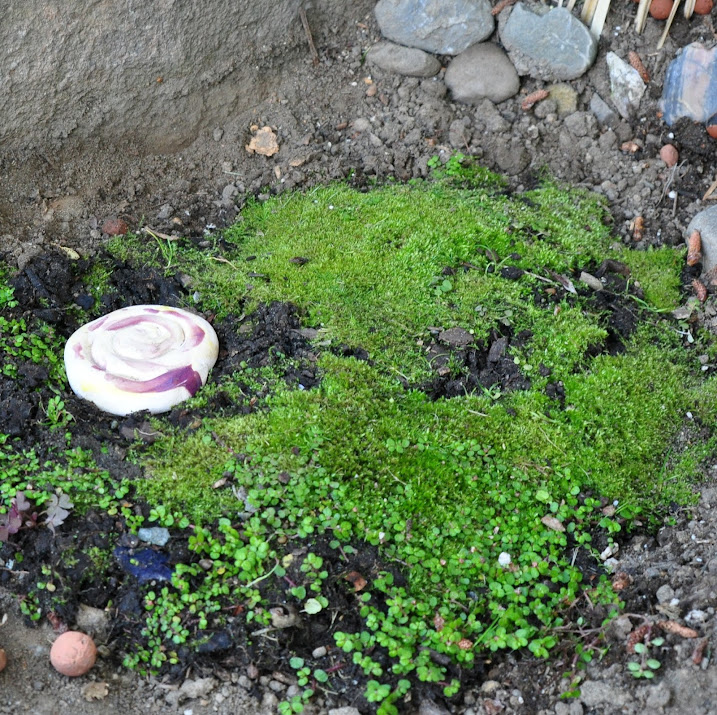
Moss Carpet and Inlaid Tile

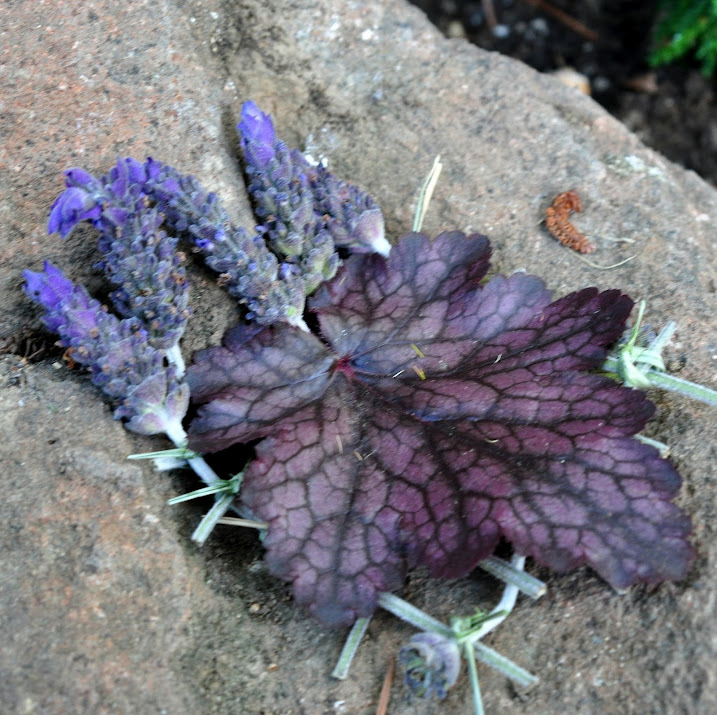
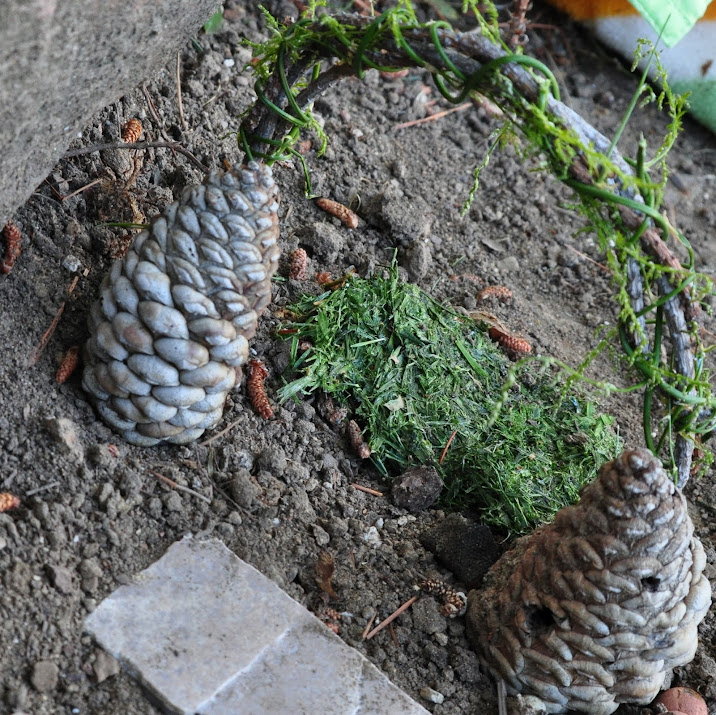
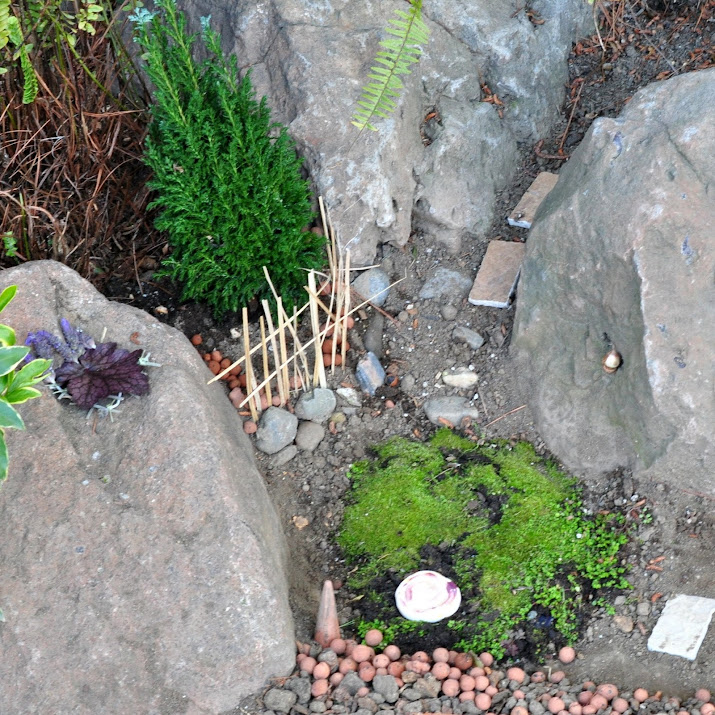
Success!  With a little help from my spade, I transplanted a patch of moss and some baby tears to the fairy garden floor.  The lush green carpet is soft and inviting.  The main floor features inlaid tile, formerly ceramic treasures from my son’s art class. I added a maroon bedspread, a must on these chilly spring days, and a door mat made from matted grass clippings.

Lamp in the Window

Fairy Blanket for those Chilly Nights

Grassy Door Mat

Aeriel View

House on the Hill sets the Standard
(Hand-made bird house, a gift from friends)

I built a fence between the two large rocks, with nearby steps up the hill. The walkway, paved with broken pieces of tile meanders with an edge of smaller rocks and clay balls. Do you think the fairies will stop by tonight to see the improvements?

Additional Links:

♥Here’s what professional fairy gardens might look like.

♥Every fairy garden needs a fairy flower, right?

♥A wee bit of inspiration from Enchanted Gardens.

Garden Log: February 22, 2012

Small Harvest

With temperatures in the mid-seventies this week, we’ve been spending a lot of time outdoors. The official start of spring is still four weeks away, so I know this weather won’t last. It was a great opportunity to accomplish some garden chores.

Harvesting:

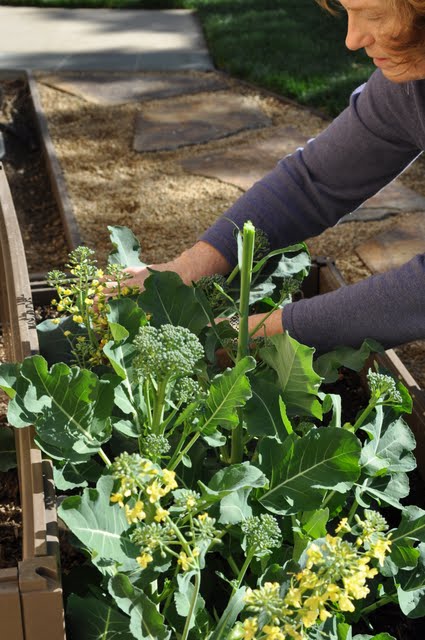
I cut the larger broccoli crowns, along with the flowering plants that bolted last week, and left the smaller florets behind. With luck, we’ll have a few more servings before all plants go to seed. I soaked the cuttings in warm salt water before wrapping them in a towel to crisp in the fridge.

Pruning:

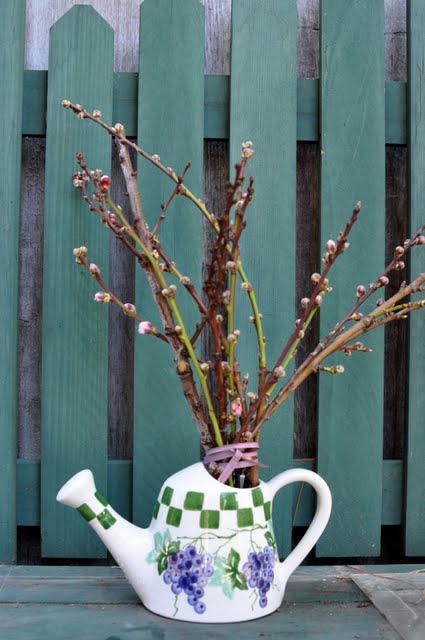
Following my friend Doug’s instructions and the notes I found on-line, I pruned our two-year old, “four-in-one” fruit tree. The soft buds are plump on all four grafts and a few have started to flower. I put some of the cuttings in a vase indoors and will recycle the rest curbside. San Jose’s excellent recycling program converts green waste into mulch!

The aforementioned fruit tree was my son’s 10 year birthday gift, so the pressure to prune it properly runs high. He refused to watch, even though I read to him how important pruning fruit trees is in the first four years to establish a strong tree. It was fun to read the origins of the phrase “nipping it in the bud.”

Four-in-one Fruit Tree Buds


Transplanting:

My husband helped me drag the water-logged roses to the front deck where we replanted them in a pot. We displaced the  plants when we installed the patio out back so I was happy to find them a home. I’m sure I’ve disappointed a few squirrels.  They dig up the planter every few days leaving dirt all over the deck.  Since they don’t stay to clean up the mess they don’t have a say in the matter. The roses will soon bloom, discouraging all that plunder.

Maintenance:

We store our emergency/earthquake kit under a potting bench in two air-tight containers. I knew it was time to update the water along with a few other items, but for all my love of gardening, I’m a bit squeamish about spiders. Mike pulled out the bins and stacked them on the table so I could empty, sort, clean and replace items as needed. I washed the blankets, pillow cases and the canvas tote and made a note to replace the water boxes and a few batteries. Otherwise it was in decent shape. As I went to replace the oil cloth cover I discovered one of the largest, hairiest garden spiders I’ve ever seen. We stood and debated its livelihood for a moment: I knew it was alive; my husband said dead. I carried the cloth to the far reaches of the garden to relocate the arachnid. As we stood staring at it, one of the cats crawled under the cloth and then jumped out the other side. The two of us jumped in unison, momentarily convinced that “Sir Harry” was out for blood.

Sir Harry

Next week: a trip to Almaden Valley Nursery to source and price some plants.