Spring Bulbs: My Flowery Future Awaits

White Flower Farm Tulip

Photo Credit: White Flower Farm

I lovingly perused the Fall Netherlands Bulb Company catalog, then cast it aside. The pages, filled with promise and spring blooms, made my heart ache. Wouldn’t it be glorious having a spring garden filled with exotic blooms?  Nothing shouts spring, like a garden filled with crocus, daffodils and tulips. I wrote about my bulb-planting failures in August: Spring Bulbs: To Plant or not to Plant, and received the following encouragement:

Bob J. wrote:

Bulbs are so forgiving, even upside down you will get SOME to twist around and come up. I don’t even bother to refrigerate, and most of mine come up anyway. Maybe you are planting too deep, but you would have to drop them in a well for all of them to fail. My feeling is that something has dug yours up. Probably you are going to have to protect them from critters. I stick with Costco and Ace hardware cheapies and plant a few new ones each year.

So, I’m giving them a second try.  Following Bob’s advice, I stopped at our local hardware store, and picked up a few bags.  Since early frost is uncommon here, I’m popping the tulip bulbs in the fridge for good measure. Bob’s climate is a bit cooler than ours, and he occasionally sees snow.

tulip bulb assortment

Tulip Bulb Assortment
Van Zyverden

Then Boomdeeada wrote:

I’ve had mixed success with fall bulbs. My favorite was a tulip called Angelique. Shorter, blush pink, frilly. It worked well in my spring garden (Our house was Burgundy in color). I also planted a mass of yellow & pink, late bloomers on the lake front, they’d bloom along with the mauve lilac. But I was always adding more every fall. I don’t know why they fail, but sometimes there wasn’t anything to dig up. Like you, I do love the scent of Hyacinth, but even though you link indicates Zone 2, they never came back the next year. Don’t give up!

So…guess what made it into my cart?  15 Tulip Angélique.  I’m so excited! 

Recommended planting months for our zone are October through December. The tulips have a few weeks to chill before heading outdoors. I also bought Tulip Attila and Tulip Passionale as well as Snowdrop Galanthus nivalis. Next up: where to plant my assorted bulbs and how to keep them under wraps till spring.  Suggestions welcome!

Resources:

Halloween Countdown

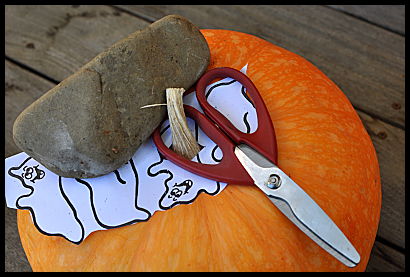
rock paper scissors pumpkin

Rock, paper, scissors Pumpkin
Pumpkins: Just the Facts, Ma’am

This slideshow requires JavaScript.

Pumpkins are so entrenched in our North American culture this time of year, that it’s easy to forget they’re not equally popular the world over.  They’re native to Central America and Mexico, but they’ve been grown in North America for five thousand years.

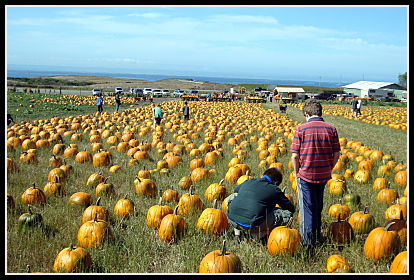
Bob's Pumpkin Farm, Half Moon Bay

Bob’s Pumpkin Farm, Half Moon Bay

Pilgrims learned to cultivate, grow and store pumpkins from the Native Americans.  Without them, they would have starved in those early 1600s winters. Pumpkin pie is traditionally served  at the Thanksgiving meal.  It’s easy to forget what a significant role it played in the early Pilgrim’s lives.
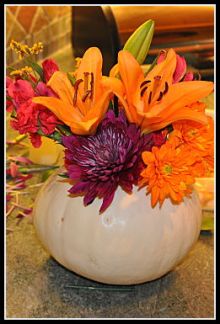
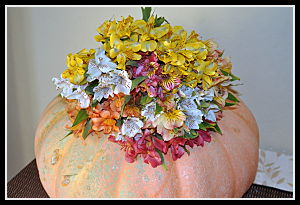
White pumpkin with flowers
Thanksgiving flower arrangement

We have a number of pumpkin festivals and pumpkin “patches” in our community.  We attended many of them when our boys were young, and were sorry when a few closed to make room for development.
The immensely popular Half Moon Bay Pumpkin Festival, dubbed the World Pumpkin Capital celebrates 42 years in 2012. The festival highlight for those of us serious about pumpkins, is the great pumpkin weigh-off.  Last year’s winning pumpkin tipped the scales at a mind-boggling 1,704 pounds. Unfortunately, the festival has grown so popular that it can take upwards of an hour to get to the center of town.  We joined friends for an off weekend last year, so we could drive through Half Moon Bay and along the beautiful coast, while avoiding the traffic nightmare.

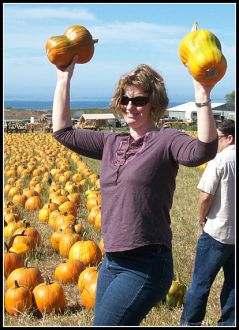
Bob's Pumpkin Farm

Lifting Weights at Bob’s Pumpkin Farm

I dream of growing our own “Atlantic Giant,” out back, but lack the stamina and will power of the serious growers. It’s fun to read about the efforts the hard-core growers employ, and to see the amazing results.  It was quite the thrill growing a 62 pound beauty this year.

I can’t wait to see what the seeds and flesh are like inside.  My husband lovingly carves our pumpkins year after year.  We dry and store seeds for the following season and the cycle begins anew.

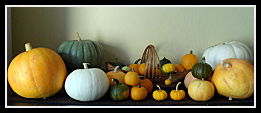
assorted pumpkins

2011 Pumpkin Crop

Pumpkin Facts

  • Pumpkins are a member of the gourd family, which includes cucumbers, honeydew melons, cantaloupe, watermelons and zucchini.
  • The largest pumpkin pie ever baked was in 2005 and weighed 2,020 pounds.
  •  In 1584, after French explorer Jacques Cartier explored the St. Lawrence region of North America, he reported finding “gros melons.” The name was translated into English as “pompions,” which has since evolved into the modern “pumpkin.”
  • Pumpkins are low in calories, fat, and sodium and high in fiber. They are good sources of Vitamin A, Vitamin B, potassium, protein, and iron.
  • The heaviest pumpkin weighed 1,810 lb 8 oz and was presented by Chris Stevens at the Stillwater Harvest Fest in Stillwater, Minnesota, in October 2010.
  • Pumpkin seeds should be planted between the last week of May and the middle of June. They take between 90 and 120 days to grow and are picked in October when they are bright orange in color. Their seeds can be saved to grow new pumpkins the next year.

 U.S. Census Bureau and the Guinness Book of World Records

Resources:

Halloween Countdown

Pumpkins and Flowers

Pumpkins and Flowers

Freaky Friday: The Garden’s Dark Underbelly

It’s not all Sweet Alyssum and roses.  Every garden has a dark side. I’m sure it’s no accident that the spooky celebrations of Halloween coincide with the decay of fall.

Use your imagination and come with me as we travel the more sinister side of the garden.

bat wings

“Bat Wings”…or decaying leaf?

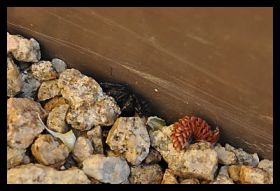
Spider in the gravel…look closely.

Rats Gone Bad

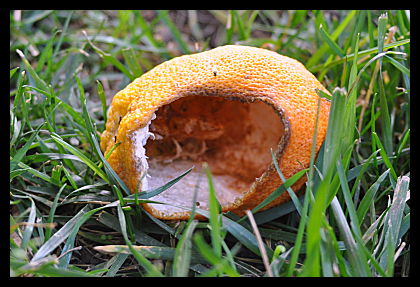
hollowed orange

Hallowed orange or hollow orange? You decide.

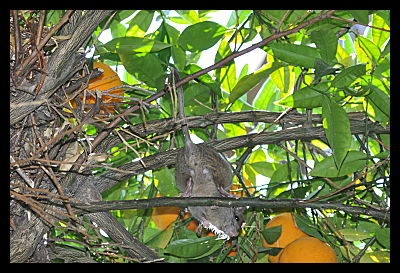
Tree RAt

Tree Rat or Field Mouse? Helping himself to an orange.

Not What They Seem

choking vine

The Choking Vine? Snaking and staking the trellis.

mottled leaf

Urban Decay

shrunken head

Shrunken Head?

stink bug

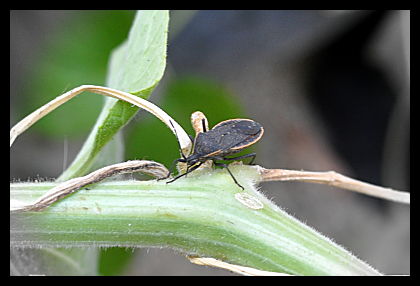
I’m a Stink bug. Be afraid. Be very afraid.

Cavernous Lair

Something Wicked This way Comes

Something Wicked This Way Comes: Black Widow Haven

Halloween Countdown

Cat on Pumpkin

It’s The Great Pumpkin, Lindy-Lu!

September Treats: A Little of This and That

purple flower polka dot plant

Tiny purple blooms dot the Polka Dot plant

My garden’s been busy over the weekend. In just 24 hours, the Pink Polka Dot plant produced several flowers.  I didn’t know the plant would actually bloom.  All plants have a flower and a fruit, but many are subtle and therefore go unnoticed. Tiny purple flowers dot the plant.  They’re quite small, no bigger than a centimeter, but they look vibrant against the mostly pink and green backdrop of the spotted leaves.  What a fun discovery.

yellow daisy like flower

Three cheers for yellow!!!

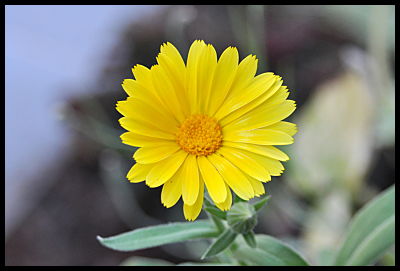
Also growing in one of the pots is a fresh, yellow daisy or daisy-like flower.  It’s another surprise from the packet of wildflowers planted in early spring. Every few weeks, a new flower appears. Today’s gorgeous bloom is as bright as a sunflower, but smaller in size. Yellow flowers are the garden cheerleaders: upbeat and sunny.

In that same pot, one or two fuchsia cosmos remain, a nice backdrop for the hummingbirds darting in and out at the feeder.

bird house gourd

Bowling-pin Gourd

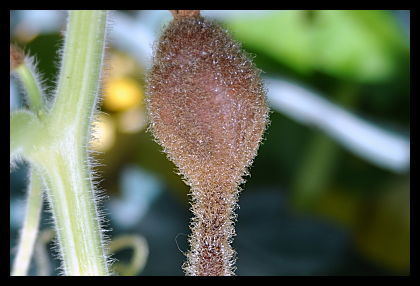
I smiled when I rounded the corner of the trellis and saw a rapidly growing birdhouse gourd still thriving on the vine.  Most of the early fruit was small, but this latest gourd is growing at break-neck speed.  In its present form, it reminds me of a bowling pin.  Several smaller gourds grew up the trellis to the side of the house and they now hang below the eaves like a string of Christmas lights. Every time I see them I get a good giggle.

Tomorrow is October 1st with a projected temperature of 94 degrees Fahrenheit  (34 degrees Celsius). Crazy weather!  I’m starting my Halloween countdown in earnest tomorrow, featuring something seasonal daily.  Stay tuned.

I love October!  How about you?

cosmo and hummer

Cosmo and Hummingbird
Beauty Times Two

Christmas light gourds

Who needs to hang Christmas lights?

Winter Garden: Above and Below

winter seed packetsI’m branching out this year.  Now that we have raised planting beds and a gravel and stone walkway, winter gardening holds more appeal.  Year one I planted fava beans as a cover crop, digging the plants back into the soil to add nitrogen.  Year two I planted broccoli.  I bought seeds, but waited too long to plant them, so I planted six starter plants instead.  Two survived and produced a few yummy florets, but it bolted early and that was that.

I’m hoping the old saw “three’s a charm” is true, and that year three will be a roaring success.  Here’s what I’m planting.

Above-ground vegetables include:

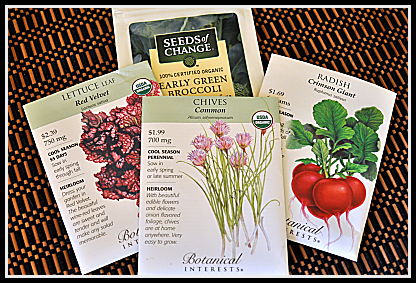
Lettuce Leaf Red Velvet

Botanical Interests ® Lactuca sativa.  The seed packet promises “wine-red leaves that are sweet and tender and will make any salad memorable.”  Red-leaf lettuce is delicious and brightens up a salad.  It will be such fun to grow my own.

Early Green Broccoli

The Seeds of Change® tag line is “goodness from the ground up.”  I love that! We all enjoy broccoli, which is to say, three of us really like it and one of us reluctantly agrees it’s not half bad. Let’s hope we have a better year.

Below-ground vegetables include:

Radish Crimson Giant

My eyesight has officially failed me. I thought I was buying beets. These “crimson beauties” were my sister’s favorite growing up. Now my oldest son is a big fan.  Here’s hoping garden beets taste just as sweet as the ones that come in a can!  Here’s hoping, too that I can still find a pack in the garden center.  Apparently we’re also growing radishes!  Now that is embarrassing.

Chives Common

I prefer the Latin name Allium schoenoprasum.  I’m not sure I can pronounce it but it sounds far less demeaning than the moniker “common.”  The Botanical Interests seed packet says “heirloom, with beautiful edible flowers and delicate onion flavored foliage.”  It also says “very easy to grow.”  Count me in!

I’m off to get my nails dirty.  If you live in the Northern Hemisphere, are you planting a winter garden?  Garden tips appreciated.

Resources:

The Great Sunflower Project


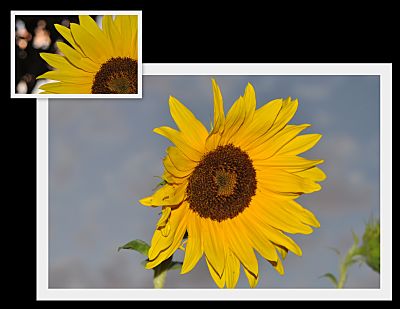
Sunflower with small centerHave you heard of The Great Sunflower Project?  It’s “The world’s largest citizen science project focused on pollinator conservation.”  Simply put, ordinary citizens count bees in their yard and report it on the Sunflower Project site.

Gretchen LeBuhn, founder and director of the project, is a scientist in the biology department of San Francisco State University.  She started the project to collect data on the effects of pollination in our own back yards. The site features several interesting articles and videos.  You’ll also find reports on the collected data.  Details and links to the site are at the end of this post.

Bee in the LavenderWhy count bees?

Scientific studies show a decline in honey bee and native bee populations.  Bees are critical to agricultural success and really to life itself. The goal of this project is to obtain consistent results from urban, suburban and rural gardens throughout North America.

The Great Sunflower Project

People all over the country are collecting data on bee pollination in their yards, gardens, schools and parks. We take 15-minute counts of the number and types of bee visits to sunflowers (and other plants). We have been gathering information on pollinator service since 2008, and now have the largest single body of information about bee pollinator service in North America. Thanks to our thousands of observers, we can determine where pollinator service is strong or weak compared to averages.  (Source: greatsunflower.org)

My sunflowers are going to seed, so it’s too late for me to participate this season. I’m going to tuck this away for next spring, and hope others in North America are inspired to join me as well.

What you can do:

  • Plant Sunflowers, preferably Lemon Queen
  • Register and report findings on the site here.
  • Purchase seeds through Renee’s Garden.  She will donate 25% of her proceeds to the project.


Sunflowers: Setting Sun on the Season

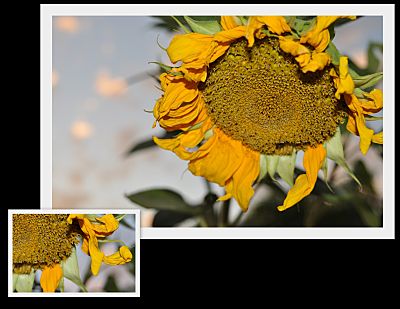
I knew this day would arrive, but oh how I’ll miss them.  The row of sunflowers lining the deck are starting to go to seed.

Impatient birds knocked over one of the lightweight planter boxes last week, smashing the largest flower head clean off the stalk and into a heap on the deck. My son helped me move the planters from the deck to the narrow space behind the lavender to stabilize the planters.  Now wedged in place, they won’t fall over, but they look like they shrunk two feet.  Hopefully the rest of the flowers will go to seed on the stalk. It’s a beautiful thing to behold.

Last year I placed the seed heads along our stone wall, just outside my office window.  There I could watch the squirrels pick them clean.  I don’t know why I find those cute little hands at work so appealing.  I’m annoyed when they chew off the pumpkin leaves, but delighted when they snack on the seeds.

For my readers living in different parts of the world:

Sunflower (Helianthus annus) is an annual plant native to the Americas. It possesses a large inflorescence (flowering head). The sunflower is named after its huge, fiery blooms, whose shape and image is often used to depict the sun. It has a rough, hairy stem, broad, coarsely toothed, rough leaves and circular heads of flowers. The heads consist of many individual flowers which mature into seeds, often in the hundreds, on a receptacle base. From the Americas, sunflower seeds were brought to Europe in the 16th century, where, along with sunflower oil, they became a widespread cooking ingredient. Leaves of the sunflower can be used as cattle feed, while the stems contain a fibre which may be used in paper production. – Wikipedia

Today I’m wearing my worn out but much-loved sunflower t-shirt with the saying “Love this Life” across the front.  It’s my own little sendoff to Helianthus annus, flower of the sun.

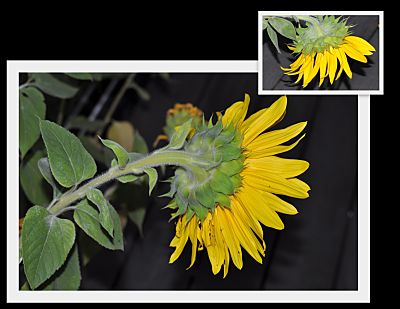
Here are the last of them, photographed at dusk.

Sunflower
Sunflower at Dusk
End of Season Sunflower

Floating rafts of sunflowers are being used to clean up water contaminated as a result of the 1986 accident at the Chernobyl nuclear plant in the former Soviet Union. The roots of the sunflower plants remove 95% of the radioactivity in the water by pulling contaminants out of the water.”

Birdhouse Gourd: Racing the Biological Clock

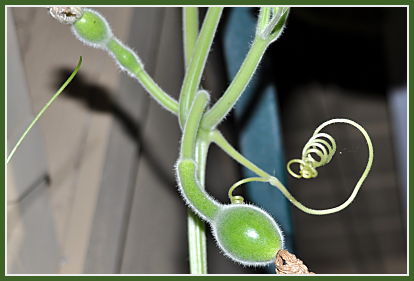
Our birdhouse gourd vines are sporting several small fruits, each one about two inches long. They’re the color of limes and about as large as an over-sized peanut. Aren’t they cute?

The question of the hour is will they grow up?

We found the seed packets on one of our nursery rounds, but not until after planting the rest of the garden. The idea of growing a birdhouse was irresistible so of course the packet made its way into my cart. I envisioned a garden full of birdhouses, just waiting for a feathered mama to claim them.

We have at least another month of warm weather, but will it be enough? Please send your happy-garden energy vibe. I’ll be sure to report back.

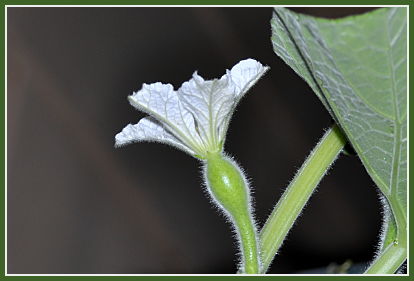
birdhouse gourd flower

Birdhouse gourd bloom

Birdhouse gourd bloom

birdhouse gourd fruit

Tumbling Composter: Waiting for UPS


Forest City Tumbling Composter

Forest City Tumbling Composter

It’s all coming together.  The Tumbling Composter I ordered online will arrive this week. My counter-top food scrap bin is almost full. There’s a bucket in the garage collecting spent flowers and the leaves on the Chinese Pistache are starting to turn!  I’ll have all the ingredients for my first batch of compost.

I looked at several varieties before settling on this model. My criterion was simple:  It had to be portable, affordable and resistant to rodents.  It’s constructed from recycled materials, also a plus, and the compact size is perfect for my small vegetable garden.

Why Compost?

  • Composting reduces the amount of waste you send to the landfill
  • Composting turns your waste into a useful product—and it does so without requiring additional resources.
  • Using compost in your garden reduces the need for water and fertilizers and helps eliminate the need for pesticides.
  • Composting provides you with a valuable experiential lesson in the cycles of nature and the folly of our throwaway culture that is likely to lead to other waste-saving measures as time goes by.   (Source: Sheryl Eisenberg, Natural Resources Defense  Council NRDC)

Additional Resources


Double Dentate: The Shape of Leaves to Come

Flowers and fruit are the garden darlings, but where would they be without leaves?  As a seed set roots, tiny leaves quickly follow, the building blocks of things to come.  Leaves are:

“a plant’s principal organ of photosynthesis, the process by which sunlight is used to form foods from carbon dioxide and water. Leaves also help in the process of transpiration, or the loss of water vapor from a plant.”

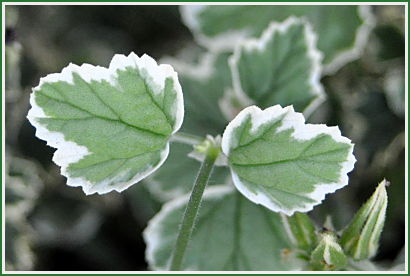
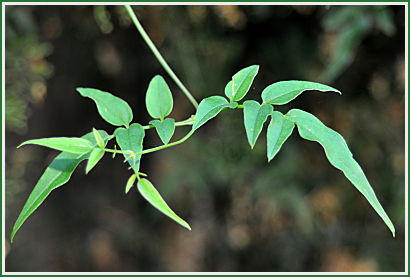
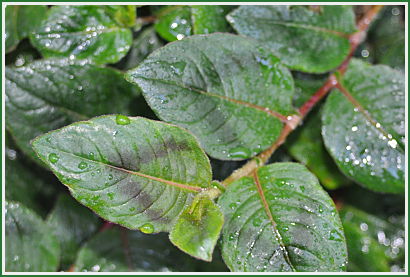
The shape of a leaf, known as the leaf margin, helps to determine the type of plant.  Leaf margins, or edges, include dentate, double dentate, crenate, ciliante, entire and lobate.  I traveled the garden with my camera this week, so I could get up close and personal with the powerhouse leaf.

The Shape of Leaves to Come

I enjoyed studying the different leaves in my garden, viewed with a more observant eye. Each plant has leaves that are fully formed, but it was also fun to observe the shape of leaves to come.  Some leaves stack in pairs, in alternating patterns, while others climb up the plants stem. My garden favorites:

Inky Leaf Coleus

Inky Leaf Coleus: Lobed

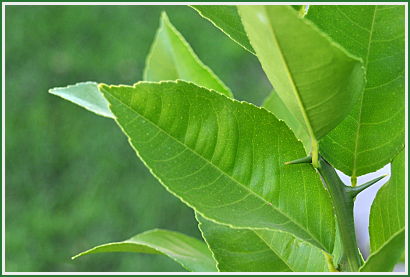
Lemon leaf

Dwarf Lemon: Entire Leaf

Scented Geranium Leaf

Scented Geranium Leaf: Dentate (or Serate)

Star Jasmin Leaf

Star Jasmin Leaf: Lobate

Clover Leaves

Clover Leaves: Entire

Resources: