Celebrating the Gardeners of In a Vase on Monday

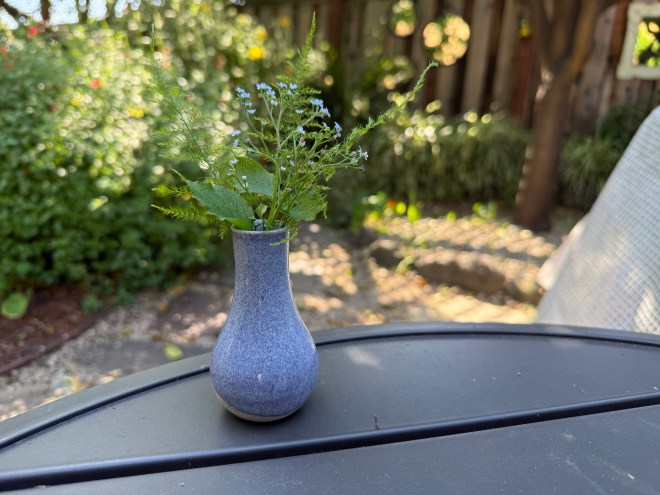
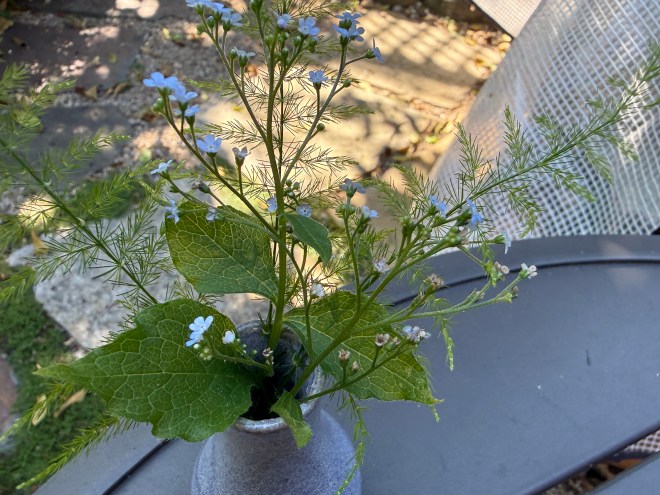
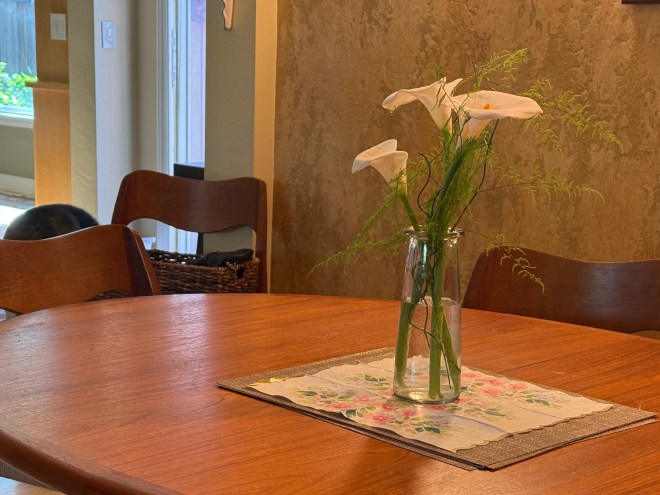
A dozen years ago, Cathy at Rambling in the Garden started a meme called “In A Vase On Monday”, or IAVOM. She wanted to challenge herself to regularly cut and arrange flowers and greens from her garden. She also challenged fellow garden bloggers, launching a wonderful garden blog meme. It’s a simple concept: cut flowers from your garden, arrange them in a jar or vase, and share them virtually with others. Gardeners post from the UK, Germany, the US, and other parts of the world. Charming, eh?

I’ve enjoyed sharing a garden vase, off and on, over the years, but I lack the dedication of the Monday Vase die-hards. I applaud all of you.

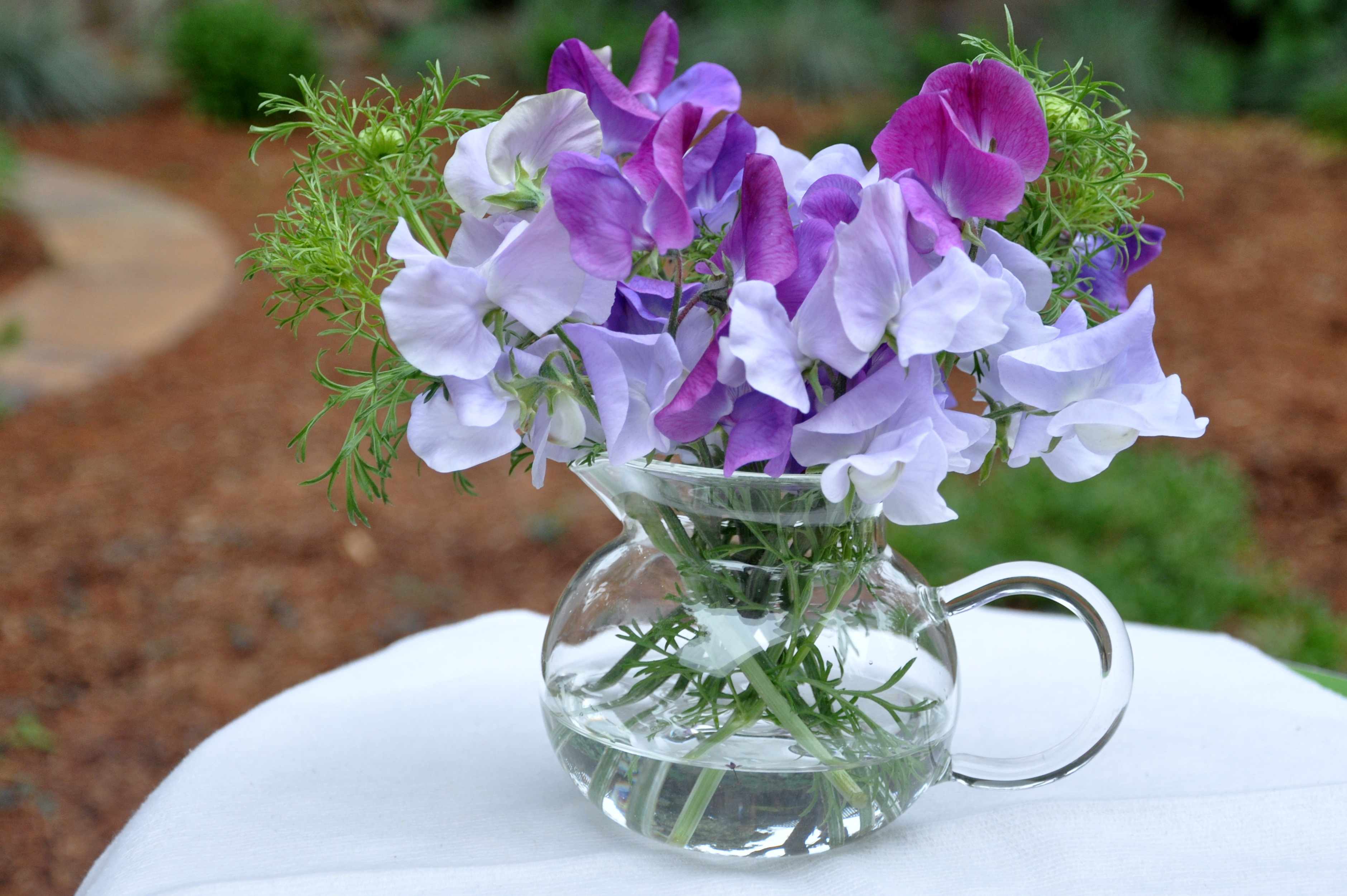
I’m sharing two vases today that highlight my joy of blogging. For me, it’s about the community formed through sharing photos and words, about finding your people in this sometimes fractious world. “In A Vase on Monday” does just that.

I’ve followed Cathy at Words and Herbs for close to 14 years. She posts a beautiful vase most Mondays. 

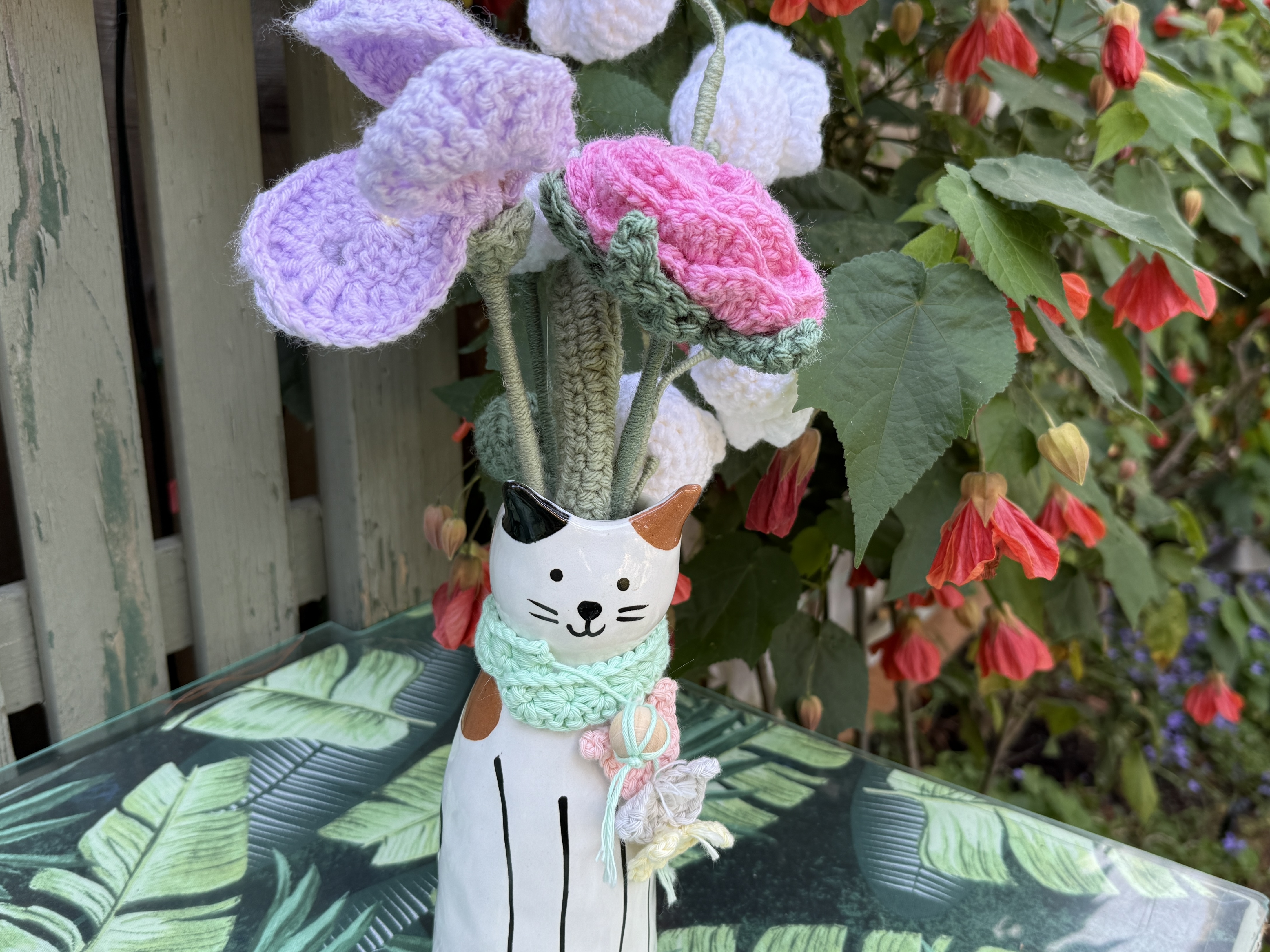
The vase below holds crocheted flowers, a Mother’s Day gift from my youngest son; however, kitty’s “scarf” is an intended bookmark, straight from Cathy’s crochet hook.

Cathy mailed several crocheted bookmarks for our Little Free Library all the way from Germany. Sweet, right? I placed some of her bookmarks in our tiny library; one became a gift topper for a friend,

A crocheted sunflower with green leaves attached to a decorative envelope featuring a floral and turtle design.
Flower bookmark
A ceramic cat vase wearing a crocheted scarf, surrounded by colorful blooms in a garden setting.
Crocheted bookmark/cat scarf

and this one is now wrapped around my kitty vase and will become part of my vase rotation. Please enjoy Cathy’s extraordinary garden at Words and Herbs. 

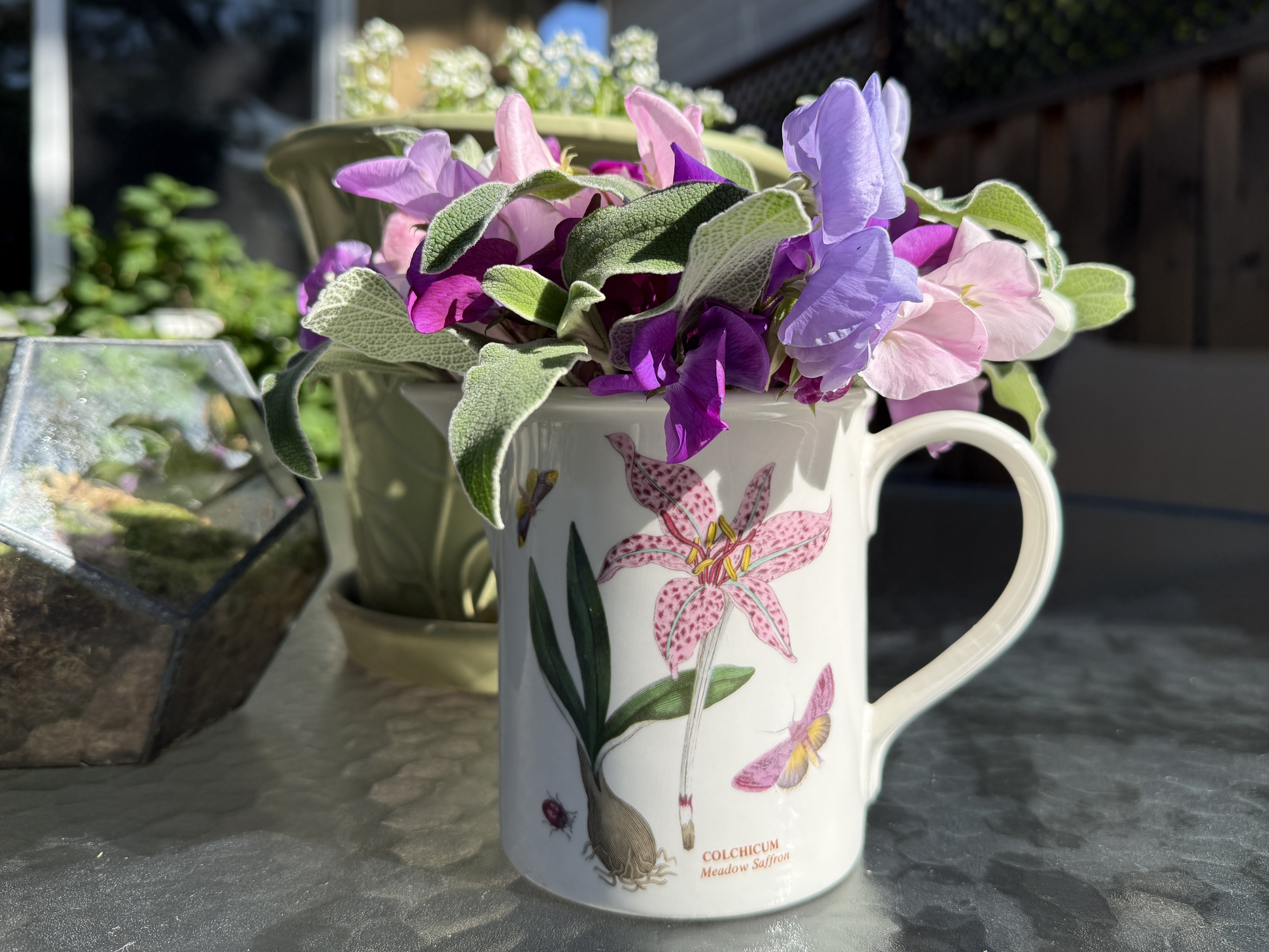
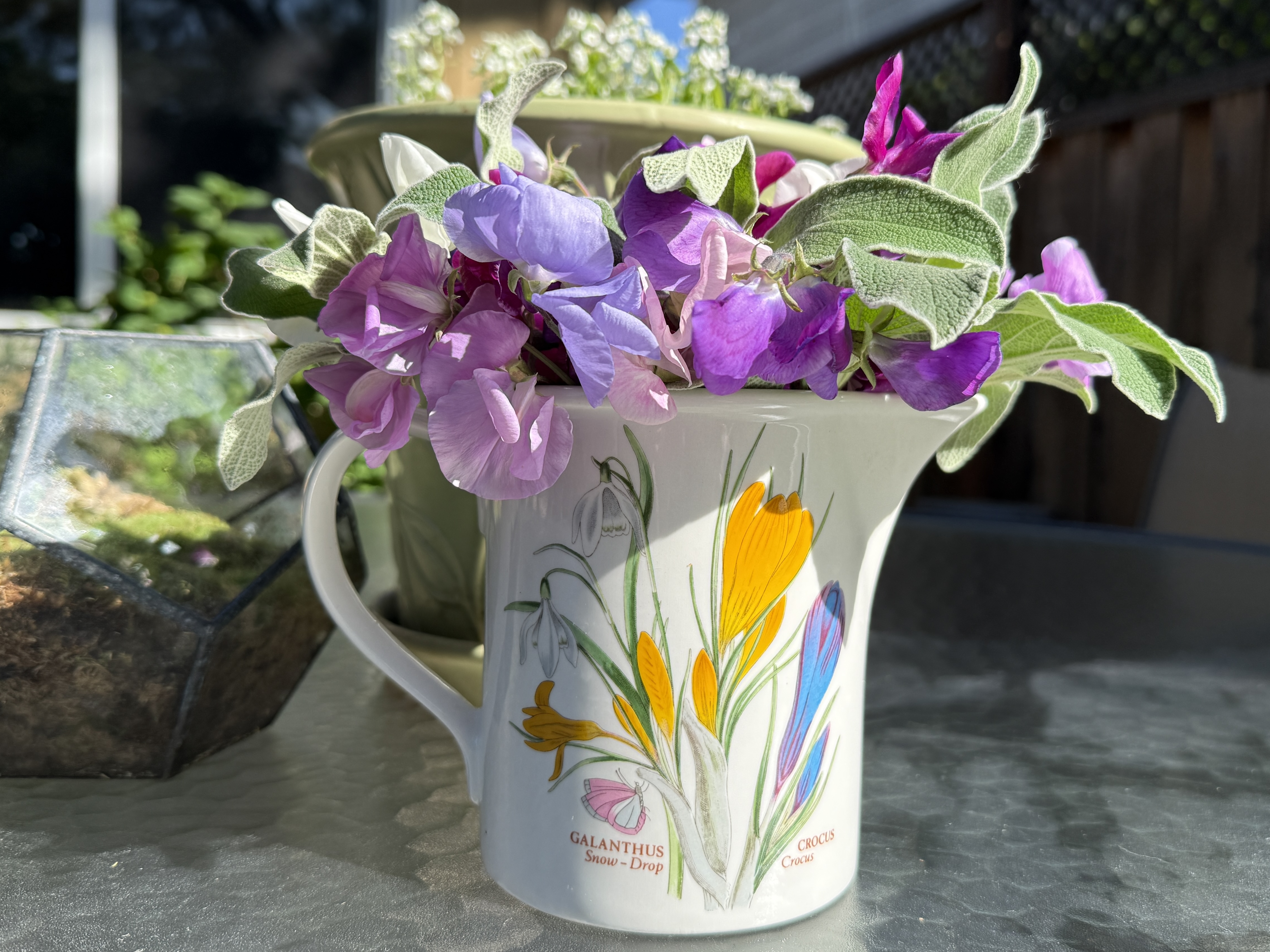
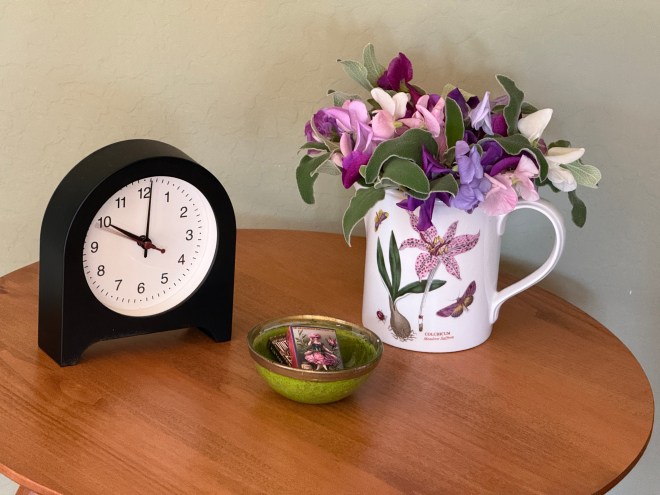
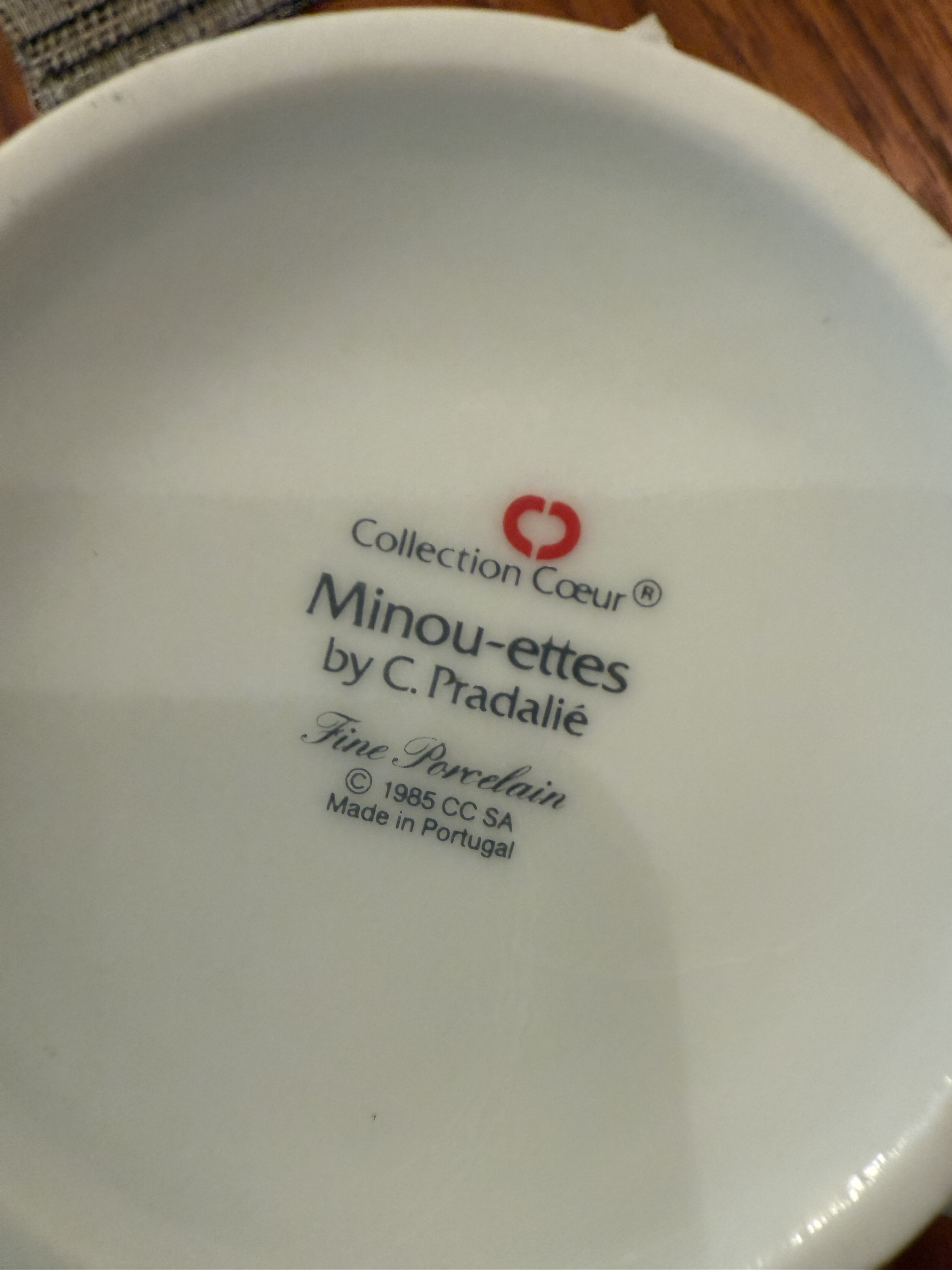
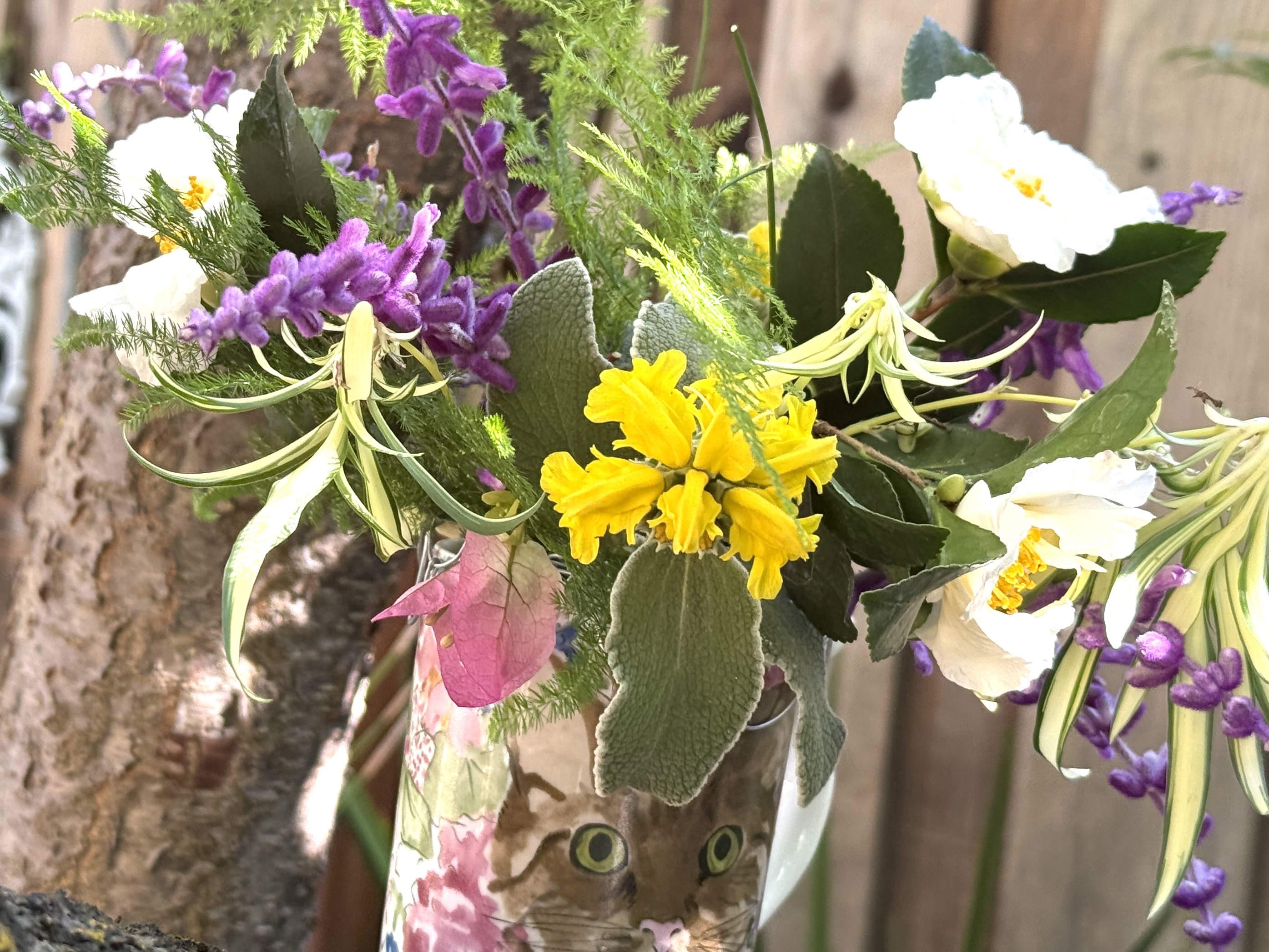
This second vase is a treasured teacup, a gift from my university friend, Carrielin. I’ve had it for forty years. In mid-October on Eliza Waters’ IAVOM post, I spotted the same cat design. I checked with Eliza to confirm, and sure enough, it’s from the same collection of porcelain art, Couer Minou-ettes, by Portuguese designer C. Pradalie. The pieces aren’t rare, but even so, it delighted me to spot the same design, with flowers, from a fellow garden blogger. Eliza shares from her beautiful garden most Mondays.

If you would like to see what these gardeners and others have shared in a vase today, please follow this link to Cathy’s blog, then check the comments for additional vase posts.

Happy Anniversary in-a-vaser’s.

Wisteria: Know Before you Grow

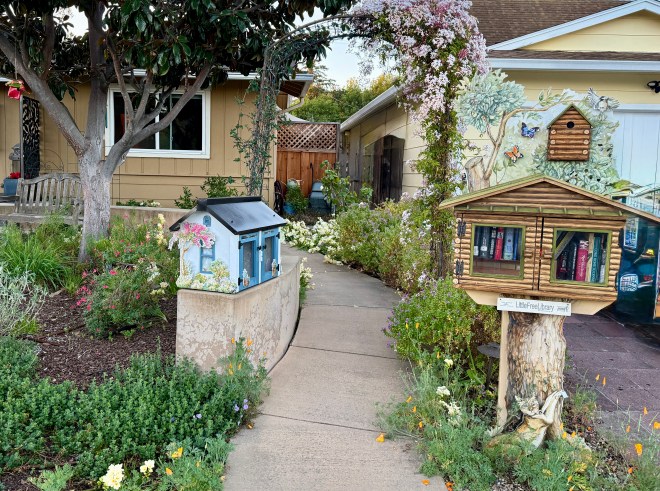
Wisteria symbolizes longevity and grace. For years I longed to have one in our garden. Aren’t they stunning? They need space to grow, though, and space is always at a premium in the garden, because nature abhors a vacuum, and this gardener feels compelled to plant any available earth.

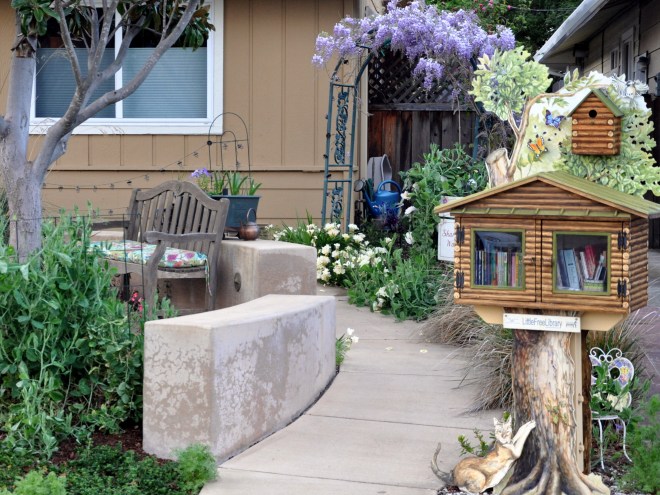
A charming garden scene featuring a stone pathway, a wooden bench with colorful cushions, a whimsical little free library made from wood, and vibrant greenery, including wisteria flowers hanging above.

Then opportunity knocked.

When our young Magnolia became infested with scale, I tried to save the tree by manually scraping the scale into a bucket —an arduous, odiferous task. The scale quickly returned, along with ants. I pruned away the center, looked at organic options, and eventually contacted an arborist, but it was all for naught.

It’s tough losing any tree, but here was my chance to grow a Wisteria vine. We repurposed an arch from the back garden, placed it at an angle in the front garden, and planted the vine. The first year of growth was underwhelming, as it often is, but in the years that followed, the vine took off. It flowered vigorously in early Spring, then sent out a second set of blooms later in the year.

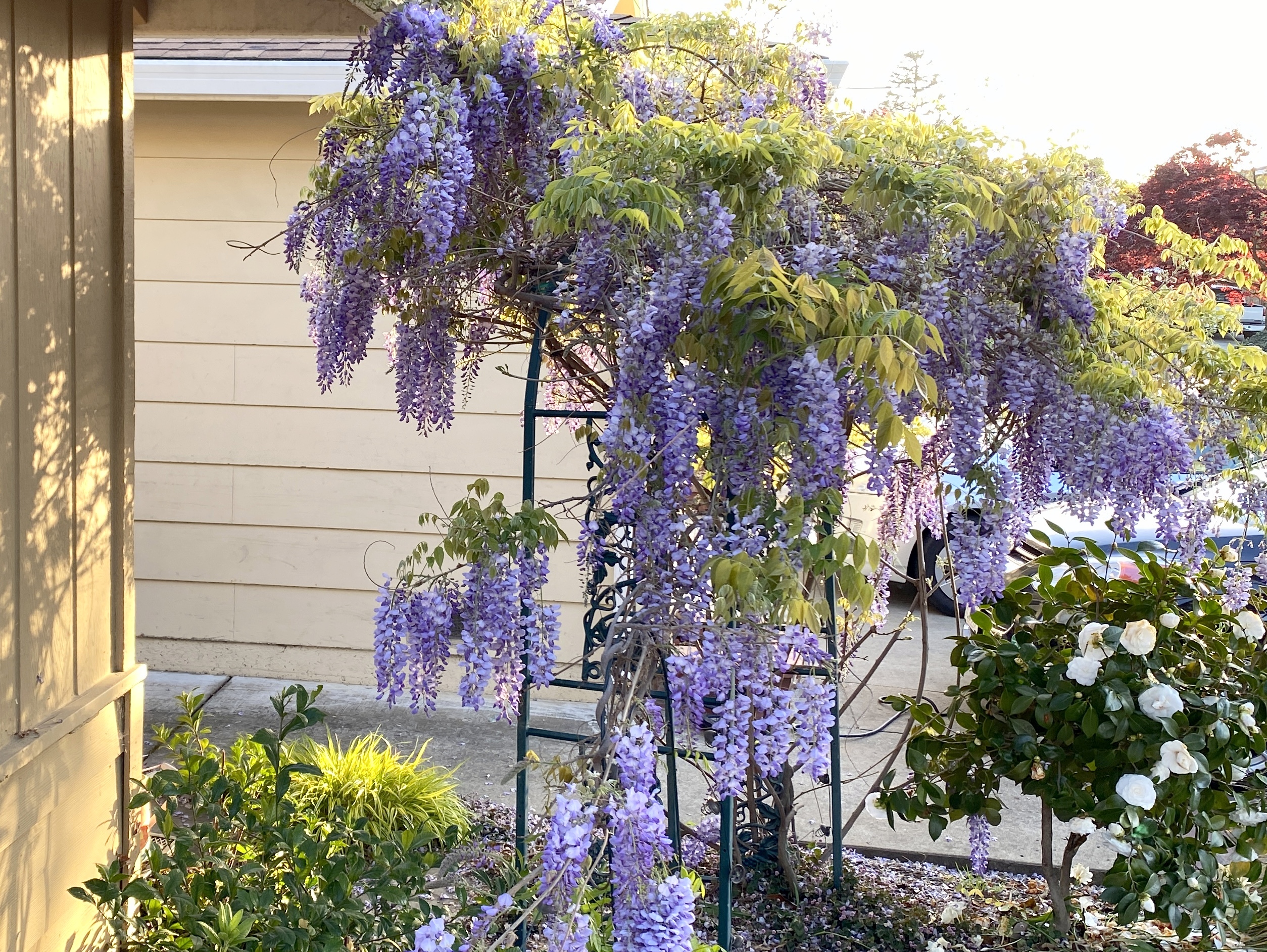
A vibrant Wisteria vine with cascading purple blossoms, growing over an arch in a garden, with a fenced area and other plants in the background.

At some point, though, the tree went from vigorous to invasive. I couldn’t keep the tendrils off our roof, our neighbor’s roof, a nearby tree, and so on. Clearly, I should have done my research, as I recently read that it is “known for its vigorous and potentially destructive growth.” Now they tell me.

I get attached to plants and trees, and this was no exception, but I’m pragmatic as well. Risking life and limb, damage to the house and the tree nearby meant it had to go.

It was labor-intensive. I started with small garden shears, graduating in size to the base of the tree’s substantial girth. I tried digging out the roots, then Mike had a go, until it became apparent the roots would need to be removed by a tree stump removal service.

A landscaped yard showing a pathway leading to a house, surrounded by green plants and a small tree.
Space after removing Wisteria

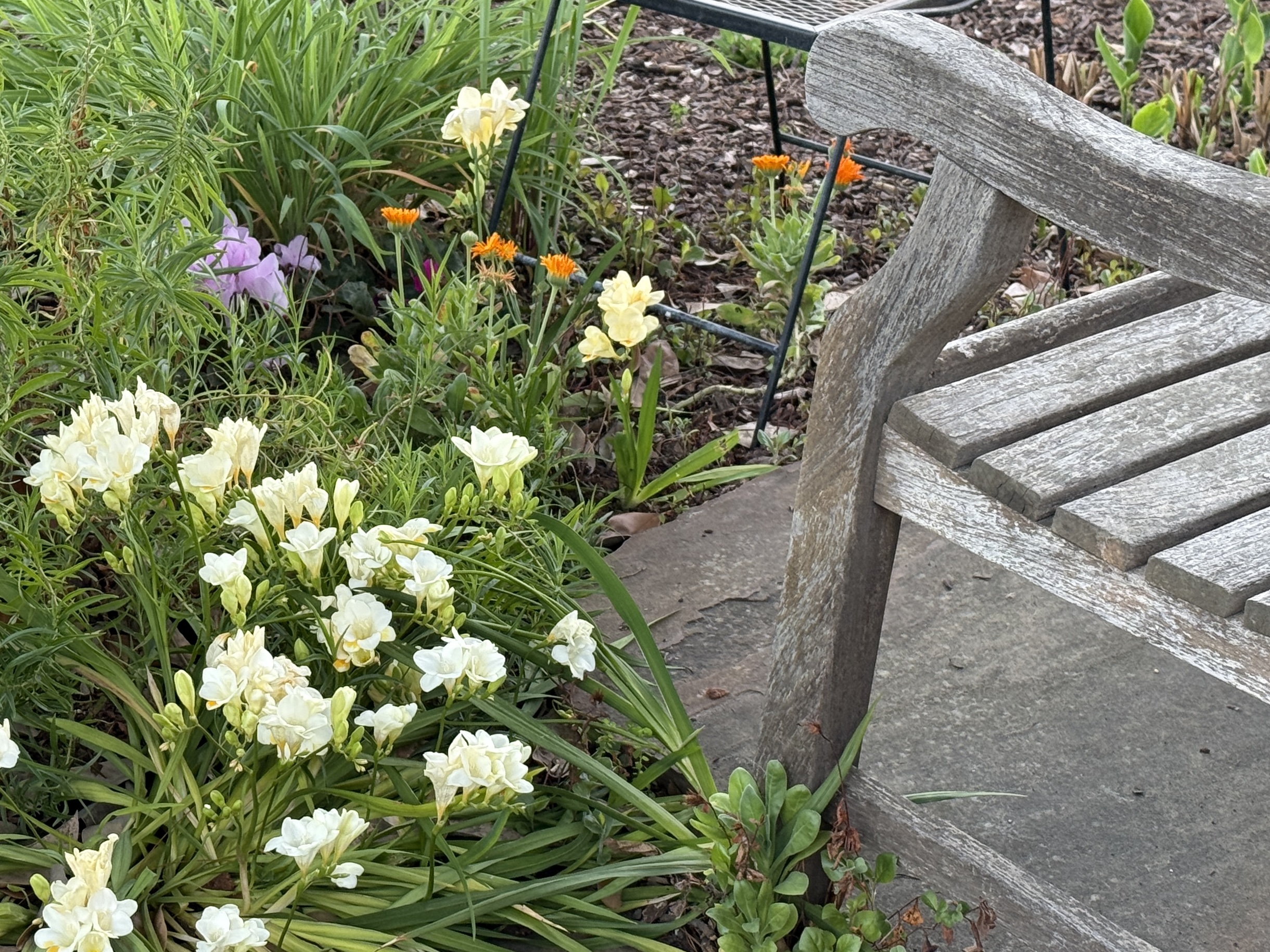
The space looked empty for a time, but I’ve since planted several succulents that had outgrown their pots. They took to the spot immediately, and by next Spring, they will be well established. They’re also water-wise plants that don’t require much fuss. The freesias came up quickly around the stone walkway, but it will be several months before they flower.

A close-up view of a garden bed featuring various succulent plants and green shoots along stone pathways, with mulch covering the soil.
View of a garden with a large Magnolia tree, featuring a stone walkway and various plants, including succulents and freesias, set against a suburban street.
Walkway facing street

Lesson learned: know before you grow.

May Flowers

As my mobility improves post-hip surgery, I find getting up and down in the garden easier. Over these past weeks, I’ve brought the weeds under control, making daily weeding more manageable.

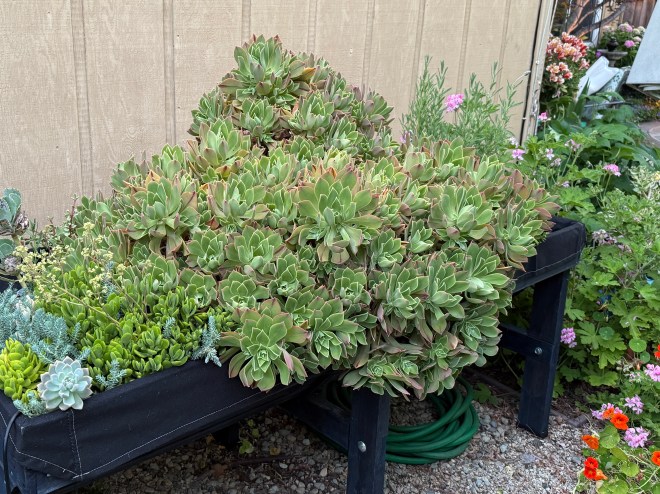
Yesterday, I looked under the veg trug, now home to a collection of well-established succulents, and spotted a just-out-of-reach oxalis, an invasive plant considered a weed in this area. My inner monologue cautioned against it, as I would have to kneel on the gravel path, bend at the waist, twist my neck, and then reach back to grab the weed. If you know anything about oxalis, you’ll know that the roots are strong and rarely willing to part company with the earth. I could have retreated and found my kneeler and a garden fork, but impatience got the better of me, and I went for it. Success! The weed is gone, I returned to an upright position, and I’m none the worse for wear. It’s the little things.

As I putter about, there’ve been joyful discoveries in the garden this year. Just a few days after commenting to Mike that I missed the self-seeding cornflowers, a beautiful, single, purple stem of one appeared in the front garden. They used to produce an impressive array of colors in pinks, blues, and purples, but equally rewarding, the birds loved the seeds.

The first of the cornflowers

When the plants were producing well, I spotted several birds feasting in the late afternoon. I left the plants past their prime so the birds could enjoy the bounty, and I assumed my seasonal crops resulted from dropped seeds. Then, for reasons unknown, they didn’t return. Seeds can lie dormant in the soil for various reasons, so perhaps they’ve been missing the garden secret sauce required for a prolific crop. Now at least one has returned. It makes me happy.

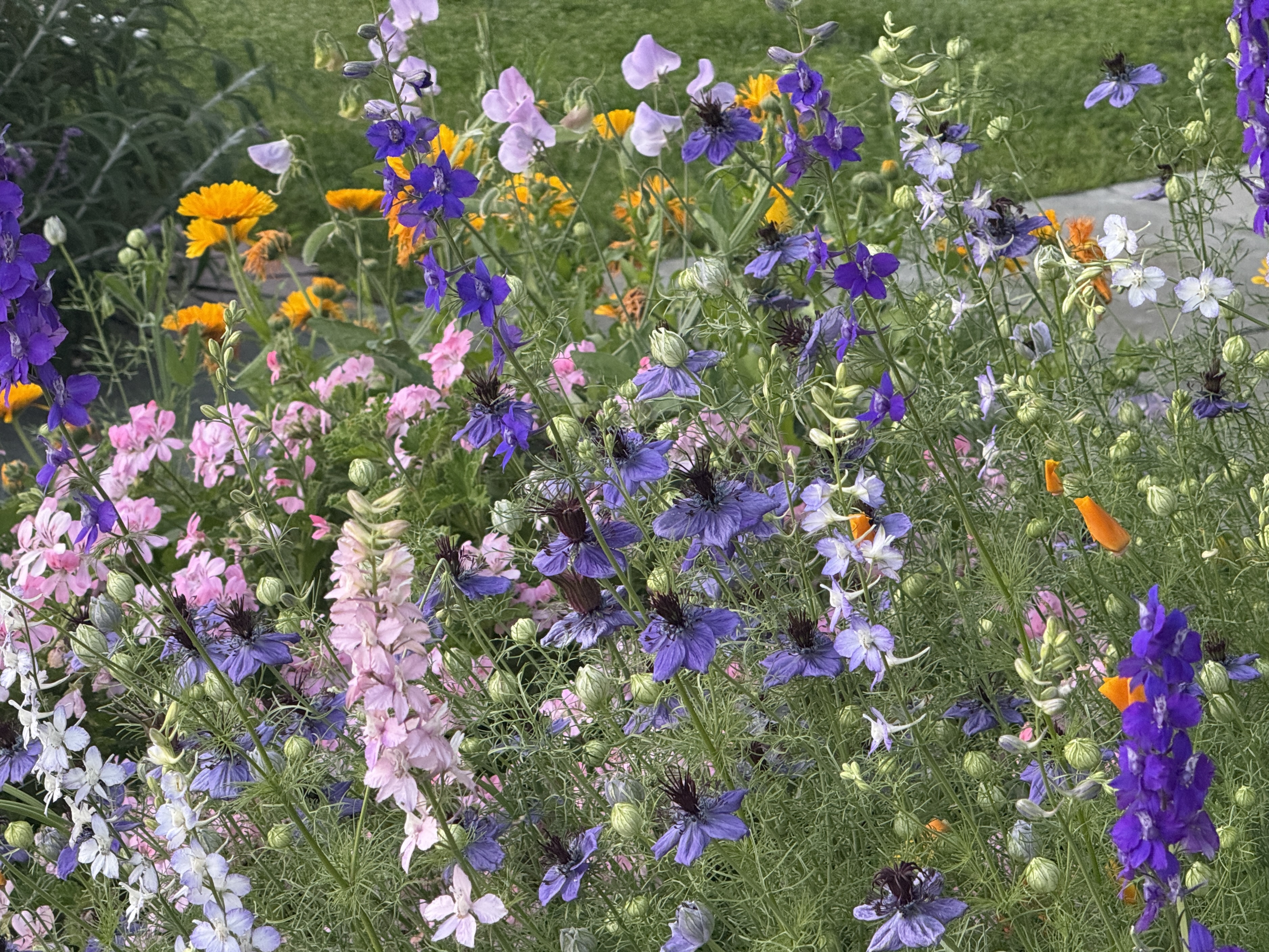
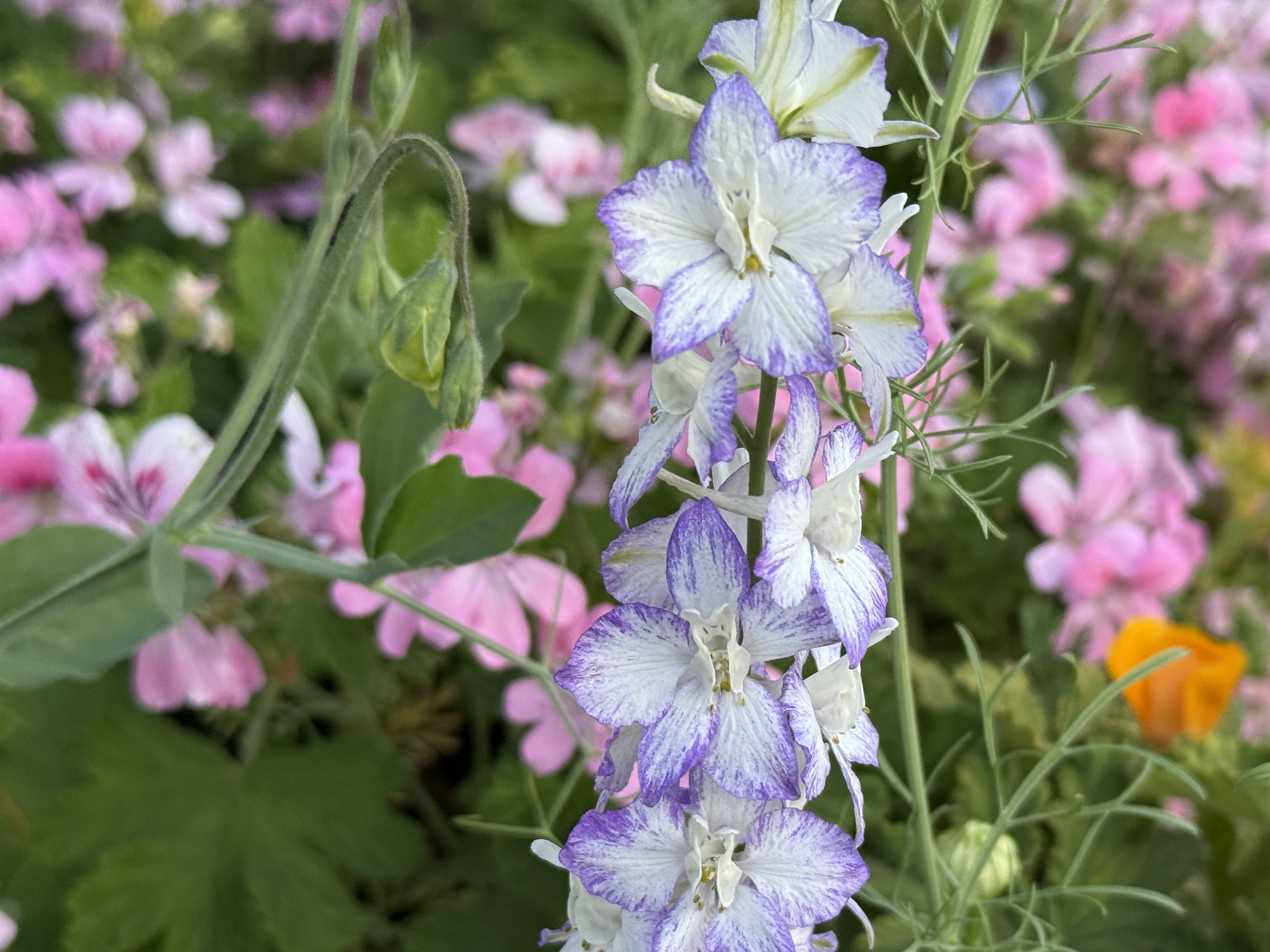
Also new(ish) is a tall, slender, annual flowering amongst the California poppies and nigella along the driveway. My phone identifies the flower as a Delphinium. Last year, a single flower emerged in the same spot, so I looked it up to be sure it wasn’t a weed. It went to seed and then I gave it a good shake, allowing the seeds to fall to the earth below. Now they’re back, standing tall and looking lovely.

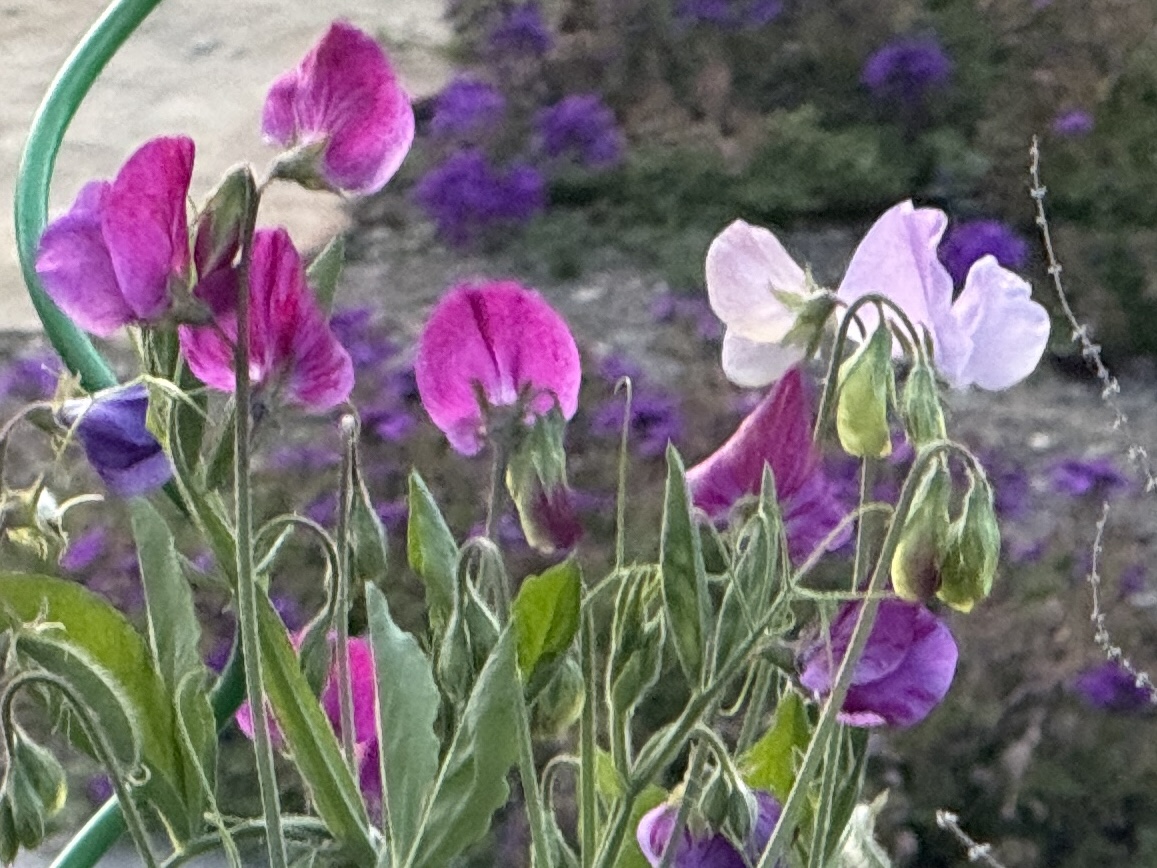
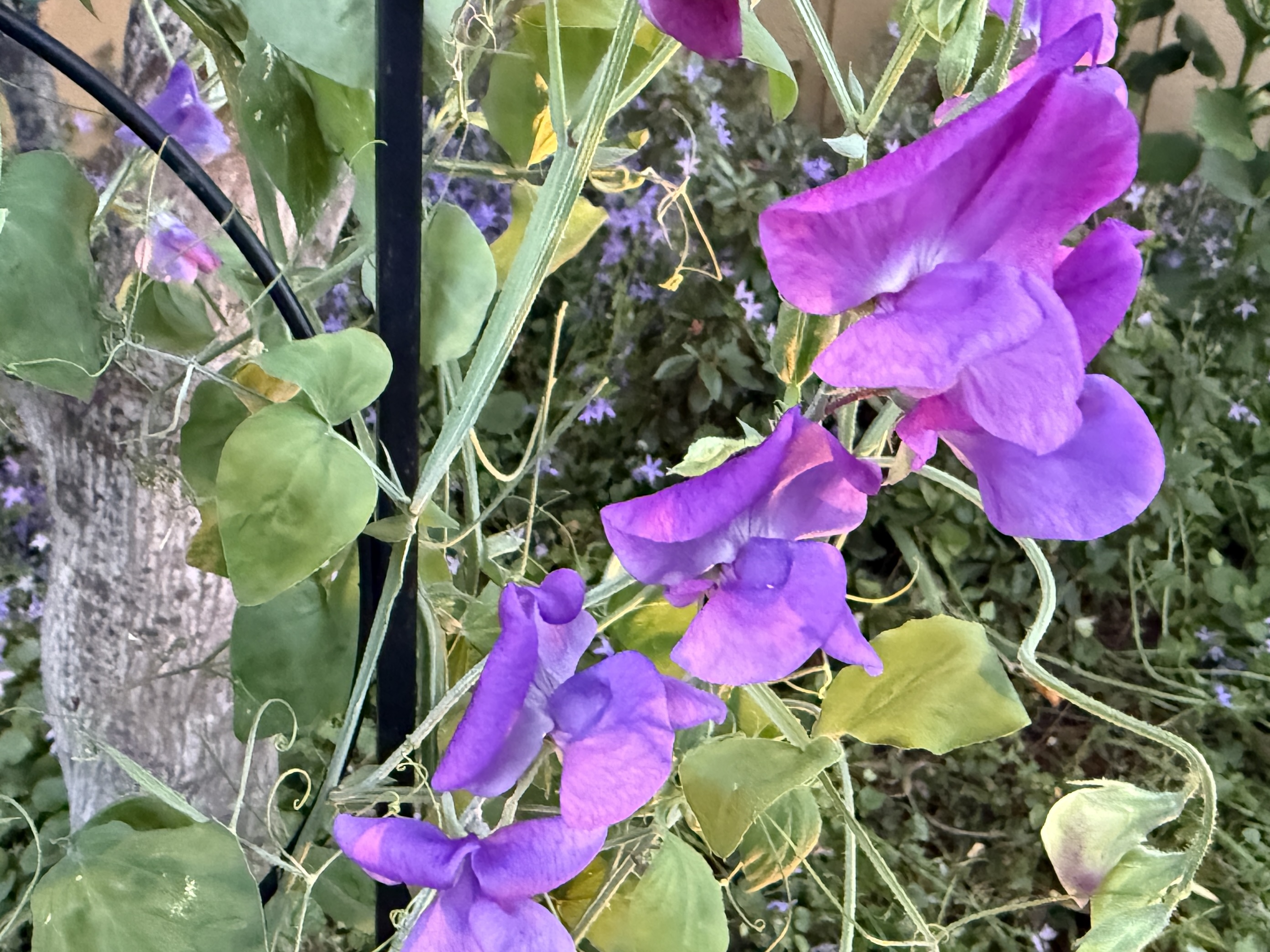
For the first time, a sweet pea, usually prolific in the front garden, traveled with some transplanted bulbs last fall, and it’s now growing under the maple tree in the back garden. I gently wrapped the trailing vine to a trellis, and it’s growing with abandon.

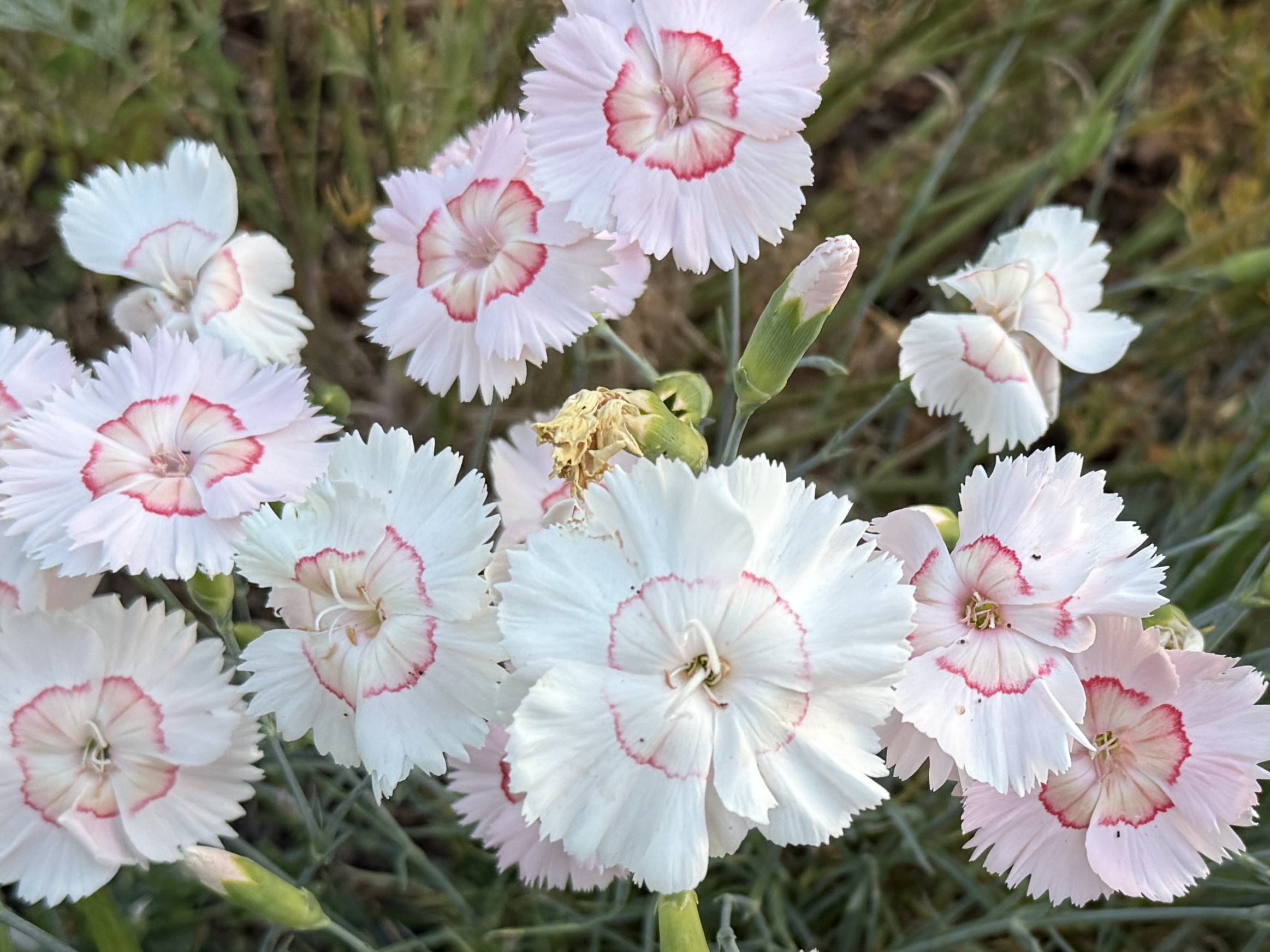
The carnations we planted last year have doubled in size and production, enough so that I’m comfortable cutting a few for a vase.

Mike dug holes for a pair of tomato plants, and as always, we cross our fingers and hope they like the new spot. Our tomato production is spotty at best, but the sweet flavor of a garden-grown gem keeps us trying year after year.

I’ve been playing in the dirt my whole life, and though my body has aged, gardening never gets old.

Earth Day: If Nasturtiums Ruled the World

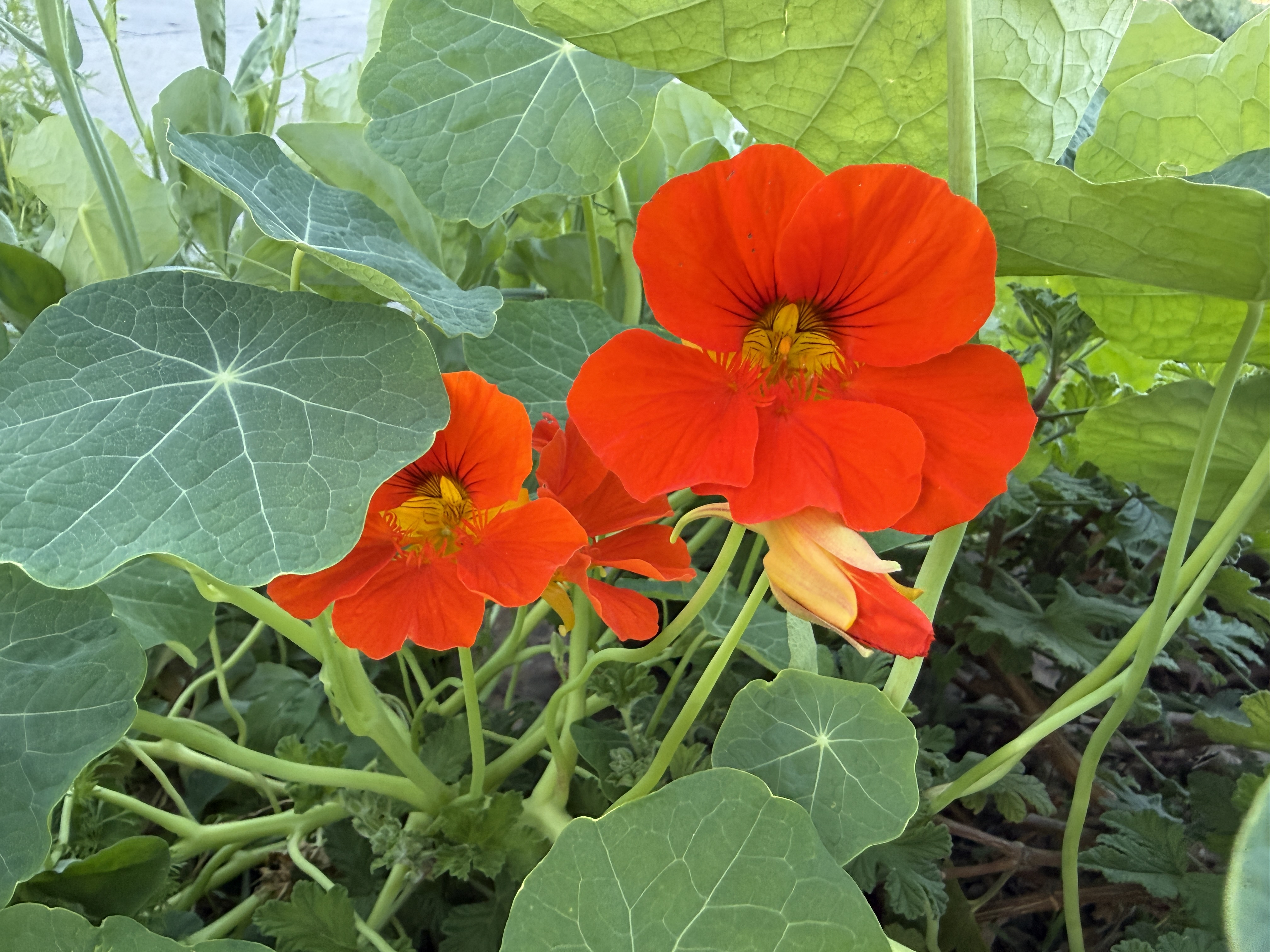
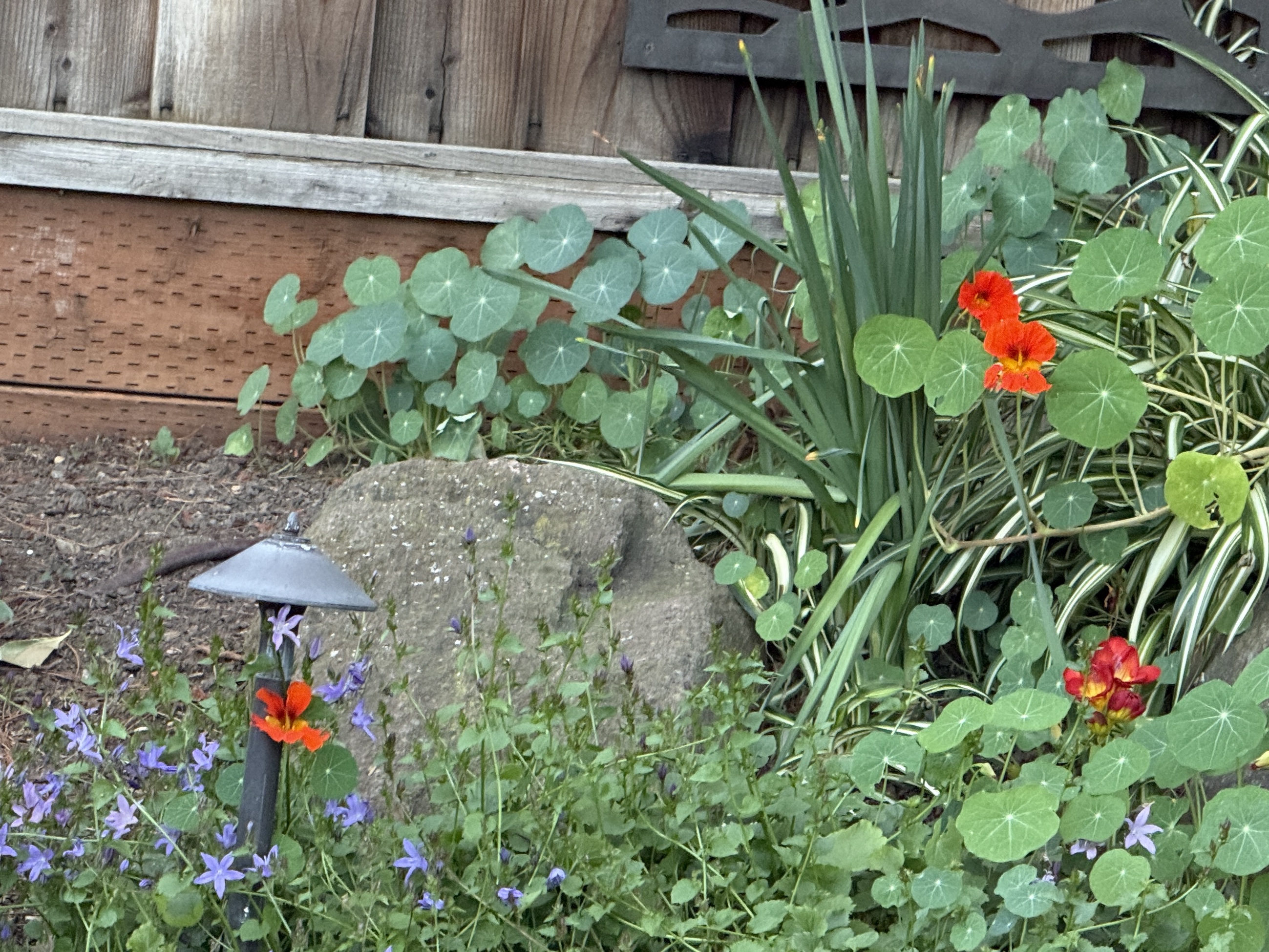
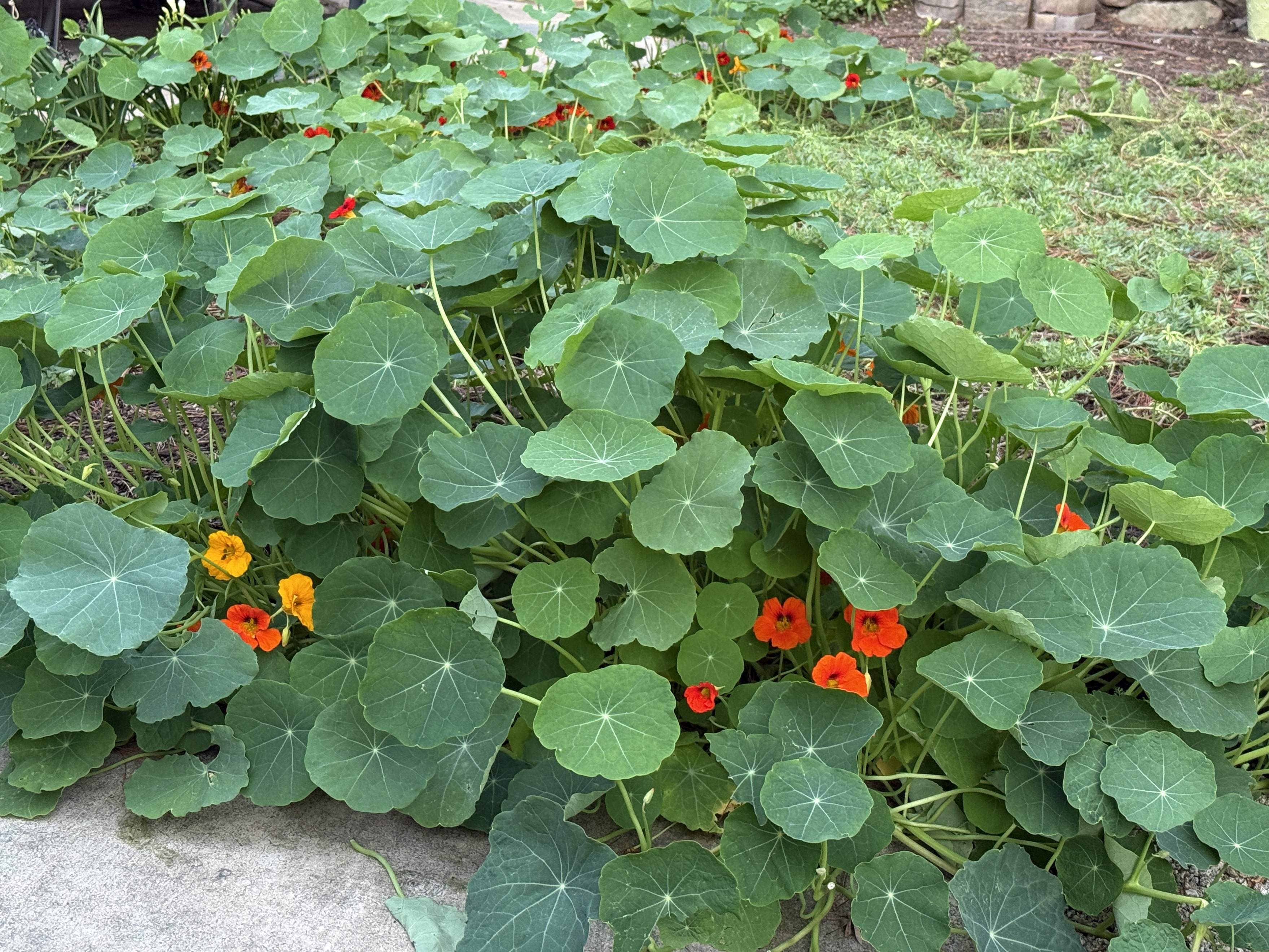
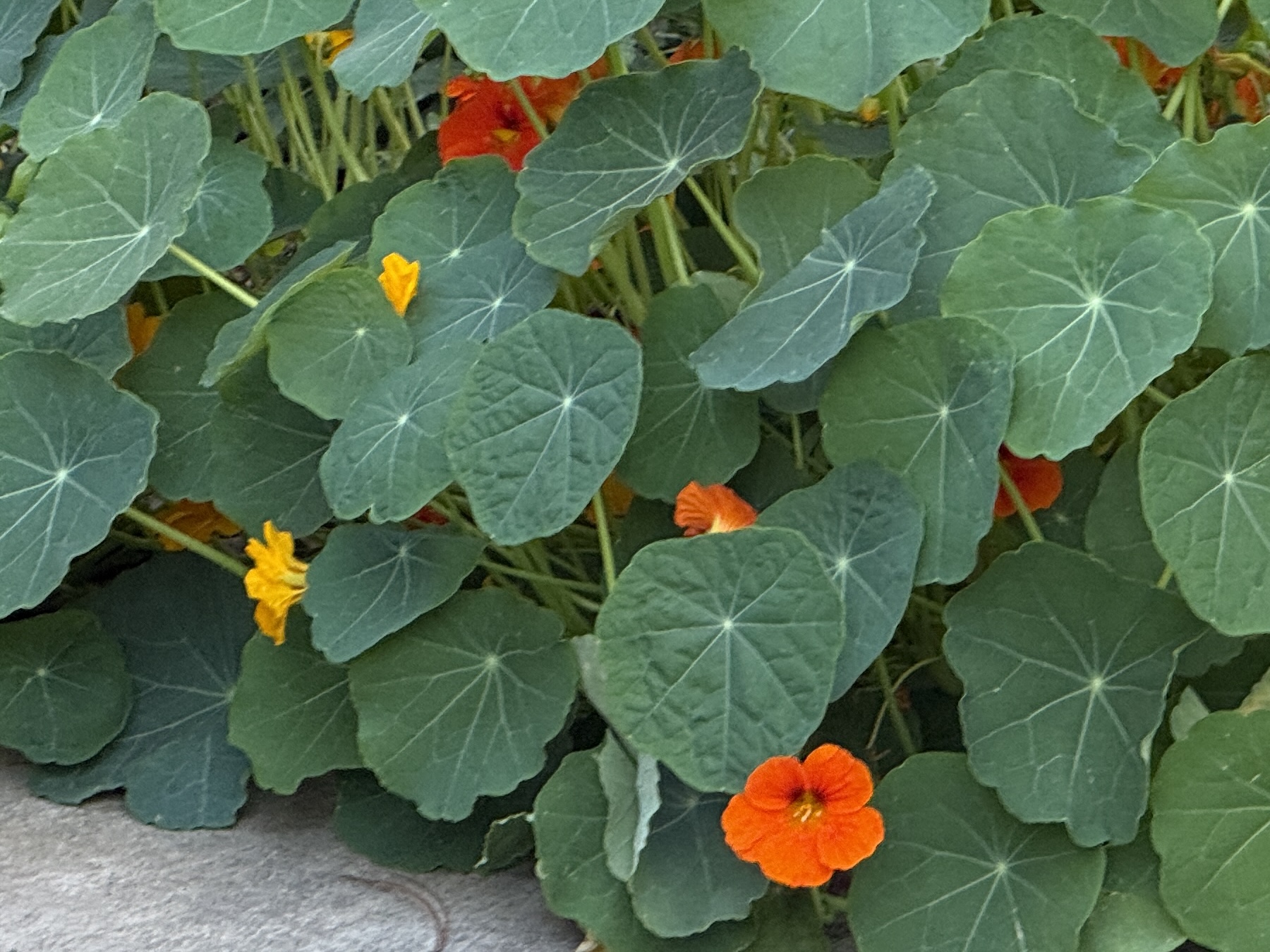
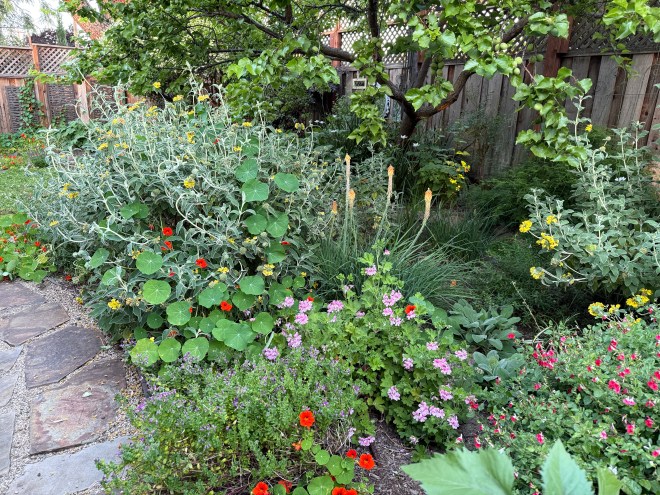
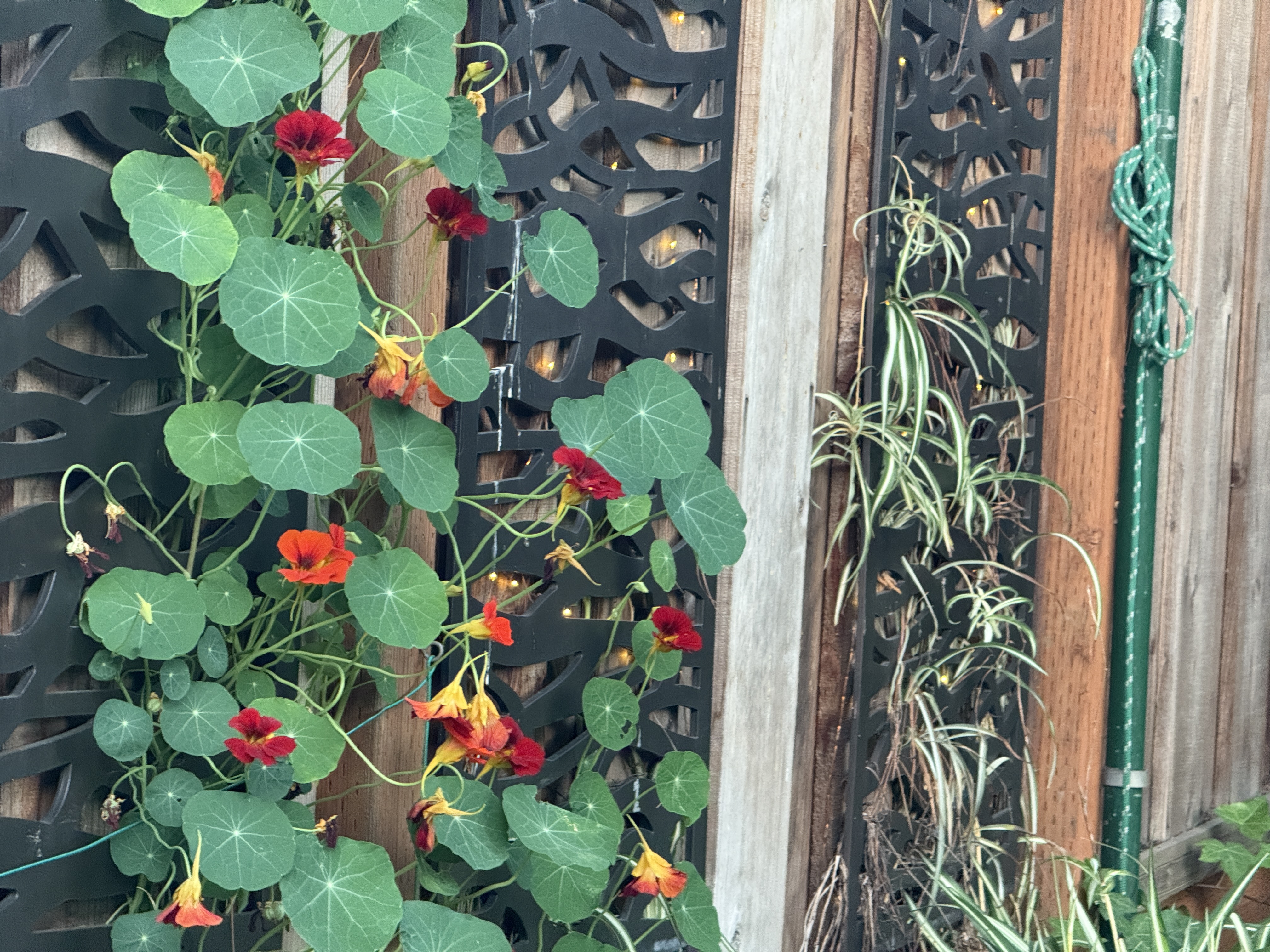
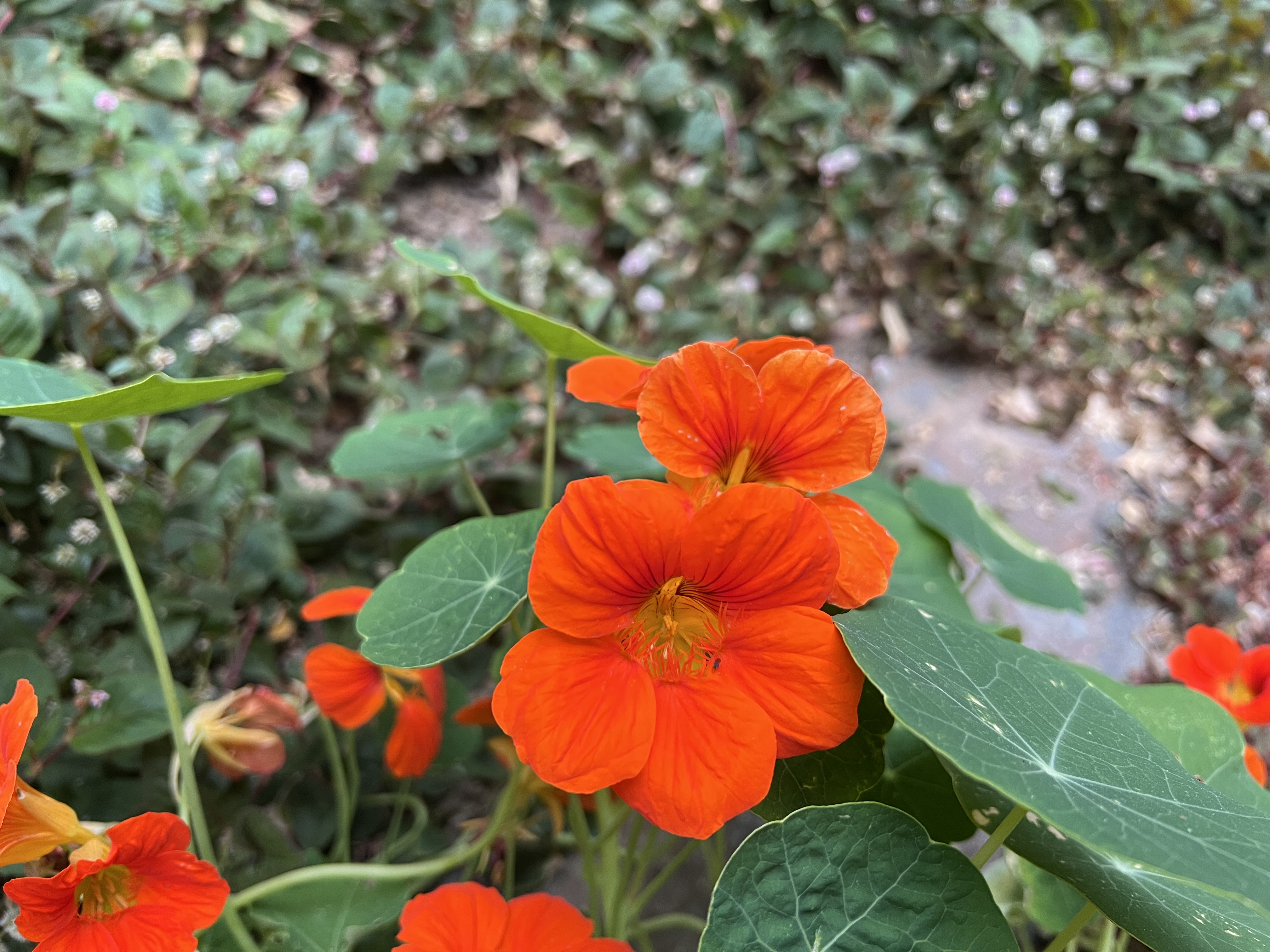
Nasturtiums have taken over the garden this spring. They bloom exotic oranges, sunny yellows, and a few brilliant reds. Leaves shaped like small lily pads are often as big as saucers. Leaf size varies, each slightly ruffled around the edges with a stem supporting the leaf like a delicate umbrella, filtering the sun yet inviting the light.

Nasturtiums are happy in the sun and the shade. They return year after year, asking for little in the way of watering and pruning. A gentle rearranging of the meandering vines keeps the walkways safe from trips. They play well with others, happy to twine themselves up nearby shrubs or carry on down the path.

Depictions of nasturtiums appear in botanical art and paintings, much like geraniums. They’re a flower for the people. These garden gems stand tall, faces lifted toward the sun, gently bending with the breeze that moves across the garden late in the day.

The flower and the nasturtium leaves are edible, containing various minerals and antioxidant compounds. They could feed the masses if we could replicate all that goodness.

If nasturtiums ruled the world, they would remind us daily how nice it is when we all get along. They would stand for justice, fairness, honesty, and respect, leaning on each other for support in all their beautiful shades.

Thank you, planet Earth, for all your gifts.

On this Earth Day, we will all try to do better.

A bit about Earth Day from Wikipedia:

“In 1970, the seeds that grew into the first Earth Day were planted by Wisconsin Senator Gaylord Nelson. An ardent conservationist and former two-term governor of Wisconsin, Nelson had long sought ways to increase the potency of the environment as a political issue. The extraordinary attention garnered by Rachel Carson‘s 1962 book, Silent Spring, the famous 1968 EarthriseNASA photograph of the Earth from the Moon, the saturation news coverage given to the Santa Barbara oil spill[18] and the Cuyahoga River catching fire in early 1969[19] led Nelson to think the time was ripe for an environmental initiative. As a result of interactions with his staff and with Fred Dutton,[20] a prominent Democratic operative who had been Robert Kennedy’s presidential campaign manager, Nelson became convinced that environmental teach-ins on college campuses could serve as such a vehicle.[21

Gardening Without Rain or Pain

After a parched January, the skies opened up and delivered much-needed rain. I’m grateful for every drop. It’s fun to imagine droplets trickling down to the garden’s roots, perhaps encountering an earthworm as they travel. After years of gardening and drought in this semi-arid state, I take nothing for granted.

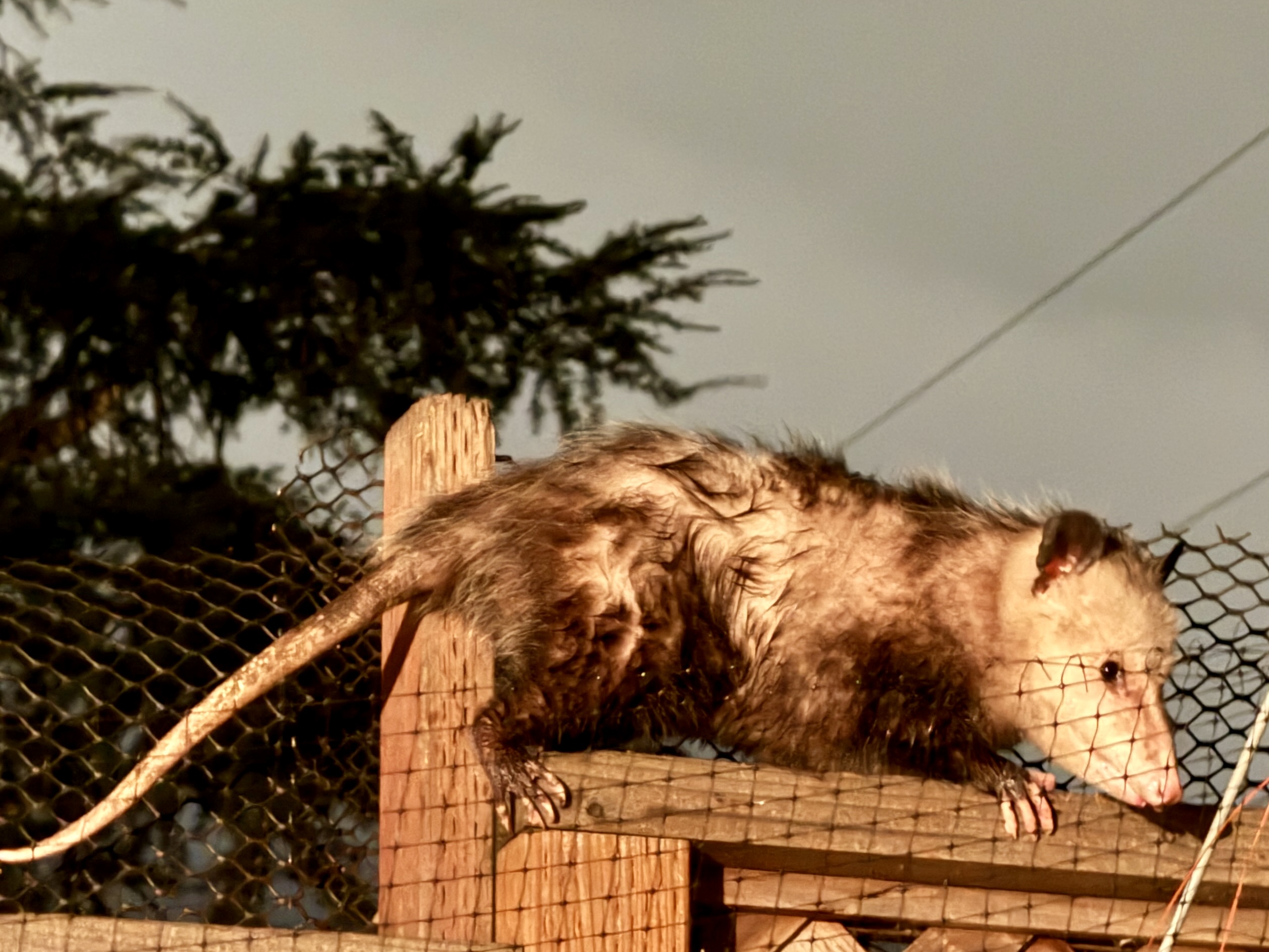
Various birds, squirrels, and perhaps this Virginia Oppossum drink from our fountain and the smaller birdbath on our deck. All thirsty guests are welcome.

We had one week in January with unseasonable temps in the seventies (F) and no rain; Mike ensured these water sources were clean and full.

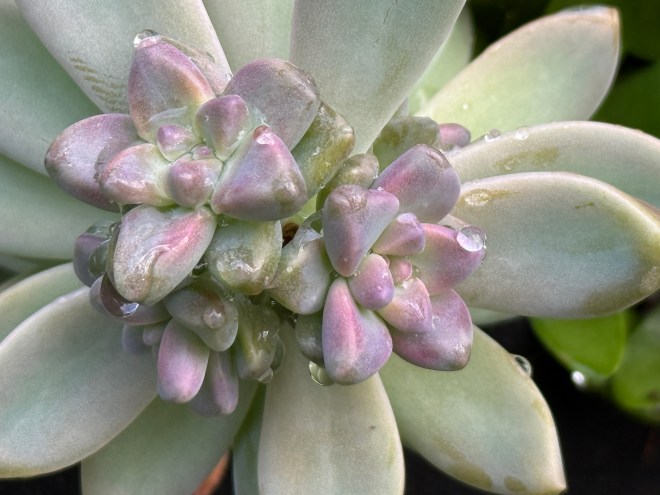
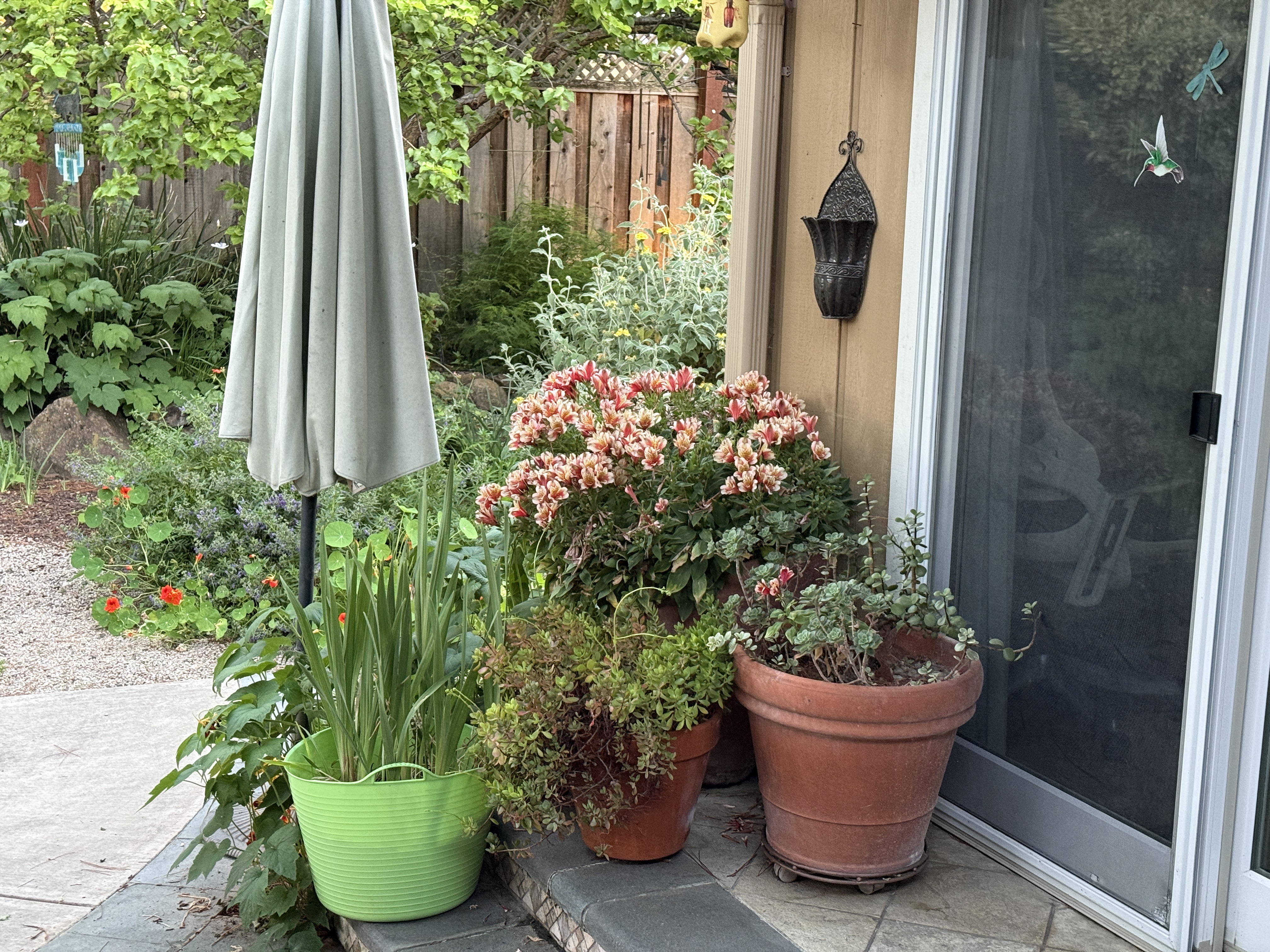
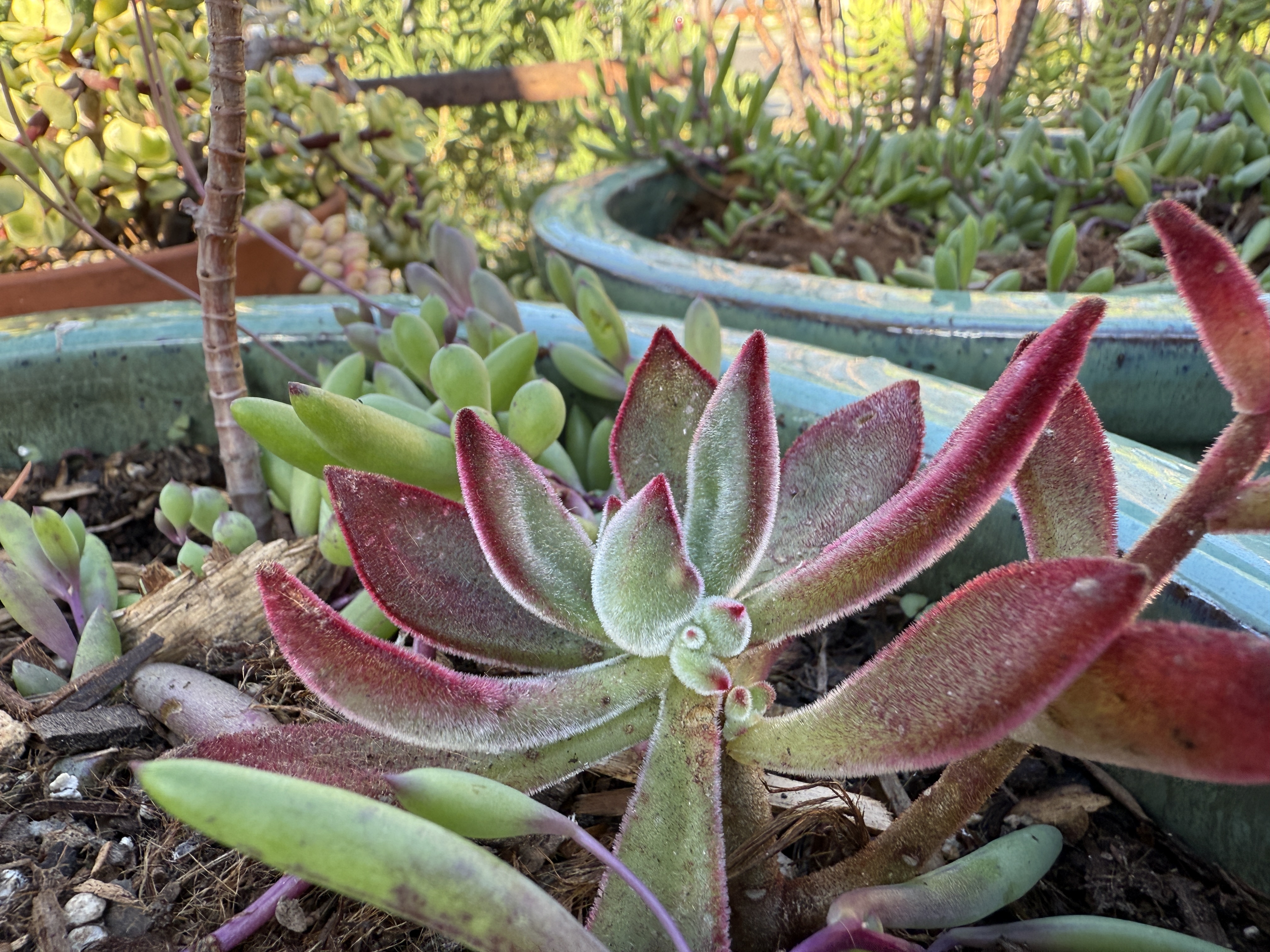
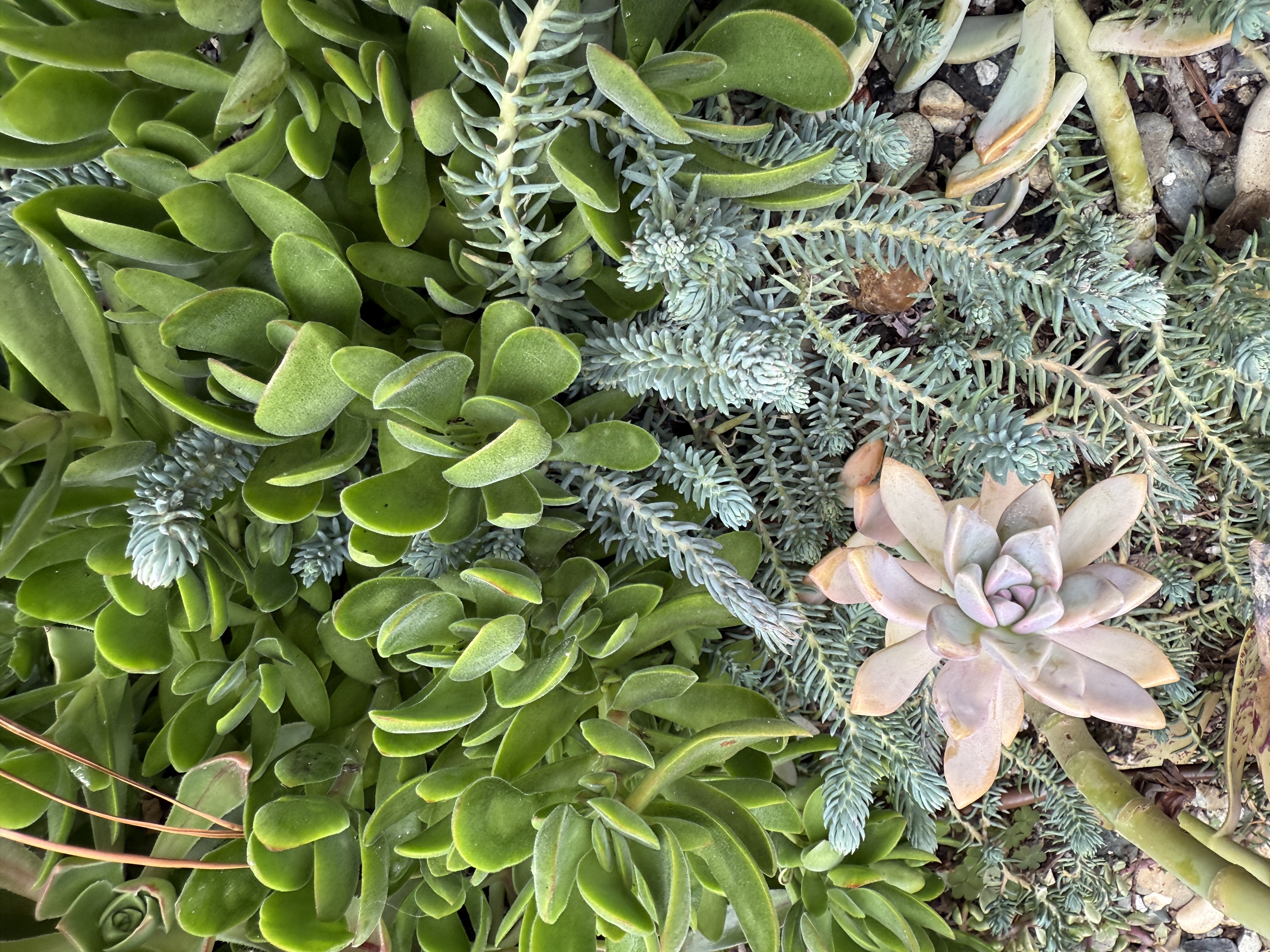
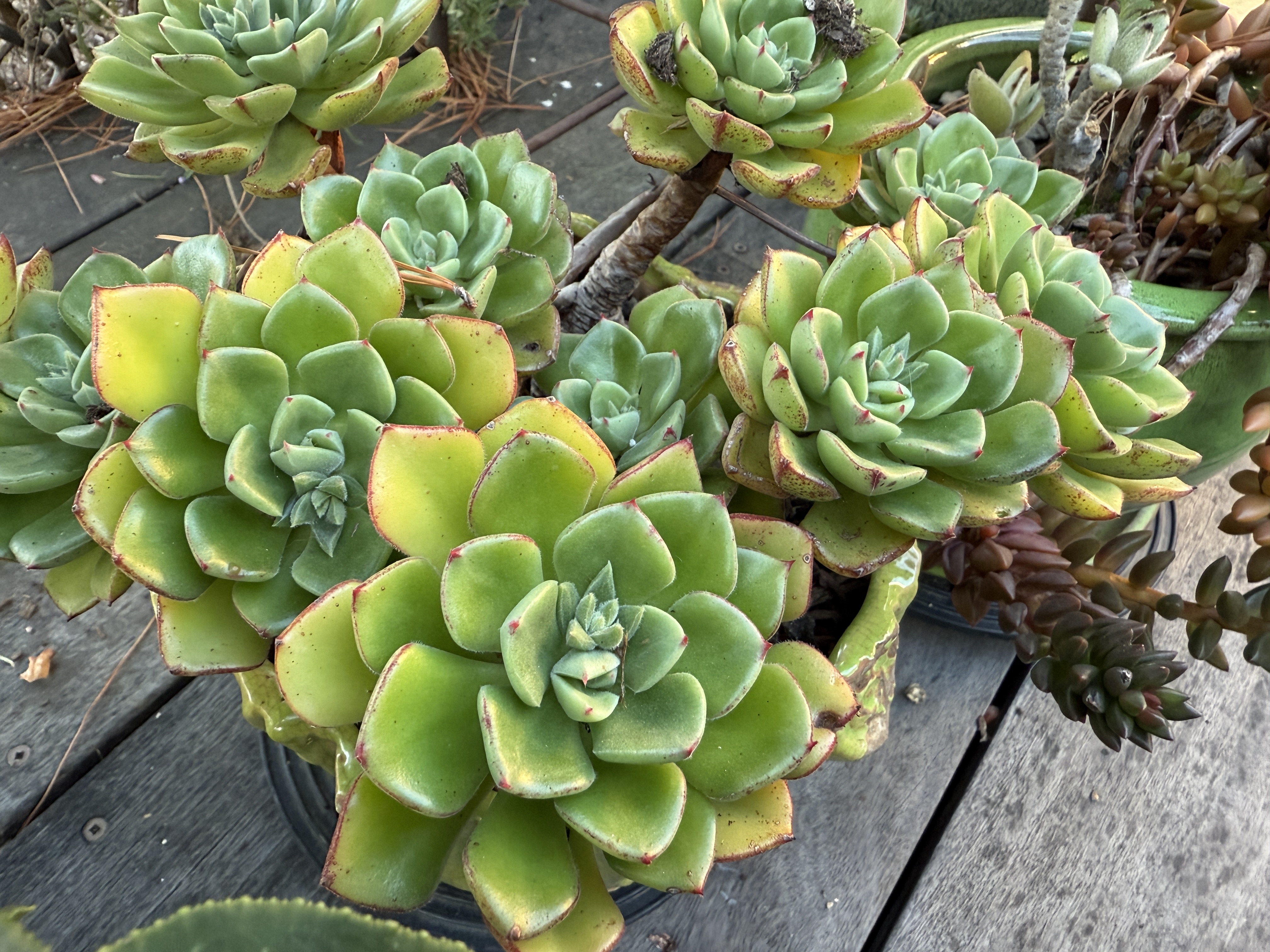
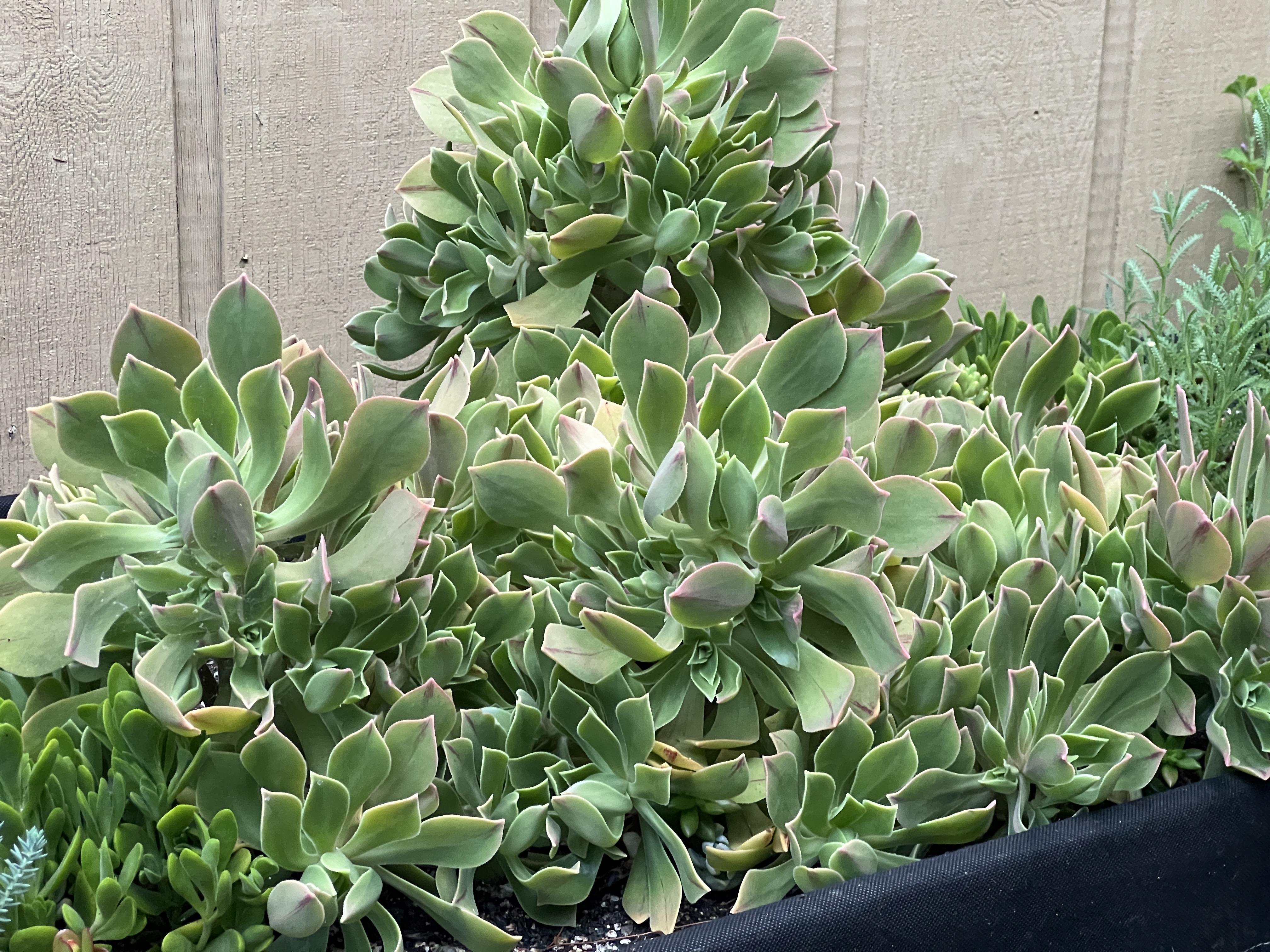
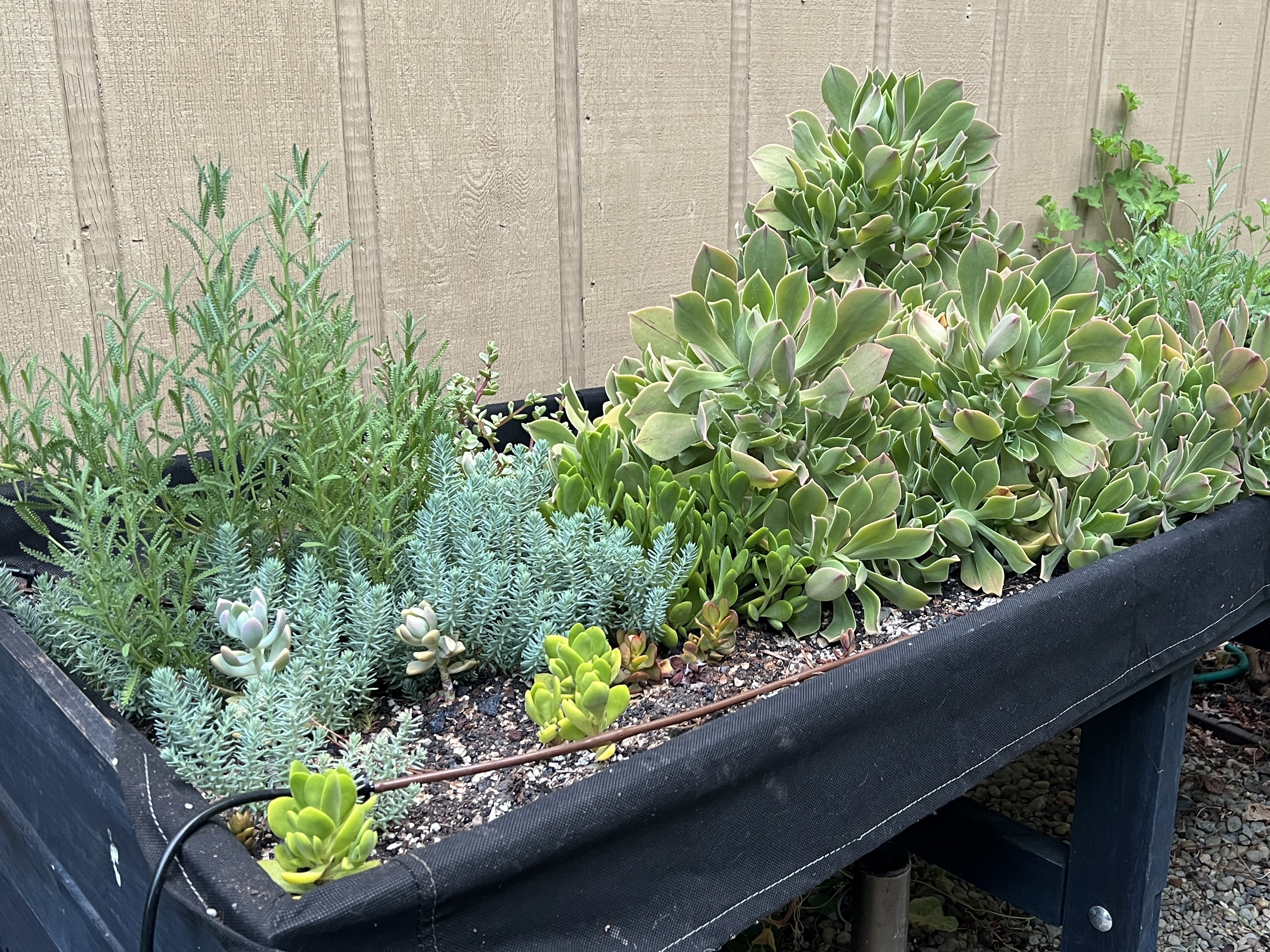
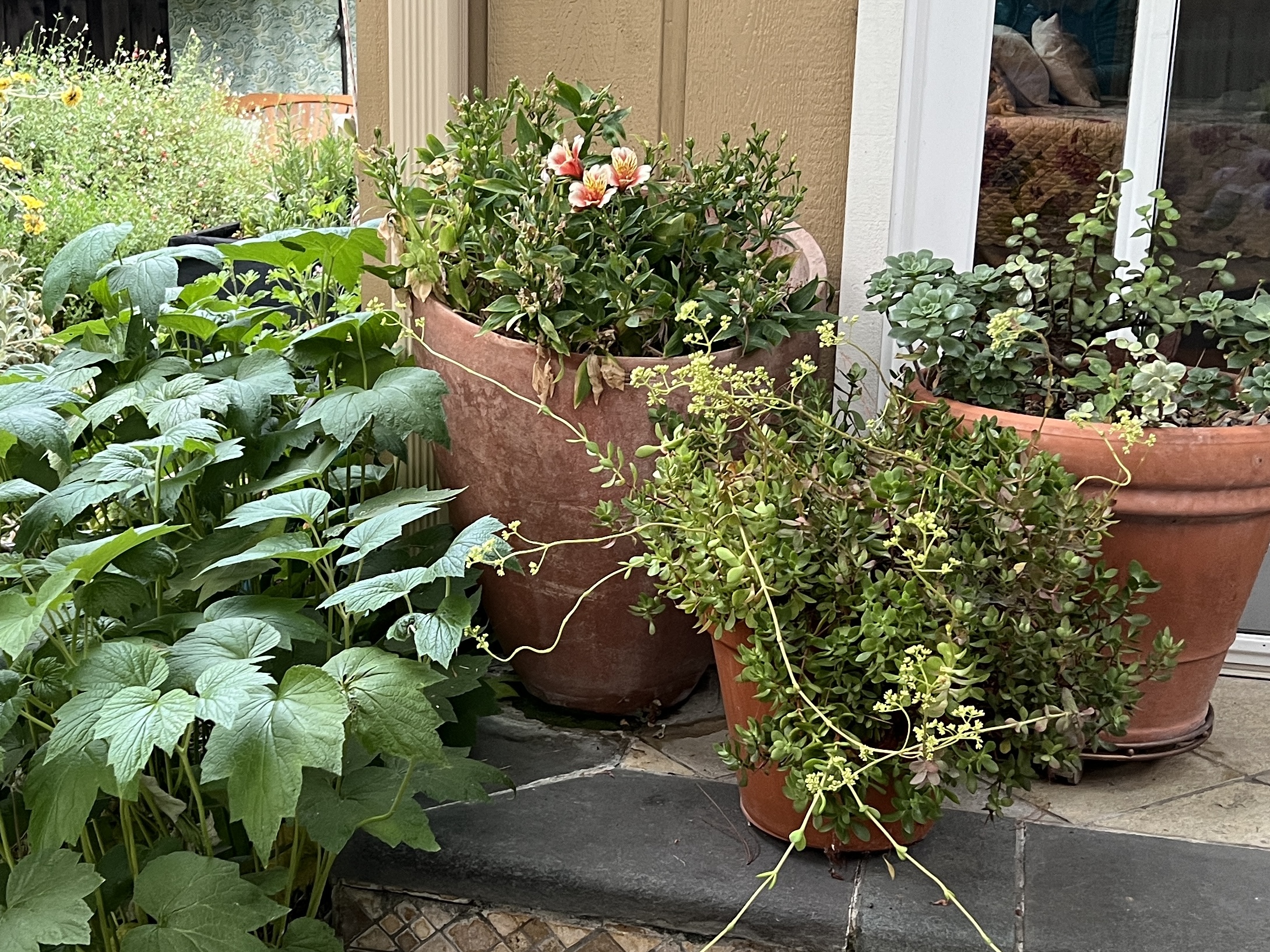
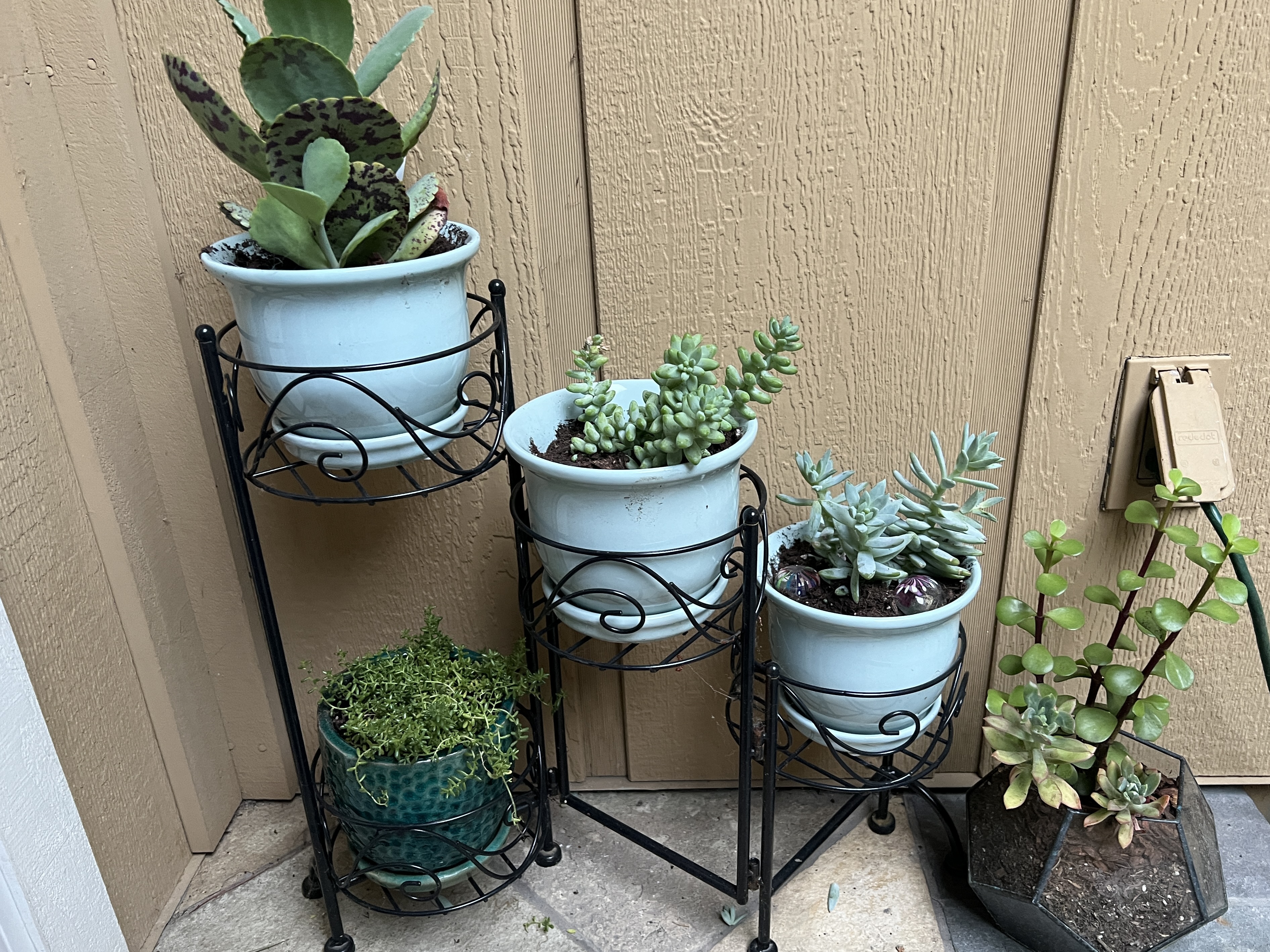
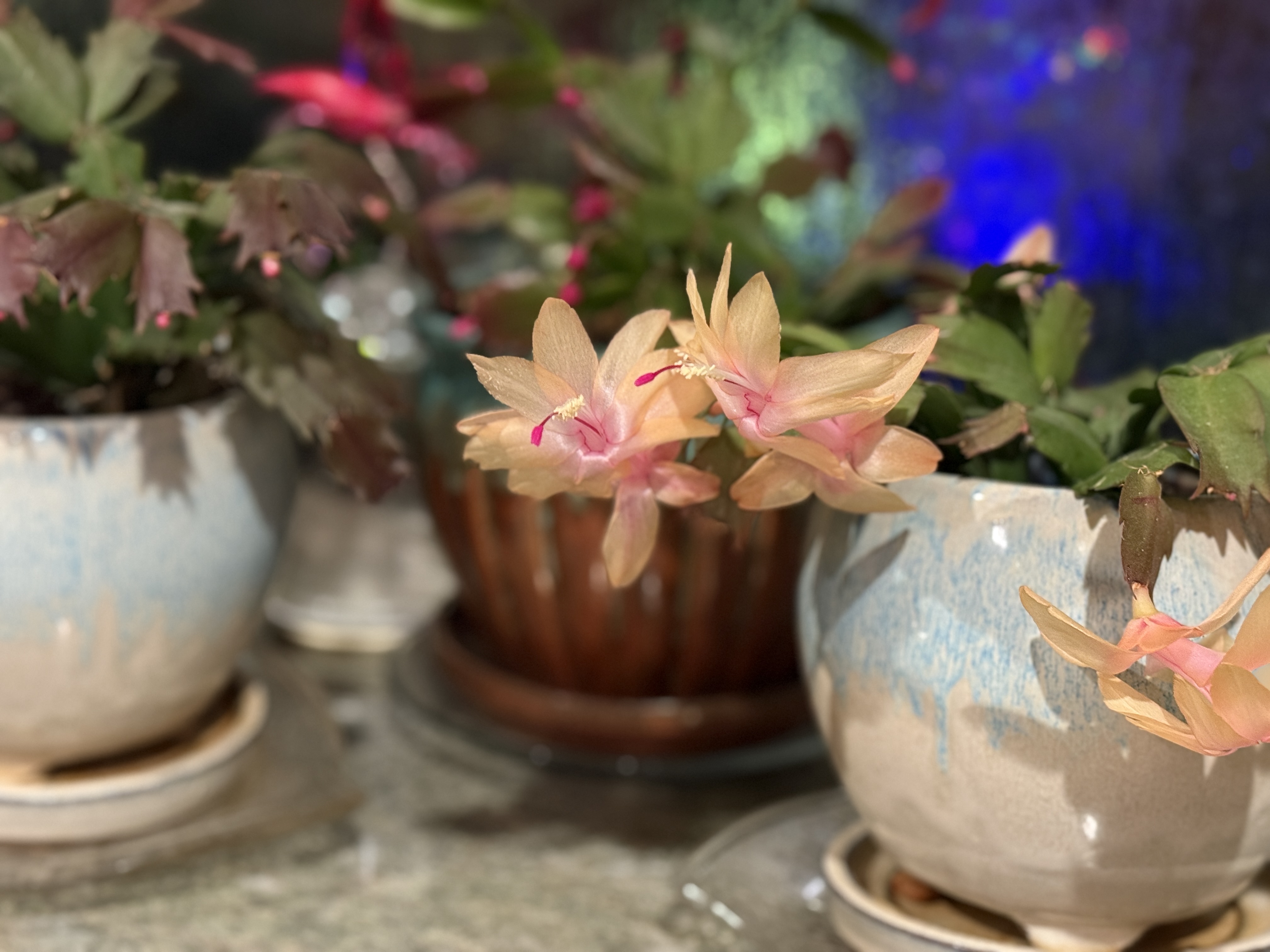
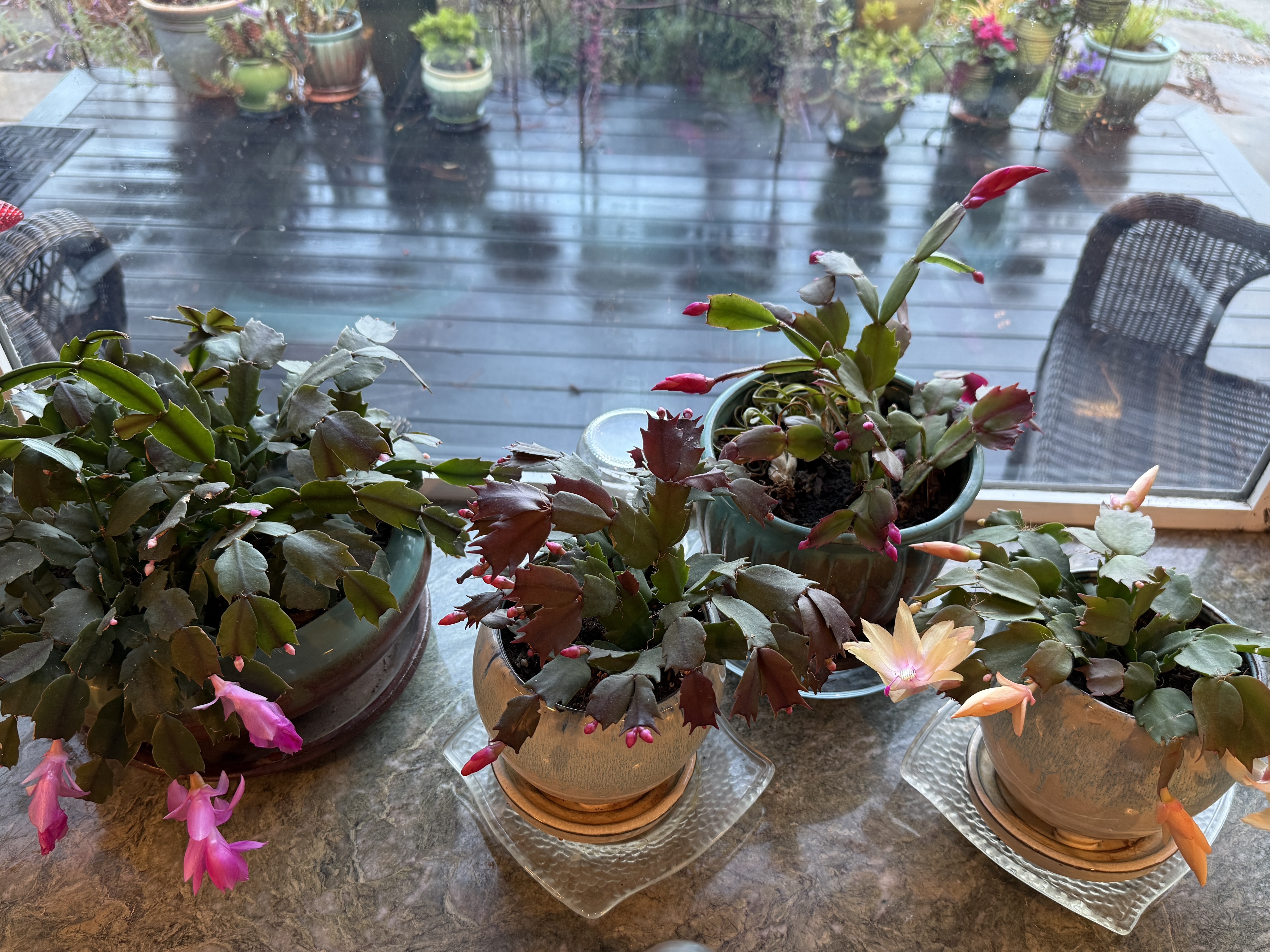
Over time, I’ve replaced potted plants along the deck with succulents. Succulents store moisture in their leaves, allowing the plant to go one to three months without water. Conversely, most summer annuals need near-daily watering, so I’ve learned to (mostly) resist when I head to the garden center.

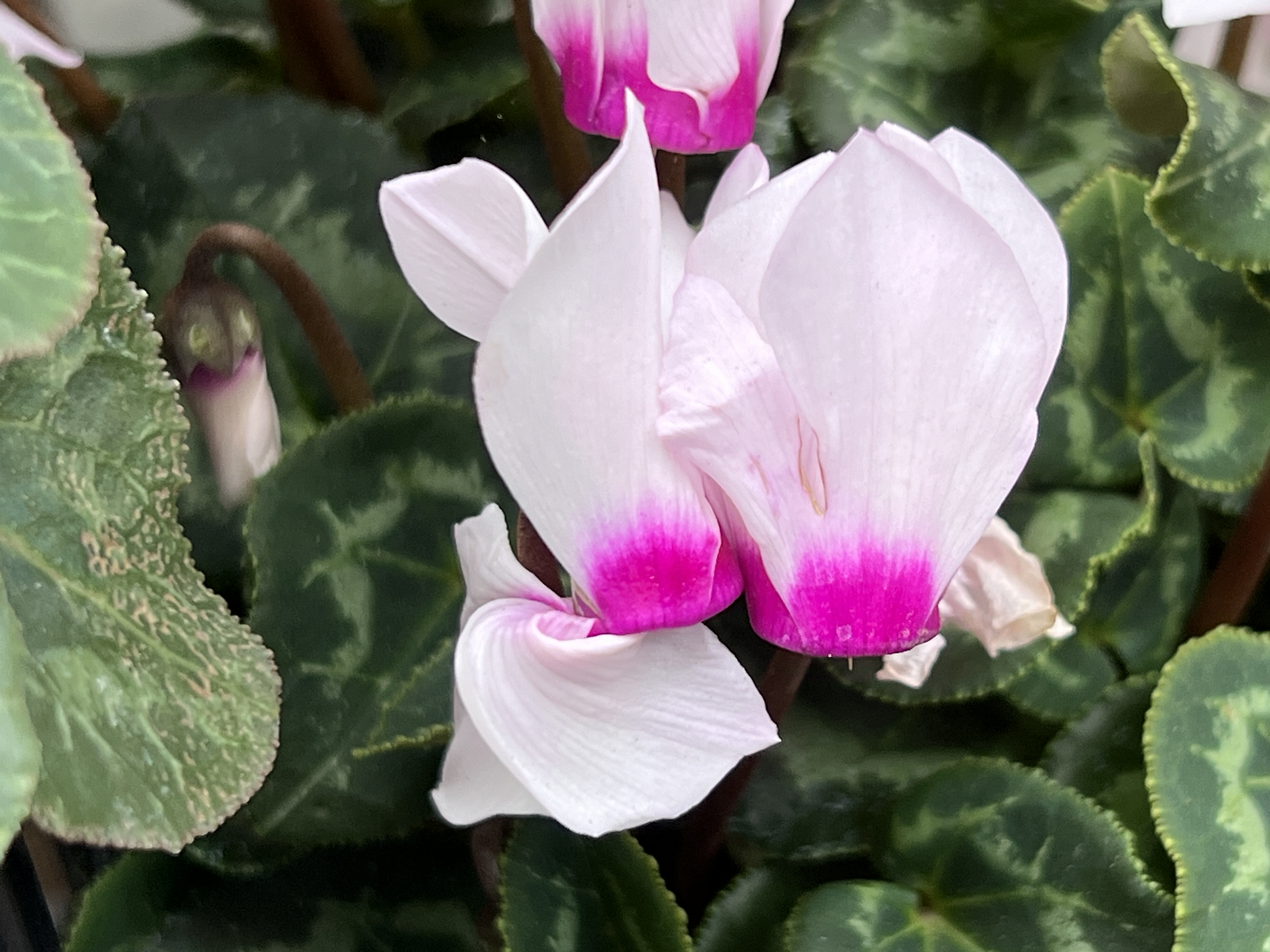
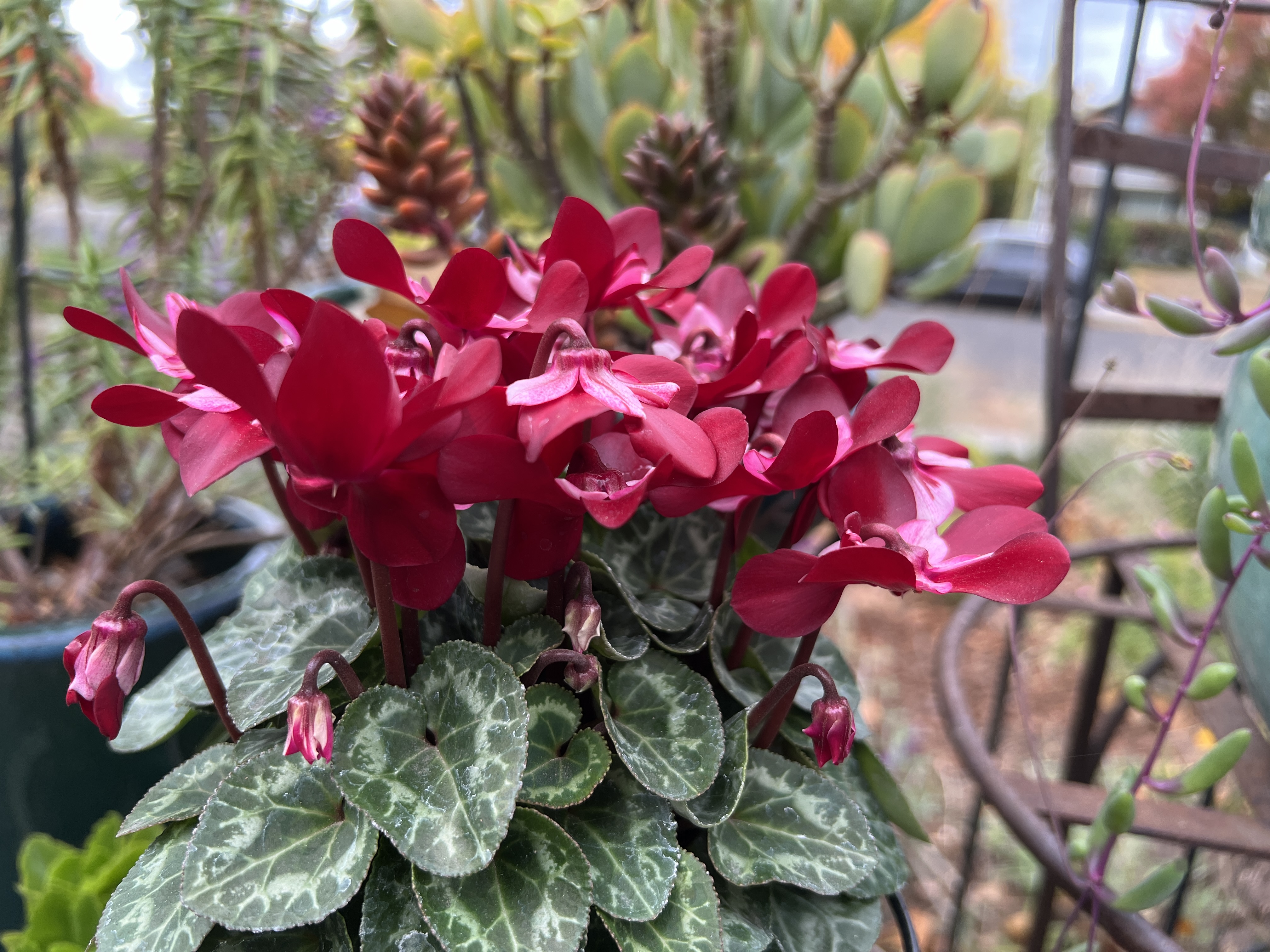
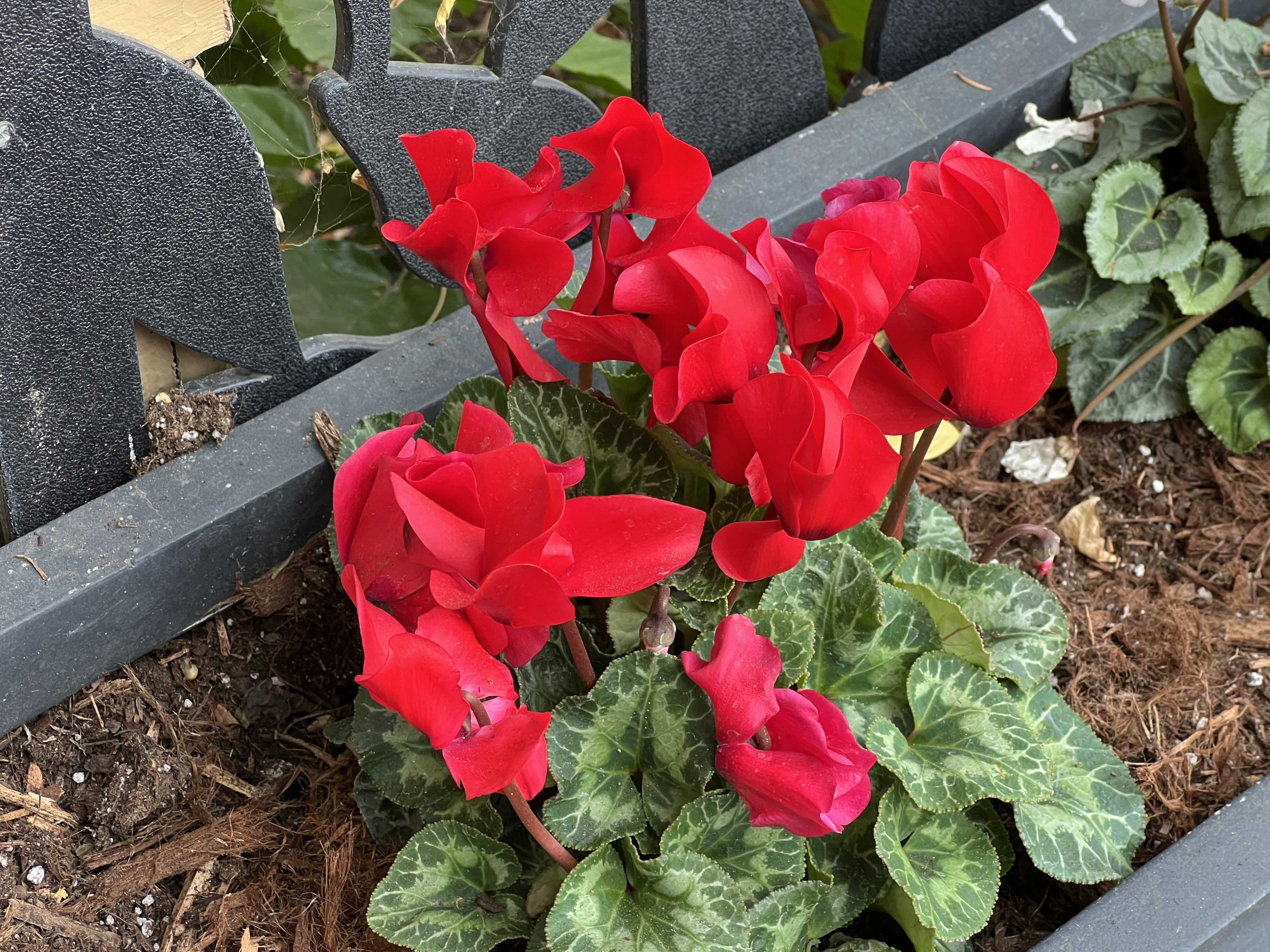
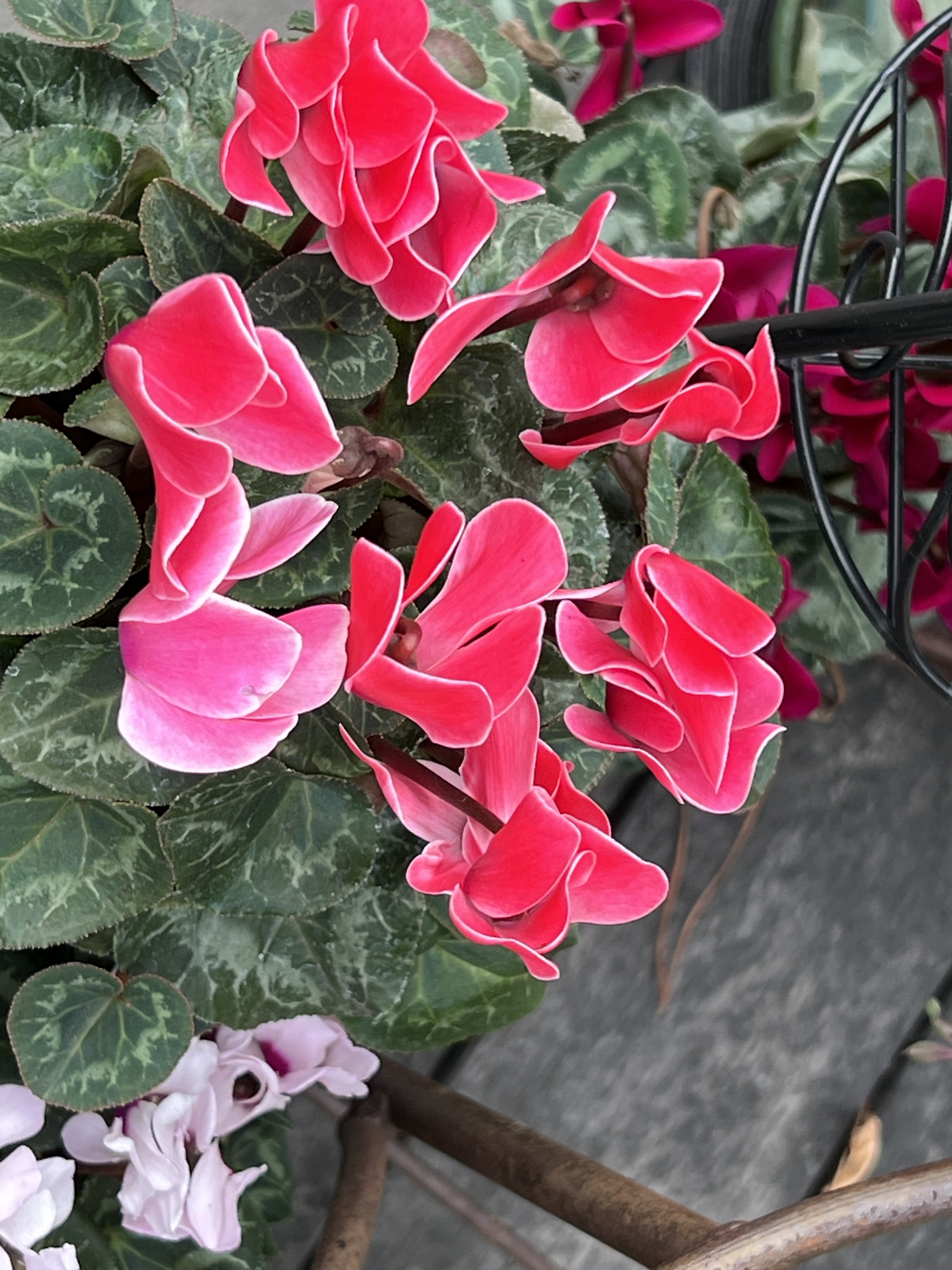
The newest addition to our deck is called an Othonna Capensis. It has thin purple stems and tiny yellow flowers. I transplanted it last summer into a waiting pot, but I wasn’t sure it would make it. The roots were loose and thin. To the contrary, it’s filled the pot nicely and its sending trailing purple offshoots down the sides. I add a few potted cyclamen for color in the fall, and when the corms go dormant, I replant them in different parts of the garden for color the following year.

Working in my garden has been physically challenging these past few years as the pain in my hips worsened. After five years of maneuvering through the US medical system, I finally had a complete hip replacement this past Wednesday. From a medical perspective, the surgery was unremarkable, and I was able to come home the same day. I need to replace the left hip in the future, but I want to fully recover before contemplating another surgery.

If you garden in the Northern Hemisphere, you’ll know February is a decent time to be off your feet. The first six weeks of recovery will carry me through the end of winter, leading to the effervescent gifts of spring.

I’ll be ready.

October Falls Away

October left town on Friday, foisting the reality of November and the most significant election of my lifetime, November 5. I’ve kept busy all month with organizing clients and social engagements, spending time with friends and family, and trying to avoid the news.

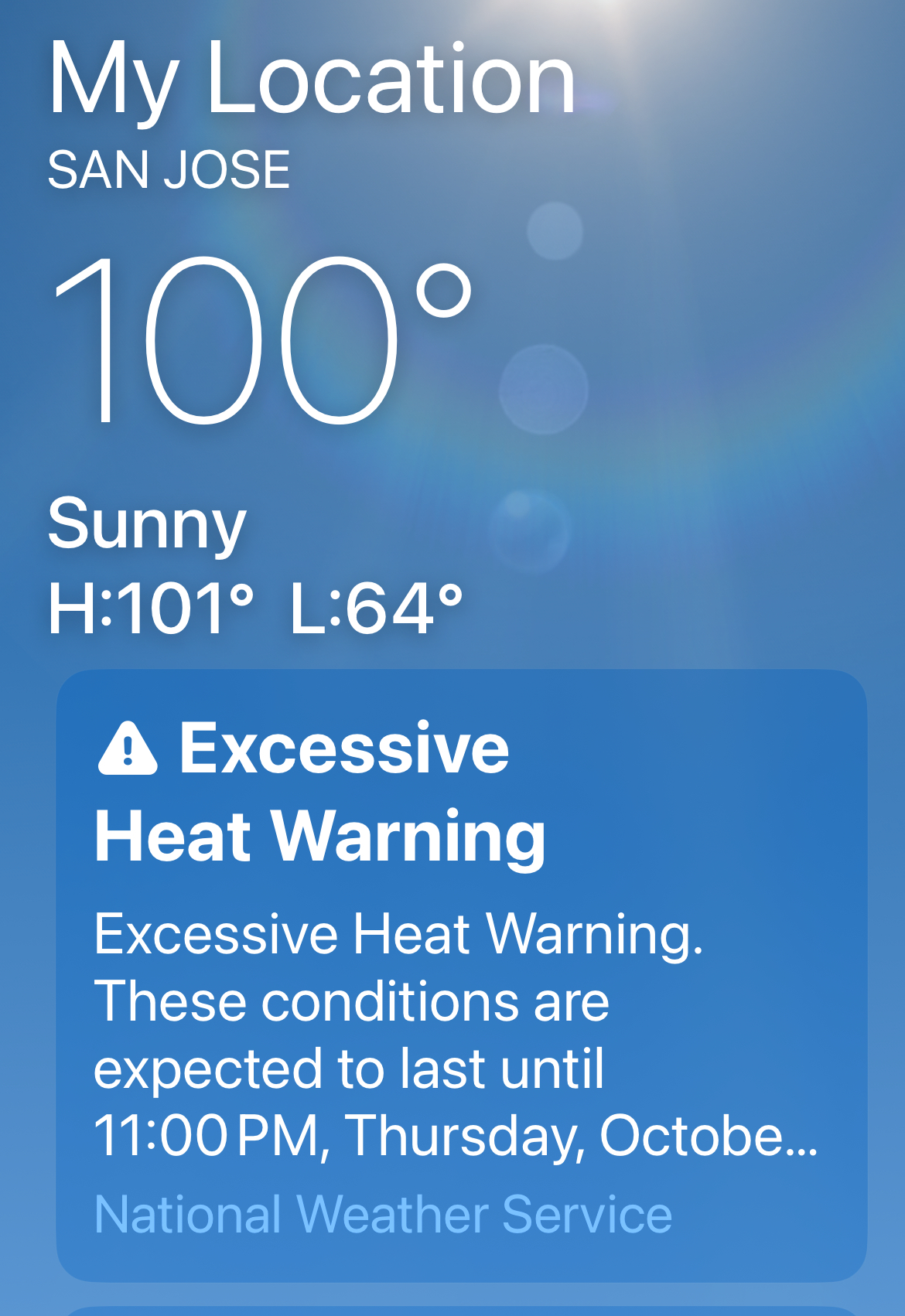
Unseasonably hot temperatures kept me out of the garden the first week of October. It’s hard to fathom triple-digit days at a time when the angle of the sun says fall, not July.

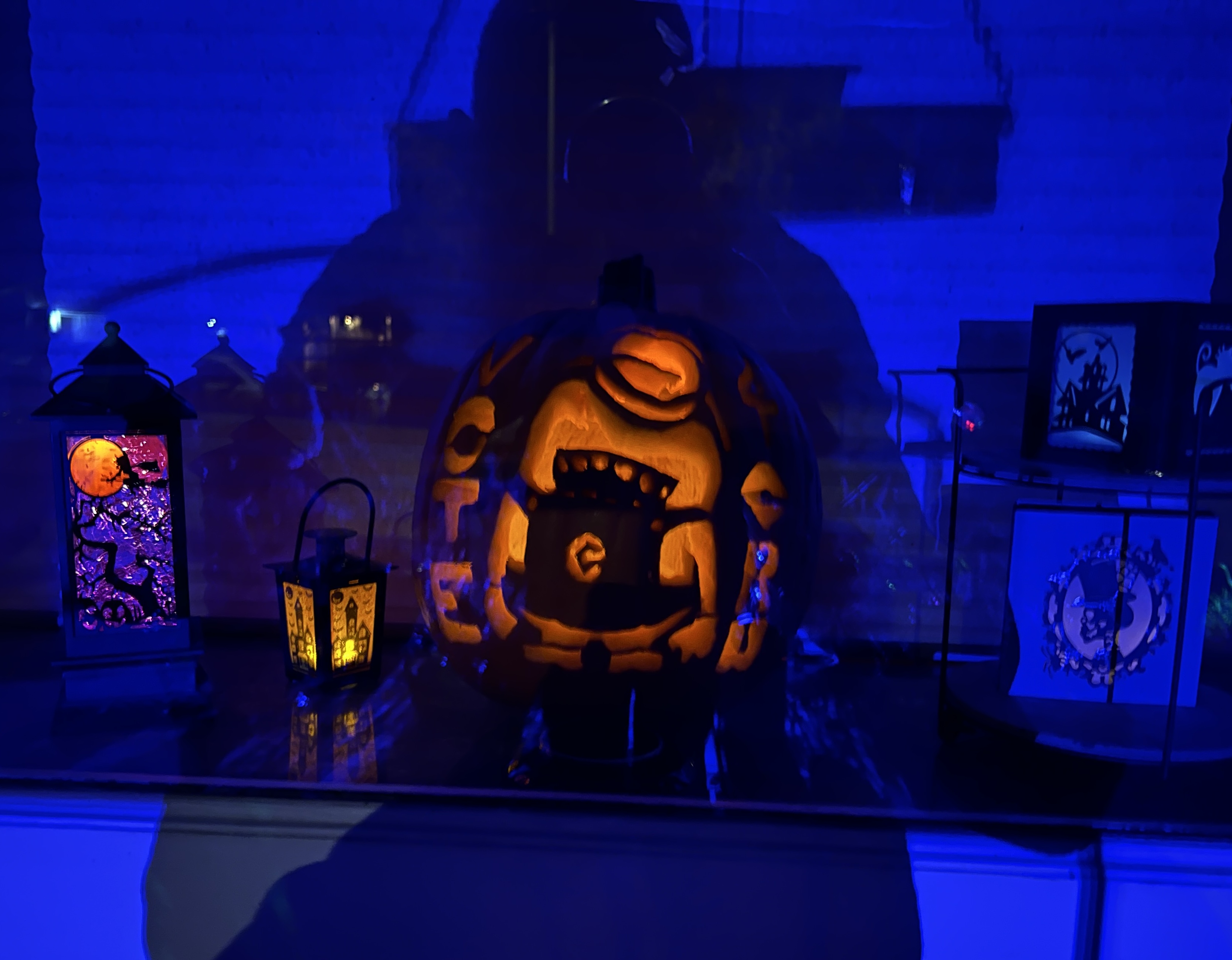
I celebrated my birthday on October 2, and we had fun handing out candy on Halloween. Mike carved three beautiful pumpkins for the front deck. Soon, they’ll join the compost bin. The seeds are outside for the squirrels to enjoy or to plant a pumpkin for next year.

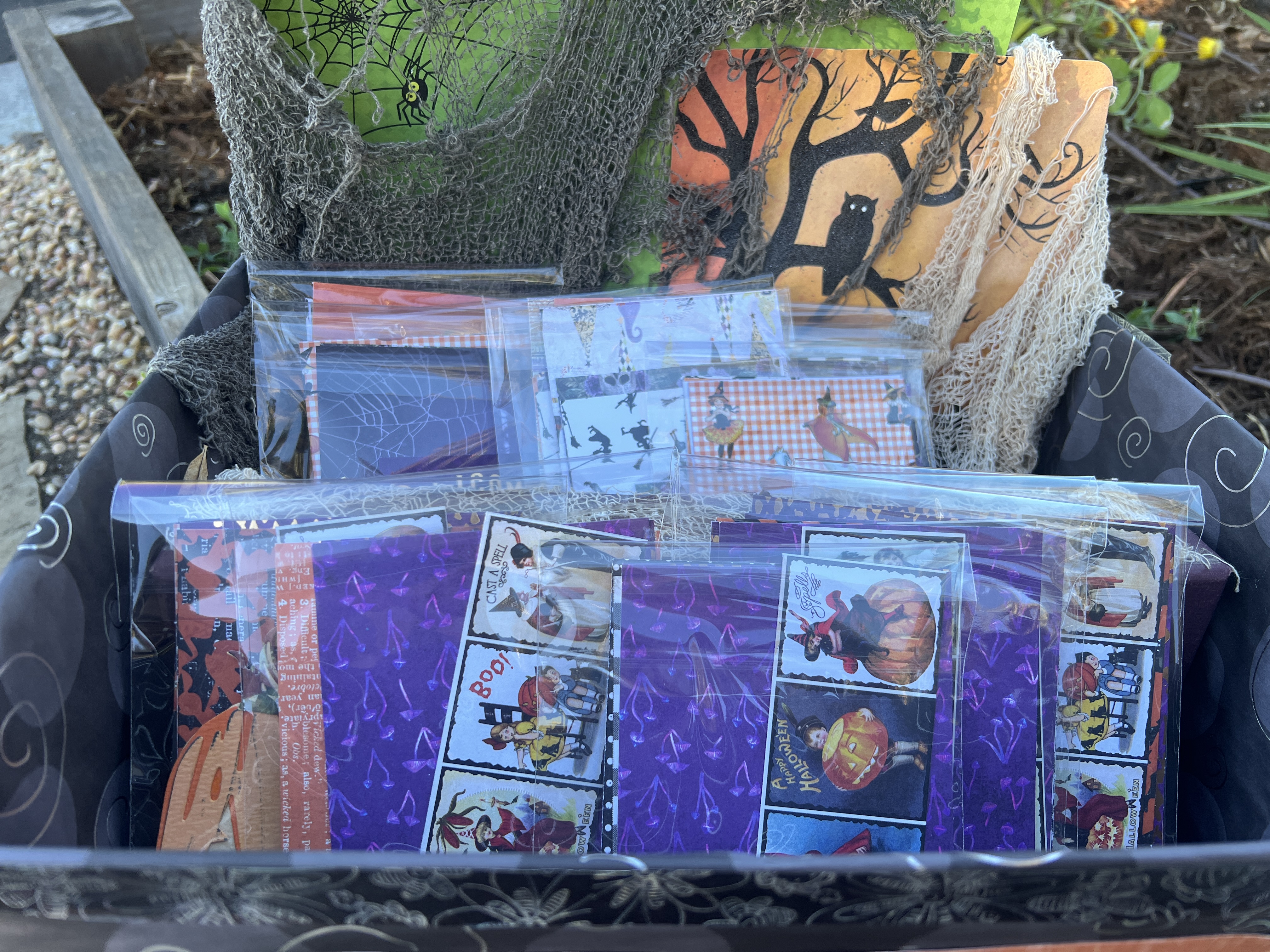
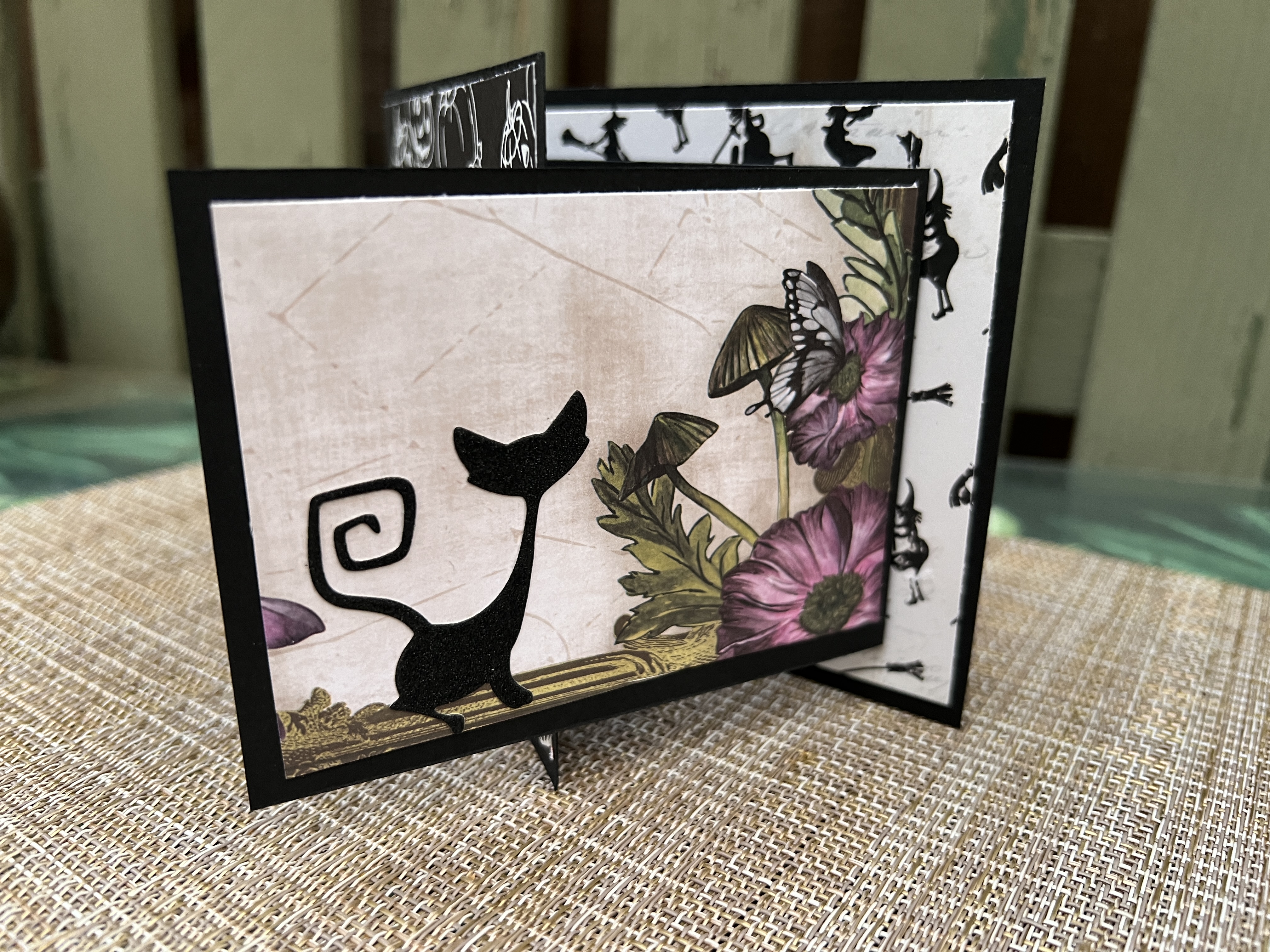
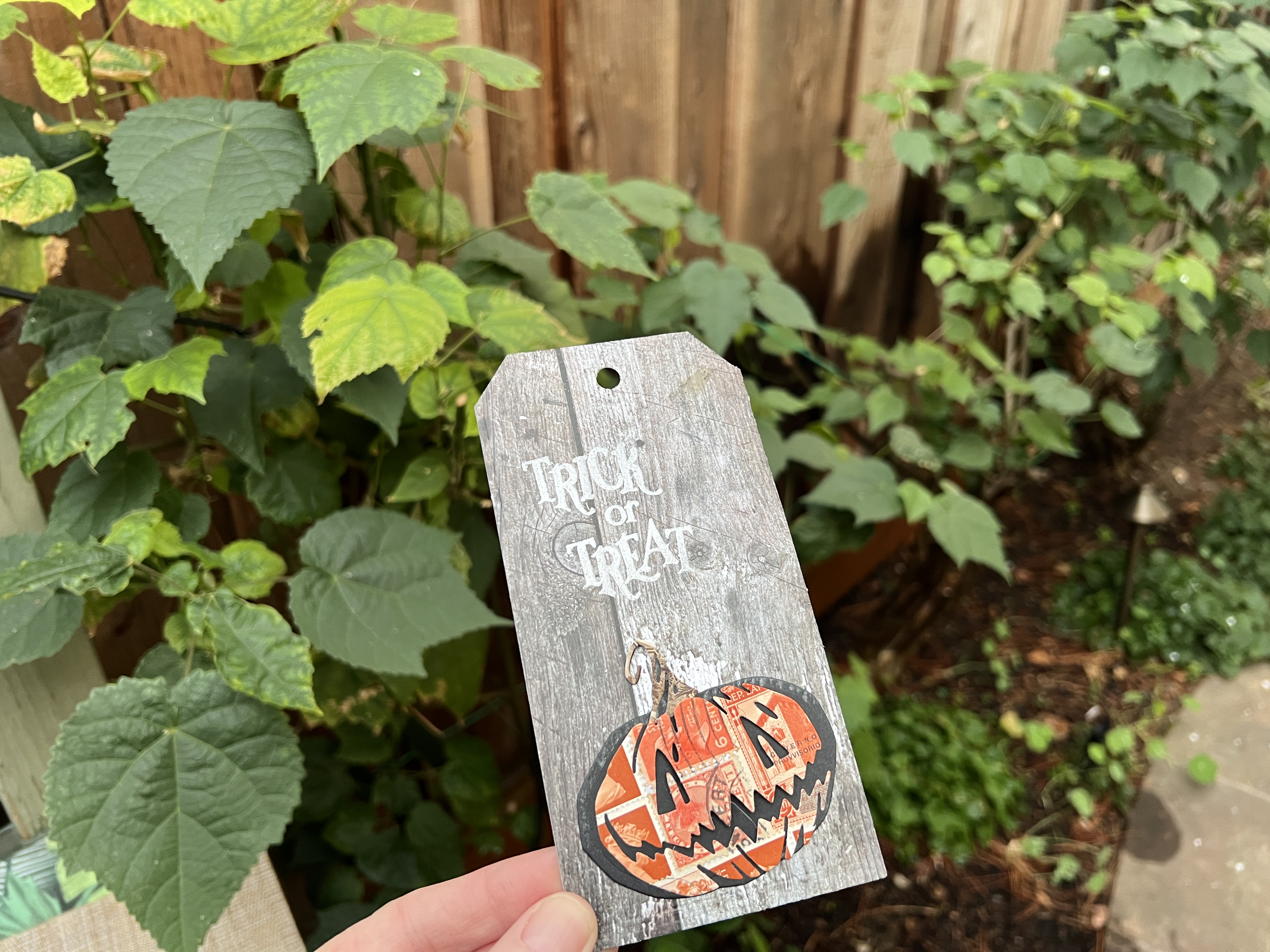
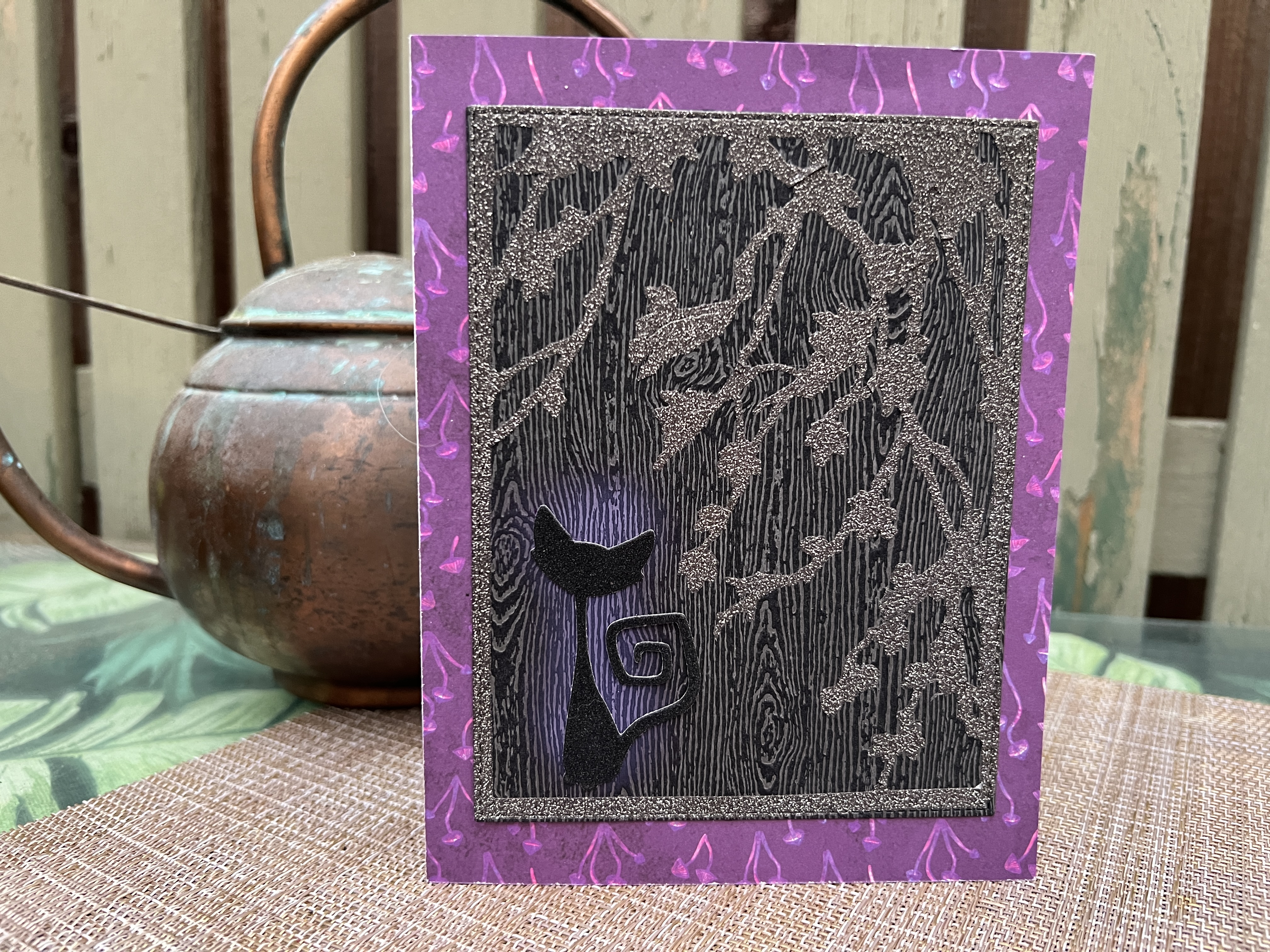
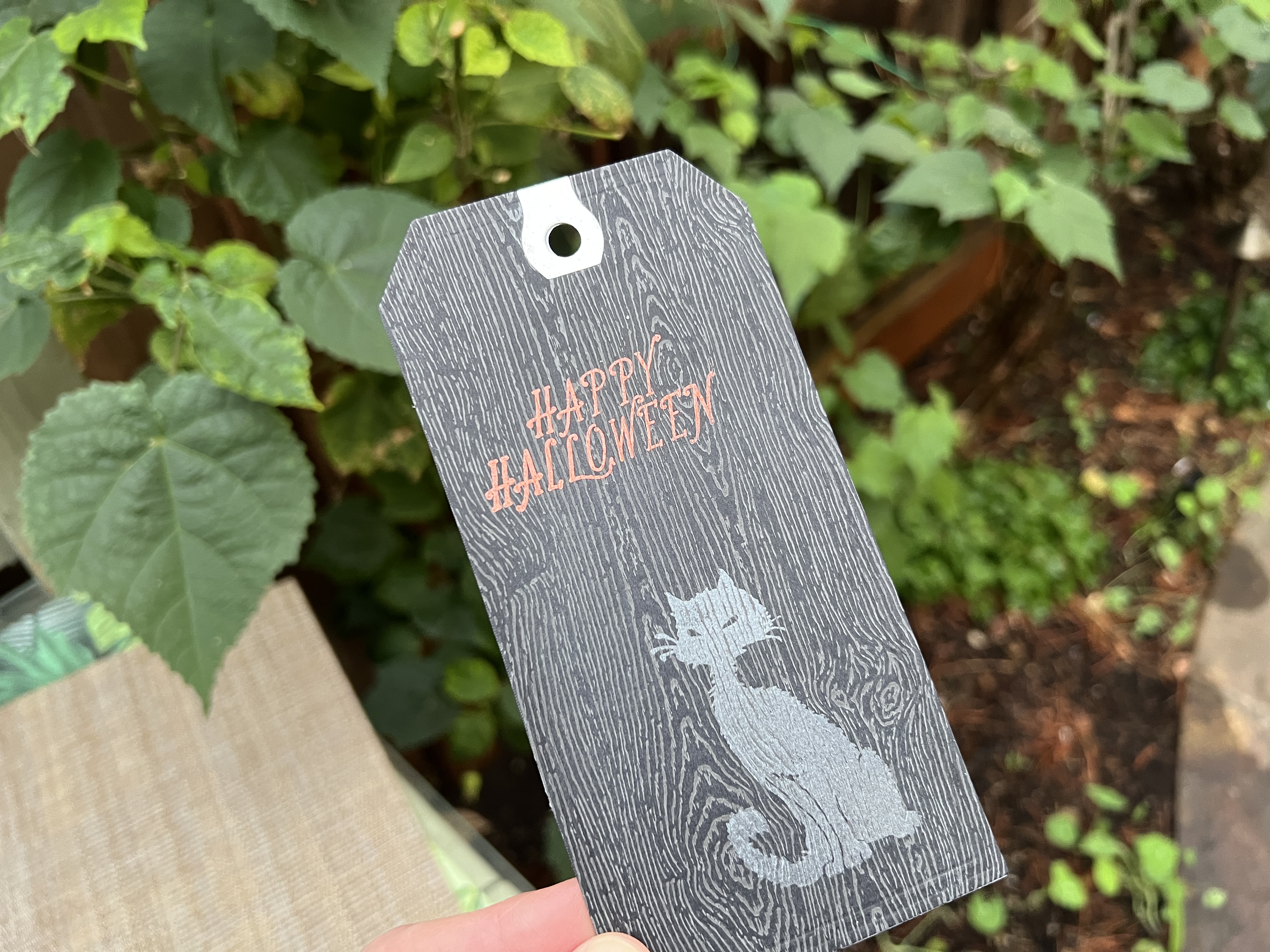
This year, I polished off the last of my Halloween paper and ephemera, making cards for friends, seasonal bookmarks, and craft-making kits next to the children’s Little Free Library. I offered seeds from my garden as well.

My friend Marcia gave me a treasure trove of vintage postage, so I had fun making a few pumpkins.

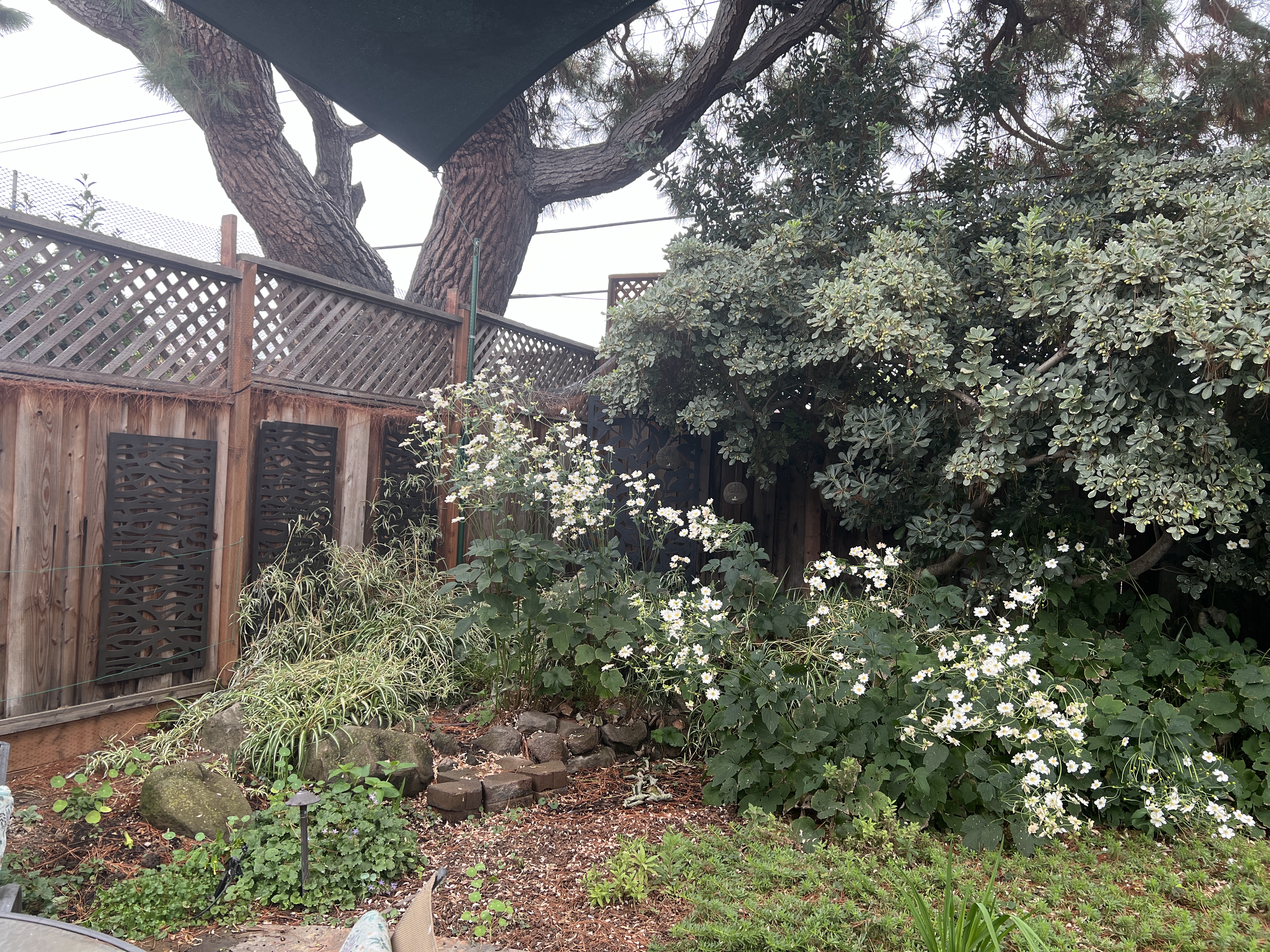
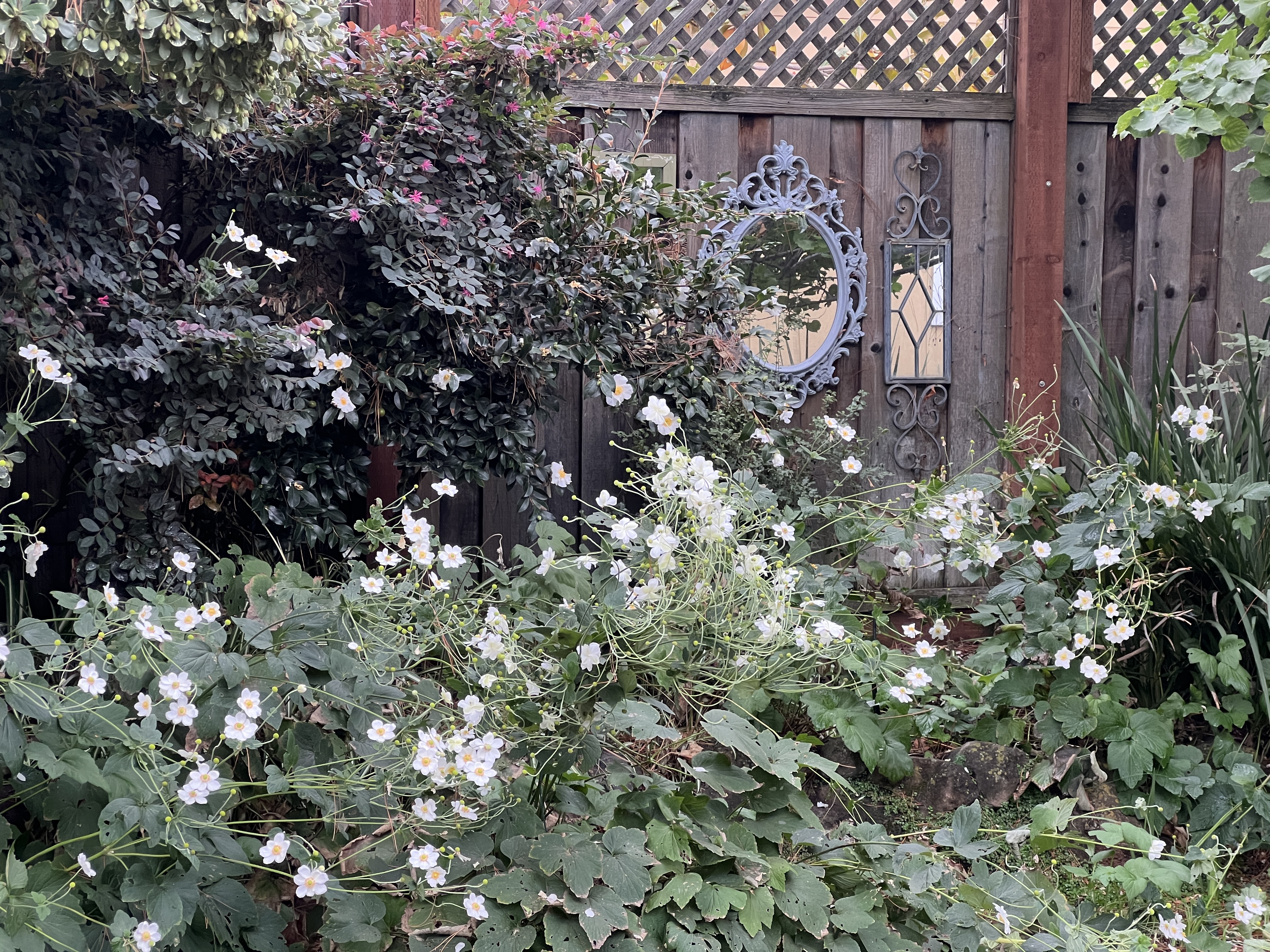
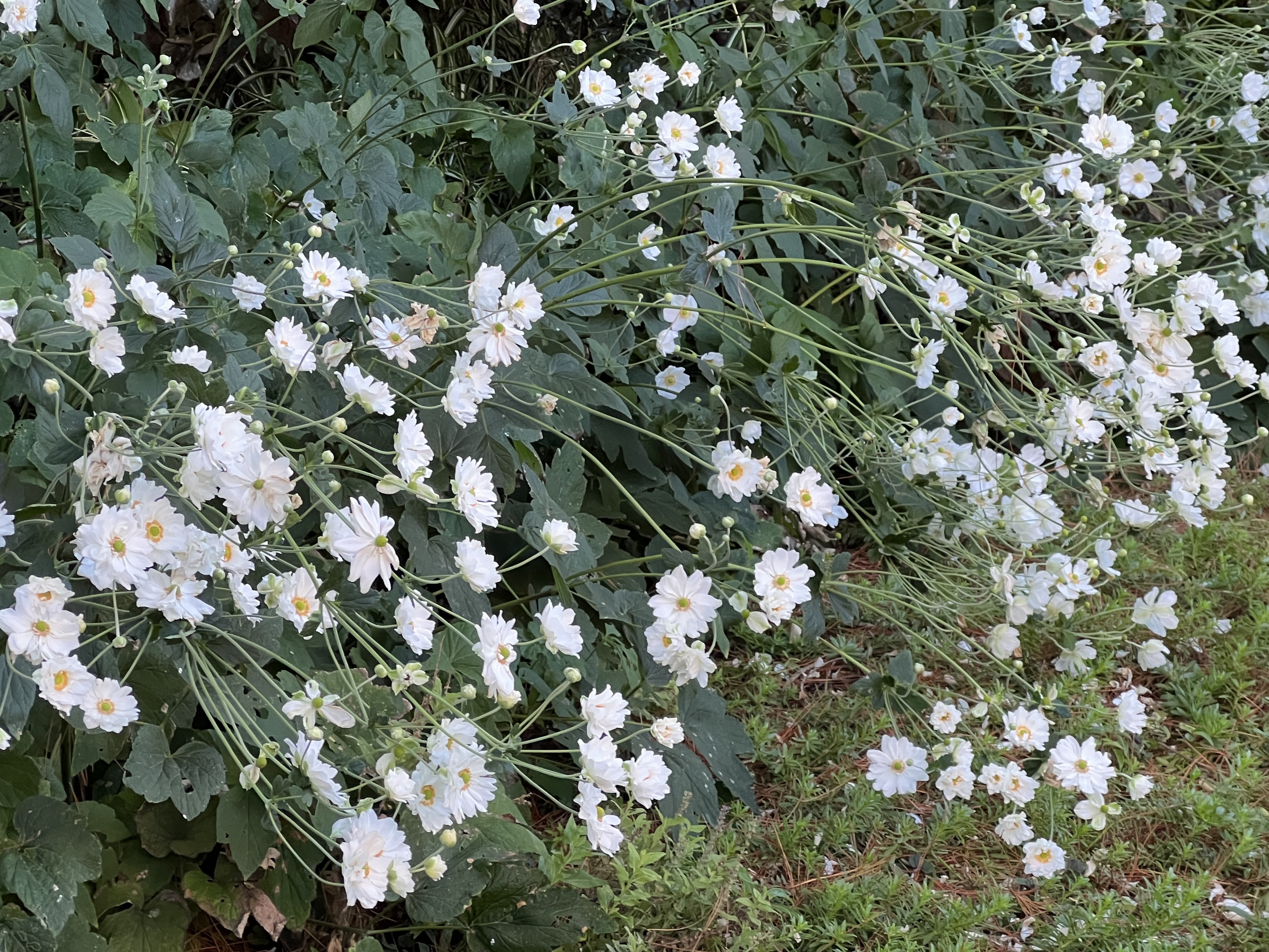
There are plenty of tasks in an autumn garden, and we’re finally enjoying the cool weather needed to get things done. I’ve been pruning where appropriate and removing spent annuals. The anemones grew tall this year, with the extra weight of blooms, bending them in a gentle arch to show off a snowy white skirt. I removed the flower stalks from the lower garden but left a pair of tall plants to go to seed. The hummingbirds will be along in a few months to harvest the seed fluff for their nests.

A second round of nasturtiums arrived on the scene, flaunting lovely saucer-sized leaves and a limited number of orange and red flowers. Nasturtiums self-seed in the spring and summer, dying off by the middle of July. The fall variety has proliferated in a section planted with freesia. They’re lovely.

This morning, I planted forty spring bulbs, a mixture of double yellow narcissus and grape hyacinth. I replaced the leggy coleus growing in a pot along our deck with cold-weather cyclamen. We enjoyed a light rain overnight, refreshing the garden and the stale air.

In the wee hours of Sunday, the US ends Daylight Saving Time (DST) or Falls Back. Here’s hoping this isn’t a metaphor for what could happen if this country doesn’t vote for Democracy. I’m cautiously optimistic for a better way forward.

“There’s no such thing as a vote that doesn’t matter.” – Barack Obama

Summer So Soon

Alas, spring has given way to summer. In my youth, summer meant a break from school, sleeping in, and sometimes a chance to swim in a neighborhood pool. Those are bygone days, not just the loss of youth but the unrelenting heat, smog, and wildfires that are all too common in California in this age of climate change.

I raced to finish planting the curb garden this week, then dressed it with three inches of garden mulch to retain water. I’ll miss the cooler days of spring and the chance of a rain shower. The next four months will be hot and dry.

Following is a gallery of photos taken on or near the summer solstice.

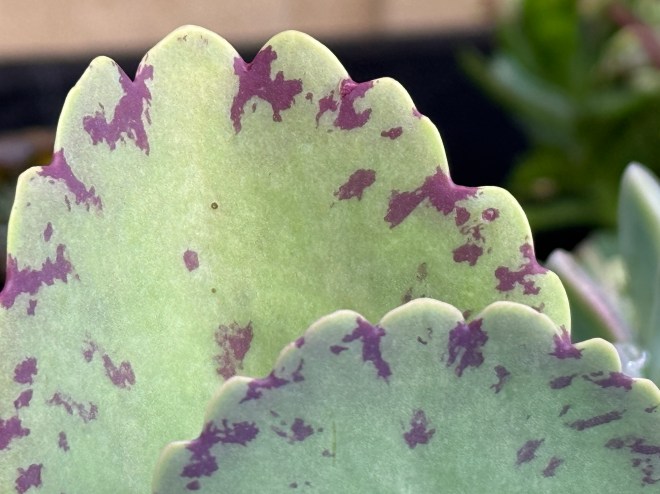
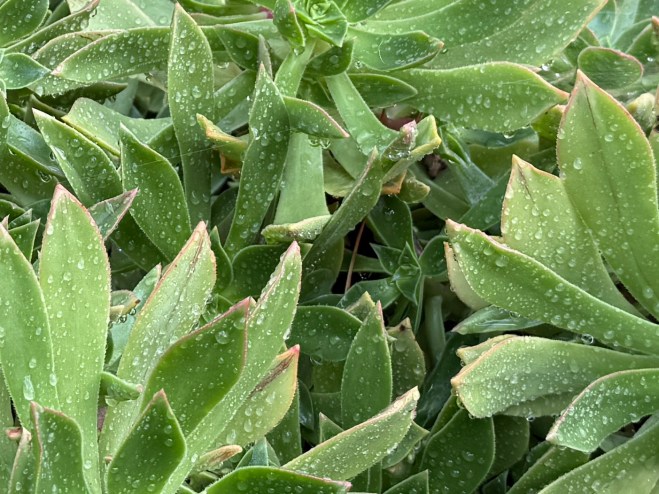
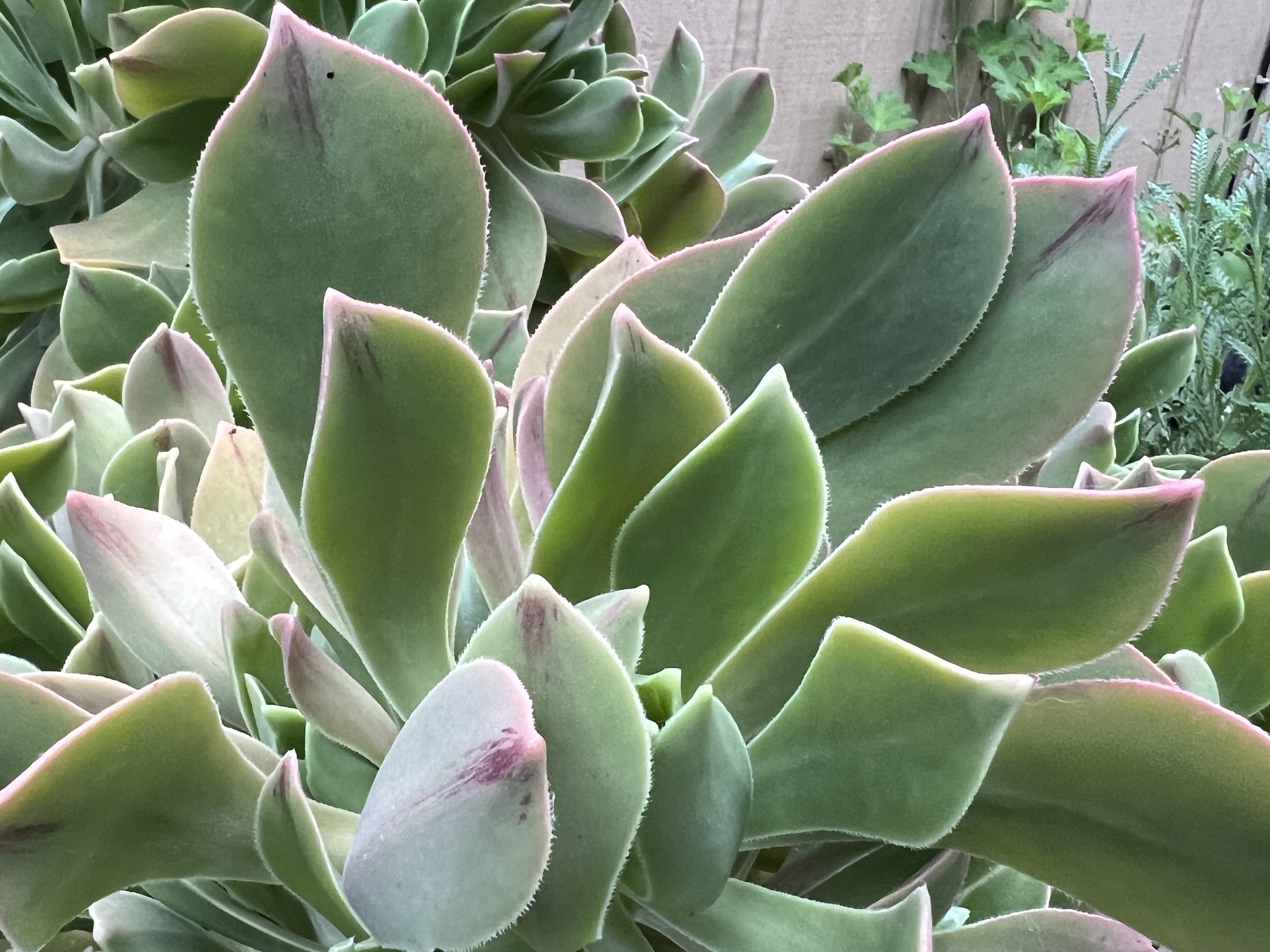
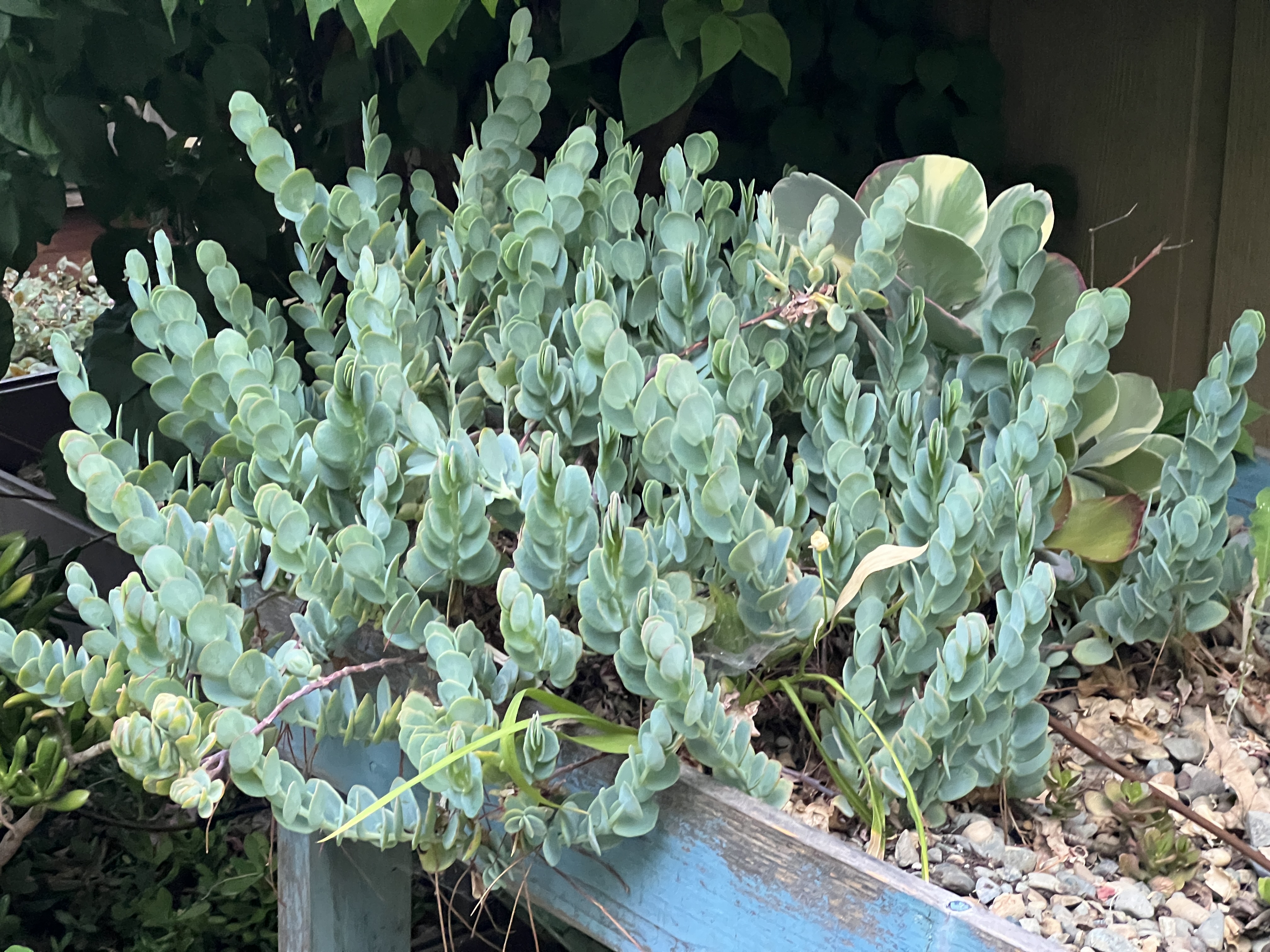
Garden succulents (they don’t mind the heat):

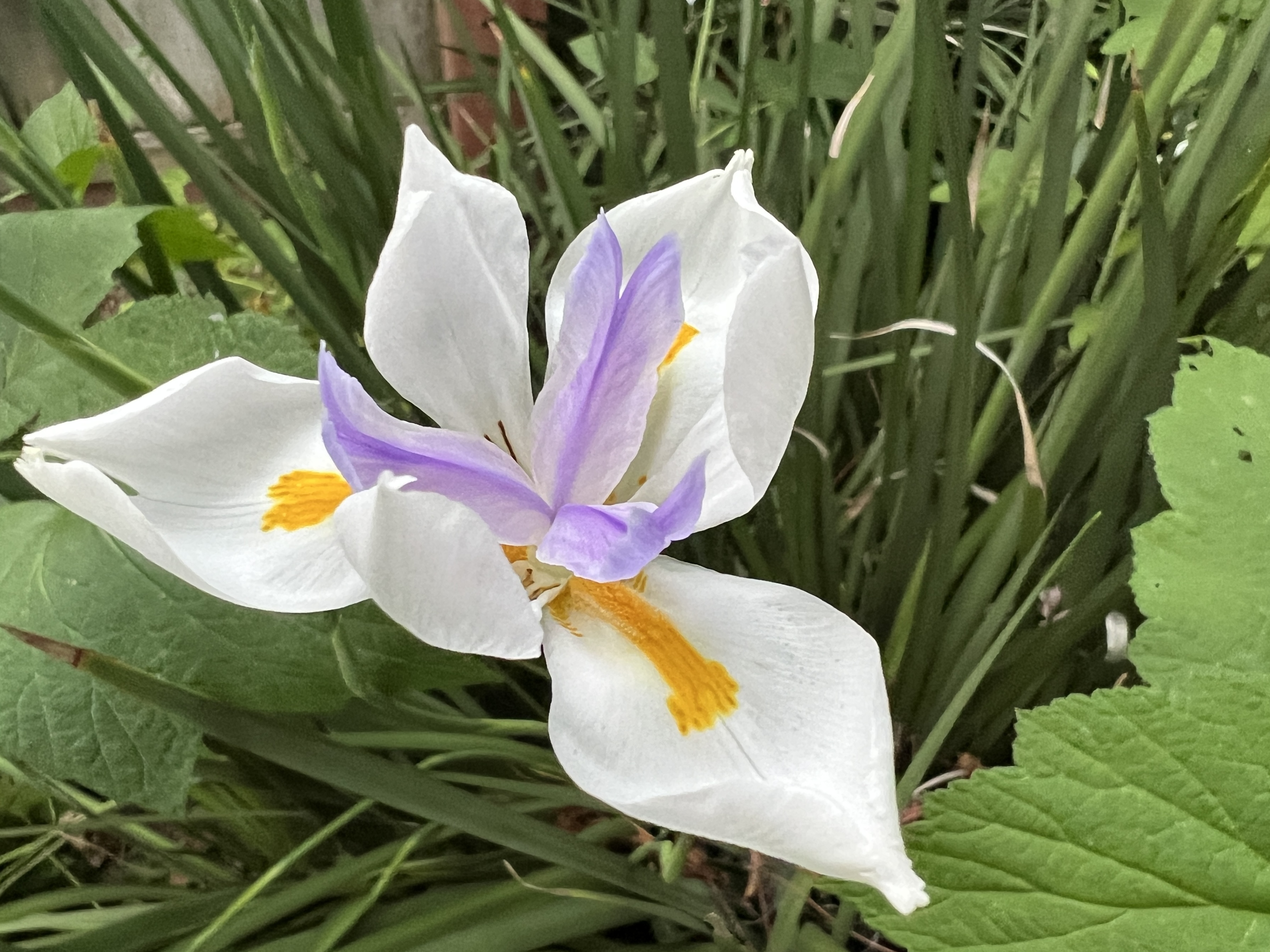
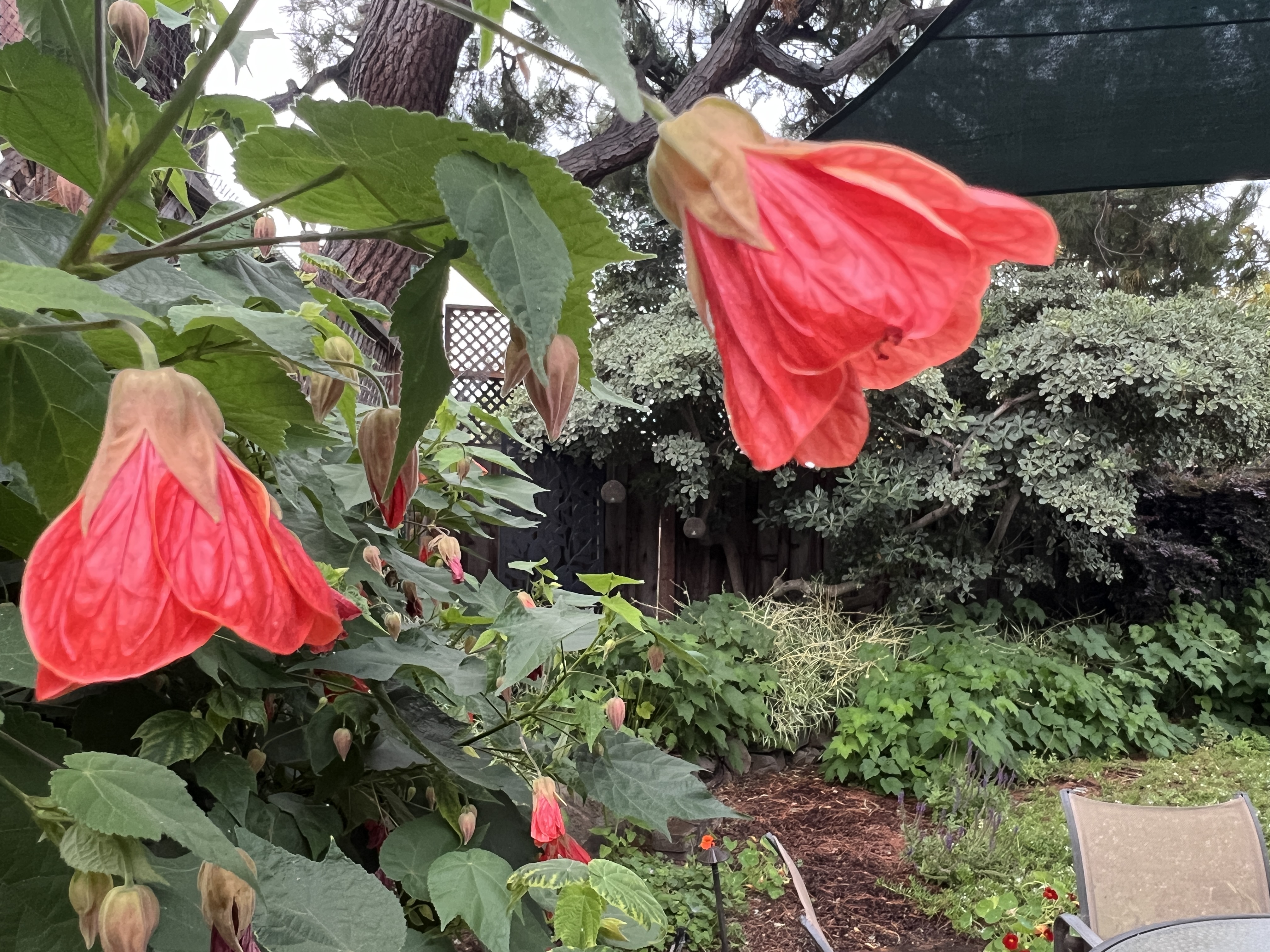
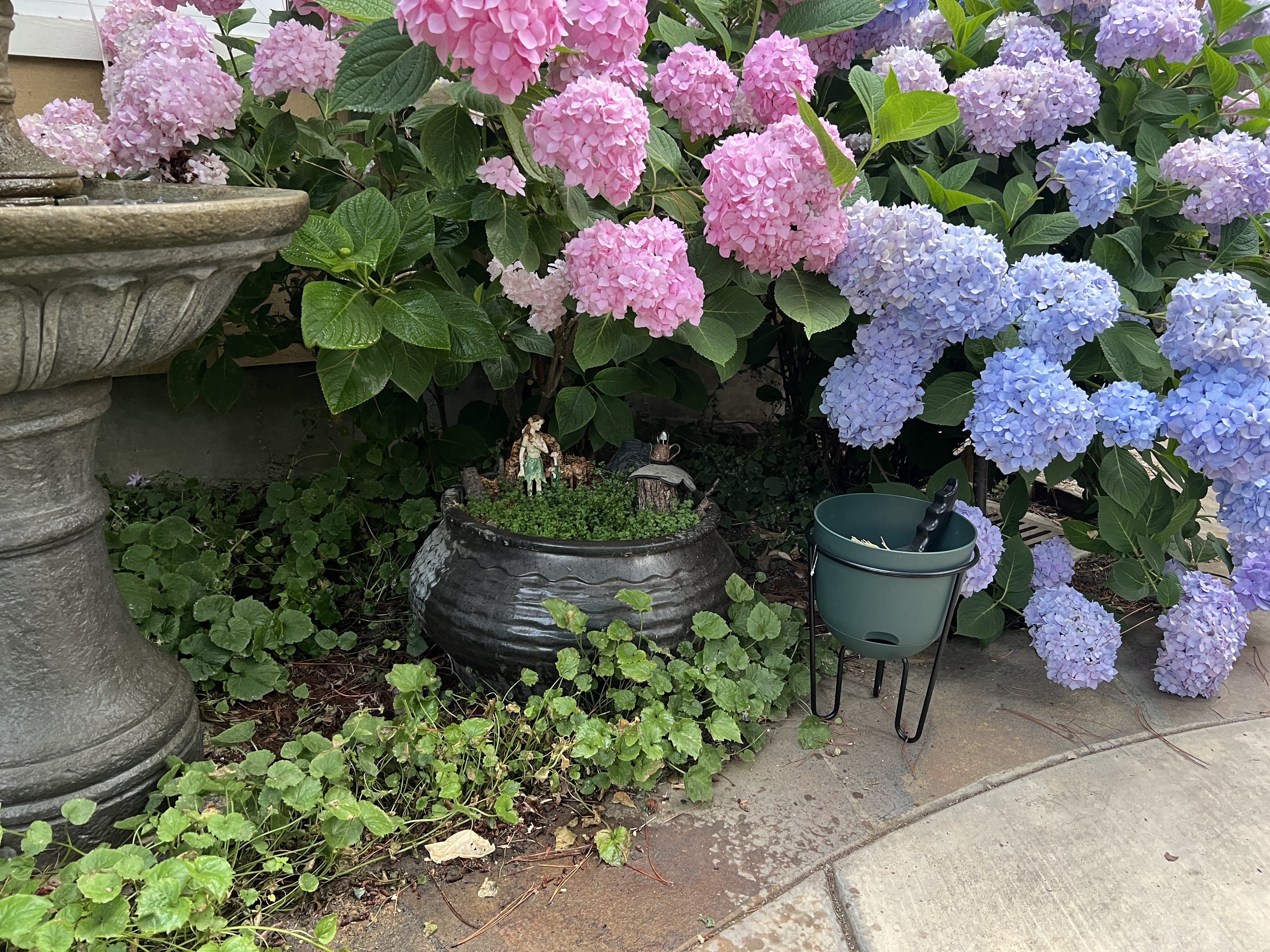
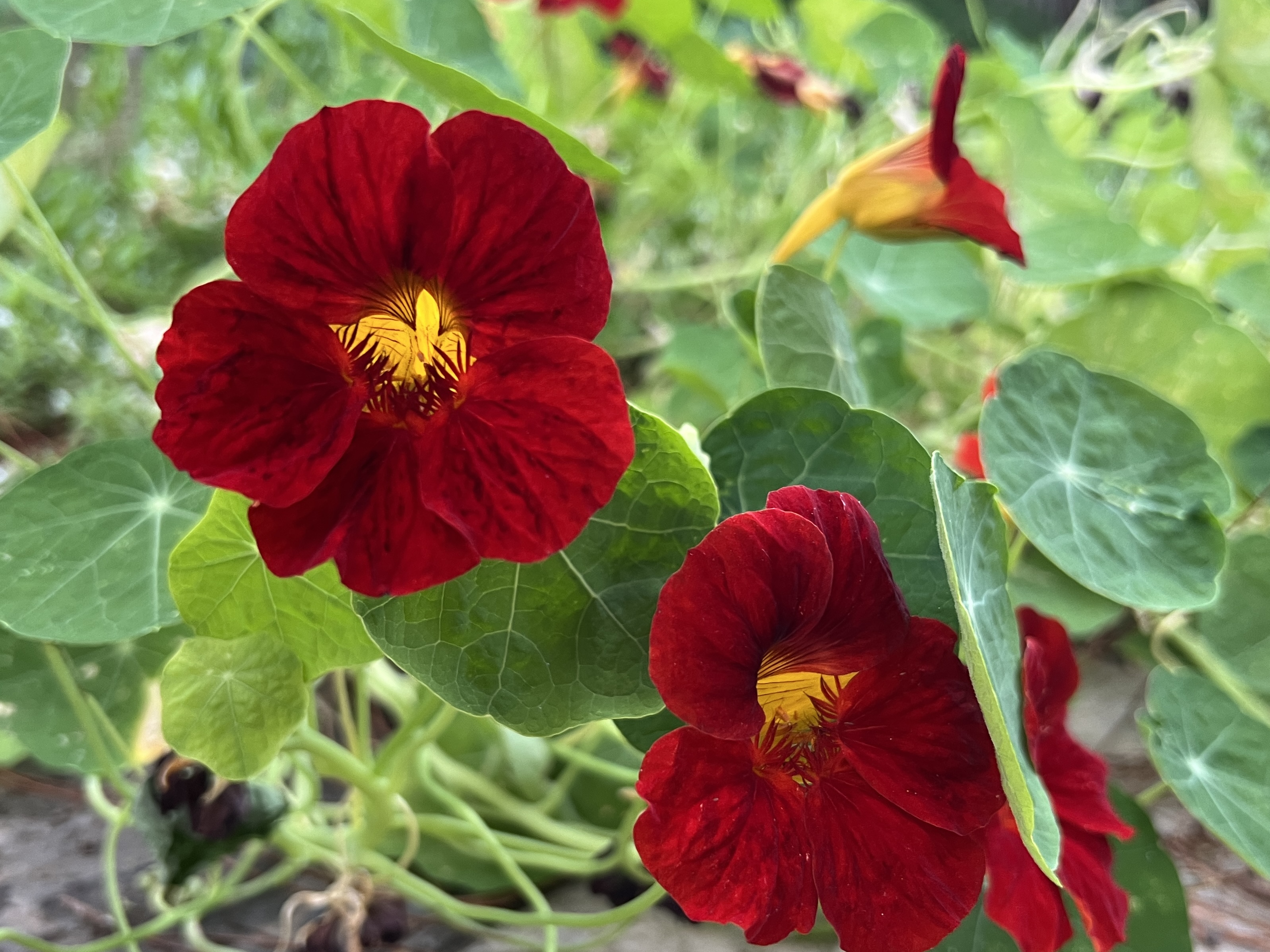
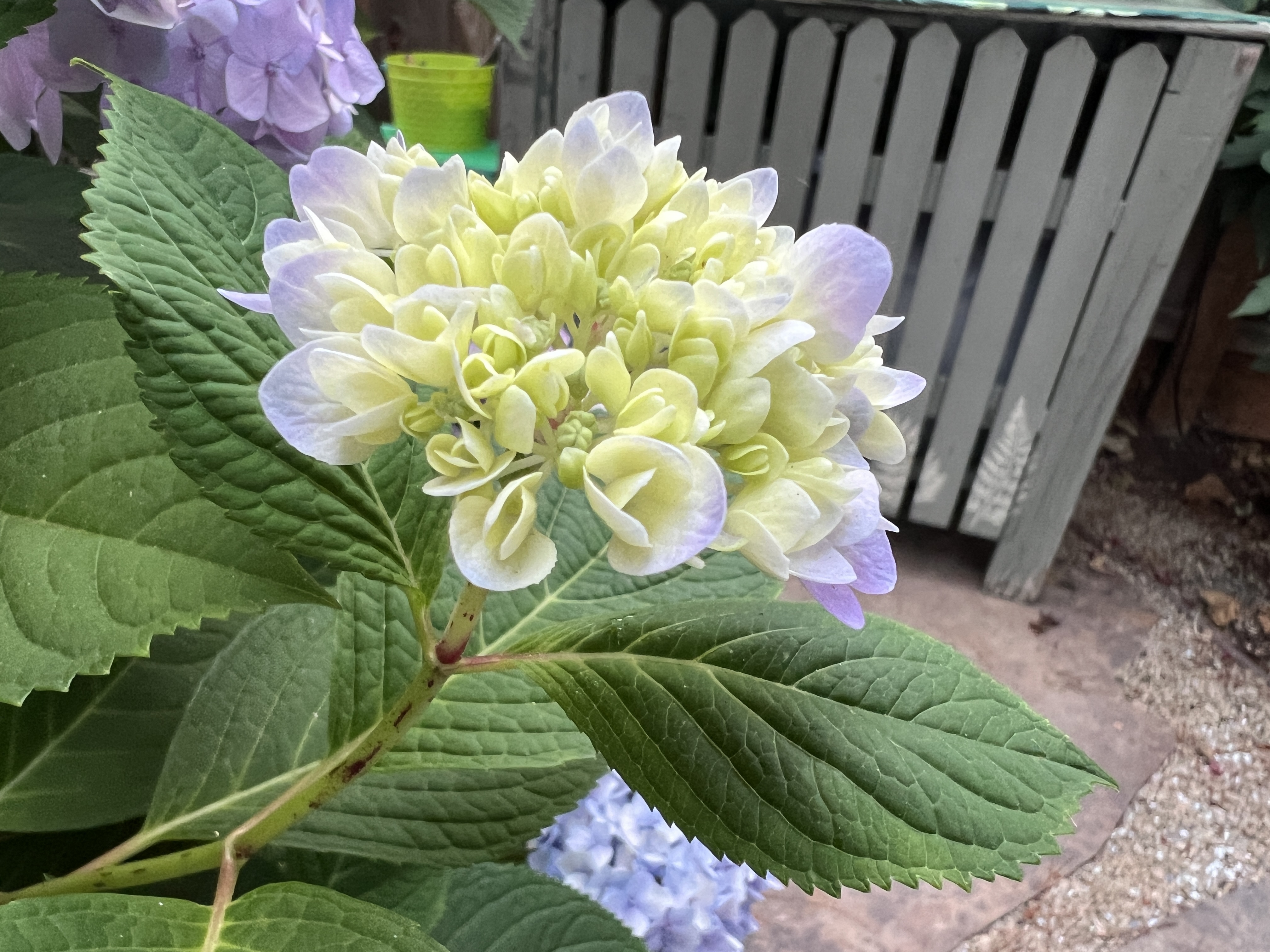
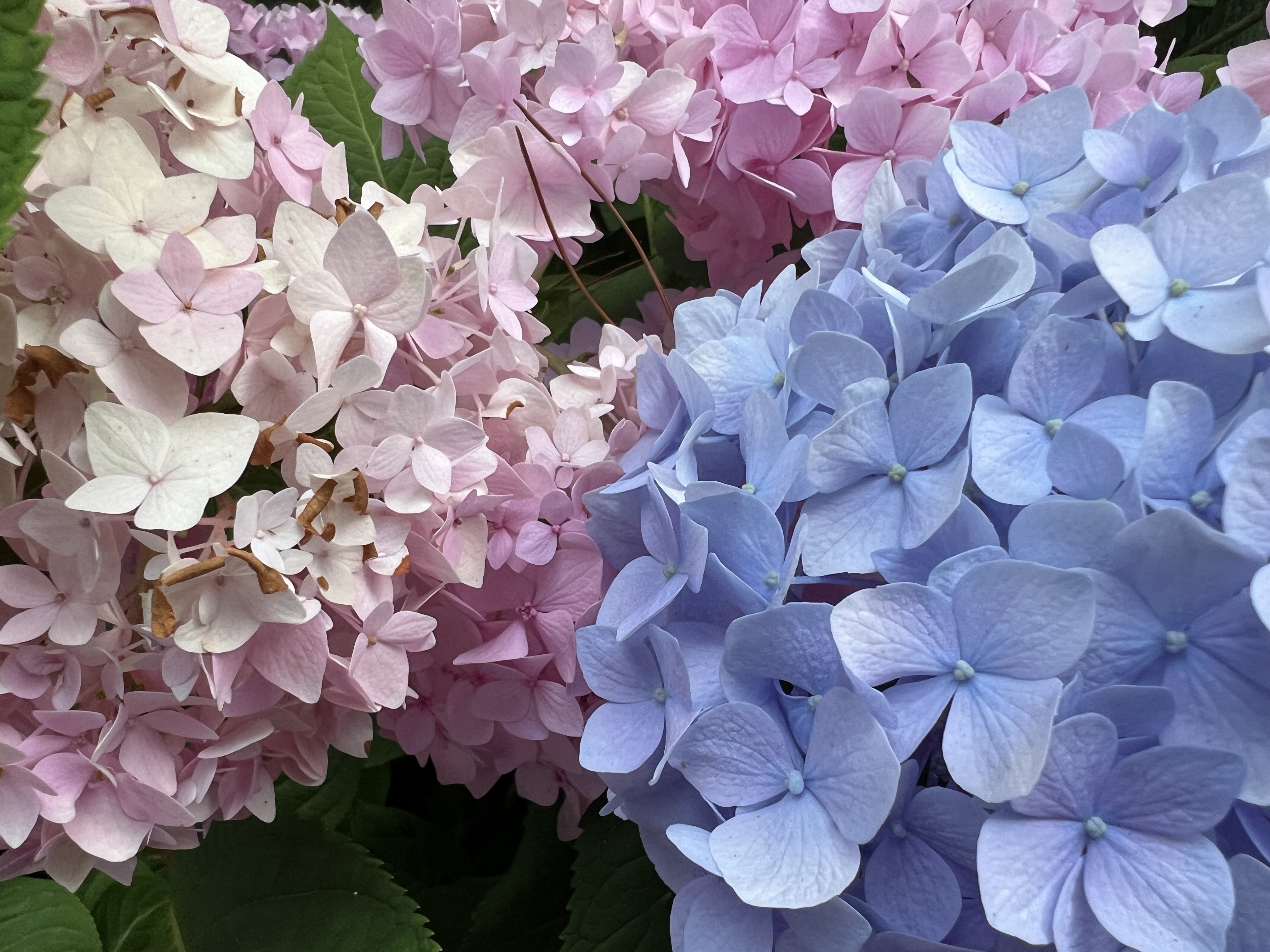
Flowers in bloom include wild Iris, abutilon, hydrangea, and nasturtiums.

It’s time to shift my interests to indoor activities, like card-making, reading, and puttering around the house between client appointments. The garden is such a draw, though. I’ll step out to do something small and realize an hour or two has passed. Life among the greenery and dirt is soothing and joyous.

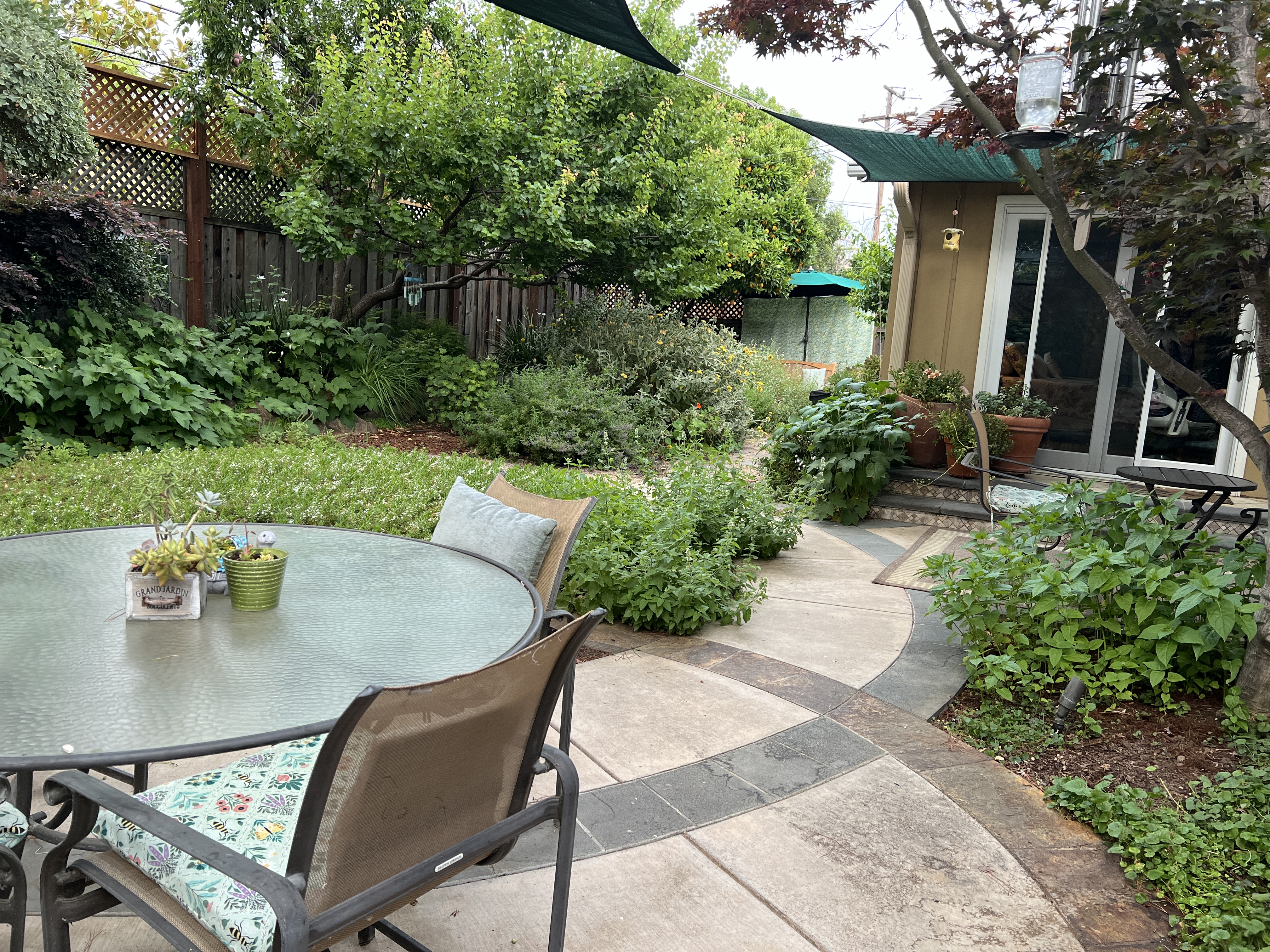
Garden views, garden greens: Patio table, garden swing, garden bench, and fence line.

I celebrate every inch of green, along with every drop of water that comes our way.

Gardenia’s in a Vase on Monday

Lucky me! After another wet winter, the gardenias put out plentiful, magical, scented blooms, just waiting to be cut for a vase.

I’m joining “the Cathys” for a weekly meme encouraging bloggers to share something “In A Vase On Monday” or IAVOM. It’s a mouthful, and it’s fun.

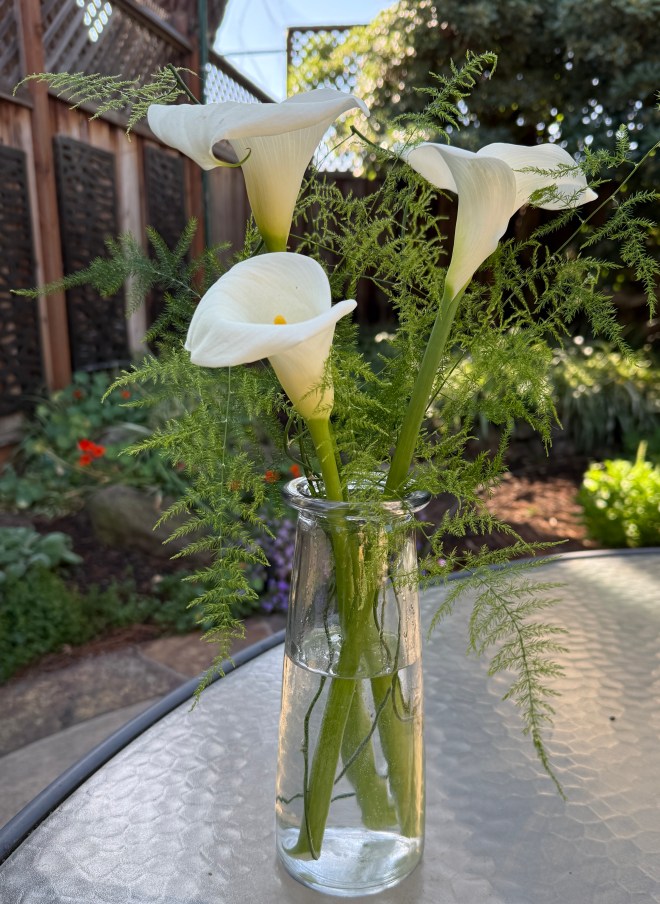
I’ve arranged five gardenias in a glass jar, some asparagus fern, and a few swigs of purple salvia. Gardenias don’t last long in a vase, but it’s still worth bringing a few indoors. They turn brown and droop, but the intoxicating scent remains. With greenery to keep the flowers company, I can overlook the droop for that scent.

Instead of a vase, I’ve arranged my cut flowers in one of my favorite glass jars. The Quattro Stagionioma sauce is long gone, but the beautiful embossing lives on. It’s challenging to take pictures of glass, but I’m hoping you can see a bit of the pretty pattern.

For some beautiful inspiration, check out some of this week’s vases.

Cathy, the gardener who started IAVOM, shares her gorgeous roses and a history lesson from her English garden today at Rambling in the Garden.

From Cathy’s Bavarian garden, a stunning purple arrangement at Words and Herbs.

Eliza Waters shares the last of her stunning peonies, which were grown in her garden in Massachusetts, US, creating a breathtaking arrangement.

A Lovely Patch of Earth

My garden is a magical place where fairies roam, and flowers grow.

Daily visitors include marauding squirrels, delicate hummingbirds, mourning doves, and songbirds with handsome yellow chests singing their hearts out in search of a mate.

It provides a refuge for spiders and mantis, which in turn keep the less beneficial bugs at bay. Fence lizards also have a place.

When I gather a spade of dirt and unearth a worm, I apologize and return it to the soil. Some of the hardest workers are unseen and unheard but equally deserving of our respect.

Baby Carrots Fresh from the Earth

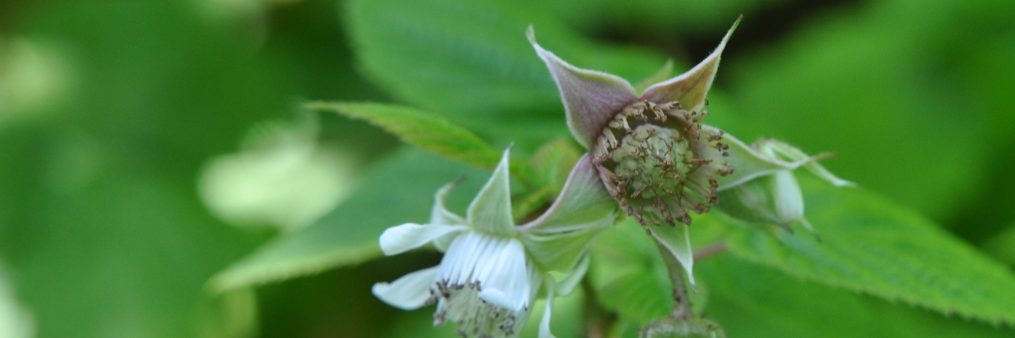
Bees are welcome and encouraged with plentiful pollen to gather for their queen. Paper wasps live under the eaves, an equally beneficial guest in the garden’s echo system. They’re not aggressive like yellow jackets, but they are easily mistaken for them. I was pleased to learn the difference.
Paper wasps

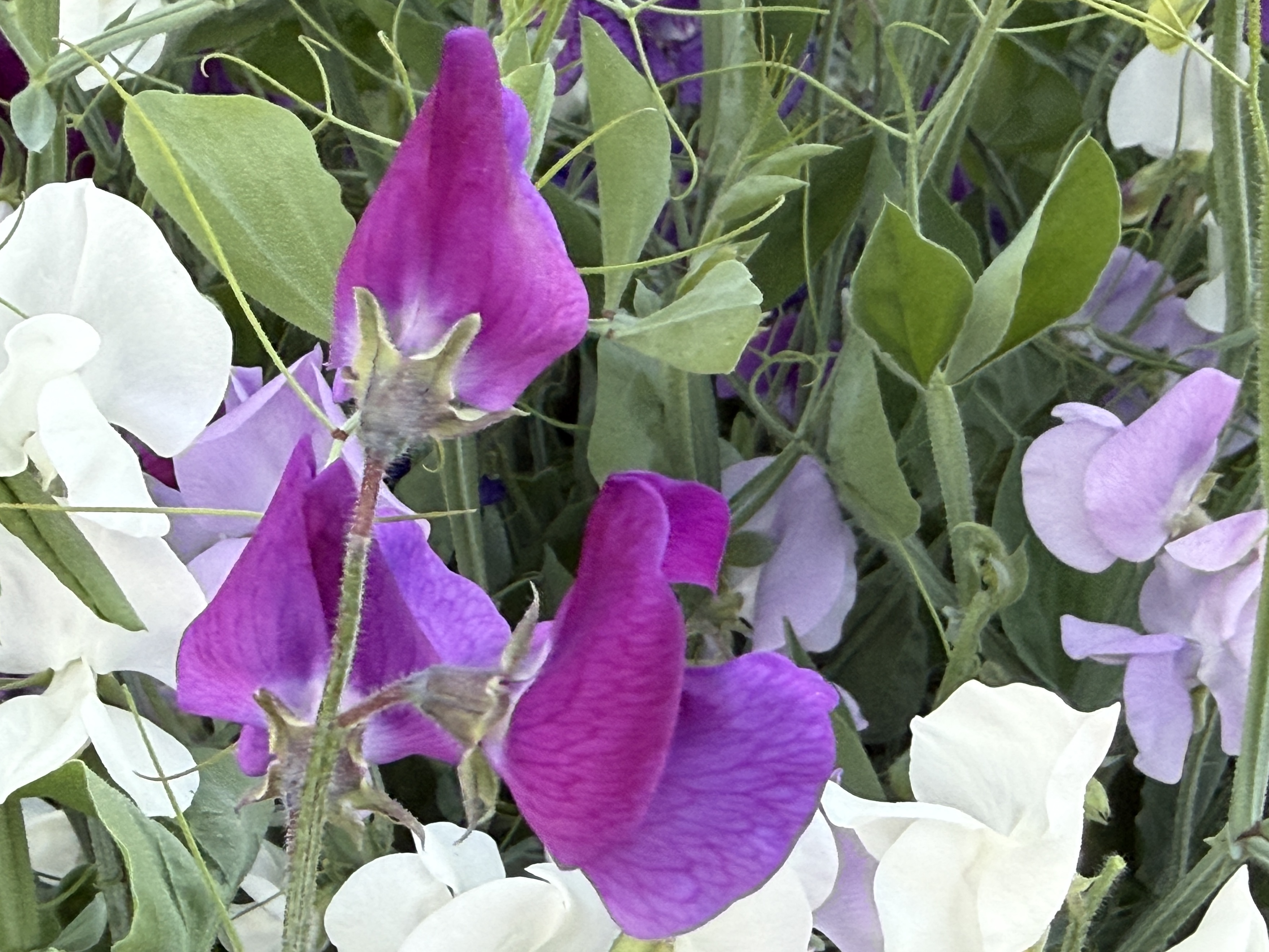
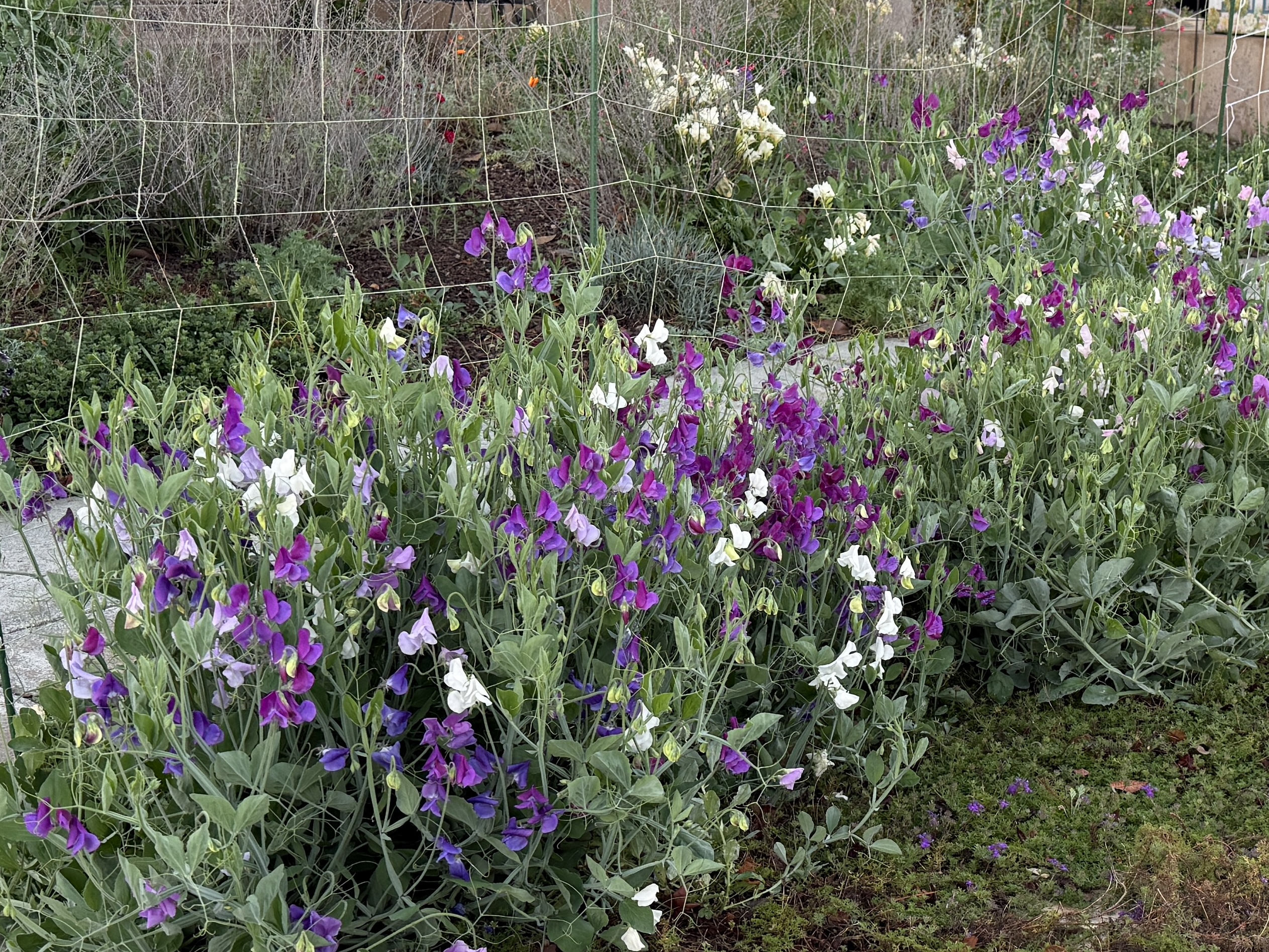
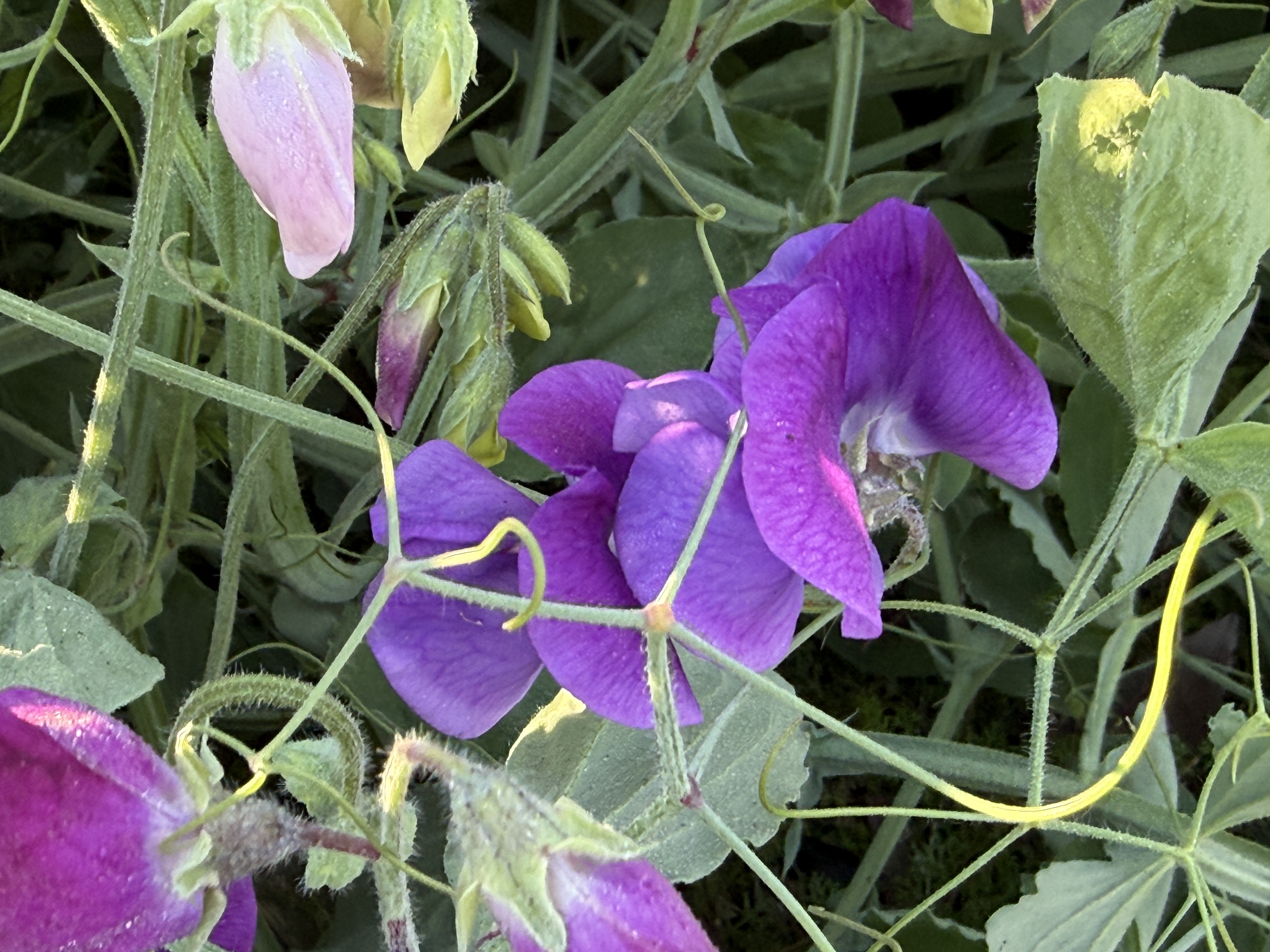
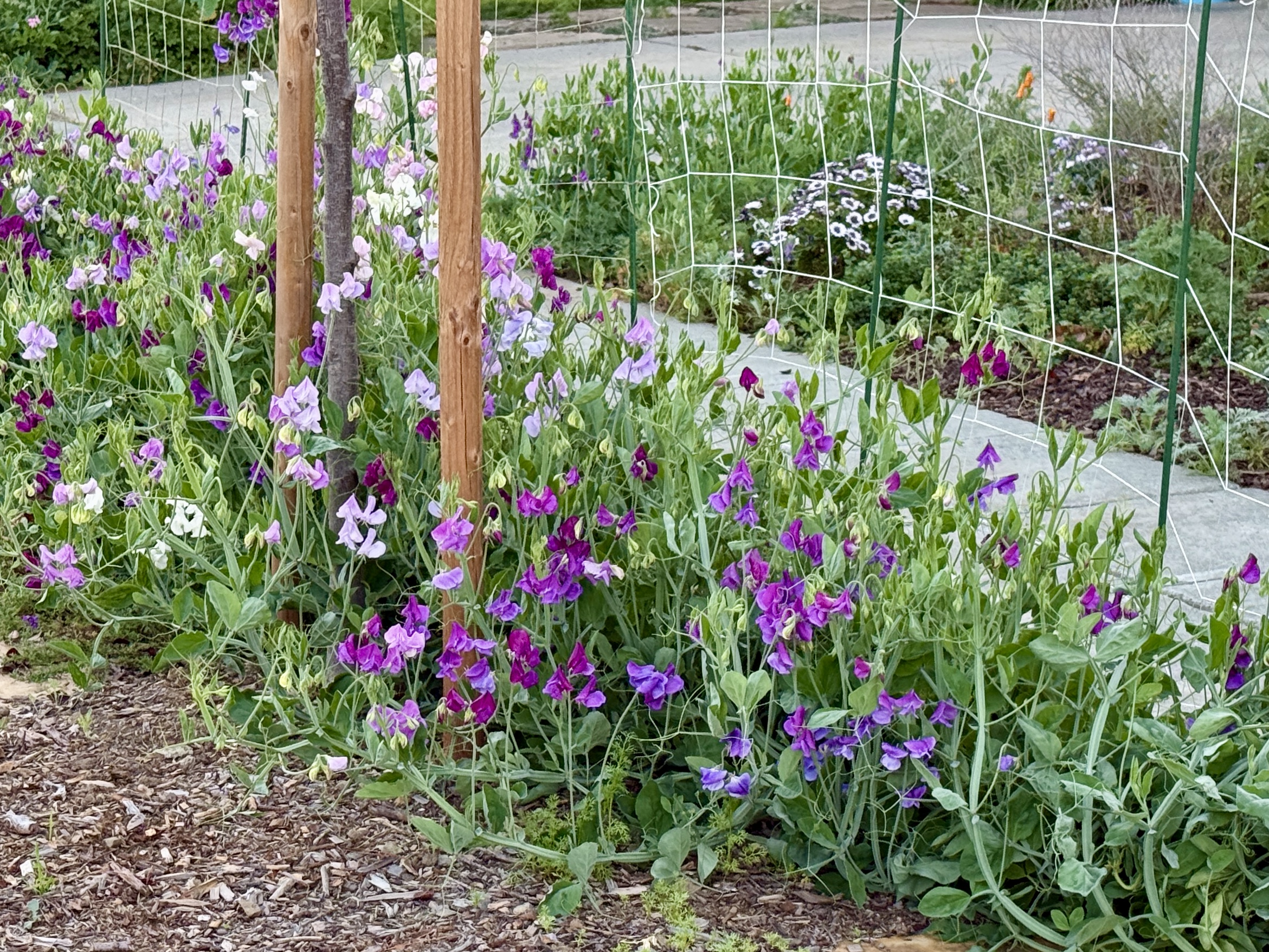
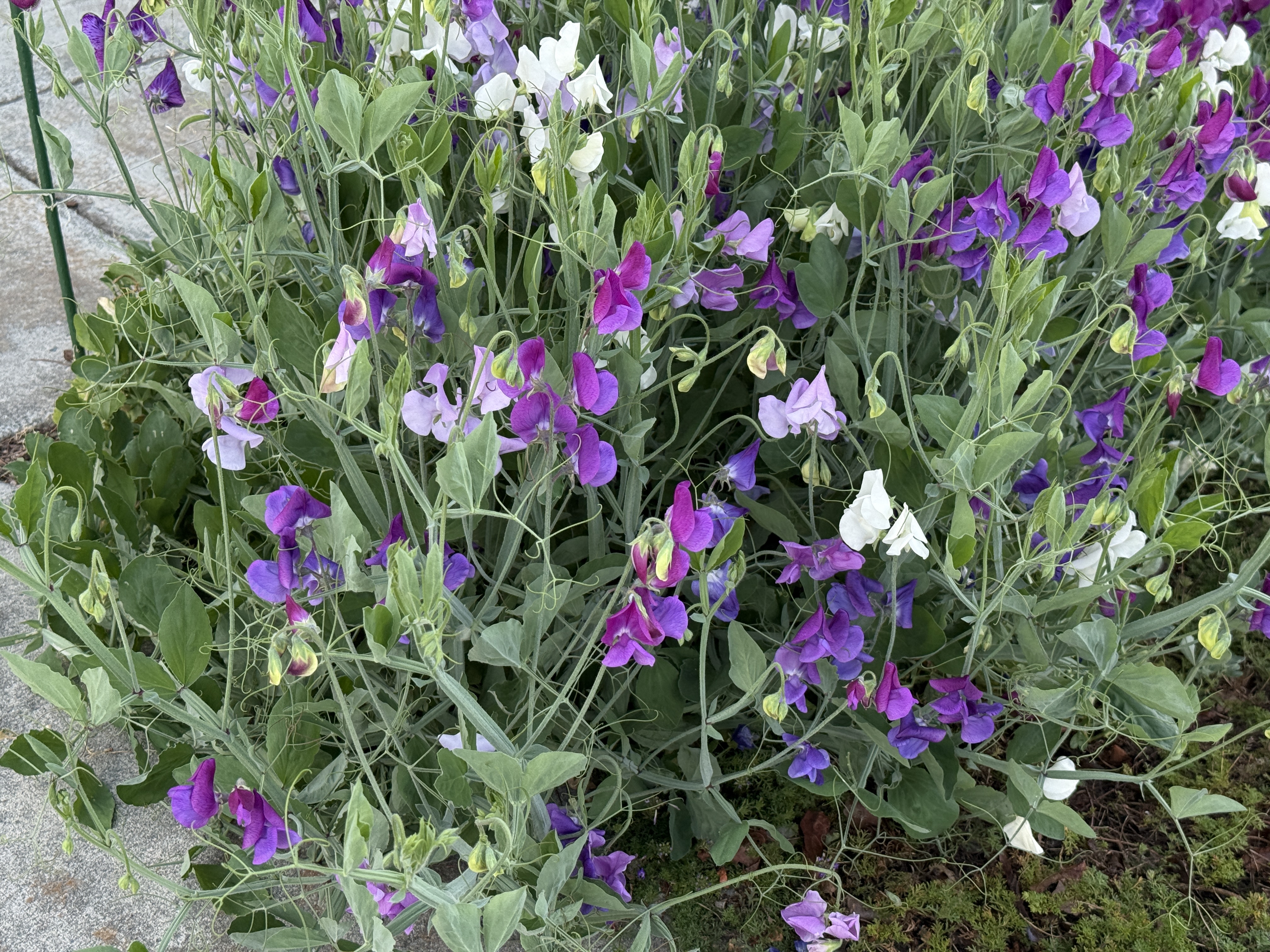
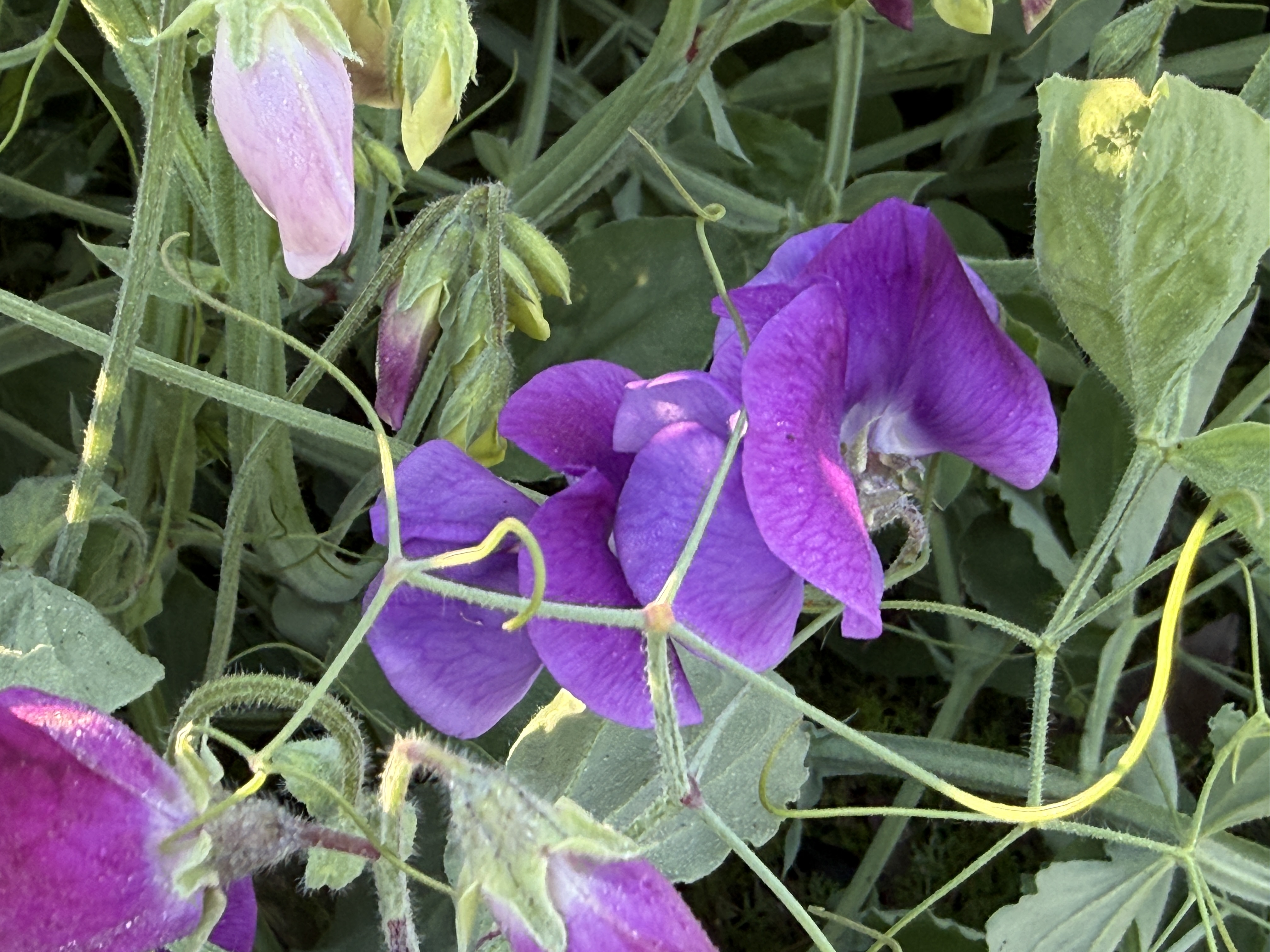
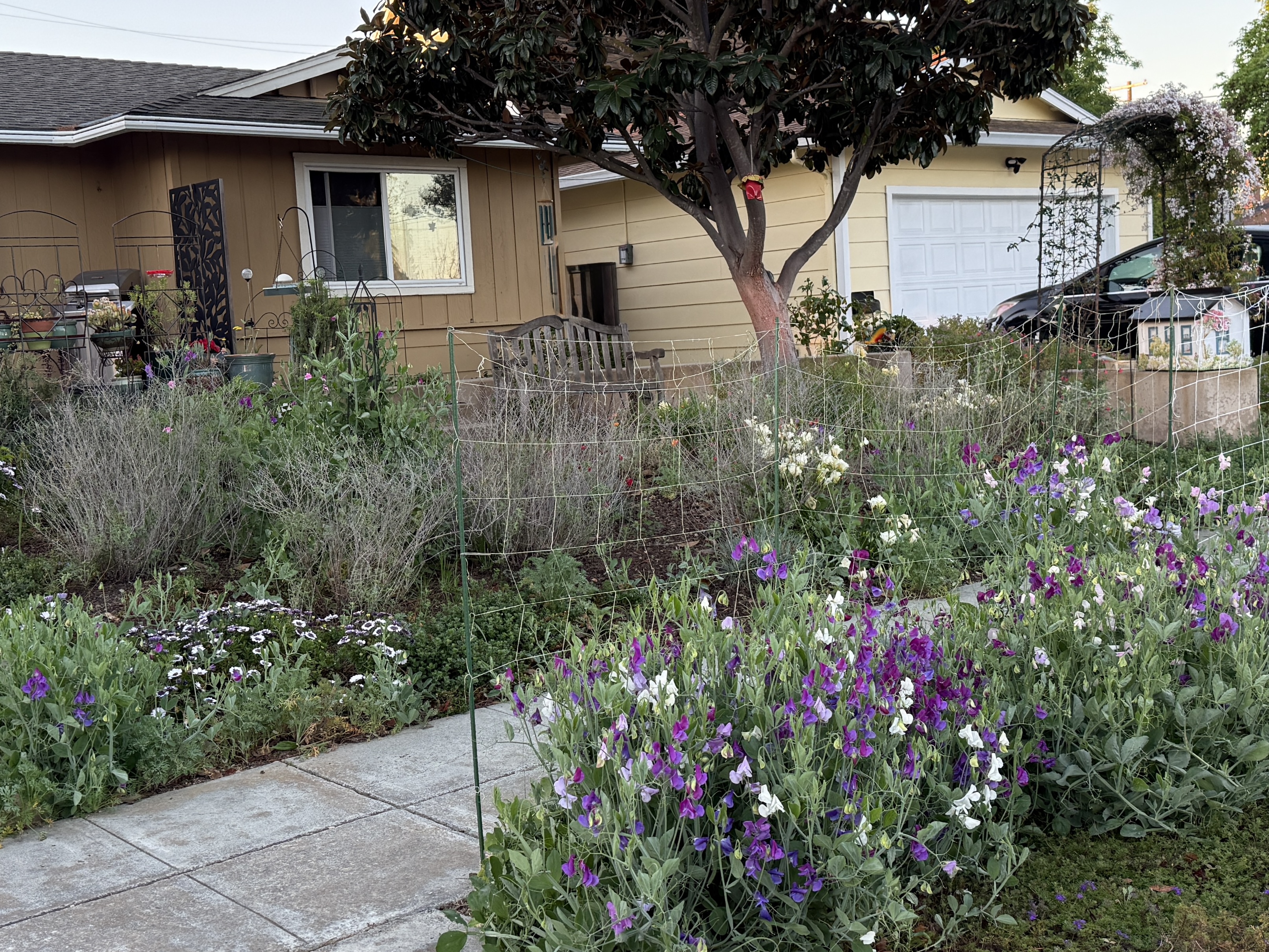
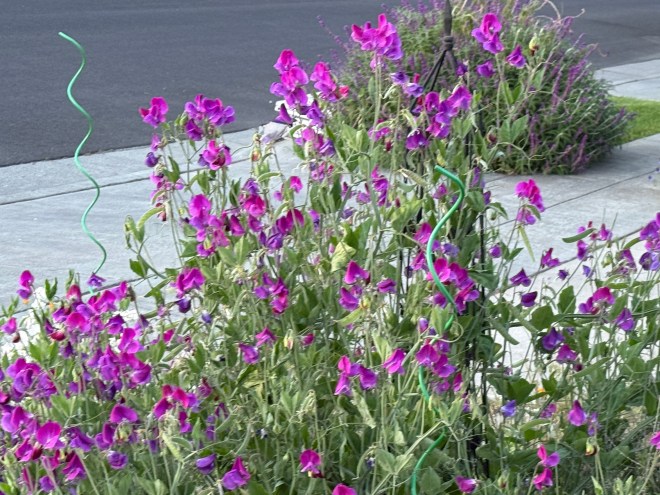
Over the years, small packets of seeds have morphed into returning gems. Sweat peas are the garden darlings, with soft, fragrant petals ranging from pale pinks to rich purples and reds. They elicit comments from passersby, generating a feeling of nostalgia.

Nasturtium, purchased as a few bedding plants years ago, cast about the garden with brilliant, showy orange flowers and broad, flat leaves that remind me of paper fans.

California poppies spread across the walkway this year, with several taking up residence around the curb garden and along the drive. They, too, were first scattered from a packet of seeds. 
Two seasons of welcome rain have filled reservoirs and water tanks while affording gardeners a reprieve from regular watering.

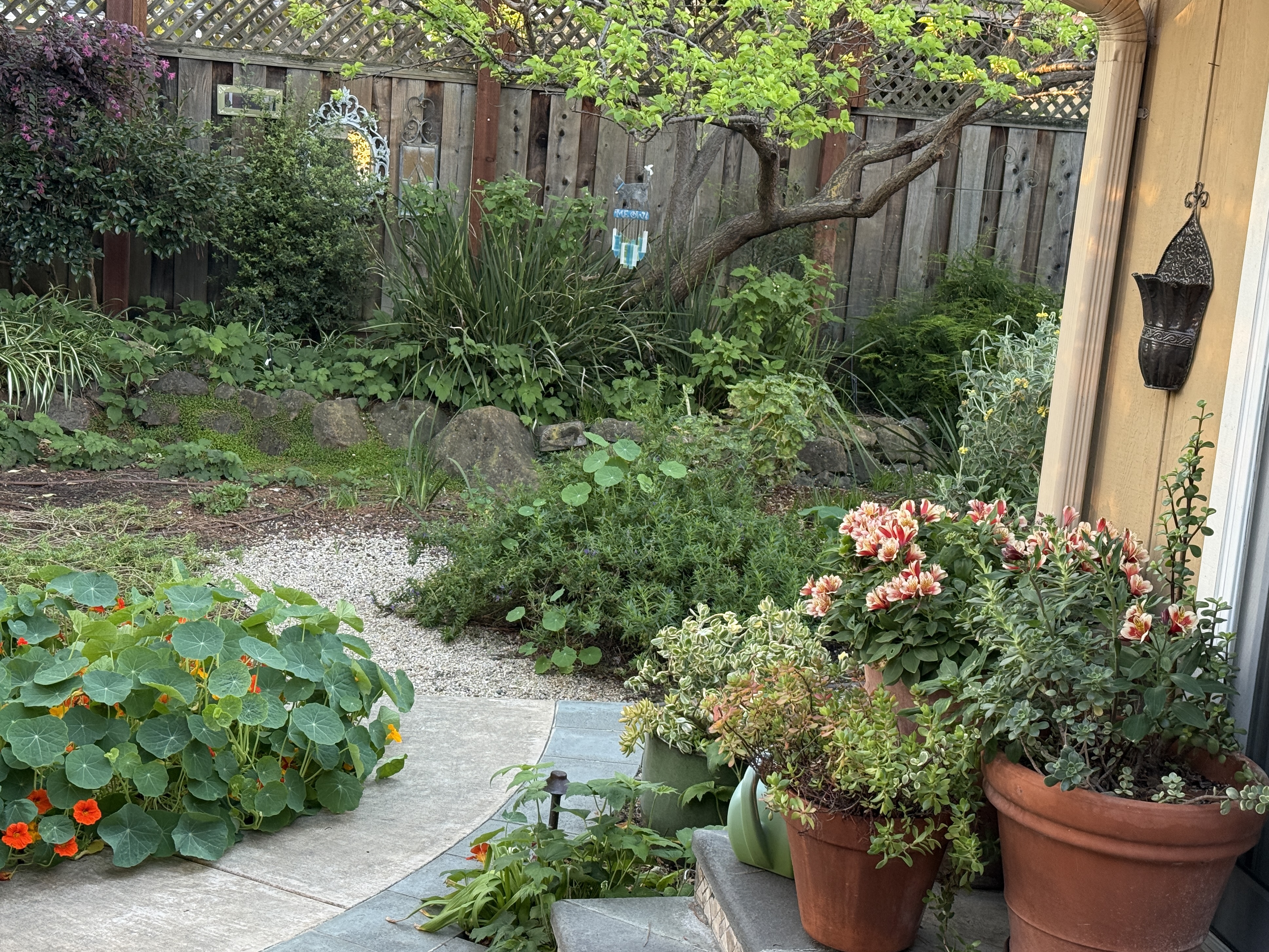
The garden continues to evolve, moving from the manicured lawn and roses we inherited when we bought this house to a garden filled with native and drought-tolerant plants, three mature trees, and a deck lined with succulents instead of thirsty annuals. The slider featur below shows the back garden in 1996 and 2024.

I’m grateful for the sun and the wind, the rain when it falls, and this lovely patch of earth outside my door.

Celebrating Pride in a Vase on Monday

In honor of Pride Month, today’s vase celebrates love. My vase includes the colors of the rainbow flag, designed by Artist Gilbert Baker at the behest of Harvey Milk, the first openly gay politician.
Colors have been added and subtracted to the flag over the years based on practical reasons (the cost and availability of the dyes) and the need for further inclusion. I didn’t realize before today that each color is symbolic.

Here is a screenshot from Wikipedia:

I managed to include everything but turquoise. The representative flowers are pink (geranium), red, (sweet peas and Acer seed pods), orange (nasturtium, a flowering succulent and a self-seeded annual), yellow (salvia), green (nepeta, lavender, and nigella seed pods), blue (hydrangea), and indigo/violet (salvia).

Juno Dawson wrote the book pictured in today’s post. It was assigned reading when my eldest son attended university. It’s considered “young adult nonfiction, ” which tells me it should also be required reading in high school.

This Book is Gay, one of the Guardian’s Best Books of the Year, is described as “The book every LGBT person would have killed for as a teenager, told in the voice of a wise best friend. Frank, warm, funny, USEFUL.” Patrick Ness.

Sadly, I live in a country with powerful yet hateful, fearful, right-leaning folks that want to ban books and defend gun rights, strip women of reproductive rights and demonize anyone that doesn’t fit into a narrowly defined norm.

These flowers celebrate love and inclusion, compassion and understanding, and hope. They celebrate Pride. They celebrate Love.

Please visit the Cathy’s to see what they’ve created for IAVOM.