A Place to Call Home

The Stones Were Laid into the Outer Ring

Kismet!  The remaining garden patio stones found a home today.

Our talented designer incorporated many of the stones into the new patio design and they look sublime!  Additional stones created a curving walkway along the vegetable garden.  Still, so many remained.

Garden Pathway

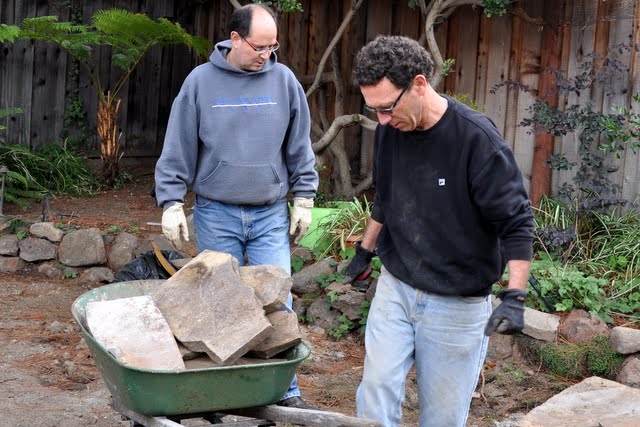
Hoping these bronze beauties could find a second life, I placed a call to friends in the community.  They were in the planning stages of their own back yard and guess what?  They’ve been looking at natural stone to incorporate into their own garden design.  Several wheelbarrow trips later, the beautiful bronze stones have found a new home.  The ever- gracious recipients said:

We are thrilled to have such an opportunity to use your beautiful stones in our yard project.

We are so grateful to you that you believe so strongly in the value of re-using!  It really is a wonderful and useful way to live in community. I’m happy you are getting the backyard you’ve always wanted too. It looks great and more functional.

Once again, we have a need for what you now don’t…..and we are most appreciative. The timing of this is remarkable. Thank you.

Finding the perfect “home” for those stones has had me smiling all day.

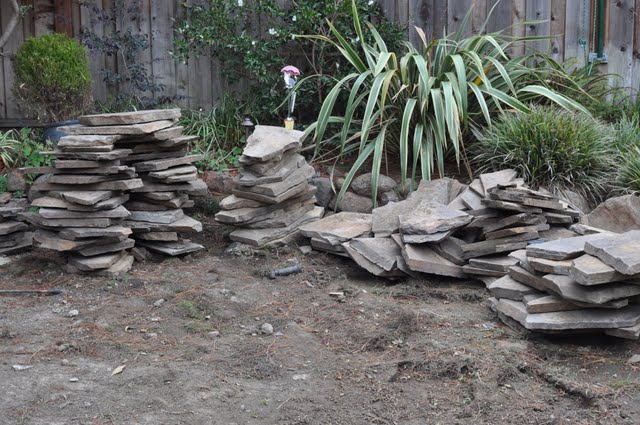
Tower of Bronze Stones

Have Wheelbarrow, Will Travel

Schlumbergera

Christmas Cactus (Schlumbergera)

I bought my husband this lovely specimen over a decade ago. It arrived in the mail covered with buds. Within a week it was laden with magnificent blooms, a testament to the climate-controlled greenhouse it came from. It didn’t bloom again for a few years, until it found the perfect home in our kitchen window.

The Schlumbergera puts out flowers two or three times a year, usually May and November and occasionally January. I was congratulating myself for reviving this plant, till I read here how easy they are to grow. Apparently all it needed was the indirect light and humidity the kitchen had to offer, and Mother Nature took care of the rest.

Window plants are quite cheering, especially during the colder months. Washing dishes is less of a chore when you have lovely fuchsia blooms holding court on the sill.

Garden Wanderings: The Good, The Bad and The Ugly

It’s fun traversing the garden with my camera in hand.  The lens helps me see things in a different light, though I’m not always able to capture it.  Beautiful, golden grasses grow at the edge of our garden, but I’ve never been able to record and share their beauty as they move in the wind, offset by the vivid blue sky.  The grasses remind me of a film from my childhood of “amber waves of grain.”

In reality, not everything in the garden is as beautiful as amber waves of grain.  This month I’ve decided to capture the good (flowering vines), the bad (frost damage) and the ugly (pine sap) of my recent garden wanderings.  Here goes:

Hardenbergia violacea 'Happy Wanderer' (Purple Vine Lilac)

Wrapping Around the Trellis

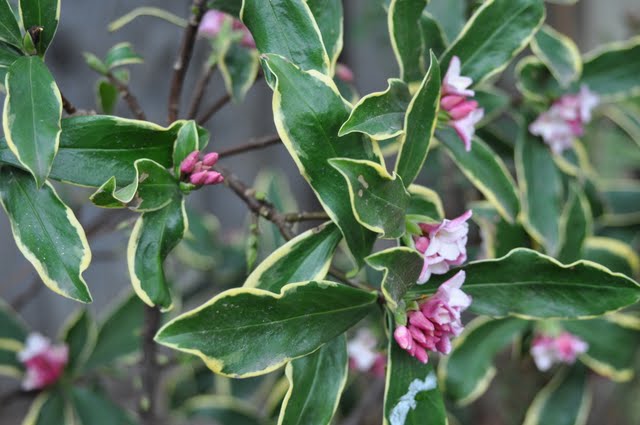
Daphne Odora

Frost-damaged Ferns

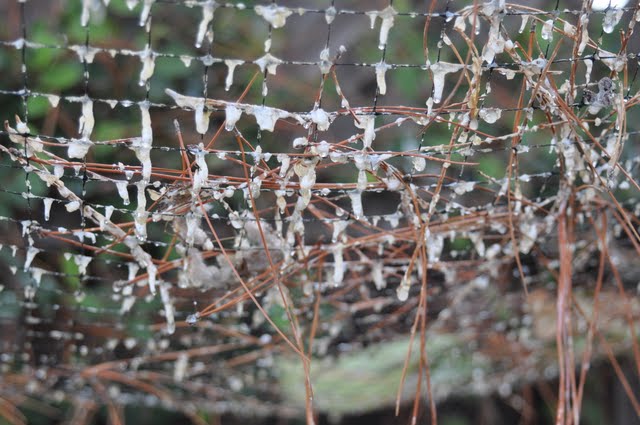
Pine Sap Clings to the Cat Netting

The Curse of the Poinsettia

Poinsettia (euphorbia pulcherrima)

I can’t seem to kill houseplants.  Most of the time, it’s a good thing.  I treat each plant with TLC, ensuring the proper pot size, location, water needs and the occasional fertilizer.  Once a plant finds the perfect corner of my abode, it thrives for years and years.

Back in 1988 I purchased two asparagus ferns from the local Woolworth Garden Center.  They were a bargain at seventy-nine cents each.  I planted them together in one pot and kept them next to my bed in my tiny apartment.  Plants were always my favorite way to decorate.  Unlike nick-knacks, plants change and grow.  And grow they did.  Eventually I split them up, and had two plants for my apartment.  Two years later I moved in with my sister and the plants came too.  Six weeks after the move, the Bay Area experienced a 7.1 earthquake.  The jolt of the quake flipped a mirror off of my bathroom wall, cleared the entire counter of its contents, including potted plants, and landed unbroken on the floor.  We had little damage, but spent a few days cleaning up the various messes it created, scooping up potting soil, broken containers and the like.  The ferns survived.  They moved back to Campbell for five years, and then joined me in Fremont as a newlywed.  By then the plants were quite large and had developed spiky thorns.  We eventually settled in San Jose where we started a family and those ferns, long past the house-plant stage, now live a contented life along the back fence.

Two years ago a Poinsettia came to live with us, a gift from someone who mostly took from our lives.  The plant was a beautiful specimen, grown as a standard instead of a shrub.  It spent some time on the kitchen counter, later moving to the living room as the seasons changed and it needed more indirect light.  Ironically, as the plant thrived, the awkward relationship stumbled, fell, limped along and finally, ended.  The end of the relationship was dramatic and ugly, but necessary for the mental health of me and my family.

Without tricking a Poinsettia into thinking it’s been through a cool, dark winter, they gradually lose their scarlet red bracts.  The tiny flowers also come and go, but through all of this, our plant remained healthy.  I tossed out the glittery holiday-themed pot, moved the plant back to the kitchen, and there it continues to thrive.  My family comments on the plant from time to time, aware of its giver and the frenzied drama that swirled around us. It’s a marvel the plant has survived.

Unlike the ferns that developed thorns to survive, the poinsettia lost its brilliant color as it dropped each scarlet red bract.  It has become a healthy, green and otherwise unspectacular plant, a contrary reminder of a turbulent time.
Patio Progress: Concentric Circles

Progress Photos

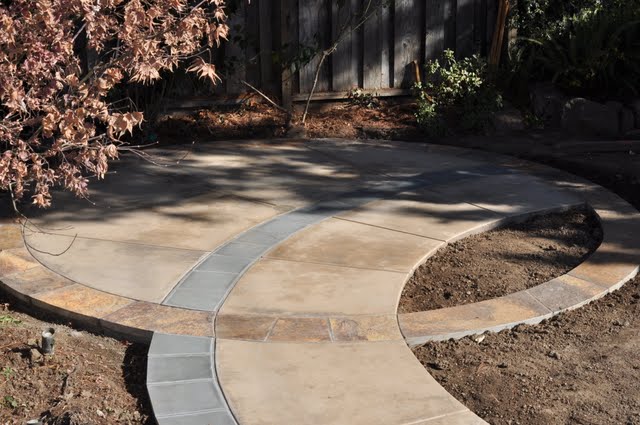
Our beautiful patio is done.  We are already enjoying the improvements throughout the yard.  The patio moved closer to the house.  It feels more intimate, something we’ve missed with it in the center of the garden.  Its sheltered now from the late afternoon summer sun so we can enjoy dinners outdoors once again.  Work on the pathway in front of the vegetable garden resumes this week, followed by repairs to the irrigation system.  A bit of grass will replace the former patio.  We’ll fill in with plants in the spring.

We were able to use about one-third of the flagstone in a concentric circle surrounding the poured concrete.  The patio integrates with the walkway, using Connecticut Bluestone to match the existing treads on the stairs.  As an added and unexpected bonus, the pretty tile trim under the stair treads now stand out against the “Sombrero Buff” concrete.  Even the cats love it!  They no longer have to walk gingerly on the stones like we did, trying to avoid the cracks.  All three of the cats have been out there exploring the new environment.

Cats on the Patio

Additional stones will be re-purposed for the vegetable garden walkway.  We hope to free-cycle the rest.  More pictures to follow later this week.

Designer: Bergez & Associates, J.P. Bergez featured in Sunset Magazine

Installation: Natural Bridges Landscaping, David Ross

Don’t Hate Me ‘Cause It’s Concrete

A Hard Day's Work

We never intended a major do-over of the backyard.  It was nothing to write home about, but it was our little postage stamp of a garden on our suburban, percentage-of-an-acre lot.  I spent hours pulling out ivy, trimming back overgrown shrubs, and hiring professionals to prune tall trees.   When my son was two he helped me plant annuals along the fence.  I would coach “dig the hole, put in the plant, add some soil” and he would repeat back, “…put in the oil.”  Mike gave me a gift certificate to a local nursery one year, and together we picked out annuals and perennials.  I poured over my beloved Sunset Garden books.   Life in the garden was good.

Then we remodeled.  If you’ve embarked on similar projects, you understand the phenomenon of one thing leads to another.  We extended the house by a mere 185 square feet, and with that the garden was lost:  Our beloved almond tree, diseased, had to come down.  Grass was trampled, paint brushes cleaned, nails dropped.  The electrical panel had to be enlarged, which meant damage to the siding.  Siding had to be replaced which meant removing some shrubs.  At the end of the day, what was left of our garden was a sad mess.

We hired a landscape architect who designed a beautiful garden, and we selected stone slabs to replace the existing poured concrete.  It was a greener option, allowing water from the irrigation below to bubble up and water the ground cover.  We spent the extra dollars to purchase “select” stones; code for bigger pieces will cost you.  To this day I’m not exactly sure how it happened, but an unsupervised stone-layer proceeded to break those large stone pieces into smaller chunks.   The designer was angry when she saw the work and demanded of us “is this going to work?”   After nearly a year of remodeling we were suffering from a serious case of decision fatigue. So…we cried uncle.  Yes.  Yes, it’s fine.  It’s fine.  Really.  And we thought it was.

The patio was a flop.  The irrigation below only worked for half the stones.  The roots from the neighboring pine tree lifted and broke some of the stones; others were placed too far apart, creating ankle-twisting hazards as we maneuvered our way around.  The table was constantly tipping to one side and the chairs had to be carefully arranged and re-arranged every time you sat down.   I replanted the ground cover on three different occasions, pulling weeds as I went.  The weeds would take hold again, as if to point out who was boss.

So, eight years later, we’ve filled up our proverbial piggy bank and hired the talented J.P. Bergez.   We asked J.P.to incorporate the stones into the design so that we could re-purpose them in a more practical way.  We lived with the greener alternative for seven years, but practicality was about to win out.  Don’t hate me ‘cause it’s concrete.

Broccoli is In!

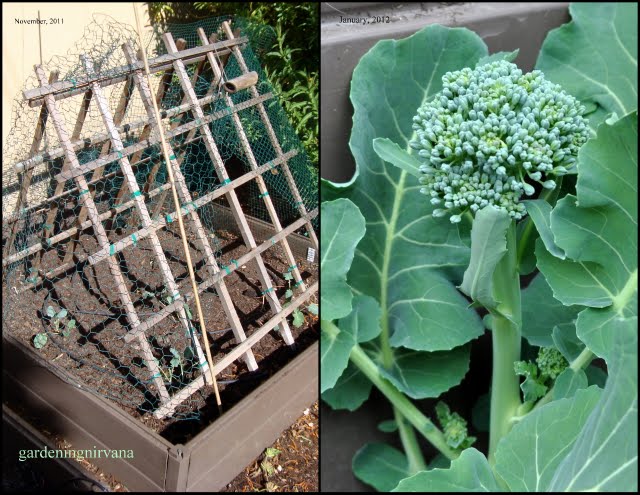
I’m a fair-weather gardener. I like to plant spring through summer, enjoying what survives the onslaught of snails, squirrels, rats and tobacco worms.  Seasonal favorites include pumpkins and tomatoes, along with a row of towering sunflowers.

We added a few raised beds two years ago, and since then I can’t stand to see all that bare soil.  Even with my tiny plot, I’m aware of the benefits of cover crops: less erosion, for starters, and if properly planted, cover crops like fava beans will enrich the soil with nitrogen for next season’s plantings.  Last year’s fava beans were tilled back into the soil, and we followed with a bumper pumpkin crop.

This year’s cover crop is Broccoli.  I wasn’t raised eating this delicious green.  I was in my twenties before tasting it on a flight to Vancouver.  It’s now one of my favorites.  I’ll eat it raw but love it steamed or in soups.

This week, my lush, green plants started to yield tiny florets.  I don’t think I’ll ever tire of watching things grow.

The Power of Broccoli:  nutrition, selection, storage and history

Recipe: Sesame Steamed Broccoli

Recipe: Creamy Vegan Broccoli Soup*

*I made this recipe a few weeks ago with organic broccoli from a local market.  It was delicious!

My Heart in the Garden

“The way is not in the sky. The way is in the heart.” -Buddha

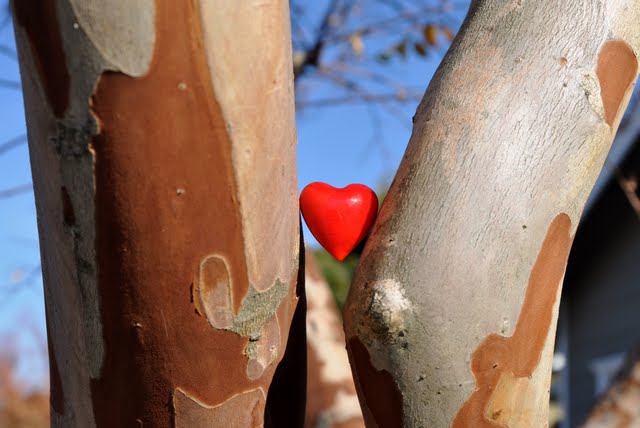
Heart among the branches

“If you haven’t found it yet, keep looking. Don’t settle. As with all matters of the heart, you’ll know when you find it. And, like any great relationship, it just gets better and better as the years roll on.” – Steve Jobs

Camouflage Heart

“There are many things in life that will catch your eye, but only a few will catch your heart…pursue those.” – Michael Nolan

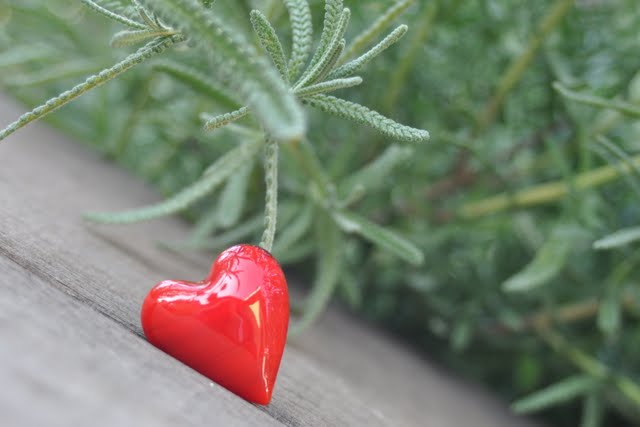
A Crack in the Walkway

“Don’t be reckless with other people’s hearts; don’t put up with those that are reckless with yours.” – Mary Schmich

Don't be Reckless

“Have a strong mind and a soft heart.” – Anthony J. D’Angelo

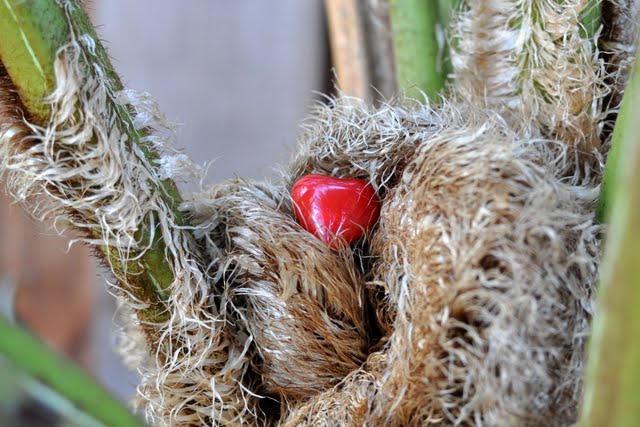
Heart Nestled in the Crook of a Fern

Baby, It’s Cold Outside…

…so cold, in fact, that it’s snowing on my blog!  Come take a peak.

"Snowing" in California

From the Elf Soundtrack: Listen to that fireplace roar

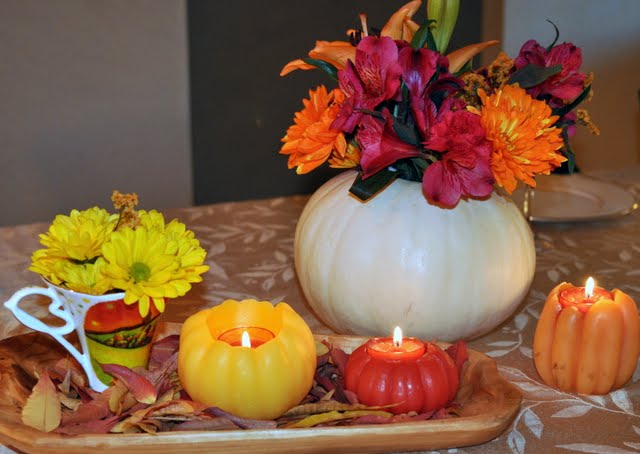
Thanksgiving Centerpiece: Hollowed Pumpkin Bouquet

I’ve always wanted to try this…and finally did this year.

We grew this beautiful white “Cotton Candy” pumpkin last summer.  It created the perfect color compliment to the orange flowers and its moderate size didn’t over-power the table.

Pumpkin Centerpiece

Step 1: Remove the top of the pumpkin, the seeds and the pulp.

Step 2: Coat the cut edge of the pumpkin with petroleum jelly to slow the drying process.

Step 3: Insert a plastic jar, cup or other non-porous container into the opening.

Step 4: Cut flowers and dried grasses, reducing the stems to about 6 inches.  Arrange to taste.

Thanksgiving Table