Happy St. Patrick’s Day: Garden Limericks

I composed a few garden limericks in honor of St. Patrick’s Day.

As a gardener I find much to love,
even weeds at the end of my glove.
I once kept a log,
then I learned how to blog,
hence combining two hobbies thereof.

In my garden I learned how to sow,
tiny seeds laid all in a row.
Then I wait for the pests,
snails and rats never rest,
hoping one day something might grow.

“May the road rise up to meet you, may the wind be ever at your back. May the sun shine warm upon your face and the rain fall softly on your fields.”Irish Blessing

Weeds, Masquerading as Clover

The Long View

Raindrops on Petals

My Favorite Raindrop of the Day

It’s nothing to write home about, but we finally got a bit of the wet stuff.  Drizzle. Precipitation. Rain.  According to our local paper we can expect more storms this week. I’m pretty excited.

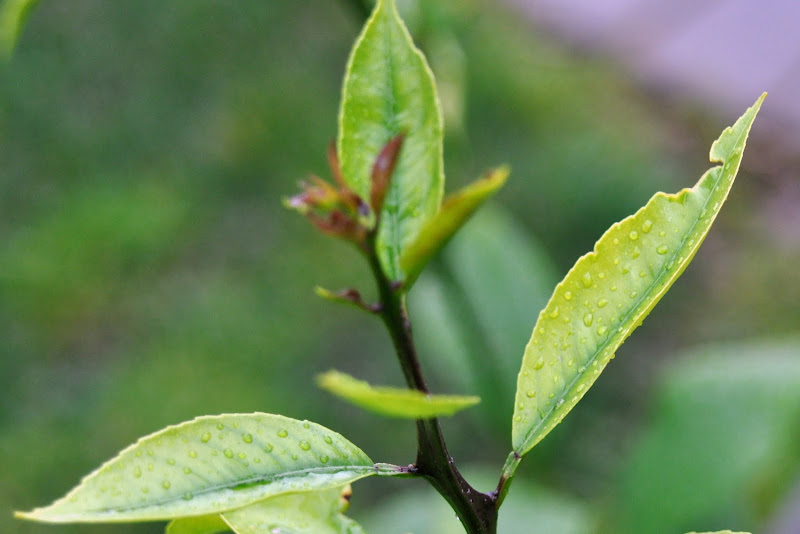
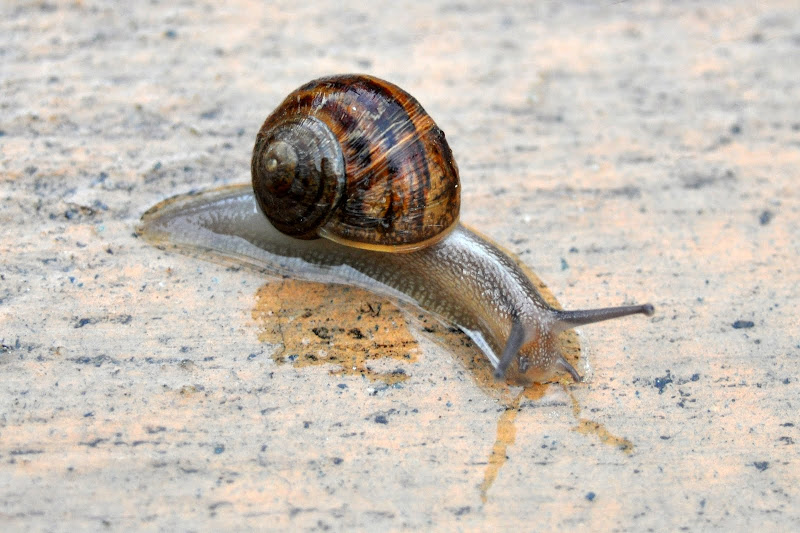
What fun I had today chasing down raindrops gathering in the recesses of plants. I spotted the first snail of the season, too, but so it goes with gardening.  Nature vs nature.  It’s hard to take sides.

I am sure it is a great mistake always to know enough to go in when it rains.  One may keep snug and dry by such knowledge, but one misses a world of loveliness.  ~Adeline Knapp

Refreshed

Lemon Drops

The Pause that Refreshes

Slipping and Sliding

Blooming Thursday: Around the Garden

Mary, Mary, Quite Contrary, How Does your Garden Grow?

Today’s garden surprise blooms in the side-yard: periwinkle. I bought a flat last summer and planted most of it in a pot on the deck with some annuals.  I envisioned beautiful trails of purple flowers cascading over the edge of the pot.    I stopped watering the pot when the annuals went to seed, assuming the rain would take over.  So much for assumptions; rain has been sparse all season. Then the squirrels began stashing peanuts in the planting mix, digging and scooping mounds of dirt on the deck. By February the neighbor’s cat was napping in the pot and I threw up my hands in defeat.

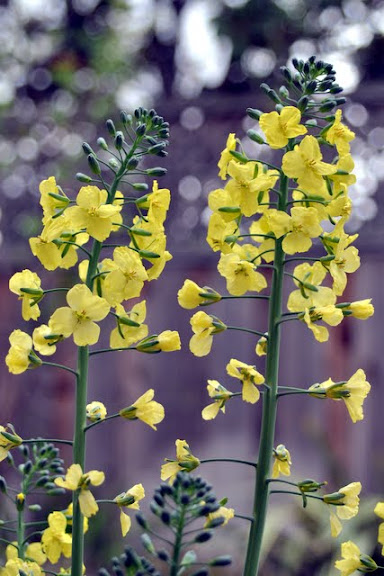
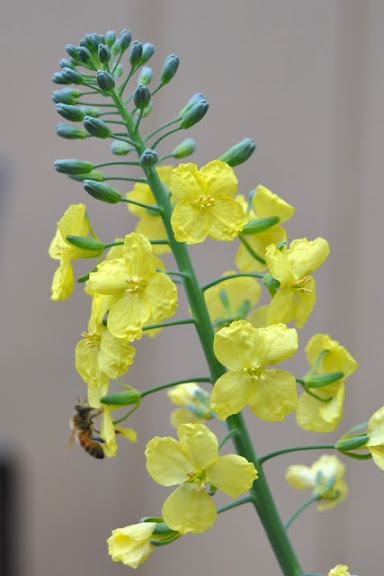
On my rounds today I discovered a handful of periwinkle plants survived the winter in the children’s garden.  Four tiny plants in bloom, each sporting one purple flower.  Also blooming today: The pink and white azalea, one of the camellias, and the broccoli now in bloom.  Against the backdrop of cool, gray skies I spotted one lone bee at work.  Perhaps tomorrow news will get back to the hive.

“For so work the honey-bees, creatures that by a rule in nature teach the act of order to a peopled kingdom. “~ William Shakespeare

From Benefits of Honey

Camellia Perfection

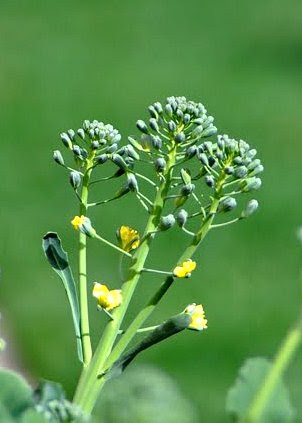
Broccoli Blooms

A Welcome Visitor

Periwinkle aka Vinca

Early Azalea

Magnolia Liliiflora, You Make my Heart Sing

Our Beloved Tree

We have two Magnolias in our yard, equally magnificent but unique. The more traditional tree, a grandiflora st. mary  towers over the house and provides shade and shelter for neighborhood birds. It’s also an evergreen so we tend to take if for granted since it’s covered in shiny green leaves year round. It produces huge white blooms, and lemon-sized seed pods.

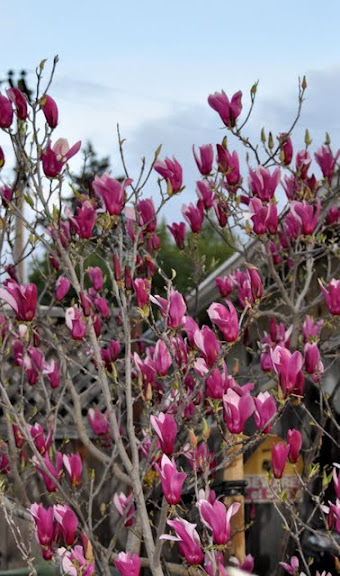
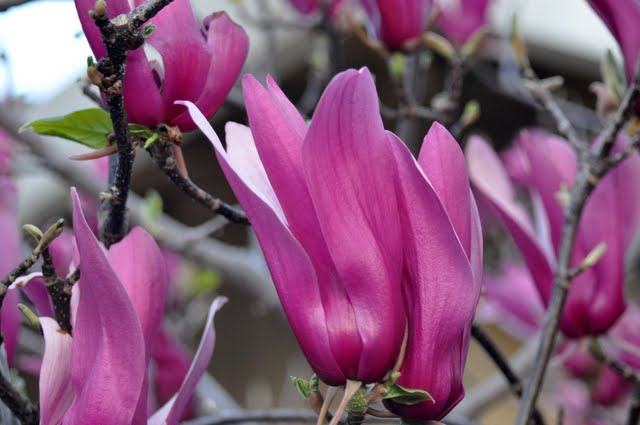
The smaller, more compact Magnolia is only about six feet tall.  It started out in the back yard, where it suffered from a fungus every spring. We transplanted the tree to our front yard where it now happily thrives.  The Tulip Magnolia (magnolia liliiflora) is deciduous.  It starts to wake up in early March with a show of pink and fuchsia, tulip-shaped blooms.

Ah, spring.  All kinds of goodies in store.

Magnolia Bloom

Magnolia Liliiflora

Maple Musings

Close Up

Rain is in the forecast again this week, but I’m trying not to get my hopes up. As we come to the end of this La Niña year, experts predict one of the lowest rainfall seasons recorded for San Jose. Other than a few cold days here and there, it’s been a surprisingly mild winter as well. All this adds up to confusion in the garden.

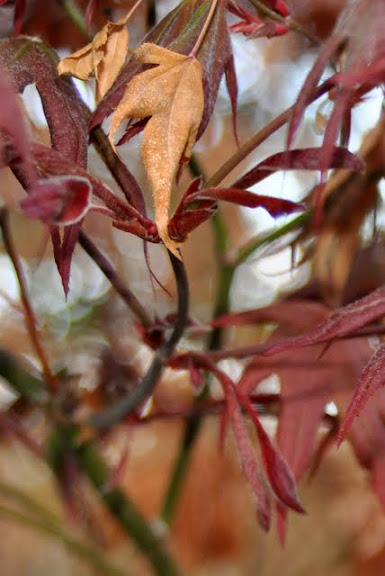
Our beautiful maple tree generally starts dropping leaves in the fall, and after a few good storms, the branches remain bare till spring. Around March, the maple’s internal clock knows to send out buds and shoots and little fruit known as winged samara. In a matter of days the tree dresses in rich, red leaves.

This year, only a few leaves dropped. They turned brown on schedule, but without the rain or wind, the leaves remained. A friend asked if the tree was dead and who could blame her: such odd behavior for a deciduous tree.

It’s been a rough season for allergy sufferers as well. Early blooms from over-stressed trees wreak havoc on sinuses. In my California backyard, one lone maple provides color and shade, but states like Vermont have cause for concern. Trees need cold nights followed by warm days to produce maple syrup.  According to Tim Perkins, director of the University of Vermont Proctor Maple Research Center:

“Sap flows best on warm, sunny days followed by nights that dip below freezing. The fluctuations are key: Cold nights contract air bubbles within the tree, producing suction that draws sap from the ground into the tree, where it mixes with sugar and freezes; warm days thaw the sap and expand the air bubbles, creating pressure that makes the sap flow into buckets or tubing, said Tim Perkins, director of the University of Vermont Proctor Maple Research Center, who has studied climate change’s impact on the maple industry.

Perkins predicts that climate change over roughly the next hundred years will result in the loss of maple trees across much of New England, according to congressional testimony he offered in 2007.”

As I muse on our lone maple tree within our suburban setting, I’m intrigued at the parallels on a grander scale, and what it means for us all. I’m worried.

The Old and the New

March Haiku

March Winds

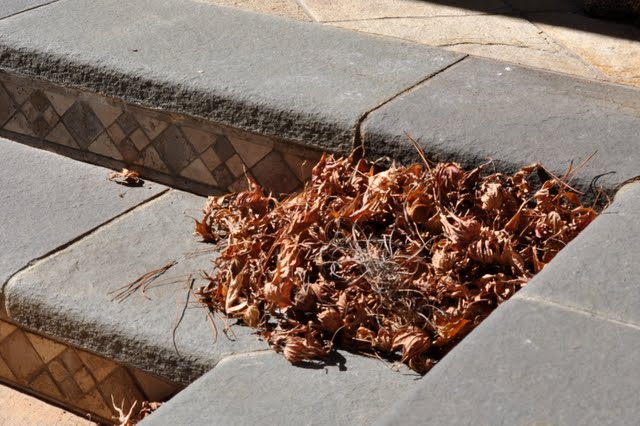
March winds fiercely blew.
Leaves gathered on the doorstep
I don’t need a rake!

Icy Water

Icy water flows,
fallen leaves how you vex me.
Mold in one hour.

Visiting Feline

Visiting feline
graces our garden each day.
Does your mama know?

Neighborhood Squirrel

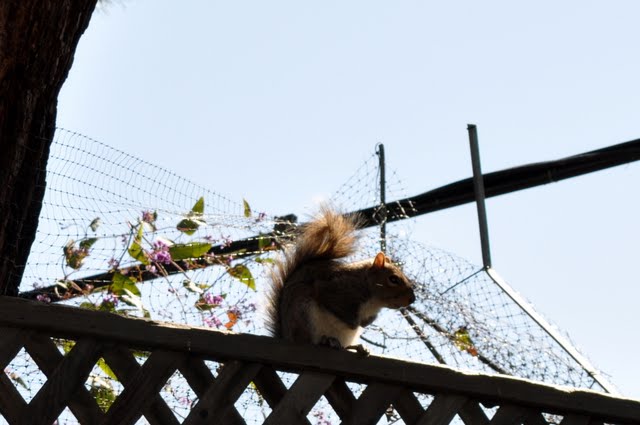
Neighborhood tree squirrel
amassing a trove of nuts,
please spare my new lawn.

Hardenbergia

Hardenbergia
Monosyllabic flower
you’re one-third haiku.

You can learn more about the origins of the ancient Japanese poetry style Haiku here.

How to write a Haiku poem from Creative Writing Now.

About the Haiku Master From Wikipedia:

Matsuo Bashō (松尾 芭蕉?, 1644 – November 28, 1694), born Matsuo Kinsaku (松尾 金作?), then Matsuo Chūemon Munafusa (松尾 忠右衛門 宗房?),[1][2] was the most famous poet of the Edo period in Japan. During his lifetime, Bashō was recognized for his works in the collaborative haikai no renga form; today, after centuries of commentary, he is recognized as a master of brief and clear haiku. His poetry is internationally renowned, and within Japan many of his poems are reproduced on monuments and traditional sites.

Spider Plant Sprawl

Spider Plant Sprawl

One by one, the root-bound spider plants relocated to the fence line.  We jokingly refer to that area of the garden as the back-forty.  It’s also where big, hairy spiders go, so they can do their garden business without scaring me on my daily rounds.

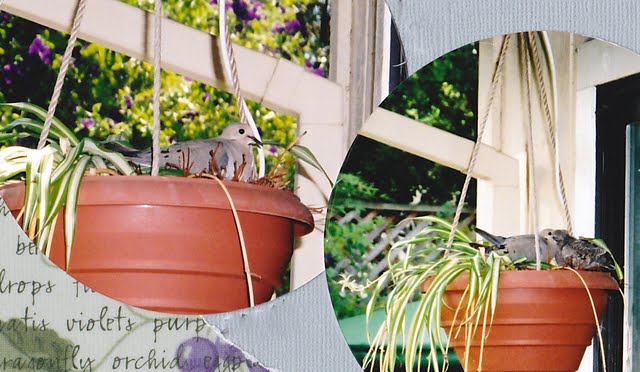
The back-forty is a transitional home for plants who’ve outgrown their pots but don’t currently have a good place to go.  One of the potted spider plants sheltered a nest of mourning doves one year.  Eventually the pot was too crowded for a nest or a plant. Time to visit the back-forty.  Sometimes I empty a bit of soil left in a pot, and a forgotten bulb rolls out.  I give it a toss into the mix  and carry on with my gardening chores.  It’s every plant for herself back there: find a place to put down your roots, or move over for the next plant.  Since nothing that we’ve purposefully planted under the pine tree lives for very long, I’m hoping my stealth plan takes root.

Two spider plants and an asparagus fern have been up to the challenge so far.  The acidic soil and shade agrees with them and they seem impervious to a steady shower of pine-needles.  At the rate they are multiplying, the back-forty relocation plan is looking like a success. Gardeners know that hope springs eternal or perhaps it’s spring that brings eternal hope.

Asparagus Fern Spider Plant Tango

Mourning Doves

The Accidental Compost

Organic Wonder

Every year I say I’m going to start a compost pile but then lazy wins out.  Whenever I toss a banana peel or an egg-shell I think, “if only I had a place to compost.”  Part of my ambivalence is where I would put it.  Compost  needs sun and room for turning and both are at a premium in my back yard.

Two years ago my son collected fallen leaves from our Chinese Pistache in early October to use in his spooky Halloween display.  He filled a large Rubbermaid bin with dead leaves but forgot about them in the excitement of the day.  When I rediscovered the bin, decomposition was under way so I decided to snap on the lid and let nature takes its course.  I pried back the lid every few months and checked on the decomposing leaves. I gave them a quick toss with my gloved hands, closed the bin, then went about my business.

By the end of last summer I had compost!  Sometimes lazy gardeners can catch a break.  I love the texture and the smell of that wonderful decay.  I know the plants were happy too.  It was  a joyful experience mixing it into the planter beds. I may come over to the dark and loamy side yet.

Composting Recipe:

I jotted the following notes into a notebook two years ago so I would be ready to move from “accidental composter” to the real deal.

In half-inch thick layers:

Combine 3 parts “brown” organic material to one part “green”

3 parts brown includes dried leaves, small twigs, etc.
1 part green includes grass, cut flowers, coffee grounds, egg shells, tea bags and fruit or vegetable peels

Mix into a bin approximately 3′ x 3′ x 3′

Add a small amount of moisture as needed and turn once a week.

Serves several plants.

Second Chances

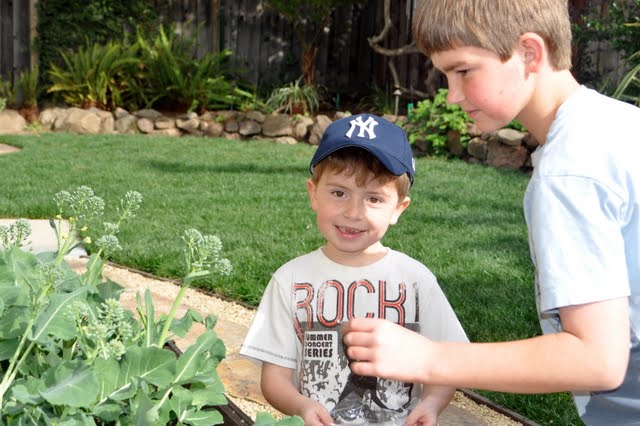
There is no accounting for taste.  It’s one of life’s mysteries.  I’ve raised two sons in one household with identical  food choices, but only one of them  loves fruits and vegetables.  I continue to re-introduce different foods, he continues to eschew most of them.   Broccoli is not on his short list.  He says it’s too bland.

Today, he turned a corner!  He invited a young friend to stop by to see the new garden.  Together they swept gravel from the path.  With joy and pride he trimmed small florets of broccoli to send home with his mate.   He then nibbled on one of the organic florets and pronounced: “I like it because it is bland.”   Three cheers for second chances and the power of a garden.

Garden Log: February 22, 2012

Small Harvest

With temperatures in the mid-seventies this week, we’ve been spending a lot of time outdoors. The official start of spring is still four weeks away, so I know this weather won’t last. It was a great opportunity to accomplish some garden chores.

Harvesting:

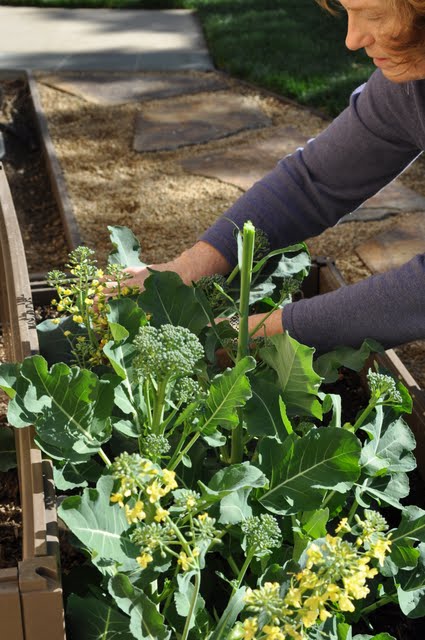
I cut the larger broccoli crowns, along with the flowering plants that bolted last week, and left the smaller florets behind. With luck, we’ll have a few more servings before all plants go to seed. I soaked the cuttings in warm salt water before wrapping them in a towel to crisp in the fridge.

Pruning:

Following my friend Doug’s instructions and the notes I found on-line, I pruned our two-year old, “four-in-one” fruit tree. The soft buds are plump on all four grafts and a few have started to flower. I put some of the cuttings in a vase indoors and will recycle the rest curbside. San Jose’s excellent recycling program converts green waste into mulch!

The aforementioned fruit tree was my son’s 10 year birthday gift, so the pressure to prune it properly runs high. He refused to watch, even though I read to him how important pruning fruit trees is in the first four years to establish a strong tree. It was fun to read the origins of the phrase “nipping it in the bud.”
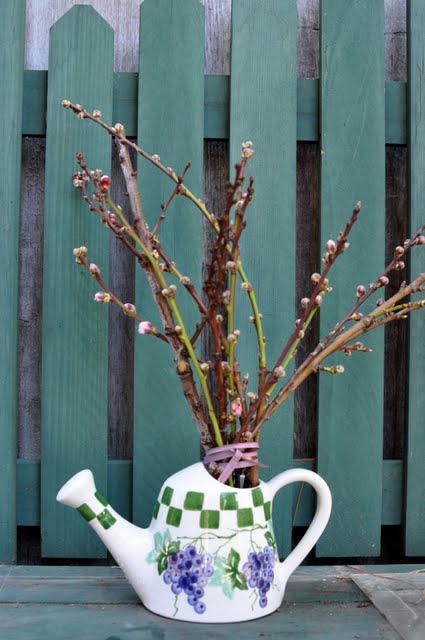
Four-in-one Fruit Tree Buds


Transplanting:

My husband helped me drag the water-logged roses to the front deck where we replanted them in a pot. We displaced the  plants when we installed the patio out back so I was happy to find them a home. I’m sure I’ve disappointed a few squirrels.  They dig up the planter every few days leaving dirt all over the deck.  Since they don’t stay to clean up the mess they don’t have a say in the matter. The roses will soon bloom, discouraging all that plunder.

Maintenance:

We store our emergency/earthquake kit under a potting bench in two air-tight containers. I knew it was time to update the water along with a few other items, but for all my love of gardening, I’m a bit squeamish about spiders. Mike pulled out the bins and stacked them on the table so I could empty, sort, clean and replace items as needed. I washed the blankets, pillow cases and the canvas tote and made a note to replace the water boxes and a few batteries. Otherwise it was in decent shape. As I went to replace the oil cloth cover I discovered one of the largest, hairiest garden spiders I’ve ever seen. We stood and debated its livelihood for a moment: I knew it was alive; my husband said dead. I carried the cloth to the far reaches of the garden to relocate the arachnid. As we stood staring at it, one of the cats crawled under the cloth and then jumped out the other side. The two of us jumped in unison, momentarily convinced that “Sir Harry” was out for blood.

Sir Harry

Next week: a trip to Almaden Valley Nursery to source and price some plants.