Summer Solstice in San Jose

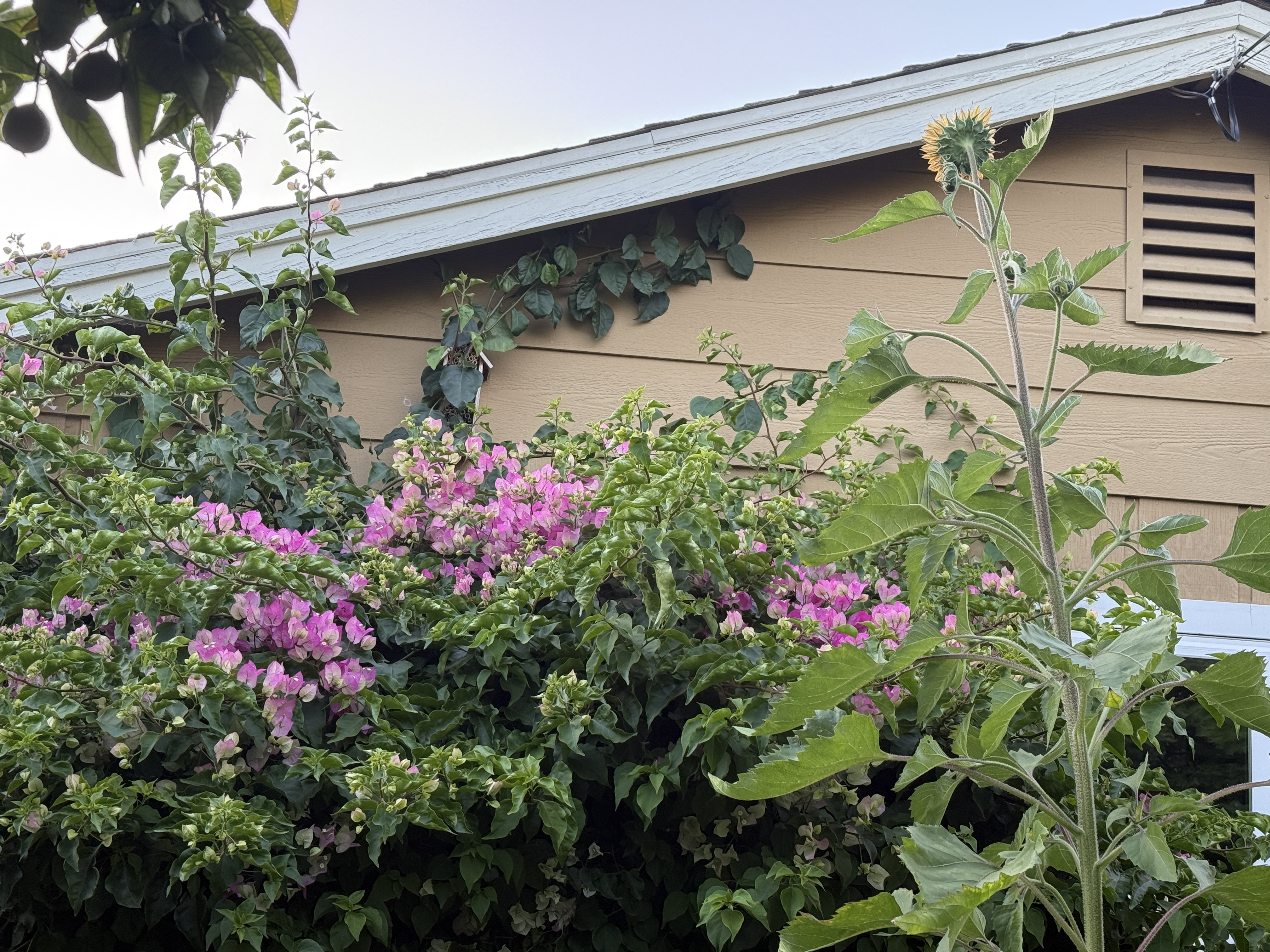
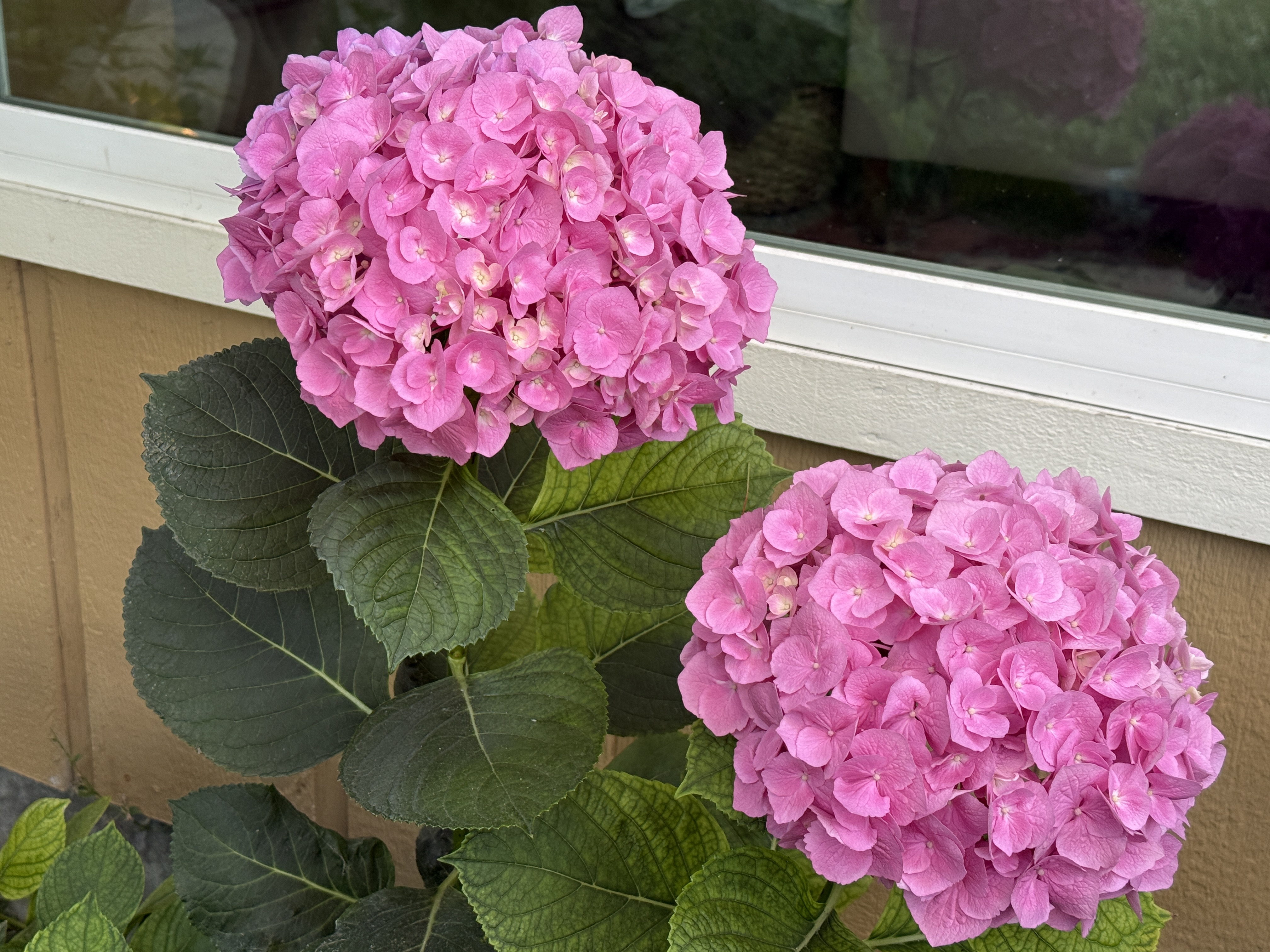
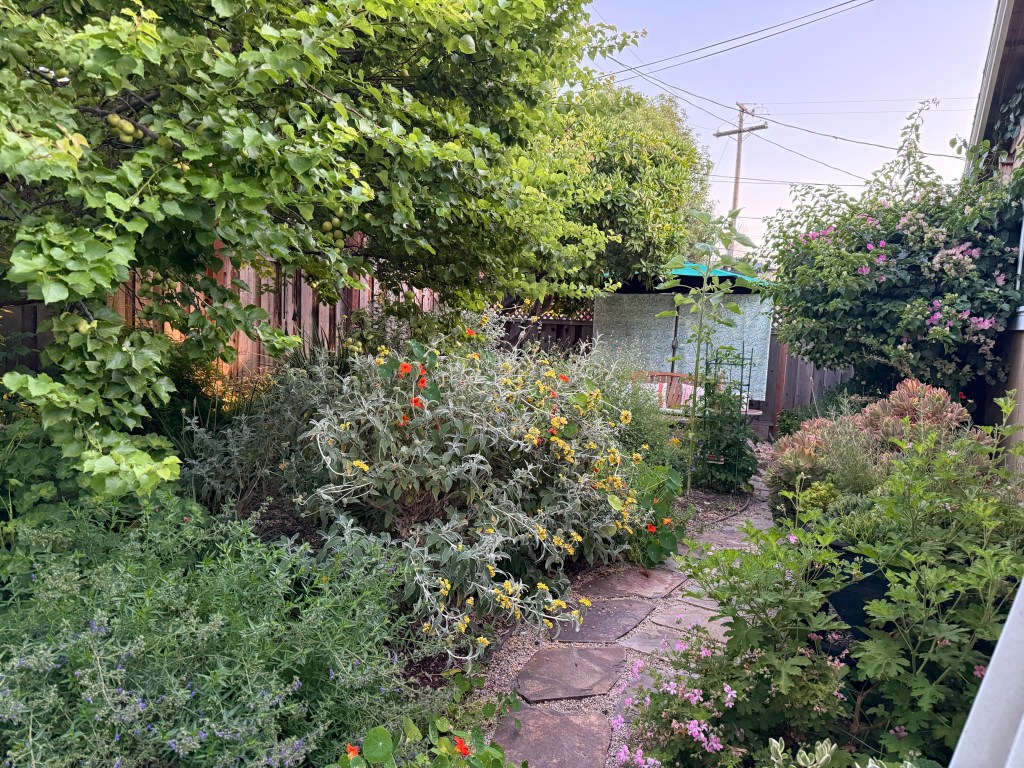
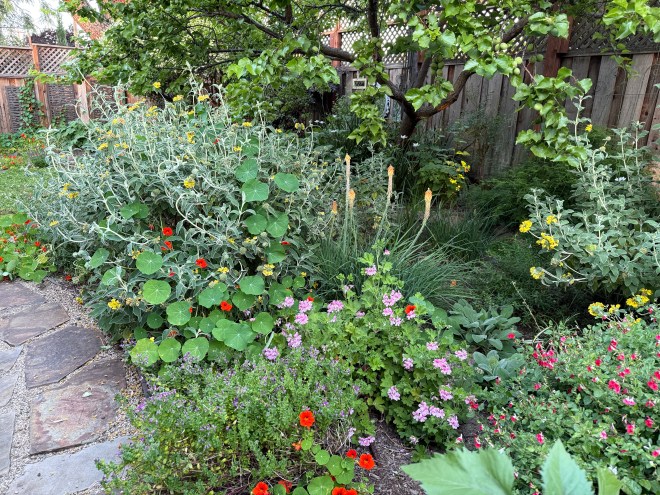
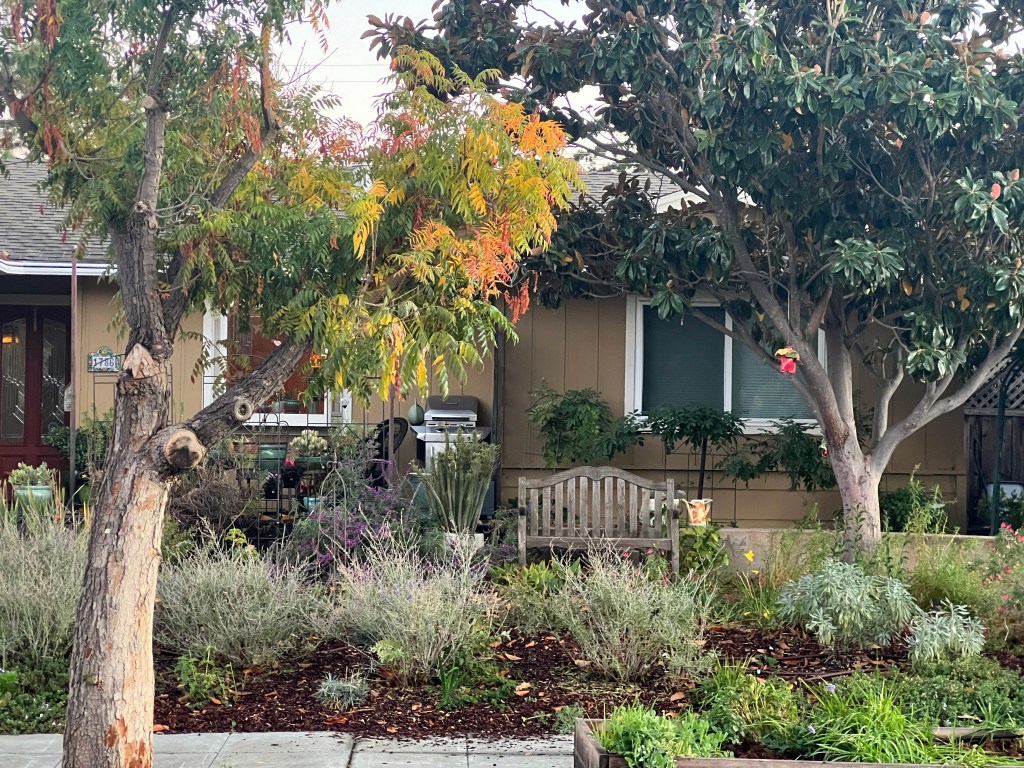
The summer solstice is upon us again, a great time to wander the garden with gratitude for nature’s gifts. I appreciate the warm, rich soil and the wonders that emerge from it. Tiny seeds grow up to be plants, shrubs, and trees, providing shelter, food, oxygen, and, for many of us, a place for quiet reflection and joy.

Here are some of the simple pleasures outside our door.

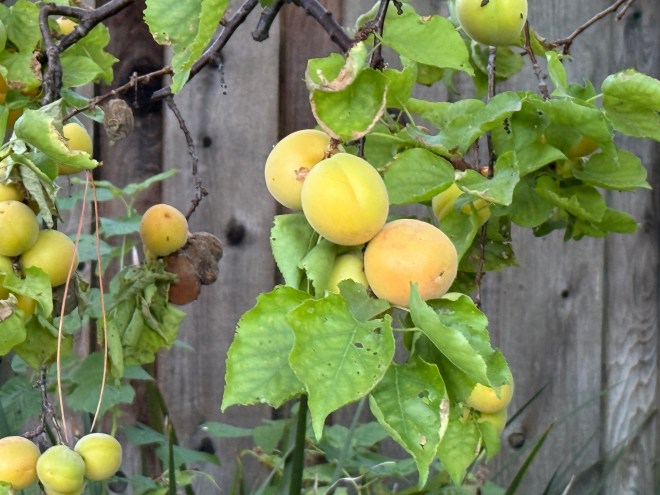
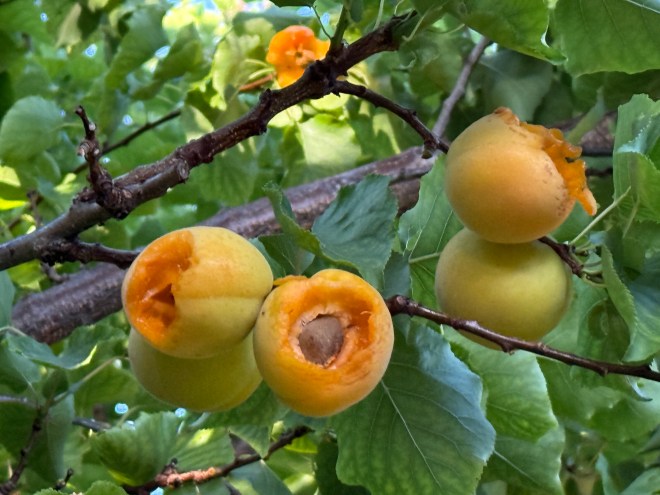
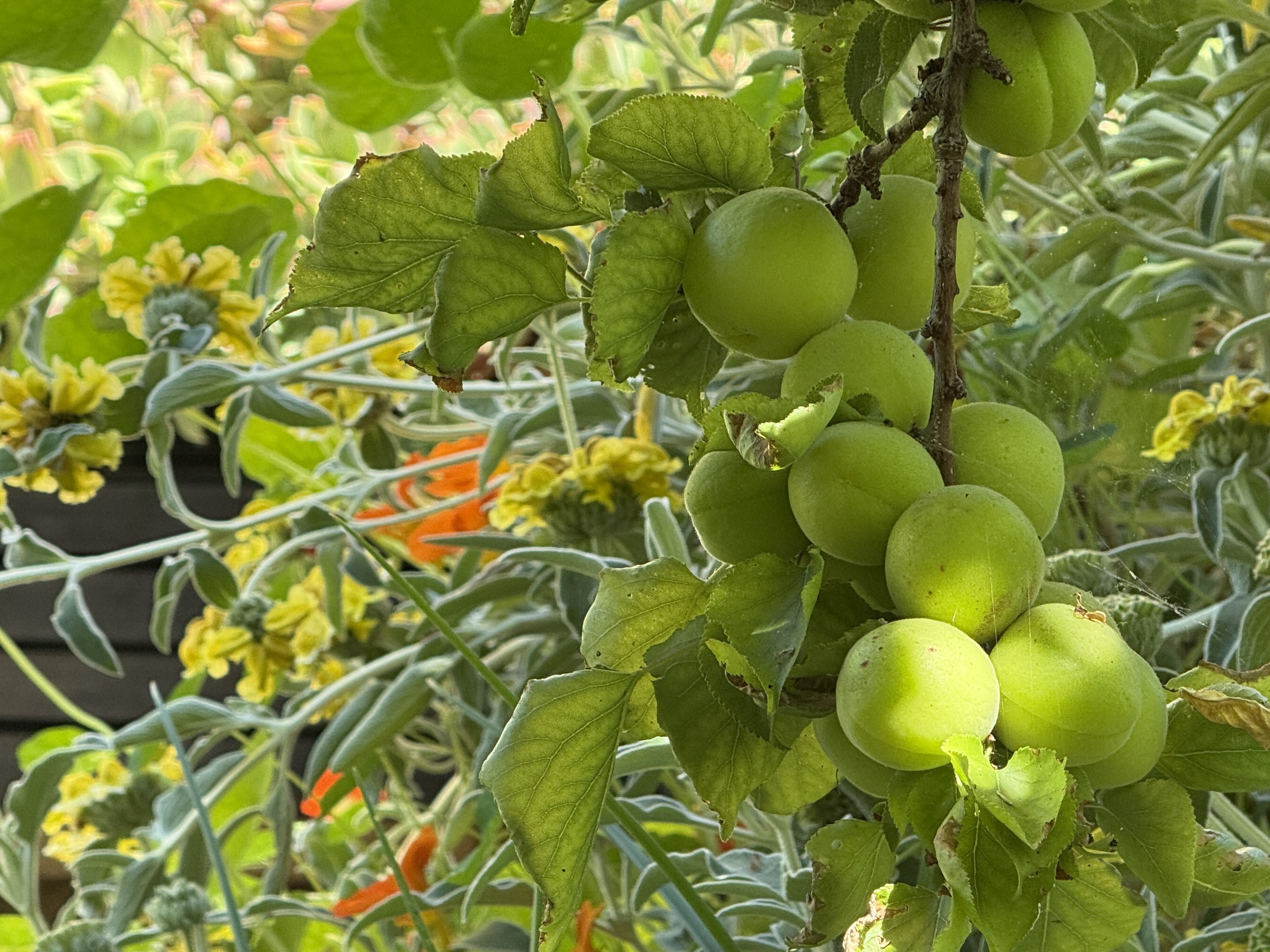
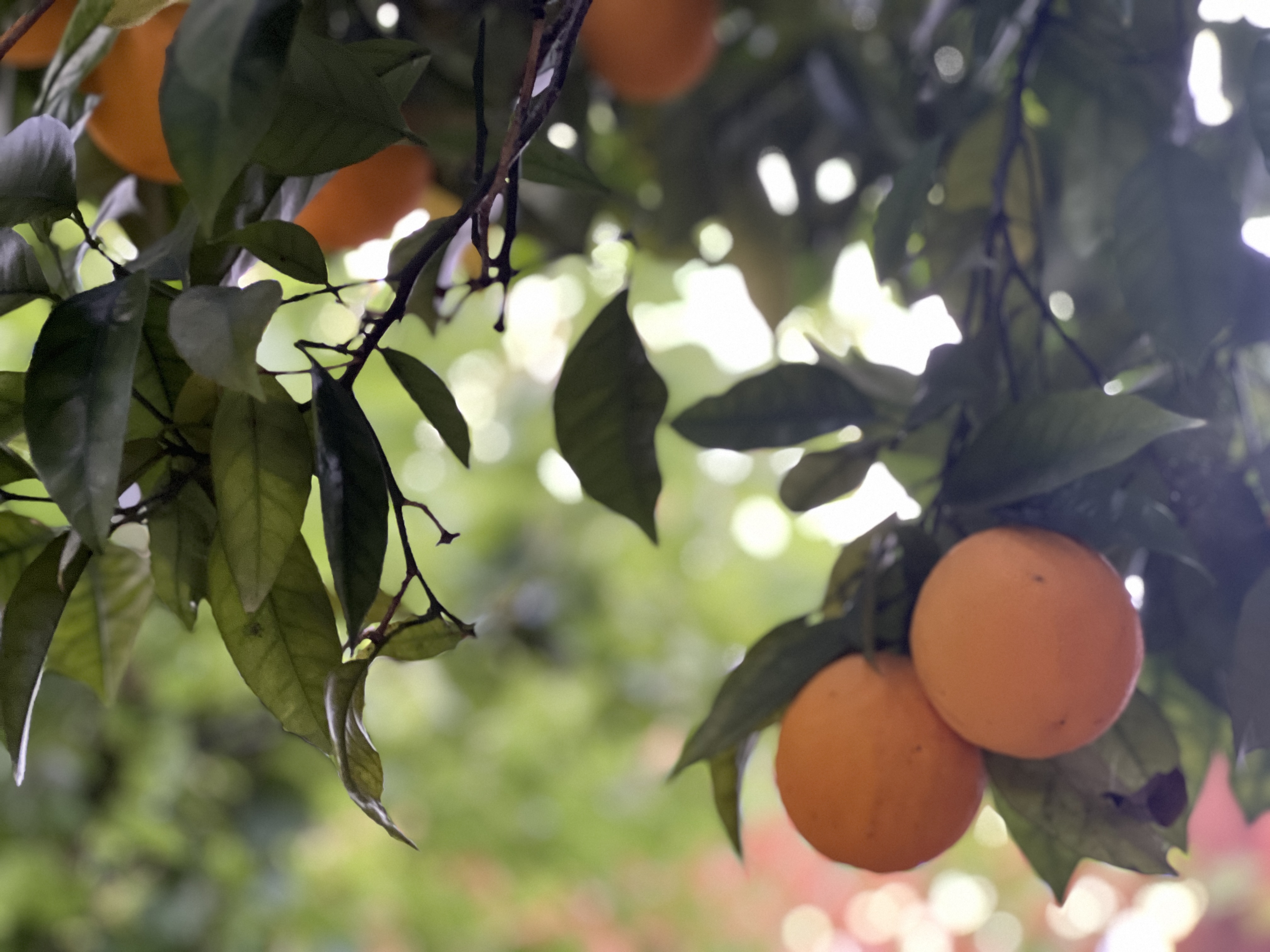
Our 15-year-old grafted fruit tree once produced four types of fruit. For several years now, production has been limited to apricots and plums, and with an active squirrel population traveling the highway known as our back fence, most of the fruit is partially eaten and tossed to the ground for night critters to feast on.

This summer is different. My youngest son is home for a time, along with his sweet pooch, a playful, burly husky/shepherd mix. Mike has a theory that the squirrels are steering clear of the dog.

To our astonishment, the tree is heavy with ripening fruit, which should be ready for picking next month.

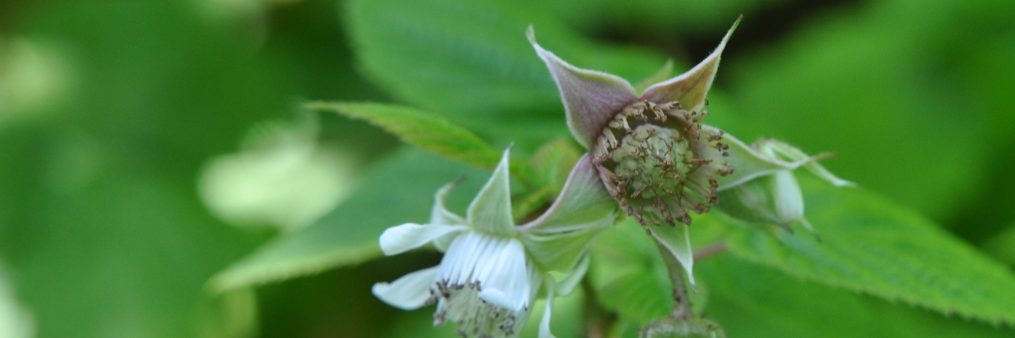
We have a few raspberries growing in the shade of the same tree, which are melt-in-your-mouth good.

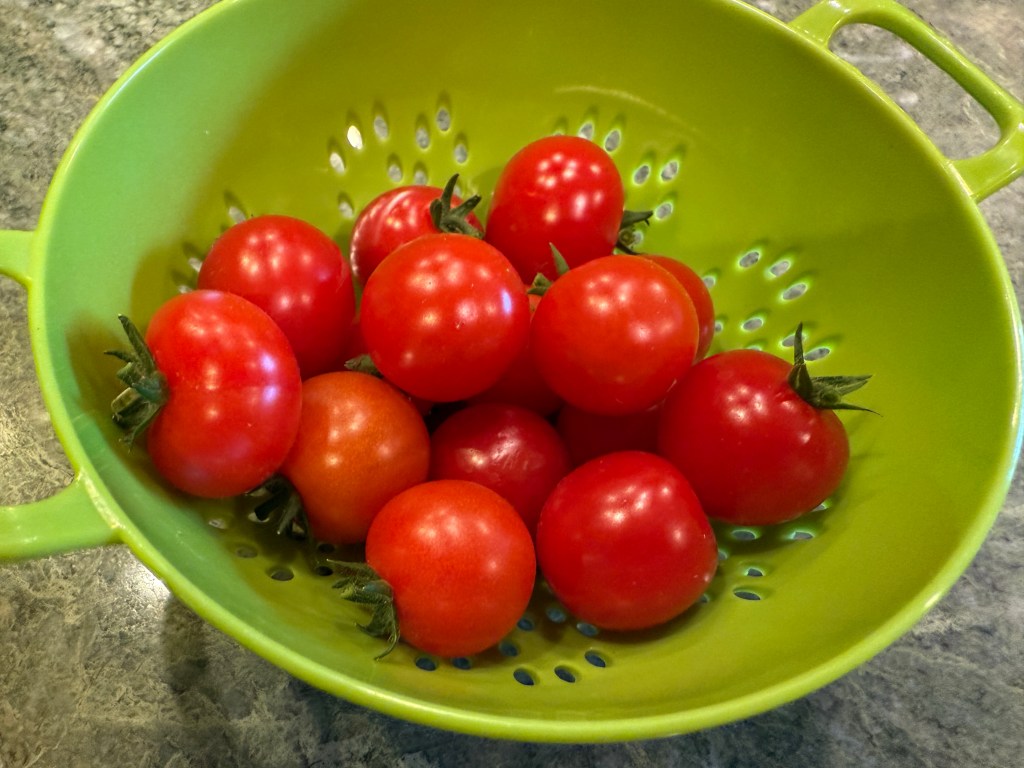
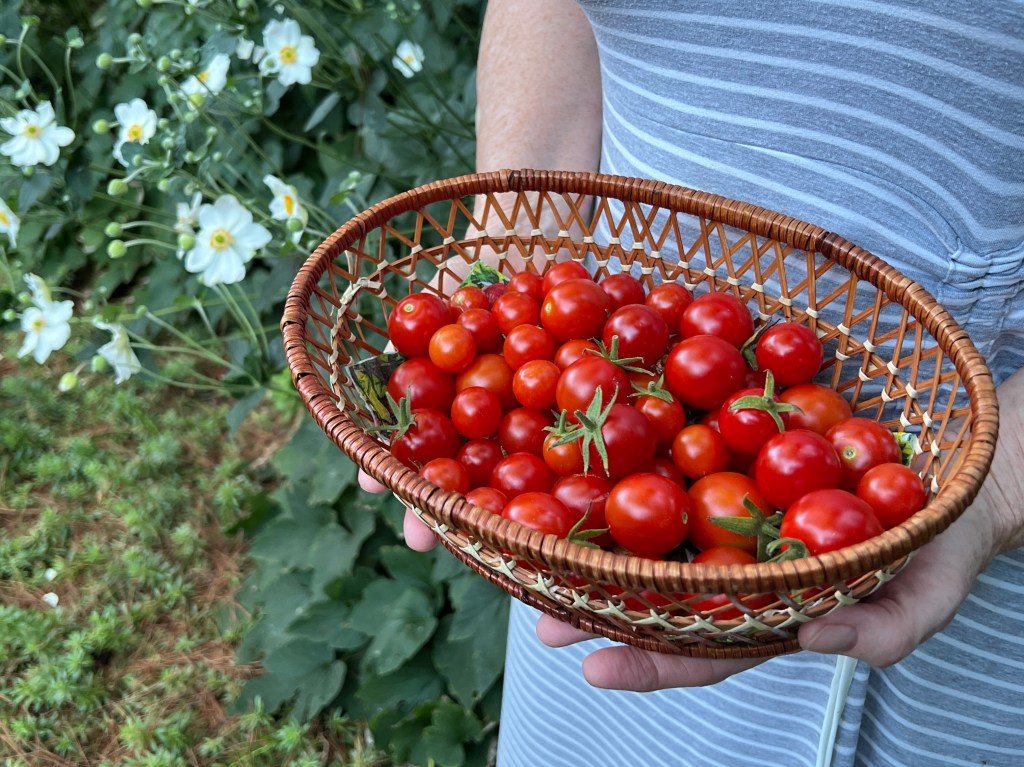
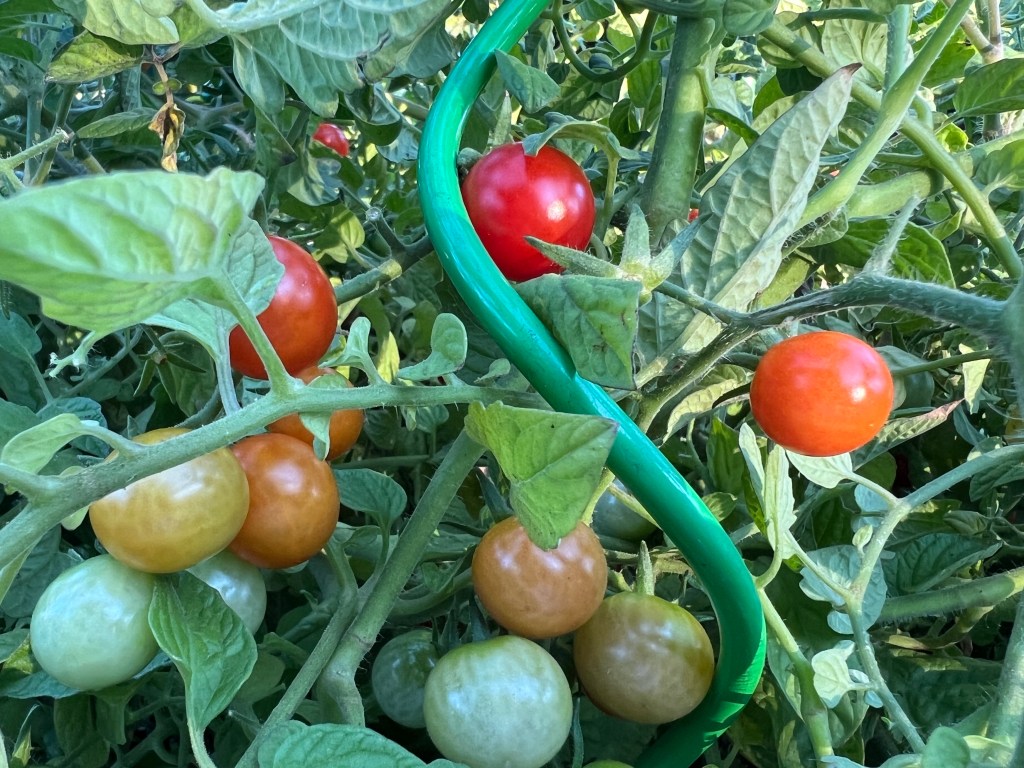
The tomato plants we bought earlier in the season are beginning to pump out green fruit. Homegrown tomatoes are the best. We have a beefsteak tomato plant in a small sun area and a cherry tomato growing near the nepeta.

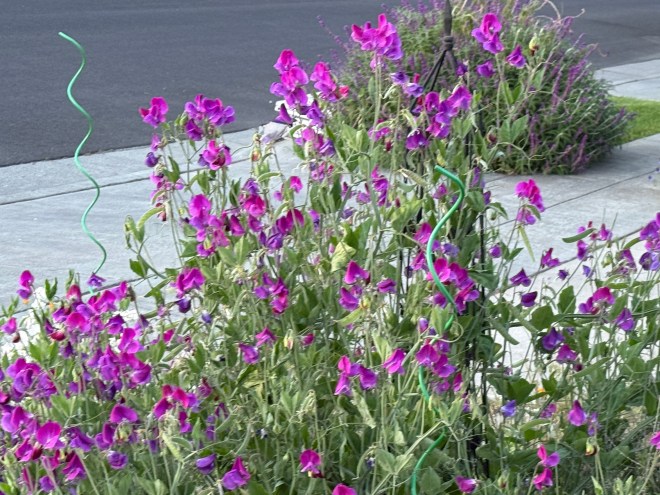
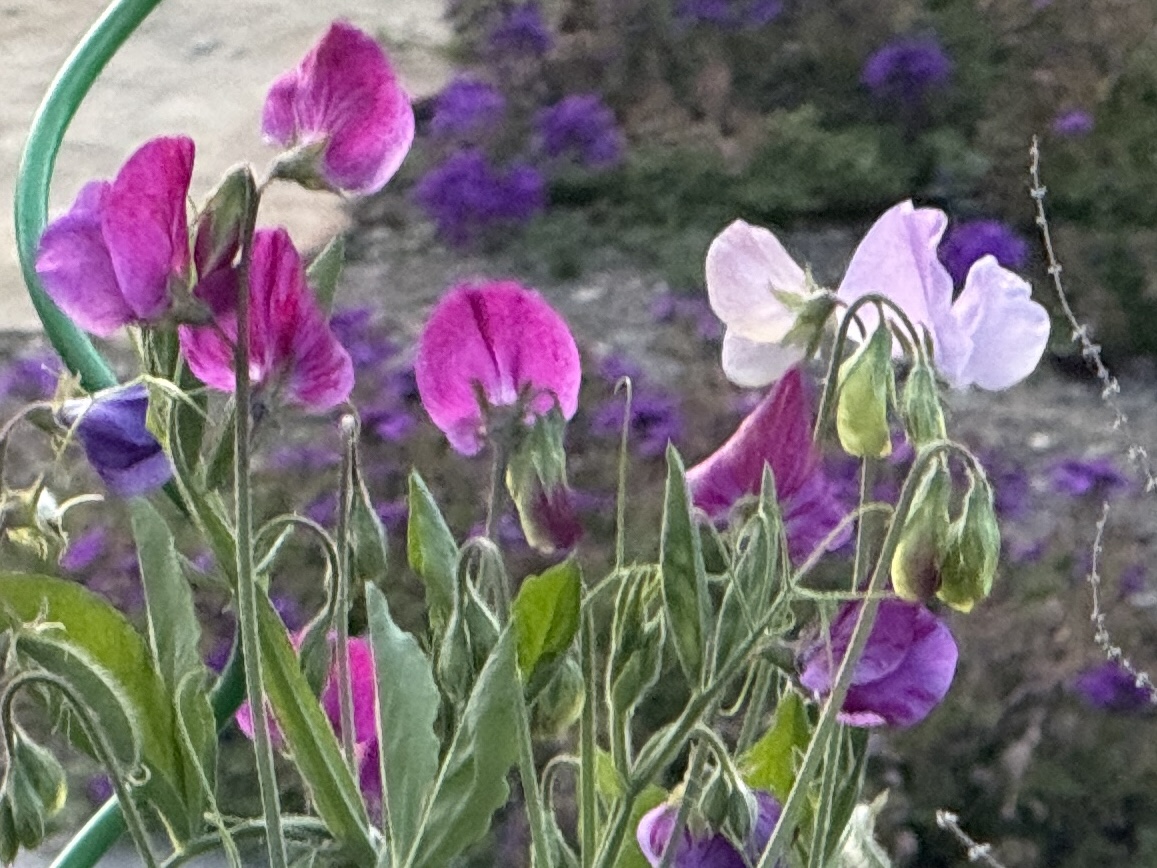
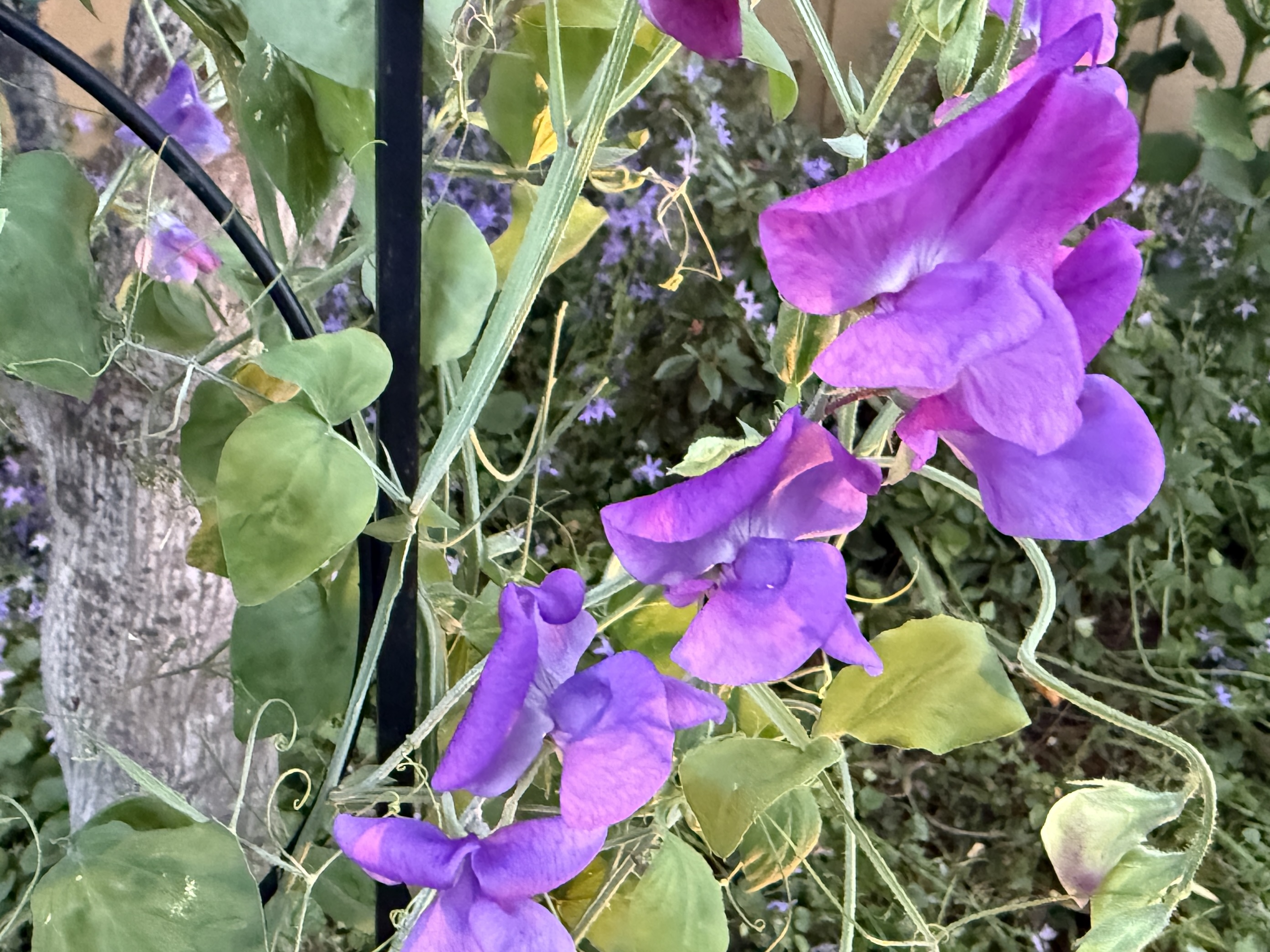
The annual sweet peas came and went quickly this season, but it all worked out since I needed to make room for the established Russian sage. Every year, someone asks if they can have some seeds. When I pulled out the last vines, I left a pile along our walkway for neighbors to help themselves. I’ll send what’s left in a week to the composter.

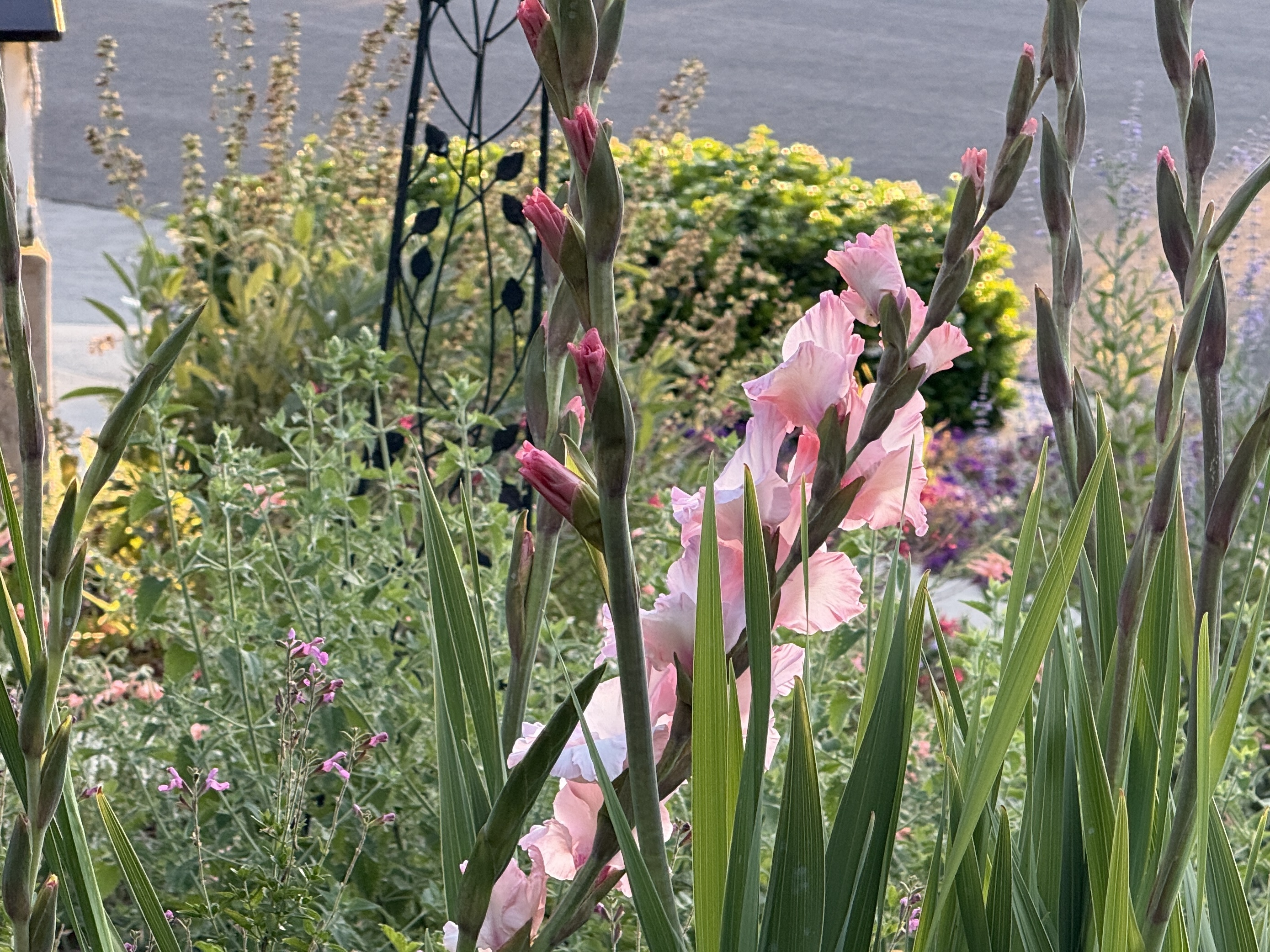
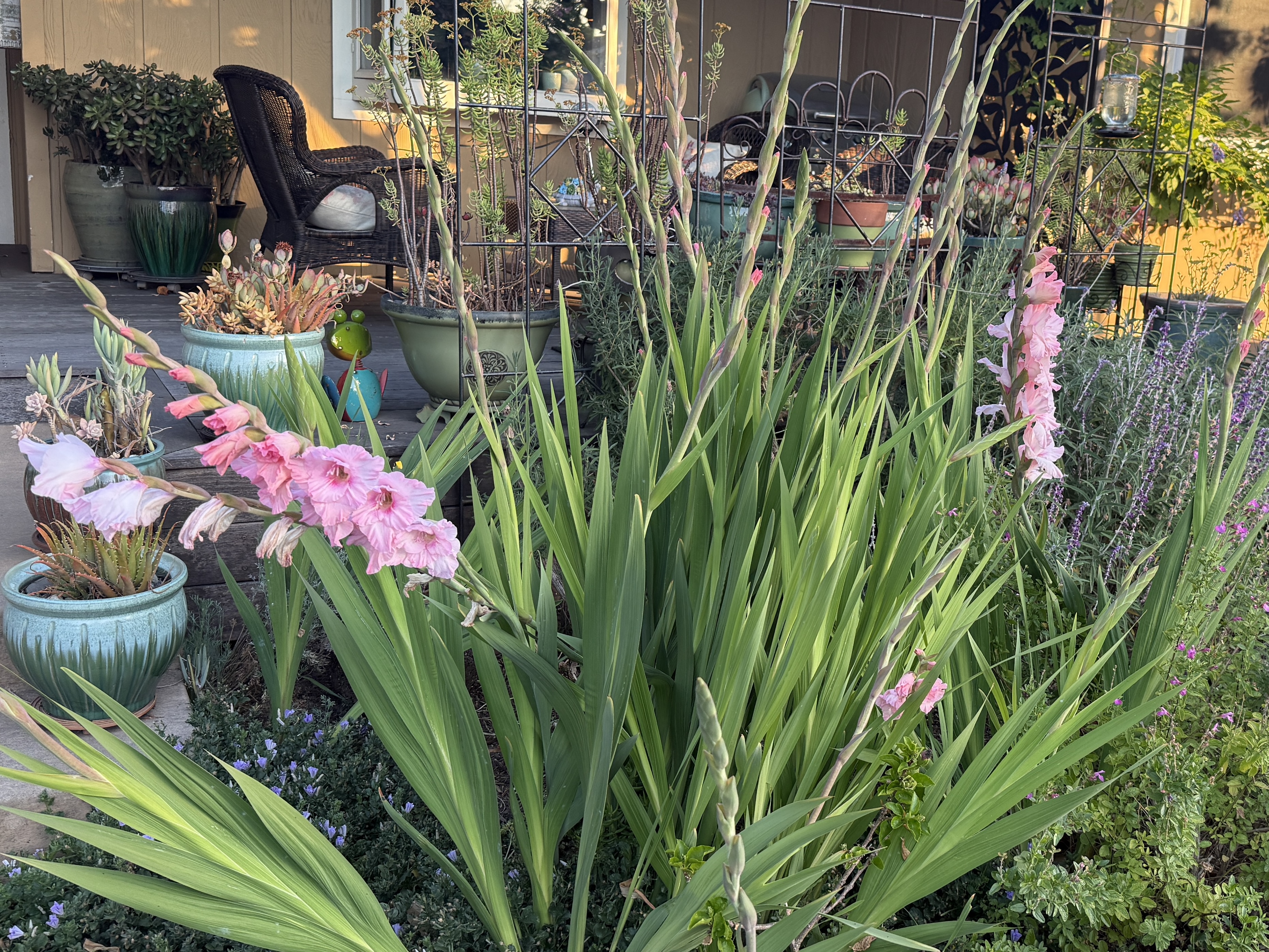
Pink gladiolas populated the front and back gardens this year. I planted several in our curb garden last fall, feeling proud of myself for getting them into the ground on time. Then, the City of San Jose said my curbside planting box was a “safety hazard,” so when we applied for a new tree permit, they tagged the curb garden and told me it had to go. It’s a different story for another day. The gladiola bulbs have turned up in several places and are making a lovely show.

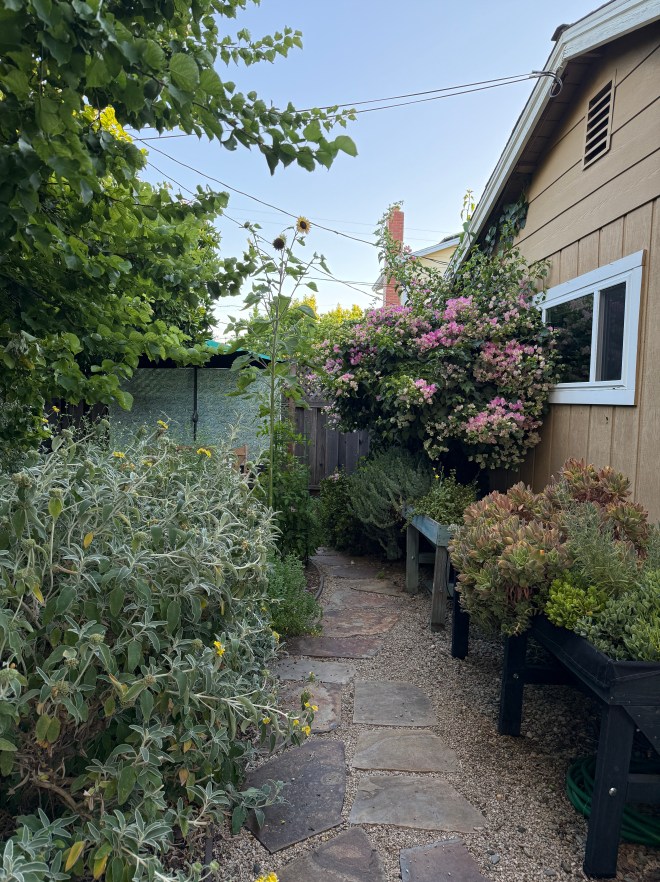
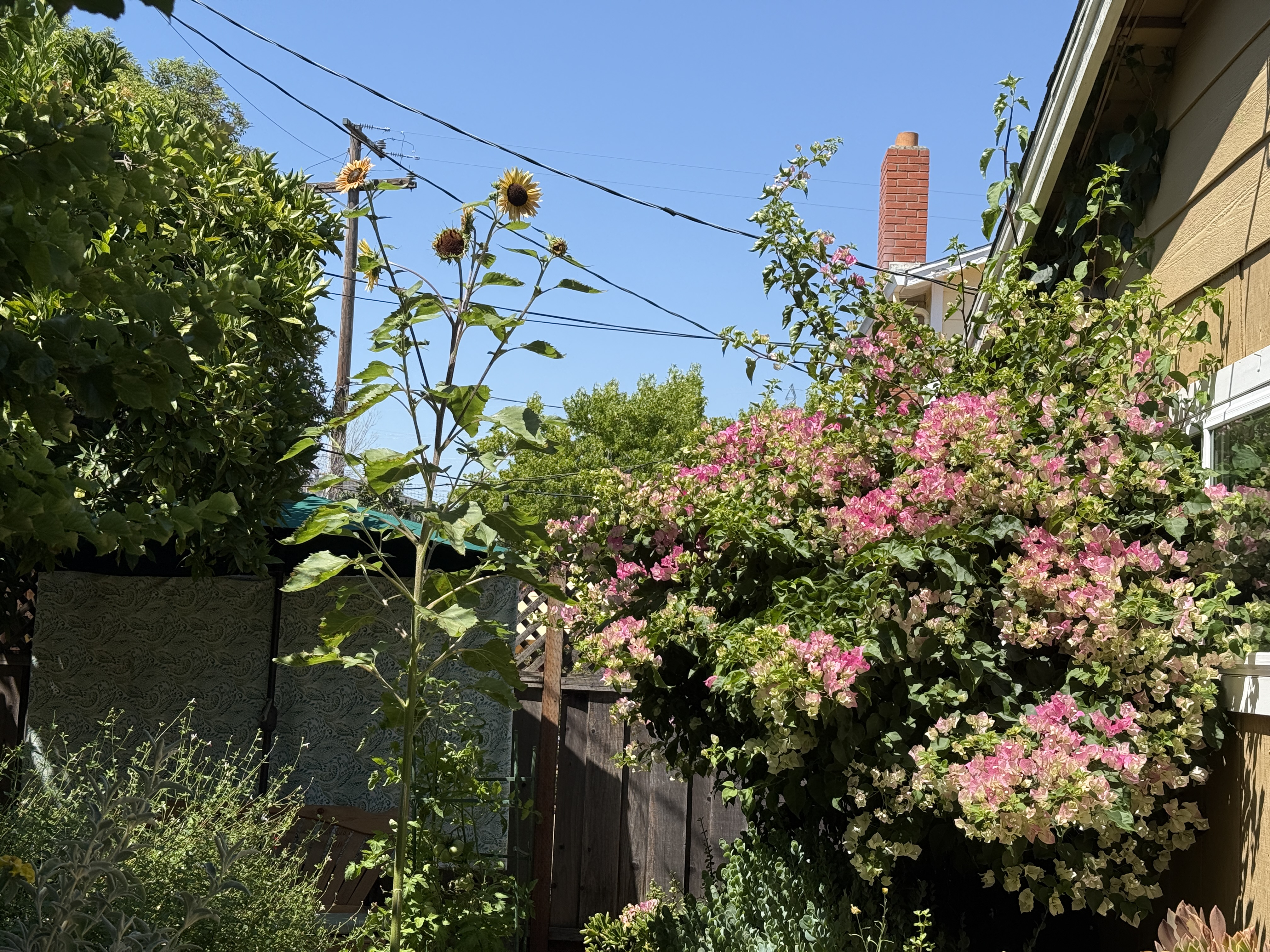
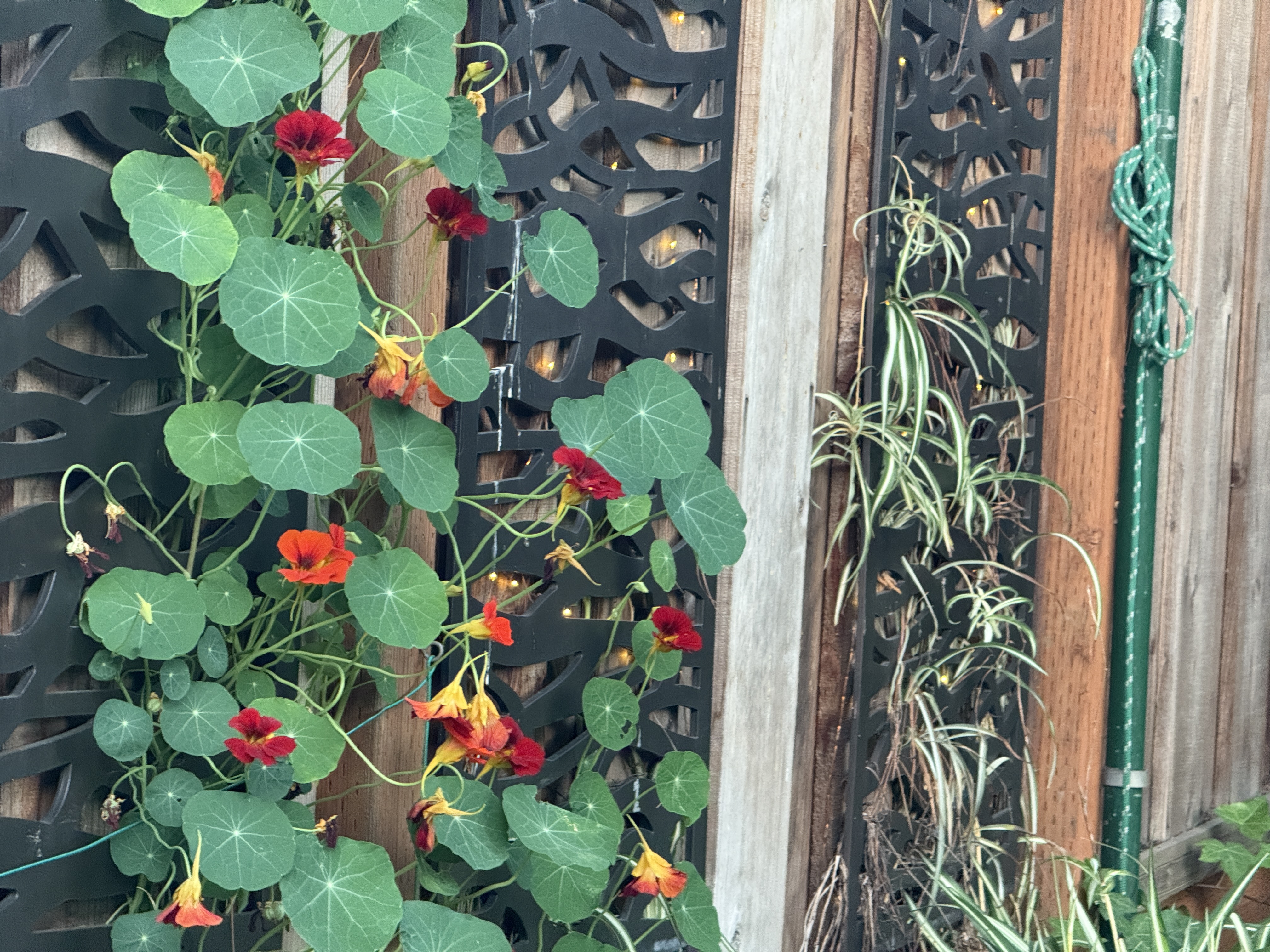
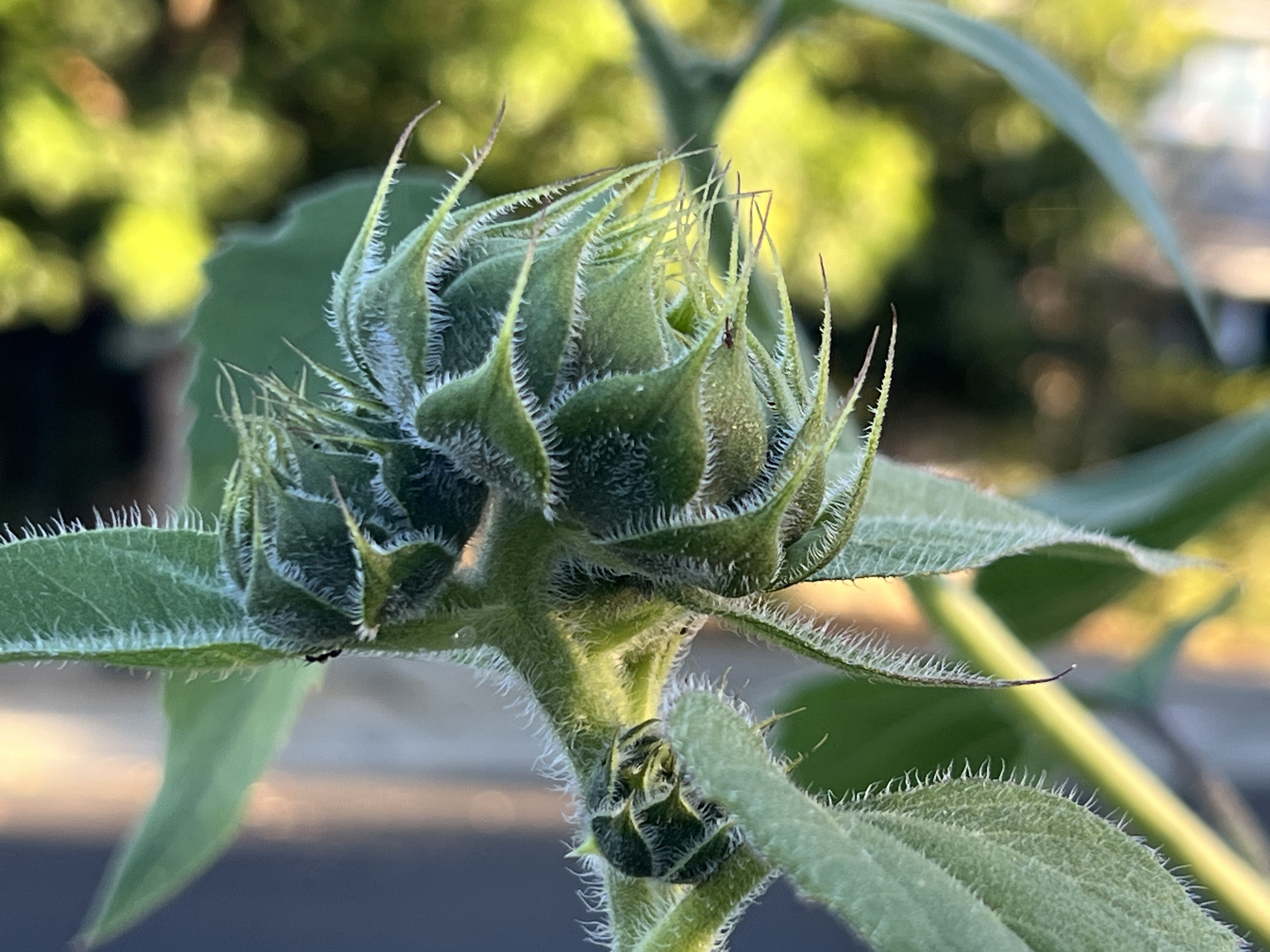
Throughout the garden, seasonal volunteers spread into empty spaces, including a single sunflower and a handful of purple nigella. Several plants are comingling with die-hard nasturtiums trailing up the salvia and just out of reach of the fruit tree.

A nasturtium with wanderlust traveled up a small table in between the slats. Nearby, an ambitious tomato plant grew out of the sides of the compost bin.

As the sun set, I took these last few shots, casting a yellow glow across the pittosporum. Summer has arrived in San Jose.

May Flowers

As my mobility improves post-hip surgery, I find getting up and down in the garden easier. Over these past weeks, I’ve brought the weeds under control, making daily weeding more manageable.

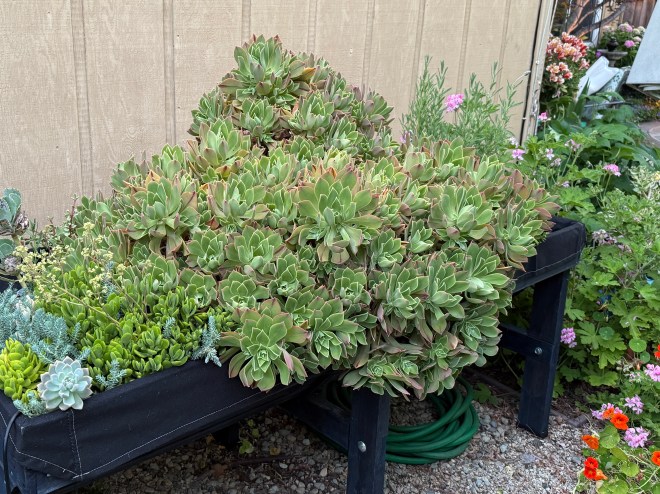
Yesterday, I looked under the veg trug, now home to a collection of well-established succulents, and spotted a just-out-of-reach oxalis, an invasive plant considered a weed in this area. My inner monologue cautioned against it, as I would have to kneel on the gravel path, bend at the waist, twist my neck, and then reach back to grab the weed. If you know anything about oxalis, you’ll know that the roots are strong and rarely willing to part company with the earth. I could have retreated and found my kneeler and a garden fork, but impatience got the better of me, and I went for it. Success! The weed is gone, I returned to an upright position, and I’m none the worse for wear. It’s the little things.

As I putter about, there’ve been joyful discoveries in the garden this year. Just a few days after commenting to Mike that I missed the self-seeding cornflowers, a beautiful, single, purple stem of one appeared in the front garden. They used to produce an impressive array of colors in pinks, blues, and purples, but equally rewarding, the birds loved the seeds.

The first of the cornflowers

When the plants were producing well, I spotted several birds feasting in the late afternoon. I left the plants past their prime so the birds could enjoy the bounty, and I assumed my seasonal crops resulted from dropped seeds. Then, for reasons unknown, they didn’t return. Seeds can lie dormant in the soil for various reasons, so perhaps they’ve been missing the garden secret sauce required for a prolific crop. Now at least one has returned. It makes me happy.

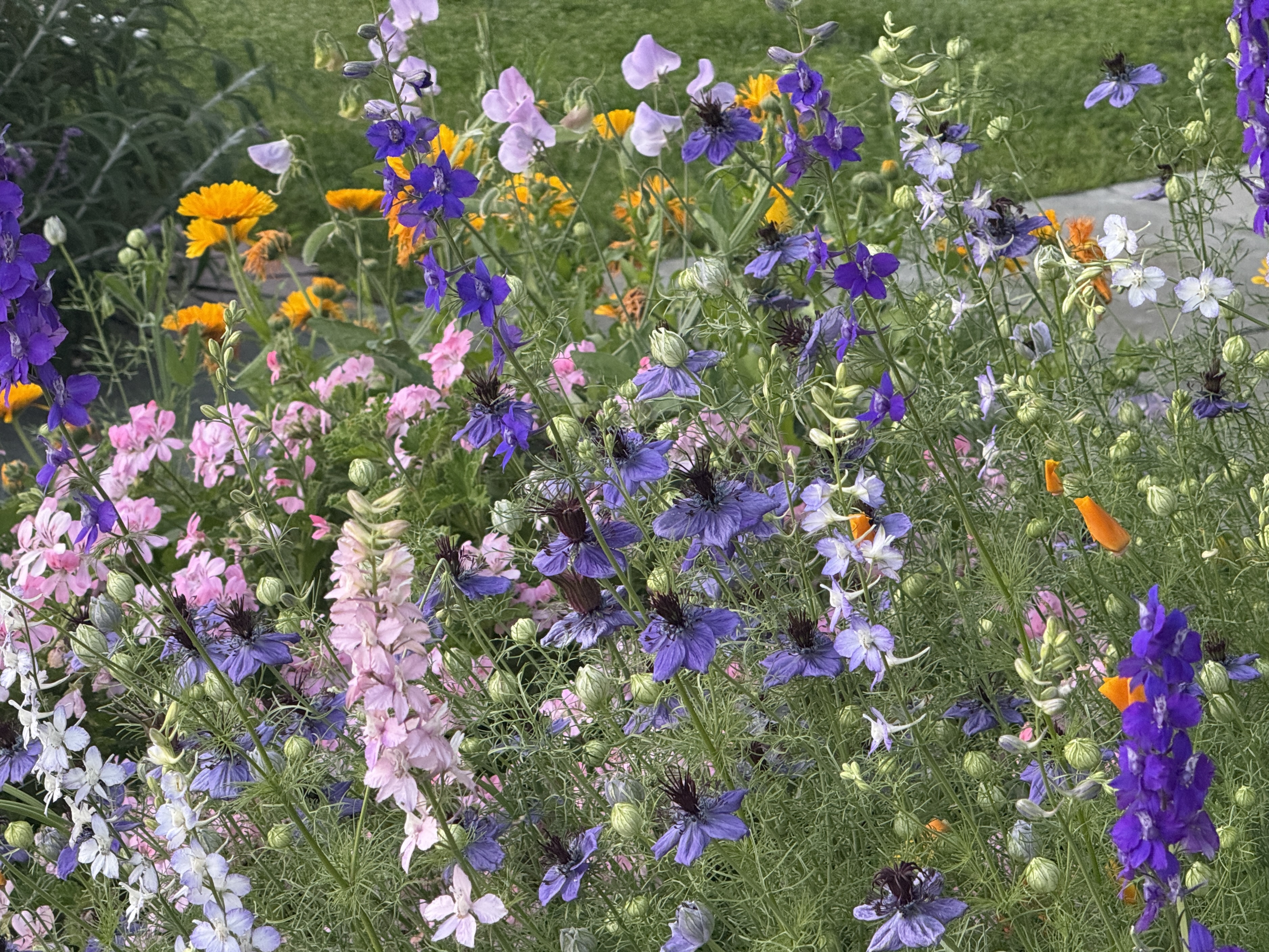
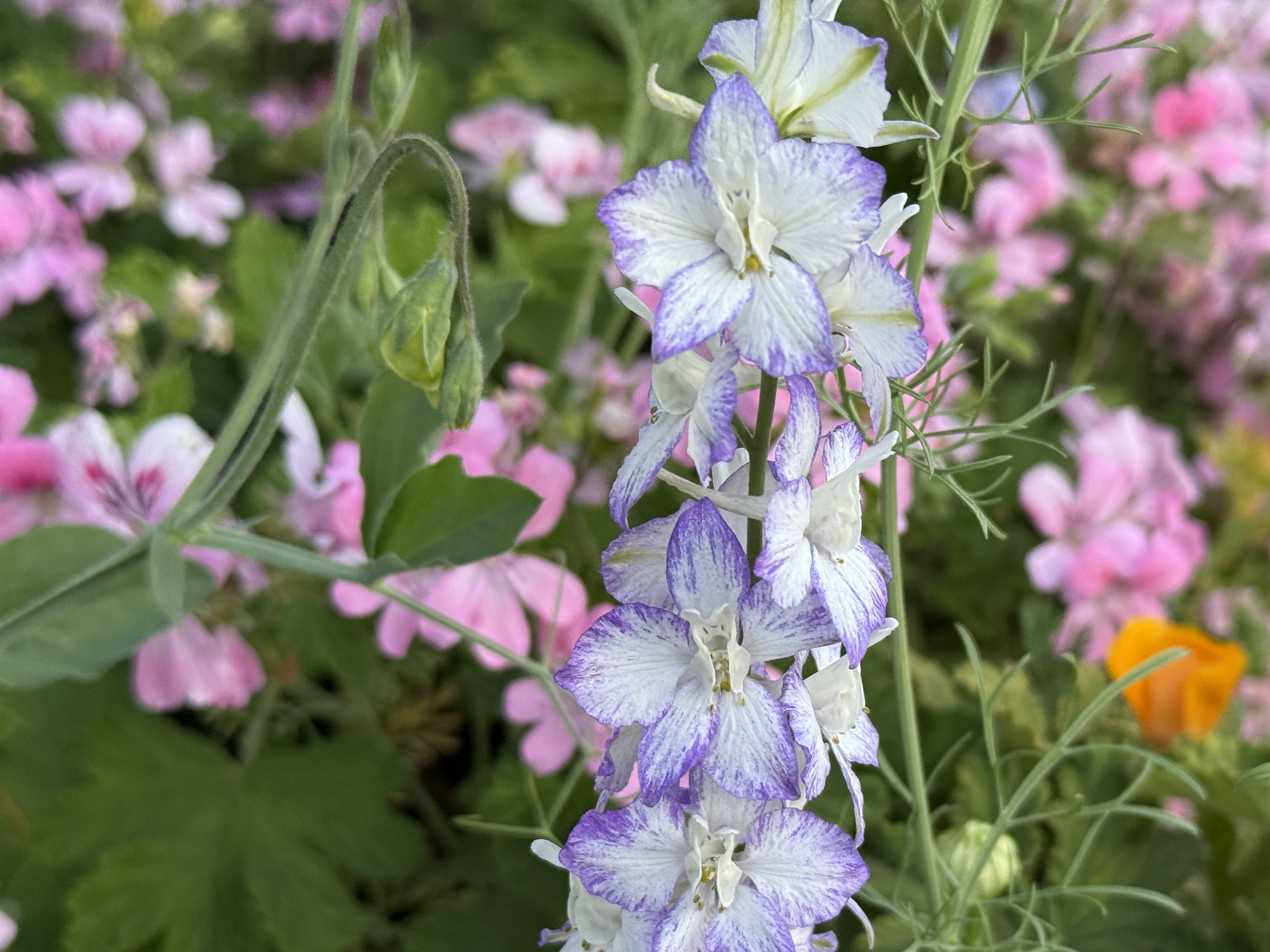
Also new(ish) is a tall, slender, annual flowering amongst the California poppies and nigella along the driveway. My phone identifies the flower as a Delphinium. Last year, a single flower emerged in the same spot, so I looked it up to be sure it wasn’t a weed. It went to seed and then I gave it a good shake, allowing the seeds to fall to the earth below. Now they’re back, standing tall and looking lovely.

For the first time, a sweet pea, usually prolific in the front garden, traveled with some transplanted bulbs last fall, and it’s now growing under the maple tree in the back garden. I gently wrapped the trailing vine to a trellis, and it’s growing with abandon.

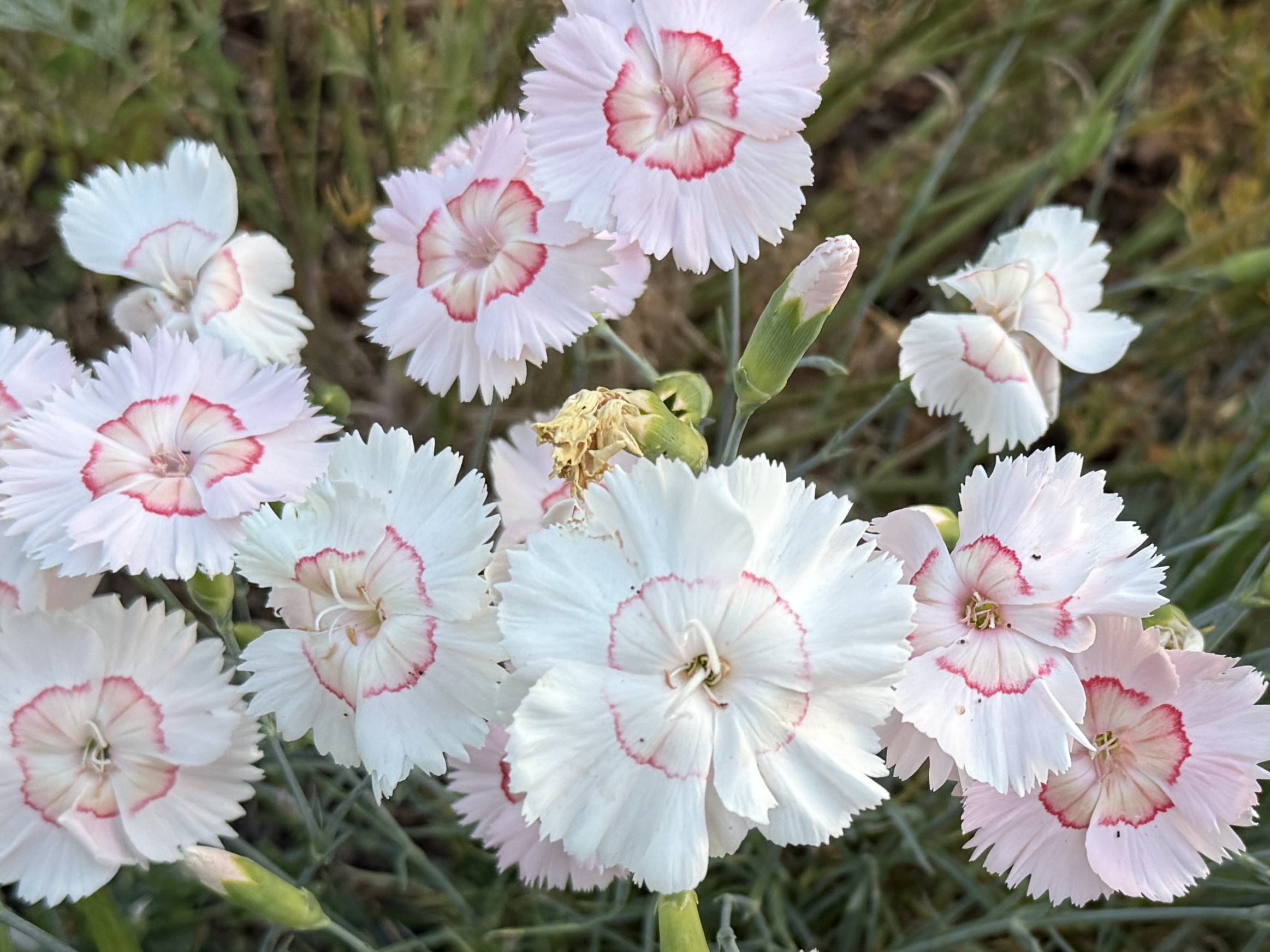
The carnations we planted last year have doubled in size and production, enough so that I’m comfortable cutting a few for a vase.

Mike dug holes for a pair of tomato plants, and as always, we cross our fingers and hope they like the new spot. Our tomato production is spotty at best, but the sweet flavor of a garden-grown gem keeps us trying year after year.

I’ve been playing in the dirt my whole life, and though my body has aged, gardening never gets old.

Earth Day: If Nasturtiums Ruled the World

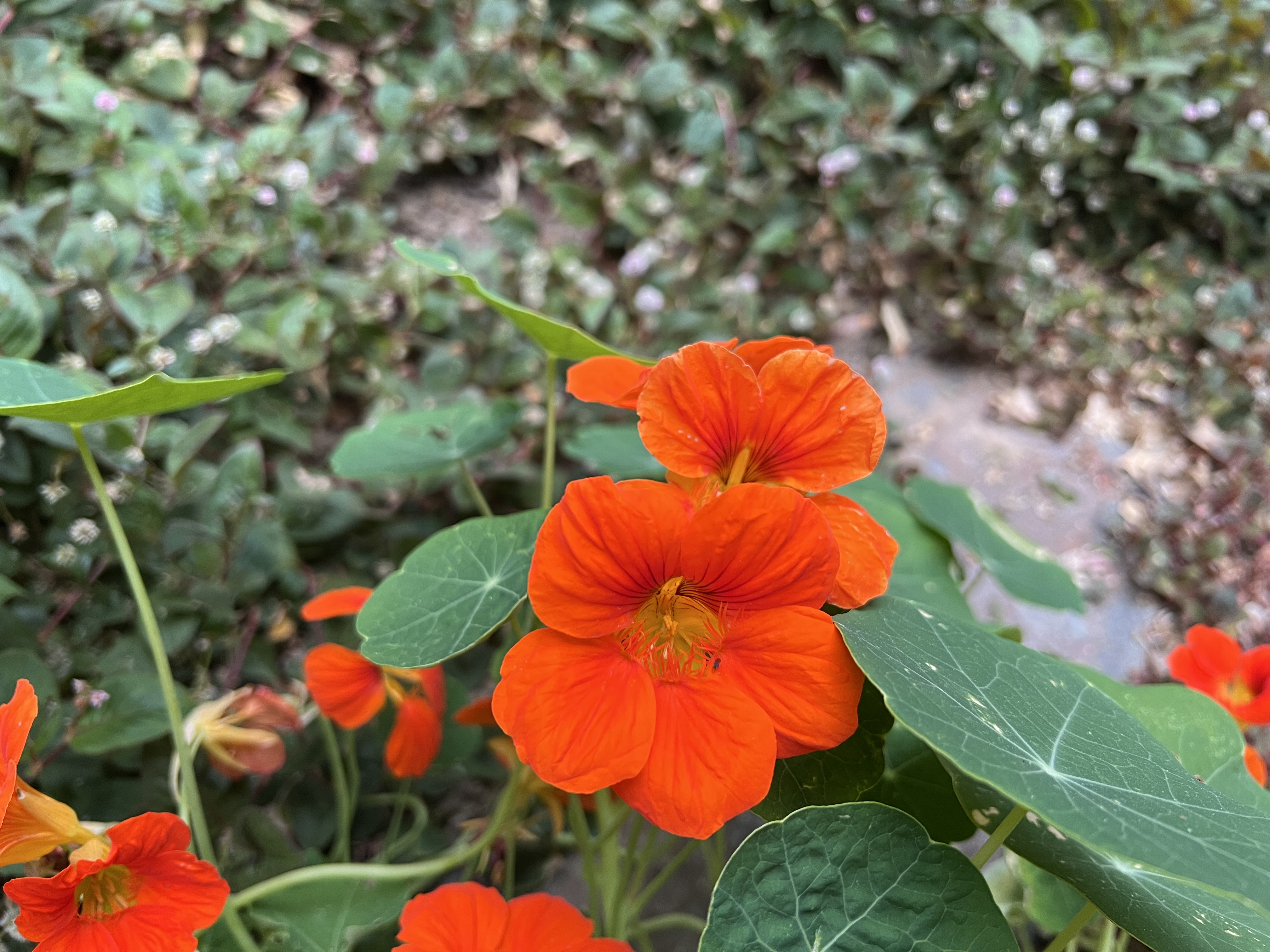
Nasturtiums have taken over the garden this spring. They bloom exotic oranges, sunny yellows, and a few brilliant reds. Leaves shaped like small lily pads are often as big as saucers. Leaf size varies, each slightly ruffled around the edges with a stem supporting the leaf like a delicate umbrella, filtering the sun yet inviting the light.

Nasturtiums are happy in the sun and the shade. They return year after year, asking for little in the way of watering and pruning. A gentle rearranging of the meandering vines keeps the walkways safe from trips. They play well with others, happy to twine themselves up nearby shrubs or carry on down the path.

Depictions of nasturtiums appear in botanical art and paintings, much like geraniums. They’re a flower for the people. These garden gems stand tall, faces lifted toward the sun, gently bending with the breeze that moves across the garden late in the day.

The flower and the nasturtium leaves are edible, containing various minerals and antioxidant compounds. They could feed the masses if we could replicate all that goodness.

If nasturtiums ruled the world, they would remind us daily how nice it is when we all get along. They would stand for justice, fairness, honesty, and respect, leaning on each other for support in all their beautiful shades.

Thank you, planet Earth, for all your gifts.

On this Earth Day, we will all try to do better.

A bit about Earth Day from Wikipedia:

“In 1970, the seeds that grew into the first Earth Day were planted by Wisconsin Senator Gaylord Nelson. An ardent conservationist and former two-term governor of Wisconsin, Nelson had long sought ways to increase the potency of the environment as a political issue. The extraordinary attention garnered by Rachel Carson‘s 1962 book, Silent Spring, the famous 1968 EarthriseNASA photograph of the Earth from the Moon, the saturation news coverage given to the Santa Barbara oil spill[18] and the Cuyahoga River catching fire in early 1969[19] led Nelson to think the time was ripe for an environmental initiative. As a result of interactions with his staff and with Fred Dutton,[20] a prominent Democratic operative who had been Robert Kennedy’s presidential campaign manager, Nelson became convinced that environmental teach-ins on college campuses could serve as such a vehicle.[21

Gardening Without Rain or Pain

After a parched January, the skies opened up and delivered much-needed rain. I’m grateful for every drop. It’s fun to imagine droplets trickling down to the garden’s roots, perhaps encountering an earthworm as they travel. After years of gardening and drought in this semi-arid state, I take nothing for granted.

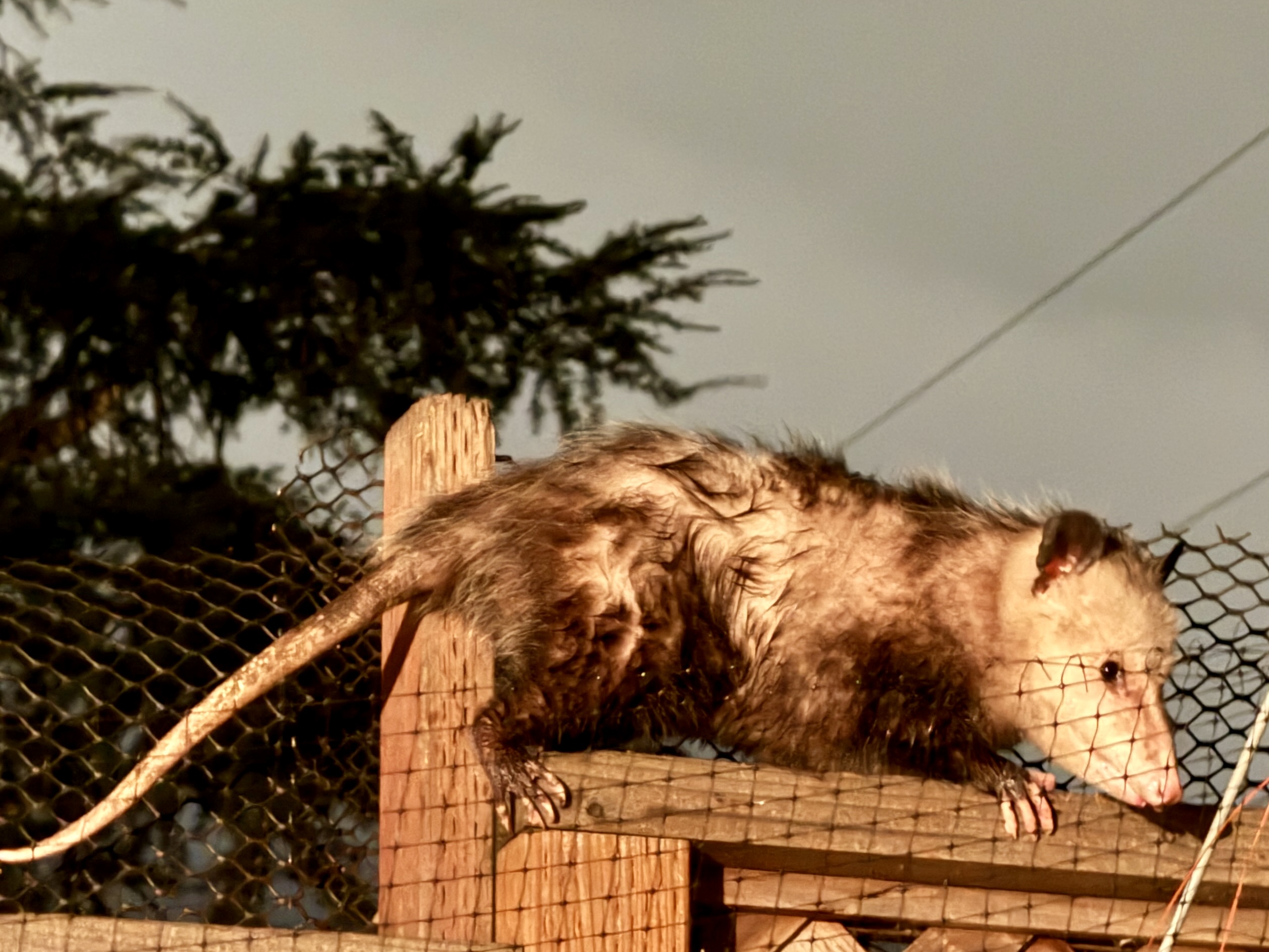
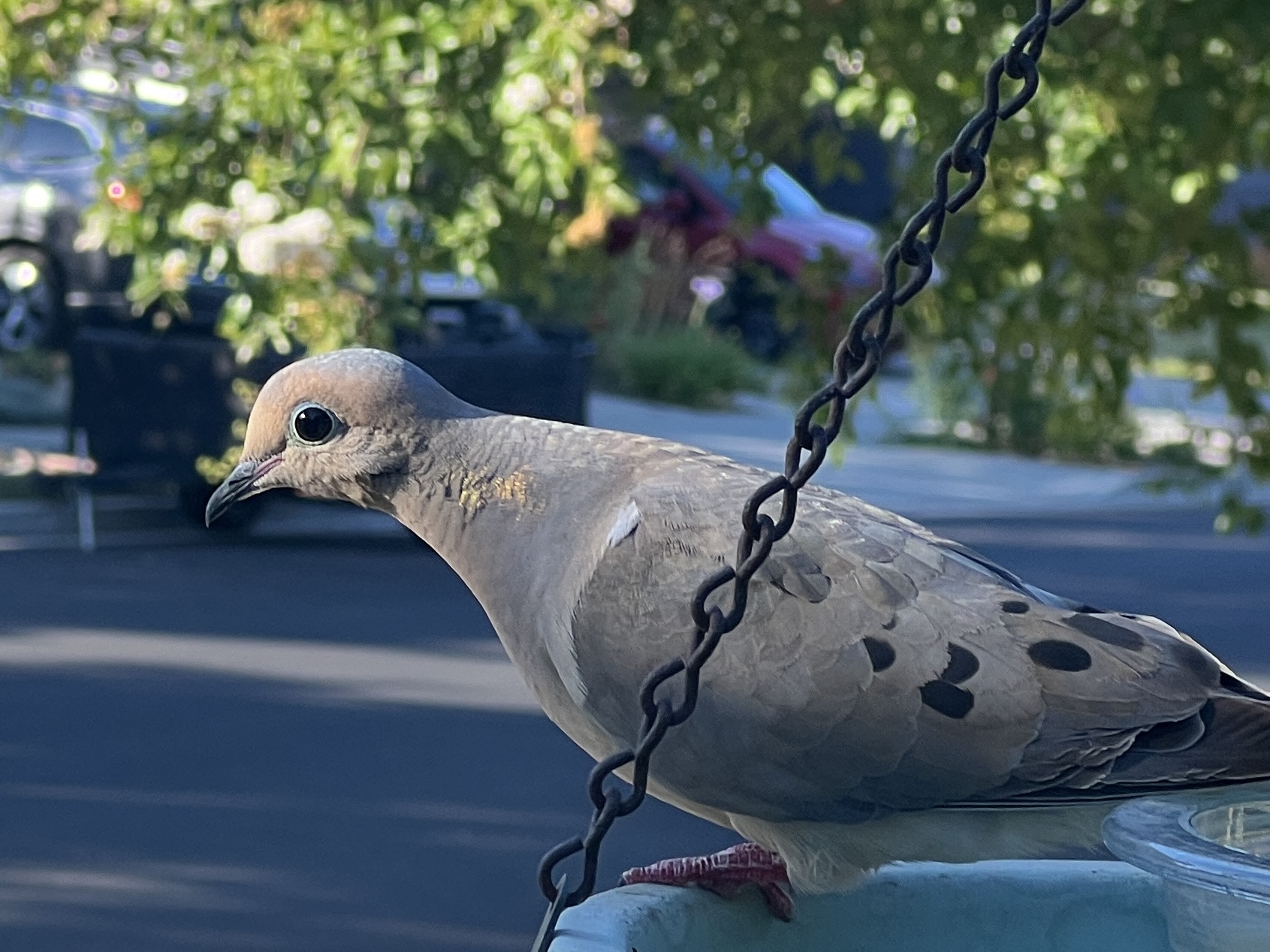
Various birds, squirrels, and perhaps this Virginia Oppossum drink from our fountain and the smaller birdbath on our deck. All thirsty guests are welcome.

We had one week in January with unseasonable temps in the seventies (F) and no rain; Mike ensured these water sources were clean and full.

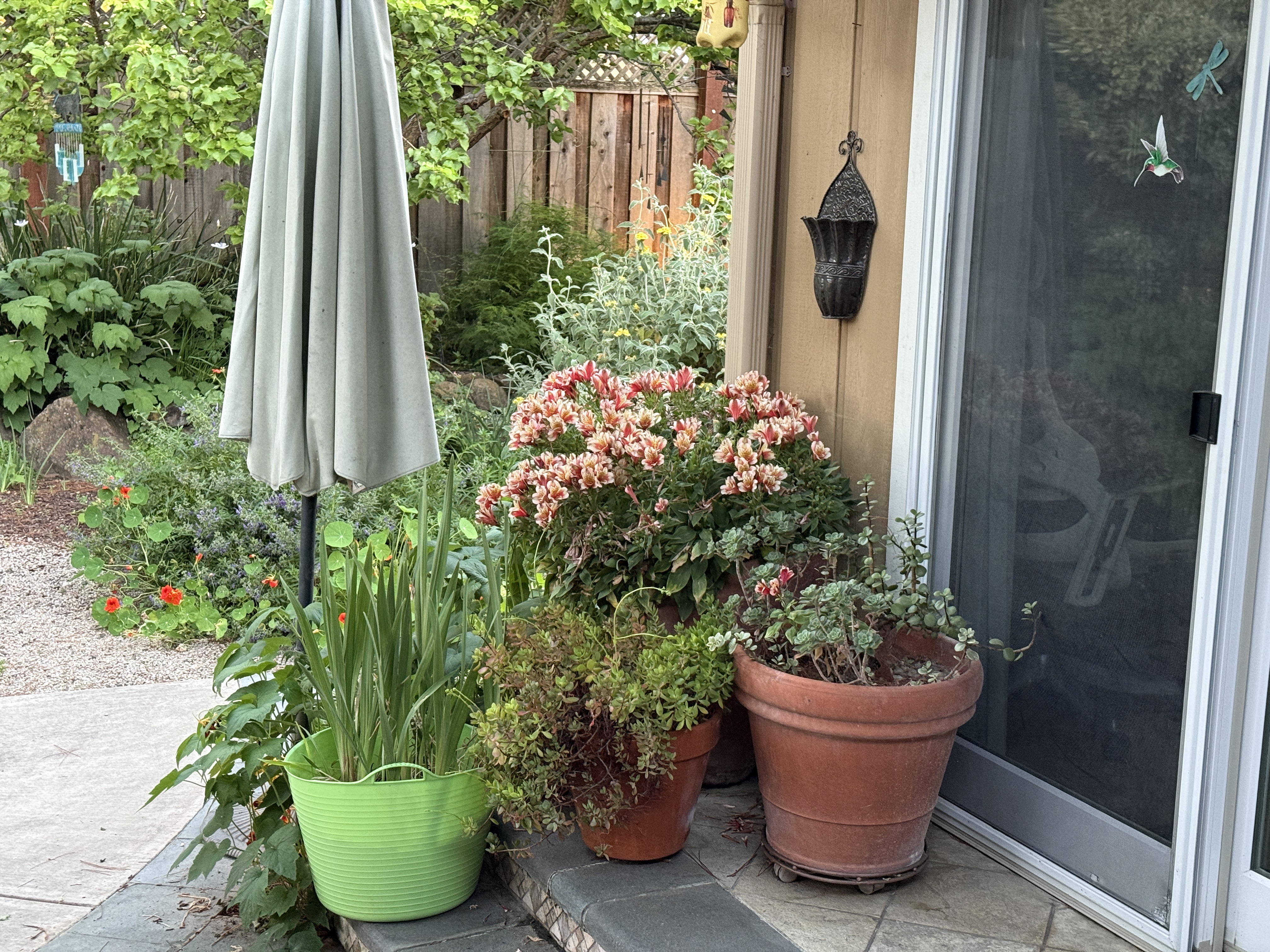
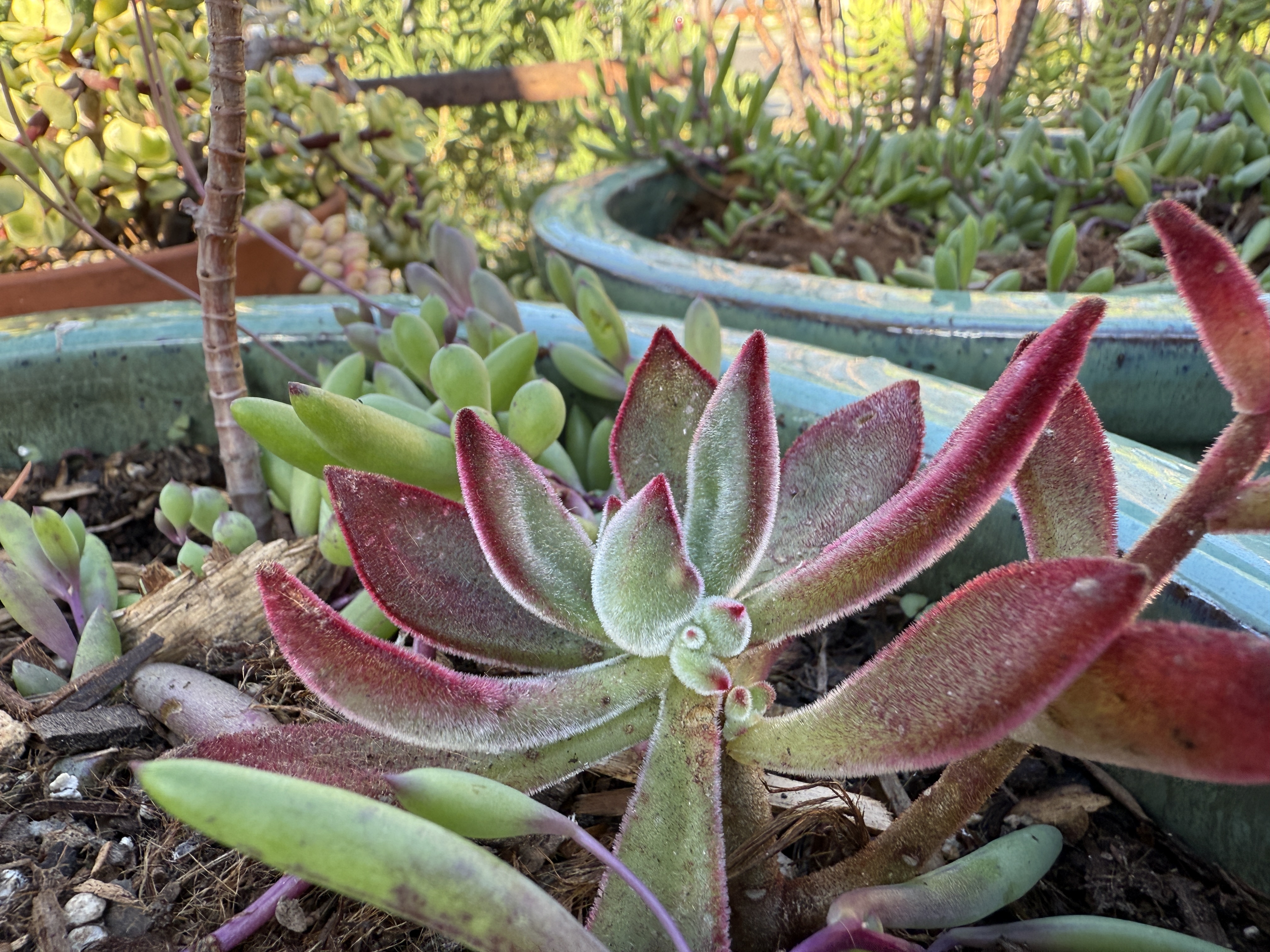
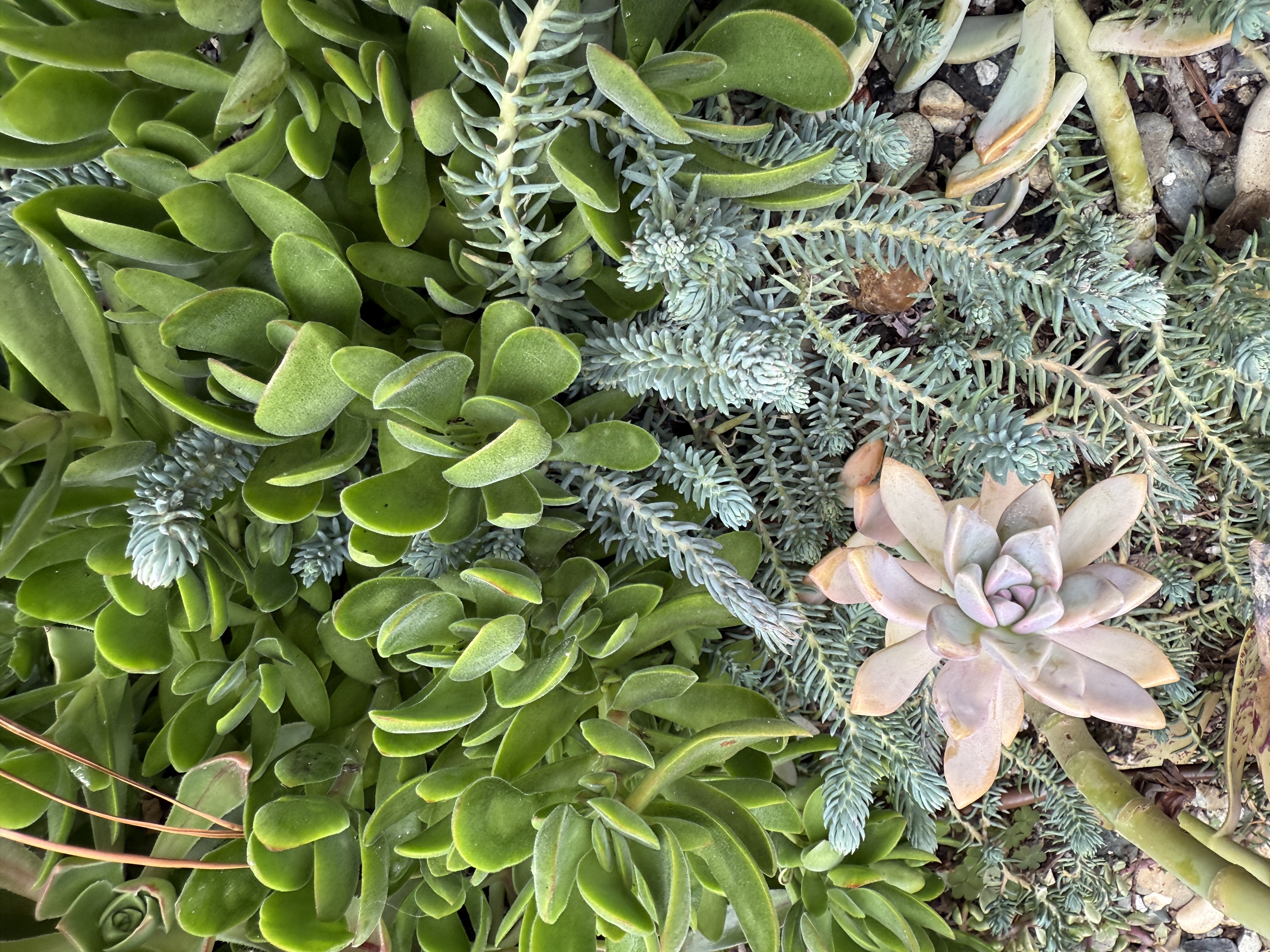
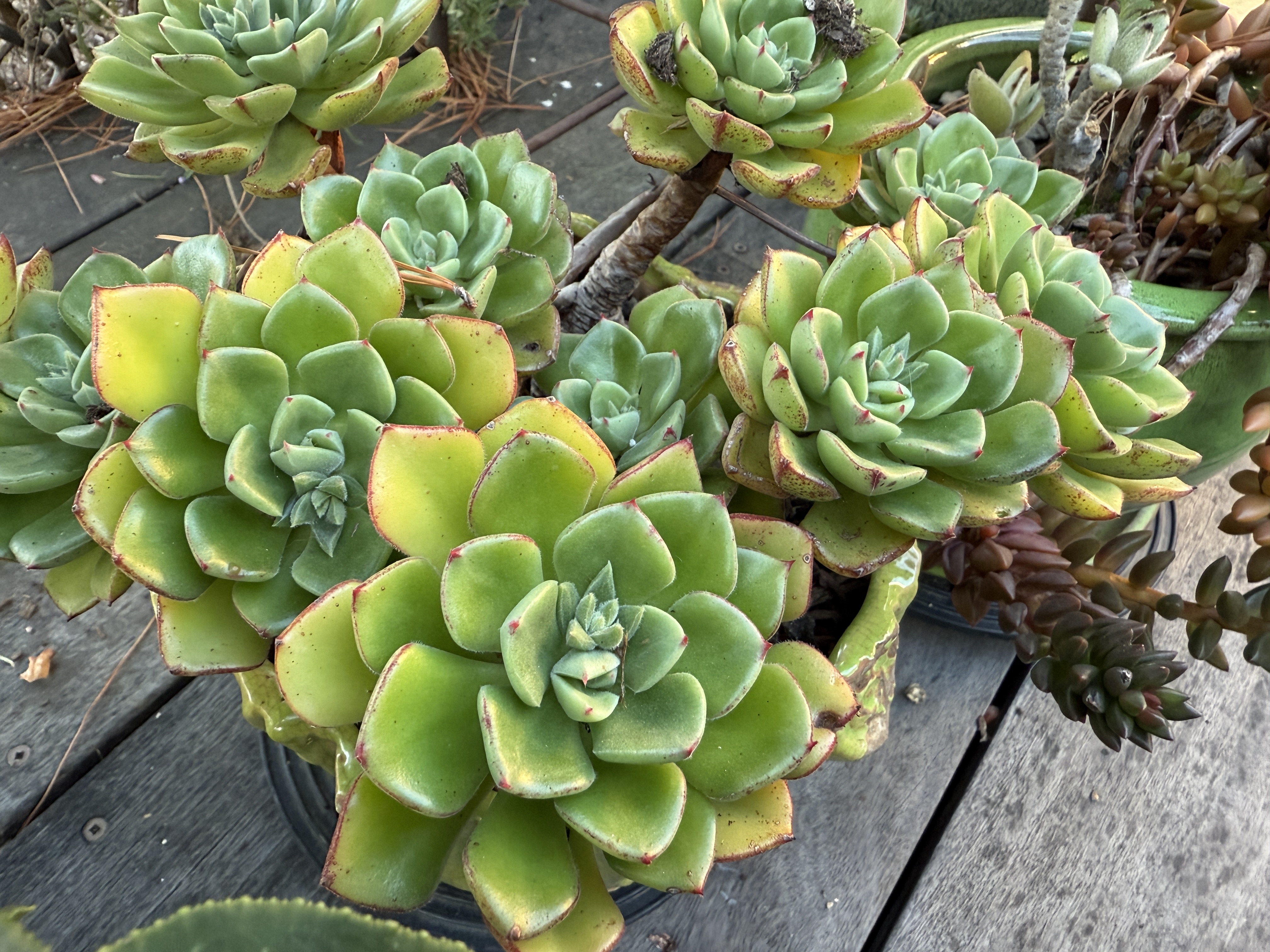
Over time, I’ve replaced potted plants along the deck with succulents. Succulents store moisture in their leaves, allowing the plant to go one to three months without water. Conversely, most summer annuals need near-daily watering, so I’ve learned to (mostly) resist when I head to the garden center.

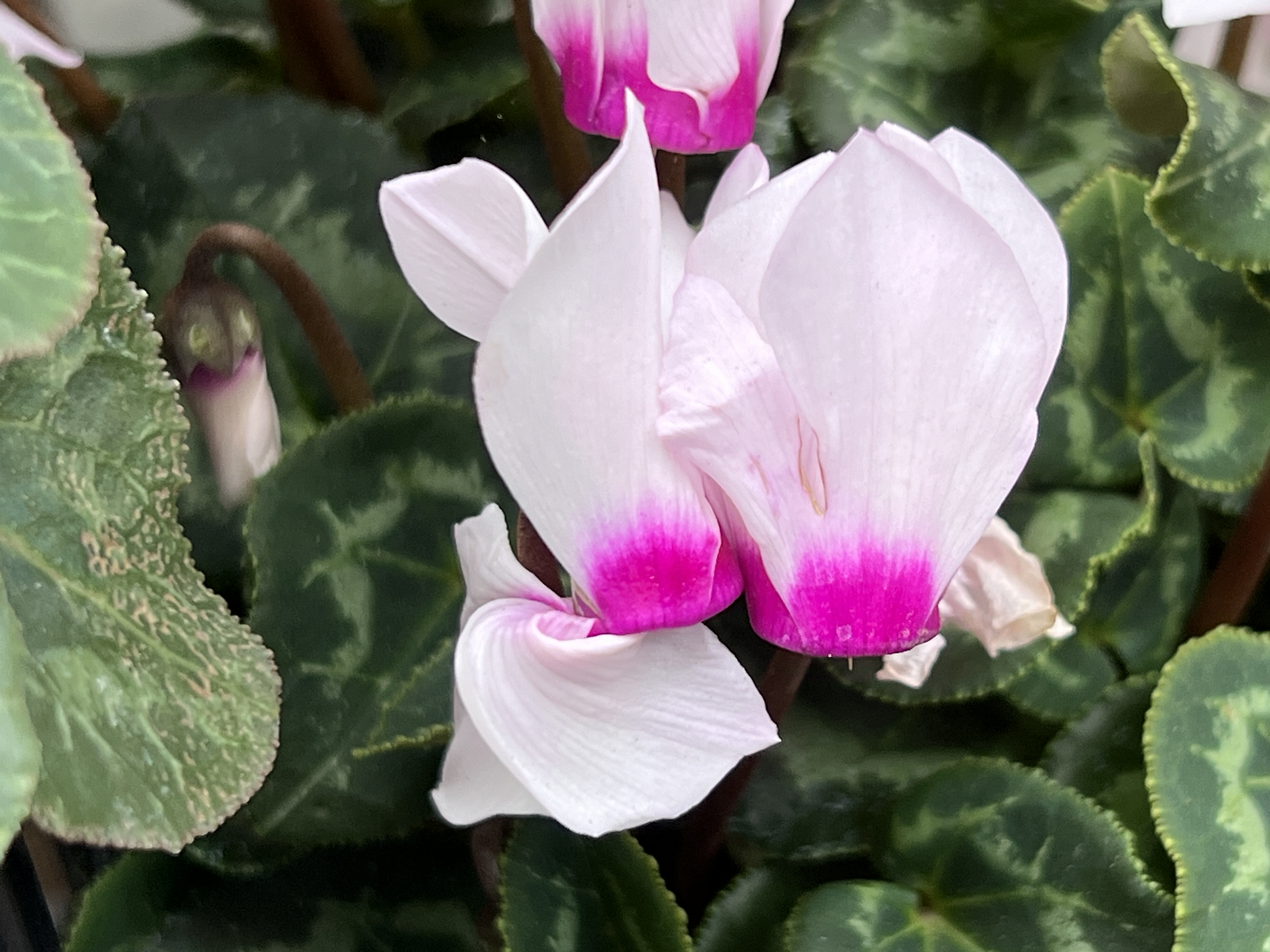
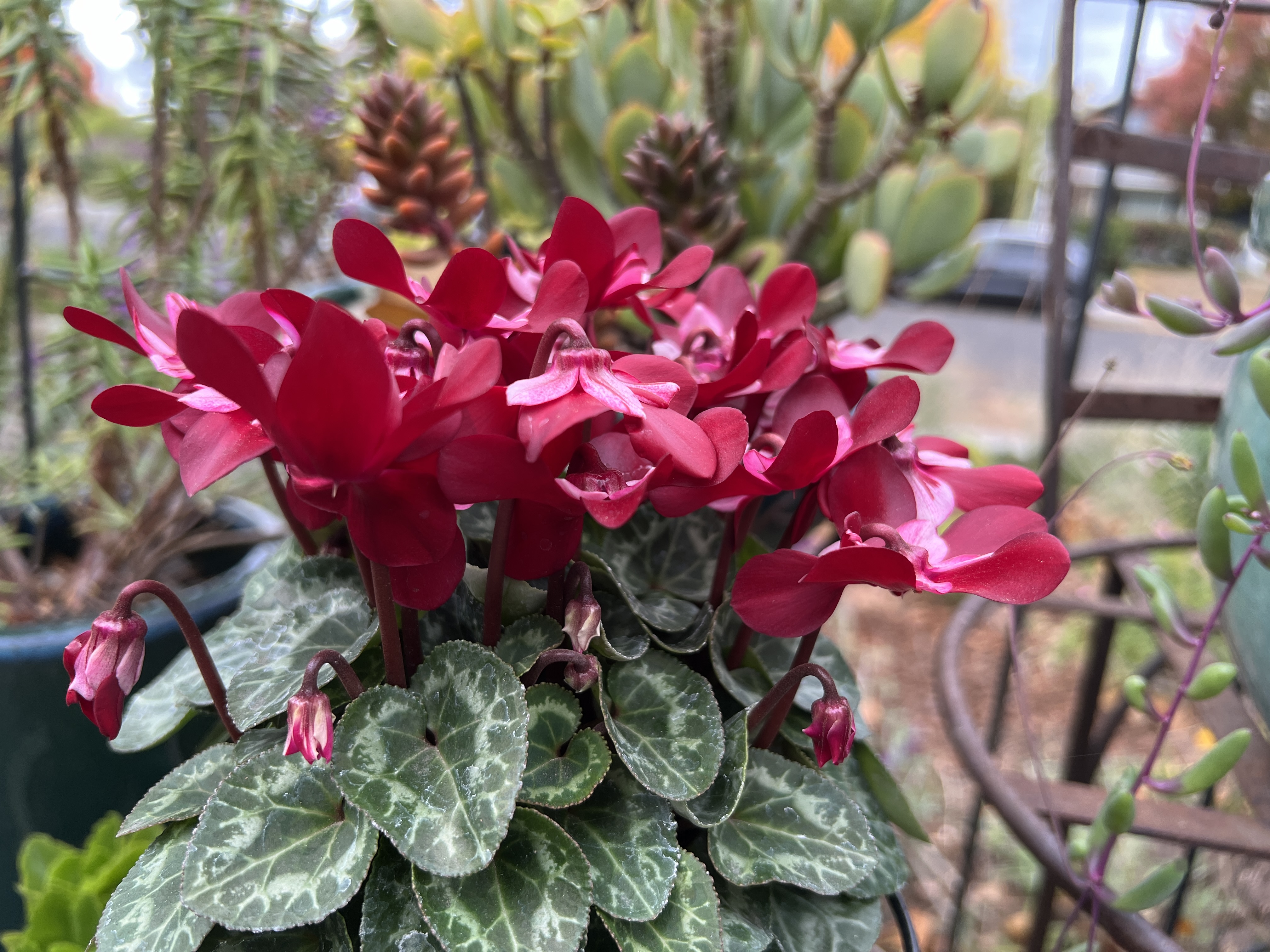
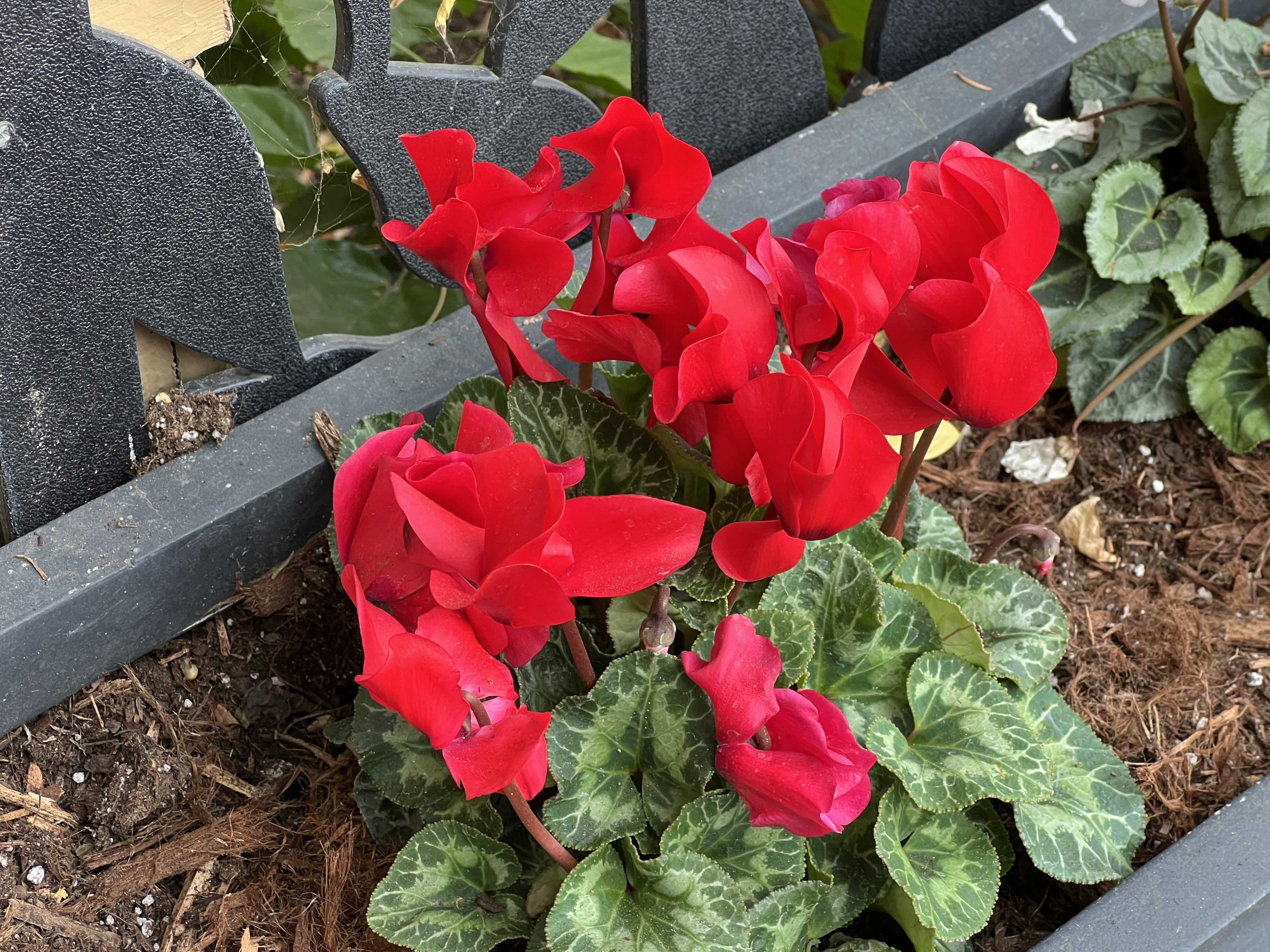
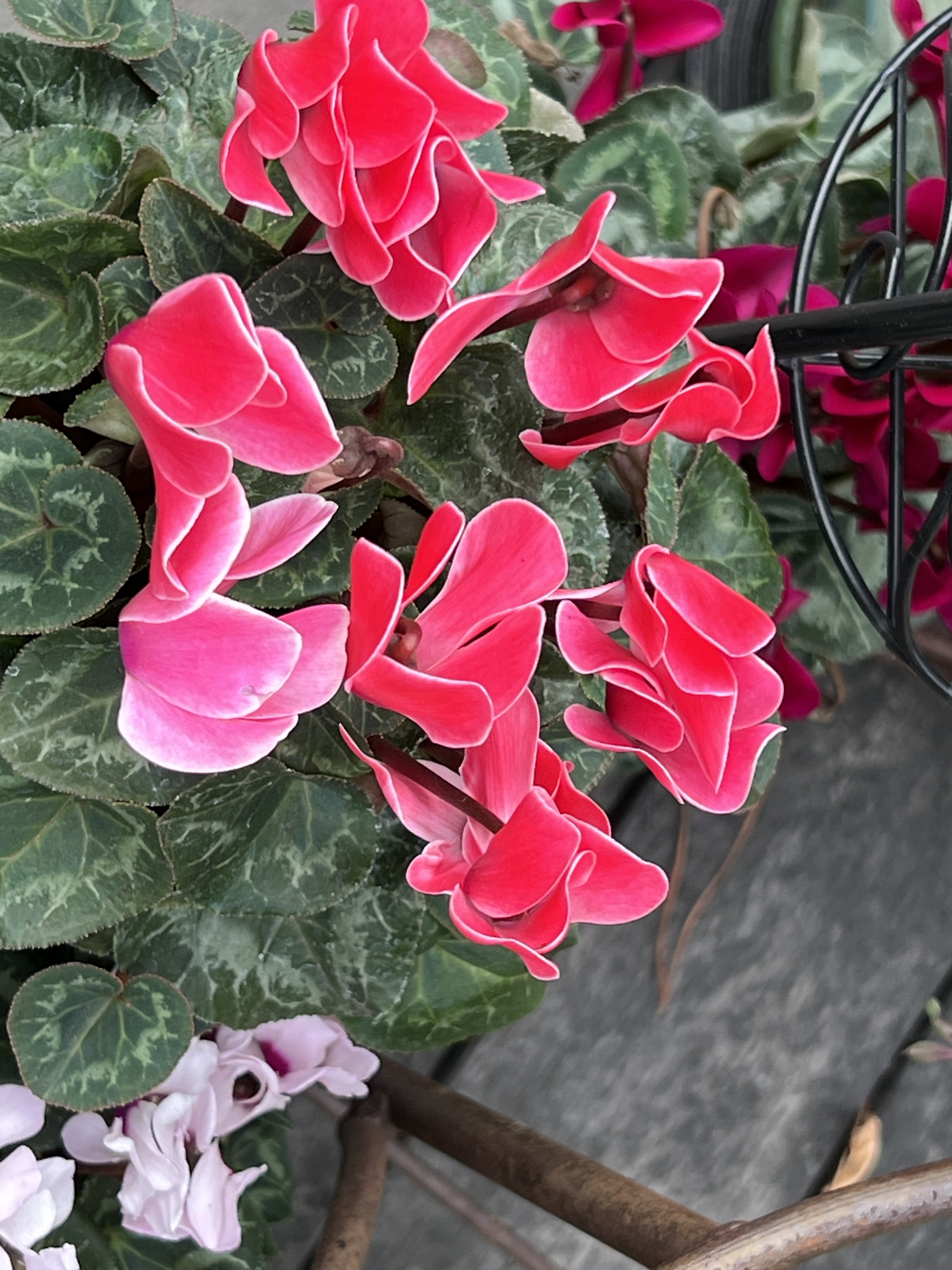
The newest addition to our deck is called an Othonna Capensis. It has thin purple stems and tiny yellow flowers. I transplanted it last summer into a waiting pot, but I wasn’t sure it would make it. The roots were loose and thin. To the contrary, it’s filled the pot nicely and its sending trailing purple offshoots down the sides. I add a few potted cyclamen for color in the fall, and when the corms go dormant, I replant them in different parts of the garden for color the following year.

Working in my garden has been physically challenging these past few years as the pain in my hips worsened. After five years of maneuvering through the US medical system, I finally had a complete hip replacement this past Wednesday. From a medical perspective, the surgery was unremarkable, and I was able to come home the same day. I need to replace the left hip in the future, but I want to fully recover before contemplating another surgery.

If you garden in the Northern Hemisphere, you’ll know February is a decent time to be off your feet. The first six weeks of recovery will carry me through the end of winter, leading to the effervescent gifts of spring.

I’ll be ready.

Puzzles and Paper Scraps, Postage and Permits

Assembling a jigsaw puzzle is the ultimate escape. It’s engaging but not taxing, and with one thousand pieces, it requires time and patience.

Conversely, I had neither time nor patience throughout December, yet I started assembling a puzzle anyway, and once done, I started another one.

Studies suggest that puzzles increase the production of dopamine, a chemical that regulates mood, memory, and concentration. Once I cracked open the puzzle box, the sorting began, and the list of things I needed to do fell by the wayside. A spell had been cast, one puzzle piece at a time.

Most of the time, I’m an organized and capable person, so I’m uncomfortable feeling this scattered. I planned to make Christmas cards this year and had the supplies. Making cards and corresponding with friends is a joy. I eventually sat down at my crafting table and created a dozen cards, but by day’s end, fatigue won out, and most of my cards remained unsent.

I made one card, using scraps, to join Kate’s ScrapHappy blog hop mid-December, but I lacked the time to create a post.

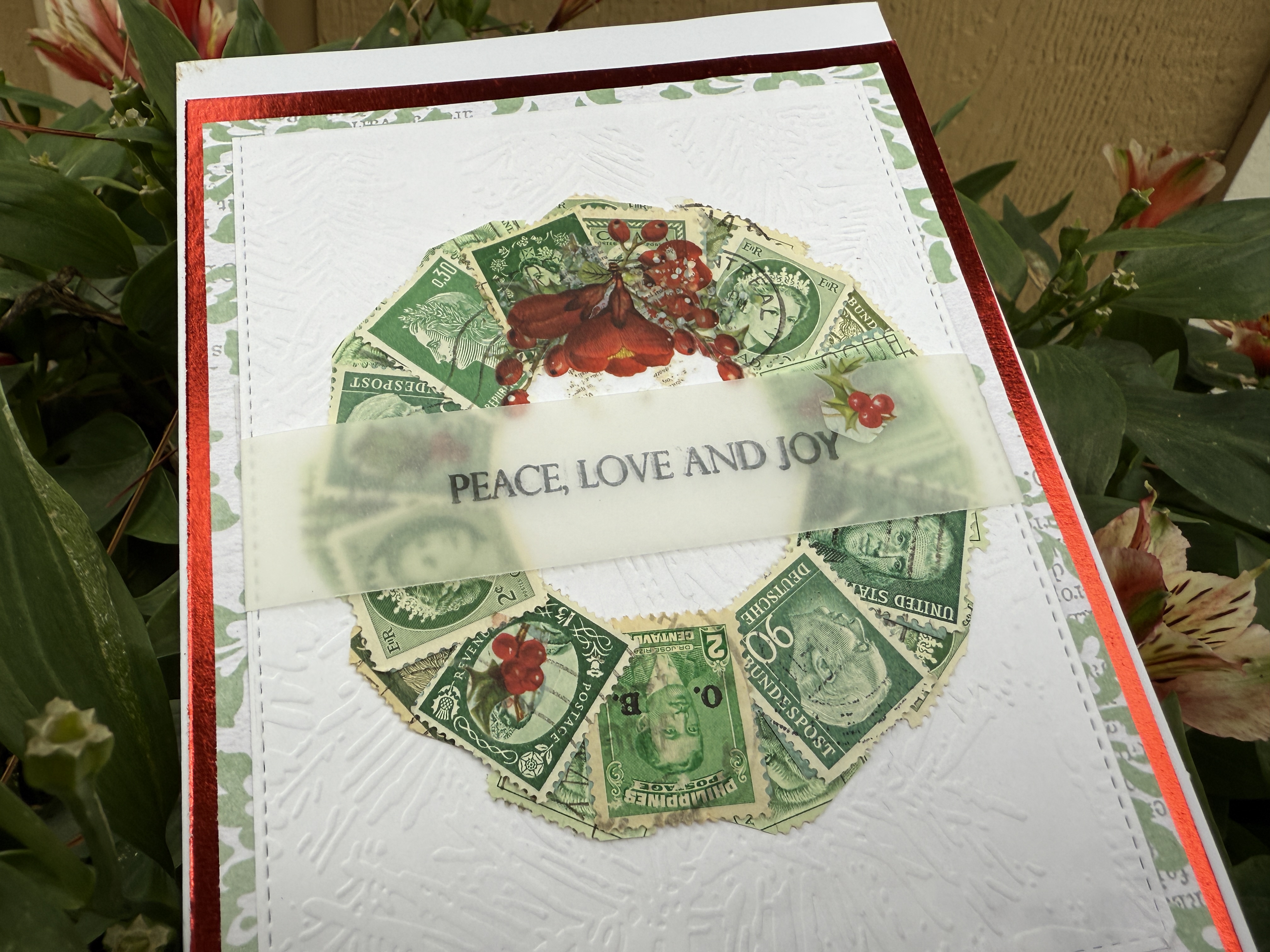
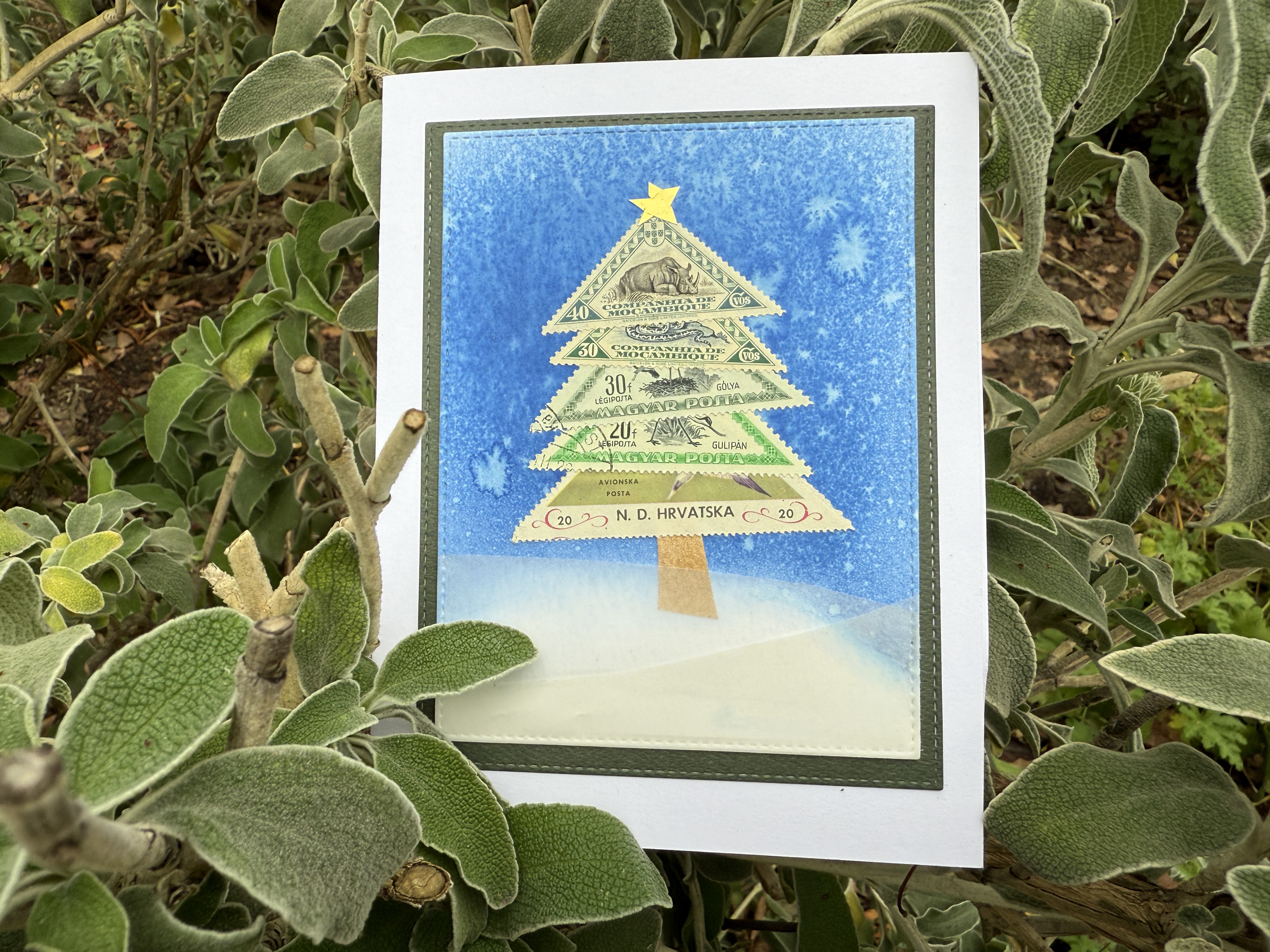
Earlier in the year, I set aside vintage Christmas postage to make a card from a friend’s stash. You guessed it: finished but unsent.

And Permits? How did that get into the title?

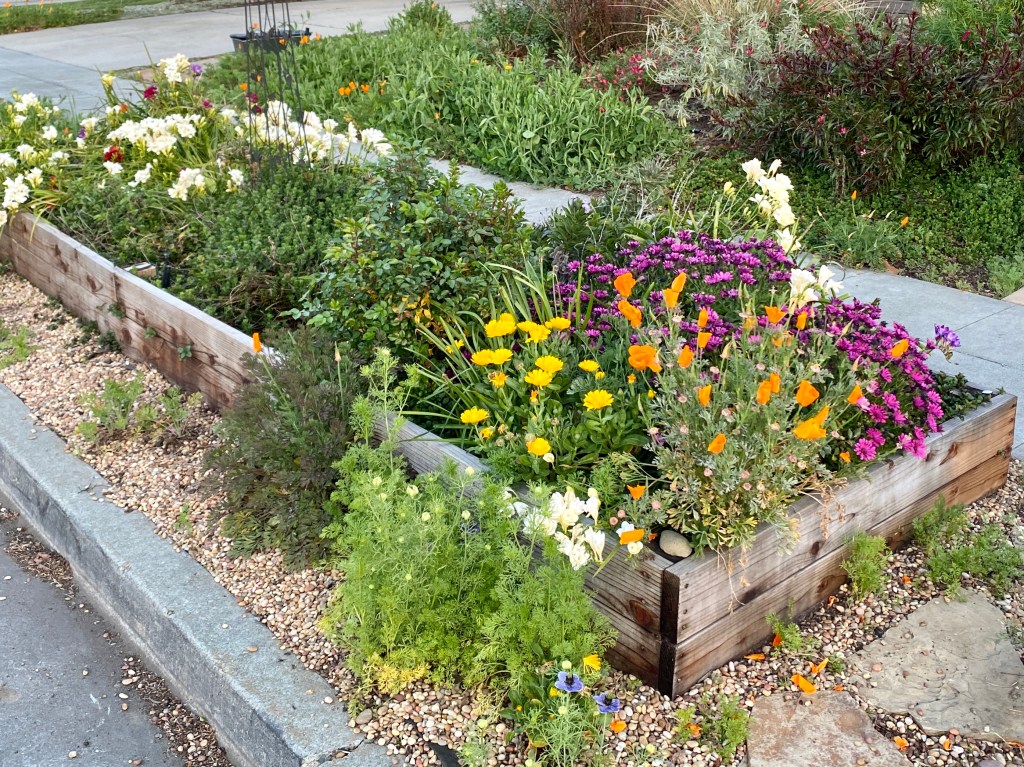
It’s a long and tedious story, so here’s my attempt at brevity. The space between the sidewalk and the street, known locally as the sidewalk strip, is the homeowner’s responsibility, but the City governs usage. When we bought our home nearly thirty years ago, we inherited a strip of lawn. We applied for a permit and planted a “street tree.” During the worst of the drought years, we removed the lawn. Mike built a planter box in its place, and I’ve happily planted seasonal flowers, tomatoes, and whatever else wanted to self-seed there for many years.

In the last decade, the tree declined. We applied for a permit to replace the tree. The City denied our request, saying the tree wasn’t sick enough. City workers came through this spring and pruned every tree on the block to prepare for road work, leaving a sickly tree in its wake. They approved our second request to remove and replace the tree.

Two weeks later, we received a Repair Notice and Permit saying we had to remove the planting box, calling it a tripping hazard. I’ll share more details in a future post, but suffice it to say I’m sad, disappointed, and, for a time, overwhelmed by the amount of work it would take to dismantle my beloved curb garden, not to mention the expense.

The City gave us thirty days to remove the tree, the planting box, and all the soil and gravel, plants, bulbs, and irrigation that went with it. When I called, they offered an extension but refused to budge on the planter.

I can always send those Christmas cards next year.

It’s time to start a new puzzle.

October Falls Away

October left town on Friday, foisting the reality of November and the most significant election of my lifetime, November 5. I’ve kept busy all month with organizing clients and social engagements, spending time with friends and family, and trying to avoid the news.

Unseasonably hot temperatures kept me out of the garden the first week of October. It’s hard to fathom triple-digit days at a time when the angle of the sun says fall, not July.

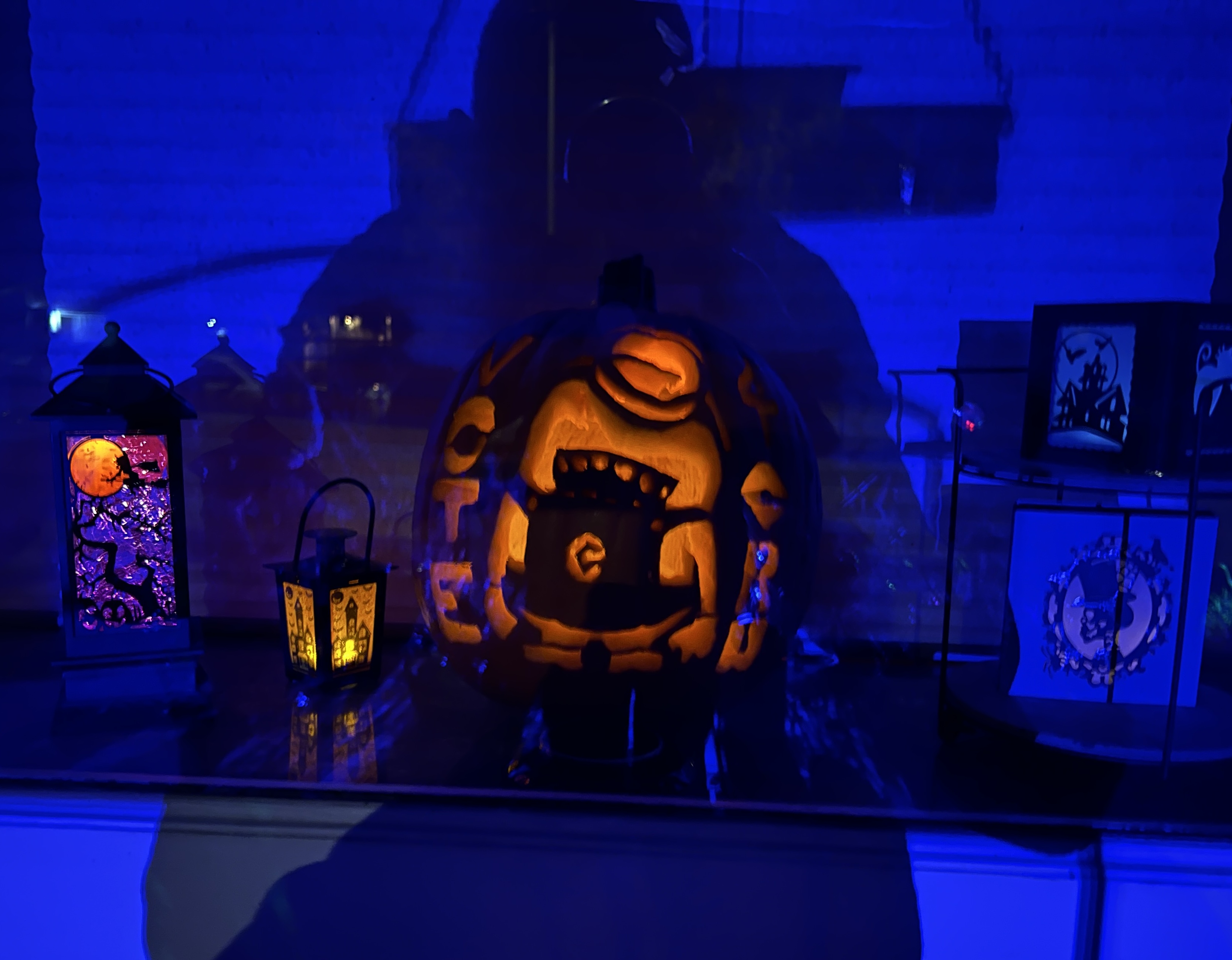
I celebrated my birthday on October 2, and we had fun handing out candy on Halloween. Mike carved three beautiful pumpkins for the front deck. Soon, they’ll join the compost bin. The seeds are outside for the squirrels to enjoy or to plant a pumpkin for next year.

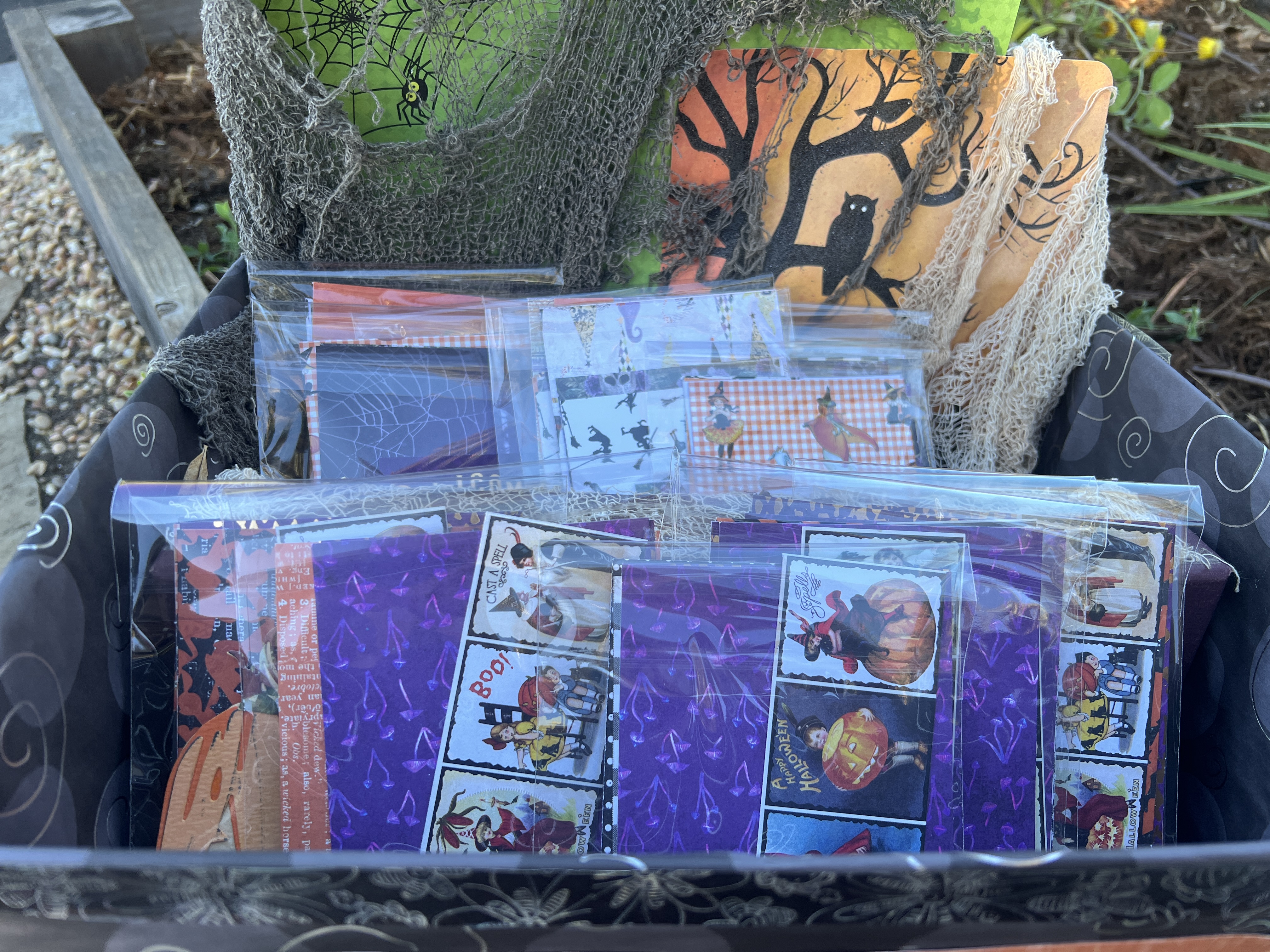
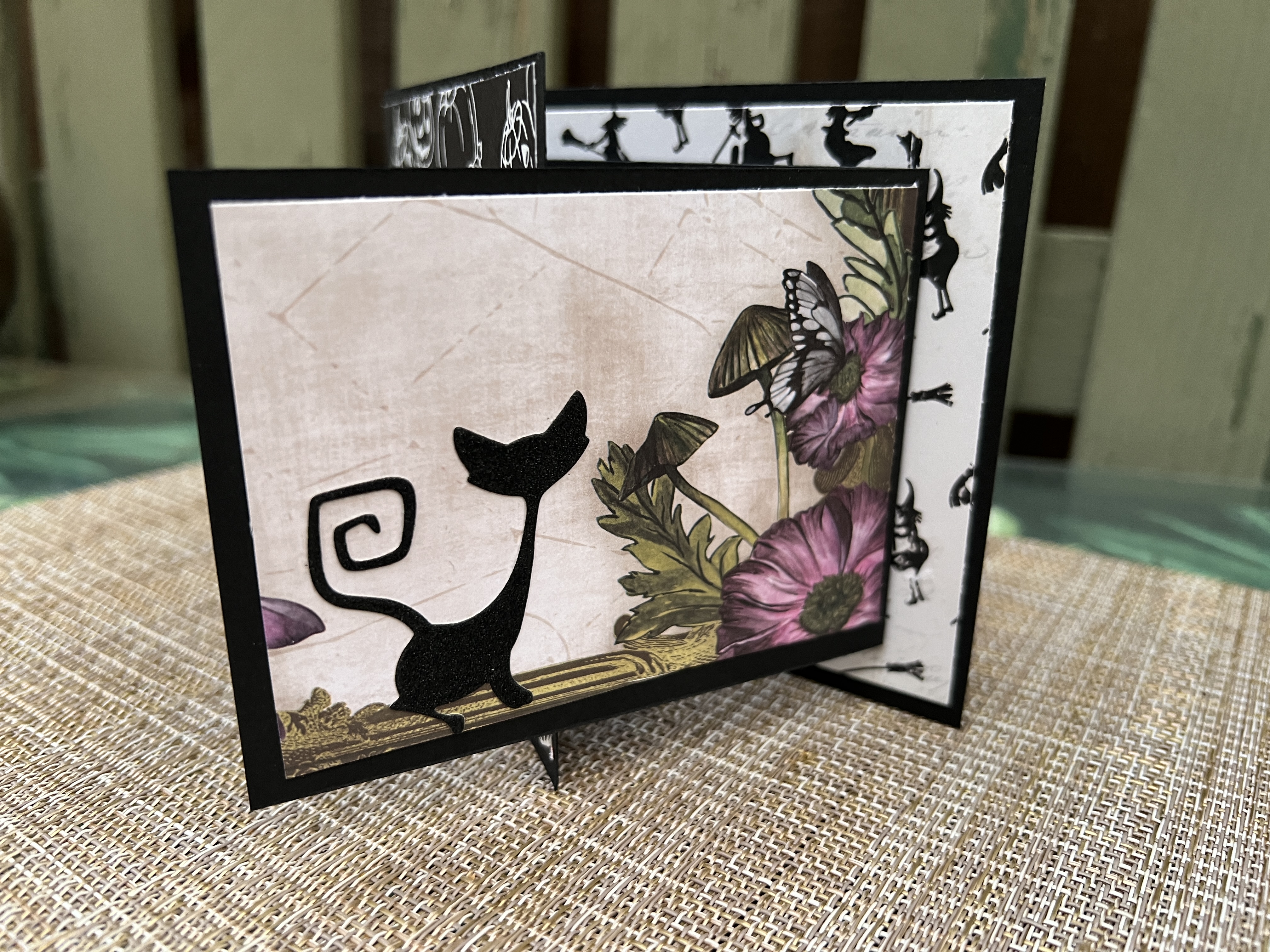
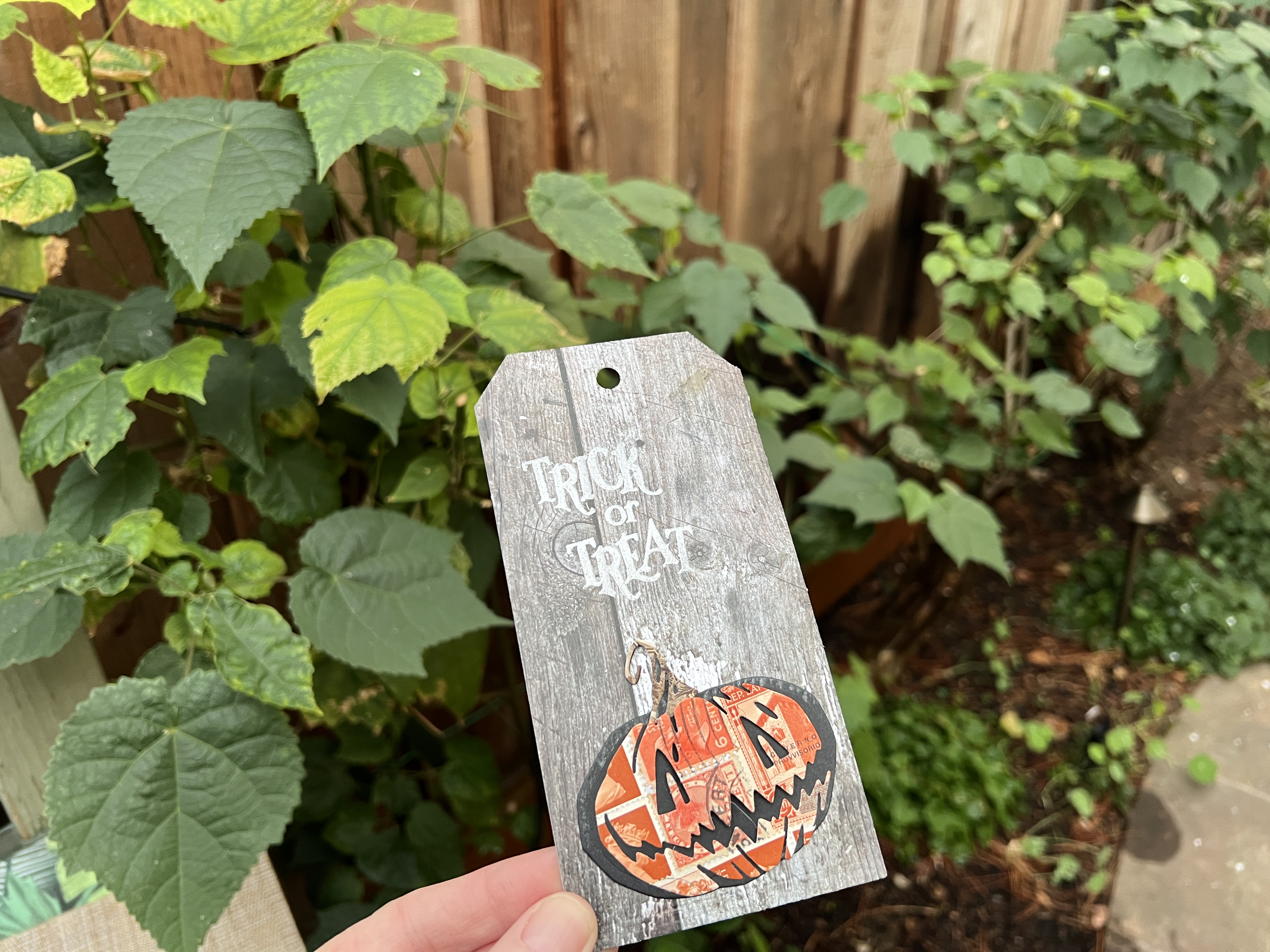
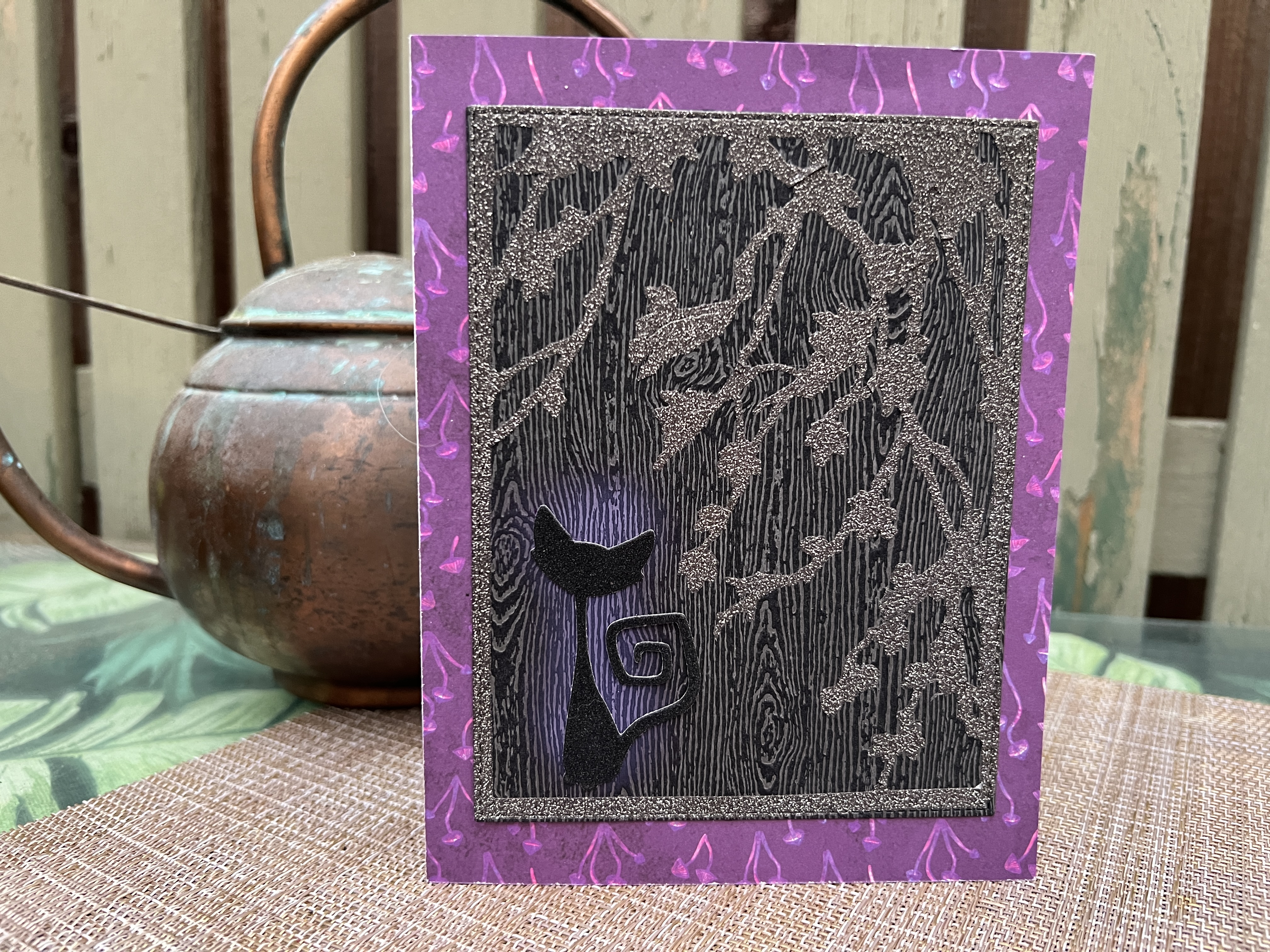
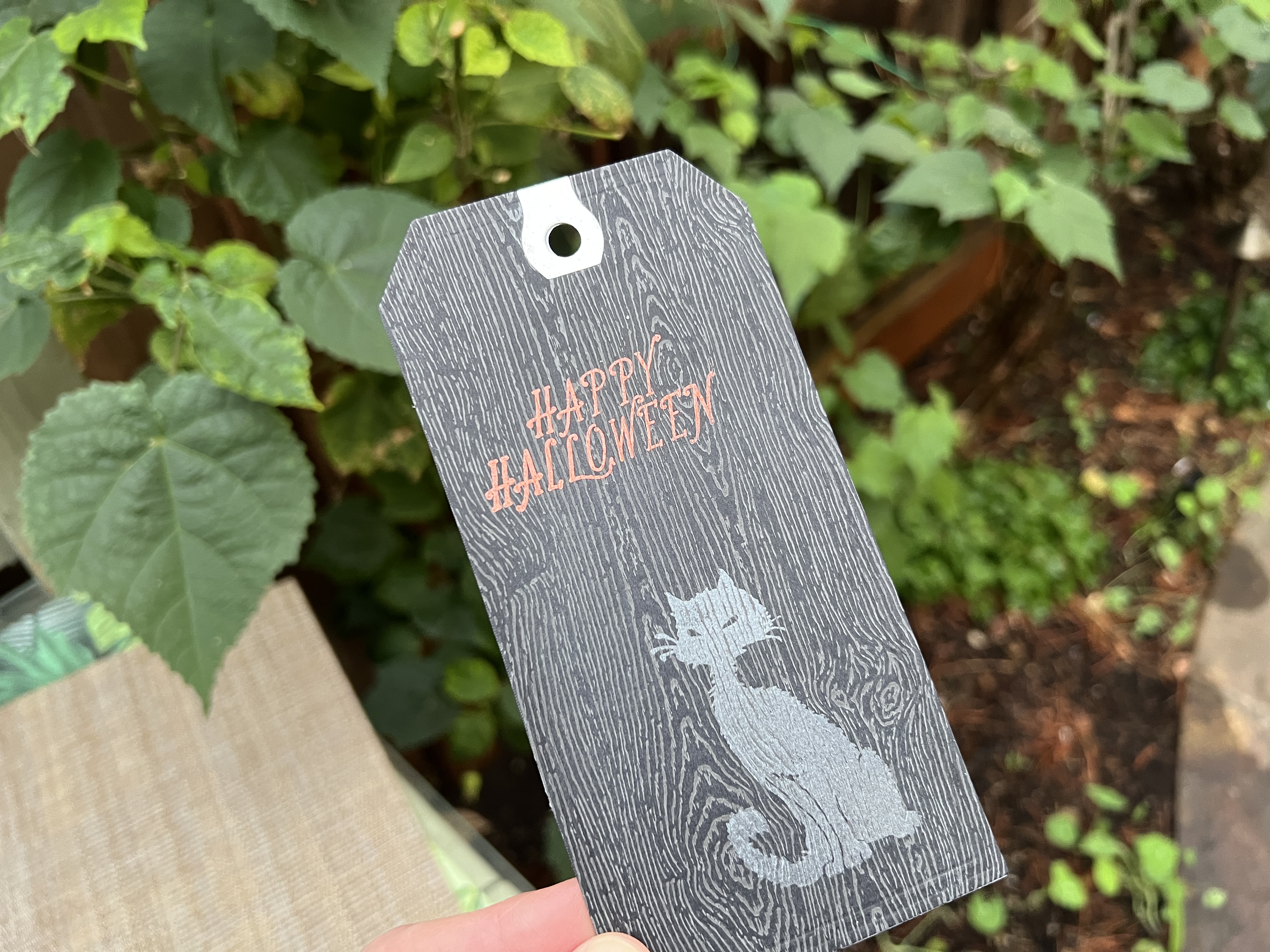
This year, I polished off the last of my Halloween paper and ephemera, making cards for friends, seasonal bookmarks, and craft-making kits next to the children’s Little Free Library. I offered seeds from my garden as well.

My friend Marcia gave me a treasure trove of vintage postage, so I had fun making a few pumpkins.

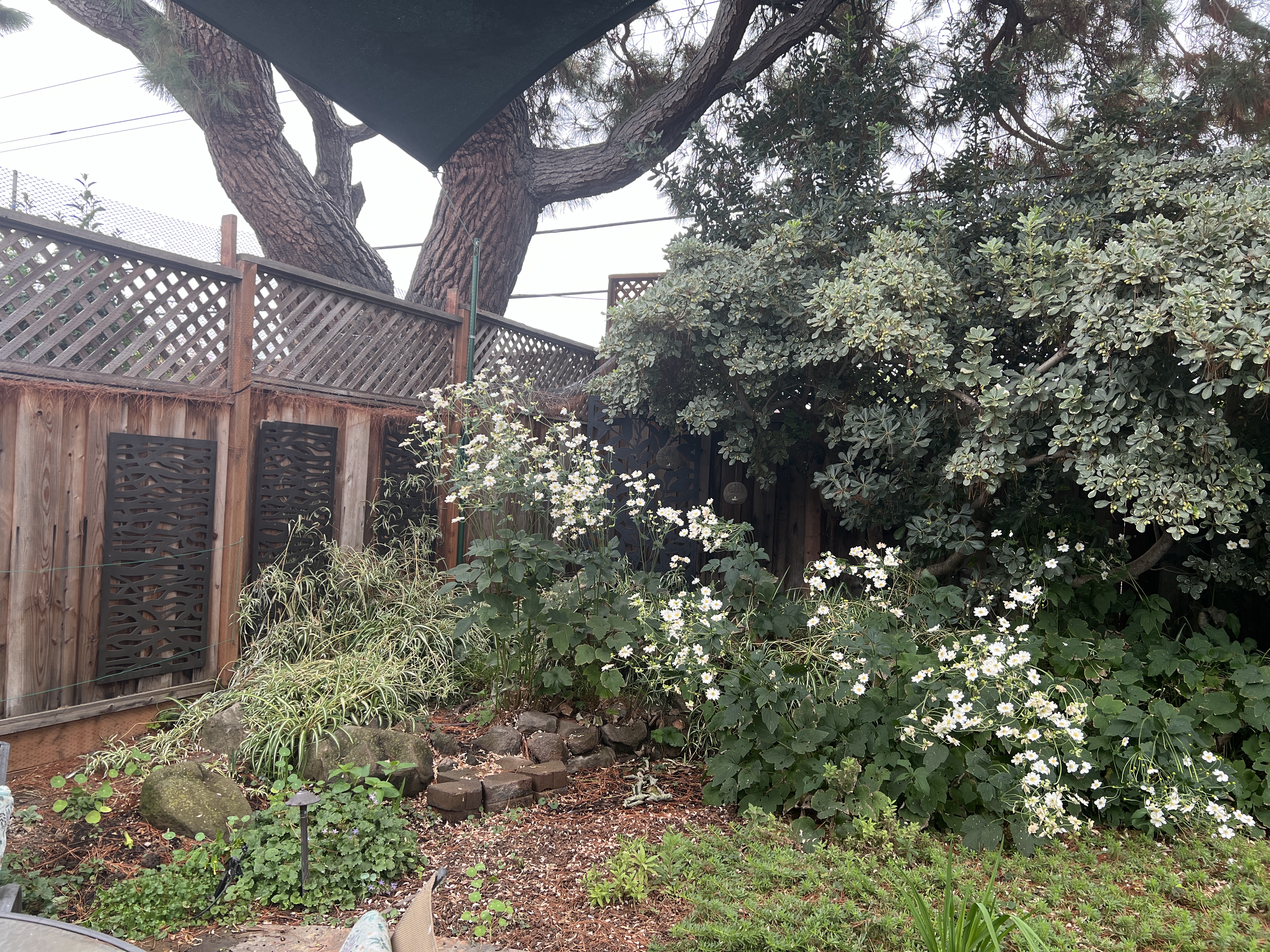
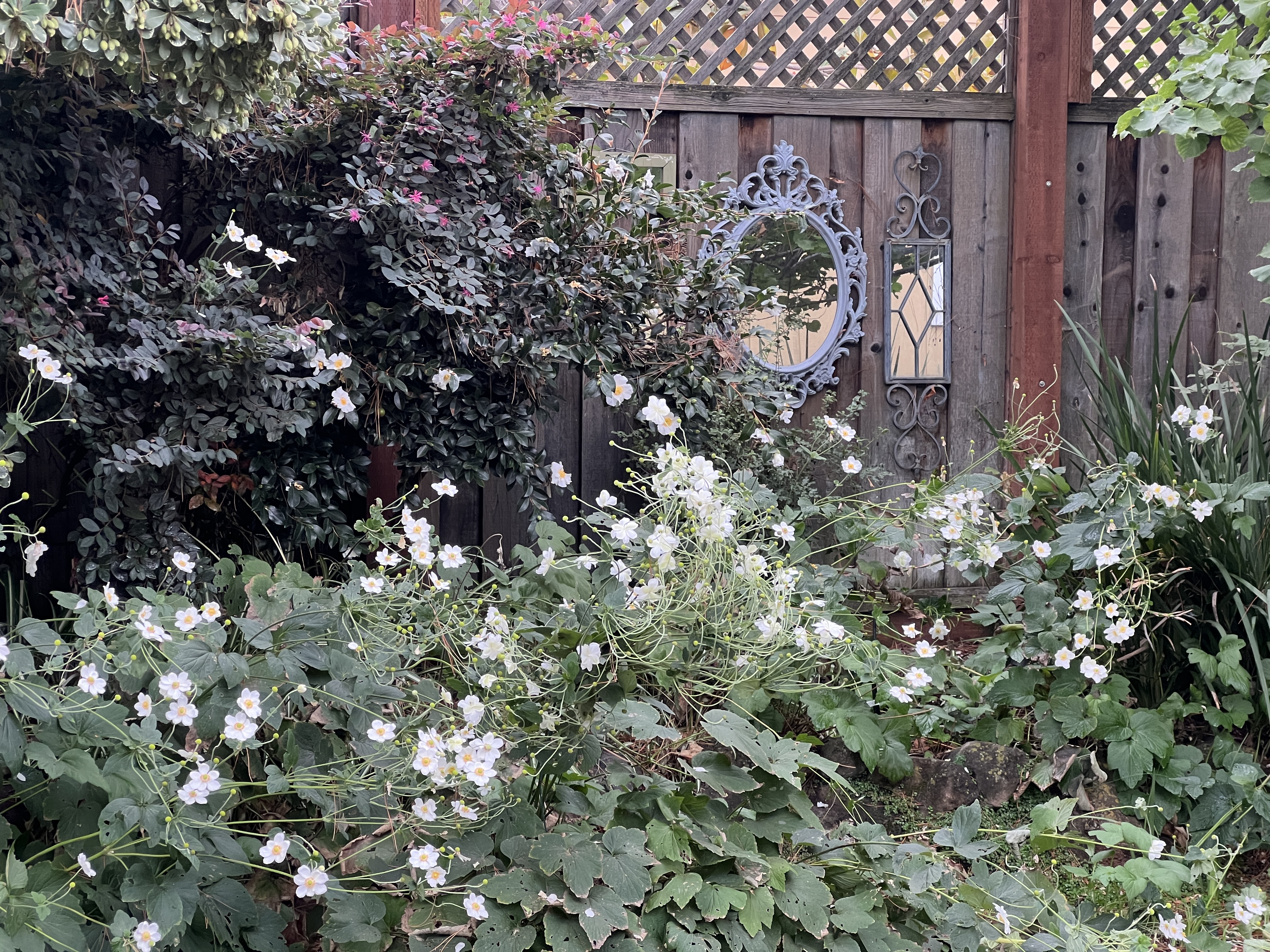
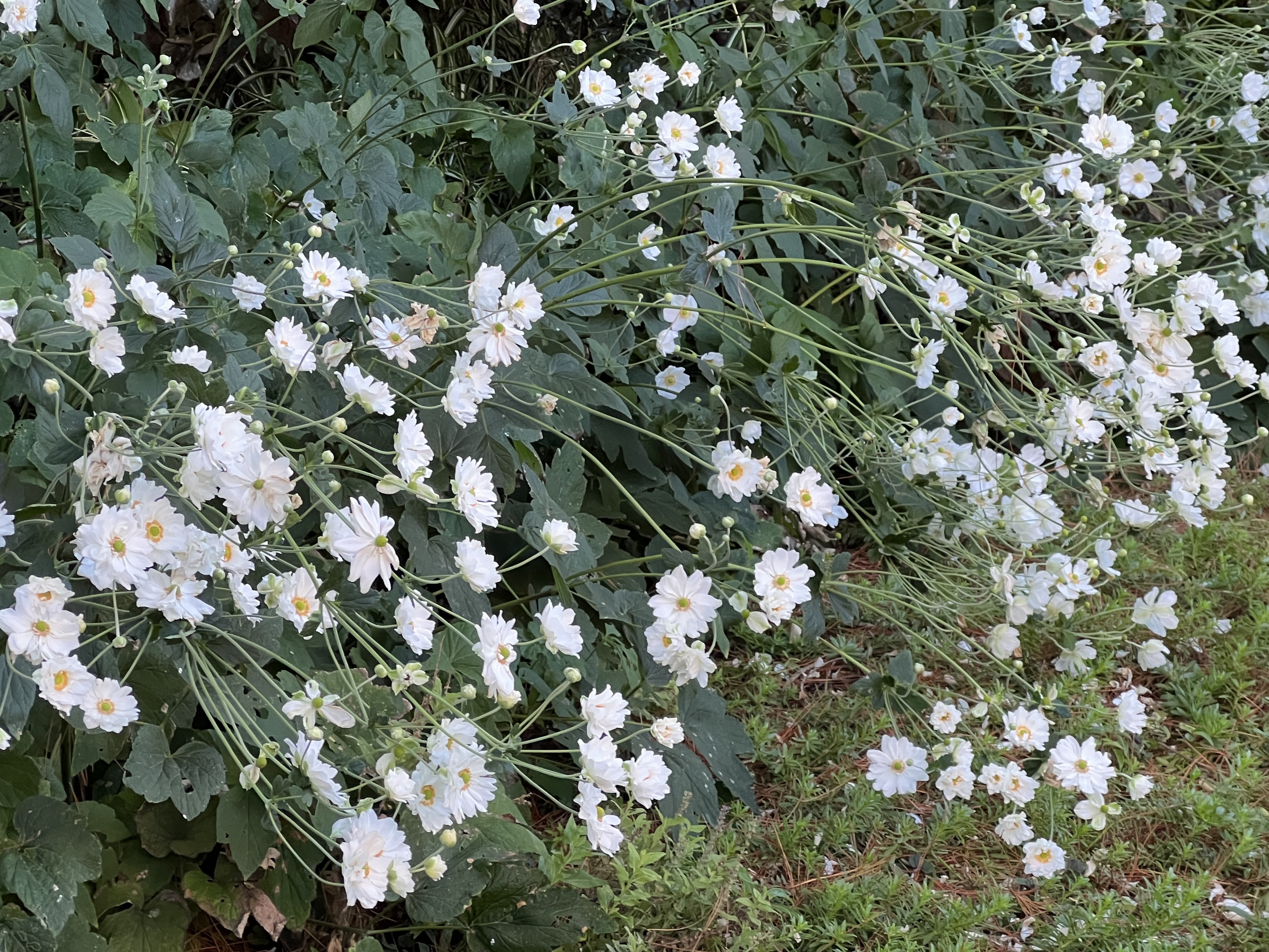
There are plenty of tasks in an autumn garden, and we’re finally enjoying the cool weather needed to get things done. I’ve been pruning where appropriate and removing spent annuals. The anemones grew tall this year, with the extra weight of blooms, bending them in a gentle arch to show off a snowy white skirt. I removed the flower stalks from the lower garden but left a pair of tall plants to go to seed. The hummingbirds will be along in a few months to harvest the seed fluff for their nests.

A second round of nasturtiums arrived on the scene, flaunting lovely saucer-sized leaves and a limited number of orange and red flowers. Nasturtiums self-seed in the spring and summer, dying off by the middle of July. The fall variety has proliferated in a section planted with freesia. They’re lovely.

This morning, I planted forty spring bulbs, a mixture of double yellow narcissus and grape hyacinth. I replaced the leggy coleus growing in a pot along our deck with cold-weather cyclamen. We enjoyed a light rain overnight, refreshing the garden and the stale air.

In the wee hours of Sunday, the US ends Daylight Saving Time (DST) or Falls Back. Here’s hoping this isn’t a metaphor for what could happen if this country doesn’t vote for Democracy. I’m cautiously optimistic for a better way forward.

“There’s no such thing as a vote that doesn’t matter.” – Barack Obama

Pining for Autumn

As the autumnal equinox approaches, I’m pining for fall colors and cooler days. October is my favorite time of year, and it’s fast approaching. Sometimes, I miss the fun we had growing pumpkins when my boys were young, but with my sons launched, not to mention back-to-back years of squash bug infestations, I’m happy to leave it to the professional growers.

Also, I’m out of room. When you love gardening, a patch of exposed earth is a planting opportunity. I’ve filled pots, borders, raised beds, and the surrounding soil with living things. Potted succulents line the deck, the back steps, and the walkway leading to our back gate. I once joked that it would be fun to buy the house behind us, remove the fence, and extend the garden. Ha! A gardener can dream.

We have a decent tomato crop for the first time in several years. I was starting to think I’d lost my gardening mojo, but the cherry tomatoes are sweet and delicious, not to mention prolific.

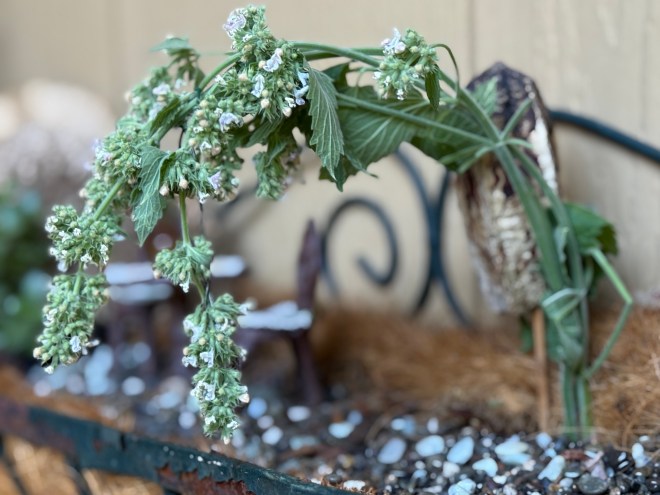
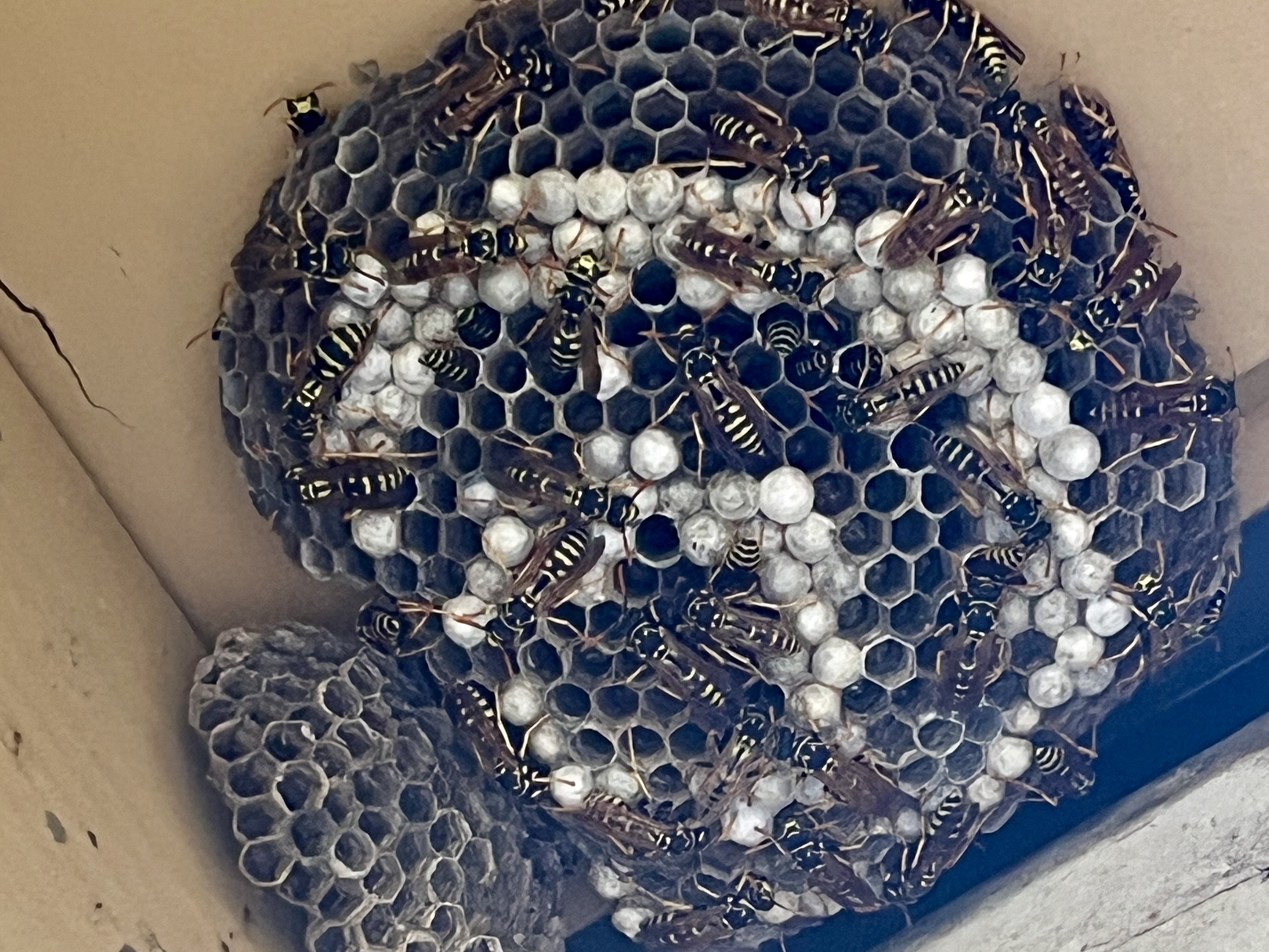
I spent several hours last weekend taming the garden paths from the rapidly spreading nepeta and an annual called a 4’0clock. They fill the beds quickly and spill over on the path. The nepeta is a garden darling favored by cats, birds, bees, and paper wasps.

Last weekend, I spotted a mantis near the catmint. I coaxed him onto a stick and relocated him to a higher elevation for his safety.

Earlier in the year, we hired someone to replace the sideyard walkway, a project on my list for two years. When I met with a company specializing in hardscape to discuss our needs, the sales rep lacked the imagination and flexibility to do the job, prompting me to put it on hold again. The rep said they couldn’t repurpose the flagstone but would instead break it up and haul it away, providing their own material in its place. Go figure?

Fortuitously, a handyman we know reached out looking for work, so we hired him to do the job. It looks great.

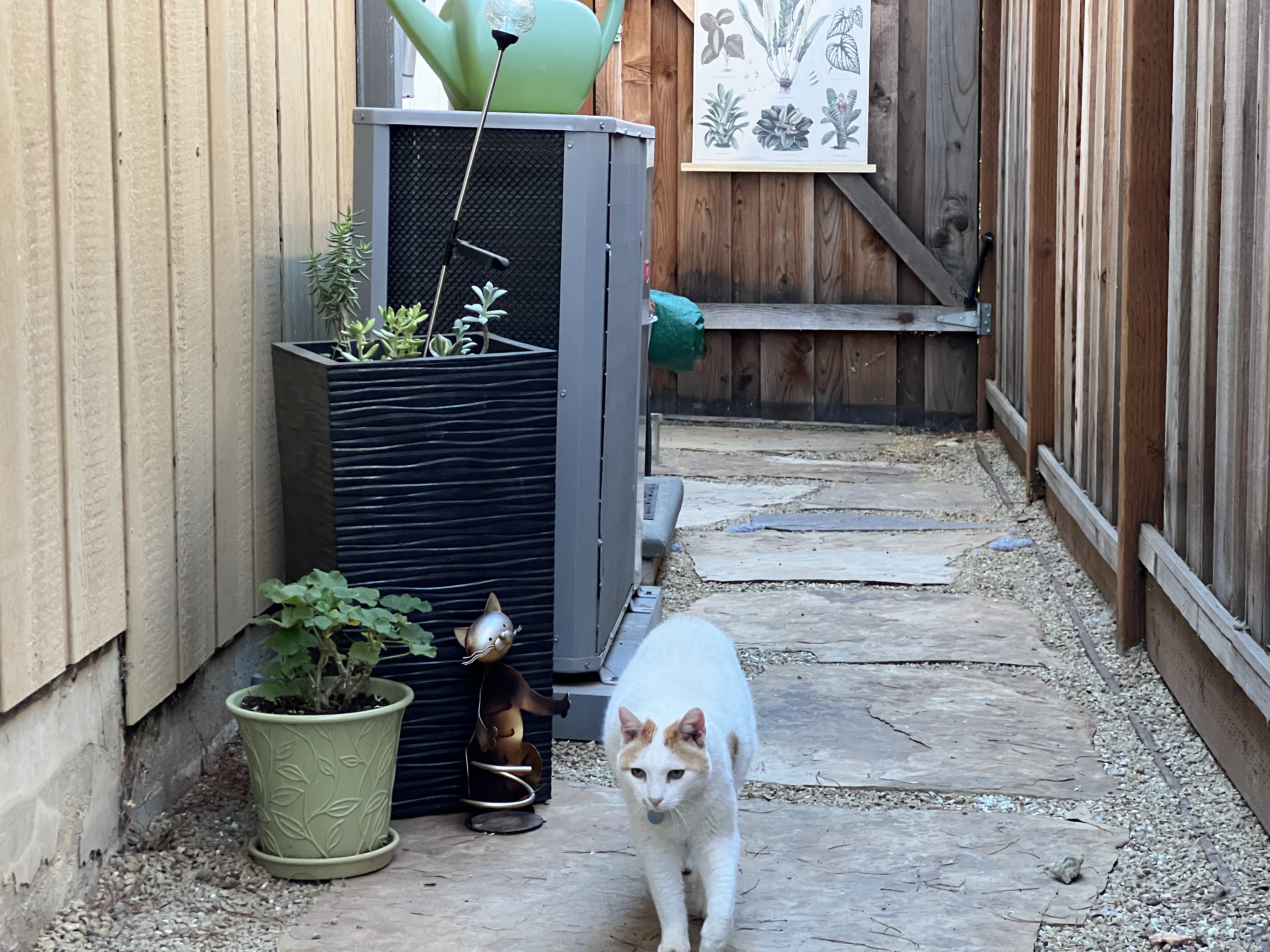
The goal for the sideyard was one of safety as much as aesthetics: the stepping stones in place were small and uneven, presenting a tripping hazard. The ground cover that grew on either side looked great in the winter but dried to a crisp under the summer sun. I missed the green, so I added a few potted plants along the new path and hung a botanical print on the gate to create a focal interest. It feels good to check this project off the list.

Most of our spring plantings have done well, but we misjudged the placement of the Hostas.

They prefer shade, and we thought they would be ok, but the excess heat early this year and the sun’s rotation exposed them to more than they could handle. We’ll dig them up next month and hope they’ll survive a transplant to a shadier spot. I’m always learning.

I’ve missed blogging these past few months. August took on a life of its own. My younger sister sustained a foot wound on her wheelchair when a caregiver smashed her exposed heel on the footrest. The wound progressed to stage 3, requiring a trip to the emergency room and a three-week stay at a skilled nursing facility. I brought her kitty home to stay with us while Sharon healed. My sister was in pain for several days, but rest and good care helped. She was able to return to her assisted living home after three weeks and continues to receive care from a visiting nurse at home.

I had an appendicitis scare the Friday after Sharon went home. My doctor ordered an abdominal CT scan due to lower right abdominal pain. She thought it was my appendix. The on-call doctor called me that evening and said they saw something on the scan (a thickening of the appendix), and he sent me to the ER to have a surgeon make the call. I spent the night at Stanford Hospital, expecting surgery in the morning.

Saturday morning the on-call surgeon took a wait-and-see perspective, and I went home on antibiotics. The findings were atypical: My white blood cell count fell in the normal range, my pain was minimal, and I wasn’t running a fever. The surgeon suggested I try the antibiotic approach, and they gave me the warning signs to look for should things get worse. They did not.

Our son Chris managed the three cats, and friends came up and brought me home the following day.

It was a scary night. Mike was still in Argentina, and I couldn’t talk to him till the following day because of the five-hour time difference. He was already asleep by the time they admitted me. He was sad to be so far away in my time of need, but it all worked out.

Good riddance to August, and hello, early autumn days.

Summer So Soon

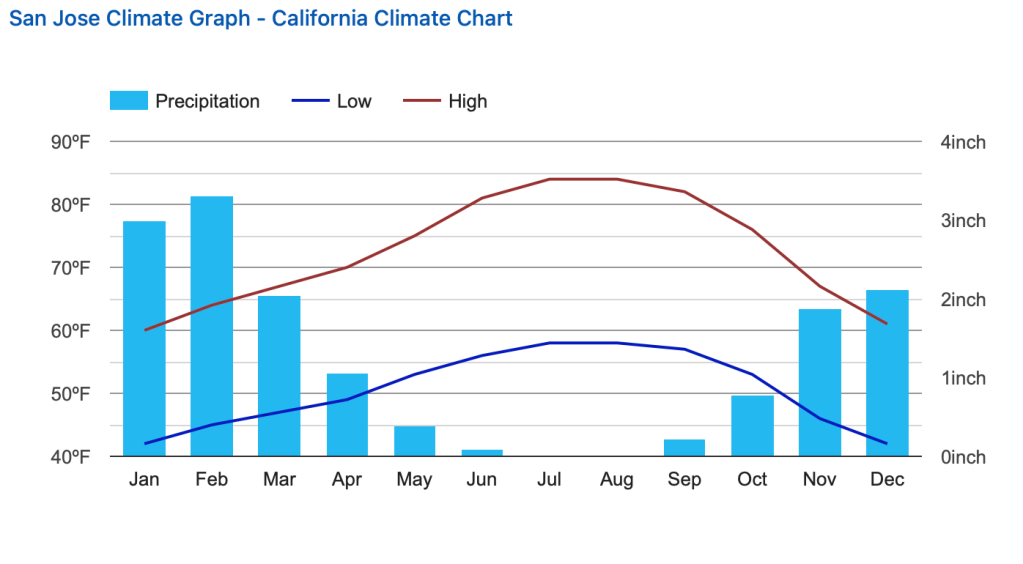
Alas, spring has given way to summer. In my youth, summer meant a break from school, sleeping in, and sometimes a chance to swim in a neighborhood pool. Those are bygone days, not just the loss of youth but the unrelenting heat, smog, and wildfires that are all too common in California in this age of climate change.

I raced to finish planting the curb garden this week, then dressed it with three inches of garden mulch to retain water. I’ll miss the cooler days of spring and the chance of a rain shower. The next four months will be hot and dry.

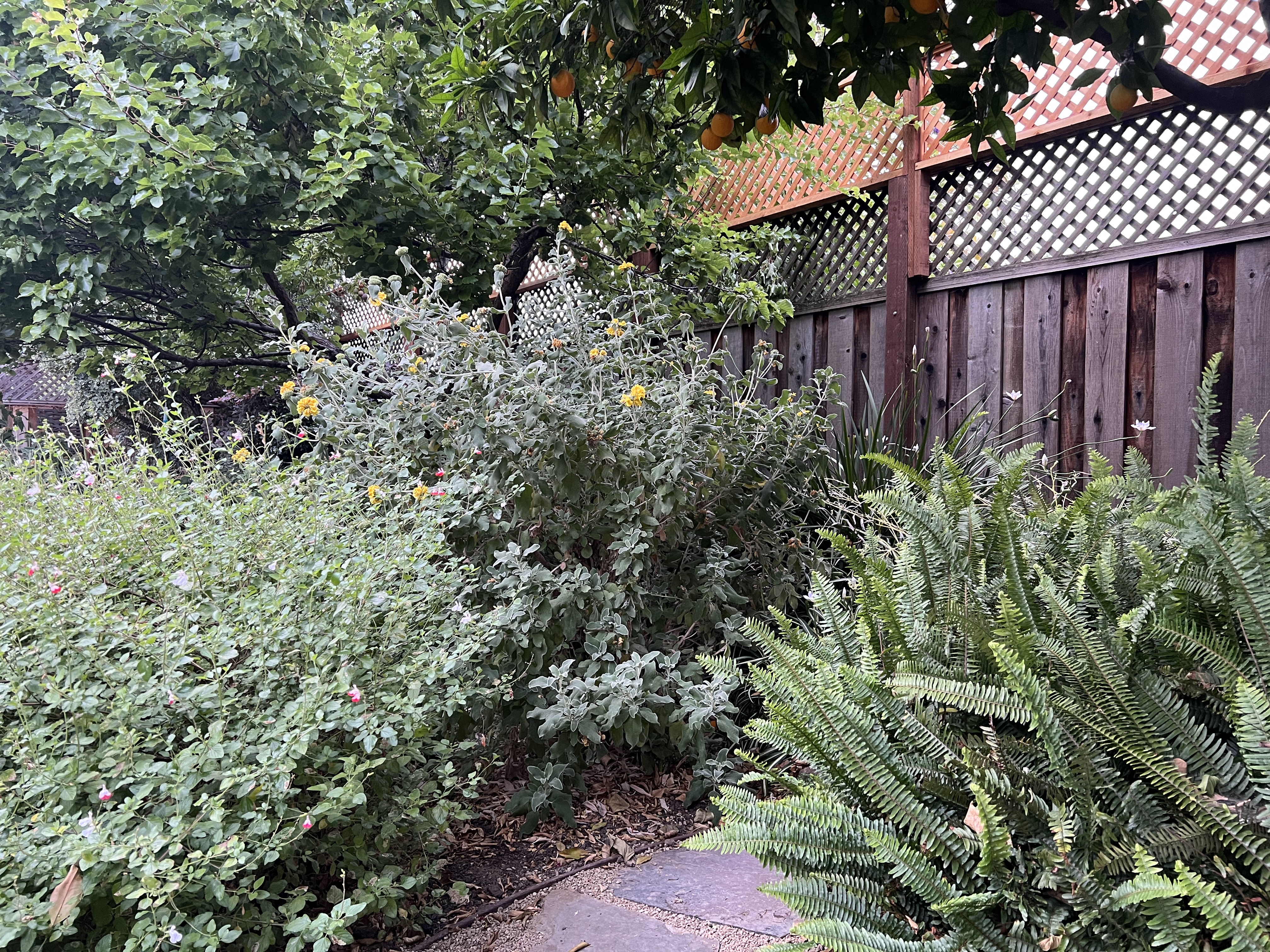
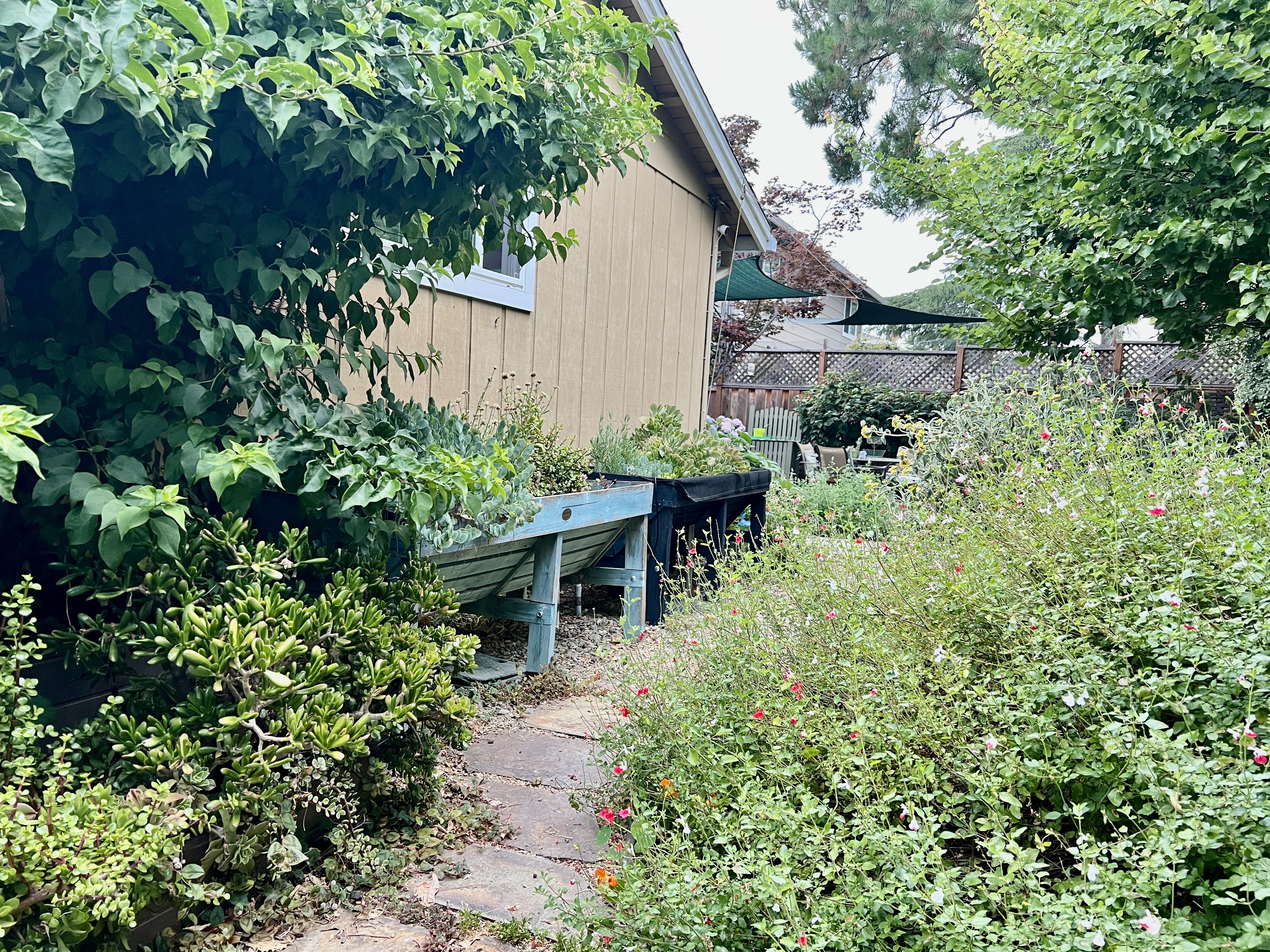
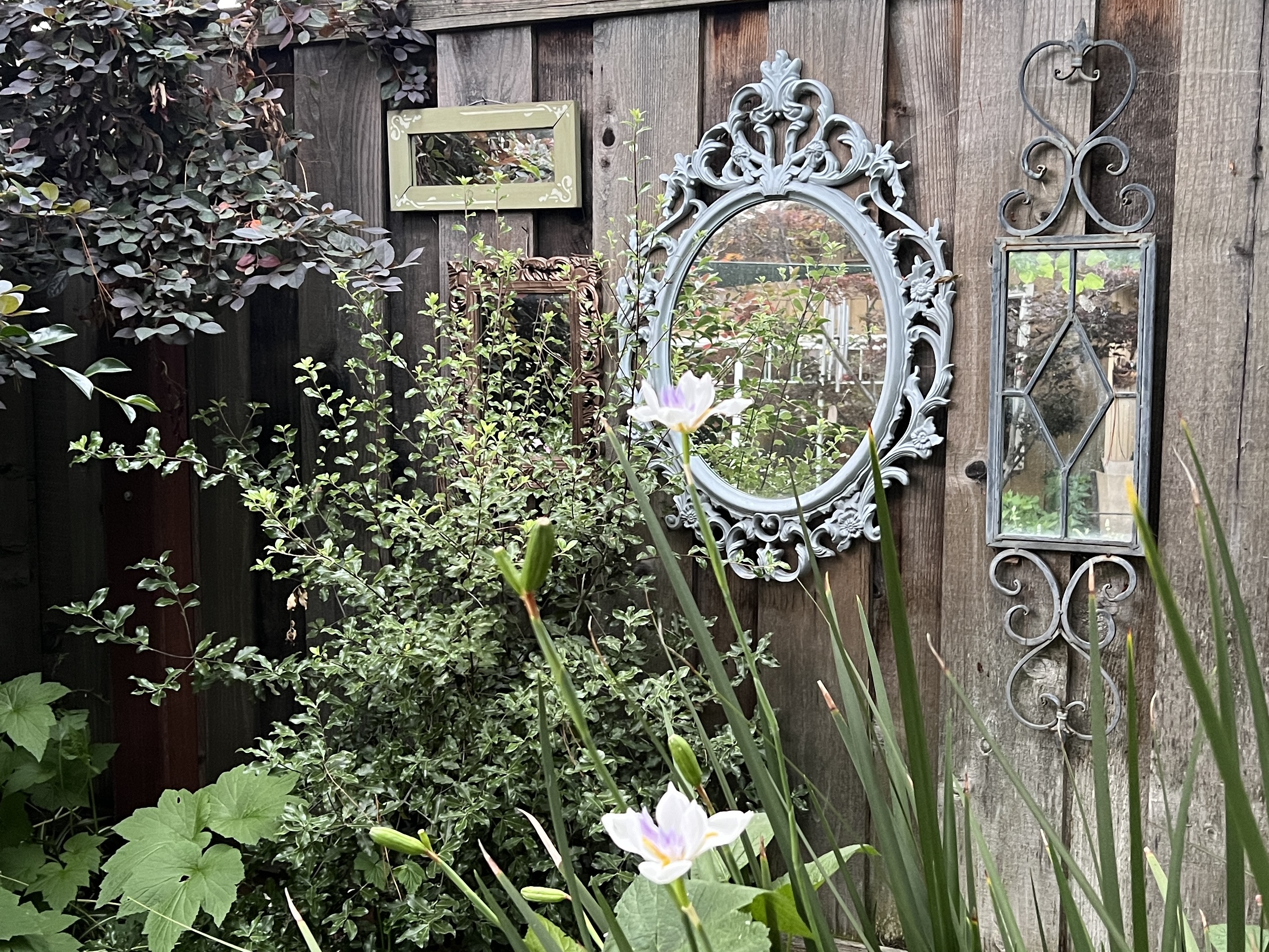
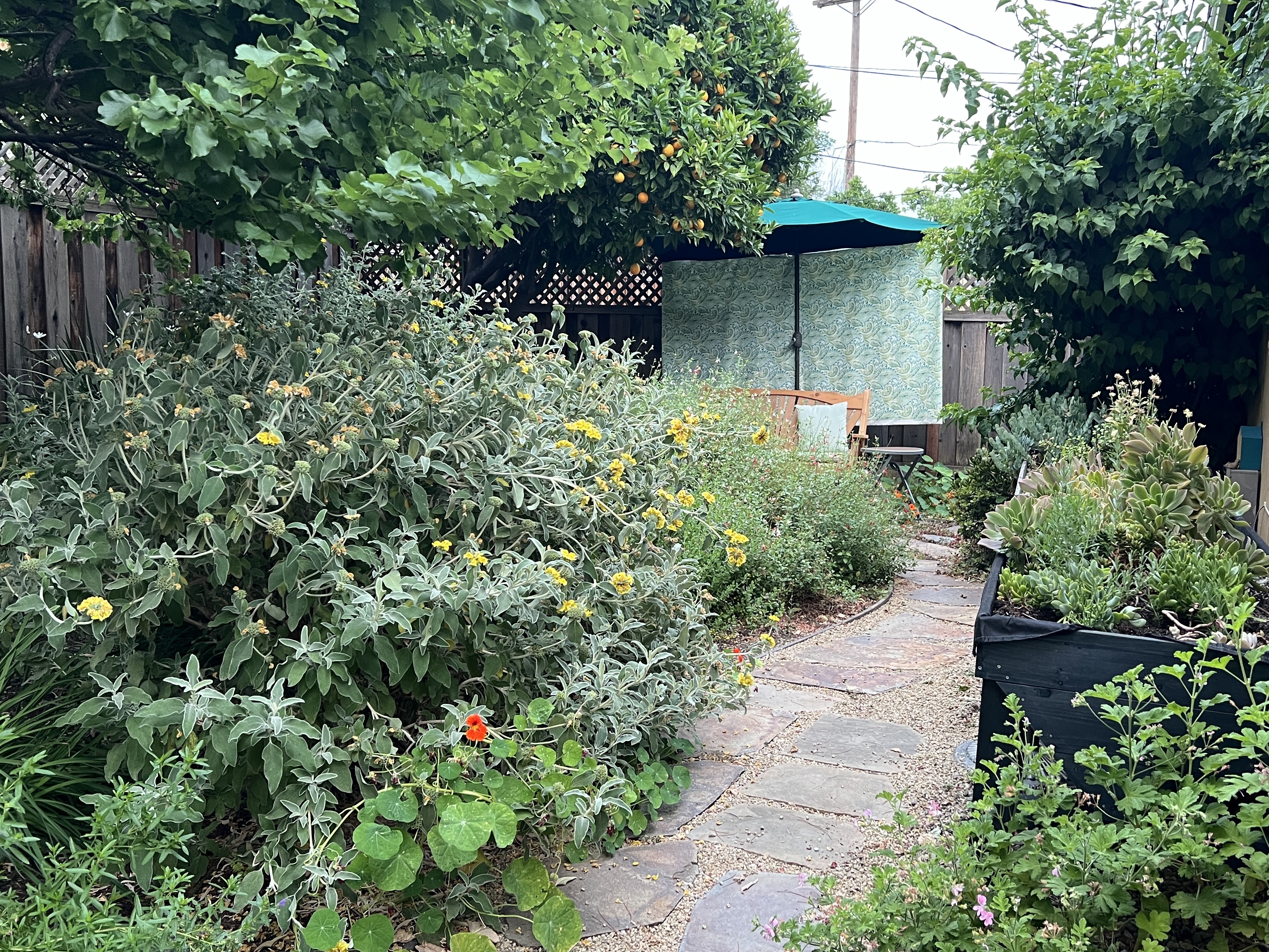
Following is a gallery of photos taken on or near the summer solstice.

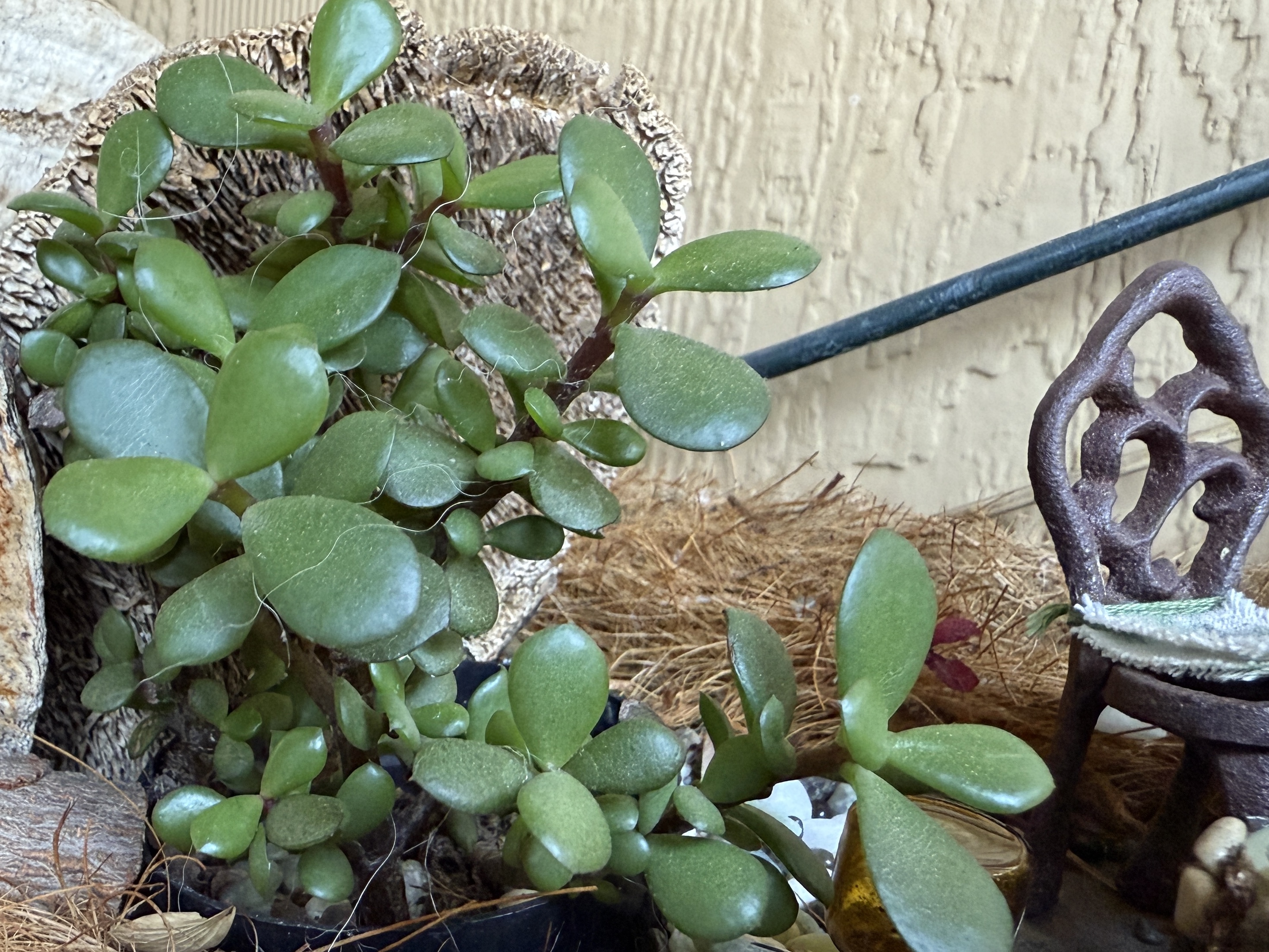
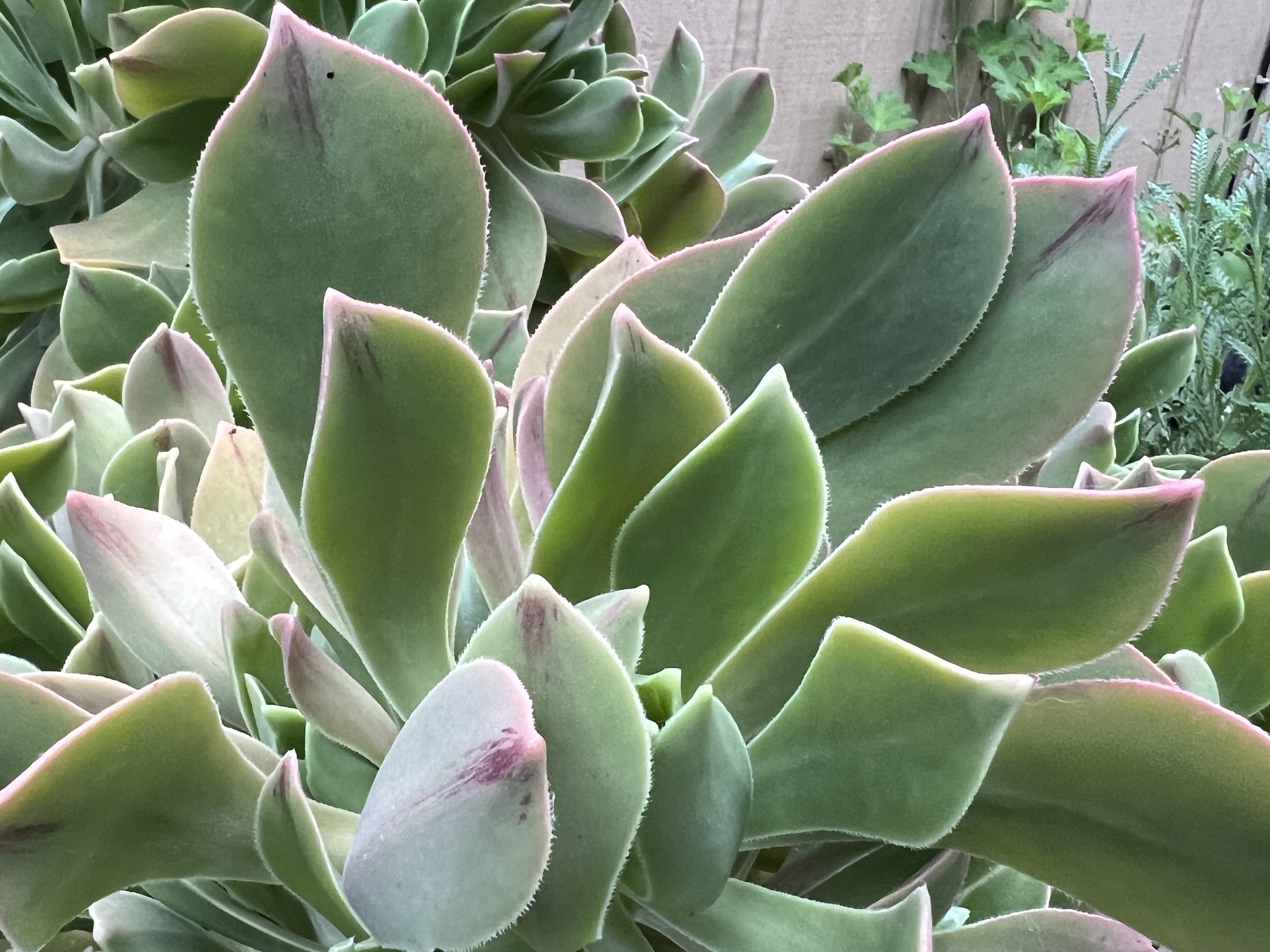
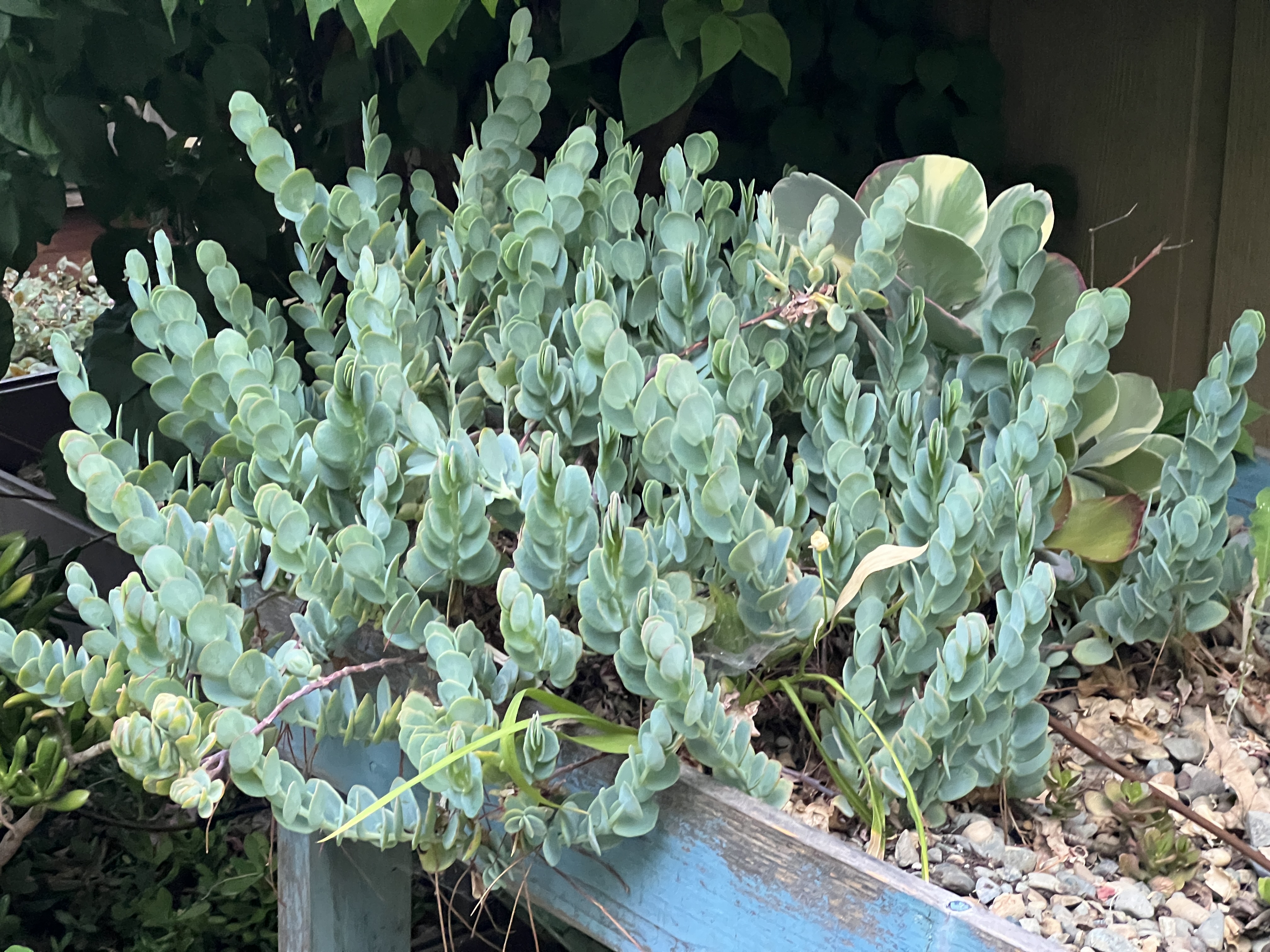
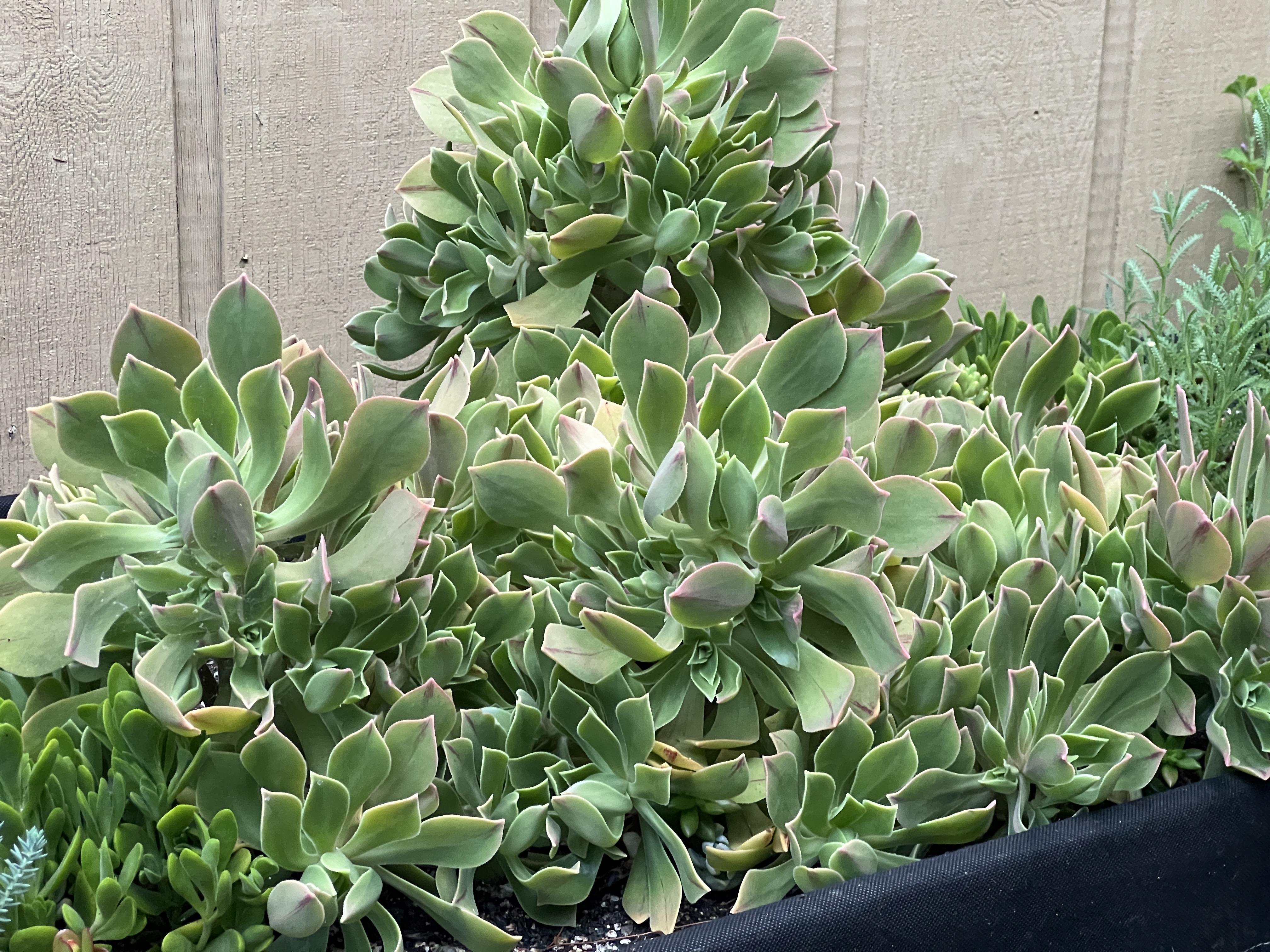
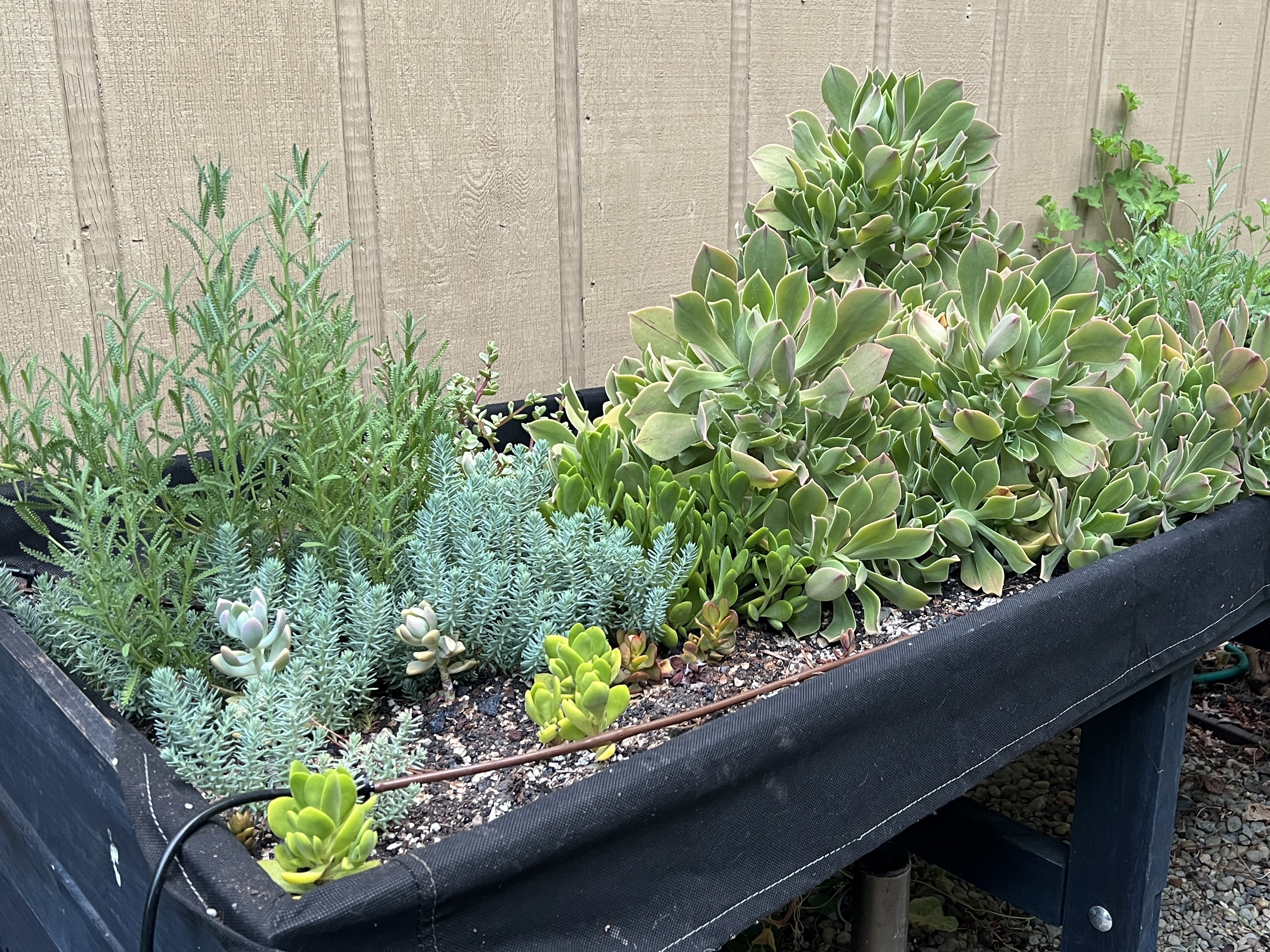
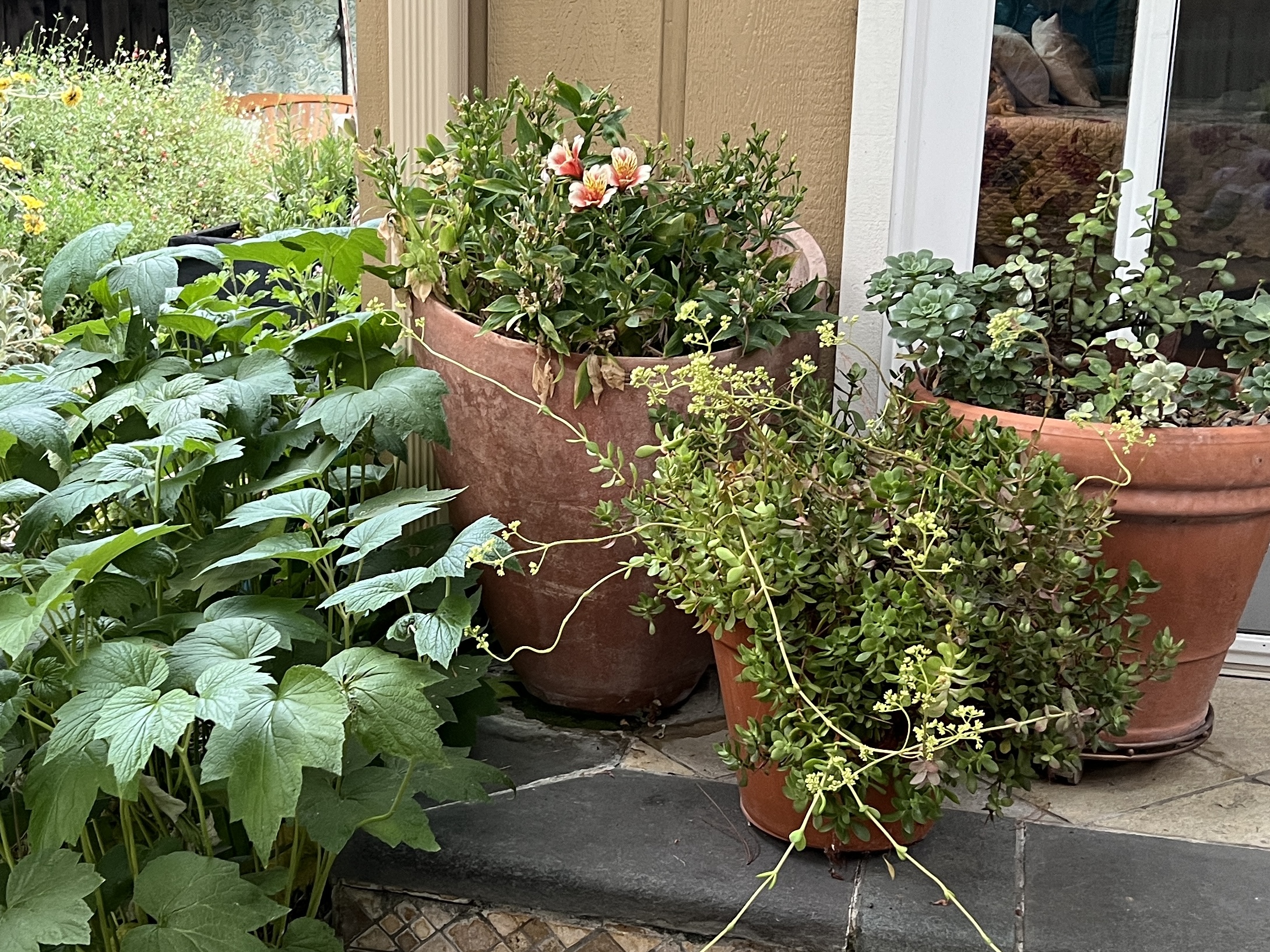
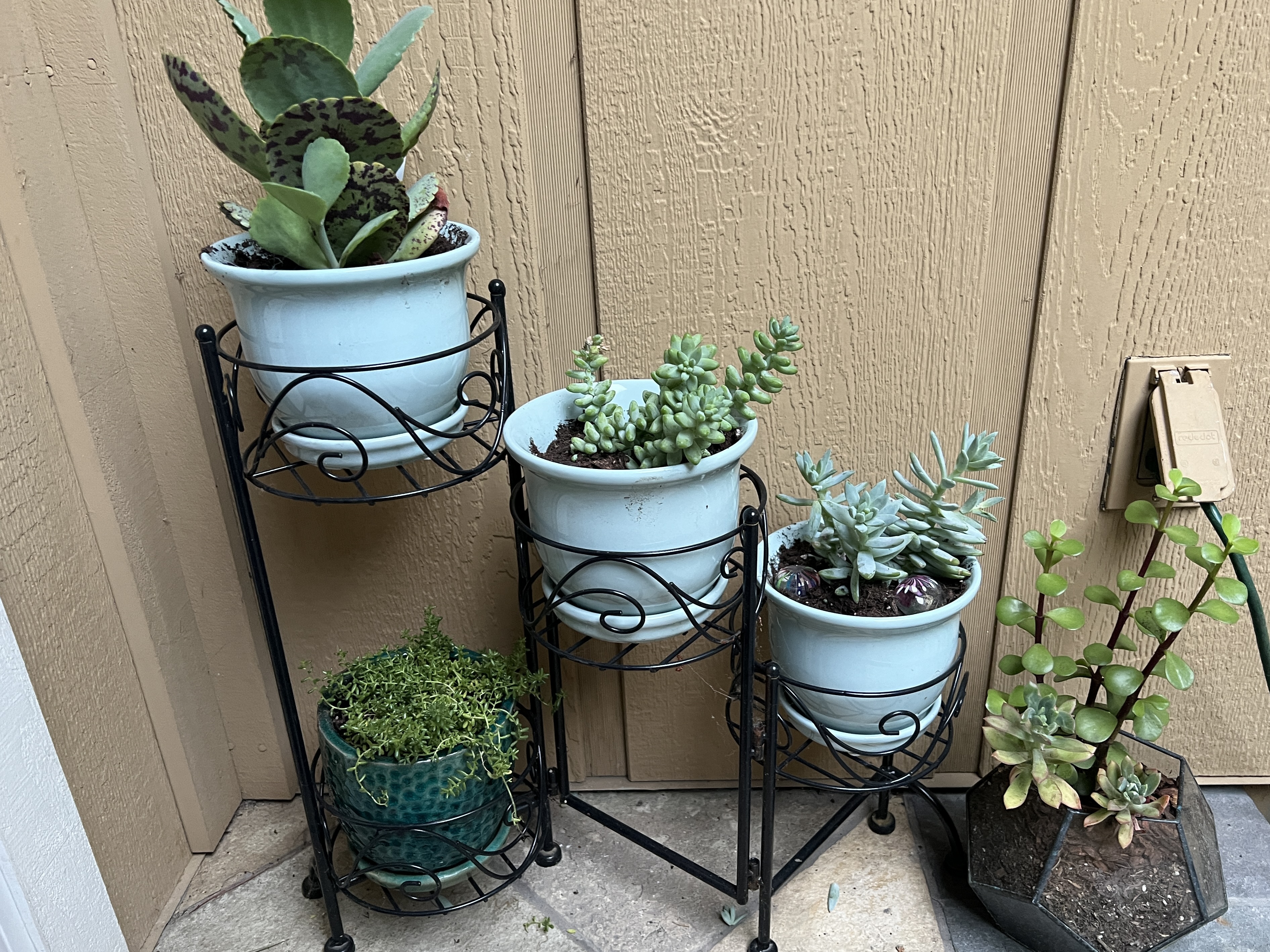
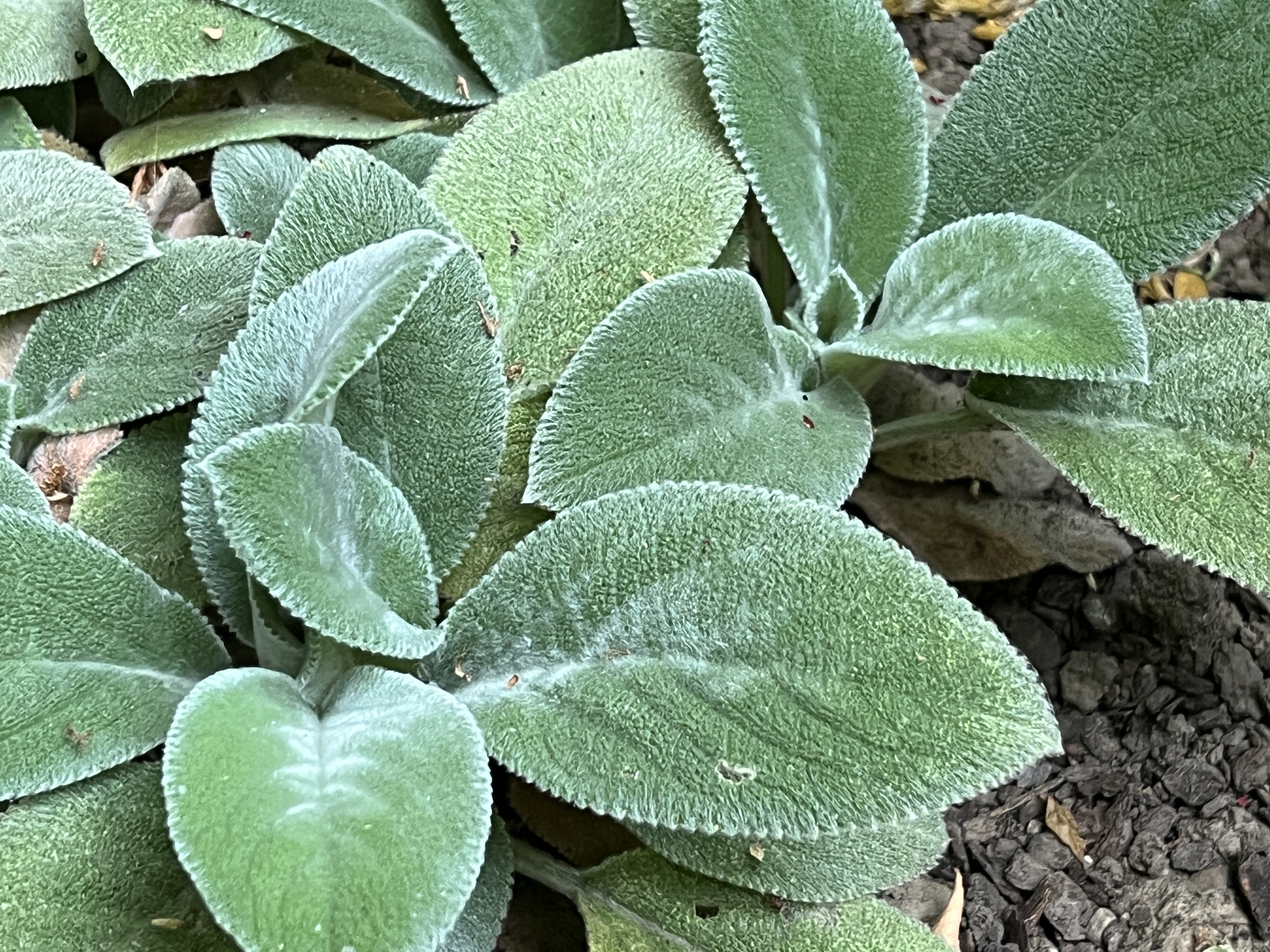
Garden succulents (they don’t mind the heat):

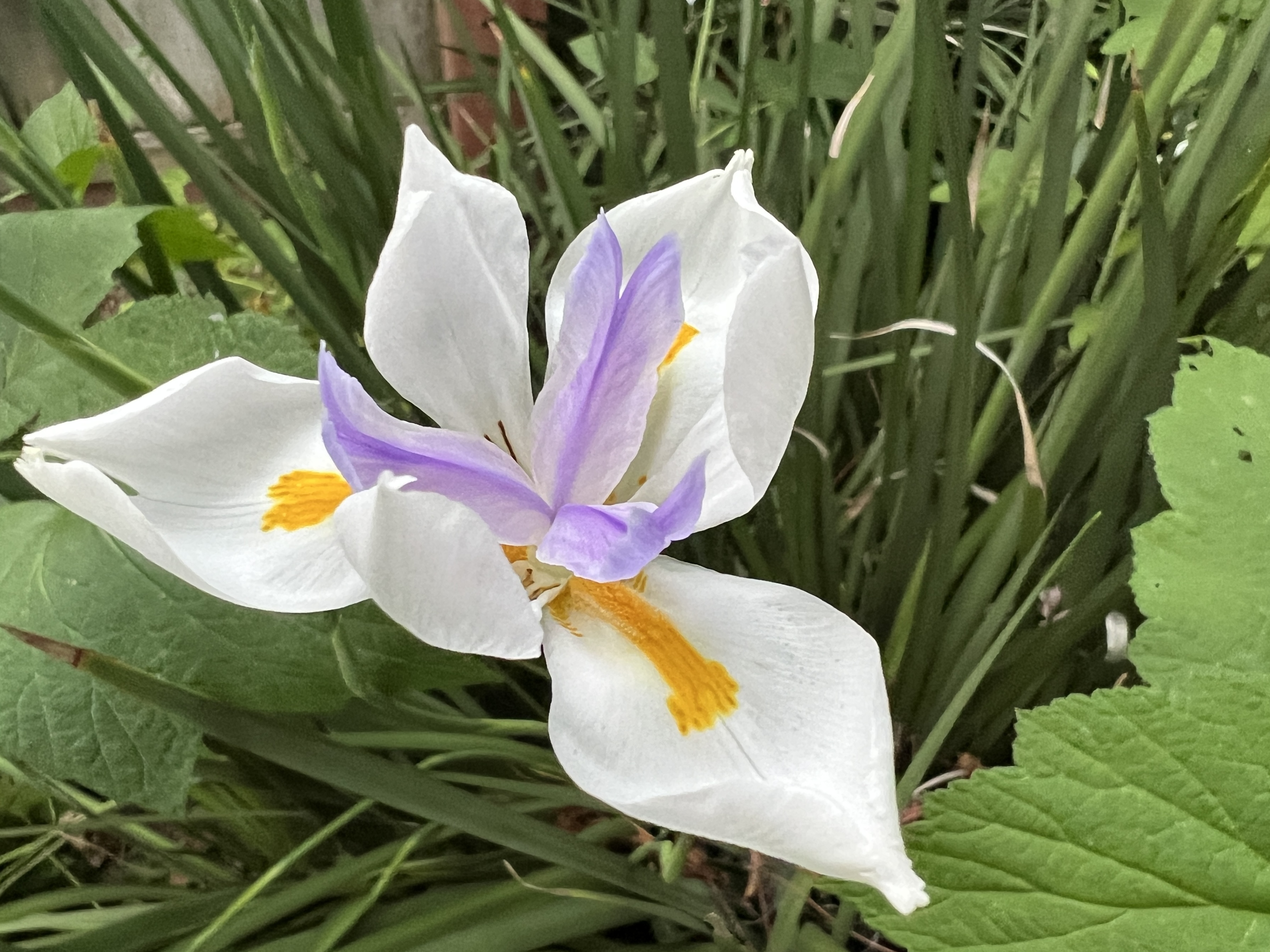
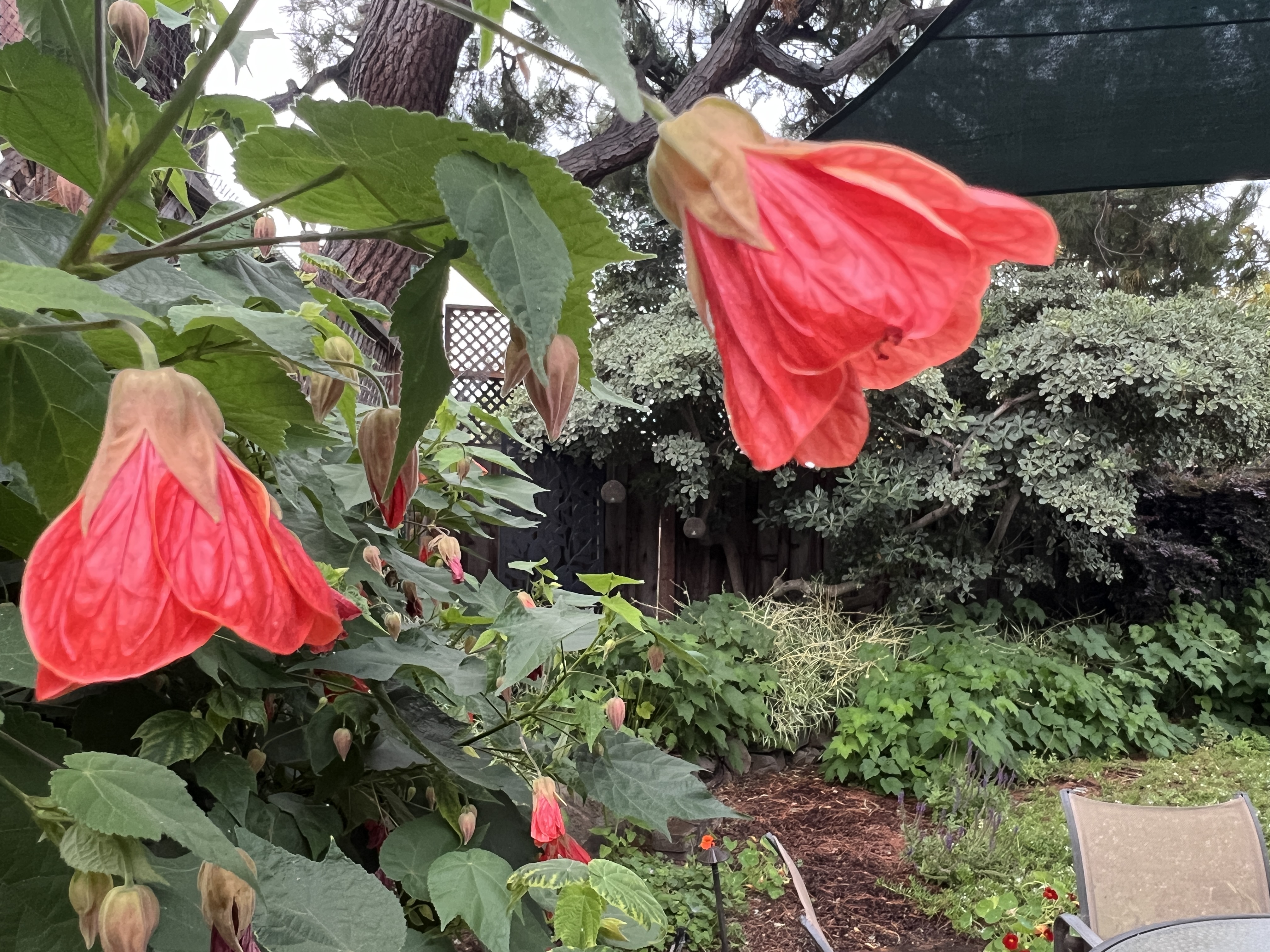
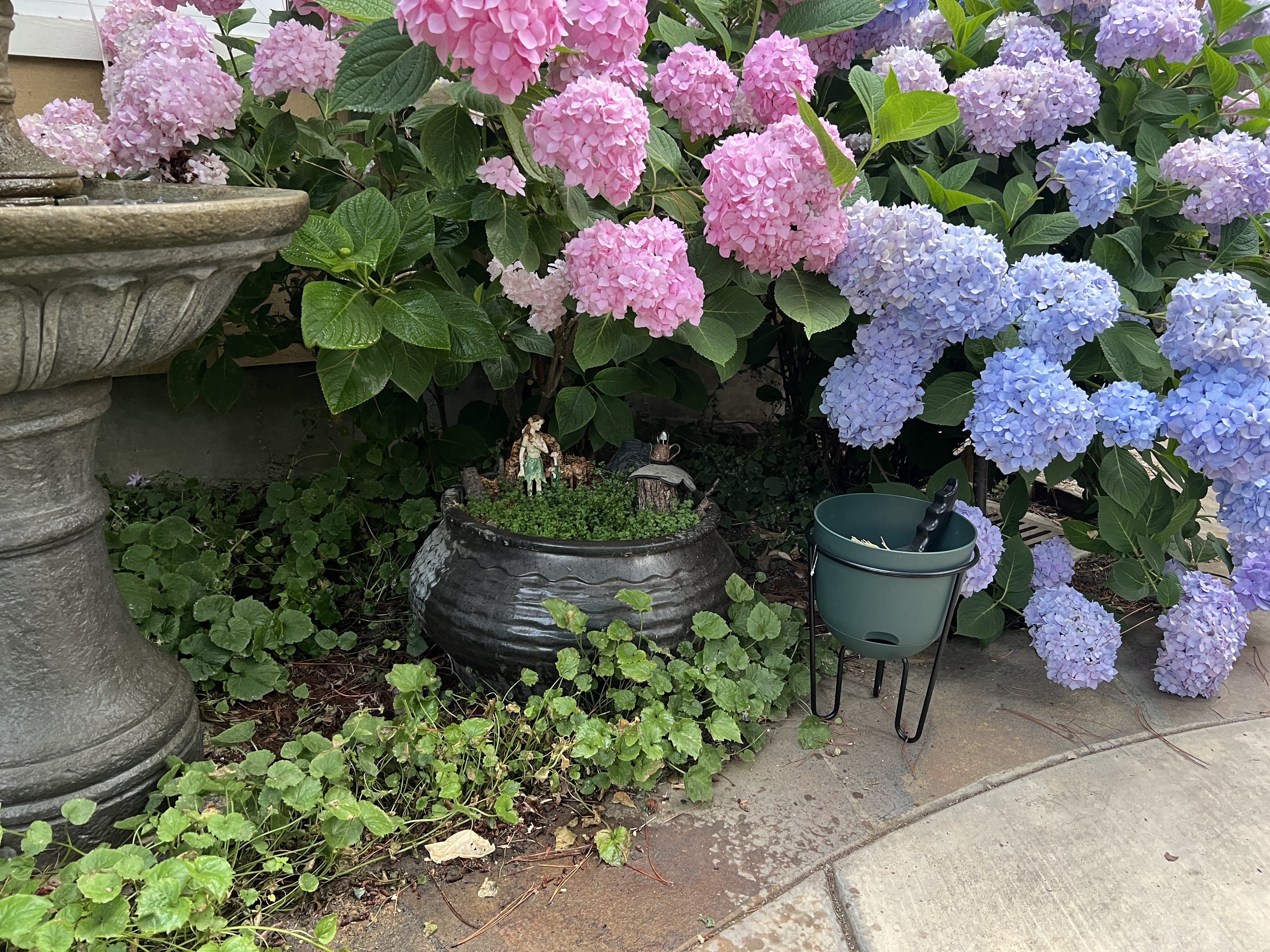
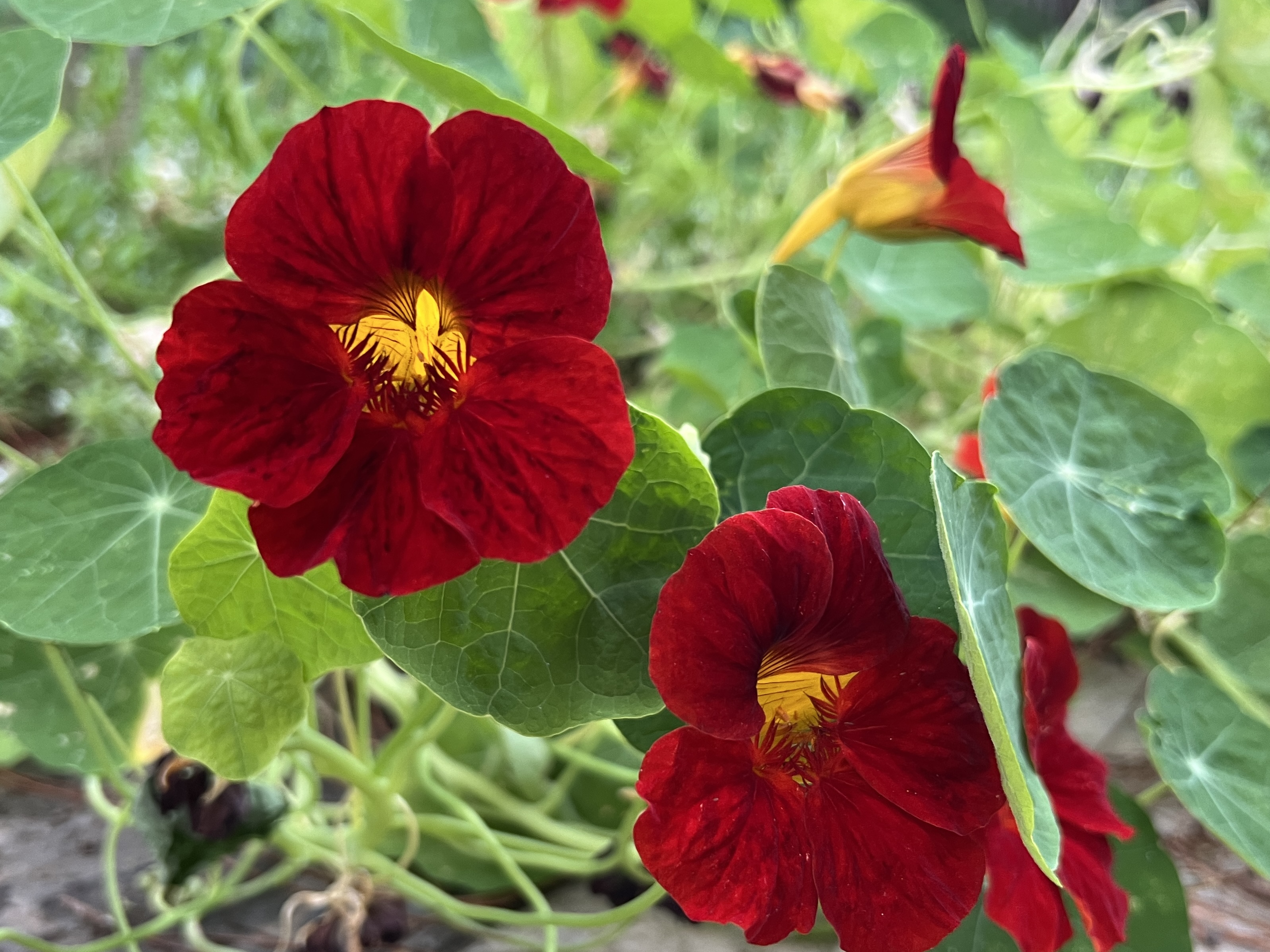
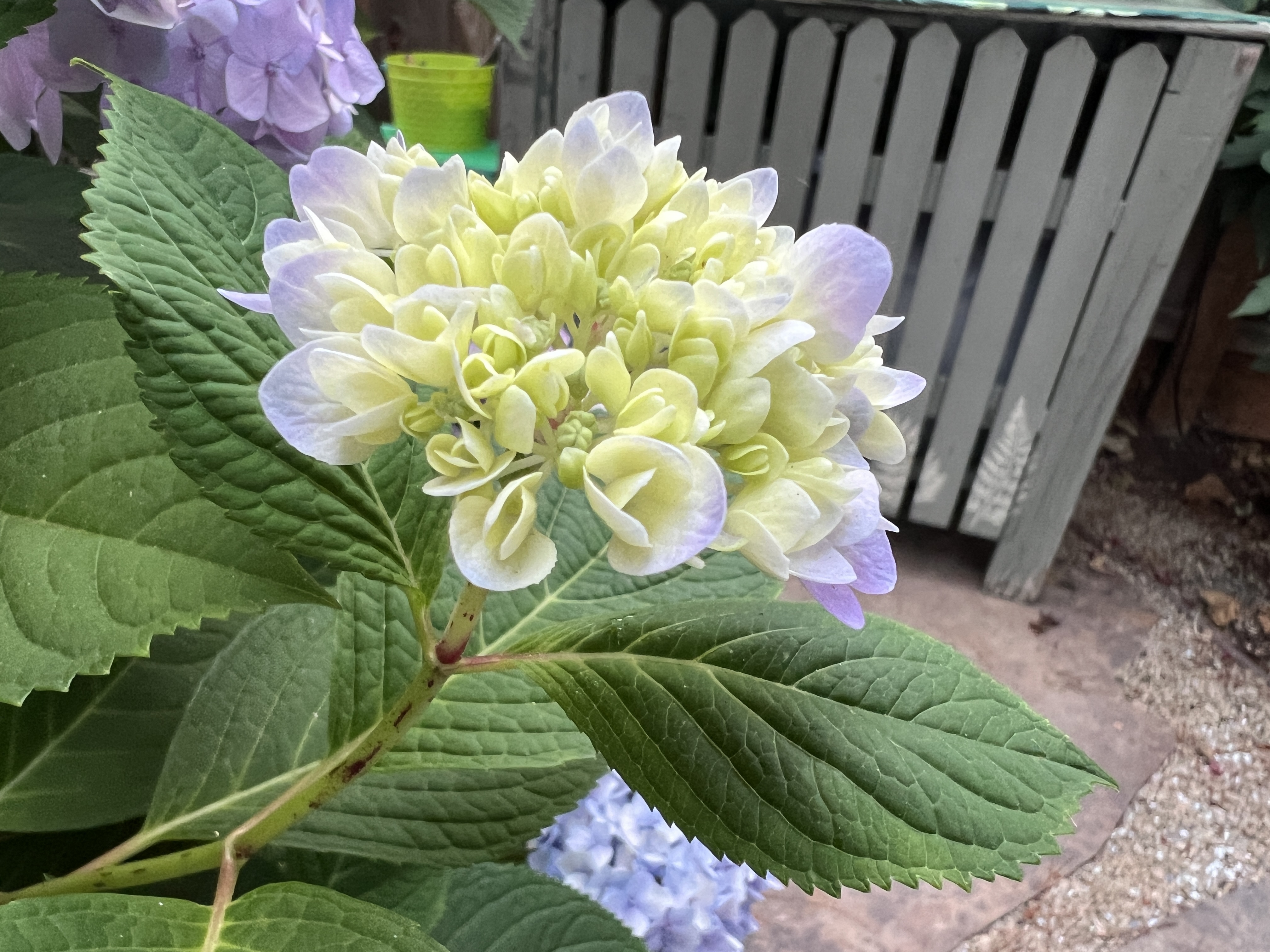
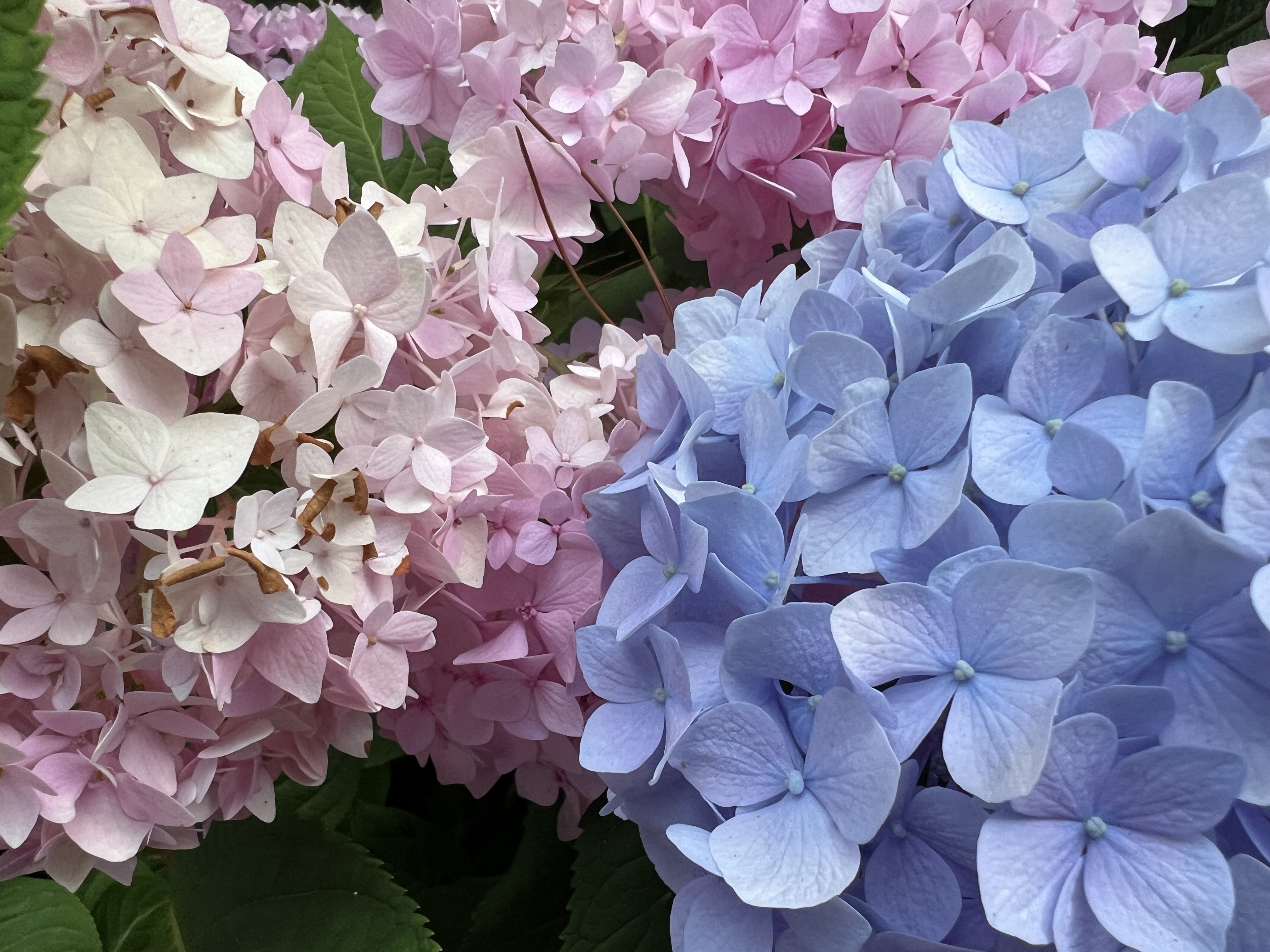
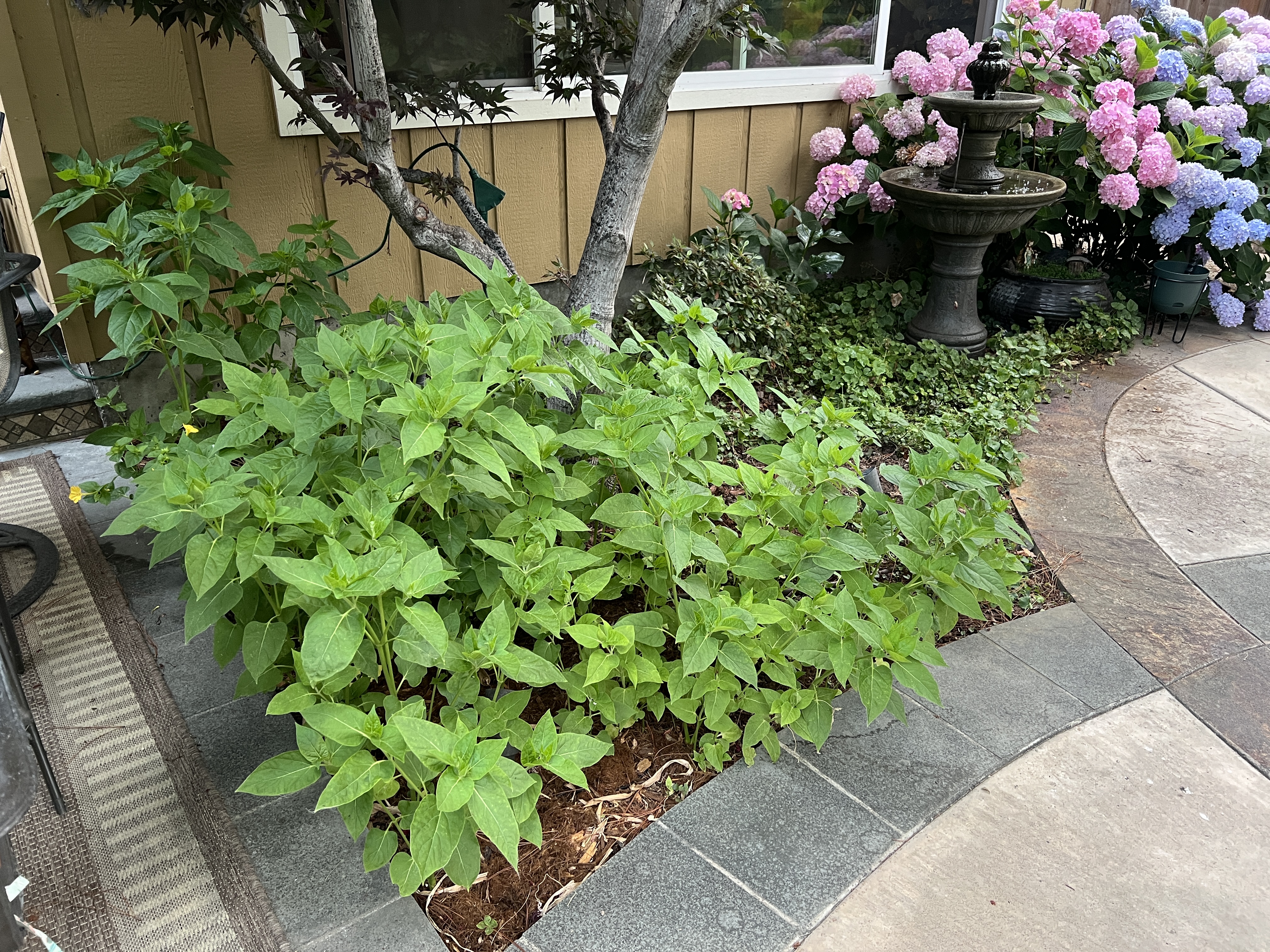
Flowers in bloom include wild Iris, abutilon, hydrangea, and nasturtiums.

It’s time to shift my interests to indoor activities, like card-making, reading, and puttering around the house between client appointments. The garden is such a draw, though. I’ll step out to do something small and realize an hour or two has passed. Life among the greenery and dirt is soothing and joyous.

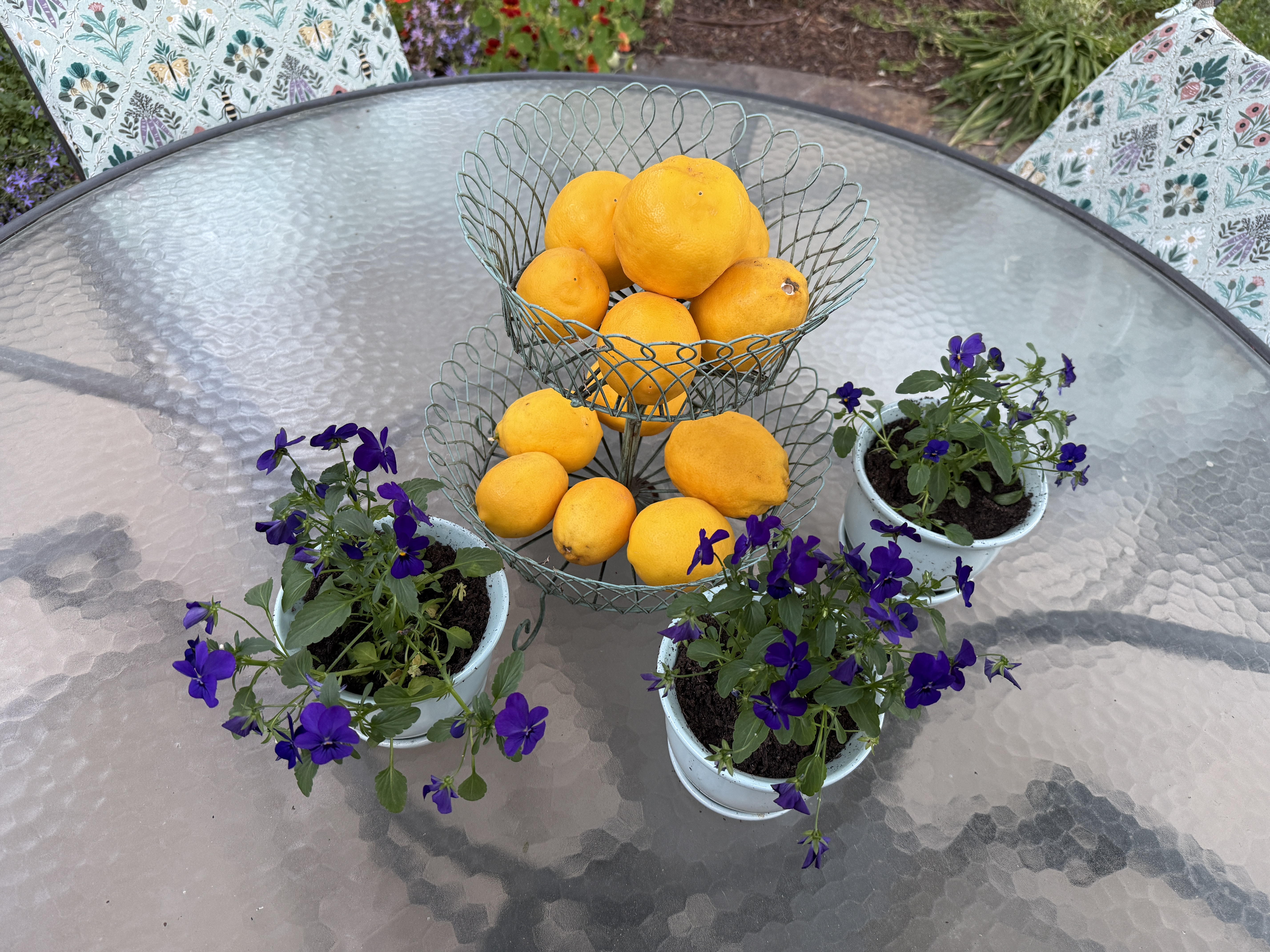
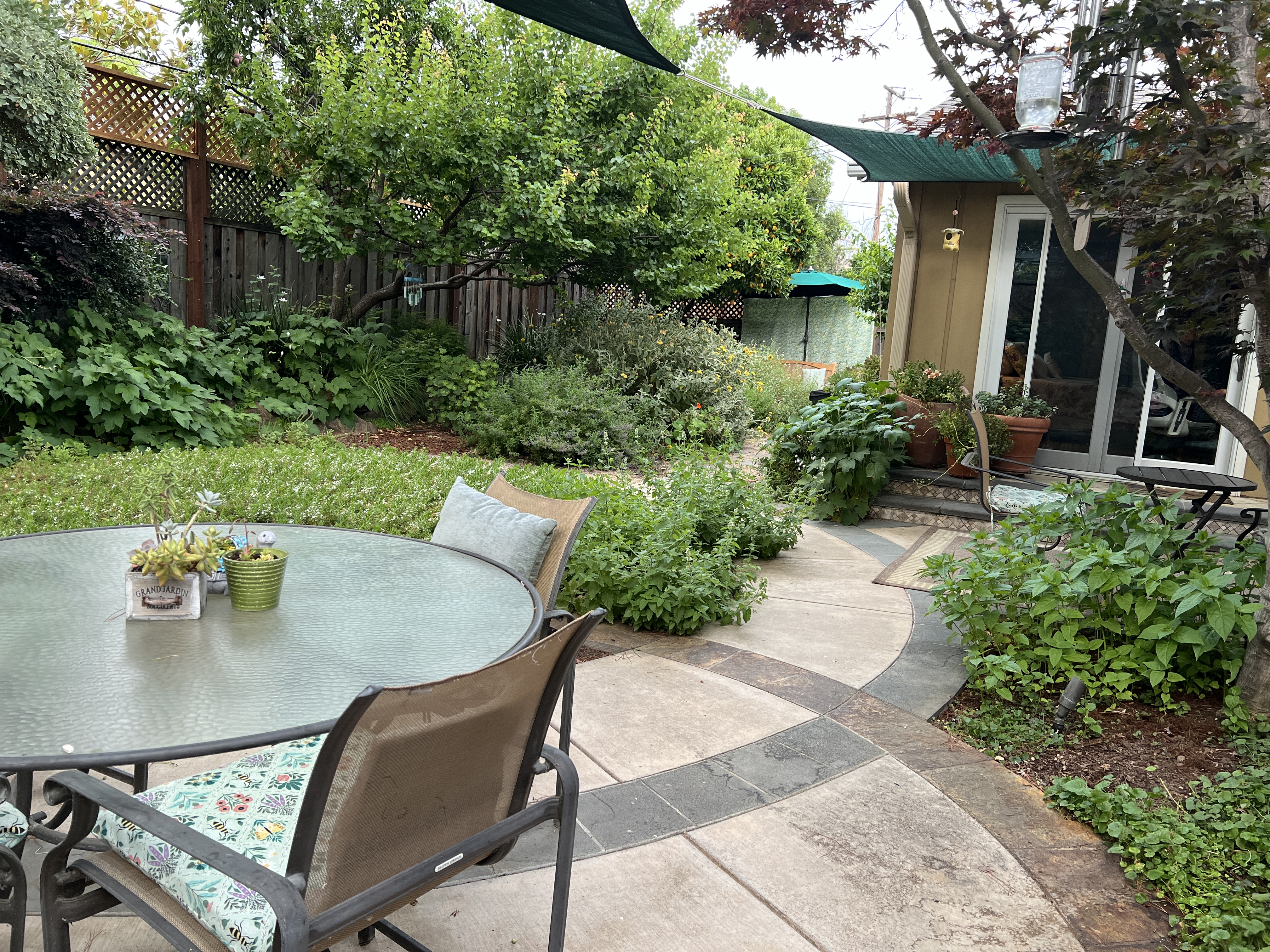
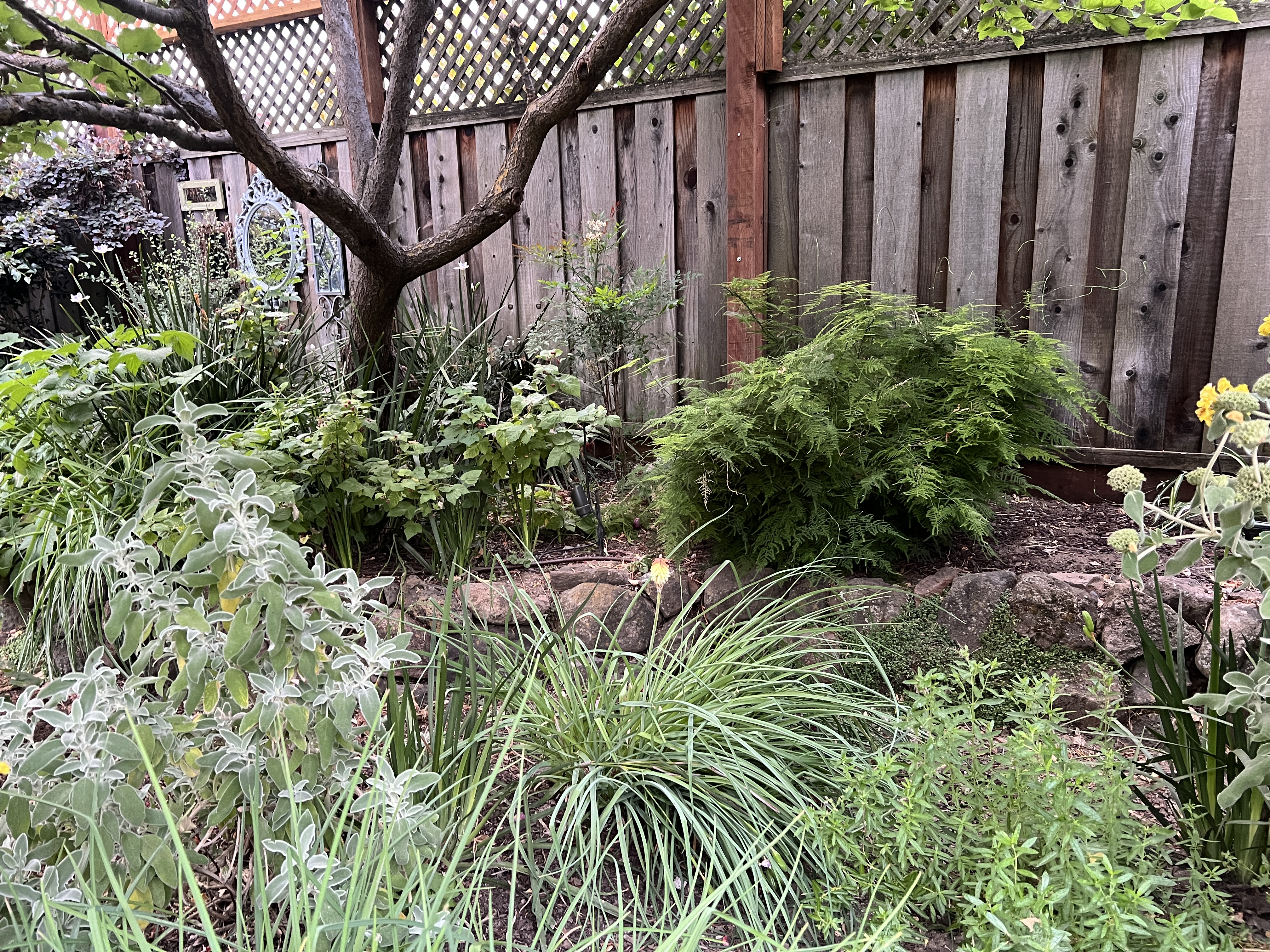
Garden views, garden greens: Patio table, garden swing, garden bench, and fence line.

I celebrate every inch of green, along with every drop of water that comes our way.

Gardenia’s in a Vase on Monday

Lucky me! After another wet winter, the gardenias put out plentiful, magical, scented blooms, just waiting to be cut for a vase.

I’m joining “the Cathys” for a weekly meme encouraging bloggers to share something “In A Vase On Monday” or IAVOM. It’s a mouthful, and it’s fun.

I’ve arranged five gardenias in a glass jar, some asparagus fern, and a few swigs of purple salvia. Gardenias don’t last long in a vase, but it’s still worth bringing a few indoors. They turn brown and droop, but the intoxicating scent remains. With greenery to keep the flowers company, I can overlook the droop for that scent.

Instead of a vase, I’ve arranged my cut flowers in one of my favorite glass jars. The Quattro Stagionioma sauce is long gone, but the beautiful embossing lives on. It’s challenging to take pictures of glass, but I’m hoping you can see a bit of the pretty pattern.

For some beautiful inspiration, check out some of this week’s vases.

Cathy, the gardener who started IAVOM, shares her gorgeous roses and a history lesson from her English garden today at Rambling in the Garden.

From Cathy’s Bavarian garden, a stunning purple arrangement at Words and Herbs.

Eliza Waters shares the last of her stunning peonies, which were grown in her garden in Massachusetts, US, creating a breathtaking arrangement.

Summer Approaches

Our summer solstice is still three weeks away, but all the signs of the season have arrived. When we left for Vancouver in mid-May, the California poppies in the front garden were ending the season as the nigella bloomed.

I had hoped the poppies might linger, as the orange and purple look pretty together. Flowers have their own time and place, so, of course, nature took its course. It’s one of the joys of gardening.

Nigella

I laughed when one of the seed pods split open as I worked along the path, spewing tiny seeds in my direction, which bounced off my cheek. The seeds could almost be mistaken for course black pepper. I swept them into the garden and will enjoy what takes hold next season.

With the first San Jose heat wave, the sweet peas cry uncle and begin to set seed. I leave the plants for a few weeks to allow the seeds to drop. This past week, I removed the plants, gathering seeds to offer to friends while leaving an equal amount to self-seed in the fall.

As I removed the sweet peas from the curb garden, I uncovered sturdy gladioli. The sweet peas created a dense cover, but the gladiolus thrived and were none the worse for it. Today, we planted two tomato plants, four sunflowers, and some strawberry starters. The existing ground cover has room to spread its delicate leaves, with lovely purple flowers to contrast the yellows, pinks, and, of course, green.

Over the long weekend, Mike put up the shade sails in the front and back while I uncovered the garden swing, tables, and the like. With virtually no rain until October, we can leave things out.

Nasturtiums spread throughout the back garden, traveling up, over, and around various obstacles, spreading stunning shades of orange, yellow, and, occasionally, red. They took over one of the garden paths while we were away, and how I wish I had a photo of our cat’s expression when he couldn’t pass.

My garden has found its rhythm these past few years as natives are more established, and annual seeds, bulbs, and rhizomes reliably return, filling the garden with spring’s abundant gifts. Back-to-back seasons of welcome rain certainly helped create healthy roots.

We’re expecting temperatures around 90F (32C) this week, so my time in the garden is limited. I’m glad to have accomplished so much in the last two weeks with Mike’s help, and every day, I celebrate this lovely patch of earth.