Winter Solstice in San Jose

Sunday we honored the shortest day of our year. It’s winter solstice in San Jose.

Do you know what that means?

It means that spring is only three months away!

Seriously though, you have to look a bit harder for signs of winter in California. We’ve had a few weeks of back to back rain storms, a welcome break from the drought but temperatures remain mild. Most of the deciduous trees are bare of their leaves but others remain evergreen.

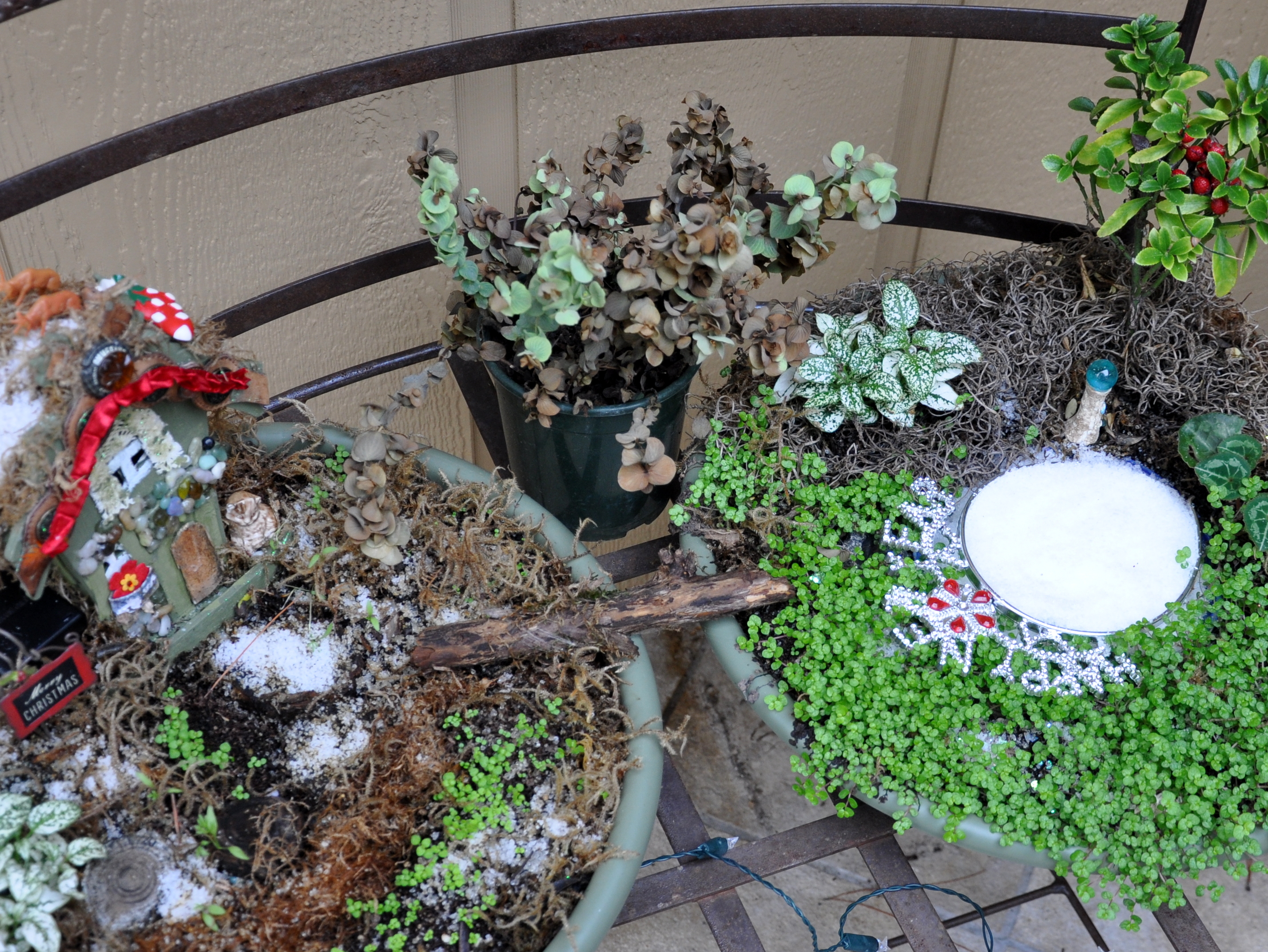
Here’s a peek into the winter garden. It asks for little and gives a lot. Nature is like that.

orange cosmos buds

Cosmo buds, no sign of slowing down

orange cosmos

Cosmo in bloom

hummingbird in chinese pistache

Hummingbird in the Chinese Pistache tree

chinese pistache winter

Stripped bare of its leaves, but covered in buds waiting for spring

California poppy

I’m on the ‘every other season’ plan. All the seeds that forgot to come up last year are sending out little beacons of green delight. That’s a California Poppy on the right and to be determined seedlings on the left.

statice

Statice in bloom

pink zinnia

Zinnia. The plant looks shabby, but the flowers continue to bloom

unidentified planted objects

Unidentified planted objects

mexican sage

The Mexican Sage reminds me of a purple caterpillar

lemons

Lemon scented holidays

Here is a shot of the little tomato that could, a self-sown seedling growing from a crack in the steps. Yep…tomato plants in December.

tomato volunteer

Self-sown tomato making a go of it out of the side of the concrete steps

During this hectic time of year, I hope you can find a few moments to enjoy what nature has to offer.

Dressing-up My Selfie for the Holidays

Earlier this year I bought a ‘selfie’, commonly referred to as a dressmaker form. I kept her busy throughout the month of October, patterning and draping my Under-the-Sea Halloween costume. You can read more about that here and here.

When the fun was over, my selfie took a month off. She hung out in a corner of our room wearing a rarely worn velvet wrap.

Now she’s back for the holidays, all dressed up with a new purpose. She’s in charge of displaying our Christmas cards.  I found inspiration for this idea on a Pinterest board of dress forms. If you follow the link, you’ll see an antique dress form wearing a tulle skirt and a peplum sporting the word Noel. I love the simple elegance.

My Christmas Selfie

Braving the long, holiday lines at our local fabric store, I bought a few yards of tulle and a packet of blanket binding. I also bought sheets of silver tissue paper for the bodice. Safely back in my car, I vowed not to return to a fabric store before January. A week or so later, I set up my sewing machine and whipped up a fancy pretend dress.

dress form christmas

Tissue paper bodice, left. Lace shell bodice, right. Seam binding bow at the waist.

Though my dress form is modern and functional, it was fun dressing her up in a vintage vibe.

The ‘dress’ continues to evolve as projects like this often do. I wasn’t thrilled with the way the tissue bodice turned out, so I covered it instead with one of my summer lace shells. I added bits of my birthday gift wrap bling (from Boomdee) around the neck and bodice. A small hair clip adds additional sparkle.

christmas form bling

Birthday bling makes the dress zing

One big bow at the waist for some added flair and then I called it a day.

christmas dress form ribbon and card-001

Tiny clothespins hold the cards in place

Originally I planned to use safety pins to attach the cards to the skirt, but instead I found these:

Miniature silver clothespins

Miniature silver clothespins

Aren’t they cute? They are the tiniest clothespins I’ve ever seen and perfect for the job. They add a bit of shine without creating too much weight.

My teenage boys aren’t interested in Christmas this year, so I needed to find something new and different for me. Dressing up my Selfie did the trick.

christmas selfie

I received a pile of cards in the mail today. I can’t wait to add them to the skirt. I”ll post an updated photo later this month.


Are you trying anything new this holiday season?

All or Nothing: Rain in San Jose

rain on the street

Over worked storm drains send rain water down the street (that’s our curb garden on the left)

San Jose received about six inches of rain last year, marking year three of our drought. A more typical rainfall averages 12 – 18 inches annually. With that in mind, you can appreciate how welcome our recent storms have been. Unfortunately, the past 24 hours brought rain in the other extreme. Here’s what Accuweather had to say:

A Flash Flood Watch and a High Wind Warning are in effect for the San Francisco – Coastal North Bay including San José. Moderate to heavy rainfall and high winds are expected with flash flooding possible across northern California.

mid day rainfall

Mid-day rainfall

The public should closely monitor weather forecasts and take precautions. Driving conditions may be very poor at times during this severe storm.

stranded car

Stranded car. Police on the scene, help on the way

Several area schools closed for the day and we were all encouraged to stay home if we could. My husband worked from home and to my relief they cancelled a business dinner in the city due to power failures and flooded streets. I’m glad he is close to home on a night like this.

A few of the storm drains on our street backed up for a few hours, but otherwise it’s been okay. The North Bay, about two hours from here, took the brunt of the storm which continues till early Friday morning. It’s been an interesting day.

Downed trees and power lines are the biggest safety risk in storms like this. I learned something new today as well. After several years of drought, large trees shrink their roots in an effort to conserve water. When heavy rains hit all at once, trees are at greater risk of falling. I never knew.

This beautiful pine tree shades our garden year round and provides shelter and exercise for the squirrels. The tree grows in our neighbor’s yard at the corner of our shared fence. An arborist thinned the tree canopy just three weeks ago. At the same time they declared the tree healthy and in sound condition. What a relief.

pine tree pruning

Neighboring Pine Tree Gets a Trim

Californian’s enjoy moderate weather year round, so this is a big deal for us. Other parts of the country experience heavy snowfall, tornadoes, hurricanes and bitter cold. We simply suffer the occasional heat wave and of late, this confounding drought.

My hope is that the rest of the Bay Area weathers the storm as well as we have, and that we can appreciate this gift of moisture for our rain-parched state.

Wherever your are, I hope you’re safe, warm and dry. Cheers to you.

How to Revive Cut Flowers

I originally published this tip in October 2012. It continues to garner multiple views each week. I’m sharing it again in case you missed it.

Hat-Pin Trick

gerbera daisy with pin

Hat-Pin Trick

Cut flowers, especially those with hollowed stems, often droop after a short time in water. Why? Because the stem is no longer siphoning water.

Simply insert a pin or needle all the way through the stem of a drooping flower, about one-inch below the bloom. Carefully remove the pin and return your flowers to a vase of water. Within an hour or two, your flowers should be standing tall. I’ve used this trick successfully over the years with Gerbera daisies, roses and tulips.

Gerber Daisies hat pin trick

Gerbera Daisies Revived: The yellow flowers perked up; but the orange ones did not.

Rubber-band Recovery

If for some reason the hat-pin trick fails, here is plan B. Gather the flowers into a loose bunch and slide a rubber-band over the stems and up to the neck of the flowers. Wrap a second band around the bottom of the stems. Return to the vase, and enjoy your perky arrangement.

cut flowers rubber-band recovery

Rubber-band Recovery in Action

Edit your Collection

I don’t know about you, but I like to get as much “life” from my cut flowers as possible. Most mixed bouquet flowers have varying shelf-lives. Some blooms fade within a few days while others can last up to a week, maybe longer. Instead of dumping the entire bouquet, I change the water and return the flowers that still have life. As those fade, I’ll cut the healthy flowers down by a few inches and display them in a smaller vase. If I have nice greens, I’ll see what’s blooming in the garden and I’ll mix the two together. I make a game out of it to see how long the flowers will last.

Do you have any tips or tricks you’ve used to preserve the life of your cut flowers? Please share in the comments, below.

The Color of the Day is Orange

Winter solstice is just two weeks away. We’ve had a slow descent into fall this year with unseasonably high temps.  That said, the colors are finally here.

We’re expecting a storm worthy of a NOAAWatch this Thursday, with high winds and heavy rains. Anything left on the trees now will be long gone by Friday. I’m enjoying the color while it lasts.

We planted this tree 18 years ago specifically for its gorgeous fall colors.

DSC_0006

Chinese Pistache

This beautiful Acer grows outside our living room window. It’s a landing-place for hummingbirds, lesser goldfinch and a favorite of squirrels.

acer

Acer aka Japanese Maple

Several Abutilon grow along the fence. Their showy orange flowers are a hummingbird favorite.

Abutilon : Coral Bells

Abutilon : Coral Bells

Our oranges don’t taste very good (it’s an ancient tree) but the rats don’t seem to mind. When my boys were young, they enjoyed turning it into orange juice and selling it to passersby. It was the California version of a lemonade stand.

California Oranges

California Oranges

Are you as busy as I am this time of year?

When Life Gives You Lemons: A Primer

lemons after the rain

Lemons refreshed after the rain

You’ve heard it before: When life gives you lemons, make lemonade. It’s an interesting metaphor for this time of year and  coincides with the yellowing of lemons on my citrus tree.

The leaves on our deciduous Pistache are turning  yellow signally dormancy for the approaching winter. At the same time, once-green lemons are also turning yellow, indicating an approaching harvest.

I appreciate the benefits of lemons and lemonade.

ripening lemon

When I grow up, I want to be a lemon

The holidays are a mixed bag for a lot of people.  For some, they’re joyful, for others they’re fraught with pain. Is your cup half empty or half full?  Our exposure to media can leave us wanting, while the ghosts of Christmas past keep showing up uninvited. What can you do? If you or someone you know is feeling blue, here are a few ideas to lift your spirits while at the same time making someone’s season bright.

Helping Others:

Studies prove that “In general, people who help others stop focusing on their own pains and problems and worries and feel good about themselves.” – Health Day: News for Healthier Living

Hug your furry friend:

According to the American Heart Association “ownership of pets, especially dogs, reduces risk for heart disease and greater longevity.” Studies have also found that:

  • Pet owners are less likely to suffer from depression than those without pets.
  • People with pets have lower blood pressure in stressful situations than those without pets.
  • Playing with a pet can elevate levels of serotonin and dopamine, which calm and relax. – HelpGuide.org

Laugh:

Rent a funny movie, call a friend and reminiscence about the crazy things you used to do together or watch a series of funny videos on YouTube.  Some people sneer at the number of ‘silly’ cat videos, but we watch them because they make us smile and laugh which in turn helps us feel better.

Give a Little:

Scientifically speaking, giving really is better than receiving. We feel better about ourselves when we give to others. Interestingly, as a percentage of income, some of the poorest people give the most. But giving isn’t just about tangible gifts. You can give of your time or your skills to help others. Reading to the blind, running errands for a shut in or offering your knitting skills to make blankets for people in need.

Sometimes you can double or triple your impact with one gesture. I recently attended a friend’s craft fair at a local church. Some of the proceeds of the sales went to support a scholarship fund. I bought a few hand-made blankets from one of the vendors and then donated them to Sacred Heart Community Services. Sacred Heart never has enough blankets to go around and usually have to limit one blanket per family. I believe this is what business people refer to as a multiplier. I bought blankets to support our community in need. The money spent supported a local, cottage business in addition to the scholarship fund. Carol of Carol’s Creations merges two layers of deliciously soft fleece with a lovely crocheted edge.  Her blankets will keep others warm this winter. The icing on the cake: when she learned that the blankets were for a community center, she gave me an entire box of fleece scarves to go with them. Give a little and feel the joy.

Get Moving:

This is one of my favorites. Walking, hiking, and hard-core gardening always lift my spirits. How does exercise relieve depression? “For many years, experts have known that exercise enhances the action of endorphins, chemicals that circulate throughout the body. Endorphins improve natural immunity and reduce the perception of pain. They may also serve to improve mood. Another theory is that exercise stimulates the neurotransmitter norepinephrine, which may directly improve mood.

Besides lifting your mood, regular exercise offers other health benefits, such as lowering blood pressure, protecting against heart disease and cancer, and boosting self-esteem. How often or intensely you need to exercise to alleviate depression is not clear, but for general health, experts advise getting half an hour to an hour of moderate exercise, such as brisk walking, on all or most days of the week.” –Harvard Health Publications: Exercise and Depression

here comes trouble

Here comes trouble

Resources:

Helping a Depressed Person: Ways to help. What you should and shouldn’t say.

Psychology Today: The Social Safe: Giving Really is better than receiving.

How do you get through the holidays? Please share your words of wisdom in the comments section below.


Raindrops on Noses and Sheet Mulch in Gardens

sheet mulching in the rain

Sheet Mulching in the Rain

Back to back storms this week lead to the usual traffic mayhem. A common refrain around here is that Californians don’t know how to drive in the rain. In the garden, however, all is well.

Anxious to finish my sheet mulching project, I’ve been gathering additional cardboard wherever I go. With my son’s help, I put down the last of the cardboard yesterday under a light rain.

With the cardboard in place, it was time to add a layer of garden waste.

Serendipity! Today’s storm brought a bundle of leaves to the ground, begging to be scooped into a wheelbarrow. I happily obliged.

It takes a lot of leaves to mulch a large area of lawn, so I gathered leaves in front of three different houses. No one complained! ;-) I started my sheet mulching project over a week ago, and after thirty minutes of digging managed to throw out my neck. It’s been a mess ever since and I worried I wouldn’t be able to finish the project on my own.  The better news is I did it. I raked, swept and scooped leaves for over two hours late this afternoon without stressing my neck. Ironically it hurts to stand up straight or lean back, but I’m fine bending over.

Whenever it rains, I find myself humming ‘Raindrops on roses’ from one of my all-time favorite movies, The Sound of Music. With apologies to Oscar Hammerstein I’ve come up with a gardening rendition. In case you’re not familiar with the tune, I’ve included  an audio clip below.

Raindrops on noses, this weather I’m smitten
Dark, cloudy skies, stormy weather has bitten
Brown, rotting leaves rainy weather does bring
These are a few of my favorite things.

Waterlogged earthworms are shaped like a noodle
Scooped from the gutter, in oodles and oodles
Soggy wet weather it makes my heart sing
These are a few of my favorite things.

Sweeping the gutters, the rain water splashes
Raindrops that stay on my nose and my glasses
Storm after storm rainy weather it brings
These are a few of my favorite things.

When my gloves tear, and my neck stings
When I’m feeling had
I simply remember my favorite things
And then I don’t feel so bad.

The incomparable Julie Andrews sings My Favorite Things in the 1965 movie classic The Sound of Music.

A Rat With a Ph.D.

You thought I was joking, didn’t you? How else can I explain the clever kitchen rat that continues to elude capture?

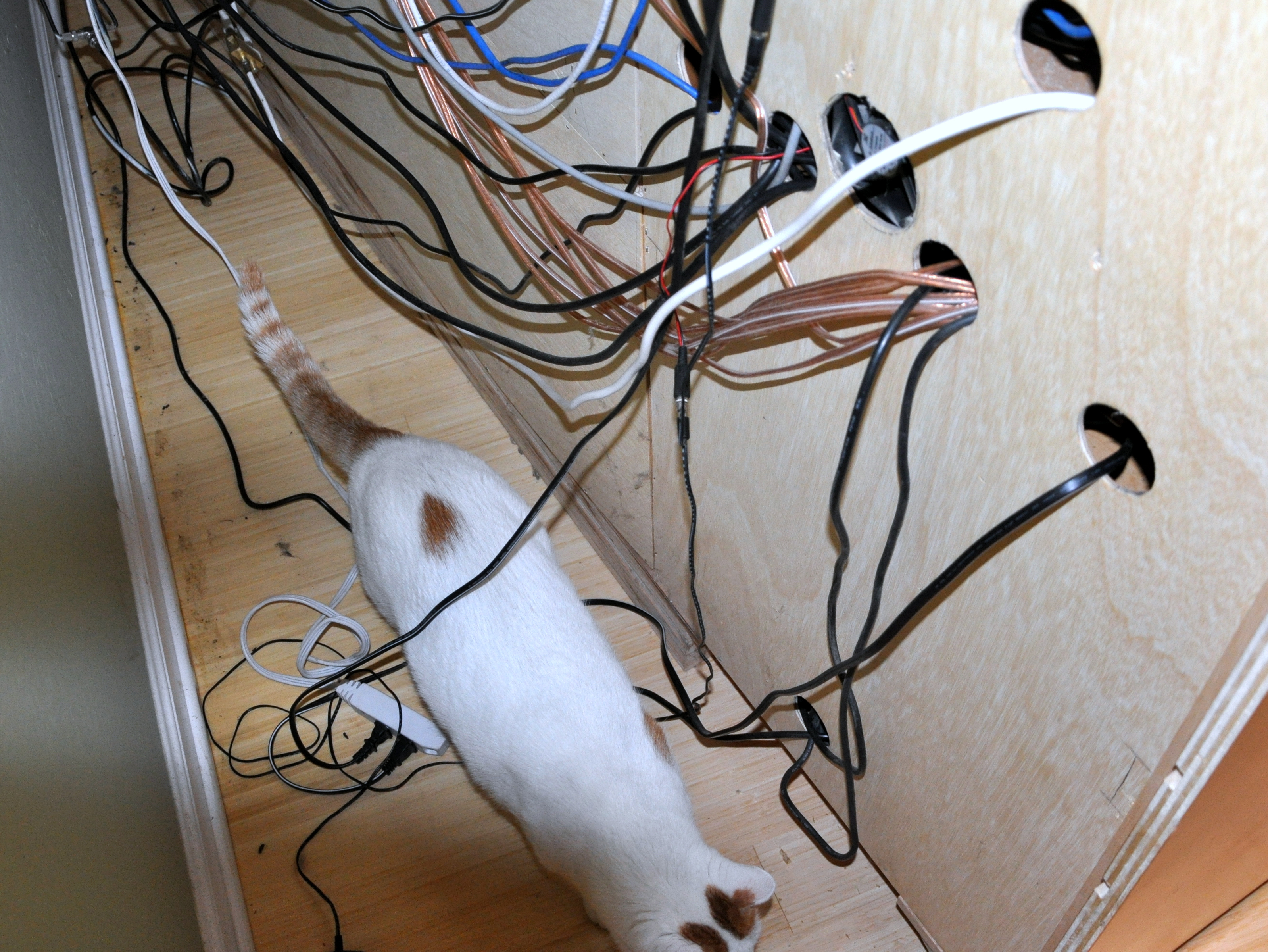
Two weeks ago today we realized that a cat named Mouse gifted our abode with a living rat. The irony! Mouse likes bringing us unharmed critters from the garden, including lizards and (gulp) rodents. Not only did the rat move in, he broke the dishwasher by chewing through the cord.

gnashing of teeth

Gnashing of teeth

Our earnest attempts at a humane, home-made trap failed. After a bit of research I found a no-kill trap that would do the job, but had to order it online from the store. That turned into a debacle and if interested,  you can read about it on my post titled Unwanted Gifts, Ahead by a Whisker.  After hours of credit-card, customer service, no-one-answers-the-phone-anymore-hell, I gave up and ordered from another online vendor.

Meanwhile, I called a couple of repair places to no avail.

When my live-in handyman finally returned from an eight-day trip to Argentina and said he could fix it, no problem. One visit to the hardware store and an $8 part later and we were back in business. Mike pulled the dishwasher away from the wall and found the beginnings of a nest but no rat. Further assessment of the cord proved once again that the rat has a Ph.D. He chewed through the ground wire and not the hot wire, which would have led to instant death.

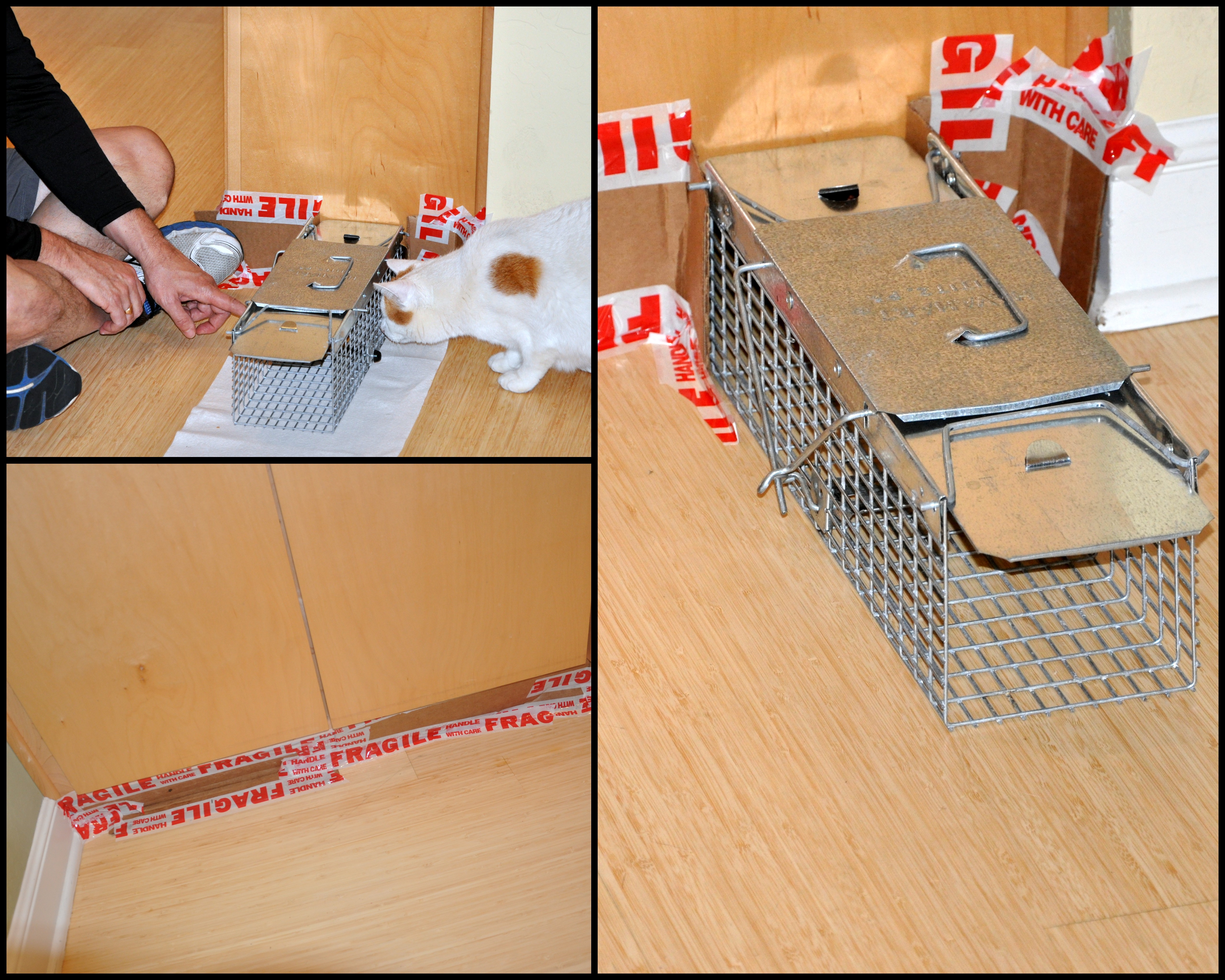
The following Monday, my extra-small, Havahart humane trap arrived in the mail. The box looked battered and bruised, but the trap was in good working order. We set it up that night.

Ha! That’s probably what the rat sounded like when he scoffed at the trap. I’m not falling for that.

And he didn’t.

Night after night, we re-bated the trap with delicious pecans, pecans with peanut butter, peanut butter and pear and, the trap remain untouched.  No signs of droppings either. Then we heard him again, chewing under one of the cabinets near the sink.  I pressed  my ear to the cabinet, straining to hear where the chewing sound was coming from. I opened one of the drawers and then the cabinet, fully expecting an encounter. Nothing.

Exasperated, I set the trap aside for a few days, and went back to putting peanut butter and fruit on a pie tin under the sink.

Oh sure, that he ate! I found cute little teeth marks in the side of a chunk of peanut butter. Sigh.

If you’re looking for a motivational speaker for your next event, our resident rat can share a thing or two about tenacity and spunk. He’s* eluded the jaws of a cat, several humane traps and the temporary relocation of his dishwasher condo.

Check out this link and accompanying video: Rats are Smarter Than you Think.

*Note: I don’t know if the kitchen rat is a he or a she. I prefer to think it’s a he and not a mama about to have babies.

Tree Rat

Mouse or rat one summer in our orange tree


tree rat at birdfeeder

Tree rat snacking at the bird feeder once upon a time


The Case of the Shrinking Lawn

existing lawn

Existing Lawn

My lawn is shrinking, my lawn is shrinking!

Oh happy day.

We’ve been tossing the ‘lawn/no lawn’ ball back and forth for a while. We’ve reached a compromise and split the difference. Half the lawn in our back garden remains. The other half will convert to native perennials. I’m pretty excited. This change will reduce water use and attract native species to the garden.

After trying to dig up the lawn in our sidewalk strip last year, I learned it’s a slow and arduous task. I gratefully hired Nick to finish the job.

Imagine how thrilled I was when I read Diane’s post Undoing Three Years of Procrastination.  She explains a method known as sheet mulching, recently implemented in her own vast and beautiful Ontario garden. Instead of digging up the lawn, you apply layers of soil, cardboard,compost and mulch. They gradually decompose, and at the same time kill the grass, leaving rich, organic soil in its place.

Here are the instructions Diane used from Goodbye Grass, Hello Garden

Sheet mulching—a simple technique that involves layering cardboard, compost, and other organic material over the turf—kills the grass and leaves behind beds with rich soil. A considerable amount of organic debris goes into the bed construction, so stockpile plenty of autumn leaves, composted manure, and garden waste before beginning. Beds that are sheet-mulched this fall will be ready to plant next spring.

sheet mulching

Sheet mulching ingredients

Last weekend I did a big yard clean up and created two small  piles of organic debris. This morning I brought home about a dozen free boxes from a local market and we got to work.  We ran out of ‘ingredients’ before finishing, but made a good start.

garden sheet mulching

Half way there

I emptied both of my composting bins as a base layer, then transferred soil from the summer vegetable beds. That was enough to cover about half of the area. We added the layer of cardboard and then covered it with decaying leaves, pine needles and other organic matter.  Once I gather additional cardboard and organic material to finish the rest of the area, I’ll buy mulch for the final layer.

Thanks for the inspiration, Diane!

Five Little Squirrels: Welcome to the Neighborhood

three baby squirrels

Three of the six baby squirrels, September 2, 2014 Photo courtesy of Jessica B.

A few months ago my friend Jessica rescued half a dozen baby squirrels. Two young boys in her neighborhood found them on the ground and brought them to her for help. The squirrels were small, eyes still closed, and unable to survive in the wild on their own. Jess contacted a rescue group who took them in, but they needed a place to release them once they were old enough to be on their own.

Guess whose arm shot up in the air?  Pick me, PICK ME.

I called Connie who works with a few other home-based volunteers the following day. The rescue group, Injured and Orphaned Wildlife, said it would be a few months before the squirrels were ready. They would be in touch when the babies could survive on their own. They want to re-release the squirrels into neighborhoods with established squirrel populations. We definitely qualify.

Last night I got the call. The volunteer asked if she could release them in our garden this morning?

Ann arrived around 10:30 with five young squirrels in tow. They traveled in a wooden nesting box, encased in a larger plastic crate ready to move in to Gardening Nirvana.

the squirrels arrive

The squirrels arrive in the garden

She placed their nesting box under our orange tree and scattered handfuls of fruits and vegetables nearby. After lifting the top of the wooden nest, we stood back and waited.

squirrel nesting box

Placing the nesting box under the orange tree

lifting the lid, vegetables nearby

Ann scatters vegetables nearby, then lifts the lid to the nesting box

They remained huddled together, poor little things, breathing heavily and trying to burrow to the bottom of their cozy box.

five squirrels

Five huddling squirrels

Ann said that once one of squirrels leaves the box, the others usually follow. In our case, two of them shot out within seconds of each other, and raced to the safety of nearby shrubs.

I'm out of here

I’m out of here. One of the first two squirrels to leave the nest

The remaining three hunkered down. I watched for half an hour, but reluctantly had to leave for appointments. Ann asked me to call her if they were still in the box at nightfall. If so, she would return and secure the nesting box to a tree. By mid-afternoon, they had vacated the box. We’ve watched from inside as they explore the garden. What joy!

three trembling squirrels

Three trembling squirrels

I’m grateful for all the caring hearts that brought this to fruition: the two young boys who knew the tiny squirrels needed help, and my friend Jess for taking them in and contacting a rescue group. Special thanks to Connie who takes in these rescues and Ann who delivered the nesting box, with the care and wisdom of someone that’s rescued critters for over 30 years.