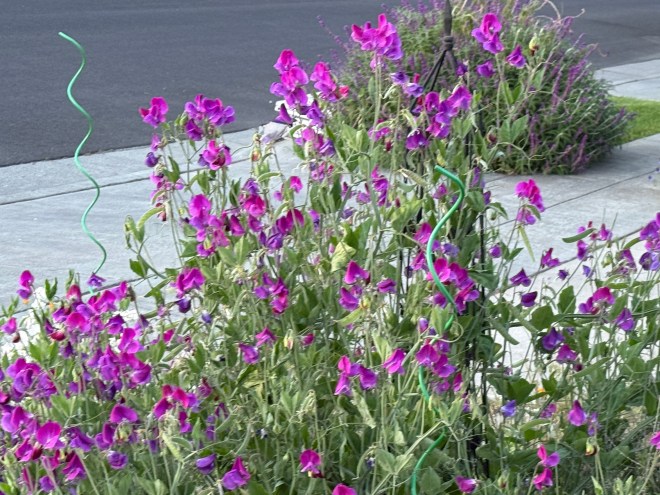
May Flowers

As my mobility improves post-hip surgery, I find getting up and down in the garden easier. Over these past weeks, I’ve brought the weeds under control, making daily weeding more manageable.
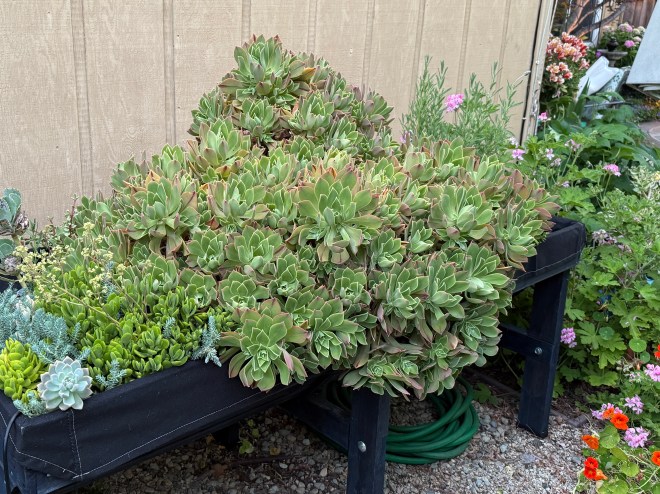
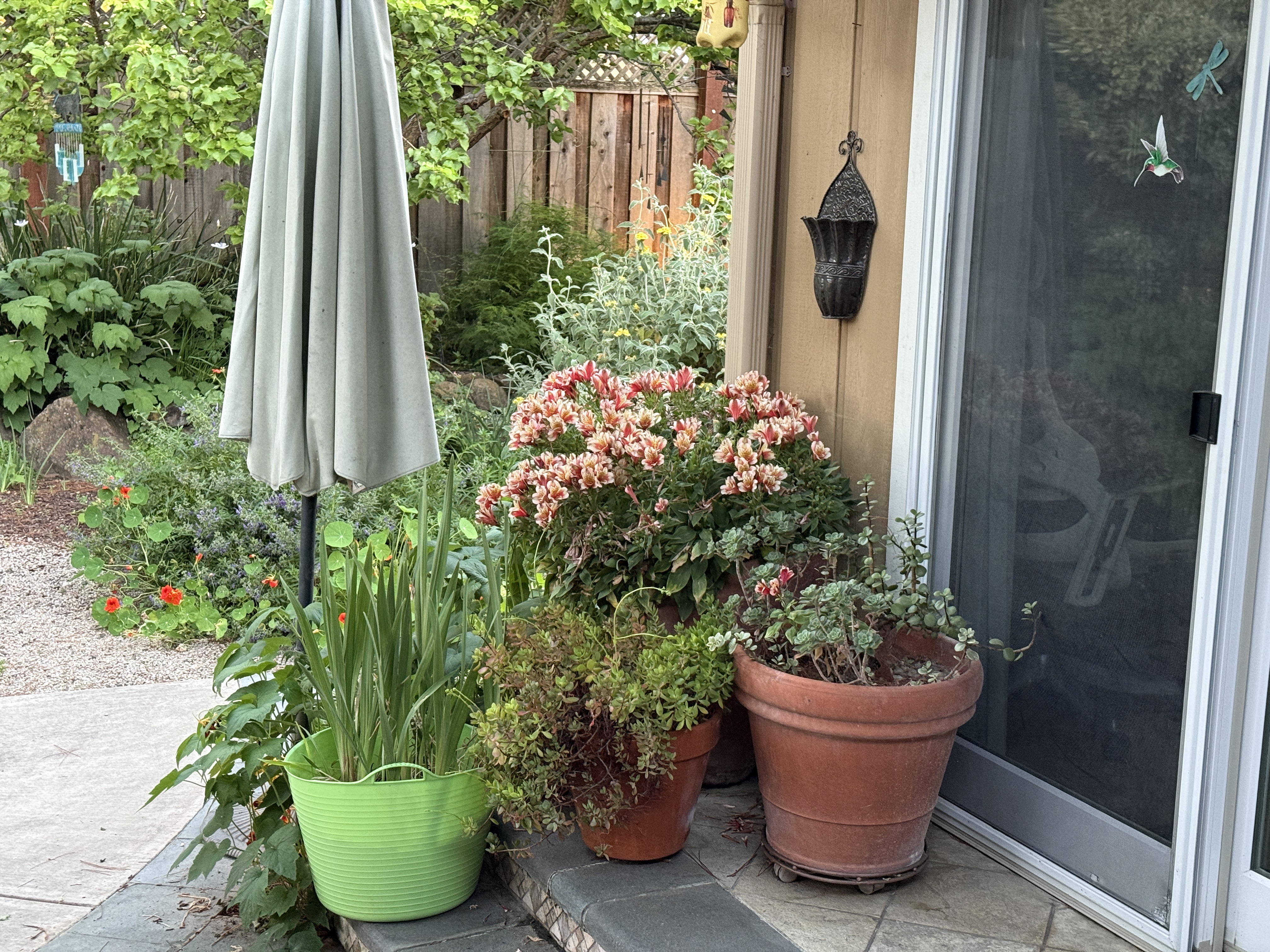
Yesterday, I looked under the veg trug, now home to a collection of well-established succulents, and spotted a just-out-of-reach oxalis, an invasive plant considered a weed in this area. My inner monologue cautioned against it, as I would have to kneel on the gravel path, bend at the waist, twist my neck, and then reach back to grab the weed. If you know anything about oxalis, you’ll know that the roots are strong and rarely willing to part company with the earth. I could have retreated and found my kneeler and a garden fork, but impatience got the better of me, and I went for it. Success! The weed is gone, I returned to an upright position, and I’m none the worse for wear. It’s the little things.
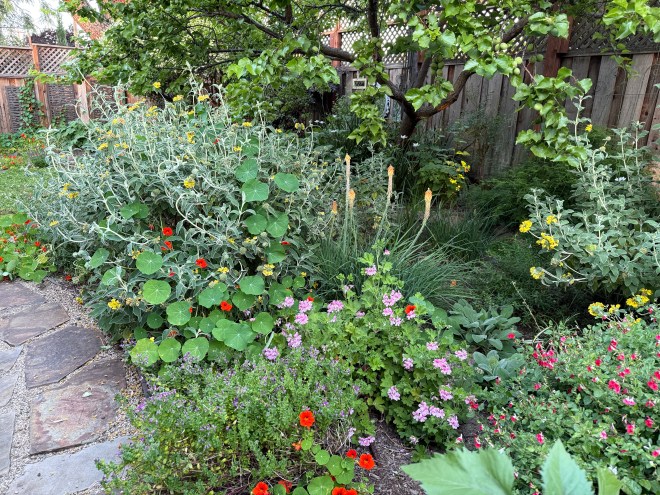
As I putter about, there’ve been joyful discoveries in the garden this year. Just a few days after commenting to Mike that I missed the self-seeding cornflowers, a beautiful, single, purple stem of one appeared in the front garden. They used to produce an impressive array of colors in pinks, blues, and purples, but equally rewarding, the birds loved the seeds.

The first of the cornflowers

When the plants were producing well, I spotted several birds feasting in the late afternoon. I left the plants past their prime so the birds could enjoy the bounty, and I assumed my seasonal crops resulted from dropped seeds. Then, for reasons unknown, they didn’t return. Seeds can lie dormant in the soil for various reasons, so perhaps they’ve been missing the garden secret sauce required for a prolific crop. Now at least one has returned. It makes me happy.
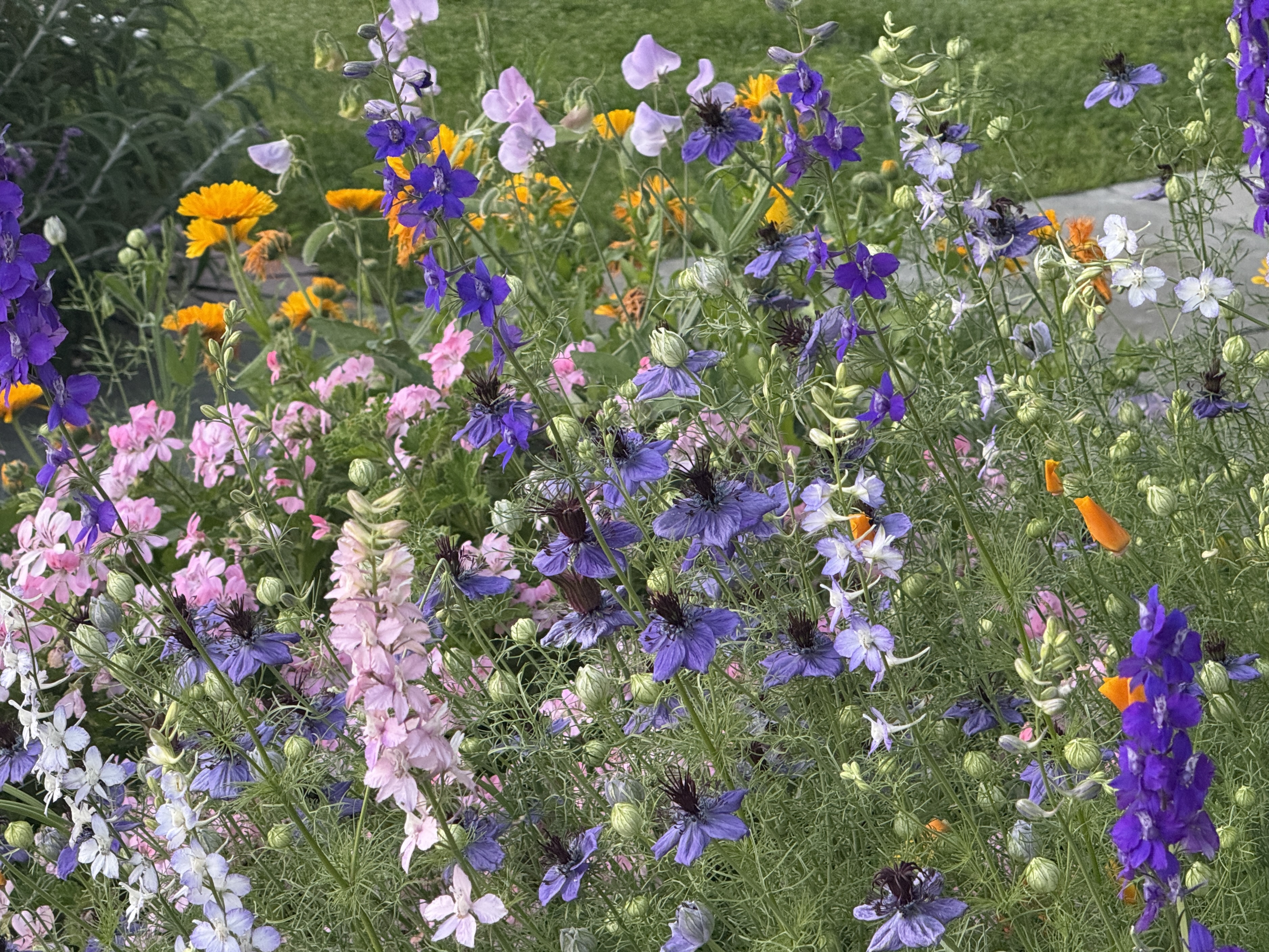
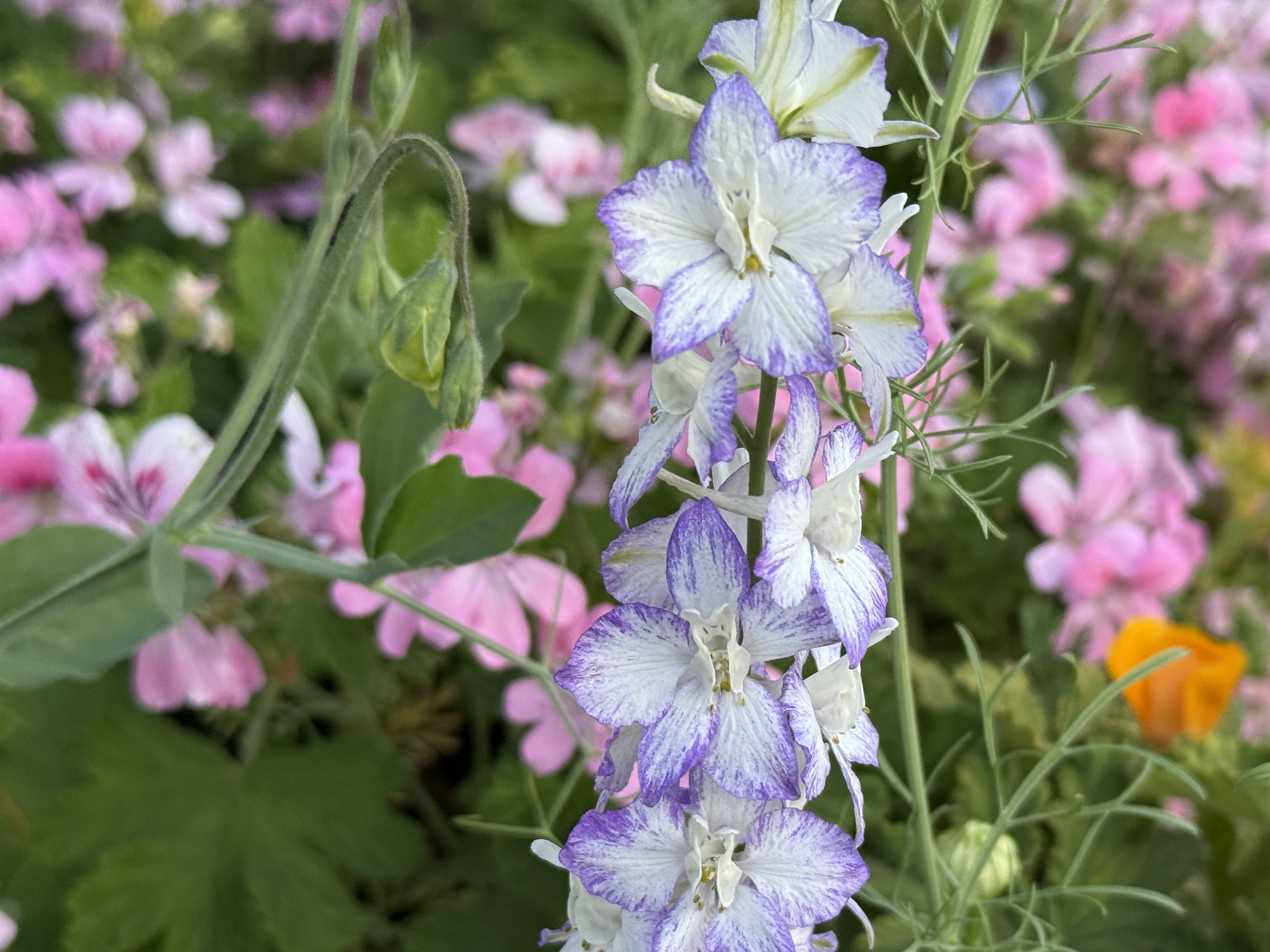
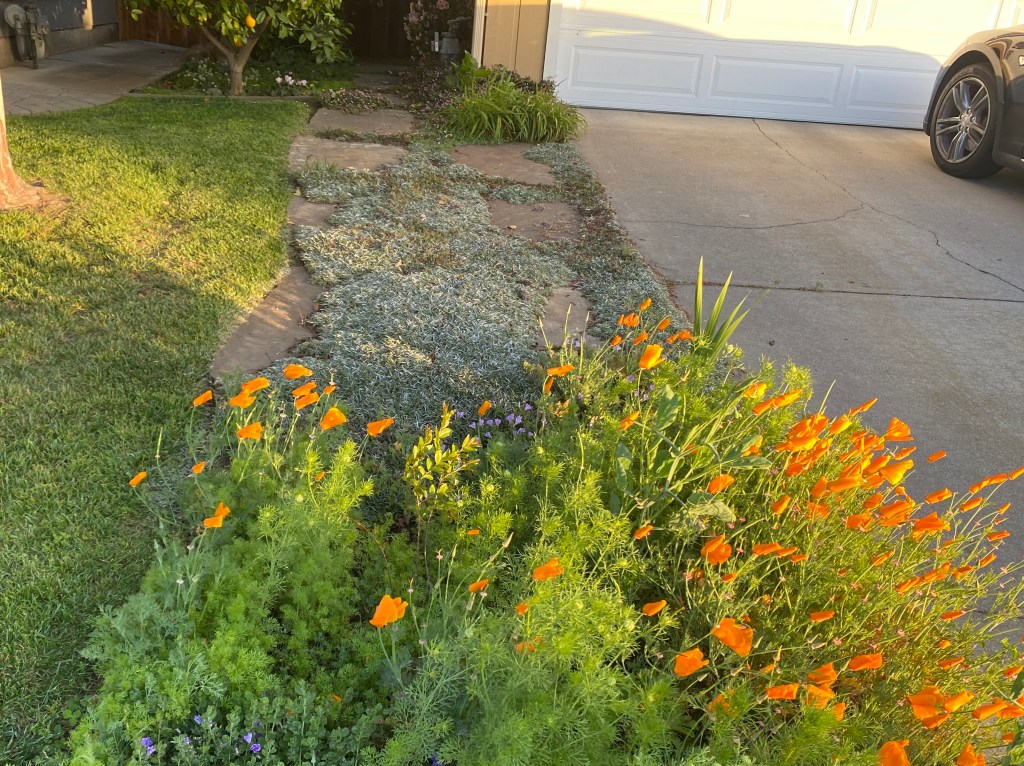
Also new(ish) is a tall, slender, annual flowering amongst the California poppies and nigella along the driveway. My phone identifies the flower as a Delphinium. Last year, a single flower emerged in the same spot, so I looked it up to be sure it wasn’t a weed. It went to seed and then I gave it a good shake, allowing the seeds to fall to the earth below. Now they’re back, standing tall and looking lovely.

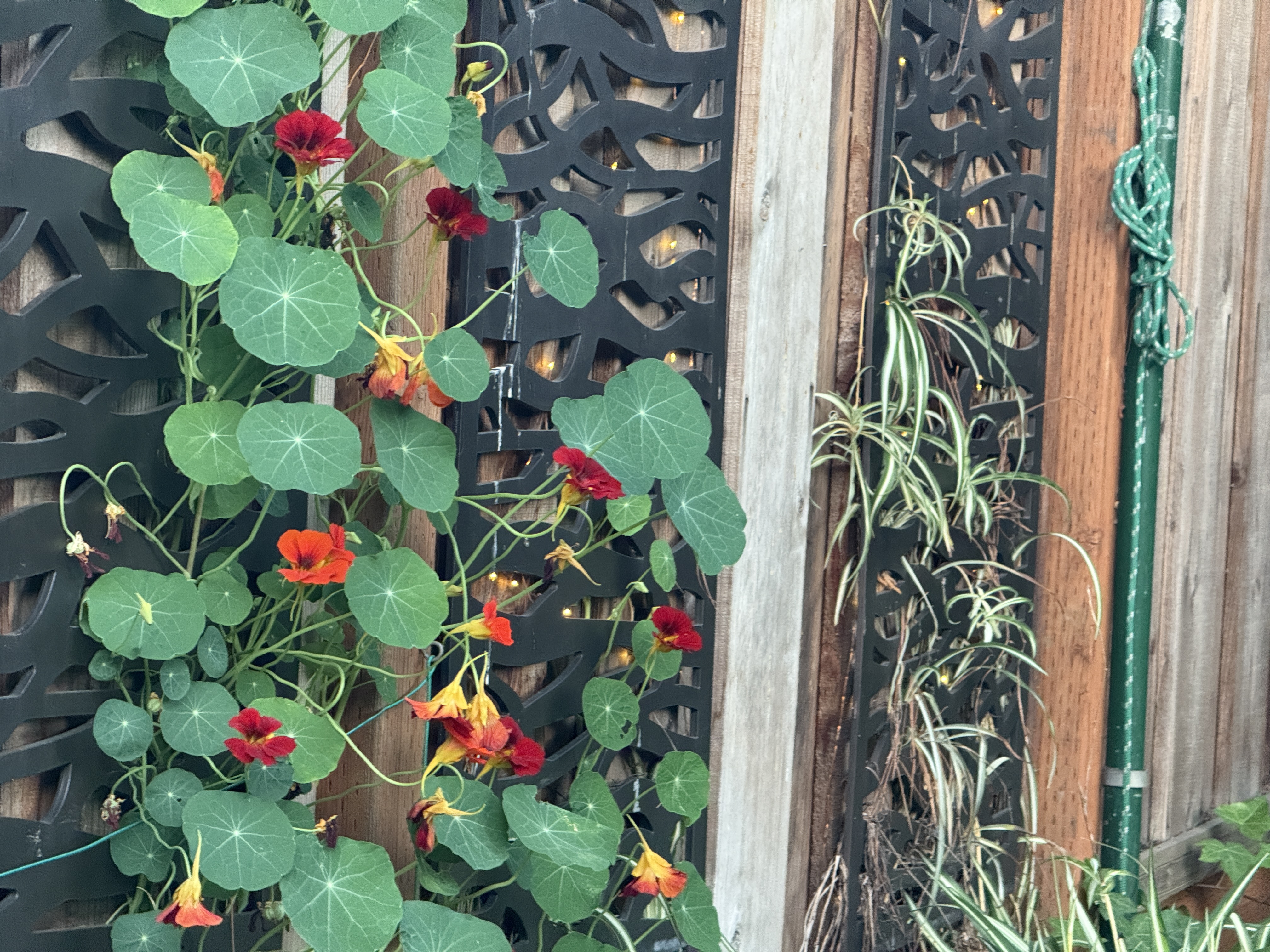
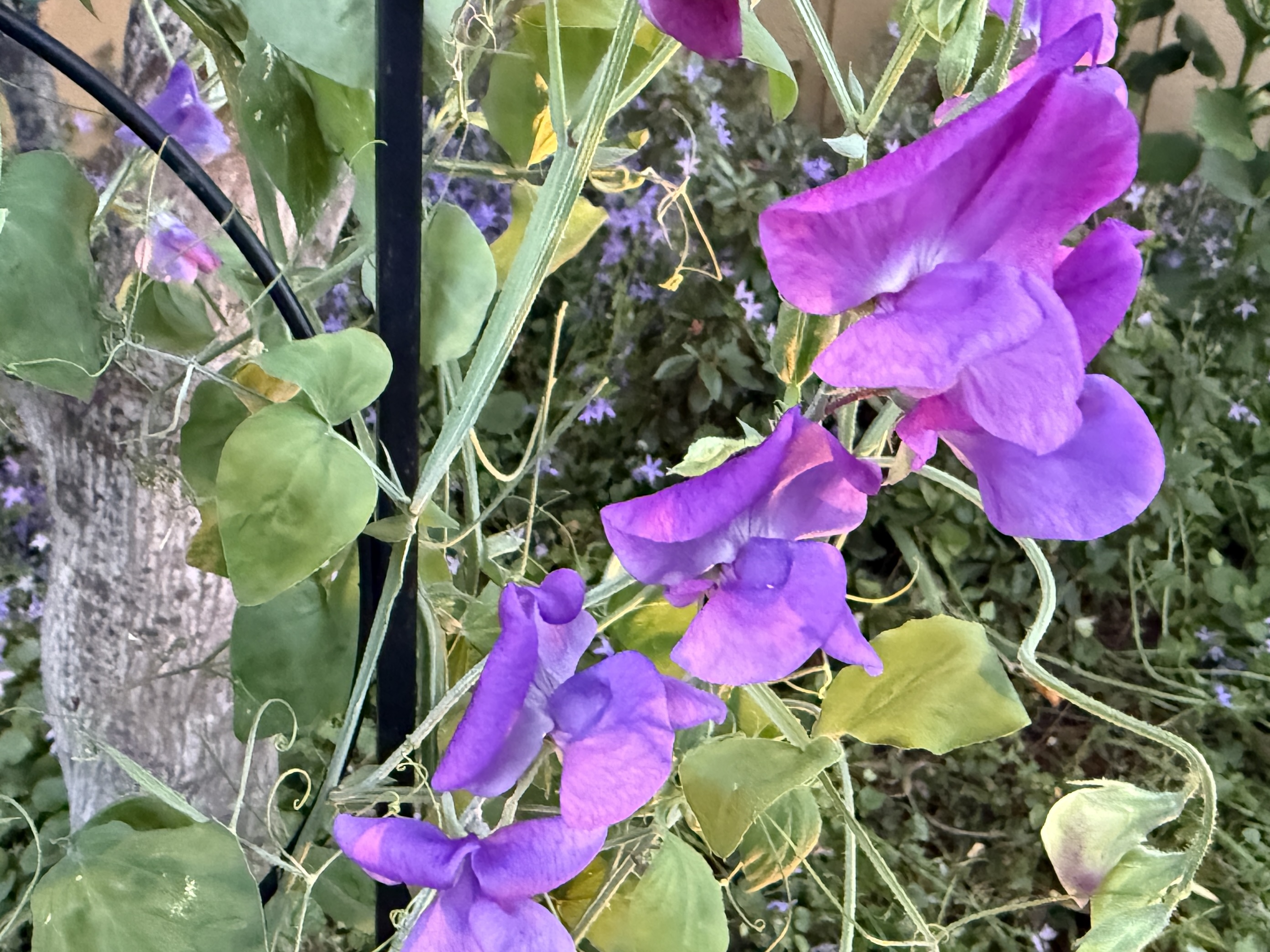
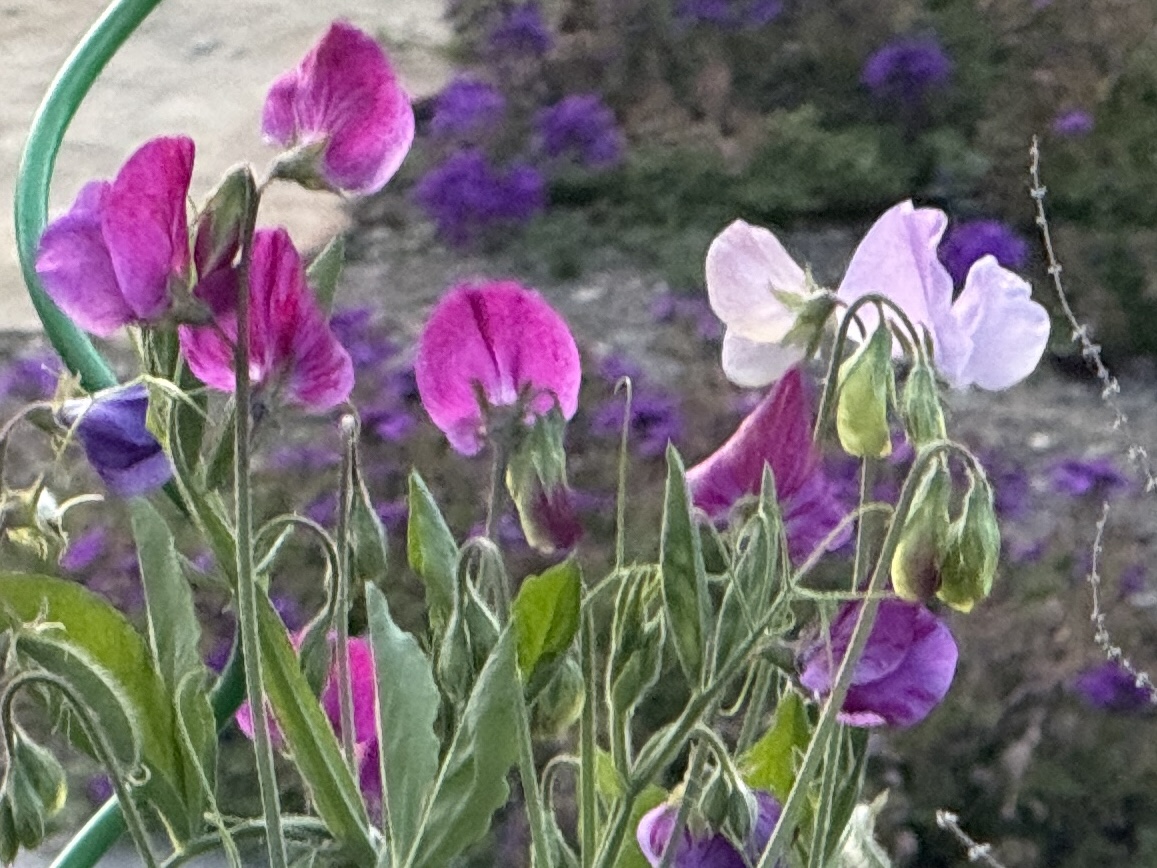
For the first time, a sweet pea, usually prolific in the front garden, traveled with some transplanted bulbs last fall, and it’s now growing under the maple tree in the back garden. I gently wrapped the trailing vine to a trellis, and it’s growing with abandon.

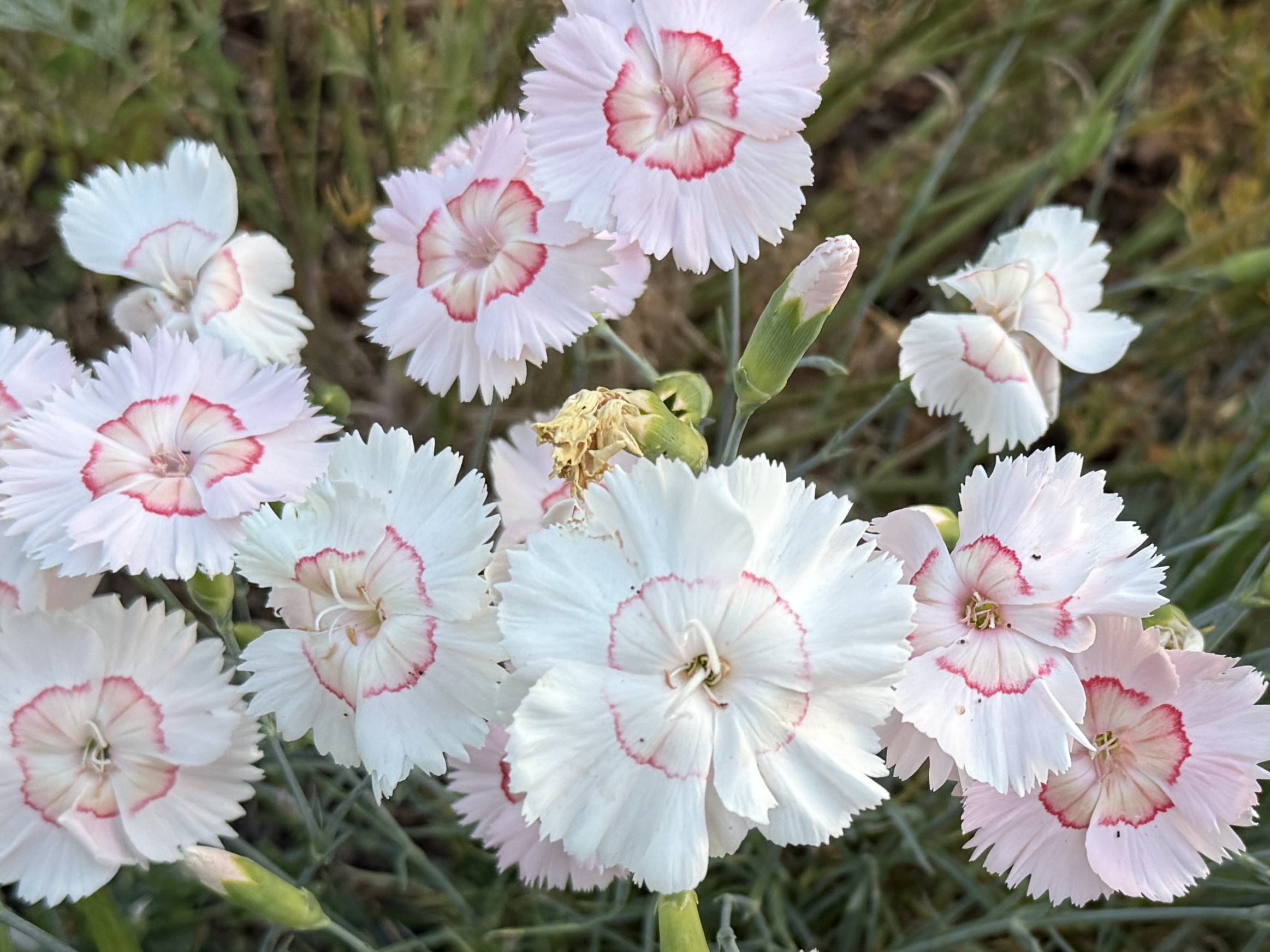
The carnations we planted last year have doubled in size and production, enough so that I’m comfortable cutting a few for a vase.

Mike dug holes for a pair of tomato plants, and as always, we cross our fingers and hope they like the new spot. Our tomato production is spotty at best, but the sweet flavor of a garden-grown gem keeps us trying year after year.

I’ve been playing in the dirt my whole life, and though my body has aged, gardening never gets old.
Thirty Days in the Garden: Can You Spot the Imposter?

Weeds are imposters. They’re like a spy at a cocktail party, standing tall in their green suit, effortlessly blending in. To the untrained eye, they look like everyone else at the party.

They can’t fool this gardener. I’m a professional.

Not really, but as weeds go, I know things.

I’ve been uprooting the same half a dozen weed varieties in this garden for over twenty-five years. I know when they’ll appear in the garden, and I’ve learned ways to minimize them. Eradication, however, is futile. To garden is to weed.

Walkway to the right of the driveway, weeds running amok

I don’t mind weeding for the most part. I do it mainly by hand and at times find it therapeutic.

Walkway to the left of the driveway, more weeds

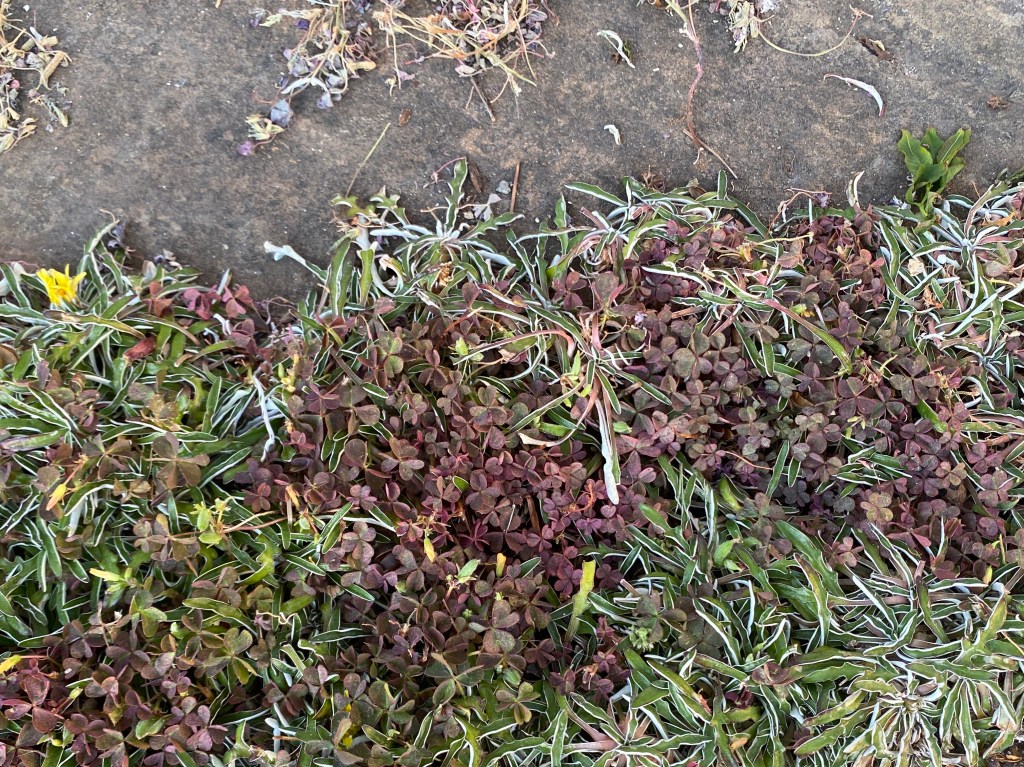
Oxalis, however, is a scourge. Oxalis grows along the walkway on both sides of the driveway. Dymondia grows between the paving stones. It’s described as “a dense mat that over time will choke out weeds.” Ha! The oxalis mocks me. It spreads its roots under the paving stones, then grows up through the dense planting. If flowers quickly, so if I don’t nip it in the bud, it quickly produces more weeds.

Weed-free Dymondia

Oxalis hides in other parts of the garden, but it’s easier to pluck when you can get at the roots. I have to be in a reasonable frame of mind to weed the walkway, knowing that the oxalis will live another day before I start.

Oxalis growing through the Dymondia.

Even the origin of this weed’s name sounds sinister:

Early 17th century via Latin from Greek, from Oxus ‘sour’ (because of its sharp-tasting leaves).

Lexico.com

Oxalis is native to North America. It grows in poor soil and needs very little water to survive. It flowers eight months of the year. It’s sounds like a garden darling if you’re fooled by this sort of thing.

Oxalis is easy to spot and remove when it grows elsewhere.

I know better. Yes, it’s a lovely green, but the oxalis has to go.

Weeds: Green Isn’t Always a Good Thing

Oxalis, pretending to be ground cover

If you garden, you weed.  The end.

Seriously, every garden has weeds; it’s only a matter of degrees.  I’m an expert weeder myself, probably because pulling weeds falls into the category of garden organization.  I  pull weeds and restore order.  It’s therapeutic clearing out the interlopers, those pervasive plants that sneak into the garden beds when you aren’t looking.  They pretend to be the real deal as they vie for water and nutrients, using clever camouflage and stealth tactics to avoid detection.  I know the regulars around town: oxalis, dandelions and spotted surge. Now and again I spot something new and unfamiliar.  I pause overhead, garden fork in hand, wondering if I should give the newcomer a chance.  I once let a glossy green plant grow in our side yard, only to learn from my friend Doug that it was invasive.  It’s still popping up!  I’ve also yanked out plants, only to realize it was an annual re-seeding from the previous year.  I was amused to discover this week that the plant I left growing next to the Chinese Pistache is a volunteer broccoli plant.  How fun that was!

When you garden you have an intimate knowledge of weeds and their habits; where they’ll grow and when. If you don’t pull them out by the roots early, they’ll flower and drop seeds.  Once they go to seed you’ve extended an open-ended invitation to return year after year.

To Weed, or Not to Weed?

I made my rounds today, fork in hand, with a strong wind kicking up pollen.  We have rain in the forecast, so I figured I would get this first round done before the rain helps plant a new batch.

Do you have a garden “chore” that you secretly love?

Happy St. Patrick’s Day: Garden Limericks

I composed a few garden limericks in honor of St. Patrick’s Day.

As a gardener I find much to love,
even weeds at the end of my glove.
I once kept a log,
then I learned how to blog,
hence combining two hobbies thereof.

In my garden I learned how to sow,
tiny seeds laid all in a row.
Then I wait for the pests,
snails and rats never rest,
hoping one day something might grow.

“May the road rise up to meet you, may the wind be ever at your back. May the sun shine warm upon your face and the rain fall softly on your fields.”Irish Blessing

Weeds, Masquerading as Clover

The Long View