Organic Sunflower Seeds from Botanical Interests
Just imagine: for $1.99 (plus tax) you can hold a handful of summer potential in a slim packet of seeds. I’ve been dropping seeds into the earth since I was five, forever optimistic that what I planted would grow. And grow they did! Given the right amount of water and sun that slip of a seed knows to break through the earth, set roots below and then do what it does best: grow up and out as it morphs into leaves, branches, flowers and fruit. When the cycle is complete, that clever plant turns to seed so the process can begin anew.
Nothing epitomizes this cheerful process like sunflowers. Helianthus annuus are easy to grow and spectacular in size. A regular show-stopper along the garden path, they follow the sun throughout the day, then reset at night. Glorious flowers and abundant seeds attract wildlife as they reach skyward.
Once these cold spring days are behind us, I’ll tear open that packet and gently tuck each seed beneath the soil. All that promise in a packet of seeds.
Here’s what we’ll plant this year (descriptions from the seed packets):
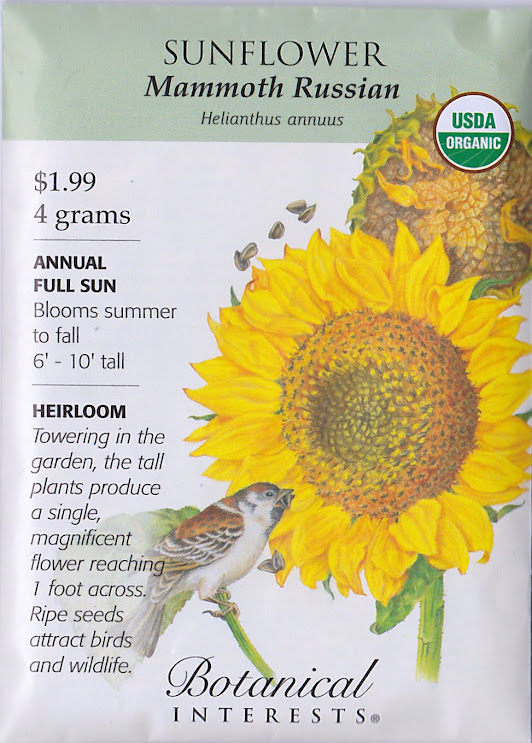
Sunflower ‘Mammoth Russian‘ from Botanical Interests®
“Heirloom Towering in the garden, the tall plants produce a single, magnificent flower reaching 1 foot across. Ripe seeds attract birds and wildlife. Annual full sun, blooms summer to fall 6′ – 10′ fall”
Sunflower ‘Evening Sun‘ from Botanical Interests®
“Heirloom Fiery shades of vivid gold, autumn orange, warm mahogany and blazing bronze! A dazzling cut flower and enticing treat for birds. Annual full sun. Blooms summer to fall, 6′ – 8′ tall”
One of last year’s sunflowers: From Seed to Tower in an Hour
The default direction of the sunflower head is to point east towards sunrise: Helianthus: Flowers of the sun



 Gardening Nirvana