And Just Like That It’s November

Halloween came to a screeching halt at midnight, October 31st.

DSC_0027

Thanks to the end of Daylight Savings Time, the clocks rolled back an hour the next day. We spent part of Sunday putting things away and adjusting to the time change.

We’ll leave our Jack ‘o Lanterns on the deck until the inevitable decay. Mike’s pumpkin carvings were as wonderful as ever. He carved three masterpieces, two from commercially bought pumpkins and the third one from our garden: The Great Drought Pumpkin of 2015.

The tall, slender pumpkin is a Minion for the popular children’s movie.
pumpkin carving collage 2015

The squat pumpkin is Jack Skellington. Jack is a fictional character and the protagonist of the 1993 film The Nightmare Before Christmas. Jack is the Pumpkin King of Halloween Town and lives in a fantasy world based solely on the Halloween holiday.

jack skellington pumpkin

Jack Skellington

I found inspiration for the smaller pumpkin from a fellow blogger. Mike used small saws and a drill to create the stars. It’s our beacon of light.

pumpkin stars beacon of light

A Beacon of Light

My sister and I celebrated our birthdays together with a cheese fondue and salad lunch and a full-screen viewing of My Fair Lady. That beautiful movie just turned fifty years old. (We’re still older).

Today I woke up to rain.

azalea after rain

Azalea after the rain

In other parts of the world, rain is a big bore, something to endure till the next sunny spell. Here in our drought-parched state it’s the topic of conversation on Facebook. I woke up at 3:30 this morning and could hear the rain coming down outside my window. Large, musical drops fell and fell and fell. I stepped out on the deck in my bare feet with my camera, wanting to preserve the moment. Then I came back inside to warm my toes and grab a few more hours of sleep. Bliss!

As I write this late in the afternoon, the wind is beginning to howl. Be still my heart. It might just rain again!

Have a terrific week.

The Lone Pumpkin

Isn’t she a beauty?

pumpkin collage 2015

The Lone Pumpkin, 2015

This humble pumpkin grew from a single plant, self-seeded in a dry patch of dirt in our drought-parched state. Annuals are generally thirsty plants, with shallow roots drying quickly under a hot sun. I watched this plant wilt at the end of each day, only to revive the following morning with seemingly nothing to draw from but a bit of morning dew.

Please don’t laugh, but I’m easily attached to the things that grow in my garden. Each plant, flower and tree touches me in some way. So when that humble pumpkin plant first appeared, I tried to turn a cold eye to the possibility that it would not survive the season.  As our reservoirs drop further and further, I can no longer casually open the bib of a hose. We make every drop count. Once or twice I poured a glass of water at the roots, then stopped. If the plant had made it this far without my help, I reasoned, then I would just step back and let nature sort things out.

Of course me being me, I could only ignore this humble plant for so long. It formed fruit, only to be snapped clean from the vine a few days later by a rat or squirrel. Oh well, I sighed.

My humble plant was not deterred. She formed another piece of fruit, this time surrounded by a ring of volunteer tomato plants.  I whispered on the air for the squirrels and rats to eat the tomatoes first.  I started checking for nasty squash bugs. They show up when the fruit forms and quickly lay waste to the crop. No sign of them anywhere.

The lone pumpkin grew to a modest size, nestled in the care-taking arms of those tomatoes. Firm and dark green, she grew to her full size.

pumpkin and tomatoes

A ring of all volunteer tomato plants surround the loan pumpkin. That’s Slinky in the background

The vines started to show the tell-tale signs of the season’s end. The hollow stems yellowed and the leaves turned ashy and crisp. If you hold a dried pumpkin leaf in your hand it crushes into a powdery dust. They let you know that Autumn descends and our job here is done.

decaying pumpkin leaves

Pumpkin leaves decay as the plants energy goes to the fruit

I saw orange! My lone pumpkin turned orange. Little bits of color appeared and the pumpkin continued to thrive unmolested. Somewhere in time, I’d fallen head over heals in love with her. Now fully vested in her complete fruition, I did what any self-respecting gardener would do: I drove to the local drug store and bought a pair of extra-large pantyhose.

pantyhose clad pumpkin

Pumpkin safely ensconced in pantyhose

Why?

Rumor has it that rats and squirrels don’t like the texture. I can’t say that I blame them.  It worked.

I quietly harvested the pumpkin in September and let it harden off for three days under my watchful eye. Once indoors, free from the protective hosiery, I gave it a quick polish and a quiet welcome. You made it, humble pumpkin. Thank you for your lessons and gifts.

Addendum:

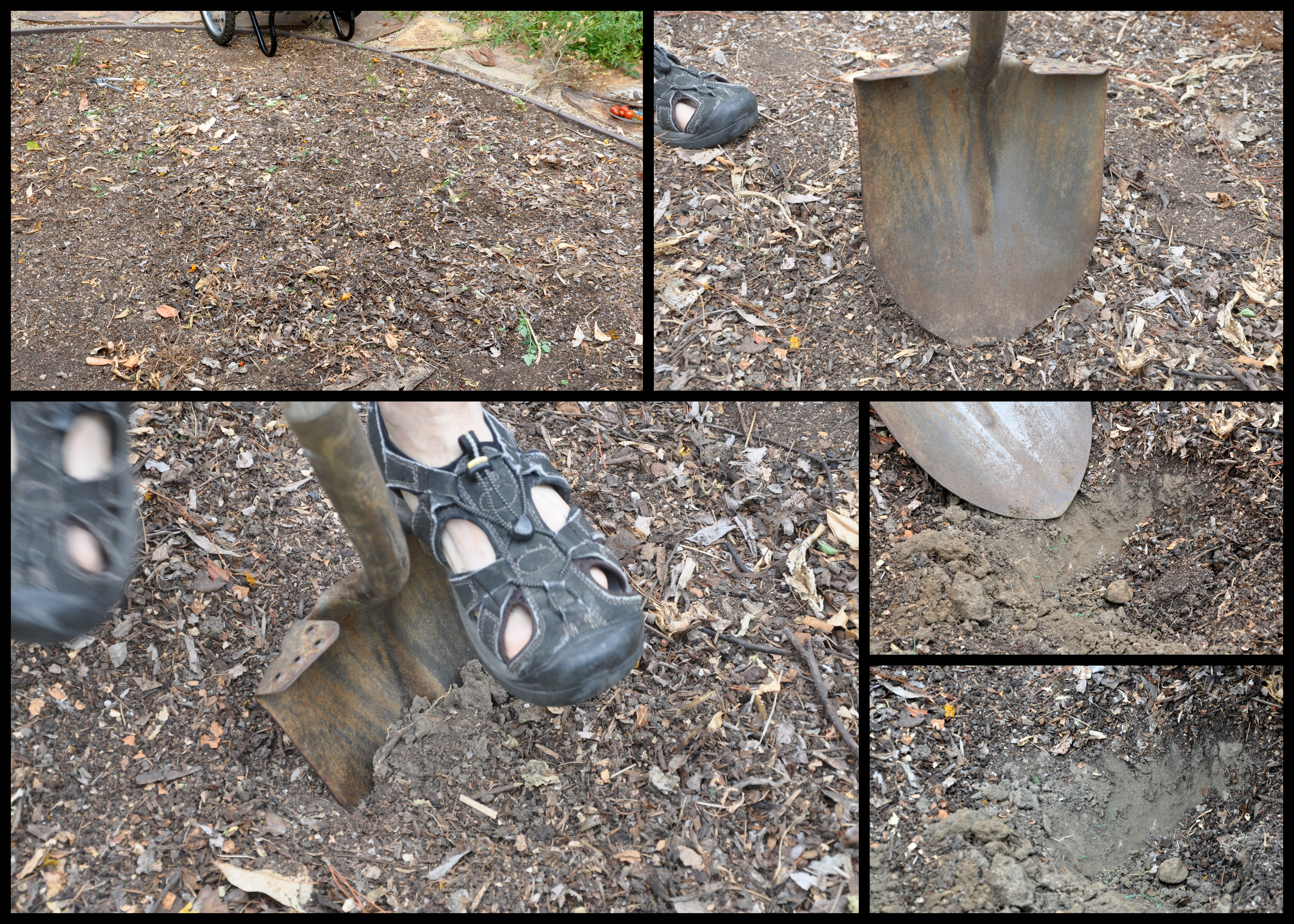
After clearing the dead vines, I asked Mike to dig down in the area to see if the plant was accessing some ground water. He hit hard-pan! Not a drop to be found.

pumpkin patch dry pan

Cleared pumpkin patch, digging for signs of water

A Walk Through the Garden: The Drought Addition

It’s hard gardening in a drought.

It’s equally hard writing a blog about it without sounding all gloom and doom. (I’m saving my gloom and doom posts for Halloween).

Since we’ve all had it up to here with the drought, the heat, the save-the-air alerts and the raging fires here in California, writing about it  seems as drab as my former lawn.

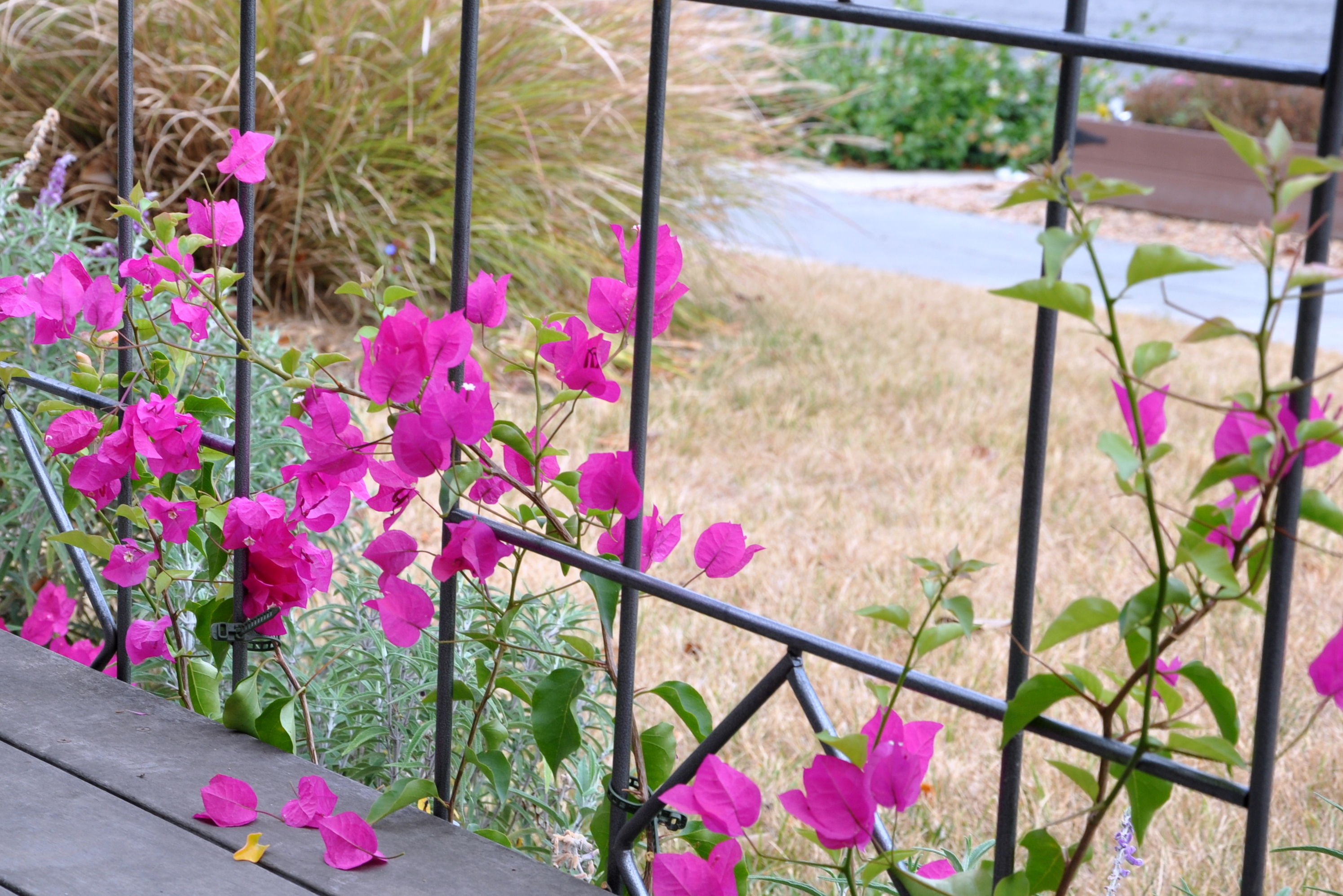
Bouganvilla

Bougainvillea love the dry heat. Lush lawns are a thing of the past.

Today, I’m shaking things up a bit with a garden video show and tell.

I created the video tour using my mobile phone with my family’s help. Mike followed me around the garden and took video, and my son, Mac edited the clips for the final production.

Instead of tidying up before the guests arrive, I present to you my unadulterated, much-loved, brown around the edges garden.

Without further ado, Gardening Nirvana: The Drought Addition

https://youtu.be/P3MbpxZW1BI

Quenching a Thirst

California’s drought is taking its toll on thirsty wildlife. Many sources of fresh water are depleted.  Birds and mammals are struggling to quench their thirst.

So while I’m happy to let my lawn die while at the same time watering trees with my bath water, I’m choosing to share some of our fresh water with the critters that need it most.

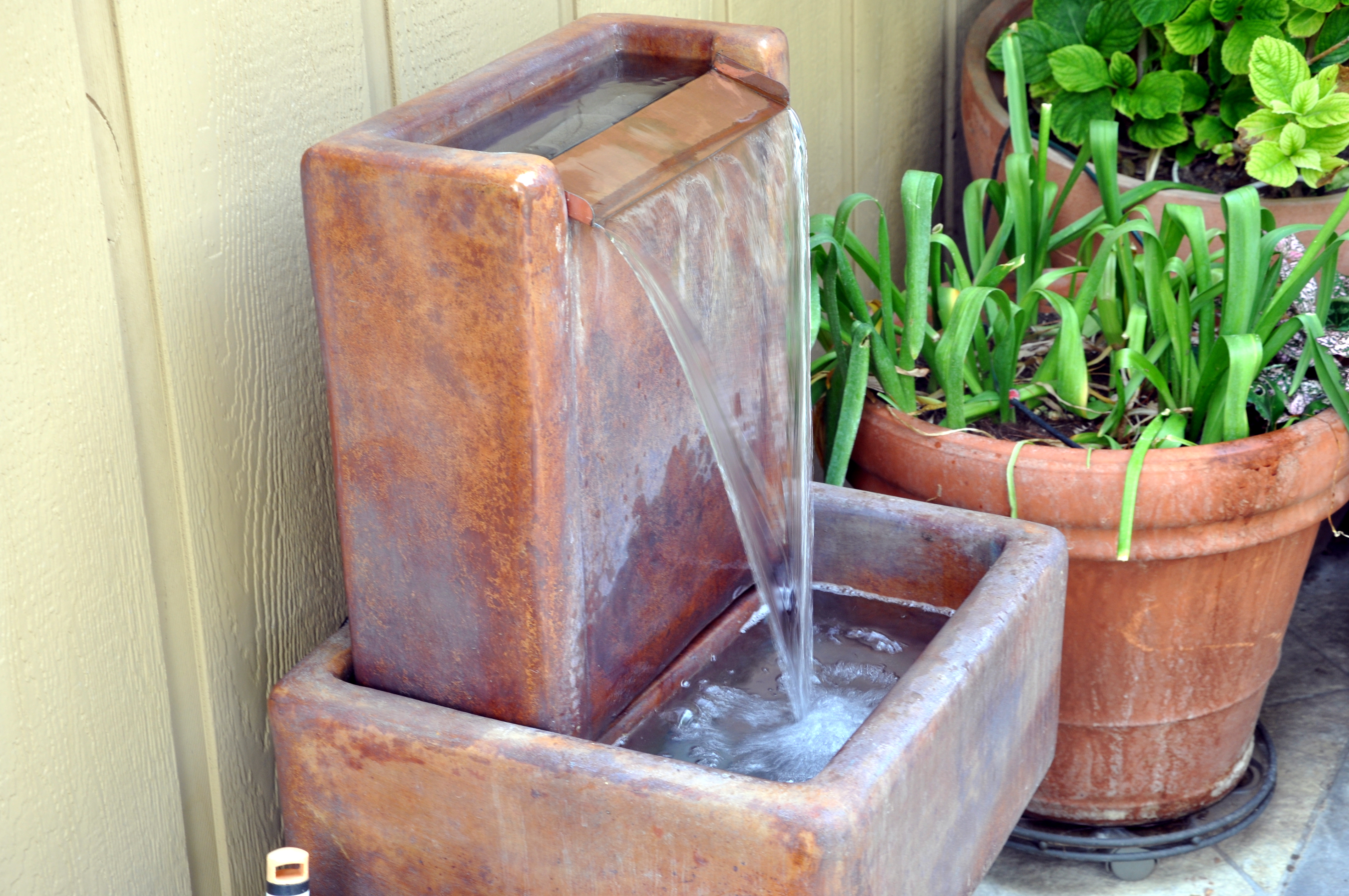
Our small, re-circulating water fountain continues to flow.

new water fountain

This thing weighs a ton. It took all three men in the house to move it from the car to the back patio

water fountain closeup

New fountain closeup (the copper fairy is a gift from Boomdee)

We have a bird bath hanging from a branch of a maple tree

water wiggler in fountain

Bird bath and water wiggler. The wiggler keeps the water fresh and discourages mosquitoes

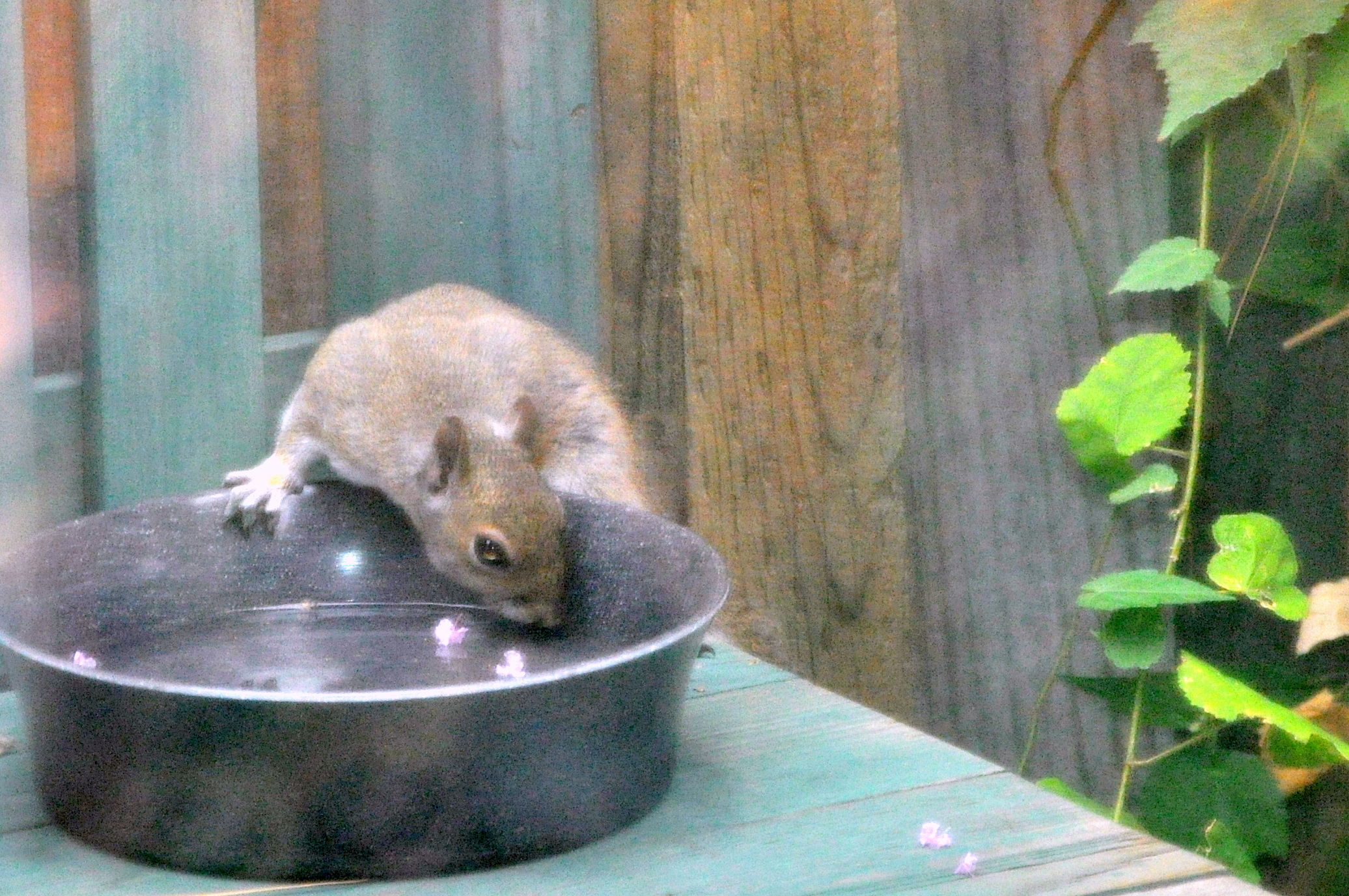
and the newest addition: a pair of dog food bowls.

squirrel drinking water

Quenching his thirst at the water bowl

Last week I spotted a squirrel on the patio umbrella, sipping from a rivulet of water formed by the morning dew. I filled a plastic bowl with water and wedged it into the rock wall. Within minutes the squirrel was having a drink.

squirrel on umbrella

Squirrel drinking from a small rivulet of water

A few days later, a mourning dove swooped in for a drink from our bird bath. They’re large birds, so she couldn’t land on the small bird bath and instead sent the bird bath swinging and sloshing water.

Over the weekend I bought two, heavy-duty dog watering bowls and placed them outdoors on the hutch. The bowls are sturdy enough that they can’t tip over, but accessible to larger birds, opossums and squirrels. As you can see, above, the squirrels found them immediately.

As we draw to the end of another long, hot summer, I’ve become acutely aware of the value of every last drop.

Nothing in all Nature is more certain than the fact that no single thing or event can stand alone. It is attached to all that has gone before it, and it will remain attached to all that will follow it. It was born of some cause, and so it must be followed by some effect in an endless chain. – Julian P. Johnson

If you live in California, I would like to issue a small challenge: The next time you stop to quench your own thirst, think about sharing a bowl of water with the creatures in our midst.

Resources:

Then and Now: California’s depleted reservoirs

Wildcare: Live well with wildlife

Water Wiggler: attracts birds while keeping mosquitoes at bay

Too Busy: A Haiku

Life is too busy
my brown garden parched and sad
summer, hot and long

What a complainer, eh?

I miss my gardening nirvana, that blissful state that comes from weeding, pruning, planting, bug-picking, harvesting, and all things gardening.  Today after work and before an evening engagement, I soaked my sore muscles in a hot bath, then saved all that water for the trees.

I used a one-gallon jug to bail the water, then carried it outdoors with a lightweight trash bin to catch the drips. It is so blazing hot that I raced back inside for gallon after gallon, knowing our trees are in a bad way. I bailed about ten gallons that would otherwise go down the drain, and delivered guilt-free water to the tree’s roots. They’re in a lot of distress.

bailing water

Bailing water to water trees

The city-imposed water restrictions allow for two days of watering a week, regardless of the circumstances. On a cool, cloudy day evaporation is less of a problem. With the start of another heat wave however, (high 90’s F or 34 C) my garden droops.

On the plus side, yesterday’s water bill shows decent conservation: We’ve reduced our water usage from 403 gallons a day (for a household of four) to 318 gallons. In 2013 we were using 515 gallons a day.

July, 2013  515 gallons per day

July, 2014 403 gallons per day

July, 2015 318 gallons per day

The discouraging part: we’re still over our allotment, thought not by much. We’re allocated 10.012 ccf for this period, and we used 10.229. So close!

Additionally, the Santa Clara Valley Water District is raising rates by 6.44% effective July 1st. So our usage is down, and our rates are up.
Here’s the latest from the Santa Clara Valley Water District:

For the first time in state history, the Governor directed the State Water Resources Control Board to implement mandatory water reductions in cities and towns across California to reduce water usage by 25%.  Please remember that most areas in the county have a restriction on irrigating ornamental landscape with potable water to two days a week.

The rainfall year that ended on June 30th was another below-average year in the county.  The California Department of Water Resources found no snow during its April 1, 2015, manual survey at 6,800 feet in the Sierra Nevada.  This was the first time in 75 years of early April measurements at the Phillips snow course that no snow was found there.

The District will continue to conduct limited groundwater recharge using available surface water.  However, total groundwater storage is predicted to fall in the Severe Stage at the end of 2015 if water use reduction for the rest of the year is similar to that in the first five months of the year, highlighting the need for continued water use reduction at the 30% level or above.

And so it goes. What’s the weather up to in your neck of the woods? I think it’s off kilter all over the globe.

Ho, hum, hot!

I’m a seventies gal. That is to say that I prefer temperatures hovering around 72 degrees with a slight breeze. I have British Aisle genes and a California address. Now that we’re approaching the hottest months of the year I must hide from the heat and sun. Tomorrow’s forecast: 101°F (38°C).

Gardening used to happen at the end of the day when I could safely venture back outdoors. As we settle uncomfortably into year four of the California drought, not much gardening is happening at all.

Planting pots with annuals on the deck and porch has long been a favorite ritual. This year I emptied all but a few pots, and planted what remained with succulents. They don’t need much watering, perhaps just once a month, but they don’t need much care either. Part of the joy of gardening is watching new growth, pinching back leaves, dead-heading flowers and making tiny bouquets. It’s fun to see an annual double in size over the course of the summer. This year I’m forgoing that tradition.

What remains of the lawn resembles a bed of straw. I’m happy to see the lawn go, but had hoped that by now we would have our native plants in place. I met with a designer in April who promised a two-week turnaround, but as we approach July we remain in limbo. I’ve completed the landscape rebate program application but I can’t submit it until I have both the list of plants and the specific irrigation components for the rebate.

drying grass

Drying grass, dead sweet peas

DSC_0189

The Statice likes the dry conditions and attracts butterflies. The sweet peas are a different story.

In the back garden, I sheet mulched half of the lawn thinking I would replant this spring. That too is in limbo, awaiting plans. For now that area is a patch of brown, albeit fertile soil.

drought garden

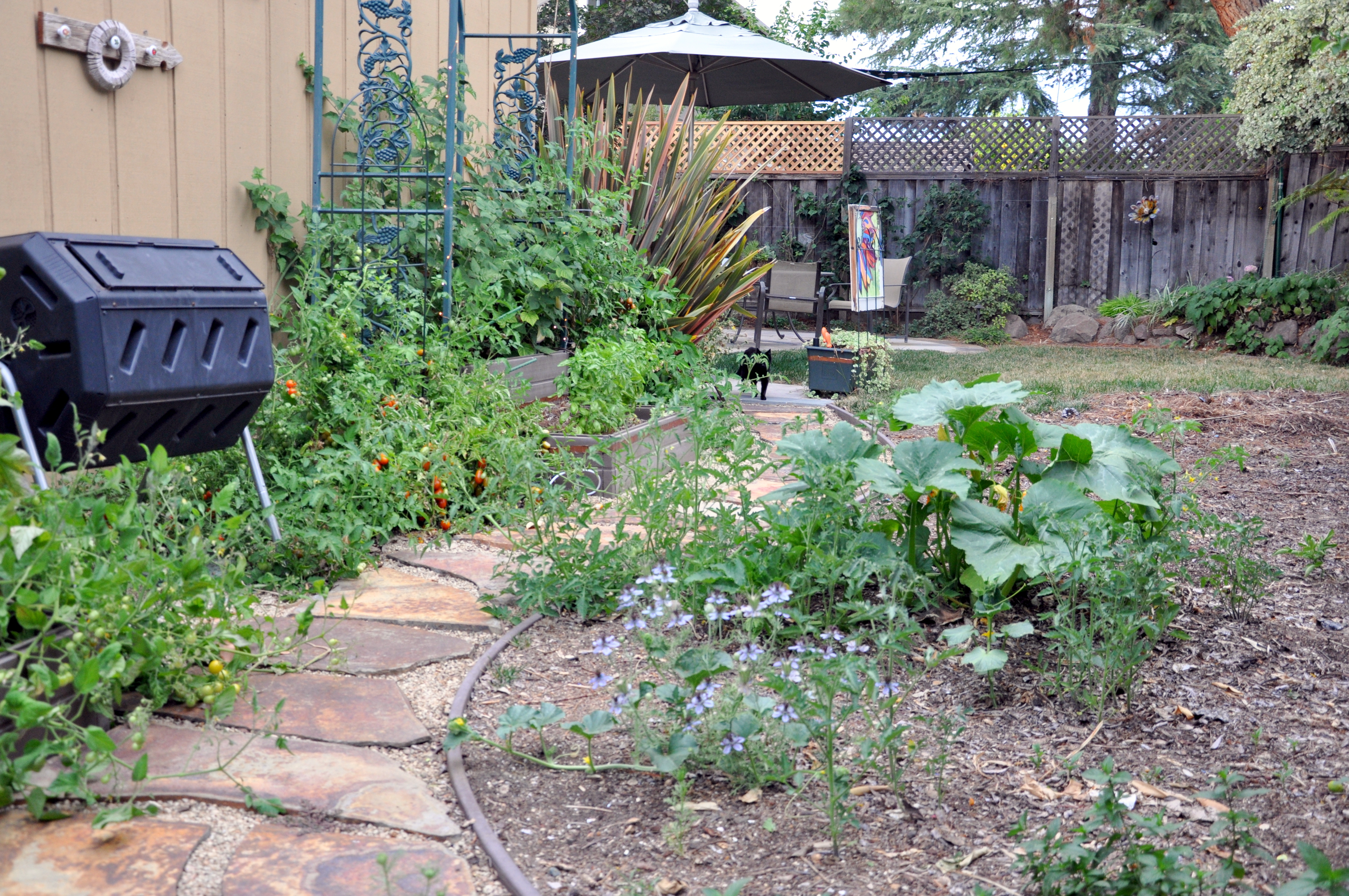
Half lawn, half dry patch, and an all-volunteer tomato crop

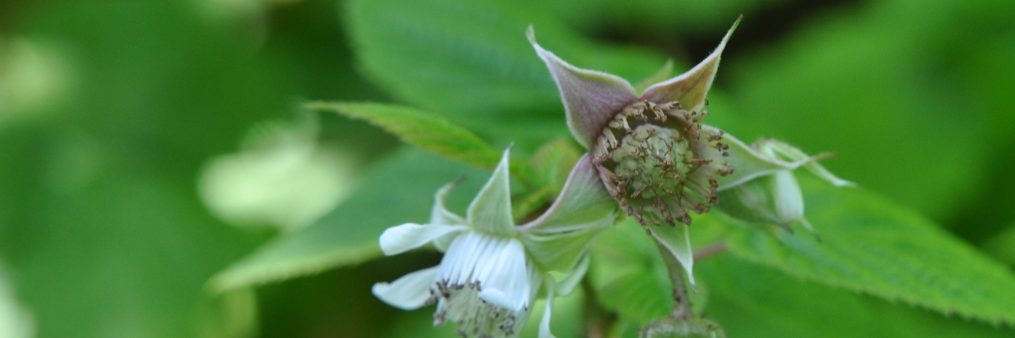
I didn’t plan a vegetable garden this year either, other than the raspberry vines that come back time and again without fuss. With no effort on my part, three tomato varieties self seeded: one grew under the Acer, several in the gravel surrounding the rotating compost bin and a few in the actual planting boxes. Mike added a drip line, so we could eek out some drops at the roots.

three tomato collage

Self-seeded tomatoes

A few weeks ago more tomatoes popped up in the patch of former lawn. They seem to be surviving without any water, something that doesn’t seem possible. I scratched the surface of the soil and it remains dry at least an inch down. The plants must be getting by on morning dew and perhaps some ground water. Amazing.

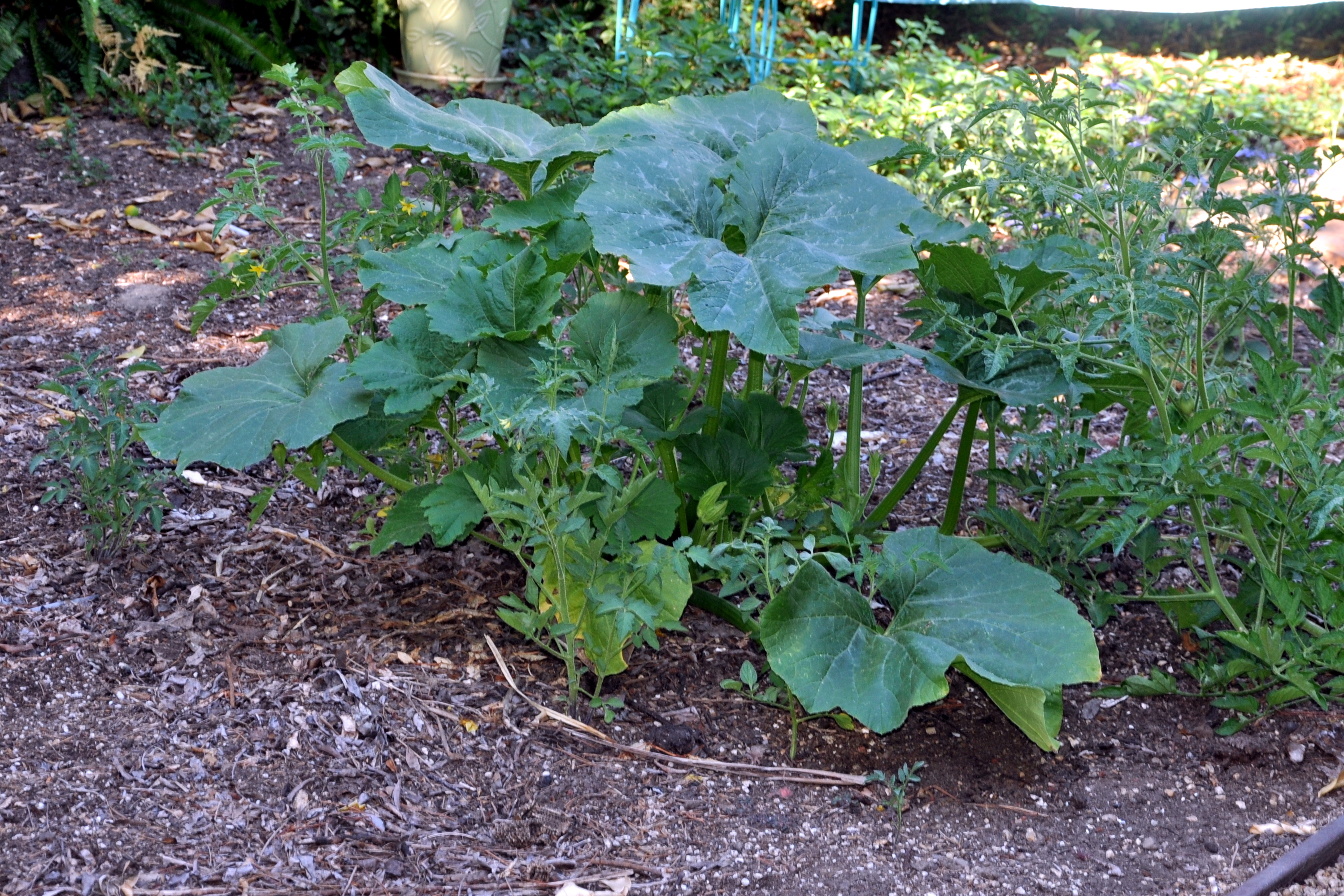
In the same sea of dirt stands a single pumpkin, ringed by several tomatoes. The plant’s leaves droop in exhaustion at the end of each day, and I whisper my understanding. I head to the swing and enjoy the green that remains while longing for a refreshing downpour.

self planted pumpkin and tomatoes

A pumpkin or squash surrounded by tomato plants

It’s survival of the fittest out there under the hot, dry early summer sky. Indoors this seventies gal needs to improve her attitude.

Nature vs. Nurture: A Garden in Flux

Bougainvillea

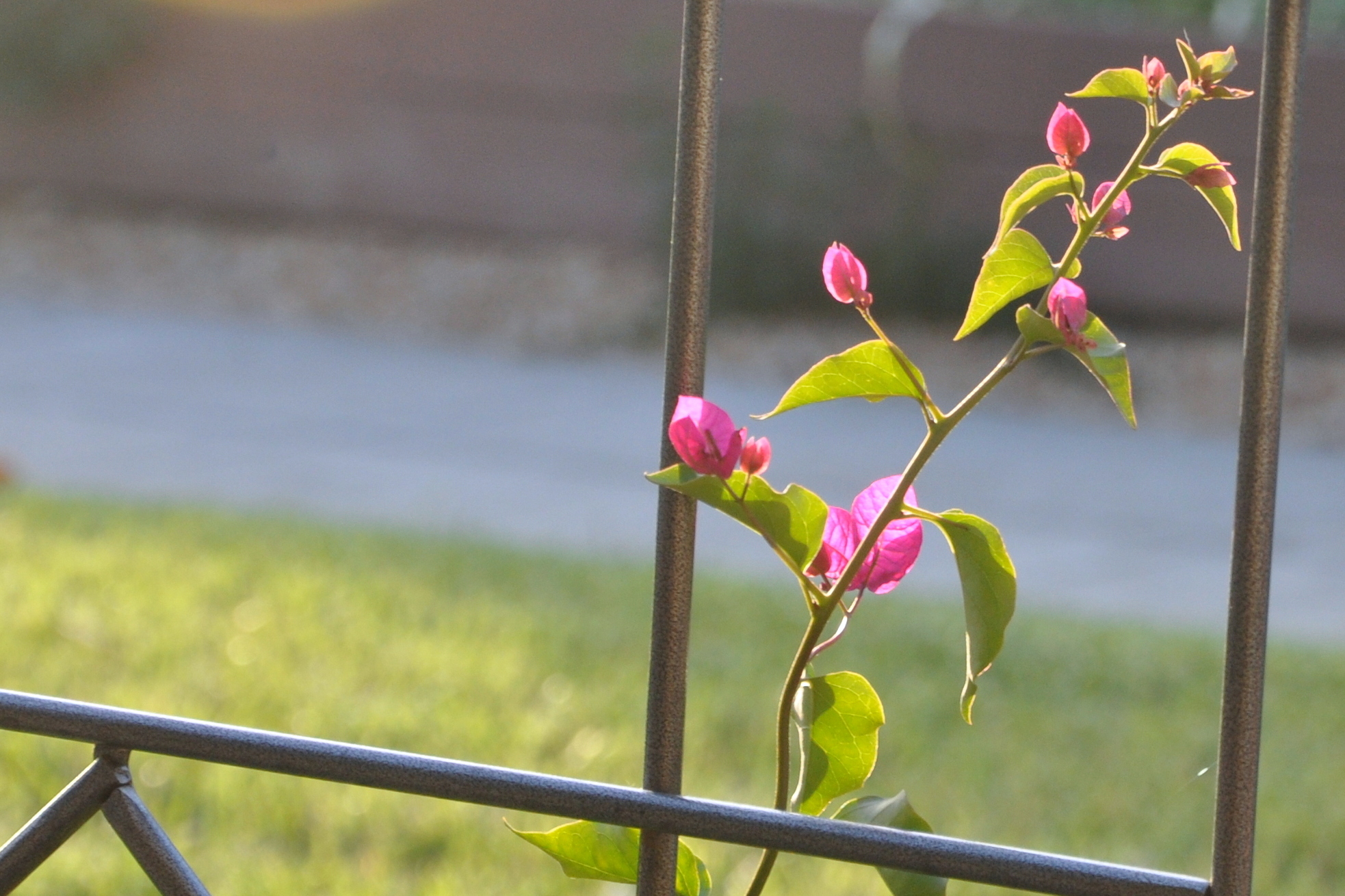
Bougainvillea (Water just once a week)

I’m gradually turning our garden into a more sustainable oasis. Instead of nurturing the English garden of my dreams, I’m letting nature do the talking. I’ve learned a lot from four years of drought.

We’re no longer watering our lawn, allowing nature to takes its course. I met with a landscape designer a few weeks ago and he’s putting together a design for native perennials. I’m envisioning a small meadow that attracts native birds and insects.

Last week I submitted an application to the Santa Clara Valley Water District’s Water Conservation Unit. It will take five to seven weeks to process a one page request, but so it goes with many government agencies. That in turn will generate a lengthy packet of materials to complete, and only then can we proceed (if we want to receive a rebate). As the drought drags on, the rebates increased. Original rebates offered seventy-five cents per square foot. They’ve now increased to $2 per square foot for:

converting high water using landscape (i.e. irrigated turf or functional swimming pool) to low water using landscape. These increases are temporary, through December 31, 2015, and certain restrictions apply

Our back lawn is 370 square feet. If approved we’ll receive a $740 rebate. The front lawn is a bit larger so all told, getting this approval will put a nice dent in the conversion costs. With or without the rebate, we’re going forward with the plans.

In addition to converting the lawn into native landscaping, I’m no longer filling pots with annuals. We have three large pots on the deck that receive irrigation from a drip line. Everything that was hand-watered is gone or replaced with succulents that get by on virtually no water at all.

red succulent

Potted Succulents

Welcome to the Garden

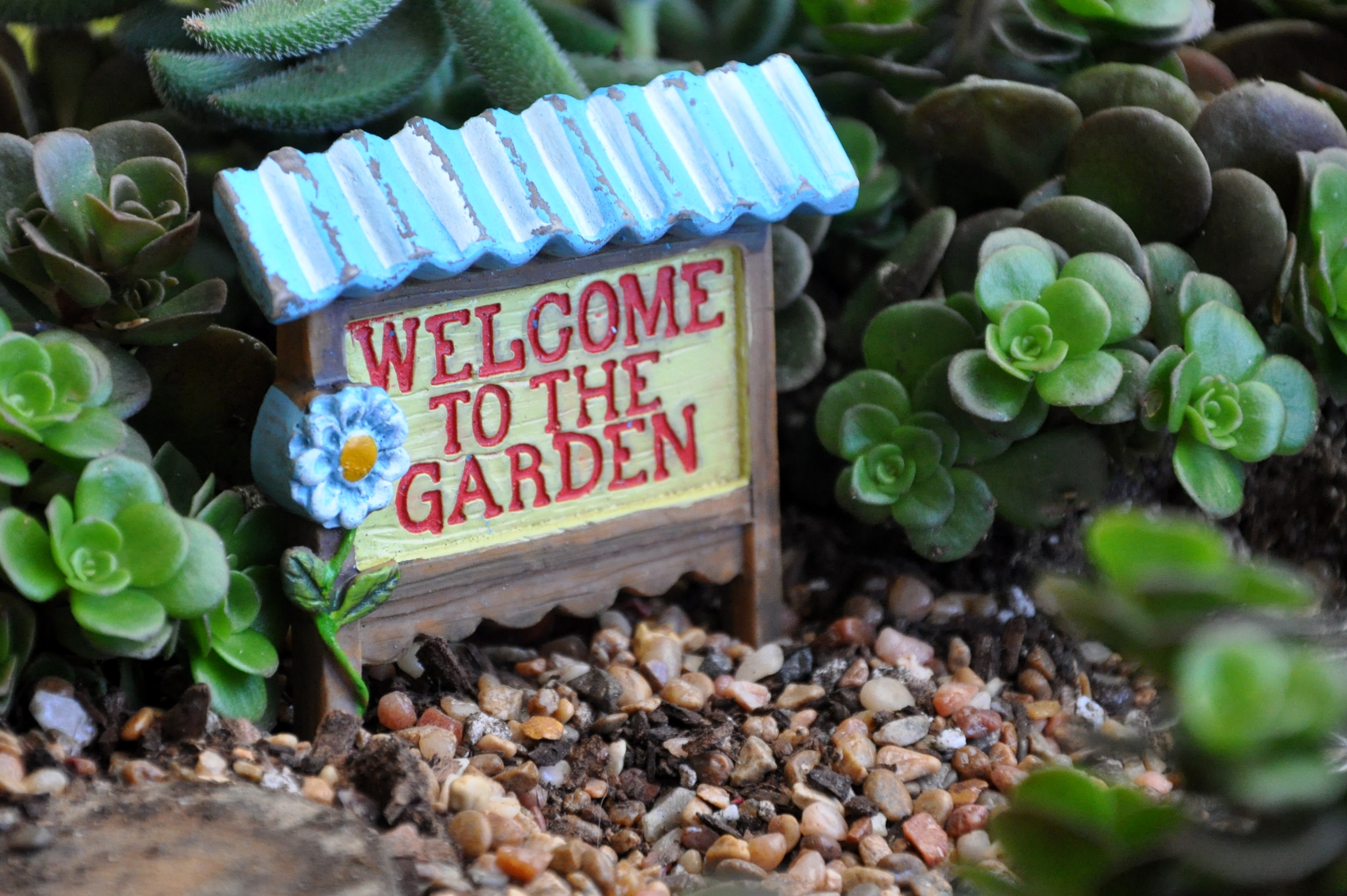
Late yesterday, just before sitting down to write my fairy garden post, I received an out-of-the-blue package from my friend Kristi. Along with her lovely note she sent these charming fairy garden treasures.  I wasted no time adding them to the garden. I adore that little sign!

fairy garden welcome to the garden sign

New Welcome to the Garden Sign

I tucked the new hammock among the soft greenery. It’s the perfect napping place and makes me wish I was Thumbelina. Thank you, Kristi!

fairy garden hammock

The napping place

fairy garden sign and hammock

Fairy Garden Vignette

The Fairy Garden Goes Native

When water is at a premium, you cut corners where you can. I’ve emptied most of my pots, and either replanted with succulents or used the pots for something else.

Our deck top fairy garden requires very little water, but seeing those precious drops fall through the holes in the bottom spurred me to action. Last week, my miniature fairy garden went native.

succulent fairy garden

Fairy Garden Newly Planted with Succulents

I meant to save the markers so I could record the name of the plants, but they’ve gone AWOL…or I tossed them with the transplanting newsprint. The good news: the plants sat on my deck for two to three weeks without a drop of water. They passed the test!

Succulents Up Close

Succulents Up Close

I’m actually quite smitten with these plants. They fit right in, don’t you think?

There’s a story behind the little wooden house (it used to be haunted!). You can read more about that here.  After replanting the garden, I spruced up the house with some new drapes. If you look closely, you’ll see that they’re carefully assembled from the finest Washi tape in the land. Nothing but the finest for mystical fairies. The new garden path is also special. I gathered those lovely, flat green stones on the beach in Victoria last summer. Wilma of the Creartfuldodger took Boomdee and me beach-combing along the beautiful island shore. These stones evoke special memories of that day.

You can view the gallery by clicking on the first photo, then follow the arrows. It took me a bit of time to sort that one out. ;-)

All the other treasures in the garden are found objects or gifts. The wooden house came from my son’s craft collection. I rescued it from the trash. The reading patio is an upside down candle holder and the charming chair, cat and rose pillow flew here from Canada via Boomdee. Marcia and her girls surprised me with the pink mushroom one cool fall day.

I built the (little) Little Free Library from matchboxes, stickers and an empty box. A clothes pin and a bit of duct tape keep it in place. A friend taught me how to make the heart-shaped chairs from the top of a champagne closure.

Are you a fairy gardener, too? It’s easy and fun and incredibly relaxing. You can garden anywhere at any time, limited only by your imagination. Jump right in. The [lack of water] is fine!

Postscript: You won’t believe this. Just before sitting down to write this, I received an out-of-the-blue package from my friend Kristi. Inside: her lovely note and a couple of fairy garden treasures. Check back tomorrow, for updates. I can’t wait to show them off.  Thanks, Kristi xox

Loving Our Earth

I’m spending  Earth Day getting my hands dirty.  I started yesterday, since there is always a lot to do this time of year. After dispatching every last weed in the garden, I got busy staking the tomatoes I didn’t plant and harvesting the potatoes from the compost pile. I didn’t plant the potatoes either.

So far it’s been an interesting spring in the garden. We’ve stopped watering pretty much everything. This is year four of the California drought, prompting Governor Brown to issue mandatory, 25% state-wide water restrictions.  Later this week I’m meeting with a landscape designer to draw up alternative plans to replace our lawn.

In this semi-arid state, we have no business planting lawns in the first place. It’s an old tradition, imported from the lush gardens of England and Europe where water is plentiful. Somehow it became a status symbol and then the status quo. Those days are over.

I’ve been contemplating several ideas but I seem to lack the overall vision of what a replacement will look like. It will be nice to meet with J.P. who designed our beautiful front ramp and deck  in 2010 and the circular patio out back.

2010 Landcape Plan front yard

J.P. Bergez, Landscape Design

2010 front garden design bergez

Completed Landscape, 2010

Two years ago we removed the grassy sidewalk strip and replaced it with a flower garden. The sidewalk garden uses less water while attracting beneficial insects. I think it’s much prettier, too. We should have done it years ago.

Sidewalk strip before and after

Sidewalk strip before and after

Yesterday I gathered all of my stored seeds including my much-loved sunflowers and planted them in the curb garden. There they will grow or perish. They’ll have to get by with the water available to that narrow strip.

Late last year Garden Sunshine blogged about her sheet mulching project and I knew immediately that I wanted to do the same thing.  I drew a mental line down the center of the lawn in our back garden, then sheet mulched half of it. The area is still composting, but I achieved the desired effect: that section of the lawn is gone. Slowly, gradually, our water-thirsty suburban grass is going away.

I’ll let you know how the consult goes.

Here are my goals:

  • Reduce the amount of water needed to maintain the garden by half. Since 50% of residential water use goes to irrigation, cutting that use in half means we’ll achieve a 25% reduction overall.
  • Create a small seating area for my swing under the shade of the orange tree. We used to have the swing under the tree, but it rested on the lawn. We had to remember to move it every two or three days, or deal with a soggy swing. No grass, no problem.  My future, summer afternoon napping place is secure.
  • Share the process and what I learn along the way with others via my blog, Facebook, Twitter and email.

Please let me know if you take the Earth Day quiz, below. I only scored five out of ten but was happy to know I beat the average score of four.

Sowing Mysteries and Garden Sprawl

Have you ever planted one of those seed assortments that promise extraordinary results with no effort?  According to the package, a jaw-dropping butterfly garden will appear within a matter of weeks. All you have to do is scatter the seeds in the soil, cover, water and enjoy.

I’ve fallen for the sales pitch twice now and I should know better. It seems irresistible when you see the photo on the packet with 100 square feet (30 meters) of wildflowers. In my experience, ‘thousands of seeds’ turn out to be one, maybe two hardy plants. The end.

Or is it?

I present to you, garden sprawl.

Both Love-in-a-mist

love in a mist at the sidewalk

Love-in-a-mist edging the sidewalk

love in a mist lining the walkway

I love this self-made border

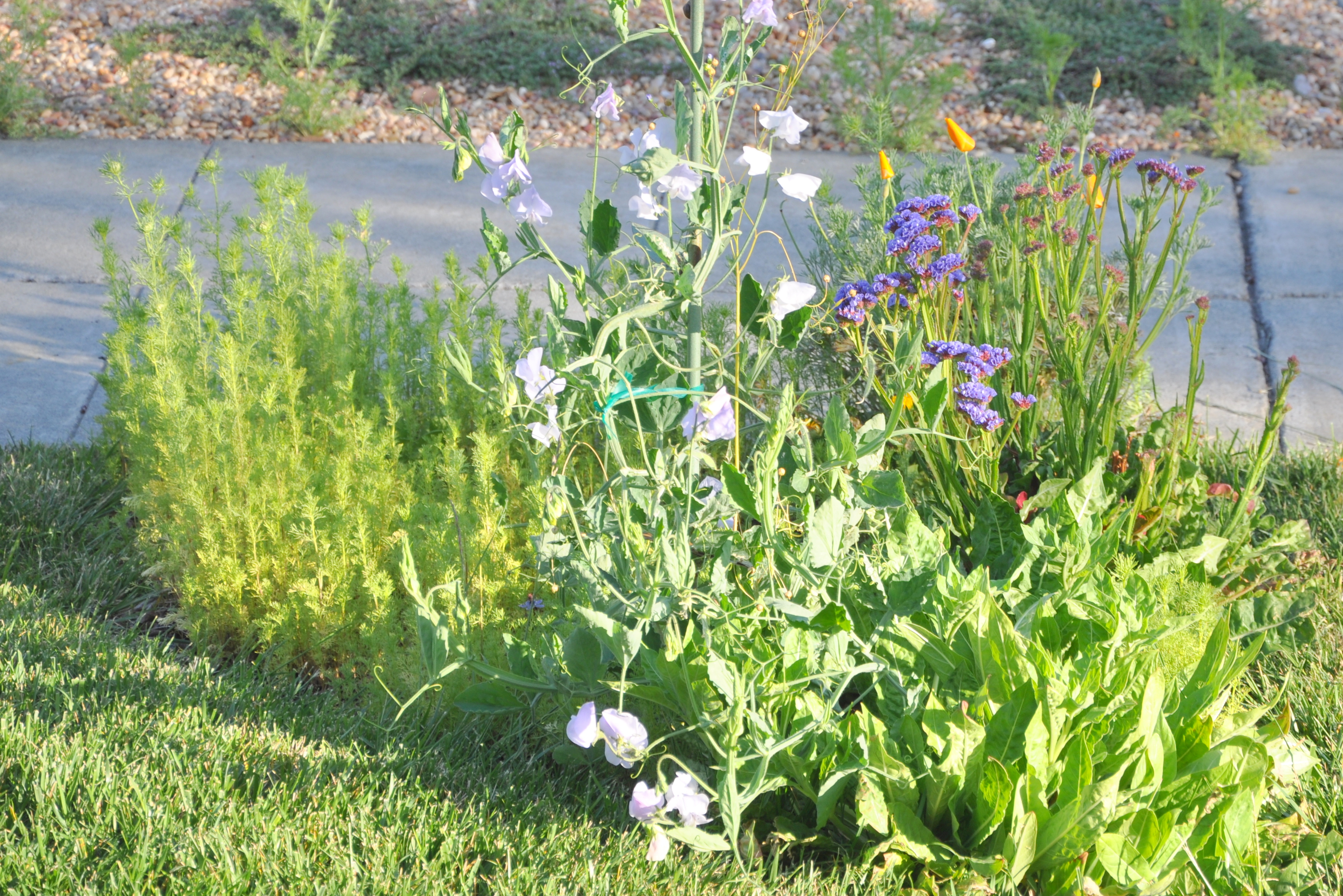
love in a mist, poppies, statice

Love-in-a-mist fills in all the space around the Sweet Peas, California Poppies, and Statice

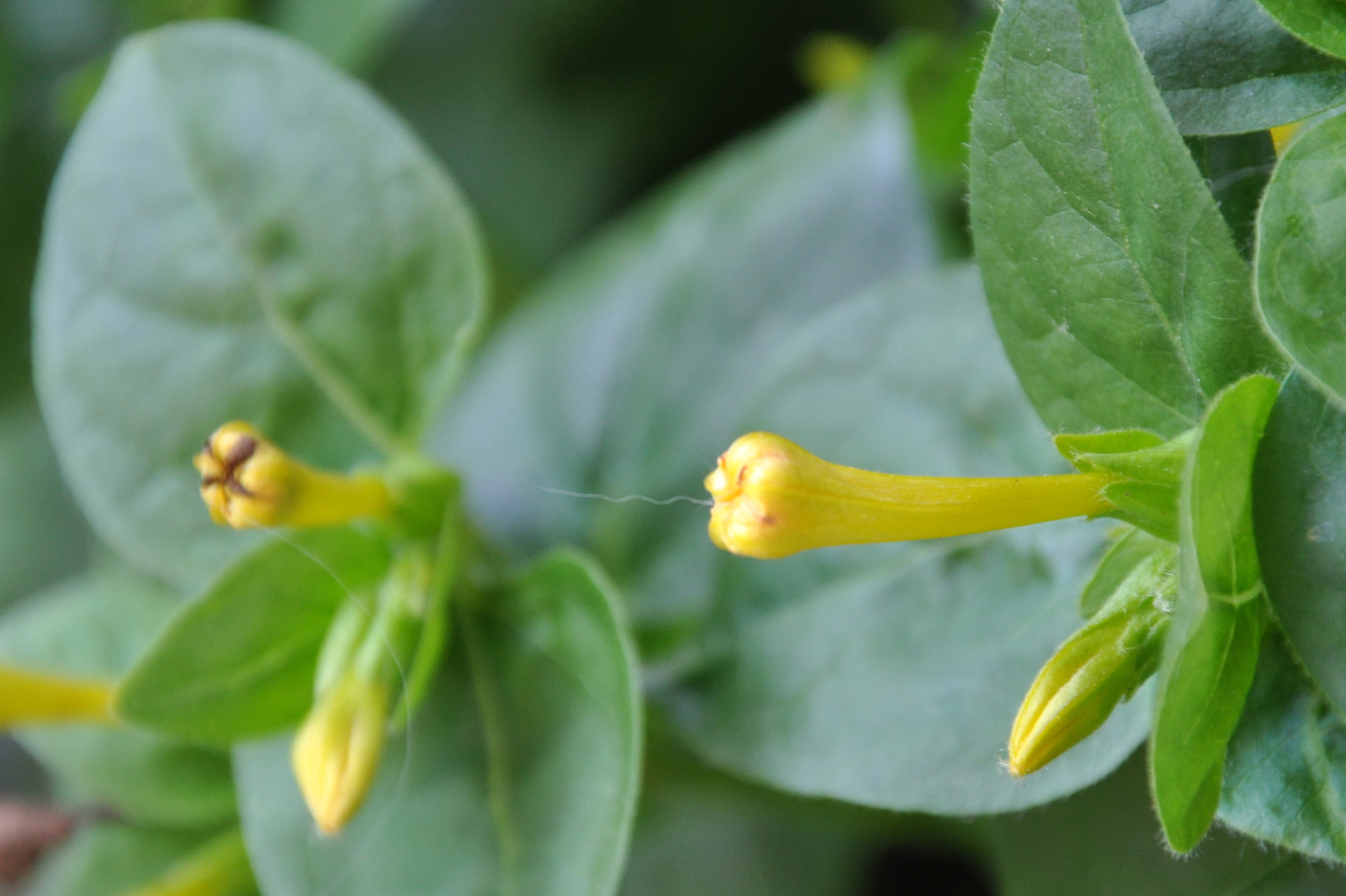
and Four o’clocks

four o'clock buds

Four O’clock, time to wake up

four o'clock long view

Four O’clock, the long view

have sown themselves throughout the garden. They’ve traveled from the front to the back of the house, filling in the spaces in between. I even saw a few in the neighborhood on our evening walk. Those seeds get around!

They’re all welcome in my garden, with their tender greens, pops of yellow and soon, love-in-a-mist lavender blooms.

We’re on strict water restrictions as we work our way through year four of the drought. So far, the seedlings are getting by on morning dew and an occasional watering. We’re turning off the sprinklers to the lawn completely and hope to eventually replace lawn with a native alternative.

Meanwhile, I’m enjoying these unexpected gifts and their presence in my arid garden.

What’s the water situation in your neck of the woods?