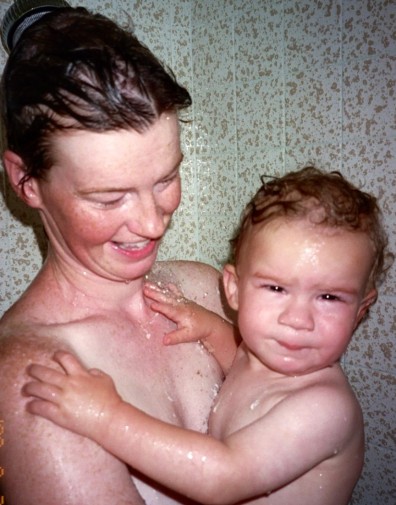
Breasts

showerOnce a year, in January, I go for my mammogram. It’s stressful and painful, but the only decent diagnostic tool available at this time. Self exams are important too. It’s Thursday, which means I got the all-clear. Phew!

My paternal grandmother had breast cancer. My sister-in-law had it too. In the past five years, six of my friends have undergone treatment for breast cancer, in most cases opting for a mastectomy, with or without radiation and chemotherapy. The good news is that they’ve all survived their treatment and continue to live life to the fullest. I’m so grateful for that.

I wrote the following piece about five years ago when women were posting their bra-color on Facebook as a silly way to draw attention to a serious condition.

If you’re a woman reading this, please don’t put off this important test. It could save your life. If you’re a breast cancer survivor, my hat is off to you for traveling the difficult road to good health.

Breasts

Ah, breasts. That tender place where men rest their heads (and eyes), where babies nurse and grow, and where the heart of a woman lies just beneath this outward representation of the sacred feminine. This lovely place is the landing pad of both comfort and eroticism.

Breasts are not boobs, (a boob is a “fool”) nor boobies, ta-tas or tits. Certainly not jugs, pillows or Simpson™ eyes.  Breasts. We can’t seem to get enough of them. We love them, idolize them, dress them up in pretty clothes and admire them on red-carpet runways. Are they real or fake? Are they “big enough?” Are they “adequate?” Can we glance at the woman next to us in the locker room without judging ourselves?

Straight men adore them, gay men admire them and gay women couples are lucky enough to have two pair.

Breasts are wonderful to look at, soft to the touch, warm, comforting and yes, erotic. Attach them to a beautiful woman and their caché goes through the roof. They sell beer, wine, cars, clothes and a laundry list of other products. If “good genes” don’t provide a nice pair, you can go out and buy them at the plastic surgeon’s office. For some it seems perfectly natural to go under the knife, not to mention general anesthesia, and improve on nature. A friend of mine from Santa Monica once joked that he would often “chip his tooth” on a surgically altered breast.

Of course, if you augment before having babies you can forget about nursing. If you do it after, there’s the possibility you might not wake up from the anesthesia.

Breasts nurture babies. The year I delivered my first son into the world, the Society of American Pediatrics recommended nursing for at least six months. By the time his brother came along they were suggesting a year. I crossed the line in some people’s eyes when I continued to breast feed well into his second year, stopping at around 23 months because my baby boy was done. In my mind, that was the way it should be, not on some arbitrary schedule. Studies have shown that breast-fed babies have higher IQ’s, better relationships and fewer health problems. But our society looks askance at women who continue to nourish and nurture children at the breast into the second year. Even some of my friends, of both sexes, found this disquieting. I was a discreet breast-feeder. I would never deliberately make anyone uncomfortable under any circumstance. I took great offense when someone compared it to urinating in public. Really?

Breasts are often objectified. We have dining establishments called Hooters and Double D’s that employ women on the merits of their cup size and their willingness to display their gifts up close and personal. It isn’t quite like taking junior to the club for a lap dance, but it certainly presents the mom of two boys with some interesting perspectives on what the future may hold. It’s not okay to nurse in public, but if I’m well endowed and perky I can wait tables wearing tight-fitting low-cut clothes and probably rake in some decent tips.

My breasts and I have been on our own journey. Tomboy that I was, around age 12, I hooked one of  my breasts on the cyclone fence I was climbing. The pain was bad enough but the warm blood trickling under my sweater as I ran home was frightening. The injuries and the resulting scars were minor, but alarming for a young, developing girl. As a skinny high-school girl my breasts were small and they embarrassed me. At one point my mom bought me a padded bra, no doubt to improve my self-esteem. I eventually filled out but also learned that men are a lot more forgiving of women’s bodies than we are. When I was pregnant, my breasts were large but my expanding belly was larger. Later, swollen with mother’s milk, I drew admiring glances. Someone wanted to know if I had had a “breast enhancement.” Uh…no.

About a year later I received the dreaded call after a routine mammogram. Please come back in for “additional views.” Still unsatisfied, they scheduled a biopsy for the day after Christmas. In that moment I knew I would be more than willing to let them go, if only I could stay and raise my children. While face down on an uncomfortable table, the technician repeatedly flattened the breast between two plates as they attempted to get the right spot for a needle core biopsy. Eventually the numbness wore off and they had to start again. A few hours later I was free to go. Riding home in a taxi to join my husband and two precious boys, one slightly damp  from his recent nap, I struggled with feelings of dread.

My gift a week later was that all was well. My breasts and I were free to continue our journey.

Women (and my super-cool friend Kevin) posted their bra color on Facebook that week. We had a lot of fun and shared many laughs. But under those lacy, frilly, silly things we call bras are women, real women whose being is greater than the sum of her parts.
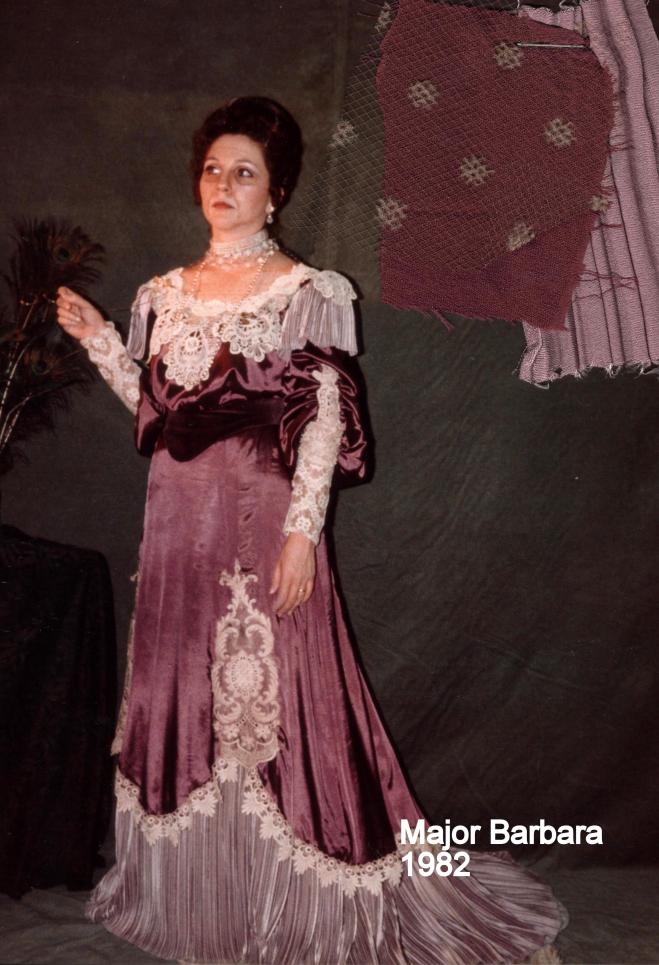
When the Going Gets Tough, the Tough Get Sewing

Major Barbara: San Jose State

Costume Design by Deborah Slate
I spent 40 hours sewing this costume

Wedding and birthday anniversaries are fun.  When it’s the anniversary of a death, clouds descend. My mom passed three days after Christmas in 2008, so in addition to my usual seasonal blahs, feelings of loss prevail.

This year, I spent the day sewing, something my mom taught me as a girl.  I remember the moment clearly, though I was only six.  It started at school.

During arts and crafts time, they gave us sewing cards, cardboard pictures punched with holes and a shoe lace. We were to thread the lace in and out of the holes to frame the picture. Though mesmerized, I was also annoyed that I had to take it apart when done.  I went home and asked my mom if I could sew.

She found the largest needle she had and an old sock.  I sat by her knee on the floor, cutting the sock into shapes and then sewing them together.  I completely lost myself in the activity.

I made a lot of my clothes in high school, and sewed for friends as well.  I attended community college where I got an associate degree in fashion merchandising, taking classes in fine sewing and design. From there I transferred to San Jose State where I studied costume design, graduating with a BS in theater.  I worked as a ‘stitcher’ at San Jose Repertory Theater, my first professional experience.  I also spent three summers doing summer stock in Santa Rosa, working as an assistant cutter and later cutter for summer shows.

summer stock theater

Summer Stock Theater

Making a living in the arts is hard work.  I admire my friends that stuck with it, many of them working in academia to make ends meet.  I drifted into different things, when the challenge of always looking for that next job, contract or summer gig started to wear on me.  I miss it.  You meet incredibly talented and creative people in theater, and you meet prima donnas and sociopaths as well.  Everyone’s welcome. No judgment.

These days I sew for myself once a year at Halloween.  It’s a wonderfully creative outlet.  Whenever I haul out my machine, I wonder why I don’t find the time to do it more often.

During my day of sewing, I repaired a dress for my sister. Sharon is also a good seamstress, but her MS makes sewing a challenge these days. I did a bit of mending for my son, then learned how to use the overlock stitch on my machine.  Oh happy day!

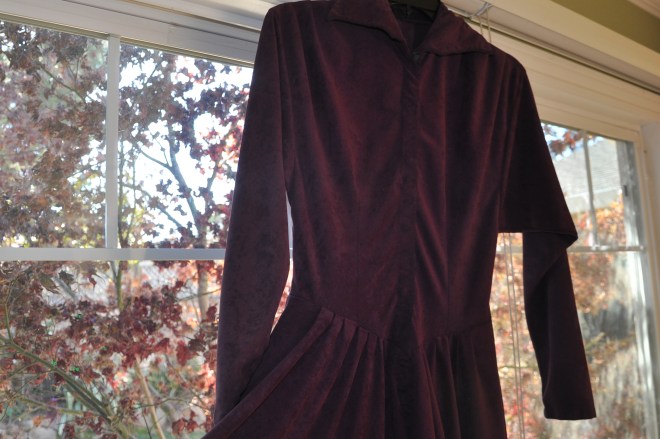
mending seams

Mended seams

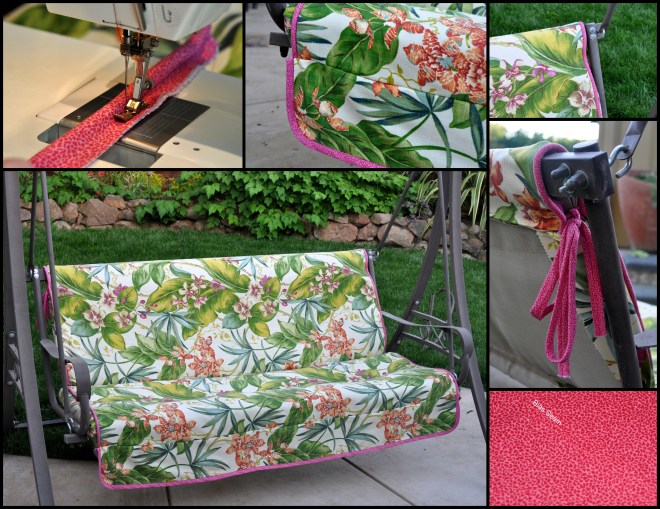
Two summers ago I made a slip cover for my garden swing.  I piped most of the edges, but the two side panels were simply pinked (with my mom’s pinking shears).  The loose weave of the fabric didn’t hold up in the wash, unfortunately, so the pinked edges frayed.  I trimmed the edges even, then went to town with the over lock stitch.  Be still my heart: it worked!  I laundered the cover and put it away for the season.  For some reason that really made me happy.

overlocked seams

Over-locked seams

garden swing cover

Garden swing cover

Last on the list for my sewing day: a pillow.  My friend Melanie had a beloved canvas bag from her summer camp days.  Her well-loved bag sported torn seams and a few holes, but it had great sentimental value.  I offered to turn it into a pillow.

I found the perfect trim at my local craft store to add a bit of texture.  Within no time the bag transformed.

duffel bag pillow

Camp Seafarer pillow

The day was cathartic.  I sewed for myself, my family and my friends and I sewed for the memory of mom.  I used her pinking shears that day too, and believe it or not, a spool of black thread that once lived in her sewing box.

As I put all this into words, I wonder if I’ve hit upon an annual tradition.

What helps you get through a ‘loaded’ anniversary?

Millbrae: Train Tracks of my Youth

DSC00068I just read an uplifting post at Teddy and Tottie, a family enjoying themselves and the holidays.

Color me green with envy.  It’s not that I had a bad holiday.  To the contrary, I have two great sons, four adorable cats and a husband who is all you could ask for in a partner. I have extraordinary friends and a comfortable life.  I want for nothing.

Depression, however, colors things grey.  It tosses a blanket over the light and strips your energy.  It paints things with a lackluster brush.  We’re well acquainted, depression and me, but we’re not friends.  Regardless, it shows up each year and settles in for a while.

The triggers are all too familiar, but since I can’t change the past, cancel the holidays or renegotiate the date on my mother’s death certificate, I simply work at remaining aware and try to be kind to myself.

We headed to The City for a family outing this week on a train that travels through Millbrae.  When our train made the scheduled stop at the Millbrae station and without a hint of diplomacy, my old acquaintance took a seat in the invisible row of my past.  Depression cozied up to my cerebral cortex and made himself comfortable.

And so it goes.

I wrote the following piece in long-hand while riding the same train several years ago.  It flowed out of my pores and helps explain the sorrow.

If you suffer seasonal depression, my heart goes out to you.  Let’s continue together to toss that blanket aside once and for all.

Train Tracks of my Youth

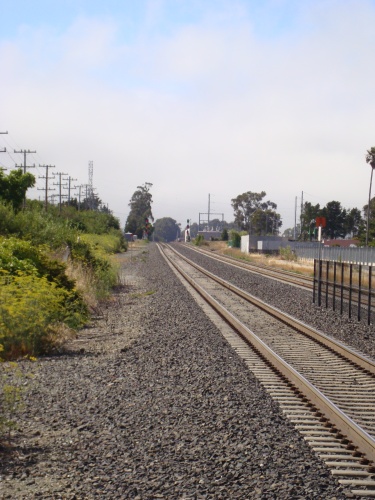
Standing on the Millbrae platform of a train bound for San Jose, memories dribbled out of me like a wound that won’t quite heal. The longer I stood, the sadder I felt, heavy, burdened, questioning as I stared down the train tracks of my youth.

Our family moved to Millbrae in 1968. My father succumbed to lung cancer a year later, victim to his habit of smoking hand-rolled, unfiltered Player cigarettes. He was 54. What should have been a temporary residence on the proverbial wrong side of the tracks became our home for 7 years.

After our father died, Mom found work in the City and rode those tracks north each day. We waited for her to come home at night, listening for the evening train. Having lost one parent, it suddenly seemed feasible that we could lose the other. The relief was palpable when she walked in the door. I remember the smell of her suede cape, her cool, soft cheek and the undeniable release of fear for another day.

We crossed those tracks daily to attend school, the not-so-subtle border between the slums of Millbrae and the mostly white, affluent hills of this small community. A boy named Dwight once caught up to me as I walked home alone on those tracks, charming and polite, he was tall, dark-skinned and interested in me, a potent combination at any age . But he was to appear a few weeks later at our bus stop, arms bleeding, flogged by his father for some unknown infraction. Confused and horrified, I felt very alone. Shortly thereafter his family moved.

We spent our summer on our side of the tracks playing kick the can and hanging out at an apartment pool reading discarded issues of Mad magazine. I was at home with our crowd on Garden Lane, the have-nots who didn’t need to explain. I played with a boy named Robert, our champion player, his friend Scott and my sister Sharon among others. There was a girl from Puerto Rico named Teresa who exuded sex appeal from every pore. She knew a lot more about boys then I did and got to kiss the one I had a crush on.

We survived those years dodging drugs and unwanted pregnancies and went on to graduate from college. But I would be lying if I said we made it through unscathed. For in that rough-and-tumble neighborhood on a street called Garden Lane I saw things that I still don’t really understand: the cries of a woman beaten by her boyfriend; the squawk of her parrot, also agitated and scared; the sight of a father beating his four-year old with a switch; and the cruelty of a boy exploding a frog with a firecracker before my devastated eyes.

Garden Lane was a place of loss and violence, pain and sorrow, first crushes and the dawning sexuality of a shy, freckle-faced girl. The train tracks remain but Garden Lane is gone, obliterated by tractors and wrecking balls to make way for a BART station in its place. Plowed under but not forgotten, it continues to parallel the train tracks of my youth.

Frosty Fingers Tickle the Fronds

Amazing things happen when you look through the lens of a camera. It’s an interesting metaphor for life.

We can view a glass as half empty or half full or we can focus on the small etches in the glass, marvel at the glass’ ability to hold water and consider its resilience.  That glass stands up to multiple washings and use, and perhaps a tumble or two.

Seven days of hard frost laid waste the less-hardy plants in our garden.  This kind of cold snap is unheard of in San Jose, a semi-arid climate known for moderate temps.  It was disheartening seeing all that damage, but a reminder too, that loss is part of life.  So too, is resilience.

I donned my warm coat, slung the camera over my shoulder and took pictures of nature’s etching.  While the ferns took a hit, the plants survived.  Frosty fingers tickled the fronds, but the roots stayed warm and strong.

fern frost damage

Frost damaged ferns

All three geraniums seemed to collapse from the frost, but beneath the wilt, I see life.  I’ve gardened long enough to know that nature serves up some amazing things.  I’ll wait for spring before a true assessment is in order.

geranium flower frost damage

Geranium droop

frost damage geranium

Geranium leaves

Meanwhile, since frost is as much a part of nature as wind, rain, snow and sun, I’m choosing to embrace the beauty in all of it.

frozen fern

Frozen beauty

Organized at Heart

I’m posting a series of articles featuring organizing around the holidays this month on my blog Organized at Heart.  If the subject interests you, please go take a peak. Today’s blog offers tips for Organizing Christmas Morning.

Two Letters

Alys the Gardener

Alys

Dear Reader,

We create a ‘contract’ of sorts when we publish a regular blog. My unwritten contract with you says that when you log on, you can expect to find a post about gardening, crafting, crafty gardening and cats, delivered with a mostly light heart. So, the following letter, written to my dad who died when I was 9 has a more somber tone and I wanted to let you know that upfront. If this is not your thing, please read no further. Stop by next week for the usual garden antics.

With love and gratitude for your readership and support.

Alys

Dear Daddy,

This is one of those letters you never actually send, though I would if I could. You left an unimaginable void in our hearts when you died on a day just like today. It was hot, strangely still and ultimately surreal. How could you have been here one minute, then gone the next?  I walked in on mom the day you died and I knew. She was kneeling on the floor tearing up your letters though I never fully understood why. She had her reasons and in the end it doesn’t really matter.

You would be amazed what can happen to a letter these days. When I hit a button on an electronic box called a computer, this letter will travel through something called the internet.  Once sent, you can’t tear it up, burn it, or control it in any way. Lovers and politicians learned this the hard way. It’s what they called a double-edged sword in your day.

I love you so much, and was really, really, really sad when you died.  As you know, I was only 9 so I didn’t have the resources to understand what was going on. Mom did her best, but she struggled too. We all missed you terribly. I’m crying now as I write this, all these years later, as at times I remain stuck in the painful past.

Please know, that you would be proud of your legacy. Your girls grew up and got college degrees, something that was really important to you.  It was your reason for moving the family to California in the first place.  We all love and nurture animals as you did,  and yours-truly is a gardener!  Can you believe it?

I have special memories of our beautiful London garden.  You hauled rocks in a wheelbarrow to build a small ‘creek’ down the middle of the yard. It gathered run-off from rain and melting snow and filled my imagination with happy moments. Your grew snapdragons near the back door, and tomatoes during the hot days of summer. Sometimes people would meet you at the nursery where you worked and ask to come by to see your garden. I was so proud of you.

When we left Canada for what you hoped would be a better life for your girls, the new homeowners weren’t interested in keeping up your garden. You were hugely disappointed.  I certainly would be.  Of course the plan was a new home and a new garden in sunny California.  We arrived in November of 1966 to less than favorable circumstances. The man who hired you to run his nursery had since filed bankruptcy. You supported our family with your savings, then sold your beloved coin collection to make ends meet. It was a difficult time for all of us. I can’t imagine as a parent how hard that must have been for you.

By the end of 1967 things were finally turning around. Our family moved to Millbrae where you landed a job at a local garden nursery.  We lived in a rental, but at last could put down roots. The following Christmas, what we thought was the flu turned out to be lung cancer.  The holidays were never the same.

I turn 54 this October, the same age you were when a cruel and ravishing cancer stripped you of your life. Your physical suffering was finally at an end on that hot, August day, but my struggles had just begun. Life doesn’t come with guarantees.

I want to thank you for your gifts of life and affection.  Each of your daughters carries you in her own way.  I think you would be proud of us, as we are of you.

My wish today as I hit the ‘send button’ would be for you to know that we all grew up, lived productive lives and that we carry you in our hearts, always.  When I reach toward the earth, to tumble a seed or pull out a weed, I think of you.

Your loving daughter,

Alys Ann

Mom and Dad on their wedding day

Mom and Dad on their wedding day