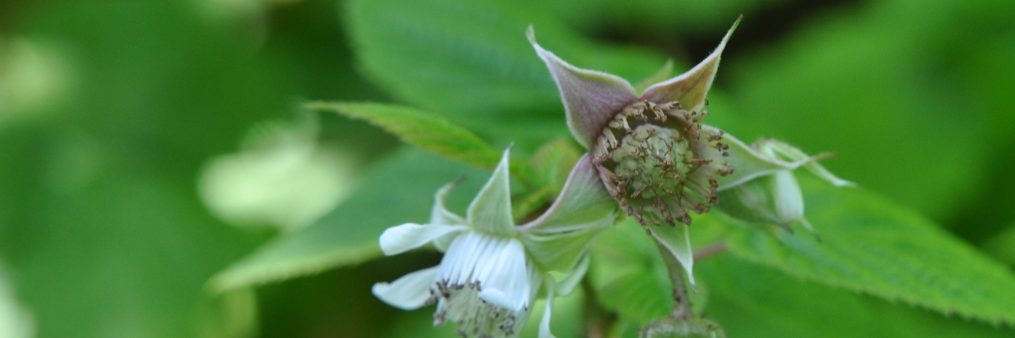
An extended heat wave in March, followed by a mix of high temperatures and rain, has left my garden confused.
After days of temperatures reaching 15 to 25 degrees above normal, our orange tree started dropping leaves. The pittosporum did the same. I hooked up a hose to our rainwater tanks and gave both trees a long soak, grateful for the stored water.
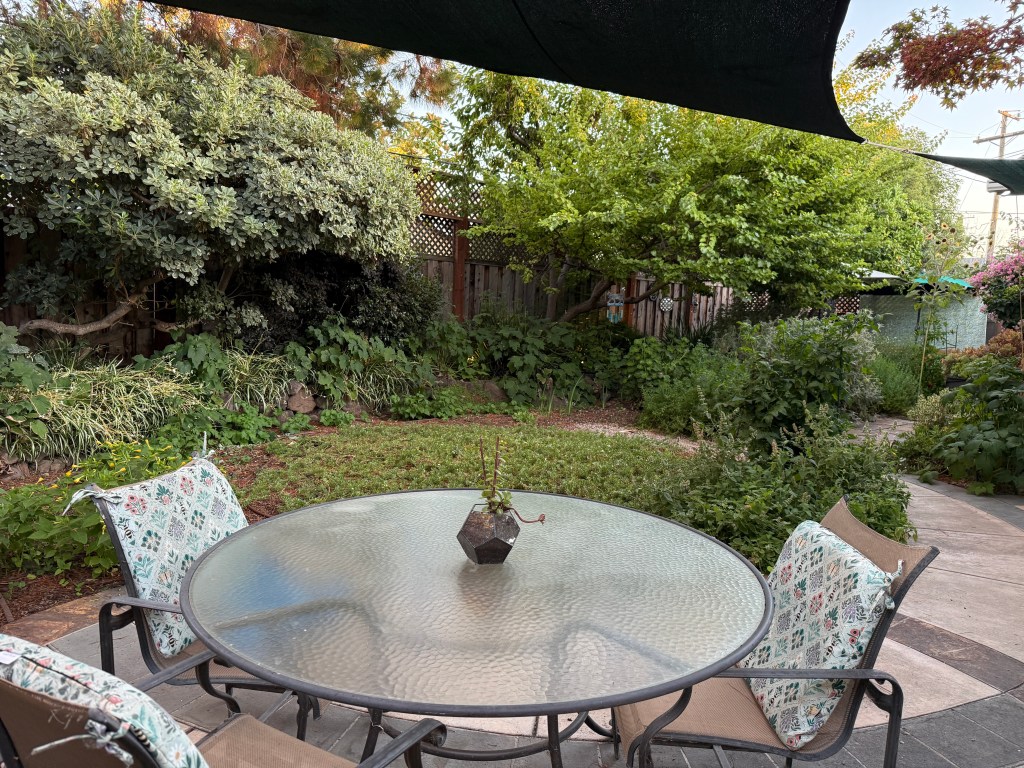
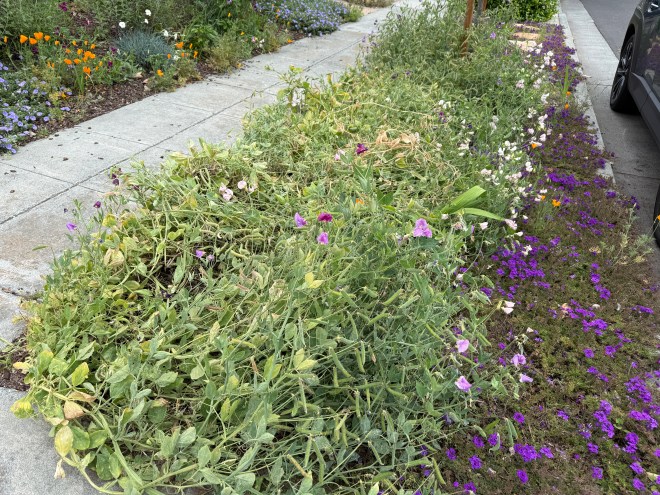
My self-seeded sweet peas (Lathyrus odoratus) didn’t like the heat either. They normally do well into June as summer temperatures set in, but the prolonged, excessive March heat sent them to seed before April’s end. I pulled them out over the weekend. I have one sweet pea vine hanging on under the Magnolias’ shade, but it, too, is fading.
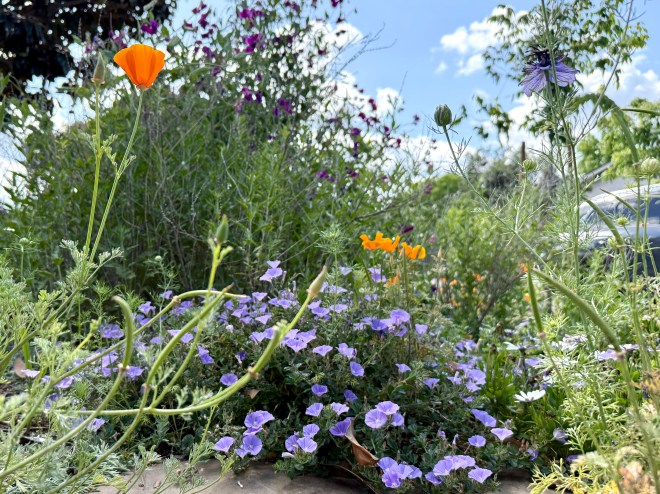
Under the Acer, Four o’clock plants(Mirabilis jalapa) are up two months early and already blooming. It’s all a bit unsettling.
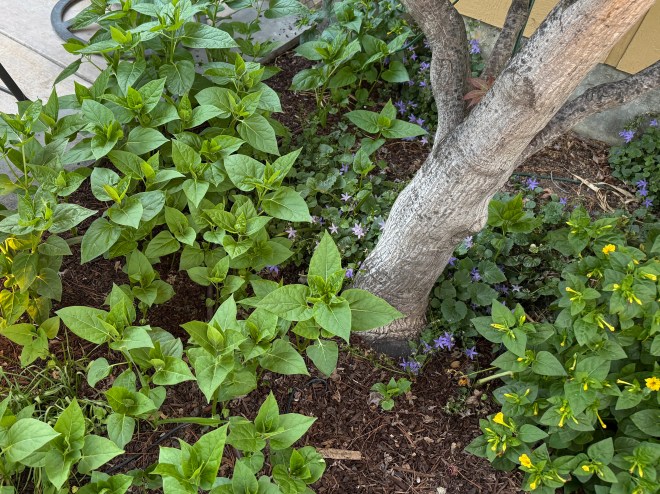
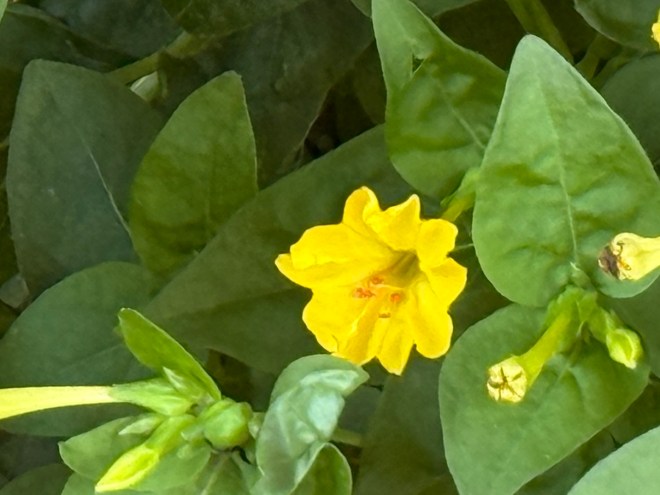
Temperatures have climbed again this week, as our dry season approaches. San Jose’s semi-arid climate is typically rain-free from May through October.
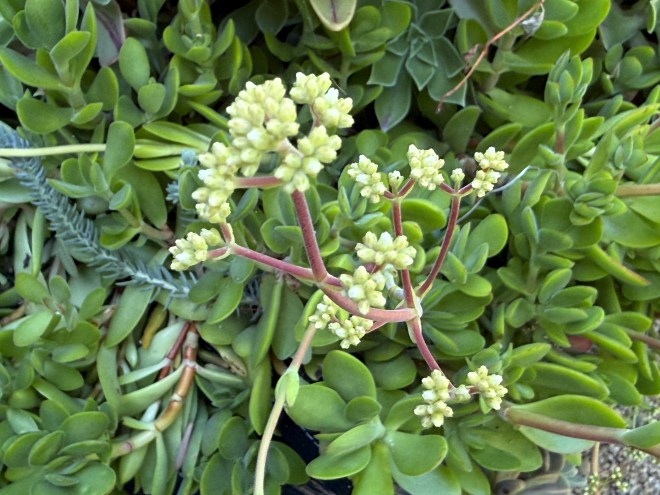
I’m trying to reset my expectations and remind myself that all the native plants in my garden continue to thrive, and several of the succulents are flowering.
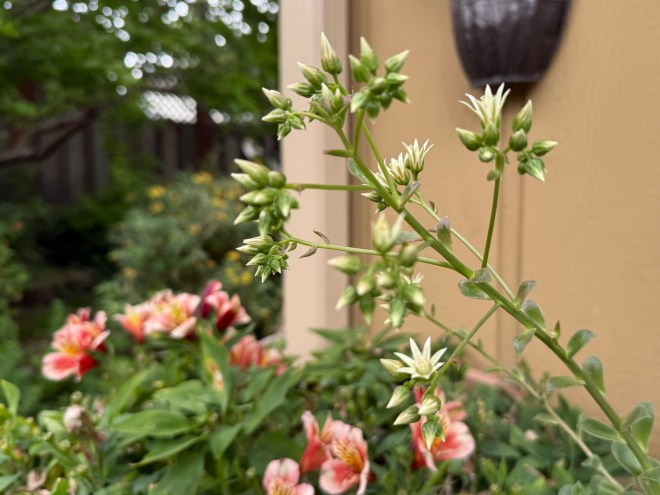
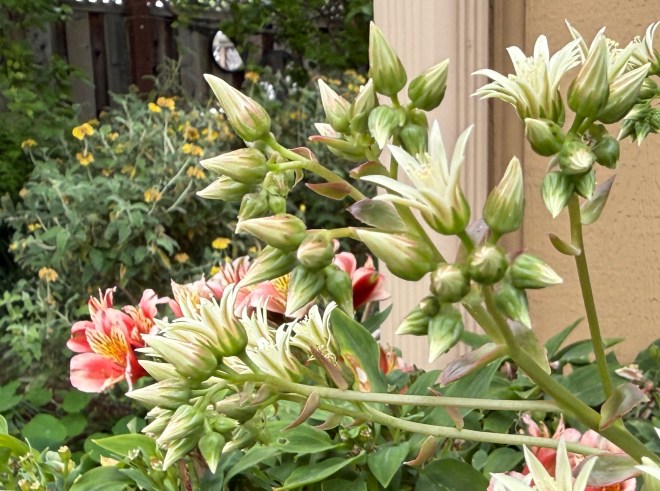
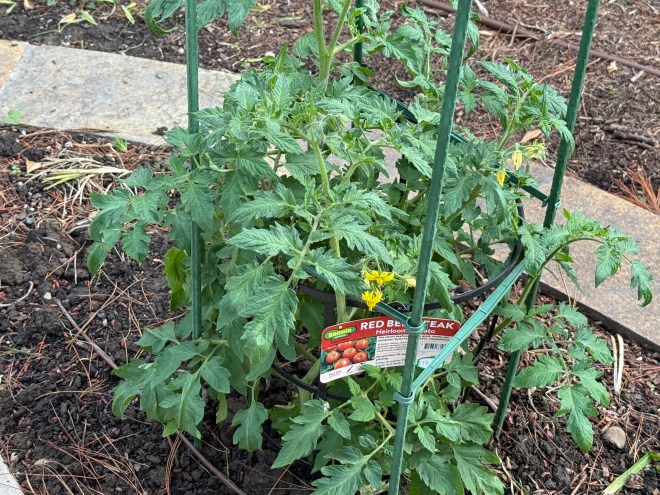
We shopped for a pair of tomato plants a few weeks ago and dug holes between rainy days. Fresh garden tomatoes are a summer highlight.
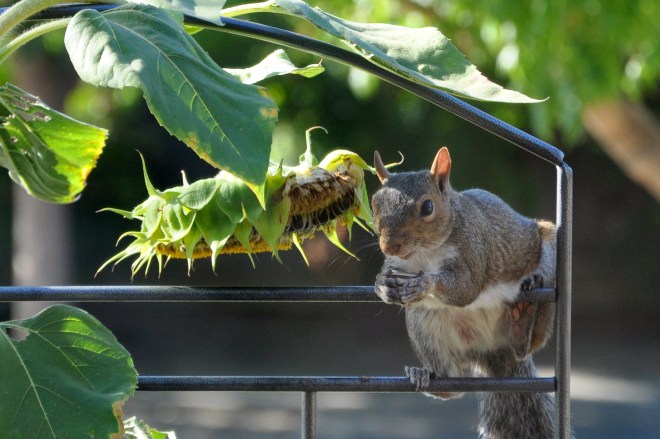
I stumbled across a few sunflower plants at a local nursery while shopping for mulch and scooped up three. In recent years, I planted sunflowers (Helianthus annuus) from seeds, but foraging squirrels unearthed them just as quickly. The new plants have already doubled in size, and now the squirrels will have to wait for the bounty. They’re welcome to eat the seeds after I’ve enjoyed the cheerful flowers. (Photo below of California Grey squirrel, 2014)
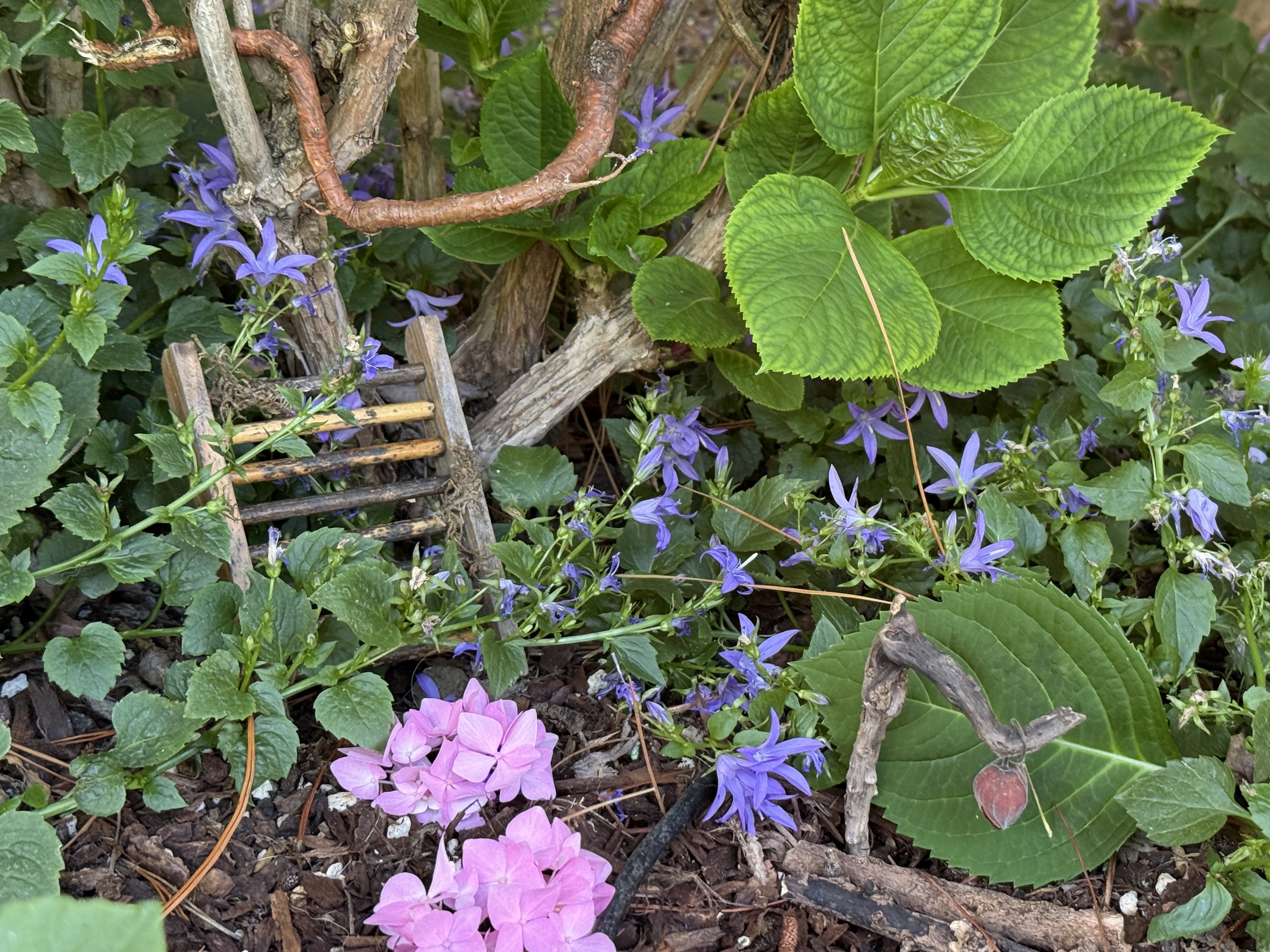
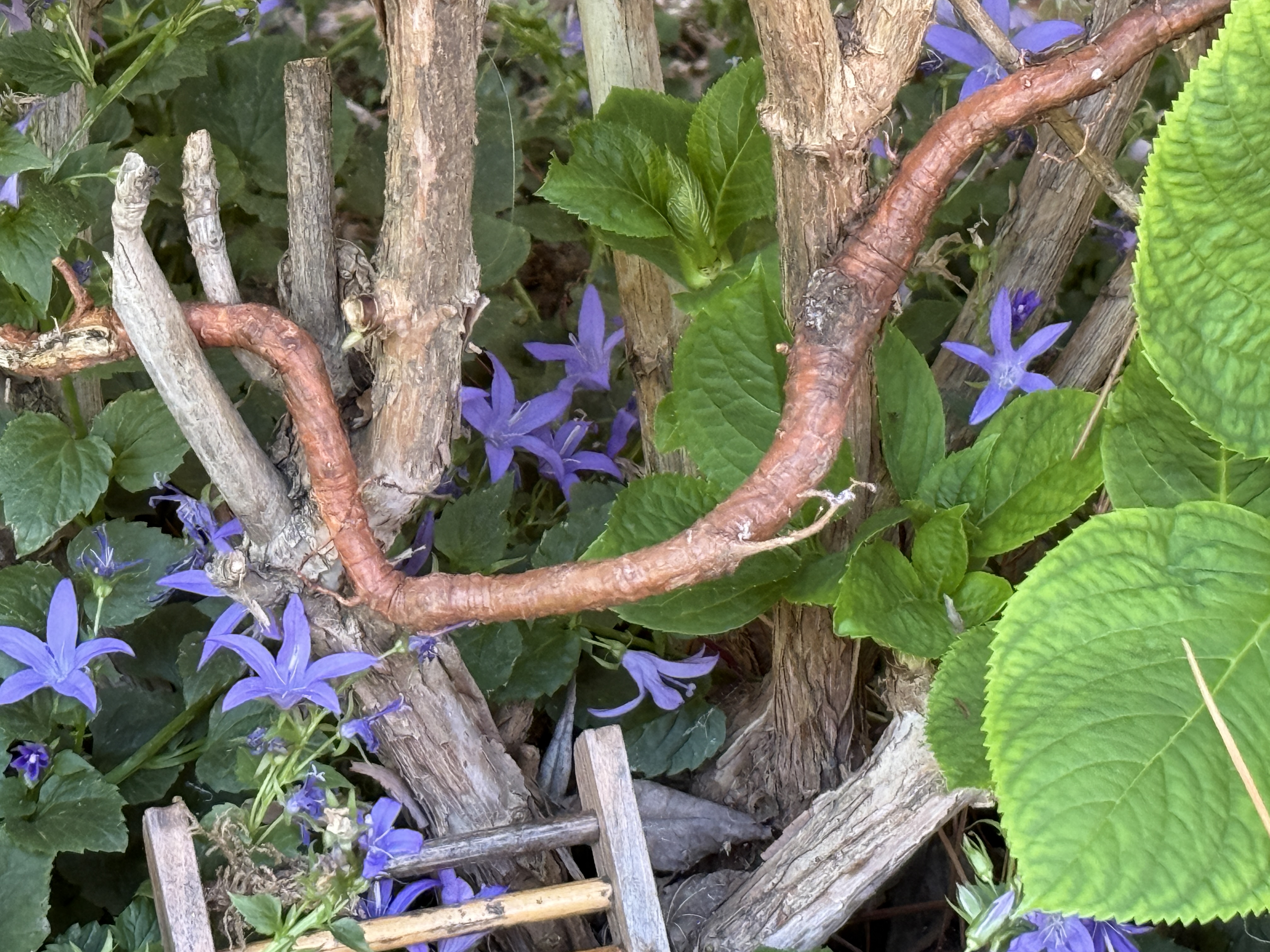
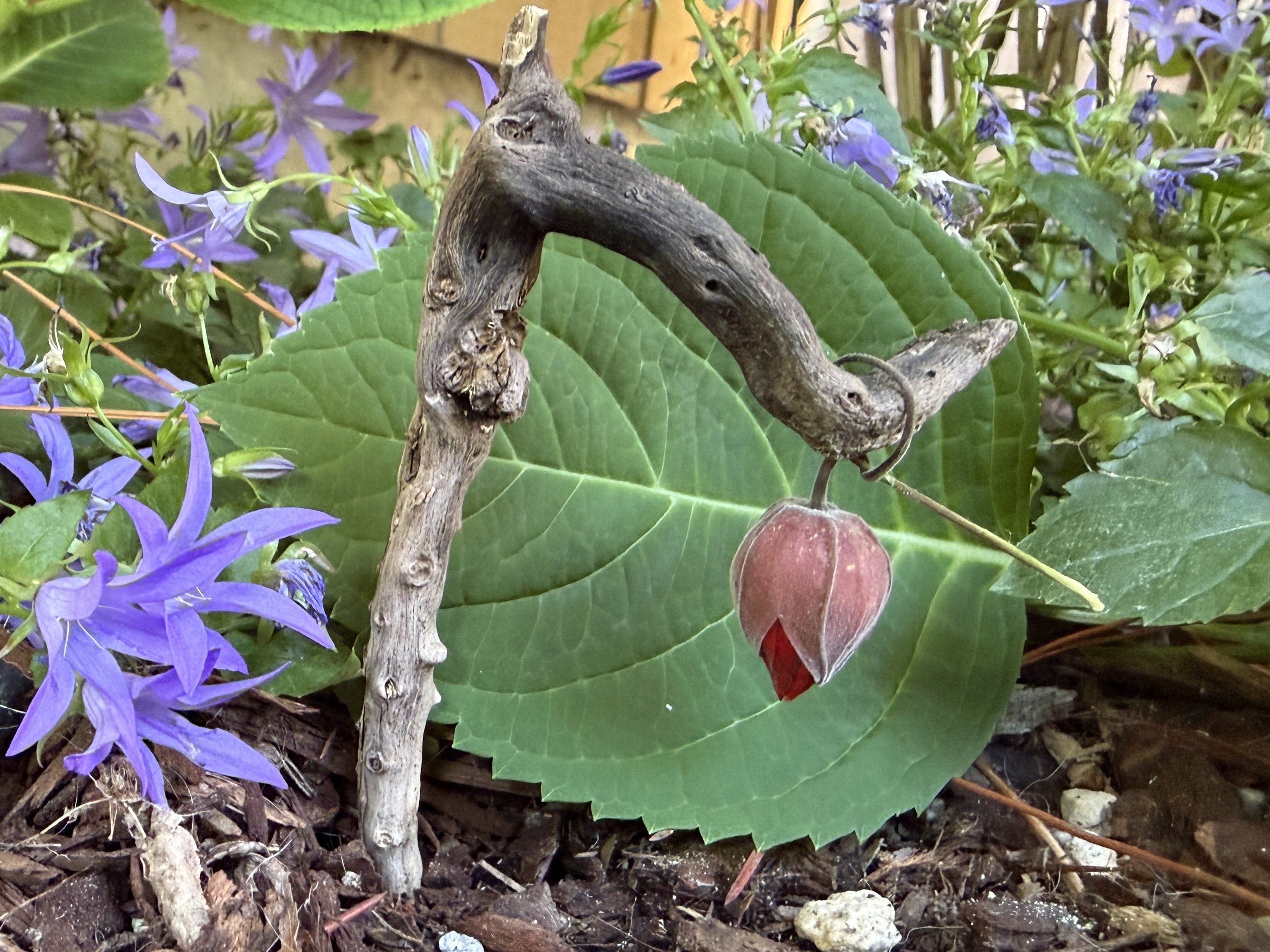
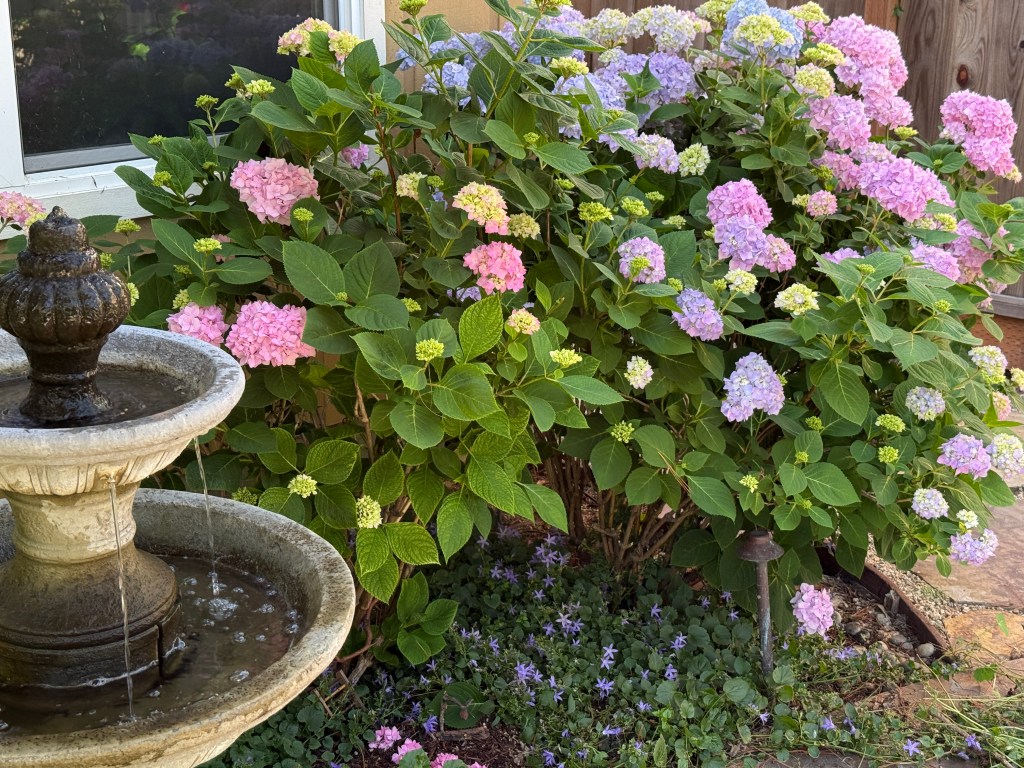
Elsewhere in the garden, I’ve manifested good fairy energy by turning a redish root into a garden swing, with a former soap dish serving as a ladder to reach it should the fairies choose to rest their wings. More garden debris forms a hanging post for an abutilon bud lantern. The playground resides under the hydrangeas.
I planted two cellpacs of sweet alyssum (Lobularia hybrid) in pots on the back garden steps. The honey scent teases the nostrils, pleasant but not overbearing, and it’s a fan favorite of butterflies and bees. It tolerates the heat better than most annuals.
I spotted a gorgeous orange butterfly this afternoon from our kitchen window, but I was too far away to capture a decent photo. I need to practice my “be like a tree” skills, where I hold still long enough for the butterflies to land and stay awhile. I’ll let you know how I get on.
 Gardening Nirvana
The climate changes and crazy weather is scary. We had a heat wave yesterday of 75F, something we see a few days in July normally. So smart of you to store rain water, I think your garden looks gorgeous.
LikeLiked by 1 person
Thank you, Maria. My garden brings me joy and I’m grateful for this green space. Climate change is unsettling in all respects.
I’m sorry to hear about your early heatwave. I hope your allotment is doing ok.
LikeLike
Fine photographs and analysis of the confusion.
LikeLiked by 1 person
Thank you so much, Derrick.
LikeLiked by 1 person
Thanks for the little wander in your garden. Temperatures are strange and unpredictable nowadays…I am glad you are finding ways to maintain your little corner of a green space.
LikeLiked by 1 person
Thank you. I love every inch of my garden. Its taught me a lot.
LikeLike
The weather swings are unsettling indeed. I’m trying to be accepting, but we can’t help by be disturbed by the plight of our gardens. We get attached! 💕
LikeLiked by 1 person
Yes! It feels personal, and I can’t help wondering if everyone took climate change personally if things might be different. Thank you, Eliza.
LikeLiked by 1 person
That be like a tree skill is a hard one to master. I’ve tried and failed often.
LikeLiked by 1 person
I hear you. I’m a work in progress.
LikeLike
I love the idea of ‘be like a tree’ in many aspects…thanks for that!
LikeLiked by 1 person
Thank you, Laura!!!
LikeLiked by 1 person