My Left Hip

My Left Hip

After several years of near-constant pain and impaired mobility, I had my right hip replaced in February, followed by a new left hip earlier this month. I’m relieved to have both surgeries behind me.  To pass the time, I cropped a photo of one of my new joints, added a pair of eyes, and created a less clinical image of the new joint.

X-ray image of a hip joint replacement with a smiley face added for a whimsical effect.
Screenshot

Today, my in-home PT assessed my balance using the Berg Balance Scale, and I scored 47 out of 56. A score of 41-56 indicates low risk and independent walking. I’ll take it.

Over the next four weeks, I could dislocate my hip if I move it past a 90-degree angle, which, in garden-speak, translates to averting my eyes as the weeds sprout. After an unusually mild November, we’re finally seeing true fall weather, including rain. All those weed seeds have been waiting in the wings for their grand entrance. 

They’re unlikely to go to seed any time soon, and the wet ground will make removal easy when I can finally kneel in the dirt, so for now I must bide my time.

As I heal, I’m able to take photos from a standing position. Mike’s also taking me on daily drives for a change of scenery. Nature is a balm.

From the car window, I watched a crow enjoy a slice of sidewalk pizza in nearby Los Gatos.
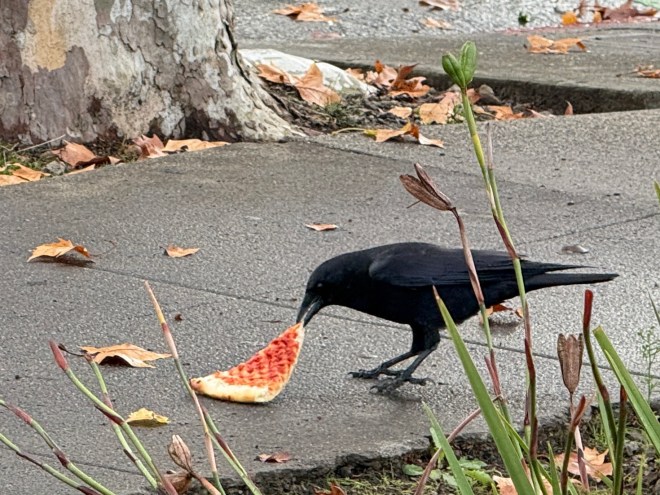
A crow standing on a sidewalk enjoying a slice of pizza, surrounded by fallen leaves and greenery.

I snapped this view of Silicon Valley in the misty fog at the top of Harwood Hill in San Jose.

A foggy view of Silicon Valley from the top of Harwood Hill in San Jose, with greenery in the foreground.

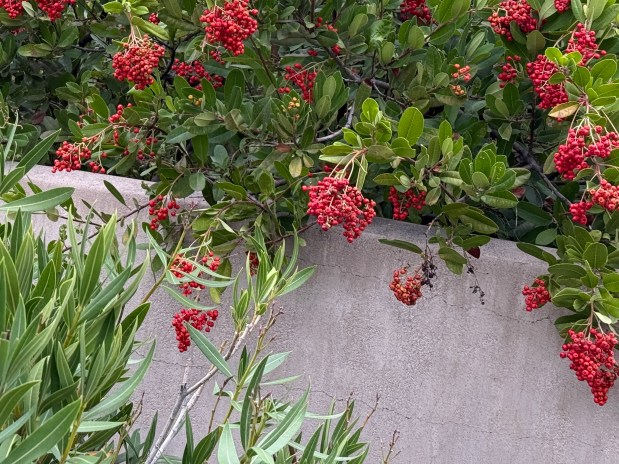
Heteromeles, commonly known as toyon, are native to our California coast. Not only do they provide food for birds, bears, and coyotes,

“The plant has been used as a treatment for Alzheimer’s disease by indigenous people of California, and recent research has found several active compounds that are potentially beneficial to Alzheimer’s treatment. These include icariside compounds, which protect the blood-brain barrier and prevent infiltration of inflammatory cells into the brain.” Source Wikipedia

A close-up view of bright red toyon berries contrasting against lush green leaves, with a textured grey wall in the background.

The brilliant red berries brighten autumn’s grey days.

These Canada Geese were impervious to the rain outside the Cambrian Community Center. It must be nice to have a built-in raincoat.

Two Canada Geese in the foreground with several others in the background, surrounded by fallen leaves on a rainy day.
Two Canada Geese standing on green grass, with patches of fallen leaves in the background.

Closer to home, a neighbor’s cat named Thor visited our front deck.

A fluffy cat with blue eyes sitting on a wooden surface, surrounded by green plants and purple flowers.

This potted alstroemeria recovered well after a broken pipe nearly drowned the plant. Once the roots dried and the heat of summer passed, it made a full recovery.
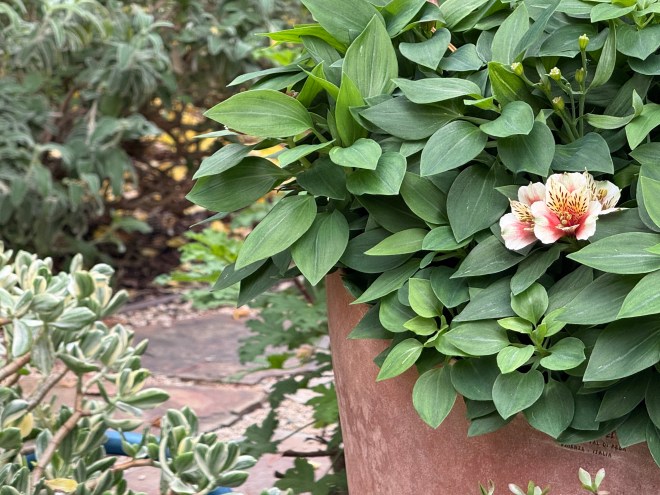
A potted alstroemeria plant with green leaves and a single pink and white flower blooming, set against a natural garden background.

I plan to follow in the plant’s footsteps and make a full recovery as well.
ScrapHappy for Christmas Cards

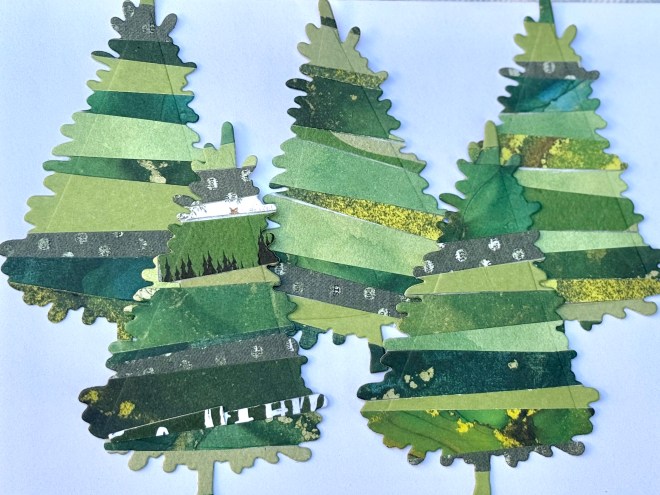
I’ve been making paper Christmas trees from scraps and using them to create Christmas cards. I’m sharing here for Kate’s monthly ScrapHappy day.

A collection of handmade paper Christmas trees crafted from various shades of green paper strips, arranged on a white background.

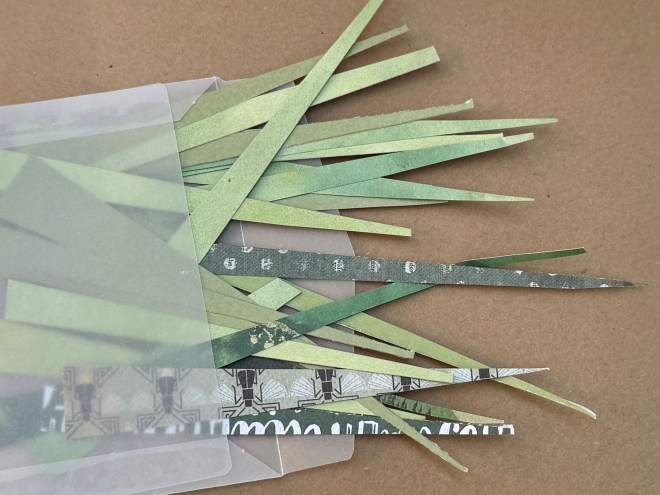
It’s been a fun process cutting slivers of paper at an angle, then arranging them on two-sided sticky paper. I started making them in August. When I have enough, I use a metal die to cut the shape. Each tree is unique.

A collection of green paper strips and pieces arranged in a scattered manner on a brown surface, some peeking out from a transparent envelope.

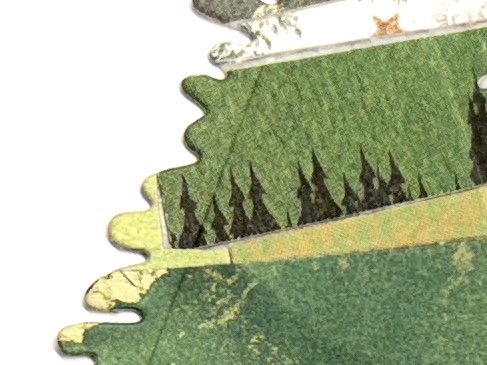
Included in the mix is a handful of Christmas trees made from vintage postage stamps. I think of them as scraps, too. 

A collection of unique Christmas trees made from green vintage postage stamps, arranged on a white background.

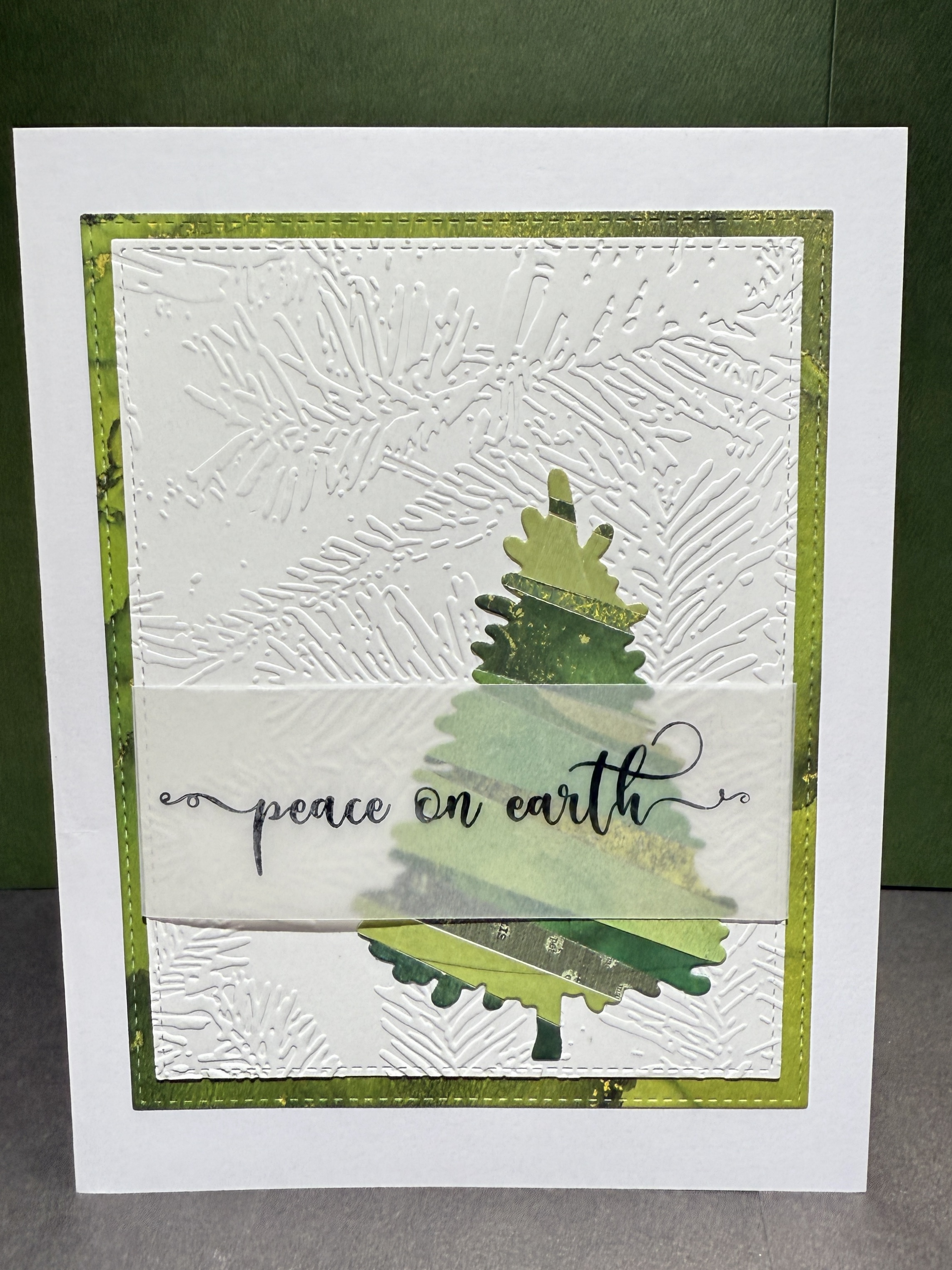
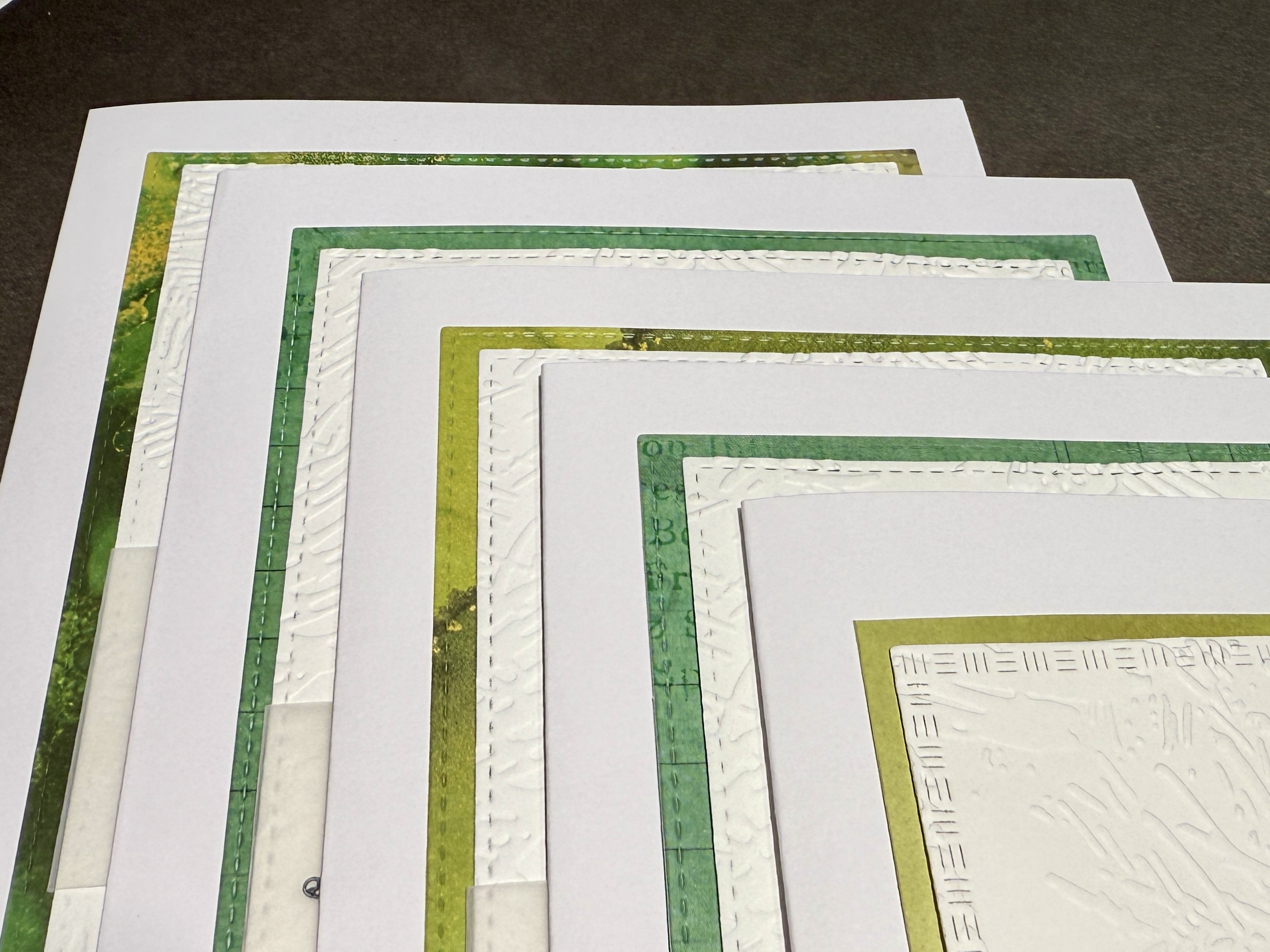
For the cards themselves, I embossed white paper using an In the Pines embossing folder, then matted it with another green paper scrap.

I placed the trees in the center of the card in some cases and to the right of the center on others. I couldn’t decide what I liked better, so I did both.

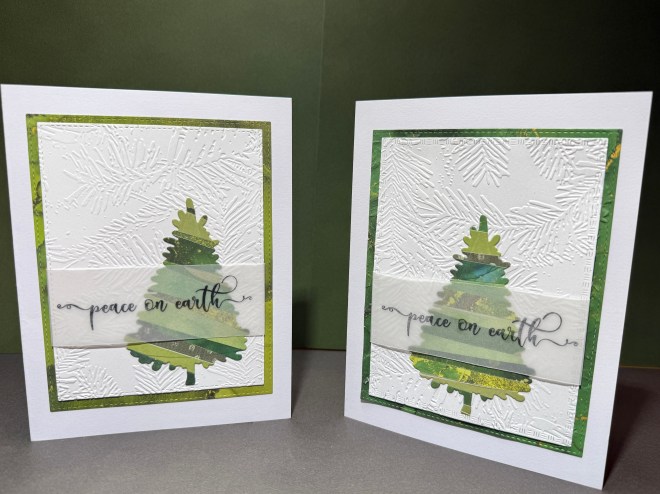
Two handmade Christmas cards featuring embossed white backgrounds with green and gold borders. Each card has a green tree design and a translucent vellum overlay with the text 'peace on earth'.
Two handmade Christmas cards featuring embossed white backgrounds with green accents. Each card displays a distinct paper Christmas tree and a vellum overlay with the phrase 'peace on earth'.

Full disclosure: the vellum stamped with “Peace on Earth” isn’t technically a scrap, just part of an open package, but I like the effect, and I know we all appreciate the sentiment.

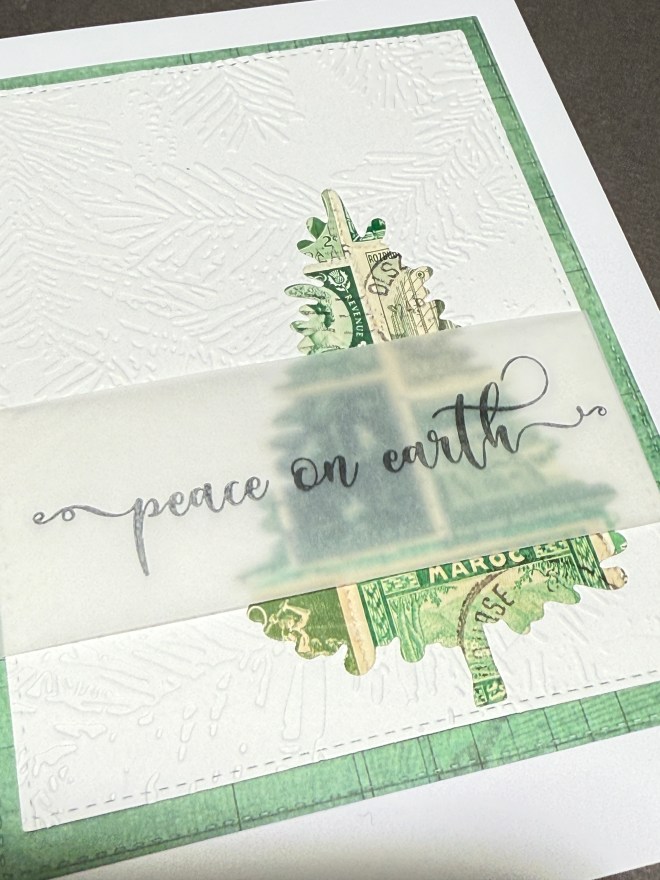
A Christmas card featuring an embossed white background, a decorative tree made from vintage postage stamps, and a translucent vellum overlay with the phrase 'peace on earth'.

If you would like to share your own crafty creations, please get in touch with Kate.

Please have a look at other ScrapHappy posts at the following links:

KateEvaSue, Lynda,

Birthe, Turid, Tracy, Jan

Moira, SandraChrisAlys,

ClaireJeanDawnGwen,

Sunny, Kjerstin, Sue LVera, 

Ann, Dawn 2, Carol, Preeti,

VivKarrin,  Alissa,

Hannah and Maggie

Celebrating the Gardeners of In a Vase on Monday

A dozen years ago, Cathy at Rambling in the Garden started a meme called “In A Vase On Monday”, or IAVOM. She wanted to challenge herself to regularly cut and arrange flowers and greens from her garden. She also challenged fellow garden bloggers, launching a wonderful garden blog meme. It’s a simple concept: cut flowers from your garden, arrange them in a jar or vase, and share them virtually with others. Gardeners post from the UK, Germany, the US, and other parts of the world. Charming, eh?

I’ve enjoyed sharing a garden vase, off and on, over the years, but I lack the dedication of the Monday Vase die-hards. I applaud all of you.

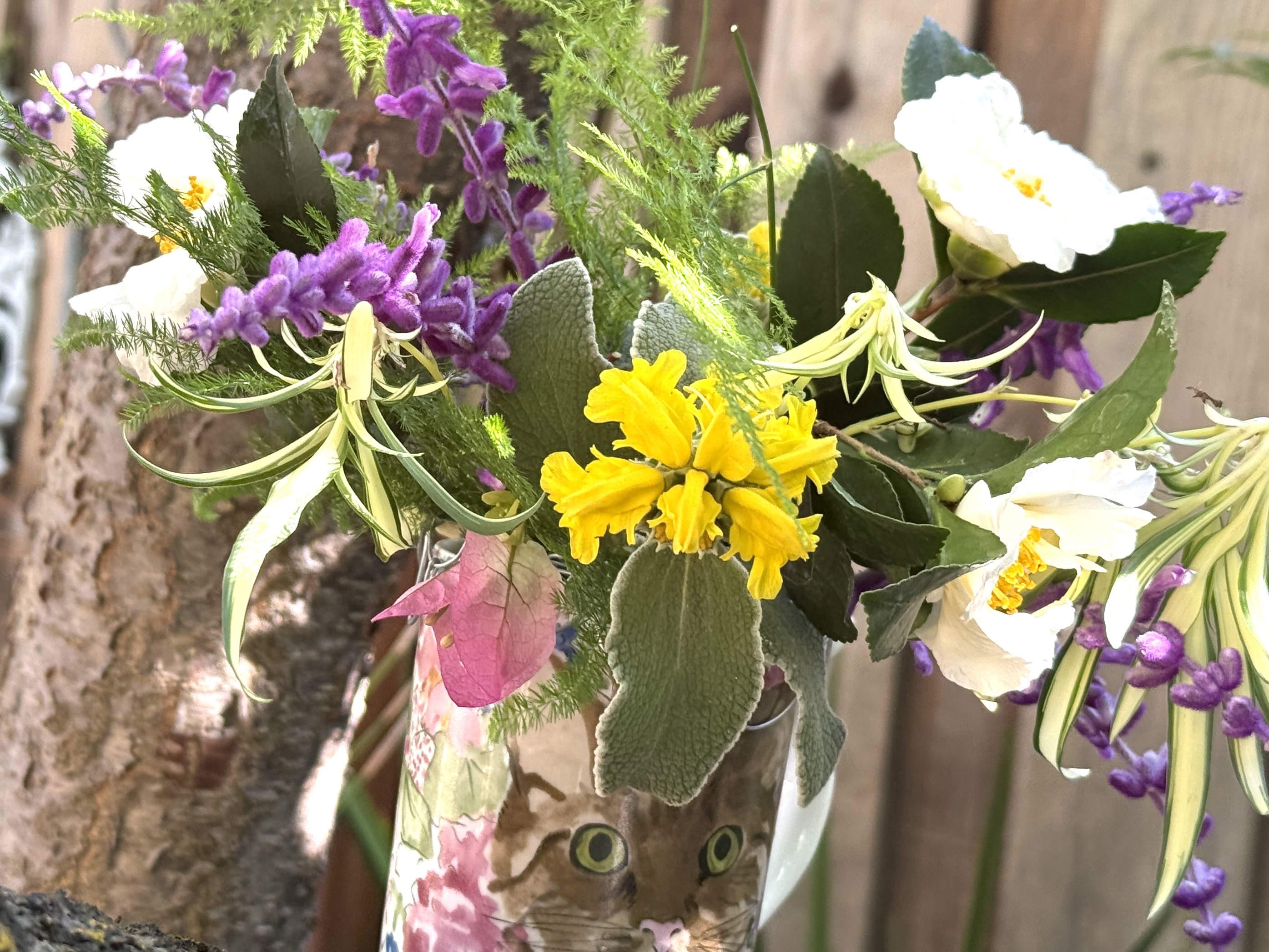
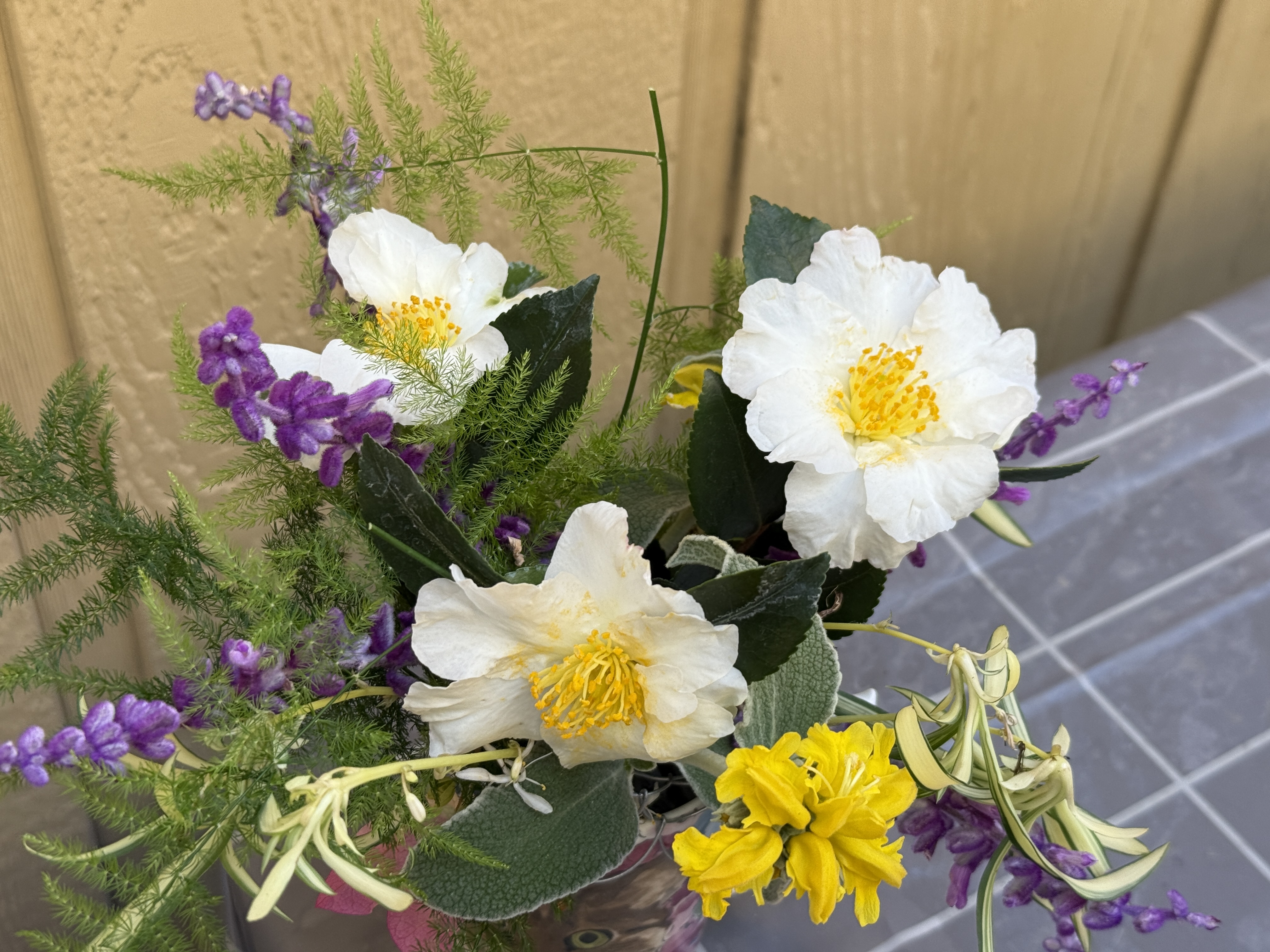
I’m sharing two vases today that highlight my joy of blogging. For me, it’s about the community formed through sharing photos and words, about finding your people in this sometimes fractious world. “In A Vase on Monday” does just that.

I’ve followed Cathy at Words and Herbs for close to 14 years. She posts a beautiful vase most Mondays. 

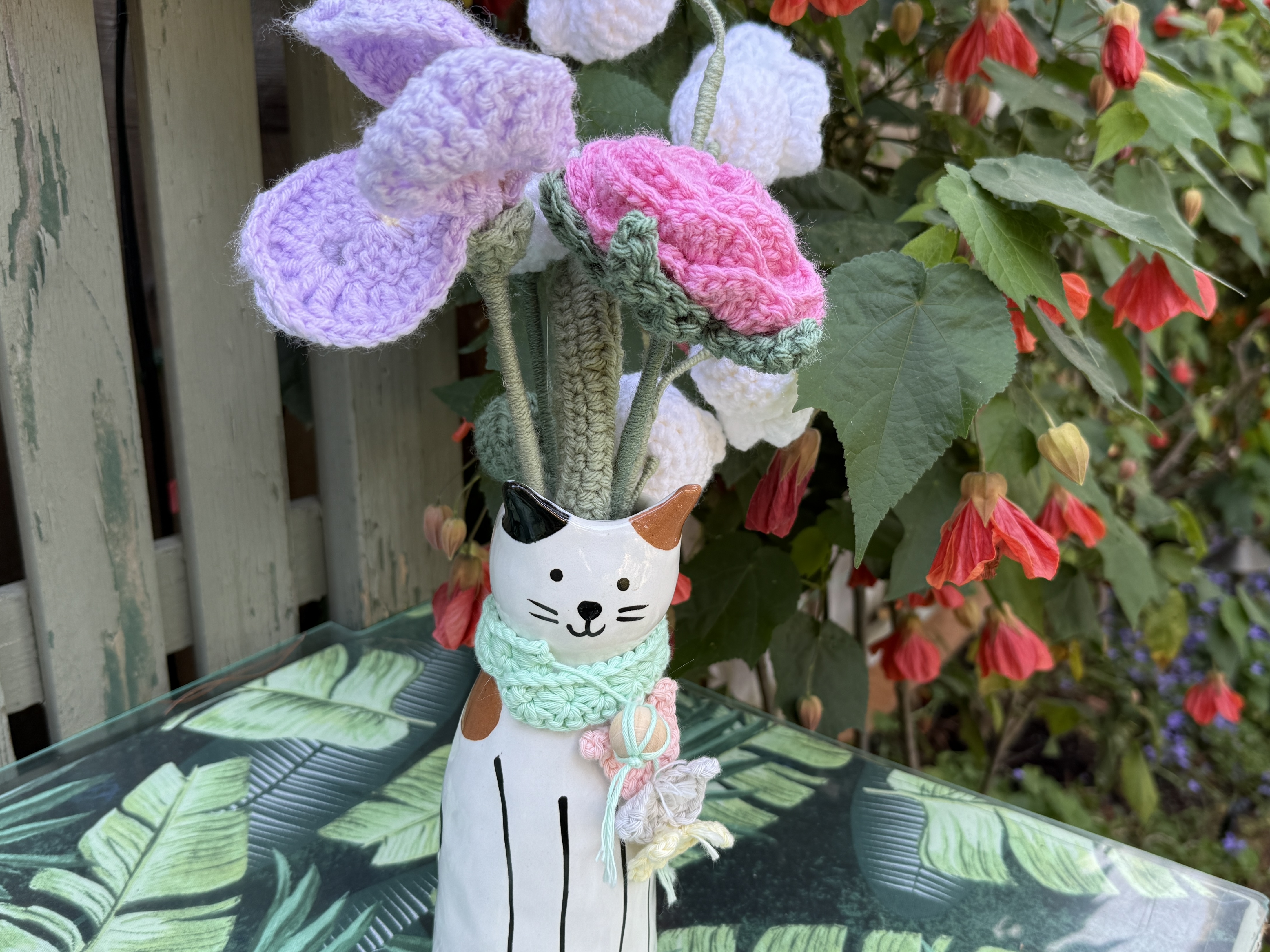
The vase below holds crocheted flowers, a Mother’s Day gift from my youngest son; however, kitty’s “scarf” is an intended bookmark, straight from Cathy’s crochet hook.

Cathy mailed several crocheted bookmarks for our Little Free Library all the way from Germany. Sweet, right? I placed some of her bookmarks in our tiny library; one became a gift topper for a friend,

A crocheted sunflower with green leaves attached to a decorative envelope featuring a floral and turtle design.
Flower bookmark
A ceramic cat vase wearing a crocheted scarf, surrounded by colorful blooms in a garden setting.
Crocheted bookmark/cat scarf

and this one is now wrapped around my kitty vase and will become part of my vase rotation. Please enjoy Cathy’s extraordinary garden at Words and Herbs. 

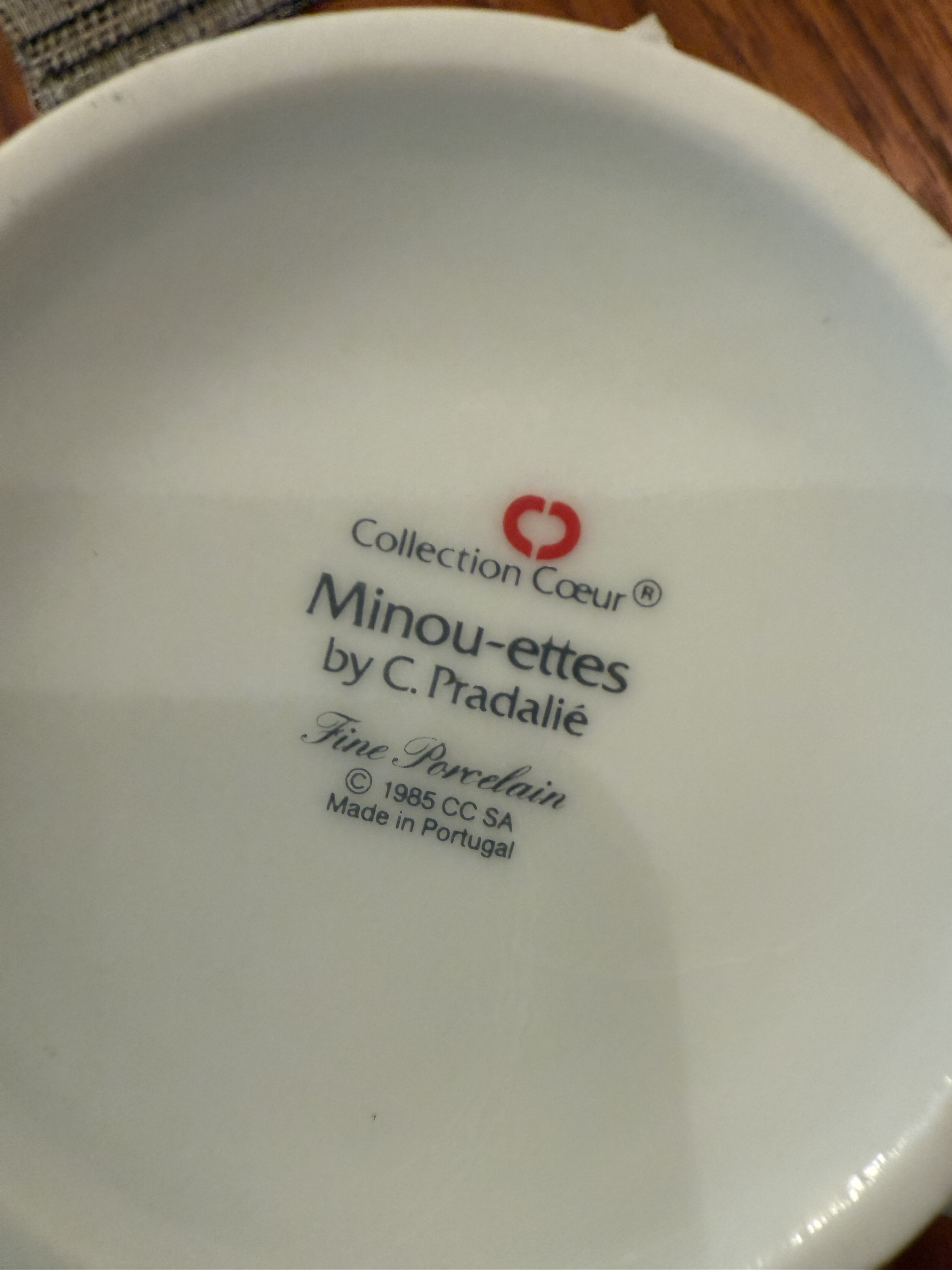
This second vase is a treasured teacup, a gift from my university friend, Carrielin. I’ve had it for forty years. In mid-October on Eliza Waters’ IAVOM post, I spotted the same cat design. I checked with Eliza to confirm, and sure enough, it’s from the same collection of porcelain art, Couer Minou-ettes, by Portuguese designer C. Pradalie. The pieces aren’t rare, but even so, it delighted me to spot the same design, with flowers, from a fellow garden blogger. Eliza shares from her beautiful garden most Mondays.

If you would like to see what these gardeners and others have shared in a vase today, please follow this link to Cathy’s blog, then check the comments for additional vase posts.

Happy Anniversary in-a-vaser’s.

Wisteria: Know Before you Grow

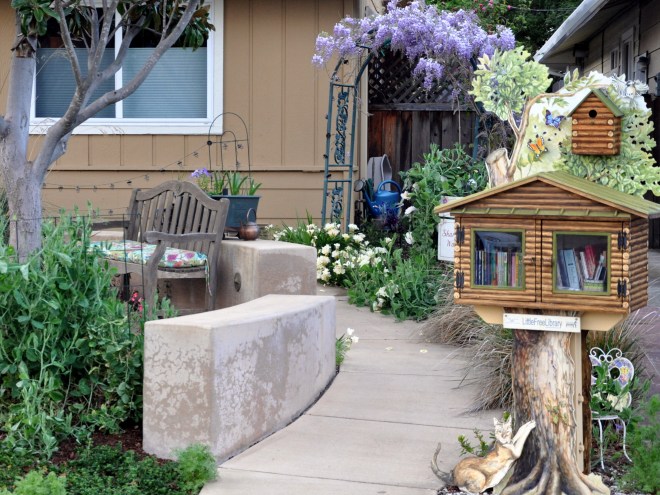
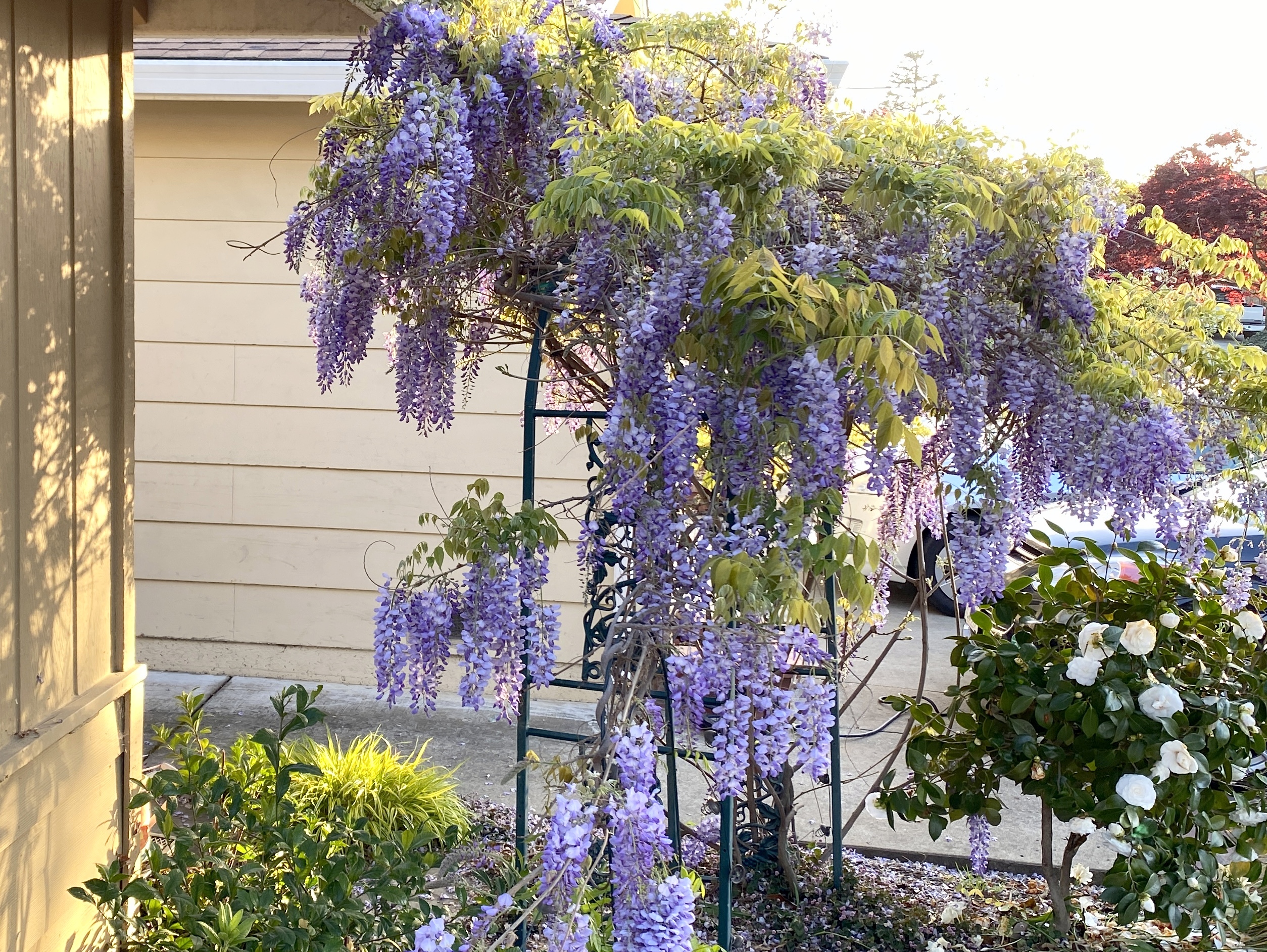
Wisteria symbolizes longevity and grace. For years I longed to have one in our garden. Aren’t they stunning? They need space to grow, though, and space is always at a premium in the garden, because nature abhors a vacuum, and this gardener feels compelled to plant any available earth.

A charming garden scene featuring a stone pathway, a wooden bench with colorful cushions, a whimsical little free library made from wood, and vibrant greenery, including wisteria flowers hanging above.

Then opportunity knocked.

When our young Magnolia became infested with scale, I tried to save the tree by manually scraping the scale into a bucket —an arduous, odiferous task. The scale quickly returned, along with ants. I pruned away the center, looked at organic options, and eventually contacted an arborist, but it was all for naught.

It’s tough losing any tree, but here was my chance to grow a Wisteria vine. We repurposed an arch from the back garden, placed it at an angle in the front garden, and planted the vine. The first year of growth was underwhelming, as it often is, but in the years that followed, the vine took off. It flowered vigorously in early Spring, then sent out a second set of blooms later in the year.

A vibrant Wisteria vine with cascading purple blossoms, growing over an arch in a garden, with a fenced area and other plants in the background.

At some point, though, the tree went from vigorous to invasive. I couldn’t keep the tendrils off our roof, our neighbor’s roof, a nearby tree, and so on. Clearly, I should have done my research, as I recently read that it is “known for its vigorous and potentially destructive growth.” Now they tell me.

I get attached to plants and trees, and this was no exception, but I’m pragmatic as well. Risking life and limb, damage to the house and the tree nearby meant it had to go.
It was labor-intensive. I started with small garden shears, graduating in size to the base of the tree’s substantial girth. I tried digging out the roots, then Mike had a go, until it became apparent the roots would need to be removed by a tree stump removal service.

A landscaped yard showing a pathway leading to a house, surrounded by green plants and a small tree.
Space after removing Wisteria

The space looked empty for a time, but I’ve since planted several succulents that had outgrown their pots. They took to the spot immediately, and by next Spring, they will be well established. They’re also water-wise plants that don’t require much fuss. The freesias came up quickly around the stone walkway, but it will be several months before they flower.

A close-up view of a garden bed featuring various succulent plants and green shoots along stone pathways, with mulch covering the soil.
View of a garden with a large Magnolia tree, featuring a stone walkway and various plants, including succulents and freesias, set against a suburban street.
Walkway facing street

Lesson learned: know before you grow.