Thirty Days in the Garden: Lady Banks Rose

It’s Lady Banks rose season. We have a pair of these climbing roses (Rosa banksiae) growing on either side of the orange tree. Their soft yellow blooms are cheerful and a nice way to brighten up the fence. The orange tree growing in the same corner is densely foliated, providing shade year-round. The roses grow just outside of the orange tree’s perimeter, along two fences and the back of the garden swing.

Lady Banks Rose Rosa banksiae

Lady Banks is a low-maintenance rose, requiring little water or fuss. They bloom once a year in spring, and the show is spectacular. Tiny roses cascade along a thornless vine.

I’m supposed to prune the vines just after they bloom for vigorous growth the following season. The problem I have is that I’m never quite sure that they’ve finished blooming. It’s hard not to want to preserve their beauty as long as possible.

Lady Banks roses

I think I did better last year given the prolific blooms, but when I look at some of the nursery photos online I think I can do better!

Our back fence, left of the orange tree

No matter. They’re a garden darling and they are here to stay.
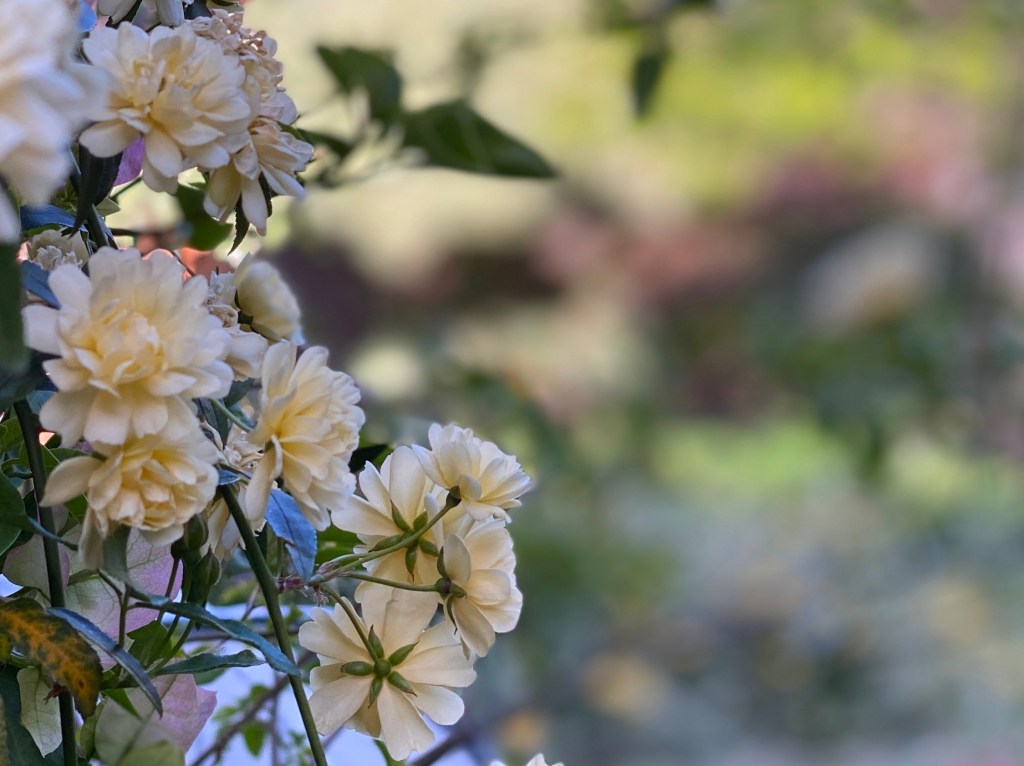
The vine arched over the walkway to join the bougainvillea

In other news, Mike and I received our first dose of the Moderna COVID vaccine this morning. It took weeks to find available appointments for our first jab. They scheduled our second appointment before we left. Four weeks from now we’ll return for our second dose. By early June we’ll be fully vaccinated.

We’re impressed with the efficiency of the process. We were in and out in under an hour and that included check-in, paperwork, the jab, and the obligatory 15 minute waiting period before we could leave.

I hope the vaccine is making it into your arm soon if you haven’t received one already. I’m feeling hopeful for the first time in a year.

Now back to those roses.

Thirty Days in the Garden: A Second Little Free Library

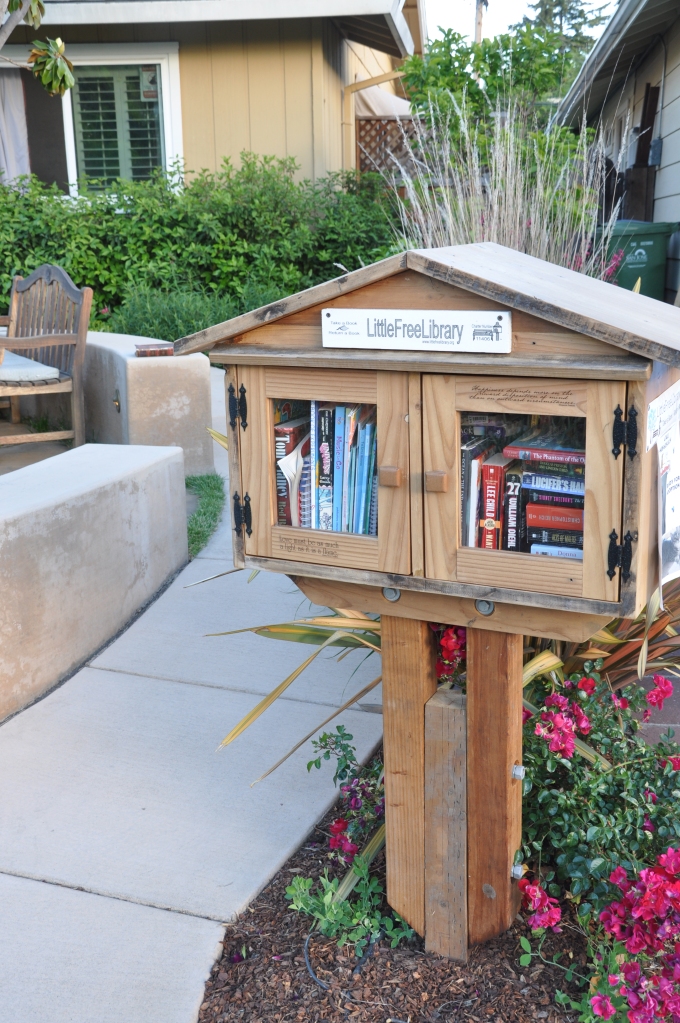
Several years ago I spotted a book box in a nearby neighborhood and I fell in love with the idea. I came home and told Mike. It took several months to bring the idea to fruition, but by January the following year, we had a Little Free Library of our own. It sits at the curb near the garden and attracts visitors throughout the day.

Little Free Library

Being a part of the Little Free Library movement has been a joyous experience. I’m friends with the owner of the library that inspired me, and I’ve met other LFL stewards along the way.

My friend Nick built the first library from scratch using reclaimed and recycled material. He did an amazing job. He even thought to add light by connecting it to a landscape light below.

Lighting wired to the landscape light

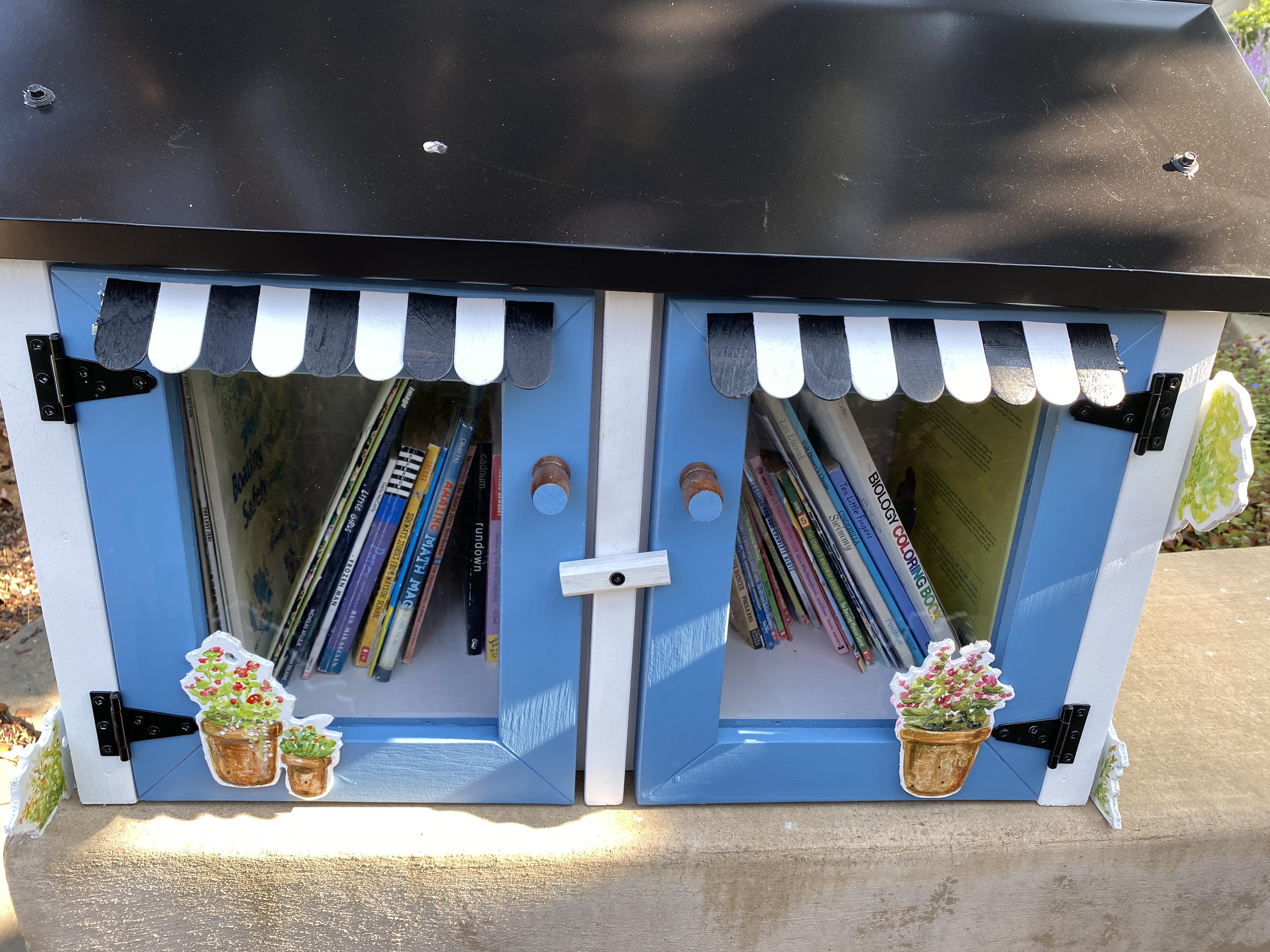
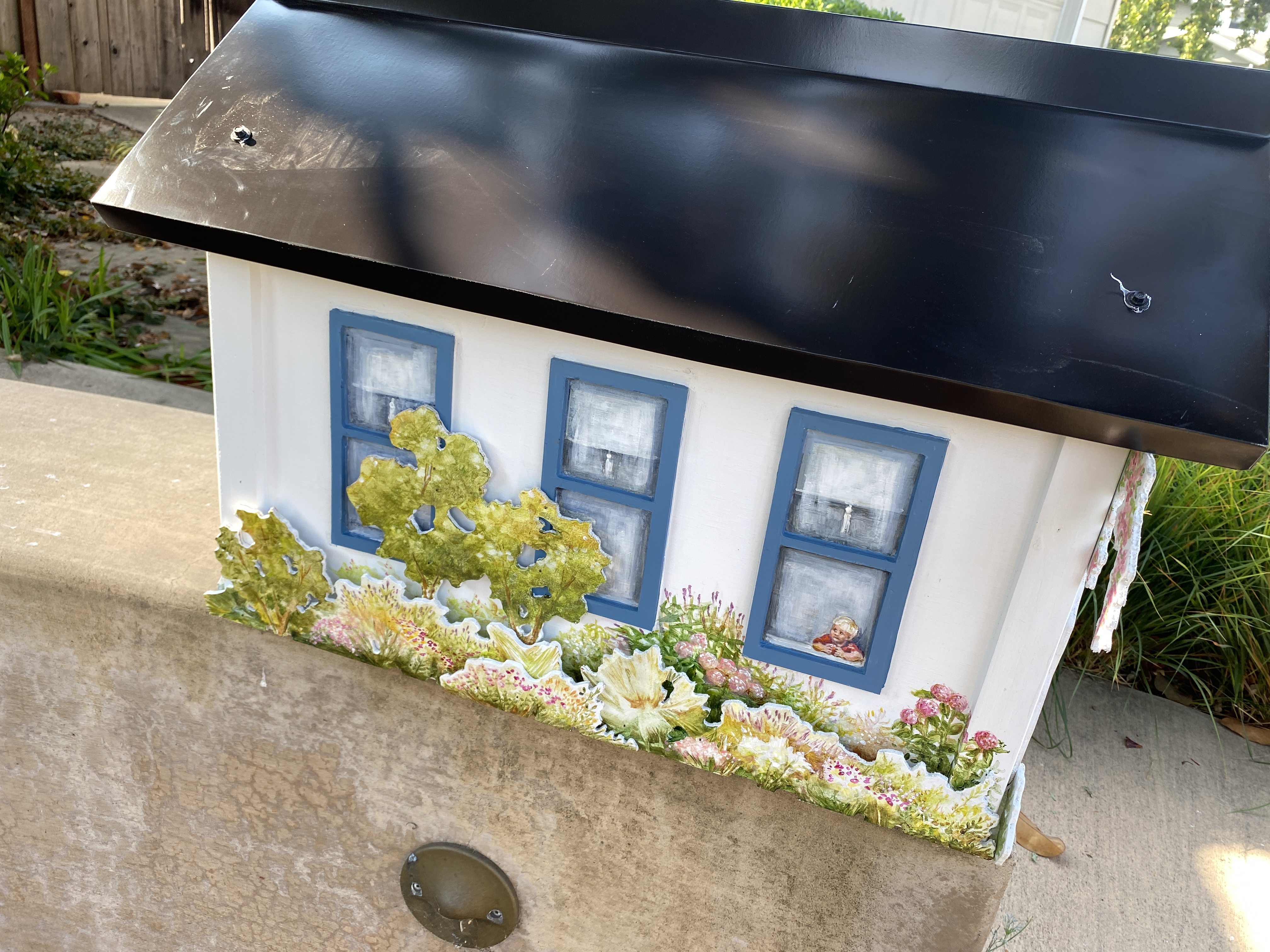
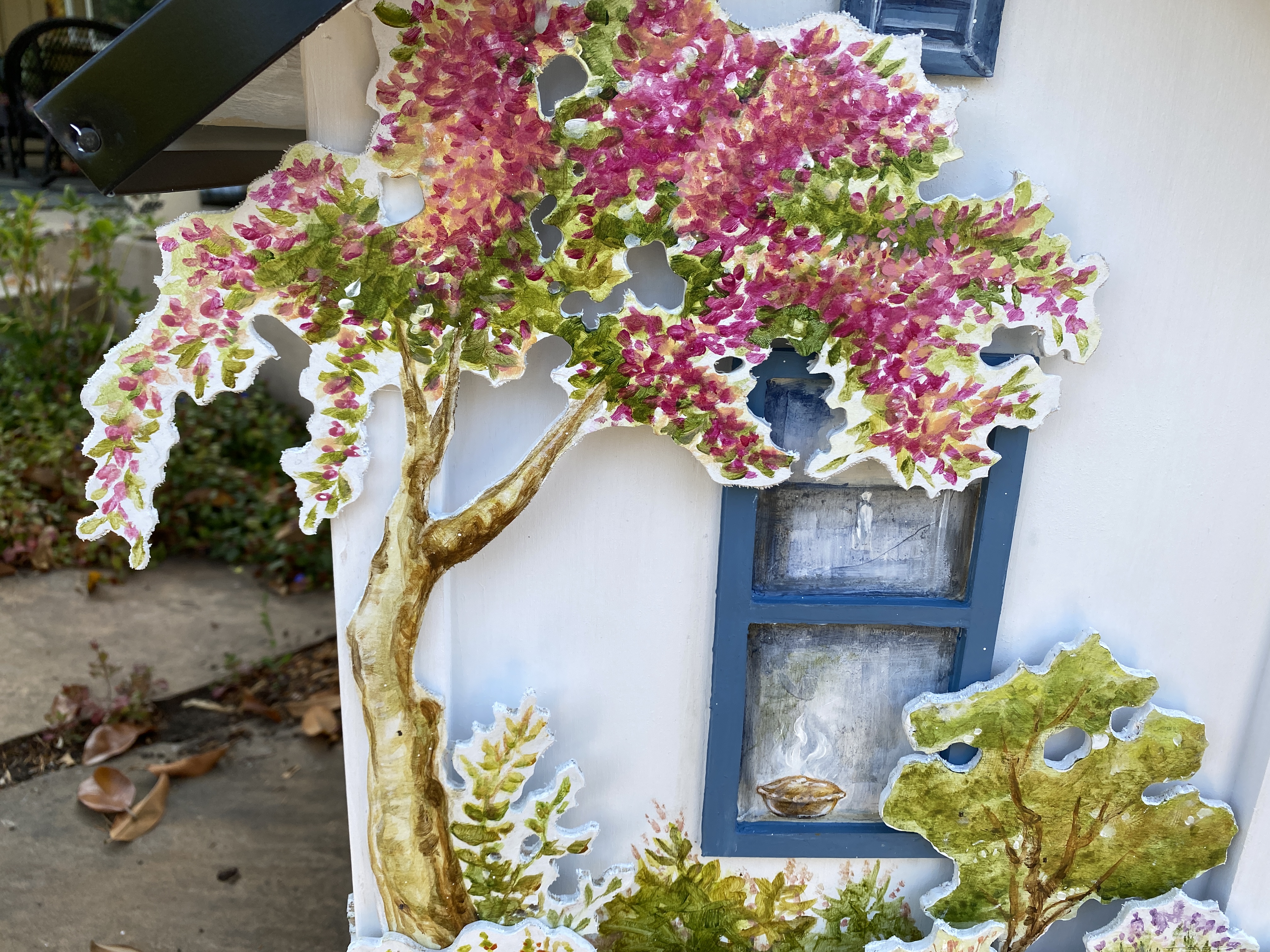
After several years in the sun, the library needed a facelift. My friend and artist Donna Pierre worked her craft. Donna has amazing ideas and the skills to see those ideas to fruition.

Donna’s beautiful art and craft

When I sit in my home office or work in the kitchen, I see visitors throughout the day. The Little Free Library attracts people of all ages.

Last year when the pandemic hit, the library’s use skyrocketed. Children were out of school looking for something to do. Teachers stopped by, with one explaining that she had been forced to leave her classroom on short notice without any teaching materials. Some stewards closed their library for fear of spreading COVID. I left mine in place, assuming that books could be wiped down if necessary. In those days people were wiping down groceries.

I had several children’s books stored in my garage, so I took a large plastic bin, turned it on its side, and filled it with my stash. I placed the box along the low wall leading up to our deck. It’s the perfect height for small readers.

Temporary book bin, summer 2020
2020 Debut: Children’s Little Free Library

As the weather started cooling down, I knew the plastic bin would need modifying or replacing. Right on cue, the bin cracked, brittle from the overhead sun. It had to go.

The only thing better than one Little Free Library is a second one. I ordered the largest pre-made box available through LittleFreeLibrary.org and asked my friend Donna if she could work her magic once again.

Little Free Library viewed from beneath the Wisteria

This allowed us to support the LFL non-profit while providing work to a local artist. I stocked the original library with children’s books on one side and adult fare on the other. The second Little Free Library is exclusively children’s books.

I read voraciously growing up. Libraries in my youth were a refuge and a treat. I thought I would grow up to be a librarian. It’s been a circuitous route, but in my way I’m living that librarian dream. What a thrill!

Art by Donna Pierre, 2020

Thirty Days in the Garden: Easter

We’re enjoying a gorgeous Easter here in Silicon Valley. Mike made homemade waffles for breakfast after we all slept in. I ate mine with mixed berries from a frozen mix. I look forward to berry season every year, but it’s early yet. The frozen fruit is surprisingly good, and a bit better for my waistline than the alternative.

We took a drive to the Wildlife Center Silicon Valley, something we do a few Sunday’s a month. WCSV rehabs wildlife and when possible, return them to their natural habitat. The non-profit uses soft t-shirts rather than old towels so that talons and claws aren’t caught on the loops.

I sort clothing at Lifted Spirits every week, and set aside t-shirts that are badly stained, torn, or sporting inappropriate language. Trust me, I’ve seen some doozies. It’s a nice excuse to drive out to the park, and it feels good passing on something useful that might otherwise end up in a landfill. Baby squirrels and rescued hawks don’t care what the t-shirt says.

If you celebrate, I hope you’ve had a lovely Easter.

Happy Easter

Thirty Days in the Garden: Wisteria

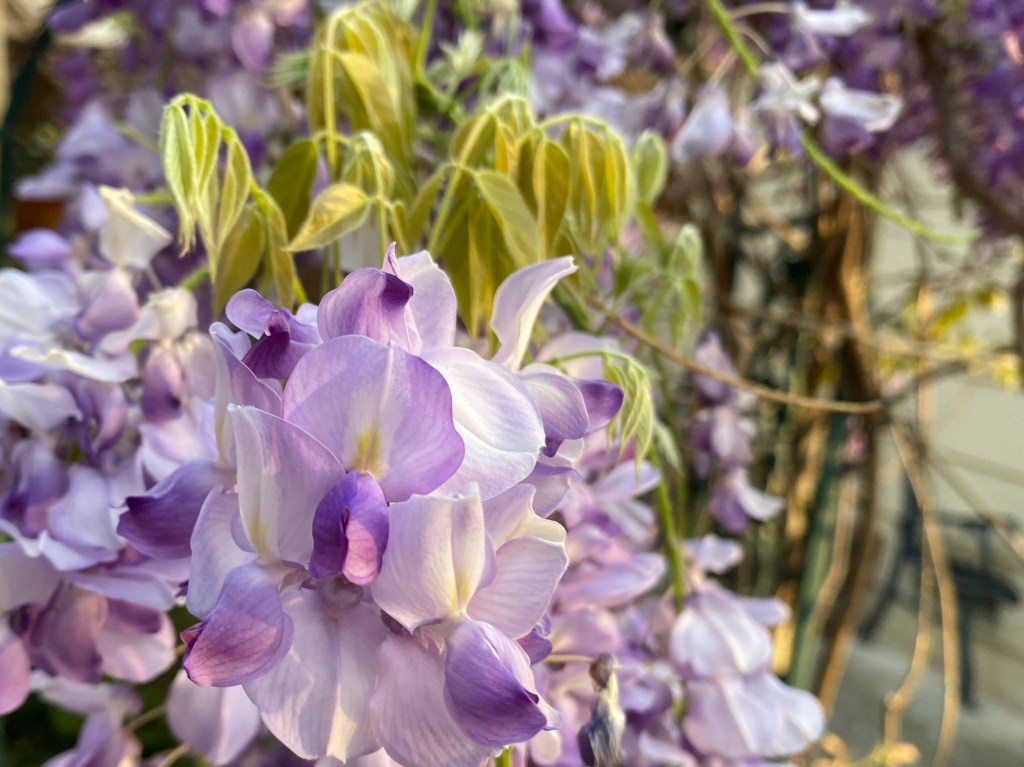
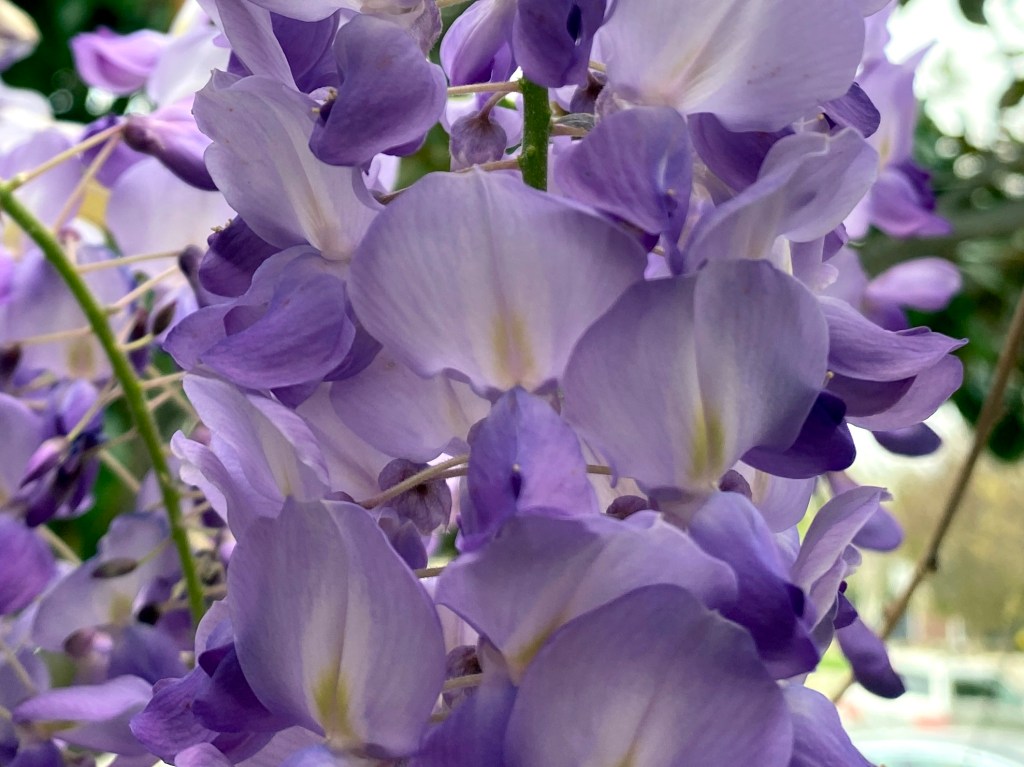
I’ve admired Wisteria vines forever, but I never dreamed I could actually grow one. They need full sun and a sturdy trellis for support, and once established they can be tree-like in stature.i

A few years ago we had to remove one of our magnolia trees due to an unrelenting case of scale. I manually scraped off the scale after pruning away the inner branches. It was a tedious and unpleasant job, but I really wanted to save the tree. The scale returned the following year. According to the arborist the scale probably came with the tree. Without a toxic application that would harm all insects, the tree wouldn’t survive.

Nasty business: scale-infested magnolia

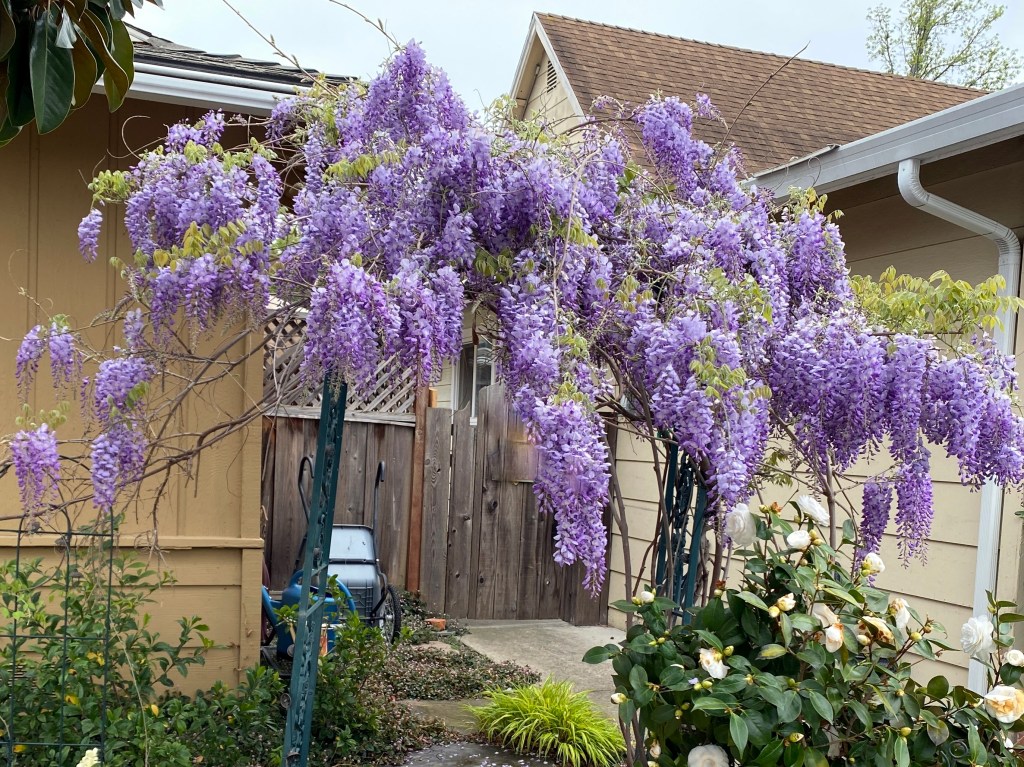
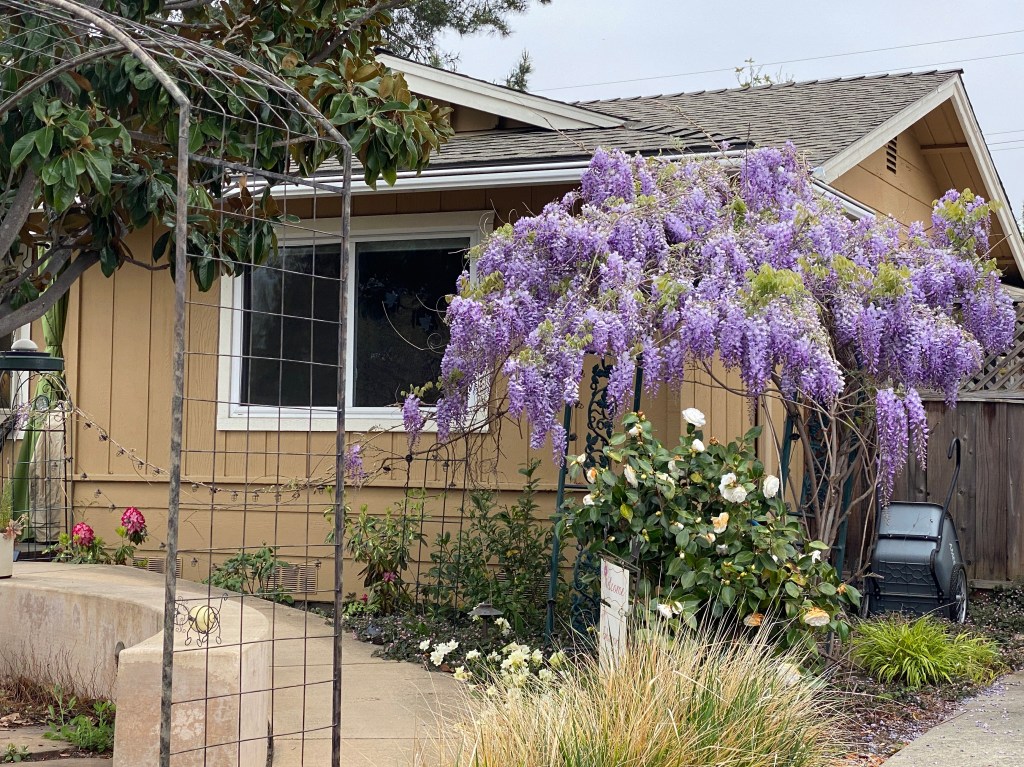
As sorry as I was to see the tree go, it made room for this love Wisteria.

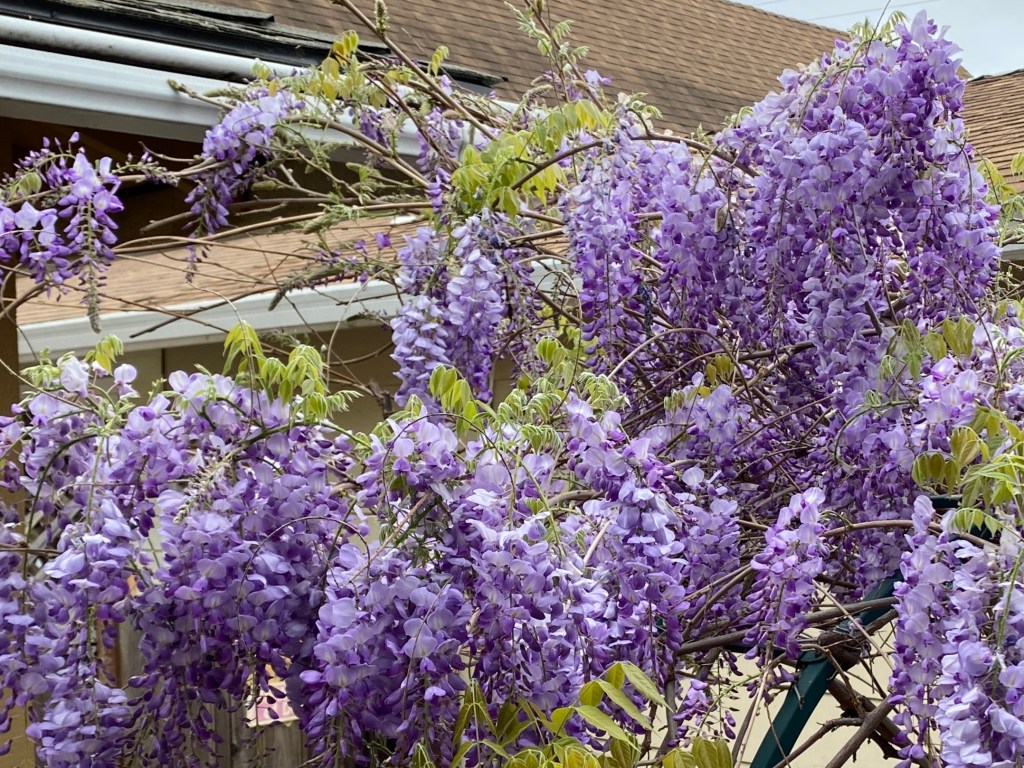
We moved an under-utilized arched trellis from the back garden to support the vine. It took a couple of years to train the Wisteria but it’s now a lovely shape.

Wisteria growing in our front garden

It surprised me to learn from Wikipedia that Wisteria is a member of the legume family. Further, the article described Wisteria as a “woody climbing bine.” I puzzled over that for a while, having never heard the term bine before. I eventually realized it was a typo. No judgement as I make plenty of typos myself, but I had a good laugh nonetheless.

Wisteria vine along the ramp

Pictured below, left to right: rhododendrons, gardenias, freesias, a white camellia, native grasses, branches from a healthy magnolia, and my trusty garden cart near the fence.

I’m pleased that the flowering vine is doing well.

This walkway is a gently sloping ramp. The sign says Sharon’s Way. My sister has MS and could no longer visit our home, so we had a landscape architect design a ramp from the curb to the house. It’s subtle and beautiful.

Thirty Days in the Garden: Minor Amusements

My garden serves up minor amusements now and again, little surprises that make me grin. Here’s a recent one:

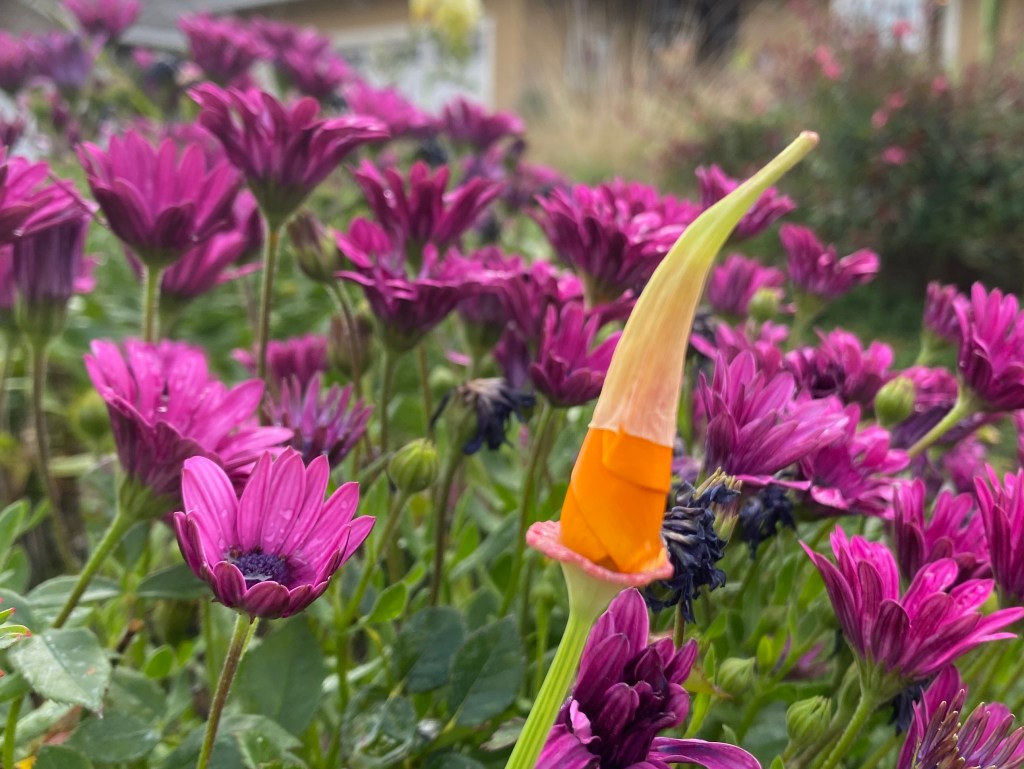
Something ate a hole in this California poppy making me think of a tent for a traveling snail.

Motel 6 for mollusks

Equally amusing but more annoying, is the weed that gets a foothold in the center of an established plant. There is no way to get the weed out by the roots without completely uprooting the shrub. I manage to get my gloved hand under the low branches of each perennial, only to come away with part of the weed and no roots.

The weeds aren’t thumbing their noses at me, are they?

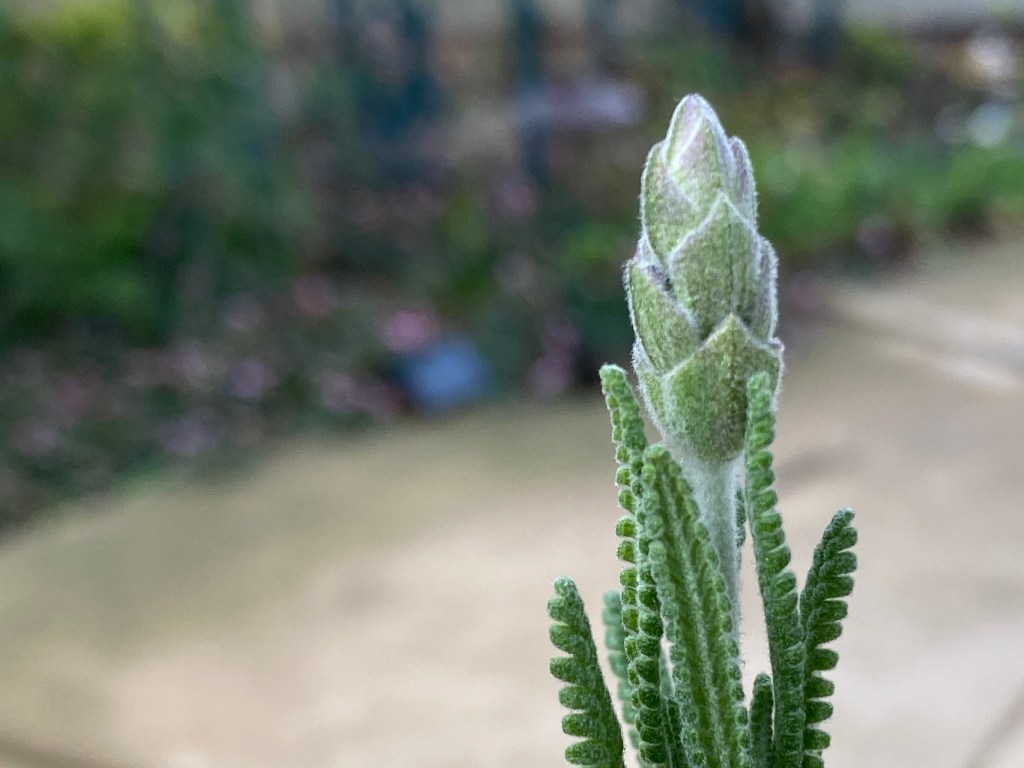
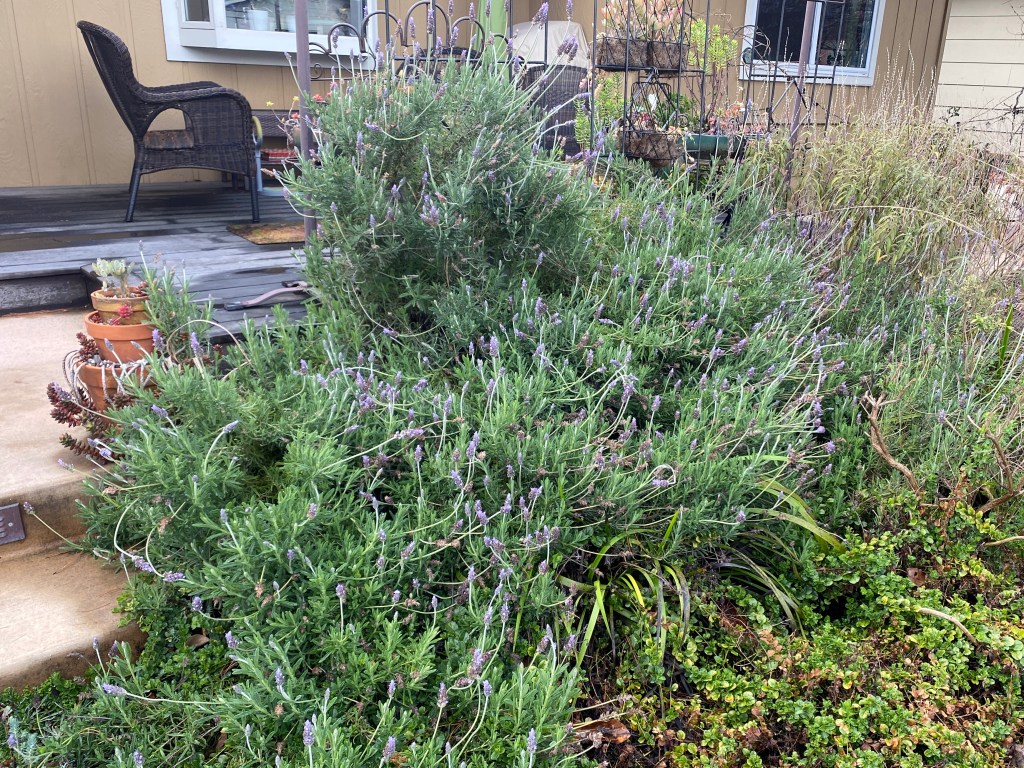
Some amusements are more along the lines of quaint, like this self-seeded lavender. Planted by the wind or a bird, the starter plant grows in a small pot surrounded by succulents. It’s nice of the container to host this little upstart, but now the plants are probably intertwined. Stay tuned for updates.

Lavender looking small and unassuming
This is how big the plant will get
I hope they all get along. It appears that the succulents are reproducing.

This photo is reminiscent of my girlhood. I was taller than average, rail-thin, with bright red hair. I longed to be one of the pretty-in-pink-petite girls, but alas I only grew taller. I’m at peace with my uniqueness now, but I wouldn’t want to relive those early years.

A praying mantis is oddly amusing, but startling as well. They show up during the summer months in shades of brown like this one, or green. They pivot their head giving you that odd feeling of being watched. The mantis is good for the garden, as long as they leave the hummingbirds in peace.

This ceramic lizard was destined for the trash. Like a lot of children, my son loved creating art. Then he reached adolescents and decided it wasn’t worth saving. I couldn’t bring myself to throw it away, so I moved a few pieces into the garden. It was amusing to discover that a plant had taken root in the center of the lizard’s tail.

I’ve shared this tip with some of my organizing clients, who are reluctant to part with ceramic pieces from their child’s grade school. The ceramic holds up well in the garden, it frees shelf space in the home, and it creates a wonderful conversation-starter when guests happens upon the garden treasure.

My favorite amusement of all is finding Tessa incognito.

Where’s Tessa?

Who doesn’t like a game of hide and seek?

I hope you find ways to amuse yourself this weekend.

Thirty Days in the Garden: Planting Tomatoes

I haven’t had much success growing tomatoes these past few years, but I refuse to give up. Fresh garden tomatoes off the vine are a treat.

A basket of assorted tomatoes from 2017

My dad grew tomatoes in our garden in Canada. I grew up eating tomato sandwiches for lunch. In California, people add tomatoes to things like salads and sandwiches, but we enjoyed eating tomatoes as the main event.

When I write or type the word tomato, I can hear my mother pronouncing it tuh-mah-toh. Most Americans use the hard a or tuh-mey-toh. Are you saying it in your head now, too?

A year into the pandemic, my husband Mike, is showing an interest in gardening. Who knew? We headed to the nursery together and diplomatically chose two plants each. I frequently buy the brand Bonnie Plants, a company that has been around for over 100 years.

We decided on two cherry tomato plants and two Early Girl. For some reason, the term Early Girl gets on my nerves, but it didn’t stop me from buying the plant. It sounds vaguely patriarchal somehow.

2019: The plants looked healthy, but production was almost non-existent

I have a raised bed in the back garden which has grown a variety of things over the years. I planted geraniums at the end of the summer a few years ago so that Tessa wouldn’t use the raised bed as her personal “litter” box. We eventually transplanted one geranium to a pot, a second one in the front garden, and I think I may have taken the third plant downtown.

2016: Assembling the raised bed, called a VegTrug

With the bed cleared, and the tomatoes planted, I covered the plants with a mesh netting intended to keep out bugs. It won’t be in place for long, as the plants will need to be staked, but I had hoped it would serve as a deterrent while the plants get established.

2021: VegTrug mesh cover

A few days later my son found Tessa sleeping under the mesh canopy. That cat!

The other two plants are in an Earthbox in the front garden in one of the few sunny spots. Earthboxes are all-in-one growing systems, intended for growing vegetables in small spaces. They’re great for moving around. The box has casters, a watering tube, a perforated watering tray, and even comes with a bio-degradable cover. You stuff potting mix into the bottom corners and soak to create a wick of sorts. Then you add potting mix, some lime, and some fertilizer, mix it all together and plant. You can plant seeds or small plants in the box. I’ve used mine for several years.

Now we sit back and wait to see if our plants will produce those delicious red tomatoes of my youth.