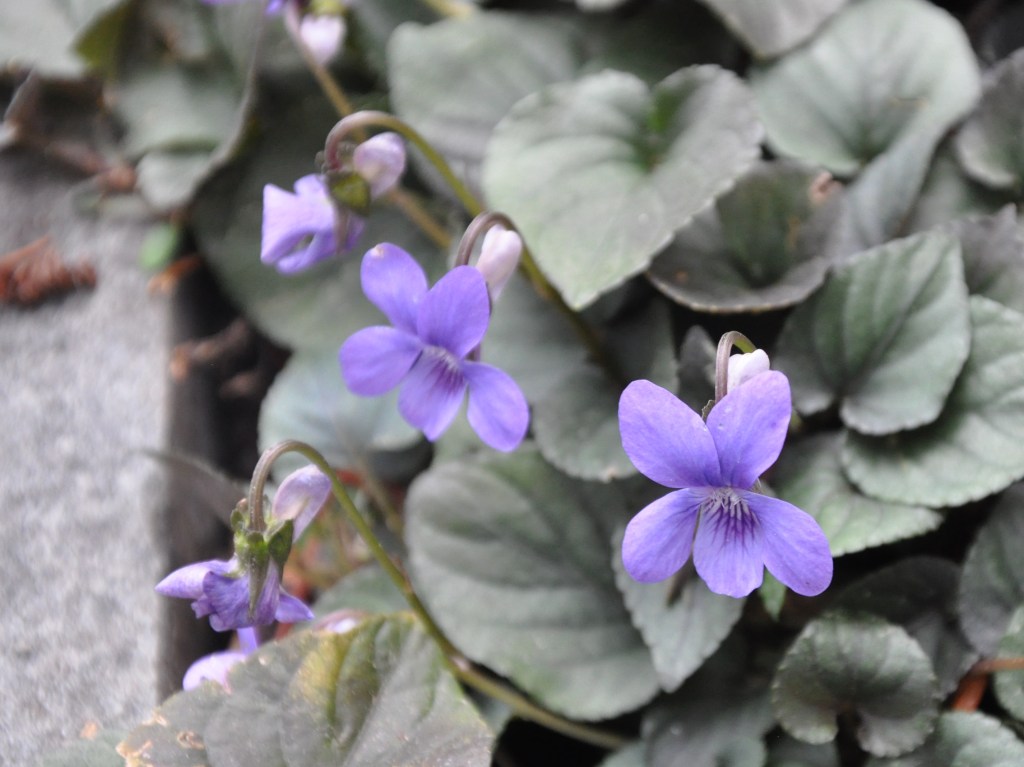
Wild Violets (Viola odorata) are easy to propagate or invasive, depending on your perspective. I think they’re charming. These purple gems come back year after year, adding a vintage vibe to the garden. I don’t remember planting violets, but it’s possible I bought one as an annual and they later seeded on their own.
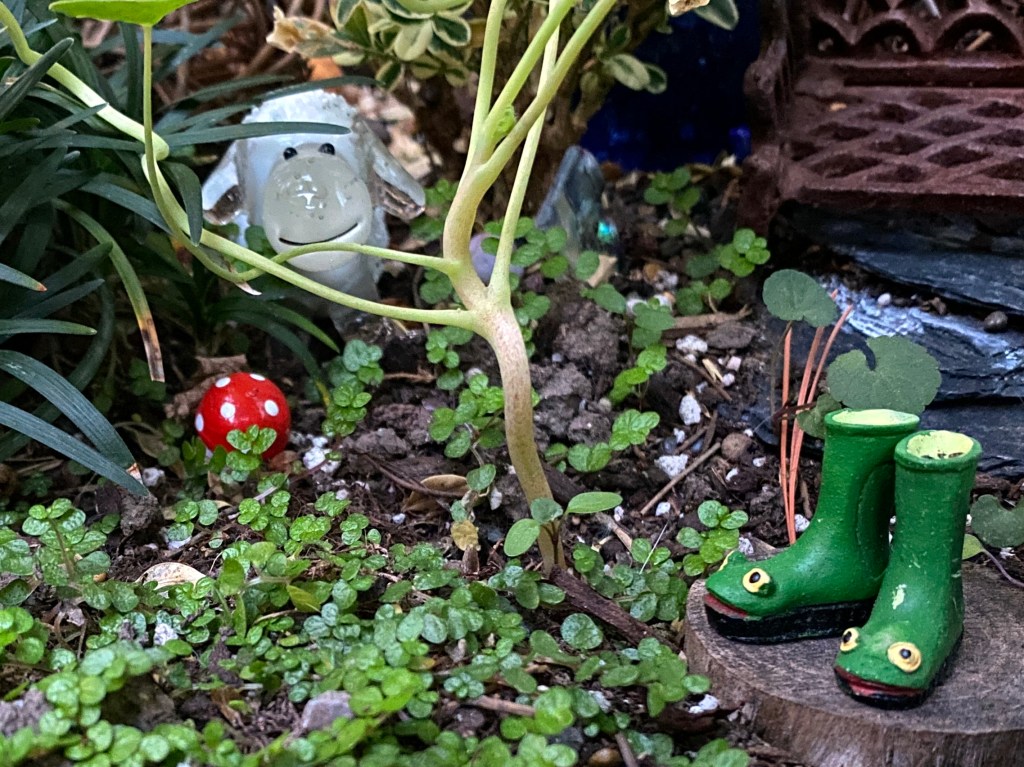
Tiny Violets fill in gaps between plants, giving the garden a filled-in look that I love. A few months ago, a violet flowered in the fairy garden. It’s remarkably to scale.
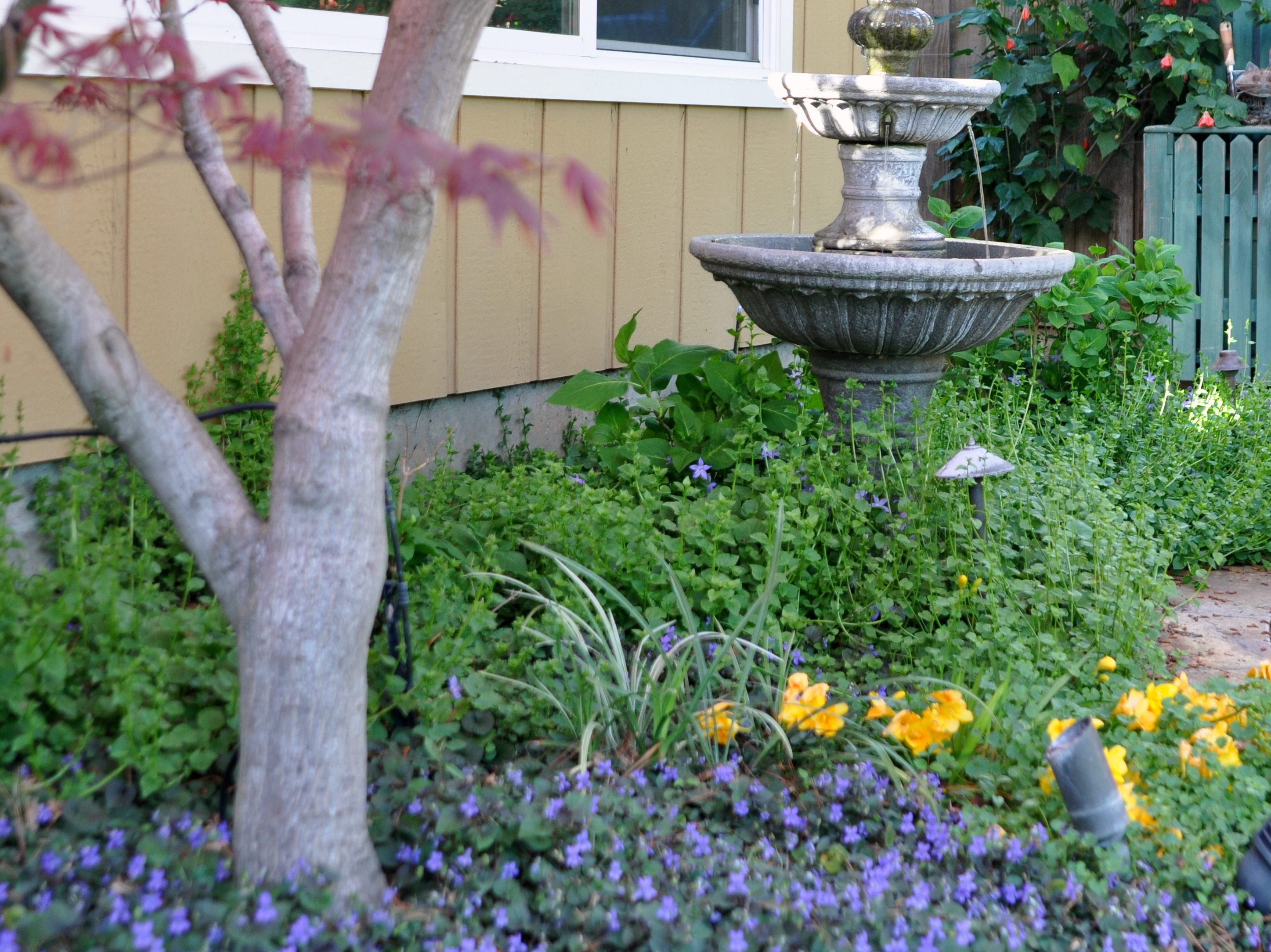
Next to the patio, we have an elongated ellipse between paving stones. The now-forgotten plants that grew there eventually died, but the violets have slowly filled in. A yellow freesia planted itself there, too, complementing the delicate purple flowers. Purple and yellow are among my favorite color combinations, so a hat tip to nature for planting these two together.

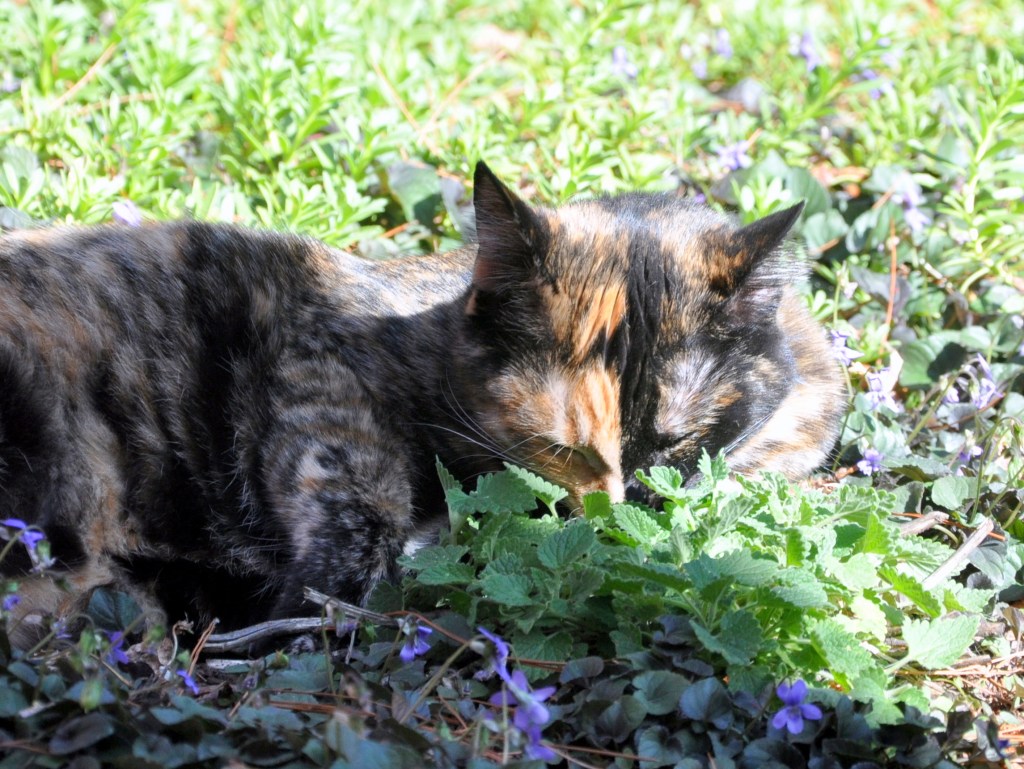
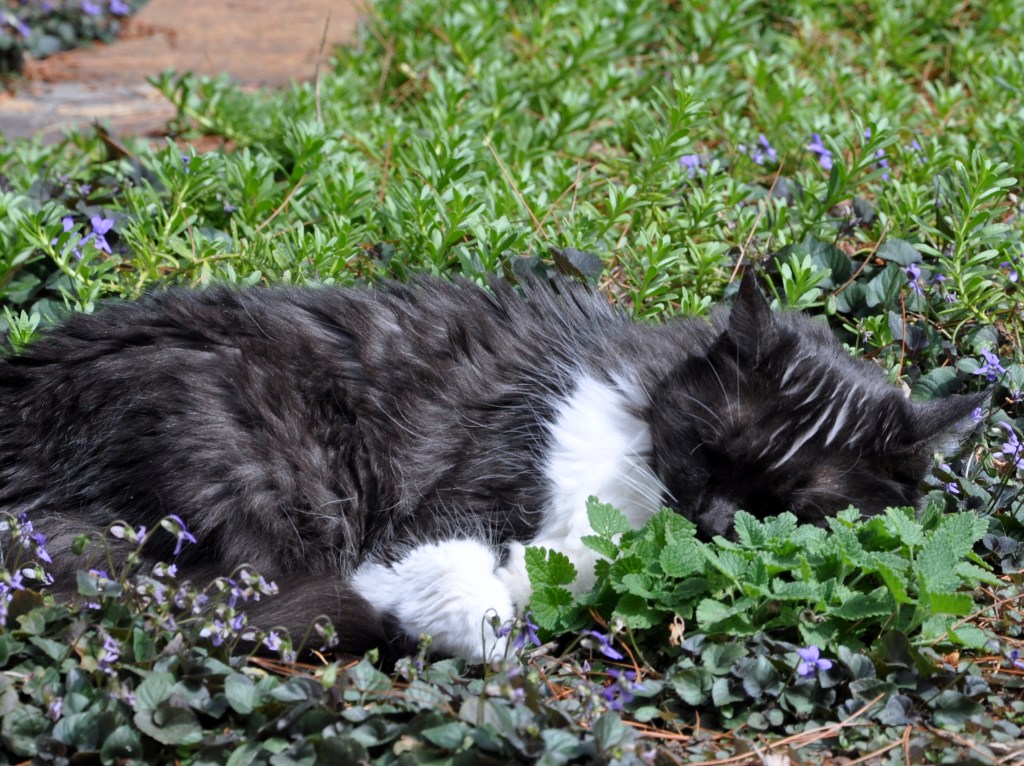
Violets make a terrific backdrop for cat portraits. They’re rugged, too, standing up to feline traffic. All three kitties enjoy lounging near the nepeta, but the Violets are none the worse for wear.

If a kiss could be seen, it would look like a violet.
Lucy Maud Montgomery
I agree!
 Gardening Nirvana