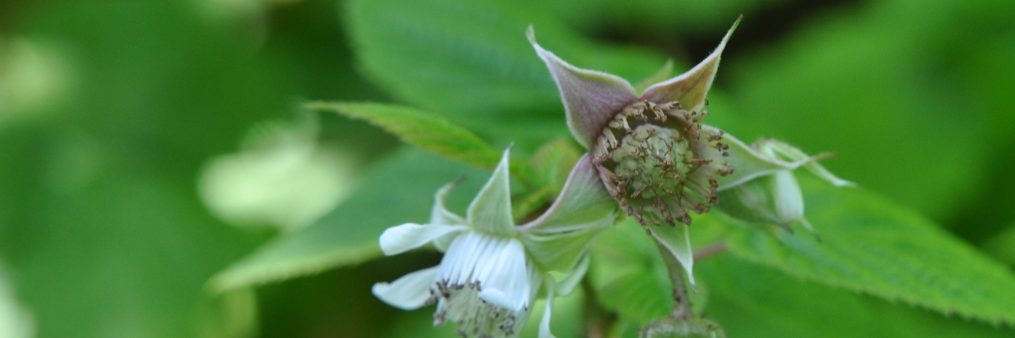
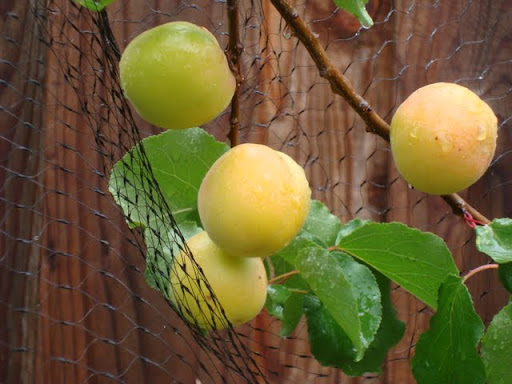
Our neighbors plowed their traditional suburban front yard in anticipation of what’s to come: an entirely edible front garden. Whenever I drive by I smile to myself and look forward to this unique and lovely approach. I learned about fruit cocktail trees from my neighbor, Gwyn, and then bought one last summer for my son’s 10th birthday. In just one year it is laden with four different fruits: plums, peaches, apricots and nectarines. These trees are a boon to folks with postage-stamp sized lots. You can grow a variety of fruits, all on one tree.
One summer we grew our own pumpkins in the front yard, along with sunflowers and a tomato plant. Our backyard is shaded by two neighboring pine trees, beautiful but impractical for growing sun-loving fruits and vegetables.
So imagine my shock when a friend shared this link today:
Michigan Woman Faces Jail Time for Garden
According to the website TakePart: Inspiration to act, “Michigan resident Julie Bass thought the price of organic food in her area was just too high. So she decided to plant a home vegetable garden.
And she thought she’d put it in the front of her house, “so the neighbors could see. The kids love it. The kids from the neighborhood all come and help,” she told MyFox Detroit.
Sounds great, right? Another homeowner trying to break away from the industrial food system by growing her own food? Well, clearly, you haven’t met the code enforcement folks for the city of Oak Park.
“That’s not what we want to see in a front yard,” Oak Park City Planner Kevin Rulkowski told the Fox station.
And so, they want to see this home gardener in court.”
Here is what happened when we planted our vegetable garden out front: Neighbors stopped to talk on a more frequent basis. They asked what we had planted, how the tomatoes were doing and what variety of sunflowers we had planted. The bees stopped by too, a hot commodity for any gardener and a welcome guest. Strangers walking their dogs slowed down to see the ever-changing “landscape” of the garden. Both pumpkins and sunflowers are 100 day crops. From seed to magnificent flower or fruit in three short months. You can almost see them grow day-to-day.
Vegetable gardening isn’t always neat and tidy. Neither, by the way, is life. Just before the pumpkins turn orange, the leaves turn brown, then grey and then and almost ash-white as the plant decays. All the plants energy is now diverted to the fruit. But there is beauty in that cycle, too. Seasons are cyclical and so is life. How is it that a city council can set down such restrictive and out of date guidelines, and worse, set out to enforce them in court.
These guidelines were likely put in place to discourage people from turning a front yard into an unsightly parking lot. For better or worse, what your neighbors do with their property can affect the value of yours. But to say that a vegetable garden, though atypical, creates a prosecutable offense, seems to border on the absurd. It discourages individuality and creativity while robbing the neighborhood of something equally valuable: a sense of community and belonging.


 Gardening Nirvana