A Week Of Flowers: Nasturtium’s Top Ten

I’m joining Cathy of Words and Herbs, along with other gardeners around the globe, for day six of her winter garden meme. Cathy’s invited us to share flowers from this past year’s garden as an antidote to winter gloom.

I probably shouldn’t admit this, but I live in USDA hardiness zone 9, which, to my non-gardening readers, means I can effectively garden for 10 months of the year. Frosts are rare.

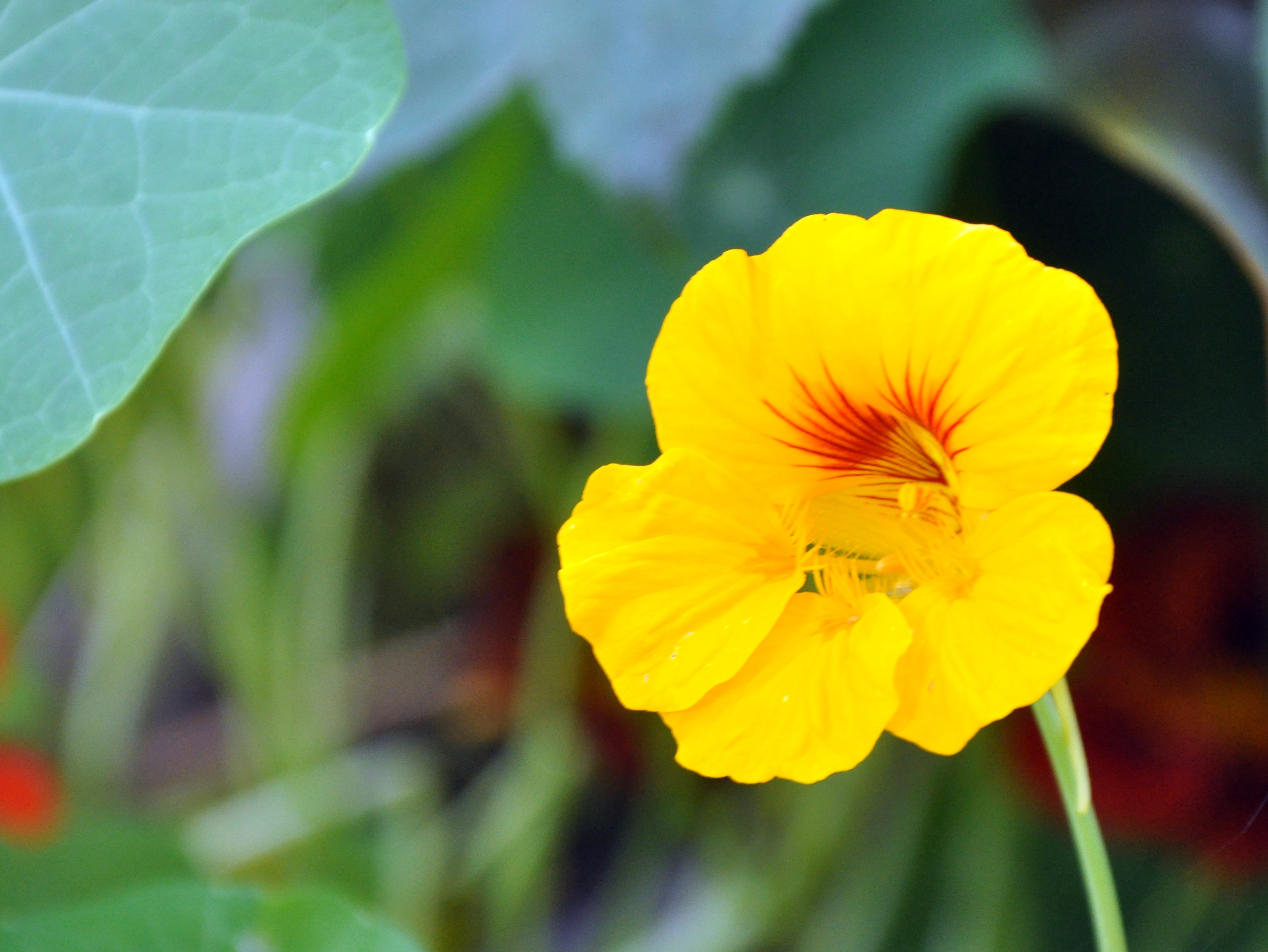
Close-up of vibrant orange nasturtium flowers surrounded by green leaves.
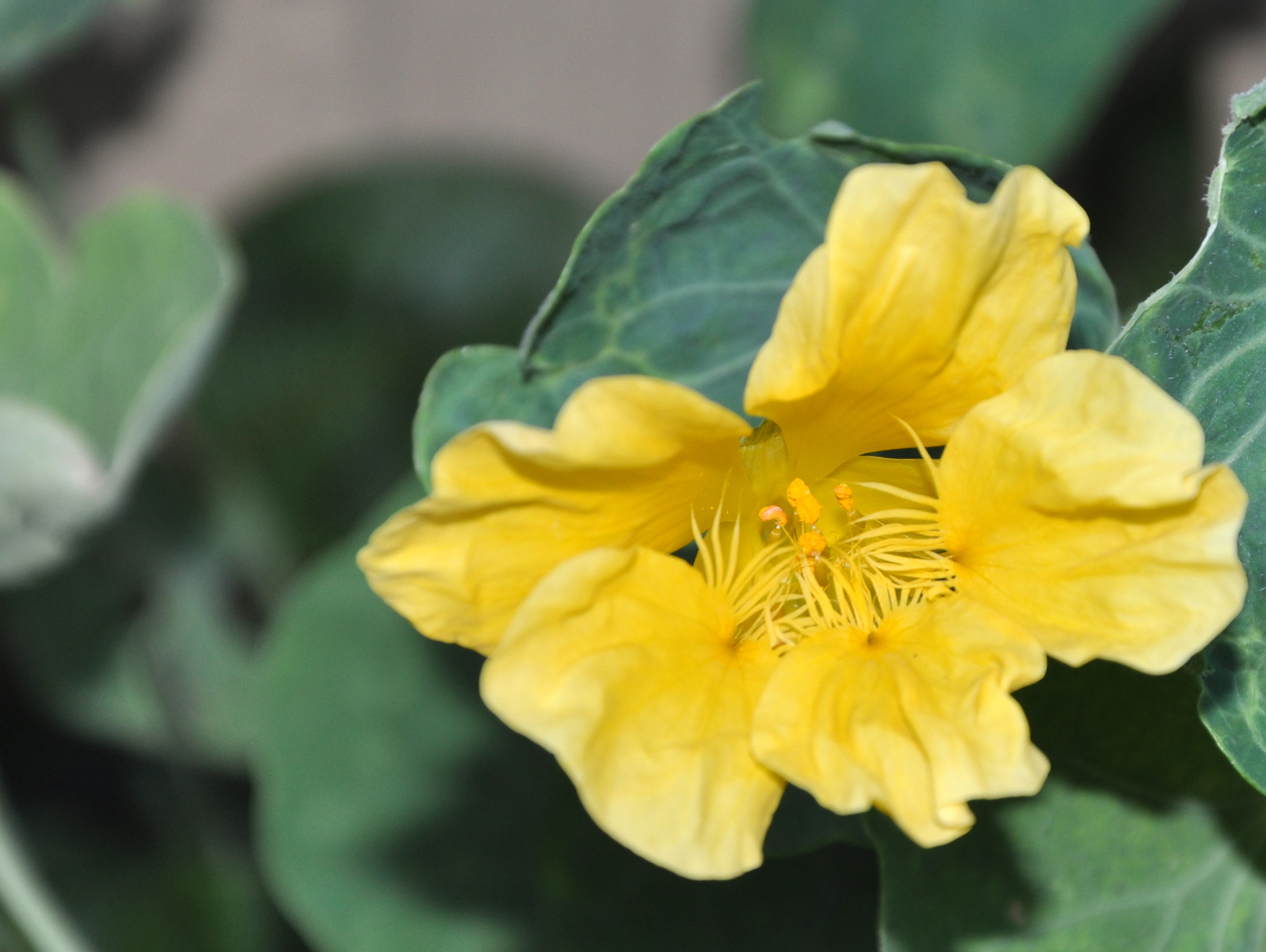
Yellow nasturtium

It’s not all rosy. We have multi-year droughts, and even in a typical year, rainfall is minimal and seasonal. We might go five or six months without a drop.

I am NOT complaining, just commiserating with gardeners who must step away for a few months till the ground thaws.

Today I’m sharing my garden nasturtiums, and my top-ten reasons for planting them.

  1. They’re in my zone, growing well for months out of the year.
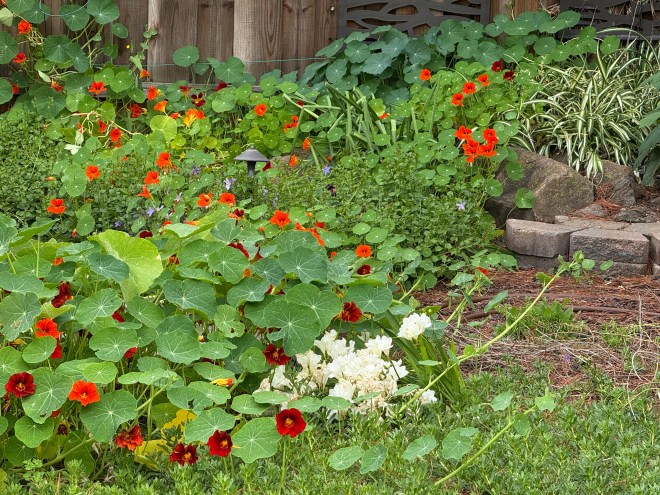
A vibrant garden scene featuring blooming orange and red nasturtium flowers alongside lush green leaves, interspersed with other plants and a few white flowers, creating a colorful and lively atmosphere.
nasturtiums in the garden

2. Nasturtiums self-seed. Plant once, and enjoy their reliable return to the garden.

3. These tender perennials play well with others. They’re happy to grow up between plants or across the patio, but somehow they’re not invasive.

A garden scene featuring a stone fountain surrounded by vibrant orange nasturtiums and blooming hydrangeas in shades of pink and blue, with a wooden bench and fence in the background.

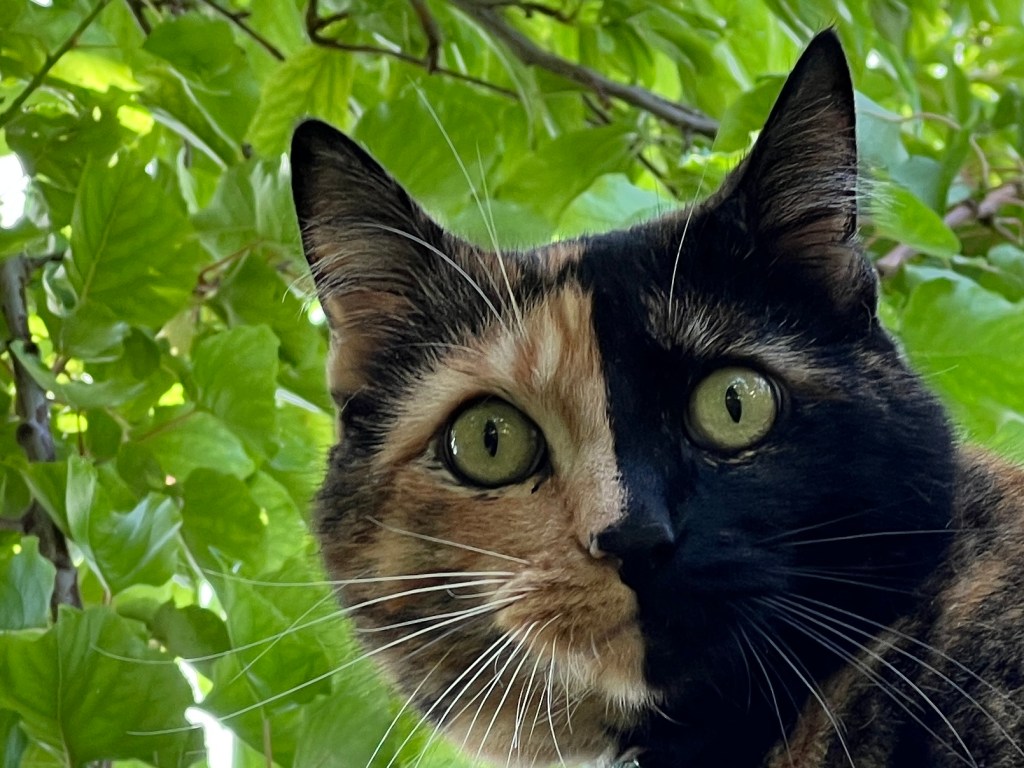
4. They make a fun hiding place for our cat, Tessa.
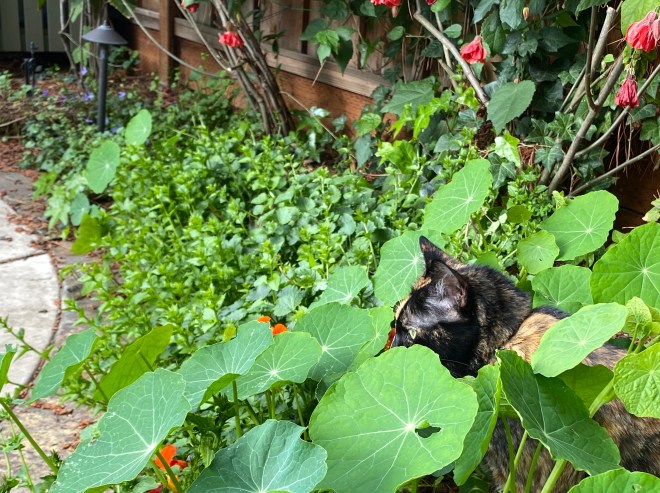
A tortoiseshell cat observing a garden filled with large green nasturtium leaves and red flowers, with a wooden fence in the background.
Tessa amid the nasturtium and abutilon
A tortoiseshell cat standing among vibrant nasturtium flowers in a garden.

5. They flower twice a year.

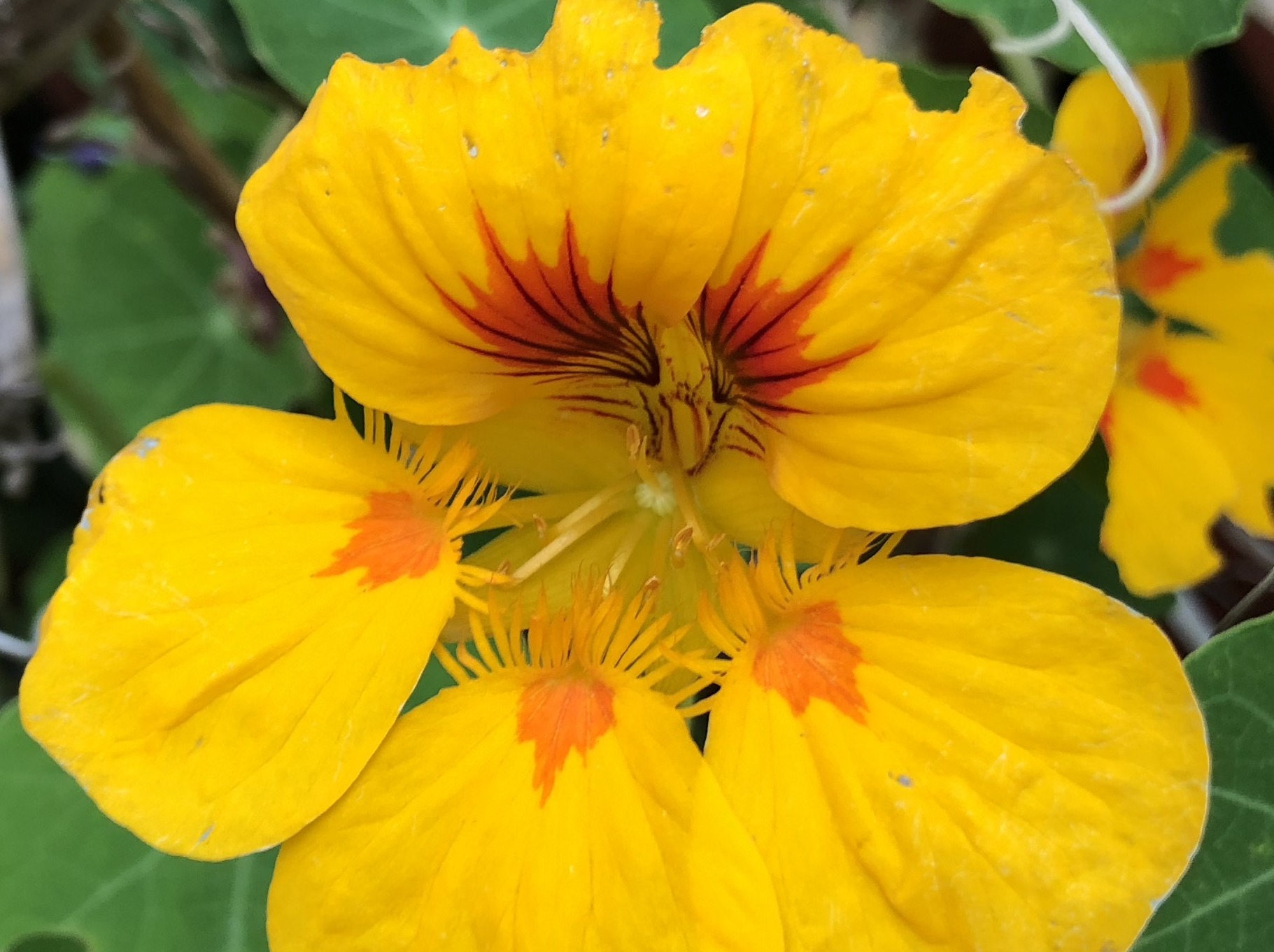
Close-up of an orange nasturtium flower nestled among green leaves, showcasing its vibrant color and delicate petals.
orange nasturtium

7. Nasturtiums have beautiful leaves.

A clay sun face wall decoration with green nasturtium leaves and a bright orange flower growing in front of it against a wooden background.

6. The flowers and leaves are edible, cooked, and raw. They’re lovely as a side dressing on a salad or on top of a cake.

8. The rich yellows, oranges, and reds feel like sunshine.
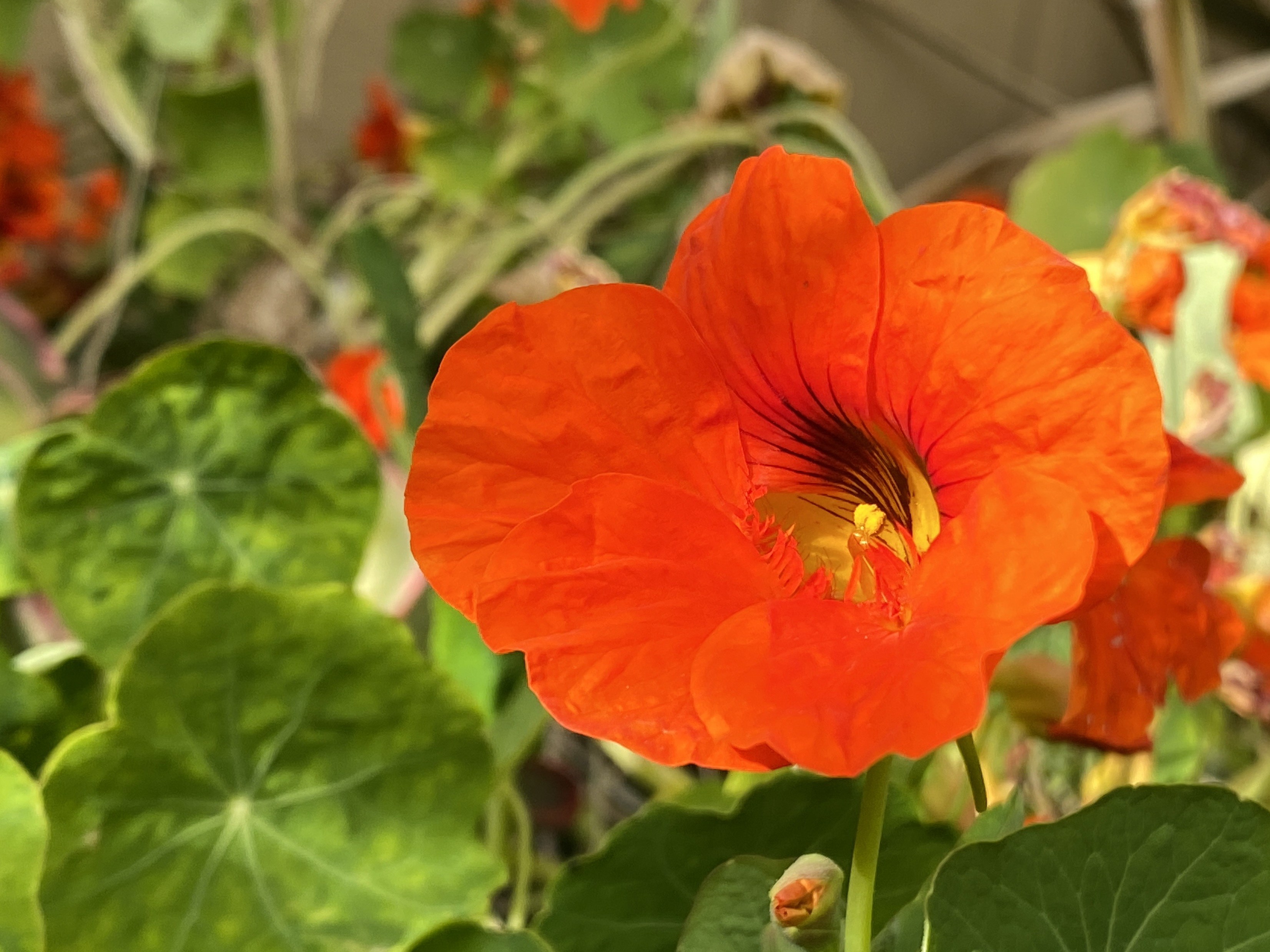
9. When you enjoy crafting and gardening, nasturtiums make their way into your crafting room, where they leave a wonderful impression.

A textured background featuring watercolor illustrations of nasturtium leaves in various shades of green, with handwritten text 'Nasturtiums' in a light orange color.

10. Bees love nasturtiums, and gardeners rely on bees. We all win, and that’s the best reason of all.

Thanks for hosting this fun winter meme, Cathy.

Earth Day: If Nasturtiums Ruled the World

Nasturtiums have taken over the garden this spring. They bloom exotic oranges, sunny yellows, and a few brilliant reds. Leaves shaped like small lily pads are often as big as saucers. Leaf size varies, each slightly ruffled around the edges with a stem supporting the leaf like a delicate umbrella, filtering the sun yet inviting the light.

Nasturtiums are happy in the sun and the shade. They return year after year, asking for little in the way of watering and pruning. A gentle rearranging of the meandering vines keeps the walkways safe from trips. They play well with others, happy to twine themselves up nearby shrubs or carry on down the path.

Depictions of nasturtiums appear in botanical art and paintings, much like geraniums. They’re a flower for the people. These garden gems stand tall, faces lifted toward the sun, gently bending with the breeze that moves across the garden late in the day.

The flower and the nasturtium leaves are edible, containing various minerals and antioxidant compounds. They could feed the masses if we could replicate all that goodness.

If nasturtiums ruled the world, they would remind us daily how nice it is when we all get along. They would stand for justice, fairness, honesty, and respect, leaning on each other for support in all their beautiful shades.

Thank you, planet Earth, for all your gifts.

On this Earth Day, we will all try to do better.

A bit about Earth Day from Wikipedia:

“In 1970, the seeds that grew into the first Earth Day were planted by Wisconsin Senator Gaylord Nelson. An ardent conservationist and former two-term governor of Wisconsin, Nelson had long sought ways to increase the potency of the environment as a political issue. The extraordinary attention garnered by Rachel Carson‘s 1962 book, Silent Spring, the famous 1968 EarthriseNASA photograph of the Earth from the Moon, the saturation news coverage given to the Santa Barbara oil spill[18] and the Cuyahoga River catching fire in early 1969[19] led Nelson to think the time was ripe for an environmental initiative. As a result of interactions with his staff and with Fred Dutton,[20] a prominent Democratic operative who had been Robert Kennedy’s presidential campaign manager, Nelson became convinced that environmental teach-ins on college campuses could serve as such a vehicle.[21

Summer Approaches

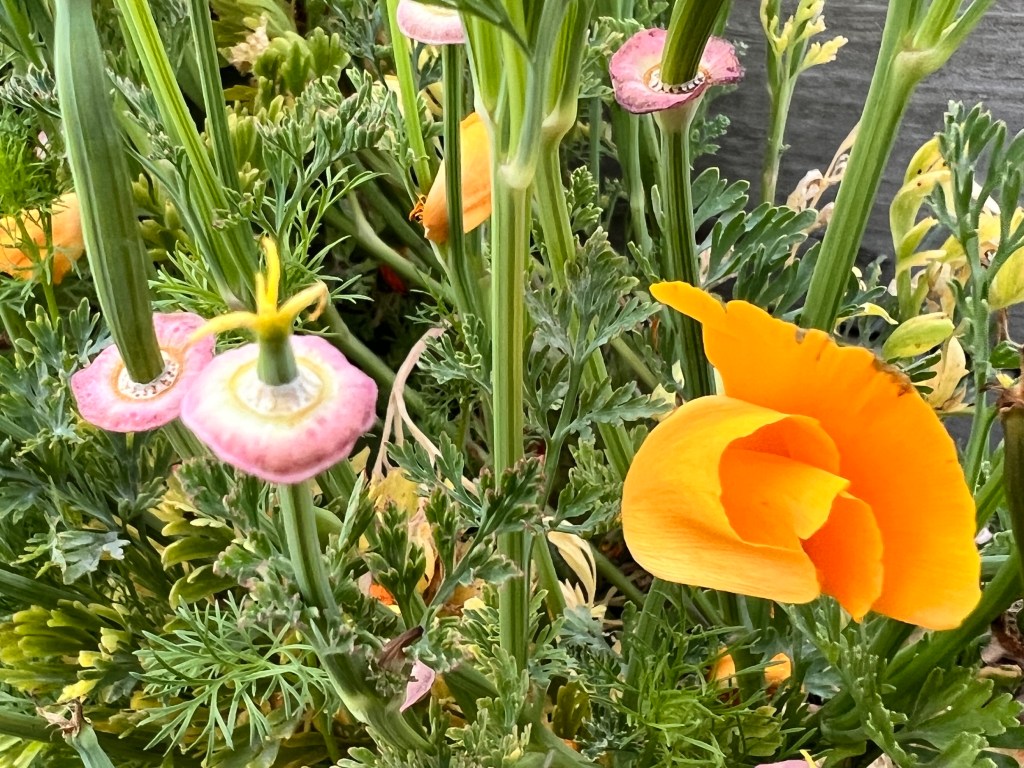
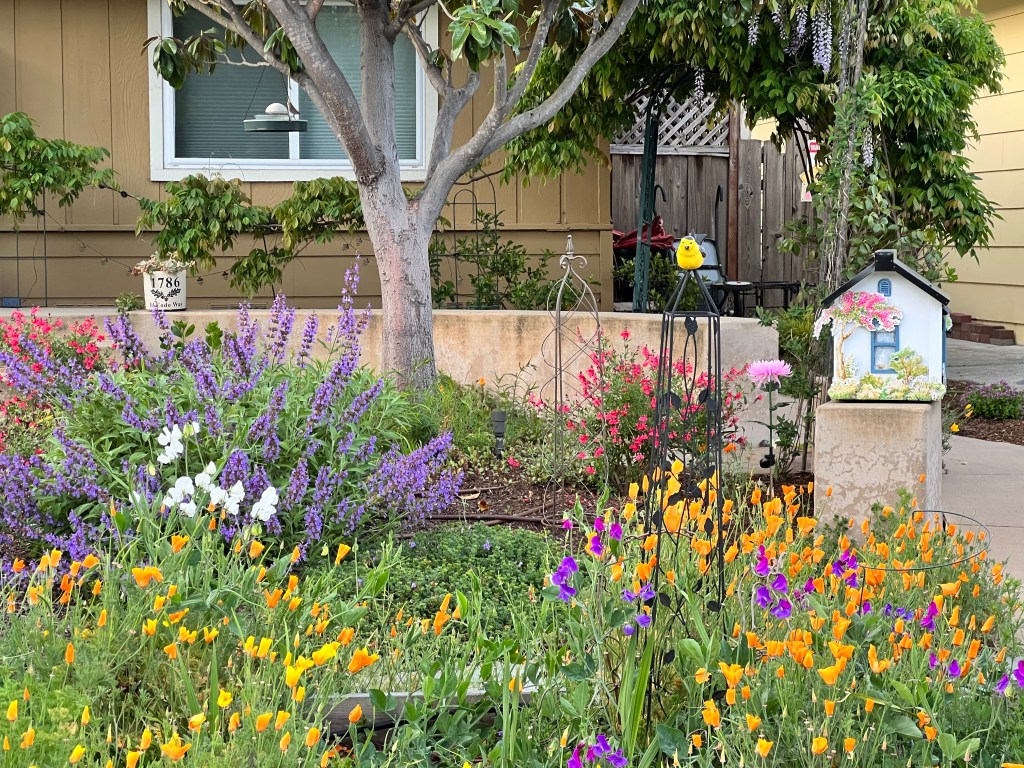
Our summer solstice is still three weeks away, but all the signs of the season have arrived. When we left for Vancouver in mid-May, the California poppies in the front garden were ending the season as the nigella bloomed.

I had hoped the poppies might linger, as the orange and purple look pretty together. Flowers have their own time and place, so, of course, nature took its course. It’s one of the joys of gardening.

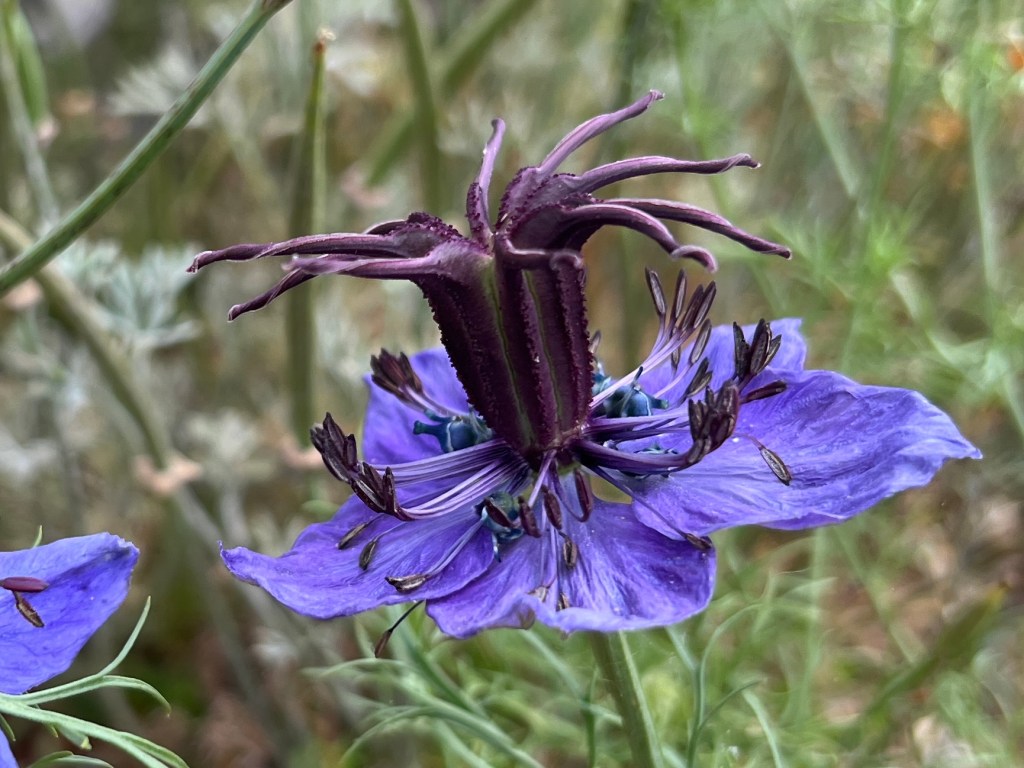
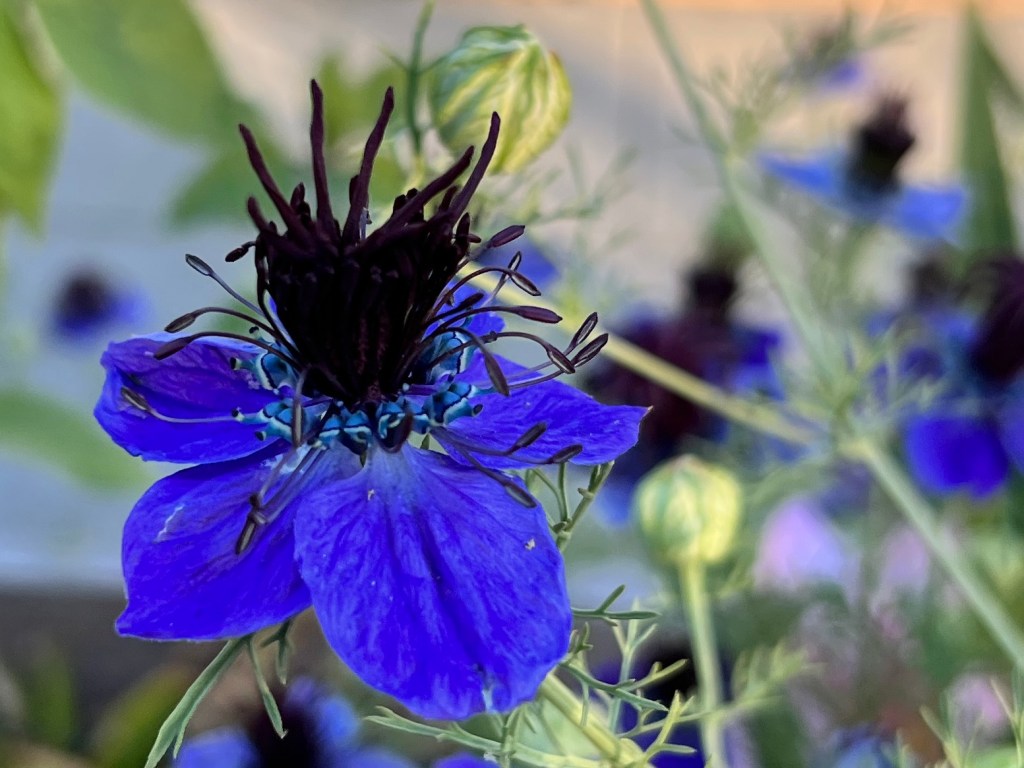
Nigella

I laughed when one of the seed pods split open as I worked along the path, spewing tiny seeds in my direction, which bounced off my cheek. The seeds could almost be mistaken for course black pepper. I swept them into the garden and will enjoy what takes hold next season.

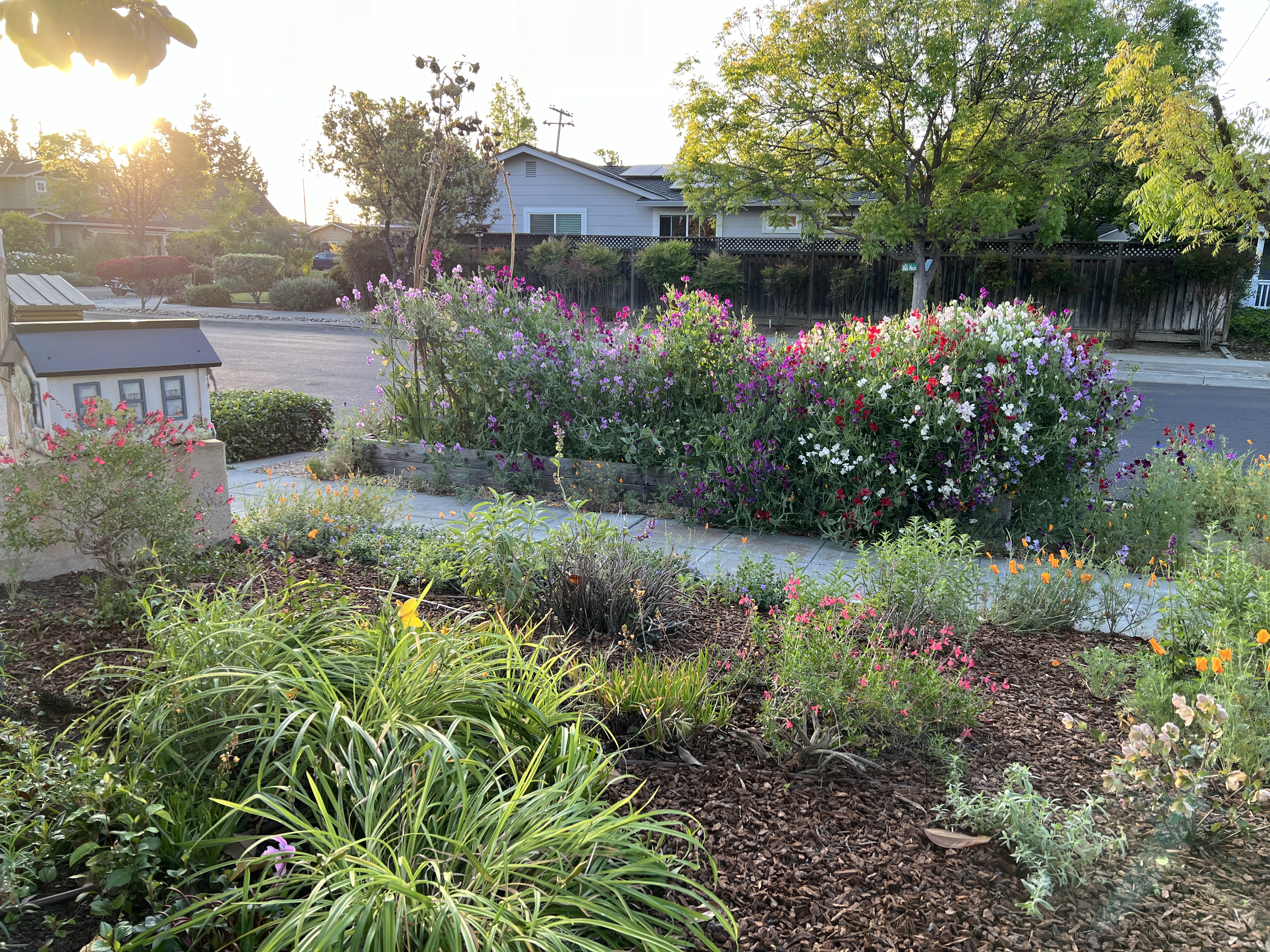
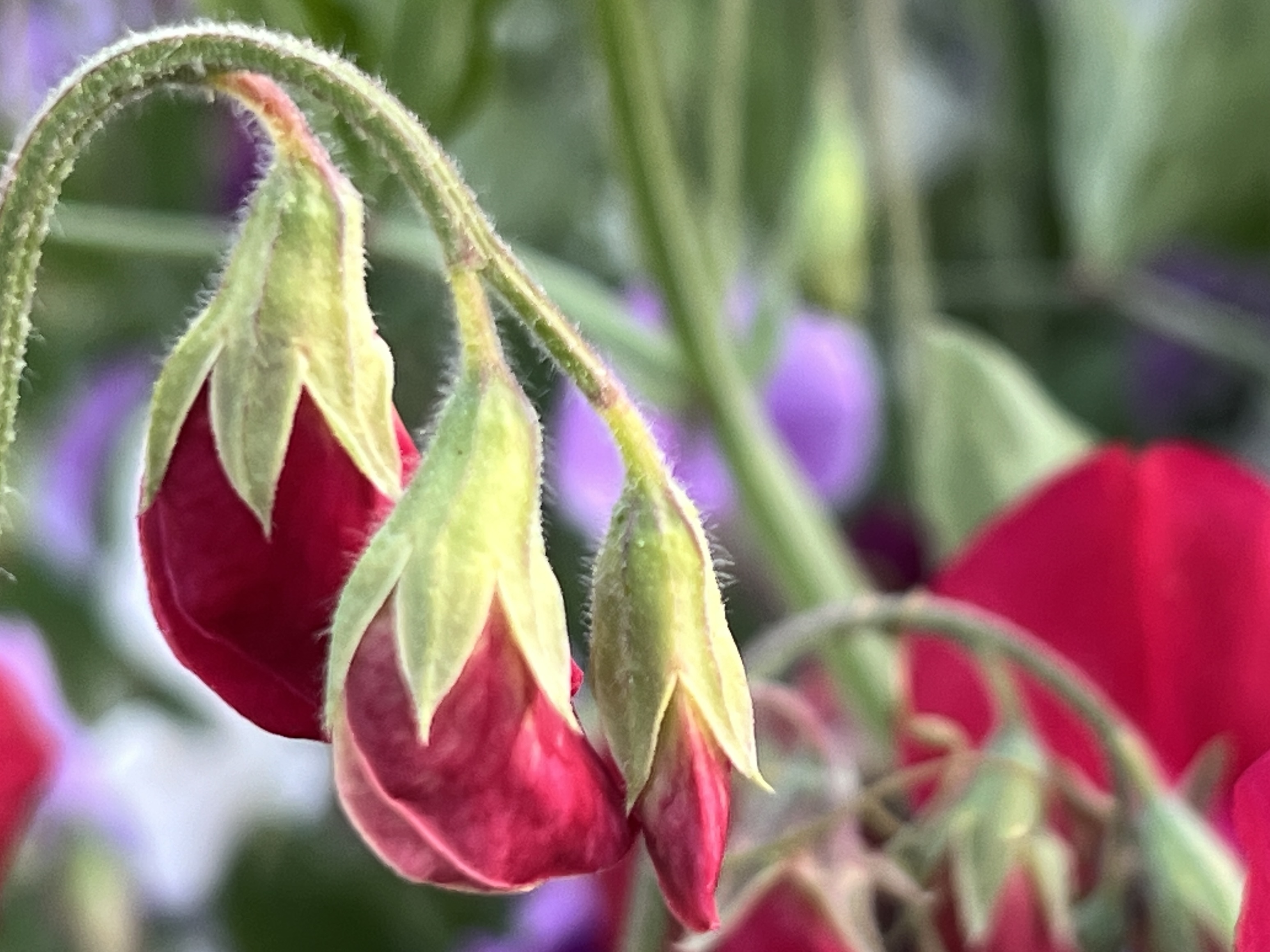
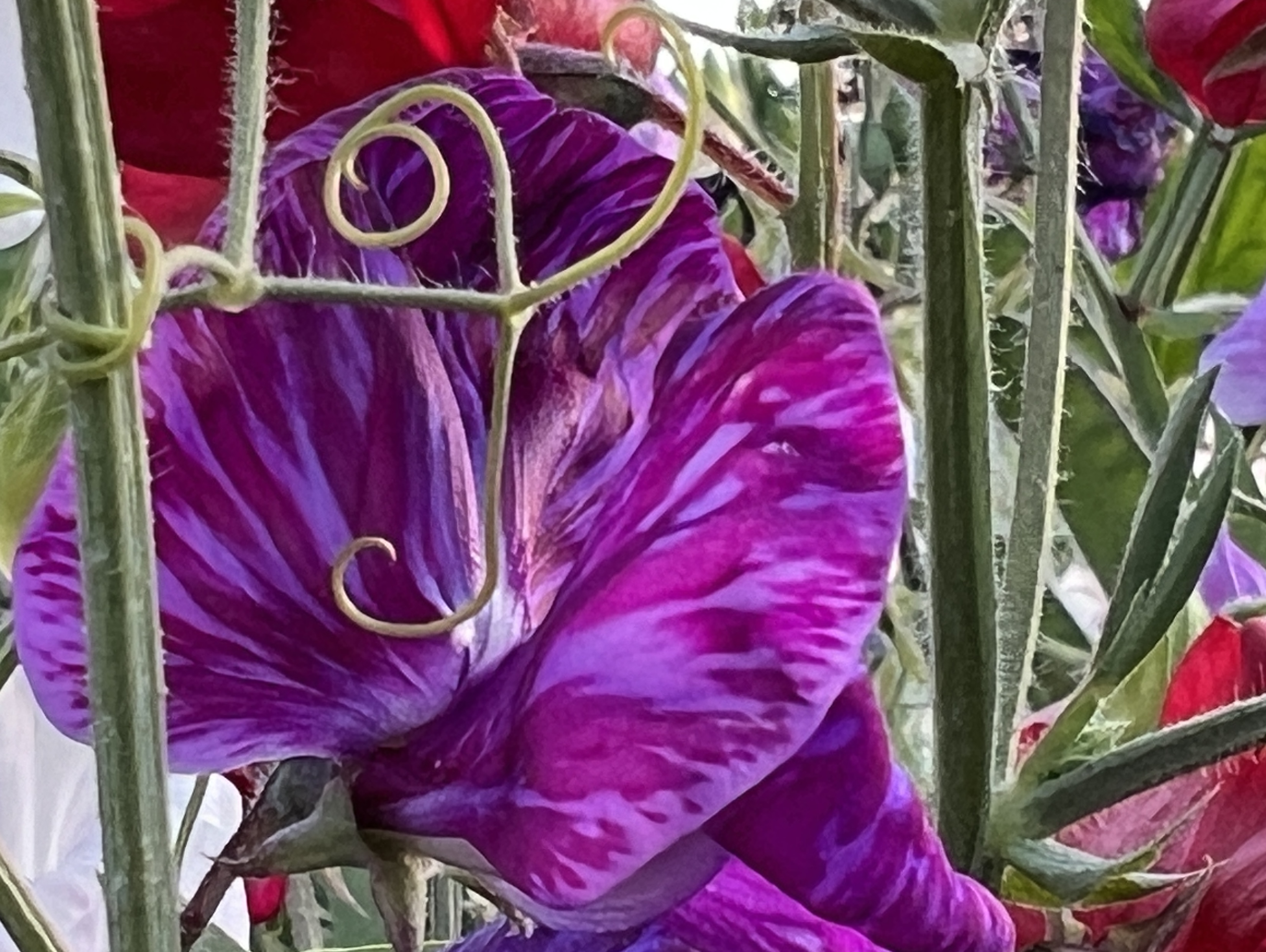
With the first San Jose heat wave, the sweet peas cry uncle and begin to set seed. I leave the plants for a few weeks to allow the seeds to drop. This past week, I removed the plants, gathering seeds to offer to friends while leaving an equal amount to self-seed in the fall.

As I removed the sweet peas from the curb garden, I uncovered sturdy gladioli. The sweet peas created a dense cover, but the gladiolus thrived and were none the worse for it. Today, we planted two tomato plants, four sunflowers, and some strawberry starters. The existing ground cover has room to spread its delicate leaves, with lovely purple flowers to contrast the yellows, pinks, and, of course, green.

Over the long weekend, Mike put up the shade sails in the front and back while I uncovered the garden swing, tables, and the like. With virtually no rain until October, we can leave things out.

Nasturtiums spread throughout the back garden, traveling up, over, and around various obstacles, spreading stunning shades of orange, yellow, and, occasionally, red. They took over one of the garden paths while we were away, and how I wish I had a photo of our cat’s expression when he couldn’t pass.

My garden has found its rhythm these past few years as natives are more established, and annual seeds, bulbs, and rhizomes reliably return, filling the garden with spring’s abundant gifts. Back-to-back seasons of welcome rain certainly helped create healthy roots.

We’re expecting temperatures around 90F (32C) this week, so my time in the garden is limited. I’m glad to have accomplished so much in the last two weeks with Mike’s help, and every day, I celebrate this lovely patch of earth.

Spring Gives Way to Summer

Spring is slowly giving way to summer here, though our temps have been moderate for May. I’m happy to bypass the heat waves, but it is strange.

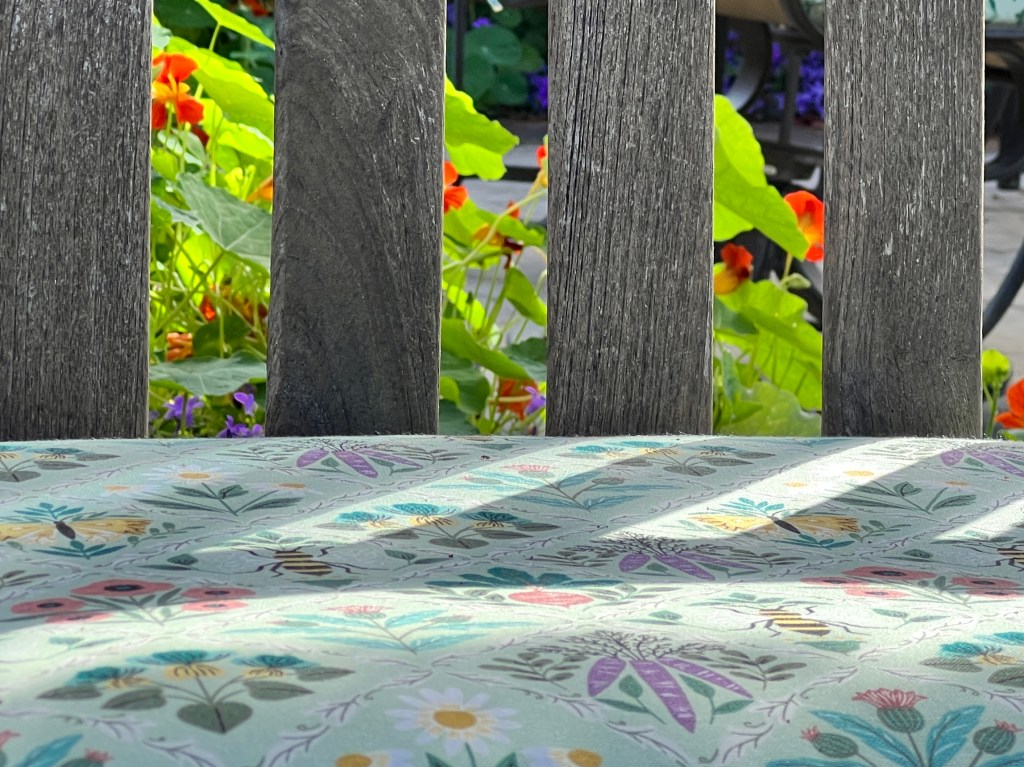
Nasturtiums viewed through the garden bench

We spent the three-day weekend working in the garden, with breaks for meals and a night out. It remained overcast most of the time, so the work was comfortable. 

I’ve been cutting the California poppies back to the ground and collecting and drying a few seeds for next season. For the most part, the poppies self-seed, but it’s nice to have backups just in case. The same applies to our sweet peas and the nigella, or love-in-a-mist.

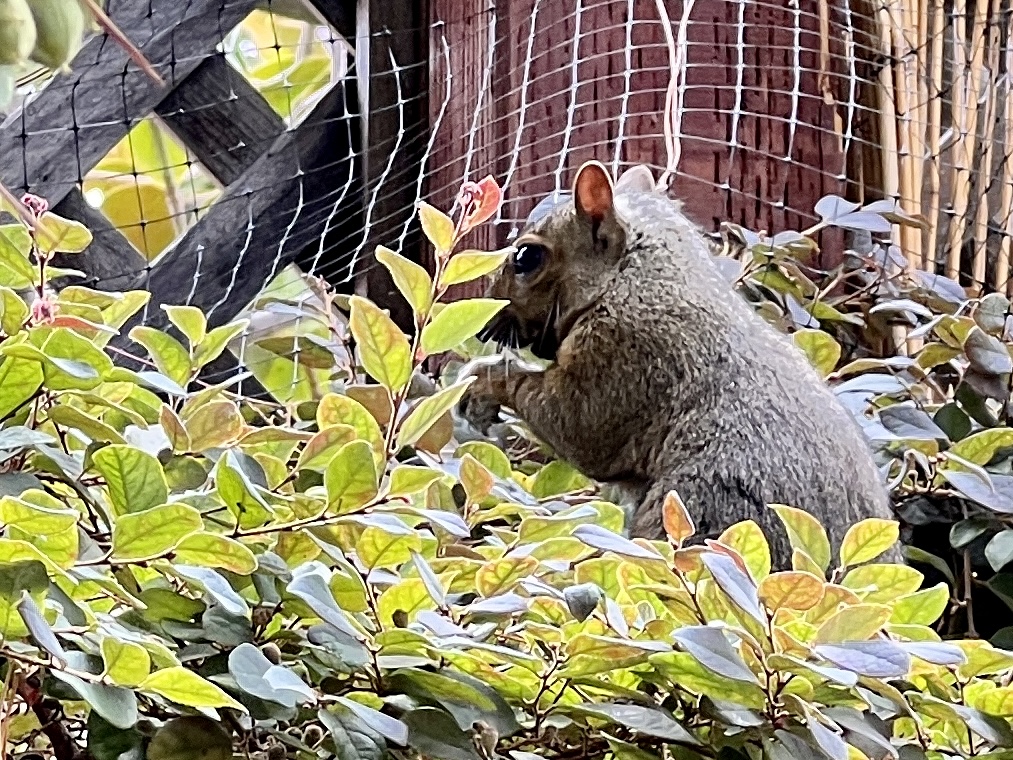
Now that I have room in the curb garden, I planted Mammoth sunflower seeds. I found these clever domes online to keep the seeds underground until they germinate. Otherwise, the squirrels eat them as fast as I plant them.

Sunflower seeds don’t do well when started indoors, so covering them is the best solution. Ironically, I noticed what looked like sunflowers already growing in the box. They seemingly popped up out of nowhere, but given our rain, they may have been lying dormant for some time. Of course, that doesn’t explain how they survived foraging squirrels, but I’ll take it.

I planted a packet of forgotten cosmos from my seed collection. Some seeds do well even when past the use or sell-by date, so I hope that’s the case. Nothing ventured, nothing gained.

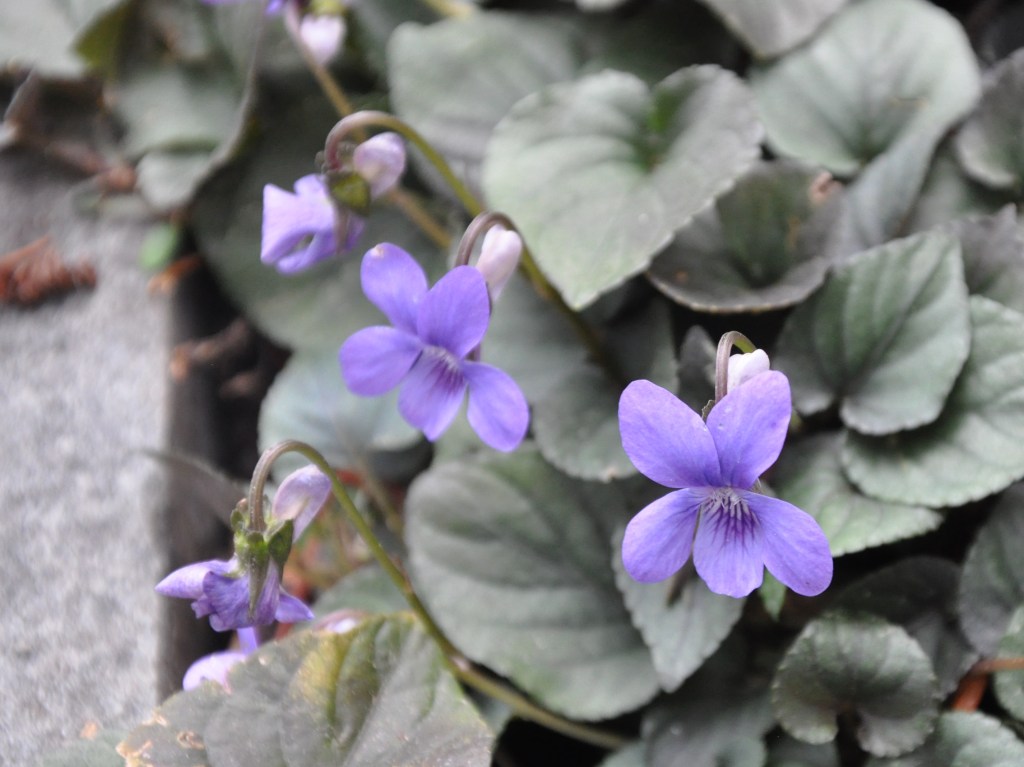
Most of my gardening time in recent weeks has been spent digging out once-charming now-invasive violets. When they initially appeared in the garden, I thought they were derivative of annual pansies. We don’t generally see wild violets here in San Jose.

It was, however,  a surprise to read on a couple of blogs that wild violets are considered weeds. Now I know why. They’ve spread all over the back garden, growing in clumps under other plants. Like a lot of weeds, they propagate in a variety of ways, and they protest removal from the ground. I have a system: pull out fistfuls of large clumps, then go after the remaining roots. I dig out the small seedlings using my garden fork since the seedlings have shallow roots. I’ve been clocking the time spent removing these invasive plants, and as of this writing, I’ve spent eight hours digging them out. Can you imagine?
As Mike is fond of saying: “Job security!” As if anyone could fire me from this passion. Another day, another weed equals more time in the garden.

Tessa agrees.

The Gift of Rain

San Jose gardens get by with about 15 inches of rain a year. During the drought years, we had half of that or less. So this year’s rain has been a gift to South Bay gardens, not only delaying the time when we would typically begin a watering routine but adorning our gardens with more blooms, taller plants, and, yes, lots of weeds.

Nasturtium along the walkway, with salvia and geraniums filling the space in between

My nepeta (cat mint) self-seeded throughout the garden to the sensory delight of our felines. The original plant is twice as tall this year, hiding those sneaky weeds below. They have met their match!

Love-in-a-mist, California Poppy, Geranium, Morning Glory border our neighbor’s lawn

California poppies spread throughout the garden, showing up in pots, along the curb garden, and elsewhere to my delight. The profusion of color is uplifting. I’ve been relocating the self-seeded sweet peas to the other side of the sidewalk so that they don’t overtake the perennials I’m trying to grow. First, I pulled out small volunteers or transplanted them, and then I bought another packet of seeds to hedge my bets during the transition. It worked partly due to the rain, and now the perennials are getting a foothold with the space and an extra helping of rain.

I cut back the stems of the Freesia last week, leaving the leaves to dry out before cutting them back to the ground. Rapidly taking their place are gladiola and love-in-a-mist. Last October, Mike dug out several gladiola bulbs, and I replanted them together in the curb garden to maximize the effect. They’re just starting to come up as the poppies go to seed.

Love-in-a-mist about to bloom

Over the years, people have asked if my garden is a lot of work. While it can be hard on my aging hips and lower back, I don’t think of it as work so much as a pursuit. I’ve had the luxury this season to spend two or three hours a day outdoors, deadheading, weeding, and pruning as I observe all the gifts of nature.

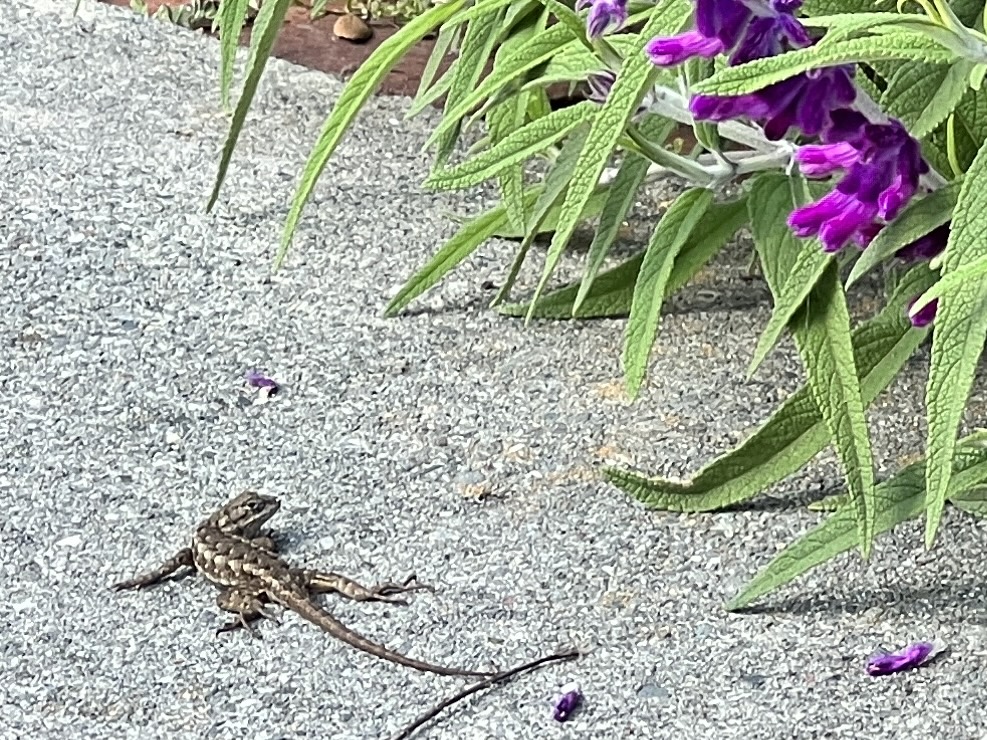
The garden attracts lizards, birds, squirrels, butterflies, and praying mantis. The scents of spring are intoxicating, and the refreshing cool greens soothe me.

A California lizard. They devour lots of bugs

Rain-filled water tanks permitted us to plant guilt-free strawberries and tomatoes, and for the first time in many years, I planted five coleuses in a repurposed pot once used in the back garden.

Annuals are heavy water users, so I’ve limited myself to one box and a shade-loving spot at that. I’ll share photos after I clean up the pot. Otherwise, I will continue to plant and tend to native and drought-tolerant plants, knowing that this year’s rain is a gift without any promises for the future.

A Garden Under the Influence of Rain

wisteria vine

Wisteria refreshed

It’s been an extraordinary spring!

Everywhere I turn I see a happy garden under the wonderful influence of rain. I’m taking none of it for granted.

From the self-seeded pumpkins,

2016 garden pumpkin near patio

Self-seeded pumpkin, impervious to the cool night temperatures

to the spontaneous cottage garden

2016 sweet peas love in a mist poppies

My all-volunteer (self-seeded) garden

everything seems larger than life.  It’s rare for San Jose to get rain this far into the year, but we continue to get small storms every week or so keeping things fresh and alive.

I prepped an Earth Box for some pumpkin seeds, and following the package instructions, waited for warmer nighttime temps. I needn’t have bothered. There are two self-seeded pumpkins growing across the back garden doing just fine. They don’t mind the cooler nights and show no signs of slowing down. Emboldened by last year’s pumpkin success (no water, no squash bugs) I’m happy to see these two doing well.

2016 pumpkin vine self seeded

Another self-seeded pumpkin, already setting flowers

The tomatoes doubled in size within a few weeks. I’m glad I staked them from the start. They always looks so small when they’re just getting started, but I’ve learned the hard way how difficult it is to stake them once they are under way.

2016 garden tomatoes

Tomatoes Doubling Down

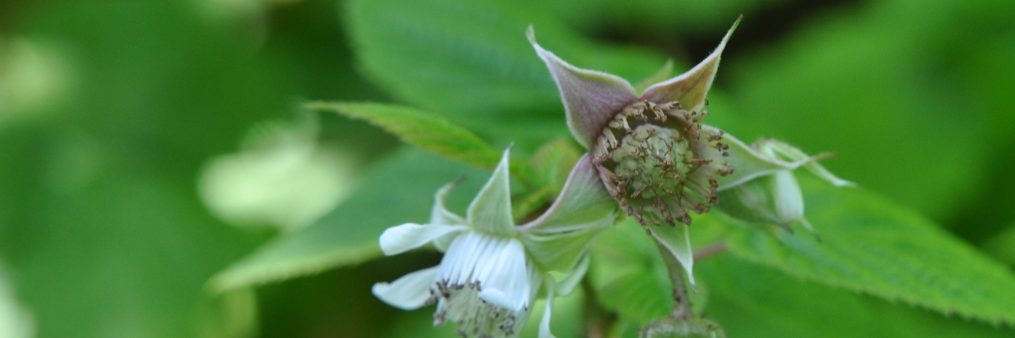
The raspberry canes survived the move and several of the canes are setting flowers. There is nothing quite so good as a fresh, warm berry from your garden. Grow, berries, grow!

I missed the memo about Nasturtiums taking over the garden, but I don’t mind. They’re beautiful, colorful and edible and they’re supposed to keep the bad bugs away. So far so good so I say “go Nasturtiums.” There are strawberries hiding under the flowers which is probably just as well. If the birds don’t see them, they can’t eat them.

nasturtiam close up

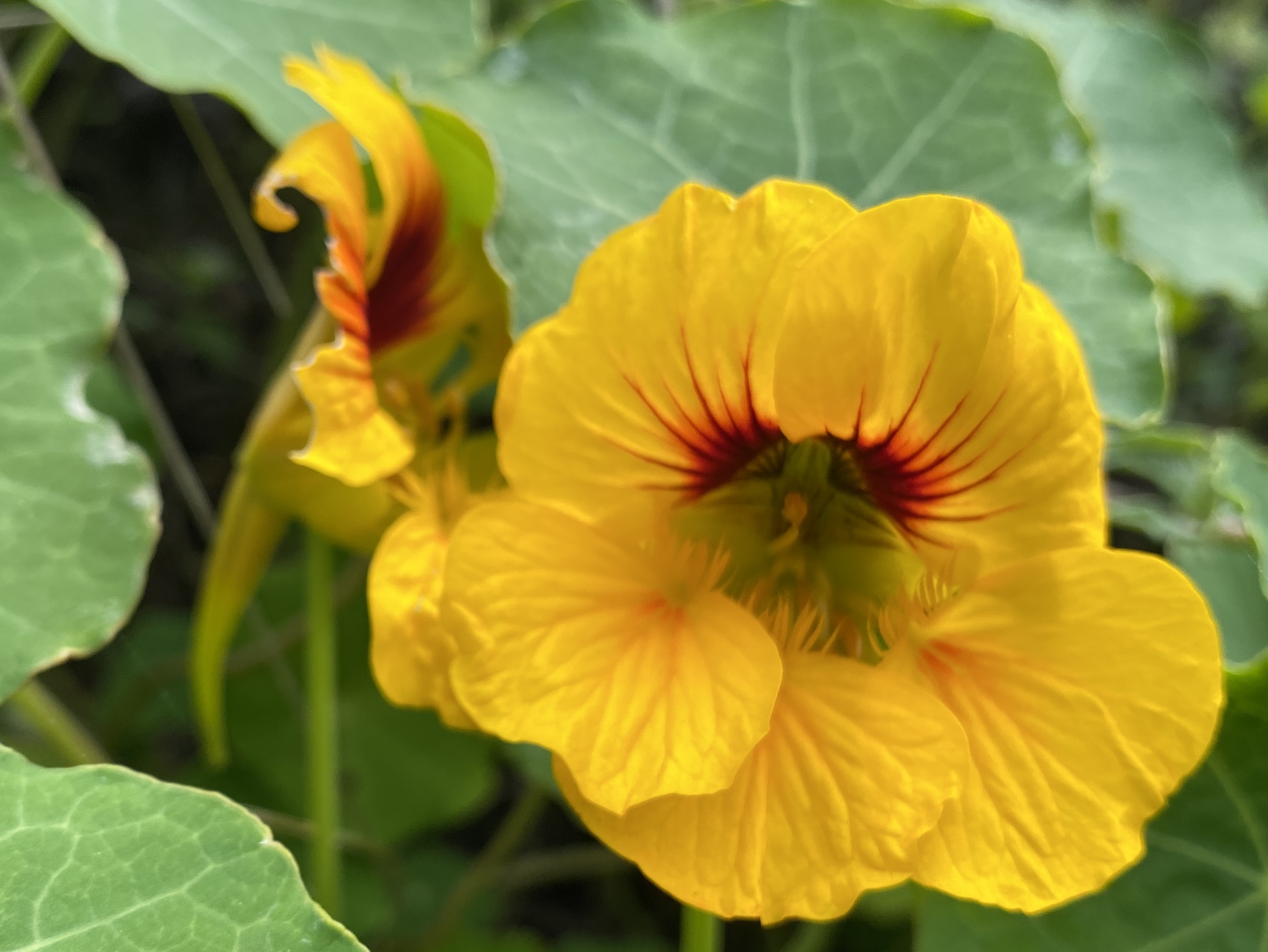
Variegated Nasturtium

Thanks to the heat and rain, the basil is already flowering. The flowers are pretty but they take away all the energy from the leaves so I’m pinching them back every other day. I made this same mistake last year. The tomatoes take longer to fruit so while I’m waiting for tomatoes, I’m having to discourage the basil from flowering. Hopefully I can stay on top of it. Caprese salad is in my future!

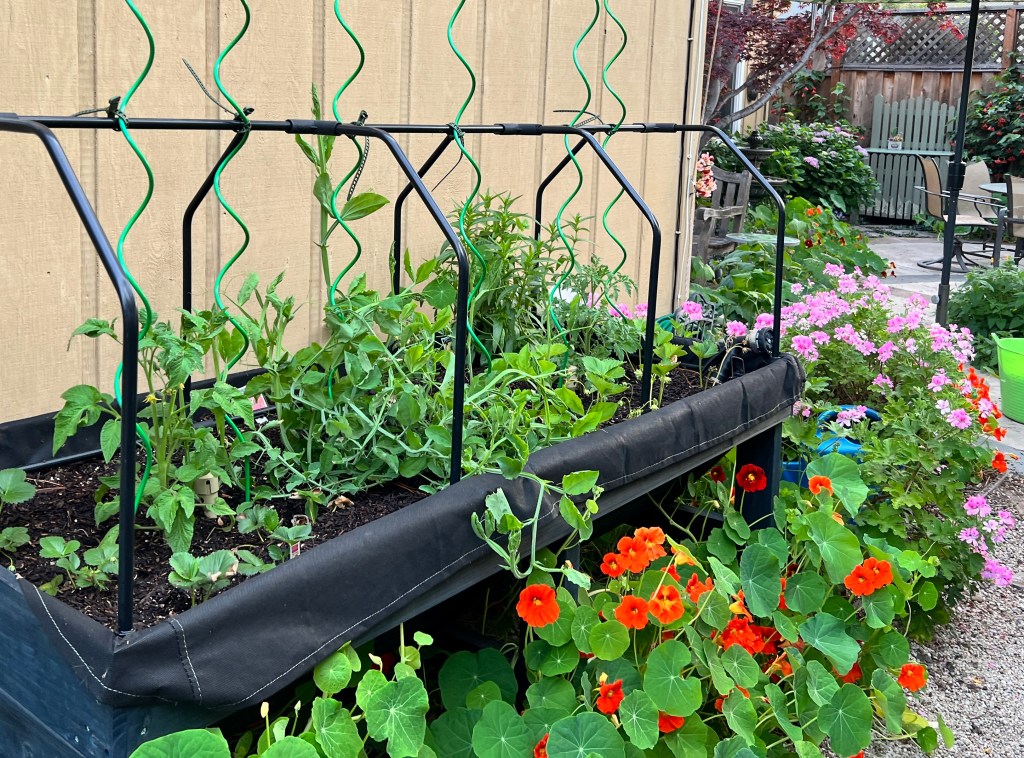
I’m really happy with my raised (Trug) planting bed. I wrapped the legs with copper tape before adding a single plant, and it worked. No snails! I used strips of burlap as mulch this year, with plenty left on the roll for years to come. It was also supposed to discourage the cats from using the boxes for other purposes, but they think it’s a delightful place for a nap.

2016 slinky in the planter box

Slinky found her way to the planting box

slinky in the planter box

Cozy

mouse in the garden bed

Nasturtiums and Mouse the Cat

What an incredible spring.

March 10th vegetable garden

March 10th, 2016

vegetable garden may 5th

May 5th, 2016