Wisteria: Know Before you Grow

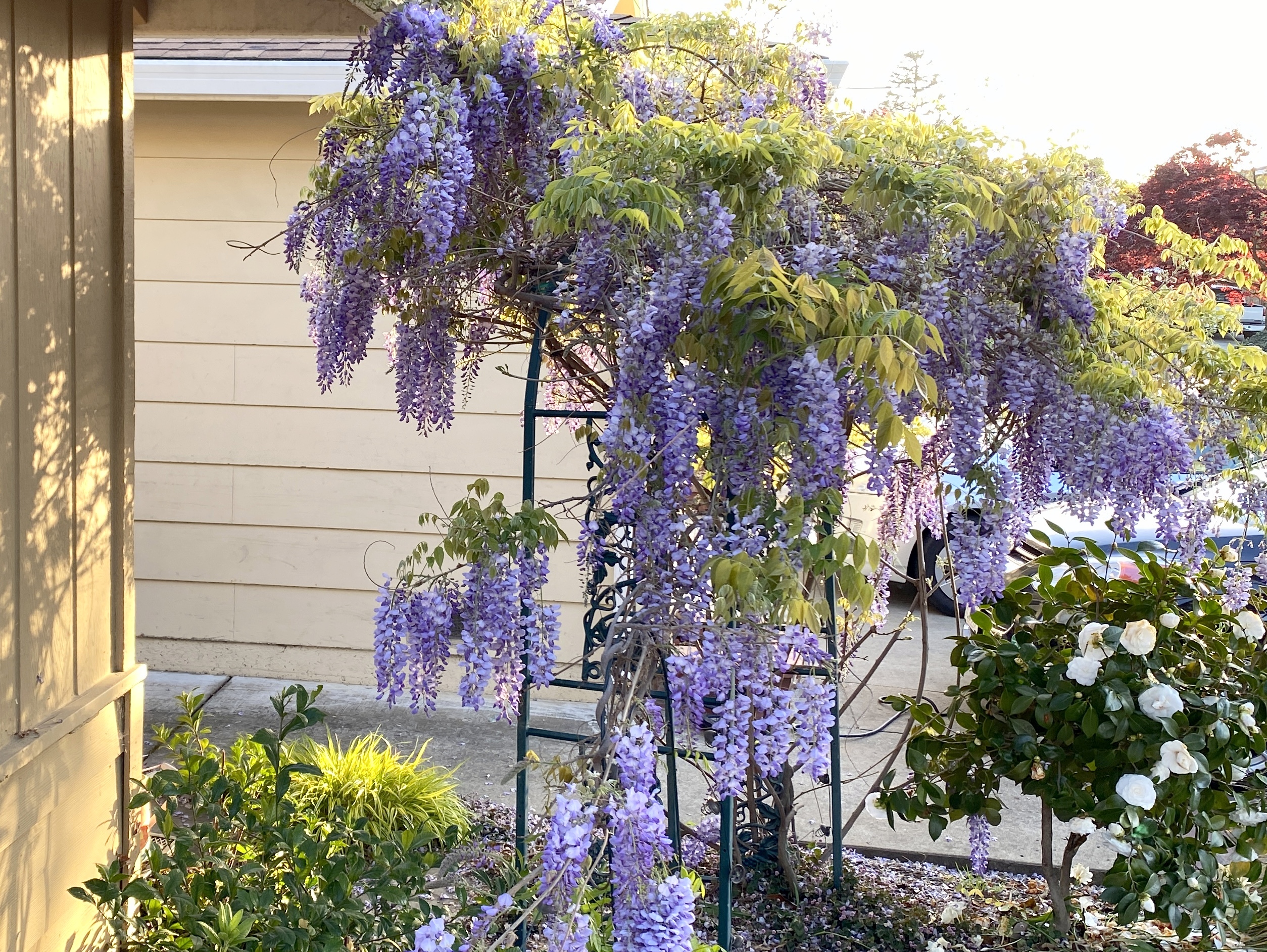
Wisteria symbolizes longevity and grace. For years I longed to have one in our garden. Aren’t they stunning? They need space to grow, though, and space is always at a premium in the garden, because nature abhors a vacuum, and this gardener feels compelled to plant any available earth.
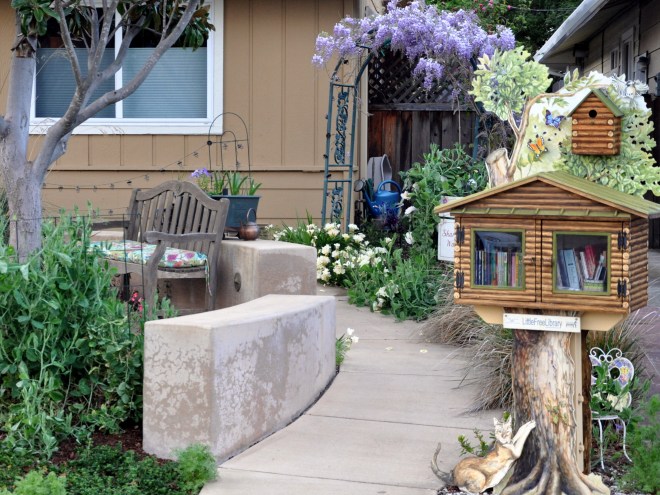
A charming garden scene featuring a stone pathway, a wooden bench with colorful cushions, a whimsical little free library made from wood, and vibrant greenery, including wisteria flowers hanging above.

Then opportunity knocked.

When our young Magnolia became infested with scale, I tried to save the tree by manually scraping the scale into a bucket —an arduous, odiferous task. The scale quickly returned, along with ants. I pruned away the center, looked at organic options, and eventually contacted an arborist, but it was all for naught.

It’s tough losing any tree, but here was my chance to grow a Wisteria vine. We repurposed an arch from the back garden, placed it at an angle in the front garden, and planted the vine. The first year of growth was underwhelming, as it often is, but in the years that followed, the vine took off. It flowered vigorously in early Spring, then sent out a second set of blooms later in the year.

A vibrant Wisteria vine with cascading purple blossoms, growing over an arch in a garden, with a fenced area and other plants in the background.

At some point, though, the tree went from vigorous to invasive. I couldn’t keep the tendrils off our roof, our neighbor’s roof, a nearby tree, and so on. Clearly, I should have done my research, as I recently read that it is “known for its vigorous and potentially destructive growth.” Now they tell me.

I get attached to plants and trees, and this was no exception, but I’m pragmatic as well. Risking life and limb, damage to the house and the tree nearby meant it had to go.

It was labor-intensive. I started with small garden shears, graduating in size to the base of the tree’s substantial girth. I tried digging out the roots, then Mike had a go, until it became apparent the roots would need to be removed by a tree stump removal service.

A landscaped yard showing a pathway leading to a house, surrounded by green plants and a small tree.
Space after removing Wisteria

The space looked empty for a time, but I’ve since planted several succulents that had outgrown their pots. They took to the spot immediately, and by next Spring, they will be well established. They’re also water-wise plants that don’t require much fuss. The freesias came up quickly around the stone walkway, but it will be several months before they flower.

A close-up view of a garden bed featuring various succulent plants and green shoots along stone pathways, with mulch covering the soil.
View of a garden with a large Magnolia tree, featuring a stone walkway and various plants, including succulents and freesias, set against a suburban street.
Walkway facing street

Lesson learned: know before you grow.

Weeds: Green Isn’t Always a Good Thing

Oxalis, pretending to be ground cover

If you garden, you weed.  The end.

Seriously, every garden has weeds; it’s only a matter of degrees.  I’m an expert weeder myself, probably because pulling weeds falls into the category of garden organization.  I  pull weeds and restore order.  It’s therapeutic clearing out the interlopers, those pervasive plants that sneak into the garden beds when you aren’t looking.  They pretend to be the real deal as they vie for water and nutrients, using clever camouflage and stealth tactics to avoid detection.  I know the regulars around town: oxalis, dandelions and spotted surge. Now and again I spot something new and unfamiliar.  I pause overhead, garden fork in hand, wondering if I should give the newcomer a chance.  I once let a glossy green plant grow in our side yard, only to learn from my friend Doug that it was invasive.  It’s still popping up!  I’ve also yanked out plants, only to realize it was an annual re-seeding from the previous year.  I was amused to discover this week that the plant I left growing next to the Chinese Pistache is a volunteer broccoli plant.  How fun that was!

When you garden you have an intimate knowledge of weeds and their habits; where they’ll grow and when. If you don’t pull them out by the roots early, they’ll flower and drop seeds.  Once they go to seed you’ve extended an open-ended invitation to return year after year.

To Weed, or Not to Weed?

I made my rounds today, fork in hand, with a strong wind kicking up pollen.  We have rain in the forecast, so I figured I would get this first round done before the rain helps plant a new batch.

Do you have a garden “chore” that you secretly love?