I’m not averse to most dirty jobs, but I always dread cleaning the fountain. It’s not so much the dirt and slime, but the challenge of getting it clean.
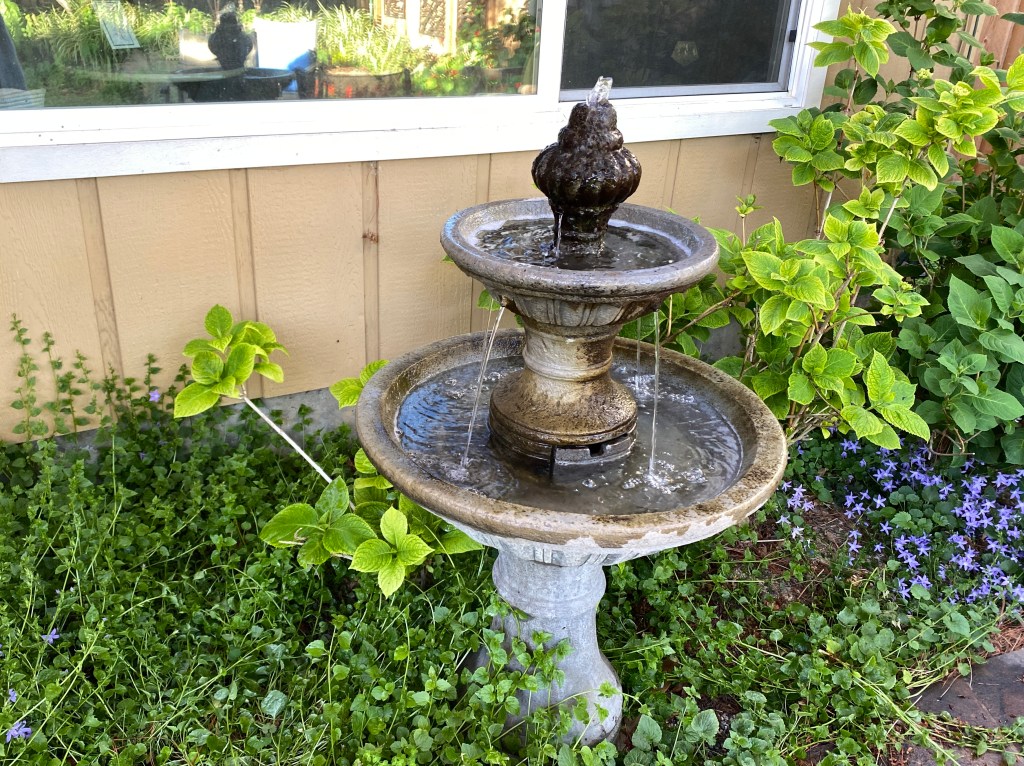
Before placing the fountain in front of our living room window, I researched the best location. Wet wings slow the bird down after they bathe, so they suggest a nearby tree. The fountain is in the shade, so it doesn’t get too hot. Surrounding shrubs discourage easy access by a certain feline.
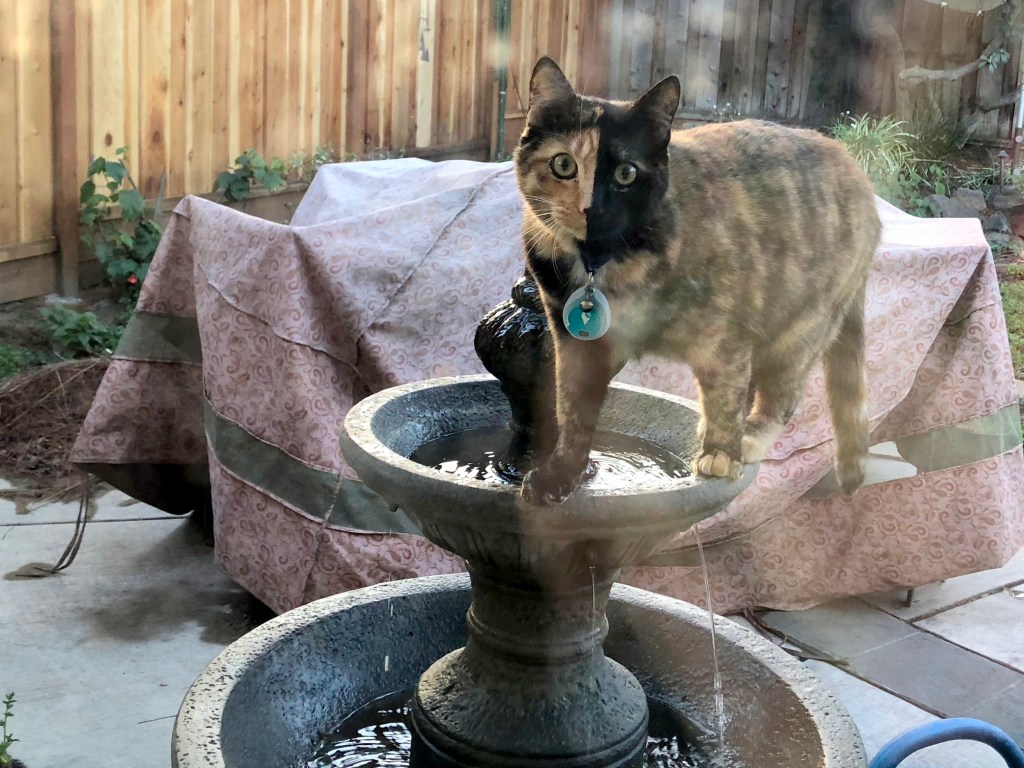
Or so they say.
What keeps the birds safe is what makes this job a challenge. The fountain invariably collects plant debris in the water and around the pump. In between an extensive cleaning, I reach into the pump cavity and clear away debris. I use a stiff brush to clean the sides and then refill the fountain with fresh water.

The deep clean is more involved. I cut power to the pump, then tip the heavy fountain to empty the water. It’s a balancing act, sloshing out the dirty water while keeping the fountain from tipping over. I pour white vinegar into the emptied fountain, then top it up again with water and let it soak. Vinegar is non-toxic, so it’s harmless to the birds. It does a great job cleaning out the nooks and crannies.

On the other hand, white vinegar is not suitable for surrounding plants. I can’t blast out the vinegar water with the hose, and I have to be careful when I scrub not to splash the nearby foliage. I usually bail out the vinegar water and pour it down the drain. Only then do I feel comfortable rinsing and refilling the fountain.
It’s worth it, of course, when you spot birds taking a bath, sipping from the bubbler, or hopping in the branches in the nearby tree as they dry off.


On the subject of birds, we’re seeing more activity in the garden. Mike called me to the kitchen window earlier this week to see a male house finch on the railing. When I leaned over the sink to get a better look, I spotted a nest on the patio drapes. Squeal! That was unexpected.

We use the drapes during the hot summer months to block the evening sun. Off-season, the drapes stack together under the eaves. A house finch built a nest on top of the folds.
After that first sighting, she didn’t return. I’ve been worried all week that either we scared them off with our regular activity or that she met with a different fate.
It turns out that female house finches build several nests, then decide which one they want to use. I hope she chooses the one outside our kitchen window. Only time will tell.
 Gardening Nirvana