After several years of near-constant pain and impaired mobility, I had my right hip replaced in February, followed by a new left hip earlier this month. I’m relieved to have both surgeries behind me. To pass the time, I cropped a photo of one of my new joints, added a pair of eyes, and created a less clinical image of the new joint.

Today, my in-home PT assessed my balance using the Berg Balance Scale, and I scored 47 out of 56. A score of 41-56 indicates low risk and independent walking. I’ll take it.
Over the next four weeks, I could dislocate my hip if I move it past a 90-degree angle, which, in garden-speak, translates to averting my eyes as the weeds sprout. After an unusually mild November, we’re finally seeing true fall weather, including rain. All those weed seeds have been waiting in the wings for their grand entrance.
They’re unlikely to go to seed any time soon, and the wet ground will make removal easy when I can finally kneel in the dirt, so for now I must bide my time.
As I heal, I’m able to take photos from a standing position. Mike’s also taking me on daily drives for a change of scenery. Nature is a balm.
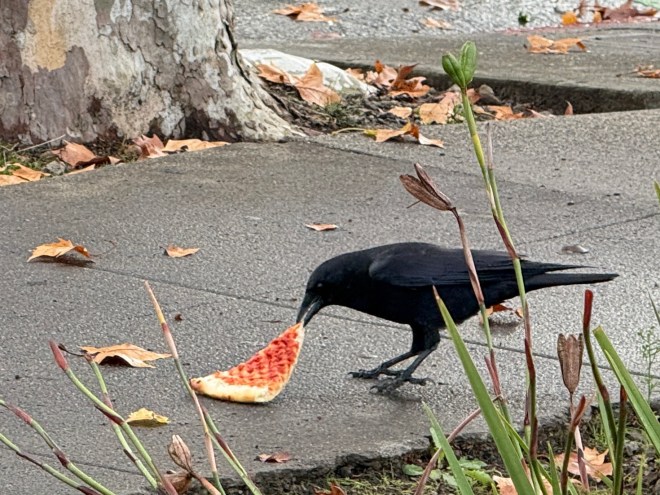
From the car window, I watched a crow enjoy a slice of sidewalk pizza in nearby Los Gatos.
I snapped this view of Silicon Valley in the misty fog at the top of Harwood Hill in San Jose.

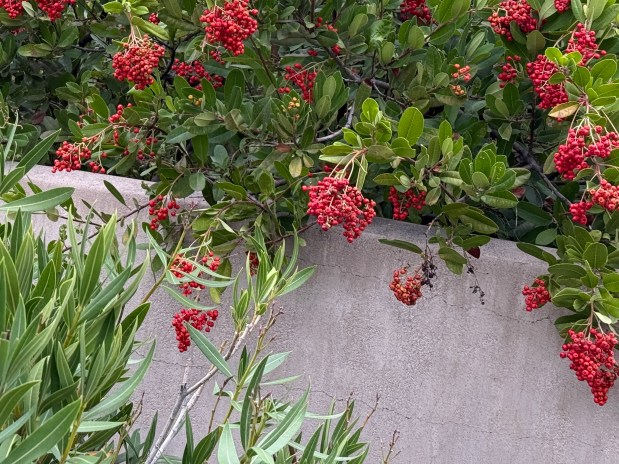
Heteromeles, commonly known as toyon, are native to our California coast. Not only do they provide food for birds, bears, and coyotes,
“The plant has been used as a treatment for Alzheimer’s disease by indigenous people of California, and recent research has found several active compounds that are potentially beneficial to Alzheimer’s treatment. These include icariside compounds, which protect the blood-brain barrier and prevent infiltration of inflammatory cells into the brain.” Source Wikipedia

The brilliant red berries brighten autumn’s grey days.
These Canada Geese were impervious to the rain outside the Cambrian Community Center. It must be nice to have a built-in raincoat.


Closer to home, a neighbor’s cat named Thor visited our front deck.

This potted alstroemeria recovered well after a broken pipe nearly drowned the plant. Once the roots dried and the heat of summer passed, it made a full recovery.
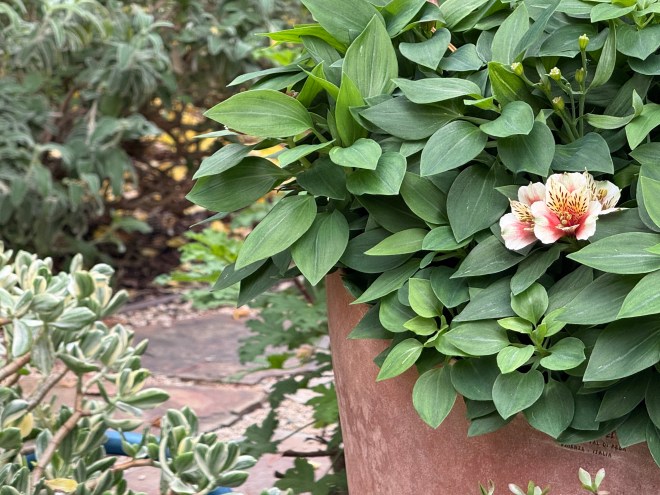
I plan to follow in the plant’s footsteps and make a full recovery as well.
 Gardening Nirvana