An Ominous Autumn Beginning

These last few days have been surreal. We’ve been under a heat advisory since Thursday, the first day of autumn here in San Jose.  Temperatures climbed into the high 90’s F (34C) and have remained high for five days. It’s been months since we’ve had any significant rain, leaving our state brown and dry as we face year five of the California drought.

Wildfires are always a concern this time of year, but the elevated temps and the drought-produced fuel created a tipping point.  As I drove to my son’s school Monday afternoon I saw this:

loma-fire-by-day

Loma Fire by day as view from my son’s high school

My heart sank. These are the beloved Santa Cruz mountains, part of what surrounds San Jose, creating our iconic Silicon Valley.

When I got home, I checked in with friends that live “over the hill” and all were safe. Cal Fire crews descended on the steep terrain from around the state and we are obsessively checking for updates.

Two hours after the start of this fire, we sat down to watch the presidential debates. An estimated 800,000 viewers tuned in for the first of four televised presidential candidate debates.  Between the fire, the heat and the bombastic Republican nominee spewing nonsensical pablum on the stage, I needed a break.

We turned off the TV and went for a walk around the block. Still out of sorts, we decided to go for a rare evening drive.

One of the most frightening aspects of wildfires is their unpredictability. They rage out of control, change directions without notice and leave damage in their wake. It’s a metaphor for the US presidential election, still an agonizing 40 days away. I’m desperate for it to be over, fearful of the possible outcome, and more than ready to see that bombastic blowhard lose.

loma-fire-at-night

Loma Fire at night, Loma Prieta, California

This morning I received the following email alert:

[the fire]  is now burning upwards of 1,500 acres. Three shelters have been opened for evacuated residents; Soquel HS in Santa Cruz, Morgan Hill Presbyterian Church, and The Jewish Community Center in Los Gatos are all receiving evacuees. San Jose Fire Department still has multiple units on scene including our SJFD PIO and Chief Officers. We are still on high alert for possible evacuations here on the San Jose side. As you know high temperatures and low fuel moisture along with difficult terrain make this fire particularly dangerous.

This is a good day to remind myself to practice self-care. I’m engaging my Tantra breathing, drinking lots of cool, fresh water and sticking to my meal plan.

How do you manage your stress, when things are out of your control?

Loma Fire Day One

Another Busy Wildfire Season

Save

August Doldrums: Dirty Air, Dryer Woes and a Cat Named Slinky

I have the August doldrums. Blah!

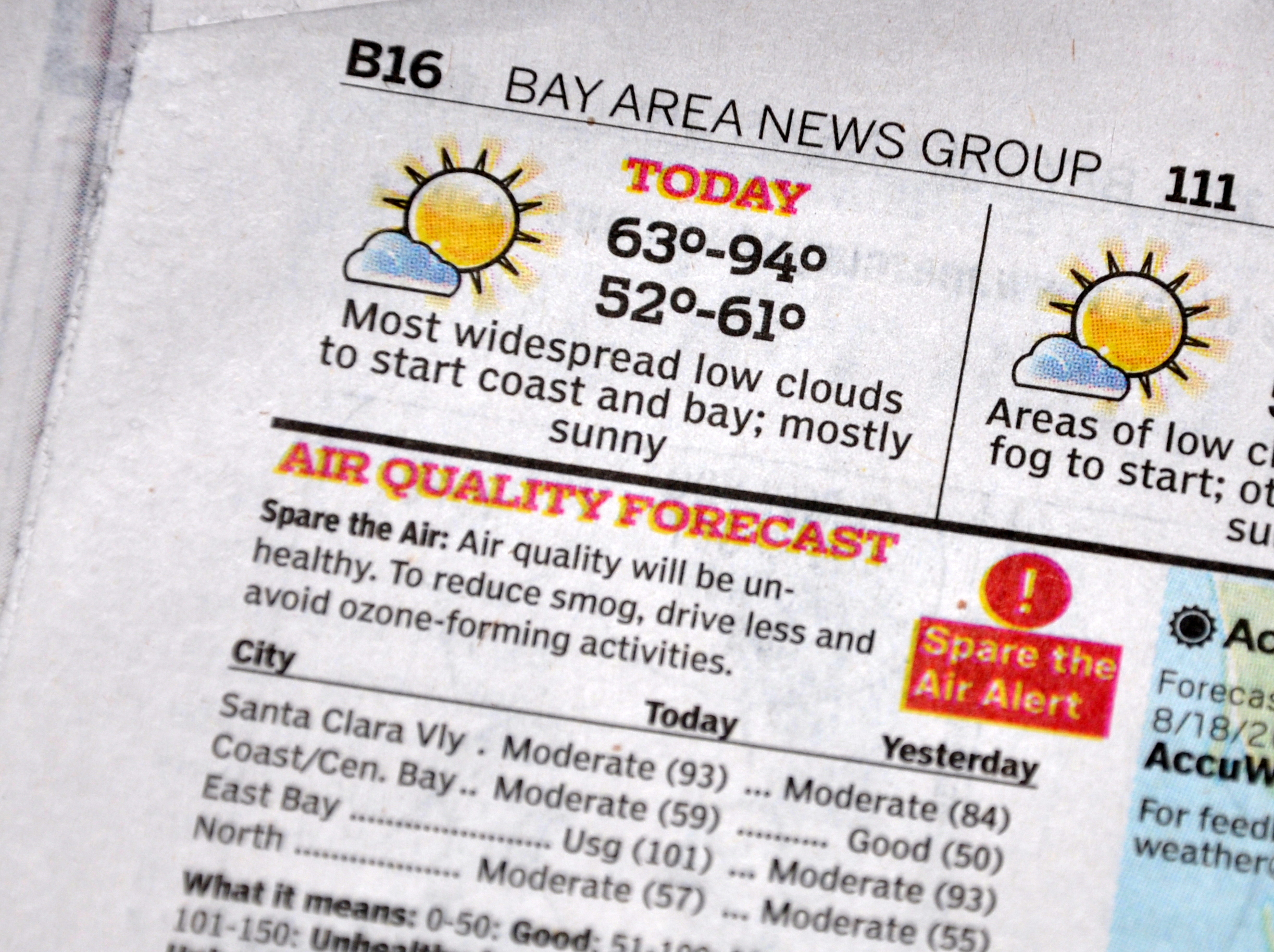
It is usually hot, dry and smoggy in San Jose throughout August. It’s been particularly bad this year with multiple wildfires burning up and down the state.

Spare the Air Alert: Source, San Jose Mercury News

Spare the Air Alert: Source, San Jose Mercury News

After five years of the drought, there is plenty of fuel feeding the wildfires. Millions of trees have died from drought-related conditions, providing even more fuel than usual. According to News Deeply

A bark beetle epidemic driven by drought is killing off millions of trees in the Sierra Nevada as California starts another summer plagued by drought and higher temperatures.

This is the driest time of year, with virtually no rain during the months of July, August and September.

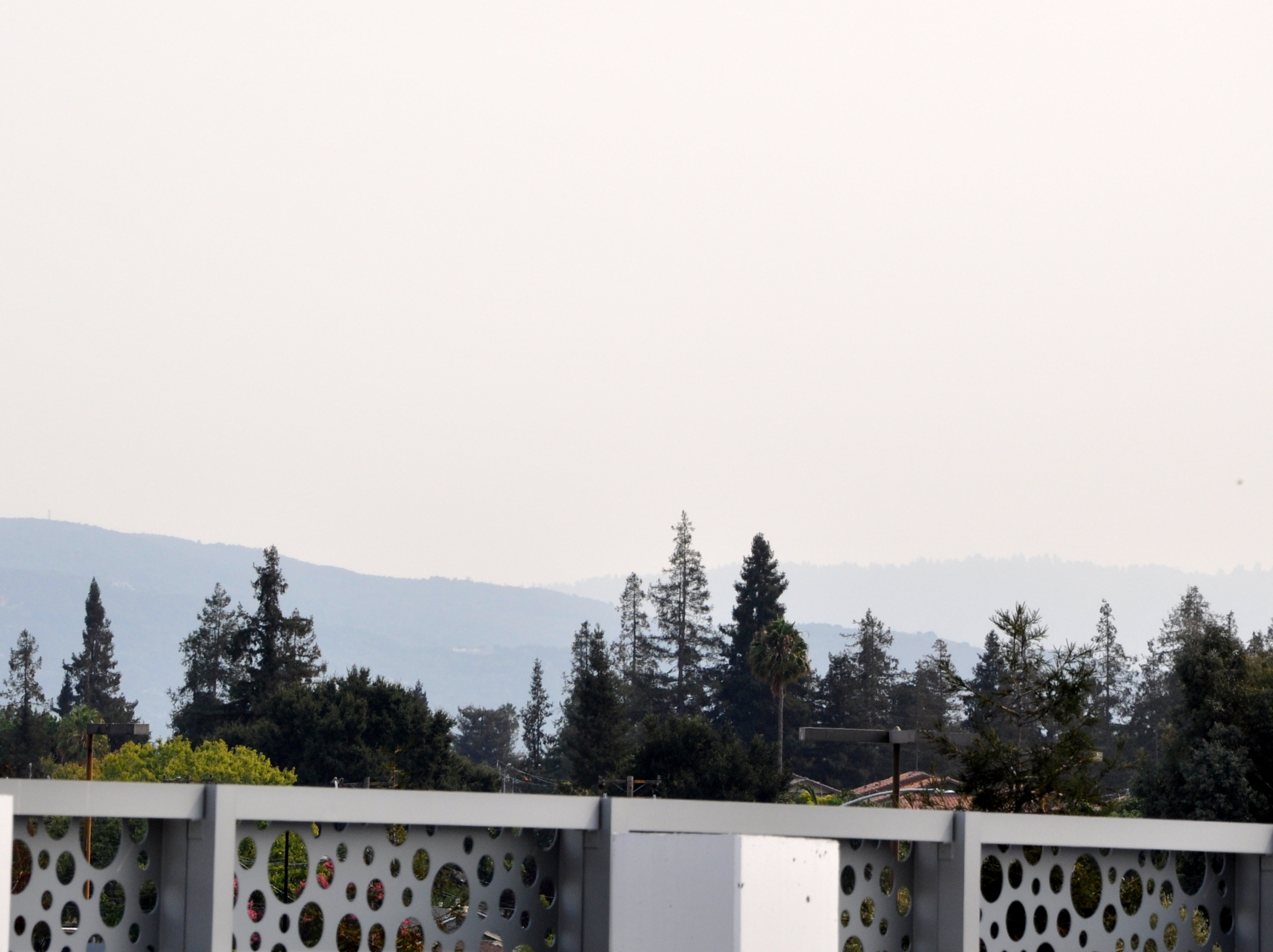
The Soberanes fire started in July in Monterey County, not far from the lovely town of Carmel where we spent our get away weekend in March. It’s only 60% contained and fire crews don’t expect to have it out until September 30th!  Because San Jose is in a valley, the smoke gathers in the basin, with no wind or rain to carry it away. It adds to such a sense of gloom when the skies are a hazy gray. Even when you avoid the news, as I’m trying to do, it’s impossible not to see those hazy skies and realize what’s happening around us.
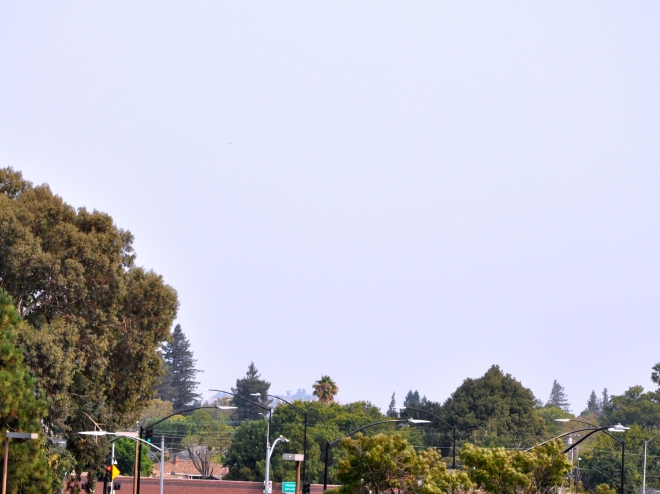
august smog

Believe it or not, there is a mountain range beyond the trees. You can just make it out.
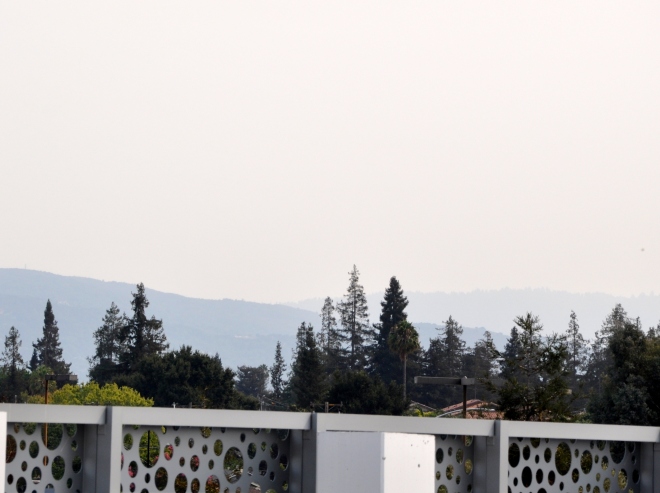
valley fair view smog

View of the mountains from a nearby shopping center.

My dryer woes aren’t nearly as dramatic, but oh what a pain. We bought a new washer and dryer in late June and took deliver July 8th. They purred like the proverbial kitten and as with all new appliances, they use less water and less energy…when they work.

The first time I used the steam setting on the dryer it leaked water on the floor. Assuming it wasn’t properly connected, Mike contacted the appliance store who referred us to a certified repair shop. The first repair person said he needed a part (for a brand new dryer!) and would have to take the dryer to the shop because he didn’t have enough room to repair it in our home. I asked him to please leave the dryer till he received the part so that I could dry clothes on other settings. A week later, and before the part arrived, the dryer started making a loud banging noise, akin to putting a bowling ball on the fluff cycle. In addition to that awful noise it also smelled like stale smoke. Did I mention that the dryer was only a few weeks old?

A second crew came out on a Friday and took our dryer back to their shop. Meanwhile, laundry for four piled up. They promised to return it Monday, than Tuesday and by Wednesday we were mostly out of clean clothes and towels. I loaded up the dirty clothes, headed to the laundry mat, and spent three hours getting it done.

A third repair person returned and reinstalled the dryer on Thursday, turned it on and asked “does it always make that noise?”

Ah….no.

I explained that the “bowling-ball-on-the-fluff-cycle” noise was one of two reasons the dryer was in for repairs. He said he didn’t understand why they would take the machine back to the shop, but there was nothing to be done for it that day and off he went.

Are you still with me?

A fourth crew (an experienced repair tech and a tech-in-training came out and spent three more hours trying to repair the machine. They completely dismantled it, spreading out the parts in my narrow side yard, then left to buy “longer screws” assuring me that the manufacturer-installed screws were too short.

This made no sense to me, but I’m not an appliance technician. I gave them directions to the nearest Home Depot and off they went. Once they had it all put back together they insisted all was well and that the sound of the dryer was “normal”. I signed the repair order but with an asterisk and note saying that my signature did not mean it was “repaired to my satisfaction” only that it appeared to be working…for now.

Gosh it felt good to have my dryer back and in working condition.

For two loads, that is.

The appliance repair shop has now washed their hands of us and the manufacturer opened a claim. I’ve tried (twice) to email my request to the service protection plan, only to receive error messages. When I call they say “volume is high” and to please fill out the form on the web. Sigh

And then there is Slinky.
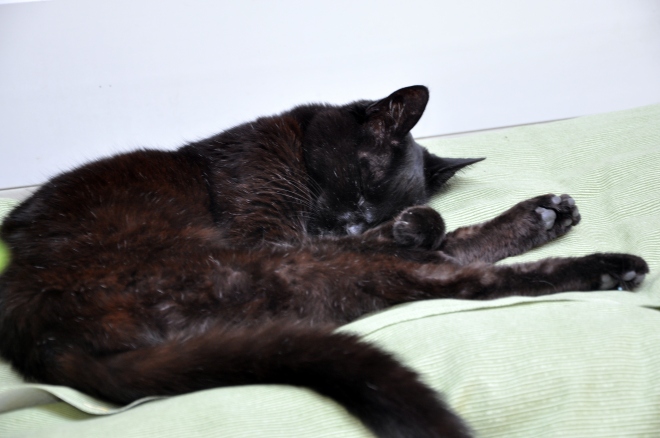
Slinky napping in the garden

Slinky napping in the garden

She is still hanging in there, but I’ve seen a recent decline. She saw our vet twice last week, which led to a diagnoses of a “very large hyperechoic cystic mass on her liver”. The better news is that it is NOT cancer, but a benign growth. She continues to eat, groom and purr, all good signs, but she’s lost more weight. She’s a tiny 5 pounds, about 2.5 kilos. She’s not in any pain and as long as she continues with a good quality of life, we are happy to have her with us. My heart is heavy when I see her tiny frame, but then she purrs in my face or crawls in my lap and I can see that for now she’s doing okay.

I know many of you live with cats or dogs, so you can relate to the angst.

Nothing magical or transformative will happen when I turn the page to September, but I still find myself craving the fresh start of a new month.

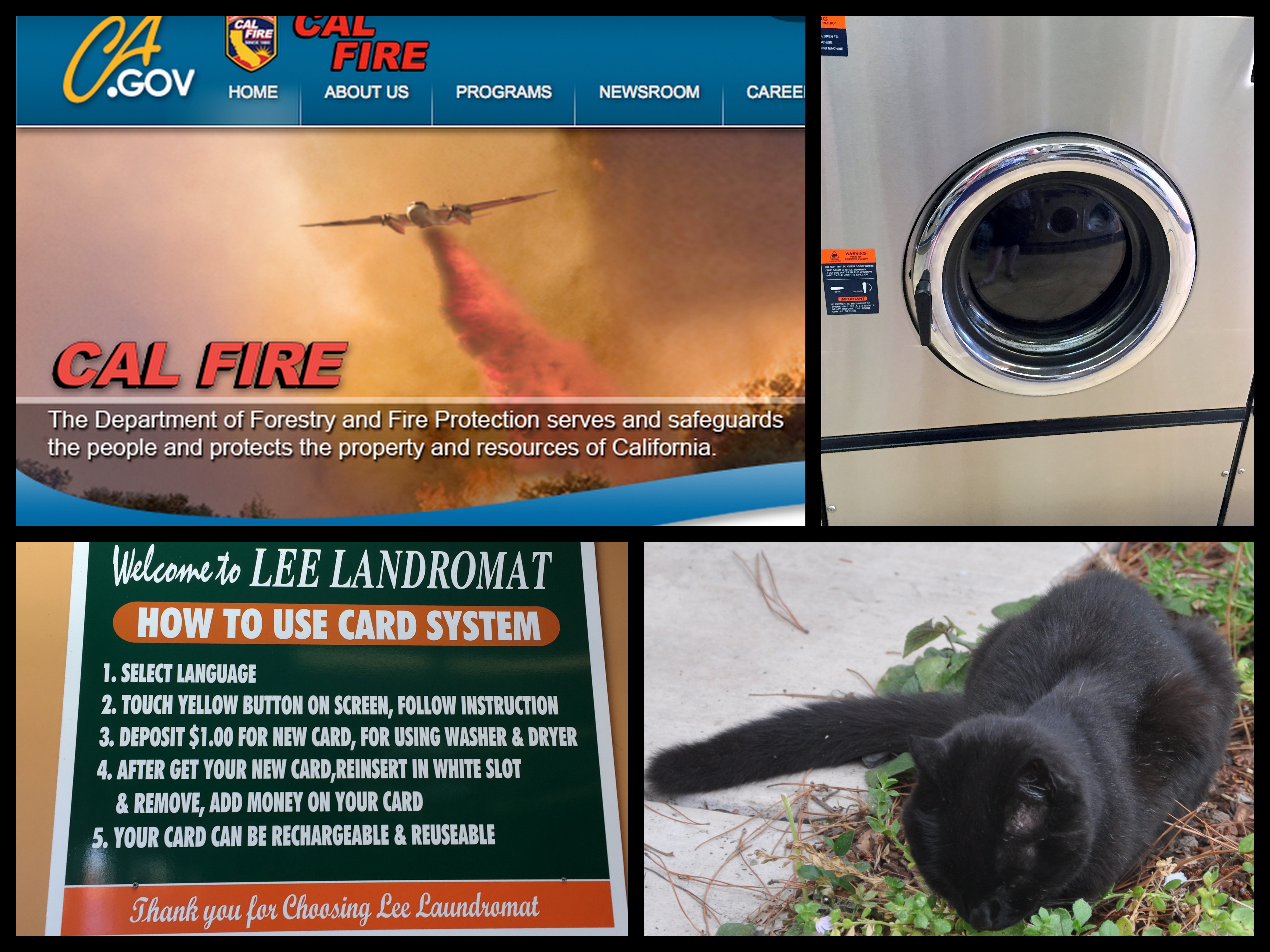
I’m grateful that Slinky is still with us. I appreciate Cal Fire crews and their tireless efforts fighting wildfires throughout the state. I’m grateful for the clean and well maintained laundry mat nearby. Having a washer and a dryer in my home is a luxury that I know others can’t afford. The same was true for me for many years and I try hard never to take it for granted.
cal fire collage

Meanwhile, I’m looking forward to the cooler days of autumn, clearer skies and the days we have left with Slinky.

How is the world treating you?

Of Possible Interest:

Topographical map of San Jose/Silicon Valley

CalFire official website

Fascinating article on prototype design for the Developing World Laundry System
Saving the Rain for a Hot Summer Day

San Jose summers are hot and dry. Even without the drought, rainfall plunges by April and remains mostly dry through September. When we’re not in a drought, we average 15 inches (38 cm) of rain a year, half of the US average.

13.5 inches (34 cm) of that rain falls between November and April. The following six months averages a *total* of an inch and a half or about four centimeters.

When you hear me squeal with delight at the end of this short video, you’ll understand why. We’re back to doing what our ancestors did: saving rain water.

A local company called Rainsavers installed a rain catchment system along the side of our house. The tanks are just around the corner from my vegetable garden.

Lot sizes are small in Silicon Valley, so big tanks aren’t feasible. We looked into gray water systems, but they have  limitations. Further, they are largely promoted for watering a lawn which we no longer have, or other non-edible plants. A friend showed me her patio cisterns, and described how they worked. The pair of cisterns keep her vegetable garden watered all summer. In the end we opted for Bushman Slimline tanks. They have a small footprint so worked well in our narrow side-yard. They connected three tanks, allowing us to collect and store 390 gallons (1,476 liters) of rainwater.

rainsavers collage

Rain Catchment System: view approaching side-yard, vines camouflage tanks, tanks installed along side of house, Brad from Rainsavers

Nearly two years after my water audit, and several stops and starts later, Rainsavers installed our new system. Within two weeks, we had a series of storms. One good soaking filled all three tanks to capacity.

The other cool thing about these tanks is the overflow. Most rainwater becomes run-off, further jeopardizing our diminishing ground water. Any overflow from these tanks helps replenish the county aquifers instead.

Here’s the timeline for reducing our outdoor water usage:

June, 2013: Removed lawn in sidewalk strip, replaced with gravel and raised planting bed

May, 2014: San Jose Water Company Audit

December, 2014: Sheet mulch half of the lawn in the back garden

May, 2015: The Fairy Garden Goes Native

Summer, 2015: We stop watering the lawn

November, 2015: The last of the lawn is history. California natives move in.

February, 2016: Rain water catchment system installed.

The Economics of Going Native

California Native Plants Replace the Lawn

California Native Plants Replace the Lawn

There are a number of things to consider when converting lawn to native plants. Economics is one of them. Up front costs are costly if you are unable to do the work yourself. If you live in the Bay Area/Silicon Valley as we do, labor is expensive.

When we bought this house in our thirties, my husband and I did most of the work ourselves. We spent hours removing ivy, digging a faux creek, planting and hauling stones from a quarry in the back of my hatchback. I mowed the lawn with a push-mower, and reluctantly got down on my hands and knees every few weeks to trim the blades of grass away from the curb.

Then life became more complex. I had two boys, three years apart, one requiring a number of early interventions. My husband traveled for one or two weeks each month and often worked long hours beyond a typical day. It made more sense to pay for big jobs then to attempt to do them ourselves. We’re both pretty handy, but we knew our limits.

Now that life is simpler again, I turned my back for five minutes and  I’m now in my fifties.

What?

So while we now have more time, we lack the strength and the energy. Between the two of us we have problems with our backs, feet and knees. We used some of our savings instead.

Here’s the math:

Professional landscape design and installation: $7,658

This included labor for hauling of old sod and other debris, site prep, laying of irrigation, planting and mulch. A crew of three worked for five days to complete the project.

collage native plant installation

RJ Landscape Crew Installation

Material costs included irrigation pipe and emitters, edging, pea gravel, paving stones for the swing area and plants.

The Santa Clara Water District offered a handsome rebate incentive for converting your lawn. After submitting all the paper work, I received a $2,530 rebate.

landscape rebate application

Santa Clara Valley Water District Landscape Rebate Program

This reduced the overall cost by a third, bringing the price down to $5,128.

I am no longer paying a lawn service, saving $1,800 a year in maintenance alone this year or $3,600 over the next 24 months. There will be additional savings in our water bill as well.

Between the rebate and the savings on lawn maintenance, the overall out-of-pocket cost of the conversion is about $1,528. In three years, the project will have paid for itself.

Why replace your lawn? Here’s a handy list published by Green Town Los Altos:

1. Healthier Creeks. Fertilizers, herbicides and pesticides are top polluters in our creeks, killing aquatic life and spreading disease.

2. Less Storm Water Runoff. Deep roots of native plants and trees surrounded by mulch retain more water on site.

3. More Free Time. Native plants don’t require fertilizer, herbicides, pesticides and benefit only from annual or semiannual pruning.

4. Save Water. Lawns require more water than our climate can provide.  Reducing our draw of water from the Delta and the Sierras helps maintain their ecosystems.

5. Save Money. All the mowing, fertilizer, herbicides and irrigation of lawns cost a lot of money. Native plants need substantially less effort and money to maintain.

6. Cash for Grass. Santa Clara Valley Water District will pay you up to $2000 to replace your lawn. Note: Sadly, this program is currently out of money, but  local citizens can put their name on the waiting list.

7. Good Bugs, Not Bad Bugs. Mosquitoes in our dry summer? There must be a lawn nearby. Frequent watering creates tiny pools just right for mosquitoes to breed. Native plants attract good bugs and birds, ones that eat mosquitoes and other pests.

8. Biodiversity. Other than hardscape, there isn’t a more inhospitable surface to biodiversity than the mono-culture of lawns.

9. Less Greenhouse Gases. Manufacture and transportation of fertilizers, herbicides, pesticides, and mowers has a substantial carbon footprint. Transportation, pumping and treatment of water requires energy. When you save water, you also save energy!

10. Smart Choice. Landscaping with plants that are native to our climate is a smart choice. If you want soft areas for kiddies to roll in, native grasses come in all three flavors: seeds, plugs and sod.

You can read the full article at Green Town Los Altos.

One last thing: An amazing thing has happened since removing the lawn. Now that I’m taking care of the entire garden once again, I feel more connected to my little patch of earth. It’s been a welcome and unexpected gift.

Robins and Daffodils and The Case of the Missing Rain

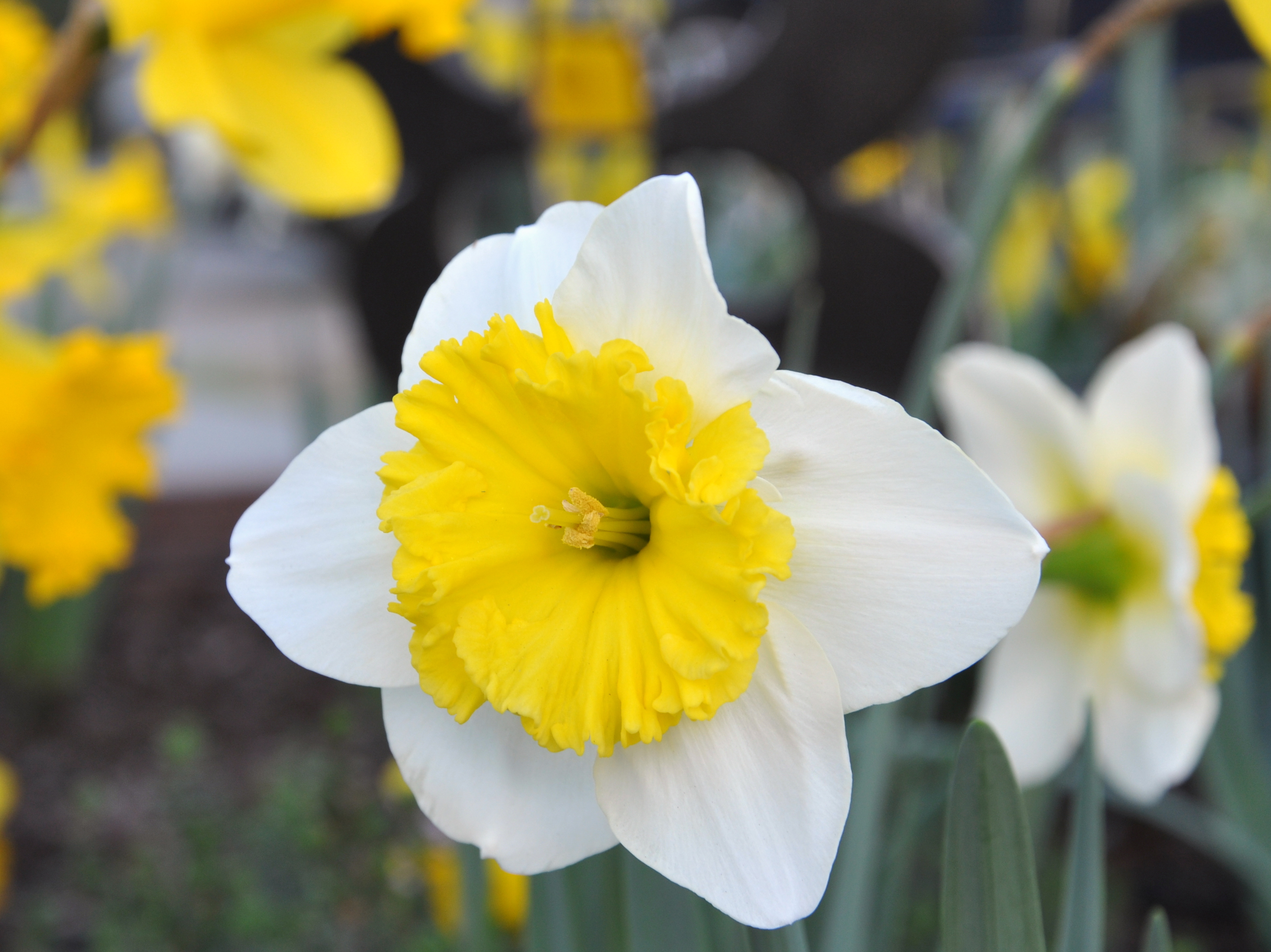
If the Daffodils are up, it must be February. Who needs a calendar when you can look out your front window and see this:

daffodil closeup

Daffodils: Just the Beginning

I’m amazed year after year that those tiny, brown orbs buried beneath the soil know exactly what to do and when.

For years I drooled over the Holland Bulb catalogs, but so many of the flowers need a really cold winter to do well. I tried tulips, refrigerating them first for six weeks in the crisper. Time in the cold environment simulates winter. The first year nothing came up. I wondered if I planted them too deeply or perhaps upside down. Maybe they rotted in the ground? There was no evidence that they’d been devoured by a critter.  I tried again about a decade later, once again lulled by the promise of beautiful tulips in my garden. About half of the bulbs produced beautiful blooms, but by the following year I was down to one.

After a bit of research I learned that Daffodil bulbs (narcissus) are toxic to squirrels so they leave them alone. They don’t require a cold winter and they can stay in the ground year round. Now that’s my kind of bulb.

Using the broadcast method where you toss the bulbs to the ground, then plant them where they land, I filled the curb garden box with 50 bulbs.  Every last one of them bloomed!

daffodil collage feb 5 and 10

Daffodils: February 5th and 10th

daffodil trio

Daffodil Trio

Emboldened, I bought 25 more bulbs the following year, this time the two-toned variety. They’re coming into bloom about a week after the original planting.

pair of two toned daffodil

What’s Up, Buttercup: A Two-toned Daffodil

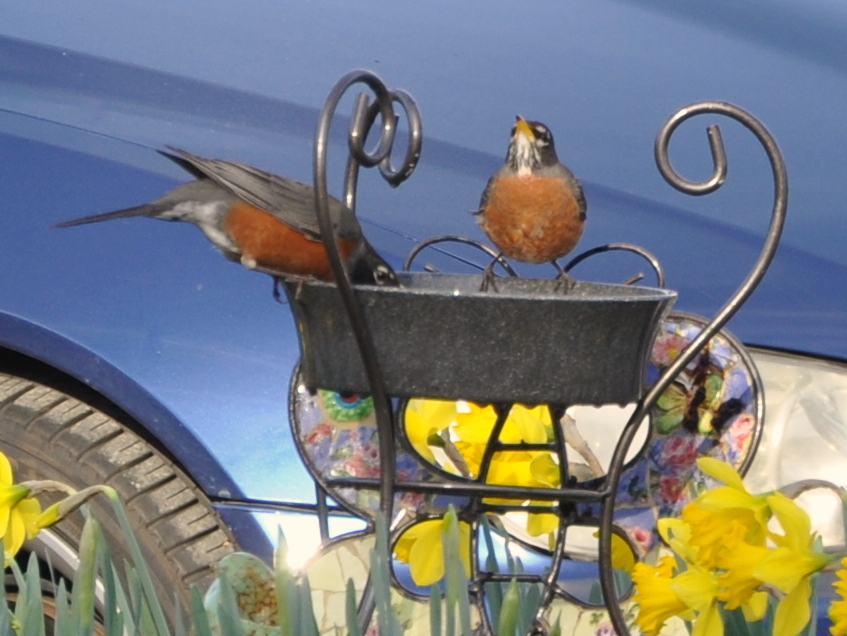
Also outside my kitchen window this past week: A thirsty flock of Robins.

three red robins

Trio of Robins

Though the American Robin is common throughout the States, we don’t usually see them flock in our neighborhood. Over the past two weeks, no doubt prompted by our strangely warm, spring-like weather, they’ve been gathering in nearby trees and drinking at our watering hole. Robins are handsome birds with an equally delightful song.

They prefer a meal of worms, but once the ground is frozen, they’ll migrate and then feast on berries. All that flying back and forth between trees means they’ve left quite a mess in their wake. You take the good with the bad, right?

I made myself late to Pilates last Thursday as I went into the kitchen for some water and fled for my camera instead. There were at least a dozen robins, one sitting in the water fountain, and the rest taking turns for a drink. By the time I put the microchip in the camera, then found a place to take pictures hiding around the corner of the garage several had moved on. I still got a few shots in and around my MacGyvered watering hole and garden.

robins drinking from the fountain

Robins taking turns at the watering hole

The garden is coming alive with color.  We’ve had ten days of unseasonably high temperatures but only a trace of rain. Today, San Jose may tie a record high set in 1943. February is traditionally our rainiest month. In a state that counts its rainfall in fractions, February is the star with an average of 3.31 inches (8.41 cm) of rain. Our annual rain fall is only about 15 inches. It’s February 15th and we’ve only recorded 0.05 inches! So while it sounds uncharitable to complain about blue skies and warm weather…well, I’m complaining.  We desperately need more rain.

If your swimming in surplus precipitation, please send it our way.

Negative Ions and The Wondrous Benefits of Rain

blueberry leaves in the rai

Blueberry Bush After the Rain

My love affair with rain dates back to my youth. I feel a sense of euphoria as clouds gather and a lightening in my heart. Once the rain falls, I have an intense desire to be outdoors. Last week I pulled a few weeds in the rain and it was bliss. Unfortunately my foot started to throb, not happy about the flex involved in the weed-pulling crouch. If not, I would have been out there for hours. It’s all about the negative ions.

According to WebMD

Negative ions are odorless, tasteless, and invisible molecules that we inhale in abundance in certain environments. Think mountains, waterfalls, and beaches. Once they reach our bloodstream, negative ions are believed to produce biochemical reactions that increase levels of the mood chemical serotonin, helping to alleviate depression, relieve stress, and boost our daytime energy.

While this doesn’t explain why some people hate the rain, it speaks volumes for my personal sense of glee. As clouds gather, I have more energy, an enhanced awareness of things around me and a feeling of joy. It’s extraordinary.

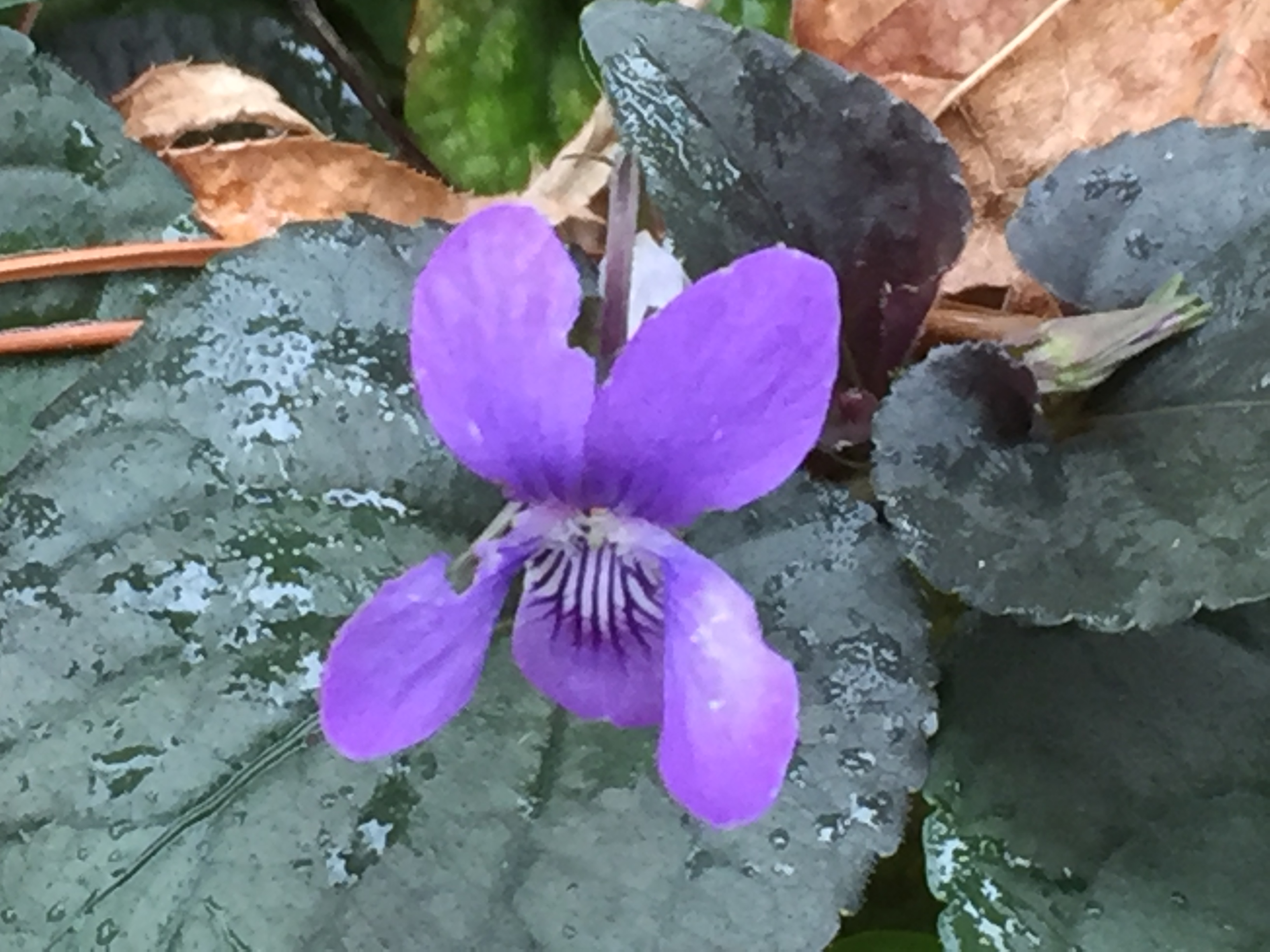
Daisy like yellow flower

Daisy-like yellow flower

As I drove home from physical therapy today, I heard an interview with author Cynthia Barnett. Her book Rain: A Natural and Cultural History has just been nominated for a National Book Award. I couldn’t wait to come home and look it up.  The synopsis reads:

Rain is elemental, mysterious, precious, destructive.

It is the subject of countless poems and paintings; the top of the weather report; the source of the world’s water. Yet this is the first book to tell the story of rain.
Cynthia Barnett’s Rain begins four billion years ago with the torrents that filled the oceans, and builds to the storms of climate change. It weaves together science—the true shape of a raindrop, the mysteries of frog and fish rains—with the human story of our ambition to control rain, from ancient rain dances to the 2,203 miles of levees that attempt to straitjacket the Mississippi River. It offers a glimpse of our “founding forecaster,” Thomas Jefferson, who measured every drizzle long before modern meteorology. Two centuries later, rainy skies would help inspire Morrissey’s mopes and Kurt Cobain’s grunge. Rain is also a travelogue, taking readers to Scotland to tell the surprising story of the mackintosh raincoat, and to India, where villagers extract the scent of rain from the monsoon-drenched earth and turn it into perfume.

Perfume!!! How has this escaped my grasp for so many years?

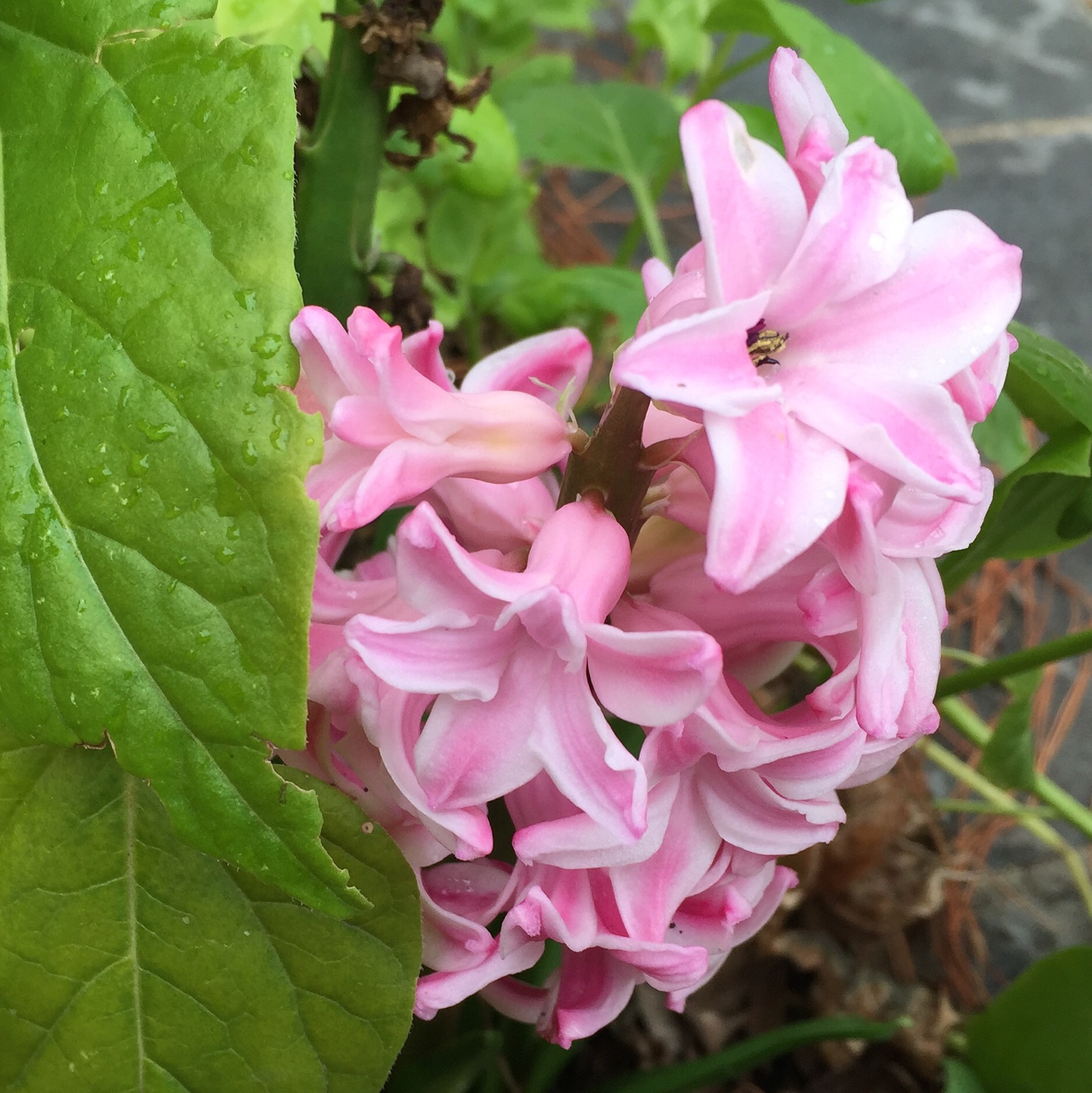
Fragrant Pink Hyacinth

Fragrant Pink Hyacinth

As I write this, clouds gather.

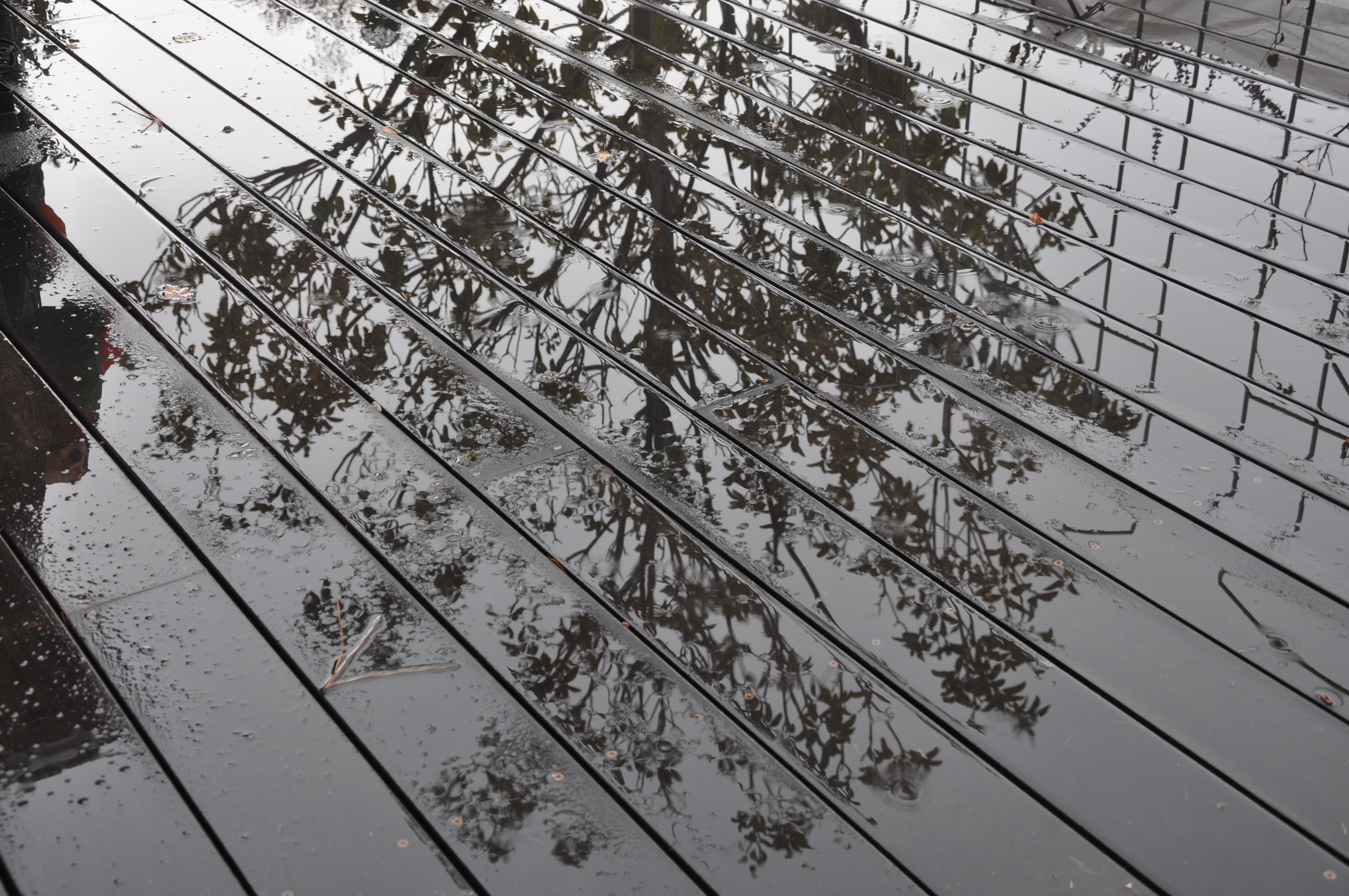
tree reflecting in rain on deck

Magnolia Tree Reflections on a Rainy Day

Rain is on the way.

Be still my heart.

IMG_1520

Not Your Grandmother’s Bird Bath

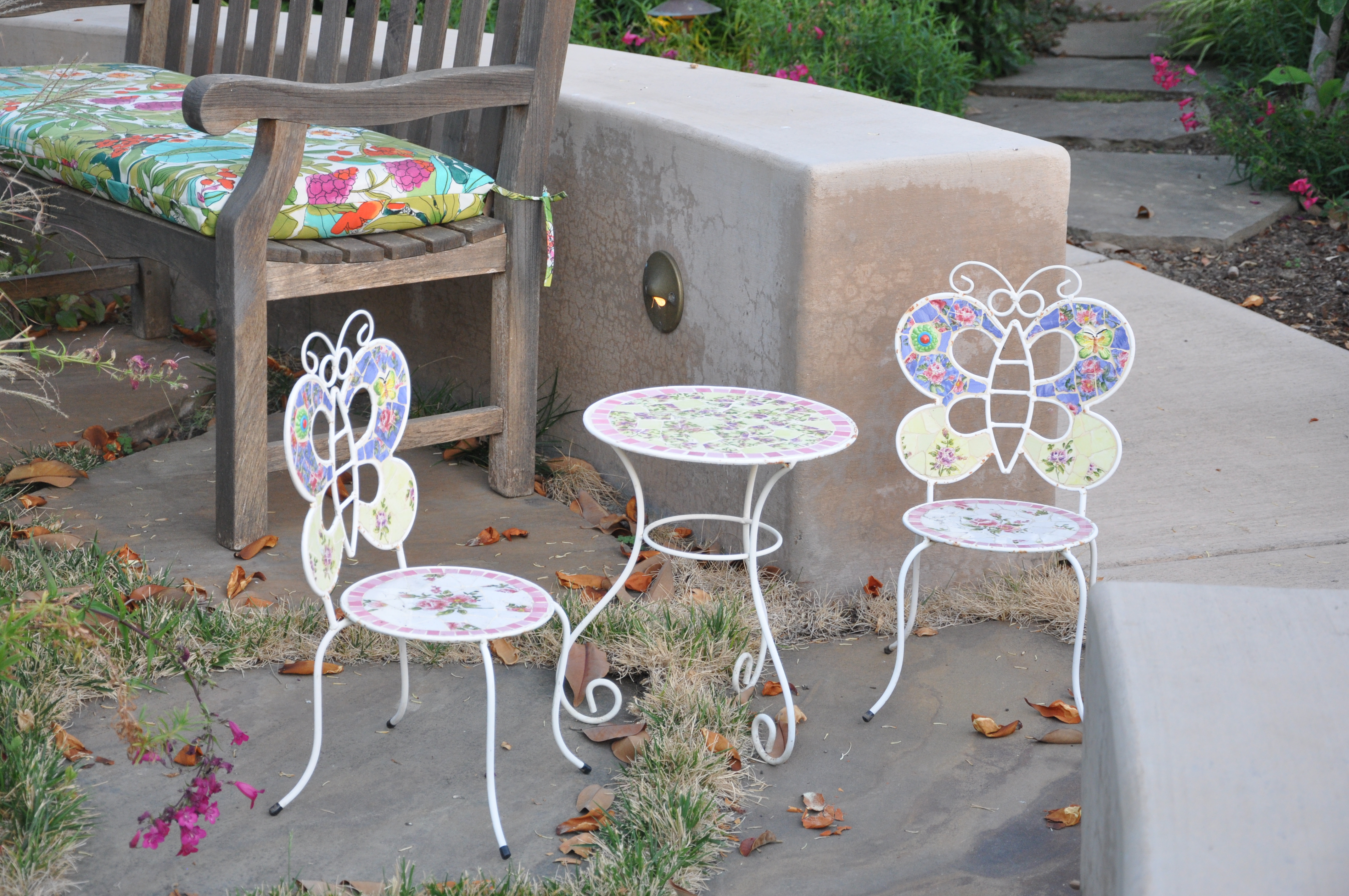
Last summer, a friend of mine passed on this charming, child-sized table and chairs. They sat in the front garden for a while, available to our neighbor’s daycare kids. Small children don’t do much sitting, as you know, so they didn’t get much action.

child's table and chairs white mosaic

Child-sized mosaic table and chairs

At one point I planned to use the pint-sized furniture to hold potted plants. Eventually that plan morphed out of necessity: The table and one of the chairs is now a bird bath, and a source of water for bees, butterflies and squirrels.

squirrel and bird bath from chair

MacGyvered Bird Bath and Watering Hole

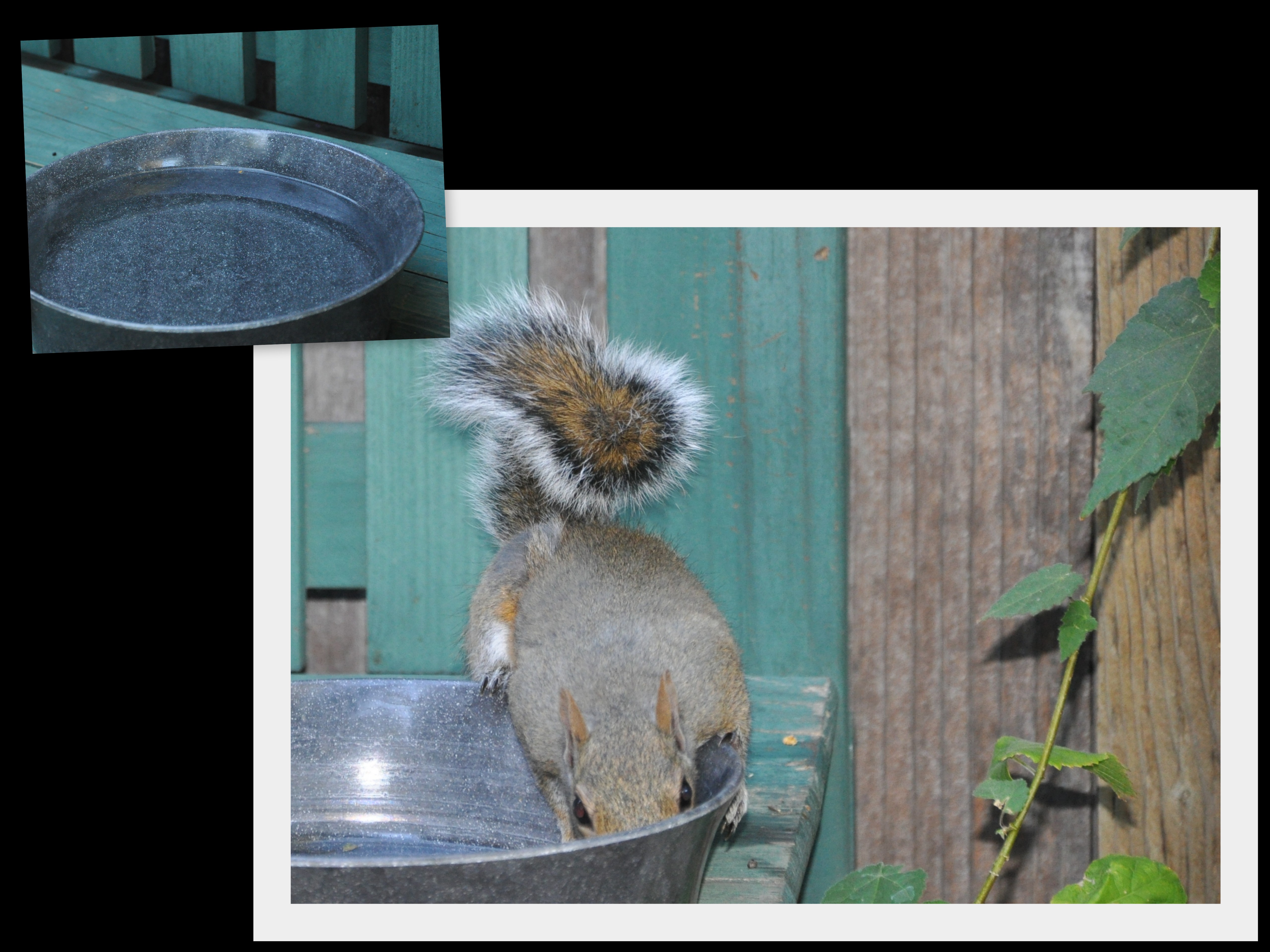
We’ve had a wonderful series of storms passing through all month, but last summer was a different story. When I spotted a squirrel drinking the morning dew off of our garden umbrella, it spurred me into action. I bought a pair of heavy-duty dog food bowls, and filled them with water for all the thirsty critters that pass through our garden.

squirrel closeup on umbrella

California Grey Squirrel looking for a drink

Finding a good spot in the back garden was easy: one of the bowls sits elevated on a gardening bench out of harm’s way.

 squirrel drinking from bowl

Dog food bowl + water = happy squirrel

It was trickier in the front garden, since the planting bed at the curb is only a few inches tall.

Short term, I grabbed the small table, turned it upside down, and rested the bowl between the table legs. It worked perfectly. It was tacky, but effective.

In order to improve the look, I bought a can of Forged Hammered Spray Paint, masked off the butterfly mosaic, then painted the rest. It looks earthier than the original white paint and I really like the hammered effect. It’s also a nice match for the bowl.

DIY bird bath collage steps

Table and chairs, before and after painting, forged hammered spray paint and a large dog food bowl

I put the chair in the center of the planting bed, added the upside-down table to the chair, then wedged the bowl between the chair legs. It’s now accessible, but harder to negotiate if you’re a cat. The table After removing a drowned bee, I added a small ceramic bird so the bees and butterflies have a shallower place to drink.

Do you know the expression, necessity is the mother of invention? It would never have dawned on me to turn this charming furniture into a bird bath, but I’m so glad I did.

bird bath bowl in the rain

Rain-filled bird bath

Native Garden, My Left Foot and a Bit of Bad News

Our new and sustainable native garden is moving into the home stretch. The last swath of lawn is history.

native planting

Native Plantings will grow up to fill this space Design by Bergez & Associates, Installation by R. J. & Associates

Trichostema 'Midnight Magic' Hybrid Blue Curls

Trichostema ‘Midnight Magic’ Hybrid Blue Curls

This didn’t happen over night. First to go was the sidewalk strip almost two years ago. It took some convincing around here as both my husband and younger son like the look of the lawn. While I too can appreciate the lush, green swath of suburban grass we grew up with, it’s not sustainable. Four years of drought and mandatory water-rationing helped my case and the lawn is finally gone, replaced with California native plants that are more than happy to spend a summer without water.

Last fall, Mike agreed to removing half  of the lawn in our back yard. When the boys were young they played for hours on the grass. As teens, their interests lie elsewhere. So over the course of a few weeks, I gathered cardboard and leaves and gradually sheet mulched the area. It worked beautifully. By spring of 2015, the lawn was history, leaving behind a nice, healthy, organic swath of earth.  Calls for further rationing this summer meant turning off the sprinkler system entirely, leaving a sad-looking patch of dead grass in front of the house.

For years I mowed the grass myself. I had a manual push mower like my dad used to have and spent an hour each weekend mowing to and fro. I hated edging, but that had to be done too. Weeds grew among the turf, so out they went as well. Mowing a lawn week after week, I realized is less like gardening and more like mopping the floors. It had to be done, but it was tedious at best. Then I had a baby, and three years later his brother. My husband traveled extensively, sometimes gone for a week or more. We eventually hired a lawn service to come once a week and in local parlance, they did the “mow, blow and go.”

Now that all that grass is gone I feel liberated, but it’s come at a cost. I’ve put a friend out of a job. Nick took over the job of maintaining the lawn after Mr. Tran retired. Our sons went to school together. I hired Nick to build our little free library and I refer him to my clients for handyman jobs as well. Everything we do has a price.

My Left Foot

I saw my super-cool doctor again this week for my second post-op visit. She removed layer upon layer of bandages and gauze, the brace and finally the stitches. My foot looks other-worldly. The wound site is still tender but she’s pleased with the progress. They used cryogenic amniotic tissue to graft the damaged tendon. It’s supposed to reduce inflammation and speed healing while suppressing scaring and adhesions. Amazing! There’s a short video explaining the technology via the National Institute of Health I think it’s fascinating. Dr. Sheth sets a high bar for patient care and bedside manner. I’m so fortunate to have her on my team.

Dr. Sheth with student

Dr. Sheth (left) and a medical student shadowing her that day

Squamous Cell Carcinoma

Two days before my foot surgery I had a skin biopsy on my arm. The dermatologist suspected squamous cell carcinoma. I got the call last week confirming the diagnosis and asking me to schedule surgery. It’s a thirty minute procedure, done by a skin surgeon in their office. They layer down till they get what they call the margins. With early diagnosis, there is a 95% cure rate. The scariest part of this for me is how quickly it appeared. I have skin checks twice a year because I’m at high risk for skin cancer. One day I was fine, and then a large, painful sore appeared on my upper arm. I was pretty sure I had some sort of insect bite.

If you’ve been putting off getting something checked, please schedule with your medical provider today. Early diagnosis is key.

new landscaping collage front

Front Garden in Process

I sat outside on the deck for about twenty minutes yesterday after the crew finished mulching. It was brisk but a welcome change of scenery. As you can see, I had company. These kitties bring me comfort every day.

New Plants and My New Wheels

The rain came and quickly went this past Monday but it was lovely while it lasted. My oldest son enjoys the rain as much as I do. He sent me a text with a couple of rainy shots from his college campus quad. Isn’t that sweet?

college campus in the rain

A Rainy Day in Santa Clara

I’ve got my eye on the weather report and see that we have another system approaching by the weekend. It’s cold too, so that means snow which is even better for the drought.

The landscaper delivered all our plants yesterday and today they started planting. It is SO hard not being out there.

The final step is to fill in the area near the swing and the path with gravel and then mulch.

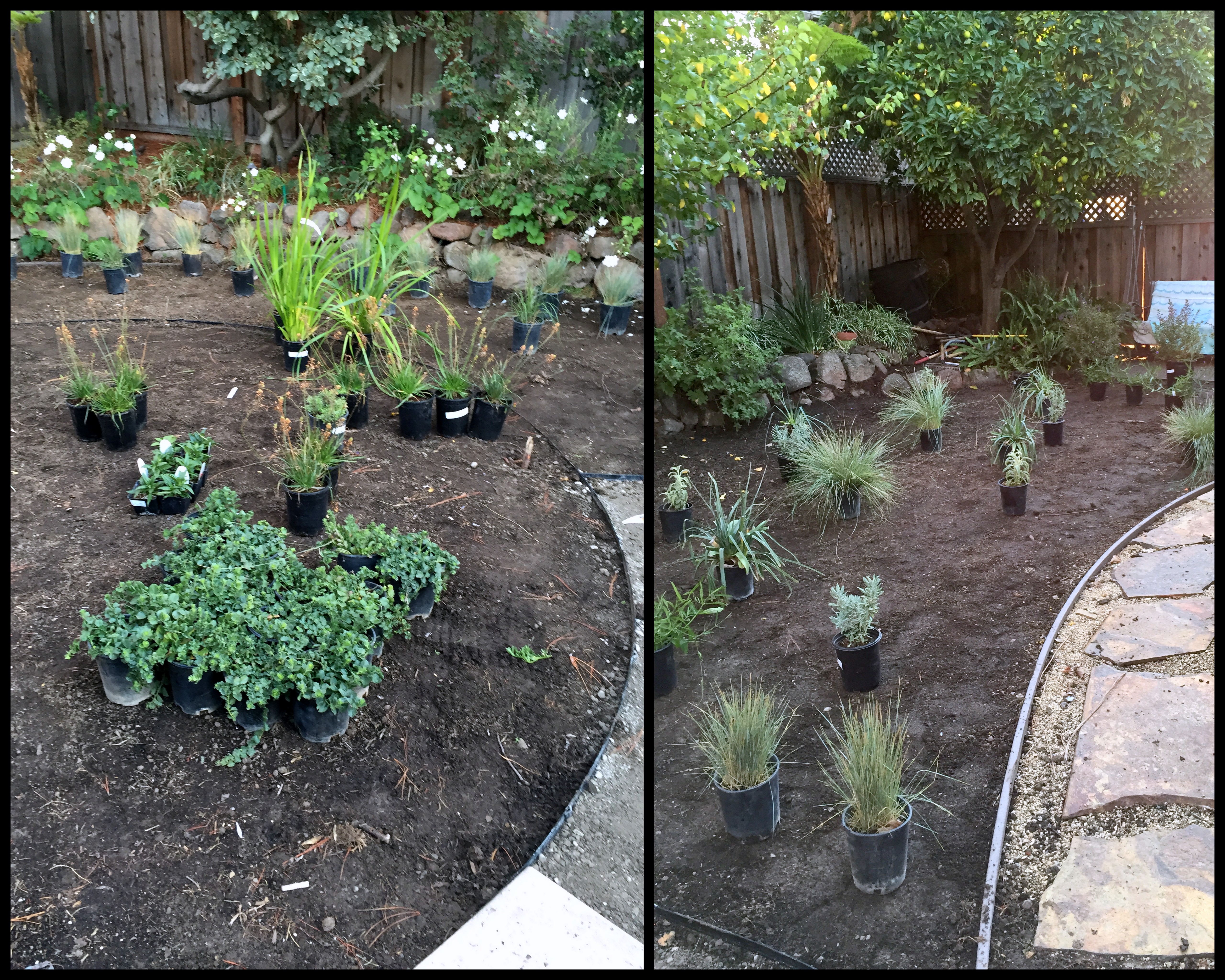
new plants

Native Plants to Replace the Lawn

I mentioned to a few readers that I was using a knee scooter to get around. This is what it looks like. Notice that in addition to practicing patience in sitting around all day long, I’m also letting my vanity go. I look as tired as I feel in this photo. These knee scooters are available to rent from a company called A Leg Up. Isn’t that clever?

knee scooter collage

This is helping me get around as I recover from foot surgery

The scooter has a narrow, nylon pouch that holds my phone and not much else, but serendipitously, a package arrived from Pauline with a box the *exact* size as the opening between the seat and the bar. Mike attached the box with a bungee cord and now I have room for a bottle of water, one slipper and the odd piece of mail.

Back to the weather, I’ve been hearing about unseasonably warm weather in Bavaria, late season and unwelcome rains in New Zealand and a predicted summer drought in Australia. What’s the weather up to in your neighborhood?

Time to Recover and The Garden Goes Native

Felines post surgery

Clockwise: prepped for surgery, Lindy snoozing on my elevated pillows, Slinky snuggled in, my cast, Mouse in my arms

If you’re a regular here, you know I went in for surgery last week to repair a torn tendon in my left foot. I have a wonderful doctor who thought my case was “cool” and “different”. Dr. Sheth is the kind of doctor we should all have. She’s funny, smart, kind, thorough, patient and above all, a skilled surgeon.

It’s a mystery to everyone that I wasn’t in more pain and that I walked around for so long with a near-complete tendon tear and encapsulated cyst. Happily, the surgery went well and I’m on the road to recovery. I had a few rough days following the surgery, but I’m feeling much better….as long as I’m sitting down.

Our felines rallied immediately. Like children, I think they sense when things are amiss. They’ve been keeping a close eye on me since I came home.  In the “old days” I would have spent the night in a hospital. Instead, I had surgery at a surgical center and was home by noon the same day. Impressive, eh?

Today was my first post-operative appointment, and coincidentally our first thunder-storm of the season. Rain is a sparse commodity around here, and thunderstorms even rarer. It was wonderful to sit back and enjoy the show. It was short-lived, with the skies already clearing by noon, but it was a treat nonetheless.

I’ve been pampered beyond belief with cards in the mail, friends bringing prepared meals every other day, gifts, and a few brief social visits. Mike took the first few days off of work and is now working from home when he can. It will be several weeks before I can drive or put any weight on my foot, but I’m lucky to have a rented knee scooter to help me get from room to room.

Onward.

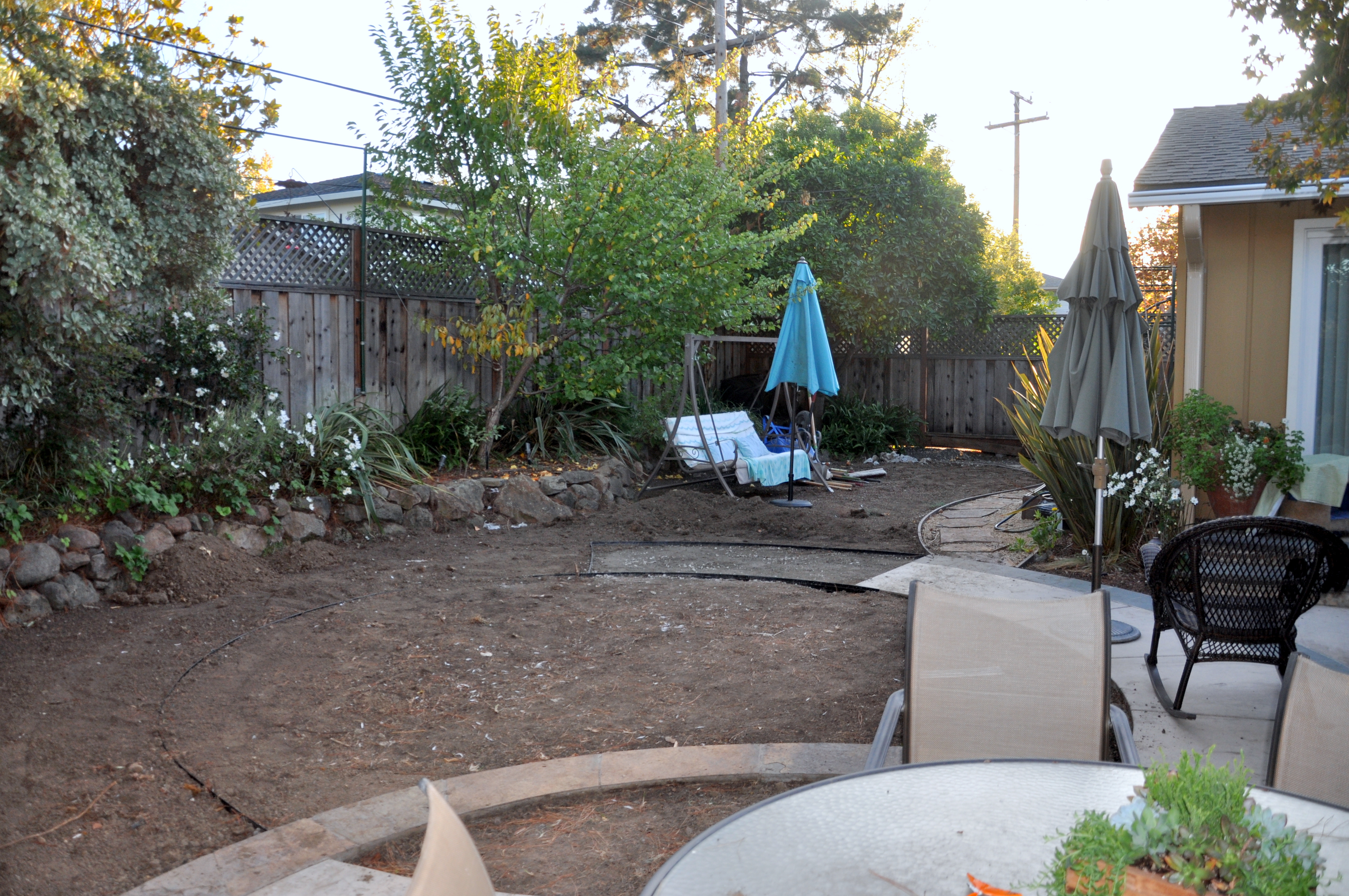
In other news, the Garden Goes Native project is finally under way. R J Landscape started tearing out the lawn the day before my surgery and continued work through Friday of last week.

landscape revision tools and cleared area

Back Garden: Under Construction

landscape improvements back garden view of circle

Back Garden Under Construction: Alternate View

A crew of four removed what was left of the dead lawn and the existing sprinklers and will soon amend the soil. They prepared an area for gravel and a few paving stones for our garden swing and outlined a small walkway extension in the back garden.

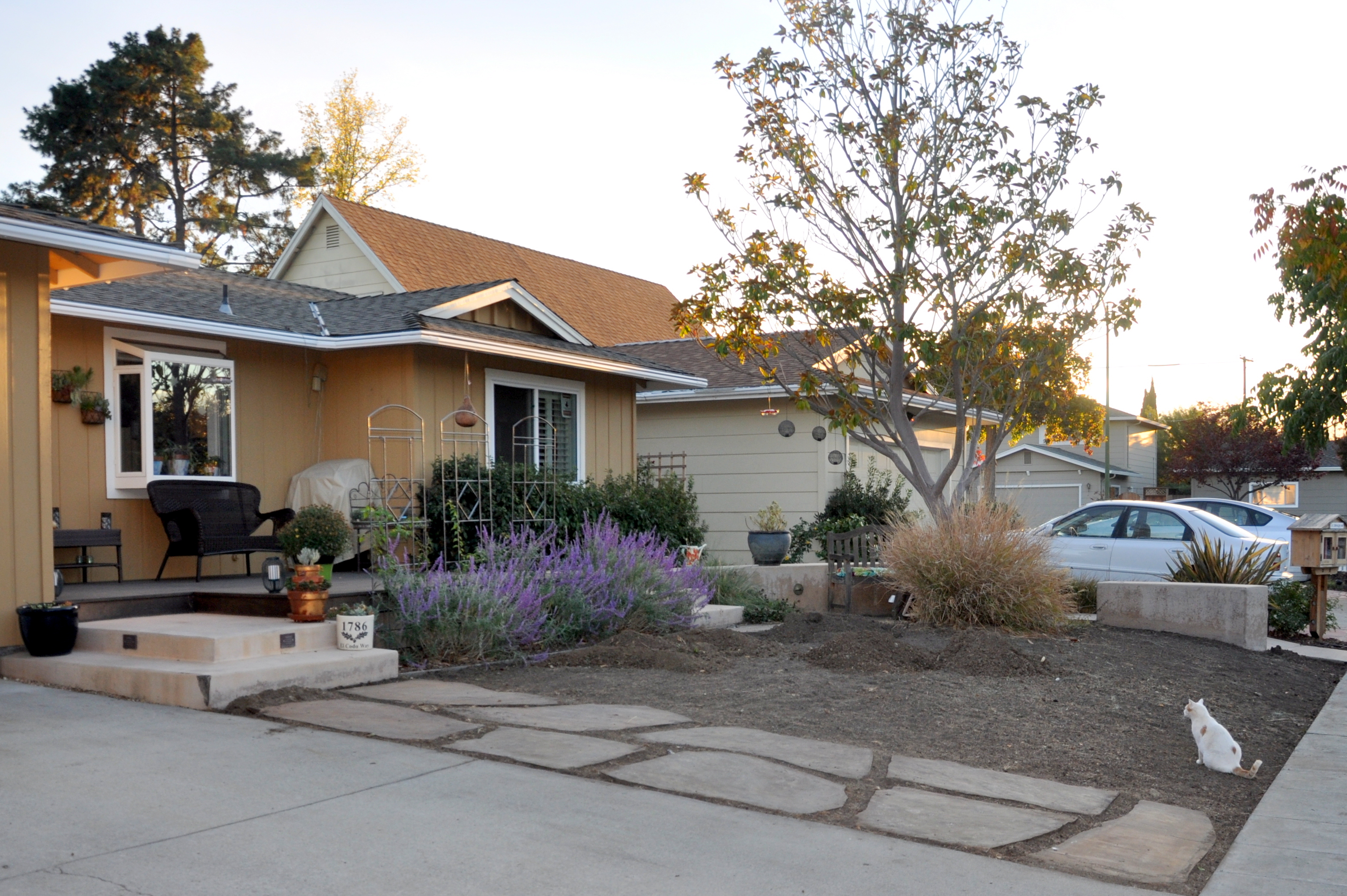
front garden, lawn removed

Front Garden: No More Lawn!

landscape improvements removed lawn front garden

Front Garden: Another View

Mouse with eyes closed

Sleeping on the Job. Sheesh!

The front garden is pretty straight forward: California natives will replace the lawn front and back. I’m pretty excited.

I hope you’re off to a good week.