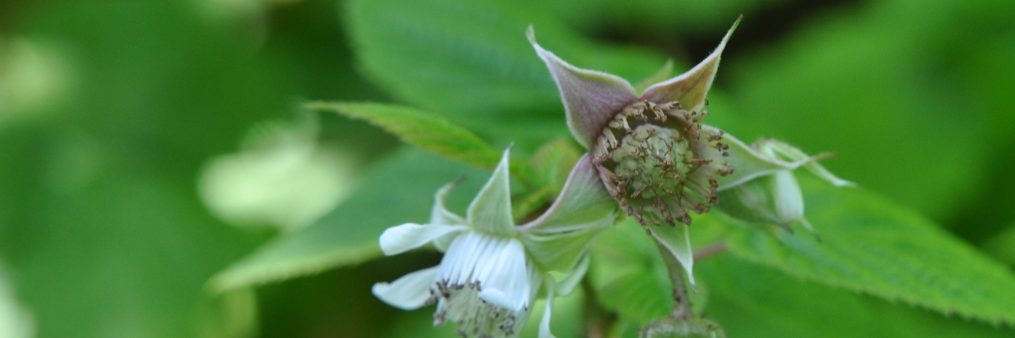
Lift, gravity and thrust. It’s not the latest dance craze, but a short list of what things-with-wings need to fly.
Wouldn’t it be thrilling to have wings? I remember an episode of Gilligan’s Island years ago that always made me chuckle. In one attempt to get off the shipwrecked island, Gilligan donned wings and jumped off a cliff. He momentarily flew until the Skipper shouted “You can’t fly!” Gilligan replied, “Oh’, and only then did he drop to the ground.
I love watching things-with-wings flying in and out of my garden. They move with speed, efficiency and agility like a well-trained gymnast flying over the bars. What a thrill.
Birds

Visiting birds
I worry about the birds as our drought drags on. They’re traveling in circles, searching for food, water and seed. Reservoirs are low and plants are under a lot of stress.
I keep our bird bath topped off so that our visitors can quench their thirst. The garden takes care of the rest. It’s satisfying watching birds sip nectar from a flower or pilfer seeds from the compost bin. They sing, trill, hum and yes shriek but it’s all a reminder of our garden diversity.
According to Discovery.com
{birds} can play any number of roles in a given ecosystem, most of which fall into four main categories: provisioning, regulating, cultural enhancement and supporting services. Supporting services, for example, include tasks such as predation, pollination and seed dispersal.
All that and they’re cute, too.
Bees
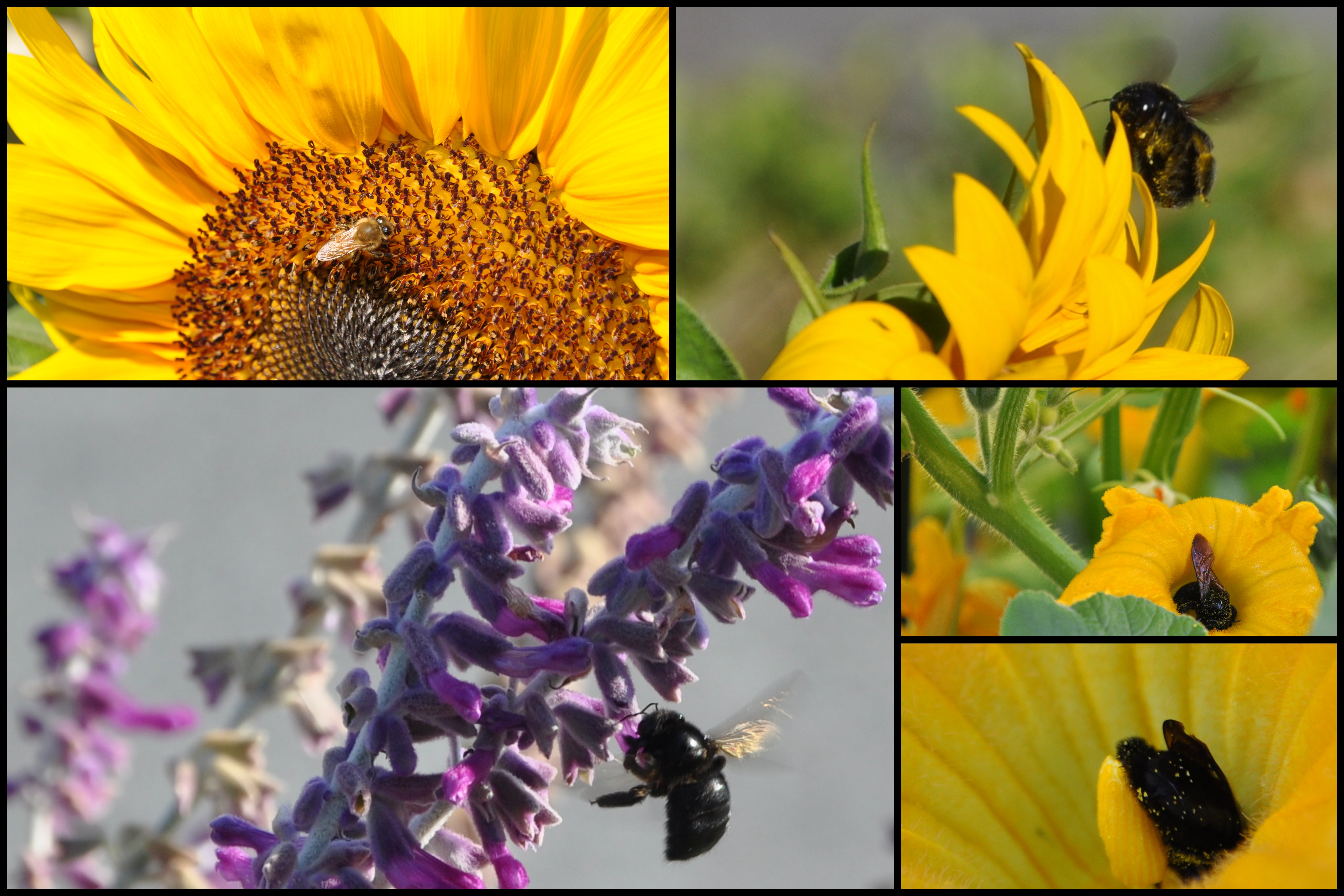
Bees pollinating sunflowers, pumpkins and Salvia
Through the camera lens, I’ve witnessed the extraordinary movement of bees gathering pollen. Shiny black bodies lift in and out of the pumpkin flowers, coating themselves a golden-yellow. The buzzing sound stops when they land, and within seconds they lift off again They are all business. If another bee is in the center of the flower, the second bee backs up and continues on. What they accomplish is extraordinary and relevant to our survival.
Butterflies
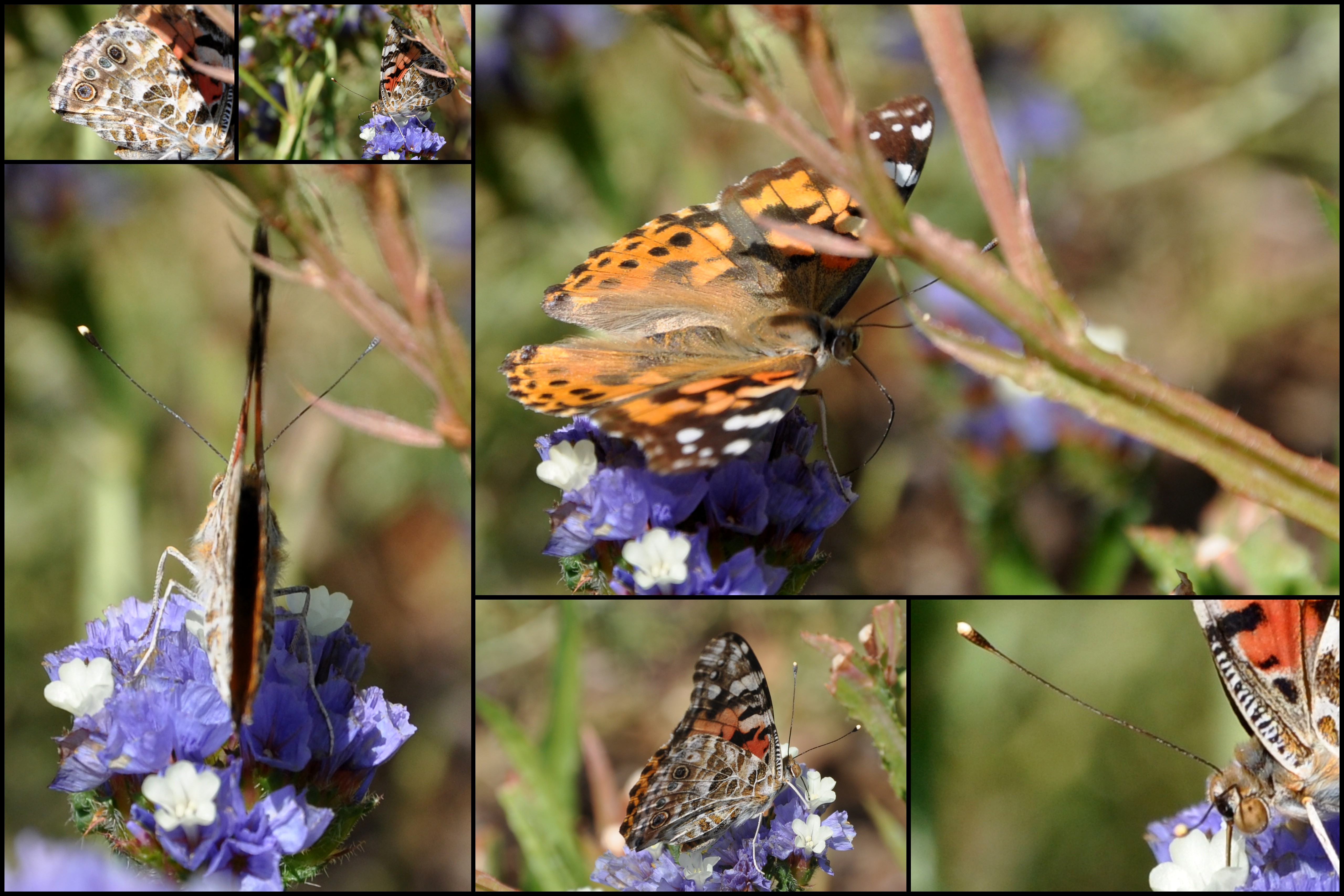
Butterfly and Statice
This beauty landed in the flower bed sending me racing indoors to grab my camera. Who doesn’t love a butterfly? When my boys were young, we visited the ‘caterpillar tree’ at our local park. One particular tree would be laden with cocoons. It was a yearly treat. After a few years we stopped seeing them.
I’ve since learned that in the United States, Monarch butterflies have declined for the last twenty years. In the UK, certain species of butterflies are down by 50%. From an environmental perspective, butterflies are a bit like the canary in the coal mine. They’re extraordinarily sensitive to environmental changes around them and are apparently the most closely watched insect in the world.
I’m glad this special guest found something to eat in my garden.
Further Reading:
Declining Monarch Populations in the US
Habitat restoration efforts in the UK to combat butterfly decline
 Gardening Nirvana